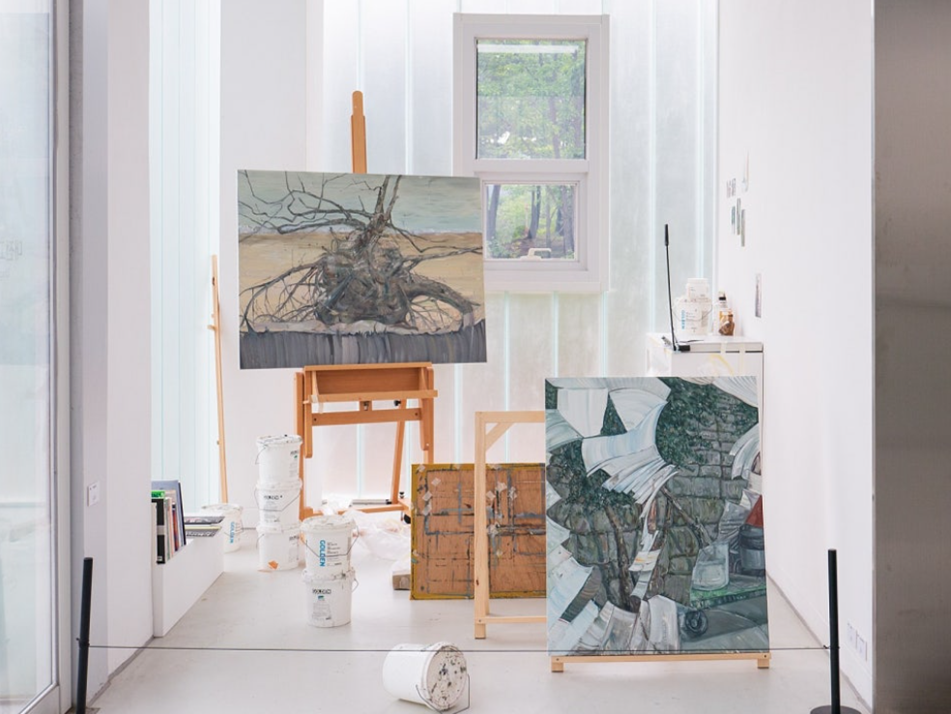
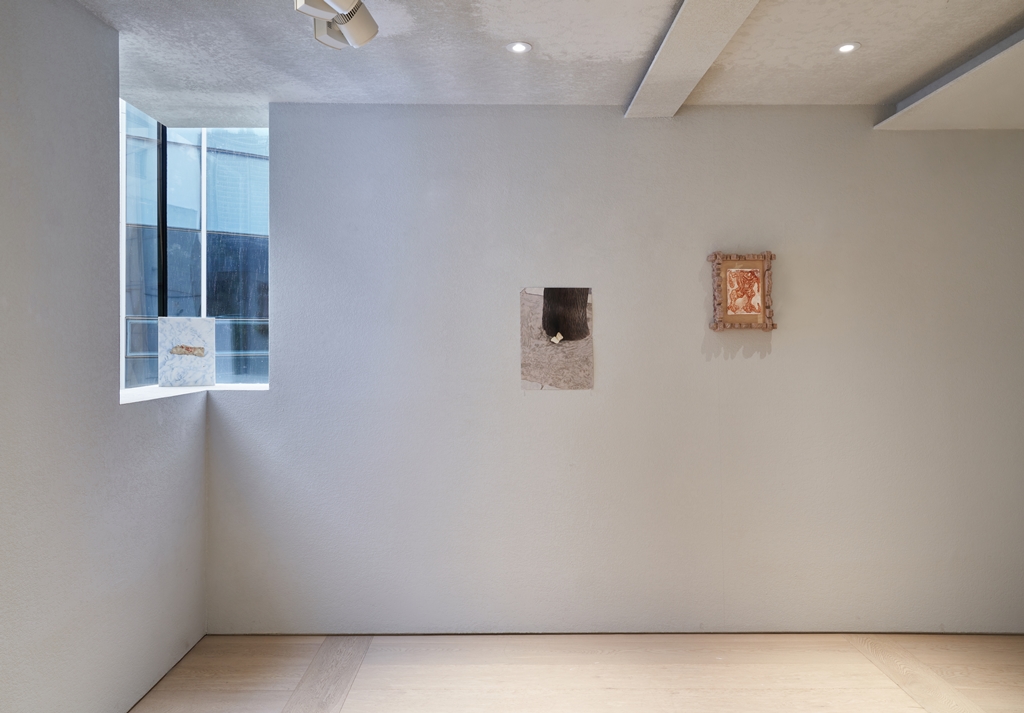
Installation view © Leeungno Museum

Now, in the second year of the COVID-19 pandemic, the landscape of the world has changed dramatically. Visible transformations such as social distancing, restrictions on gatherings, and universal mask-wearing have altered the scenery of everyday life. Yet if we look back through history, we realize that change has always been constant—since industrialization, the transformation of urban landscapes, the collapse of old systems, economic inequality, and the homogenization of culture have all become part of our daily surroundings.

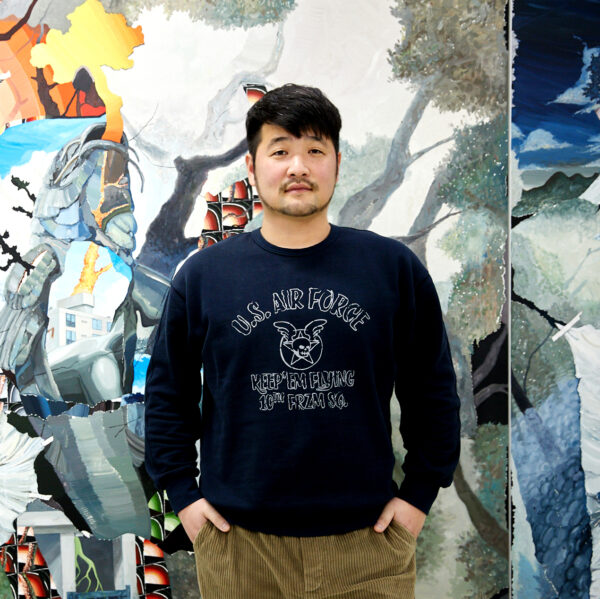
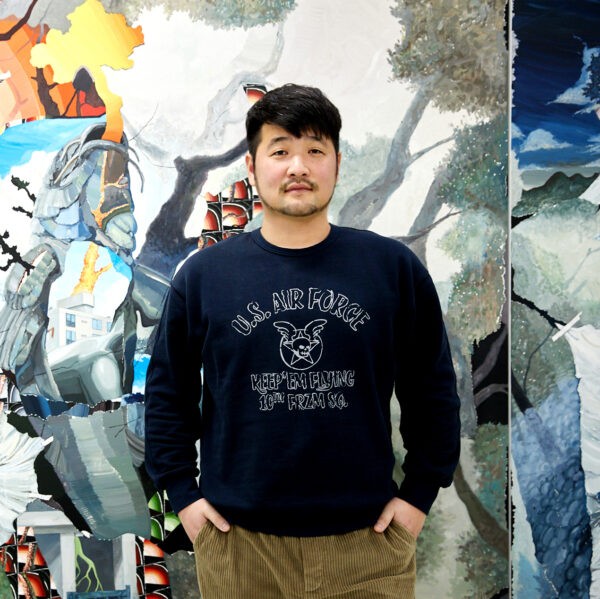
Among the artists who have paid attention to these social circumstances is Jungin Kim. He observes the accelerating speed of social change, the atmosphere of uniformity, and the deepening inequality—those very driving forces that reshape the world. In his notes, he refers to them as “invisible external pressures,” and in interviews, he even describes them as hidden “powers” that manipulate society.

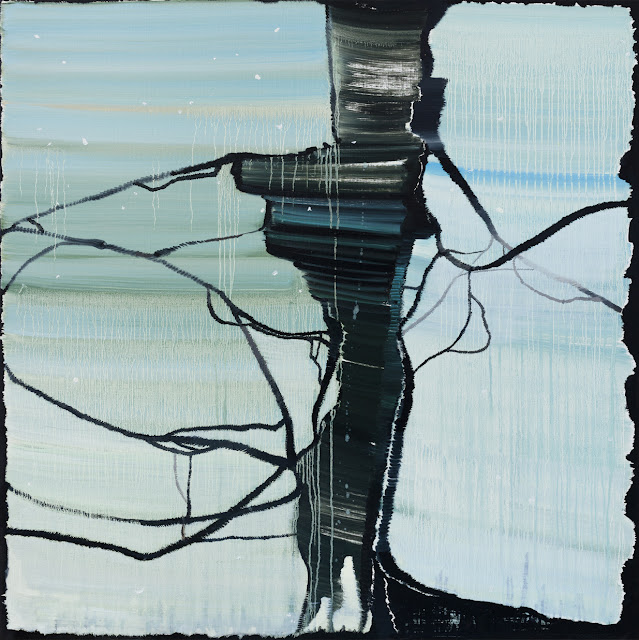
His first solo exhibition, 《Standing on Unsolid Ground》(2020), revealed for the first time how the artist perceives and responds to such conditions. The changing urban landscape of construction and redevelopment appeared to him as the inhuman face of society, and the speed of these transformations gave rise to a sense of anxiety. The “pressure” mentioned earlier became for Kim a kind of current sweeping through both the self and society. His first exhibition thus reflected a contemplation of how one might endure—or survive—within that torrent. The land itself seemed to have become a flowing current, and his brushstrokes, composed of cloudy, muted tones, strongly conveyed that sense of turbulence.

Why does the artist perceive contemporary reality as chaotic, and what makes him believe that behind such disorder lie invisible pressures or powers that control it? The answer is intertwined with his own life story.

“I grew up in the Jangchung-dong and Sindang-dong areas of Seoul. These neighborhoods move at a different pace from other rapidly changing parts of the city. While the nearby Dongdaemun district fills with high-rise buildings and the Dongdaemun Design Plaza showcases the city’s transformation, my neighborhood still breathes slowly—with old single-family houses, bicycle repair shops, and hardware stores that have survived since the Joseon-era city walls. I felt suffocated by the speed of urban and social systems elsewhere. I wondered whether my slowness in keeping up with those systems came from such environmental differences.” (From the artist’s interview)

Between Daejeon and Seoul, places where the confusion of development and transformation coexist, struck the artist with a sense of violent unease. This experience translated into a sensation of liquidity—an unstable, fluid perception that permeated his canvases.

“The act of painting is my way of enduring the ground soaked by the waves of change. My negative emotions are scattered onto the canvas through the medium of the brush.” (From the artist’s note)

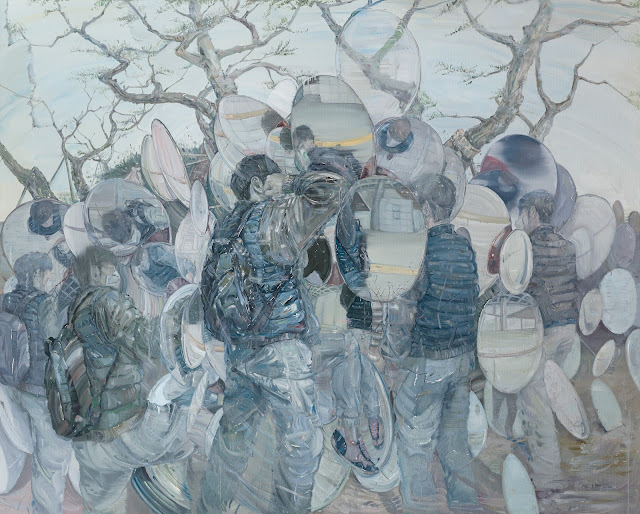
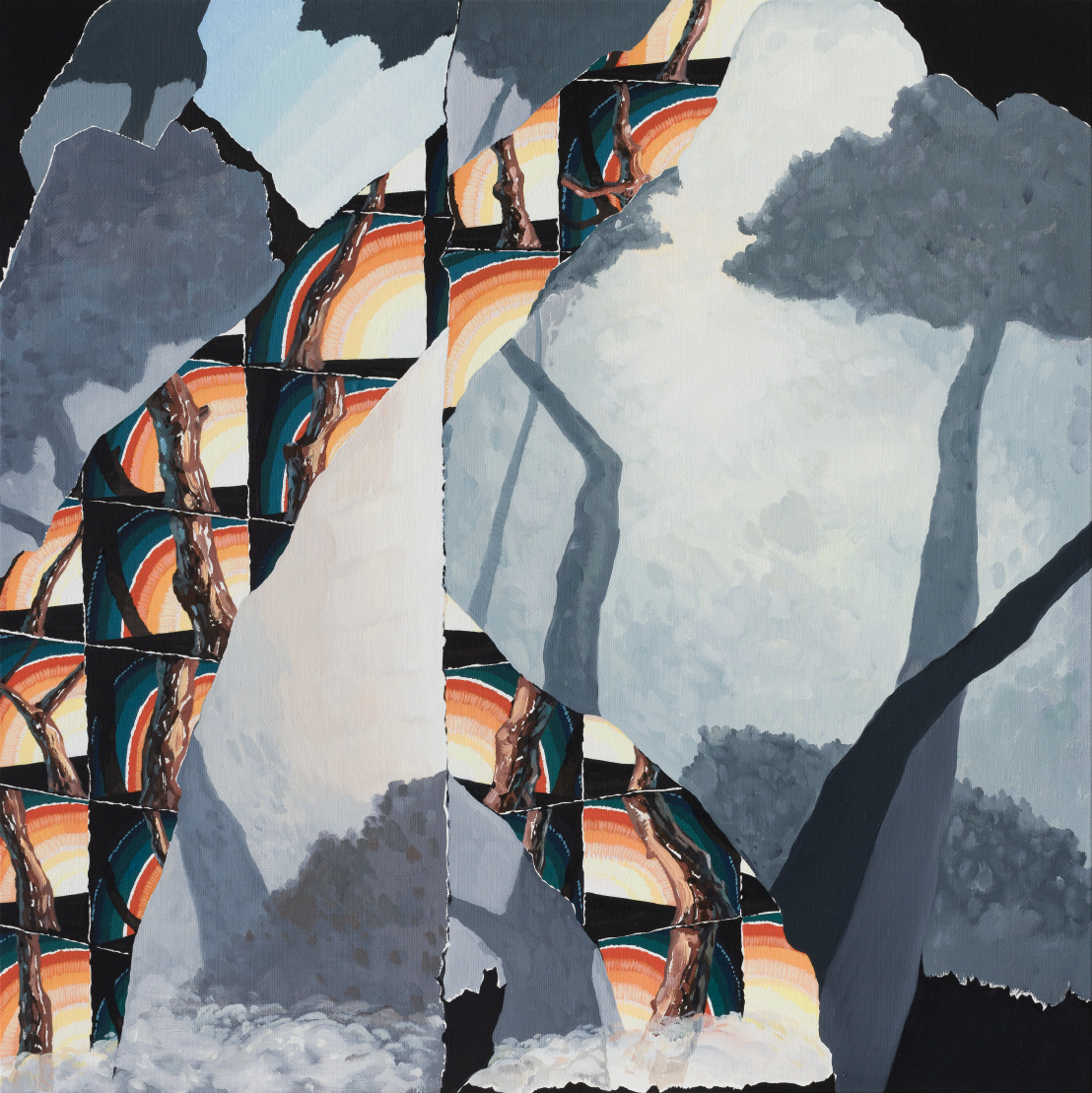
Kim transforms what he sees and experiences into “dry yet intense” surfaces, using achromatic tones and visible, trace-like brushstrokes. Like Van Gogh’s expressionist paintings, his brushwork emanates a desperate energy charged with anxiety and anger.


Installation view © Leeungno Museum

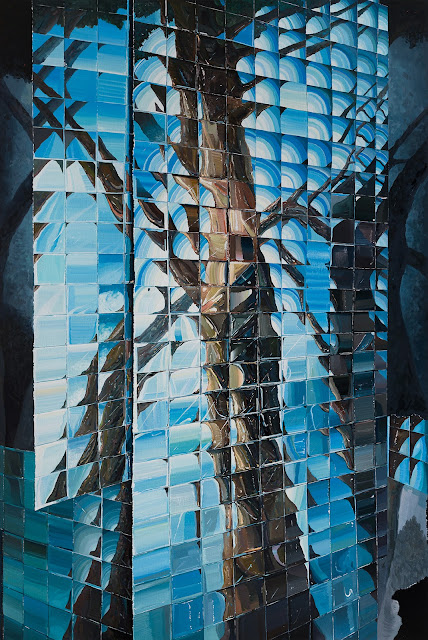
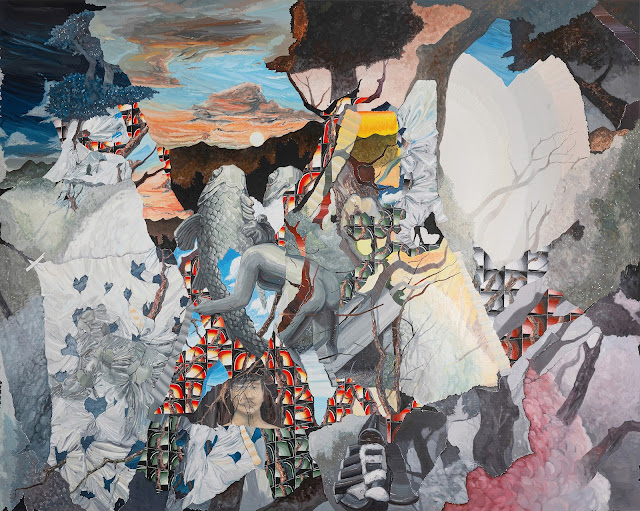
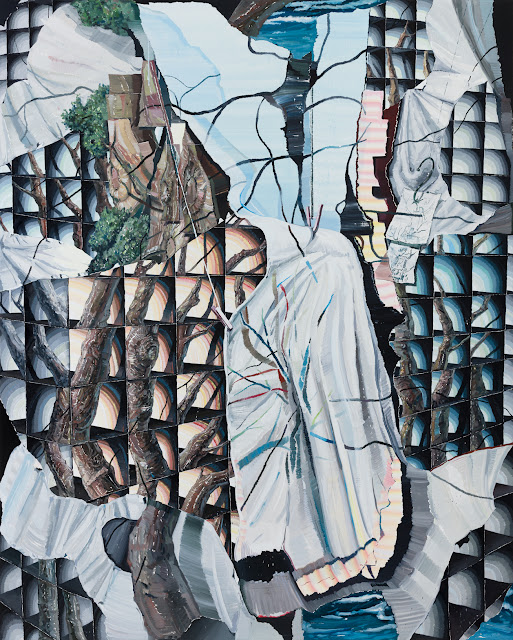
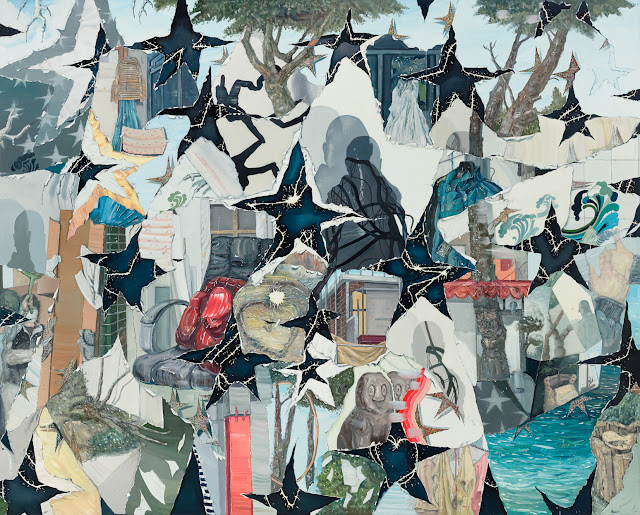
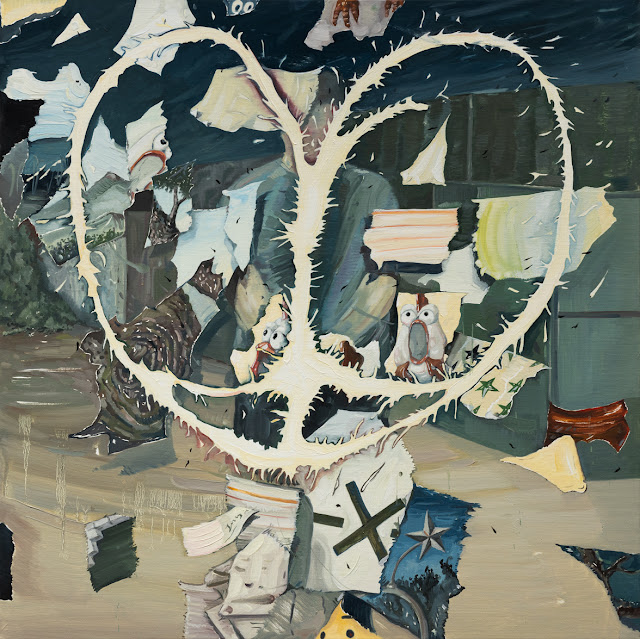
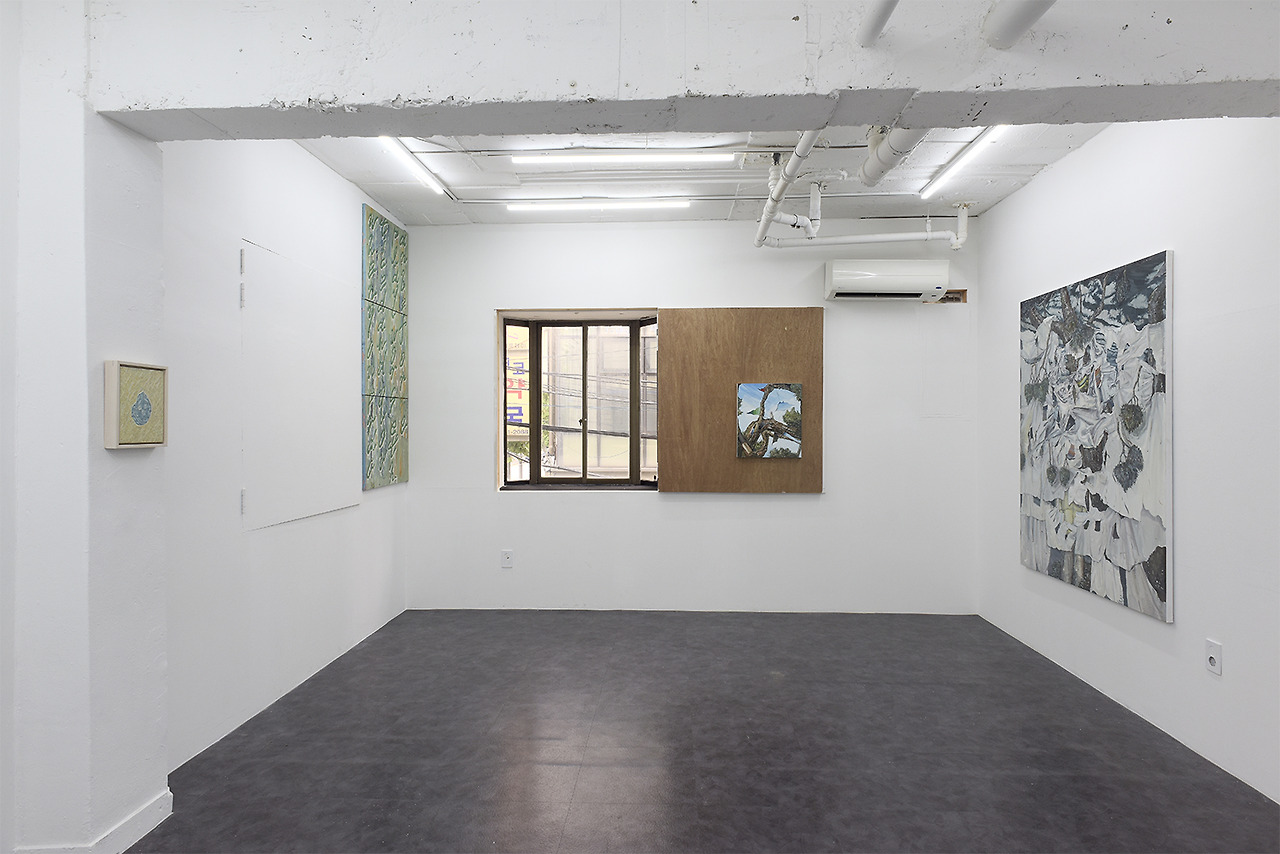
Another intriguing aspect of Kim’s work lies in its compositional structure. He divides the pictorial plane in various ways to encapsulate the stories of his collected landscapes and moments of daily life. In earlier works, he segmented parts of the image or used mirrors and other objects to fragment the composition. In this exhibition, however, he experiments with more deliberate and active divisions.

These segmented frames recall the sequential storytelling of William Hogarth’s satirical paintings and the panel structures found in comics. Yet his works do not necessarily aim for narrative continuity. Even through non-linear arrangements, Kim’s paintings achieve completeness, synthesizing what he has seen, heard, and experienced.

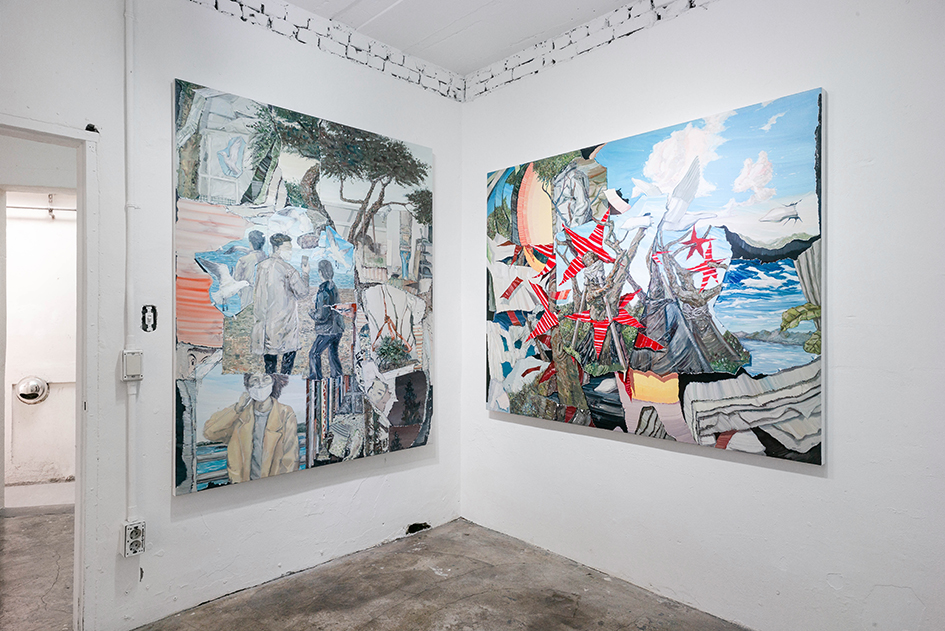
For this exhibition, he draws even more actively from his surroundings and personal records. The experiences and sceneries he gathers on foot enrich his canvases with visual diversity. It is a multicolored world composed of “achromatic” hues. Decorative but neglected sculptures such as the Sammi-shin (A Stone Filled with Anxiety, 2021), an abandoned mannequin (Bleached Crowd, 2019), casually placed branches (Bruised Inside I, 2020), and uprooted roots (Suppressed Tree, 2020) reveal the artist’s interest in “remnants past their use-by date and forsaken objects” (as described in his notes). The more consciously organized composition reveals refined spatial awareness—for instance, a star made by clasped fingers symbolizing victory (Timid Resistance, 2020) reappears as a torn and reattached star-shaped form within the picture plane (A Star Made by Debris, 2021).

Held from July 6 to 27 at the Leeungno Museum’s New Storage M2 Project Hall as part of the “Art Lab Daejeon” program, this exhibition titled 《Image not able to be melted by harsh waves of change》 demonstrates that Kim has taken a step forward from his first solo exhibition. If his earlier works embodied the act of enduring the world, this exhibition reveals a more resolute stance—a transformation from endurance to resistance. Through that resistance, his works now embody a newfound confidence that, ironically, “cannot be melted.”

In one of his latest paintings, people are seen photographing seagulls by the beach with their mobile phones. Overlapping like a collage are fragments of travel photos, views of his surroundings, his studio, and city nightscapes. The result is a thickly layered composition—almost a summation of his recent life. Perhaps this piece, titled Image Union(2021), serves as the core of this exhibition. Various images gather and unite, resisting the world through solidarity, making his paintings truly “images that cannot be melted.”

In this way, Kim’s work integrates its iconography, colors, and brushstrokes under one encompassing proposition—resistance to the world he inhabits. Now, what remains is a deeper contemplation on the invisible pressures or powers—the very origins of the social forces that unsettle and homogenize society. How Kim’s endurance and resistance will evolve from here will likely be as dynamic as the movement of his brush itself.

References