It
was around 2017 that the paintings by Jungin Kim became available for public
viewing. While the works were new, they could easily persuade viewers that they
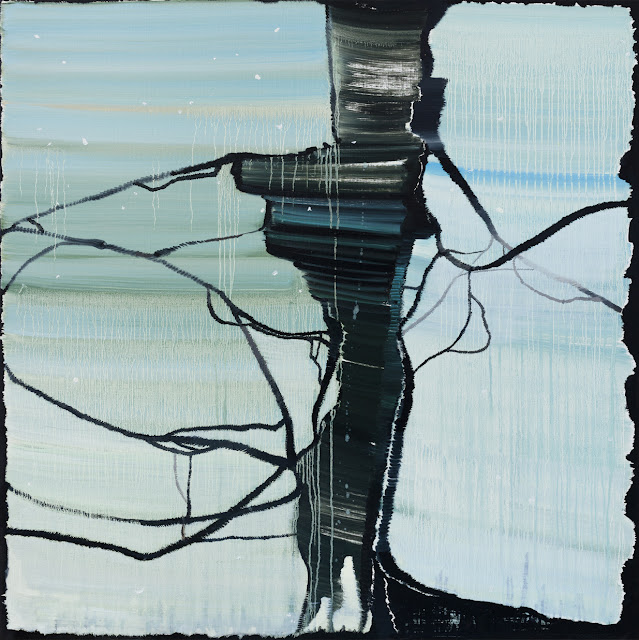
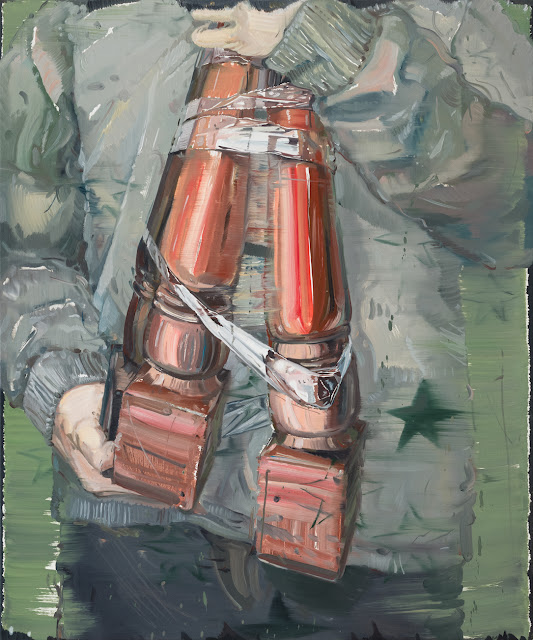
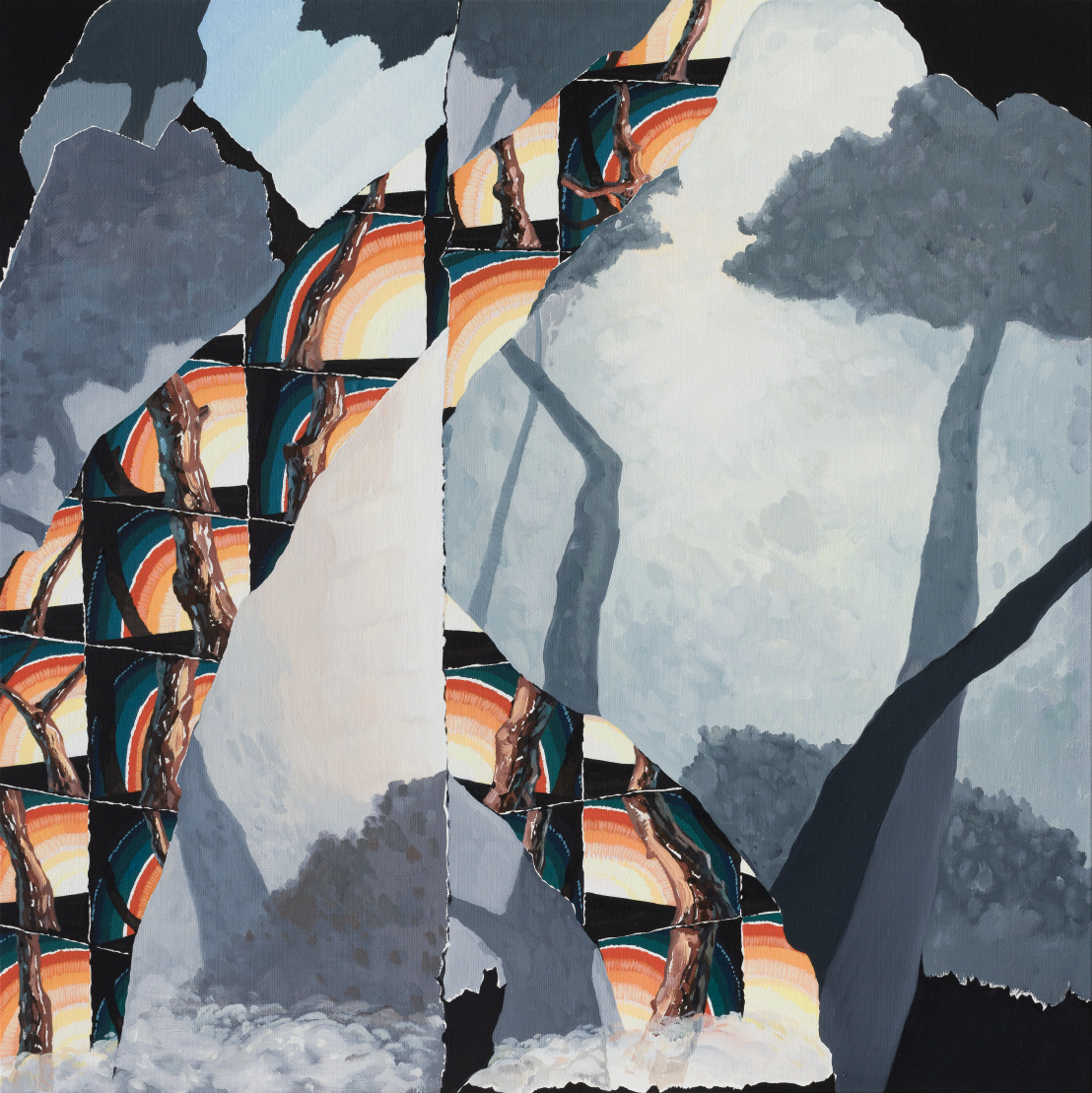
were painted before his times. The atmosphere created by combining shades of
gray and covering the entire canvas, as well as the realistic depiction and
materiality emitted from oil paints, naturally connected with a certain
familiarity gathered in the viewer’s memories after admiring many paintings.
Painting is an aged art genre, but its potential is still far from exhausted.
That seems to be the reason why the efforts to reinvent painting are heading in
a newer and more experimental direction. The reason why Jungin Kim’s paintings
tend to remind viewers of the past might be because they became accustomed to
all the future-oriented efforts in painting, such as drawing novel materials,
fusing it with other art genres, and linking it with the virtual world.
1.
The artist’s attitude towards his painting is related to his art world as a
whole. When asked why he stuck with painting out of all the numerous art
genres, he answered, “because time flows slowly there.” Painters need to
respect the time it takes to reshape the subject through their memories, rather
than just putting it onto the canvas as is. Or they might be adding onto what
was already painted or outright repainting it, because painting does not end
only because the artist put down his brush. It returns again and again, flowing
with time through repeated revisions.
This process can only take place when the
artist allows time to flow by slowly. The “slowness” of time is the artist’s
viewpoint of their medium and, at the same time, the life speed he or she
desires. However, the world does not seem to allow artists to lead a slow life.
Instead, it continues to urge individuals to change, and change at a very high
speed. Therefore, the artist’s “resistance” nurtured as an effort to cope with
the violent speed of the world becomes the key to reading the world of his art.
2.
What exactly is this “resistance” sought by Jungin Kim? “Resistance” is a
concept clearly defined by a specific genealogy and nuance, referring to an
artistic practice of struggling against a dominating power. Striving to find
the coordinates for his artistic activities in the history of art, Jungin Kim
presents a genealogy consisting of the Mexican Muralism, Chinese Art after the
Cultural Revolution, and the Korean Minjung Art, which are some of the key
cases representing the concept of resistance in the history of art. A
comparison between the clear signs of resistance represented by these art
movements and the works of Jungin Kim reveals the difference between the two,
which is as clear as their similarity seen through the general tendency towards
criticism against authoritative power.
Viewed from the context of existing art,
“resistance” has a sharp edge of tension, because the subjects and contents it
targets—such as state, colonial power, capitalism, globalization and
redevelopment—are specific, while the “power” narrated in Jungin Kim’s art
tends to appear as an all-encompassing being, rather than a specific one.
Therefore, the “resistance” portrayed in his paintings requires a different
interpretation. Resistance reveals itself in the artist’s choice of subject.
The materials he tries to find for his paintings wandering around back alleys
in Seoul are alienated from the stream of the times.
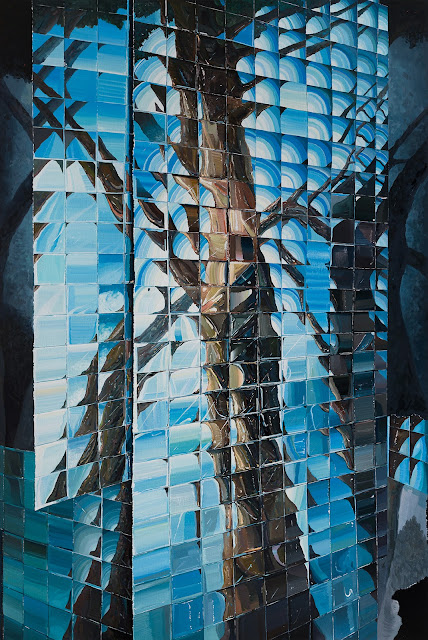
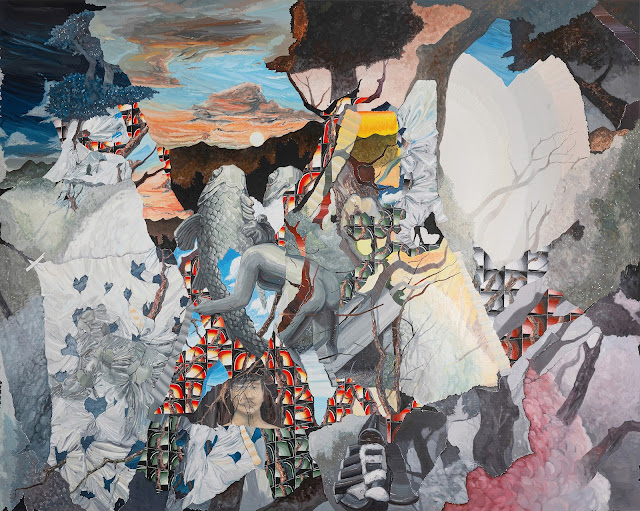
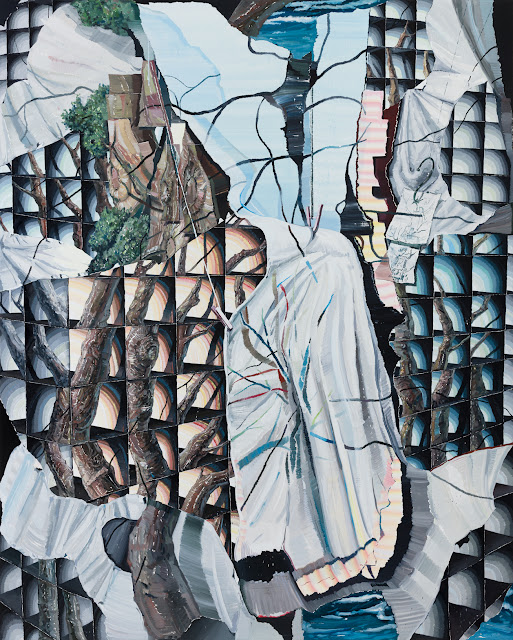
Tree branches cut and
thrown away carelessly and a carving of the Three Graces, which had once been
boasting their beauty but now were mercilessly abandoned by the roadside of a
city. They reveal obvious signs of wear and tear, caused by their struggle to
cope with the hardships imposed by the passing of time. The paintings,
expressing the artist’s sympathy toward all those aged, faded and tired, seem
to be psychological portraits that can appeal to modern people, rather than
making bold social statements.
3.
Is there any other city that shows the speed of the times as dramatically as
Seoul does? Numerous artists tried to capture scenes of modern Seoul from
different angles. Some tried to document the city from a journalist’s
viewpoint, focusing on the changes caused by various redevelopment projects,
while others created sensual images of the emptiness left by the disappearance
of the past. Some others went for activism, fiercely criticizing the movement
towards urban development.
Considering the 1980s, where the Minjung Artists
were at the peak of their movement, capitalism has greatly advanced in Korea
and continuously evolved in the last 40 years. The external appearance of the
cities is now dazzling with its luxury, whereas the scenes outside the spotlight
are bleak enough, providing a wealth of inspiration for artists. Along with the
slow flow of time in paintings, another main framework of Jungin Kim’s art is
the spatiality created by the city of Seoul.
Jangchung-dong
and Sindang-dong, the hometown of the artist, are two of the many districts in
Seoul that have been less affected by the sheer speed of power wielded by the
metropolis. The districts where he stages his daily activities are home to the
artist and are still not as affected by the noises of development and
redevelopment, including the New Town project. Therefore, they maintain the
slowness of time. Day after day, the artist basks in the comfort offered by the
slow life in these districts.
He walks along the streets of the districts to
observe and collect the traces of the daily lives which help nurture his core
physical and spiritual strength, needed in his life and work. Seoul might be a
hub of chaos to some, but to others it’s a city that brings on dreams of a
bright future. As an artist, Jungin Kim dreams of finding hope in the
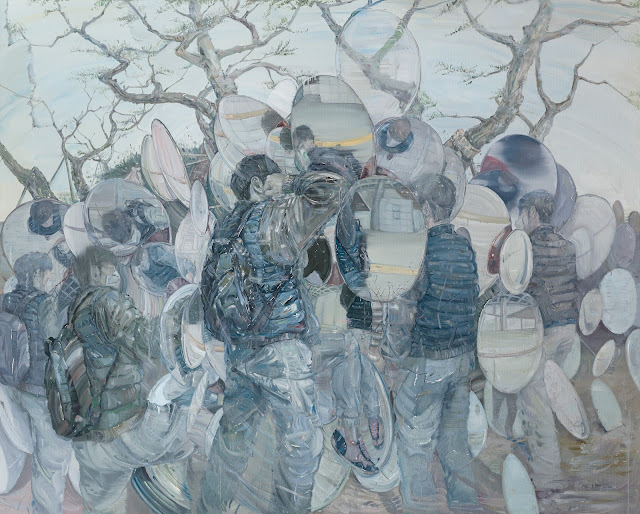
“solidarity” between beings who are fragile when scattered apart, by collecting
them on a single canvas and bringing them together with his brush.
The
means of attaining solidarity are changing as fast as the speed of development
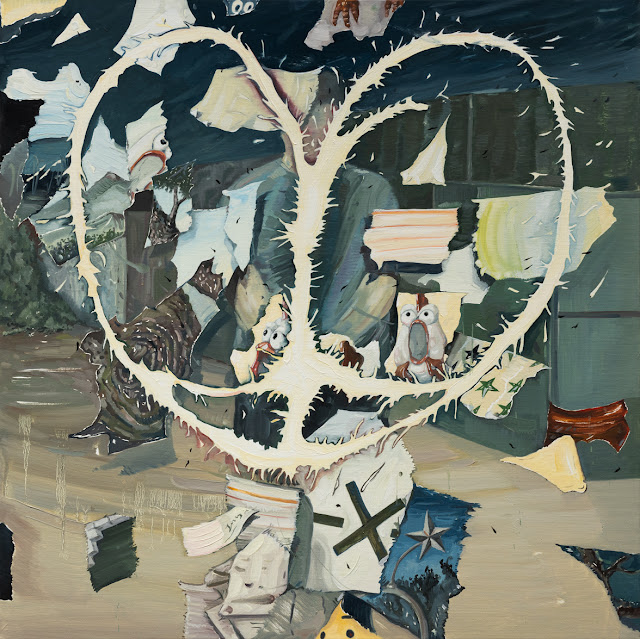
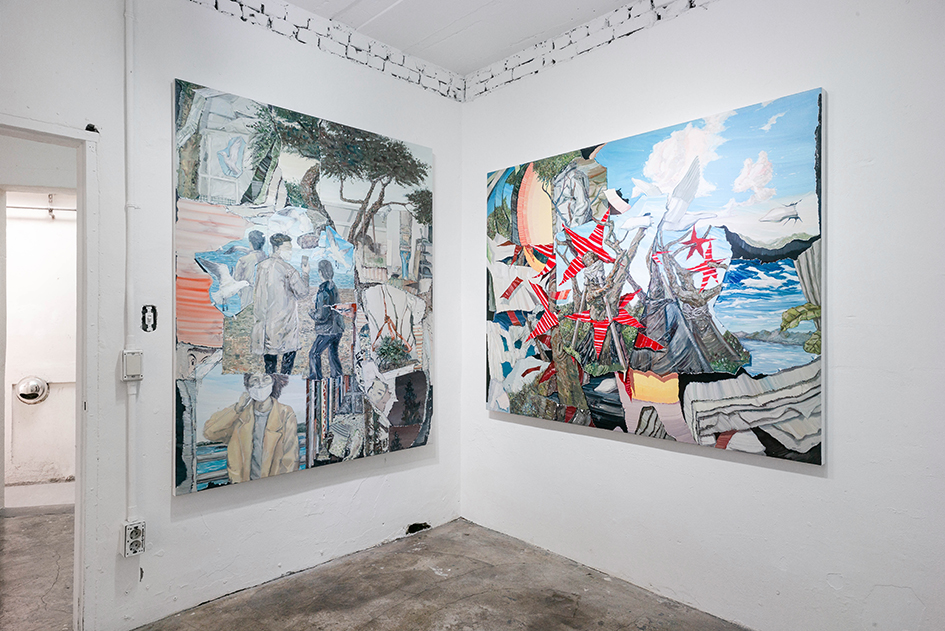
in a modern city. In The Inextinguishable Flame, there is a scene where a
couple makes a heart shape by bringing their hands together, while clinking
their wine glasses. So, it became a trend to upload photographs portraying
happy moments with loved ones, toasting and making the heart symbol on social
media. While it is generally said that relationships between individuals are
getting more and more fragmented, new generations create their own culture.
This means they become more connected with others by using new media, while old
generations witness their means of achieving solidarity slipping away. The
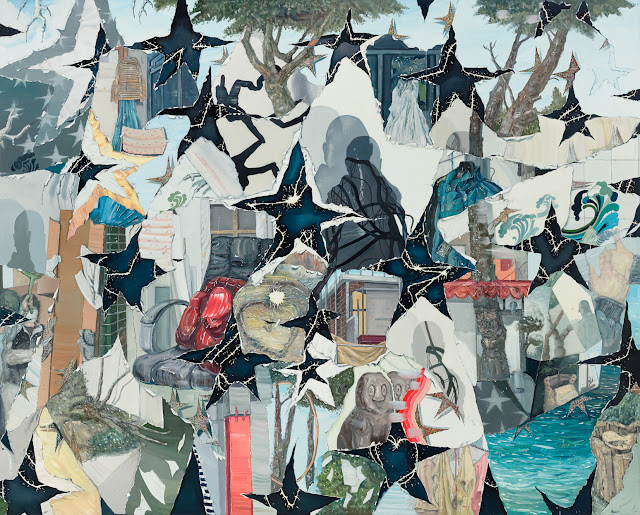
process of the artist recording fragments of his daily life in a single space
reminds us of the culture in which seemingly insignificant daily moments are
exhibited and shared through social media. It seems that the flame of
solidarity proposed by the artist sheds light onto the long-standing
familiarity of painting overlapped on his canvas, with all his small hopes in
the hands of the city of Seoul and the sensibilities of the new generation.