“One night, I was just lying there,”
she told him. “One of the bed’s legs broke, and I fell to the floor.
I wasn’t sleepy enough to fall asleep despite the discomfort, so I got
angry. But then I suddenly thought: why must it be an intact, unbroken bed?
I fell asleep right there, lying on the collapsed frame…”¹
When one touches the dead—or even when one
looks at it as though about to touch it—something seems to be released from
death, beginning to reveal, on its surface, a sense of aliveness equal to that
of the living. The dead remains in a state of decay, of ugliness, and yet,
beyond that ugliness, comes to exist alongside our bodies. In such a moment, we
inevitably drift into a kind of slumber of perception. Most things that make up
the world are dead or dying, and it is almost impossible to escape their entanglement;
thus, the ultimate question is not directed toward death, but toward where life
still exists. “Why must we be intact?” The numbed mind, and the body repressed
and objectified along with it, slip into the interstice between the living and
the dead—experiencing a collision between matter and life that is as
irreversible as the event of death itself.
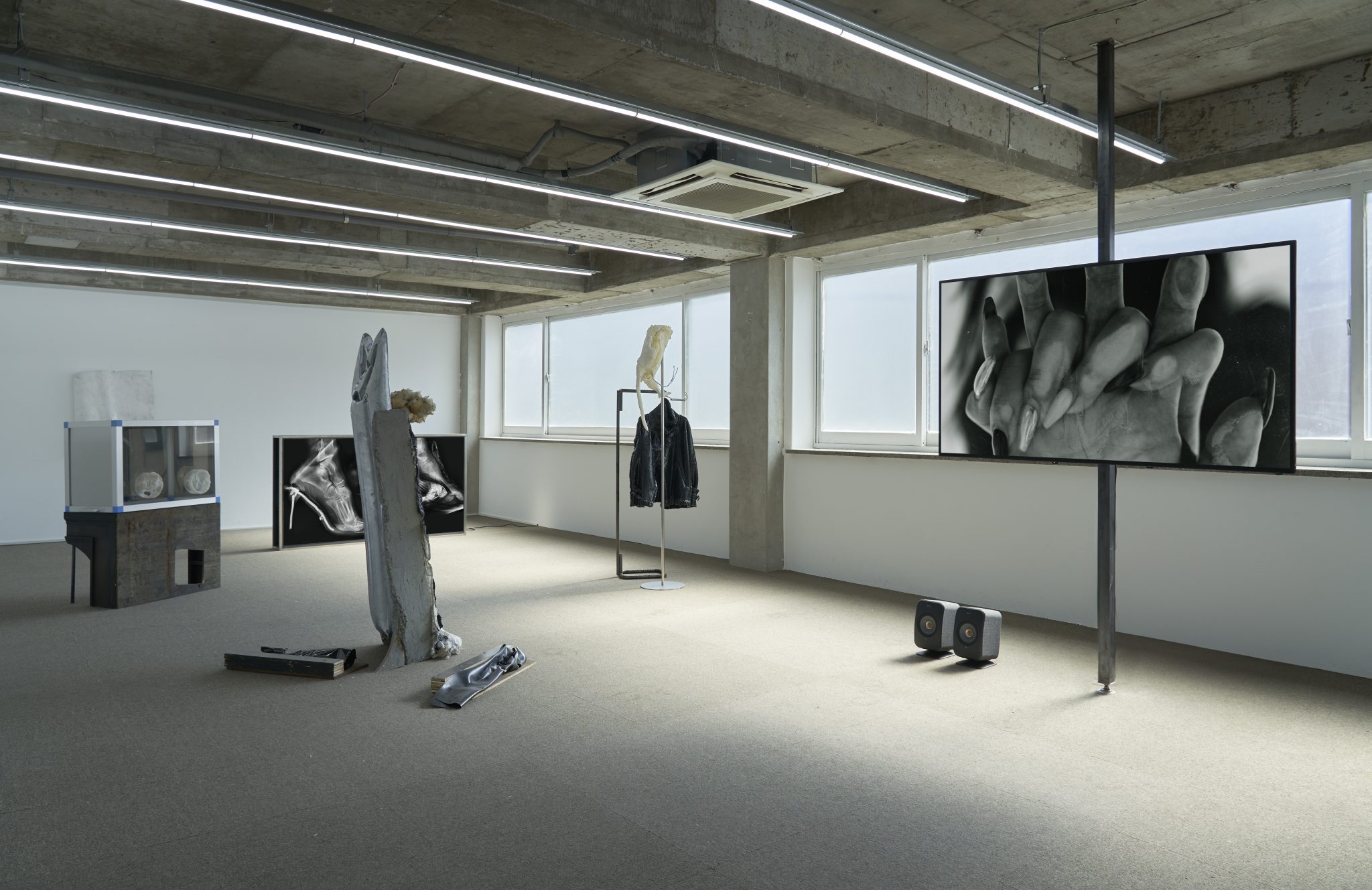
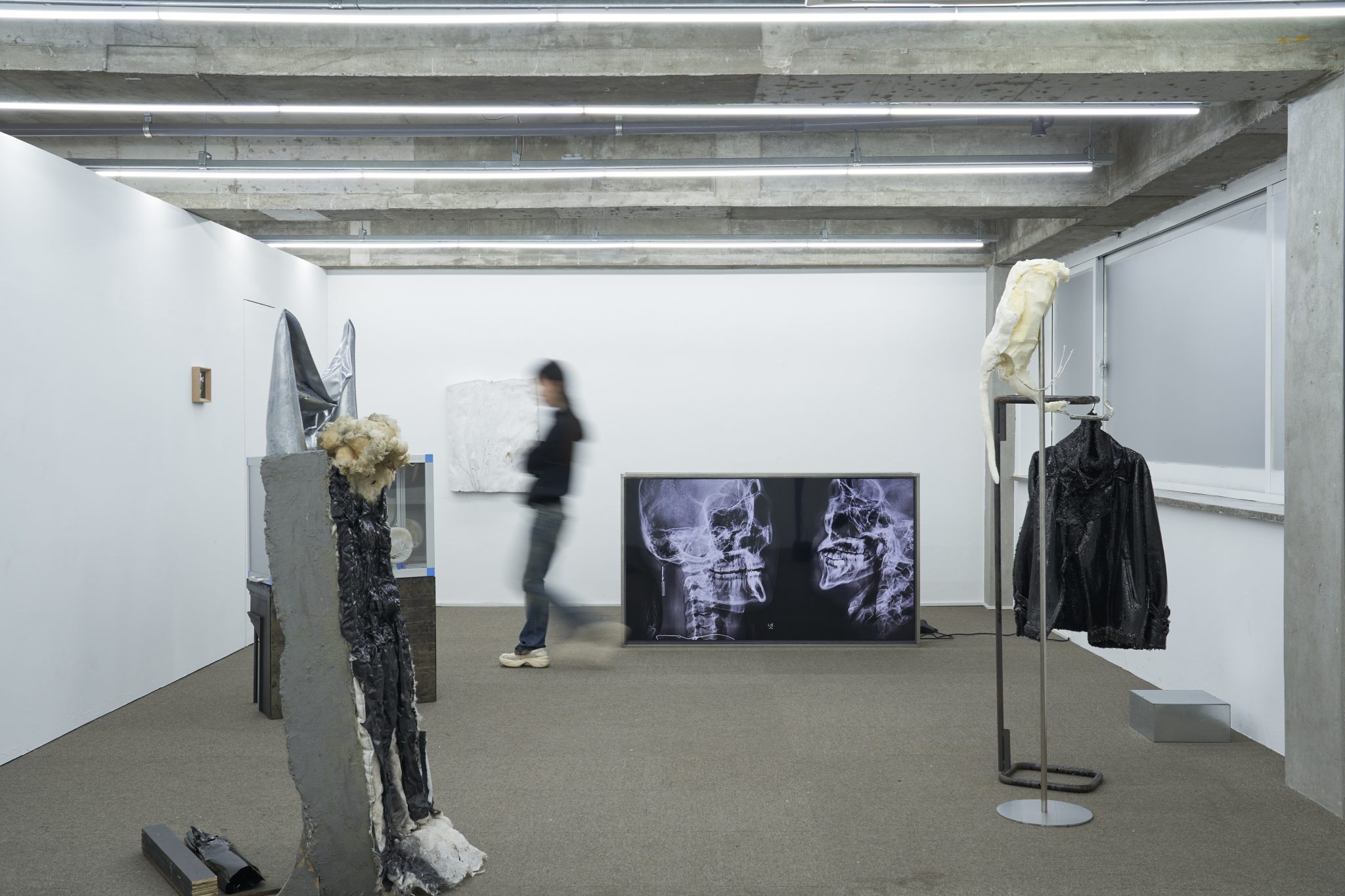
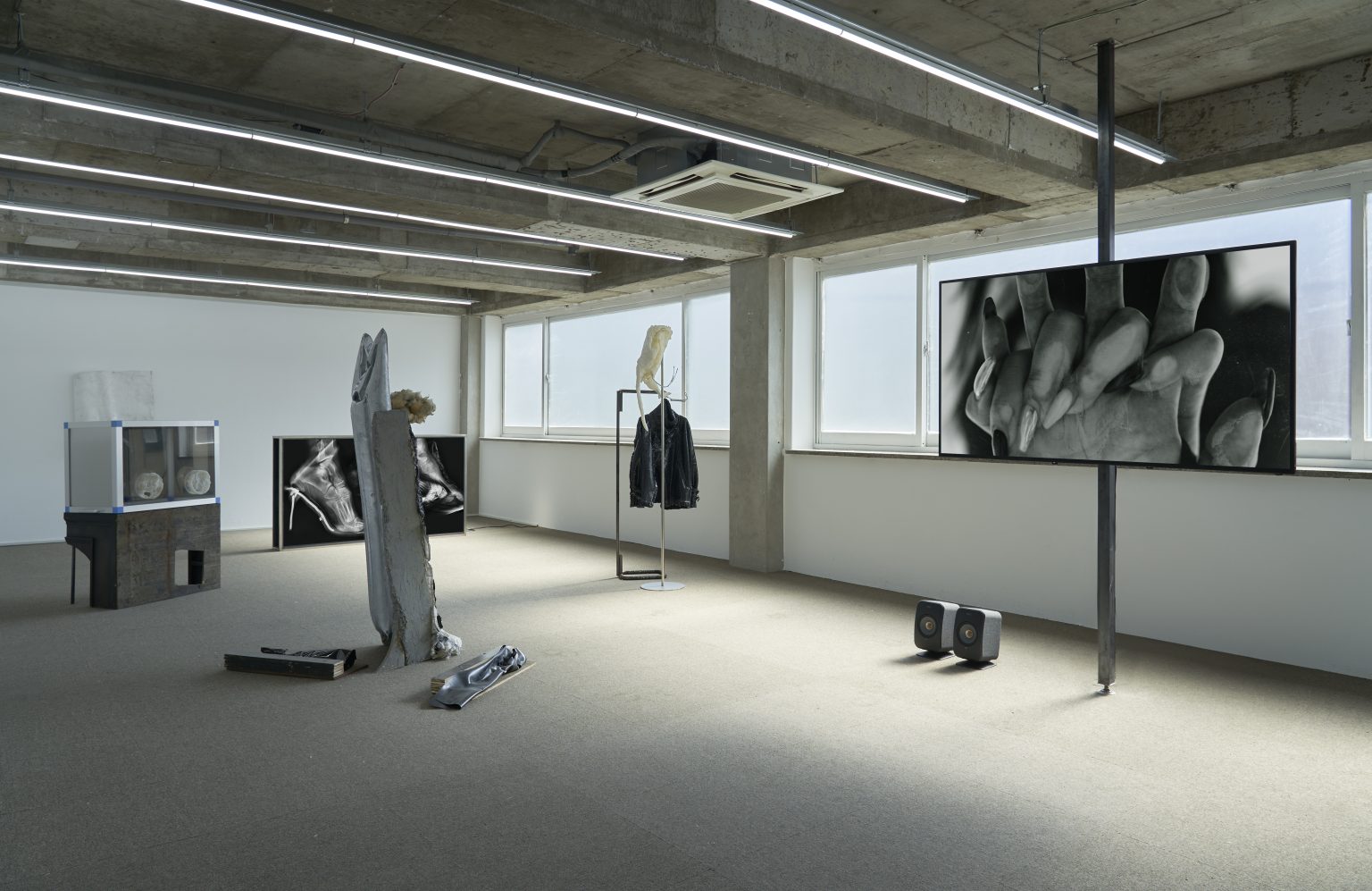
In Chang Younghae’s solo exhibition 《Glove box》(2024), what the viewer encounters are bodies, objects, and
landscapes caught in the midst of breaking down or collapsing. To reconstruct
the original forms or situations from which these works began feels nearly
impossible, for what surrounds and overwhelms the field of vision are not
visible elements but unseen forces—the traces of actions already performed.
This resembles the bewilderment one feels when gazing at a body or object
mysteriously damaged for reasons unknown.
The form of a cat melts helplessly
into dissolution (〈cat〉); a
real insect alternates between being degraded and resurrected through
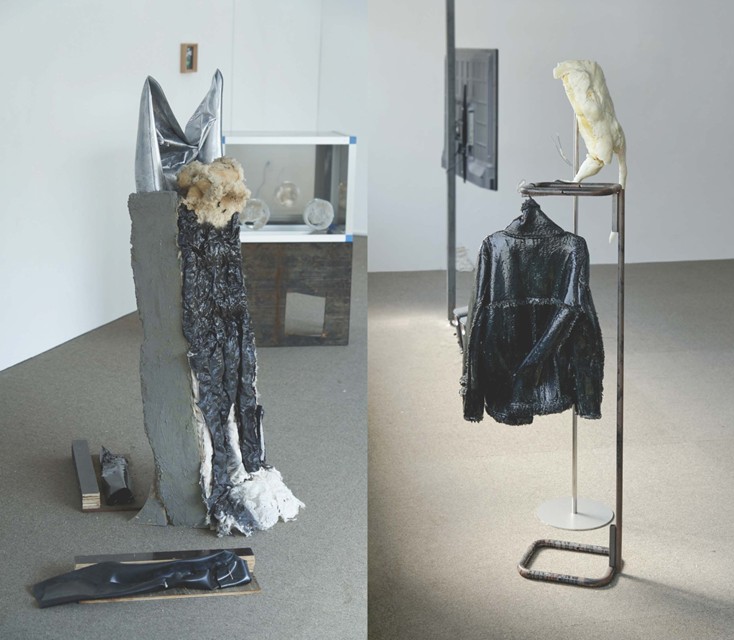
3D-rendered imagery (〈insect looping video〉). In a hybrid assemblage of padded jackets and industrial products
(〈Untitled〉), in hazy
black-and-white photographs seemingly veiled by processed mist (〈135/85mmHg〉), and in blunt plaster
sculptures evoking fatty lumps of flesh through the reproduction of bodily
secretions and blood (〈Untitled*2〉), the earlier question transforms into another: “Are we truly
intact?”
In the video Cardiopulmonary
Resuscitation / 1S34008AP, F010122011964, .04.0*8.5mm, the dead—or
what is assumed to be invisible and lifeless—appears through the camera body
outside the screen as the subject of perspective itself. Urgent, merciless
movements of CPR intersect with the careful yet mundane gestures of sweeping up
cremated ashes. The video retraces the scene of surgery as if following the
trail of titanium teeth remaining in the ashes, unflinchingly revealing the
mouth filled with dark red blood.
The viewer, positioned simultaneously as
anesthetized object, as the subject of death, and as the fallen body suspended
between life and death, encounters the video through this overlapping point of
view—coming to observe their own uninjured skin, and the red abyss within it,
with strange unfamiliarity. The works in 《Glove box》
dwell at the edges of life, teaching us not how to breathe but how to hold our
breath. They name the bodies wandering through the exhibition as alien
intruders wedged among inanimate entities. Yet it is always the viewer, not the
artwork, who has their body seized; and the moment of awakening comes only
after realizing one has been briefly anesthetized.
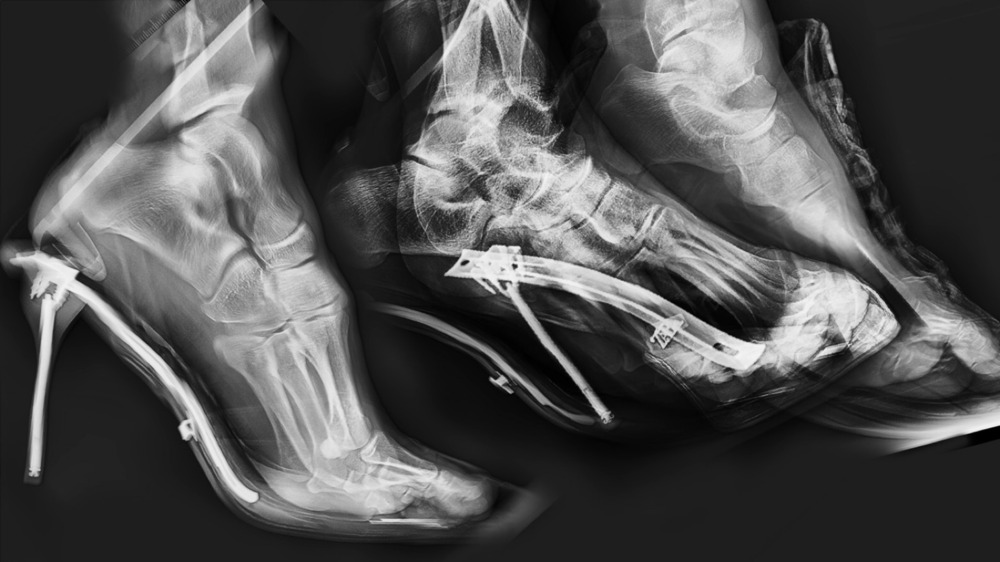
The longest piece, ray,
unfolds as an intimate mini-drama revolving around inebriated figures, refining
the theme of desire into a cold, X-ray-like image. While one person clings to
reason, preoccupied with practical matters, another relinquishes clarity,
surrendering to the flow of speech that strips desire of its shadows. Desire is
already exposed—it circumvents reality and rushes forward like a train along
the path compacted by the unconscious.
Instinctive and erotic signals are transmitted
secretly or endlessly delayed, yet the X-ray captures the essence of emotion
that cannot be conveyed through dialogue or gaze alone. The X-ray cannot, in
fact, photograph the mind, nor grasp even its faintest trace, yet it becomes
the maximal signifier for that which cannot be spoken. Beyond interpretation,
the X-ray penetrates the human body and renders the interiors of
incomprehensible structures completely transparent.
Even if the time under anesthesia cannot be
remembered, it remains undeniably real. The sensation of having been there—only
that feeling—lingers, etched irreversibly somewhere between past and future.
When encountering the installation glove box, which shares
its title with the exhibition, the viewer cannot settle into either the time
inside the incubator or the time outside it; instead, they can only gaze at the
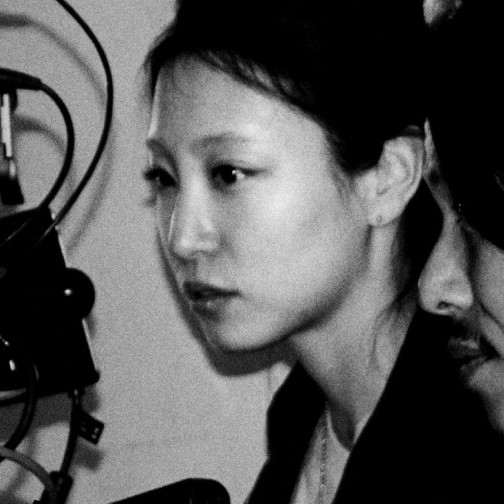
collapsed bottom of the box. Looking at colleague, one
cannot tell whether it recalls a scene from memory or depicts the portraits of
doctors one has never met—the judgment fractures along the creases of the film.
As a surgeon of sites, Chang Younghae places various concepts with boundaries
upon the operating table, making the viewer suspiciously wander through the
anesthetized center of time. When leaving the exhibition, still holding the
unresolved question of our “intactness,” one gradually and then vividly
perceives the sound from a video—the sound of massaging a heart. Reflecting on
the excessive pressure weighing upon the exhibition space, one senses that the
very foundation of life is shrinking into a smaller and smaller aperture. Yet
if one can recognize that this is the only form life can take, then even upon
what has collapsed, we can still fall asleep.
¹ Clarice Lispector, Near to the Wild
Heart, trans. Min Seung-nam (Eulyoo Publishing, 2022).