Articles
[Critique] [Media Art Now] Sanghee’s gameplay revisits idea of interactivity and connectivity
2024
Kim Seong-eun
 SANGHEE,
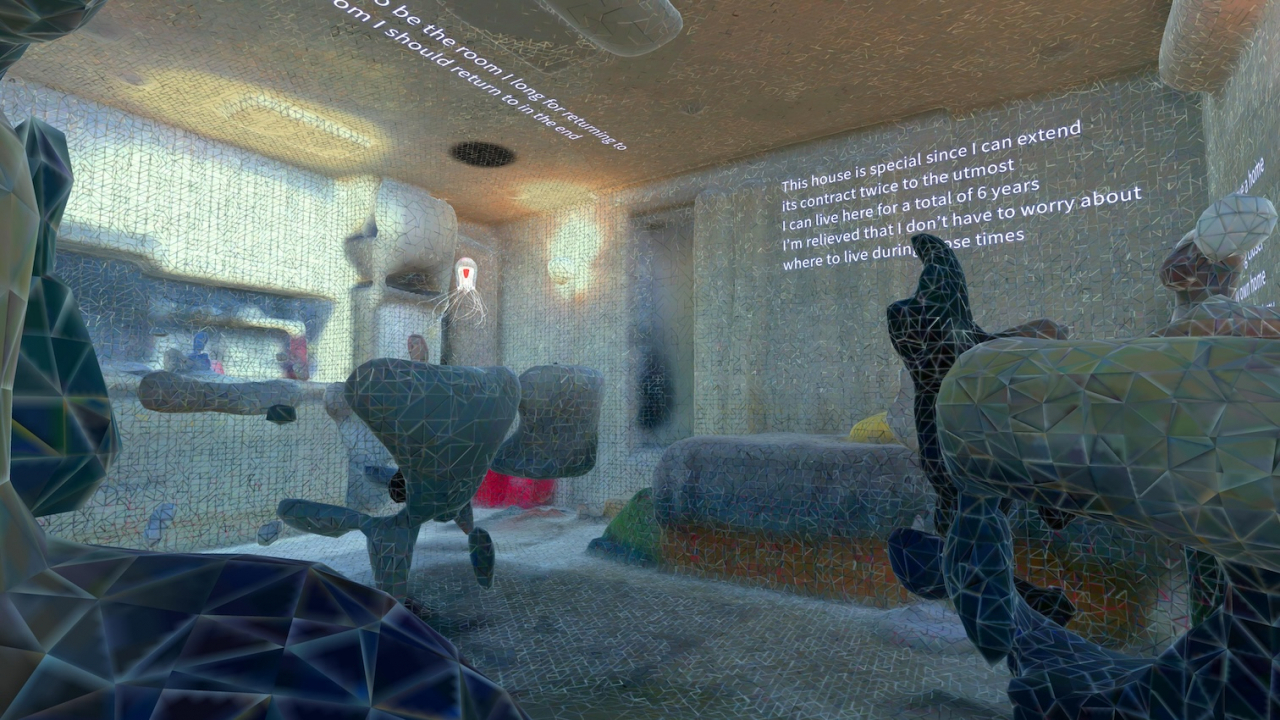
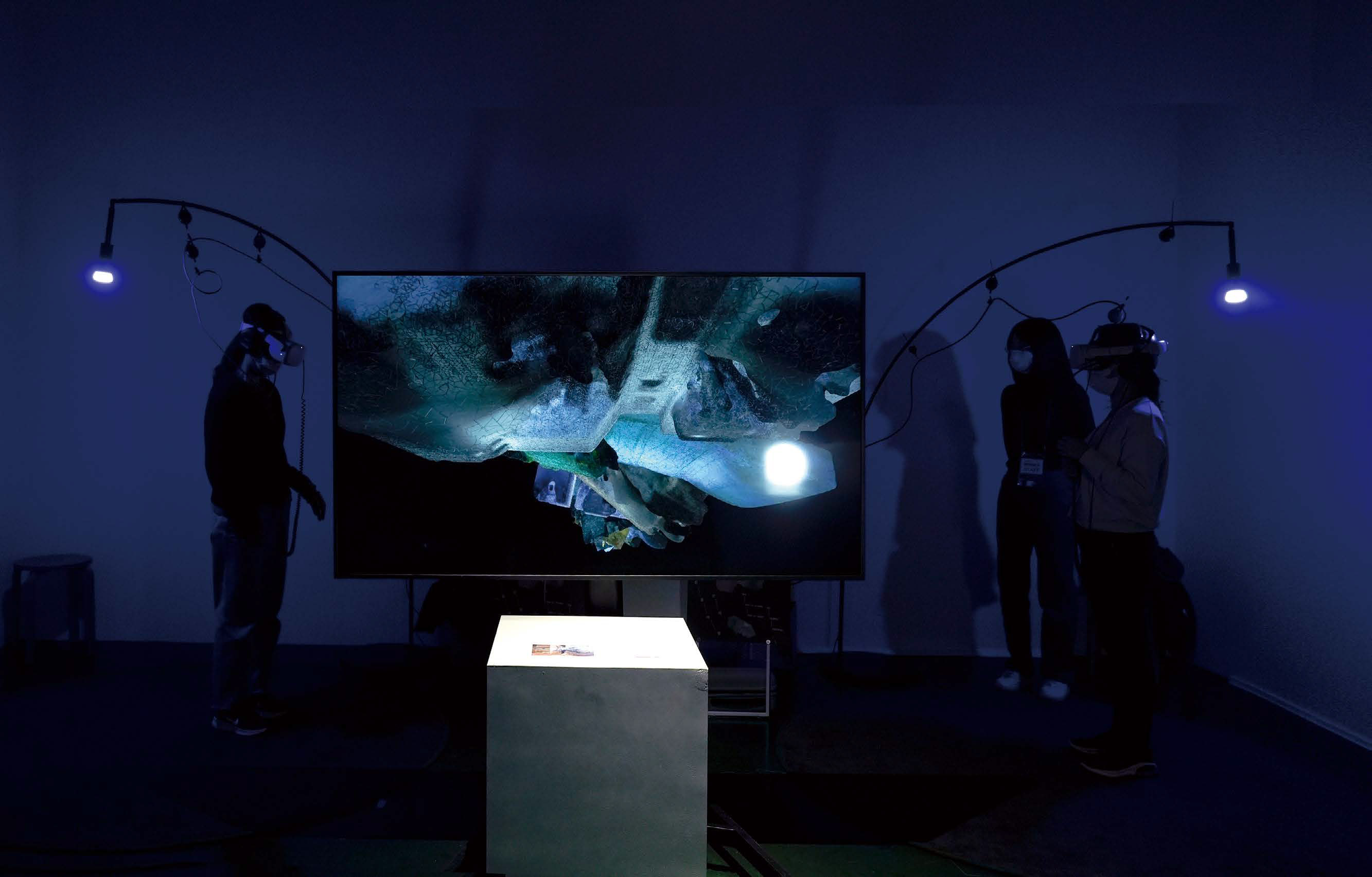
Oneroom-Barbel, 2022, Interactive VR, single-play, 15min
©SANGHEE
SANGHEE,
Oneroom-Barbel, 2022, Interactive VR, single-play, 15min
©SANGHEE
Everything seems synchronized today,
happening at the same time and at the same speed. You can connect yourself with
the world, whenever you want and even when you do not want to. It is an age
where a sense of being together is more easily obtained than a sense of being
separated. But is this really true? Is the synchronicity a prerequisite or a
preference when you seek to generate interactive togetherness?
Sanghee (capitalized as SANGHEE by the
artist), who came to distinguish herself with her VR-based works in the media
art scene, is less interested in the technological medium itself than a social
bond of relationship, how it forms and how it feels in contemporary,
super-connected society. Her Oneroom-Barbel(2022-2023) is a
single-play interactive VR work, inviting you to catch a glimpse of young
people living in studio units. The Korean housing type called “oneroom" in
Konglish indicates a studio flat where the major functional elements of a home
such as a bed, bathroom and kitchen are equipped in one single room.
For this work, Sanghee interviewed more than
20 young people and captured their one-room spaces with a Lidar (light
detection and ranging) scanner. The scan data was then processed into a
dreamlike virtual architecture. She constructed it by placing one studio unit
upon another. In every oneroom, you can discover jellyfish-like creatures, some
of them obviously visible, others hidden, so that you need to bend down or move
your head. When you unlock them via a controller, sentences pop up, extracted
from the interviews and written by the artist.
The oneroom is for Sanghee an embodiment of
suspension in terms of social maturity. As you explore a succession of rooms,
you feel as if you are getting deeper or higher, becoming fathomless or
weightless, nowhere or anywhere. The project leads to an indirect form of
interactivity with oneroom residents who may be struggling with precarious,
frustrating living conditions. Her design of virtual structure allows you to
augment your sense of empathy with built-in emotional layers.
 SANGHEE,
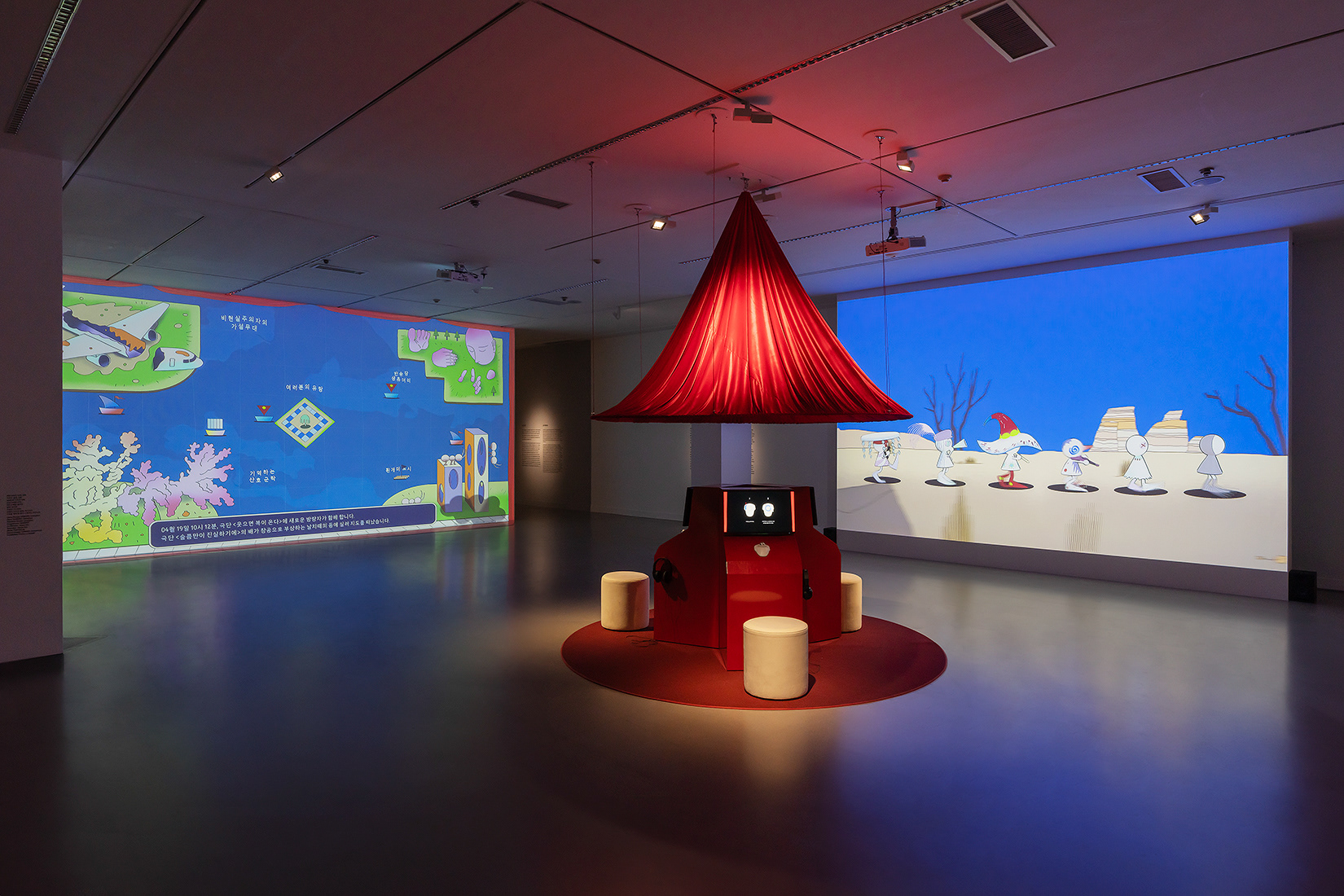
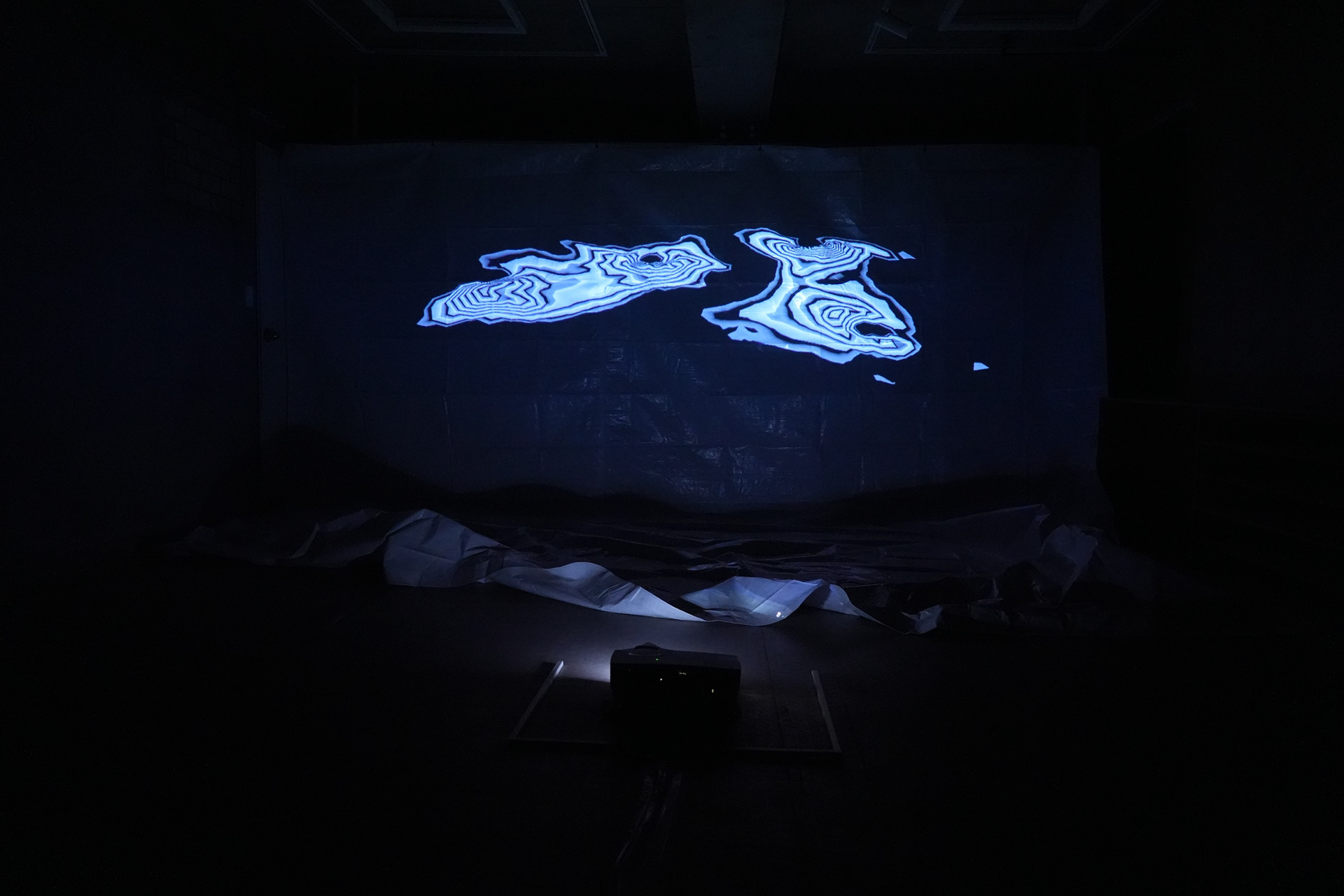
Worlding···, 2023-2024, Interactive VR, Single-Play based on
a local network, 20min ©SANGHEE
SANGHEE,
Worlding···, 2023-2024, Interactive VR, Single-Play based on
a local network, 20min ©SANGHEE
More taxing manual labor is required for
taking part in Worlding···(2023), a hand-tracking VR game.
There is a dead giant in a swampy terrain and you are encouraged to pile up
soil to bury the body with your hands. After the set amount of labor for the
day is completed, you are led to a lodge to read a diary written by predecessors.
The next day, you have to perform the same task again, with all the parameters
reset to the start. At some point in the repeated labor, you realize that your
virtual hands have become chapped and aged.
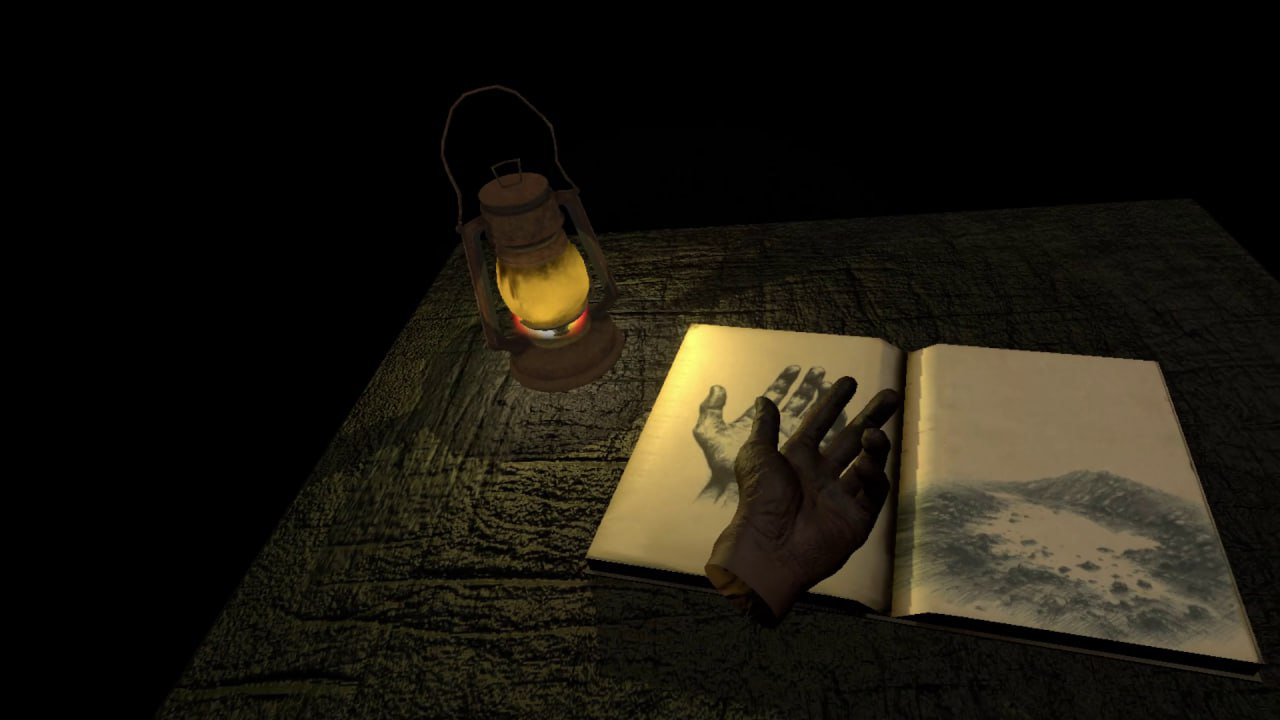 SANGHEE,
Worlding···, 2023-2024, Interactive VR, Single-Play based on
a local network, 20min ©SANGHEE
SANGHEE,
Worlding···, 2023-2024, Interactive VR, Single-Play based on
a local network, 20min ©SANGHEE
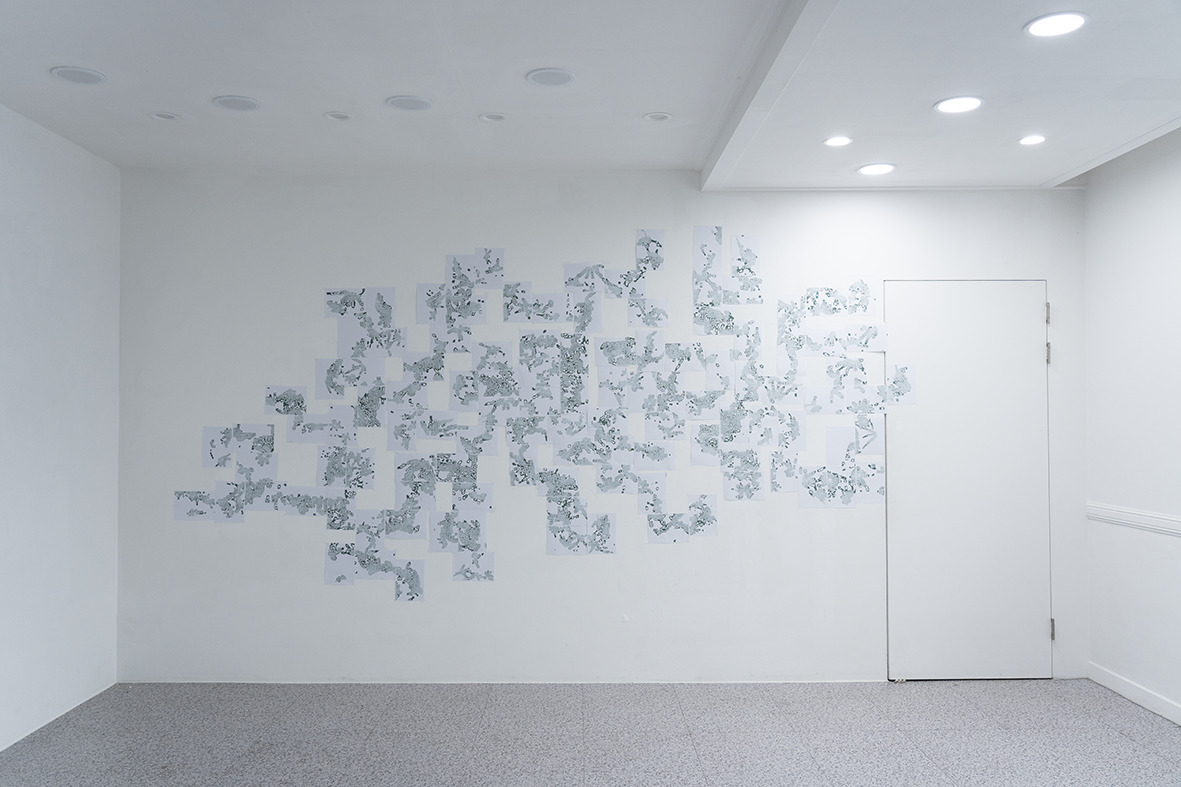
This work is characterized by another
dimension of connectedness. When each player completes a session, the
topographical data produced by the participant’s digging and heaping inside the
game is printed out to become part of a collective map displayed on the wall of
the exhibition. There is no real-time interaction between the players, but the
monotonous, apparently endless, individual toil transpires to constitute a
world collectively so to speak -- “worlding," always in the present
progressive.
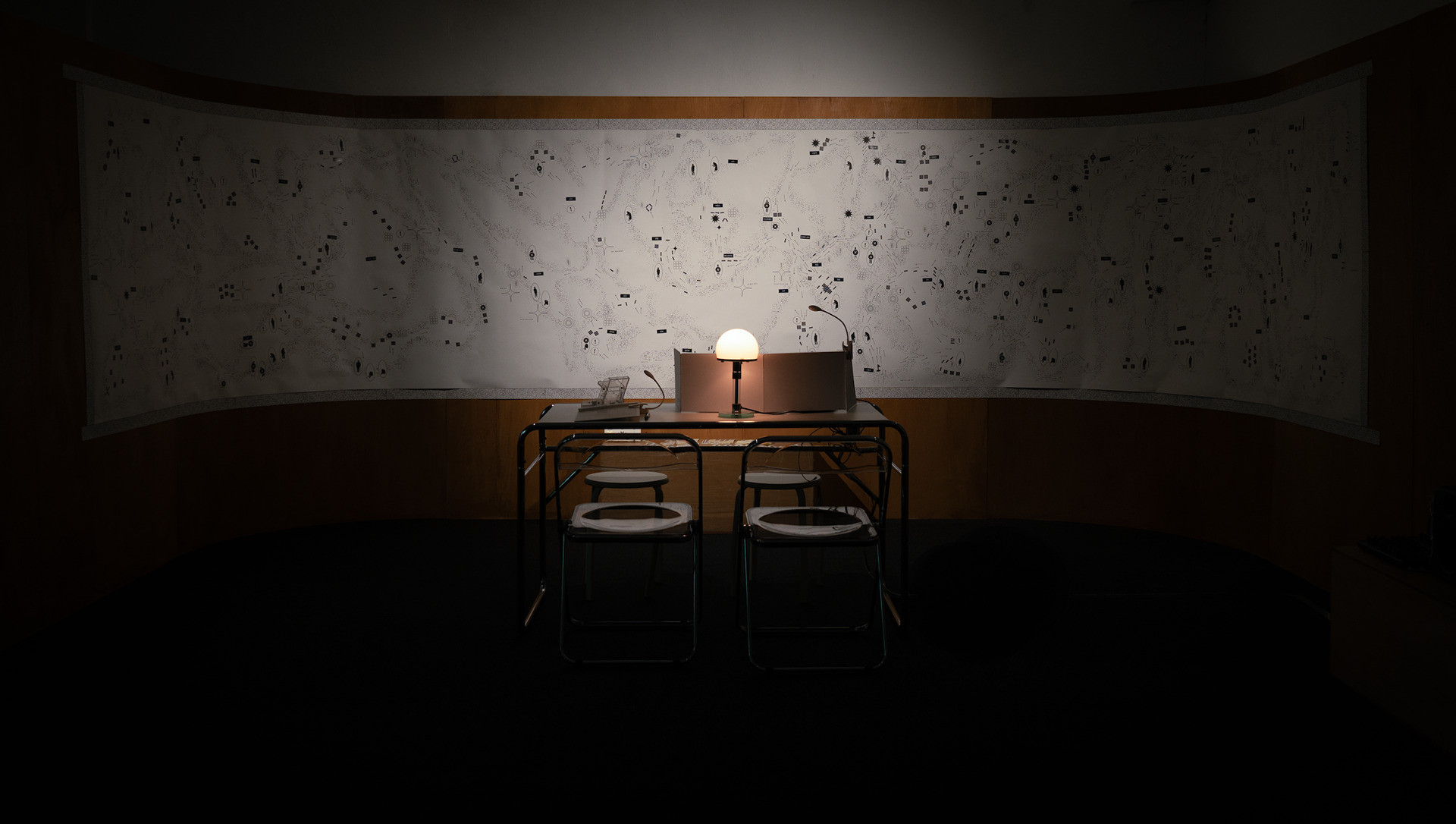
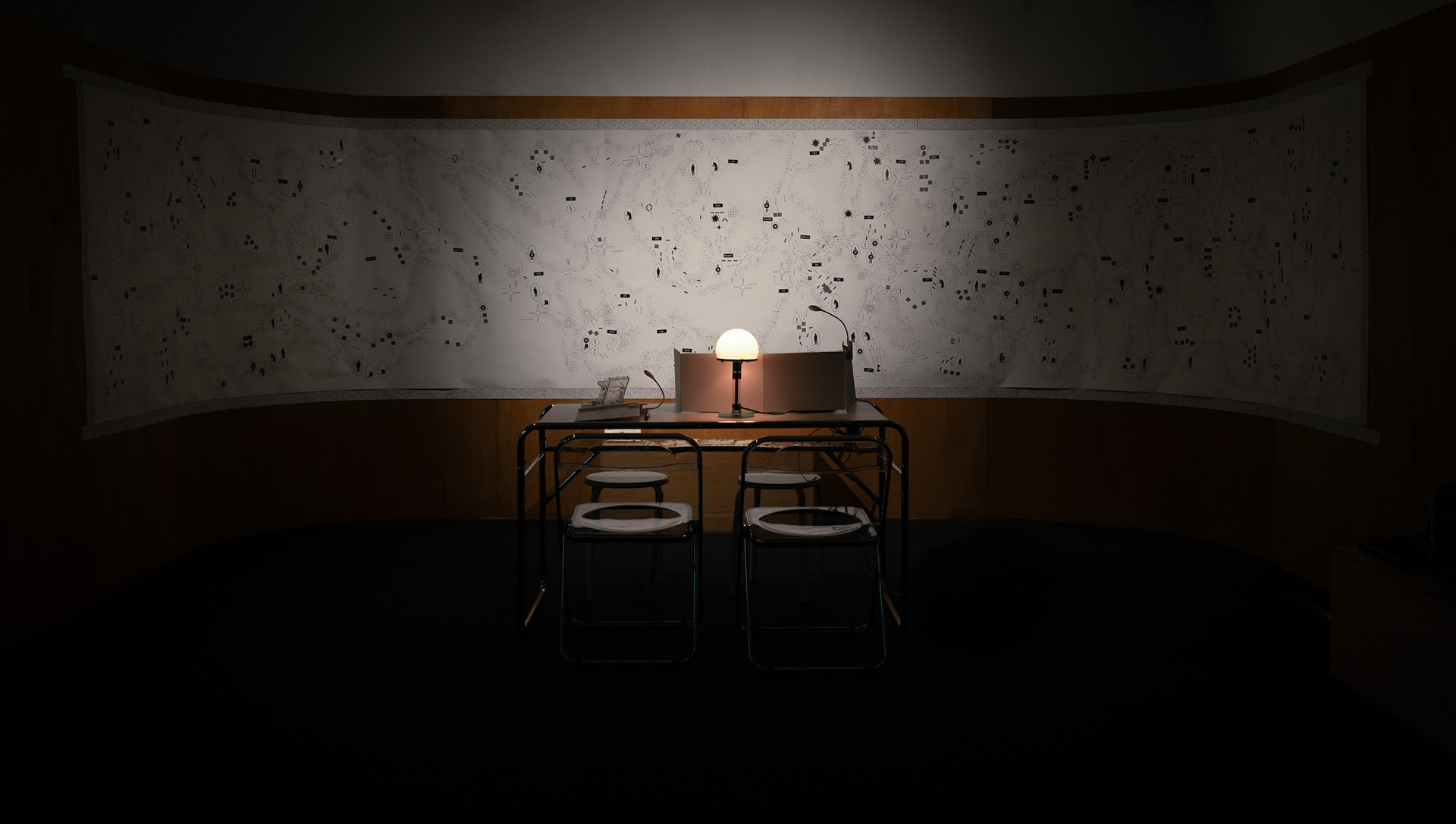
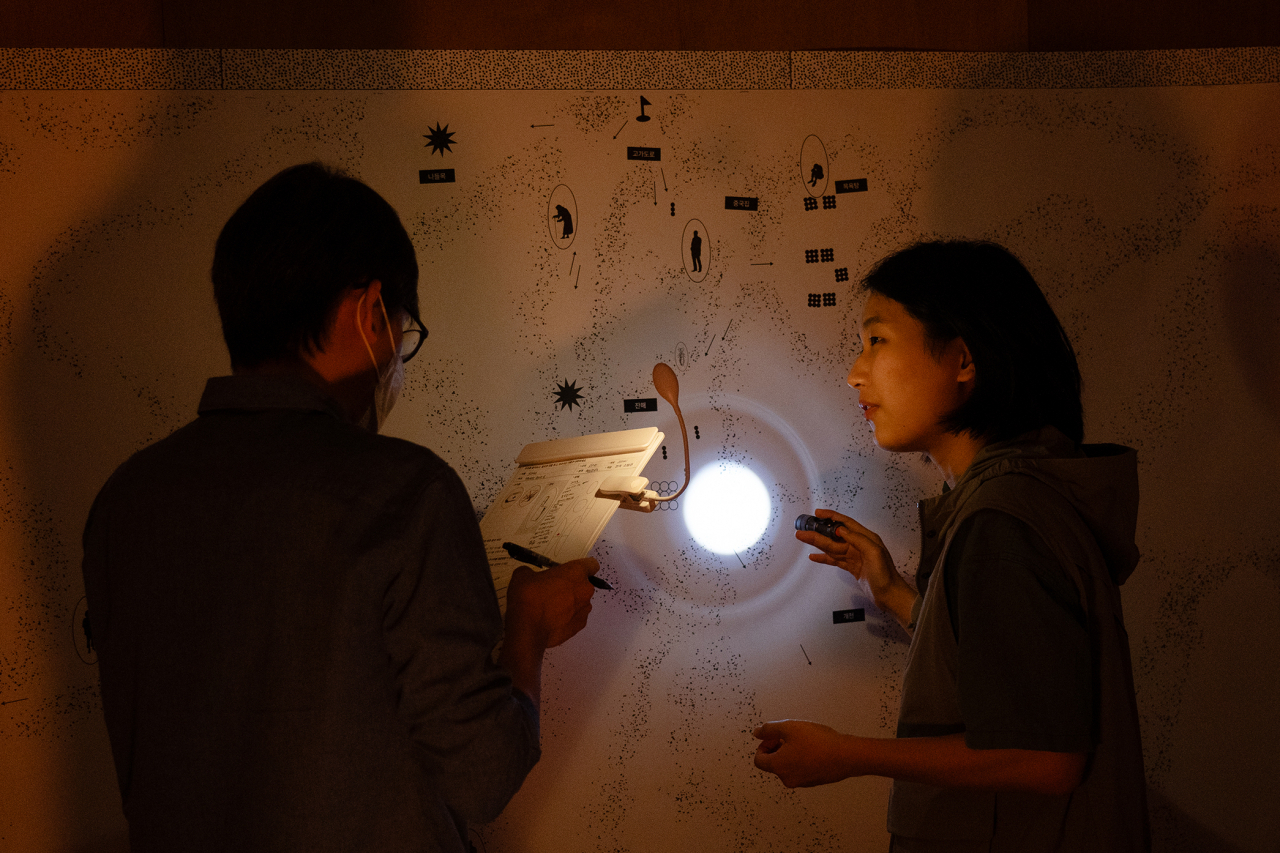 SANGHEE, Conversational Map for
Encounters, 2024, Roll paper attached to plywood structure, Stickers,
dimension variable ©SANGHEE
SANGHEE, Conversational Map for
Encounters, 2024, Roll paper attached to plywood structure, Stickers,
dimension variable ©SANGHEE
In Sanghee's world-making, the game engines
are essentially in action and she even attempts gaming without employing any
technological gadgets. Conversational Map for Encounters
(2024) is a tabletop role-playing game (TRPG). There is an isolated, derelict
village called a “hometown” and each player comes to the hometown as a
character assigned according to their choices in the pre-game questionnaire,
say, a biologist or a firefighter.