When encountering the work of Kim
Jipyeong, we are initially introduced to objects that could easily be dismissed
as a theatrical backdrop to the main actors, what could be colloquially
referred to as “just part of the furniture.” However, upon closer observation,
what becomes noticeable is the “agency” of these art objects, to borrow from
anthropologist Alfred Gell, as they carry autonomy not dissimilar to the way
people perceive themselves as entities with the capacity to invoke consequences
and effects in the world.
In this regard, upon entering Kim’s installation, we
are drawn into universe after universe where our subjectivities are confronted
by materials that facilitate an otherworldly encounter through the artist’s
labour in crafting materials steeped in traditional Korean arts. This essay
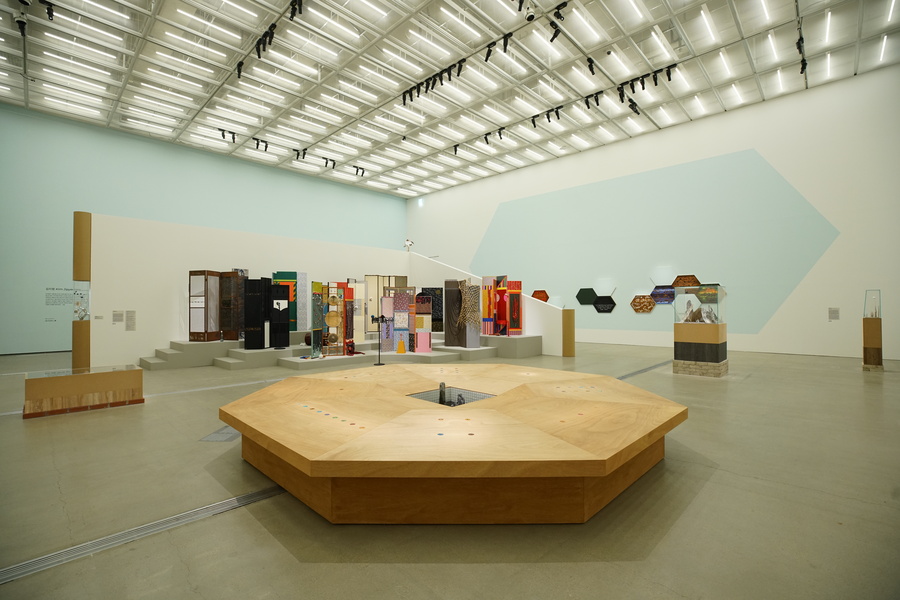
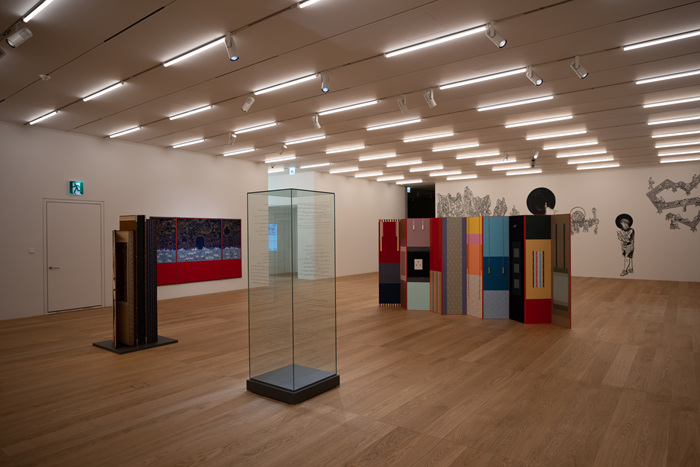
serves as a walk-through of the works presented in 《Korea Artist Prize 2025》 exhibition at MMCA,
through the lens of “worlding,” a notion that can be loosely described through
the philosopher Martin Heidegger, whereby the world is brought into being
through literally objectifying, or “thinging,” it into existence.
Screening Different Visions of
Samsara
Folding screens, or Byeongpung, have long
existed in Korean decorative and fine arts as objects historically noted for
adorning dynastic and aristocratic households. It was believed that folding
screens were often placed at the back of a room, with the term Byeongpung even
referring to an object that has no significant presence or impact. Korean
religious and cultural rituals and traditions have historically been
syncretised from a myriad of intercultural interactions—not least those that
developed indigenously on the peninsula and those marked by contact with
outsiders, often colonial communities, even within Asia.
The result of these
interactions is evolving traditional forms observable through objects initially
designed to aid in everyday beautification. Within this Korean tradition, a
link exists between the landscapes depicted on these screens; one of the most
frequently cited is Sea, Cranes, and Peaches (1902) in the
collection of the National Museum of Korea, which was initially part of the
collection at the Honolulu Art Museum in the United States.
This screen
elegantly depicts its namesake in forms where patterns and iconographies
collapse, with images of clouds and sky appearing seamlessly together like
wallpaper. Negative space is indicated through opulent gold leaf. Cranes and
peaches infiltrate the composition as if to depict the abundance and
undisturbed landscape of the natural world.
Versions of these types of masterfully
crafted screens exist across various contexts in East Asia and are often
contentious in their historicisation regarding the “origin” or their sources
and the national frameworks into which they fit. They often serve as
significant indices to validate national styles and identities, as well as
demonstrate gift-giving cultures and diplomatic stylistic evolutions across
East Asia.
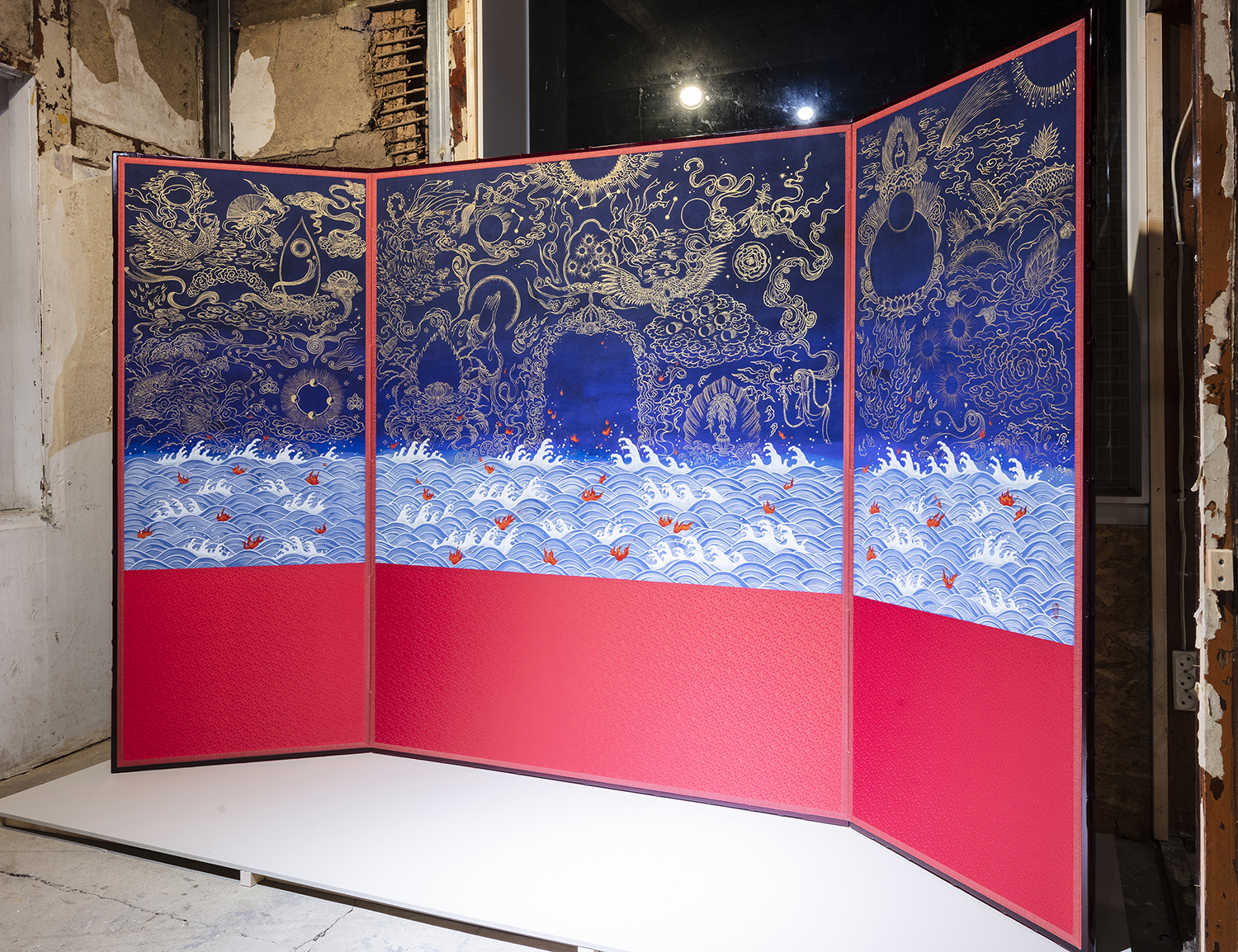
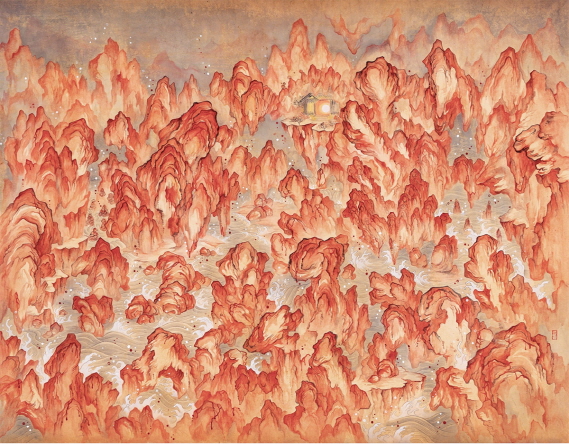
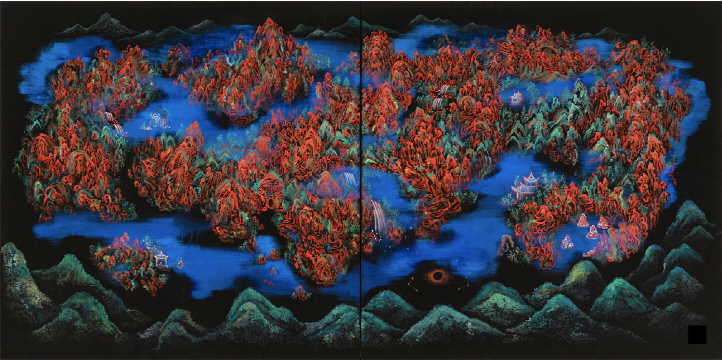
However, in Kim Jipyeong’s work, although she is trained in both
Dongyanghwa (Eastern painting) and ink painting in what has been called the
“genre of self-reflection,” there is a departure from viewing these forms
solely as indicators to valorise tradition blindly. Kim utilises the materials
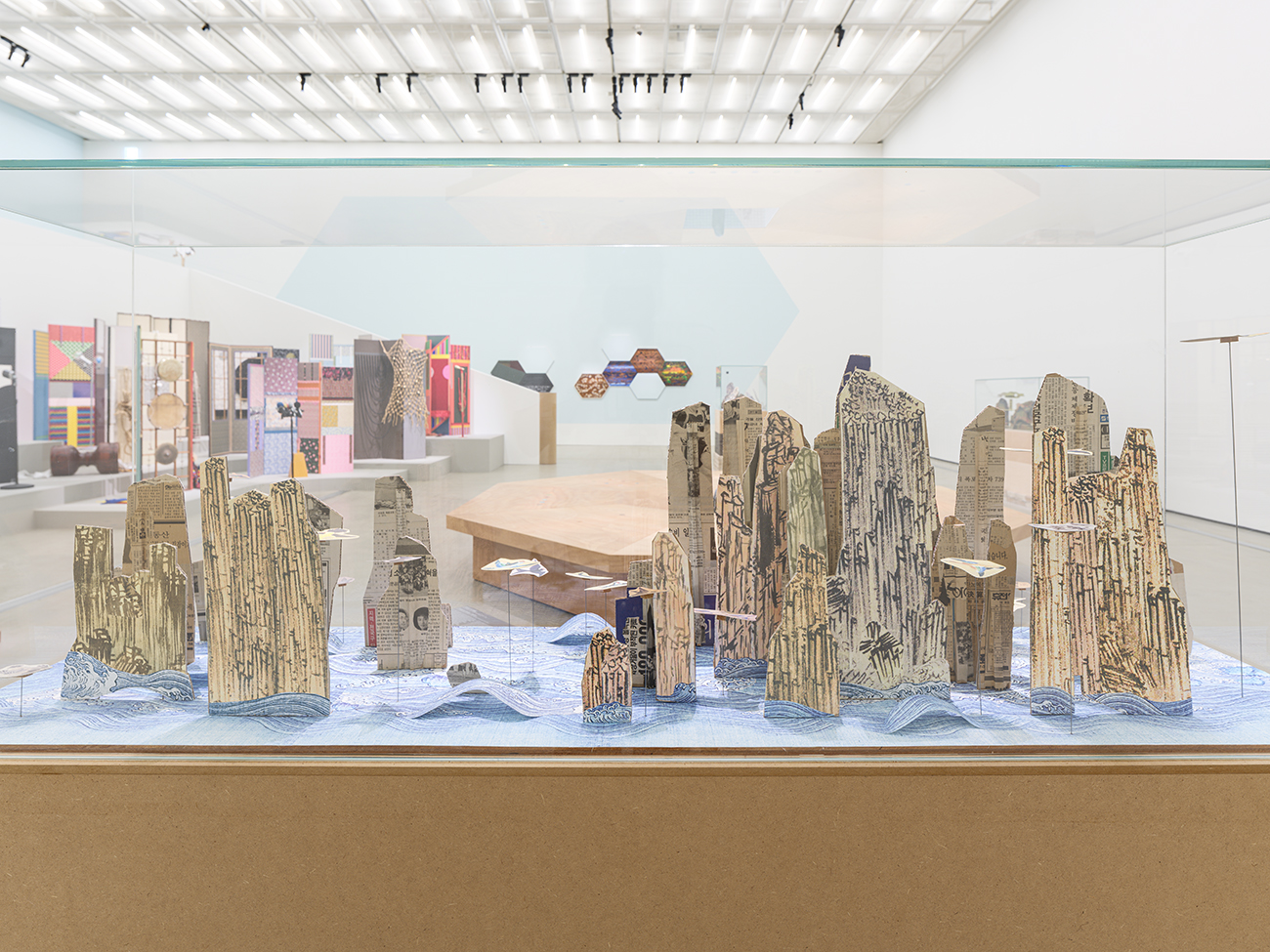
of everyday aestheticisation, such as picture books transformed into dioramas
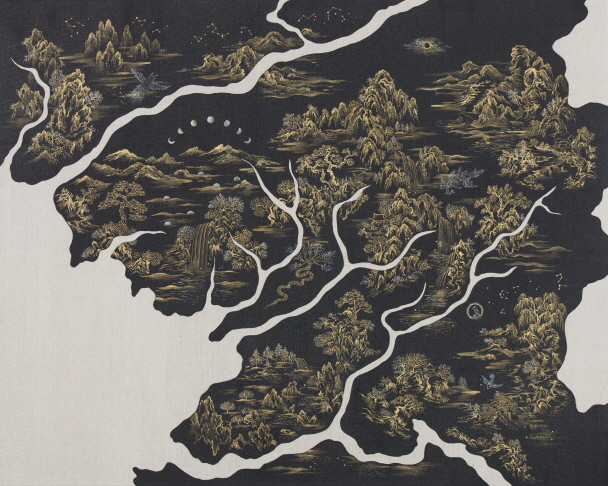
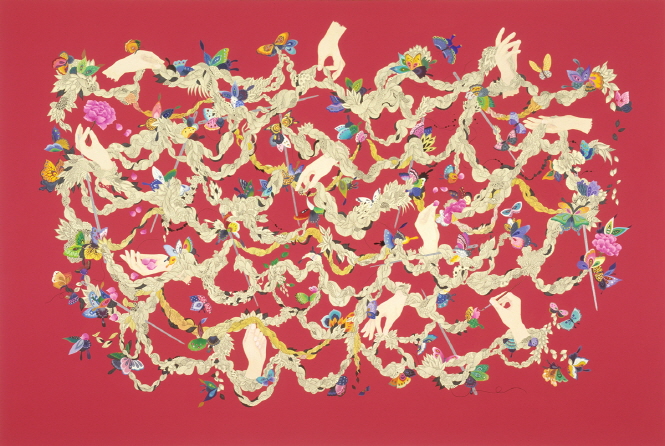
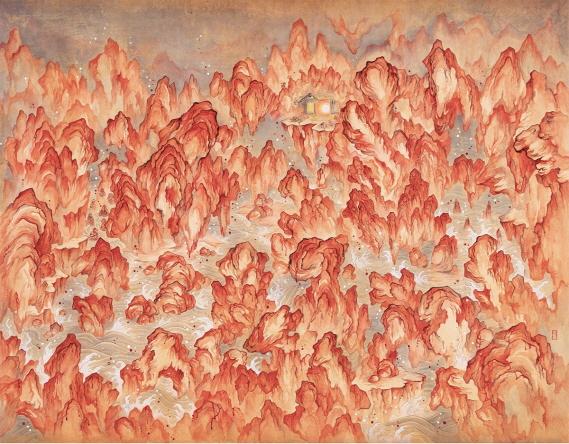
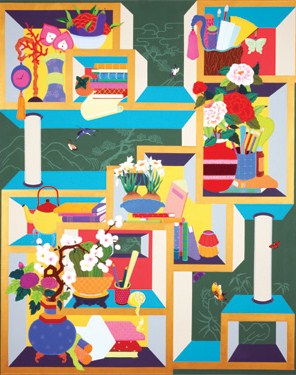
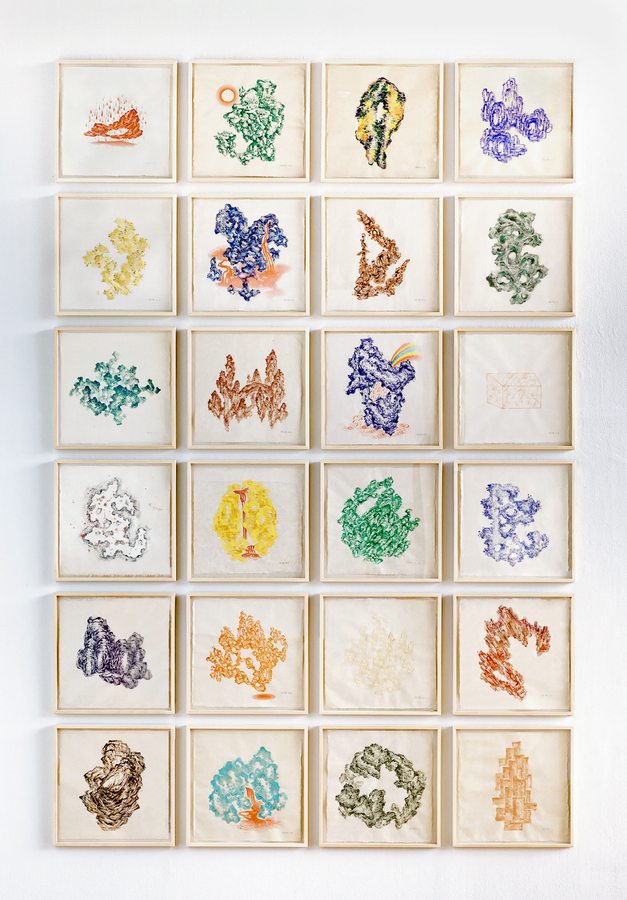
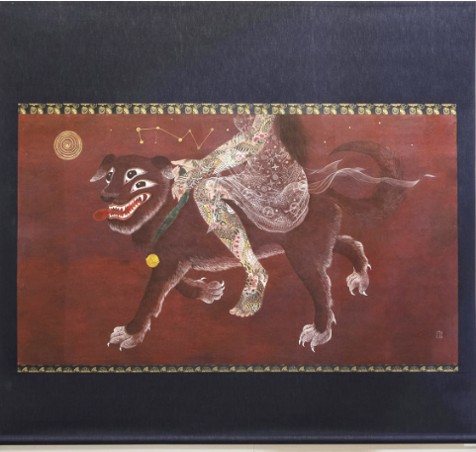
as seen in the series Pop-up Sansu (2023–2025), and in the
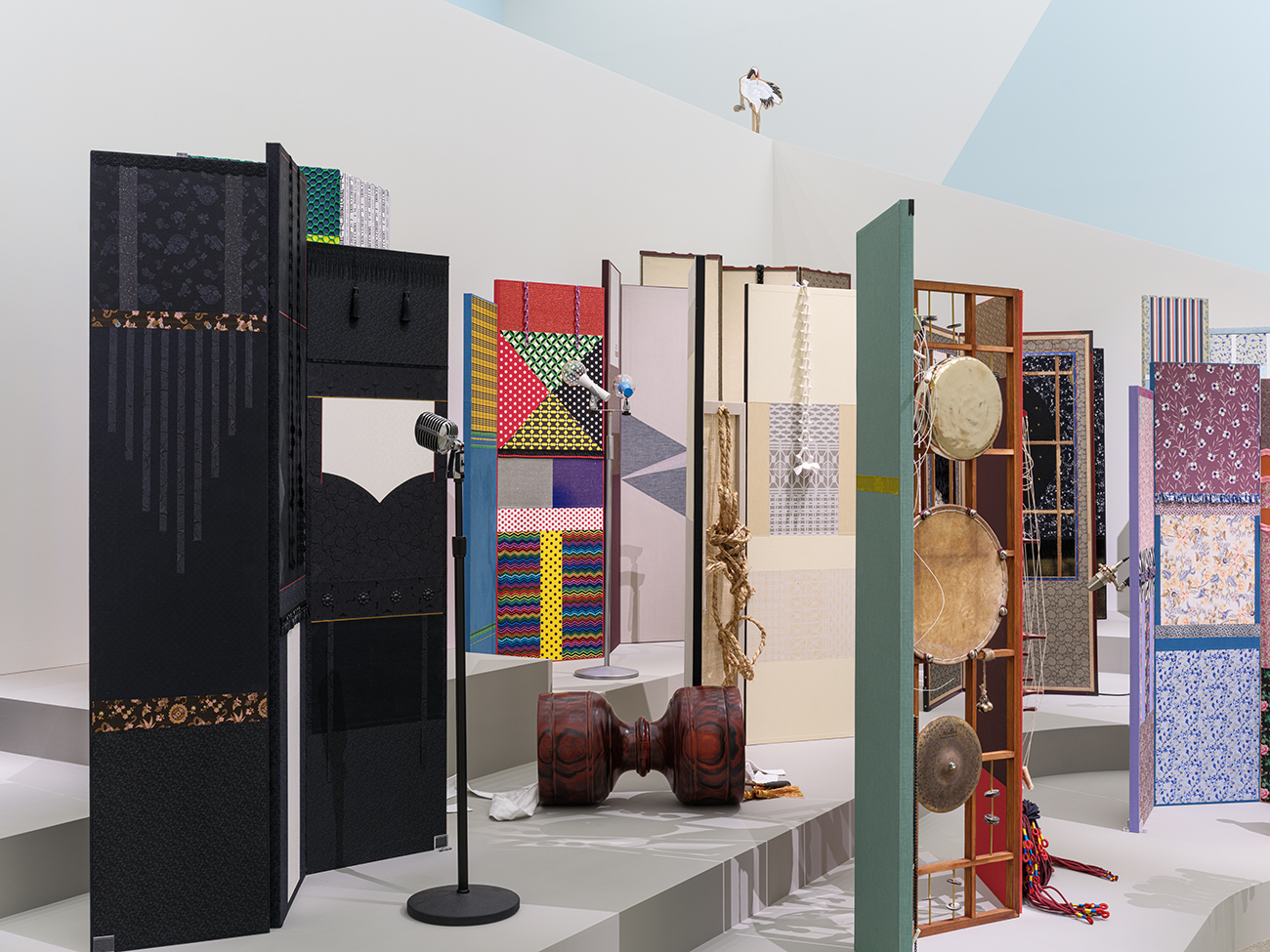
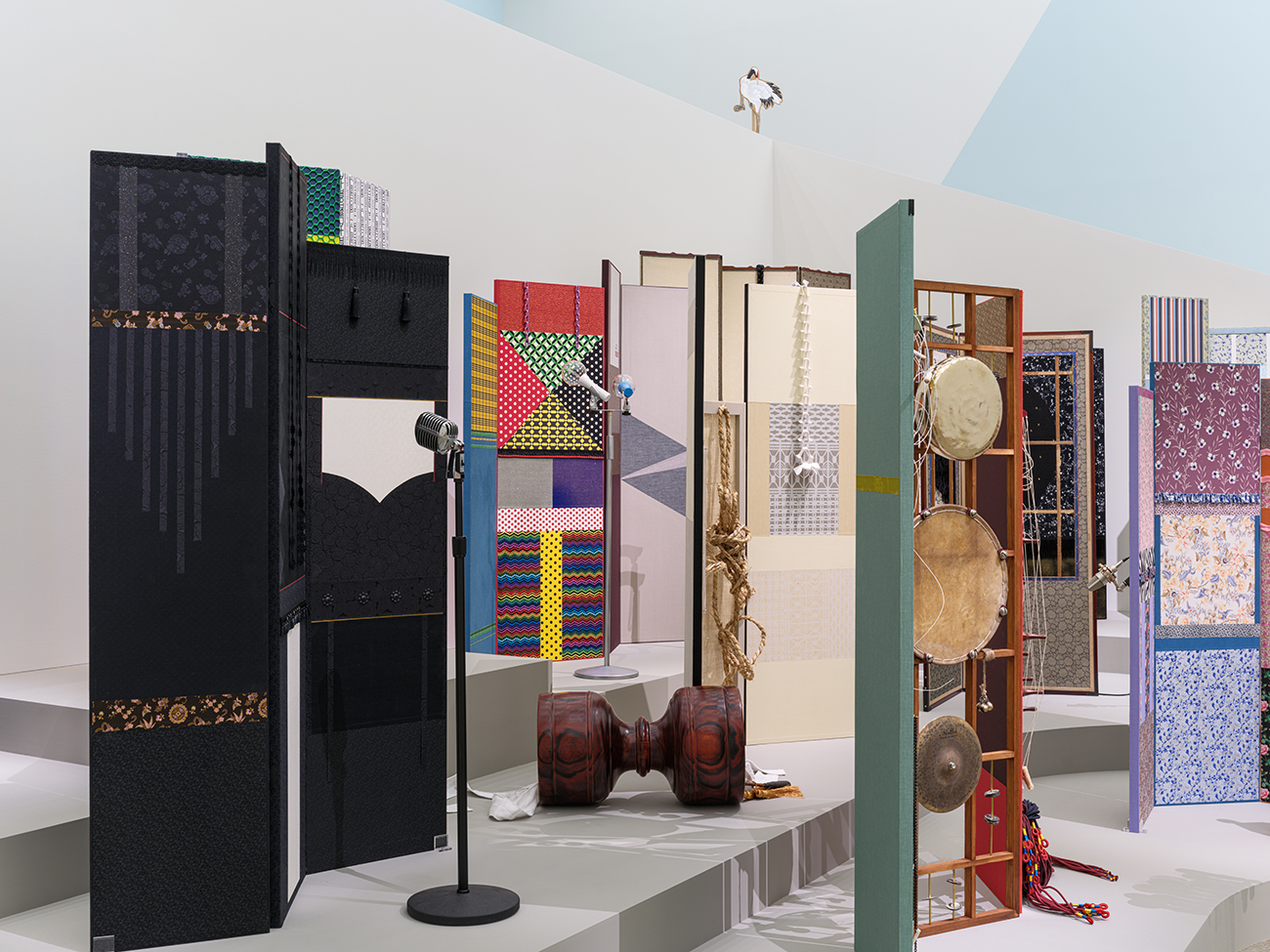
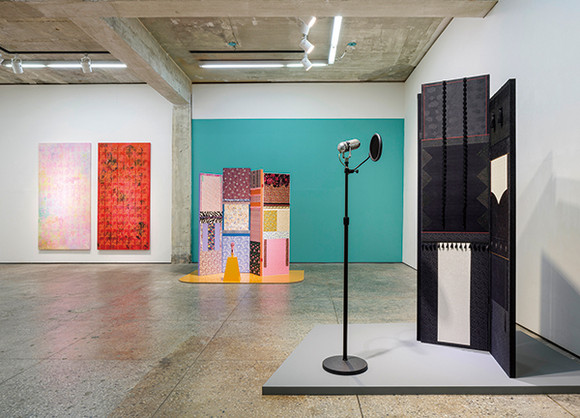
series Polyphonic Chorus (2023–2025), the upcycling of
vintage screens with renewed archetypal figures from everyday Korean folklore
and life markedly differs from the distant grandeur of those found in stately
collections mentioned in the previous paragraph.
Instead, Kim’s screens hint at
domesticated forms of everyday beautification but also open the possibility of
another world through the creation of artworks that are full of agency—embodied
actors through their material form. Through the craftsmanship imparted by her
human labour of collecting and collaging materials together, the objects adopt
animistic tendencies, particularly as they point to other bodies through the
designation of archetypes for each screen. They are no longer removed from the
viewer’s experience as an idealised projection of nature but instead exist
within the realm of encounter with figures one would find in Korean everyday
life.
While the purpose of folding screens may
have been more aesthetic than functional, they also serve as objects that
create an illusion of division in an open domestic space, commonly used to
protect modesty when changing clothes. Their allure lies partly in their
ambiguity as instruments that obscure sight, which also means they can be
objects through which to sneak a peek romantically.
In Kim’s work, the screen
becomes a device that embodies another type of ambiguity, representing
archetypes of various Korean figures: the shaman, an ‘auntie,’ a diva, a
soldier, a salary man, a rockstar and others, signified through various indices
of pattern and clothing that the artist has assembled together as if some kind
of skin or even clothing on the screen.
Rather than facilitating the seductive
game of flirtatious human activity, the screens of Kim, rather, act as
animistic stand-ins for the diverse individuals that constitute the social and
visual landscape of life in Korea. They serve as portals to positions and worlds
beyond our singular experience and as points of connection, all demonstrating
the spectrum of everyday life—a kind of Samsara, the Buddhist concept of the
cycle of life and death that we all currently traverse, even across various
stages of Korean life.
What this meeting offers through these
iconographic archetypes is perhaps its form of animist “encounterism” with
these objects as if they were people. Through the screens, and observing them
as a medium through which to transcend our minds and step into another world,
they are subversions of traditional screen paintings. In European
Enlightenment-era thinking, the dialectics of encounter were of course,
contained in the illusory and ideological divide between the “self” and the
“other.” Within a Buddhist framework, however, this division collapses.
In
Buddhism, which holds its own distinct beliefs about the role of enlightenment,
there is no self, only the “nonself.” Furthermore, “encounterism” has been
described by the art historian Roger Nelson as an interaction, a
“contradistinction” from ideas of primitivism, which posits a hierarchical and
politically fraught distinction between the self and the other.
This idea
differs from the notion that estrangement and distance occur when confronted
with difference. Rather, through making the banal and everyday beautiful
through a range of a cast of characters in Kim’s screens, a curiosity around
difference is brought not through the inaccessibly stately, but rather the
everyday.
A key aspect of animism is the belief that
objects possess a soul. It does not limit the possibility of something being
alive to only being sentient. The human hand of the artist in this instance
arguably mirrors the function of the shaman that is present in one of the
screens, as a medium who facilitates encounter with beings that are emergent in
non-human and even more-than-human materials.
Made up of a patchwork of
different fabrics, these screens allow us to recognise a human subjectivity
within a conventionally inanimate object. The role of the shaman in Korean
culture has been contested historically as an affront to the introduction of
different religions which entered the country through the onset of modernity.
Shamanism and animism in Korea, however, has viewed the domain of the household
as a particularly charged arena of both spirits and ancestors that require care
and tending to.
Shamans also act as protectors against bad fortune and even
worse spirits. Animism, unlike major monotheistic religions popular in
contemporary Korea, also uniquely offers a form of syncretism commonly found
within Asian cultures, providing portals for diverse cultural engagement and
arguably a form of cosmopolitanism of sources avant la lettre. We can even
consider the shaman’s ability to travel, metaphorically, between different
realms as similar to objects and artworks that traverse a more-than-human scale
of planetary living.
A further analogy between the shaman and
artist can be made through the role of the artist’s ability to transport
viewers and material, where the human hand offers not only the act of creation
of something but also an imprint of a particular time and place.
Art historian
Pamela Corey has described the relationships between craft and conceptualism as
“a haptic gesture with ethnic identity,” whereby the evidence of representation
is partly through this hand labour process of creation which serve “performatively
declaring the nature of their objecthood.”
In regards to traditions of ink, and
in this case screen painting, the diverse and hybrid tendencies of screens in
traditional craft cultures are both localised through pointing to familiar
figures yet take on an iconic status that can translate beyond traditional and
nationalist oriented frameworks.
Carrying the Weight of the
World
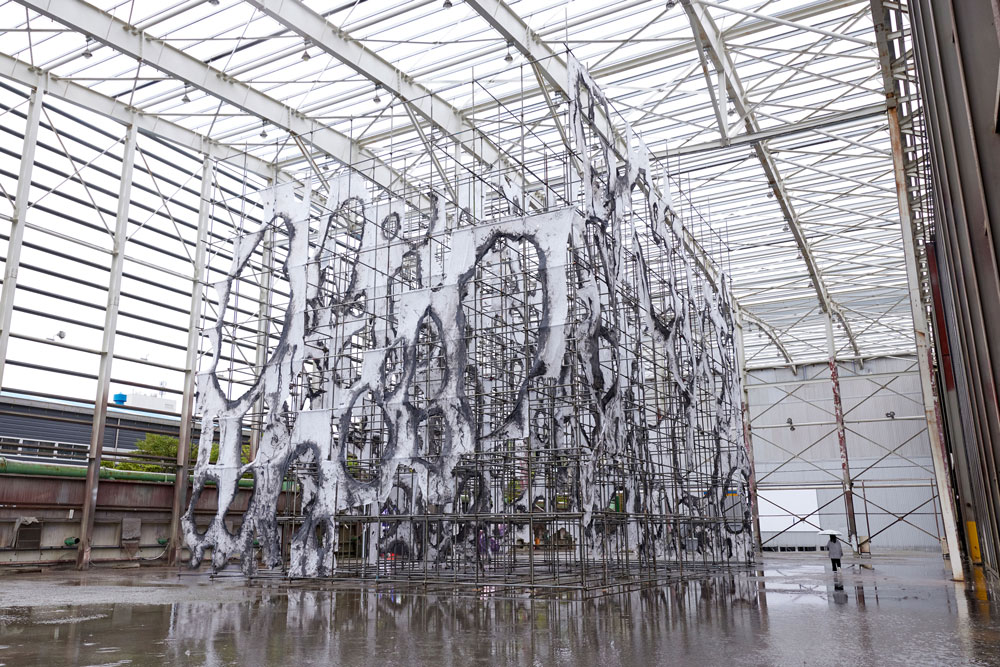
The new artwork by Kim Jipyeong,
Cosmic Turtle (2025), can arguably be seen as an
understanding of how epistemologies reside in the “more-than-human” or what has
been described as “multinaturalisms” or more simply put, the capacity for
interdependence of different forms of species and beyond centring human
consciousness as exceptional.
The title of the artwork is a reference to a
familiar mythology of a turtle carrying the whole world on its shell. We can
read this as a metaphor for an entire knowledge system and could even be
interpreted as an expression of burden through the aphorism in English:
“carrying the weight of your world on your shoulders.” It’s a narrative that
echoes the Greek mythological character Atlas, who also carried the earth on his
back, a burden that was punishment for rebellion against the Olympian gods.
The idea of “slow and steady,” is often
associated with the characteristics of the turtle from the fable of the
tortoise and the hare. The turtle presents itself as a persistent yet
consistent animal who, despite the limitations of its physical body, can
accomplish feats through knowledge and strategy.
It forms a plethora of
references that are associated with the turtle as a symbol synonymous across
cultures in Asia, Africa, and indigenous cultures across the Americas as well
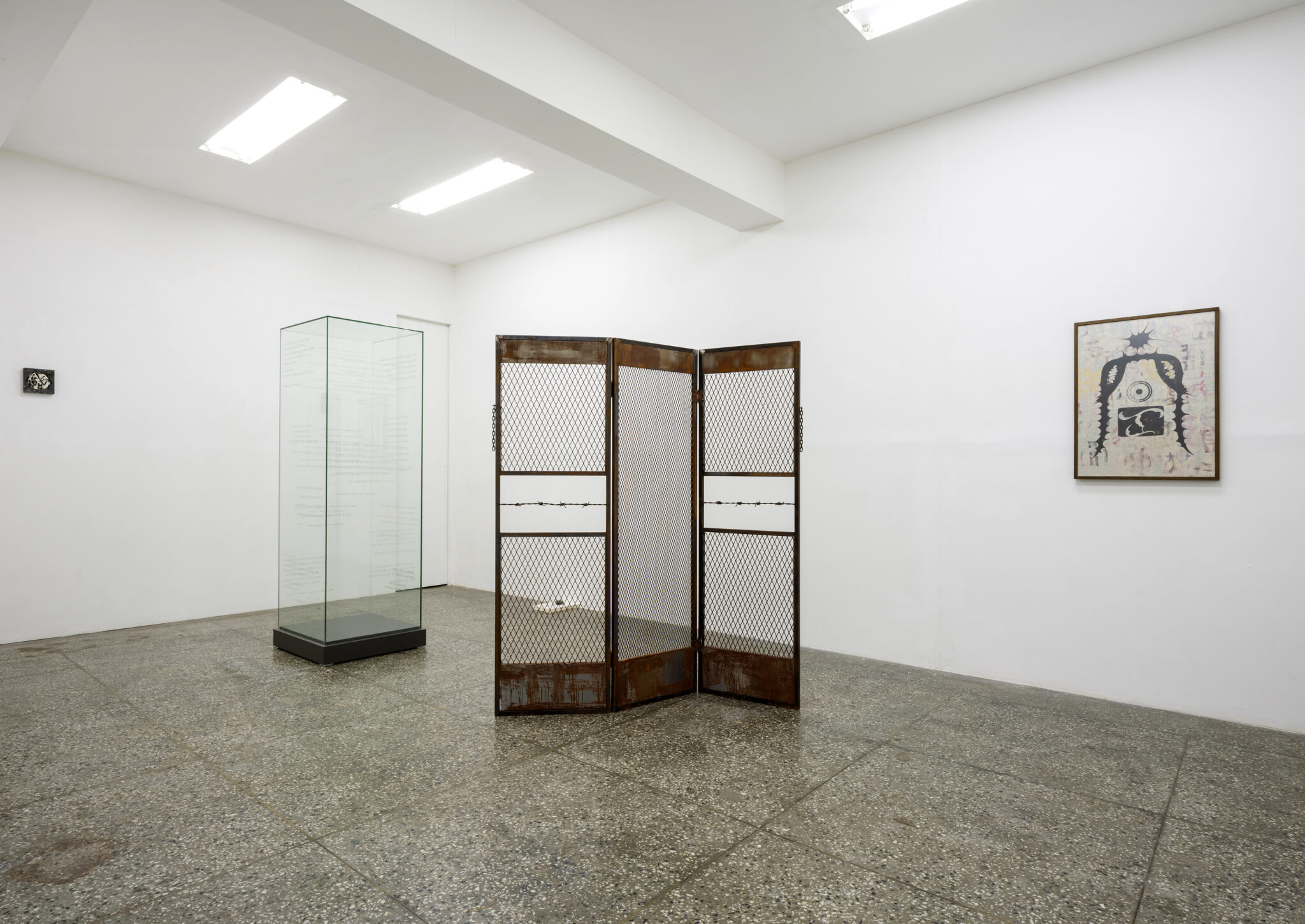
as the Pacific. At the same time, Jipyeong fragments the Cosmic
Turtle into different portions of a wood block print scattered around
the installation. Its presence, even if sculptural and metaphorical, hints at
the ideas of worlds within worlds that the artist is drawing upon, as well as a
syncretism and encounter with a more-than-human world.
In Kim’s Cosmic Turtle,
by hinting at the printing press, we are prompted to consider the way ideas
travel in the world, carrying knowledge and imprinting it quite literally
through the process of wood in contact with paper. The first printed book
featured a Korean technique of paper production made from mulberry, a similar
material that would later be used to carry illustrations and paintings on
folded screens.
Arguably, the world has been brought together as “an imagined
community” through the proliferation of what scholar Benedict Anderson called
“print capitalism,” a shared understanding fostered by the circulation of
language through print, enabled by affordable materials like paper and the
mechanical reproductions of block printing. These innovations allowed for the
production of texts at a rate that disseminated messages far and wide.
Long
before the advent of the Gutenberg press—which famously spread the Bible
throughout Europe around 1440—and is often mistakenly credited as the world’s
first printing press, there was the famed Koryo print, which would be well
known to the local Korean audiences, originating in 1234, 200 years prior to
Gutenberg’s advancements.
The first printed book was a Confucian text. The
oldest surviving woodblock print is believed to be the Pure Light
Dharani-sutra, a Buddhist scroll dating to 684 and 704 and discovered
in 1966 at the Bulguksa Temple in Gyeongju. Another Buddhist text, the
Diamond Sutra dating to 868, is arguably the first book
produced freely without copyright, due to an expression at the end of the sutra
stating it should be for universal free distribution.
Artwork as Offering
In an installation made up of Korean
archetypes through ‘Polyphonic Chorus’ and wood block fragments in
Cosmic Turtle, we can perhaps consider this constellation in
Kim Jipyeong’s work a kind of charged domestic space, where the artworks are
imbued with potential to be animated, further observing audiences as they are
being observed.
In domestic spaces, spirits often require attention and tending
to, and offerings that are caringly given are standard, as a way of keeping
them alive. Even though Kim Jipyeong is steeped in courtly and masterful
traditions of artistry through her extensive training in Korea’s cultural
traditions, in some respects, there is a celebration of the earthly,
hardworking and humble, even when dealing with the mythological.
The turtle,
the soldier, the diva-grandmother, the shaman, the lone salary man—these are
all figures rarely as major characters in history, and rather just carry the
world along, making it as they live in.