JSUK HAN
expands the concept of “feedback” to the center of artistic inquiry through the
physical phenomena of light, sound, and vibration. He notes that the
relationship between input and output, reception and transmission, forms a loop
of interaction and circulation rather than a simple delivery structure. Here,
feedback is presented not merely as a technical phenomenon, but as a “living
system” that continuously generates and disappears while containing
unpredictable mutations and errors. Through this, HAN explores both the
incompleteness of communication and the nonlinear order of the world.
His
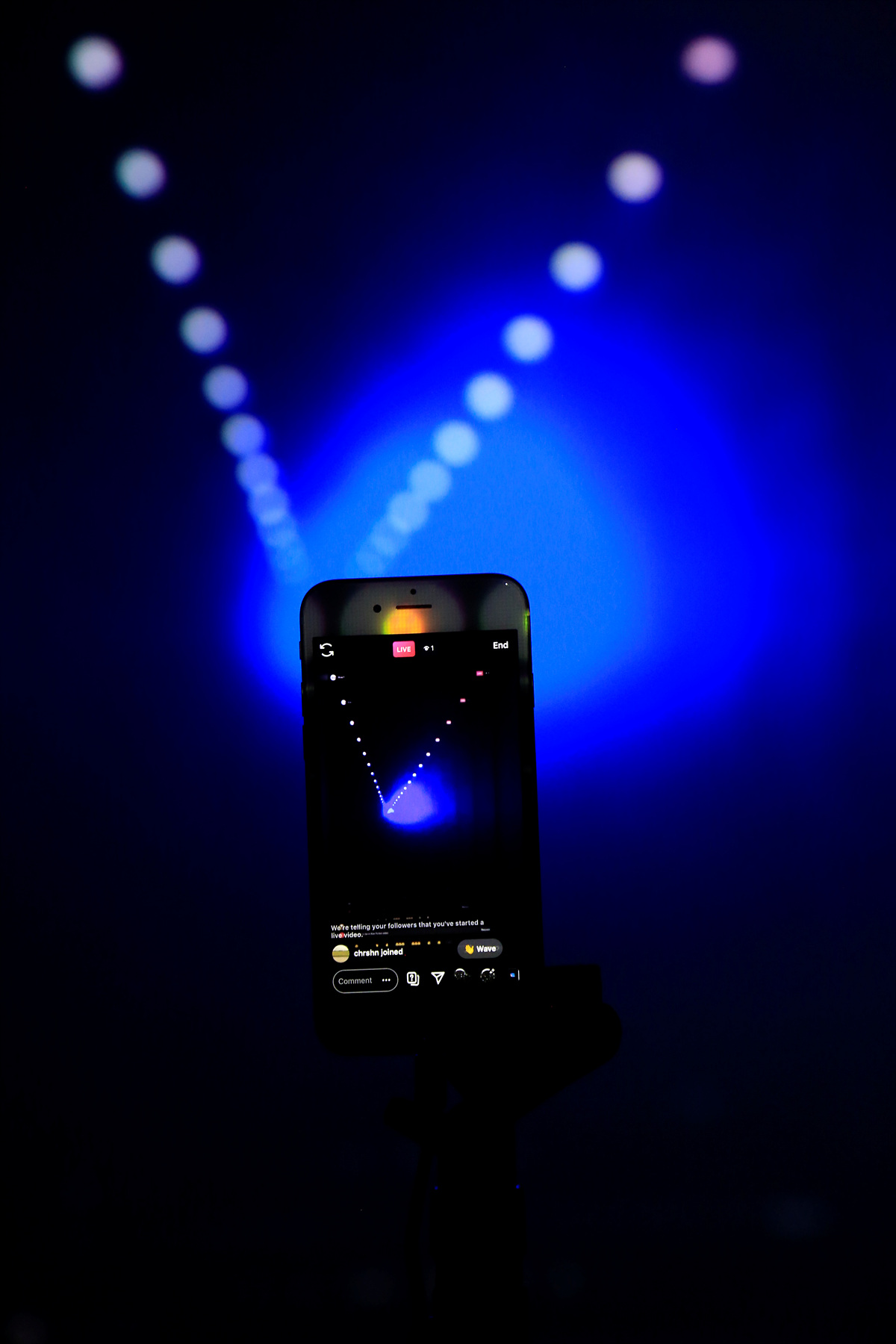
early Live Feedback (2020–2021) series models the
circulation structure of information on social networks, revealing feedback
loops that repeat infinitely with unspecified senders and receivers. This
structure also serves as a metaphor for how data in contemporary society
self-proliferates and overwhelms human perception.
In his
solo exhibition 《Feedbacker:
Ambiguous Borderer》 (OCI Museum of Art, 2021), the
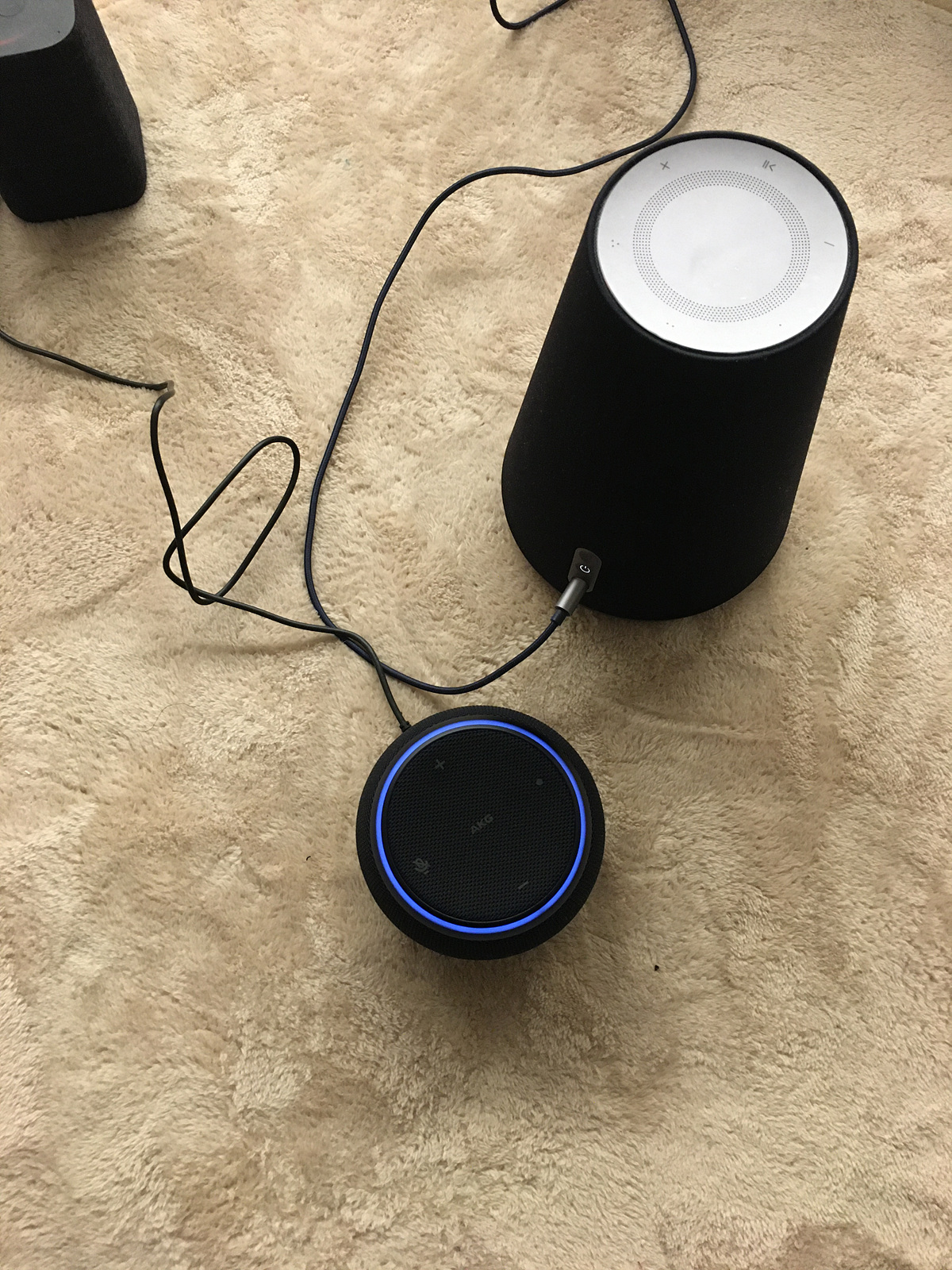
work Ambiguous Borderer (2021) extends this
series, exposing moments of error that mechanical systems cannot predict
through reciprocal “dialogue” between AI speakers, and presenting a zone where
the boundaries between human and machine, subject and object, become ambiguous.
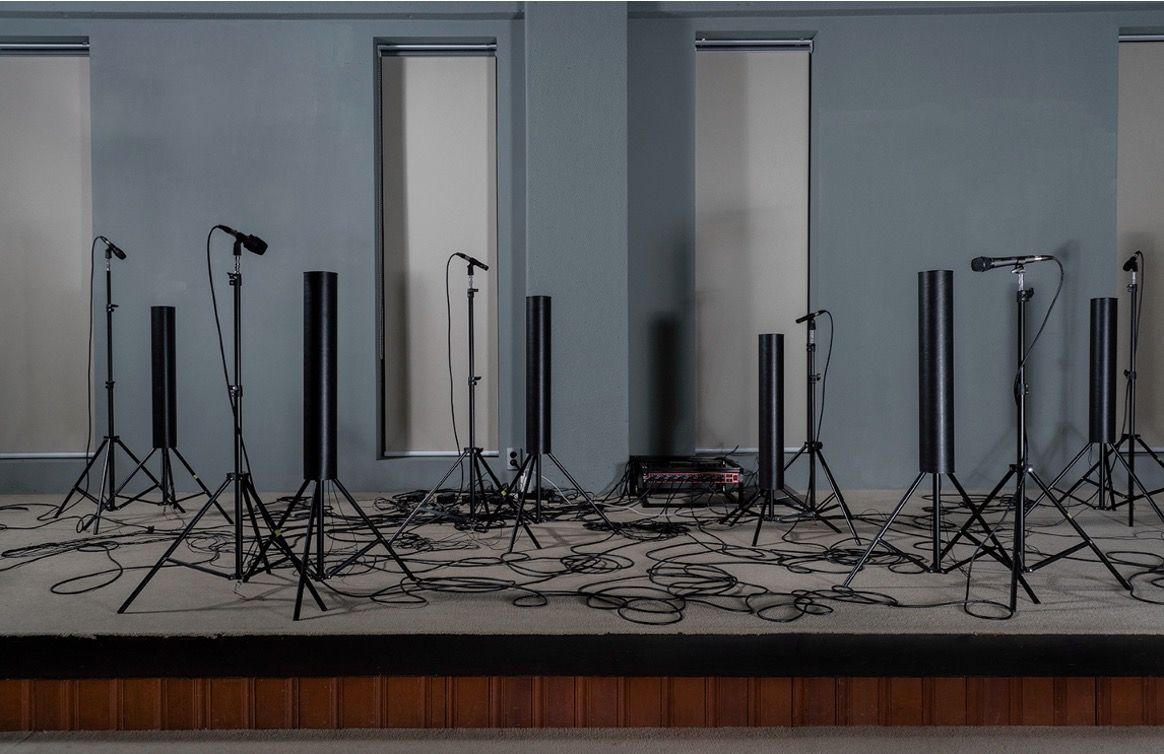
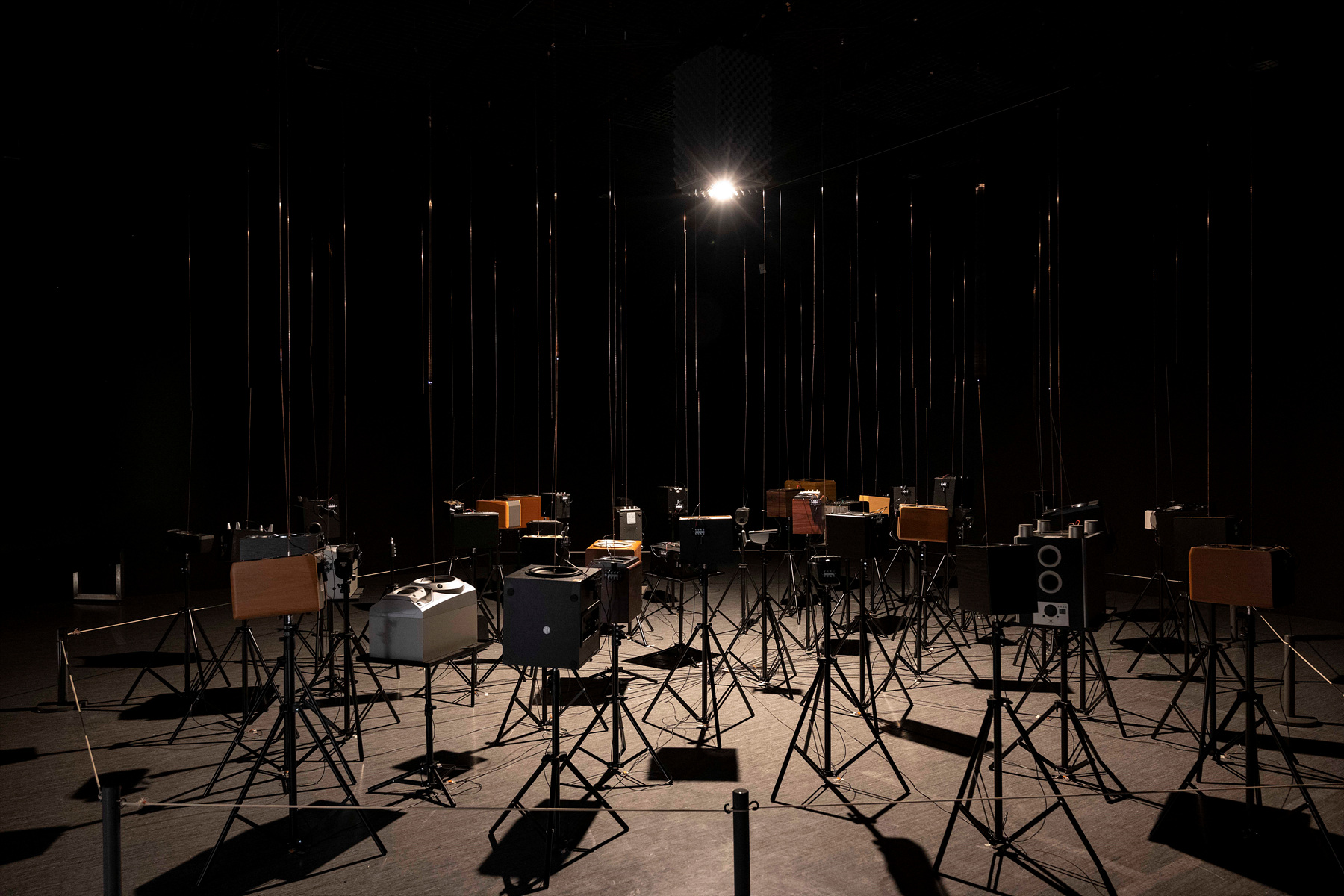
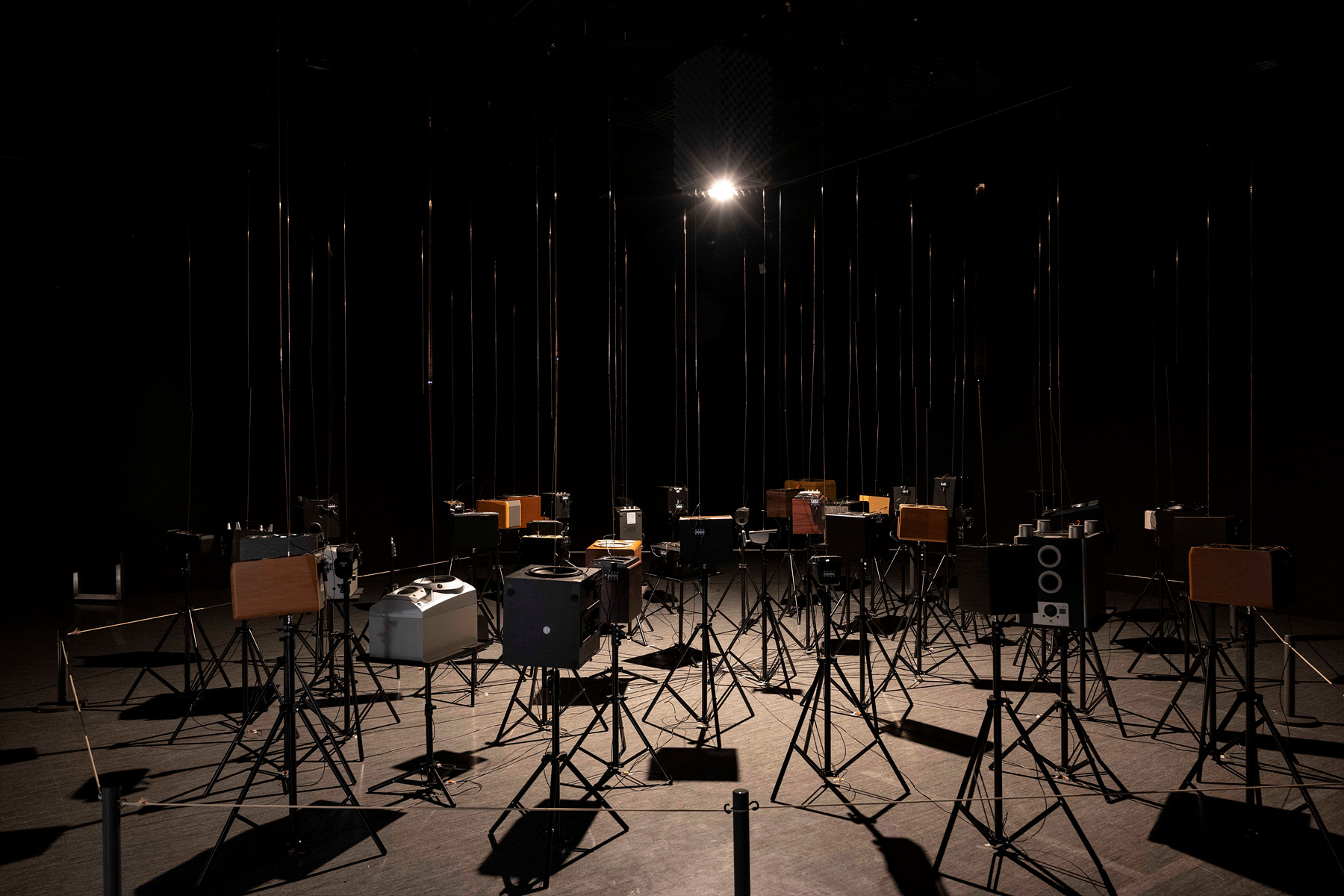
Another exhibited work, Constellate (2021),
experiments with a space where “events occur on their own” through flashes and
noise generated by the connection/disconnection among secondhand speakers,
positing feedback as a mechanism of growth.
A turning
point where the theme expands to natural and physical systems is 《Logistic Feedback》 (Platform-L, 2023). Here,
he translates the logistic map and bifurcation into sound to make patterns of
nonlinear growth and chaos audible. In the same year, in 《Palindrome》 (Incheon Art Platform, 2023), he
expands the palindromic concept of “reading the same forwards and backwards”
into the resonance of complementary binaries—up/down, forward/reverse,
plus/minus—to construct a cyclical sense of time in which beginnings and
endings blur, like sunrise and sunset.
His scope
clearly broadens to invisible media as well. 《Radio Shower: 3–3000MHz》 (Windmill, 2022)
translates radio waves in the 3–3000 MHz band into light and sound, rendering
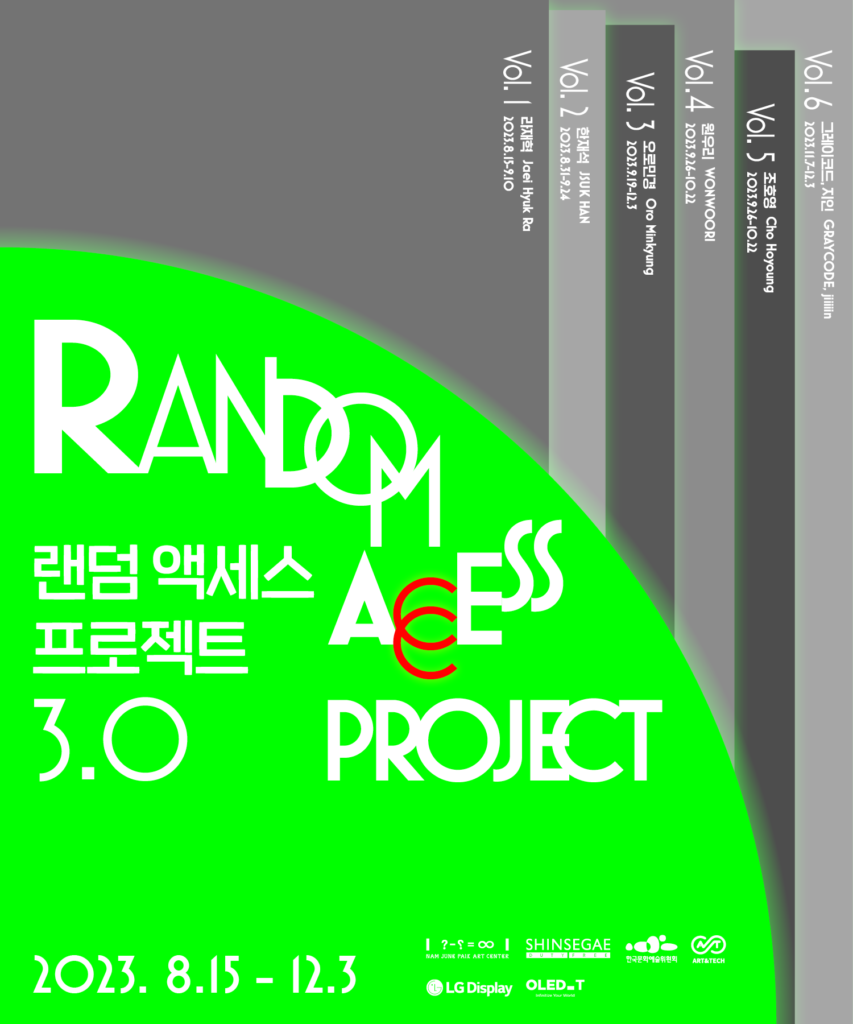
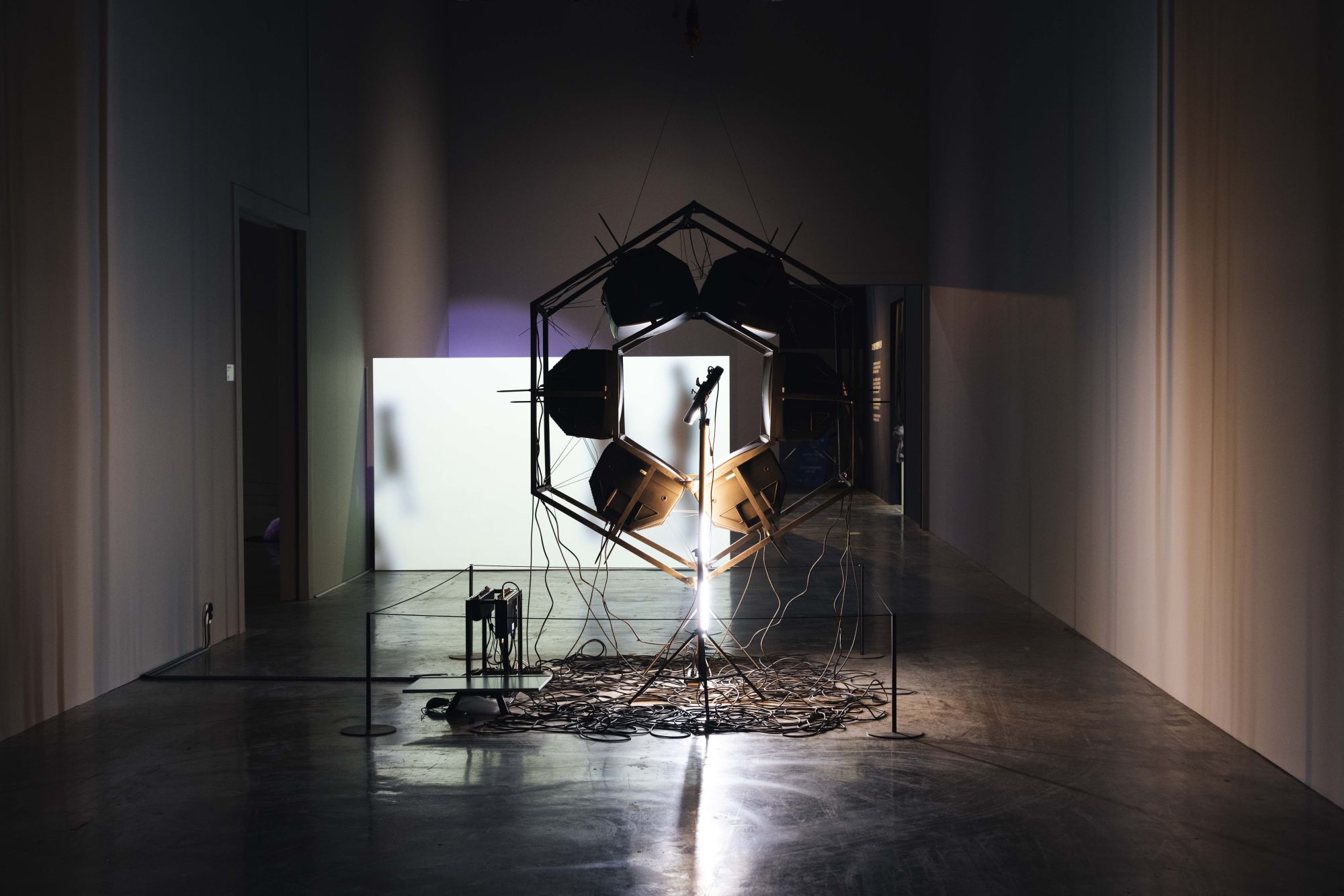
perceptible the “invisible shadow” of the city. In 《Random
Access Project 3.0》 (Nam June Paik Art Center, 2023),
he implements a structure in which the vibration of speakers induces or
interrupts the contact of copper rods, blinking light and sound; this shows the
interdependence of input/output as a chain of
“utterance–response–re-utterance.”
Recently,
he has expanded his perspective to an “ecology of listening.” The
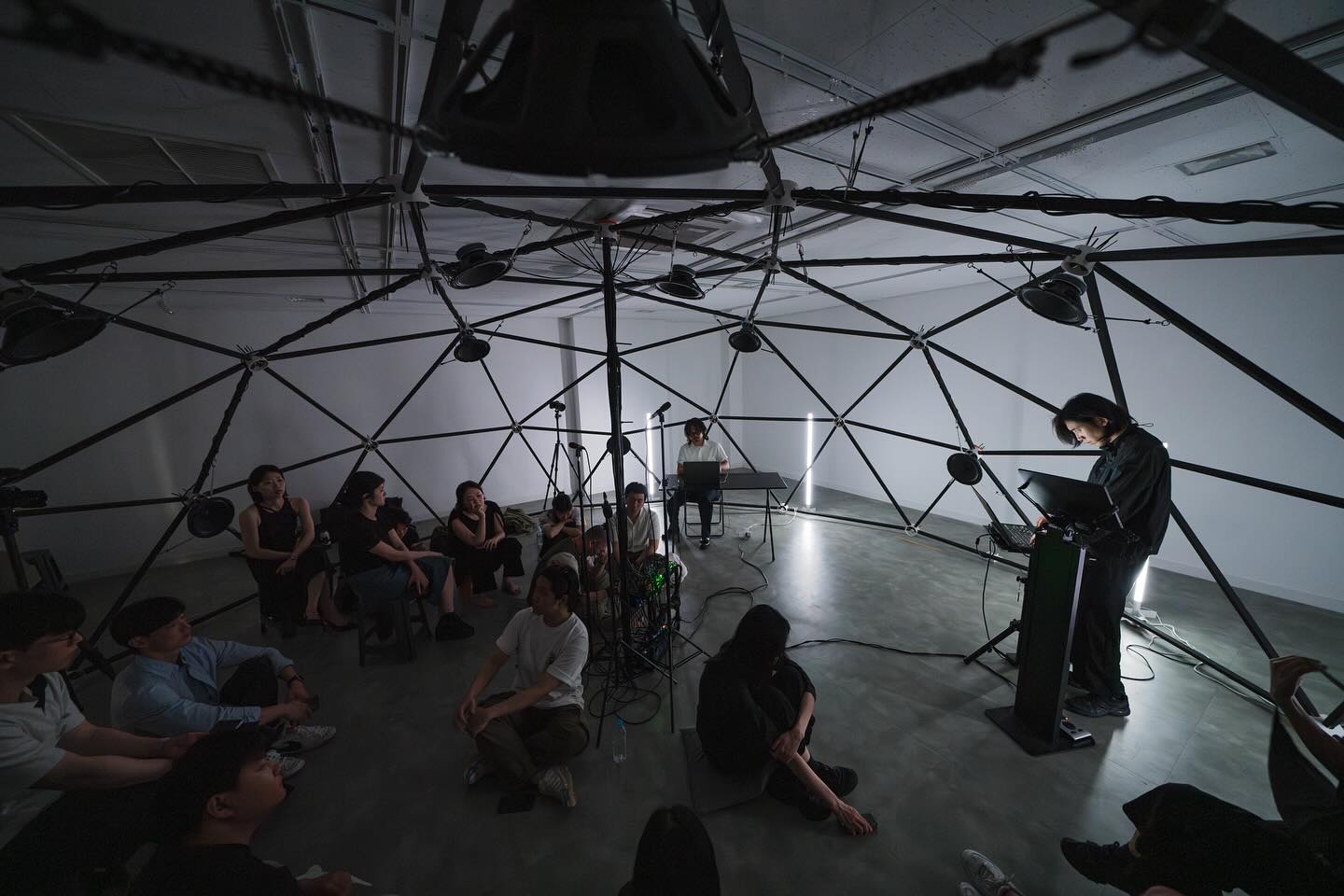
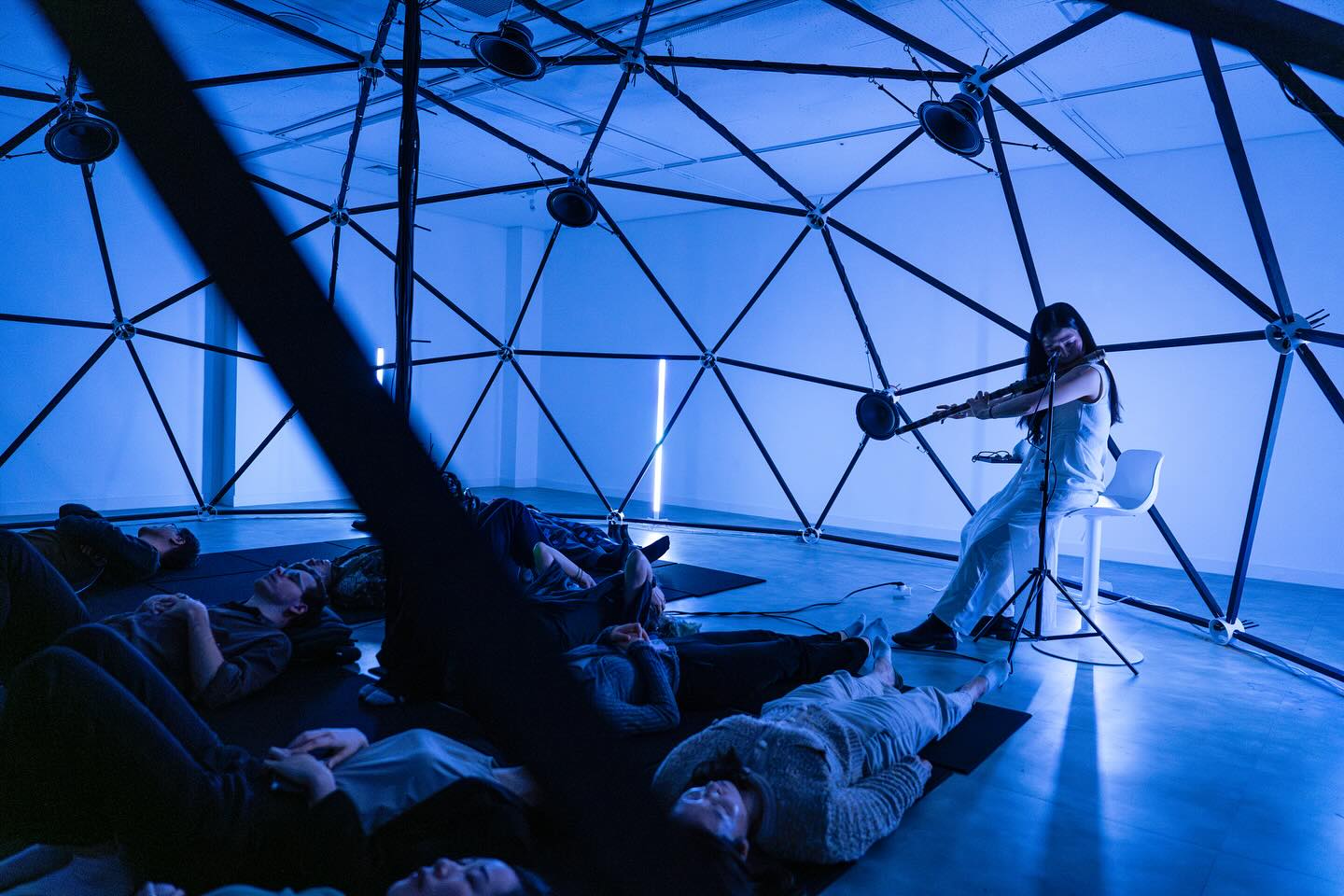
collaboratively developed Howling Vault
I/II/III (2024) at Oksang Factory amplifies audio feedback in an
ambisonic environment, drawing the audience’s bodies into the system as
variables (the audience’s movement and posture are immediately reflected in the
sound field). Nidifying the Sonic Creatures (2024,
UNFOLD X) presents generational shifts of autonomously evolving “audio objects”
via flocking and genetic algorithms, proposing the birth/death and swarming
behavior of nonhuman entities as a sonic ecology.