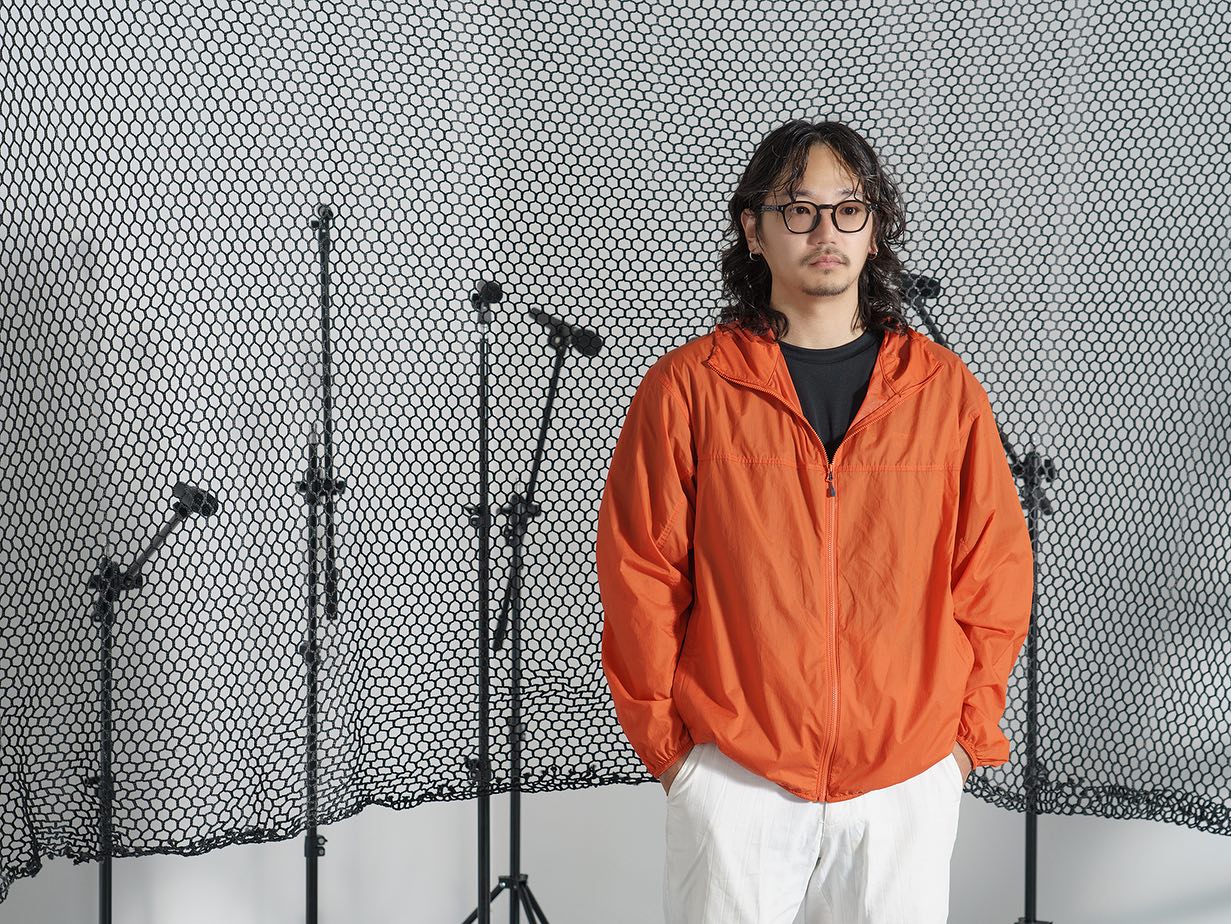
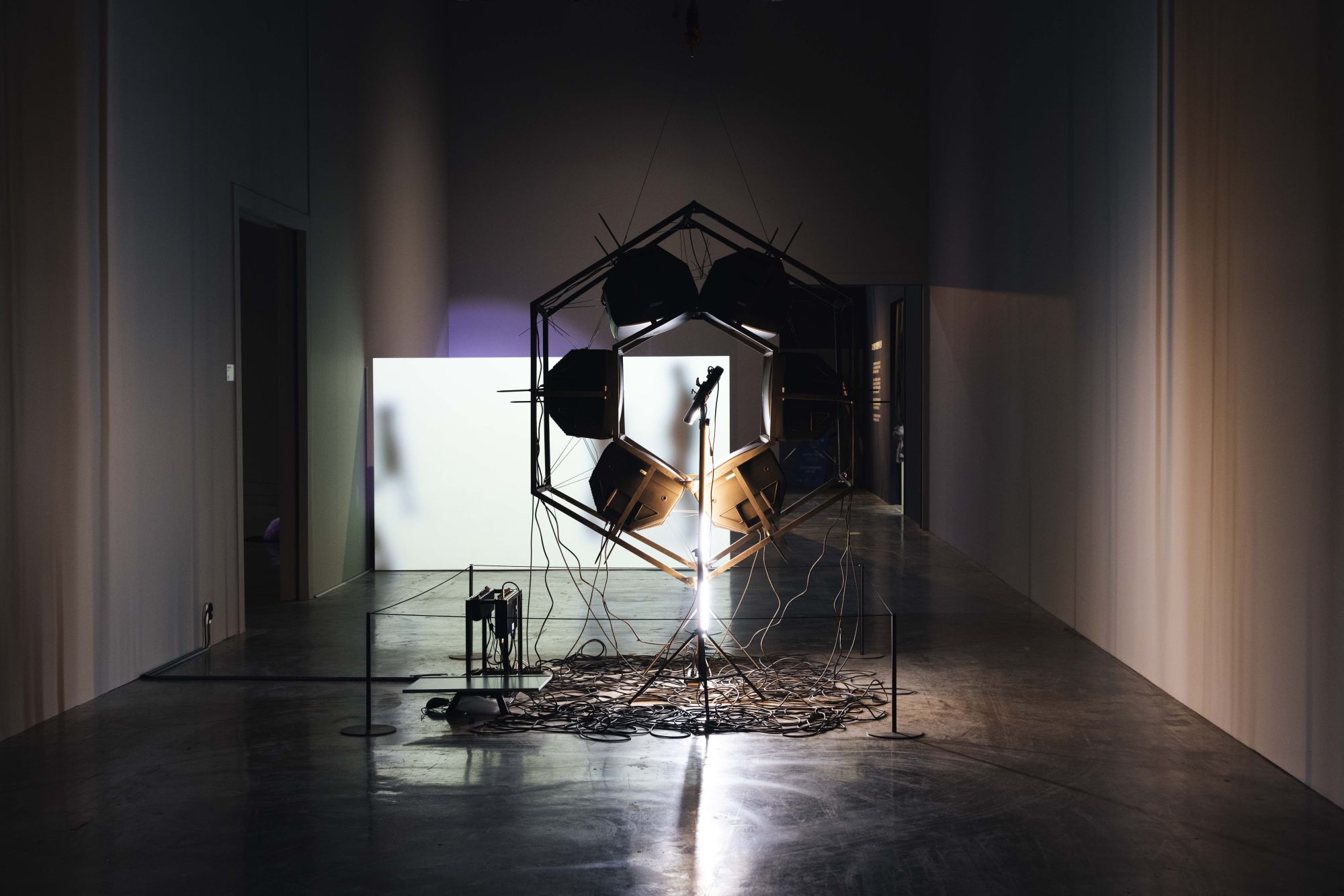
JSUK HAN (b. 1990) has been creating sculptures, installations, and sound performances using audio devices such as speakers and microphones that he collects or builds himself. In particular, he is interested in Generative Art and Mono-ha, and has been developing works that embody feedback loops—often imperceptible in everyday life—as forms of communication through light and sound, vibration and resonance within space.


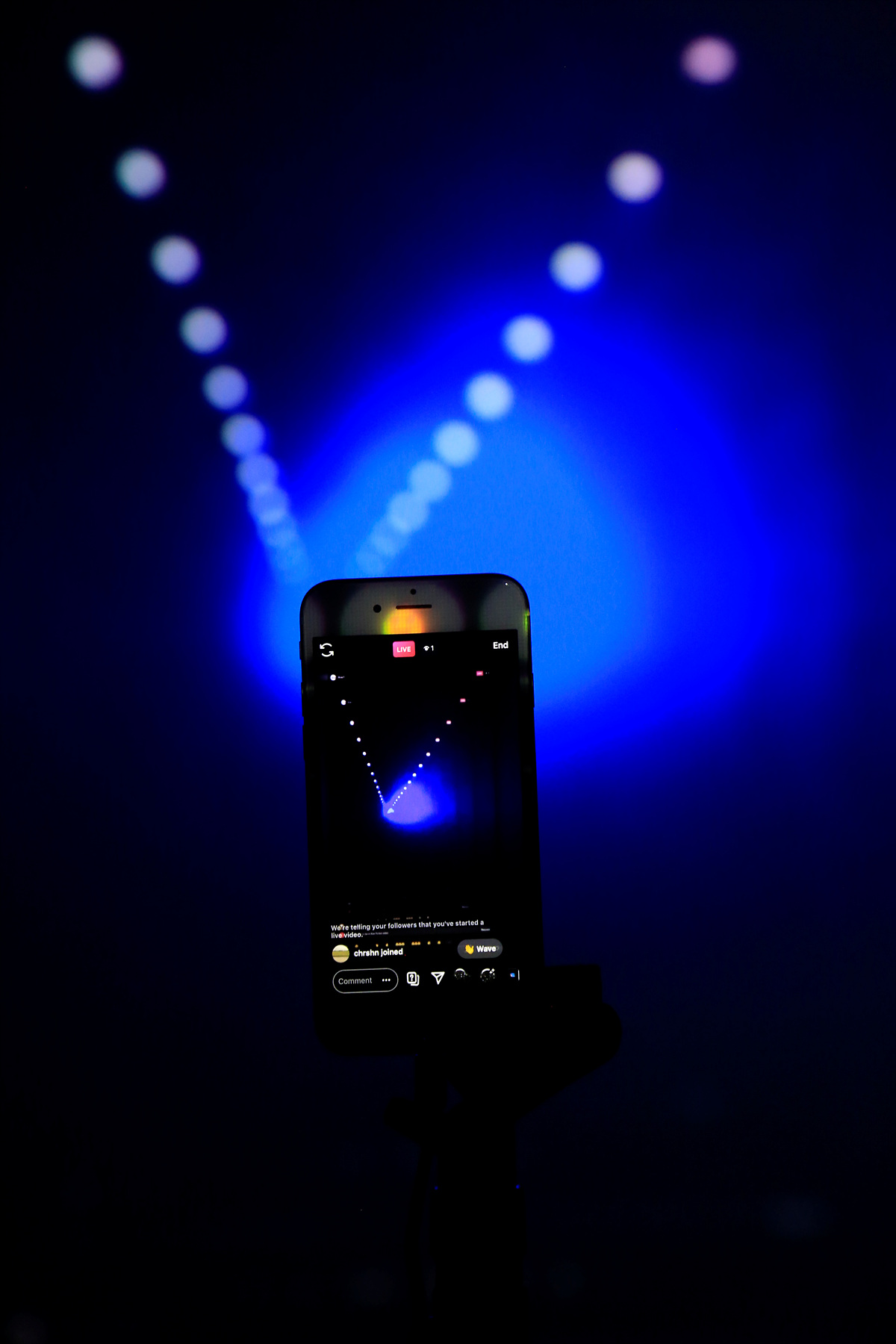
JSUK HAN, Live Feedback III, 2020, Smartphone, stand, electronic components, Dimensions variable ©ARKO Art Center

For instance, in the group exhibition 《Follow, Flow, Feed》 (ARKO Art Center, 2020), HAN presented the new media work Live Feedback III (2020), which utilizes the feedback structure of smartphone-based social networking systems.
 
By employing a macro program and Instagram Live, the artist visualized a process of infinite feedback loops in which information exposed on one smartphone’s Instagram feed is broadcast via another smartphone through Instagram Live, then re-posted and re-broadcast within the same platform.


JSUK HAN, Live Feedback, 2021, Smartphone, projector, PC, Dimensions variable ©OCI Museum of Art

In this work, the artist used the time lag generated between transmission and reception during the live process to reveal, through resonant sound and repeated imagery, the surface of a world within social networking systems where senders and receivers remain unspecified and endlessly circulate.
 
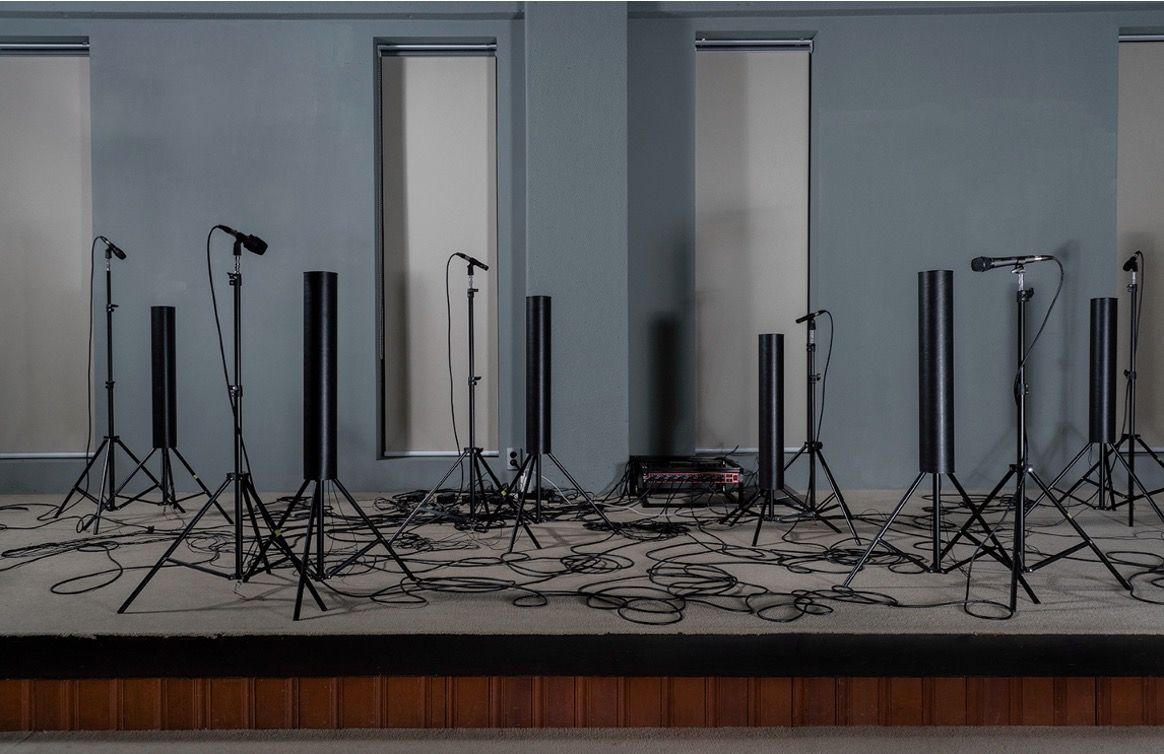
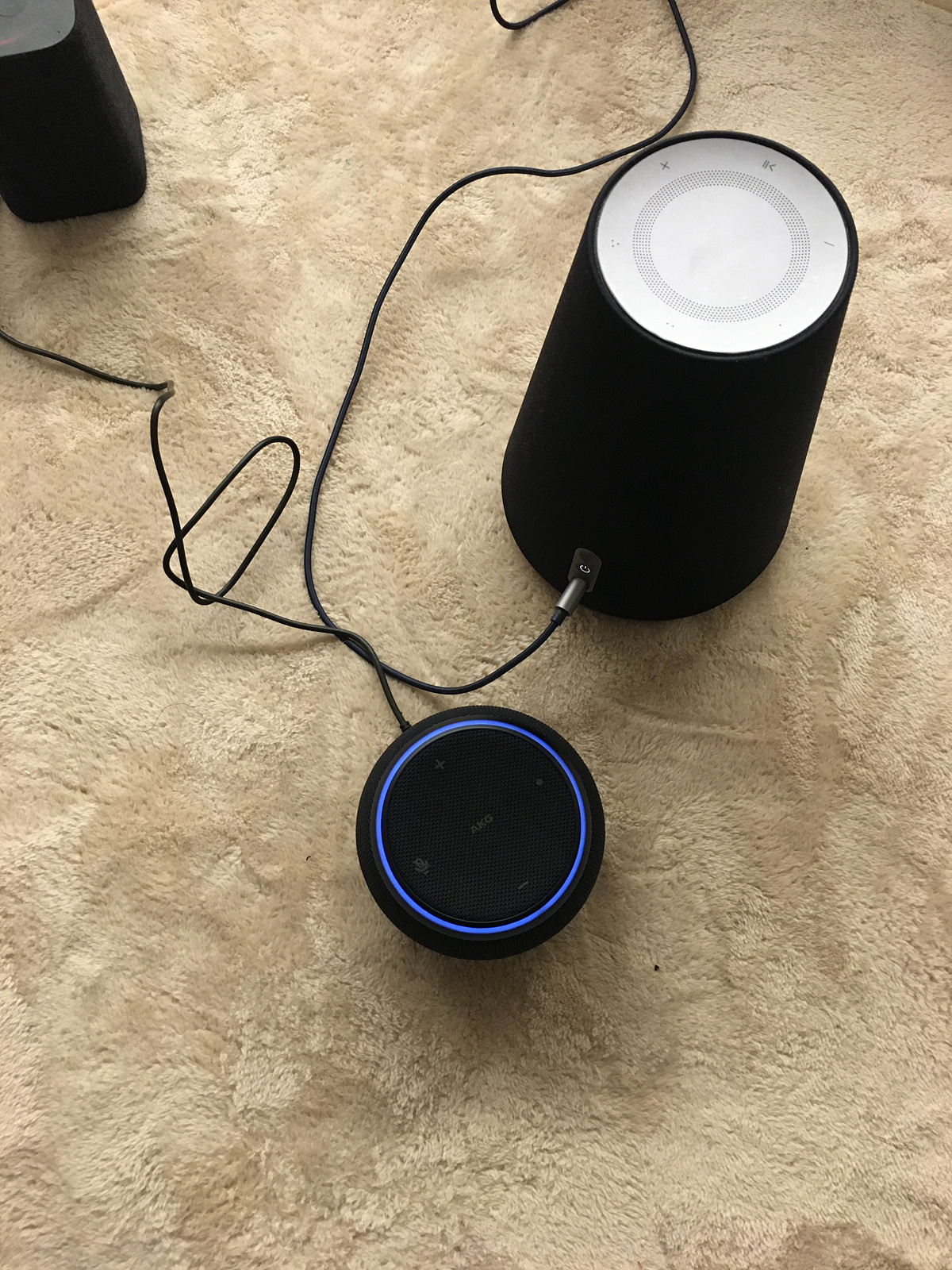
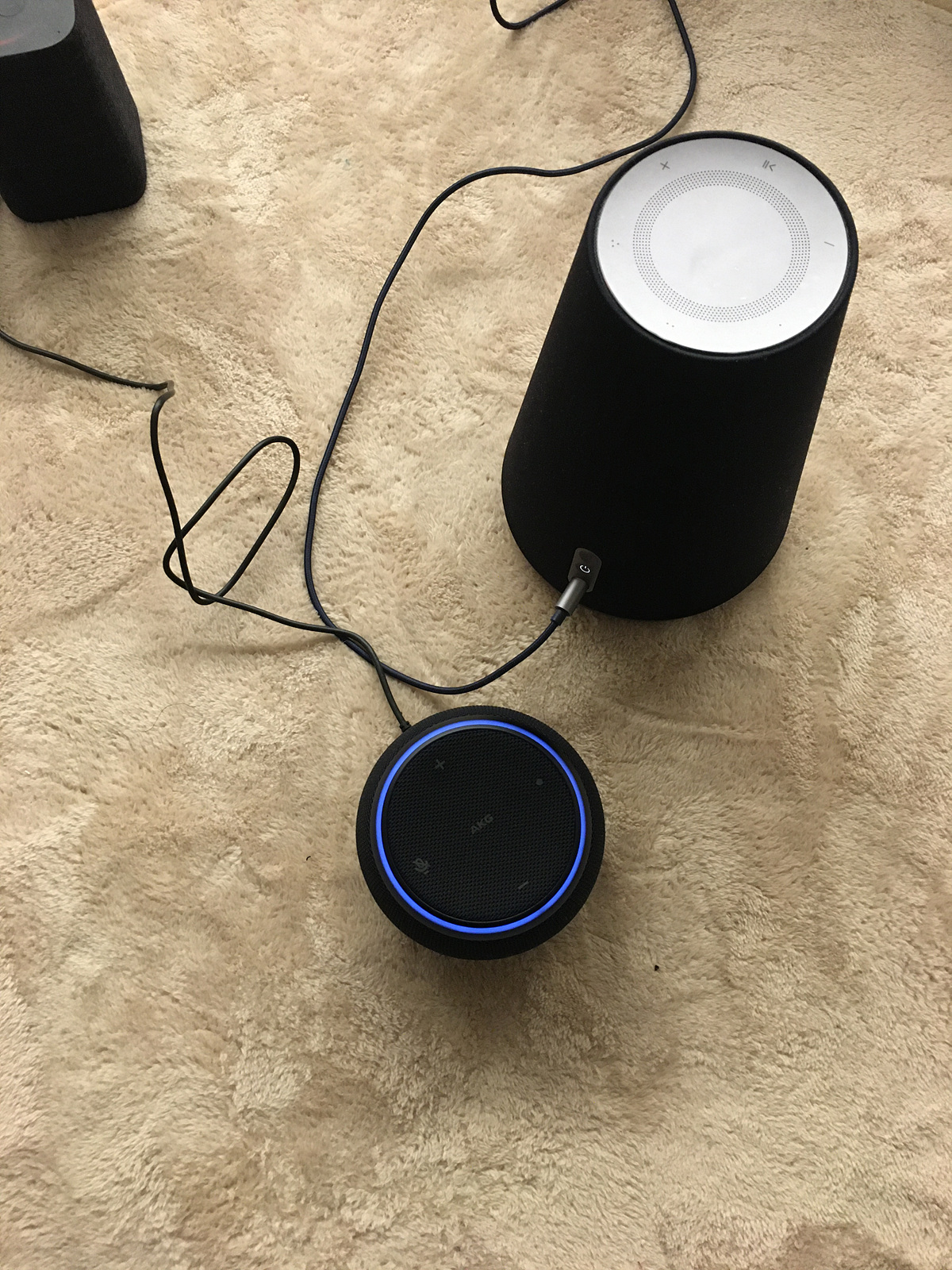
The following year, in his solo exhibition 《Feedbacker: Ambiguous Borderer》 (OCI Museum of Art, 2021), HAN presented Ambiguous Borderer (2021), a work based on reciprocal feedback between two AI speakers. Drawing from the artist’s own memos, one AI speaker delivers schedules in spoken form, which are then received by another AI speaker, only to be re-transmitted back again. This process creates the impression of two machines engaging in a bidirectional dialogue.


JSUK HAN, Ambiguous Borderer, 2021, AI speakers, tripods, Dimensions variable ©OCI Museum of Art

Furthermore, the artist focused on the new conditions generated by feedback stemming from errors that mechanical systems cannot predict. During the process in which the original utterance is repeatedly received by another AI speaker, unforeseen errors occur. While the pre-programmed content appears to loop infinitely, a closer listening to the dialogue reveals subtle deviations, showing that the conversation is continuously mutating through these minute discrepancies.


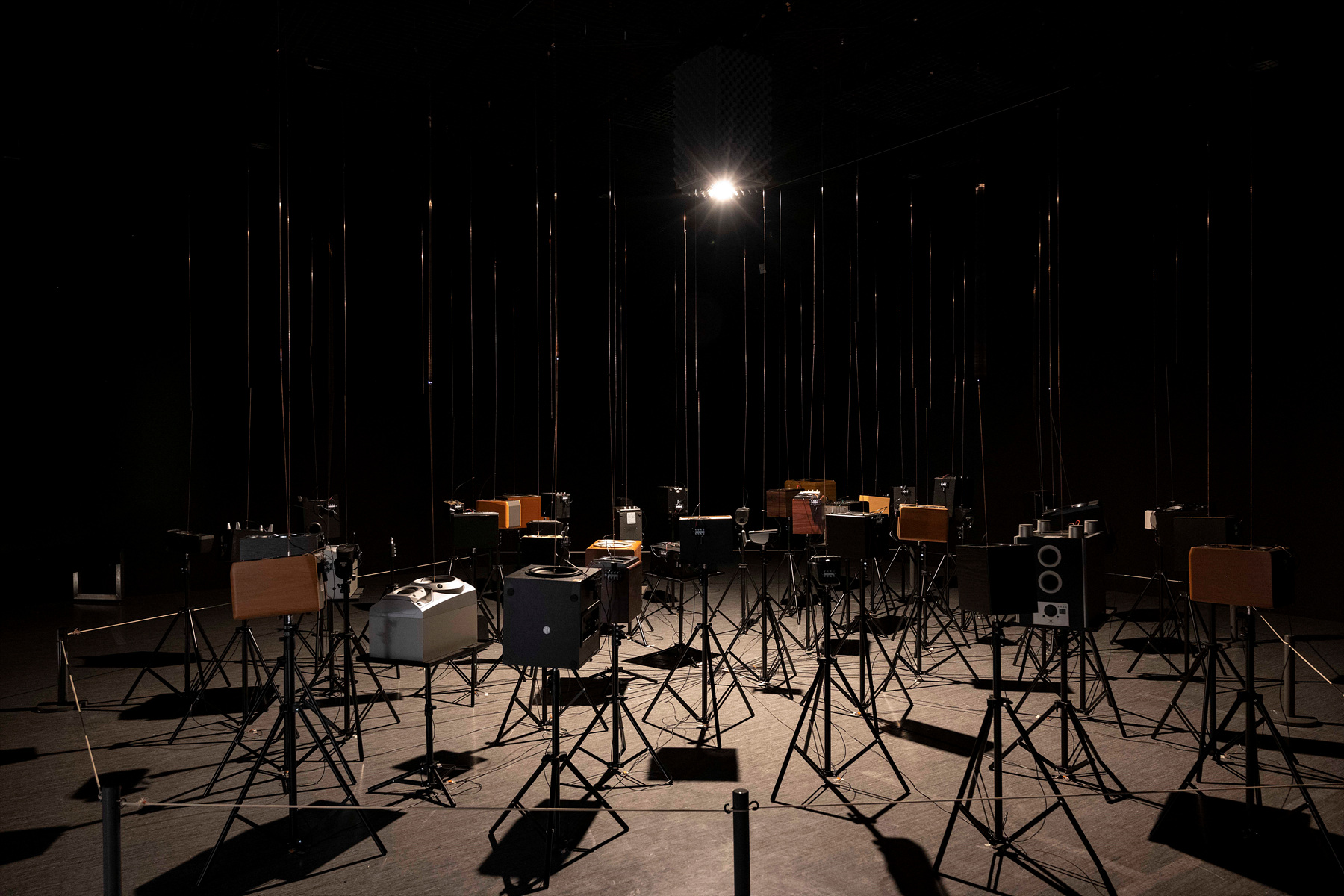
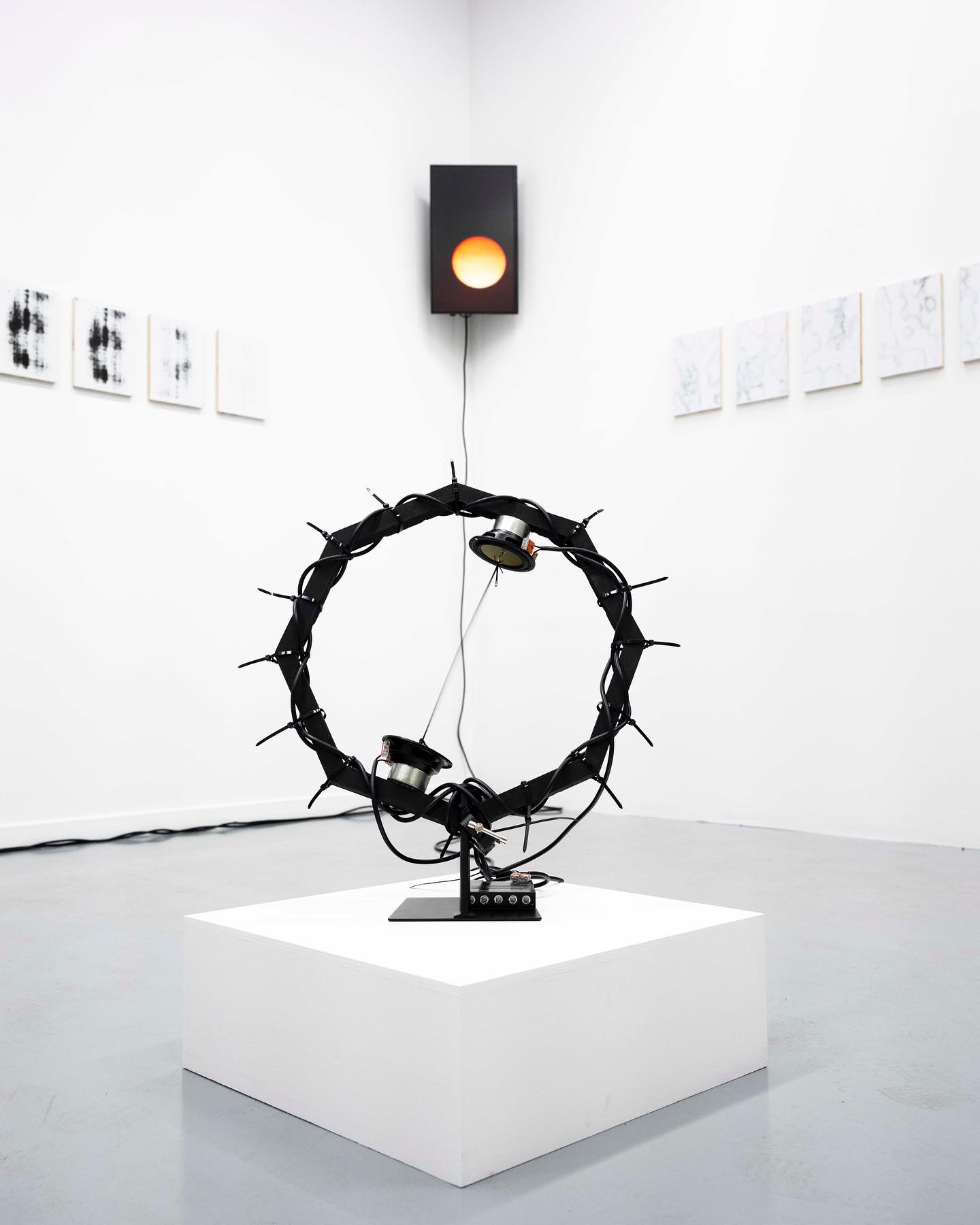
JSUK HAN, Constellate, 2021, Second-hand speakers, metal rods, electric components, Dimensions variable ©OCI Museum of Art

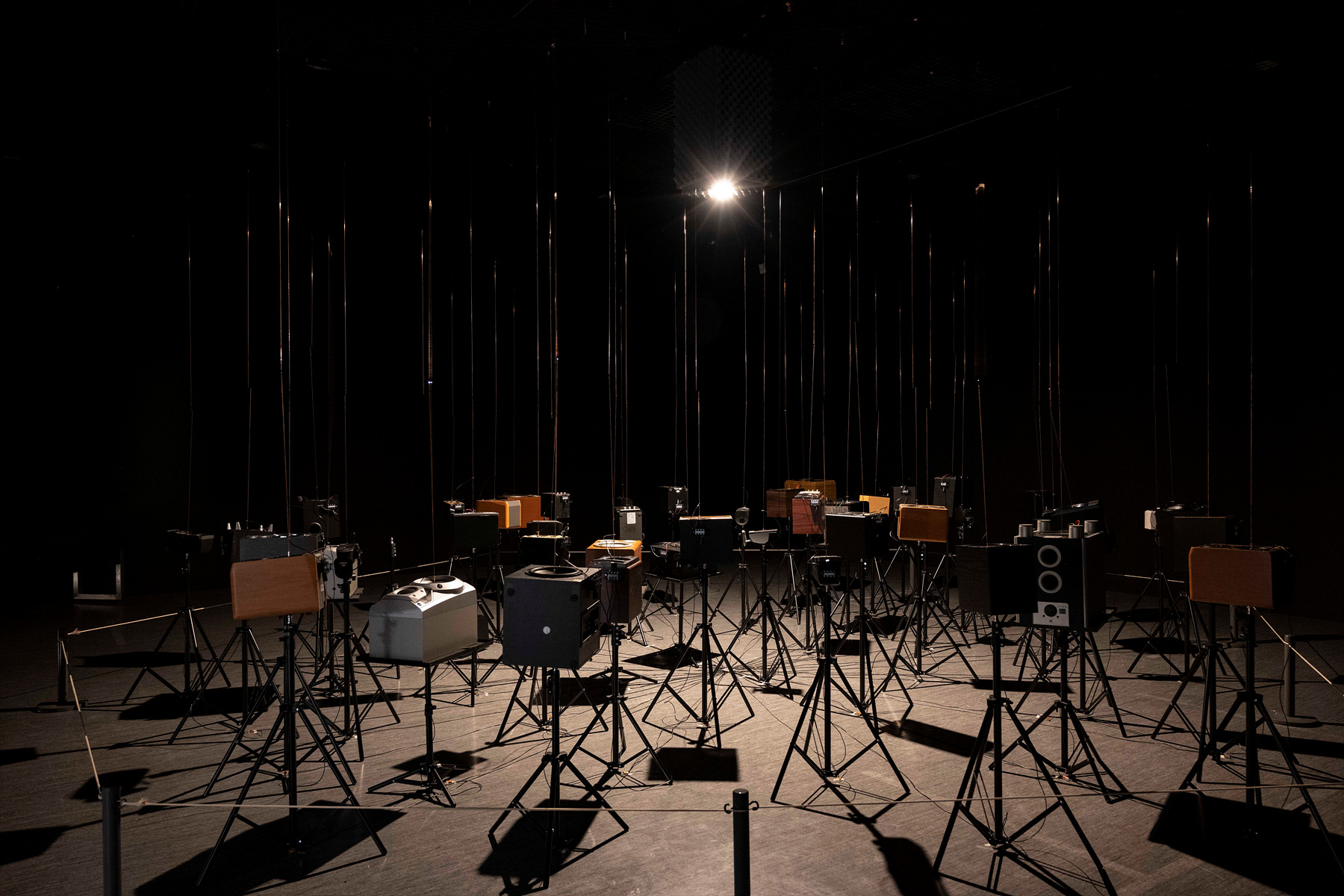
Another work presented in the exhibition, Constellate (2021), generates irregular and unpredictable repetitions of light and noise through the electrical interactions among dozens of secondhand speakers. The electrodes of the metal rods attached to the speakers repeatedly connect and disconnect through vibration, unfolding a spectacular scene of flickering speakers.
 
The flashes of light and bursts of noise that occur at the moment of contact transform the exhibition space into a site of ceaseless events. These occurrences emerge through unpredictable, nonlinear mutations and randomness, placing the audience within a state of latent energy in the darkened gallery, where it is impossible to know where the next flash or sound will arise.

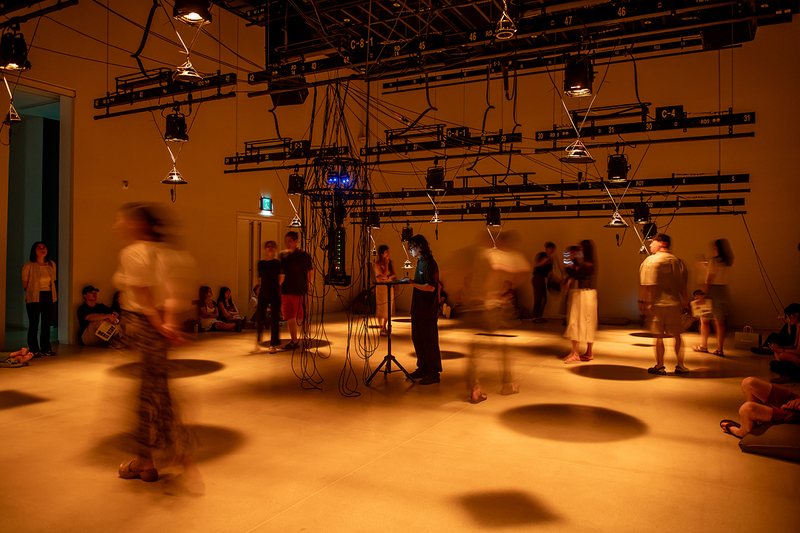
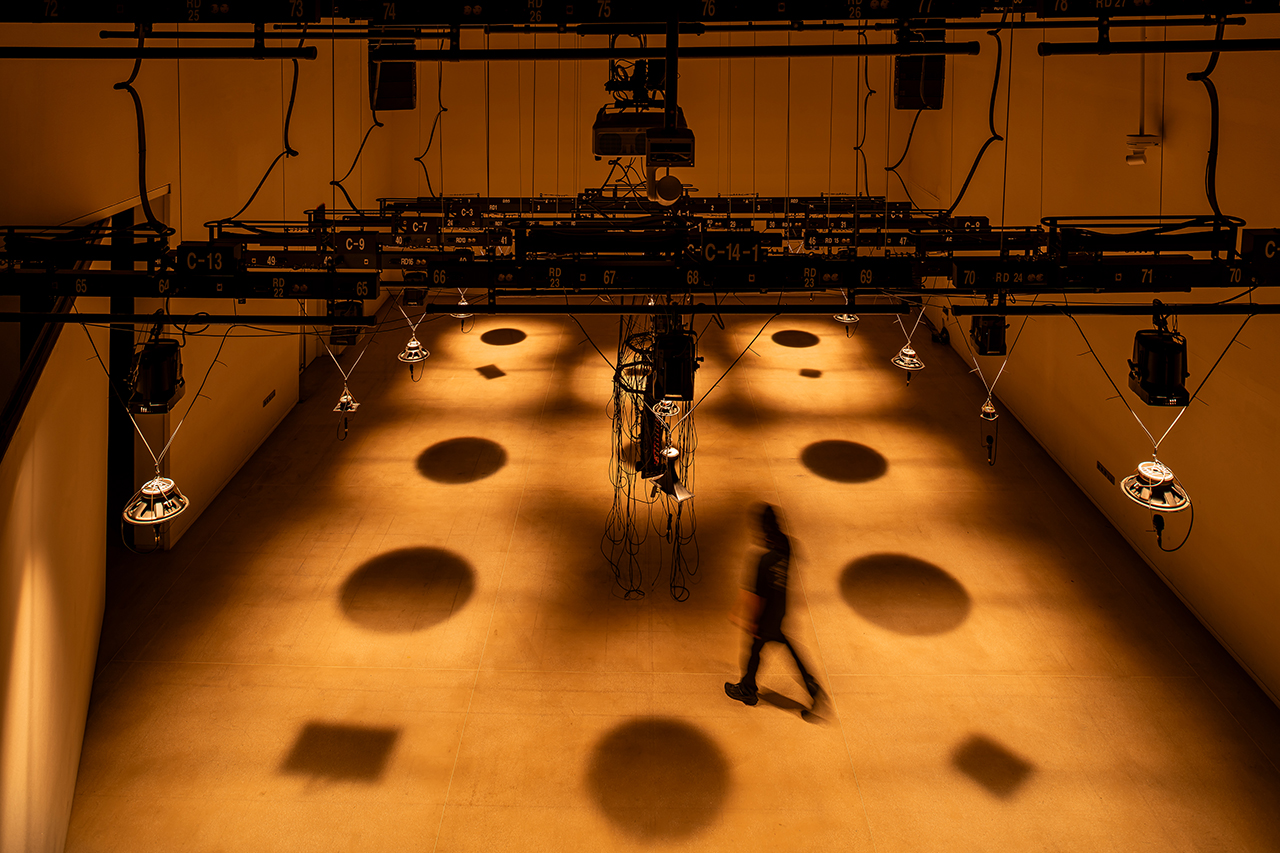
Installation view of 《Radio Shower: 3-3000MHz》 (Windmill, 2022) ©JSUK HAN

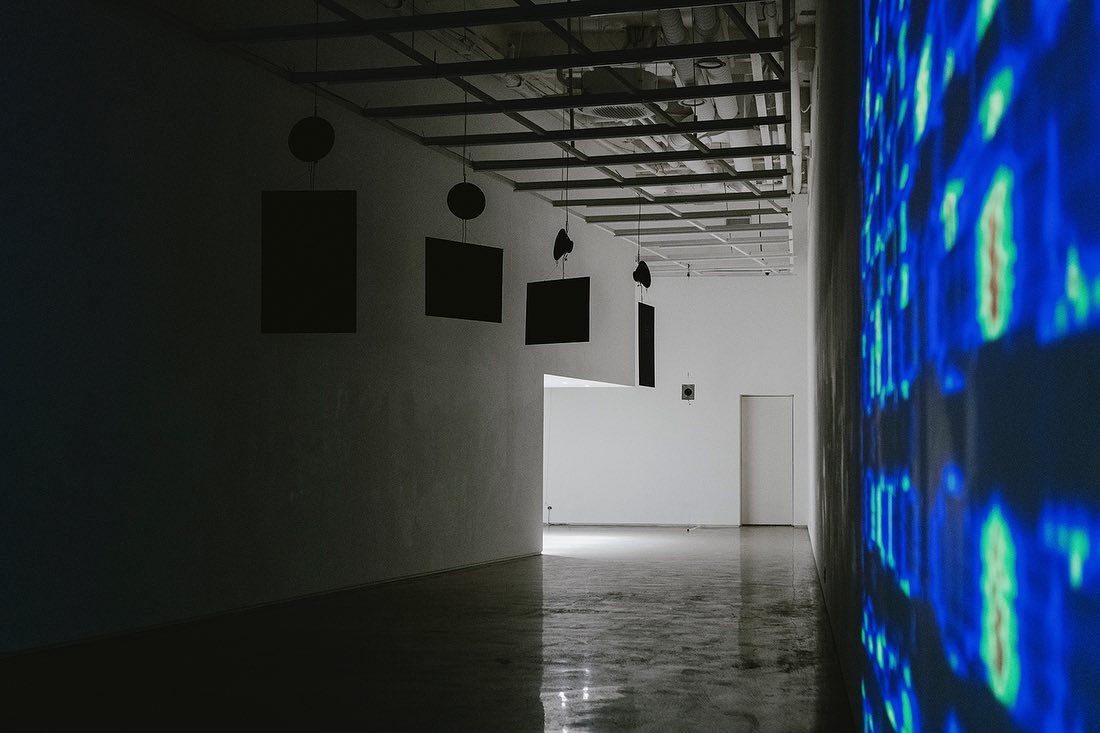
The sound performance and exhibition 《Radio Shower: 3–3000MHz》 (2022), held at Windmill, explores the sounds and images of electromagnetic waves that, though invisible, shape the city like a shadow. Through this work, JSUK HAN examined frequencies ranging from 3 MHz to 3,000 MHz, seeking not only to perceive waves beyond the range of human hearing but also to resonate with them.
 
Although physically inaudible, these radio waves—vibrating 30,000 to 300,000 times per second—were visualized through images of light and used to fill the space. By doing so, HAN invited reflection on the things that are always present around us yet gradually fading from our awareness.


JSUK HAN, Central Dogma, 2023, Installation view of 《Random Access Project 3.0》 (Nam June Paik Art Center, 2023) ©JSUK HAN

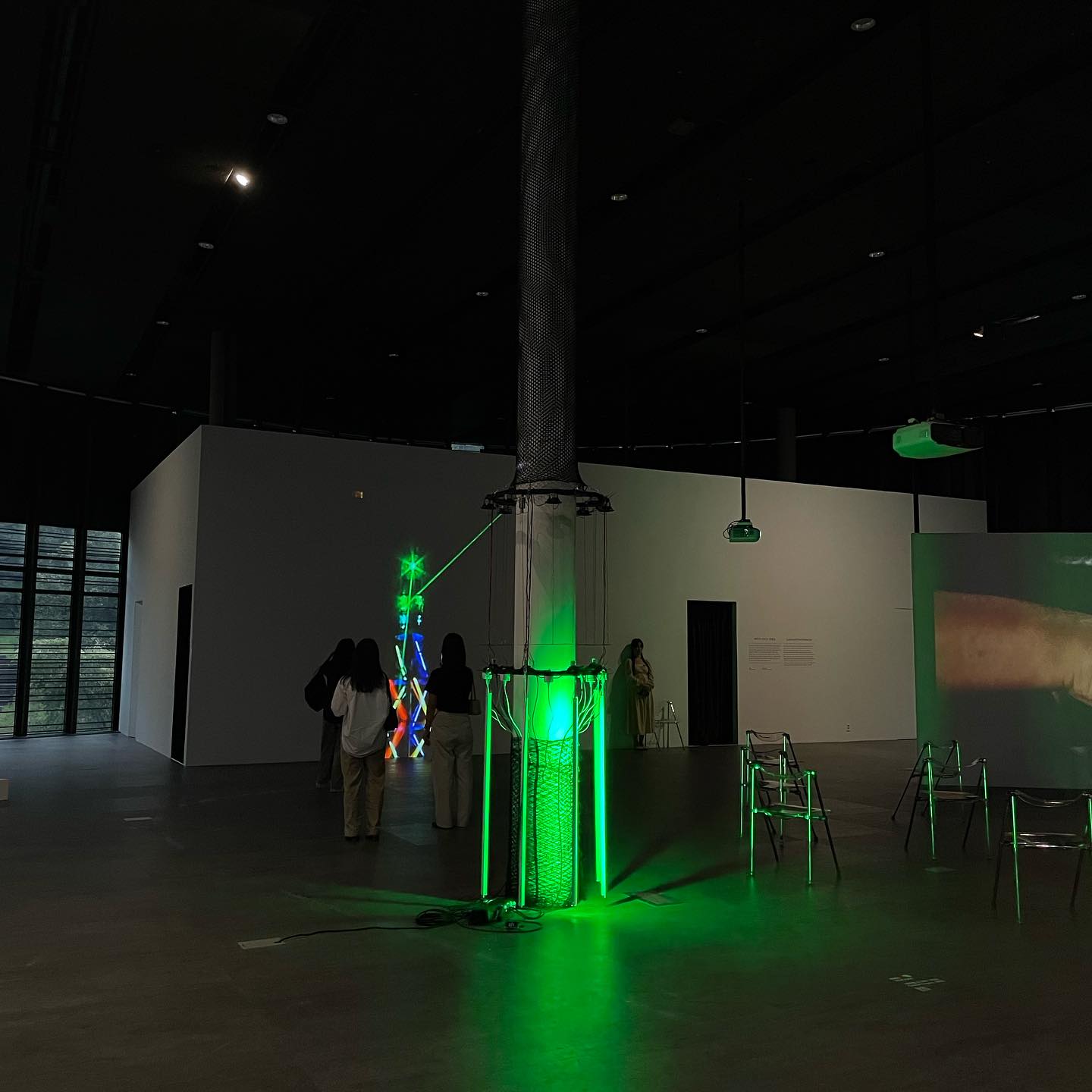
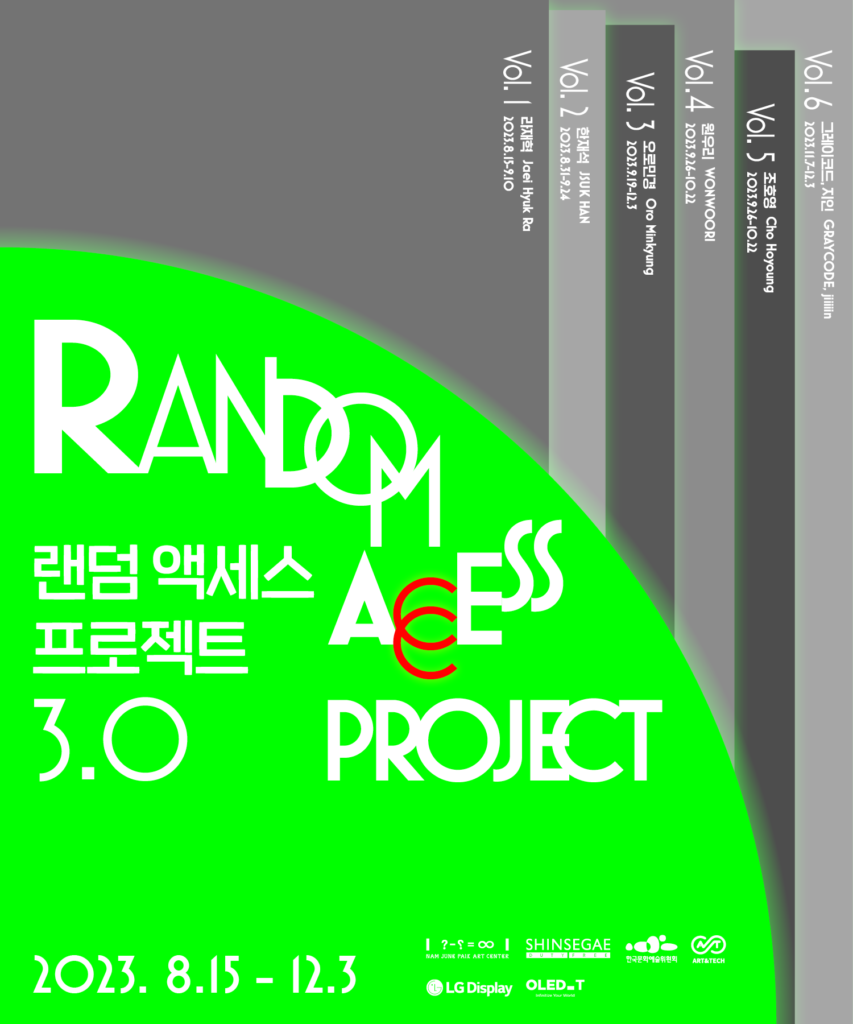
Presented at the 《Random Access Project 3.0》 (2023) at the Nam June Paik Art Center, Central Dogma is a sound installation composed of speakers, metal rods, wires, light bulbs, and other electronic devices and objects. The vibrations of the speaker moves the connected copper rods, and as they swing and bump into each other, they connect and disconnect power, turning on and off the light.

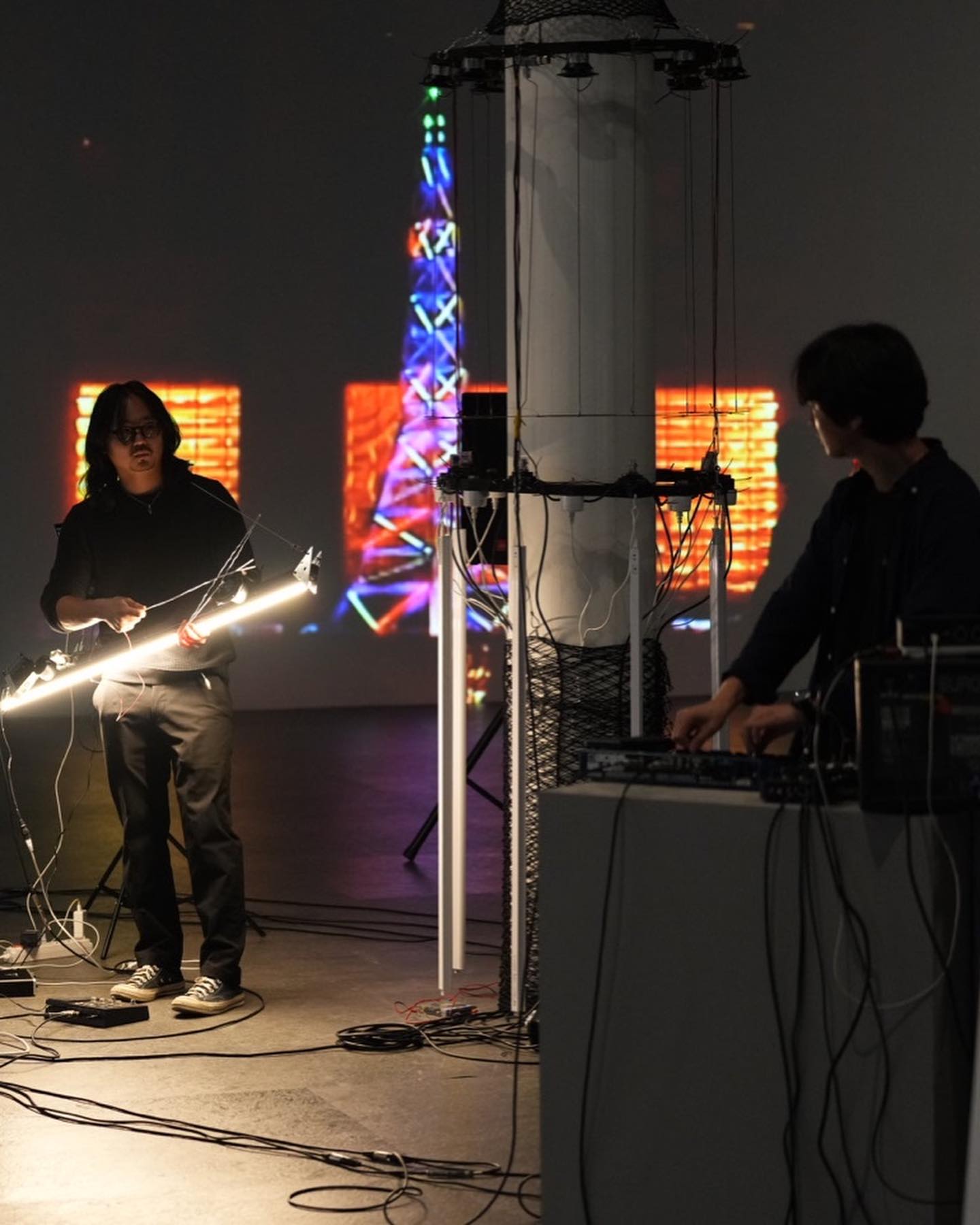
JSUK HAN, Central Dogma, 2023, Live performance, Installation view of 《Random Access Project 3.0》 (Nam June Paik Art Center, 2023) ©Nam June Paik Art Center

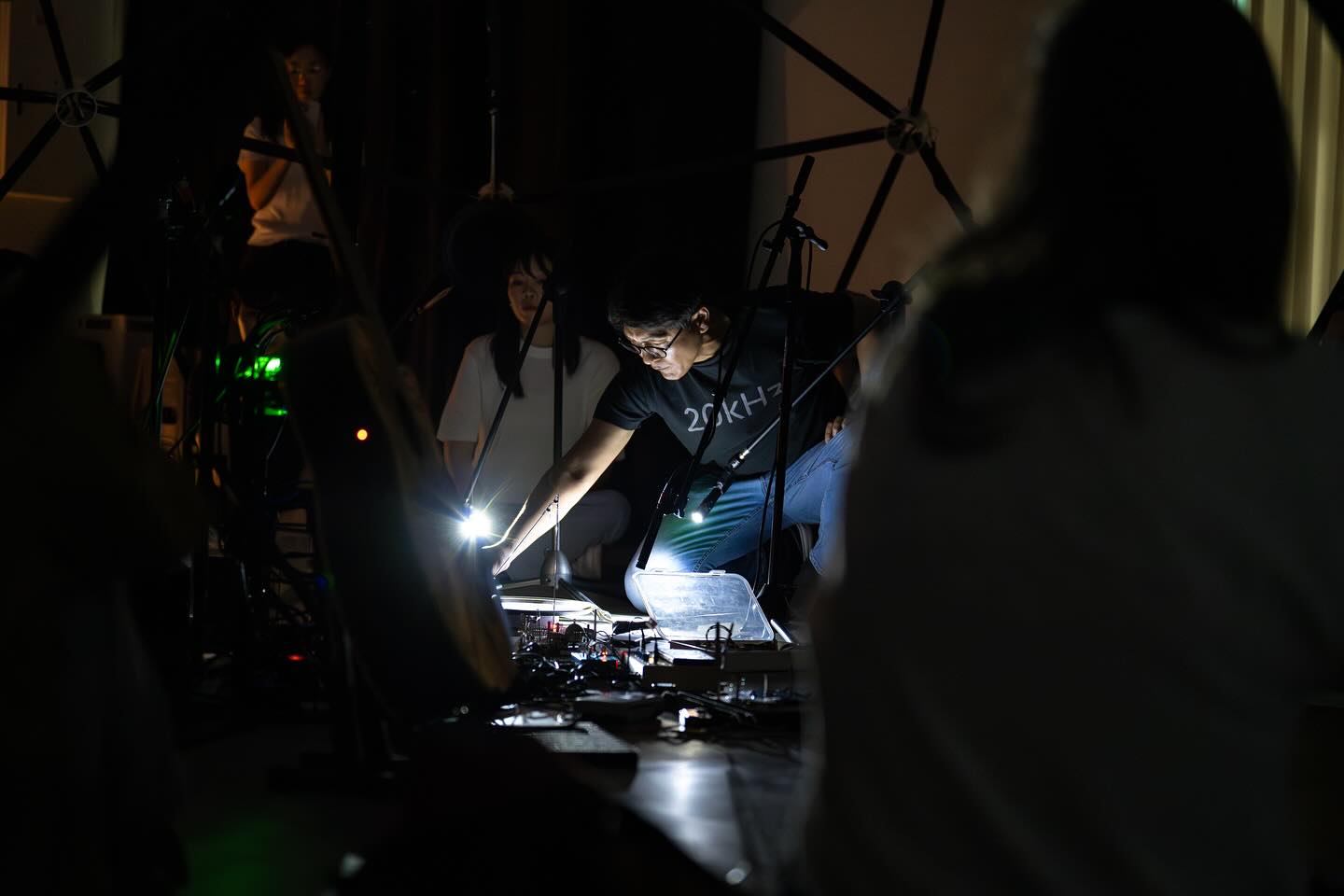
Creating sound installations that embody the principle of “feedback” as a form of communication—inputs and outputs, on and off, transmission and reception, he presents visitors with a live performance that maximizes the light and sound elements in the exhibition space. A live performance in collaboration with kinetic artist Junsoo Kim, who works with the light and noise generated from welding, and sound artist Jundo, who performs techno music through the shamanic ritual of gut, unfolds the diverse ecosystems of electromagnetic waves.
 
Working together with these two artists, JSUK HAN sought to render the spectrum of light and sound—often imperceptible to the human eye and ear—into a synesthetic dimension, materializing feedback loops that usually remain beyond perception within the spatial environment.


Exhibition and performance view of 《Logistic Feedback》 (Plaltform-L, 2023) ©Plaltform-L

In the same year, JSUK HAN held the solo exhibition 《Logistic Feedback》 at Platform-L, where he explored feedback systems in speaker devices and presented experiments simulating complex behaviors found in nature. In this work, he applied both the feedback sound (howling noise) and the system to a multi-channel setup.
 
The audio feedback, also referred to as “howling,” occurs when the input (microphone) and output (speaker) are connected and facing each other; increasing the amplification naturally generates the resonance frequency corresponding to the device. In a single-channel setup (one microphone and one speaker), this produces a simple sine wave resonating with the characteristics of the medium. However, when expanded to multiple channels, the frequencies become increasingly complex and transform in intricate ways.


Exhibition and performance view of 《Logistic Feedback》 (Plaltform-L, 2023) ©Plaltform-L

JSUK HAN organized the space using a multi-channel feedback system, configuring each channel with different types and combinations of speakers and microphones. He further employed the logistic map equation and bifurcation-generated random data points, which effectively illustrate the characteristics of feedback, to sonically reveal the chaotic properties of the multi-channel feedback system.
 
The chaotic sounds that emerge as a collective mimic various phenomena and systems observable in nature.


Installation view of 《Palindrome》 (Incheon Art Platform, 2023) ©Incheon Art Platform

JSUK HAN’s exploration of mimicking nonlinear phenomena in nature through feedback systems continued in his solo exhibition 《Palindrome》 (Incheon Art Platform, 2023). The artist approached the concept of “palindrome”—words, numbers, or strings that read the same forwards and backwards—as a more multidimensional idea encompassing up and down, input and output, playback and reverse playback, positive and negative, black and white.
 
Through this investigation of palindromic structures, he discovered connections to nature’s cycles of generation, growth, and decay. By filling the space with continuously circulating and vibrating sounds produced through the feedback system, JSUK HAN allowed audiences to experience moments of natural cycles—like sunrise and sunset—where beginnings and endings become indistinct.

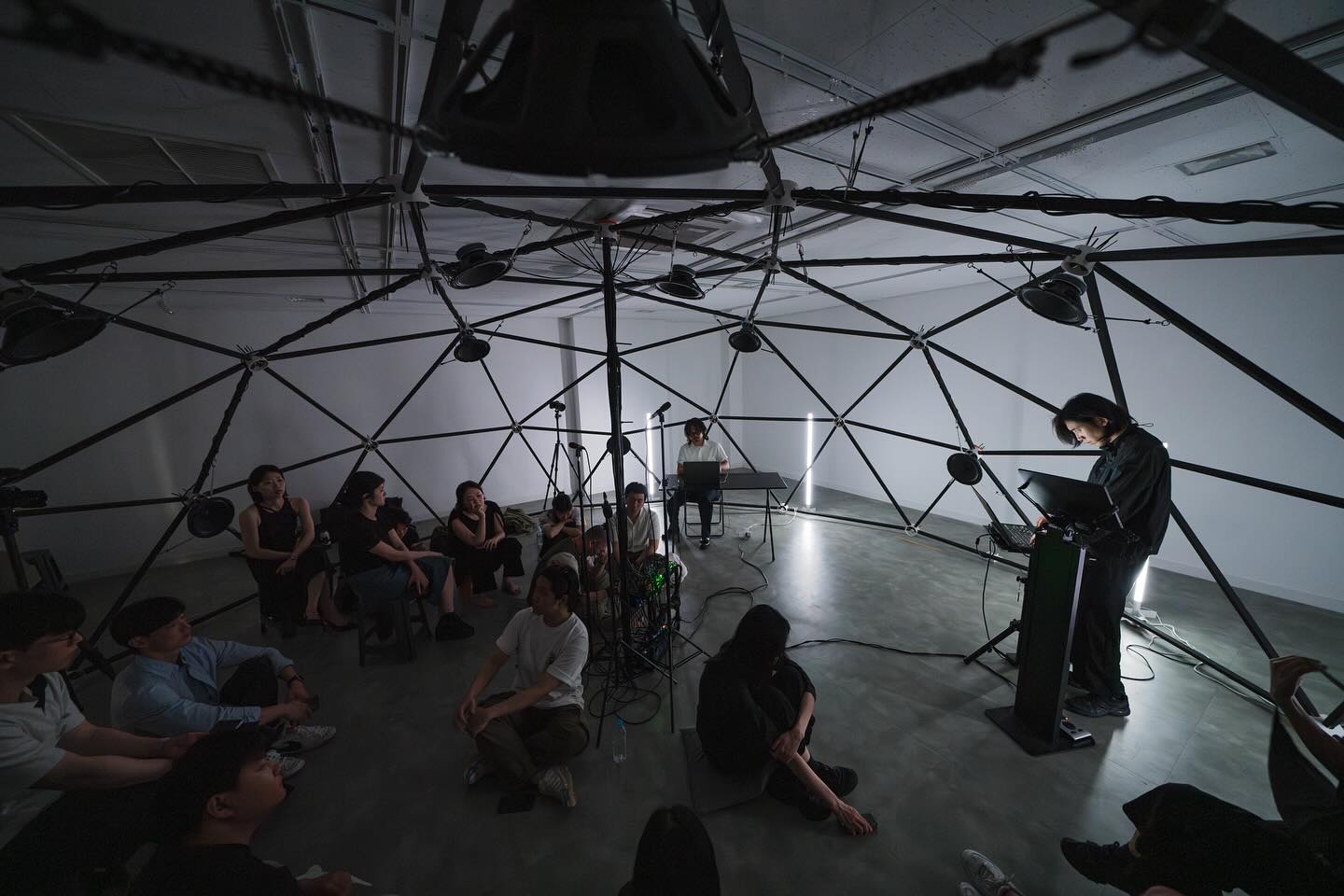
JSUK HAN x KOHUI, Howling Vault I, 2024, Sound performance, 45min. ©JSUK HAN

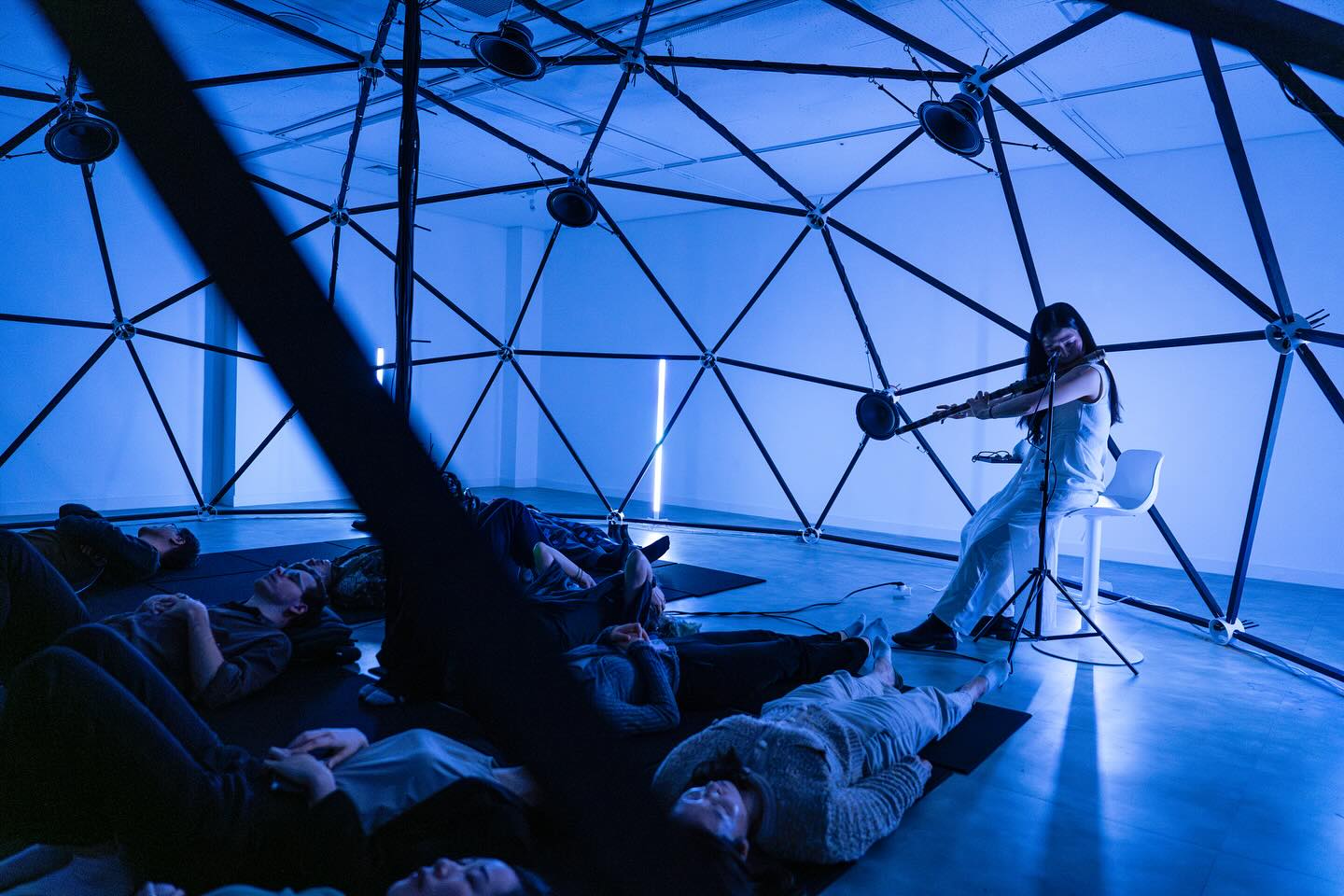
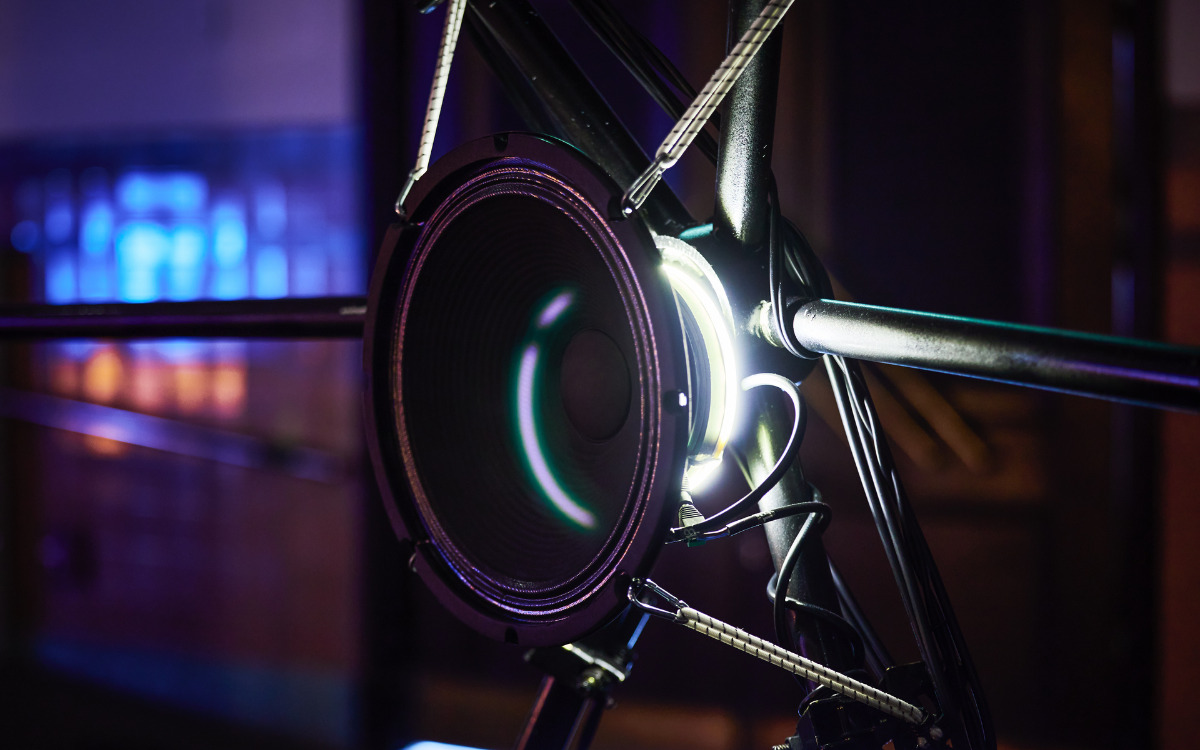
In 2024, JSUK HAN presented the sound installation Howling Vault, which activates an ambisonic sound system by using speakers as transducers that convert electrical signals into sound waves, creating a more immersive listening experience. Ambisonic sound allows audio to be perceived from all directions—above, below, front, and back—overcoming the spatial limitations of traditional stereo speakers and offering a richly dimensional auditory environment.
 
For this work, JSUK HAN constructed a 7-meter-diameter vault-shaped structure, representing a rounded ceiling, and installed 12 speakers within it to form the soundscape. The vault’s design continuously alters the direction and distance of the sound, producing an acoustic environment that closely simulates natural listening conditions.


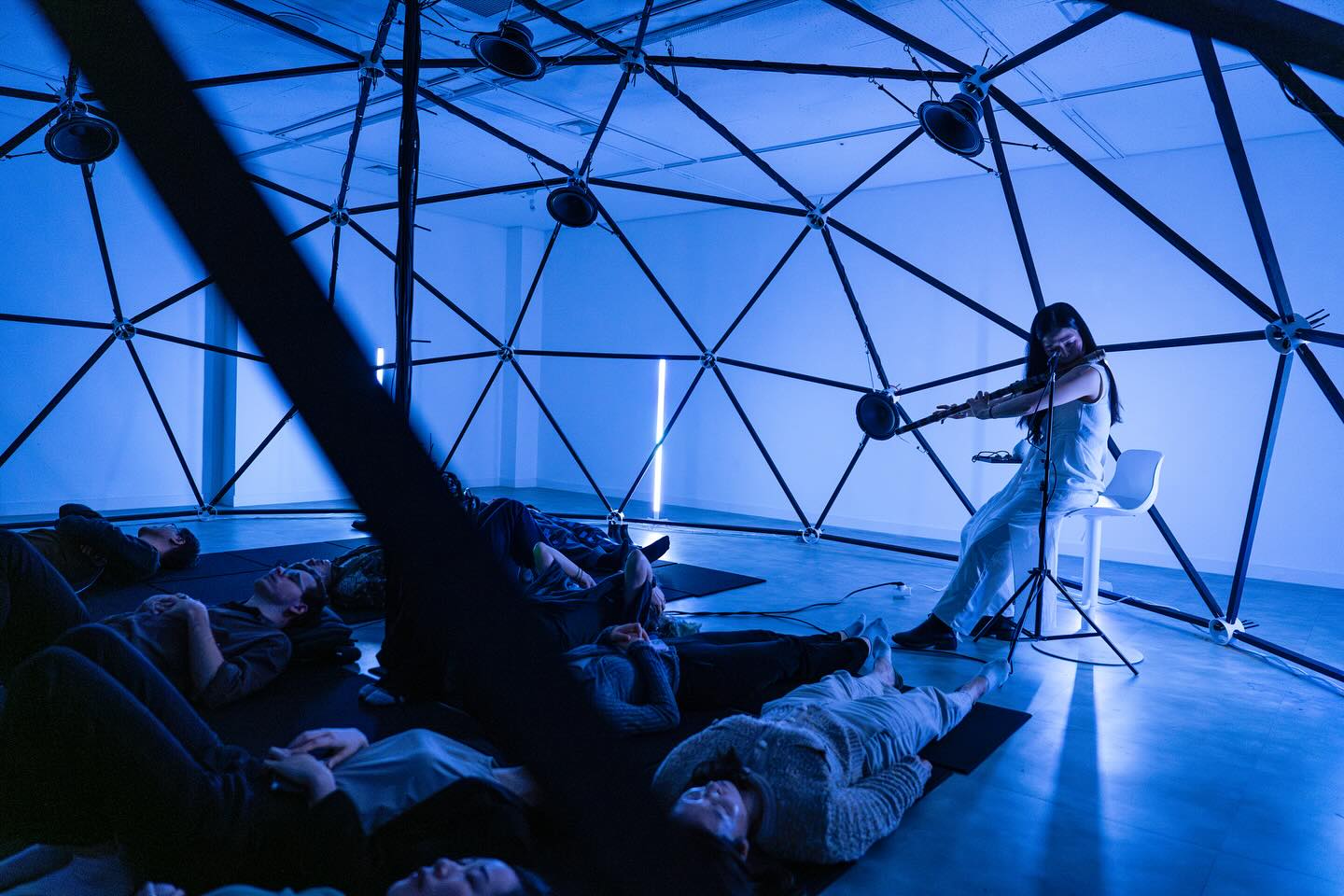
Jsuk Han x Jiyun Song, Howling Vault II, 2024, Sound performance, 45min. ©Jsuk Han

Additionally, within this ambisonic sound system, JSUK HAN continuously amplified audio feedback to make the resulting noise more perceptible. The sounds heard inside the vault are based on noise generated during three collaborative performance sessions.
 
During these performances, each performer activated audio feedback through their individual transducers, creating an interactive interference system in which their actions and sounds affected one another. A centrally placed microphone collected the generated noise, while the speakers amplified the feedback process, filling the space with dense, immersive noise.


Jsuk Han x Sangtae Jin, Howling Vault III, 2024, Sound performance, 45min. ©Jsuk Han

Furthermore, the audience inside the vault participates in the audio feedback process, playing a role in further complexifying and intensifying the sound. In other words, the presence of the viewers influences the feedback loop, continuously modulating the noise. In this way, within the space of the vault, all entities become entangled in the feedback network, acting as agents that activate and transform the internal soundscape.


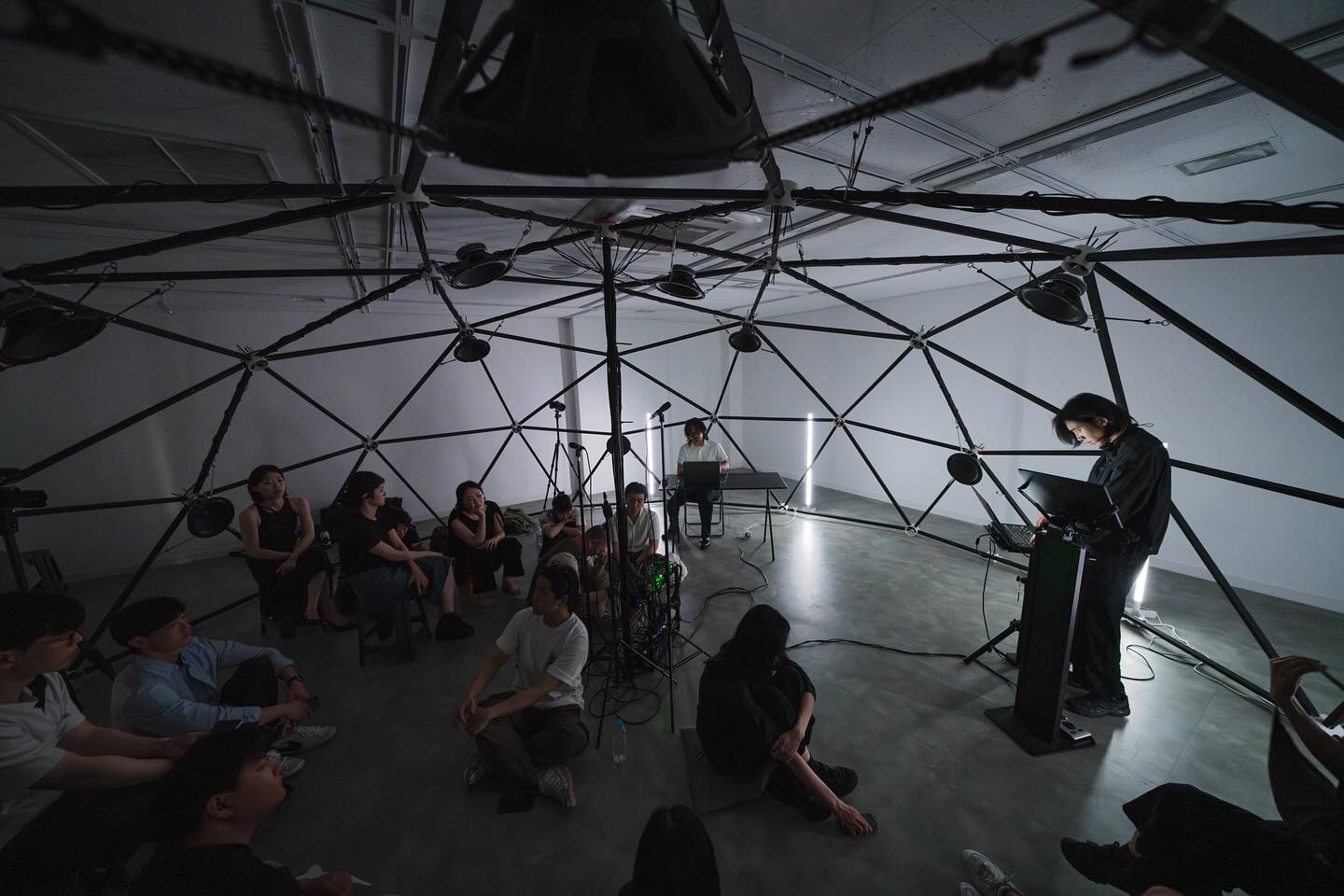
Jsuk Han, Nidifying the Sonic Creatures, 2024, LED, PVC pipe, cable tie, multi channel audio system, computer, etc. D 700cm, H 500cm ©Unfold X

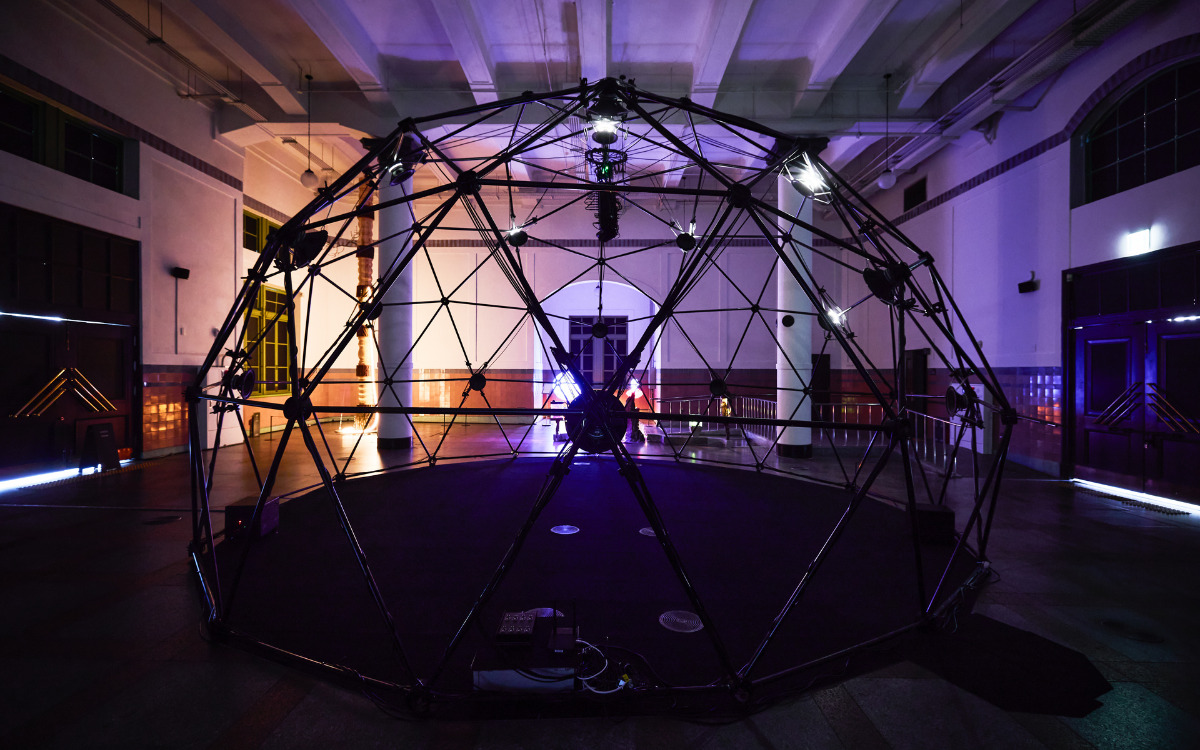
JSUK HAN’s Nidifying the Sonic Creatures, presented at Unfold X in 2024, also employs ambisonic technology to create a three-dimensional sound environment through a multi-channel audio system. The title, “Nidifying the Sonic Creatures,” combines “nidification” (the act of building nests for reproduction) and “sonic,” linking the concepts of animal nesting and sound.
 
This dome-shaped installation spans 7 meters in diameter, where various “audio objects” create an imaginary space and naturally disappear over generations. These “audio objects” use flocking algorithms that mimic bird migration and genetic algorithms, enabling the computer to autonomously adjust 16-channel sound, designed so that the sound evolves toward specific goals.
 
Through this piece, JSUK HAN renders algorithmically generated sound and its decay as a spatialized experience, drawing attention to the presence of non-human entities and encouraging listeners to attune to their sonic existence.


Jsuk Han, Nidifying the Sonic Creatures, 2024, LED, PVC pipe, cable tie, multi channel audio system, computer, etc. D 700cm, H 500cm ©Unfold X

In this way, JSUK HAN, who has continuously explored the mechanisms of sound output and the qualities of sound itself, employs audio feedback systems that blur the binary boundaries between input and output. Through these systems, he enables audiences to perceive the natural emergence and growth of noise and feedback—phenomena that are always present around us but usually difficult to detect—within his sound-spaces.
 
HAN’s sound-spaces reveal nonlinear and irregular moments generated through the amplification of feedback, recalling the dynamics of natural systems and activating networks of interrelation among all beings entangled within the immaterial wavelengths of sound.

 “The world around us is already filled with noise—and indeed composed of it. Thus, rather than eliminating noise, we might think of it as filtering or controlling it. I seek not to prohibit the natural emergence and growth of noise and feedback that are always present around us, but to accept them as they are.”   (JSUK HAN, Artist’s Note)


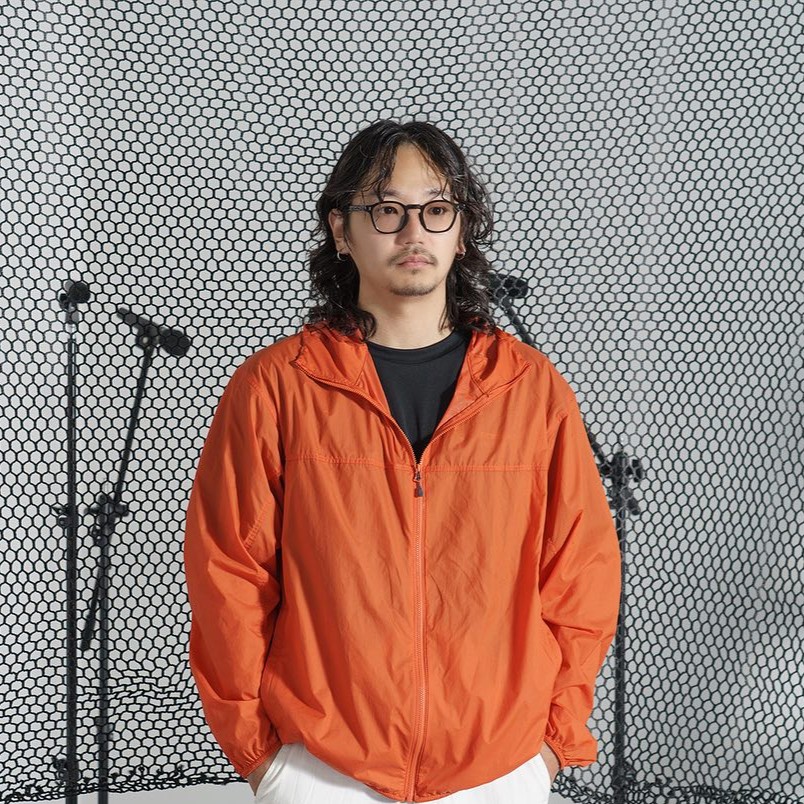
Artist Jusk Han ©Incheon Art Platform

JSUK HAN received his BFA in Sculpture from Seoul National University and his MFA in Sound Art from the School of the Art Institute of Chicago, USA. His solo exhibitions include 《Palindrome》 (Incheon Art Platform, Incheon, 2023), 《Logistic Feedback》 (Platform-L Contemporary Art Center, Seoul, 2023), 《Audio Feedback: The True Balancer》 (Oil Tank Culture Park, Seoul, 2022), 《Radio Shower: 3-3000MHz Listening Session》 (Windmill, Seoul, 2022), and 《Feedbacker: Ambiguous Borderer》 (OCI Museum of Art, Seoul, 2021).
 
He has also participated in numerous group exhibitions, including 《2084: Space Odyssey》 (Culture Station Seoul 284, Seoul, 2024) as part of UNFOLD X 2024, 《Random Access Project 3.0》 (Nam June Paik Art Center, Yongin, 2023), 《Whisperwhispering》 (TINC, Seoul, 2022), 《Tune made with art and technology》 (Bupyeong Art Center, Incheon, 2021), and 《Follow, Flow, Feed》 (ARKO Art Center, Seoul, 2020).
 
HAN was the final winner at the exhibition 《New Media Art》 (Seoul Arts Center, 2021) and was selected as an OCI YOUNG CREATIVES artist in 2020. He also participated in the Incheon Art Platform Residency in 2023.

References