The
COVID-19 pandemic has catalyzed active discussions about the “post-human.” As
the global environment changes in directions current humanity cannot fully
predict, the human condition itself is transforming within networks of
relations among diverse beings. From dystopian projections of human extinction
to post-apocalyptic visions of the world after the end, these discourses, in
their variety, commonly call for reflection on the old world and offer a
turning point toward a new era.
Attempts to imagine the human after the human are not only about the future,
but also about the present. Because the future always unfolds in unpredictable
ways, we should beware excessive optimism or pessimism; yet it is clear that
the “post-human” will differ from the human as we know it, heralding an era in
which the human and the non-human merge.
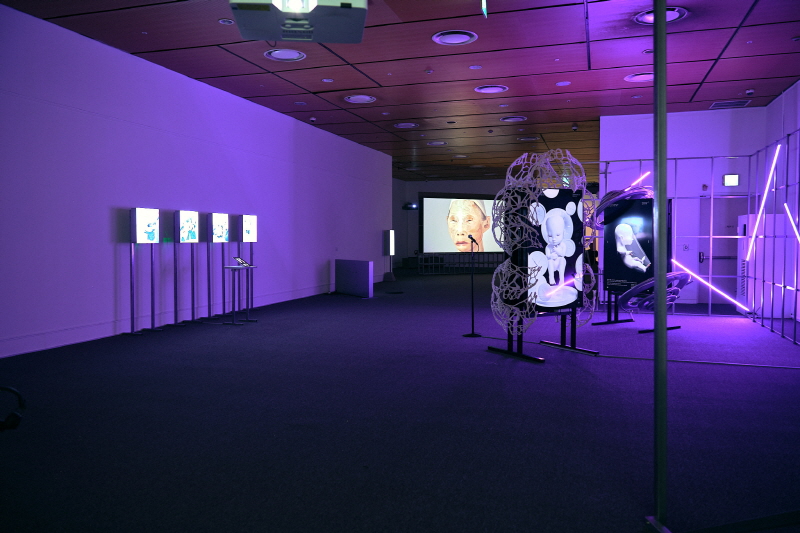
In
this zeitgeist, the exhibition 《Future
Fantastic》 (2022.11.11 – 11.15) at Art Center Nabi is
timely in that it addresses how artists perceive crisis and explores humanity’s
future tasks along a chronological arc. Eight Korean media-artist teams
participate, constructing a post-apocalyptic worldview that squarely faces
crises we confront by imagining potential situations in which, amid ongoing
climate emergency and pandemic conditions, humanity loses its sense of
direction and falls into chaos. The exhibition redefines the world to come—from
the brink of human extinction, to virtual realms where the human is linked with
the non-human, to the post-human forms adapted to Earth after the end.
The
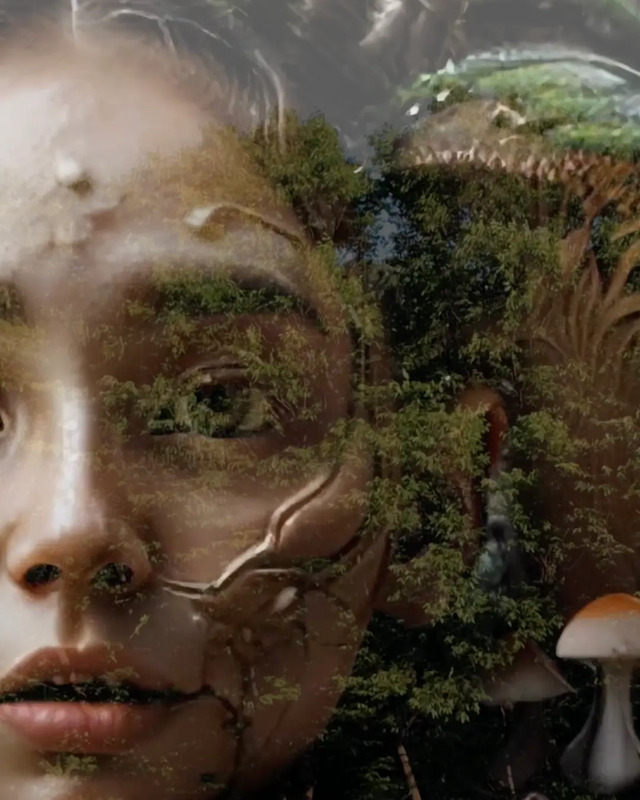
exhibition opens with a video work from Homo Polinella: The Lab, a convergent
project by Kim Hunye and Yalu. “Homo Polinella” is a photosynthesizing
post-human species born at the intersection of visual art, science, and
literature. The post-human subject encounters the non-human—strange and uncanny
beings—and learns to accommodate difference. The premise that Homo Polinella
generates energy via self-photosynthesis suggests transformed possibilities for
the human concept itself. By positing a human that can exist in a state no
longer human, we catch a glimpse of an era of fusion and hybridity.
(…)
In
the post-human future to come, as the human and the non-human become
interconnected, criteria for the biological human will collapse and new beings
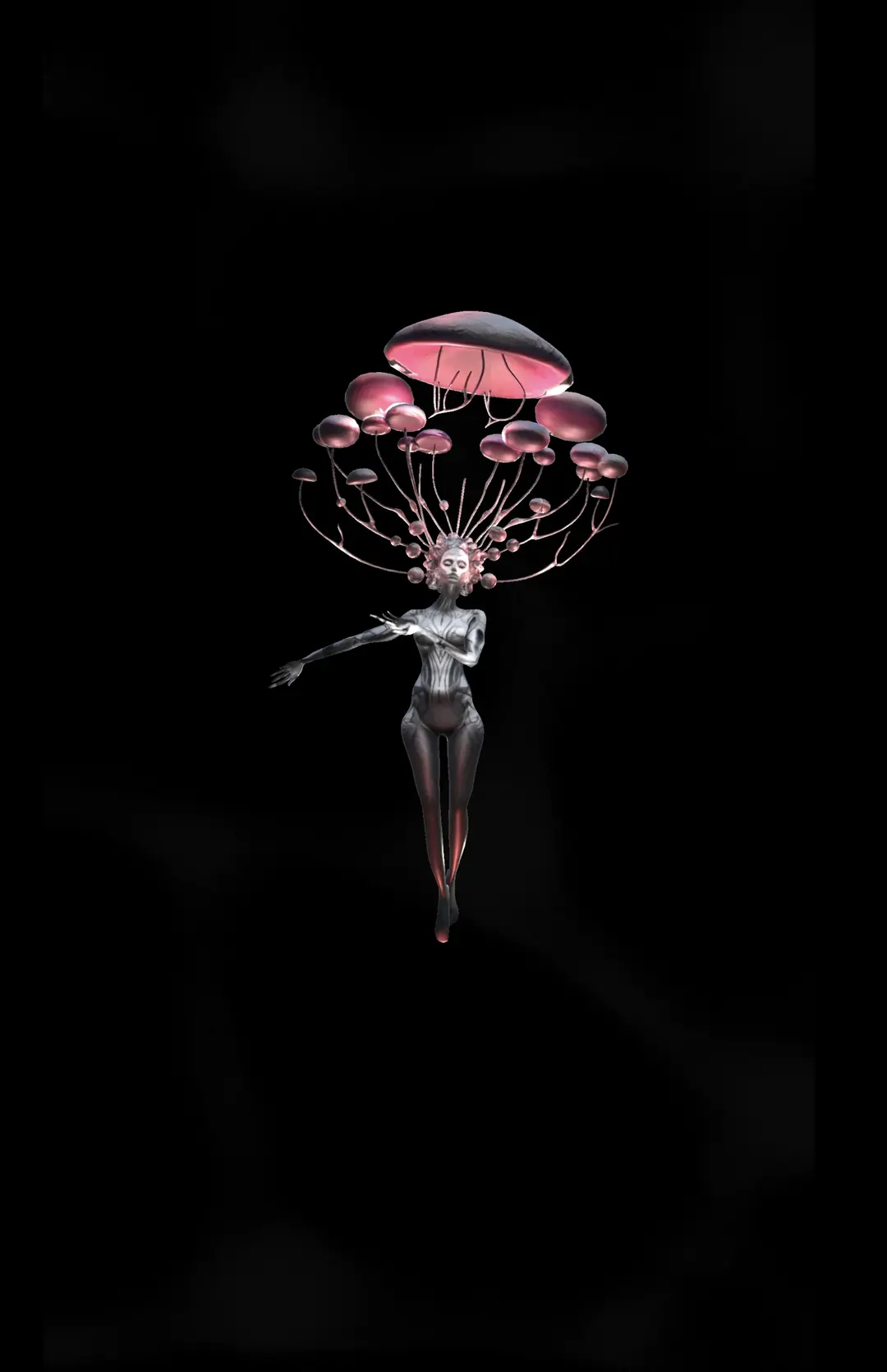
will emerge. Sunjeong Hwang experiments with an interface between human and
non-human by linking the bio-signals of real plants in real time with a network
constructed in a digital environment. Through this, the artist seeks to reveal
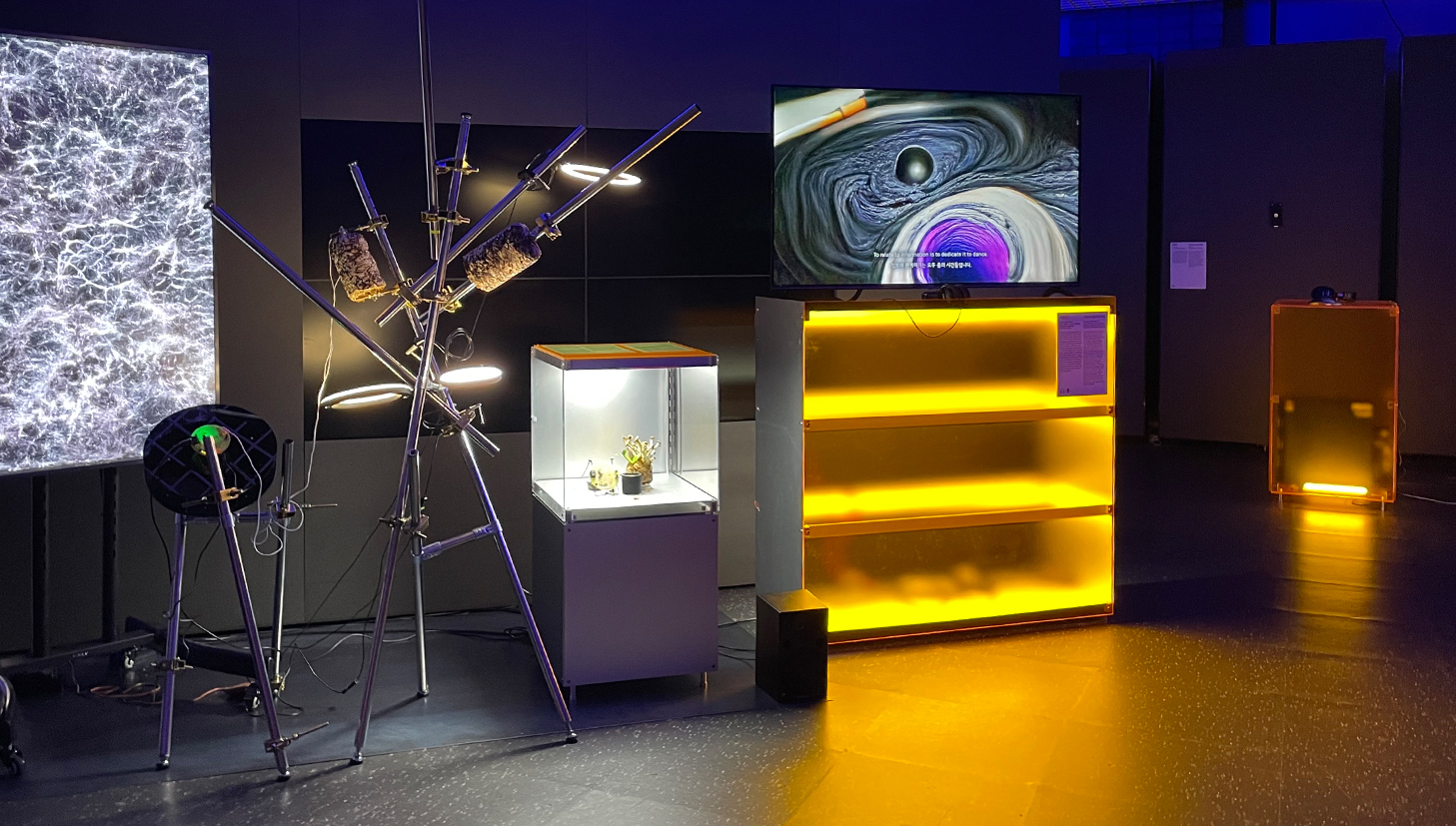
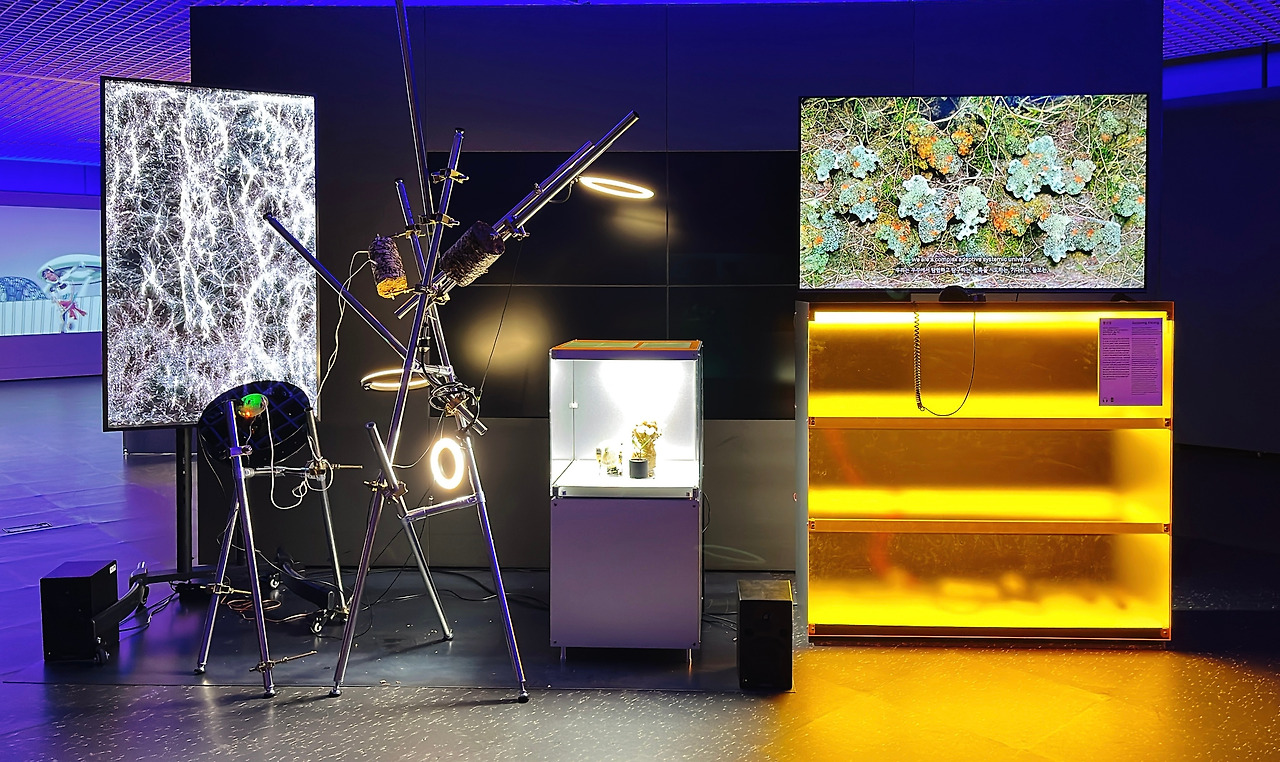
an organic relationship among technology, nature, and human. In the project
named “Tanhamu,” an interface connecting a plant–tree–mycelium network is
developed, and the processes of interaction are expressed across diverse media.
“Tanhamu” combines the Sanskrit word Tanhā (desire of body and mind) with the Chinese character 舞 (dance), and can be read as an attempt to view humanity from a
planetary perspective through the symbiosis of plants. The work shown
here, Tanhamu: Tanhamutronica (2022), likewise
sketches the metabolism of the post-human and its organic networks to inspire a
vision of symbiotic life.
(…)
U.S.
computer scientist Ray Kurzweil described as the “Singularity” the point at
which the pace of technological development becomes so rapid that human life
changes irreversibly. While he predicted around 2045 as the arrival of the
singularity, some argue—considering climate crisis and the pandemic—that
humanity may already have reached it. In such conditions, the artistic
practices that explore a post-apocalyptic world offer a new direction in that
they picture the post-human desired and imagined by our time. This direction
departs from categories confined within the human, moving toward a new
orientation—de-human. By giving form to a de-human transformed into a new
species, the participating artists present a positive possibility for the
conditions of human existence in a post-apocalyptic world.