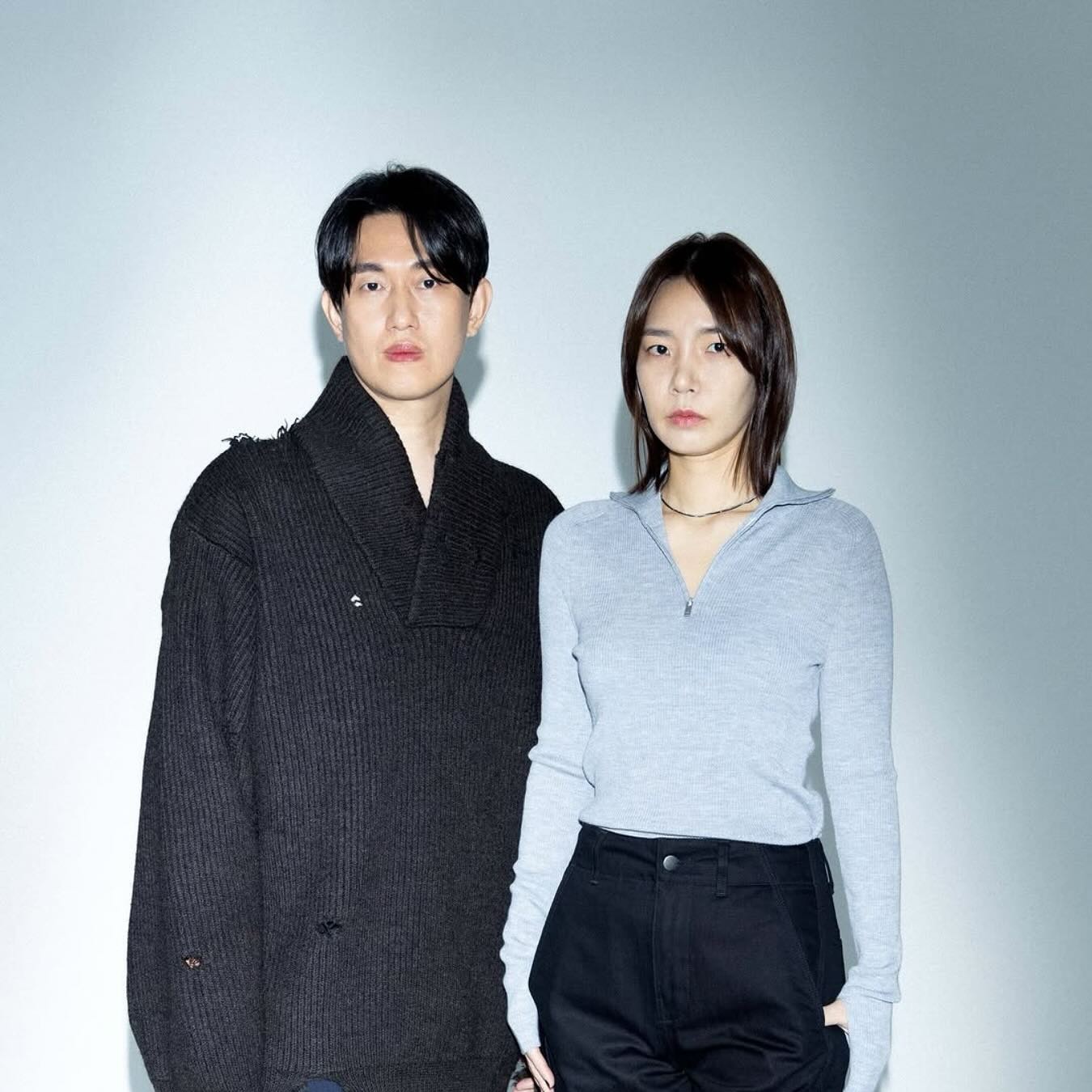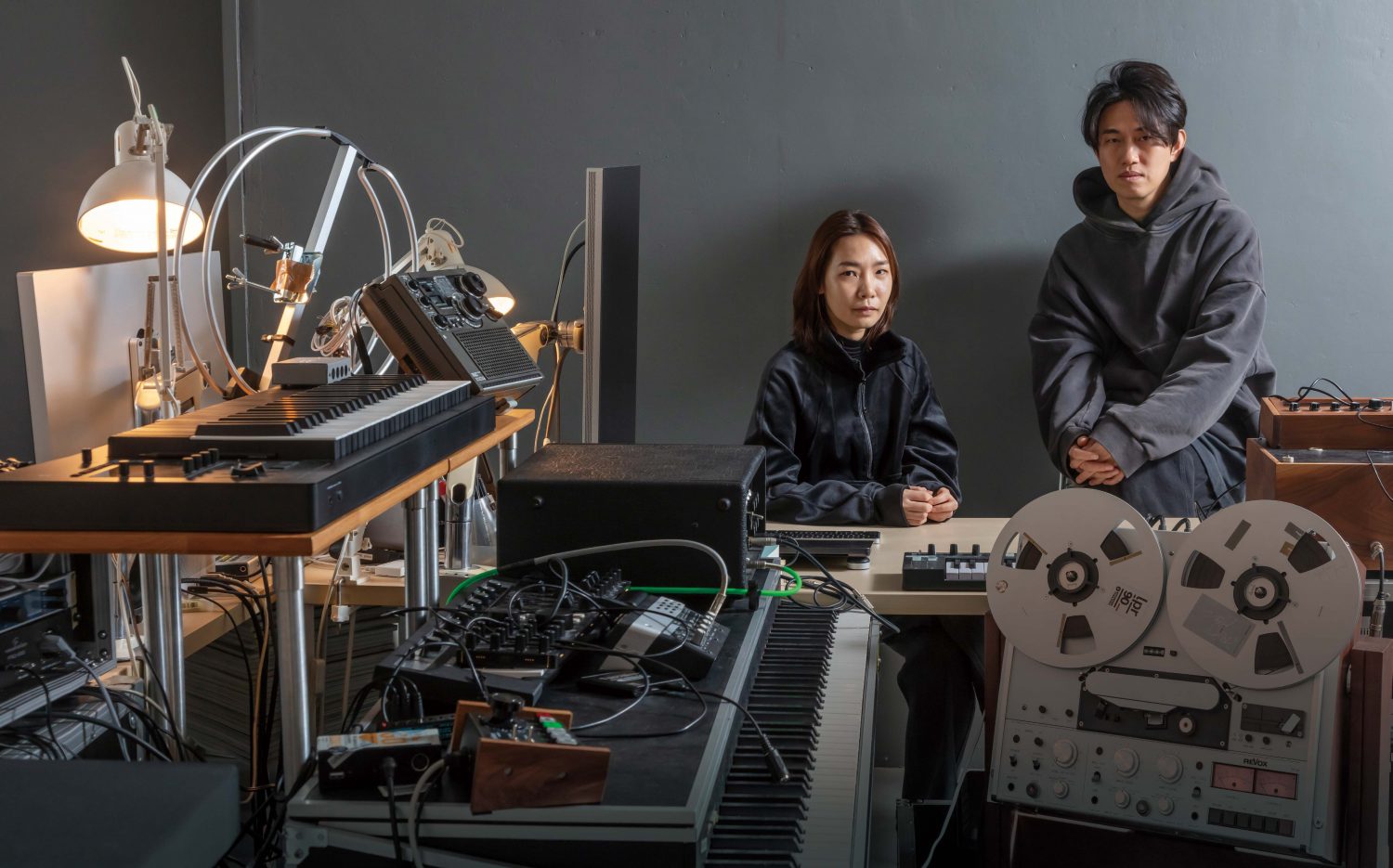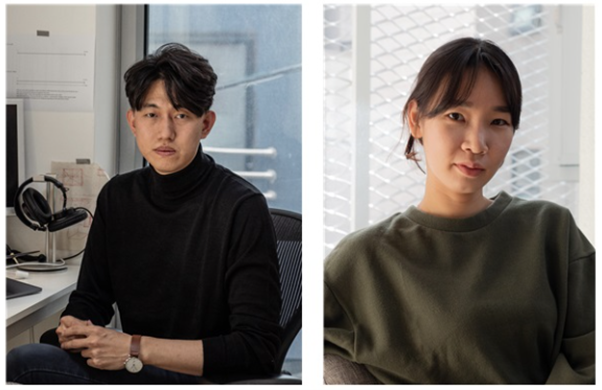


The artist duo GRAYCODE, jiiiiin, composed of electronic music composer Taebok Cho (GRAYCODE, b. 1984) and Jinhee Jung (jiiiiin, b. 1988), has been creating sound-media works that interact with various art genres, based on computer-generated sound practices.
 
They approach sound not merely as a means of representation, but as a phenomenon through which existence, time, and perception are constituted. Their primary materials—speakers and hardware systems—are not treated as mere audio devices, but as resonant elements engaging with the sensory components of space. Through this, their works transform listening into a multisensory, spatiotemporal experience mediated through the body.


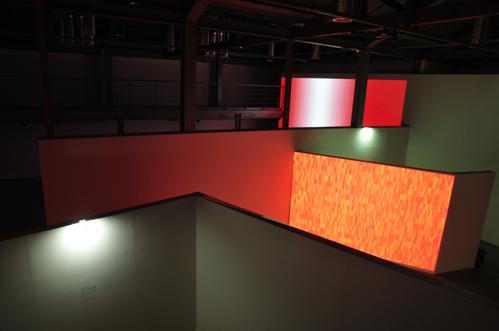
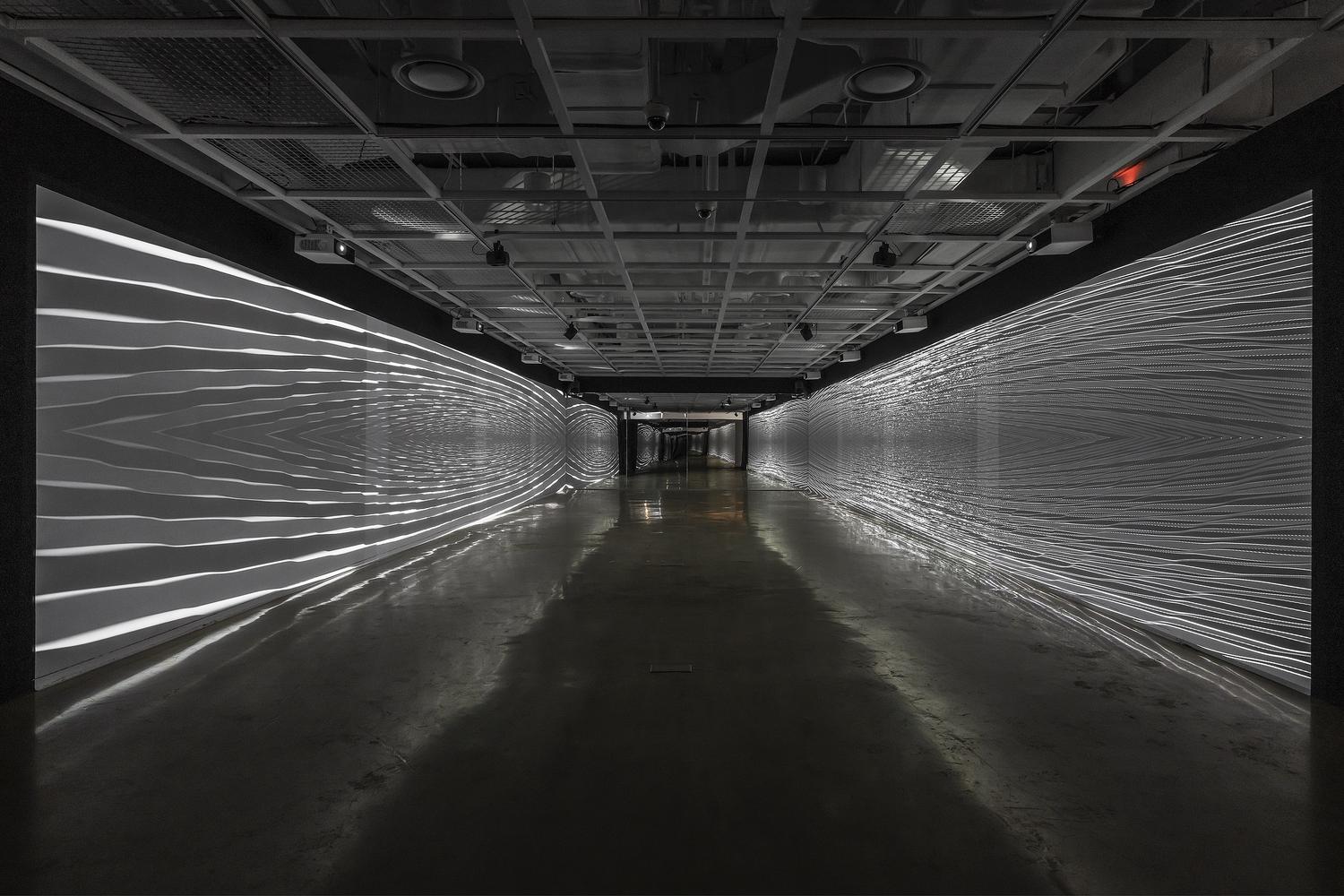
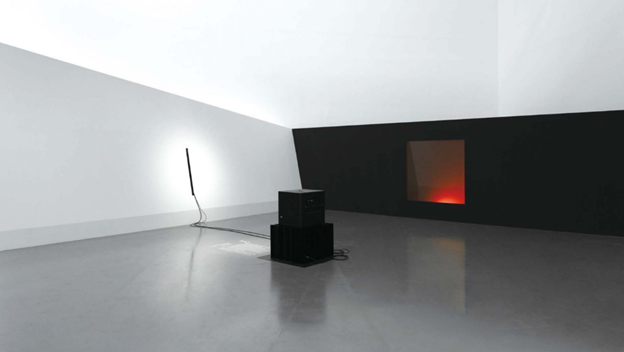
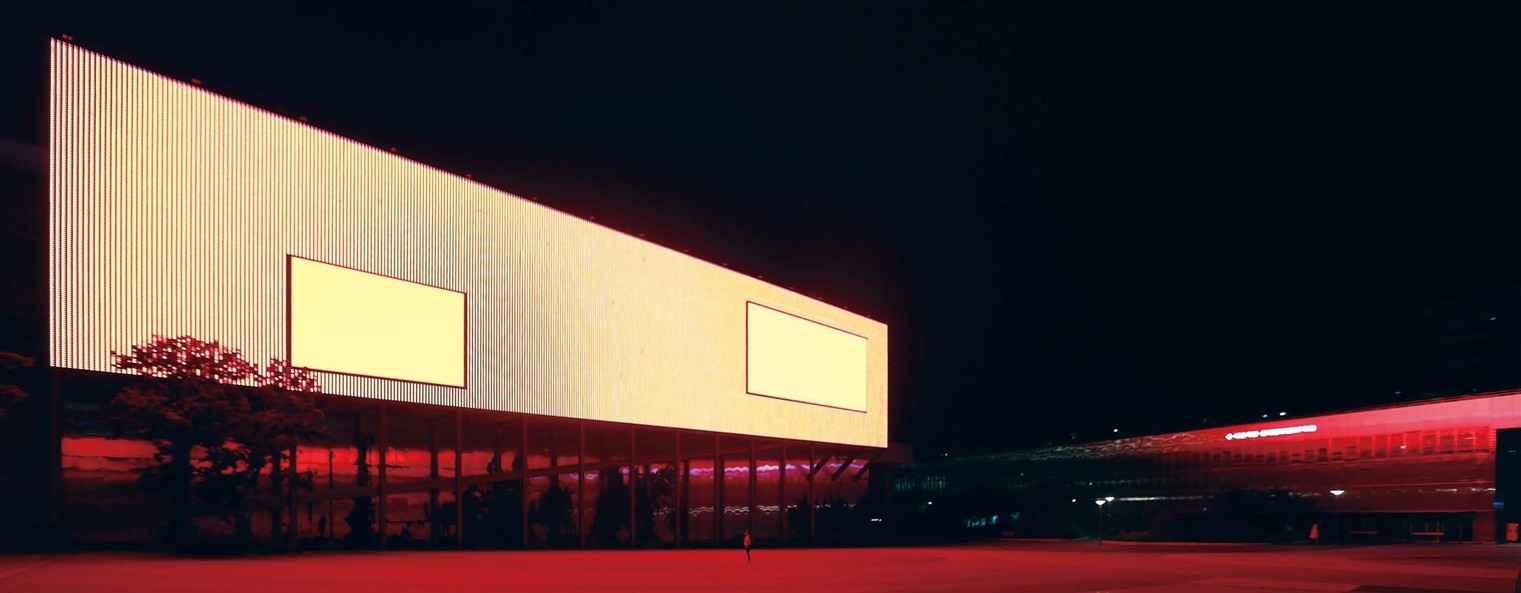
GRAYCODE, jiiiiin, #include red, 2016, Audio-visual, Installation view of 《#include red》 (Incheon Art Platform, 2016) ©GRAYCODE, jiiiiin

GRAYCODE, jiiiiin began developing collaborative projects in earnest in 2016, starting with their work at the Incheon Art Platform. Their first joint piece, #include red (2016), stemmed from the question: “What does the color red sound like?”
 
Visible wavelengths that can be perceived by the human eye correspond to specific colors, each with its own frequency. Among them, red has the lowest frequency within the visible spectrum. When converted into a sound wave, it roughly corresponds to 20 hertz (Hz).


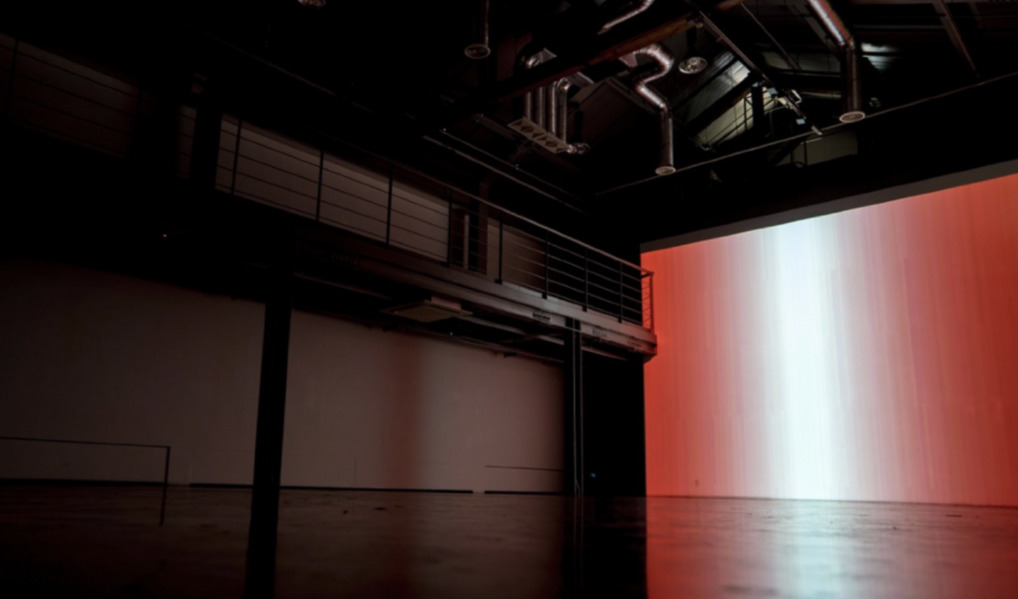
GRAYCODE, jiiiiin, #include red, 2016, Audio-visual, Installation view of 《#include red》 (Incheon Art Platform, 2016) ©GRAYCODE, jiiiiin

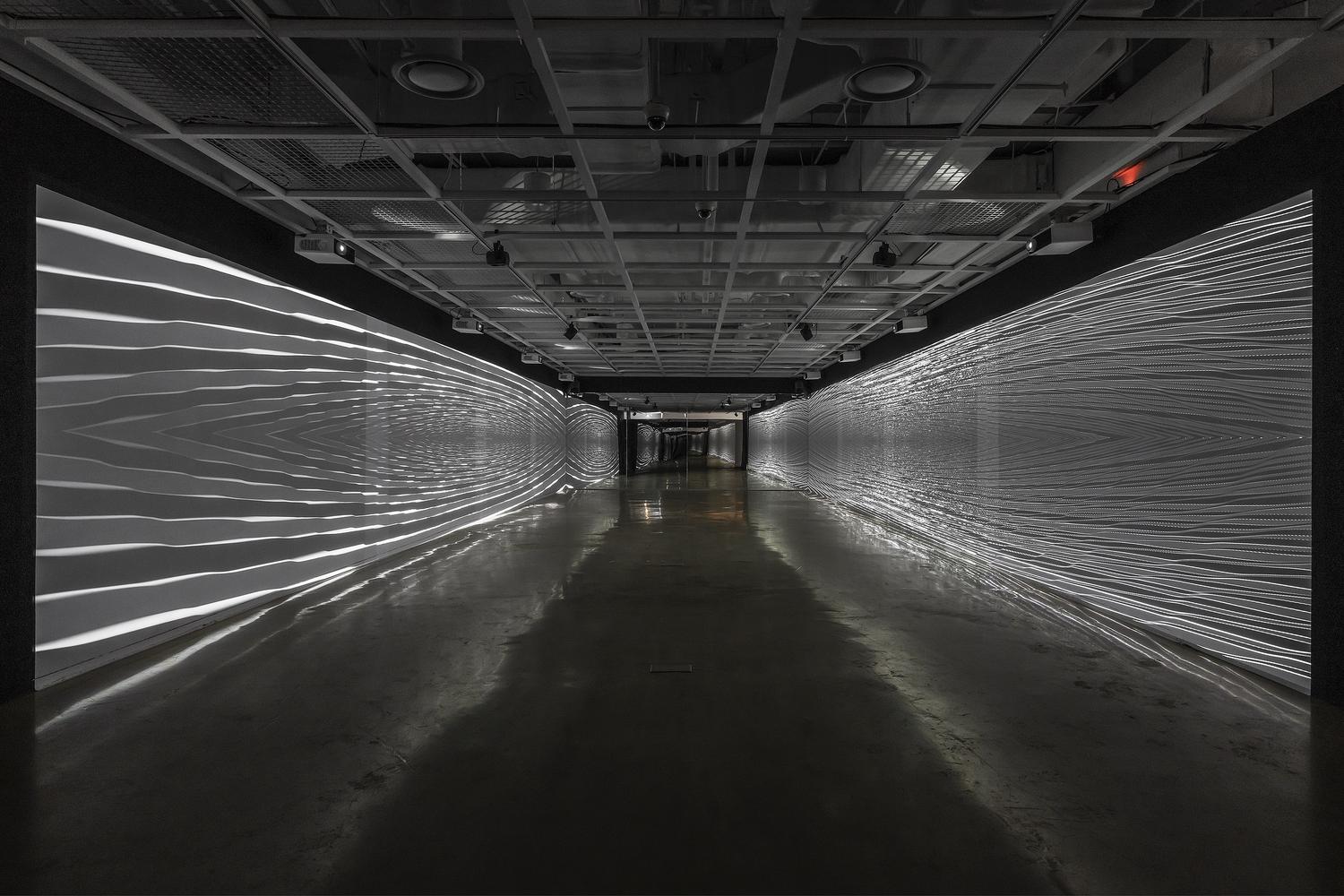
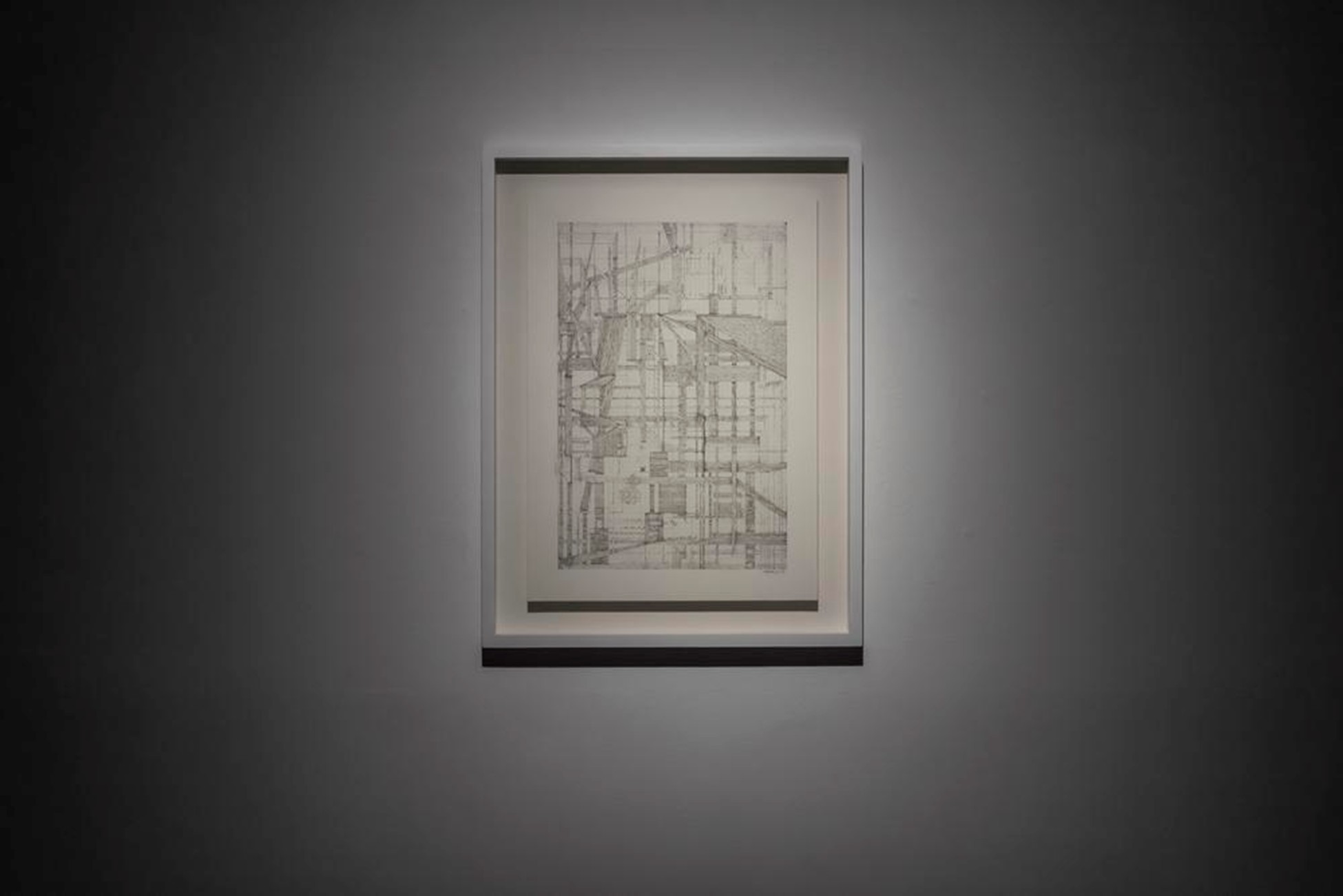
GRAYCODE, jiiiiin programmed the color red into video and sound through precise data, numbers, and codes, structured like an architectural blueprint. Although #include red (2016) is grounded in rigorously programmed sound data, what confronts the audience in the exhibition space is, first and foremost, the intensity of color and the tension of sound.
 
By merging the color red with the sound corresponding to its frequency, the work draws viewers into a structural fusion of two senses—an inherently synesthetic domain. Furthermore, the piece incorporates sound arranged in relation to the audience’s movement and spatial orientation, generating new sensory moments with each encounter.


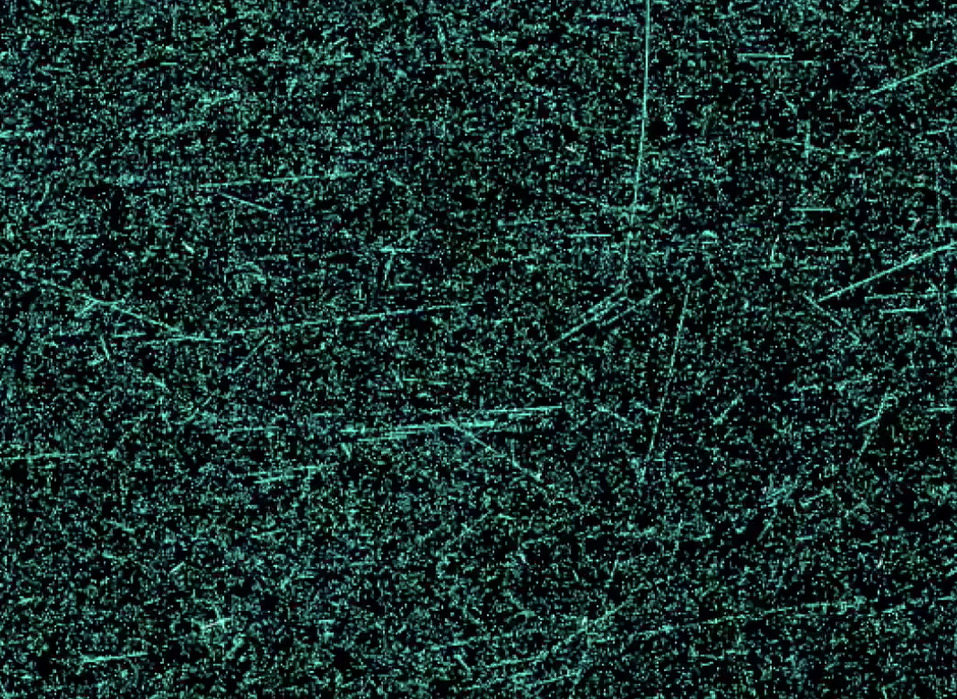
GRAYCODE, jiiiiin, +3×10^8m/s, beyond the light velocity, 2017-2018, Audio-visual in fixed media, 8min 3sec. ©GRAYCODE, jiiiiin

Their subsequent audio-visual work +3×10^8m/s, beyond the light velocity (2017–2018) was created with an imaginative focus on cosmic phenomena that might exist beyond the limits of time, space, and the speed of light. The title ‘+3×10^8m/s’ refers to the velocity of light in a vacuum—the maximum speed attainable by all energy and matter in the universe.
 
In this work, GRAYCODE and jiiiiin explore multilayered sensations that arise as non-visible wavelengths flow through a medium, reach the body, and expand. Through moving images endowed with visual dynamism and sounds emanating from multiple directions, they seek to convey the sensory experience of an ever-expanding universe.


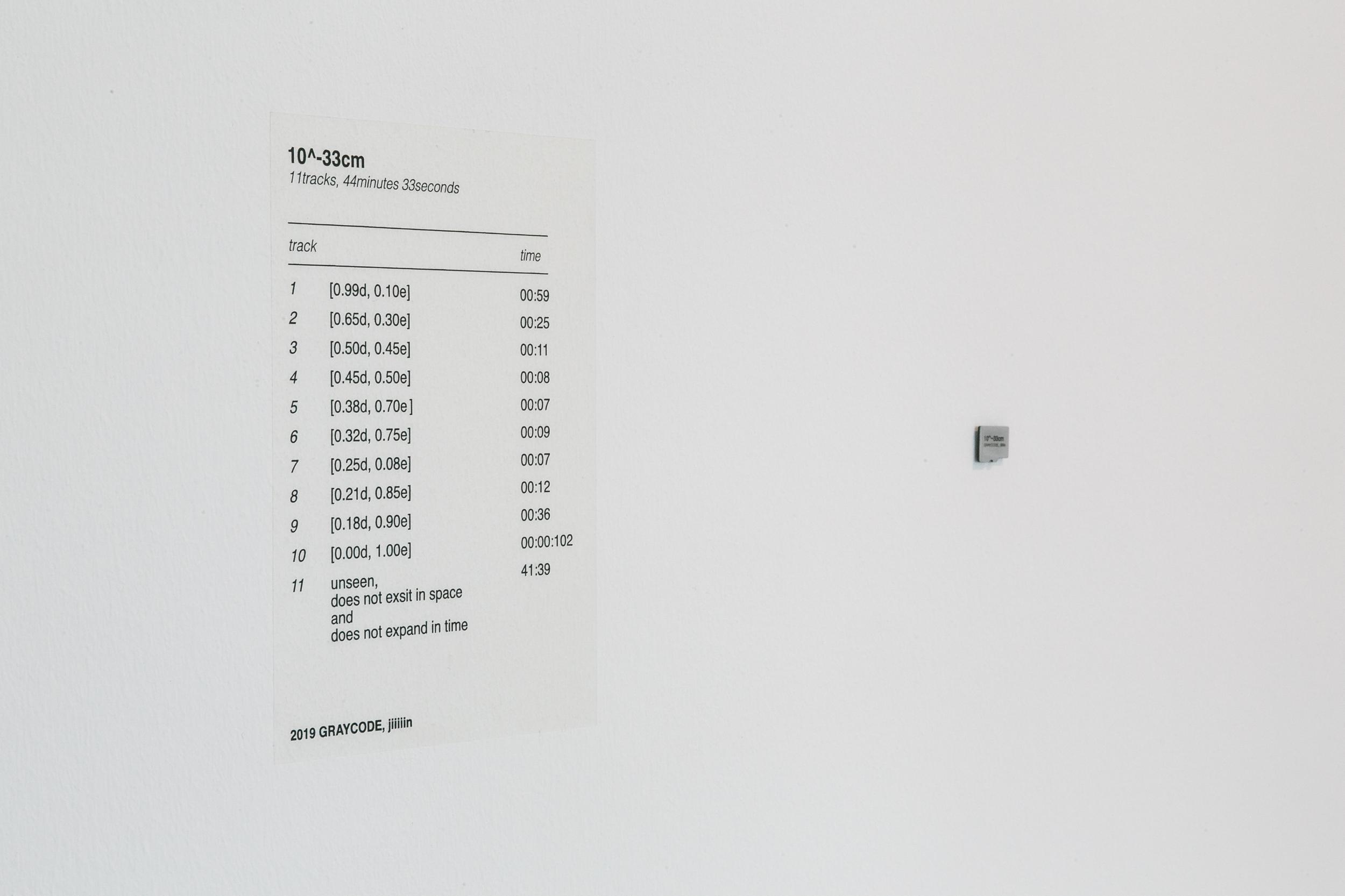
Installation view of 《10^-33cm》 (Gallery damdam, Koreanisches Kulturzentrum, 2019) ©GRAYCODE, jiiiiin

Meanwhile, their 2019 solo exhibition 《10^-33cm》 at Gallery damdam, Koreanisches Kulturzentrum, Berlin presented a project exploring a journey from the macrocosm of the universe to the microcosmic world. In this exhibition, GRAYCODE and jiiiiin sought to listen to the smallest, deepest, and most infinite moments of space-time that had previously eluded perception. They created sounds imagined to exist within the Planck length—approximately 10^-33cm—the smallest conceivable unit of space.

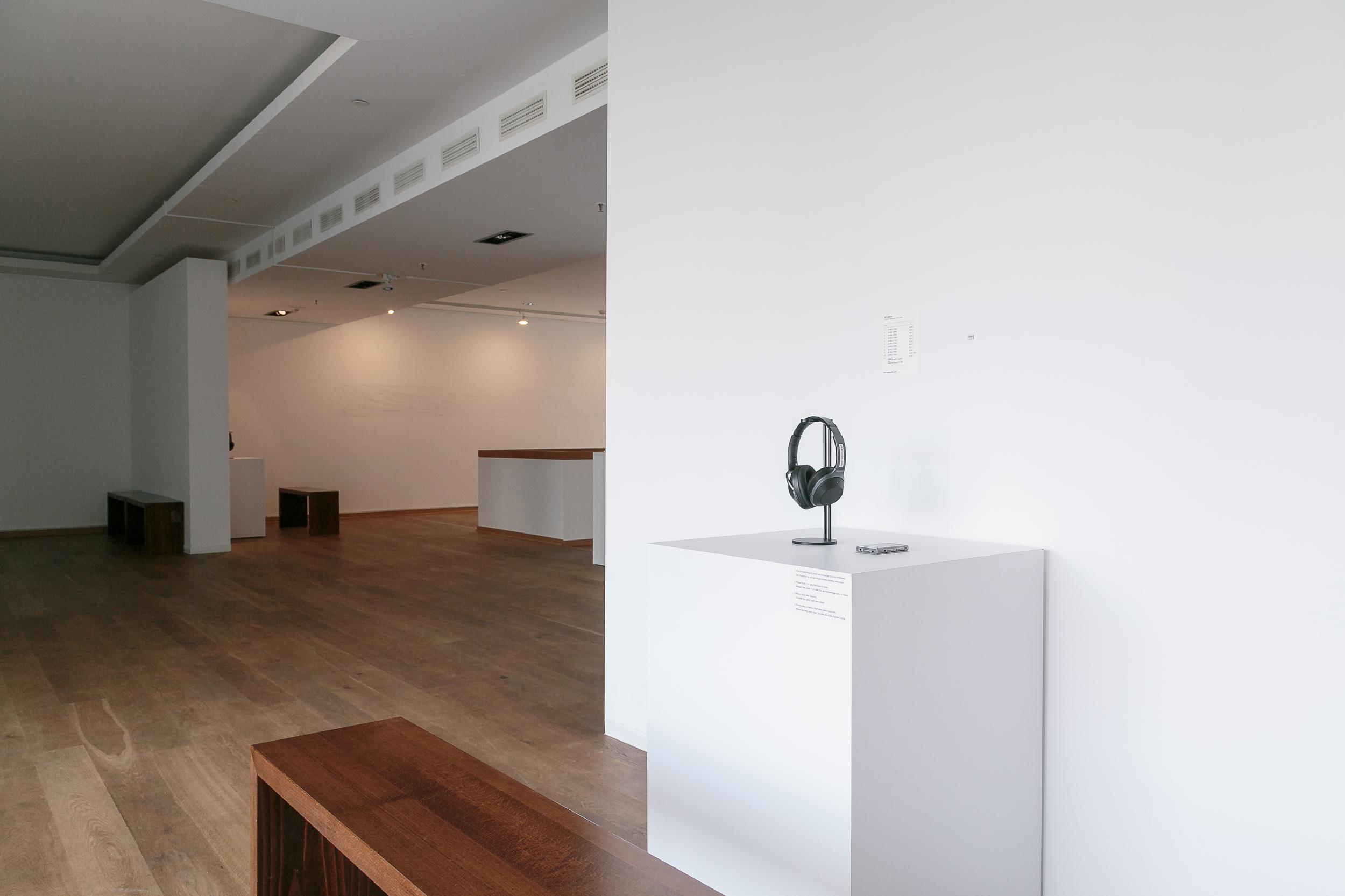
Installation view of 《10^-33cm》 (Gallery damdam, Koreanisches Kulturzentrum, 2019) ©GRAYCODE, jiiiiin

They produced a total of eleven sound tracks by layering various sounds across the full audible frequency spectrum together with two inaudible tones, 23.999Hz and 0Hz. From Tracks 1 to 9, the sounds gradually become fragmented and complex, evoking a sensation of sinking beneath the surface. The unexpectedly compressed Track 10 gives rise to the feeling of entering a new dimension, while the final Track 11 stimulates an inner vision.
 
These sounds penetrate deeply through the fissures of time and space, arriving at another world where gravity disappears—a microcosmic realm. Curator Ji Yoon Yang remarked, “It opens a space for audiovisual experience at the limits of what can and cannot be seen, and what can and cannot be heard.”


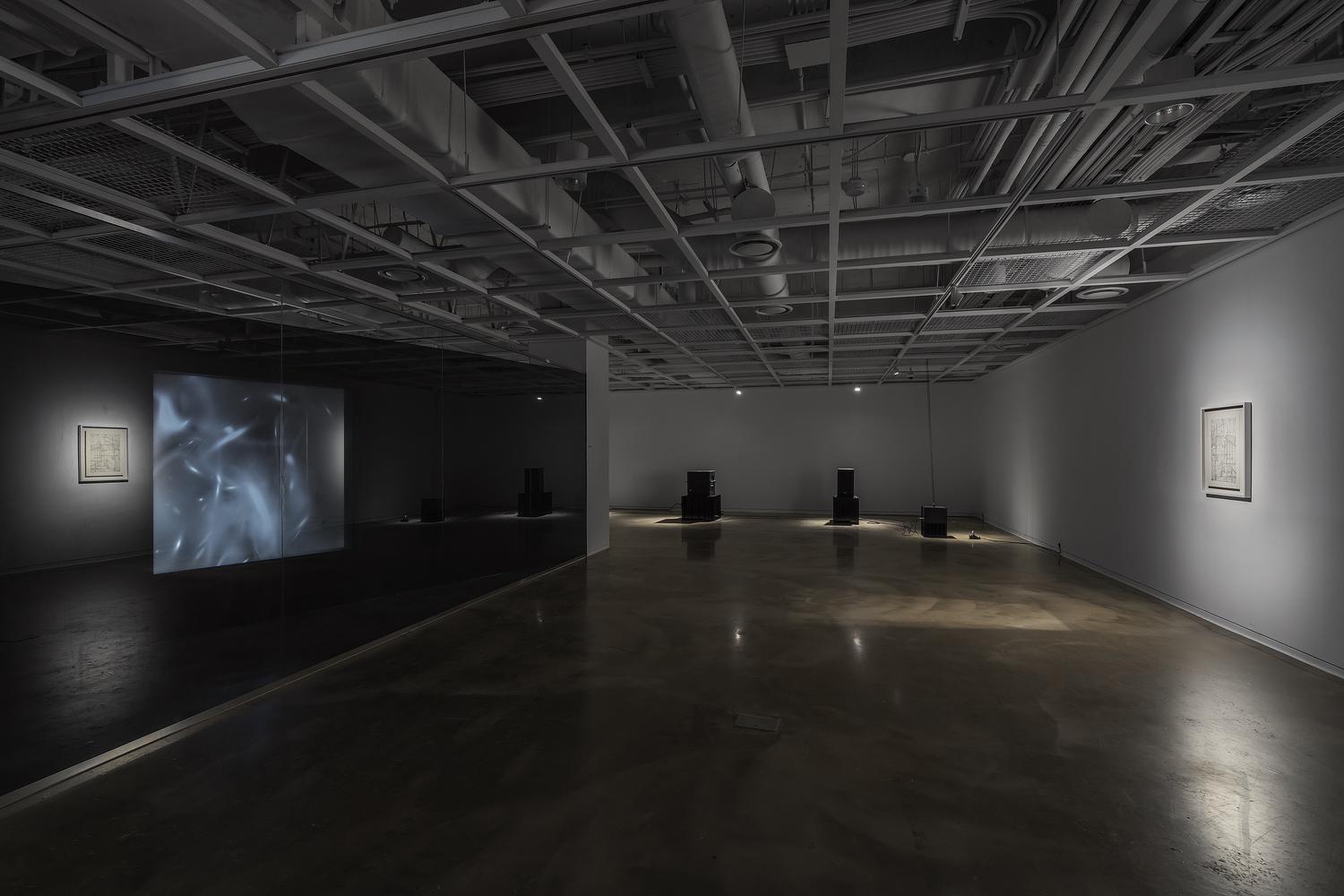
Installation view of 《Time In Ignorance, ∆T≤720》 (Project Space Sarubia, 2020) ©Project Space Sarubia

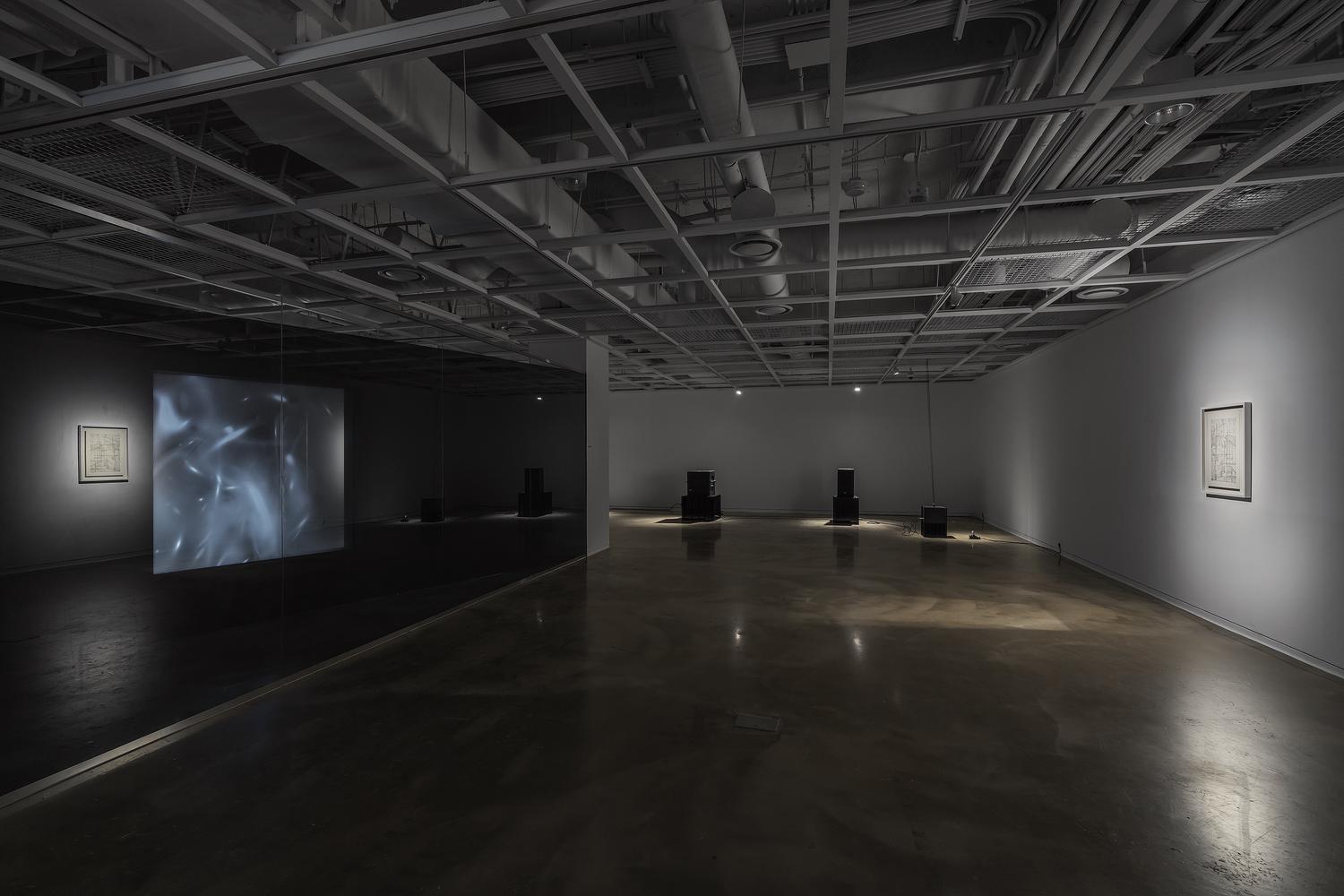
The following year, the solo exhibition 《Time In Ignorance, ∆T≤720》 at Project Space Sarubia was conceived as a project to translate the month-long exhibition period into the time-based medium of sound art. Grounded in the question, “Can the vast, unknown time beyond our perception be experienced in reality?” the artists quantified the uncertainty of time through sound over the 720 hours of the exhibition, making perceptible those durations that exist beyond visibility.
 
The transformations of sound, generated from a dynamic systems mathematical model, made the flow of time perceptible while also presenting another sensory dimension through which the depth of resonating space could be felt. Here, sound as a mediator of temporal change signifies the movement and transformation of invisible energy, while simultaneously existing as visual information.

Installation view of 《Time In Ignorance, ∆T≤720》 (Project Space Sarubia, 2020) ©GRAYCODE, jiiiiin

Plus, this work is placed in the process of going from non-equilibrium to equilibrium. Through the opening performance, a chaotic form is characterized by chaoplexity, which is the very first moment of non-equilibrium created. In nature, the state of non-equilibrium has existed as an absolute condition that drives into the reveal the difference.
 
During the 30-day exhibition period, the sound works generate a movement that deviates from the state of non-equilibrium—all our experienced spontaneous changes are made in irreversible and irreversible. Along with the time-specific sound work presented at this time, our doubts about reality will continue.


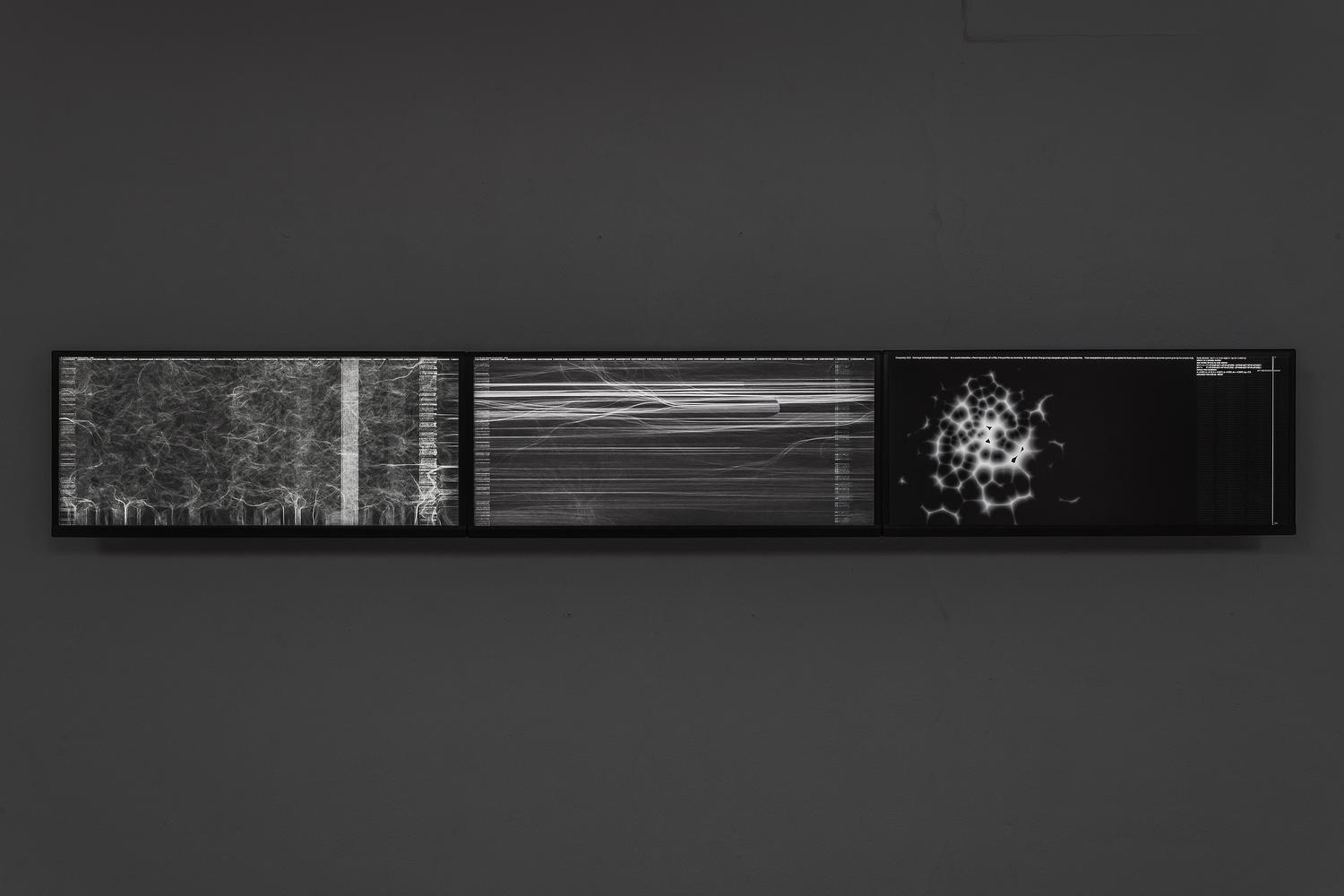
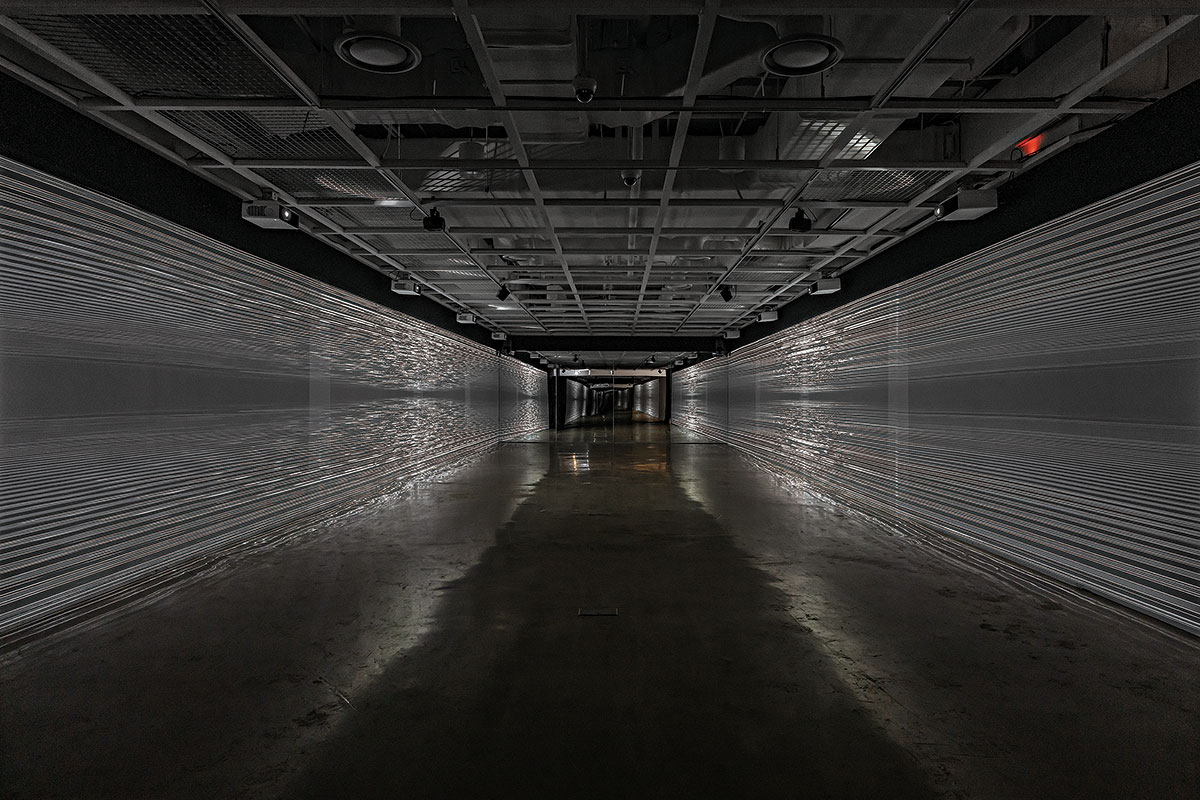
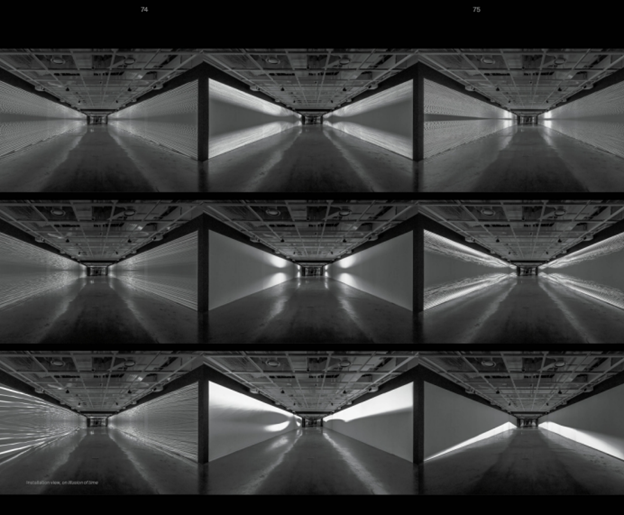
Installation view of 《Data Composition》 (Sejong Museum of Art, 2021) ©GRAYCODE, jiiiiin

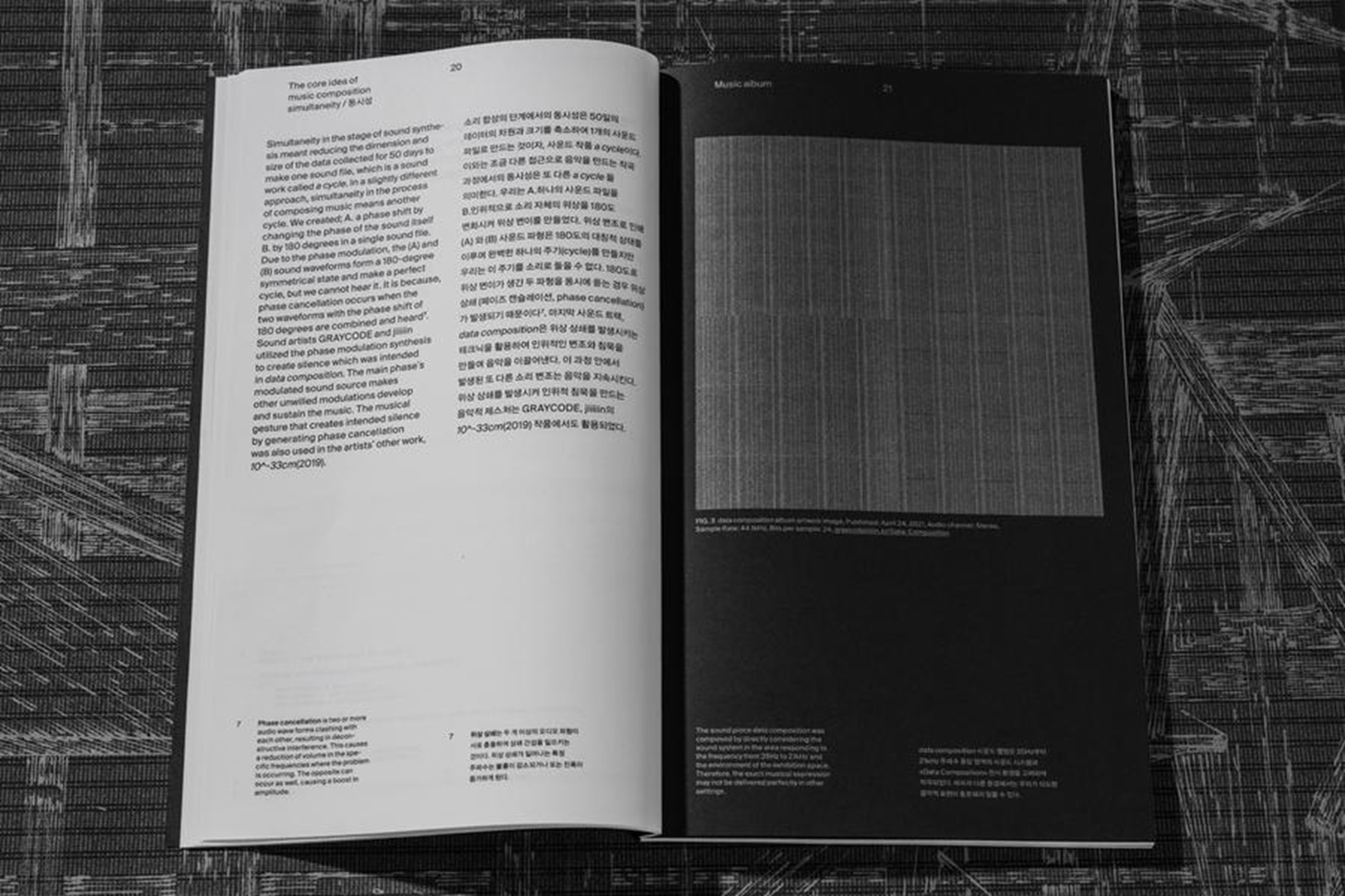
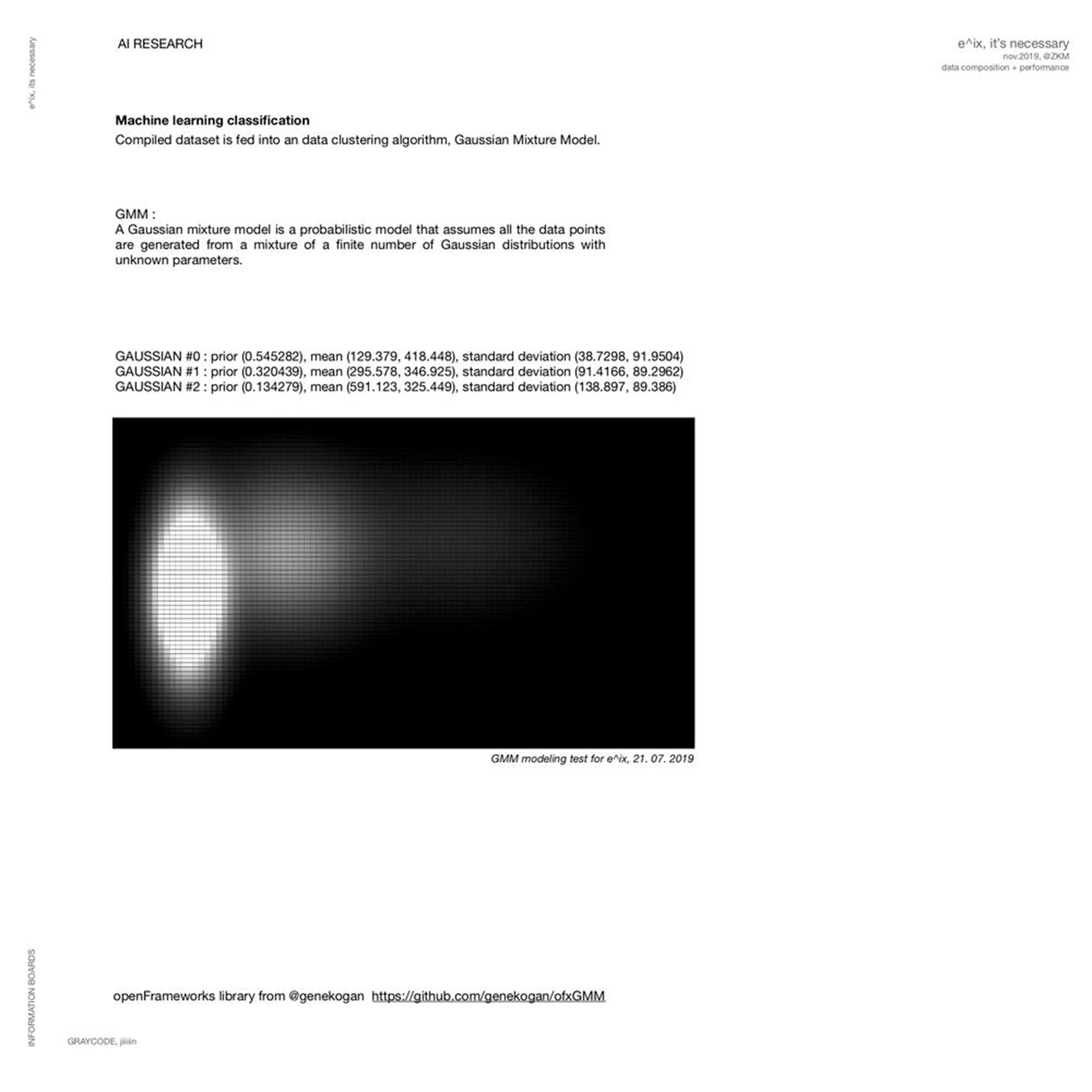
In 2021, their solo exhibition 《Data Composition》 presented a project that treated data as a form of time, collecting it and transforming it into sound. Structured as a trilogy, the project unfolded across three stages: a website for gathering data (Data Composition –), a 50-day exhibition at the Sejong Museum of Art, and finally, the composed sound work (Data Composition).


Installation view of 《Data Composition》 (Sejong Museum of Art, 2021) ©GRAYCODE, jiiiiin

The project begins by collecting visitors’ data throughout the exhibition period. Guided by docents, visitors access a website where their IP addresses, as well as the sections they visit and the time spent on each, are recorded numerically. These log data, gathered over the course of the exhibition, are later transformed into a separate sound work once the exhibition concludes.
 
In this way, the project converts the time spent on internet networks and the information left behind into an auditory experience, allowing audiences to perceive a data-driven reality that is ordinarily invisible and imperceptible.


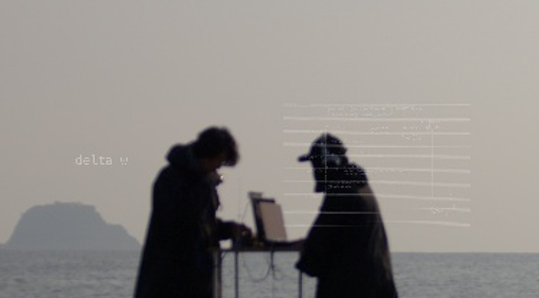
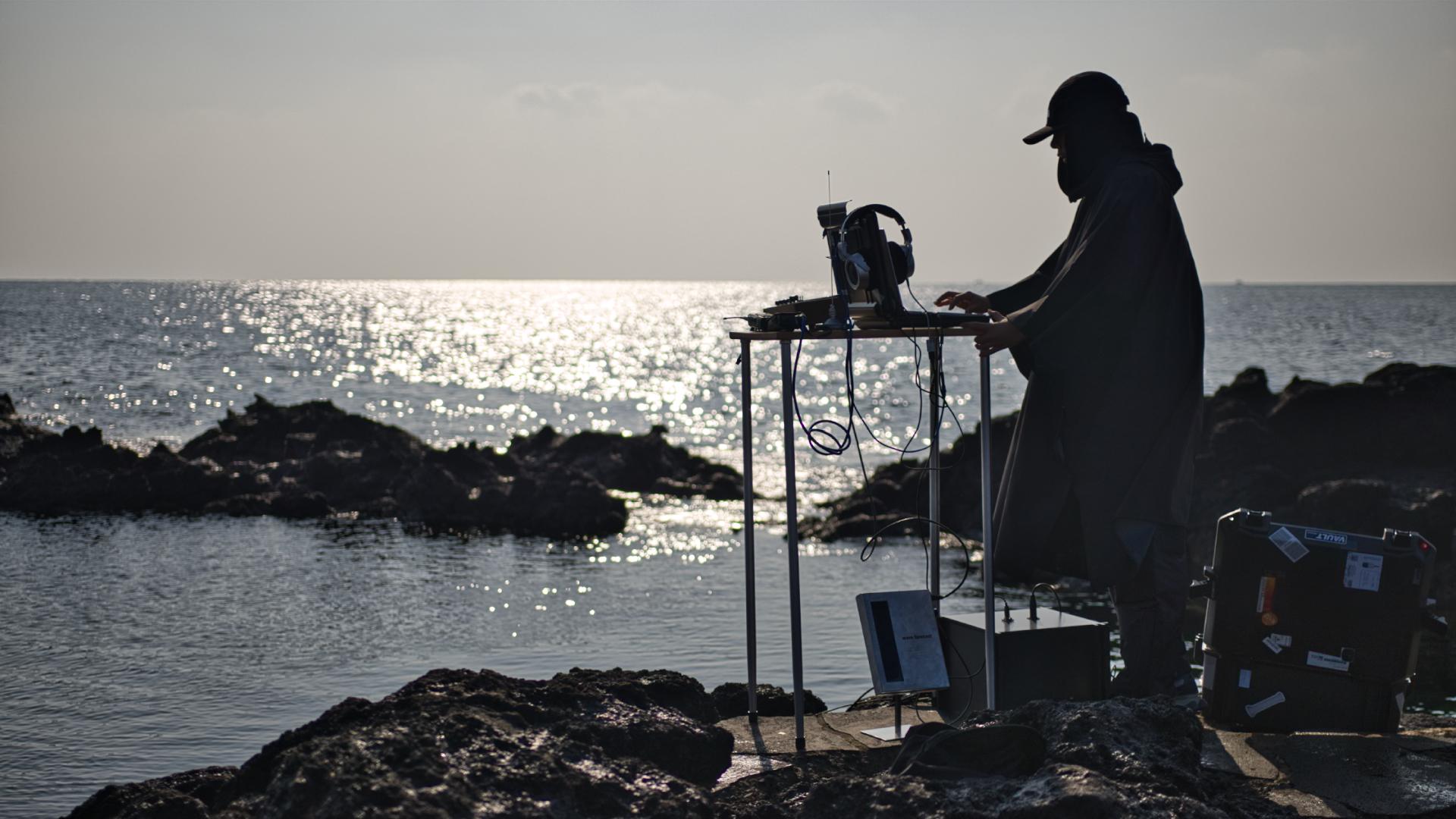
GRAYCODE, jiiiiin, wave forecast, 2022, Outdoor installation performance view ©GRAYCODE, jiiiiin

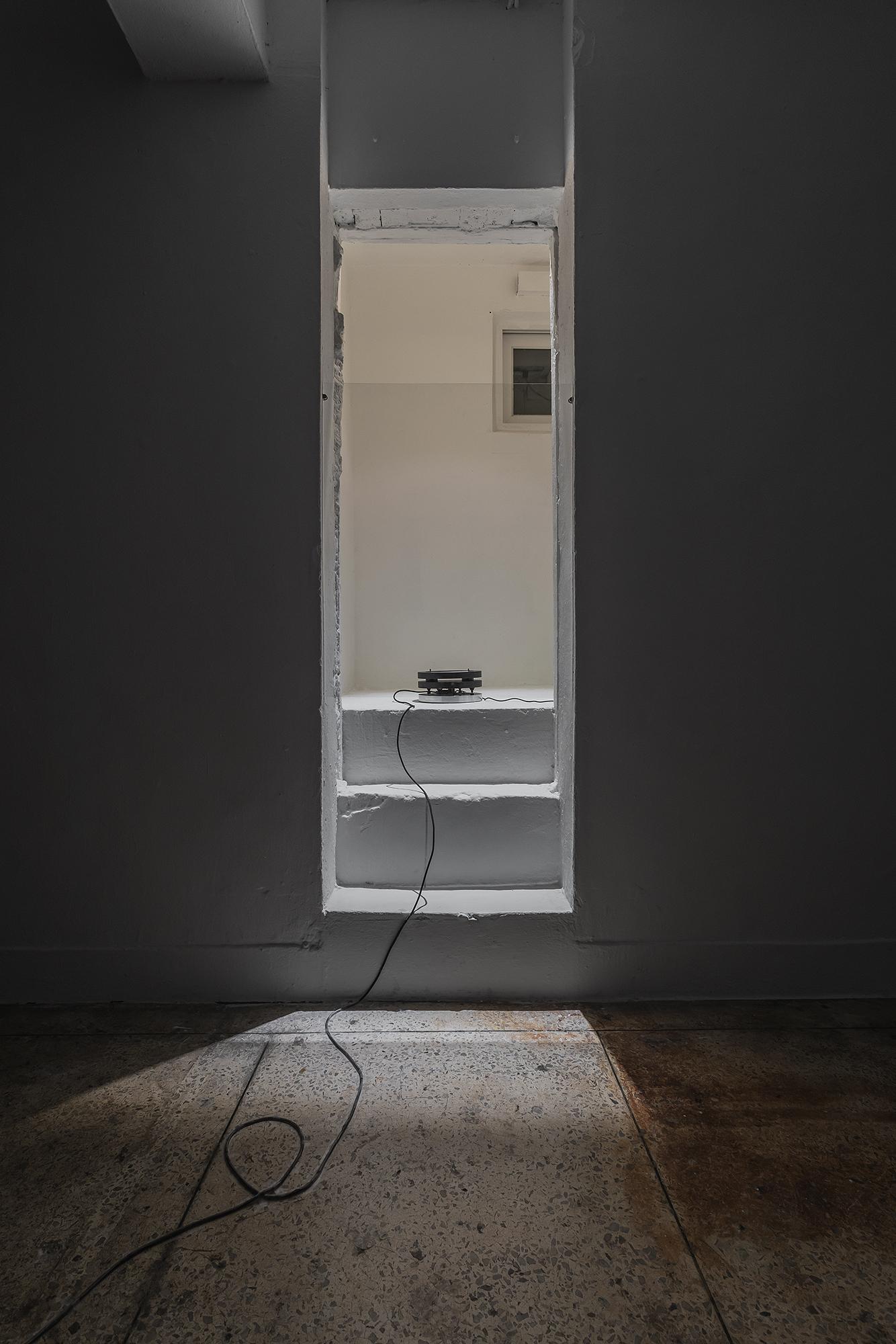
Starting with their 2022 project wave forecast, GRAYCODE, jiiiiin began experimenting with a new production method. They collected data at Beophan Port in Seogwipo, measuring natural fluctuations occurring randomly along the one-dimensional axis of time.
 
Using a 0.05-second interval as a reference, the changes in vibrations generated by nature were recorded as numerical data. These data were then transmitted as analog radio frequency signals, allowing the installation to function without electricity.

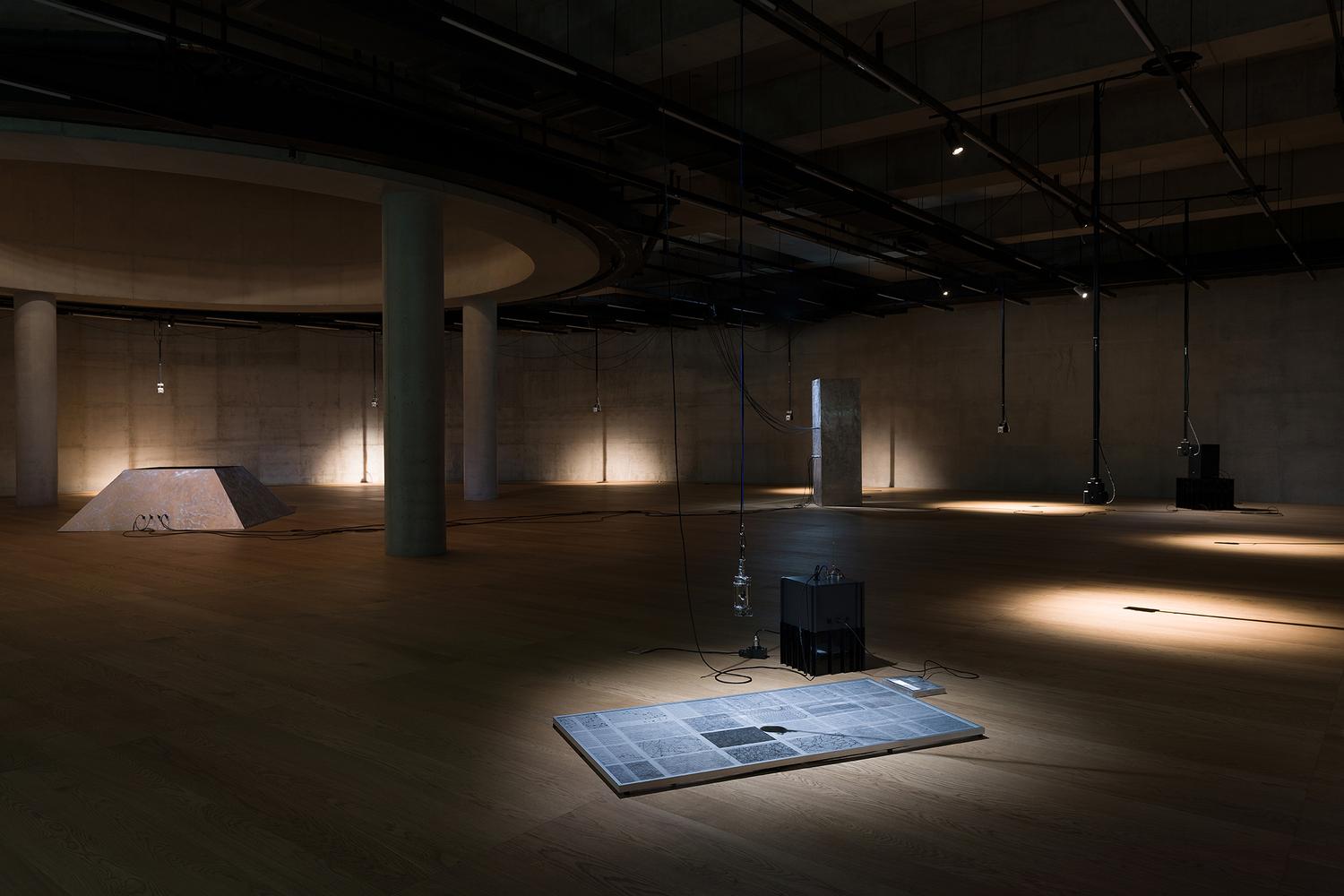
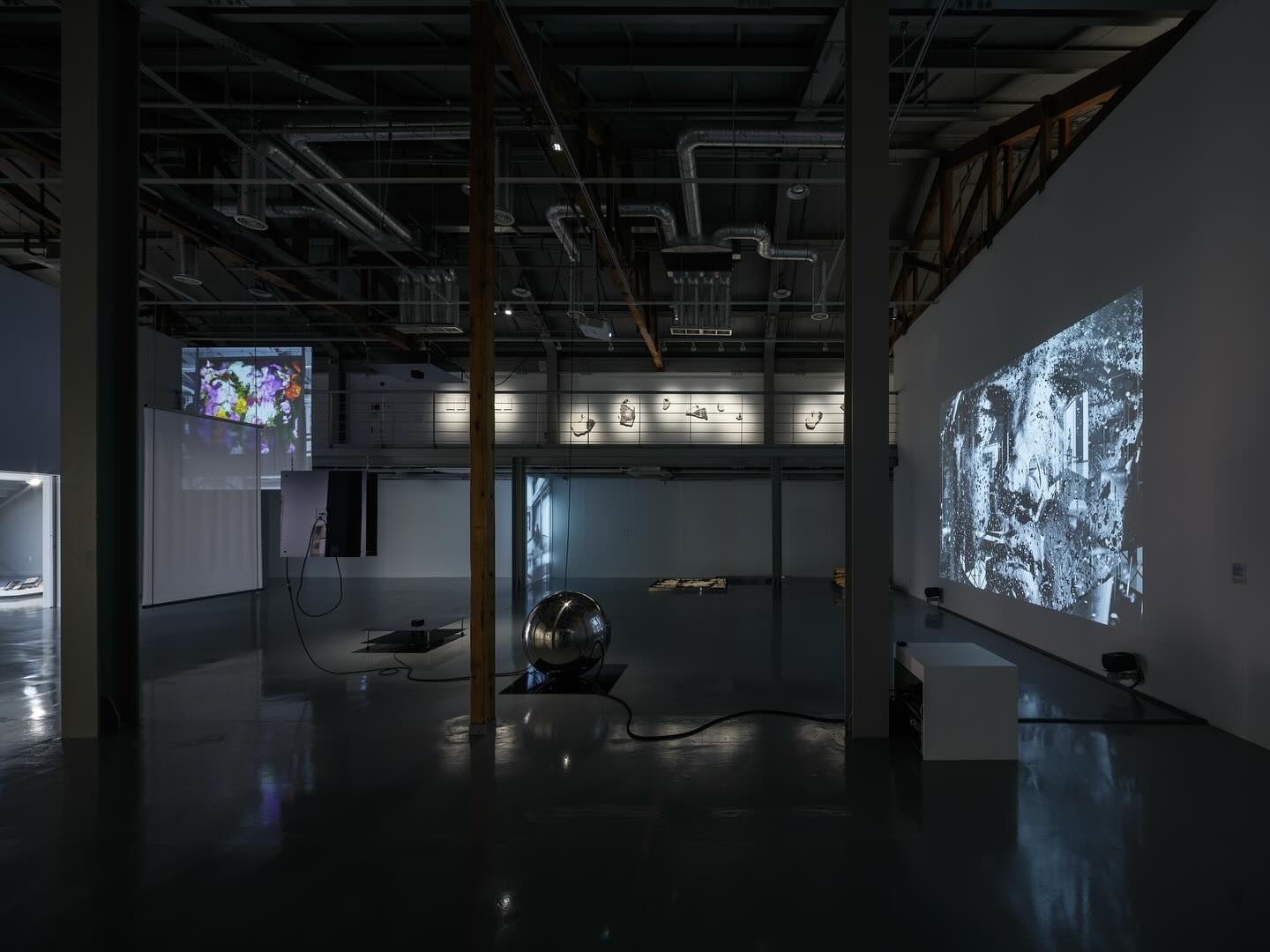
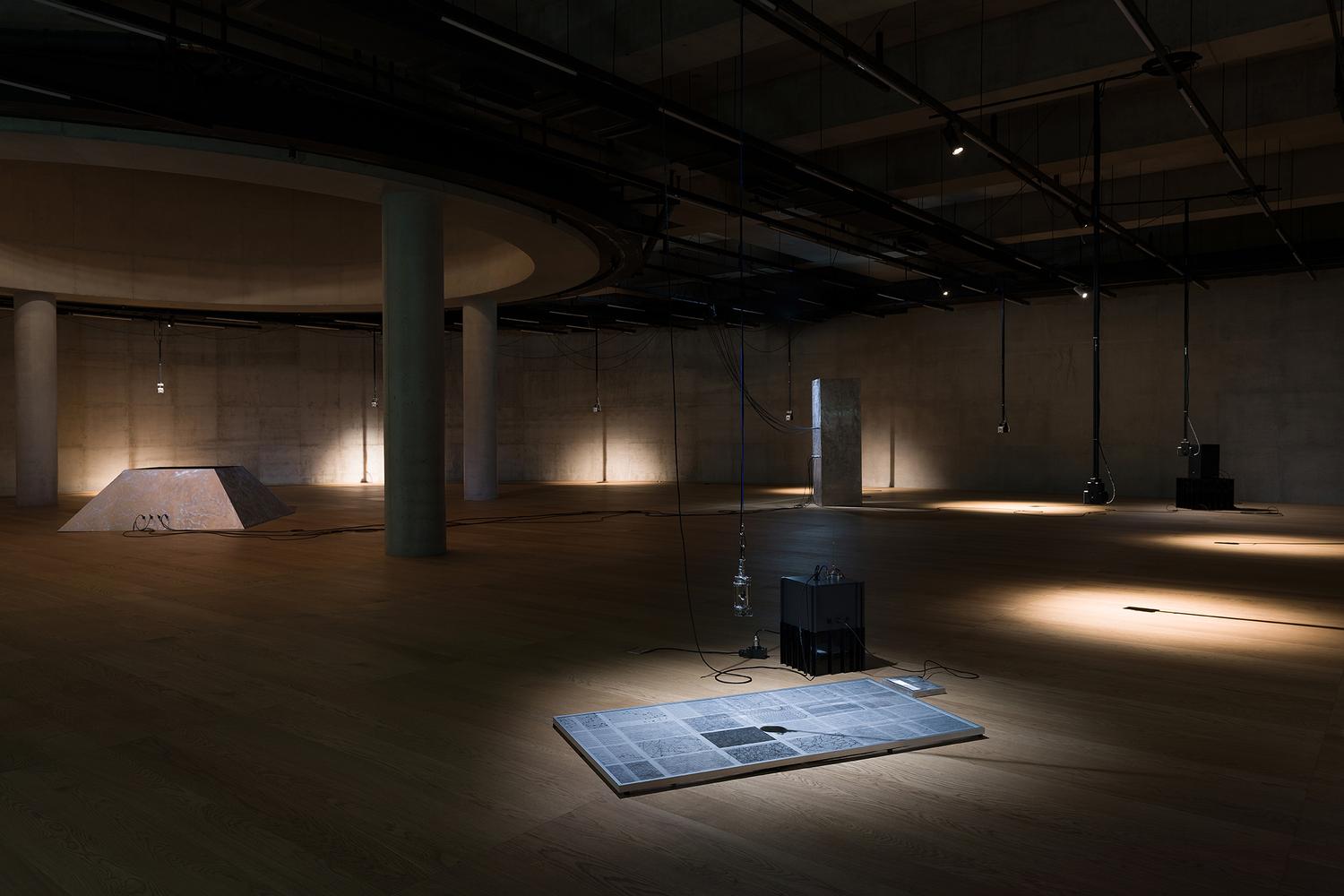
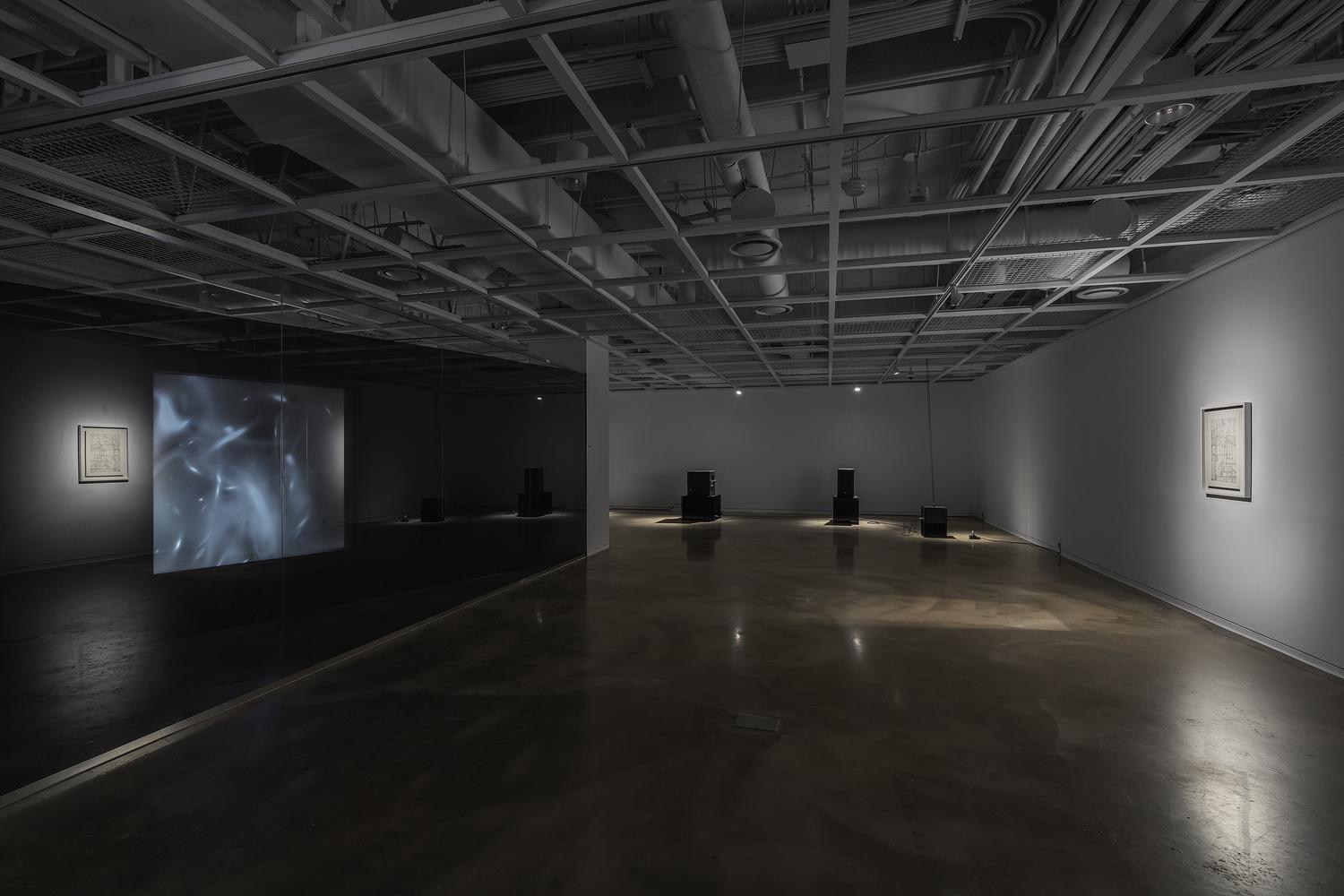
Installation view of 《∆w》 (SONGEUN, 2023) ©GRAYCODE, jiiiiin

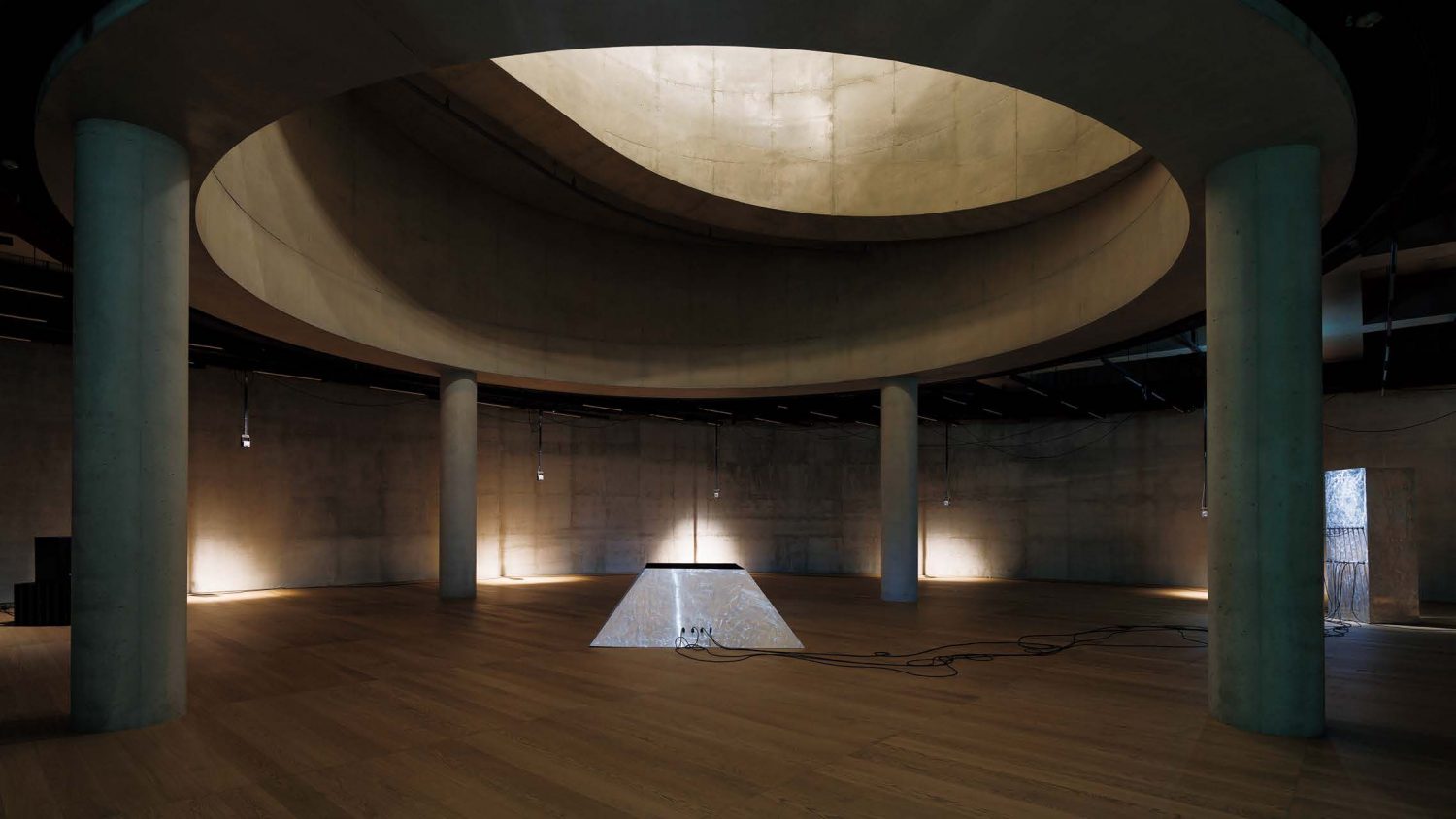
The project was later reimagined in 2023 as the exhibition 《∆w》 at SONGEUN. GRAYCODE, jiiiiin used the various layers of frequency, periodicity, and fluctuations tracked from the sea in Seogwipo, Jeju, to model the randomness of nature through sound. The exhibition space itself was treated as an instrument, resonating and performing alongside these sounds, making nature tangible as an experiential entity.
 
By reinterpreting the data collected from Jeju’s natural environment 11 months earlier through the architectural characteristics of the Seoul exhibition space, the installation allowed visitors to sense dimensions of time and space that do not exist in the immediate present, engaging the body in the perception of these otherwise imperceptible realities.


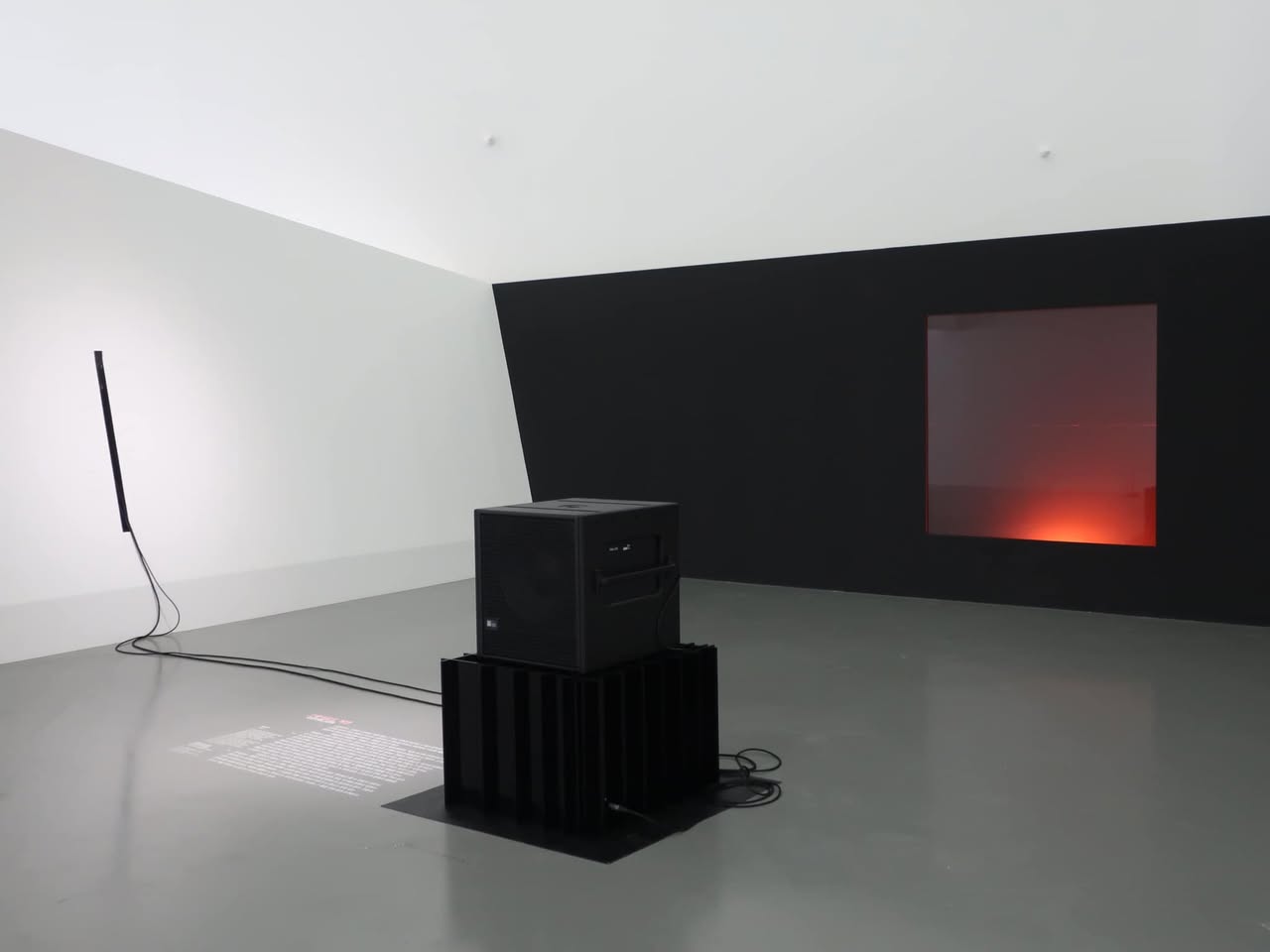
GRAYCODE, jiiiiin, phyper, 2024, Installation view of 《Vanishing, Emerging》(Gyeonggi Museum of Modern Art, 2024) ©Gyeonggi Museum of Modern Art

In their 2024 work phyper, GRAYCODE, jiiiiin sought to explore more delicately the vibrations of red that they had experimented with in their first collaborative project, #include red. In the exhibition space, red light of varying hues—from lower to longer wavelengths—is emitted, reflected off 150 cm glass panels.
 
The different vibrations of sound waves and visible light are interconnected via audio and optical cables. Analog sound data is converted into digital signals and transmitted through optical cables. The low-frequency sounds that permeate the space reach the body as direct vibrations, asserting a tangible presence.
 
In this way, the work unites light and sound as vibrations and signals, consolidated as a single entity.


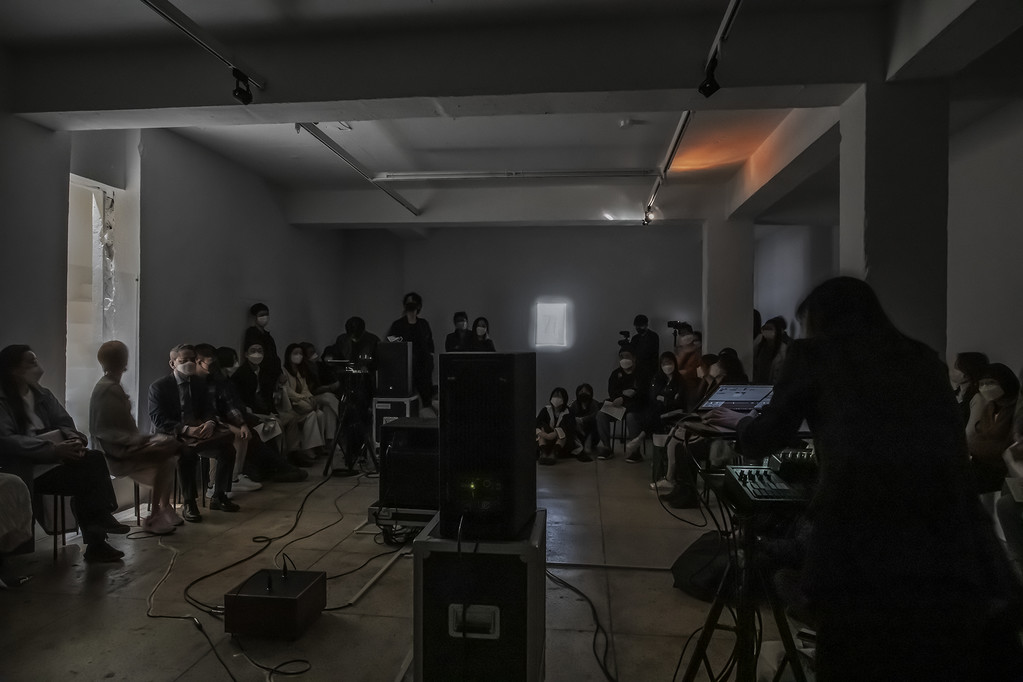
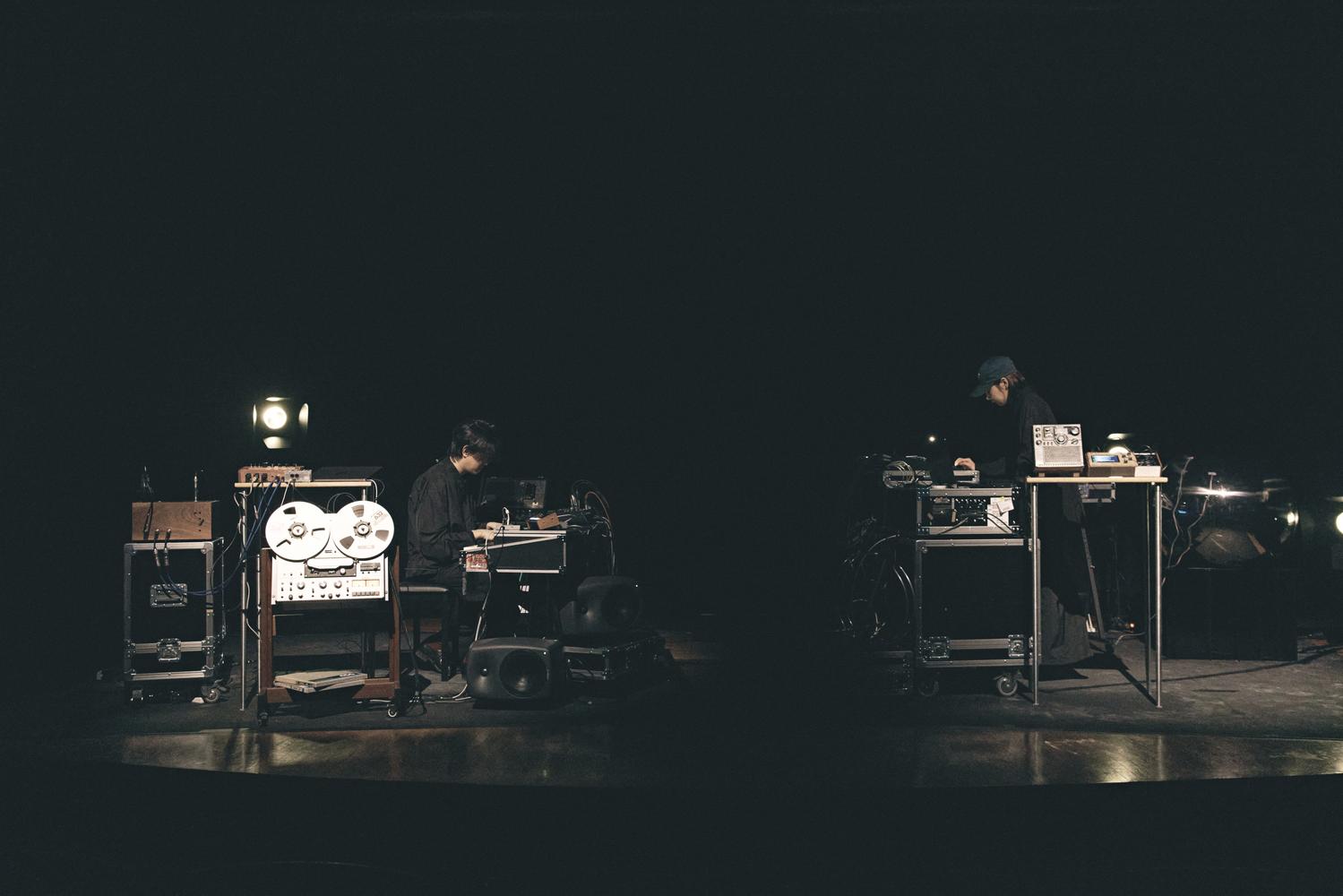
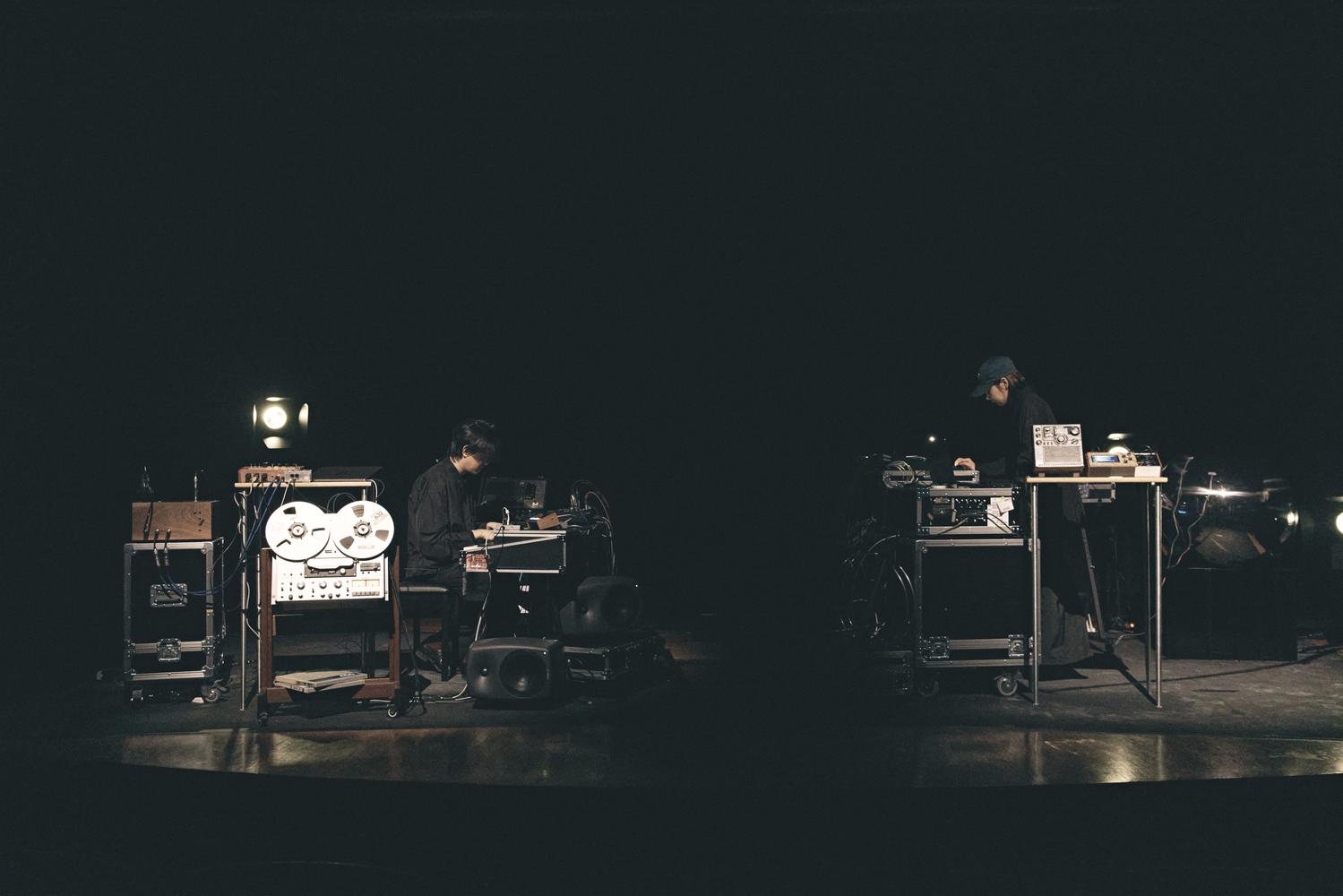
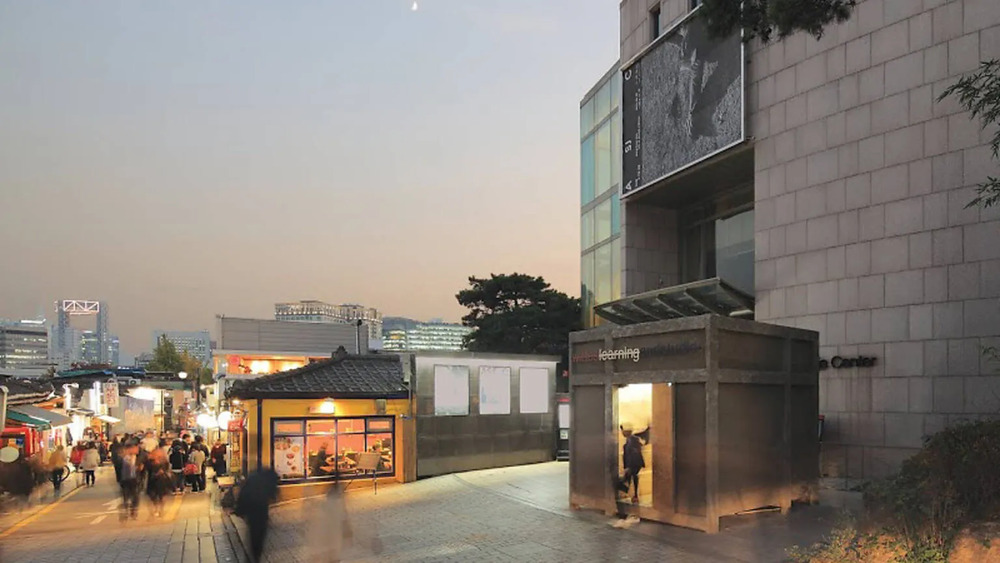
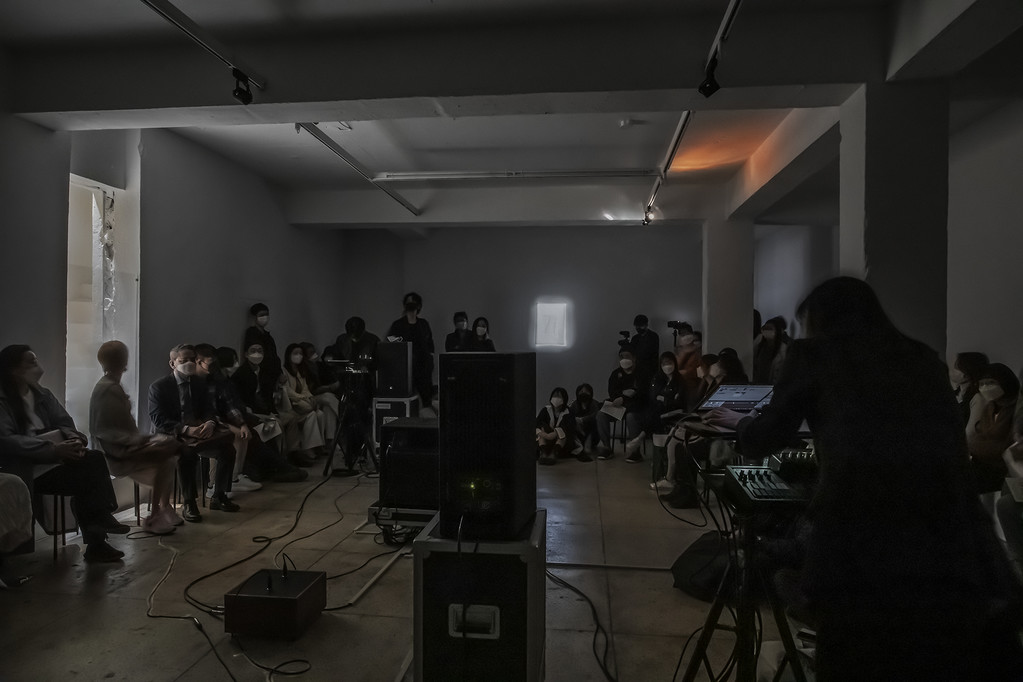
Performance view of 《Quivering Air》 (Art Sonje Center, 2025) ©GRAYCODE, jiiiiin

In this way, GRAYCODE and jiiiiin render various phenomena and moments—present in our world but physically difficult to experience—into a “perceptible reality” through the vibrations of sound and light. Listening, in this context, becomes not merely reception but a bodily experience of time, generating presence within that temporal flow.
 
Through this series of projects, they recalibrate the structure of perception with a focus on hearing, offering the audience a temporally immersive and intimate listening experience. Within these multilayered vibrations, viewers are invited to reconsider the boundaries of their own perception and the sense of their existence.

 ”Our work reveals the unseen yet real through audiovisual imagination. It is created with the vision of eyes that could perceive all phenomena.   (GRAYCODE, jiiiiin, Artist’s Note) 


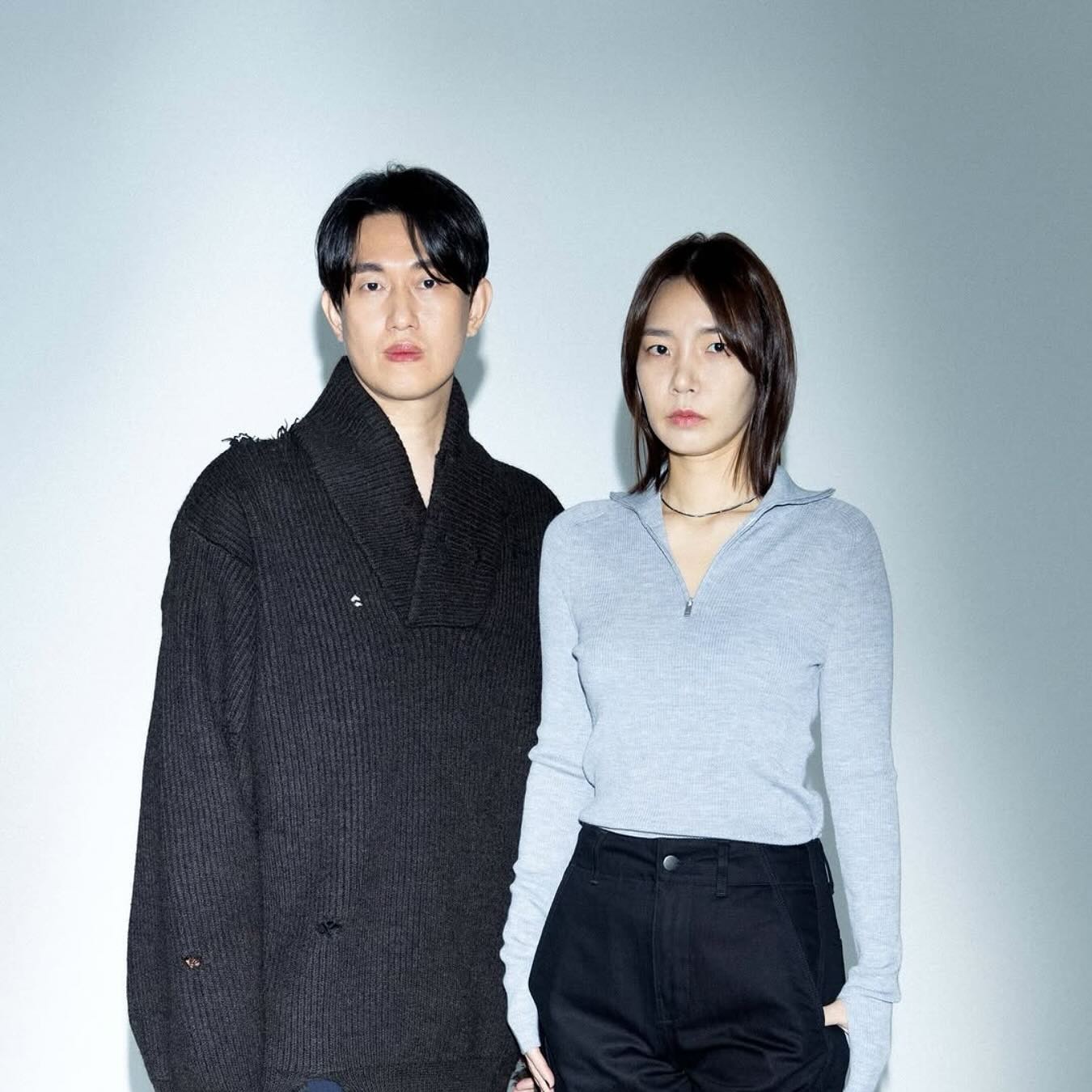
Artist duo GRAYCODE, jiiiiin ©GRAYCODE, jiiiiin. Photo: Lee Hwareem

GRAYCODE, jiiiiin is an artist duo consisting of electronic musicians Taebok Cho (GRAYCODE, b. 1984) and Jinhee Jung (jiiiiin, b. 1988). Their solo exhibitions include 《∆W》 (SONGEUN, Seoul, 2023), 《Data Composition》 (Sejong Museum of Art, Seoul, 2021), 《Time in Ignorance, ∆T≤720》 (Project Space Sarubia, Seoul, 2020), 《10^-33cm》 (Gallery damdam, Korean Cultural Center, Berlin, 2019), and 《#inlcude red》 (Incheon Art Platform, Incheon, 2016).
 
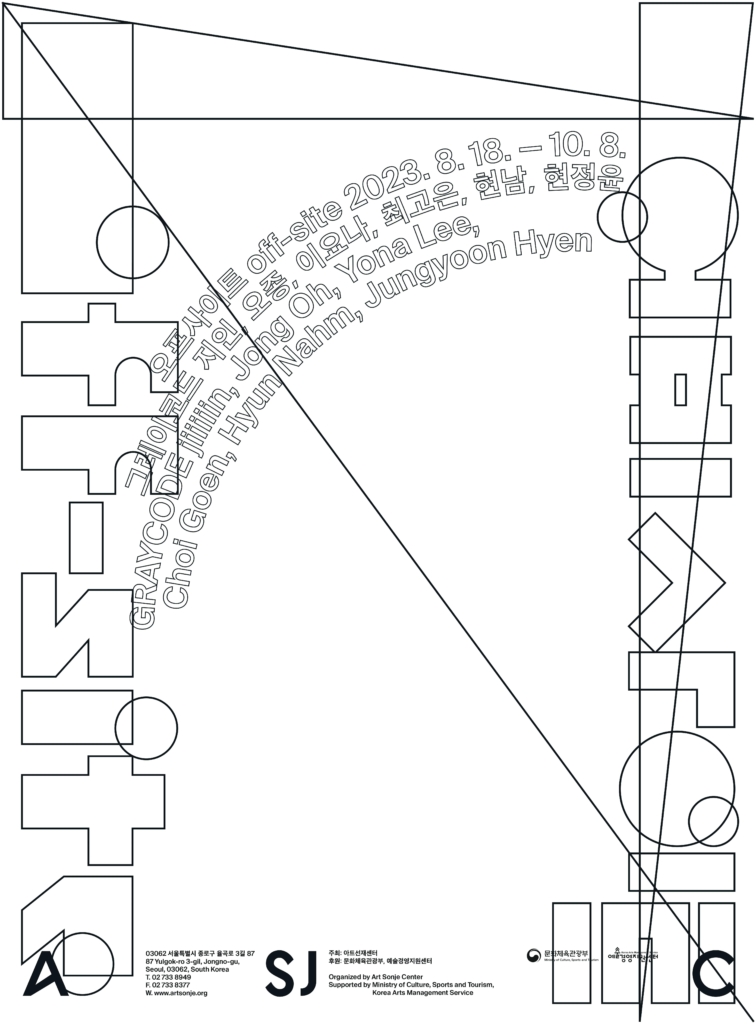
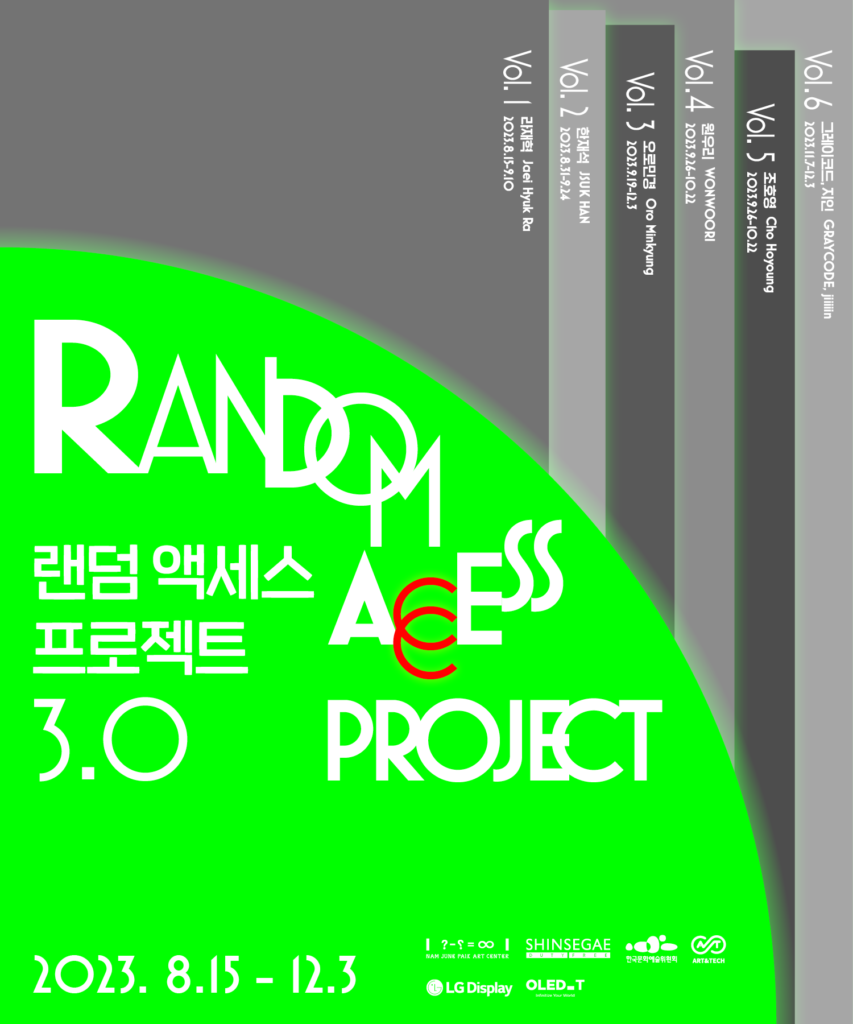
They have also participated in numerous group exhibitions, including 《The Act of Collaboration》 (Incheon Art Platform, Incheon, 2024–2025), 《Vanishing, Emerging》 (Gyeonggi Museum of Modern Art, Ansan, 2024), 《Random Access Project 3.0》 (Nam June Paik Art Center, Yongin, 2023), and 《off-site》 (Art Sonje Center, Seoul, 2023).
 
A text published for their 2020 exhibition 《Data Composition》 was selected for “Best Book Design from Republic of Korea” honors by the Korean Publishers’ Association, and they also received a 2018 ‘Giga-Hertz Award’ presented by the Hertz-Lab (ZKM) and the SWR broadcasting corporation in Karlsruhe, Germany.

References