Since
the late 2010s, Jang Jinseung has been exploring certain questions through his
video and mixed media installation work: What does it mean for human beings
when images allude to “seeing” that no longer requires a human “seer”? What
happens in our world when data transcend their nonmaterial state and transform
into different objects that reconstruct human identity, consciousness, and even
imagination? (In other words, what kind of world does this reconstruction
create?) These questions recall the work of Trevor Paglen, who has recently
been actively experimenting with audio-visual recognition systems based on
computer perspectives and artificial intelligence, or Ed Atkins, who has used
computer graphic-synthesized moving actors in variations on the different
relationships that exist between the digital, the physical, and the
psychological.
To be sure, it is also possible to draw connections between
Jang’s artistic work and the ideas of the many digital media scholars and
philosophers of technology who can be invoked to explain the work undertaken by
Paglen and Atkins. The reason for this pedigree is not to speculate on or
critically evaluate the quality of Jang’s work in comparison to the work of
those other artists. I am simply stating this early on to establish how his
work engages with the various epistemological, existential, and cultural
questions that are searched for, and identified through, keywords such as
“post-internet” and “post-human.”
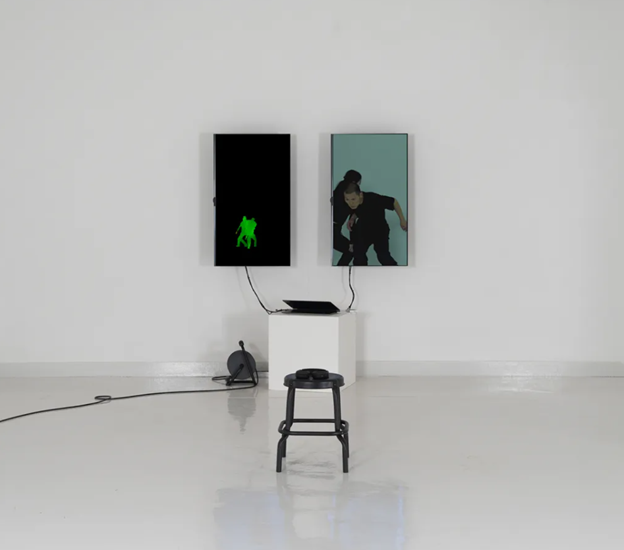
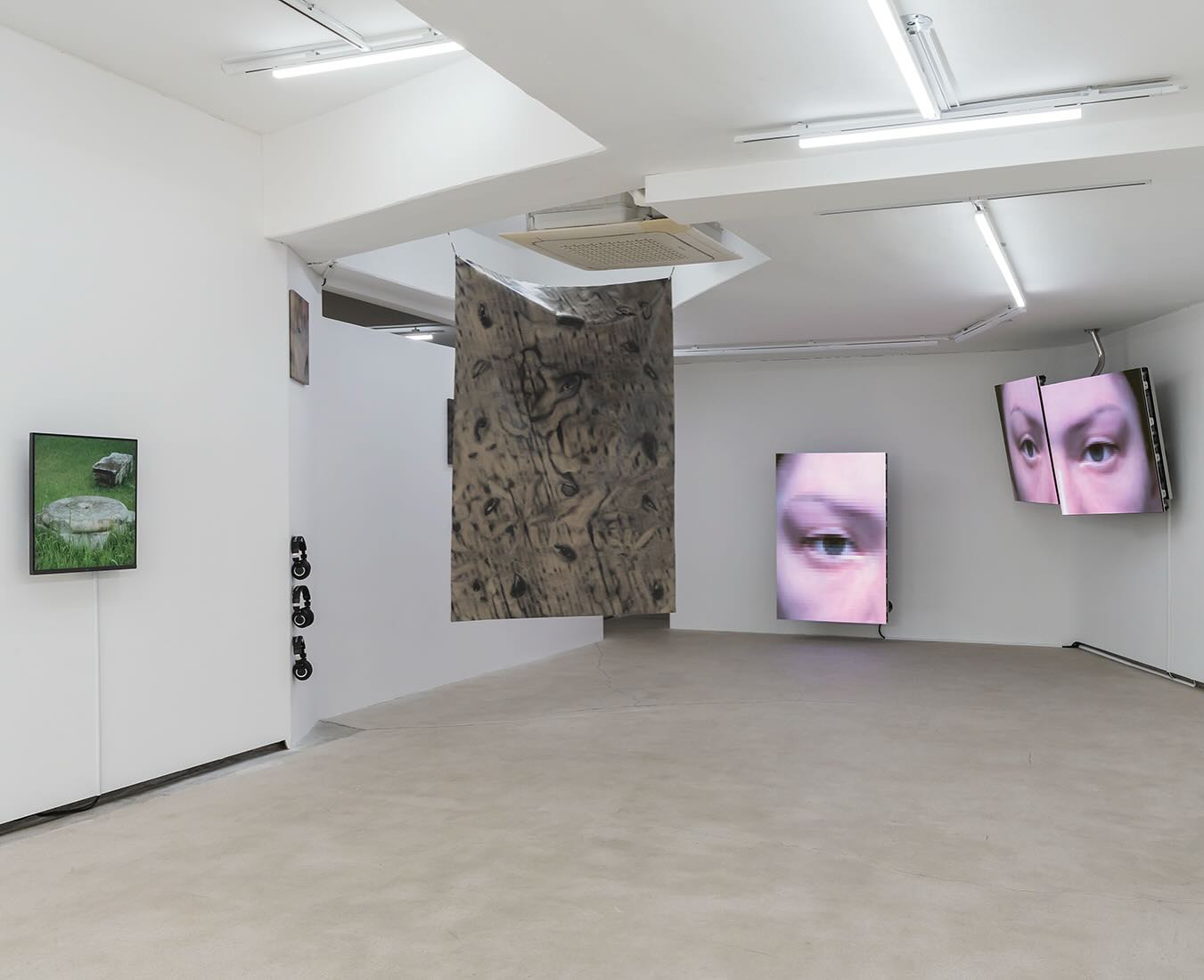
Face
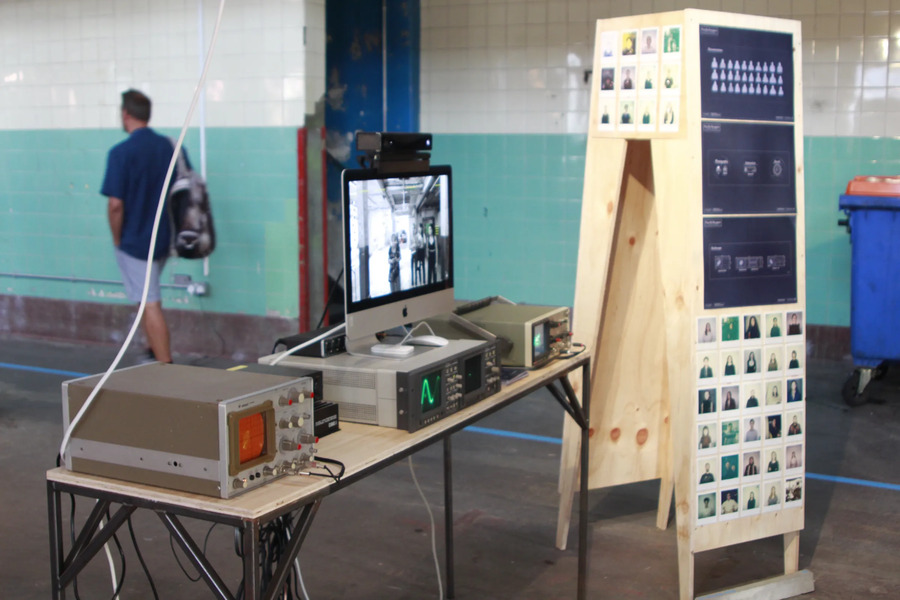
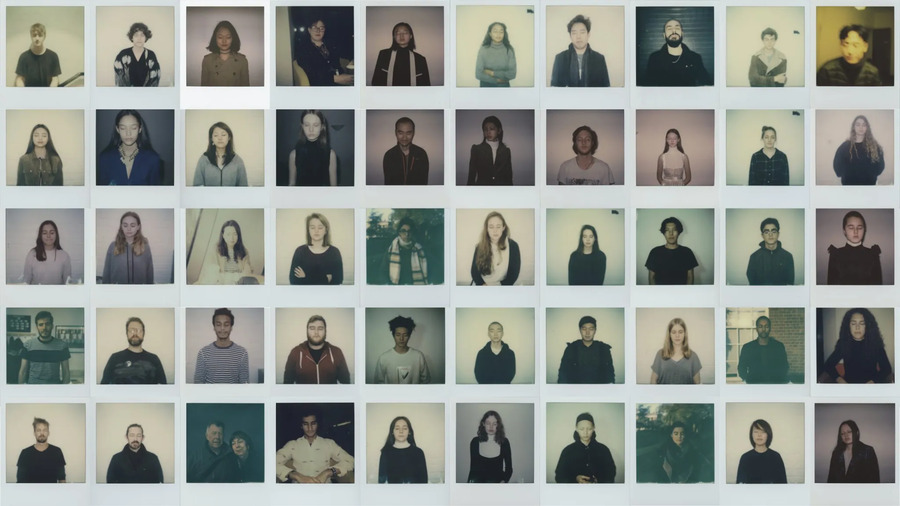
De-Perception (2017), Jang’s graduation project at Goldsmiths,
University of London, is a facial recognition algorithm system linked to Kinect
motion sensing and an oscilloscope. Human faces captured by the computer-linked
camera are first stored as black-and-white data, which is then converted into
pixel data and sound information through algorithm calculations. Converted once
again through the oscilloscope, that information is finally outputted as visual
patterns for the facial shapes. The system operation that ties together this
multi-stage conversion process “erases the individual physical identities of
different people and shows them in a way that maximizes the similarities common
to all human beings.”
The intended function of the operation is to
“symbolically delete the layers of discrimination and preconception through
which we view each other.” We can identify Jang’s critical stance by drawing
connections between this function and the work’s title. The “de-perception”
part signals that human perception is a product of socially based
“discrimination and preconception” that cannot be reduced to natural
capabilities, with the “de-” prefix referring to the removal of those same
discriminatory attitudes and preconceptions.
There
are two questions that this raises, or that could be raised in connection with
this. The first is the same question asked by figures such as Wendy Hui Kyong
Chun, Kate Crawford, and Hito Steyerl: Is it not the case that computer-based
image production and circulation systems combining algorithms with AI networks
are actually far from objective or neutral—that they both reflect and reinforce
societal discrimination and preconceptions in the construction, dissemination,
and operation of computer-based media, as we see in the examples of facial
recognition systems used for airport security and police profiling?[1]
The second question concerns how human beings and the world
are actually seen by these systems from which human perceptions have been
removed, and how the world looks when these systems have been visualized. Some
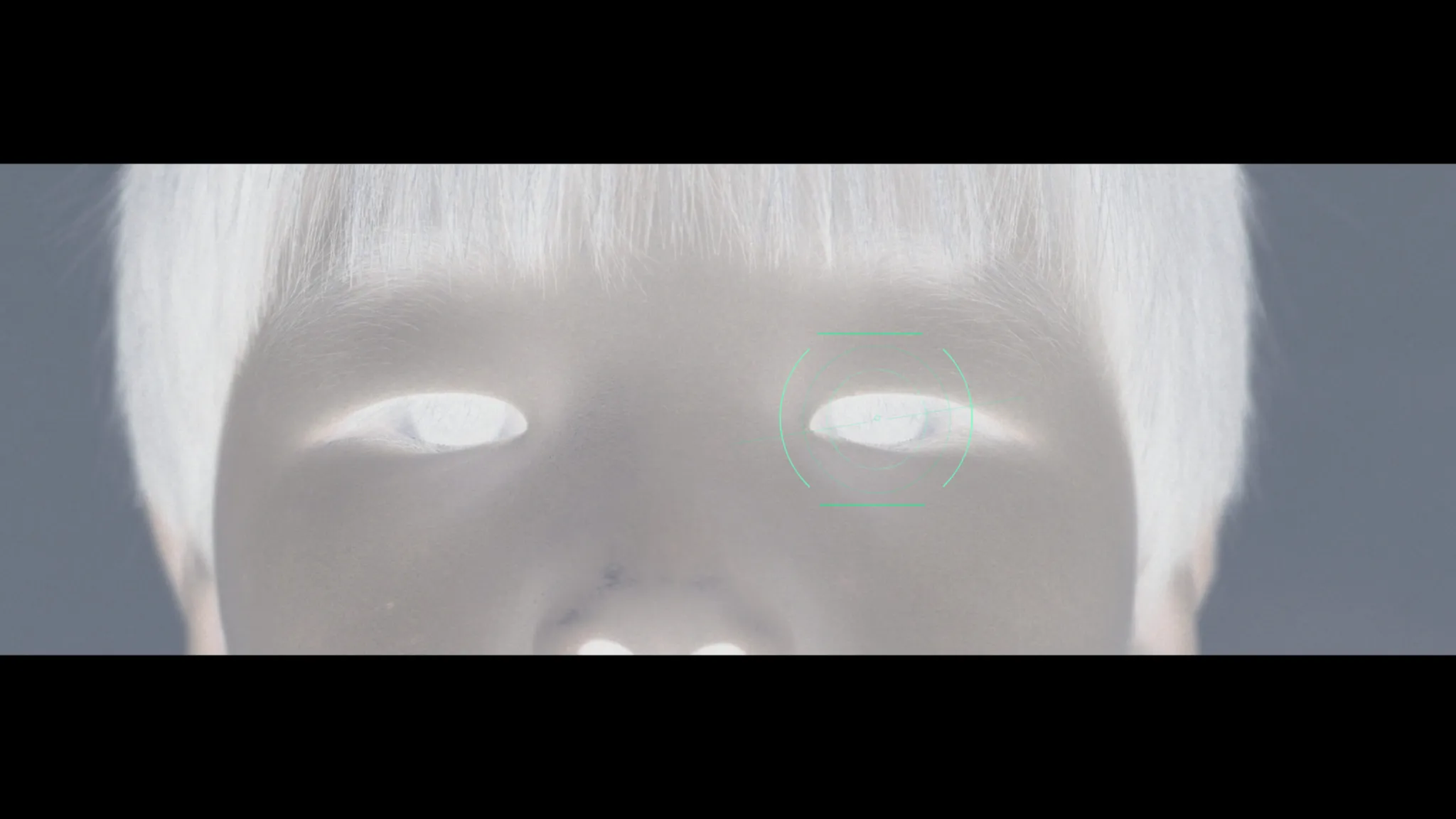
of Jang’s works clearly focus on investigating the second question. In (Miss)
Understood (2017), a documentation video showing the testing and
operating of Face De-Perception, the viewer’s
perspective is identical to that of the facial recognition system.
In addition
to seeing the participants interacting in different ways with the system, the
viewer also experiences changes in abstract line patterns and sounds produced
in real time through the automatic recognition and conversion of their faces,
along with changes in the numerically converted data values. As this shows, a
major focus of exploration in Jang’s work has to do with the operations of
devices that perceive human beings and the world yet compute different images
of them—what Paglen refers to as “seeing machines”—and the visualization of the
data computed by these machines or their conversion into various physical
objects.
These
explorations broaden into the realm of the interfaces and infrastructure that
constitute today’s automated societies. Before Termination,
the second episode of his omnibus film ‘Decennium’ Series (2020)
produced in collaboration with artist Lee Eunhee, documents the process as a
former taxi driver and current driver of the self-driving taxi “I-Limo” gets in
a taxi alone to go home. From the perspective of the driver who is wearing goggles,
the viewer experiences the I-Limo’s real-time updates of road and distance
information up until the moment just before an accident.
Jang’s focus with this
film is not simply to show the inherent dangers of self-driving systems or
imagine an agent subjugated by platform labor. He is using the embodied perceptions
of virtual reality to communicate the post-human emptiness and unpredictability
of the informatized world that emerges when the public realm of road signaling
systems is supplanted by privatized automation systems.
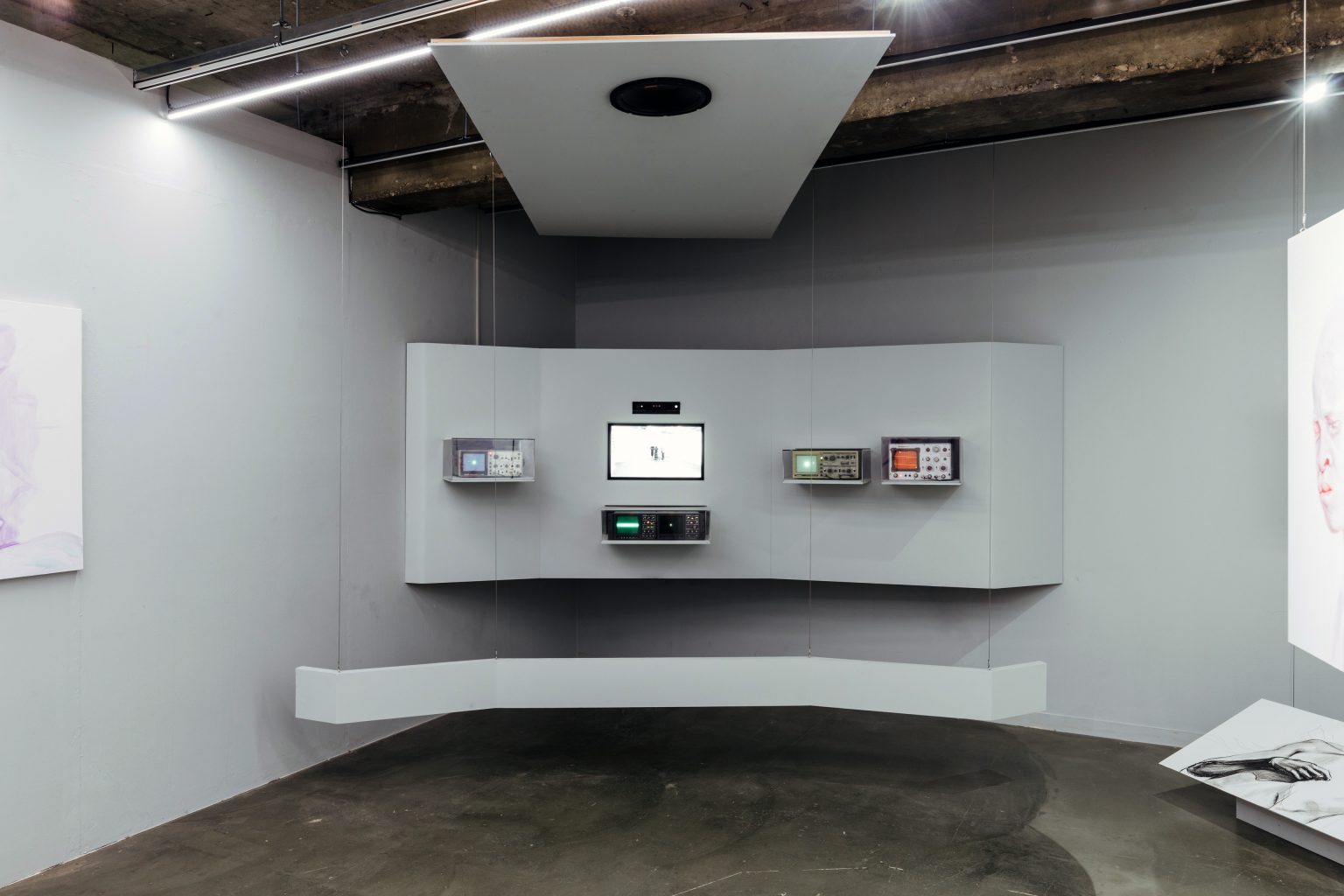
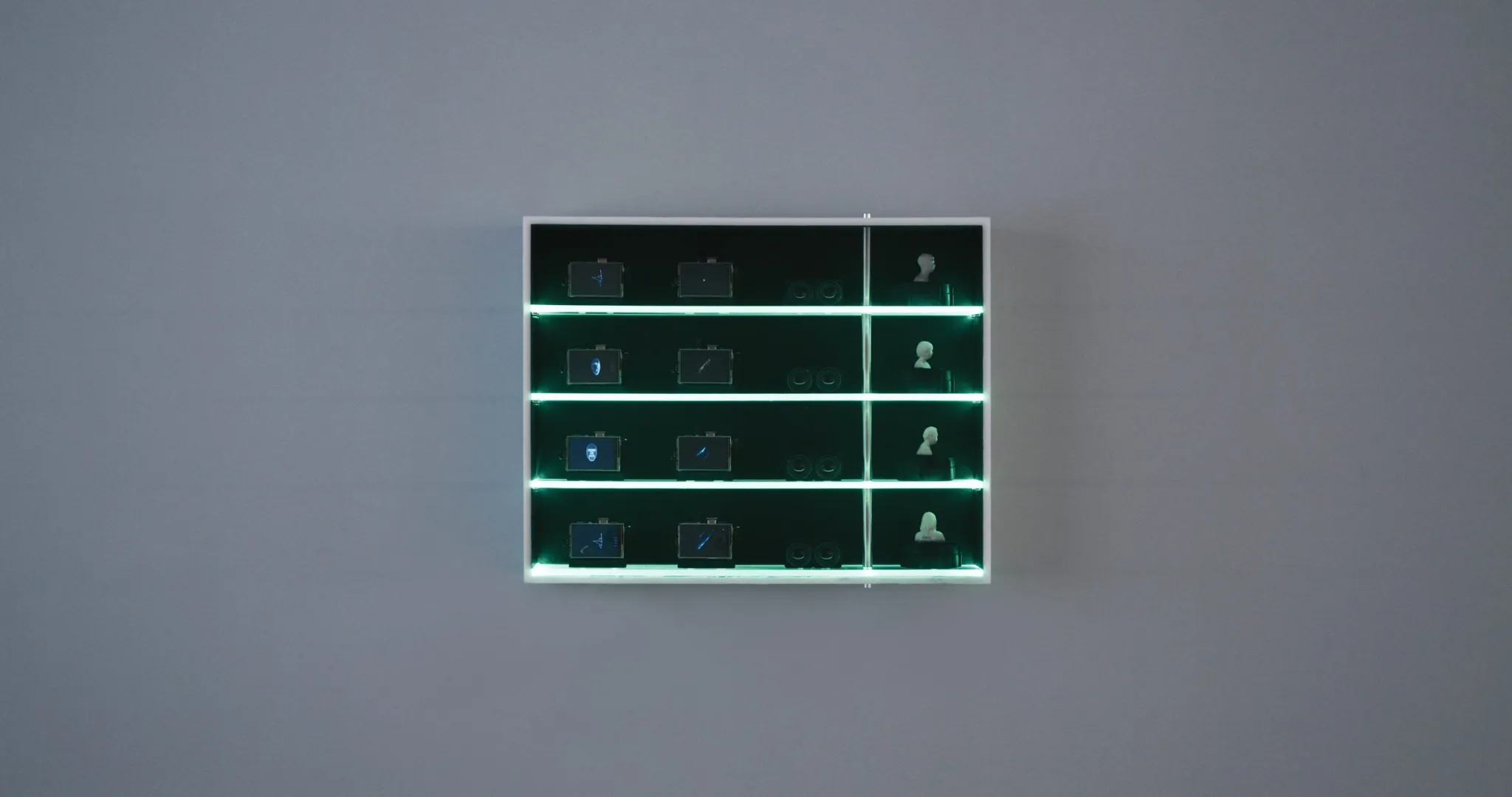
In Data
Circulation System (2020), Jang presents the viewer with
perceptions at the infrastructure level as data are circulated and stored,
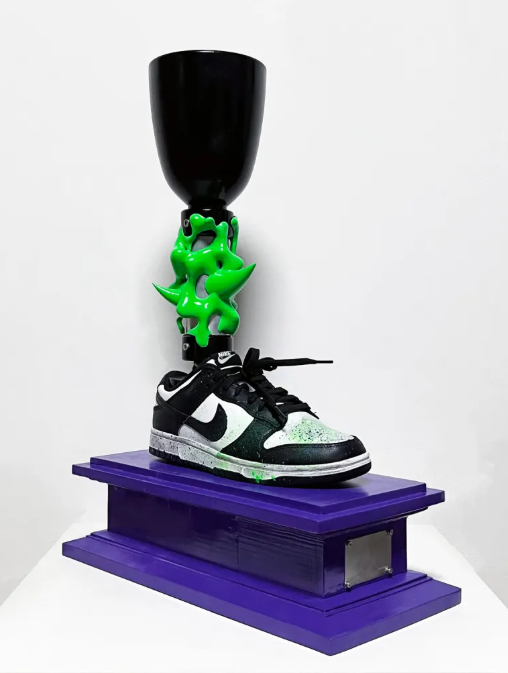
including Data Cabinet which visualizes facial
recognition data from Face De-Perception and a
self-operating robot that gathers data. Just as the driver manipulating
self-driving system data in Before Termination becomes
the subject of the data experience, the viewer in this system is both a
provider of data (object) and a subject watching themselves being converted
into data.
In
these ways, Jang Jinseung has explored the workings of automated “seeing
machines” that essentially do not require human beings, and the perspectives
and images that they give rise to. In the process, he interrogates the ways in
which the data circulated through these machines’ connections neutralize or
restructure the distinction between subject and object, or between physical and
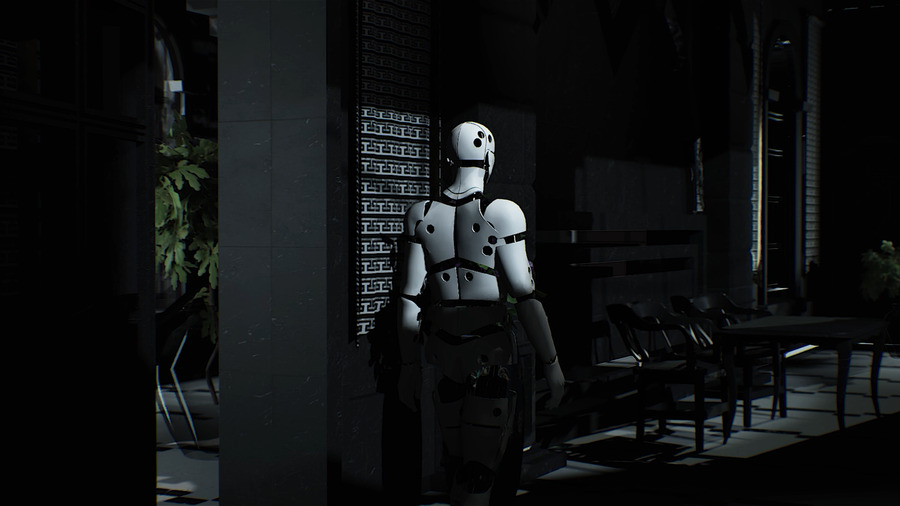
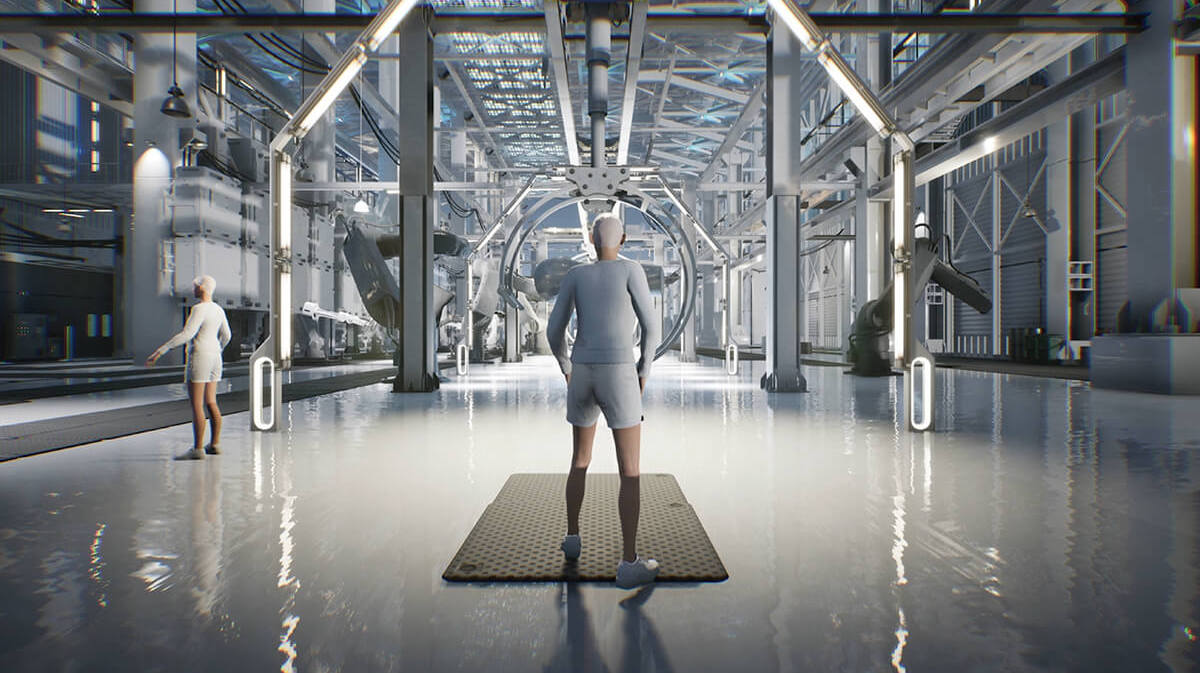
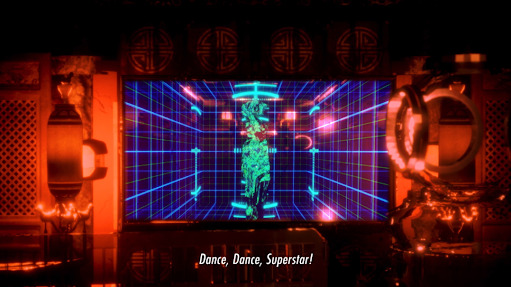
virtual space. In Deluded Reality (2021), he
offers an extreme adventure of the meta-human created in a world where simulations
form the basis of nature and memory.
The character here establishes their
bearings as they sense the smells and salt of the sea and the cold polar
temperatures, passing by a factory that mass-produces similar meta-humans as
they trace back the origins of their own creation. The self-exploration of this
virtual human swimming against the rules of physical time and space unfolds in
a way that blurs the traditional boundaries between humans and nature, but all
the spaces in which that search takes place are part of a world rendered in the
same 3D computer graphics often used in video games and machinima.
While
the theme of Deluded Reality is a world rendered completely virtual,
one in which the boundaries between the real and virtual have been
fundamentally erased, we may also raise the question of whether the physical
and virtual worlds simply exist in a blended state, or whether some gap exists
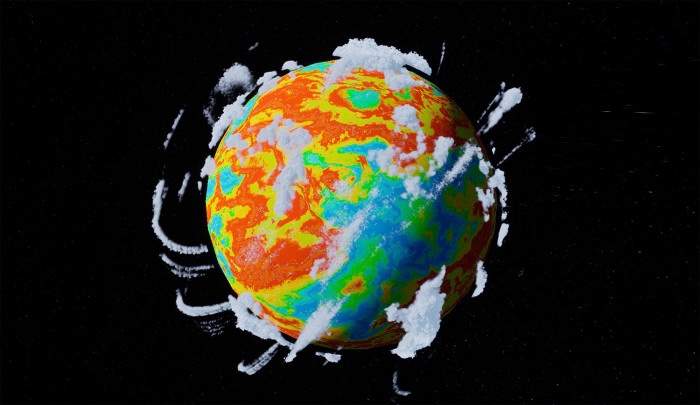
between the two. This is the question explored in Jang’s most recent work Virtual
Chronotope (2022). A video essay reflecting on the concept of
the “virtual particle” in physics, it has the artist using virtual camera
techniques—modeling a panoramic form of visual tracking—to connect
black-and-white images of an actual city with monochrome versions of those
images and monochrome graphic images that recall those recorded by an infrared
camera.
The continuity in perspective corresponds to the layering of real and
virtual space, yet it also draws attention to the gap between the real and
graphic images. Moreover, this gap denotes a “free space” that emerges from the
lack of correspondence between the real and virtual space—what the narration
describes as a “space containing multiple layers and energies.” The work does
not share what these layers and energies represent or what potential they
harbor. But they are definitely questions that Jang Jinseung will continue to
explore through CGI and digital visualization in his future work.
[1] For more on these questions, see Wendy Hui Kyong
Chun, Discriminating Data: Correlation, Neighborhoods, and the New
Politics of Recognition (Cambridge, MA: MIT Press, 2021); Kate
Crawford, Atlas of AI: Power, Politics, and the Planetary Costs of
Artificial Intelligence (New Haven, CT: Yale University Press, 2021); Hito
Steyerl and Trevor Paglen, “The Autonomy of Images, or We Always Knew Images
Can Kill, But Now Their Fingers Are on the Triggers,” in Hito Steyerl: I Will
Survive, eds. Florian Ebner et al. (Leipzig, Germany: Spector Books,
2021), 239–256.