A
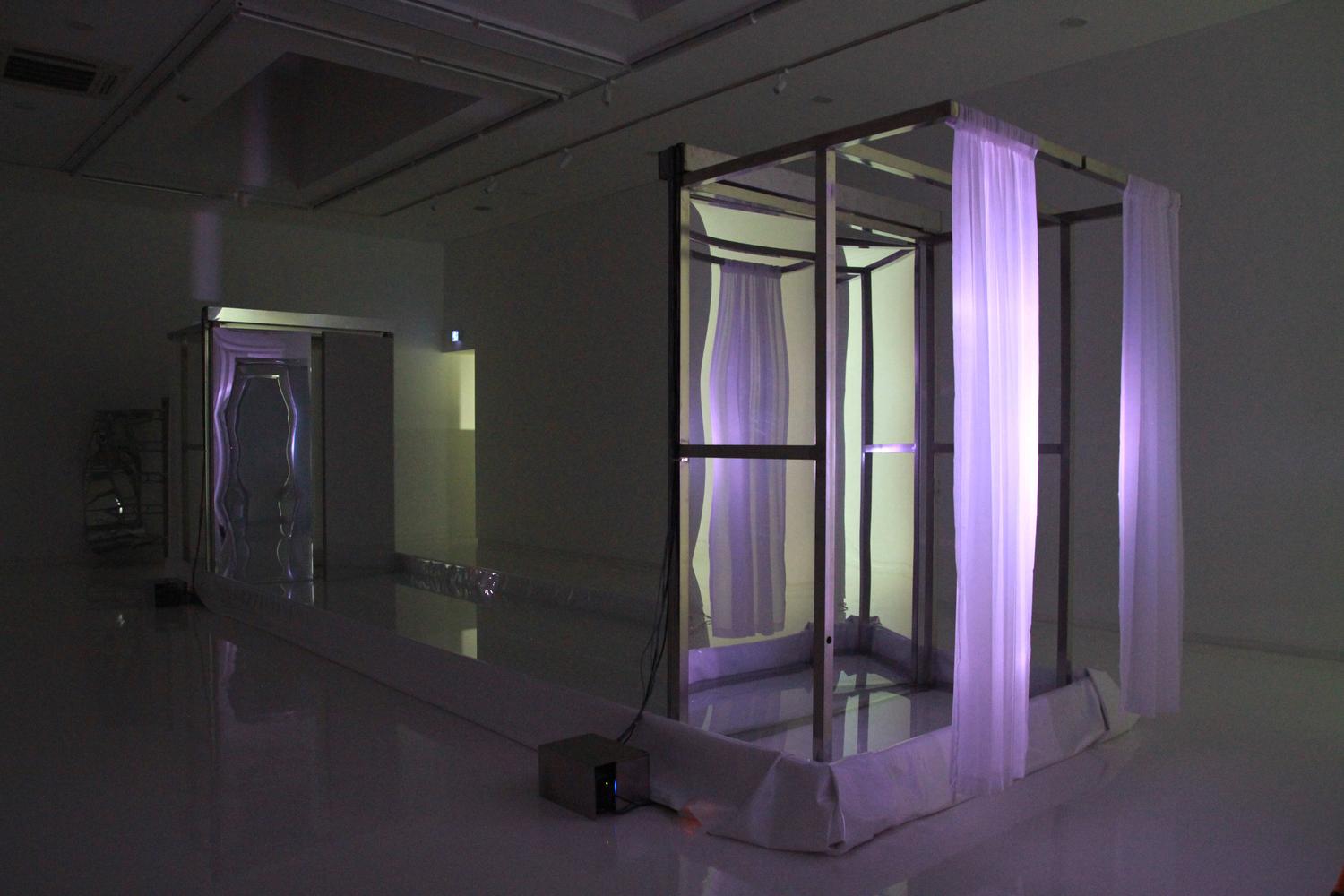
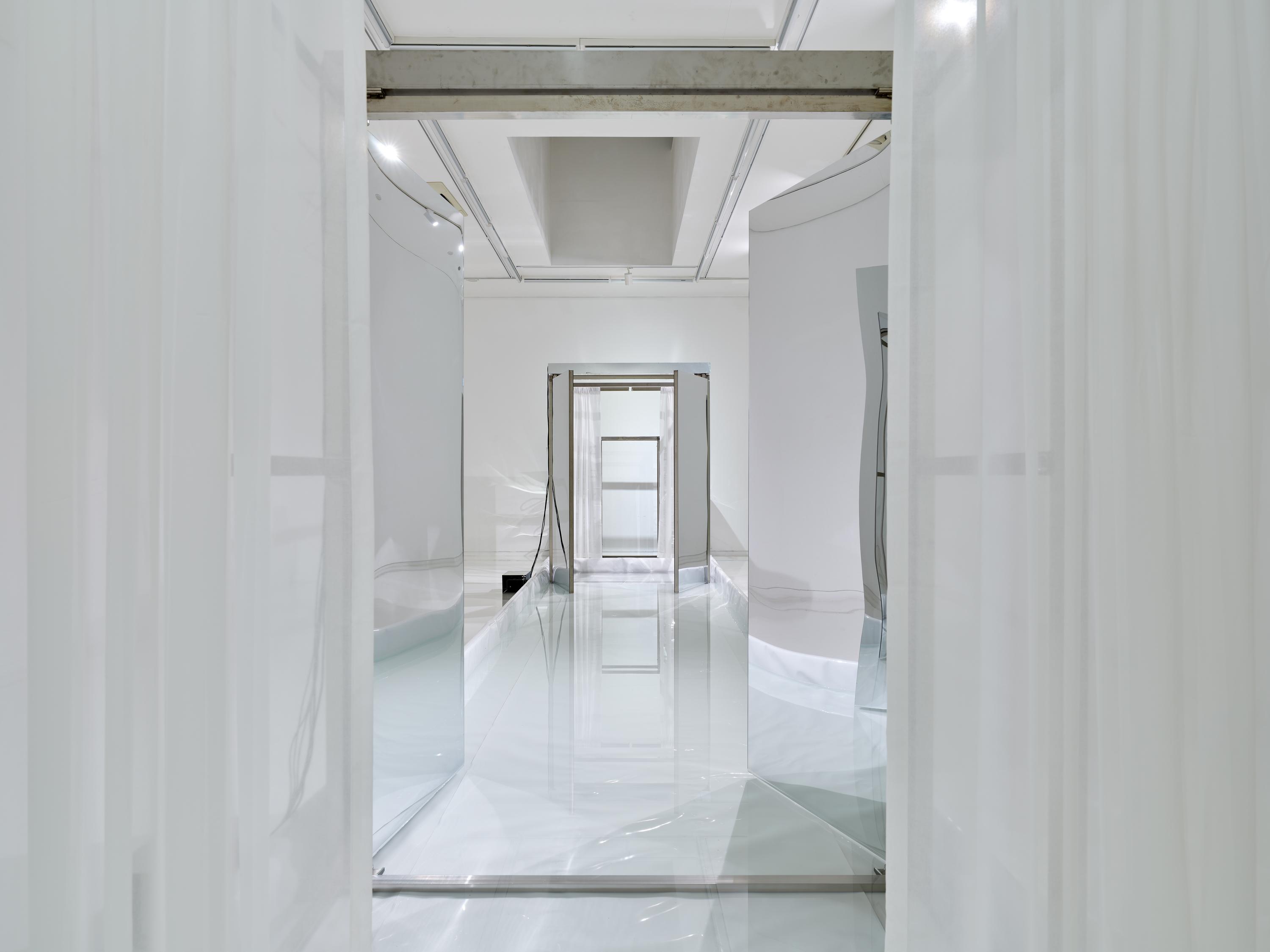
large water tank occupies the center of the exhibition space. Shiny metal doors
hang on either side of it. If you move your eyes outside the two doors and
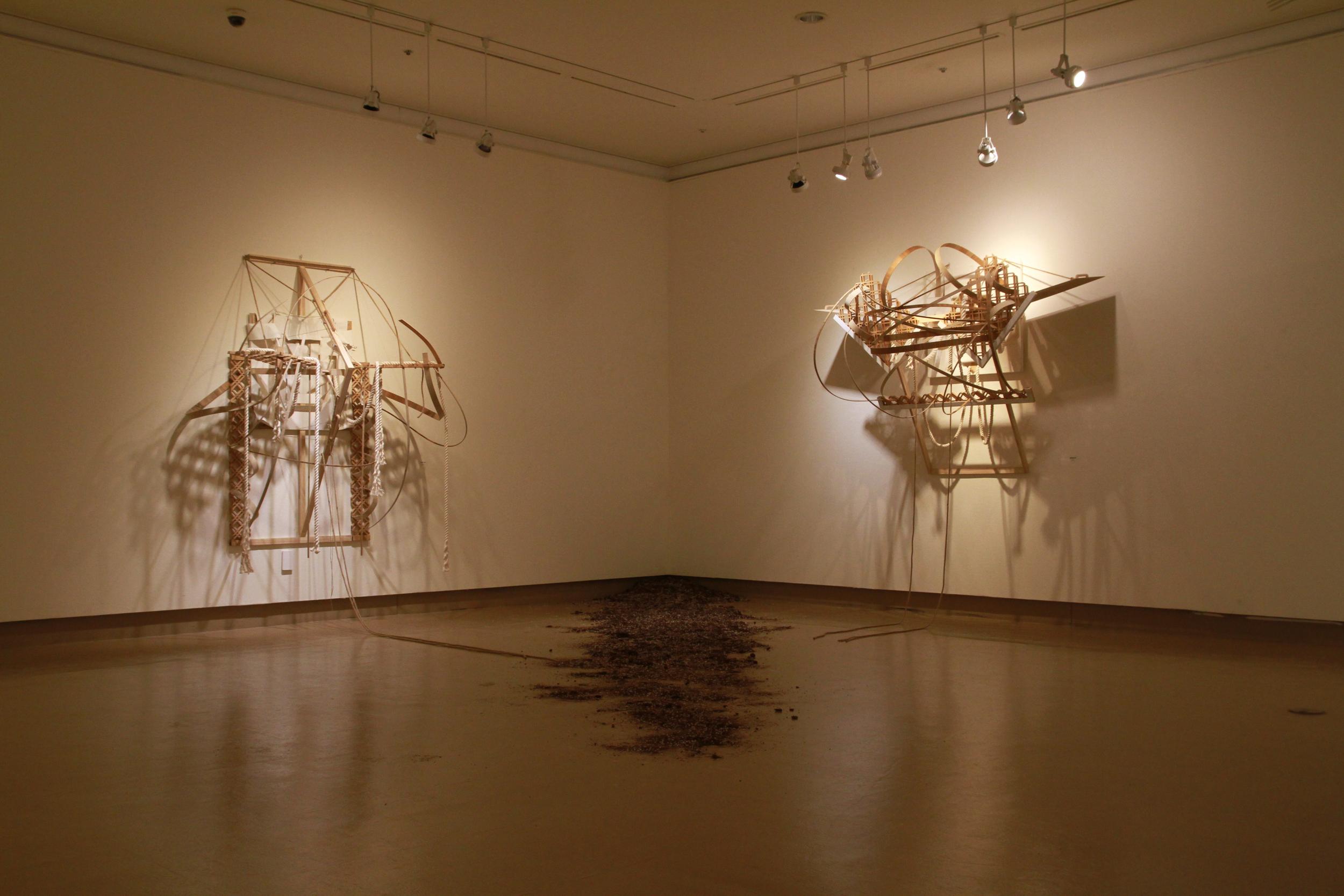
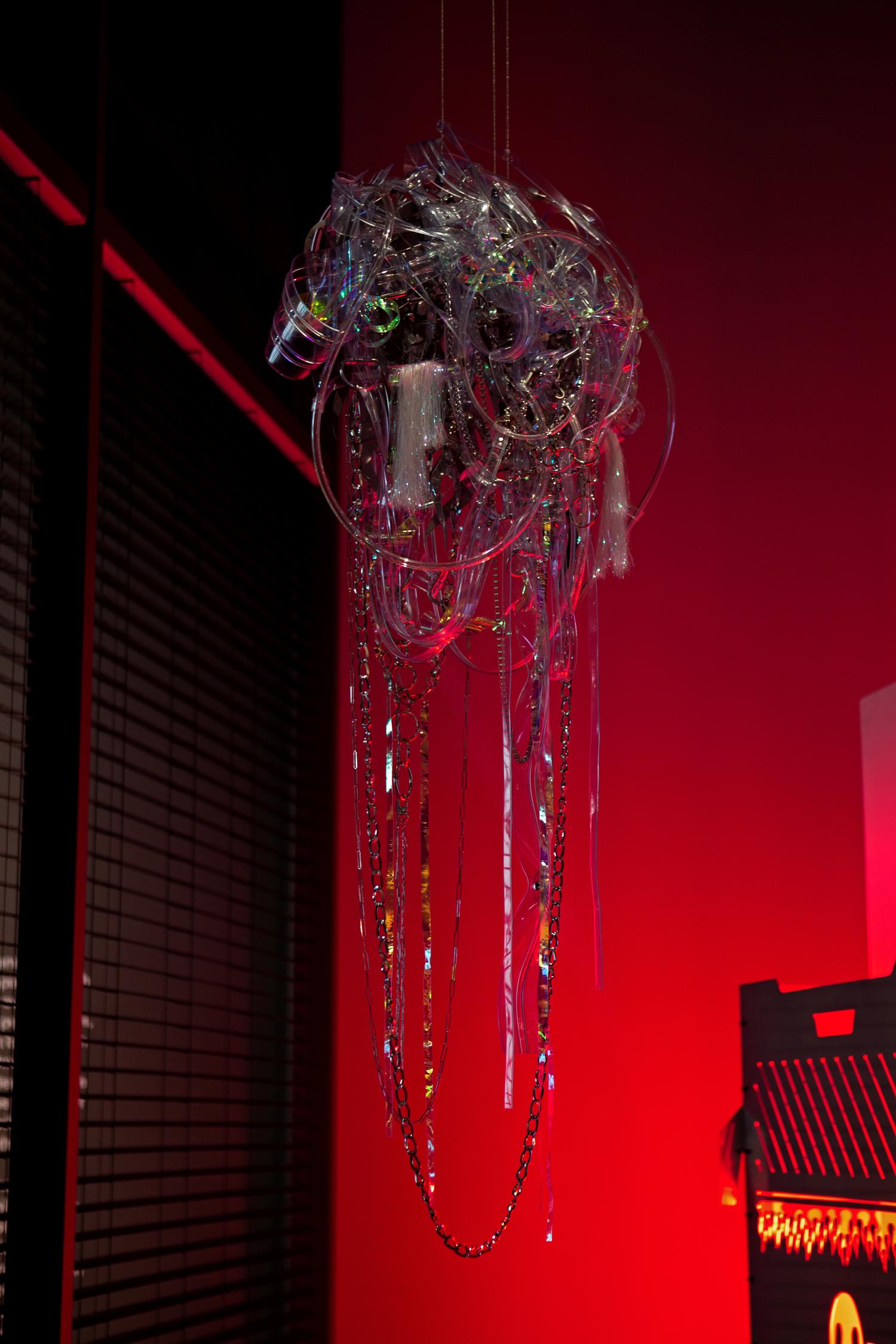
reach the wall, you can also see a metal structure about the height of a
person. The solid metal structure is clad in something soft and transparent
that can be filled with air. The other side also has a bent metal plate wrapped
around it, and sometimes it's wearing something like a light fixture that
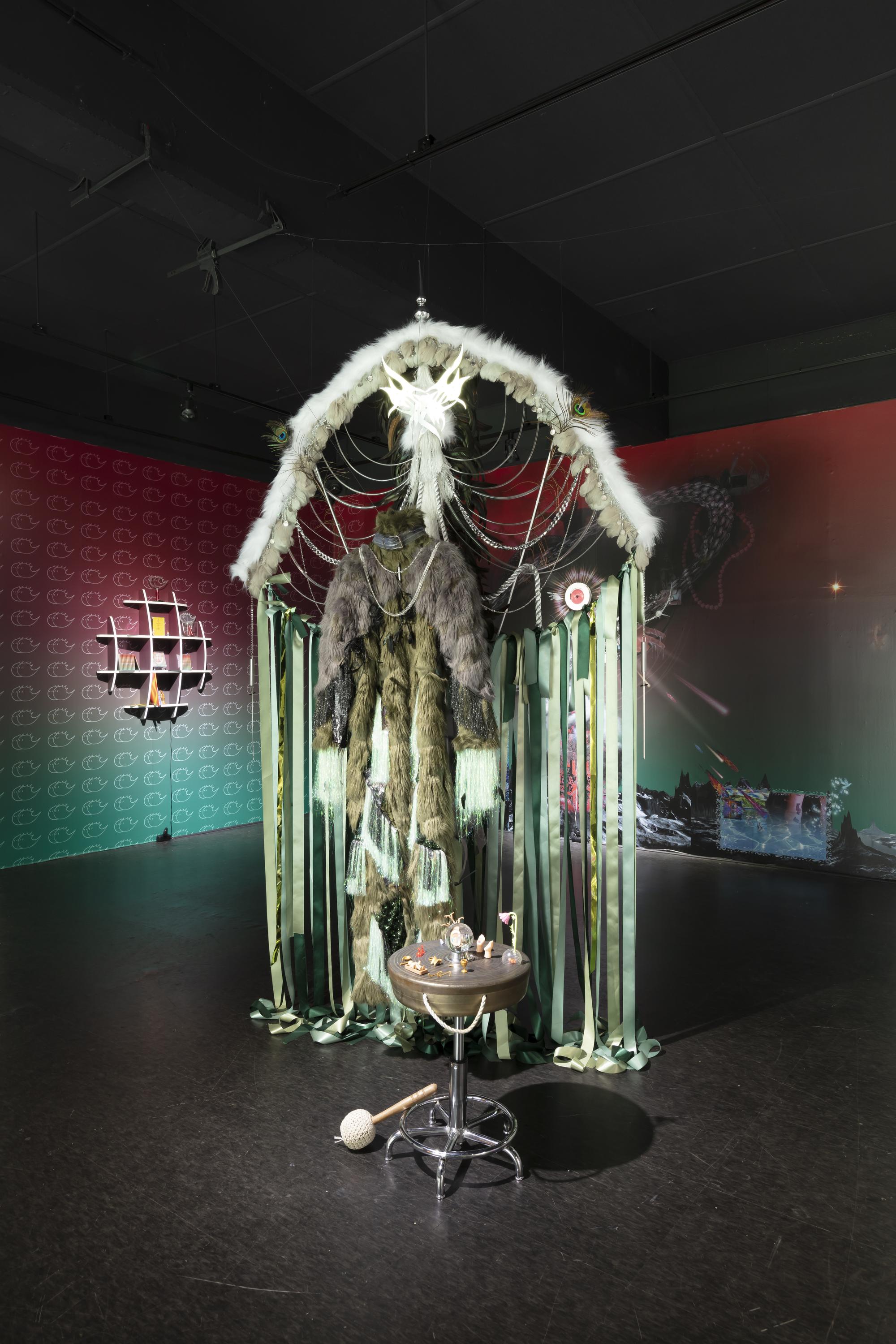
stretches like a wire. At first glance, it looks like a hanger with clothes
hanging from it, as it has the shape of something on a human scale. It is
important to note that they are just a combination of objects, but they evoke
the physicality or lack of physicality of clothes or clothes combined with clothes.
The way Hkason organizes the space she creates and the movement of the objects
in it is superimposing the issue of objects and bodies in the first place.
Hkason's work begins with a clear question. " How can artificial movement
demonstrate its dramatic and performative capabilities when the fluid movement
of the human body is replaced by the mechanical movement of sculpture, and when
naturalness is transformed into artificiality at a moment's notice?" The
way he presents the work is unusual because it is based on this question.
Rather than being placed on display like a typical kinetic sculpture and
repeatedly moving in the same way over and over again, the work unfolds in a
linear and dramatic way, with specific movement configurations at set times. It
follows the form of a performance rather than a kinetic sculpture. Even so, the
only thing the work shows is the movement of mechanical devices.
The opening
and closing of the doors on either side of the tank, the fog machine that emits
smoke, and, if we extend our senses a little further, the movement and changing
state of the ice that is slowly melting in the tank. Perhaps to showcase the
dramatic capacity of mechanical movement here, Hakason's performance has a
deceptively traditional, linear composition. The only things actively moving
are the metal doors on either side, but through them the flow of introduction,
escalation, climax, and decay is literally dramatized. The doors, which
alternately move slowly to one side and quickly to the other, evoke certain
images and narratives through their mechanical movement alone. However, as the
performance progresses and we become more and more involved in the sensations
created by the time and space, we realize that there is something more
important. These are the multi-layered waves created by the mechanical
movements.
The doors on either side, which are submerged at the bottom, constantly create
waves of water in the tank. The waves become images in themselves, then become
energy that moves the ice floating in the water, and the two waves collide and
intermingle, revealing the relationship of forces. The waves generated by this
once-sensed movement also re-sensitize the smoke from the fog machine, which
had been faintly enveloping the entire space. The smoke makes visible the
intangible energy exchanged between objects as they respond to the wind
generated by the movement of the door or the movements of the people watching
the work together. The performance, which started with the movement of the
machine, gradually brings into form the movement of all objects (including the
audience's bodies) within a more formalized space-time. In White Cube's unique
way of viewing, the state that the audience creates by influencing each other's
movements becomes an important element of the work. Here, the audience's status
as they move around the space and react to the movements of other objects is
overlaid with the status of the ice in the water, which is gradually melting as
it moves back and forth in waves. One can sense a strange envelopment of
objects and bodies in various dimensions.
This expanded sensation stretches further and further, leading to a
re-awakening of the architectural context of the exhibition space. These
dimensions are especially expanded by the kinetic and materiality of the doors
working together. Standing in front of a working door, the view is blocked and
expanded by its movement, but what makes it even more interesting is that even
when the door is closed, the shiny surface of the door reflects the space,
creating a sense of spaciousness. The movement of the heavy stainless steel
door with its mirror-like shining surface seems to stir the entire space.
Furthermore, the dichotomy of inside and outside is blurred here when we
consider the duality of the door, which both connects and blocks space. The
fact that you can see something when it is closed is an important element that
makes the work not only about the movement of objects, but also about the
sensory field that the movement opens up and expands. This sense of inside and
outside that extends in a specific direction works in conjunction with the
specific context of the work, the intersection of the object and the body, the
artificial and the natural, the mechanical and the fluid, and traverses the structure
of our dichotomous perception.
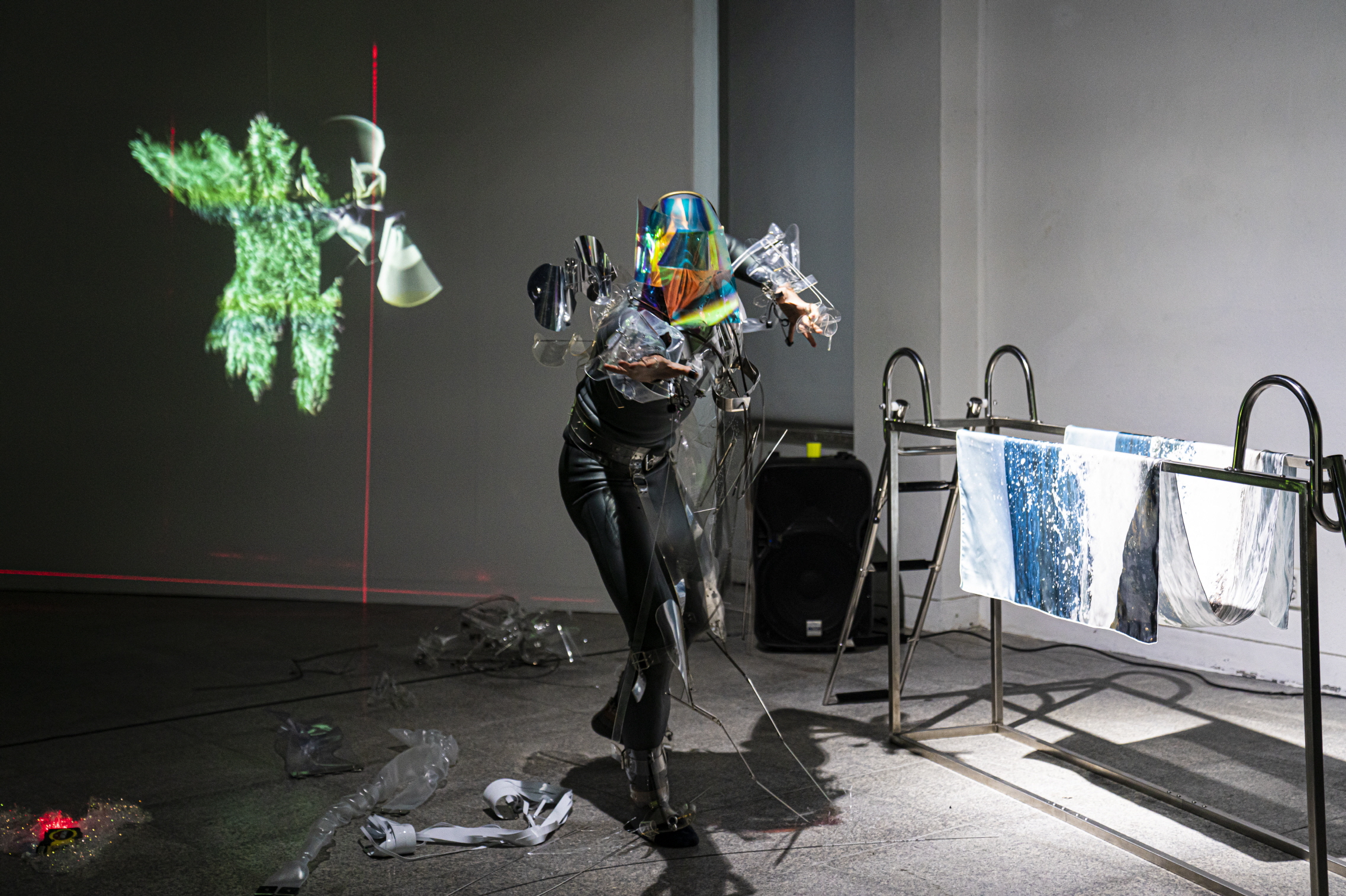
It's worth pointing out here that Hkason is placing this work in the context of
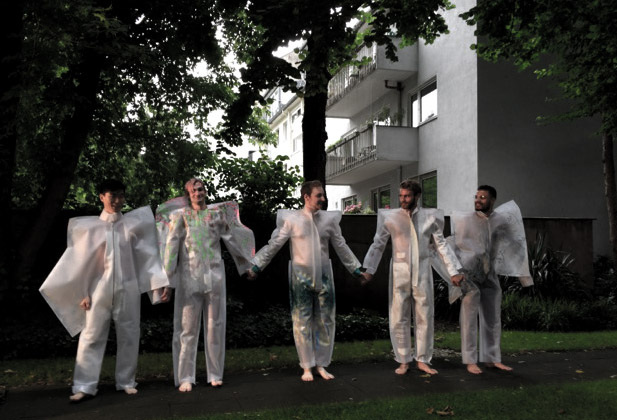
his wearable sculpture work, or sculpture that can be worn. We wear clothes
every day, so we don't think about it much, but we need to elevate the concept
of wearing. It's about putting the body inside an object, and it's about
combining the body and the object in a certain way. The body, which we think of
as being able to move independently, is routinely attached to an external
object called clothing. Of course, the shape of the clothes follows the body to
some extent, but we recognize that sometimes our bodies follow the shape of the
clothes. Think of formal clothes that are clearly meant to make you feel more
uncomfortable, and when you wear them, you're following the way they structure
your body. Not just physically, but also on a cultural and symbolic level.
The
things we wear structure us. The sense that extends through Hakason's work is
not only of objects and their union, but also of their relationship to the
architecture that encloses them, and above all, of the body's place in between.
By juxtaposing the relationship between objects with the relationship between
clothing and the body, we are able to perceive them in a different way. Just as
we imagine that objects are wearing clothes, we think of a certain expansion
that occurs when we imagine that we are wearing architecture. Thinking about
clothes in this way, in terms of the union of human and object, opens up a
different sensory realm, intersecting the way clothes are treated in fashion,
the way bodies and objects are superimposed in sculpture, and the way space and
bodies are treated in architecture. In the so-called posthuman stage, where the
objectivity of the body and the physicality of the object operate
simultaneously, clothes, sculpture, and architecture are all at the same time.
In other words, through the re-awareness that we are wearing a room, we may be
able to shed the existing sensory restrictions.