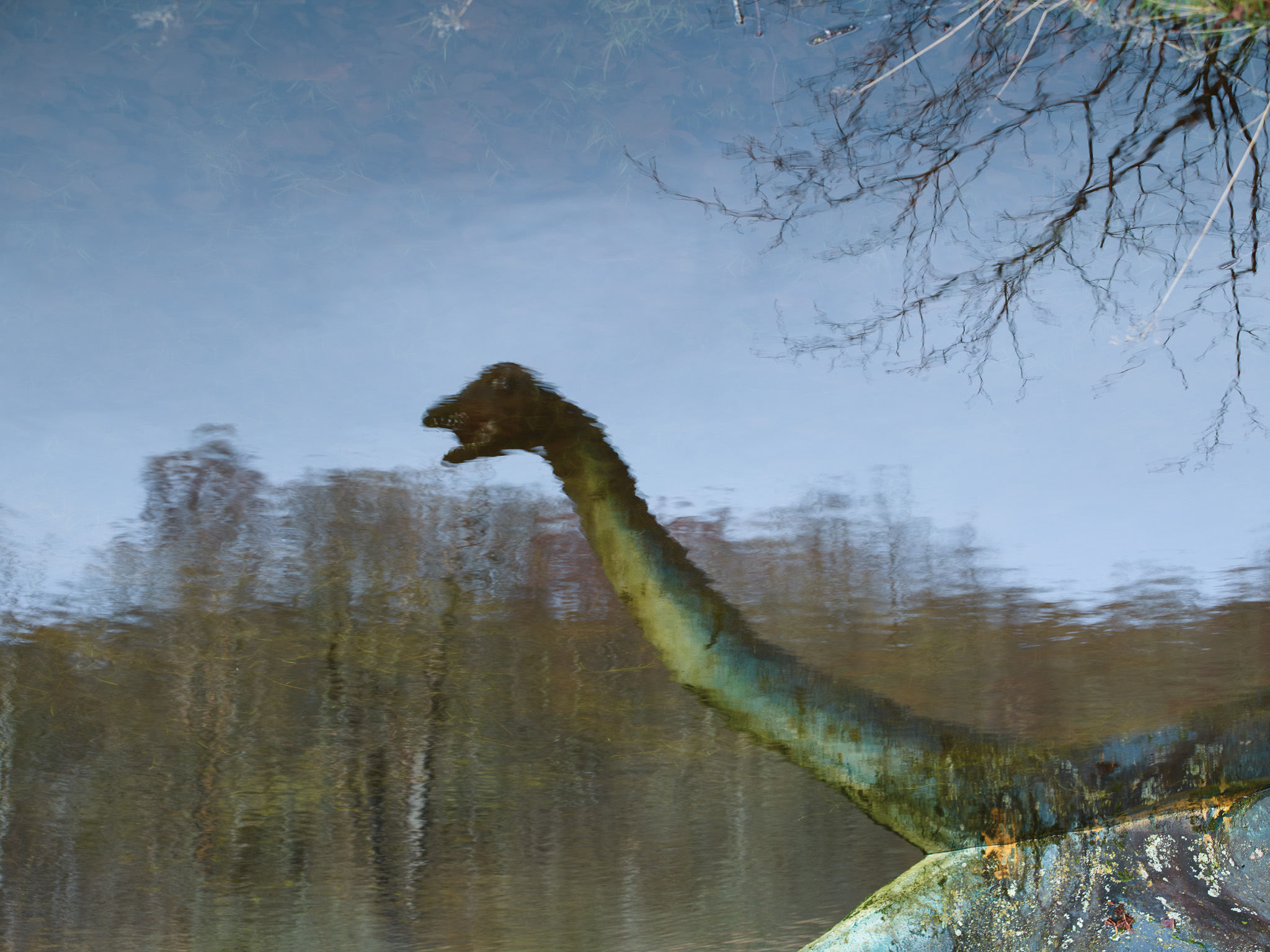
As night falls, darkness creeps in. Along with the darkness comes the monster. But the monster does not come from far away. It comes from within. You, the human is the home of the monster. The monster never stops, it never sleeps. If you fail to tame the monster, it will destroy you from within. Why fear the monster? It brings chaos. Like a naughty child, the monster unsettles what has been established and shakes what has been stable. The monster is not easy to detect as it hides deep in the darkness.
So comes the camera, the human tool to control light. The little machine that freezes time is hoped to help to tame the monster. The language of the camera was thought to be light. But it turned out that the language of the camera was darkness. Inside the camera was a circuit to channel the flow of darkness. The origin of the word camera has come from ‘camera obscura’, which means darkroom. So, it is very natural that the camera finds itself comfortable in the midst of the darkness of the night.
However, the camera must not be left free in the dark. In modern period the camera itself has turned out to be a monster. Indeed, in the society of abundant technologically reproduced images, the camera has always been a monster. Friedrich Nitzsche has already warned, “beware that, when fighting monsters, you yourself do not become a monster. For when you gaze long into the abyss, the abyss gazes also into you.” Fighting the monster of the darkness, the camera has become a monster. In the past, the darkness lay in ignorance and poverty. These days, the darkness sits in the midst of light. For too bright light blinds the eye.
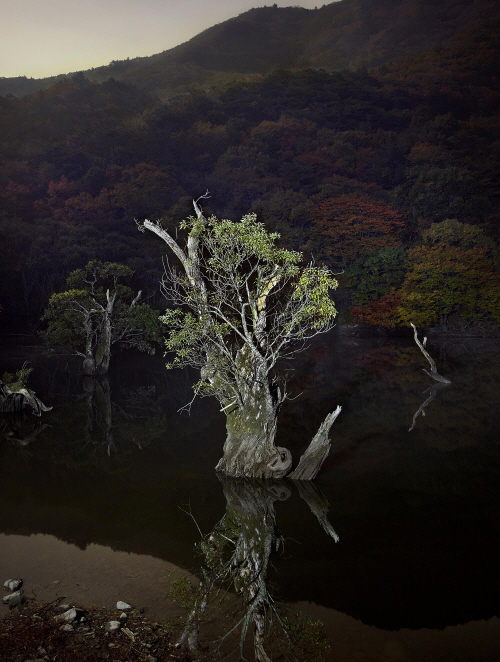
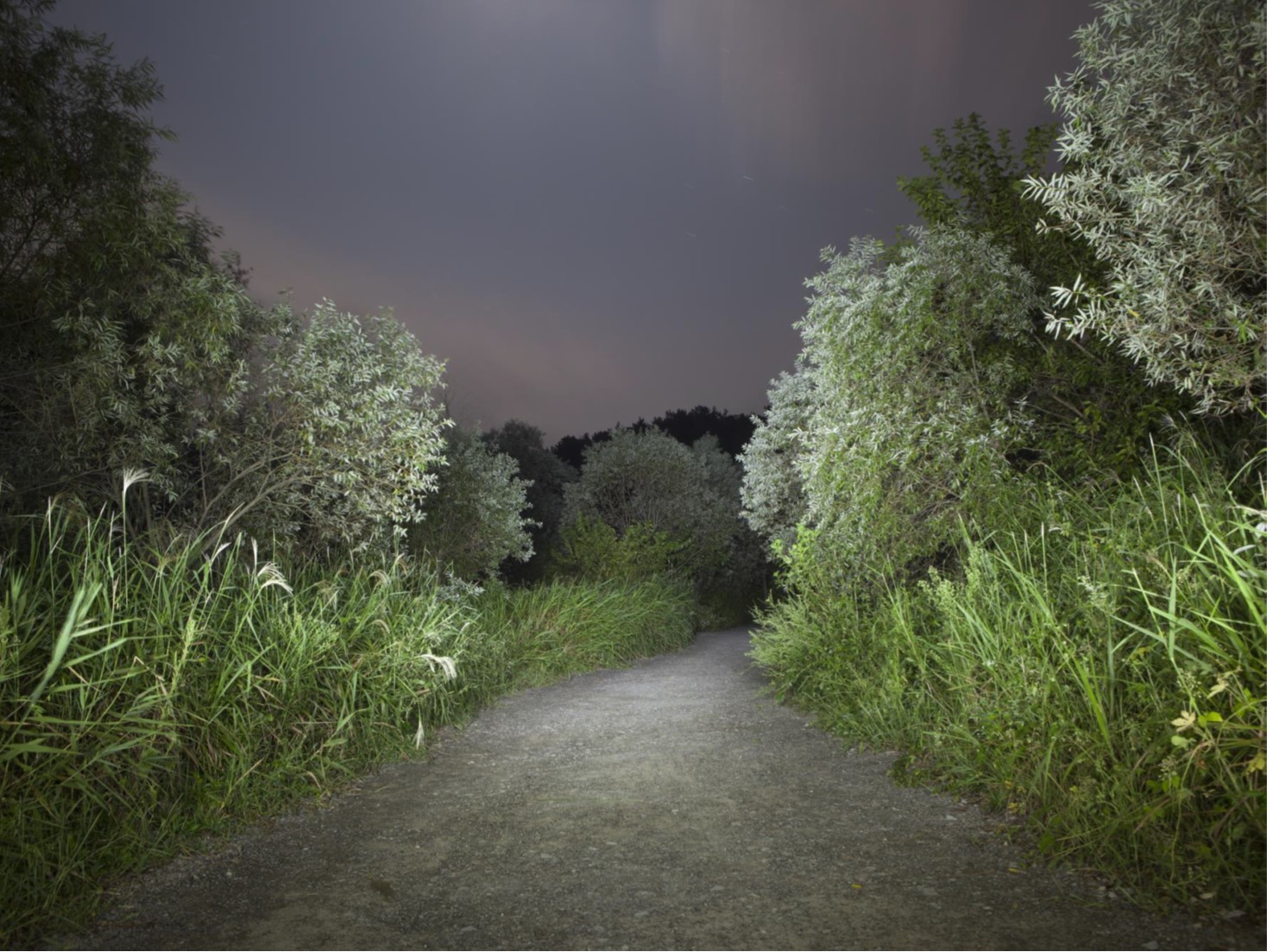
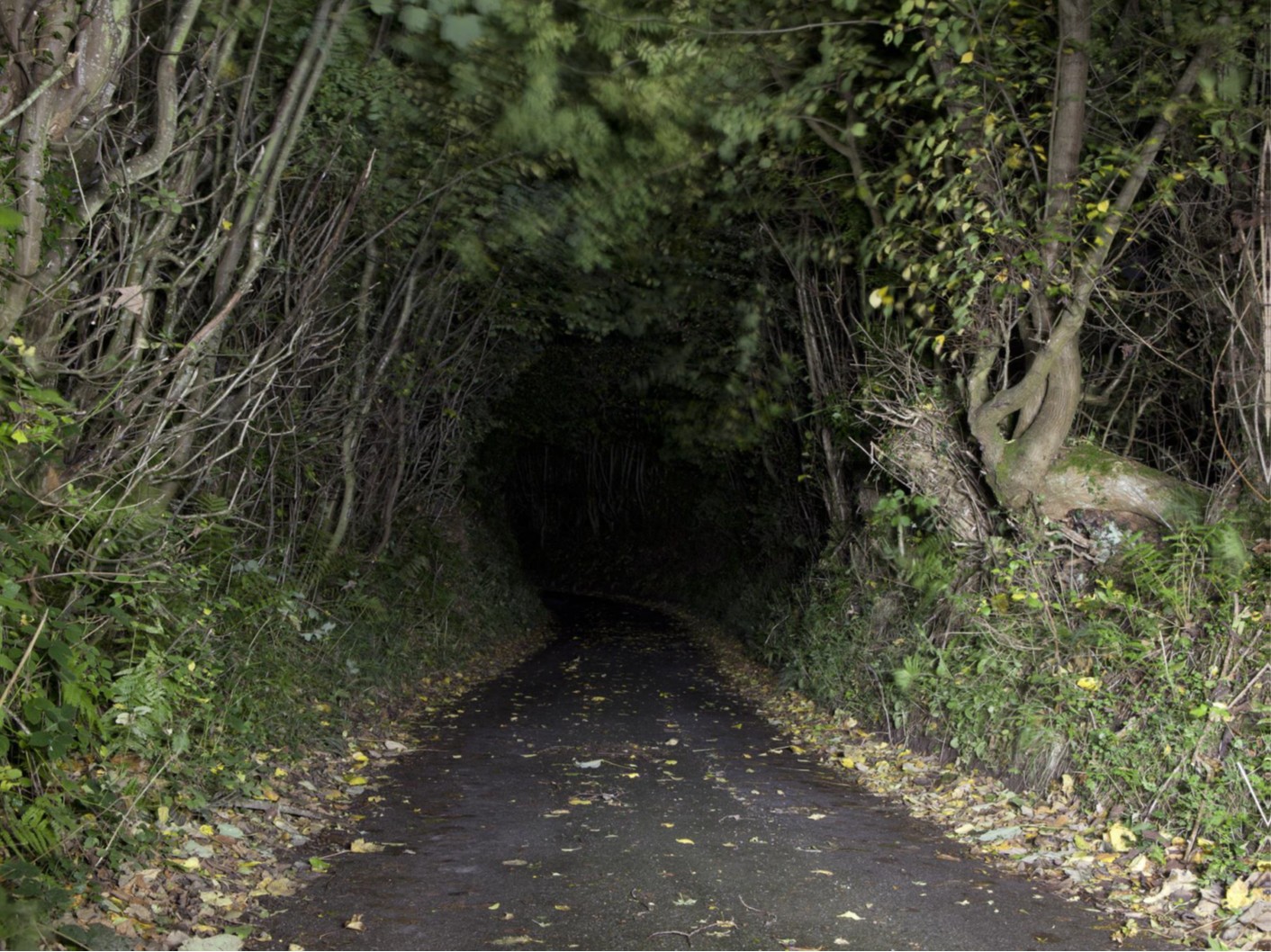
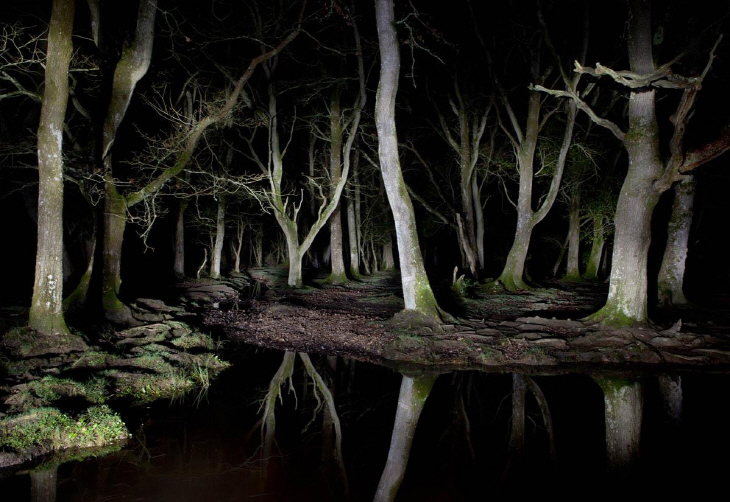
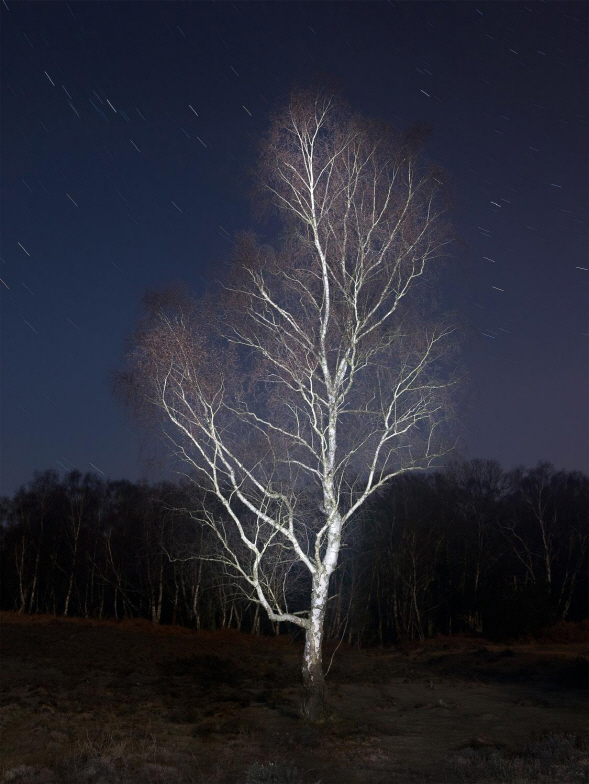
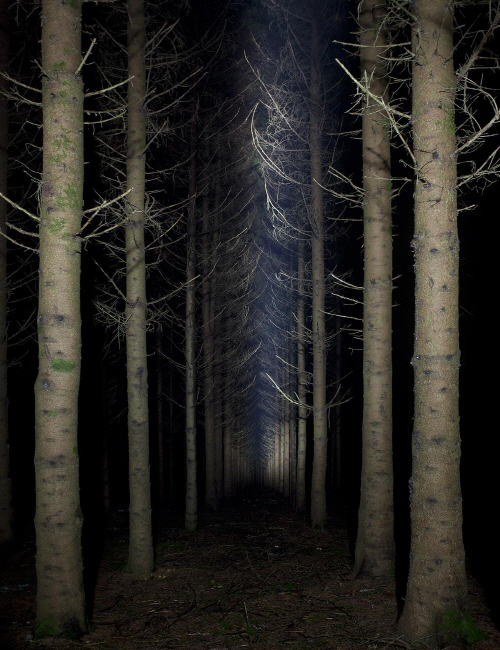
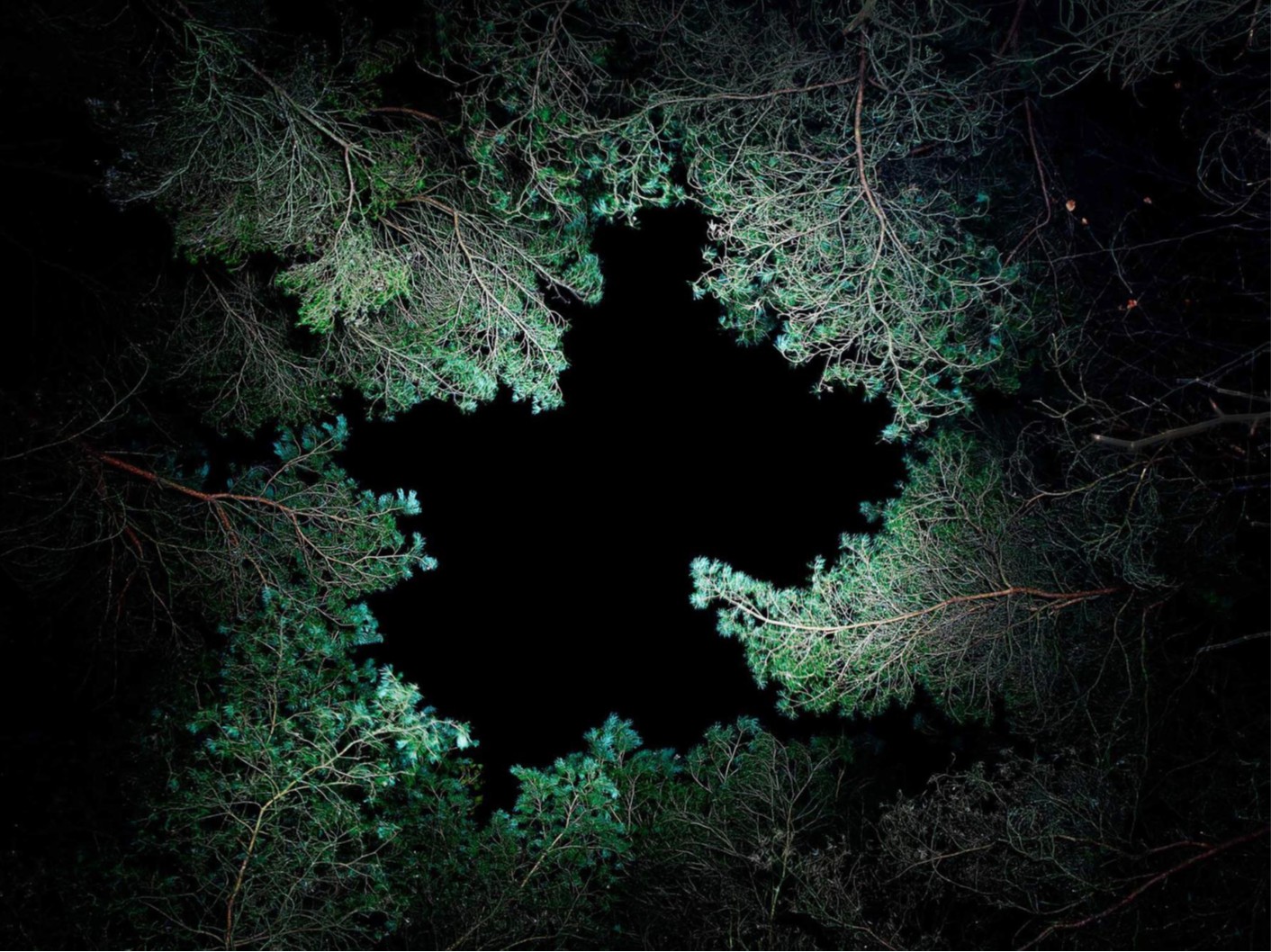
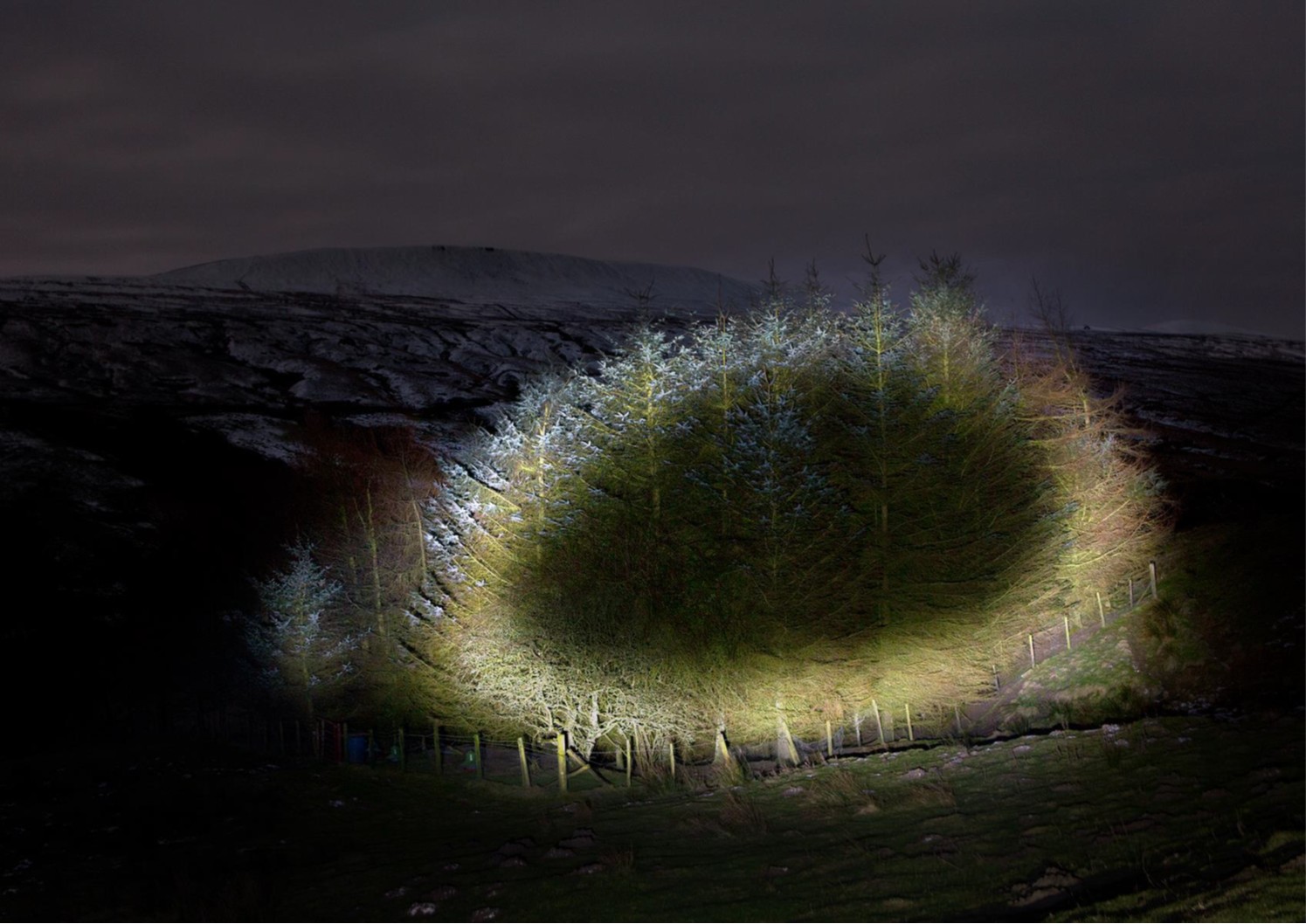
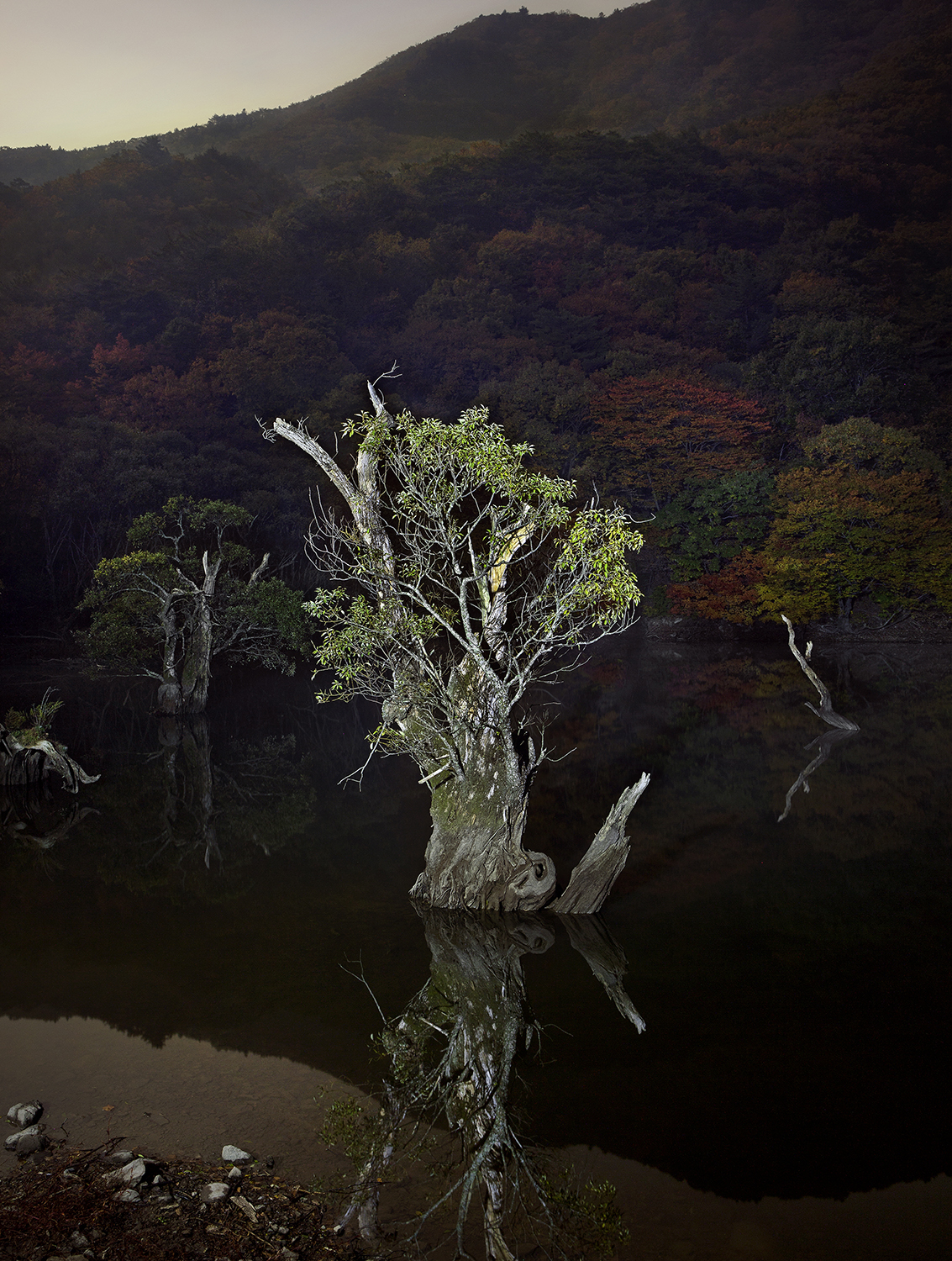
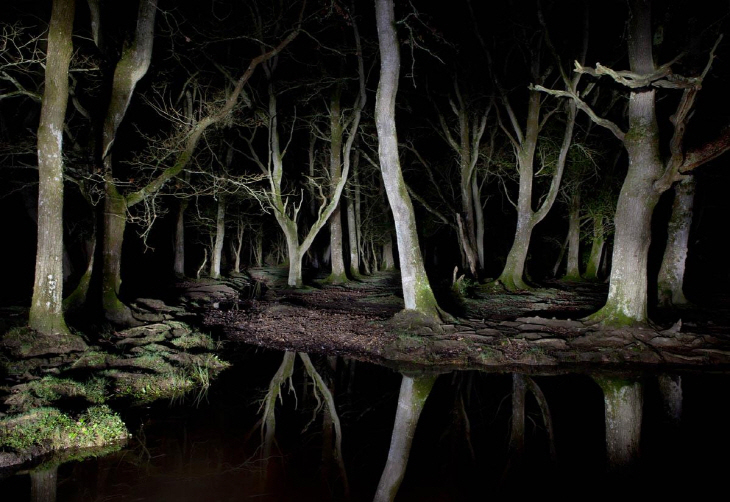
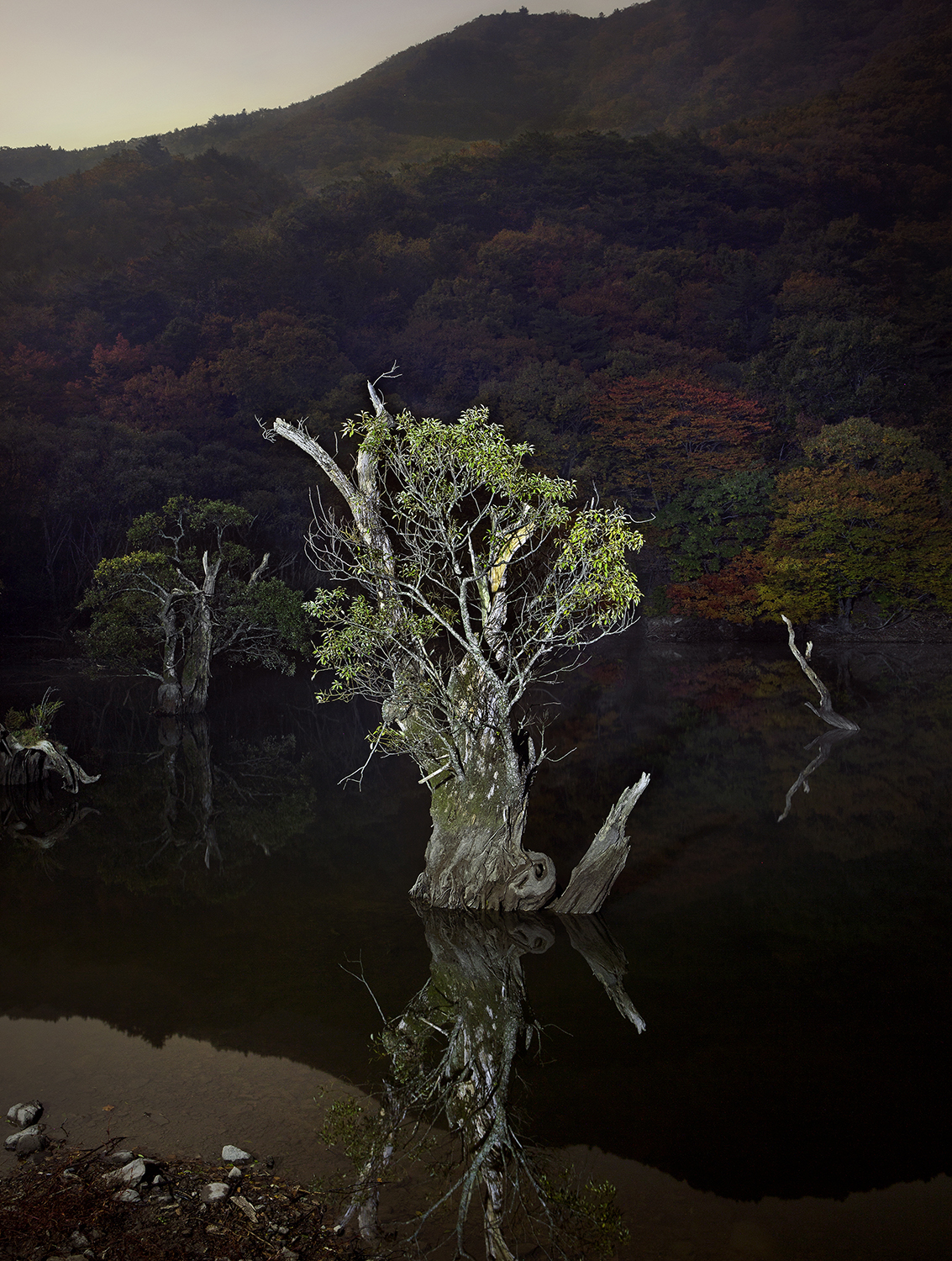
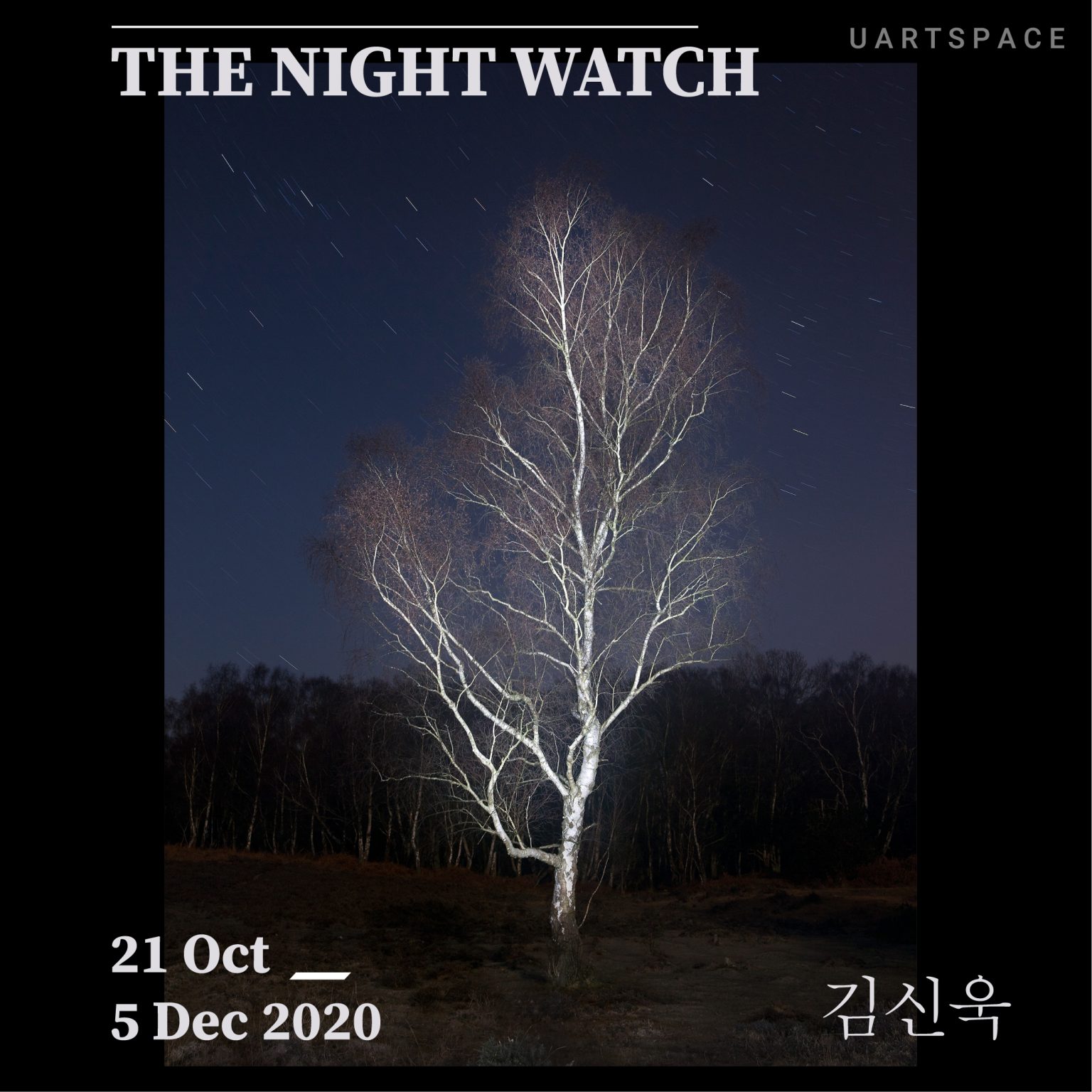
So the camera should be put under control. So comes the photographer. Kim Shinwook intervenes in a scene otherwise chaotic in a monstrous darkness. His camera stares in the darkness. Tree branches and trunks shining bright are poised to stand on guard to the hell of darkness. But this light is artificial. What looks to be very bright is indeed the play of exposure time and aperture. This amount of light would have been ignorable in the bright sunshine of the day. In some photographs, the darkness itself is also artificial.
It is tainted with the light of the city, with multiple colors mixed in it. Complex light sources such as street lamps, signboards and interior lights create darkness that is so biased to a certain color that it can no longer be called darkness. These days, there is no pure darkness. What has been polluted is not just the air but the darkness. So the photographer has set out to pursue the pure darkness but ends up finding himself caught up in the mixture of light and darkness.
What ever happened to Rembrandt, the painter of light and darkness? His famous painting Night Watch, or The Militia Company of Captain Frans Banning Cocq (1642) has long been thought to be a depiction of a night scene. But when the painting was cleaned, it was discovered to represent a broad day. Indeed, it was a party of musketeers stepping from a gloomy courtyard into the blinding sunlight. Dark misunderstanding has been surrounding this painting for so long time.
Although he was a popular painter and a rich man, he lived in extravagance and his life ended in a misery. Finally he was buried as a poor man in an unknown grave. After twenty years since his death, his remains were taken away and destroyed.
What would happen to the photographer of darkness? People talk about visual language. The photographer of darkness talks about the language of darkness. People have long thought that the contents of a photograph is what it portrays in a visual language. They have thought what can be perceived and deciphered in a narrative form is its contents. Even theoreticians and critics try to read what a photograph tells. From this moment, the contents of photography should be defined as the struggle between light and darkness.
The history of this struggle is entwined along a complex line of technology, art, humanities and social practices. The age of darkness has succumbed to the age of light since the invention of light bulb in 1890 by Thomas Edison. However, darkness is still roaming large in the twenty first century, the age of LED lights. So comes Kim Shinwook, not just to tame the monster of darkness but also the monster of light.
The light in his photographs is a precious entity, as it is prepared and realized in so delicate a manner that it can never be mechanically reproduced. So Walter Benjamin had to wait until Kim Shinwook’s works were unveiled before he hastily concluded his famous essay, The Work of Art in the Age of Mechanical Reproduction. He wrote that the aura of traditional work of art was destroyed along with the emergence of the technical means of reproducing images.
What he did not notice was that the subtle arrangement of technical means to make an image could not be reproduced. The circumstance in which a technical means is employed to produce an image is way more complex and subtler than Benjamin had imagined. There is no technical reproduction that produces an endless series of same images. There are only micro-scale differences that can only be detected using X rays, UV and infrared. Thus one must be cautious when talking about the all encompassing term of technical reproducibility.
So is Kim Shinwook. His photographs were produced in careful footsteps that lead all the way into the depth of darkness. The viewer of his works should also be careful. One should not miss delicate details Kim Shinwook created with the help of camera devices.
So the photographer of the twenty first century is given a somewhat different task than those in the early twentieth century. He would put the technical means of image production on a different ontological basis. He listens to the sound of darkness. He listens to the narrative of the objective world of which nobody holds a total control. For so long, humans have degraded it as meaningless, ominous, murky and so on. Kim Shinwook revives the virtue of darkness.
Can’t we see the contour of the things that are not visible under bright light? The virtue of this precious jewel of being that is so quiet and free of noise has long been forgotten. In the darkness we can sleep. That is when the siren inside us begins to work. We can find peace in it. Kim Shinwook’s photographs are historical in that he discovers the value of darkness anew. In his photographs a sleepwalker is happy. He knows his destination and every path he takes. We will just follow.