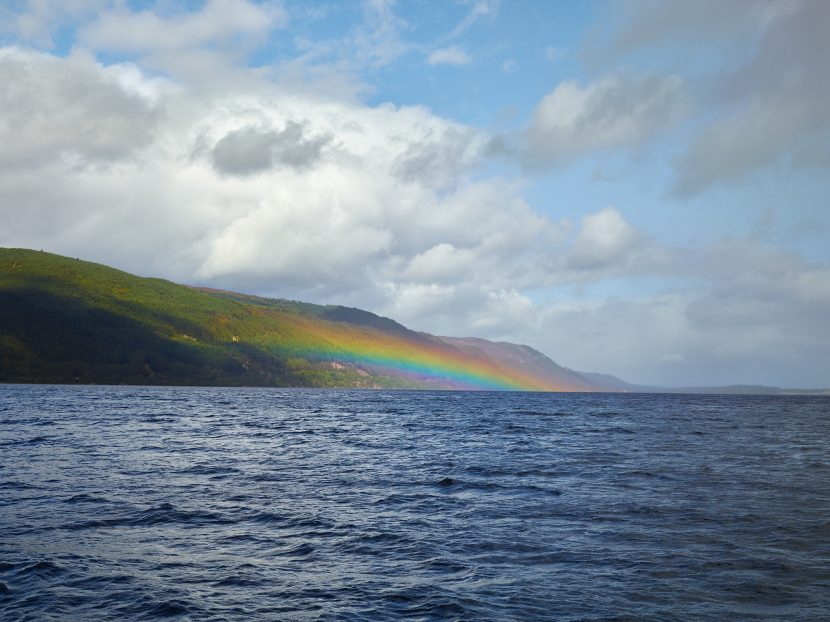
I recall a landscape without places, and the time that ownerless experience can sustain. Countless unnamed events pass by in everyday life. The shoes of a man crossing the street caught by the eye of the beholder in a car awaiting the changing of traffic lights; the back of a random person who temperamentally hits my bag while passing me on the bustling road on the way home from work; and the unrealistic scenery of a resort found while randomly searching on a smartphone. Such a series of nameless experiences occurring in uncertain places seek eternity in daily life.
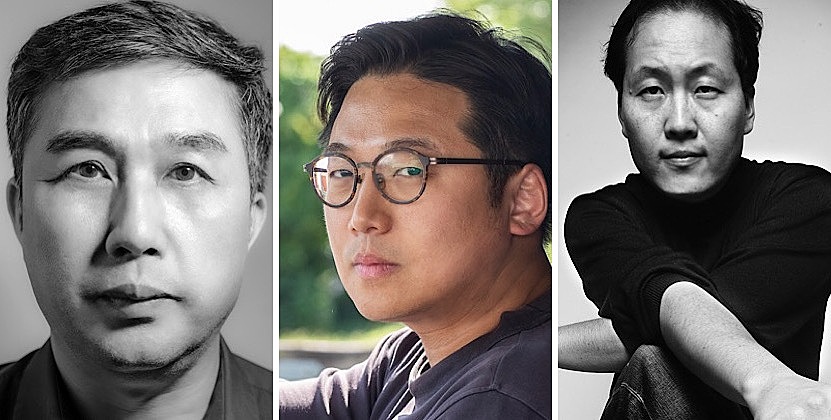
More than most, Kim Shinwook’s daily life is filled with such placeless landscapes and ownerless experiences. The artist, who lives in London, travels to and from the airport almost every day. This is not for personal reasons such as travel but actually for quite the opposite. His job involves assisting people travelling to London, either picking up travellers from the airport and dropping them off somewhere in the city or taking them from the city out to the airport.
Fields, roads, and occasional factories and warehouses fill the everyday life of the photographer who travels to and from the airport outside London. Although he started the job by chance, it continued for over eight years, and he has now travelled to and from the airport over a three thousand times.
What kind of space is the airport? A mix of things coexists at the airport. Various races and cultures, intangible violence disguised as screening and censorship, and blatant discrimination based on the national interest are revealed through multiple measures of behavior. There is also a strange tension and excitement on the faces of people who have come to see someone arrive or depart. The airport is an odd place where reason and unreason, presence and absence coexist.
Kim seems to have learned more about this strange space, the airport, which has become his workplace. He describes all the details such as the fastest route from the airport lounge to the car park, the location of terminal cafes, the various amenities at the airport, as well as the billboard image emblazoned at the airport exit. Furthermore, he remembers the smells and sounds of the airport, the colours of the lights, the types of carpet, and even the voice of the Indian British men who clean the toilet. Actually, more than just assembled memories, they are more like experiences accrued over a long period of time. An artist naturally develops various insights into a place after learning about it in this way, and these are closely linked to his artwork.
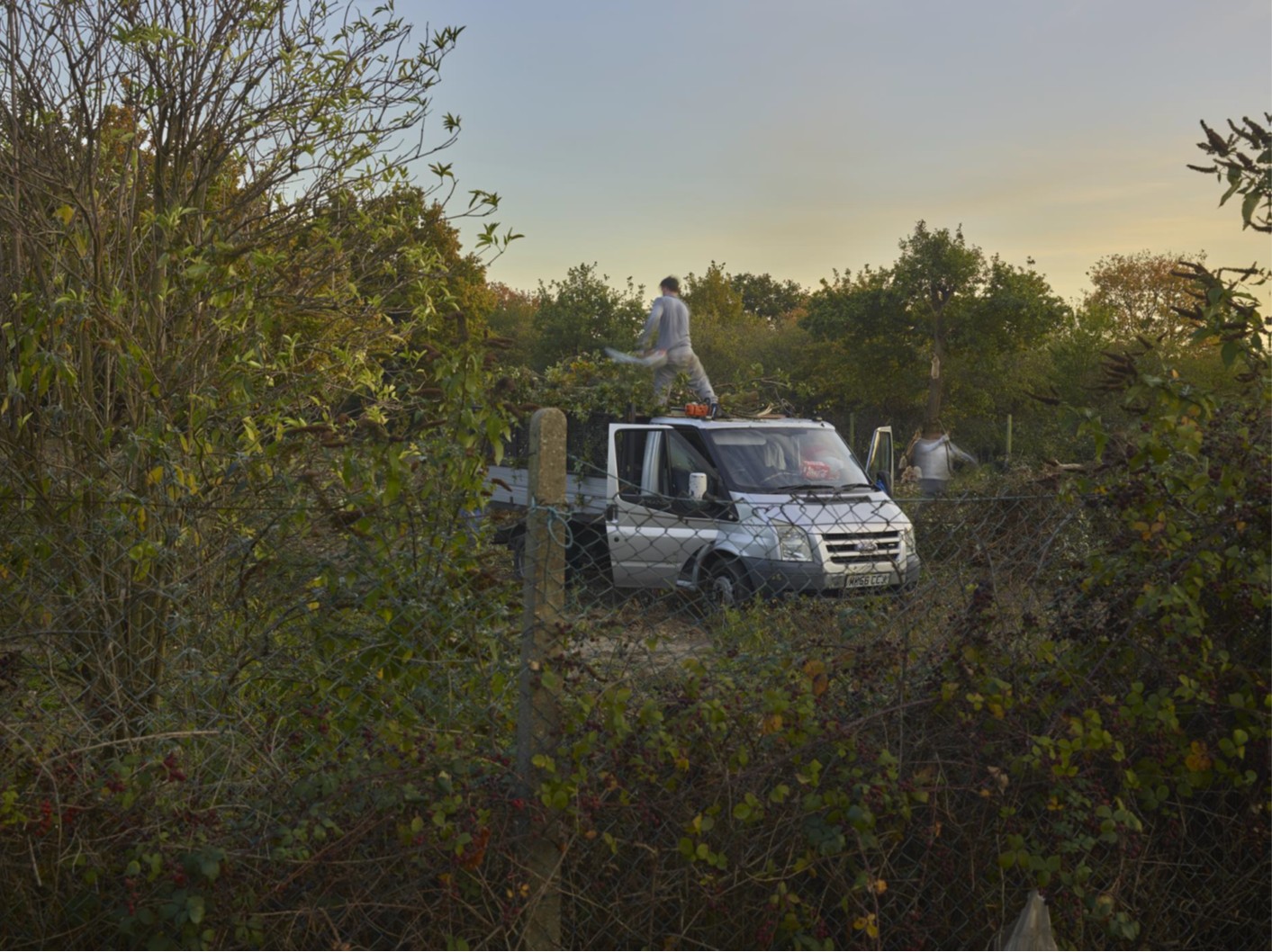
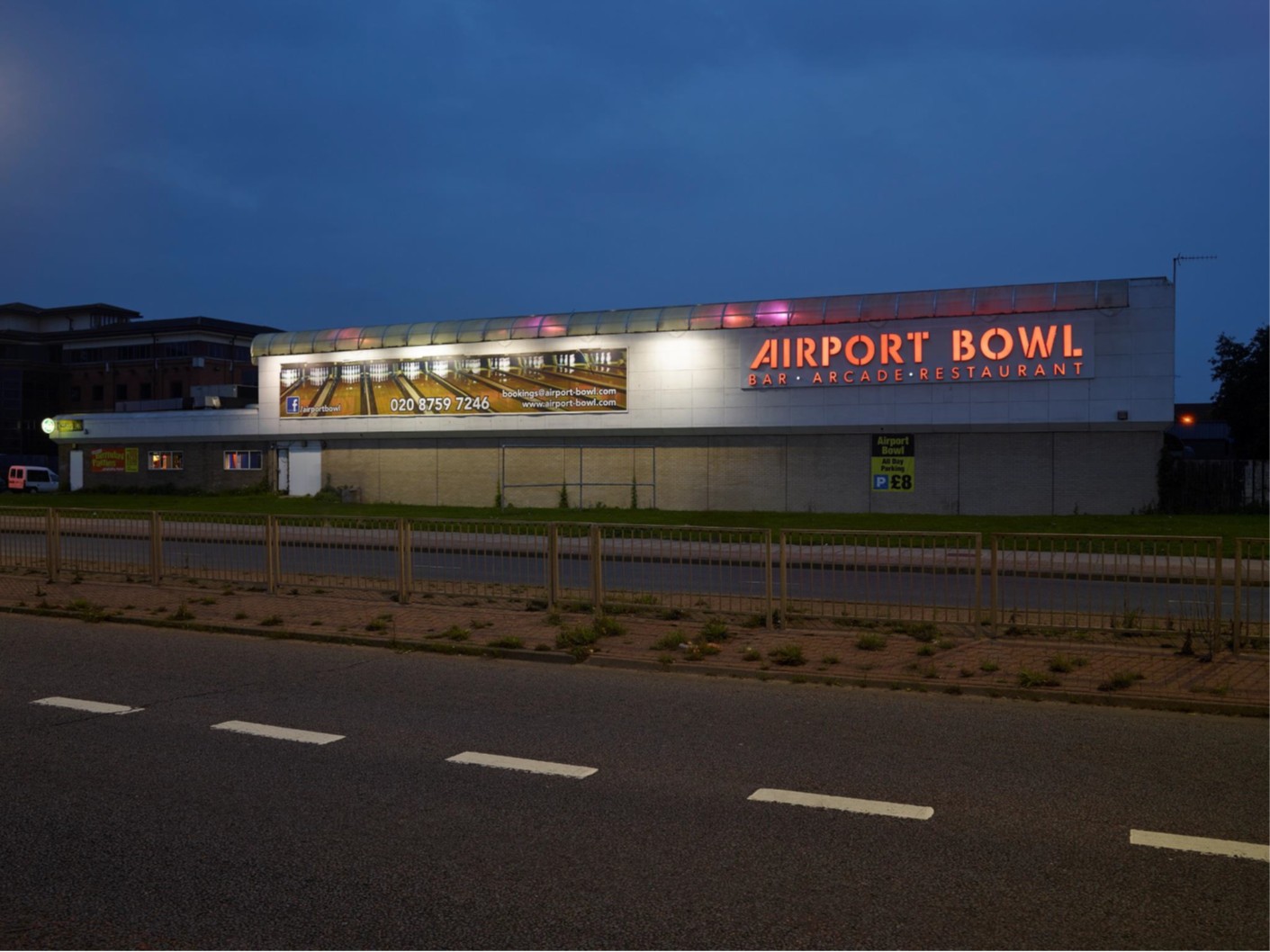
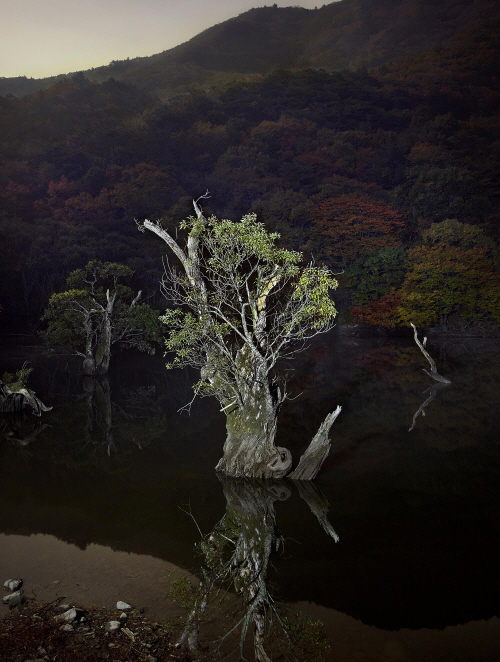
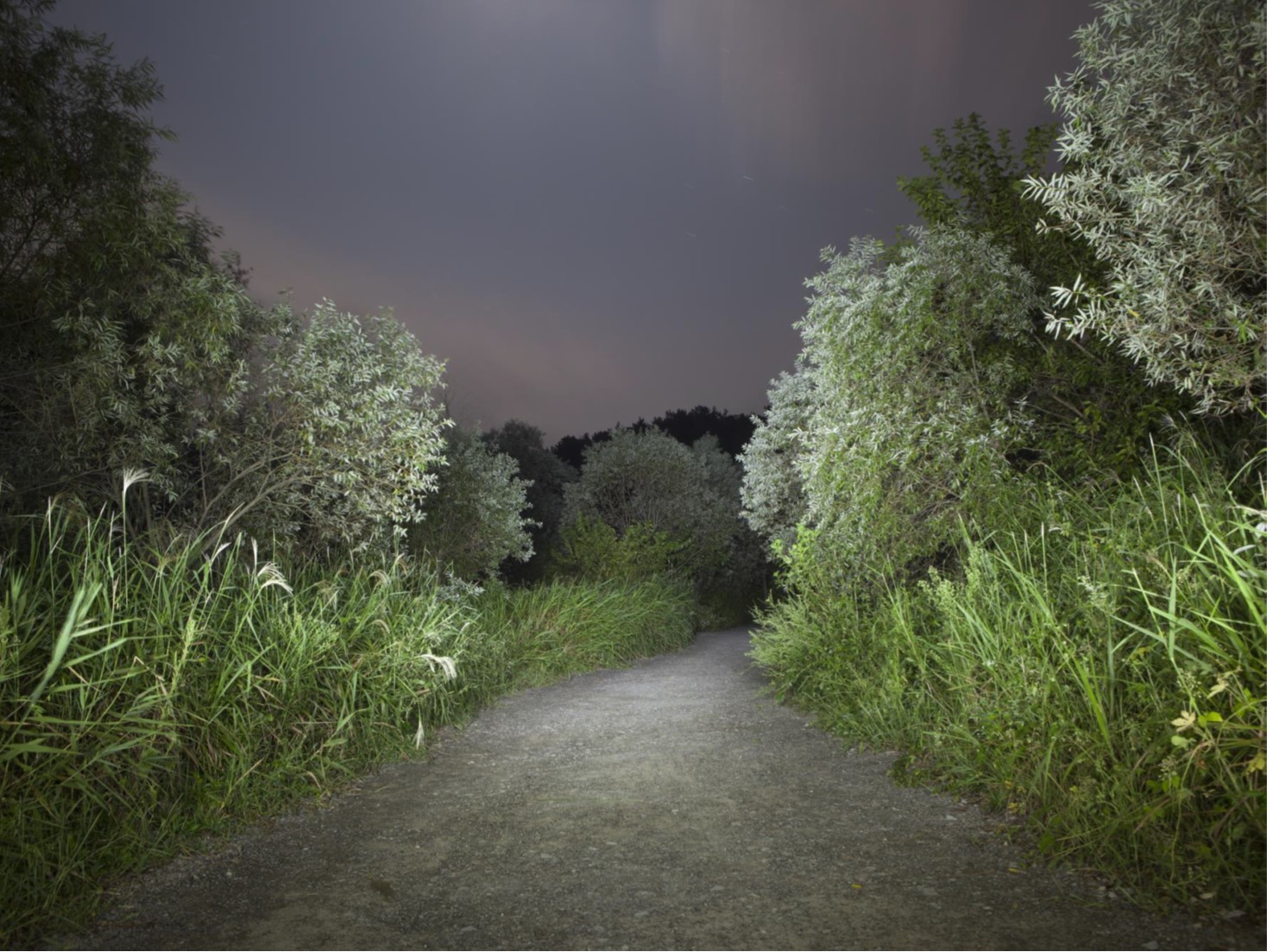
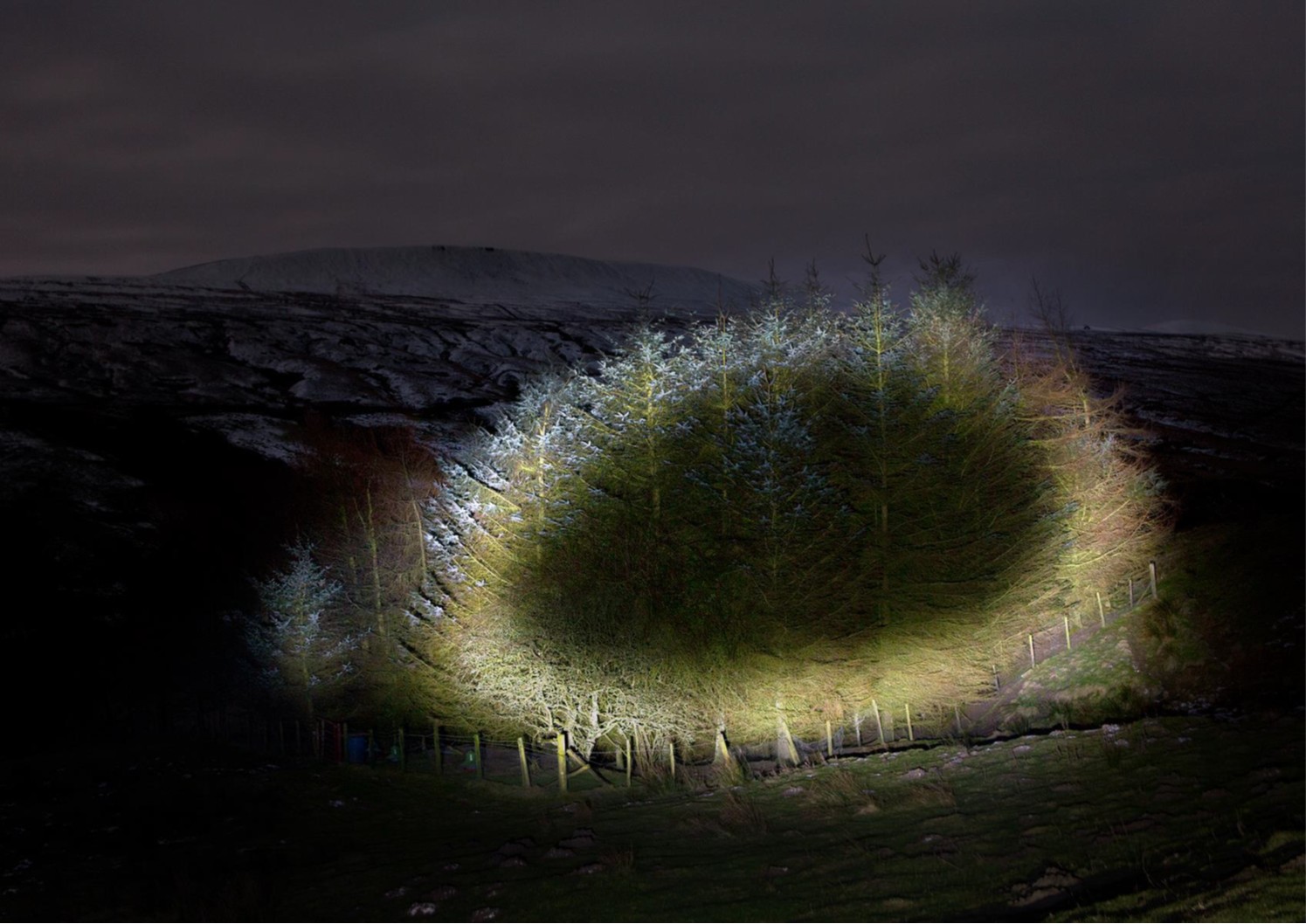
How is the airport described in his work? His photographs, which do not convey clear drama or narratives, seem rather understated. In fact the major subject area for his for his camera is not the airport itself but the marginal areas around it such as the vacant lots, green fields and sparsely located residential areas nearby, The early work of the airport series, mainly comprising pictures of the landscapes around airports, display minor events and are almost bare. The feeling of such a vacuum remains intact even in his recent works which expanded to cover objects and characters. Typical images of people meeting and waiting in the airport, or of censorship and control, are not found anywhere in his photos.
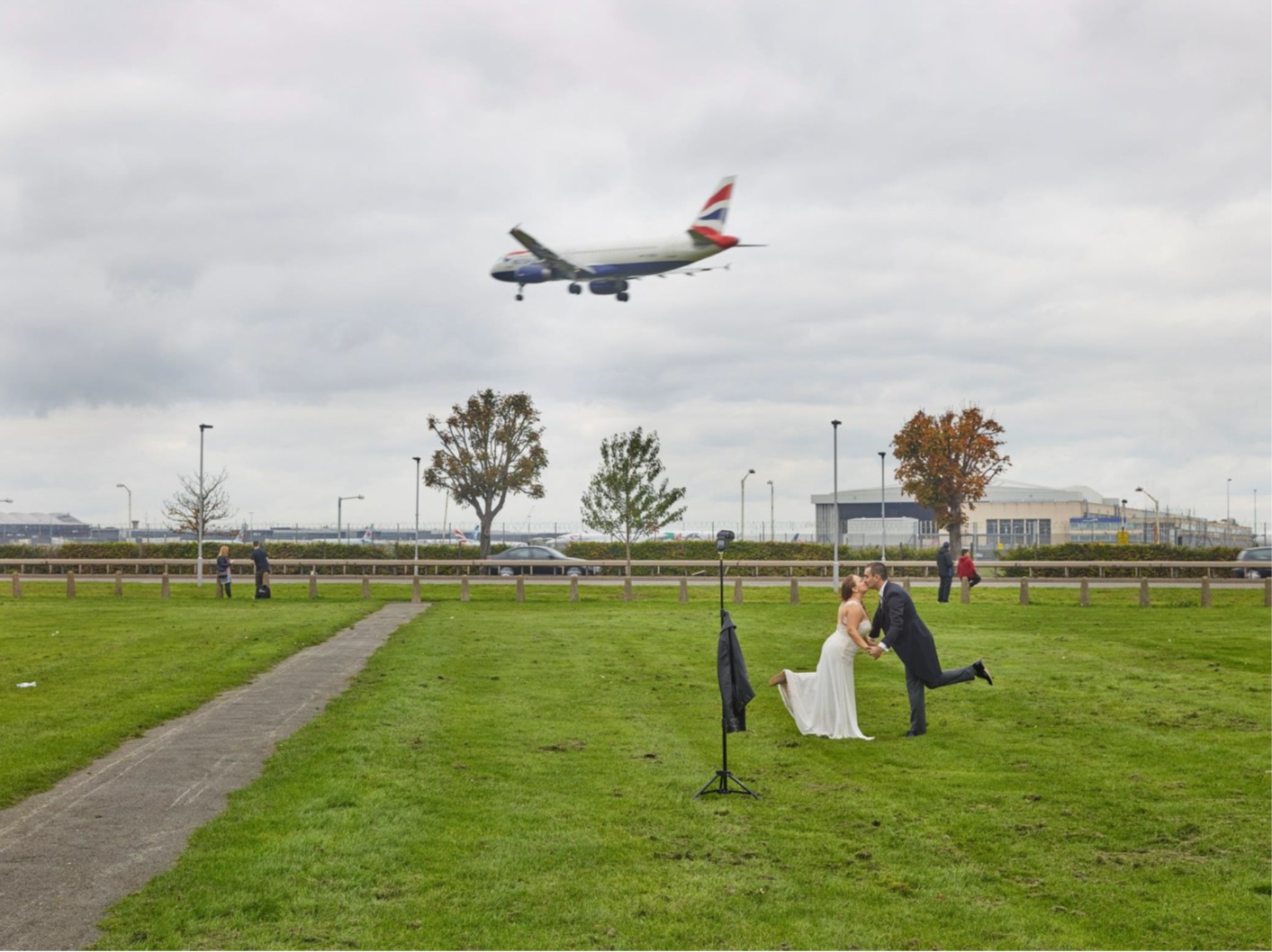
Kim, who knows about the airport so intimately, strangely only concentrates on landscapes and marginal spaces where typical airport scenes are not to be found. Let’s take a closer look at the images. Couples in Sri Lankan traditional clothing are taking wedding pictures in the face of a strong wind in a wide-open field that seems to be near the airport. Also seen near the airport, a small children’s party is held next to a temporary amusement park in a rather dreary field.
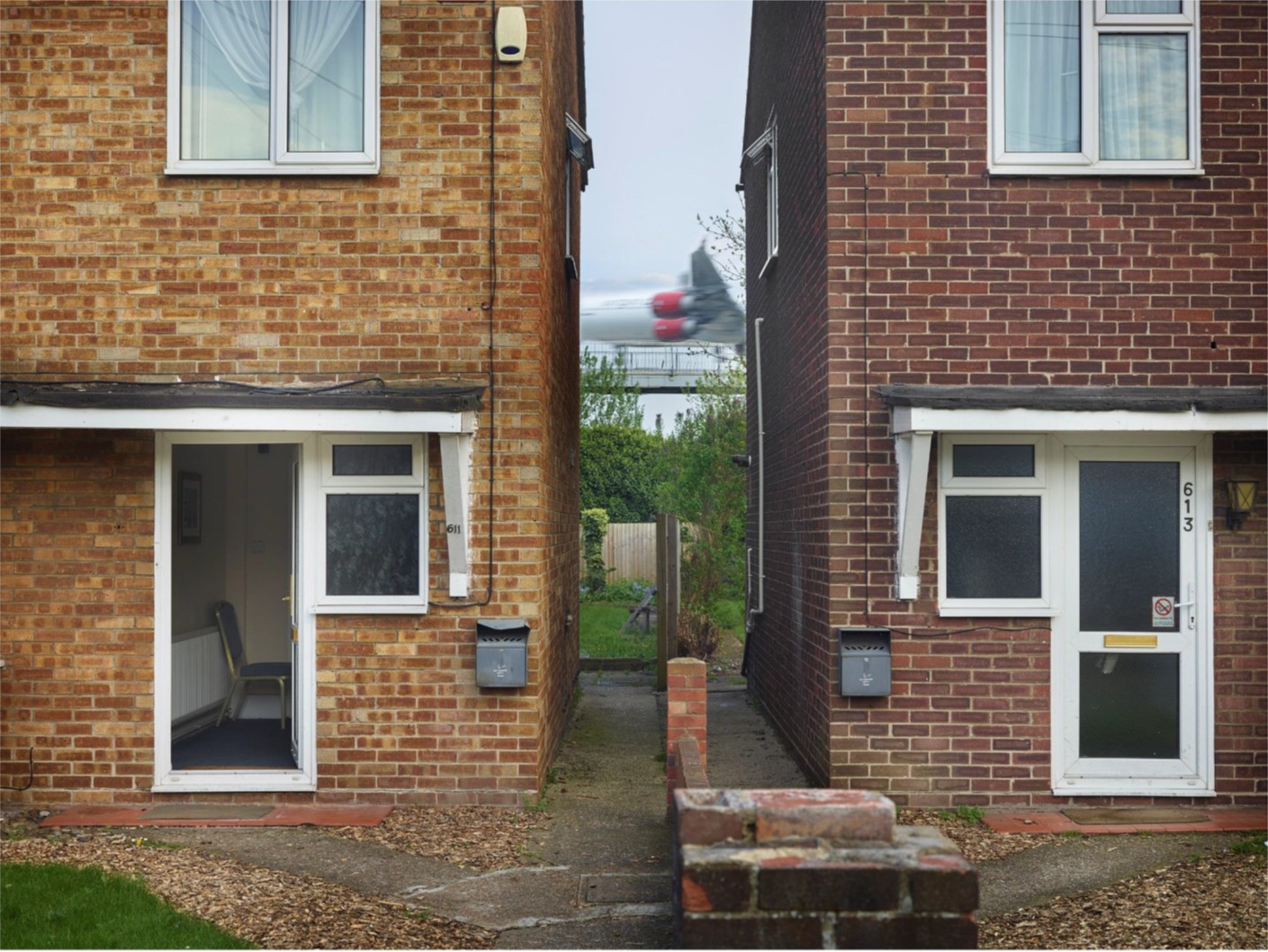
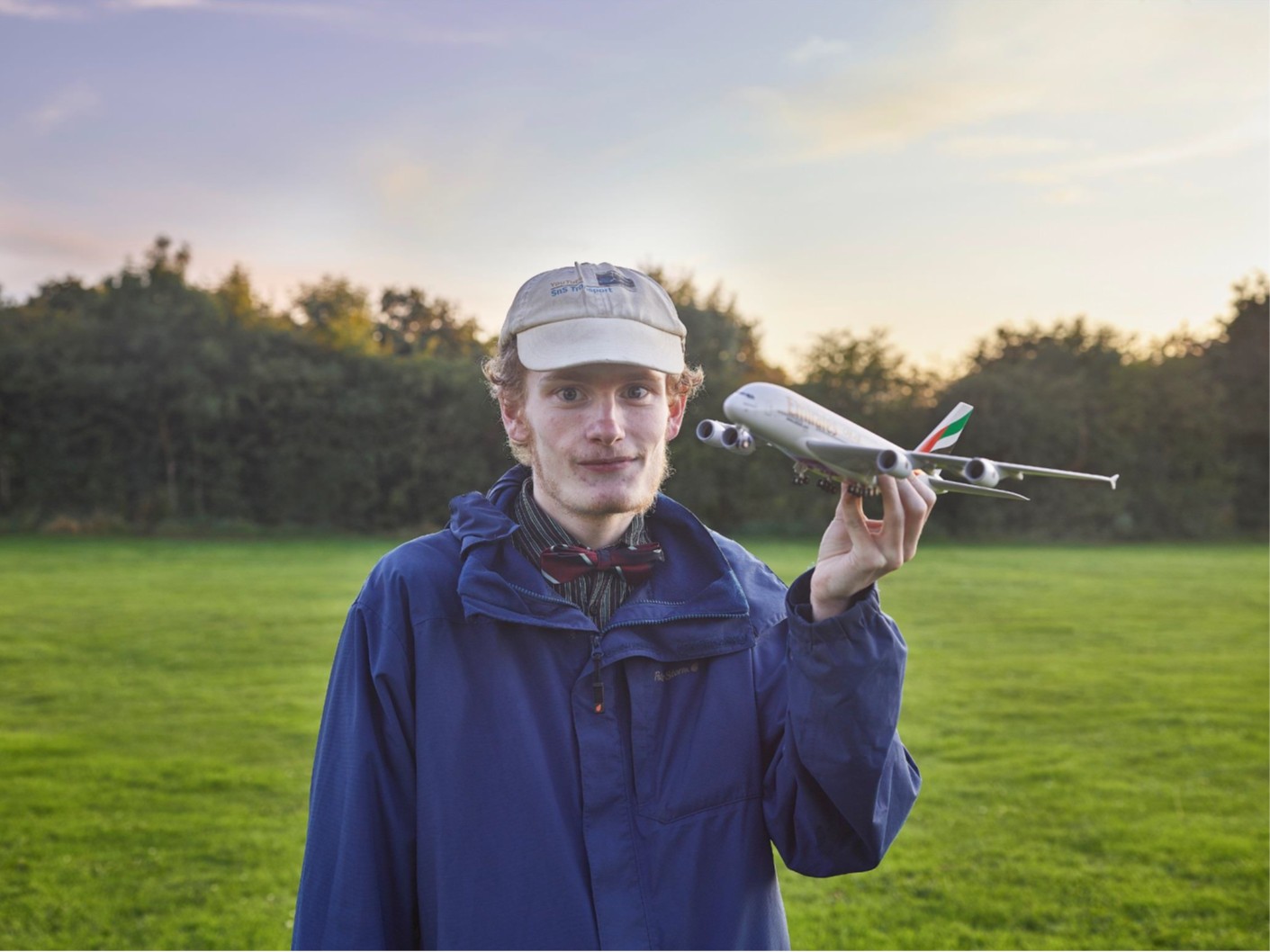
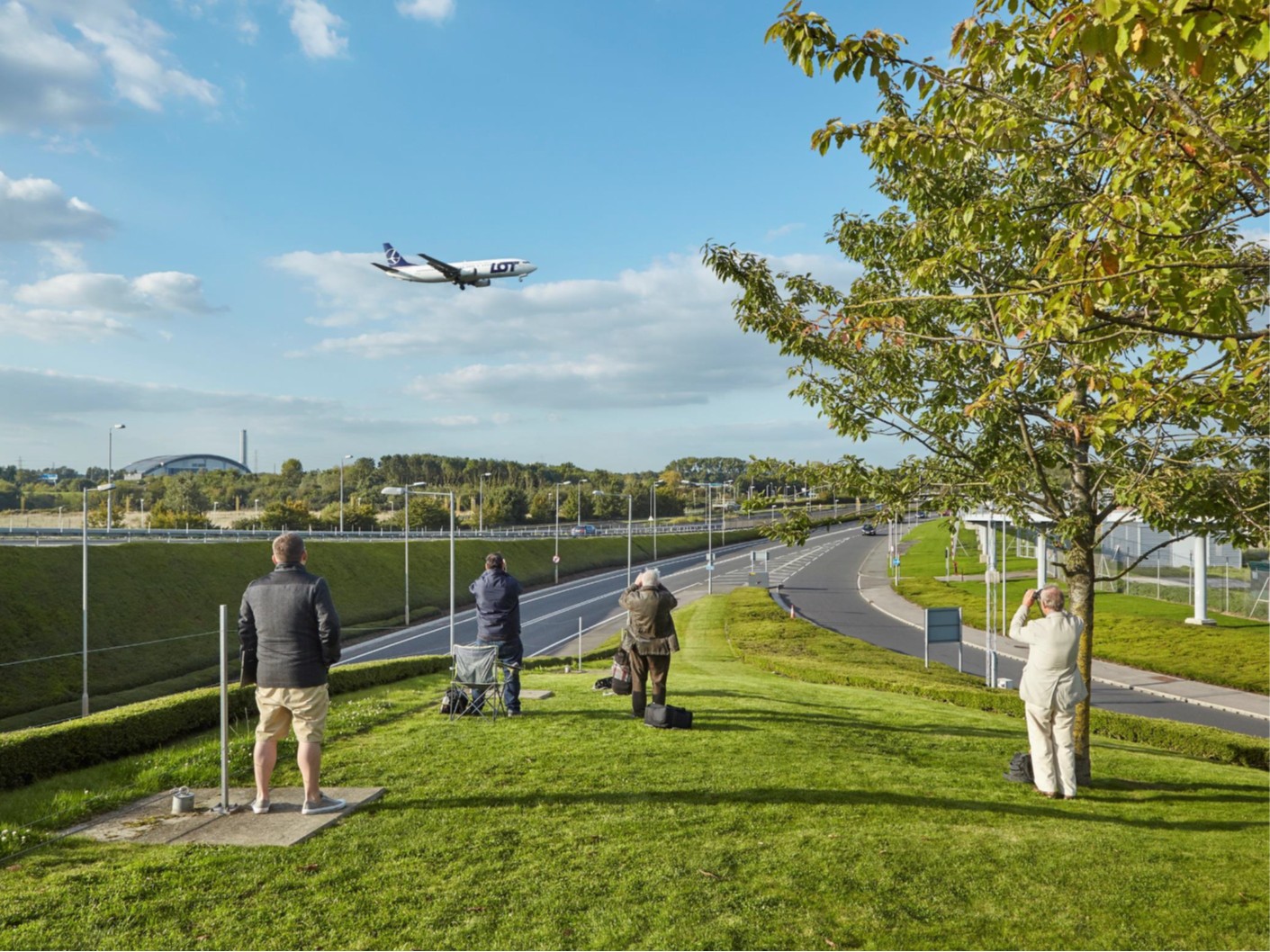
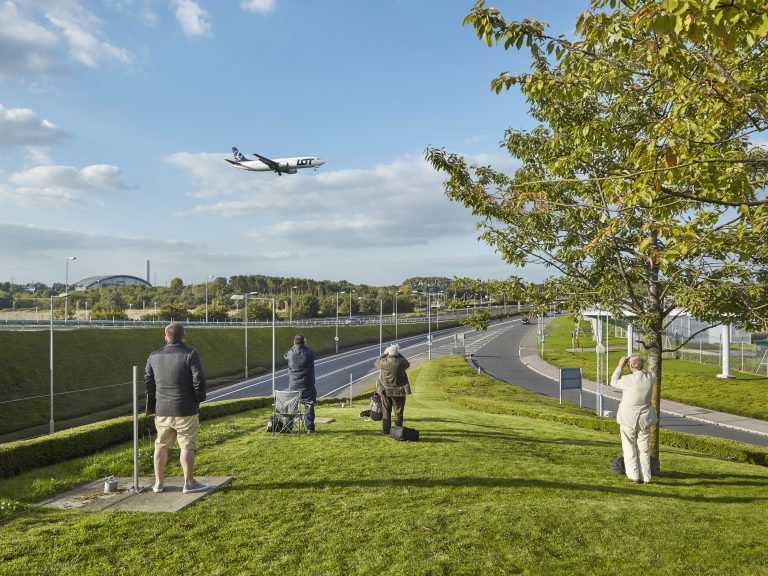
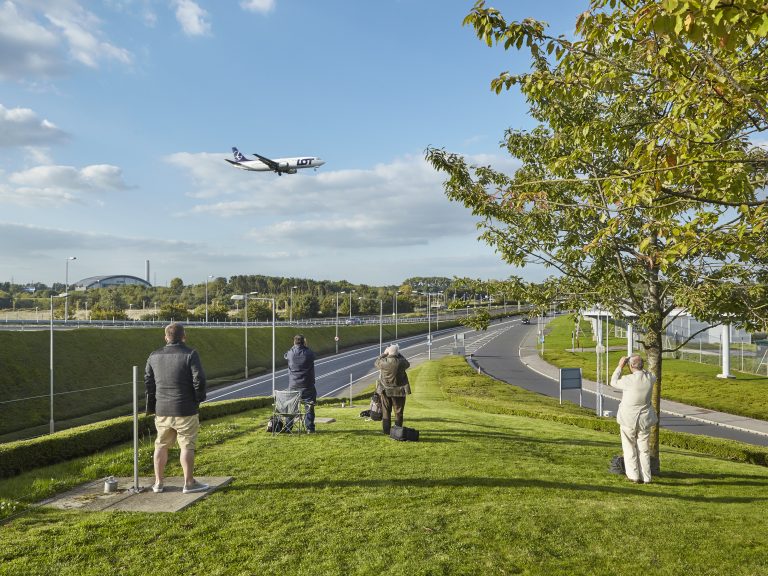
Another photo shows a private taxi driver posing in front of a brand new car, and a middle-aged man whose hobby is recording the serial numbers of planes taking off and landing at the airport every week. In addition, the flight crew’s simple wardrobe, empty roads next to the airport, houses divided into runways and walls, and old abandoned facilities at the airport were captured by his camera.
Kim focused on the obscure areas around the airport and named the spaces “Unnamed land”. So what is the purpose of a picture that the photographer neglects to name? Heathrow Airport, the main location for his photography, was originally farmland. It then served as a military airfield during World War II and then officially opened as an airport in 1946. The airport has since steadily expanded on its current site over more than half a century. Several new terminals and additional facilities were built as needed.
The expanded airport now occupies a vast area that is difficult to accurately measure in size. And the extensive land is not incorporated into the city but only works alongside it. At airports, places which are often outside cities due to problems related to noise and the environment, one can find the scenes of life that are hidden, and perhaps rejected by the city.
There are a wide variety of social and cultural signs crossing the empty-looking landscape in striking images such as that of couples taking wedding photos in an abandoned site in a residential area near the airport with a large immigrant population; the serial numbers of planes as they are recorded by a retired Englishman as his only hobby; workers who suffer from noise pollution in homes divided by walls right next to the airport, and their frequent protests and festivals. In this way, with his subtle images, the artist compressively but intimately displays various issues of the cities and suburbs including migration and labour, religion and race, and environment and development.
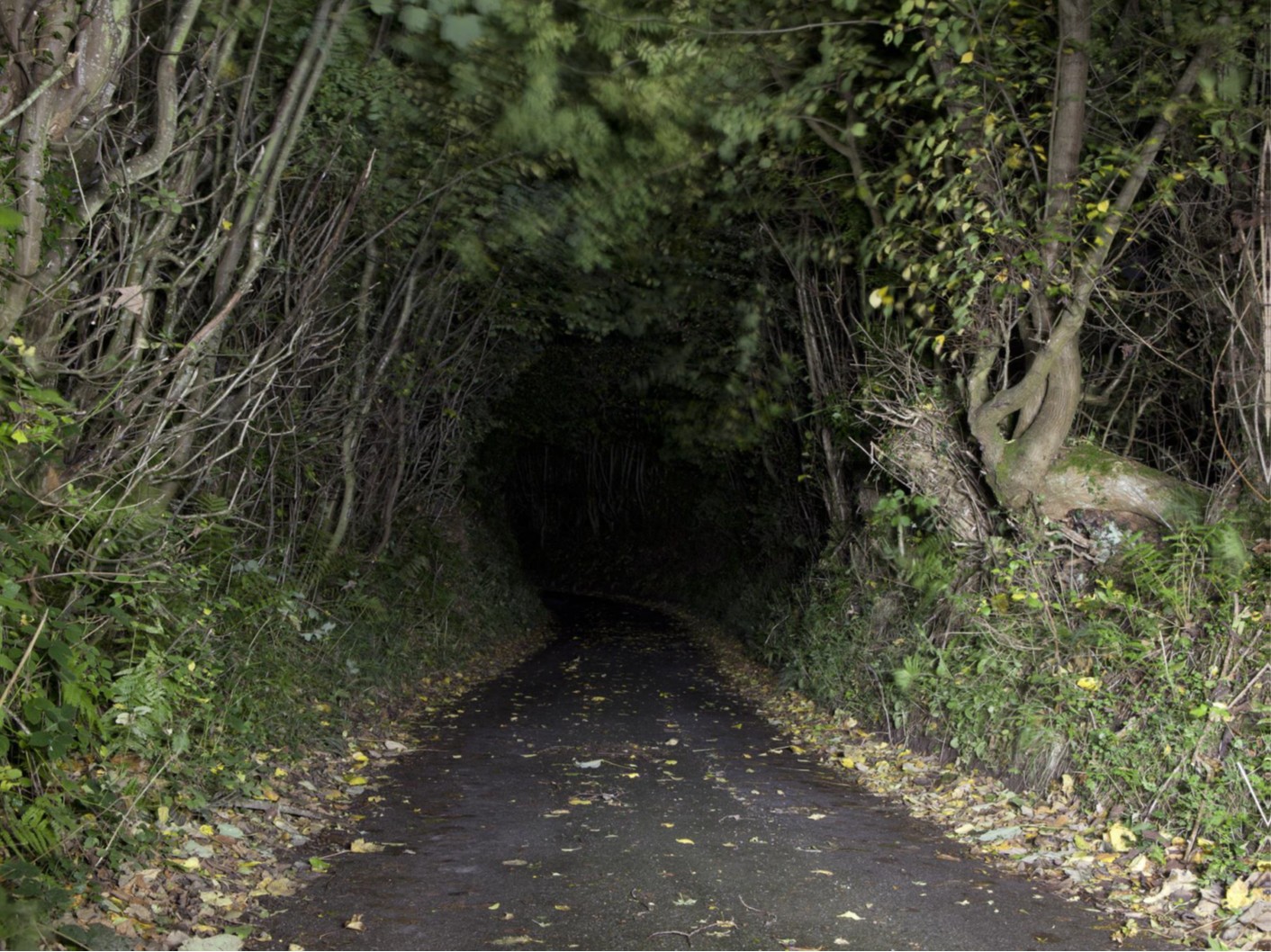
In addition, photographs can even detect the photographer’s personal emotions as they are provoked by the airport. A cold image might reflect his experience of such a place. Imagine his daily life of driving to and from the airport. Before reaching the airport, he would pass through countless meaningless sites. In a foreign city, feeling still alienated in spite of more than 10 years of residence, he encounters endless nameless places such as endless highways with wide fields on either side, occasional factories, the carpark of a rental company and old business hotels. In addition to this, he has the attendant worry that the person he is meeting might not turn up on time, that the flight will be delayed, or that there will be congestion on the way back into the city centre.
He may even send text messages in vain to someone who doesn’t have reception on their phone as they have not even landed yet. Through this journey of non-place and un-experience which connect like dominos, the photographer arrives at the airport but it is also another non-place. An airport that comes at the end of a space which exists without relationships, history, or place, may appear to be a collection of emptiness. His everyday life as a writer is naturally embedded in the space which the picture reflects.
The task of objectively observing a place that is most closely related to one’s life is to carefully wrap up the social and cultural narratives inherent in the place as the inner feelings of the artist in space. The images of a series of observations and personal experiences are seemingly described objectively but suddenly they reveal his feelings and emotions likes the novels of Alain Robbe-Grilllet.
French anthropologist Marc Auge’s explains that the writer’s non-site space such as roads, fields, and airports are spaces of solitude. Most of the photographer’s daily life exists in such a solitary place. However, in light of the work, the solitude of the space could be re-established as an imaginary space that projects the real world rather than as a limited space that is tightly blocked off. Kim discusses space and his personal relationship to it and converts the space of the place into an image which embodies diverse social and cultural stories.
Photos of unoccupied landscapes and ownerless experiences are taken to give a name to unnamed land while wandering around such non-places throughout the day. The reason such photos can ironically display such a diversity of meaning and context is because he set the airport as a space which creates reality in its own non-place space. His photographs, which are not intended as obvious symbols and signs, reveal both the writer’s inner landscape and the social and cultural context of the place while attempting the difficult task of objectively approaching the objects.
Please note how the photographer continues to reestablish the non-place space of the airport in his future work through images which convey inner landscapes through such social and cultural stories.