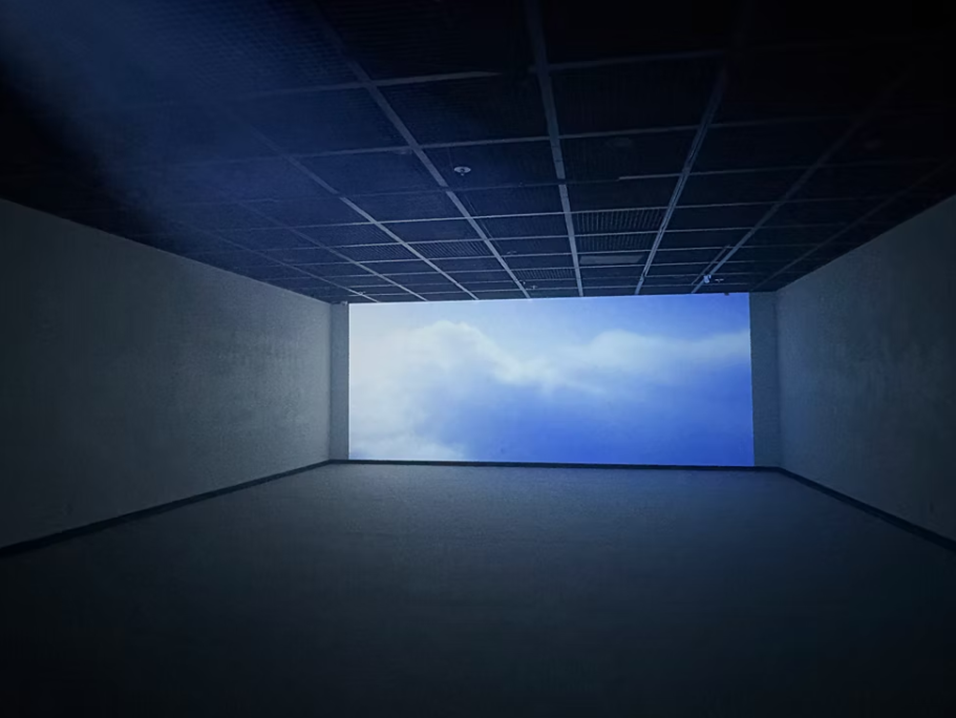
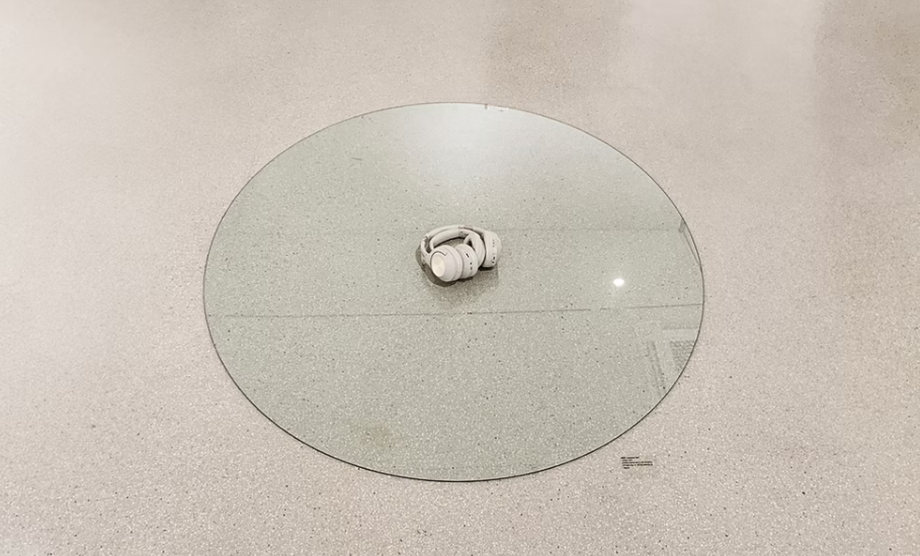
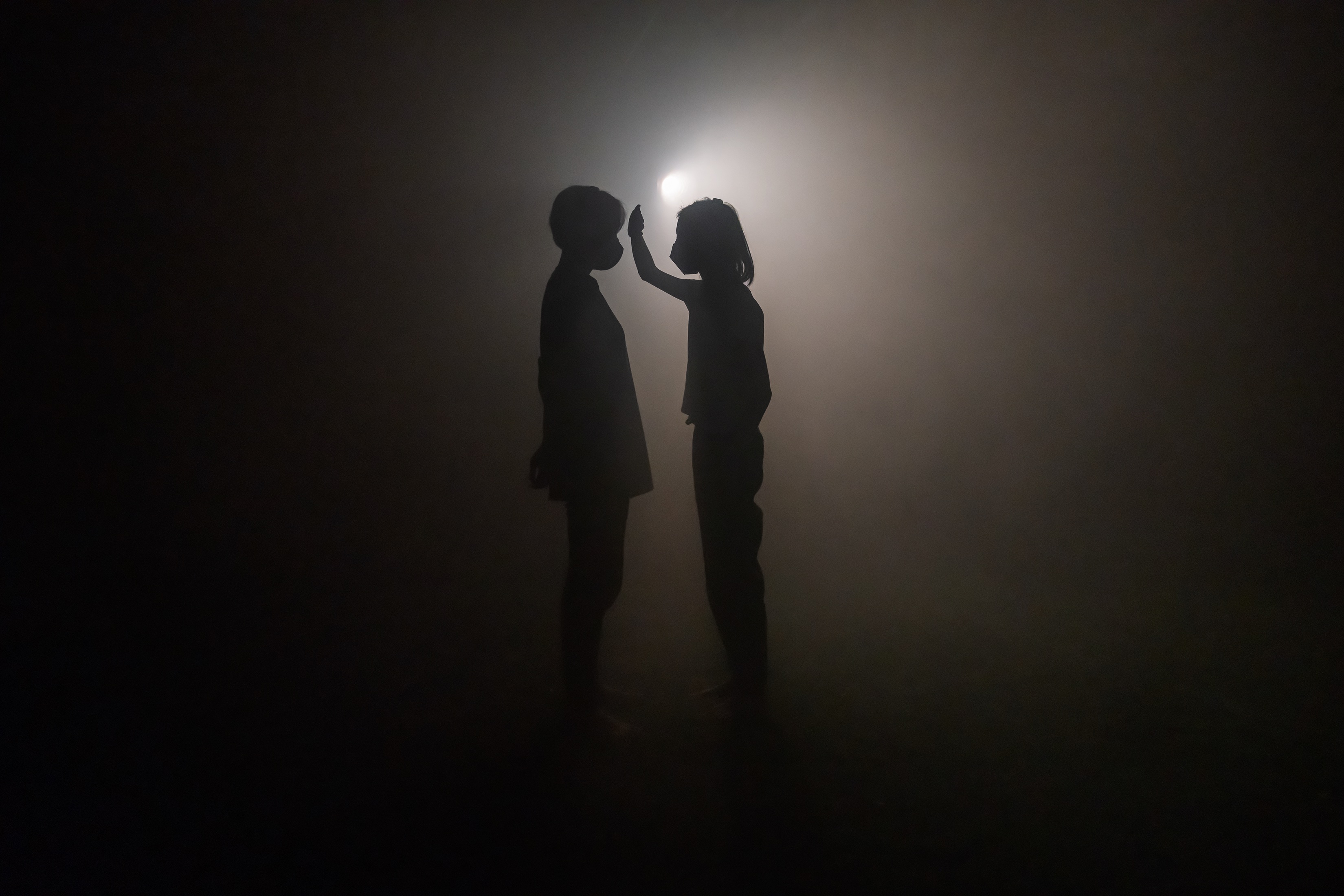
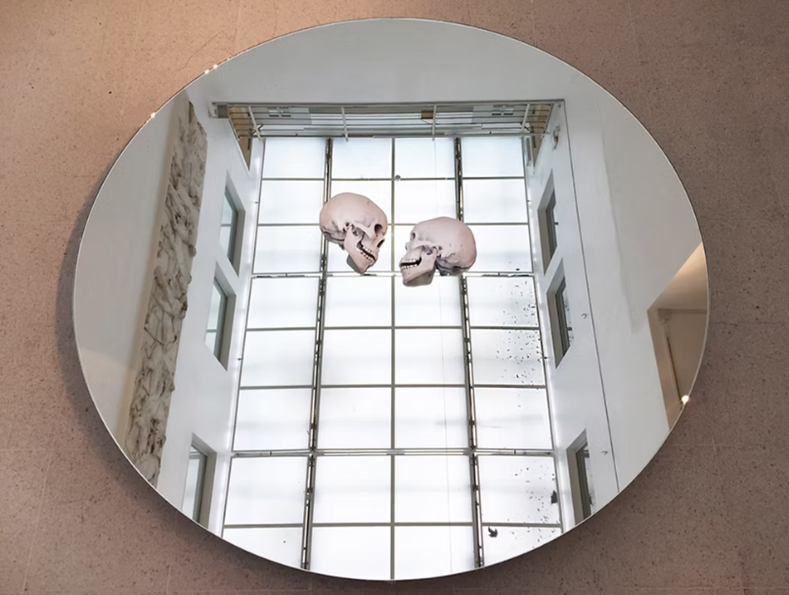
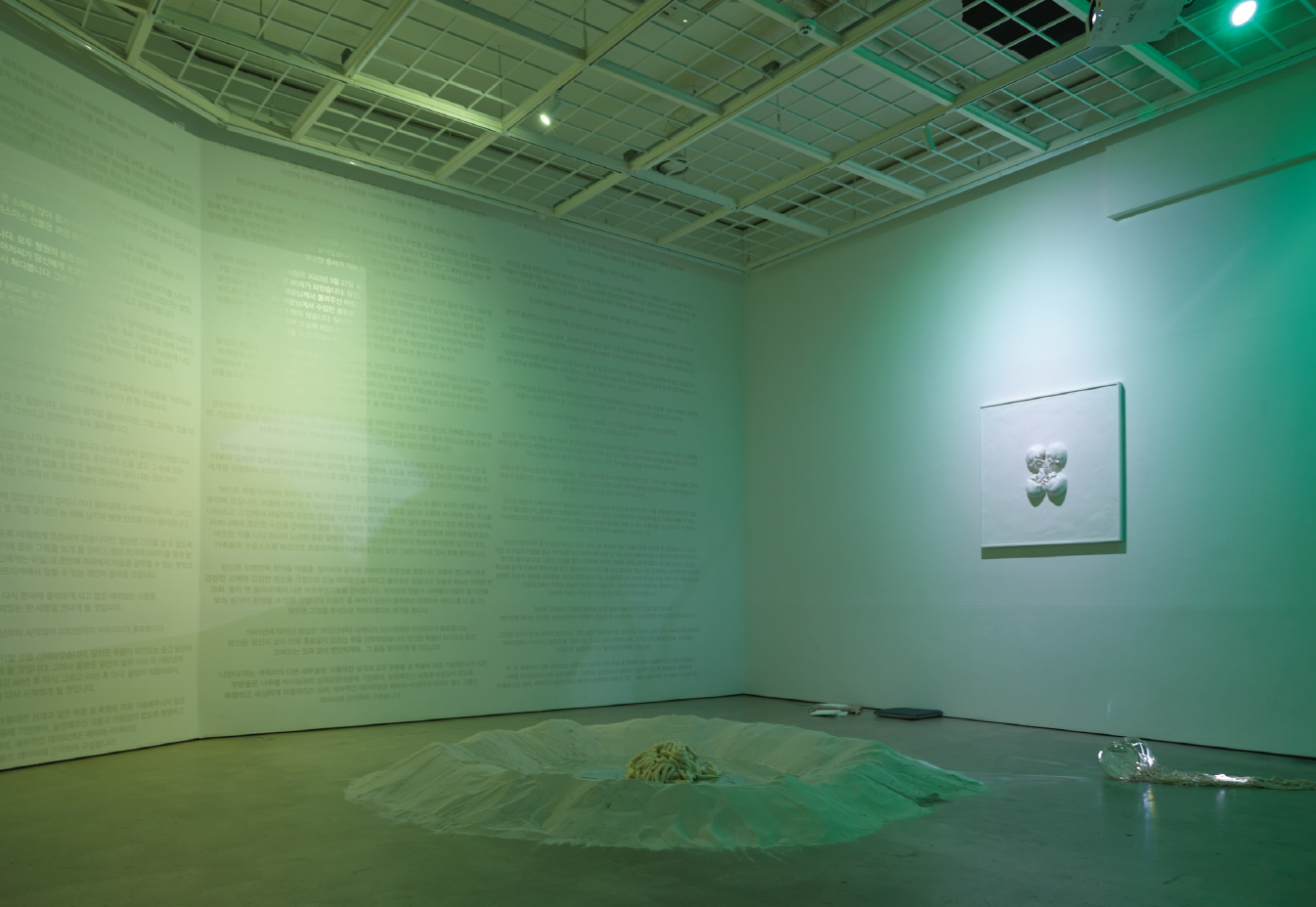
Kwanwoo Park, Club Reality, 2022 © Kwanwoo Park

Hello. I hadn’t expected to write a letter like this—my apologies if it startles you. By the end, you’ll see why I wrote to you. Don’t be alarmed. Today, as a witness, I want to relay a few things I captured on site concerning Club Reality, which exists only as fragmentary records and thus remains an unresolved case.


Kwanwoo Park, Club Reality, 2022 © Kwanwoo Park

Become someone else!

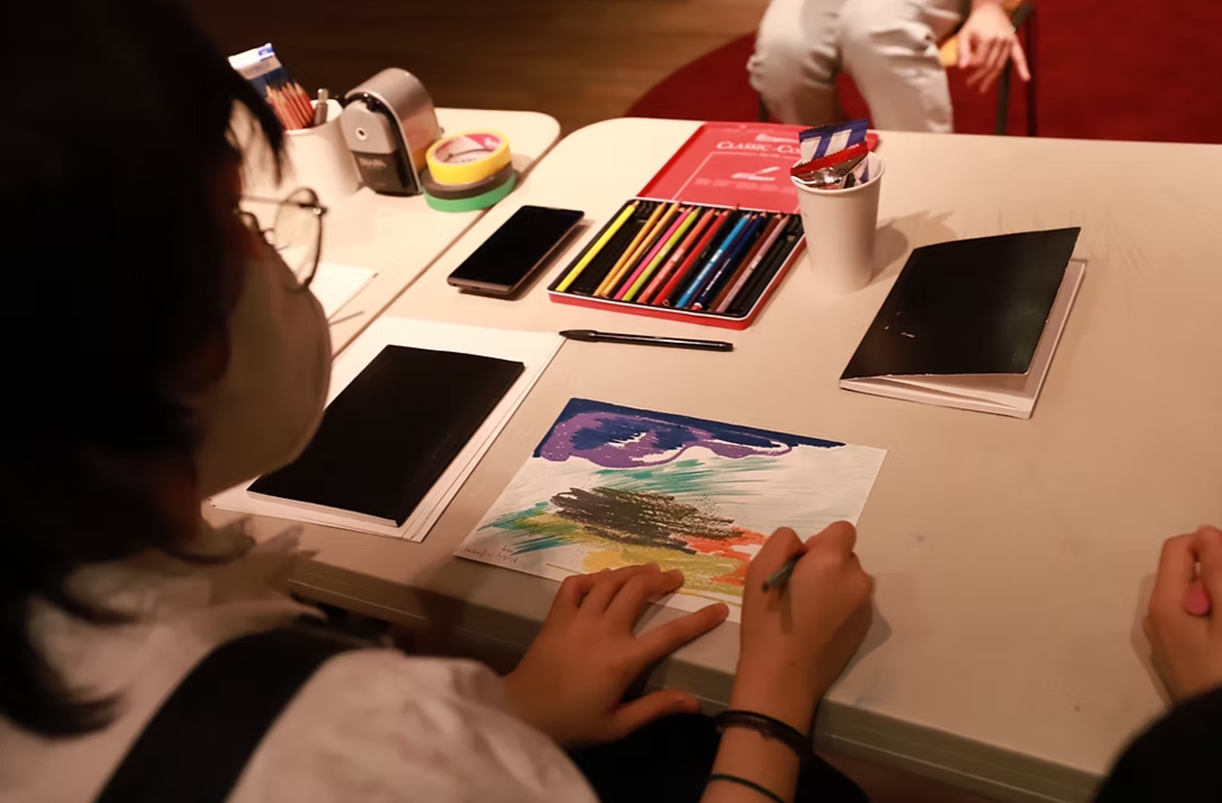
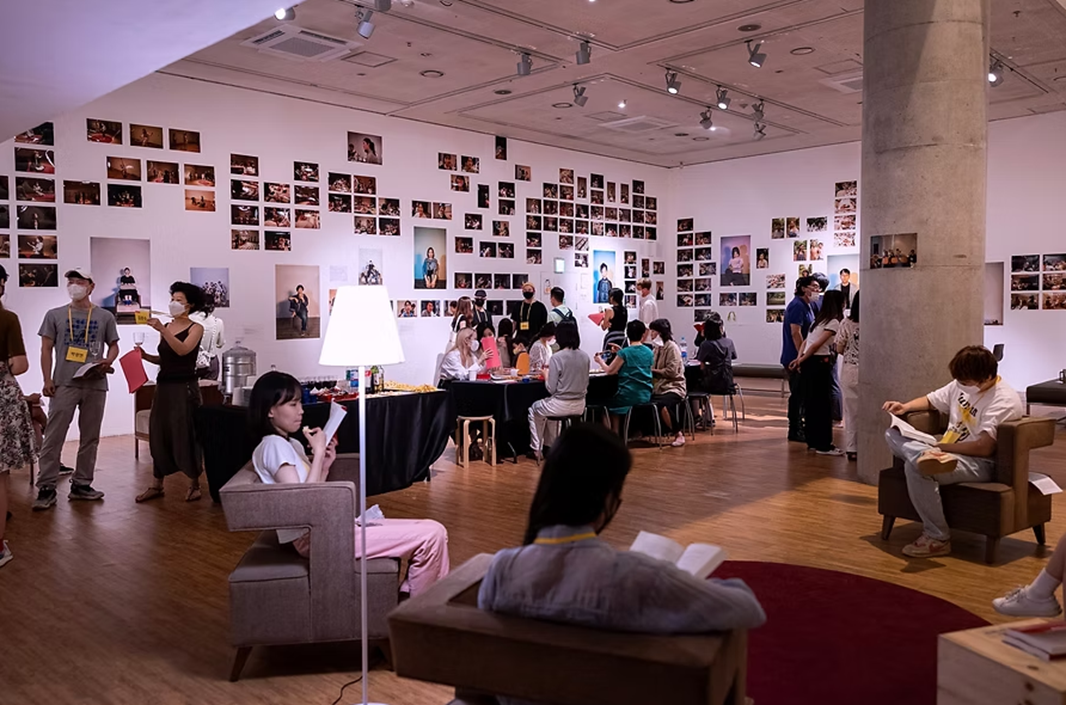
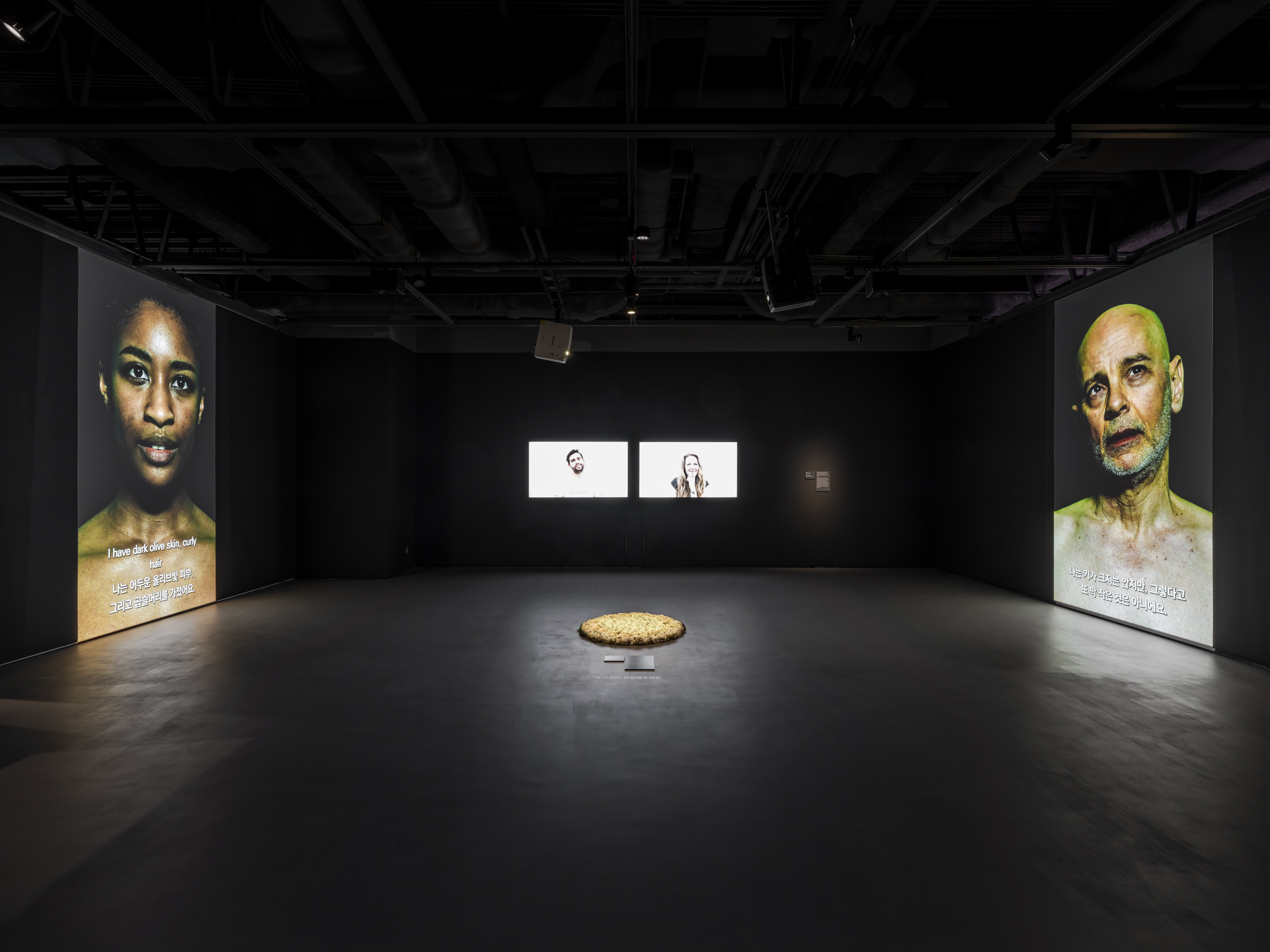
The rules of Club Reality are simple: become someone other than yourself. Assume a fictional identity, then meet and interact with others. You, too, probably entered with a new name. Imagining you glancing around, slightly flushed, makes me smile. You’ll find eleven figures in the photographs and interview videos in the gallery. If you’re lucky, you may be able to eat, drink, chat, and converse with them in the exhibition. For over three months, they gathered regularly, observed one another, and talked—under new personae.

The interview videos—testimonies of what they understand of each other—are fascinating because their descriptions of the “same” figure all differ. Is it because they failed to properly act their fictional “selves”? I don’t think so. Let me tell you about a book I recently read. In Trick Mirror (Thinking Power, 2021), Jia Tolentino revisits a TV reality show she appeared in as a teen and is shocked: in a speed-eating game, she “volunteered” to wolf down a spicy mayonnaise dish even though she couldn’t stomach mayonnaise. She had always thought she’d eaten it “unavoidably,” not knowing what the dish was.

Confronting her younger self eating it of her own will, she feels the strangeness of seeing a different person. The entire chapter (“Reality TV Me”) is filled with episodes of her unrecognized sides and of friends who remember things differently. One may think this was because she was still an adolescent, because memory is imperfect, or because it was a TV program and thus involved acting. But linked to the exhibition interviews, the initial question—“How can a ‘single’ person be understood so diversely?”—may itself be wrong. Perhaps the very notion of a solidly constructed identity doesn’t exist in the first place.


Kwanwoo Park, Club Reality, 2022 © Kwanwoo Park

Imagine, make things up, generate the moment!

Suppose that all of us—consciously or unconsciously—perform different roles on the stage of varying relations, situations, environments. Here and now, you in the gallery appear as if you are someone else. This isn’t my idea but that of social psychologist Erving Goffman. Humans, intentionally or not, change settings, appearances, and attitudes to form appropriate impressions for each relation—a tendency he calls the “definition of the situation.” I invoke this century-old theory because it gives the insight that even if a “true” self is an illusion, “situational” selves exist according to circumstance. From social roles at work, school, and home to intimate spheres—lover, family, friend, colleague, acquaintance—our appearance shifts, knowingly or not, depending on situation and relation.

From this perspective, I wonder if the artist is strategically presenting through Club Reality how we “perform in everyday life” (to borrow Goffman’s subtitle). Here, one self-assigns fictional identities—freelance commercial writer, nude model, fifth-year college student, izakaya part-timer, high schooler—and faces unfamiliar situations weekly with a new identity. The self-presentation that would ordinarily operate by instinct collapses at each moment here, heightening our awareness. The emergence of selves that slip and stutter—responding within relations or situations, patching gaps—paradoxically confirms that we perform and react at every moment in society. One participant wrote with self-deprecation in their diary, “Maybe my whole life is fake; I could just express myself as I am—why is that so hard?”

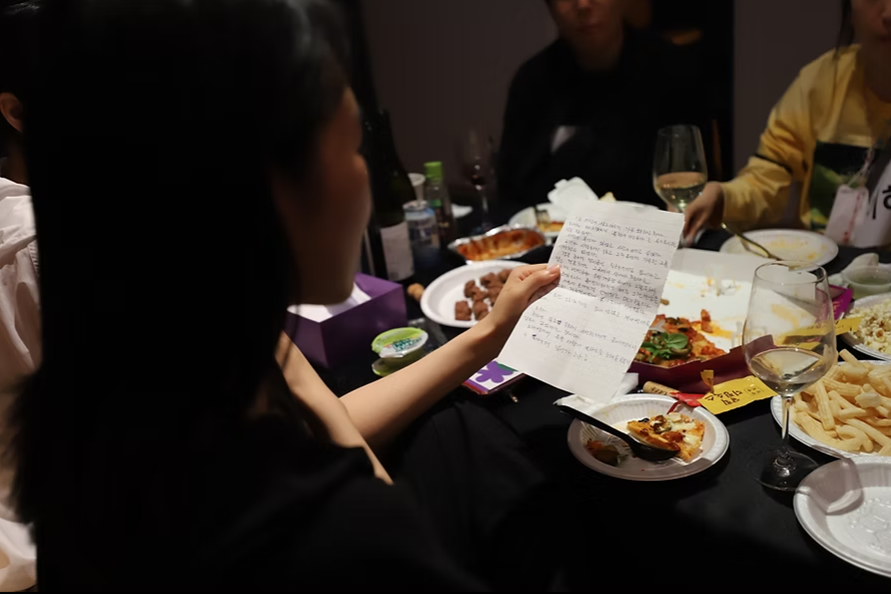
But the artist doesn’t stop there—he goes a step further. Each of the ten weekly episodes proposes a special situation. Take “Half-Drunk Bottles” as an example: you write down a memory you want to hide, draw lots, then recount someone else’s memory as if it were your own. With only a few clues on the paper, you must improvise—imagine and make things up. As with Tolentino’s reality-show episode, memory is prone to distortion. Here, the premise is that the memory was created by a fictional “me.” Then it is reconstructed yet again through another’s imagination.

Passing through the steps “past experience (fact) → distorted memory → variation by a fictional identity → reconstruction by another’s imagination,” essence vanishes and only the plausible cover story remains. To borrow the artist’s words, “all data is lost and volatilized.” Isn’t that interesting? In the end, the original fact doesn’t matter. What matters are the flashes of moments that are generated and emerge as we flounder through clues, reorganize, and perform.

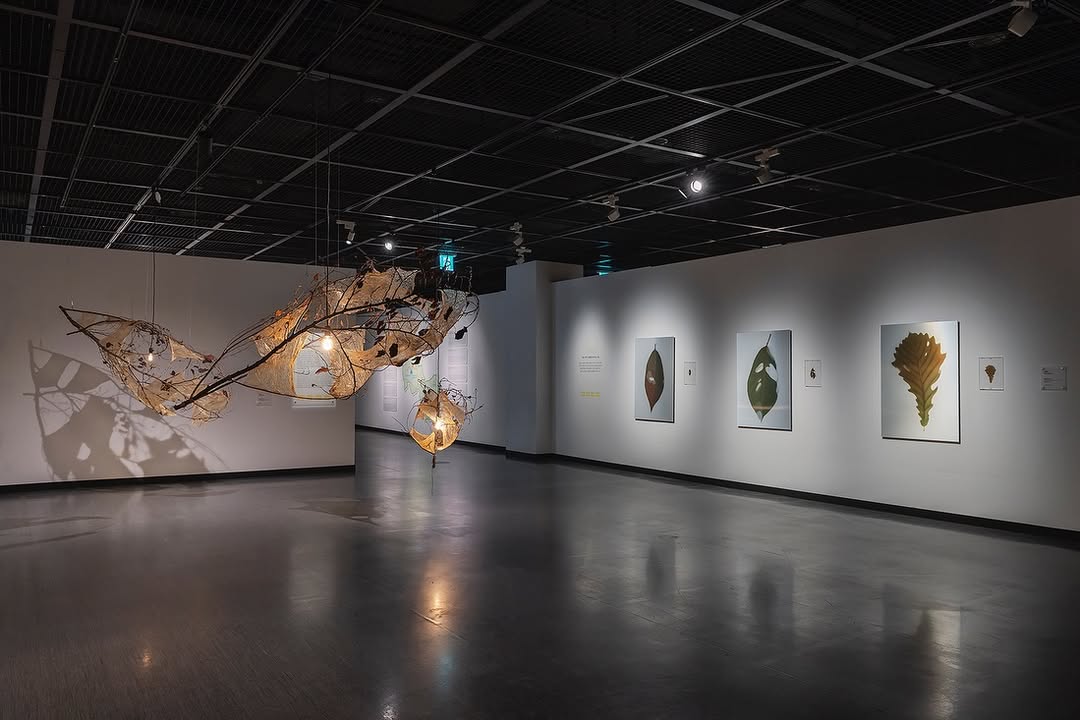
I think the artist’s intent does not lie in identity or memory as essence, but in mapping the topography of relations that make them emerge differently in each moment. In Rabbit Hole 2052 (2022), a cross-referential work to Club Reality, the setting is a “prequel”—in other words, the main story exists only in imagination. Club Reality likewise exists only as innumerable records: five codes; some 600 documentary photographs from the site; around 400 pages of testimony; over 200 drawings; interviews. In the exhibition assembled from such fragments, we strain to find Club Reality’s essence, only to fail; at best, we faintly infer it by following “moments.”


Kwanwoo Park, Club Reality, 2022 © Kwanwoo Park

Write his/her diary every day—then meet and mingle!

Club Reality
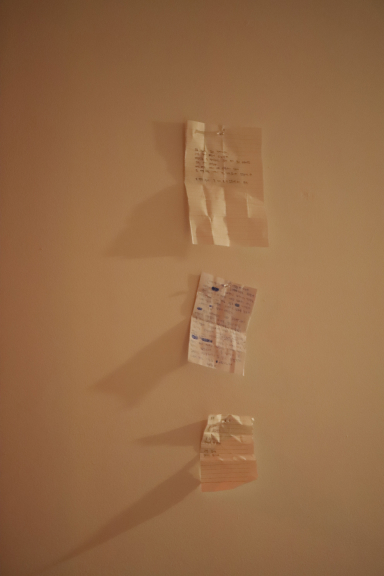
 mobilizes varied methods to infer fictional identities. First are the testimonies—diaries written by participants in character. Each day, for ten minutes, they reflect on their fictional self and write. Next is the “buddy”: throughout the gathering period, buddies observe one another and deliver personal stories on each other’s behalf. Many called their buddy “my mirror,” likely for this reason. Attempts to approach and understand the essence of someone/something are grounded in observation—a kind of looking. Yet we know we cannot perfectly, integrally observe the object (self or other). There is always a gap between seer and seen.

In Michel Foucault’s lecture “Le Corps Utopique” (1966), he cites the opening of Marcel Proust’s In Search of Lost Time, where the protagonist each morning confirms his body through a mirror. How accurate is this act of viewing oneself through the mirror? Foucault says in a lecture that “the moment I look at myself in the mirror, the place where the mirror sits is real insofar as it connects with all the surrounding space, yet unreal insofar as to perceive it I must pass through an imaginary point on the far side of the mirror.” The image recognized as a mirror image is thus a heterotopia—a mixture of real and virtual. The body perceived through it is neither complete nor integrated but placed within relations among things around it.

In short, the body is always partially, otherizedly perceived as strange. I believe this perspective appears throughout Park’s practice, which presents reflection and illusion using mirrors and other media. From early works like I See What I See (2013)
 and Tomorrow (2014) to Stranger (2017) and Tell me that I’m here 1Tell me that I’m here 2 (2019), he devises mirrors, periscopes, screens, headsets to make us view ourselves from different angles or to attempt temporal/spatial modulations. All of them instantly shake the fixed frames and boundaries of self-recognition, culminating in the ultimate question: “Does essence exist?”
 

Make these rules last forever!

In Club Reality, eleven people in fictional identities gather each time around a special episode to stage “strange situations.” The artist is the designer who stages these situations, the midwife who draws something out through communication with participants. He also collects the countless testimonies produced in this closed social club and rearranges them from an “omniscient author’s perspective.” Yet he controls nothing; he merely sets up occasions and stimuli. He encourages emergent third moments to arise as interactions occur among participants and the real and the fictional tangle. Here, “reality is remade in real time at every moment.”
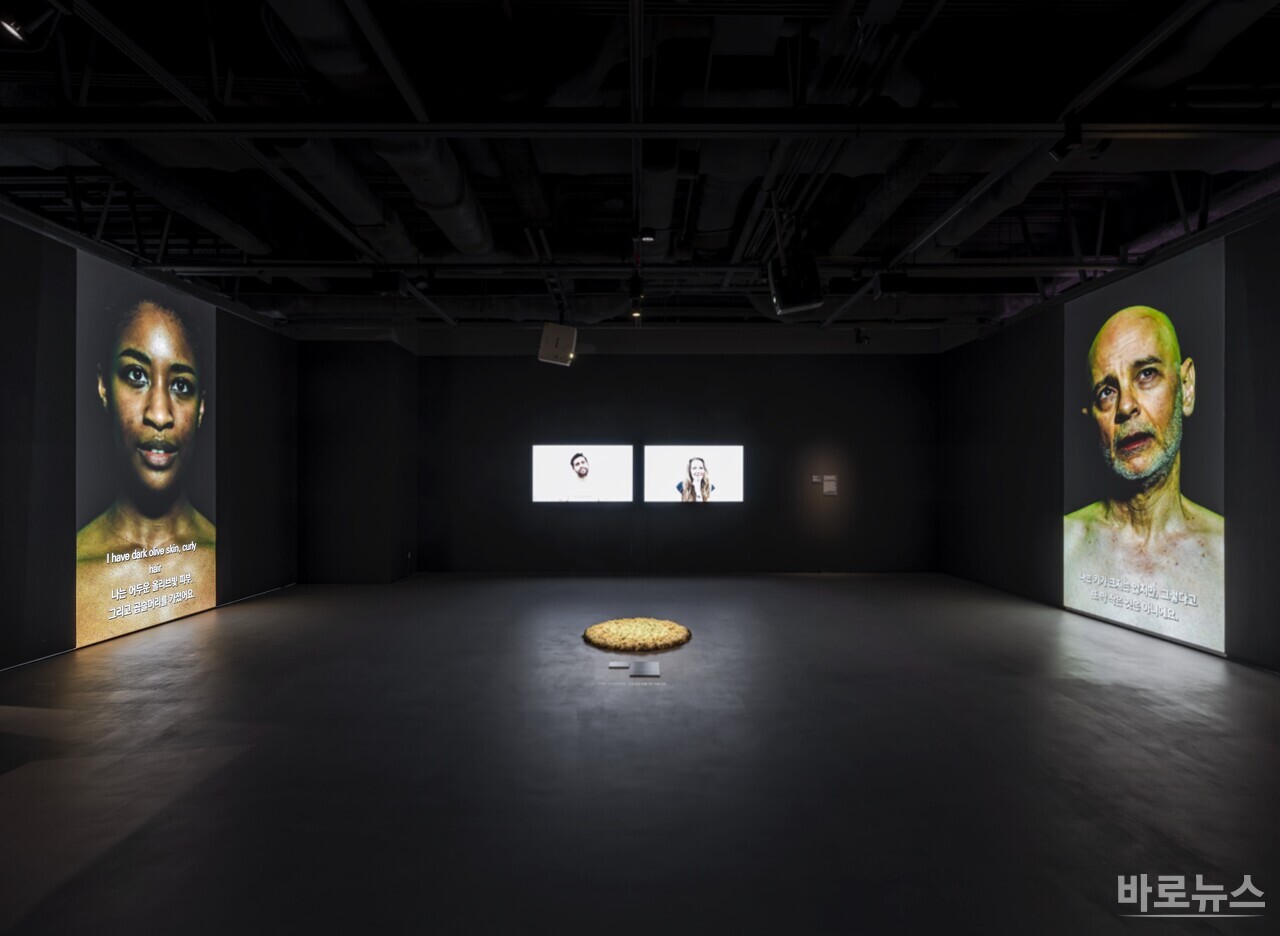
Intriguingly, the gathering is designed to continue permanently around five simple codes (and fourteen bylaws). Initially generated as a set of rules, it evolves through variations generated by the members’ interactions. Relations are formed only through fictional identities; the testimonies remain open online; intermittent meetings are to be held three times over the artist’s lifetime—thus, twice more to come. A person delegated by the artist will have authority to lead future meetings. For me, Club Reality is self-sustaining, like a living organism.

It began as a concept in the artist’s mind, but its development and utterance are thoroughly performative. It shows “motions and changes not yet clearly graspable, fluid and variable tendencies,” across spatiotemporal situations in and out of the museum; participants’ linguistic and bodily communications; everyday discourse and record. Thus, the work demonstrates that “identity is not innate or predetermined but is changed and constituted through ‘acting’ in society.”

If you meet the artist at a talk, greet him loudly—you’ll have only two more chances to encounter him within Club Reality. Or you might meet a member of the audience pretending to be you. Don’t panic; bluff as best you can and get through the moment—pretend to be someone else. Does this look like the traces of a party? No—the party is still ongoing. Everyone, including you, is participating in it. As you enter, stay within the situation, and vary it, you are performing the situation. We are all actors playing roles. And the mirrors speak to me: “Club Reality is a structure that generates situations—and a permanently unresolved, open case.”

Ah, and I forgot to introduce myself. I am your mirror. There’s more I want to say, but I’ll stop here. The beer I left half-drunk went flat long ago—but what does it matter.

References