Formally,
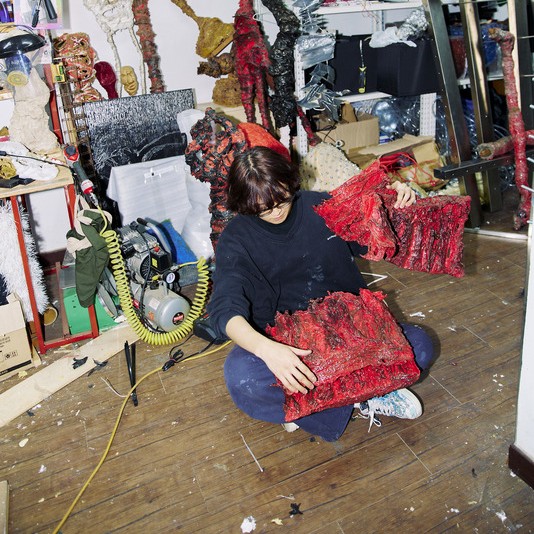
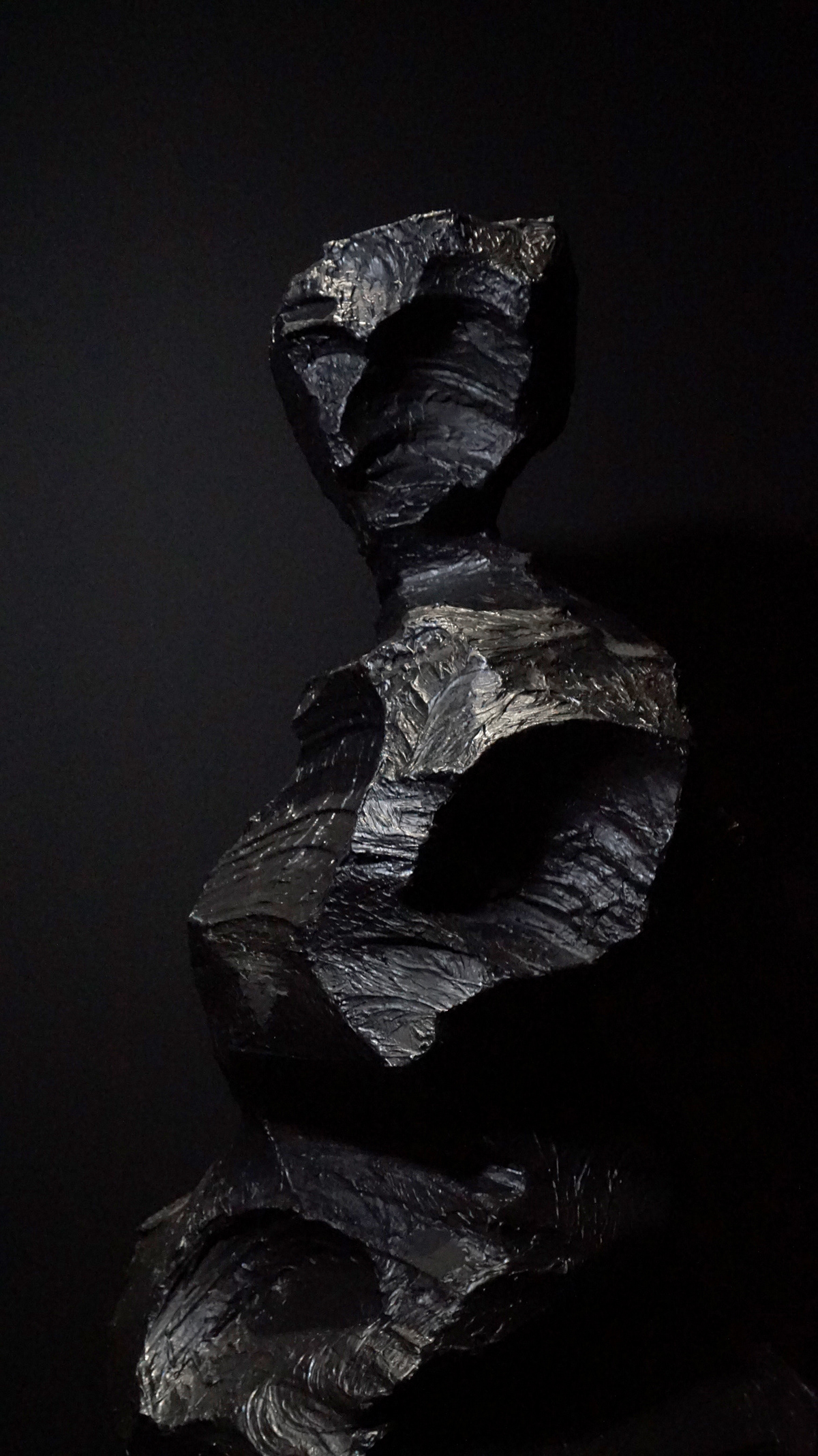
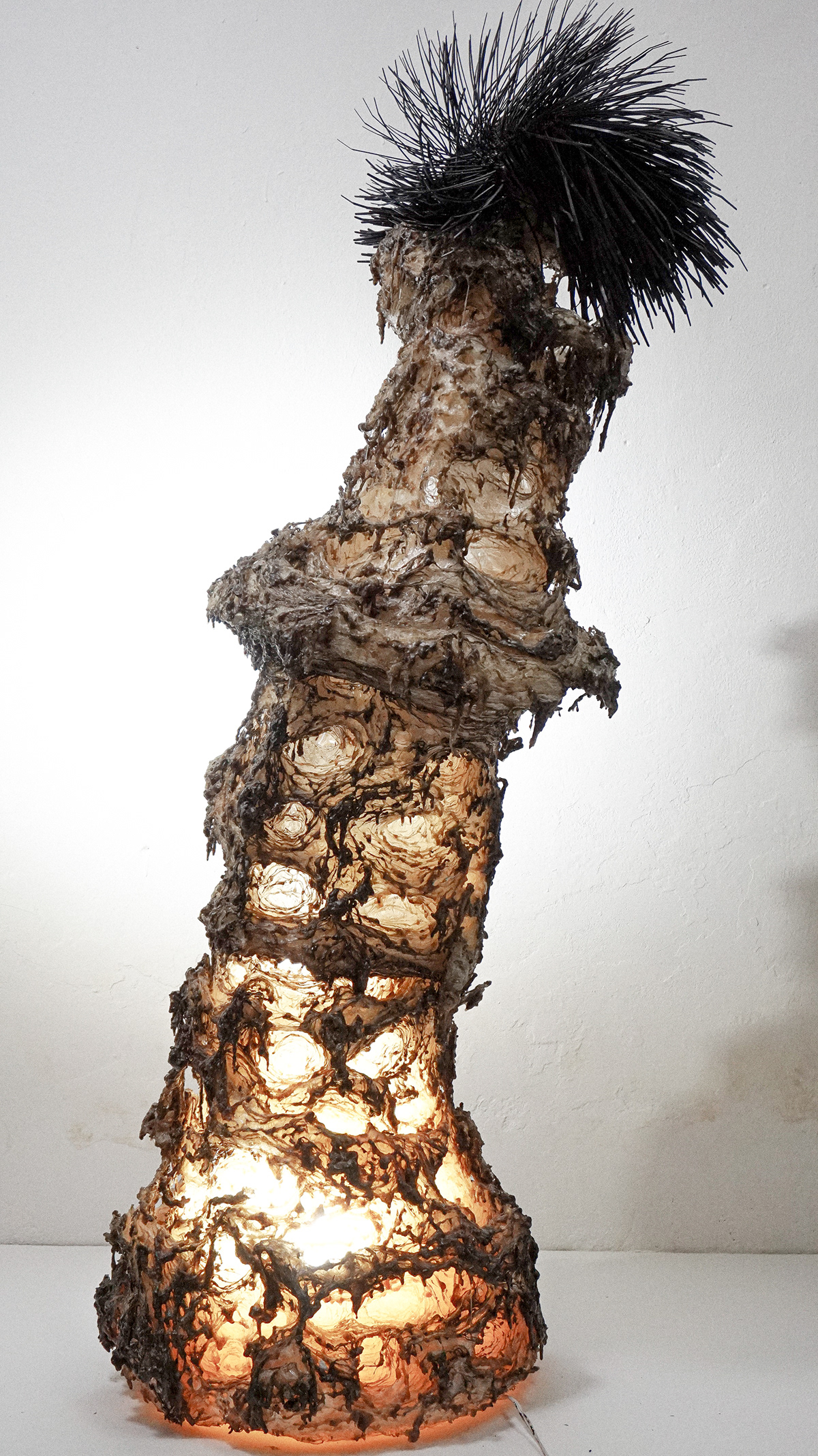
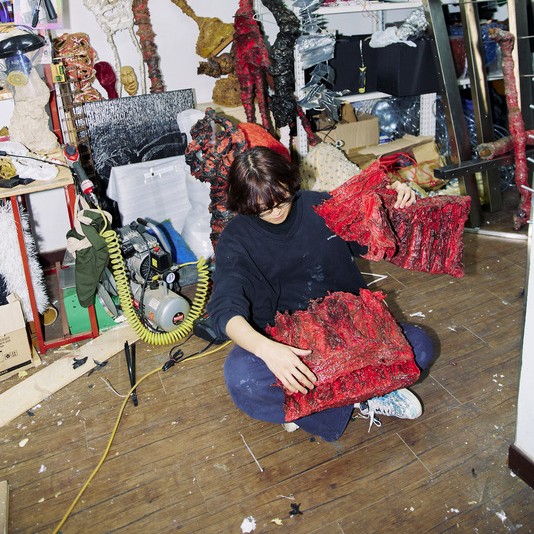
Jang’s work is grounded in the chain of “collecting—assembling—transforming.”
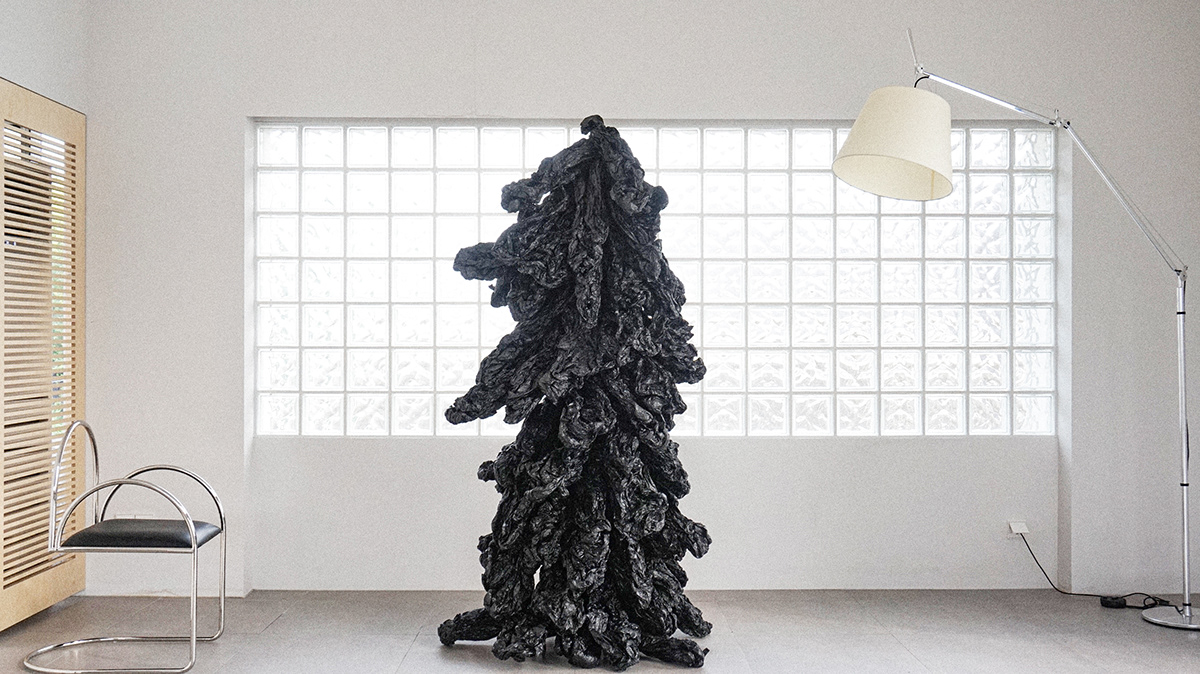
Industrial and architectural materials such as tape, garbage bags, steel
plates, and slate are amassed into Informel accumulations, sometimes burned or
abraded to produce chance surfaces. This process nullifies the materials’
“original functions” and leaves tactile traces of debris re-born as unfamiliar
bodies.
His
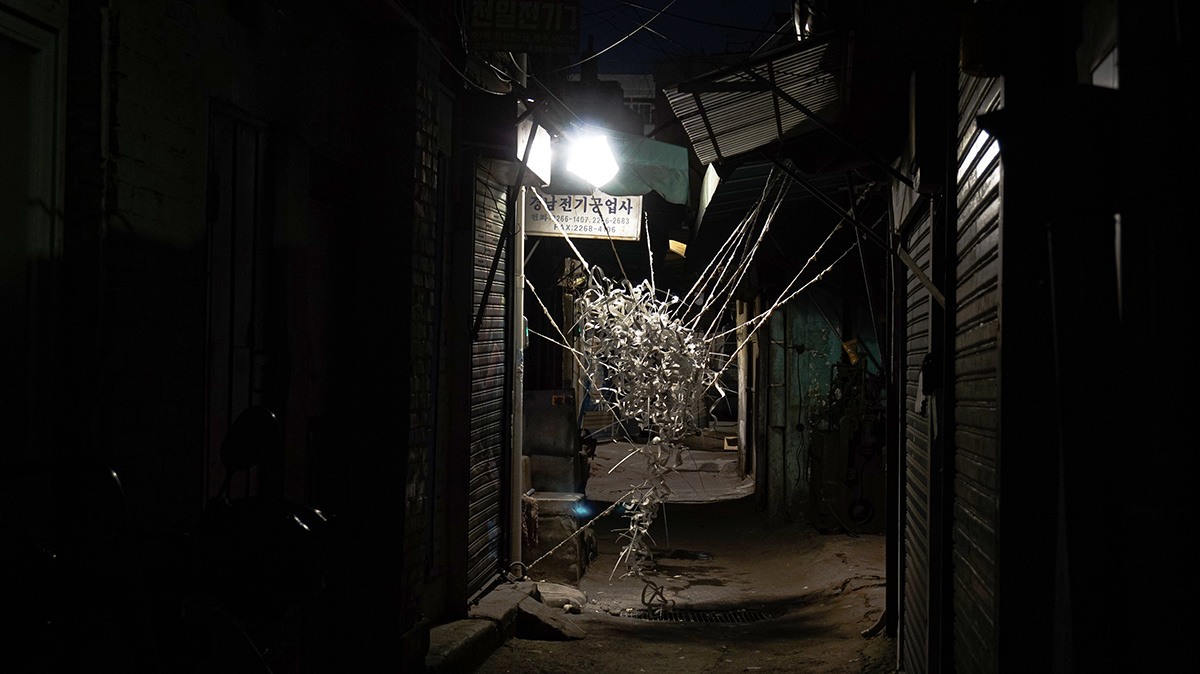
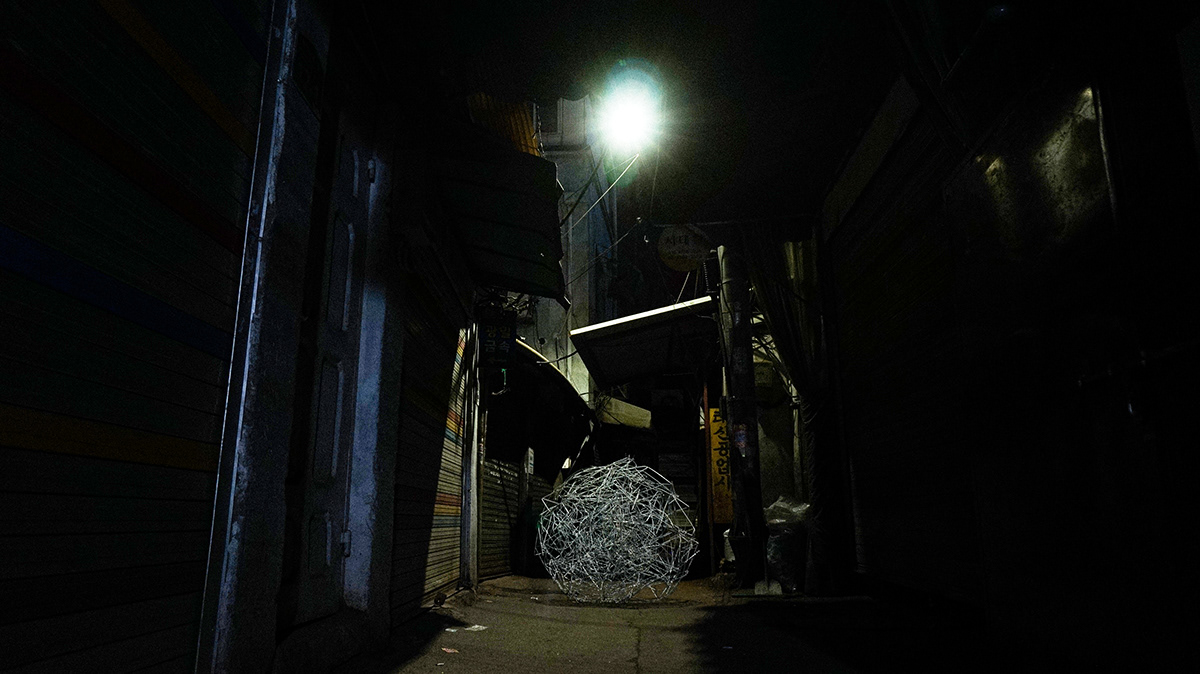
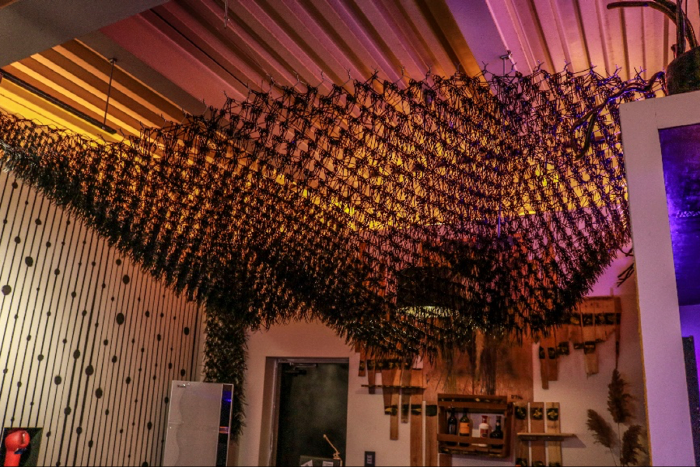
spatial strategies expand through site-specificity. In installations such
as in Seoul(2022) and in
Paris(2022), he collected and arranged local materials in Seoul,
Paris, Eindhoven, and Berlin, situating them in alleyways, façades, and
interiors, and documenting through performance, photography, and video. This
“urban transplantation” oscillates between camouflaged assimilation and jarring
protrusion, making the works devices that both collide with and resonate
against their environments.
After
2023, temporality itself became content. 《Client, Interlocutor》(TINC, 2023) linked
objects and archives produced through two performances into an
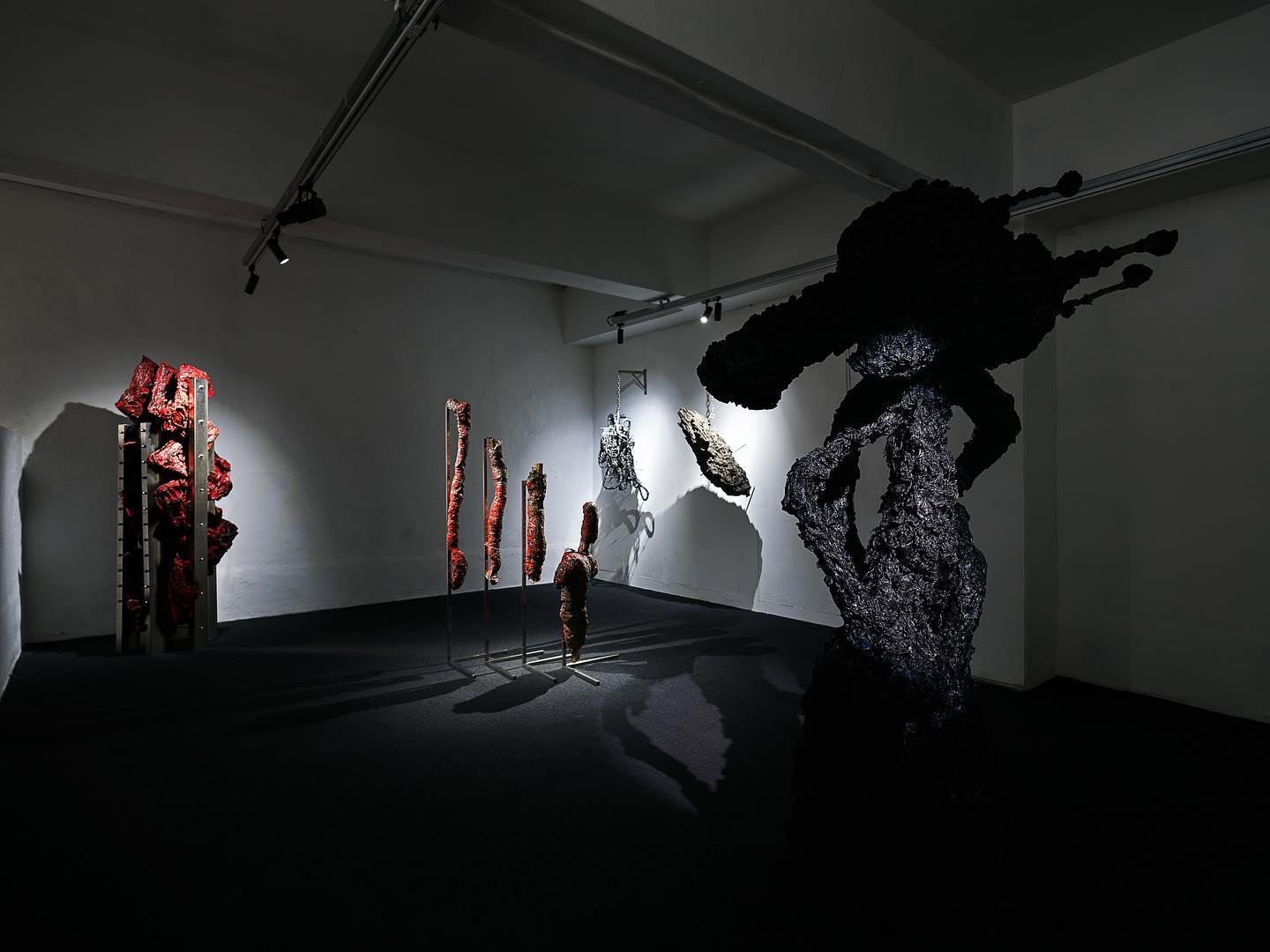
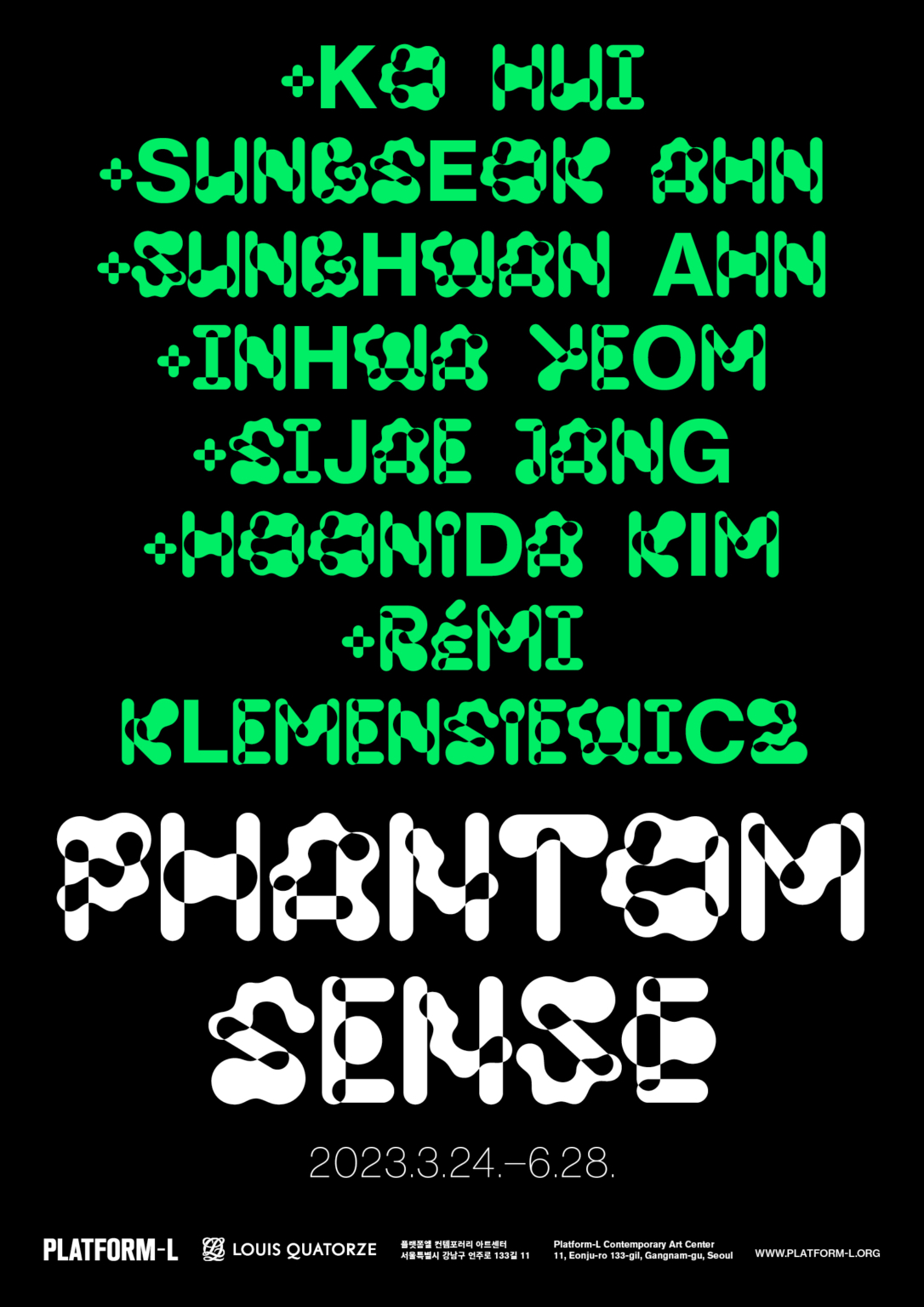
“exhibition-event.” The ‘Untitled’ series presented in 《Phantom Sense》(Platform-L, 2023) was
designed to gradually mutate throughout the duration of the exhibition,
sensorially articulating micro-vibrations and potential transformations. Works
were presented not as “finished” but as “in progress,” with indeterminacy
functioning as both content and form.
A recent
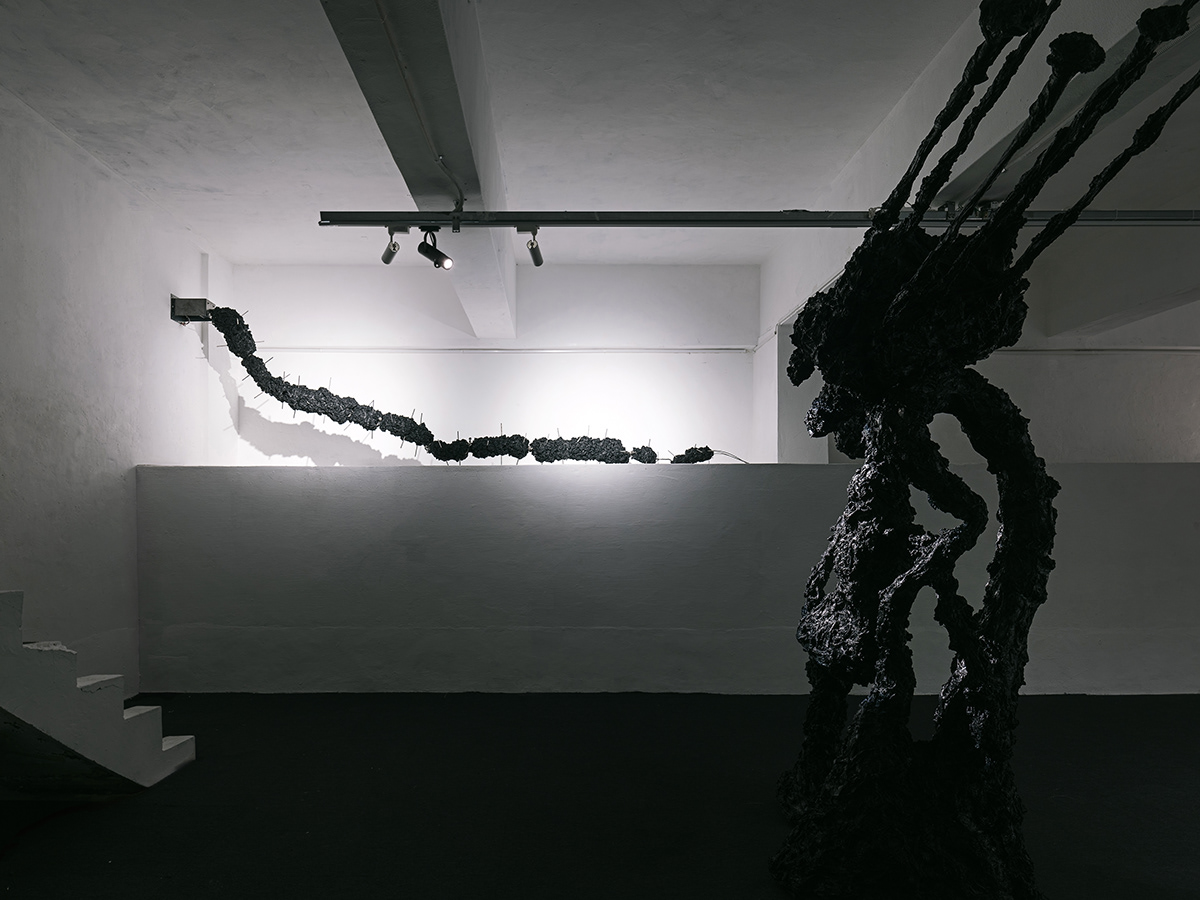
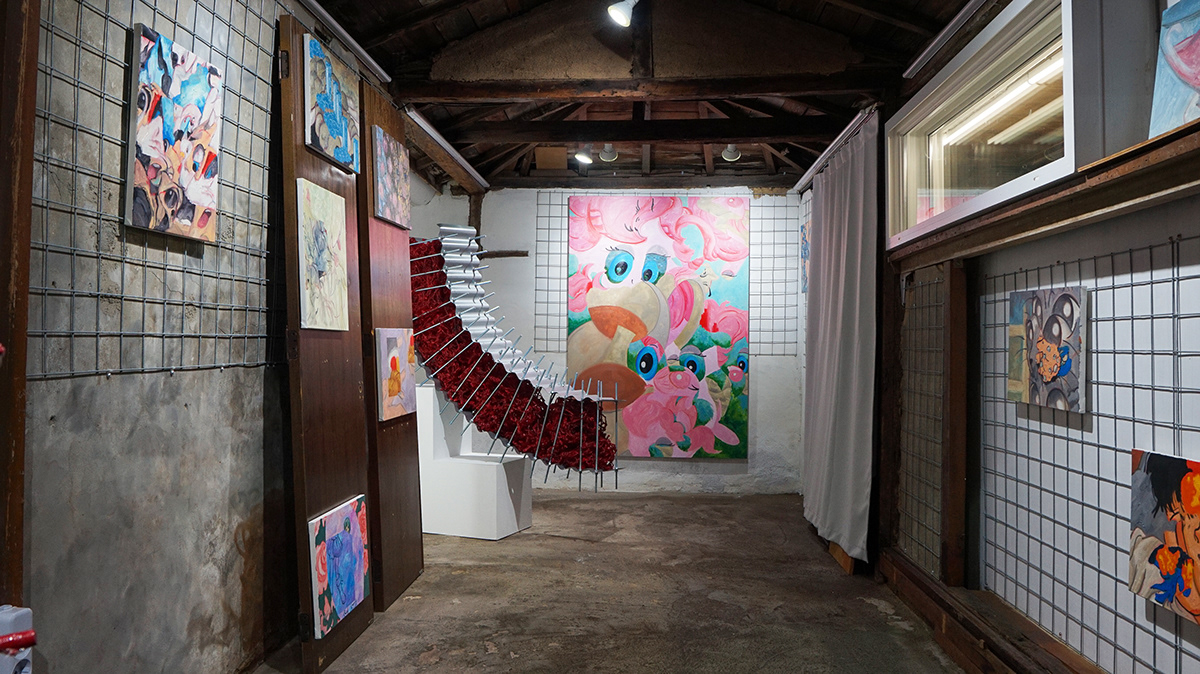
turning point is the integration of kinetics and sound. Works such
as There is something - safety device(2024)
and Scarecrow(2024) induce irreversible movements
generated by primal structures, incorporating accidental sounds of friction,
vibration, and trembling into the work itself. The open-studio solo exhibition 《Orbit Deviation of HX9X+33》(Yoho Seoul,
2024) staged kinetic sculptures moving through the studio, embodying the
concept of “substitutive presence” as sonic and tactile rhythms. In his recent
solo exhibition 《Xenogenesis》(Faction,
2024), this dynamism fused with hybridized bodies, constructing a narrative of
“bio-mechanical masses” responding to unstable gravitational forces.