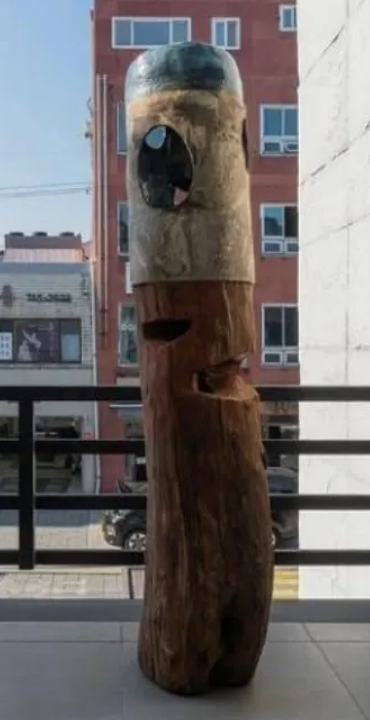
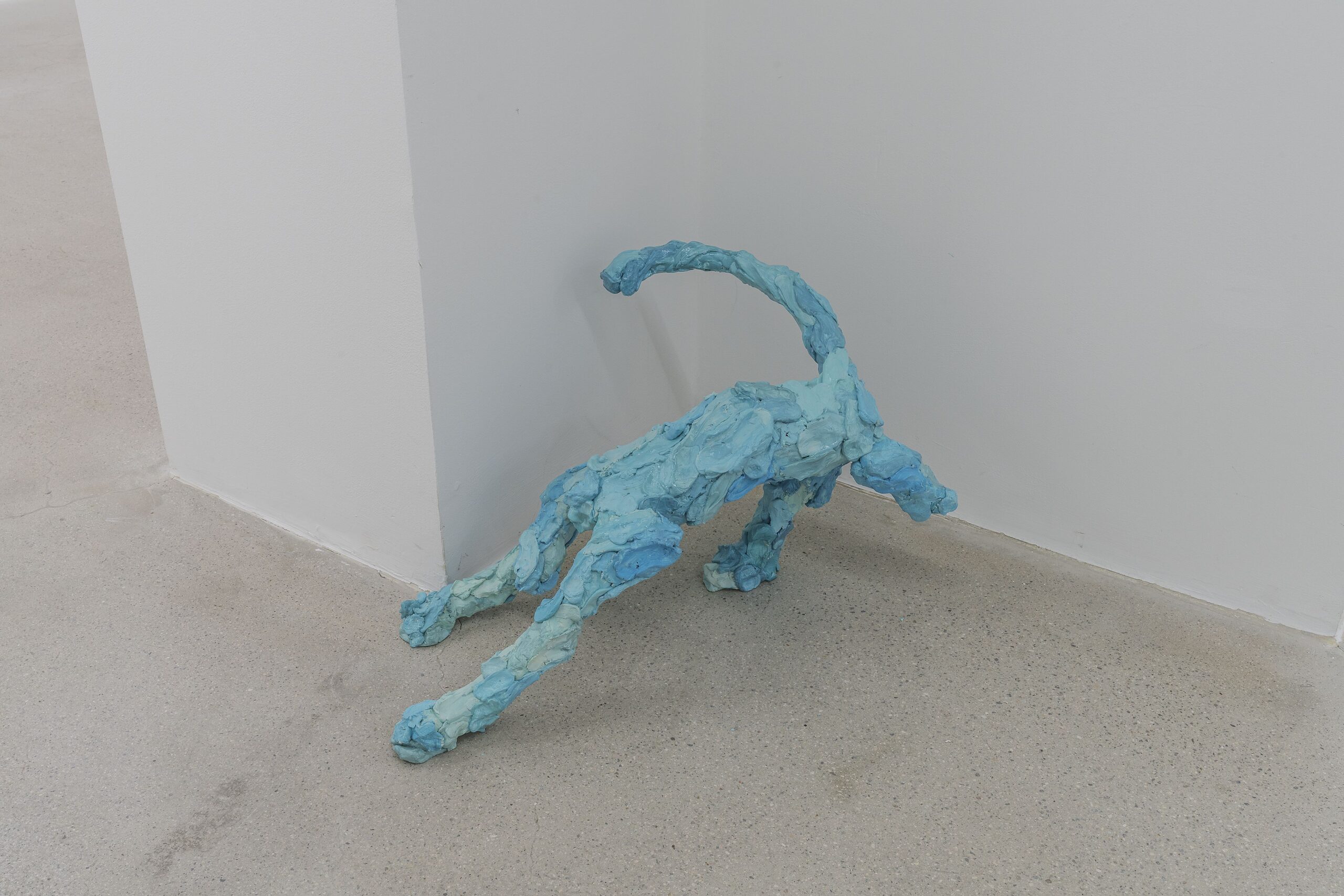
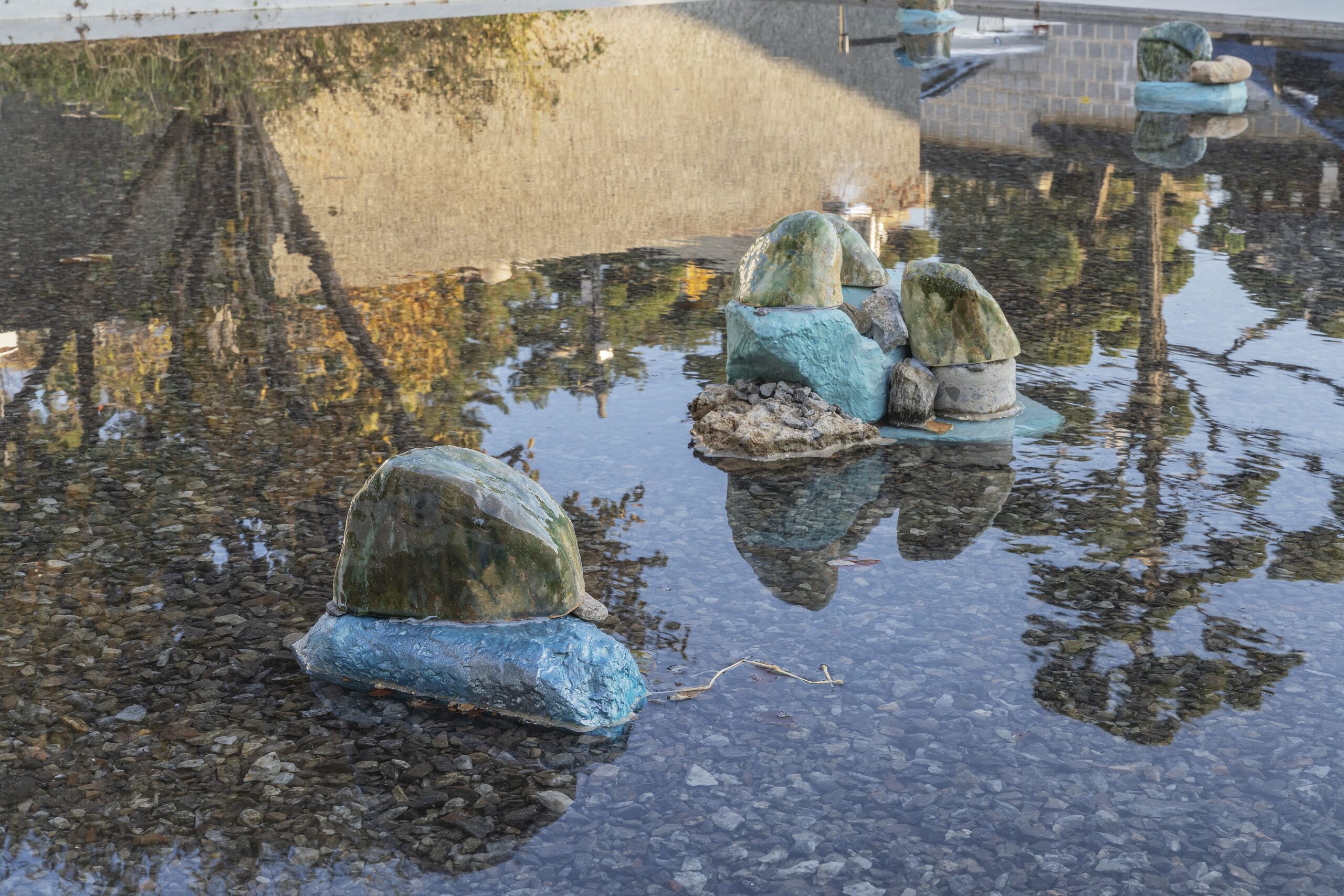
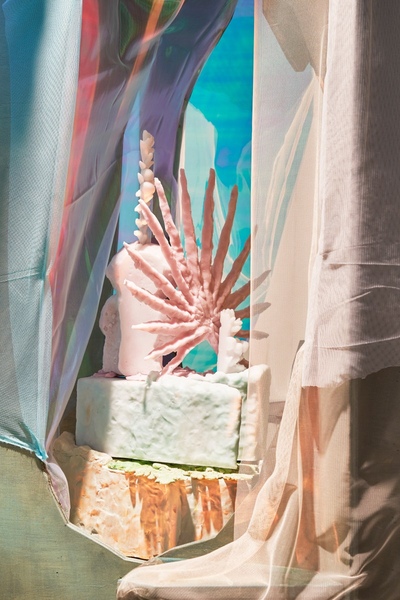
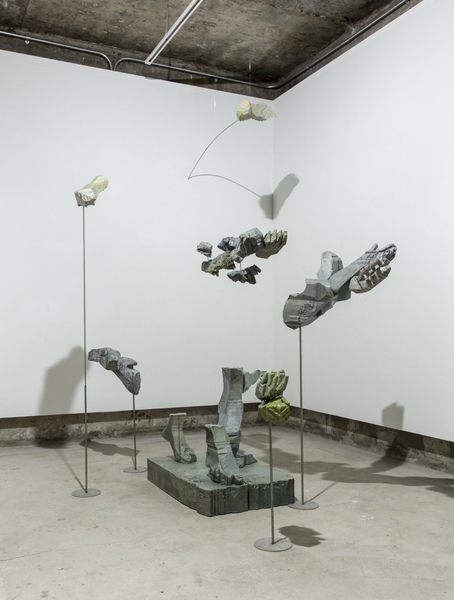
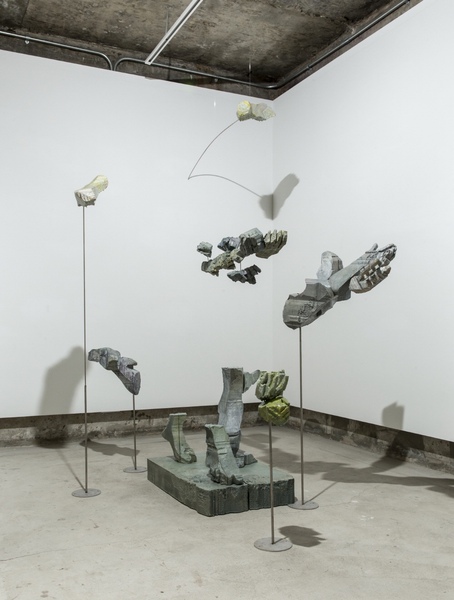
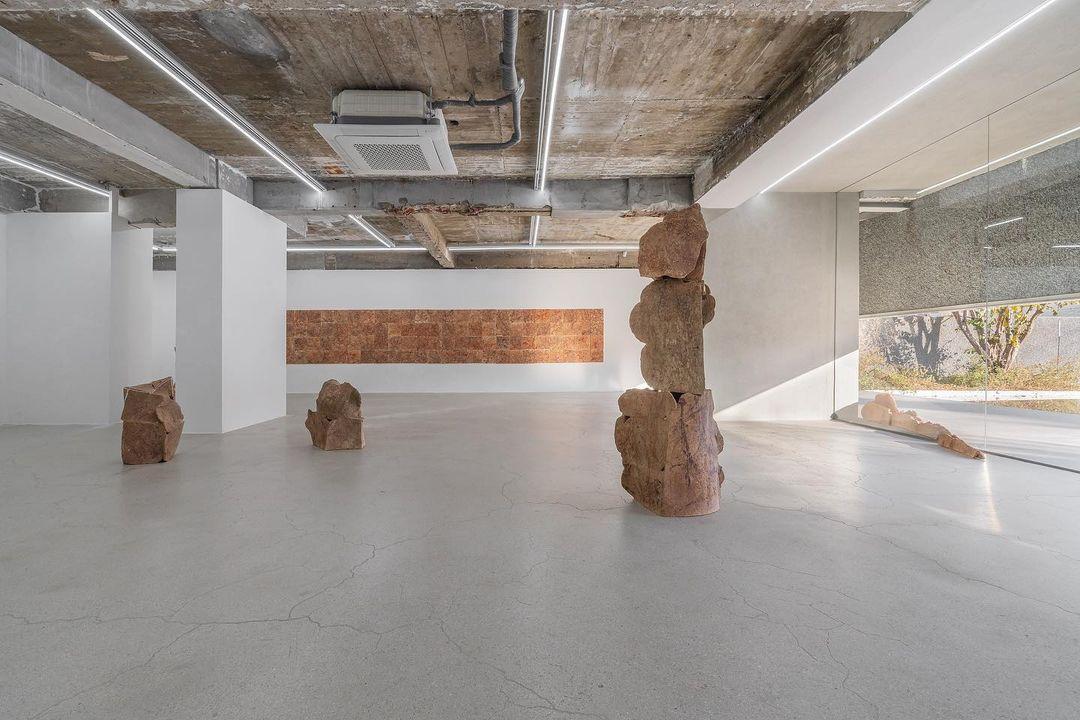
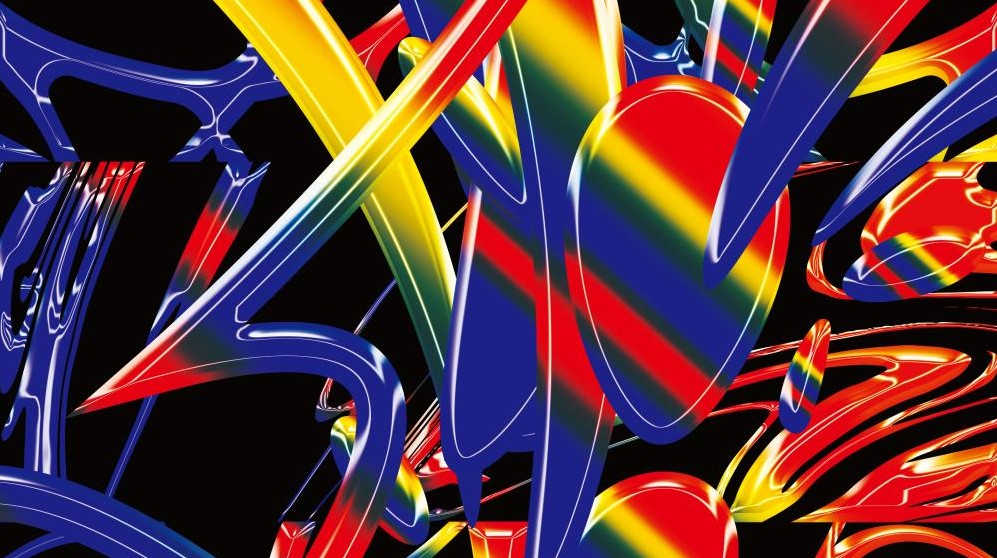
Installation view of 《Passion. Connected.》 (Archive Bomm, 2017) ©Seoul Museum of Art

Even though sculpture is one of the traditional forms of art along with painting, the possibility that sculpture could exist as a distinct category, not as a part of installation art, architecture, or landscape architecture is quite rare. While painting was recognized for its autonomy as the artist’s spiritual creation throughout the West and the East for a long time, sculpture was still mostly subordinated to the object that it represented ― as a monument for something or used as a landmark. Also, it is impossible to enter into the profession unless you are trained with enough skills, because sculpture is strongly bounded by physical and material conditions. However, since sculpture is an artistic discipline that requires such high technical training, it is difficult to prevent it from being penetrated by industrial technology that is related to the material’s production and processing.

Therefore, the predicament of sculpture is similar to that of photography rather than painting. In both fields, there are conventional distinctions between the fine arts and the commercial arts but the basis is unclear. Sculpture and photography can hardly be considered as autonomous art forms because their social utility have not been entirely exhausted. The uneasiness of using machines in art-making is displayed in their spiritual value, the unskilled expression of forms, and the pursuit of accidental effects. Like that of a photographer who should not be a photo machine, the sculptor tries not to be a sculpting machine. But how? How could the body of a sculptor avoid from being a sculpting machine? How can the object made by a sculptor distinguish itself from any other machine-made objects?

Isaac Moon responds to the difficulty with a paradoxical approach of being a machine himself or learning from a machine. But he takes the attitude of a wizard’s disciple who clumsily imitates his teacher and causes unpredictable accidents, instead of a disciple who mechanically follows the teacher. Generating different outcomes, Moon’s synthetic resin sculpture is made by trial and error during the process of imitating the working method of a CNC cutting machine that is controlled by a 3D modeling software and computer.

Assuming the position of the non-expert who cannot skillfully handle the computer programs, related devices, and various plastic materials, the artist reproduces the method of industrial sculpture with his hands and finds something useful, or even beautiful, in the accidents that happen through the process, which he applied in the subsequent works. Moon is not trying to simply appropriate the industrial method and style like a robot, but he is also not unilaterally converting the graphic tools and industrial devices into artistic means. The artist is looking for something else. While deviating from the conventional methods of dealing with materials and tools, and creating forms, Moon seeks to produce a certain arrangement that satisfies his eyes and hands, and finds a suitable connection between himself and the machine.

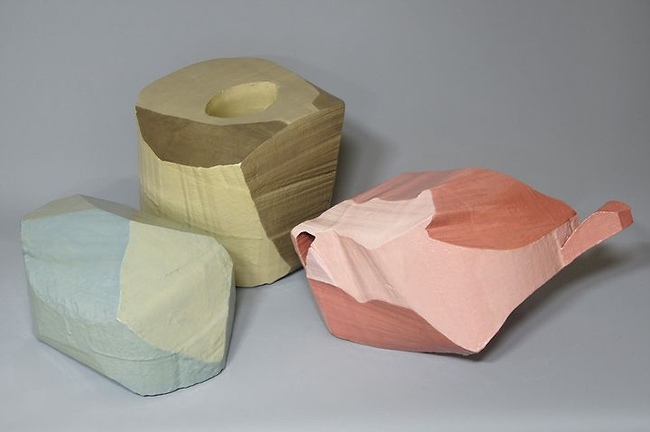
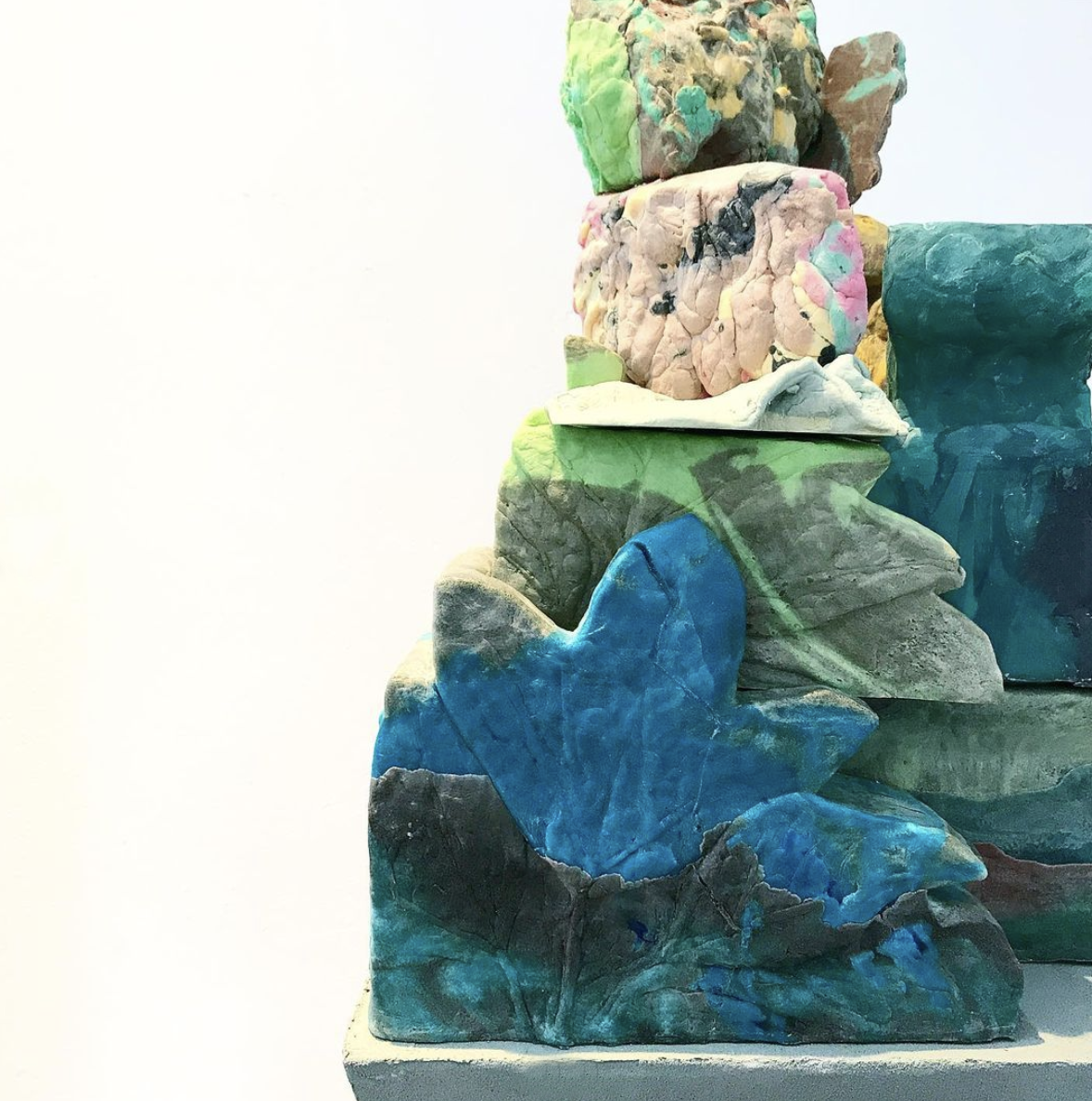
Participating in 《Asia Kula Kula-ring》, the Asia creative space network exhibition at the Asia Culture Center, Isaac Moon presented the working method in the fall of 2016 with Low-Storage at Space 413. For the piece Standard Prototype, Moon randomly projected images of multiple viewpoints of basic forms (cylinder, torus, kettle, etc.) provided by a 3D modeling software onto hexahedral styrofoam material (Isopink or Neopor) by shaving it with a hot wire, coloring it , and applying an epoxy coating.

The method developed into a series of works including Expanded Prototype, Arms and Hands, and Head of ST John, that were presented in the group exhibition 《Things: Sculptural Practice》 held at Doosan Gallery in early 2017. These artworks were produced like a kind of tutorial that demonstrated how to create sculptures with the method that was used in making Standard Prototype.

In Expanded Prototype, by applying the basic 3D forms on screen to the styrofoam mass outside of the screen, Moon experimented with the cutting method that resulted in a third form. Based on the work, Moon challenged himself by using more complicated forms, like the hands and arms of the human body in Arms and Hands. He collected various forms of hands and arms from free 3D modeling sources found on the Internet and applied the same cutting method to them. Lastly, in the Head of ST John, Moon applied all of the methods he had been experimenting with, and created a 3D image of the head of St. John as depicted in classical paintings.

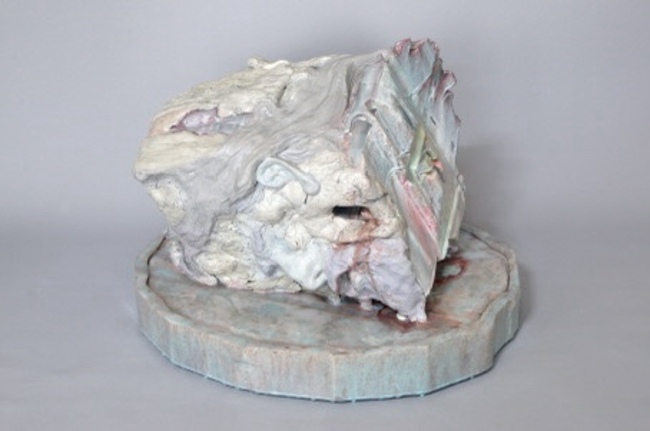
Isaac Moon, Head of ST John 6, 2016, EPS, HTP, epoxy, sibatool, pigment, talc, 32x43x37cm ©DOOSAN Art Center

As a result, the works from 《Things: Sculptural Practice》 were presented as a process of reinventing classical sculptural methods that began with the practice of imitating machines rather than to examine the expression of the human body and cases from art history. However, in the individual works, the two reference points of commercial production and sculptural tradition are projected separately on each object ― not synthesized as one. For instance, in the Head of ST John, the artist introduced new surface treatment methods that applied thick coatings of various mixtures of materials, instead of emphasizing a cross section using smooth epoxy coating. The surface is treated as a 2D plane covering a 3D form, and the original image and form are naturally skewed and destroyed in the process.

Responding to the mapping process that provide various texture in 3D rendered images, the artist overlaid a bitmap image onto a 3D form using a 3D modeling software. But, in different points of view, the treatment process was almost unavoidable in expressing the feeling of the human body that cannot be reduced to a geometric form, especially the formlessness of the beheaded cross section. The decapitated head is different from the idealized head. In the eyes of someone who is not accustomed to the forms of the human body, it is merely a rough mass that is not much different from a rock. Here, roughly finished surfaces work to provide the mass with the blood and flesh of ‘St. John,’ and maybe even a soul. But would it really work? Can Isopink and resin be the marble and bronze of our day and give a new life to sculpture?

The problem is not whether synthetic resin, as artistic medium, has as much potential as traditional sculptural material. The real problem is whether a human body can defend its own status as a privileged agent and the subject of sculpture in an era when sculptors imitate machines in order to create. Today, we have come too far from the past when we praise the human species. What has a human become? What can a sculptor create today? These two questions are not separate, at least in Isaac Moon’s second solo exhibition 《Passion. Connected.》 ― the odd title is taken from the slogan of the Pyeongchang Winter Olympics.

The spirit of the Olympics in the late 19th century ―when the sublime power of machines was expanding, and the human bodies that were blessed moved “faster, higher, and stronger”― glorified those human beings who challenges their physical limits. But it is hard to have faith in this kind of spirit in the early 21st century. Scattered in the exhibition space, fully moving bodies were broken and damaged into human body fragments. At first, the works were designed to present specific people who participated in the Olympics, and the characteristic traits of these people, such as which devices they used and what covers they took. The task was commissioned to Moon’s colleague Kim WoongHyun. However, these details were reduced and almost unnoticeable in the exhibition. Consequently, MOON ISAAC’s objects that resembled human parts became a mass of material or its surfaces squeezed, numbered from 1 to 10, filling the sparse exhibition space of Archive Bomm.

Deviating from the noble boundaries of the white cube and sculpture, these objects look more like plastic forms. Repeatedly appearing fragments of hands and feet cannot be grasped as anything in particular or going anywhere exactly. Parts and wholes, the mass and surfaces, working materials and subjects are all mixed up with almost no inevitability. Cut with the CNC carver and epoxy coated using 3D modeling data, these styrofoams are produced closer to real world methods that imply a sense of temporarily ―quickly supplying inexpensively to the needy decorative masses― from installation for department store’s windows to the props of on a music video set. The works of Isaac Moon tries to deviate from the cycle of objects that are made and broken, but it also does not easily deny the world of cycles.

He just observed the almost automated transformation cycle from data to plastic, consciously responding, and activating the process of another cycle that operated in a parasitic way. It is activated by the body of the artist who imitates the machine but cannot be the machine. It is also reflecting that body at the same time. Therefore, at last, these feet that are stuck on floor, these hands shaking in the air, and the fragmented bodies that would become transformed is dependent on what the creator of these objects want them to become. Not faster, higher, and stronger, but just another kind of human. 


(translated by Art & Writing)

References