… The torso you choose is smooth, soft and faithful, and above all, it is a fresh torso that draws subtle curves as the blood flows down on it. It's a torso that creates the most beautiful patterns in the flowing blood, for example, it is something like an ordinary stream passing through a field or the growth rings of an old, cut tree. Isn't it true? … 1) (Yukio Mishima, Confession of a Mask, 1949)
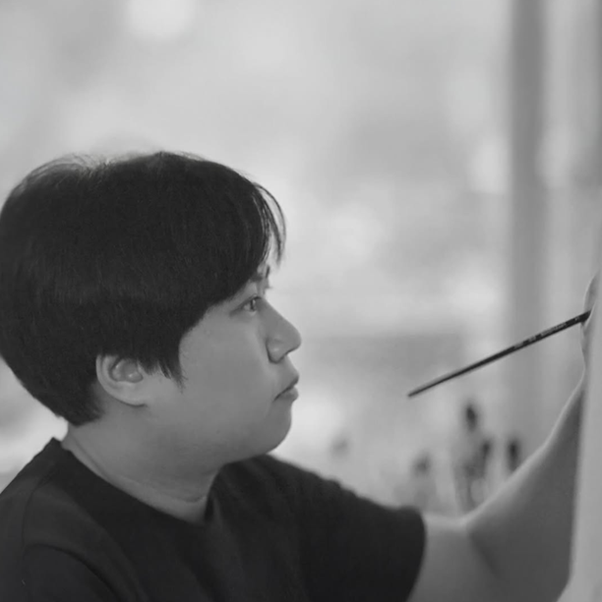
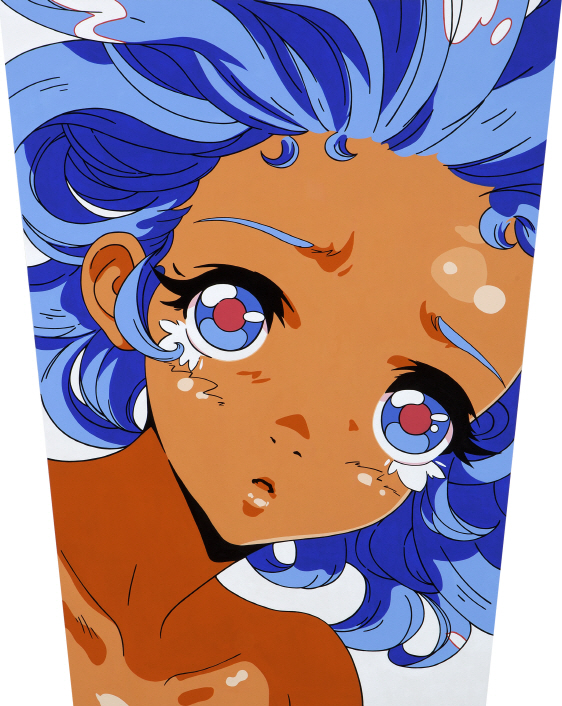
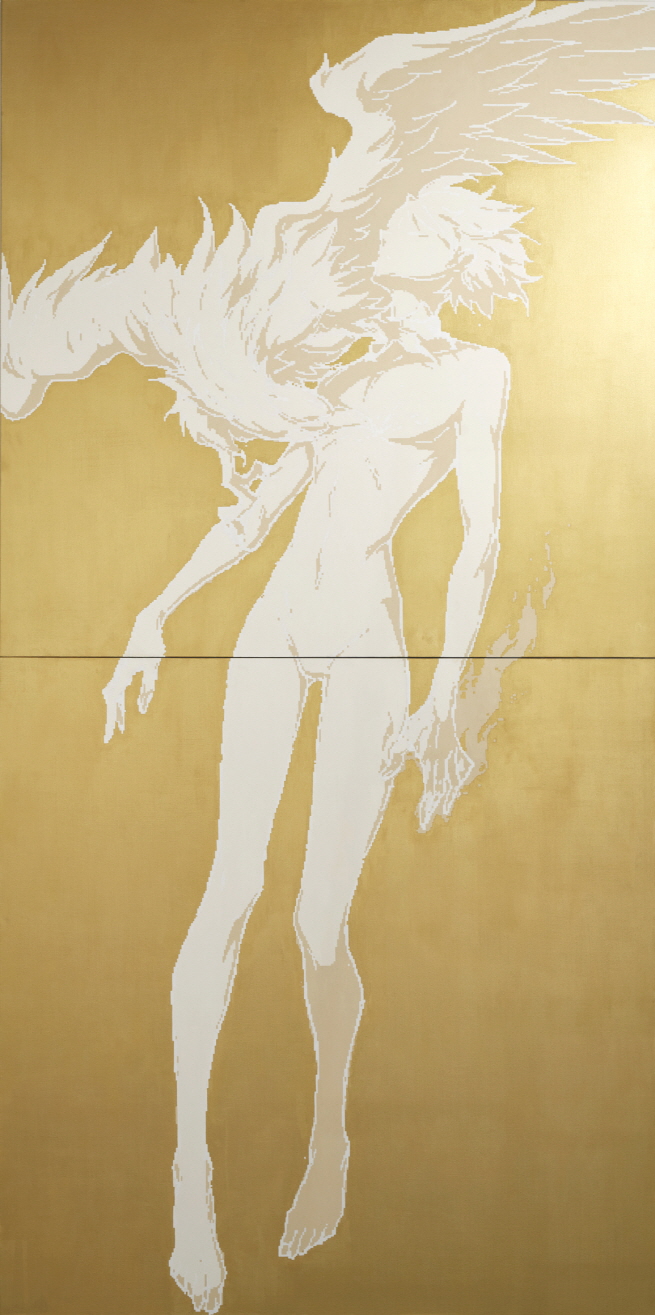
As can be seen just by looking at the title of the work, ‘torso’ has been treated as a central subject in Yunsung Lee’s paintings2). He once explained that he saw beauty when he looked at a fragment of a human body with only a part of it remaining. Looking at the series, which ran from 2011 to the present in 2023, we can understand that he transferred his interests to the canvas, but here we run into a problem. This is because the torso he drew is different from a torso.
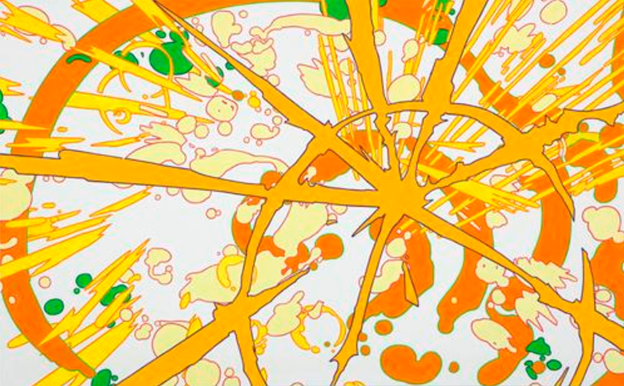
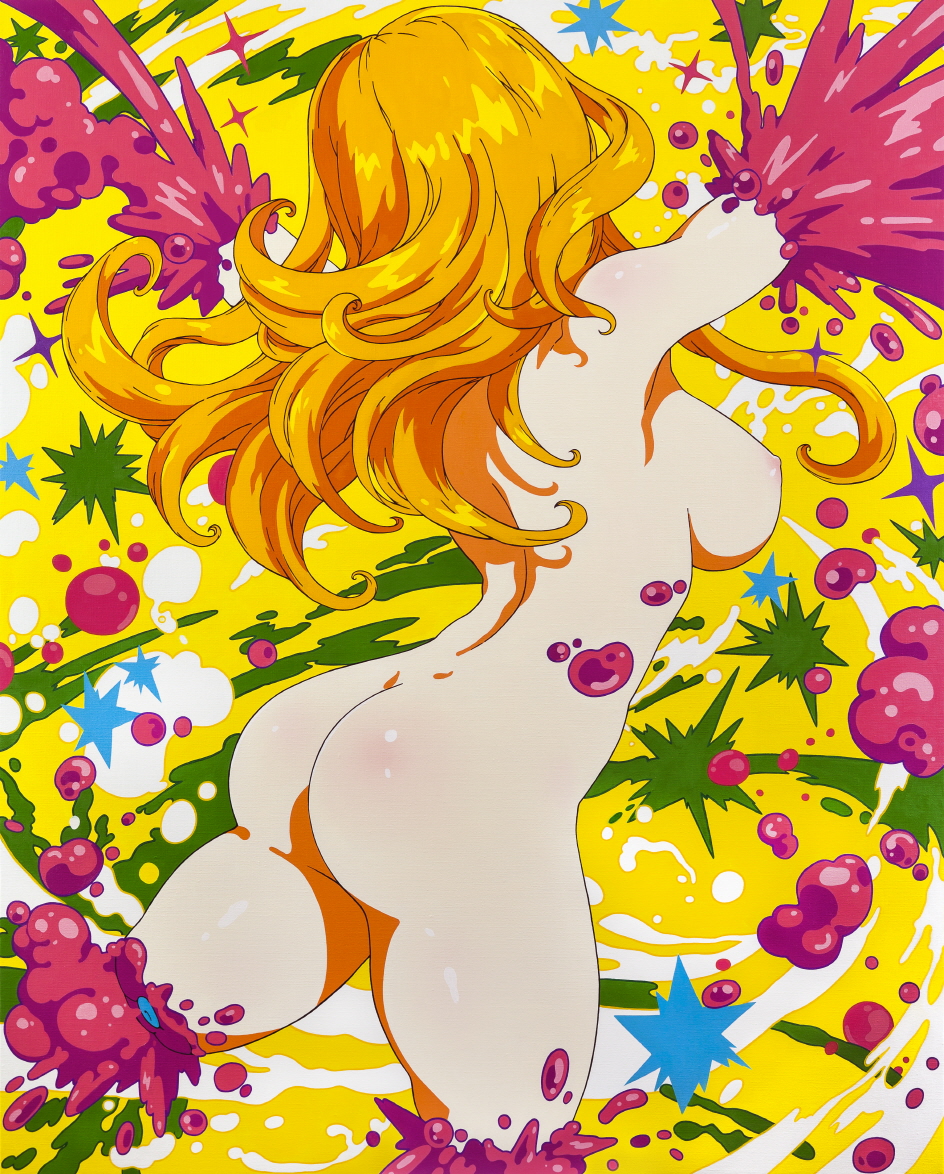
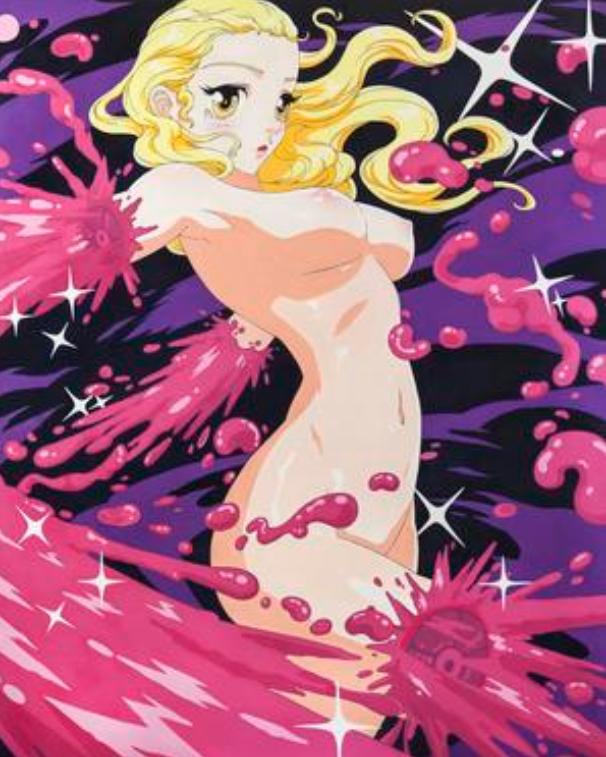
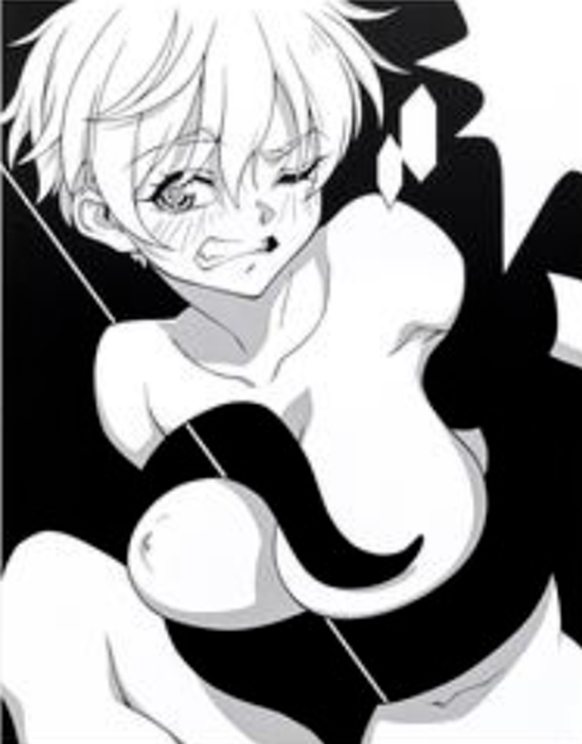
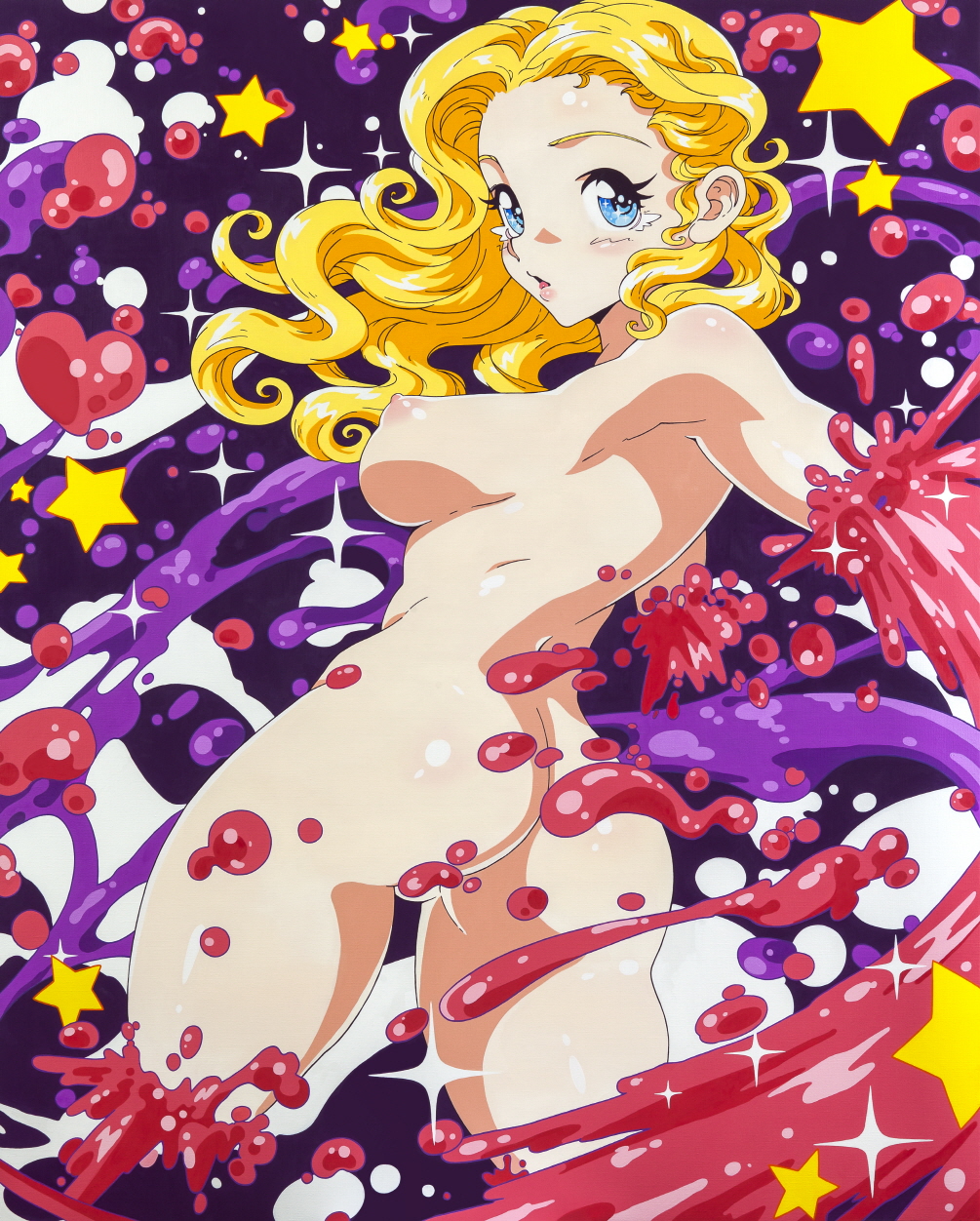
What is in Yunsung Lee's paintings and is not in the torso is blood and light. The torso, which is a threedimensional body mainly made of a single material, can be said to be an object that neither shines nor bleeds in that it is made of stone and a relic of time. When compared in this way, blood and light that were not present in the torso surround Yunsung Lee's paintings. How did his gaze on the torso appear in light and blood in the painting? Rather, since it is a painting work, we can say that he was able to draw light and blood on it. It is difficult for the medium of stone to contain light and blood.
A stone cannot emit light spontaneously, and blood can be contained in the body (vitality) only when it is expressed through the character's facial expressions or actions. Meanwhile, in painting, light and blood can be visualized through or together with the physical properties of paint and reproduction. Light and blood, which are not present in the torso, or to be more precise, do not appear directly in the visual field, can be brought out through the form of painting.
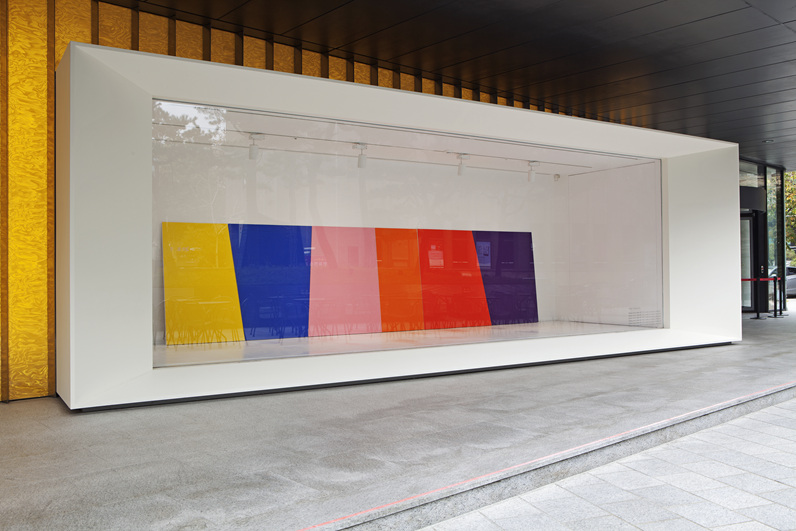
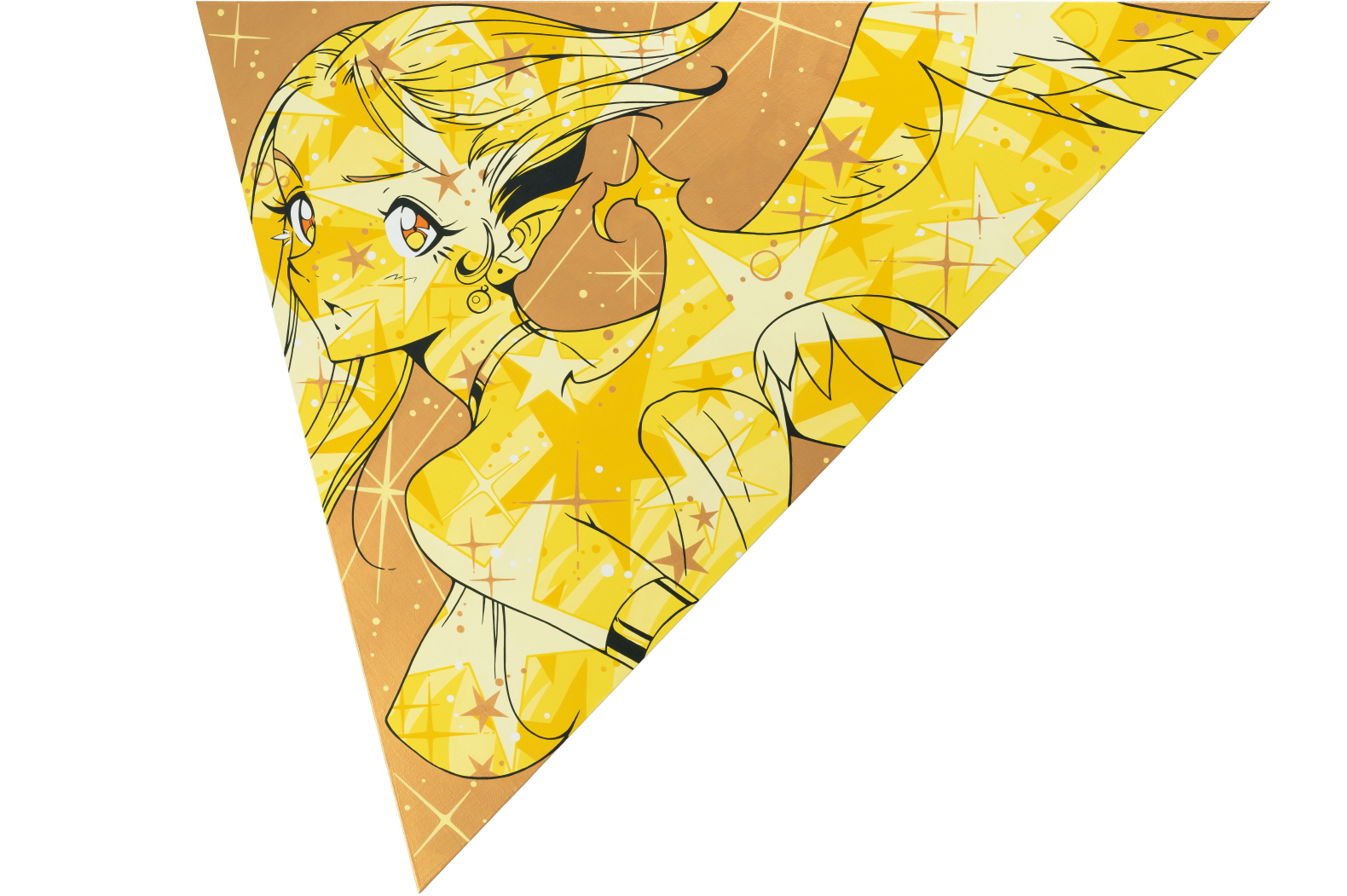
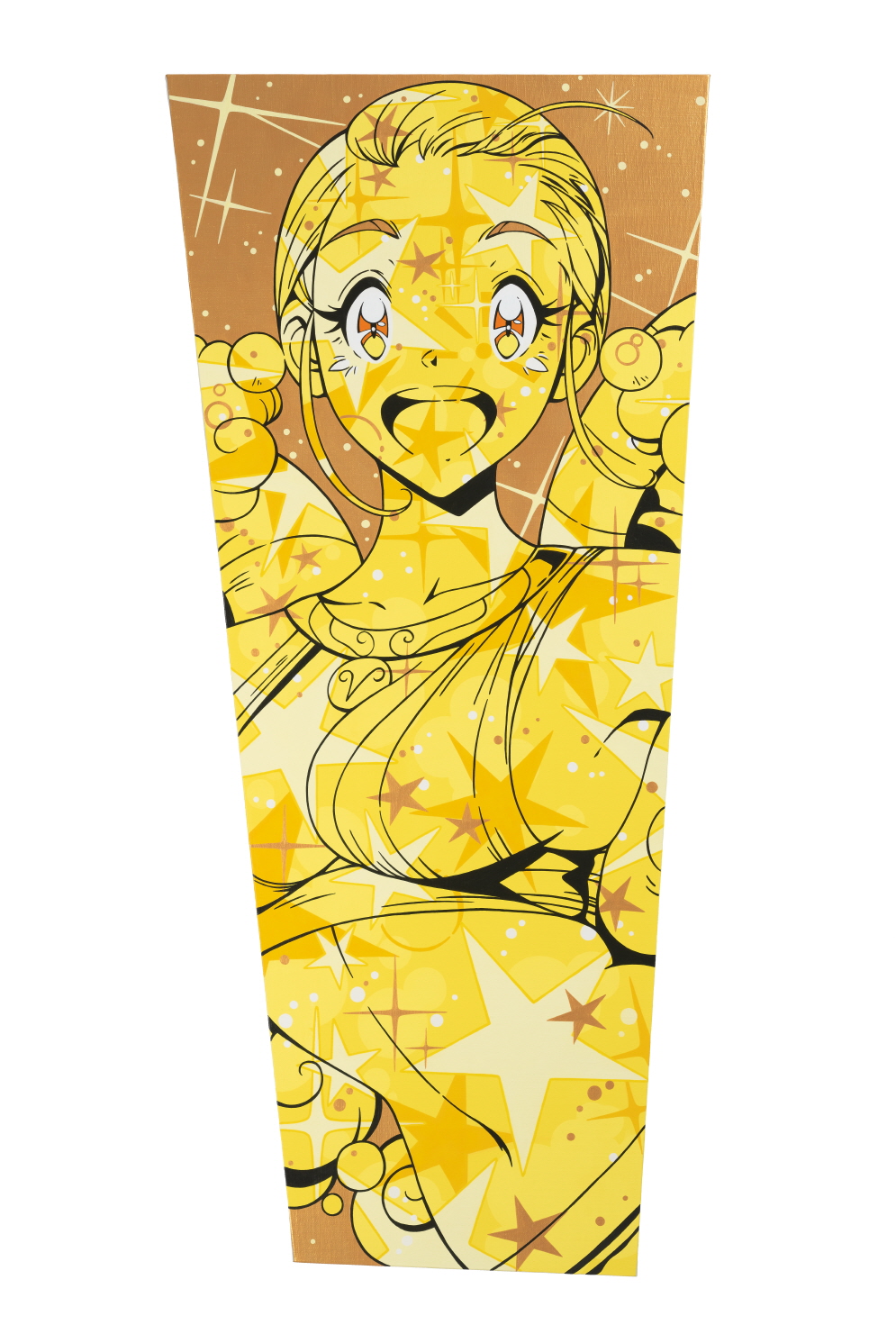
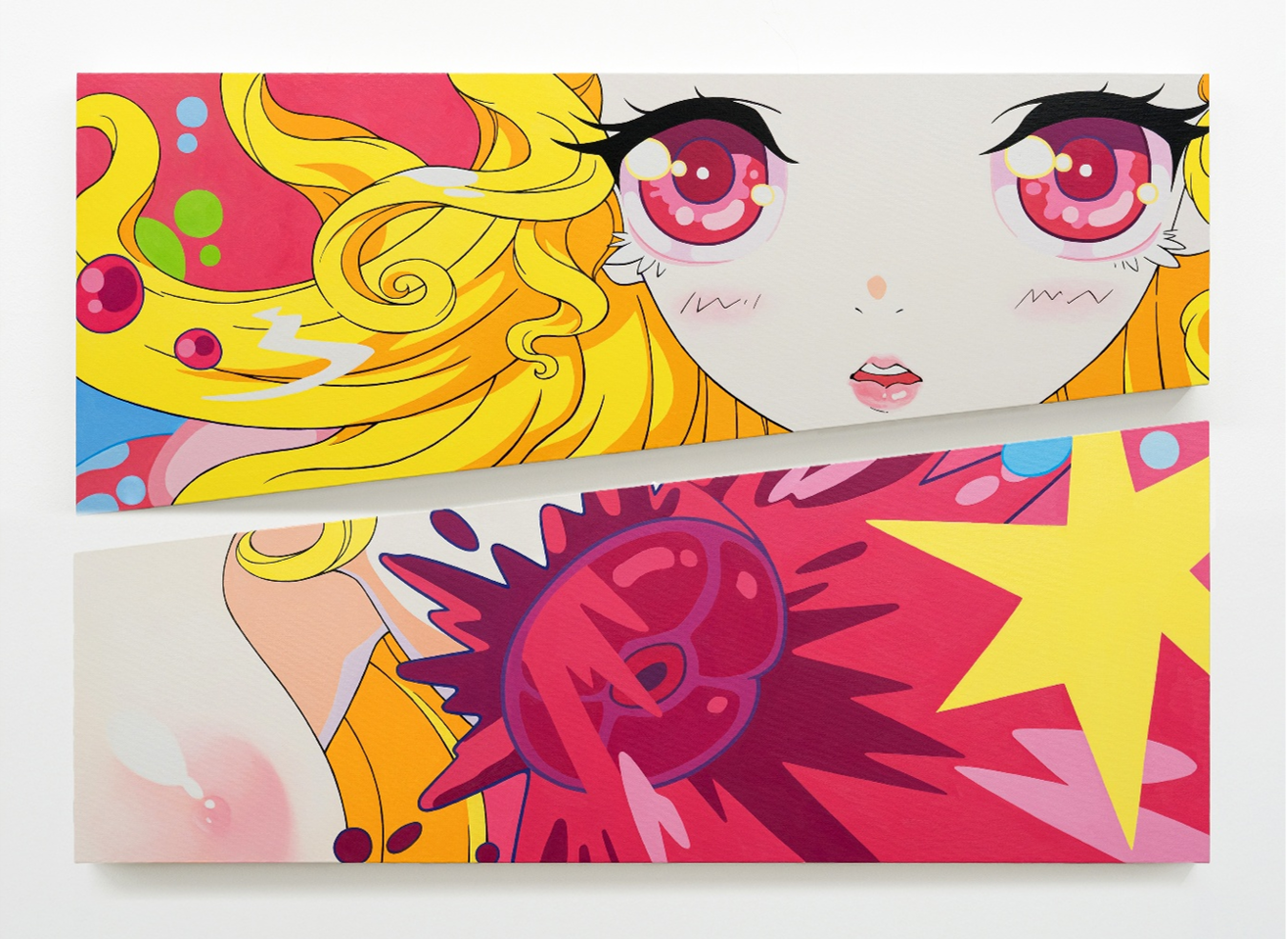
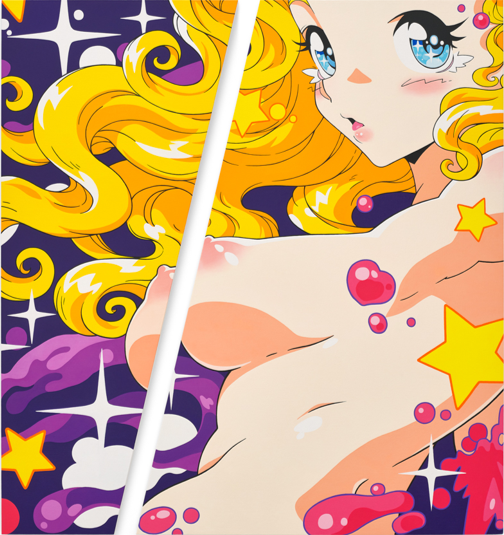
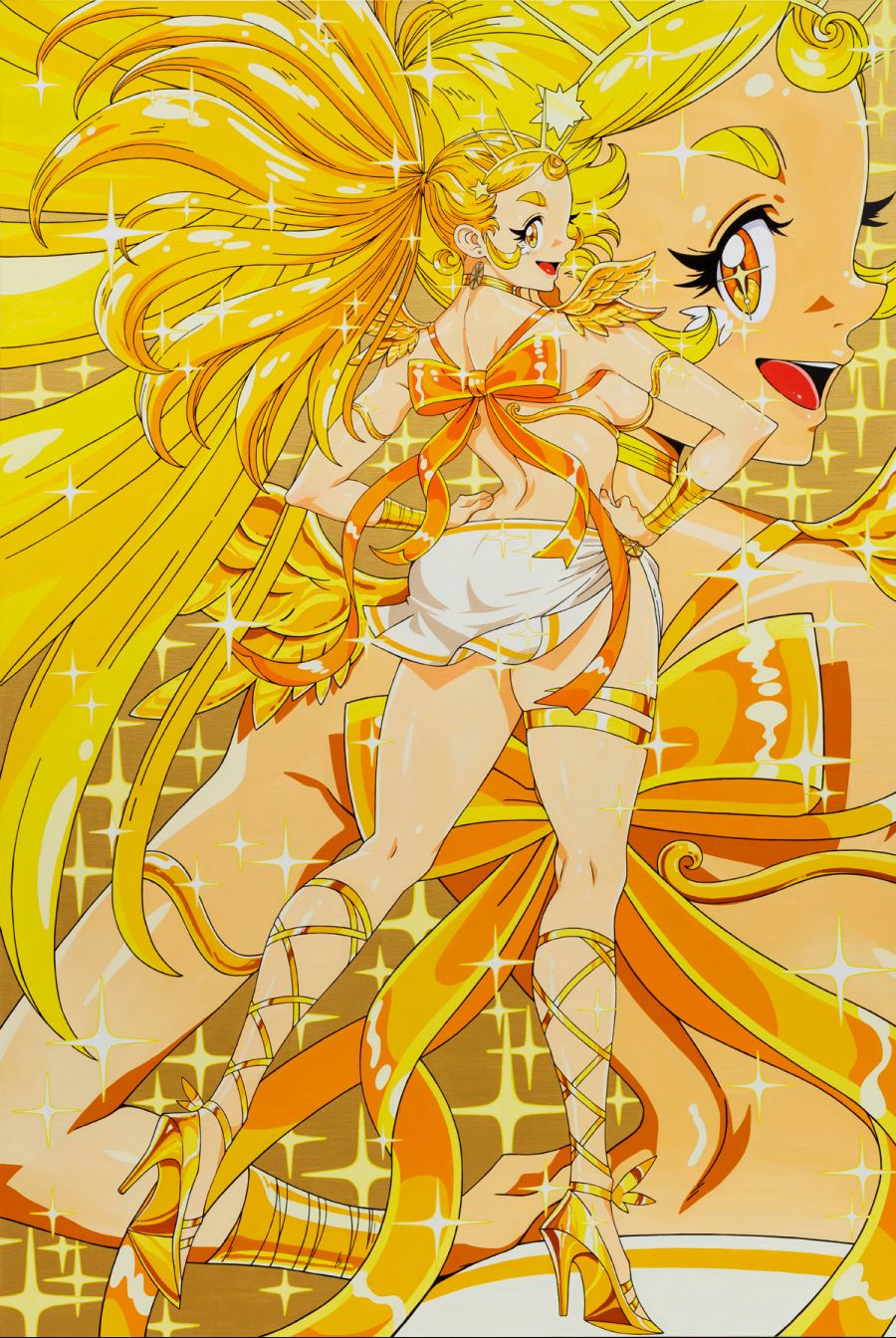
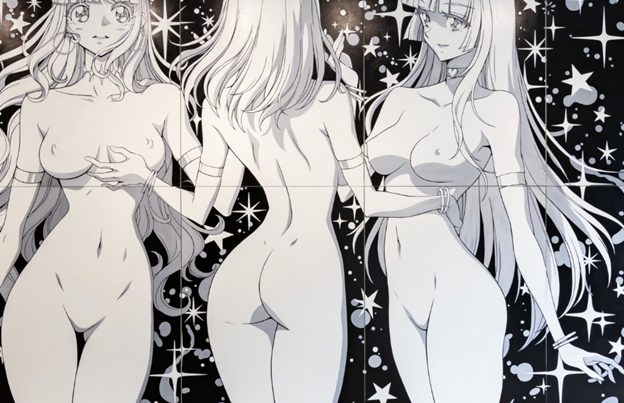
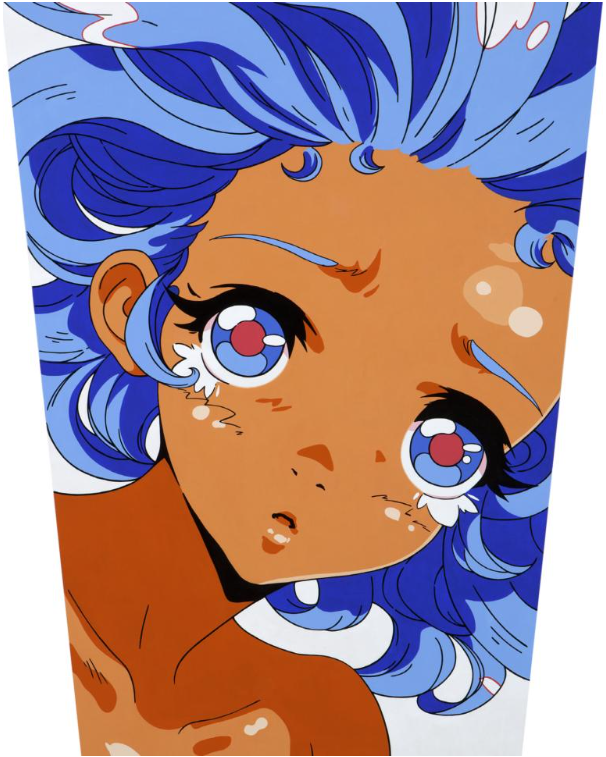
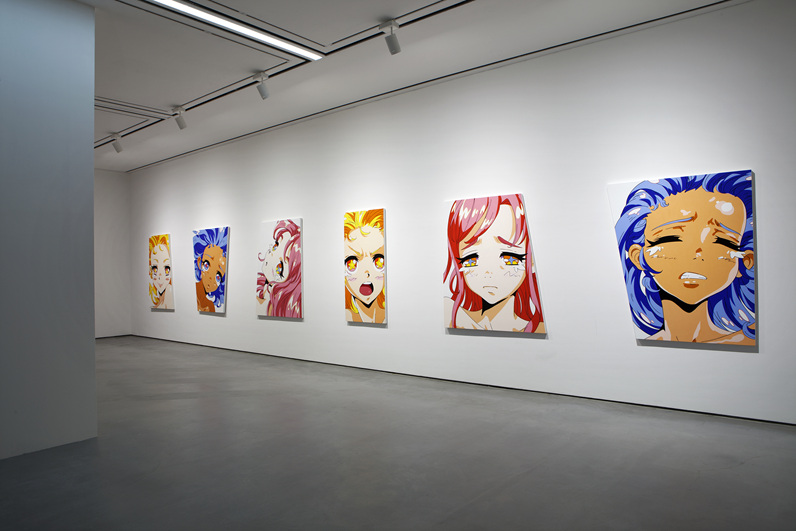
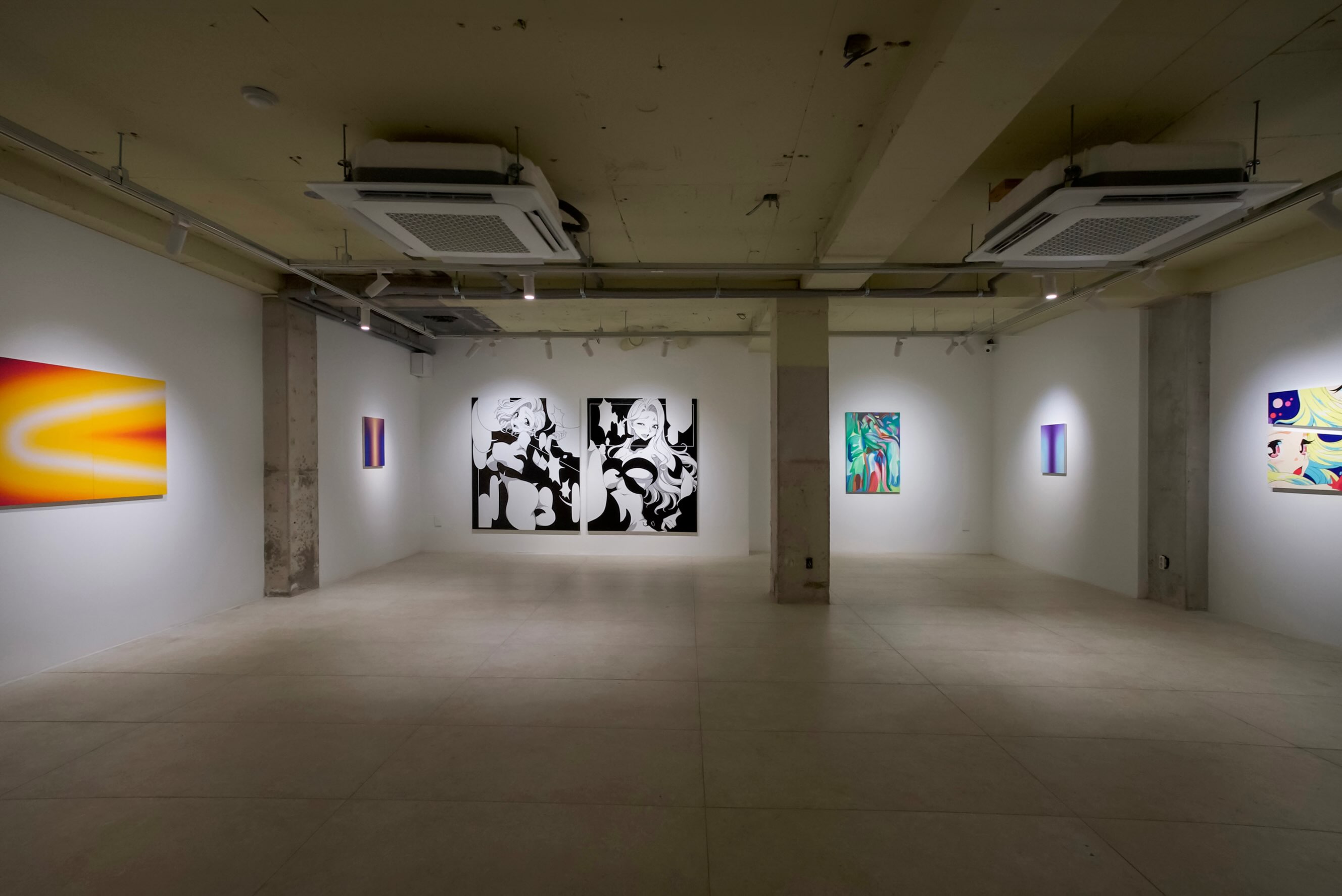
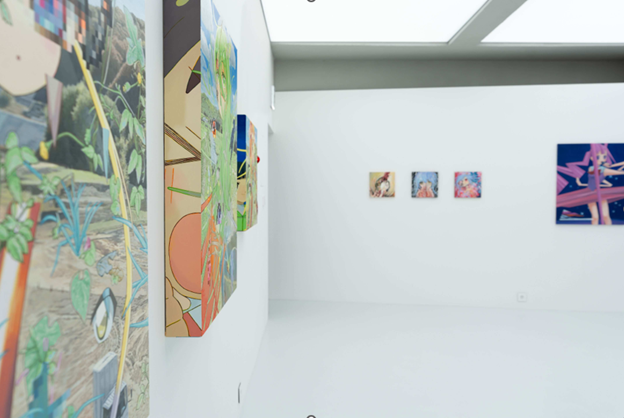
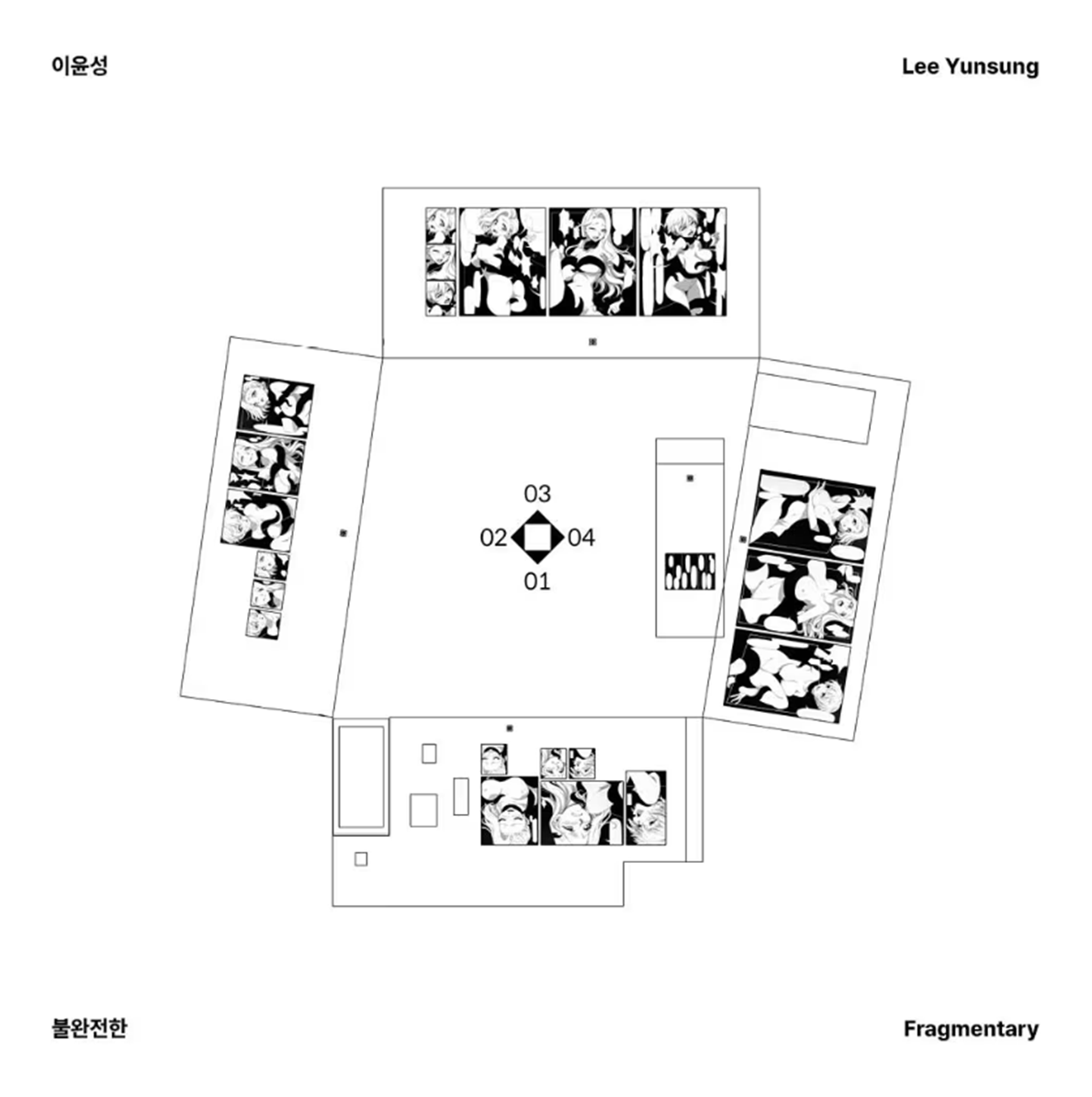
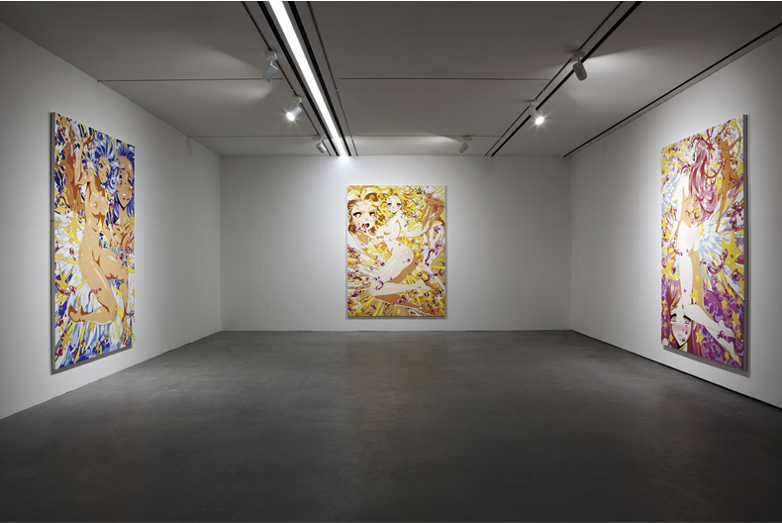
In Yunsung Lee's paintings, light and blood spread enough to cover the white background of the canvas. In the painting, the spout of light and blood even makes an inroad on the white background, which can be said to be an understanding of the white canvas as a torso. If you look at the solo exhibition 《NU-FRAME》 (Doosan Gallery, Seoul) held in 2015, the work ‘Danae cut-in’(2015) series and its corresponding outline can be seen on the wall of the exhibition hall. In contrast to the portrait drawn on the canvas, the outline is empty. The form is not only morphologically similar to the torso he is interested in, but also corresponds to the characteristics of the comics he is interested in.
The Danae cut-in and the corresponding outline drawn on the canvas are not regular square canvases, but modified canvases. As already mentioned, this shape is reminiscent of a comic cut3), which can be thought of again in the thinking approach to the torso described above. Here, the work is not a so-called shaped canvas, but a canvas with a part of the whole lost, like a torso. This is the result of internally sharing the characteristic that comics contain facial expressions and emotions while maintaining a close-up-like effect within a small square for part of the overall narrative. Unlike stable compositions that are mainly drawn as landscapes or scenes, comic techniques are based on ‘cuts.’
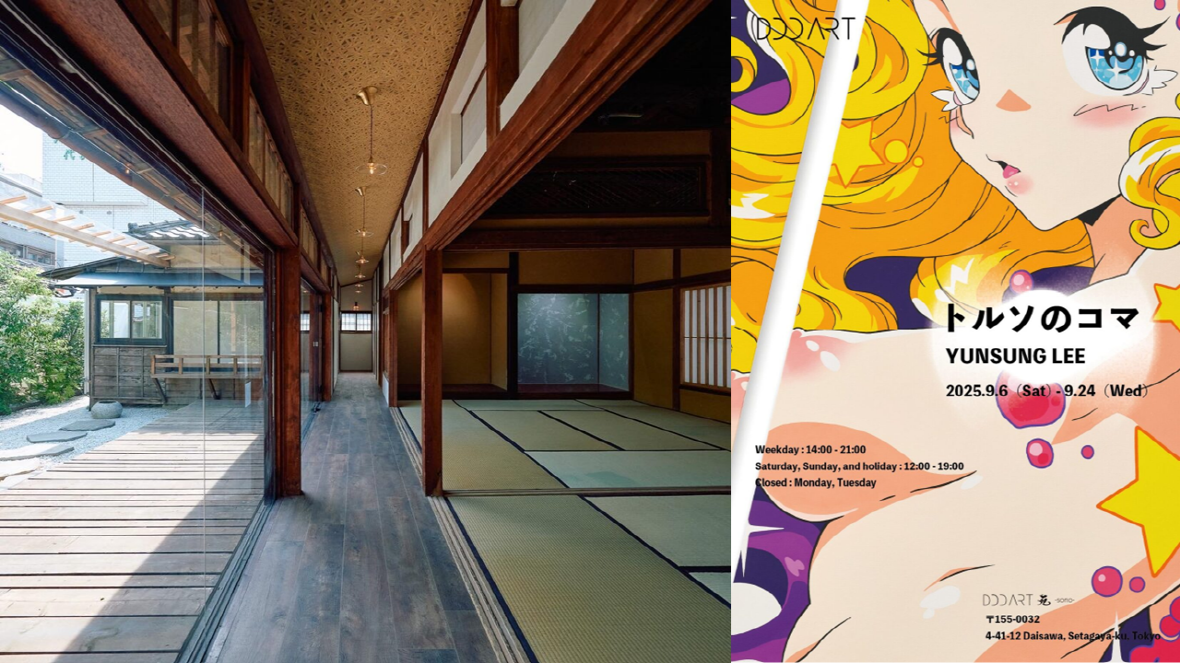
As the word cut literally means, the narrative, scenes, and emotions within the square are cut into pieces, maximizing their meaning. Just as the word ‘koma ( コマ)’ used when referring to a cut in Japanese is consistent with the meaning of ‘division’, that is, ‘a place where a cut is made’, Yunsung Lee’s paintings are created using the canvas as a cut surface.
In the painting work, blood and light not presented in a torso, spread out to densely fill the white canvas. The blood and light coming from the cut surface of the figure can be said to be a unique expression of painting that cannot be seen in sculpture. This can also be said to visualize our gaze on the torso. From the perspective of an idealized overall image, a torso with some parts missing is outdated, incomplete, and worthless. However, the torso is spotlighted despite its defective form, and even though only a small part of it remains, you can see its realistic, blood like that of a real person.
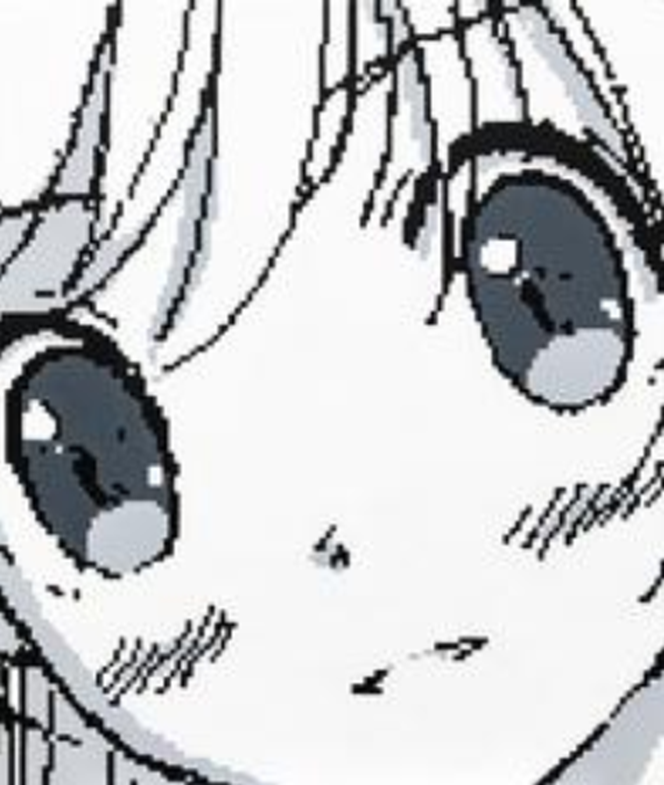
Yunsung Lee's gaze on a torso is not limited to a motif simply brought into the painting. Rather, it can be said that he drew the gaze sent to us by a faceless, missing lump called a torso, using comic techniques. The torso is a ‘thing’ that was once a human being. However, at the same time, it is alive and has a presence to the extent that it gazes with invisible eyes. The beauty he sees after receiving that gaze is not a sculpture but a painting, and it visibly contains light and blood toward the canvas space. It can be said that the series of were approached as an extension of the torso. It can be said that the series of works of Head of Medusa were approached as an extension of torsos.
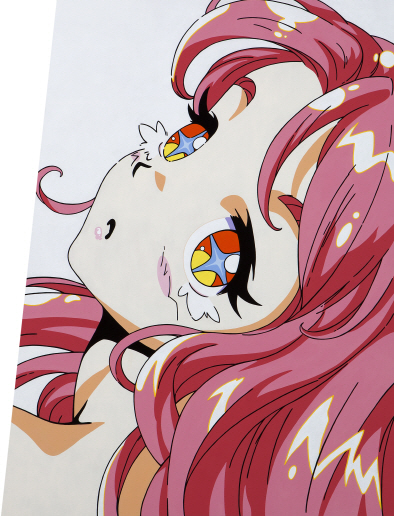
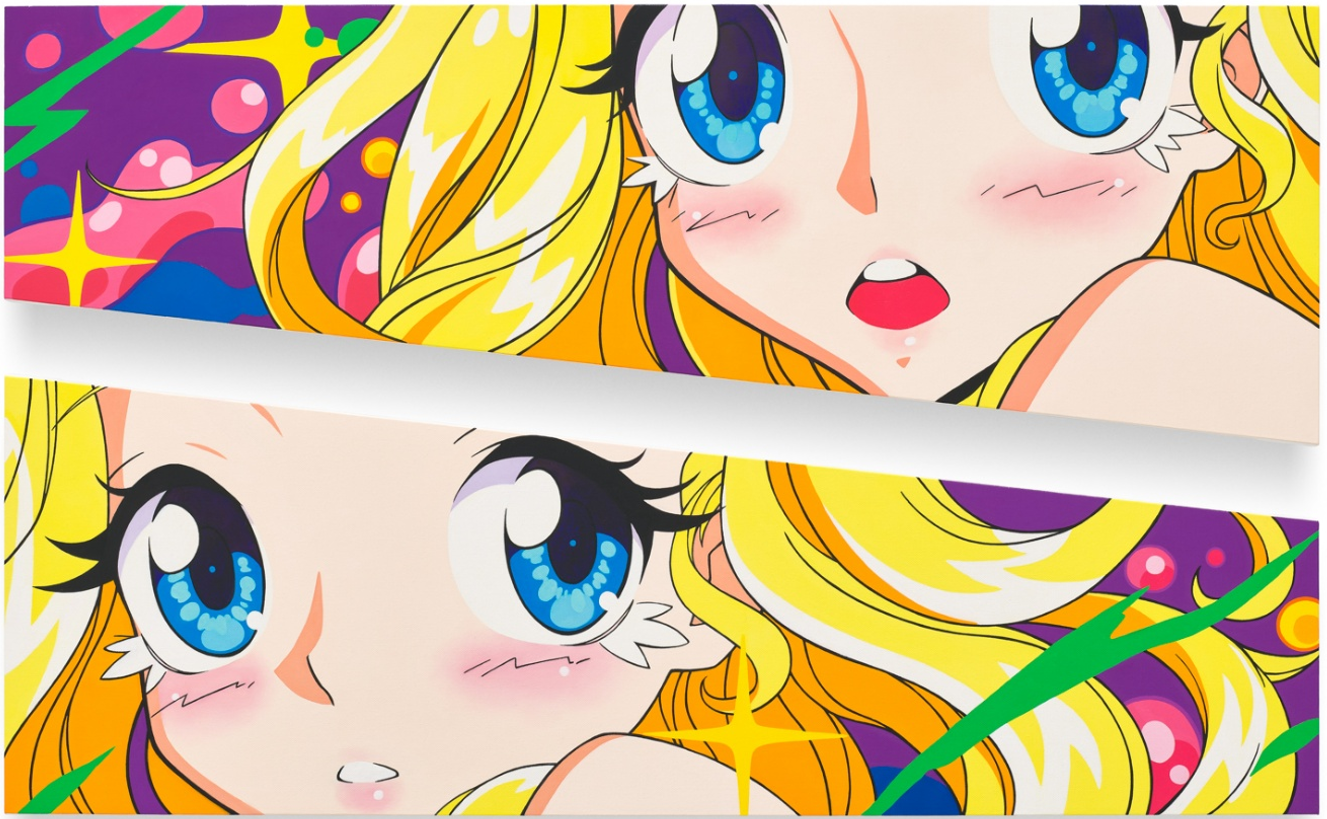
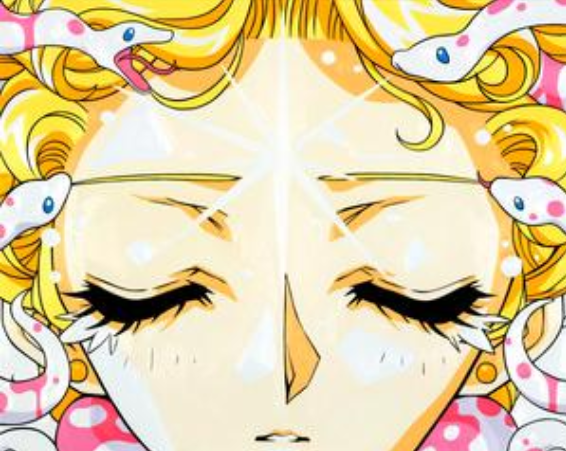
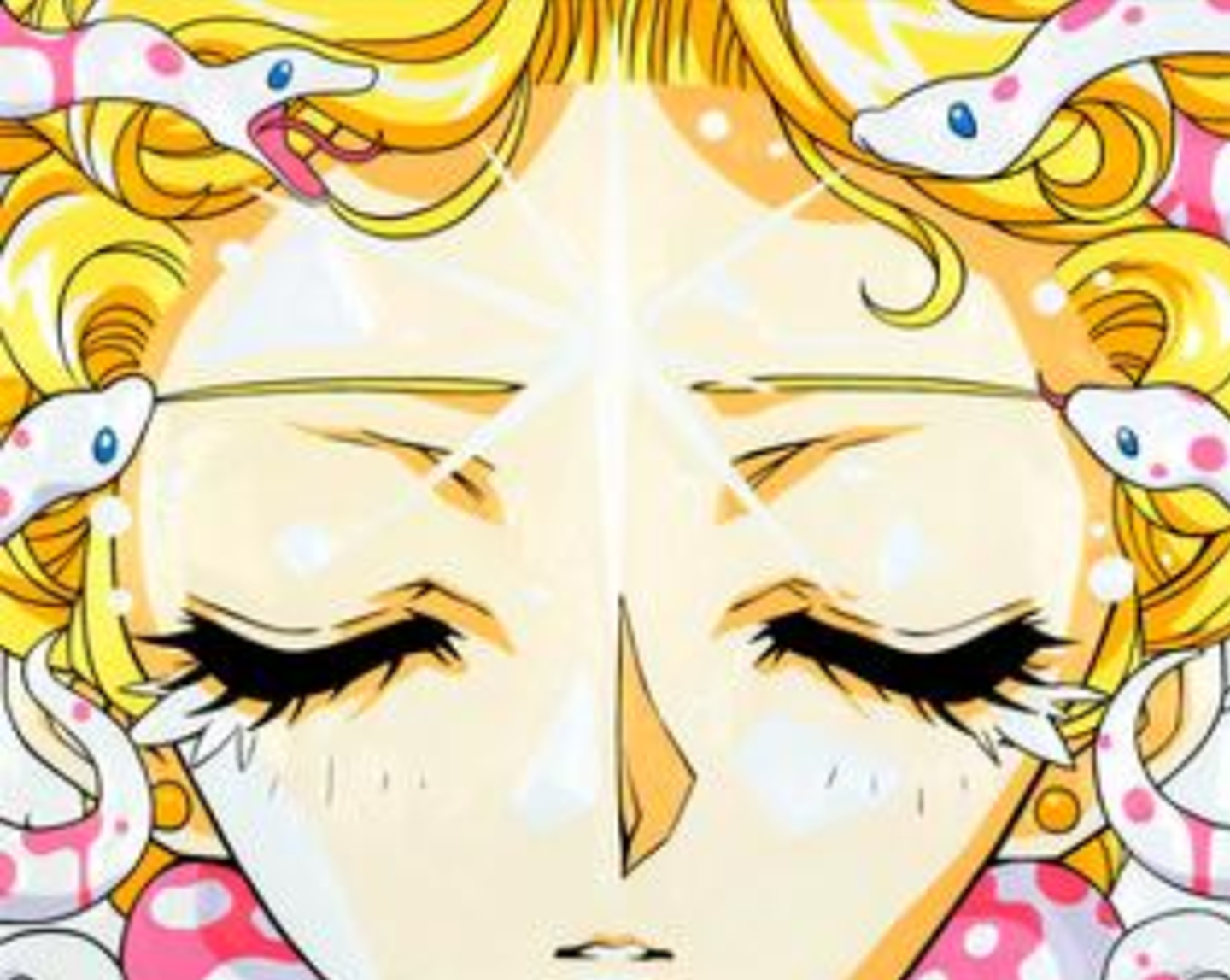
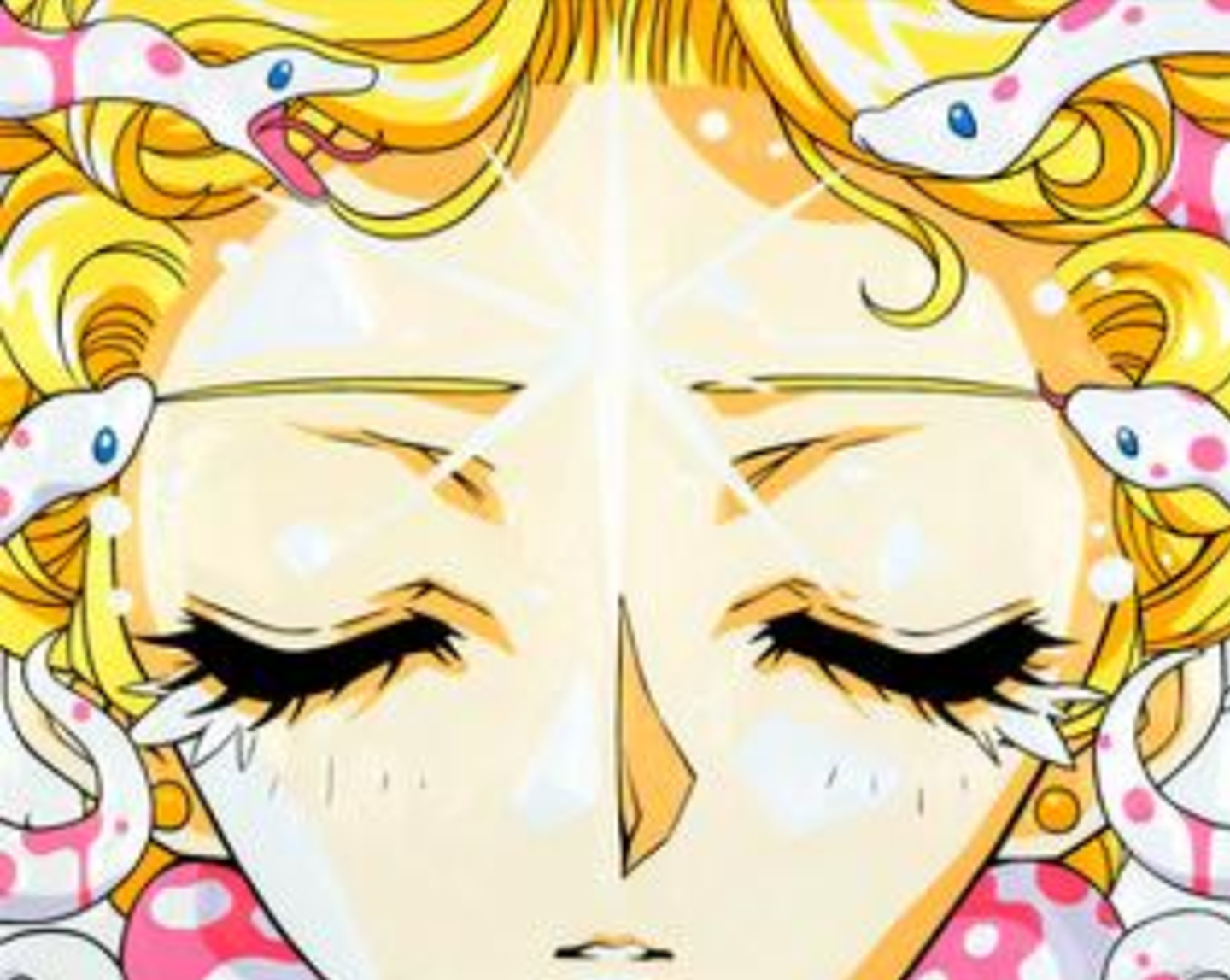
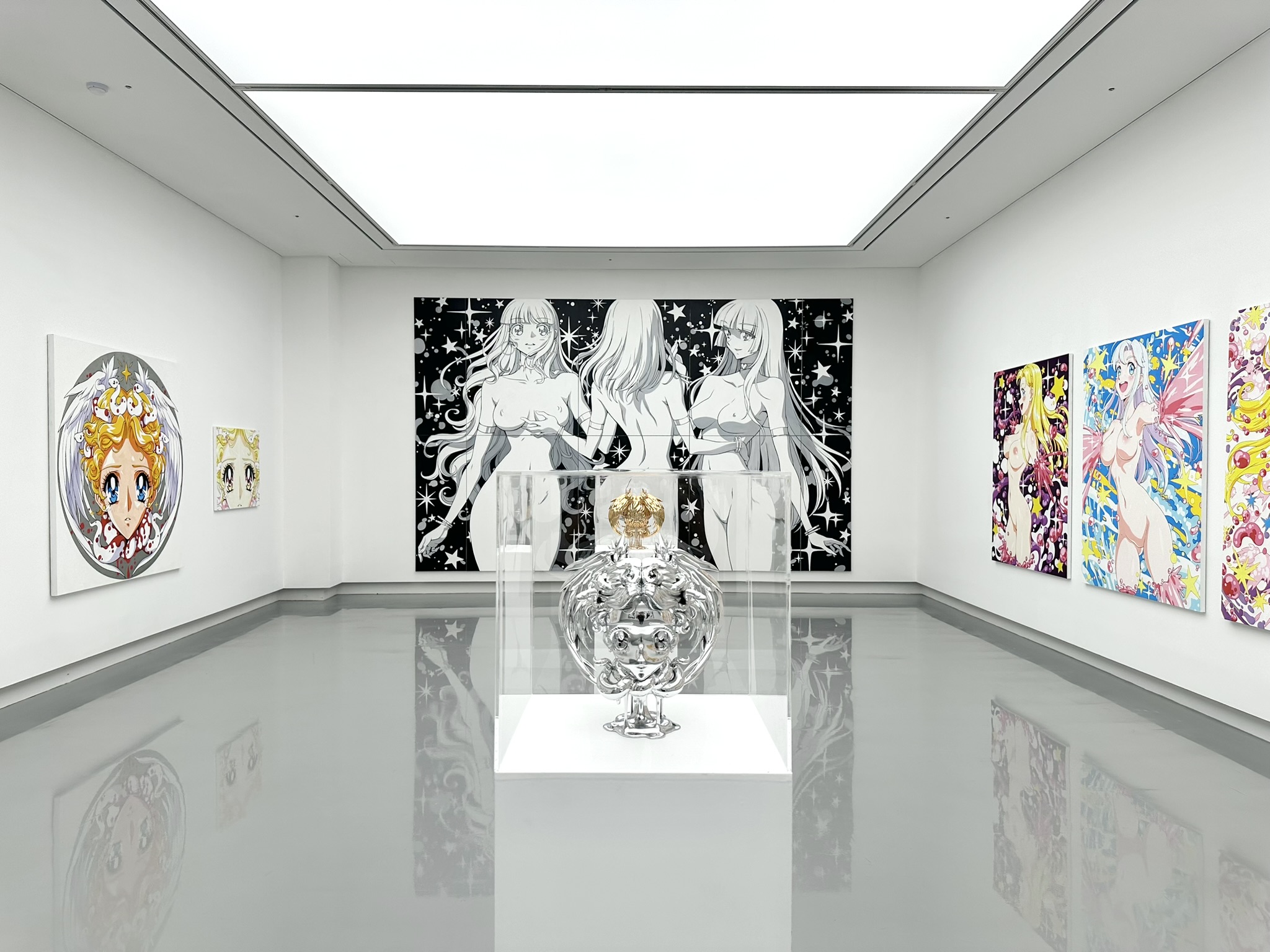
The gaze he sees in ancient Greek sculpture is not only directed to Danae, but also to Medusa's head. In ancient Greek mythology, Medusa is a being who has the power to turn anyone who looks at her into stone. There are some sculptures created based on this myth, but here I would like to focus on the narrative. In the myth, this being's head was severed, which is also depicted in paintings by Rubens and Caravaggio. The figure of Medusa depicted in Head of Medusa – Pink(2022), which consists of two works in the series, can be understood as a work that deals with the gaze as an extension of his look into the presence of the torso.
In this painting, Medusa is illustrated with her eyes open and her eyes closed respectively. Our encounter with Medusa is possible when she is alive but does not open her eyes and when she opens her eyes with only her head left behind. If the draws attention to a silent mass, the exchanges gazes while being blocked. Just as when we meet Medusa, we must close our eyes to survive, the closed eyes are the gaze we send to Medusa when she is alive, not dead, and when we look directly into her eyes, it is possible because when we look directly into his eyes, it is a dead, severed head.
In short, life (for the viewer and Medusa) in the closed eyes and death (of the viewer and Medusa) in the open eyes intersect. Yunsung Lee's work is not simply a conversion of the artist's interest in figure sculptures of the past century into paintings. To him, the flat surface is a space that deals with seeing = directing gaze from places where body parts and gaze are severed or blocked.
1) Yukio Mishima, 《Confessions of a Mask》1950, p.140, from Japanese original, translation by the author.
2) Instagram Post, https://www.instagram.com/p/CqZUBx2PnSY/?igs hid=MzRlODBiNWFlZA==
3) Refer to Lim Geun-Jun’s “Critical Memo on Yunsung Lee’s Paintings” and Jeong Hyeon’s “Cross Section of Structure”