In
1968, Jack Burnham, in his essay “System Esthetics” published in Artforum,
argued that art was moving from an object-oriented to a system-oriented
culture, and that this shift would emerge not from objects themselves but from
the processes of becoming objects. He also claimed that the distinctive
function of contemporary art no longer lies in its material persistence, but
rather in the relations between people, and between people and their
environments — that decisions regarding the use of technology and scientific
information would, literally, become art.¹
More
than fifty years later, many of Burnham’s predictions have become everyday
reality. The shift from a world structured by objects to one structured by the
invisible flows of information and technological sophistication is precisely
the world we inhabit today.
Koo’s
practice is not about the contents delivered by media but about deploying the
problematics of media itself as sculptural vocabulary within today’s media
environment. Grounded on the infrastructure of information technologies
operated by software and hardware, he constructs new hardware to make visible
the ways in which software functions.
In
his work, hardware is not simply the machinery that enables programs and
information to run. Rather, hardware becomes a frame to demonstrate how
programs and information themselves “exist.” He envisions this system as a kind
of “body,” one whose forms emerge from reading the flows of code that make
software usable. The works we encounter are thus “bodies” — but bodies composed
of software, that is, the materialized surfaces of code flows.
This
constitutes a kind of aesthetic decryption of the media environment — so much
of which is symbolized and coded — that dominates our world today. Underlying
this approach is an attitude of reflection: what forms does a world ruled by
software take, and, through it, what forms does our own way of life assume?
Lev
Manovich, in Software Takes Command, calls software
“something else,” pointing out that all the “cultural software” used by
millions is merely the visible portion of a much larger software universe.² He
also argues that the material elements constituting “culture” today, as well as
the systems and processes that operate it, must take into account not only the
“visible software” that consumers use, but also “grey software.” He concludes
that our society is a “software society” and our culture a “software culture,”
because software plays a central role in both the material and immaterial
structures of our world.³
If
we accept that Baudelaire’s notion of modernity still holds relevance, then the
economic, political, and cultural conditions that shape the “software society”
inevitably become matters of artistic concern. Yet these references still
appear largely object-oriented. In contrast, what Koo pursues is a
system-oriented approach — plunging into the state of code itself to embody it
as art.
To
materialize the coding of information, Koo borrows engineering and biological
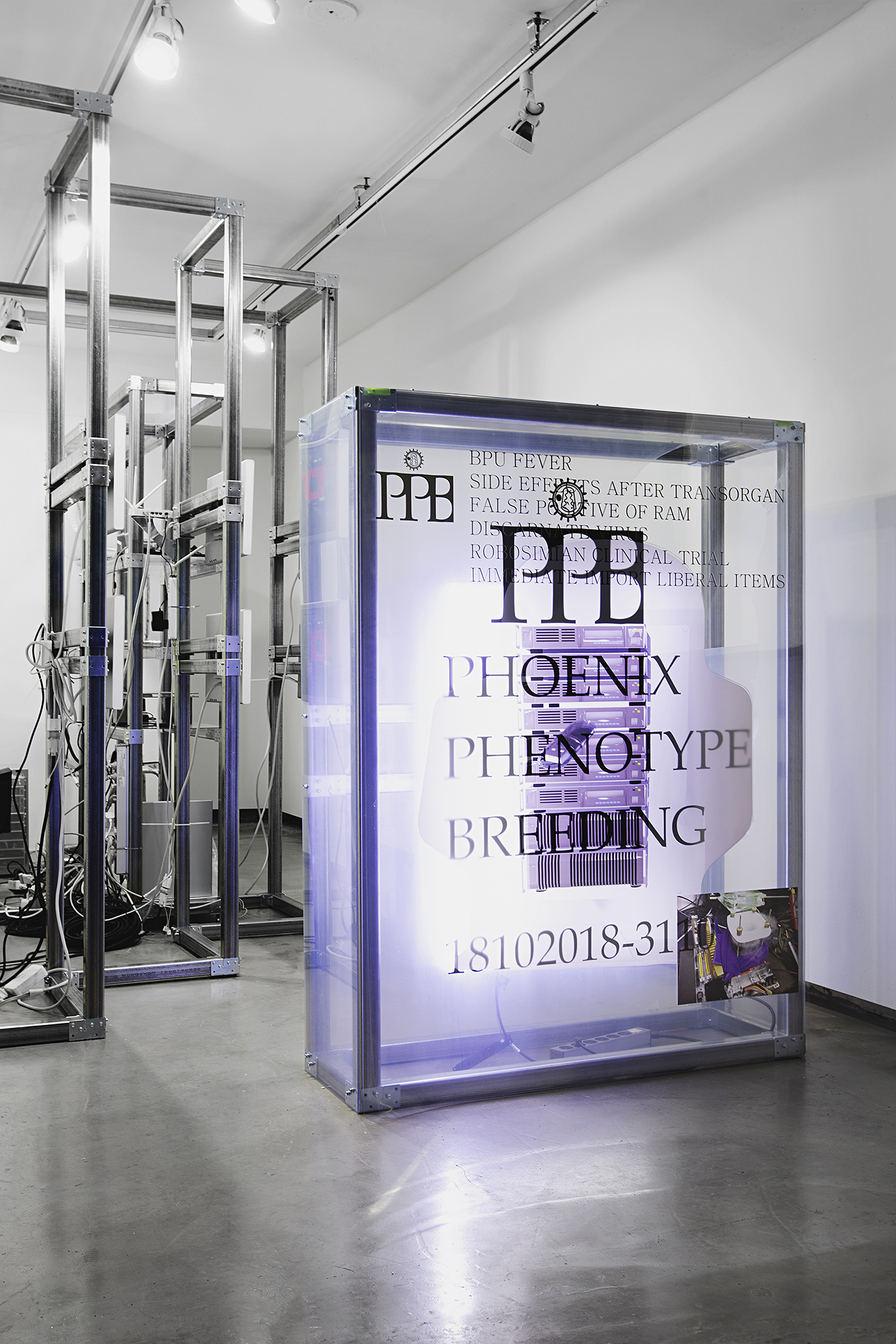
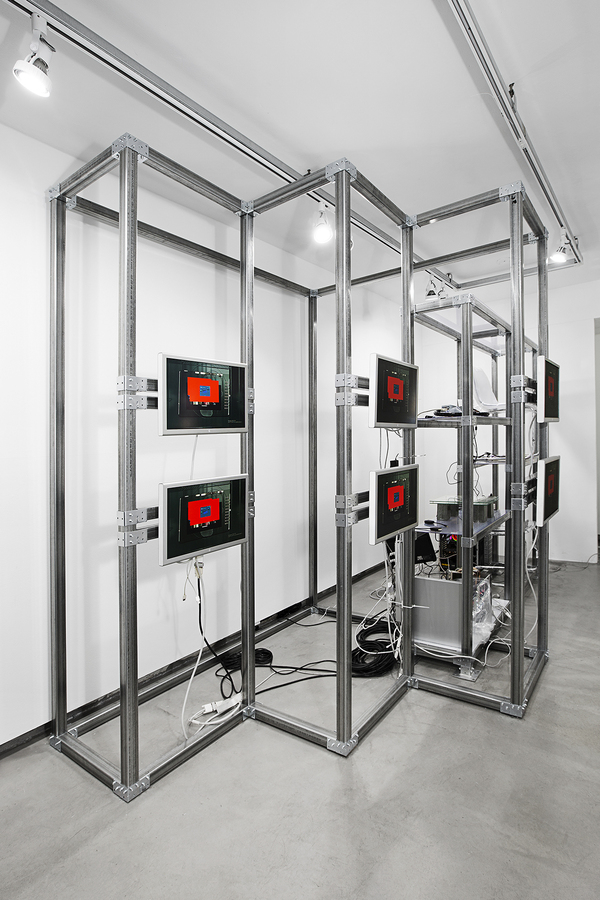
models for his hardware frameworks. In PBB (Phoenix
Phenotype Breeding, 2018), he appropriated the hardware display systems of
digital billboards, translating the latent temporal suspension of viruses
dormant within computers — not yet manifested but present — into architectural
lightweight steel frames. This revealed his particular interest in the
“internal.” From this point onward, his method has been to externalize those
systems originally hidden inside technologies, surfacing the structures that
govern the storage and circulation of information.
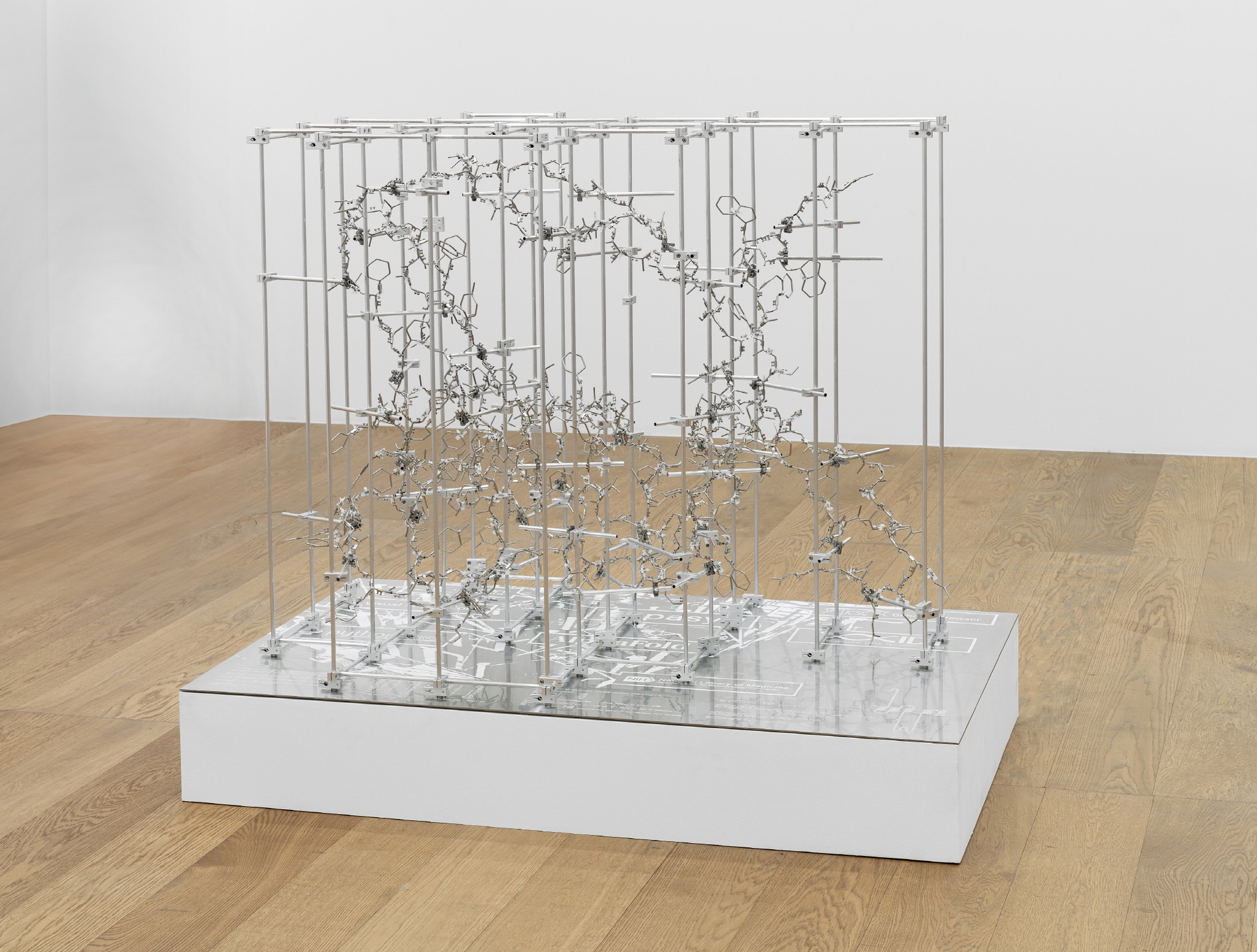
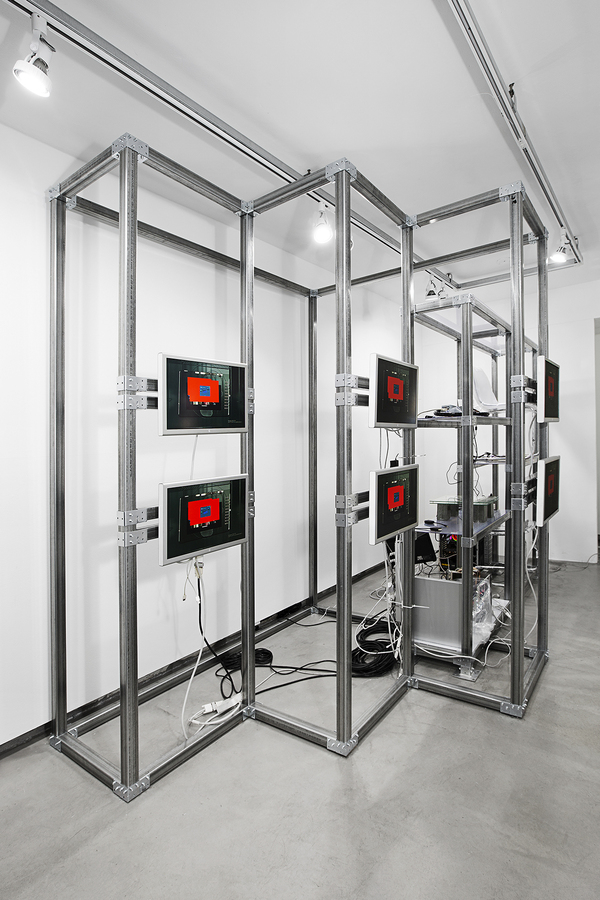
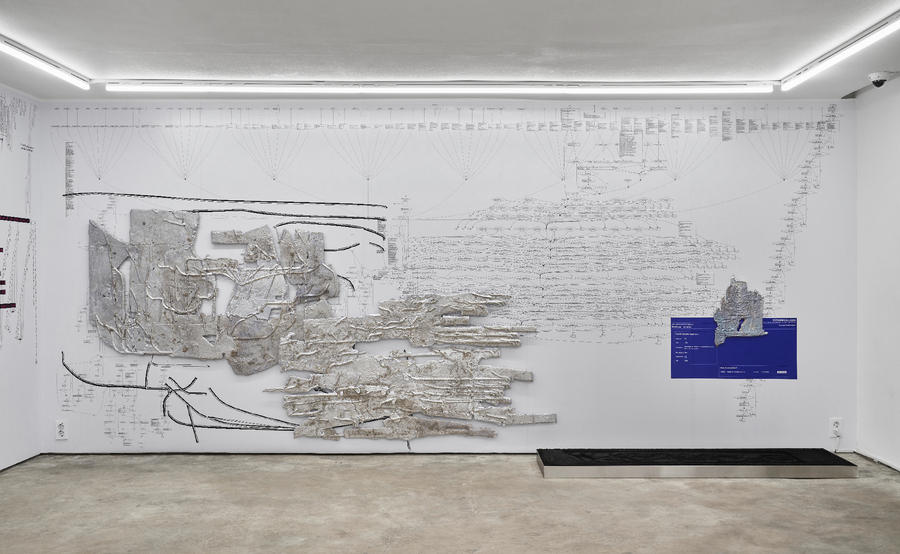
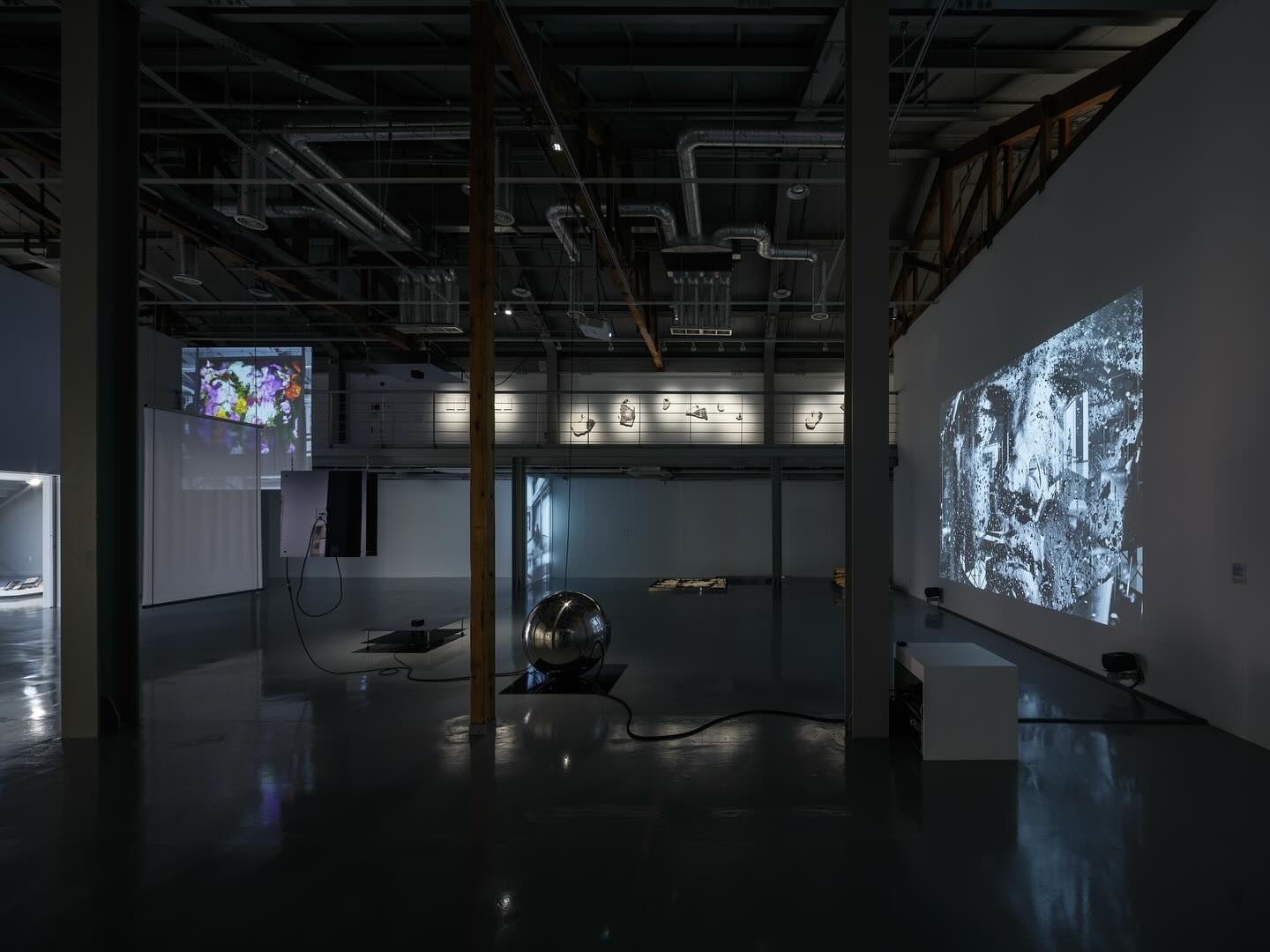
In
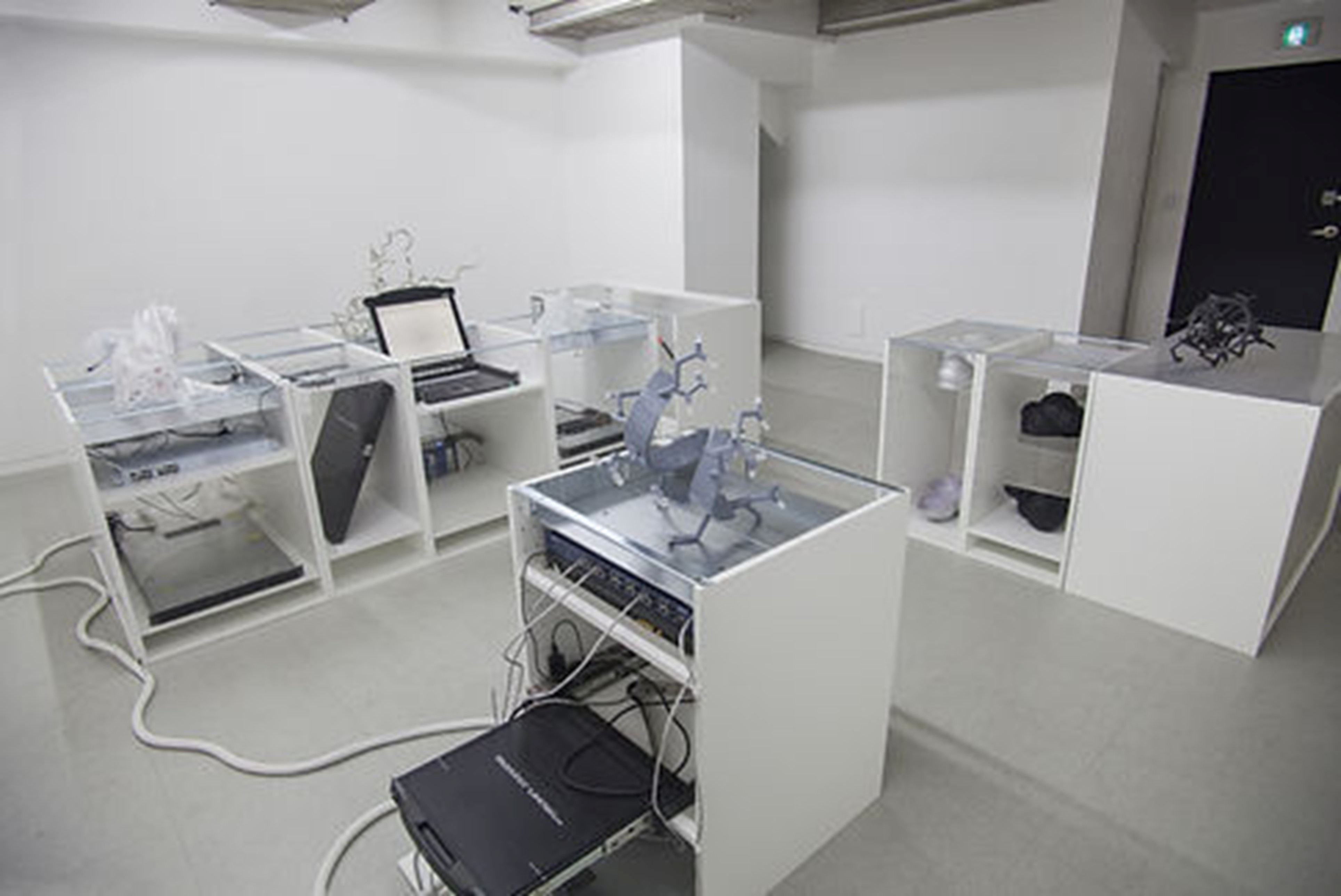
his solo exhibition 《Development of
editing methods for website structure》(2020), he
analyzed the code and HTML that underpin museum websites, hybridizing them with
systems from biotechnology, molecular biology, and computer software. This
project began with questions arising from the pandemic period, when viewing
exhibitions online — experiencing art in mediated spaces — became commonplace.
By transposing HTML from a museum website into molecular structures, he
produced forms that were 3D printed and arranged similarly to the layout of
large servers. The suggestion here is that the coded spatial structures of
websites constitute a new “real” in which we experience art. Yet this real is
not offered as representational message, but as manifestation through the forms
and structures of technological language.
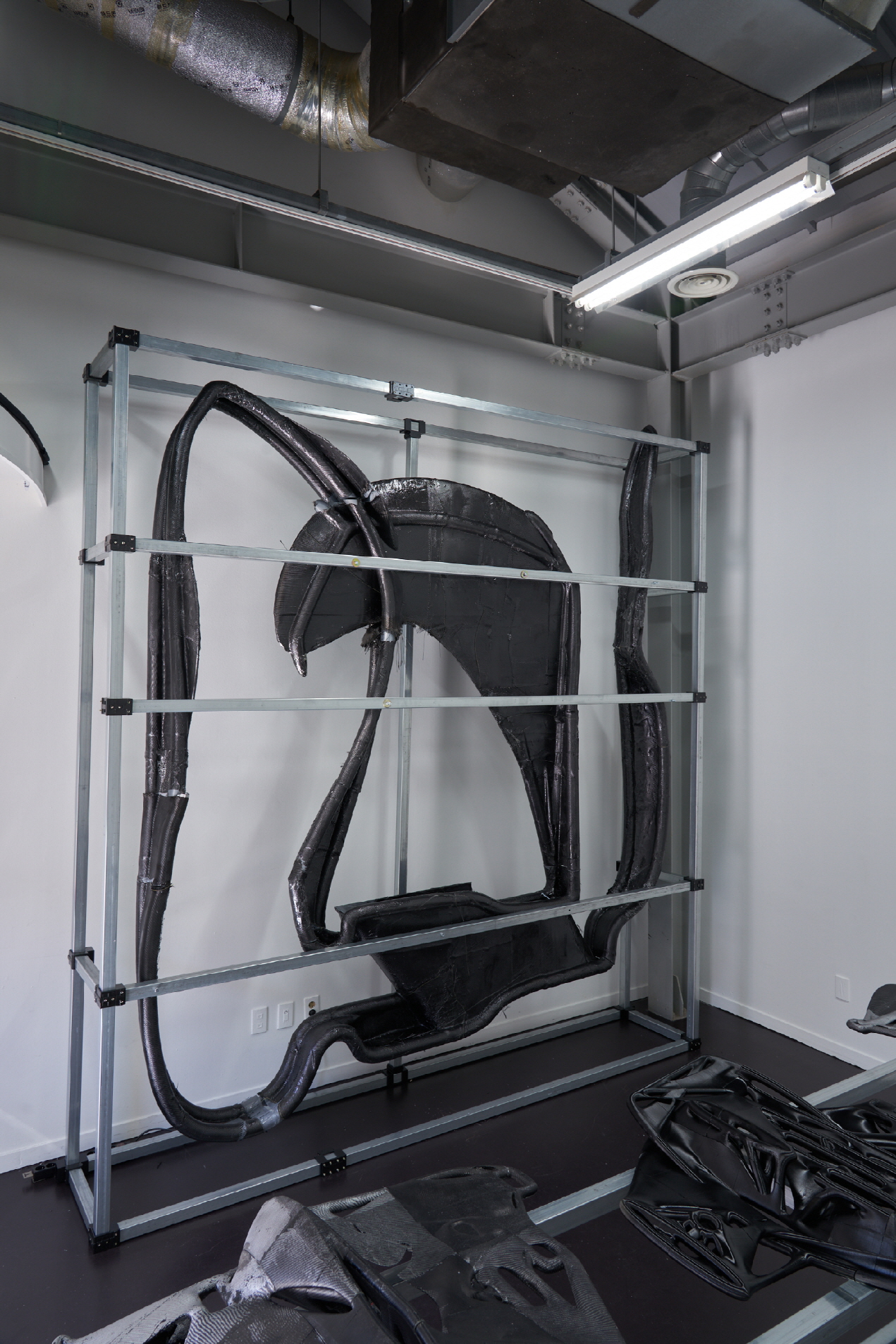
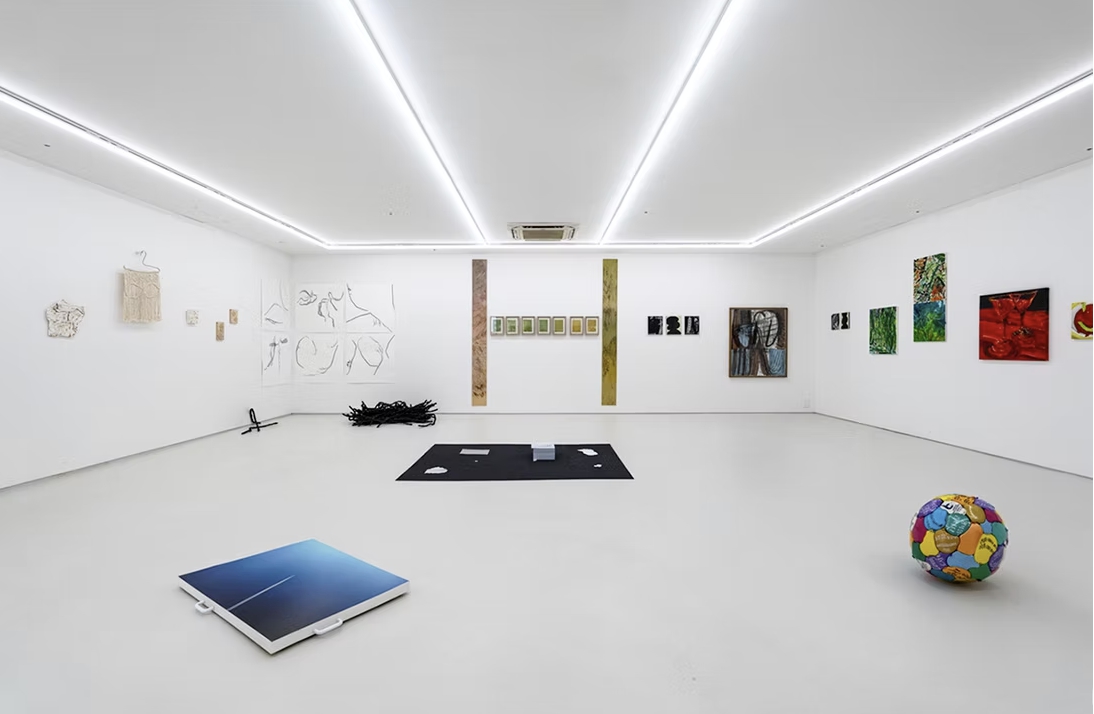
In
his solo exhibition 《On the Growth
and Form of Software》(Incheon Art Platform G3, Incheon,
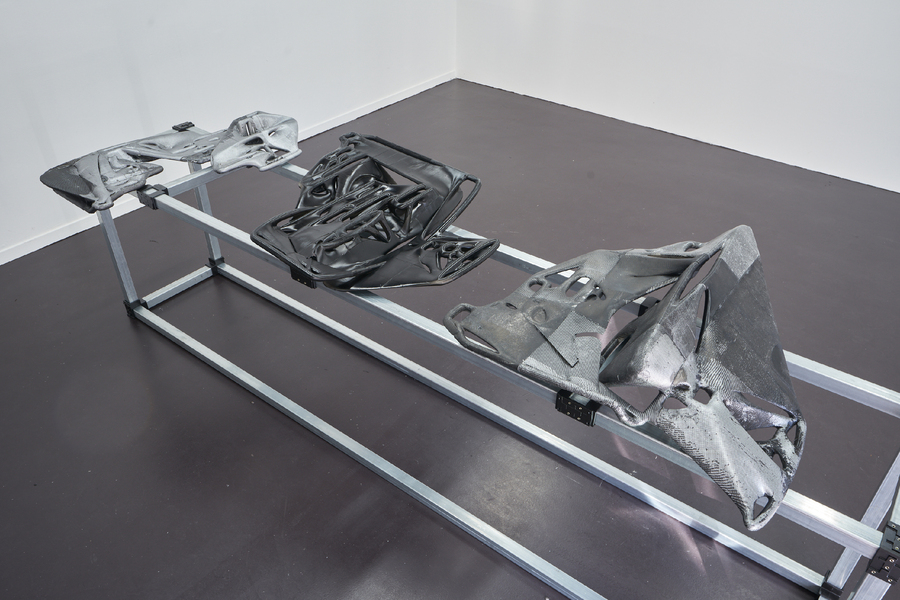
2021), he took yet smaller units: the processes of specific source codes being
revised through developer-community discussions. He generated sculptural forms
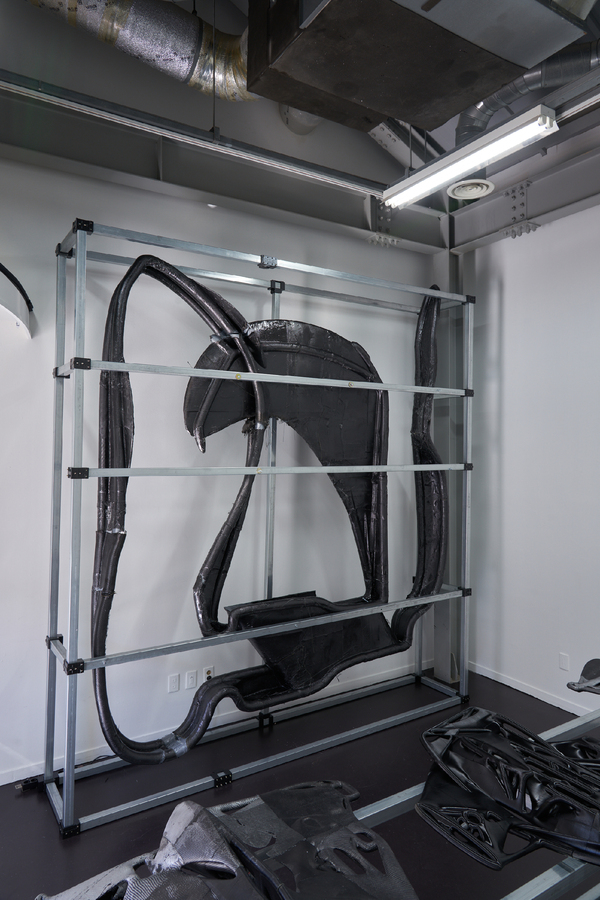
resembling muscle bundles to represent the growth of code, using carbon fiber —
the industrial material most analogous to muscles — to visualize them. The new
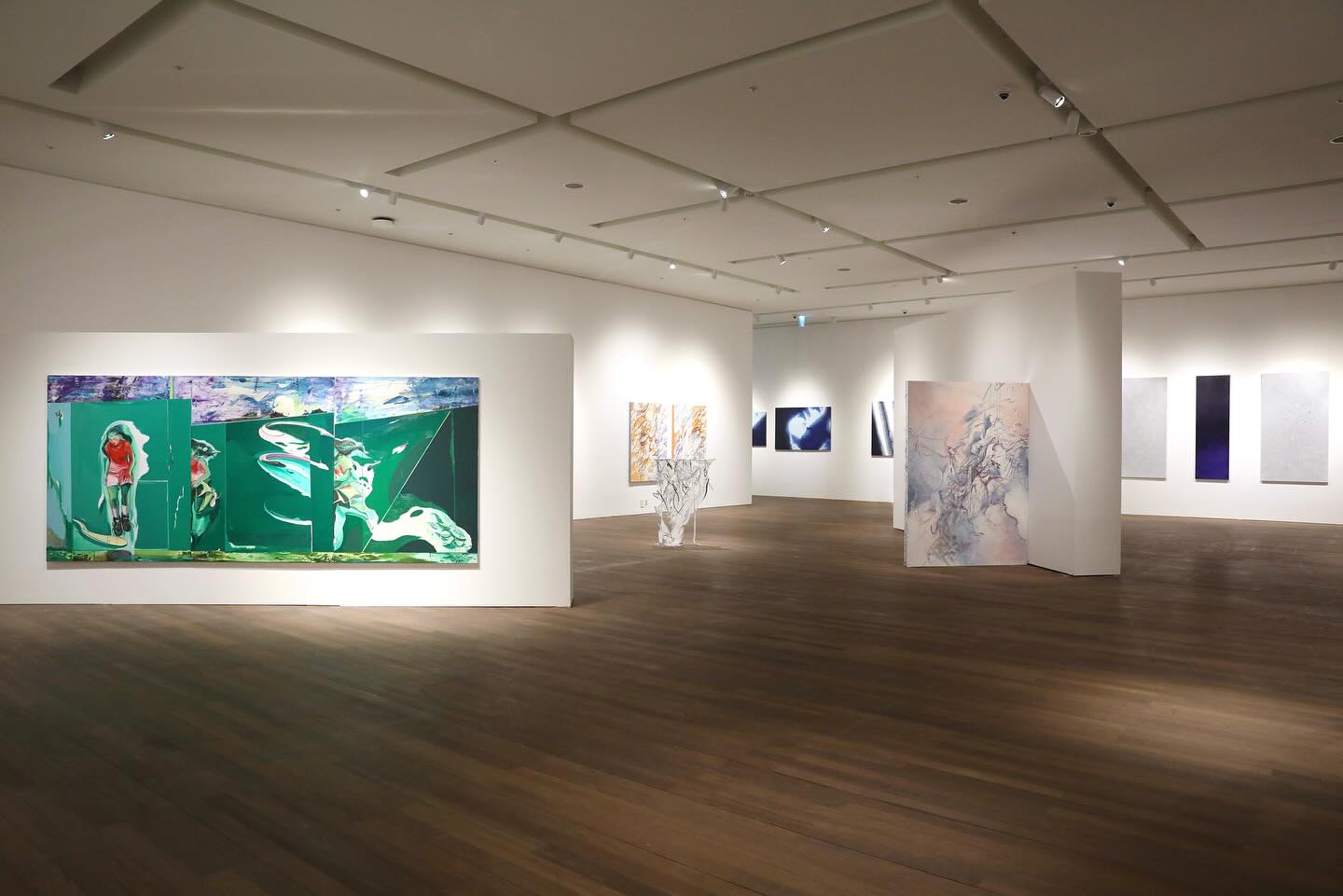
work Soft Muscle(2021) materializes code’s growth as
the generation of muscles, overlaying 3D printing with CFRP molding or
water-transfer films to effectively embody the toughness and density of
muscular fibers.
Carbon
fiber is often used in the interiors of muscle cars, with woven textures and
surfaces that evoke muscular bodies or powerful machines. These large, black,
grotesque masses with artificial textures evoke a bizarre grotesque quality.
Realizing that these forms visualize immaterial, abstract code only amplifies
the gulf between the tangible intensity of their materiality and the intangible
abstraction of code.
To
give form to code — already complete as symbols — is to appeal to our human
cognition, which cannot perceive abstraction without concrete forms. To
visualize abstraction recalls the transformation of inorganic into organic,
evoking biological analogies. Koo frequently draws upon concepts from organic
chemistry and biology: comparing the selection of key tags from website sources
to genetic scissors, adopting molecular visualization methods to give form to
website codes, borrowing exhibition titles from classics in biology.⁴ The most
significant analogy, however, is that of reverse transcription.
Some
viruses, unable to metabolize independently, parasitize host cells. Certain
viruses produce DNA from RNA in reverse — a deviation from the normal process —
and insert it into host genes. The DNA altered by viral RNA produces different
mutations. Koo regards such reverse transcription, which generates difference,
as a search for alternative possibilities.
Since
Plato, images have been regarded as secondary to the real. But today, in the
age of Photoshop, Illustrator, and Rhino, where objects can be extracted from
images, reality itself has become something that arrives after images. In this
reversal of value systems, Koo’s act of giving bodies to code reflects a
paradigm shift in which software transforms the essence of all things that
constitute culture.
Visualizing software recalls the dominance of media over
our present age, the hybrid sensations of contemporary humans who cannot help
but synchronize with programs and devices.
But
above all, what Koo dreams of is the possibility of reversing physical,
human-centered sculptural language and exhibition spaces into the immaterial
language of programs, generating unimagined new mutations. We can only await
the healthy emergence of those mutants.
1.
Jack Burnham, “System Esthetics,” Artforum, September 1968, p. 31.
2.
Lev Manovich, Software Takes Command (New York, London: Bloomsbury
Academic, 2013), p. 7.
3.
Ibid., pp. 21, 33.
4.
The exhibition title 《On the Growth
and Form of Software》 borrows from D’Arcy Wentworth
Thompson’s classic On Growth and Form (1917), which systematized
morphological development in biology.