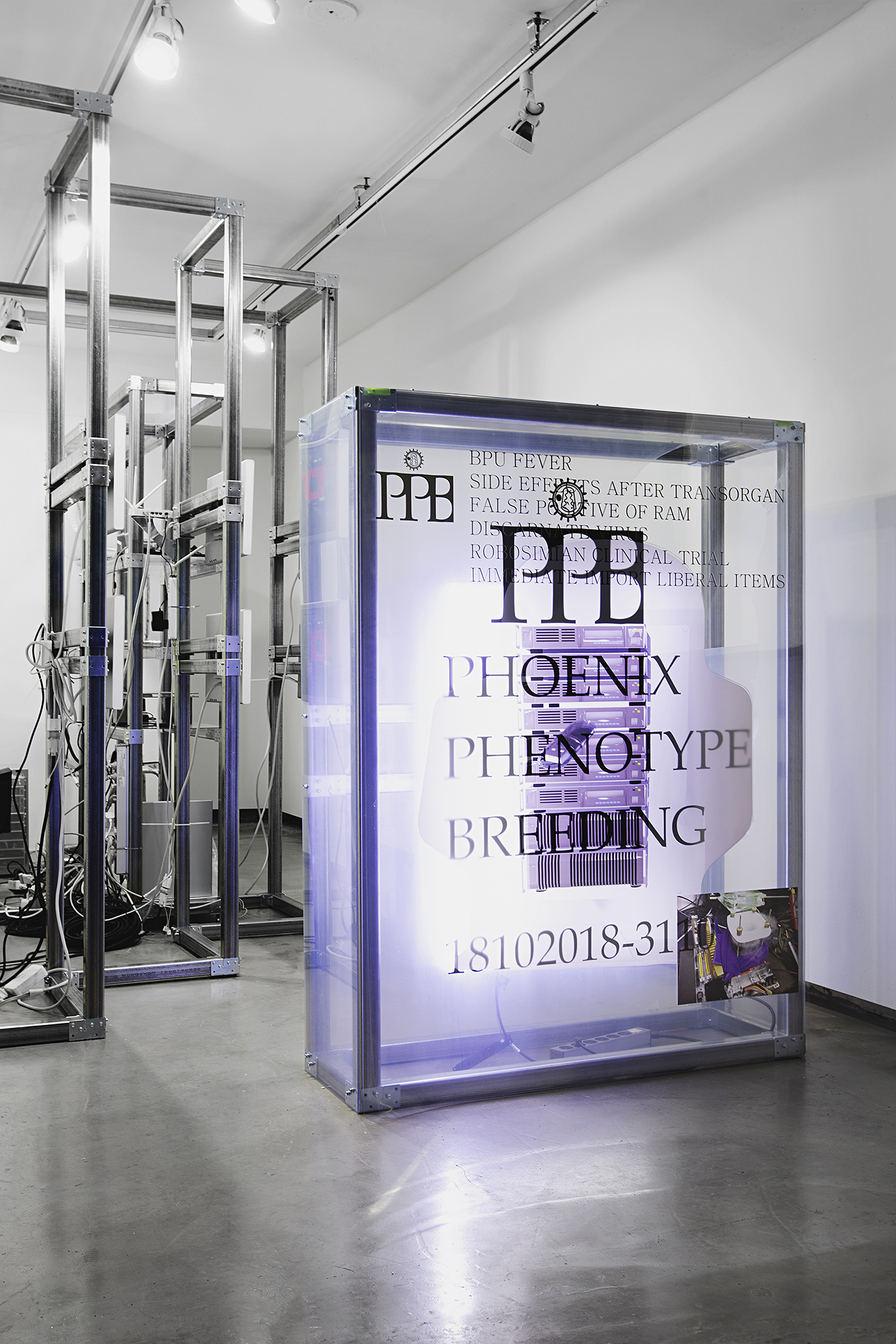
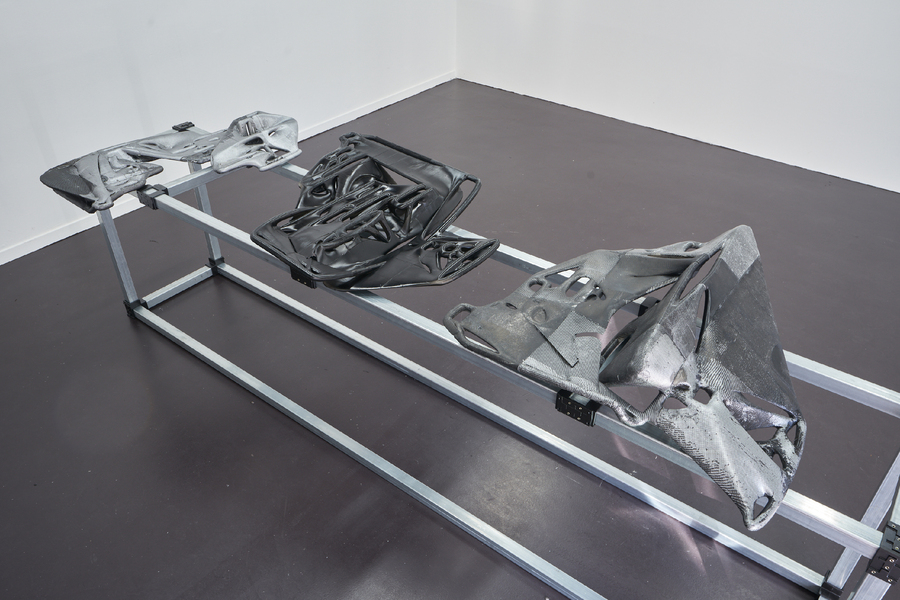
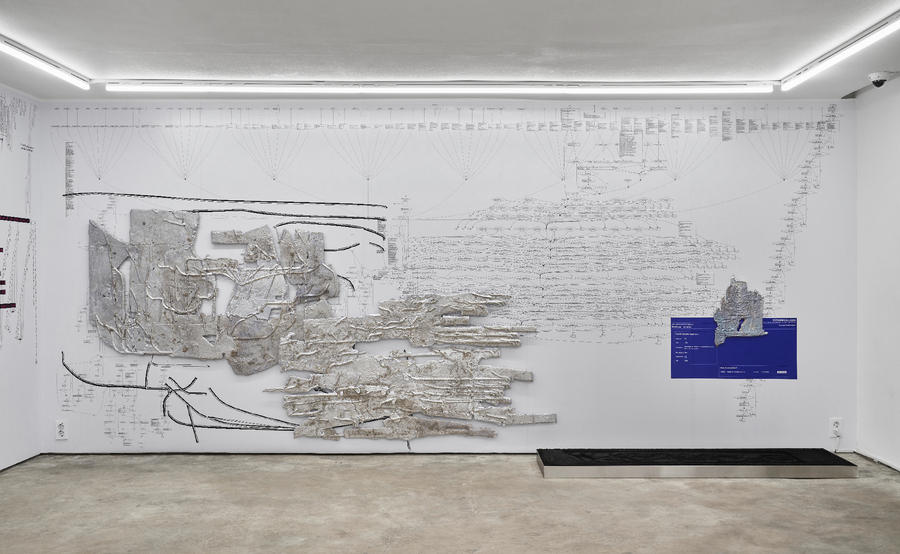
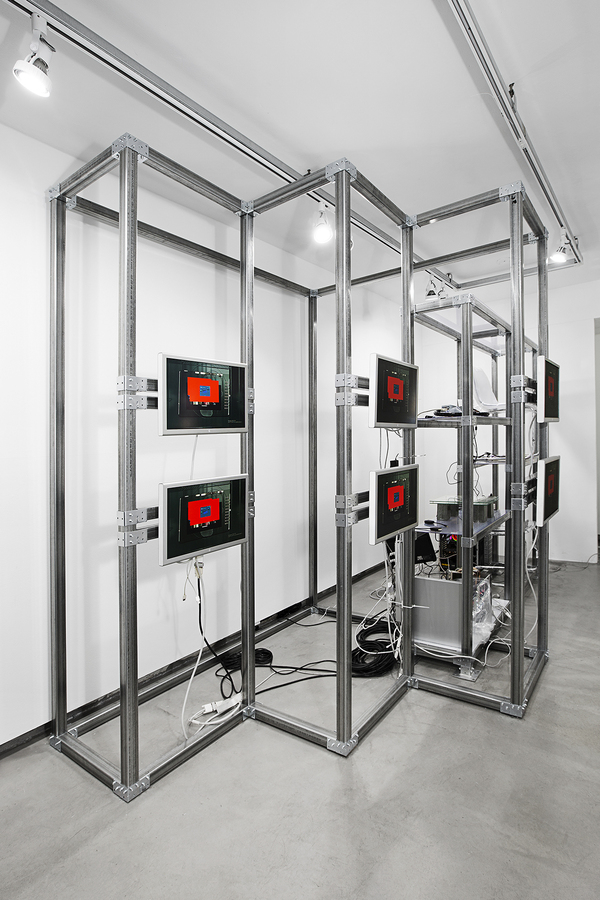
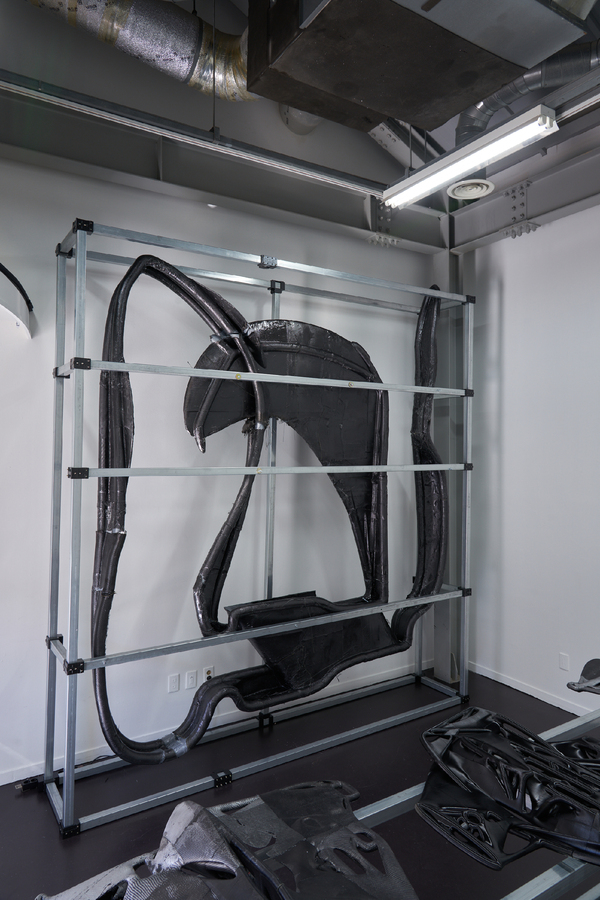
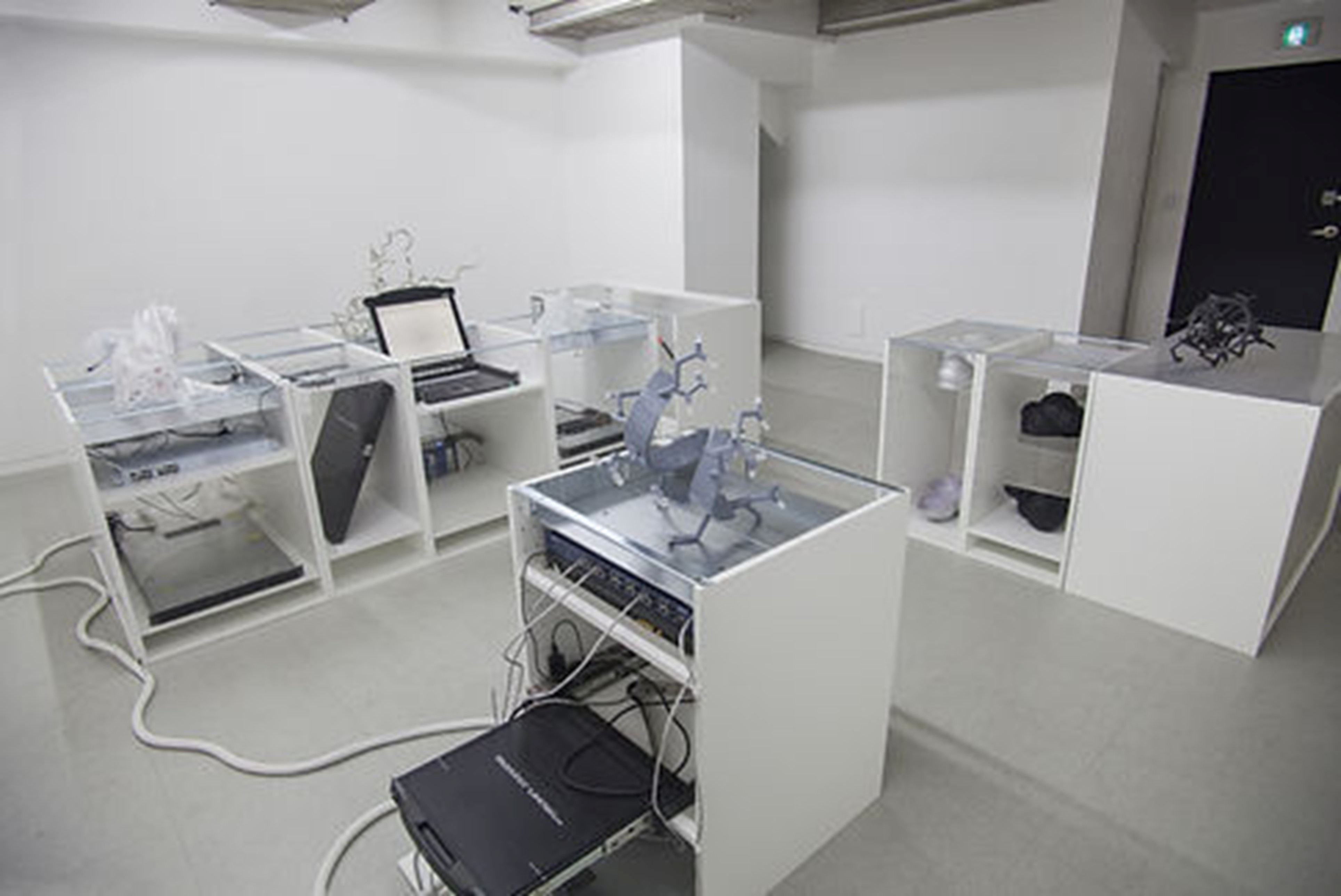
Gooroom,
Sun, Red Star, Creeper, Stone, Hare, and Cascade — they share a common ground:
nature. While planning 《Monocoque:
Principles of the Garden》, Koo selected computer
programs named after natural entities. He had already given biological
principles to his forms in past works, since he regarded the operation of
software as not so different from that of living organisms.
Software
named after nature, or nature renamed through software, crosses the binary
structure of the natural and the technological. This act of crossing is as
difficult and risky as reconstructing the irreproducible. Yet if one accepts
the assertion that “nature is no longer the pure and simple first nature but a
cybernetic nature,”⁷ —
if one accepts that the gradual machinization of the “artificial earth” is irreversible,⁸ then one may also nod to the
idea that art will become a speculative circuit that appropriates cybernetics,
raising new questions about technological diversity.⁹ Seen this way, opening a hole
into software’s
concealed underside to lead the deconstruction of nature and technology through
the “principles
of a garden”
is not at all strange.
Gardening
is perhaps one of the oldest technologies for relating to nature. A garden
evokes images of ornate landscaping or a calm space for midday rest. Yet
beneath its soil, weeds, insects, and moles gnawing tree roots coexist. To
understand the technology of the garden is to understand this riot of life. Koo
digs beneath the software’s surface, uncovering the tumult of source code
hidden beneath logical language, and individuates it. Not trees, but beneath
the trees. Not roots, but beneath the roots. Only by getting one’s hands dirty
with soil and dust, by digging down, can one know what lies there.
Footnotes
1.
Jamyoung Koo, “Only Frames Left, From a Worthless Beginning,” Artist Note,
n.p.
2.
Kate Crawford, Atlas of AI, trans. Roh Seung-young, Soso Books, 2022, p.
43.
3.
Wendy Hui Kyong Chun, “On Software, or the Persistence of Visual
Knowledge,” Grey Room 18, 2005, pp. 43–44.
4.
Alexander R. Galloway, The Interface Effect, Polity, 2012, p. 58.
5.
N. Katherine Hayles, My Mother Was a Computer, trans. Eunju Song and
Kyunglan Lee, Acanet, 2016, p. 70.
6.
Alexander R. Galloway, ibid., pp. 99–100.
7.
Yuk Hui, Recursivity and Contingency, trans. Hyuk Cho, Saemulgyeol, 2023,
pp. 255–256.
8.
Yuk Hui, ibid., pp. 75–79.
9.
Ibid.