A
monument is a public structure erected to commemorate a person or an event. It
is often a marker to celebrate a nation’s historical achievements, but
conversely, it also serves as an important symbol in rituals of remembrance
following great sacrifice, or as a pledge not to repeat past wrongs. The lesson
of a monument lies not in the success or failure of the past it stands upon,
but in its ability to rescue the present from failure—or at least to defer such
failure. In other words, a monument presupposes failure. Then, upon what kind
of present does Sunghyeop Seo’s Monument stand?
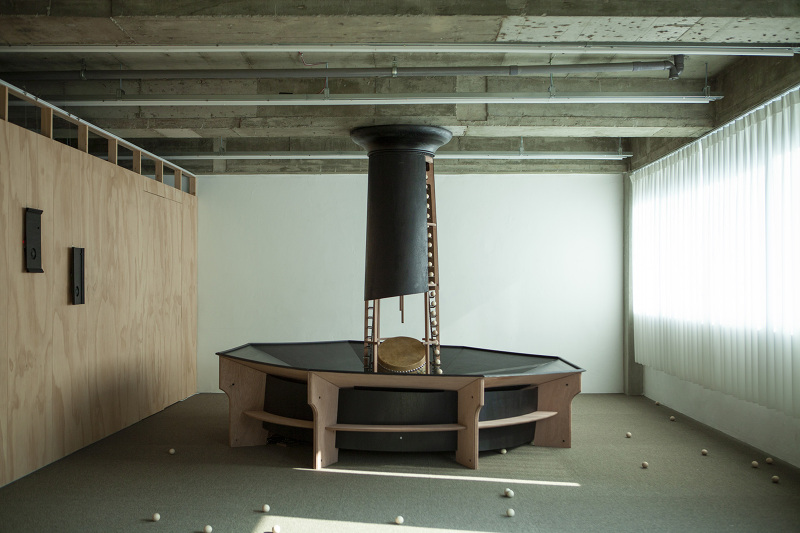
The
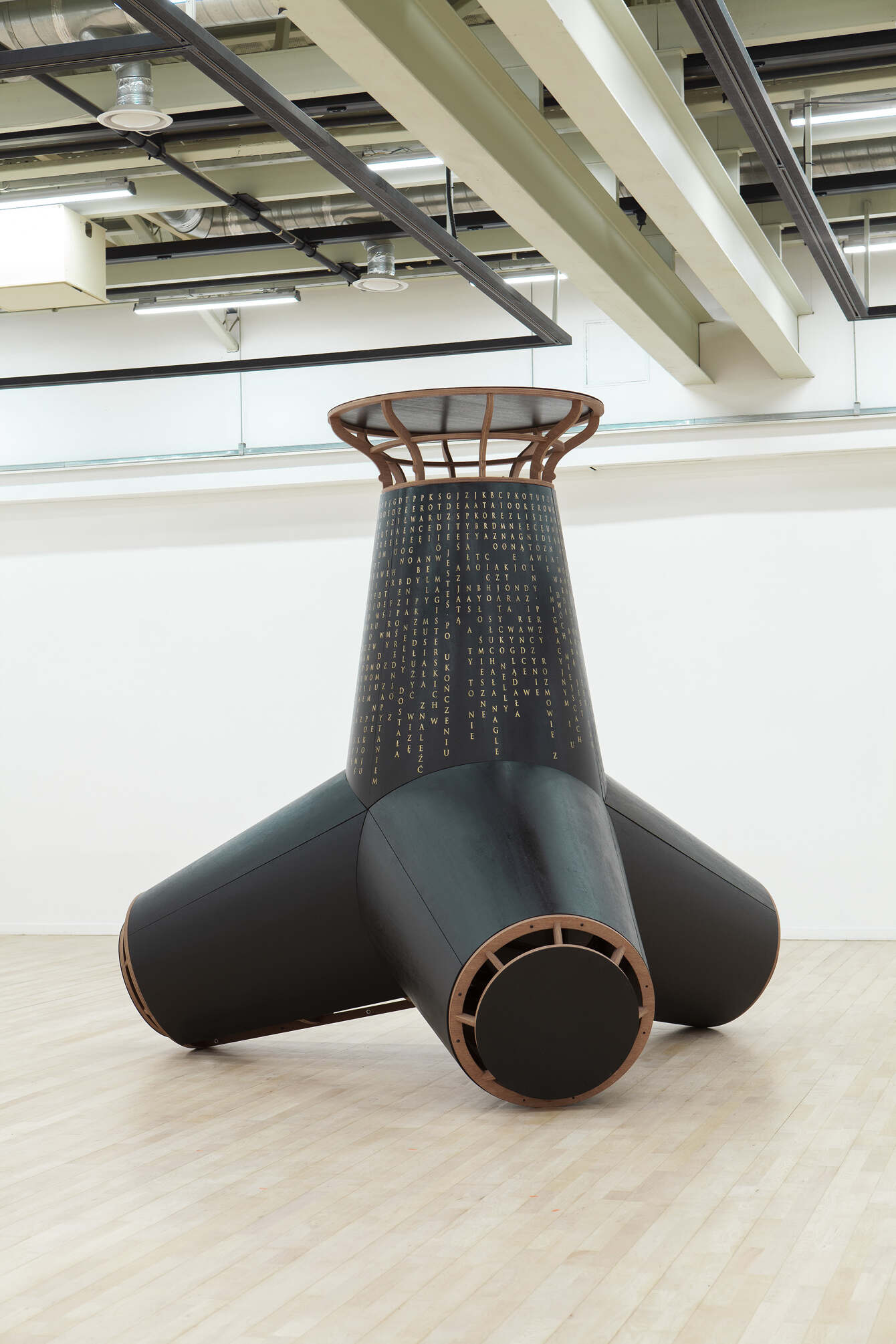
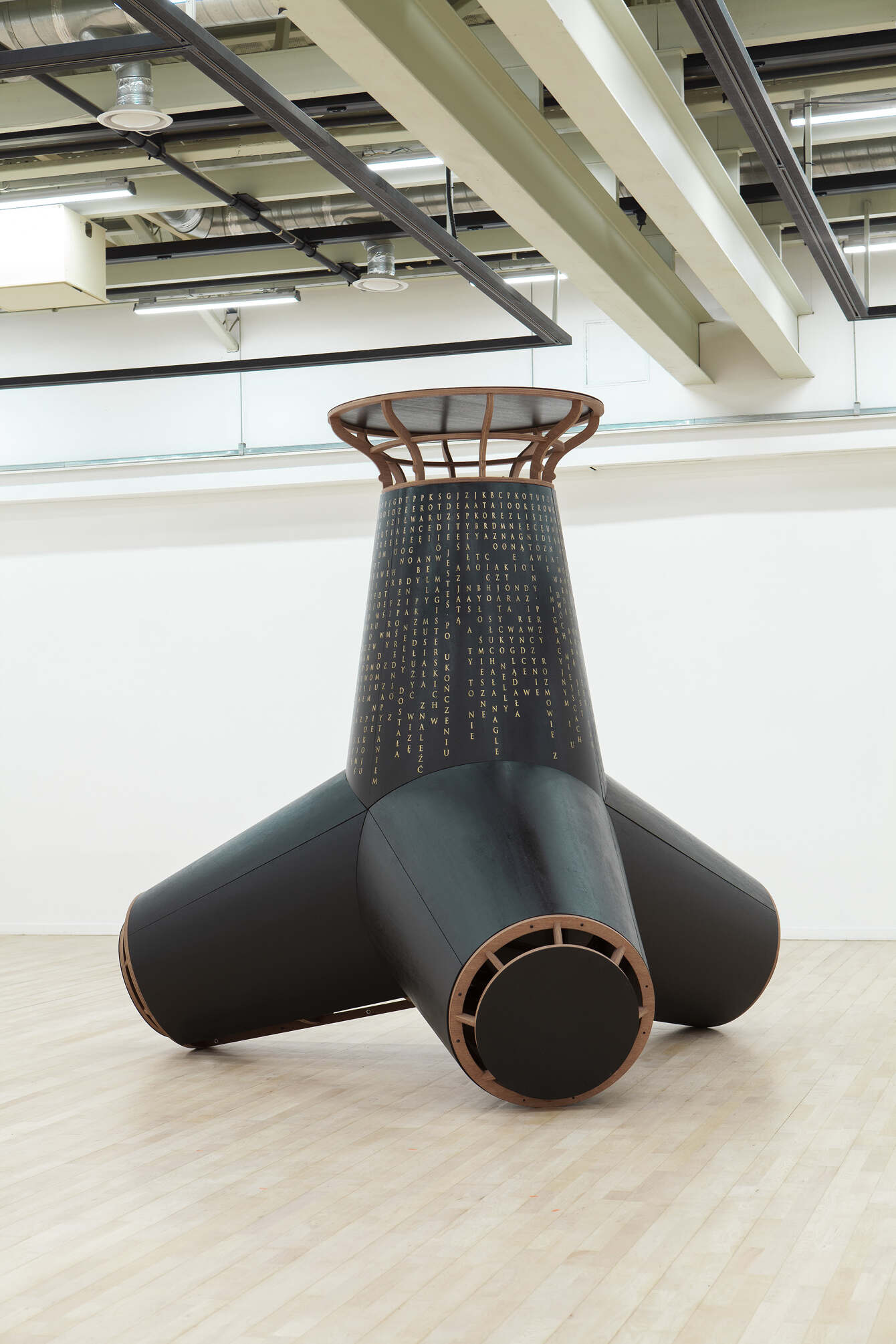
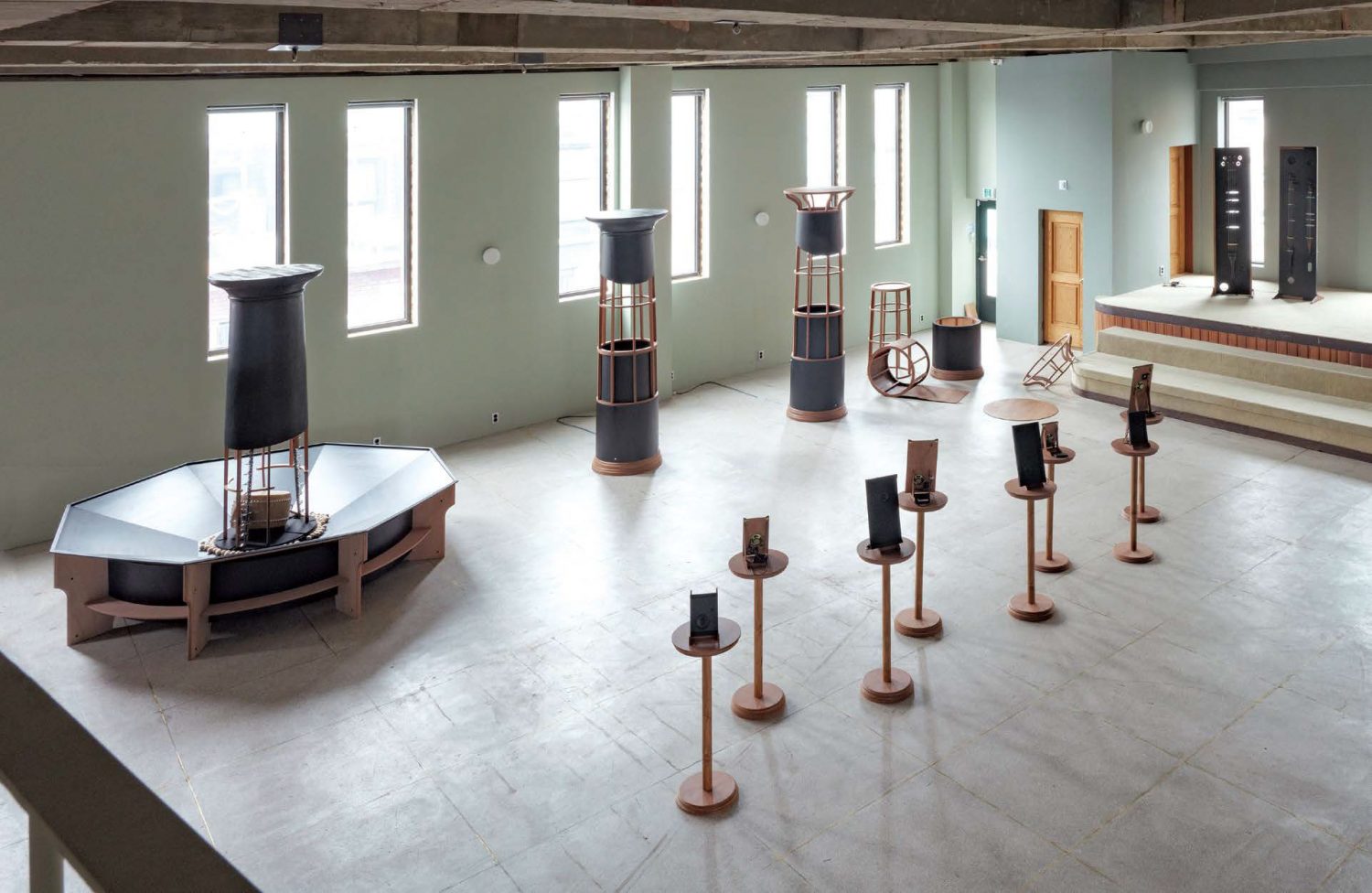
sculptural work, measuring 250 cm in height, is primarily composed of plywood
painted in ink. It combines a Doric column—one of the architectural orders of
Greco-Roman antiquity—with a tetrapod, a concrete structure commonly found
around breakwaters. While overall taking the shape of a tetrapod, the tips of
its four limbs are transformed into the tops of Doric columns, becoming
passageways through which sound passes. The two elements that compose this
monument are chosen types: representatives of vastly different worlds with no
shared origin, traits, or use.
Their encounter produces misunderstanding,
alienation, and disconnection—realities that lie beneath Seo’s Monument.
Likewise, the low narration that flows around the work and the unfamiliar
language inscribed on its column-topped forms underscore this. Written in
Polish, the text recounts anecdotes of mistranslation that arise when different
cultural spheres collide, and reveals the shortcomings of stereotypes. These
are the kinds of small, awkward missteps—conversations that slip between close
companions—that bring forth a wry, involuntary chuckle. Yet when these
seemingly trivial events are articulated as spoken narration and inscribed text
within Monument, they begin to raise questions about
individual positions within social categories.
Monument drifts
outside the functions of its two parent forms, orbiting without anchorage. It
is neither temple nor sea, unable to support or block anything. This
“placelessness” makes Monument easily
marginalized, hard to acknowledge. While we profess to embrace and welcome new
human and non-human members alike, we are often stingy when it comes to
granting them a proper place. (Think of the difference in reception between
refugees and tourists; the unease evoked by radical figures or hybrid objects
falls into the same category.) In reality, acceptance still matters:
recognition by others becomes the cornerstone of one’s place. In this sense,
the unfamiliar appearance and oblique speech of Monument are
disquieting, even threatening.
That which fractures familiar landscapes rarely
receives welcome. The courage to claim the right to be here, to carve out a
place where none exists, and to unsettle others—these are the gestures of Monument.
It is an anchor preventing concepts like freedom, equality, and inclusivity
from dissipating into empty abstractions or evaporating as hollow declarations.
If the present is not to fail, more objects like Monument must
exist. By its very being, Monument testifies that
we must not grow accustomed to the languages, powers, relations, and structures
that hold up reality. What it asserts is a reminder: if we fail to listen when
it declares its role in safeguarding rights, we may overlook the fact that
someone’s very existence can be denied.
Monument states
firmly yet gently, “My place is here.” Without shouting or rage, it asserts its
presence. To grasp its rhetoric, we must reconsider its two parent forms. Both
column and tetrapod are proportionally stable, yet rarely stand alone. They are
parts of a whole, requiring the presence of others. To perform their function,
they must stand shoulder to shoulder with their likenesses. This reveals the
interdependence of objects, that no being can exist in isolation.
It is
precisely this interdependence that distinguishes Seo’s Monument from
other monuments and equips it with a strategy to redeem today. It insists that
the subject who creates a place must be oneself, not dependent on another’s
approval, while simultaneously turning outward. At times, it exposes its own
insufficiency, extending a hand to others. The union of Doric column and
tetrapod is solidarity among those left alone—a greeting of welcome to new
beings.
Bibliography
Kim,
Hyun-Kyung. Person, Place, Hospitality. Moonji Publishing, 2015.
Azuma, Hiroki. Philosophy of the Tourist. Translated by An Cheon, Rishiol,
2020.