If
we follow Rousseau’s lucid premise in Discourse on the Origin and
Basis of Inequality Among Men, then ever since the primal act of
fencing off land, humans have been oriented by the dichotomy of inside and
outside, above and below. Through this orientation, the relationship of
dominator and dominated has become at once exceedingly simple and yet, precisely
for that reason, utterly entrenched. When such a geography of boundaries
transitions into the state of human civilization, the territory within is
referred to as “us,” and the outside as “them.” Boundaries do not merely
demarcate land; within them, both “us” and “them” come to be divided by class,
race, or lineage, thereby producing the body itself as territory. The
boundaries inscribed upon land and the body become narrowed and further
subdivided, eventually converging upon the smallest units of self and other,
“I” and “you.” To become a complete subject as a territory requires a demand
for universality that must be presupposed and achieved.
The
territory of the individual must ceaselessly externalize the internal, while
simultaneously internalizing the external in a repetitive process. This
inevitability of negotiating the particular and the universal, the individual
and the whole, is ultimately tied to the action of a centripetal force of
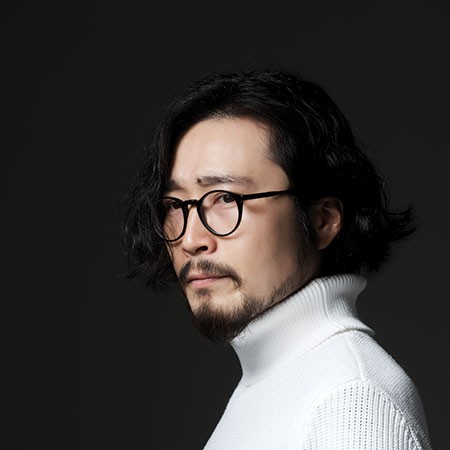
cohesion. This force is frequently named power, or domination. Sunghyeop Seo’s
practice traverses the black surfaces of the territory’s borders where this
centripetal force of power does not reach. The boundary line, belonging to no
one and to everyone, disrupts the cohesion toward the center. His black
boundary spaces do not possess extension like a line made of successive points,
but rather are drawn like deep fissures between the inside and outside of a geographical
coordinate. This black space is as lucid as it is transparent, disappearing
like a solid ghost. The tetrapod, which appears in Seo’s work, is not marked on
any map, and can be neither land nor sea. It occupies the fissure between power
and domination, between continuity and discontinuity of “I” and “you,” like a
mirage tangled in overlapping layers. Seo himself states of this space:
“The
location of the breakwater is special. The boundary space between sea and water
created by the breakwater transforms at every moment. At one time it is land,
and in an instant it becomes sea. From sea, it soon becomes water. It is empty
yet solid. Solid yet momentary. Momentary yet continuous. These ambivalent
modalities of transformation constitute the capacity of the boundary space. And
so, the boundary space is hybrid.”– From Sunghyeop Seo’s artist note Why the Breakwater?
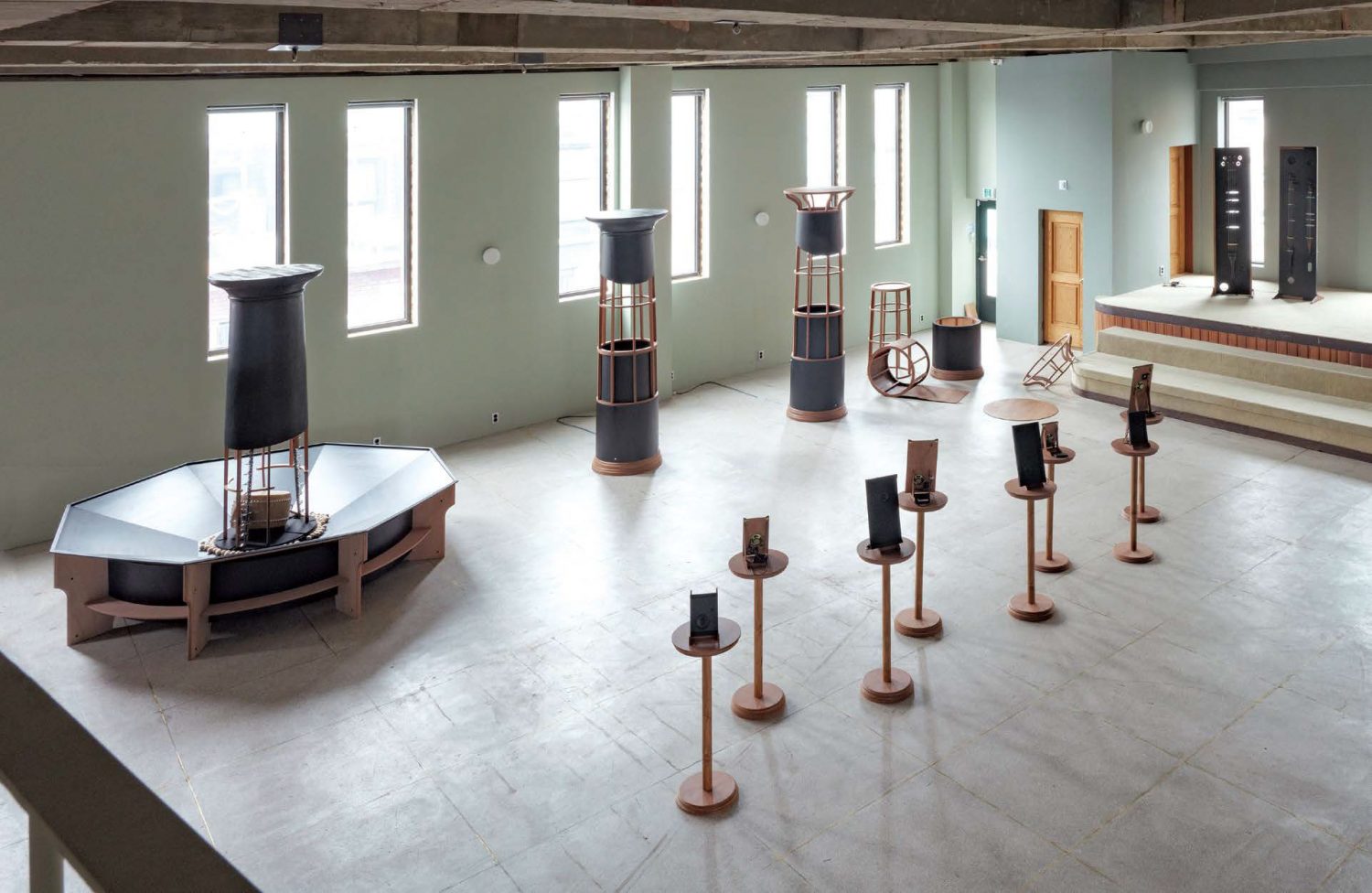
In
2023, Sunghyeop Seo held two solo exhibitions, 《Praise of Crossbred》 at Soorim Museum of Art
and 《Mixed Sublime》 at Art
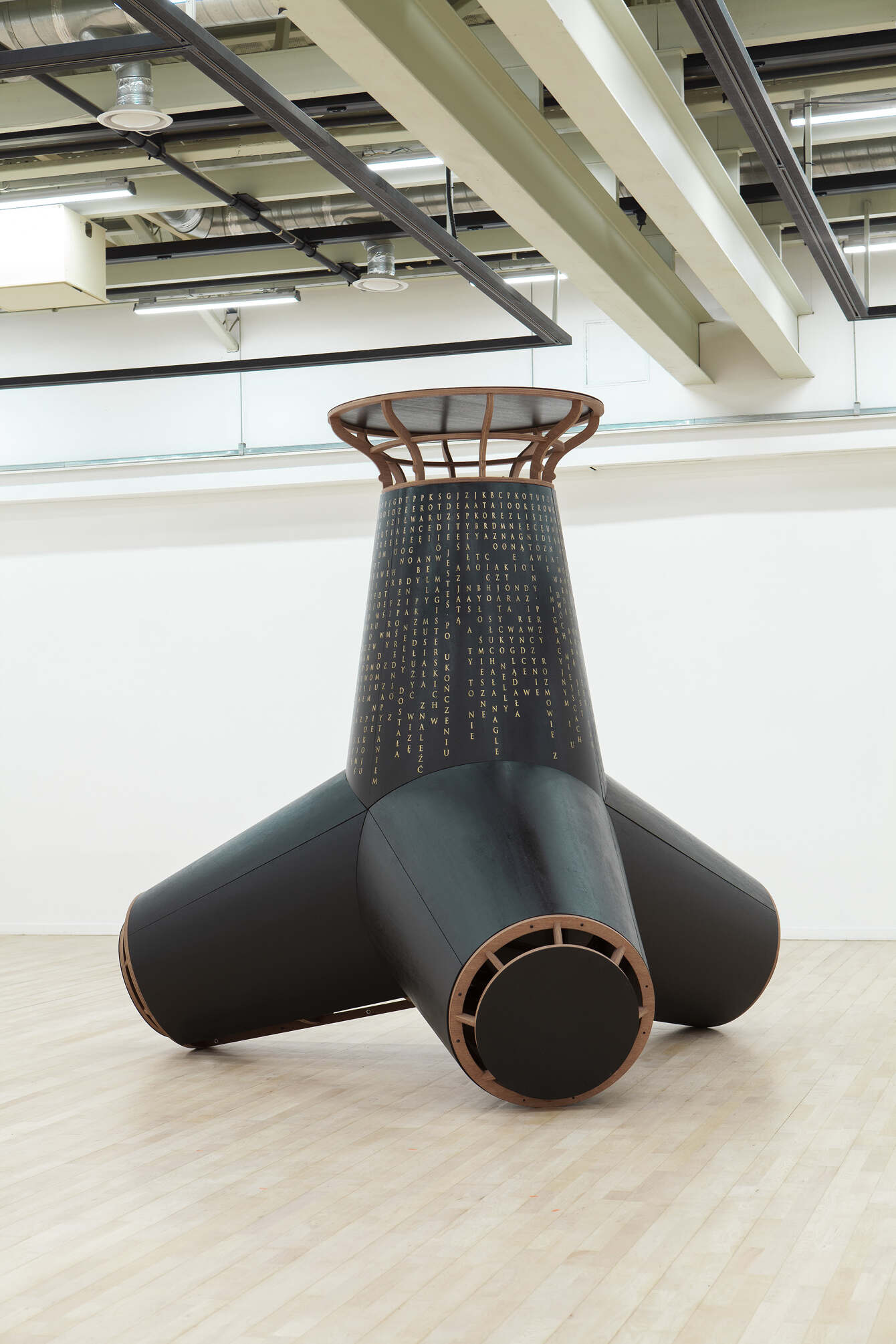
Space Hyeong. At the Soorim Museum, massive black tetrapod structures were
installed across the grand hall, at times monumental, at times in clustered
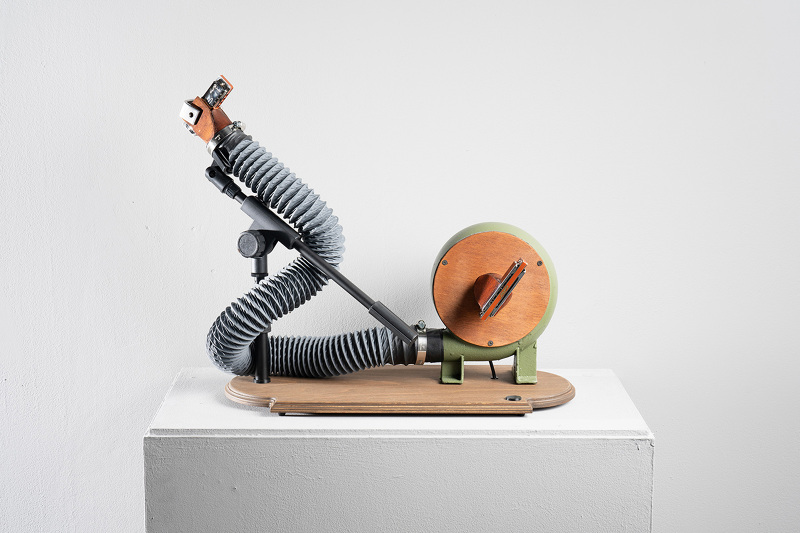
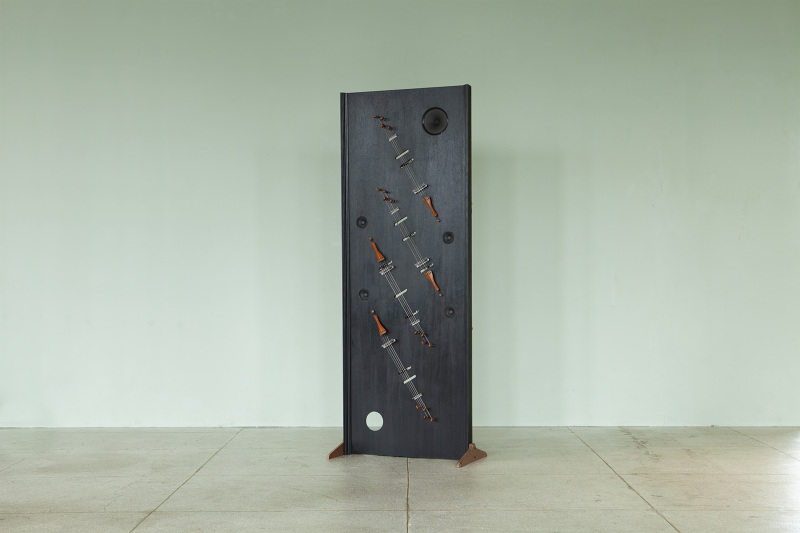
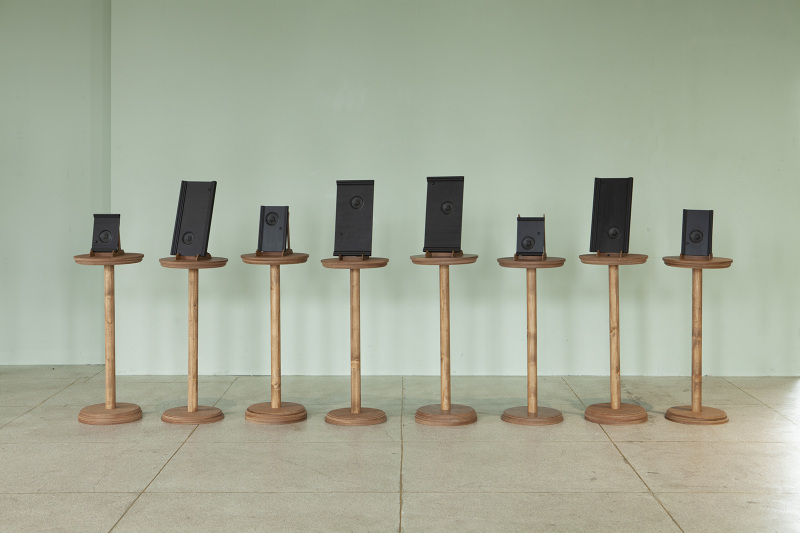
formations. Yet before encountering these, the audience first met an array of
massive string instruments lined up in silence. The tightly tuned tension of
the unplayed strings urged audiences to imagine their resonances, splitting the
air into dry monophonic waves. These waves led us to other waves of sound, and
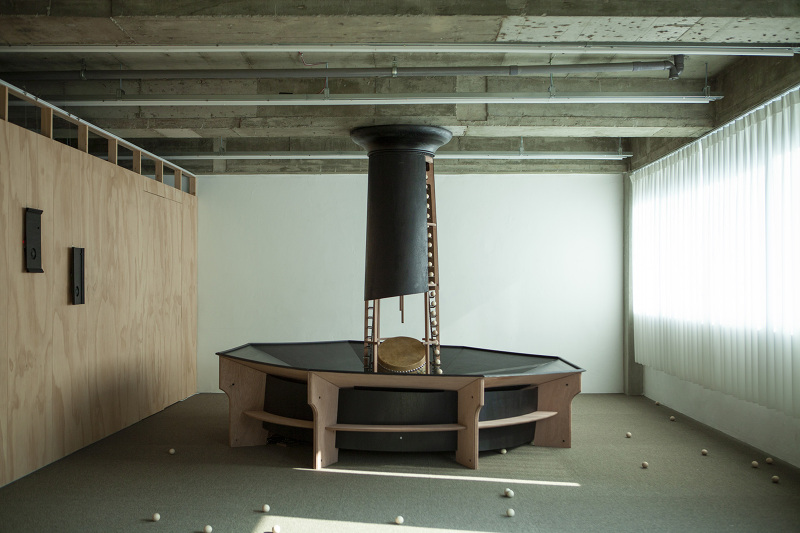
at their culmination stood the colossal tetrapod, Monument #01.
Topped with the Doric capital of an ancient Greek temple, engraved with unknown
alphabetic letters upon its black body, it soared like the Greek architectural
columns that mark the origin of European civilization, yet simultaneously
signified the space of boundaries that can be neither land nor sea. From within
emanated the subdued voice of a man speaking in Polish—a language
incomprehensible to most Korean viewers, perceived as mere murmurings or sound.
When language, the strongest system of culture, collapses into sound devoid of
decipherable meaning, hearing experiences it as waves, free from the material
of signification.
Particularly
in Seo’s work, the tetrapod—stripped of specific cultural function or
meaning—constitutes the boundary space, an interstitial realm that traverses
inside and outside, above and below, left and right, becoming a
multidimensional locus. It is a place where monuments and icons of culture,
sounds and languages, are absorbed into the black line of the boundary and
undergo hybridization. Thus, the boundary space he proposes exists outside the
dominant forces of territorial sovereignty; it belongs nowhere yet can belong
to anything, relating instead to freedom. This deterritorialized boundary,
slipping free from the network of signification of the symbolic order, can
articulate a language liberated from the repression that underpins the
symbolic. It manifests as hybrid signs that slide away from fossilized usages
within the system, and as crossbred images in which ancient myths and folktales
are intermingled.
Within
such a constructed boundary space, the individual discovers the vitality of a
free subject, freed from censored purism and the categorical constraints of
civilization. It resembles a non-space that transcends geographical and
physical conditions, yet unmistakably exists as a de-spatialized space. It is
not an imaginary regression outside the symbolic order, but rather a topology
of the Real that abruptly emerges within the symbolic, appearing as a
silhouette of liberation against the fixed system. Thus, the space can become
land or sea, self or other. Moreover, when these spaces connect and align in
solidarity, a broader boundary space emerges. A Certain
Connection is constructed as an aggregation of tetrapods,
emitting subsonic inaudible frequencies. Without center or hierarchy, they
overlap and accumulate to form a shared geography, resonating with the deep
pulsations of beings stripped of specific meaning. When tetrapods coalesce into
such a shared geography, not as specific places but as sites of hybridity, the
boundary space gains the vital pulse of escape.
What
Sunghyeop Seo calls the “sublime of hybridity” (Mixed Sublime) emerges from
precisely this life force of mutability and solidarity enacted in practice. It
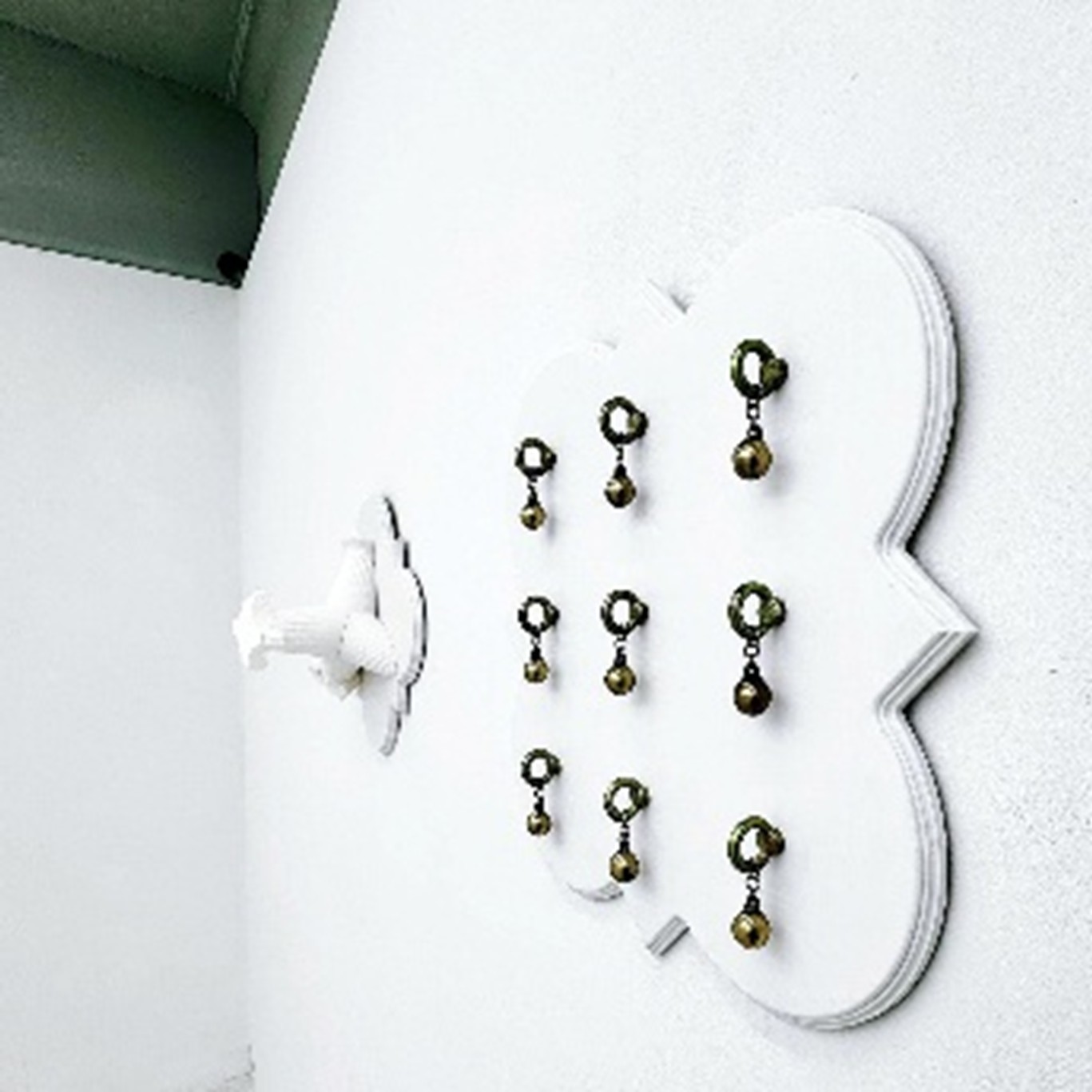
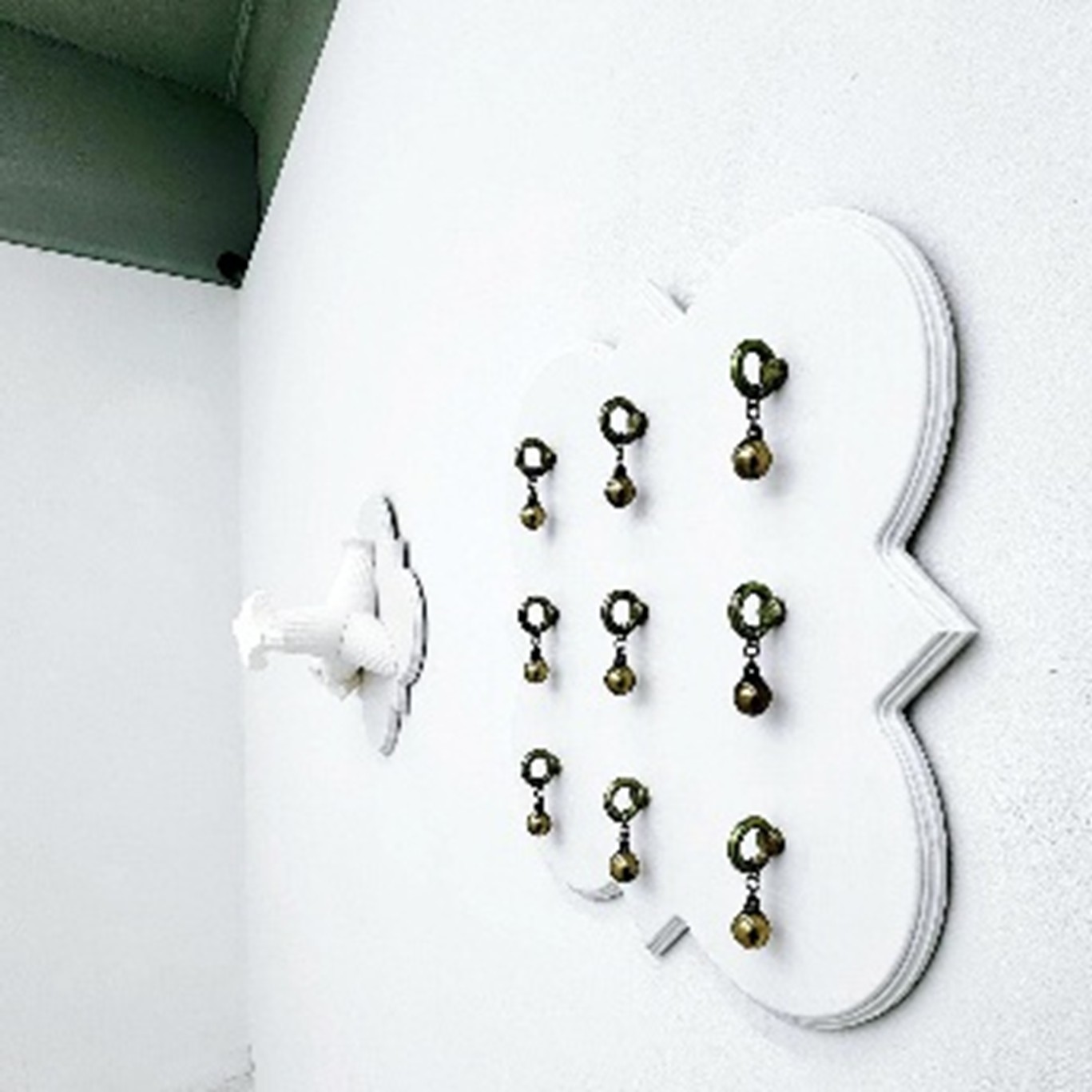
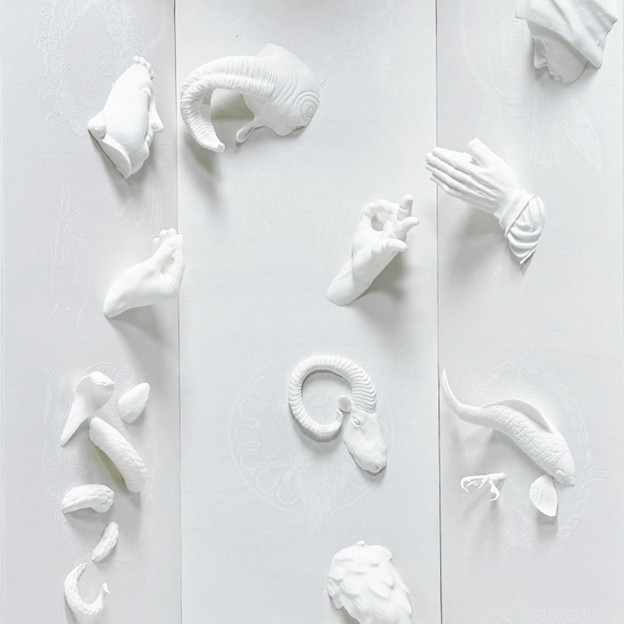
is the “alcove” of white solidarity, as proposed in Alcove for
White Icon, where the icons of all civilizations are intermingled,
encountered, and prepared to be inscribed with anything. Rather than leaping
over or demolishing walls, it dwells deep within the boundary wall itself,
nullifying both interior and exterior. In such a space, the individual may
become free from the fiction of the Other and the superficiality of the Whole.
Returning once more to Rousseau, we are reminded of the deceit of enclosures—of
constantly seeking validation from others while failing to ask questions of
oneself, of the generalization that comes from externalization. In Seo’s work,
we find the vibrant carnival of individuals transparently traversing such
fences. It is tied to the erosion of ossified conventions and rules through the
deterritorialization of hybridity, and to an attitude of continually
questioning oneself and erasing the fence.