Just
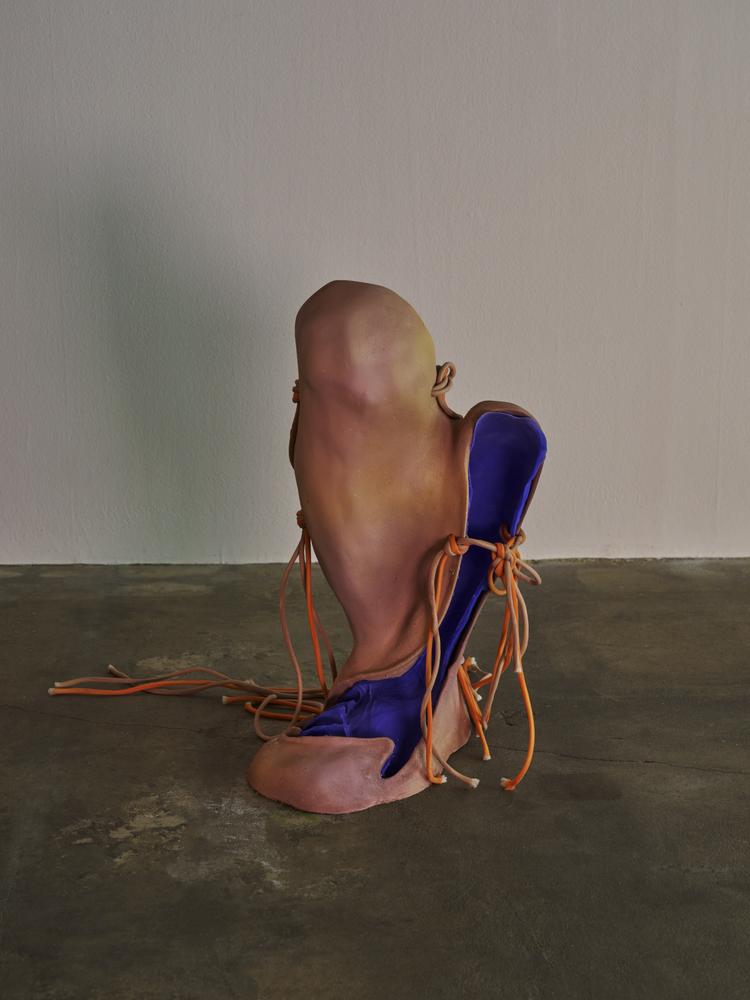
like the mood-lifting pendant, the body’s ultimate local rules can also be
formed in conjunction with devices. In more technical terms, these are
called prostheses. The word comes from Greek, and interestingly, its
original meaning was “to add a syllable at the beginning of a word.” In
English, the term evolved to be used in medicine, meaning “to replace a missing
part of the body with an artificial substitute.” The metaphorical shift from
“adding a syllable” to “adding to the body” is fascinating. Today, prosthesis
discourse has expanded beyond the medical field into various interdisciplinary
studies, producing research under keywords like prosthesis
aesthetics and prosthesis subaltern (Jeon, 2015:17).
Whenever
I think about prostheses, one story comes to mind: the “Riddle of the Sphinx.”
In his remarkable work How Forests Think, Eduardo Kohn re-poses the
Sphinx’s famous question: “What walks on four legs in the morning, two legs at
noon, and three legs in the evening?” As we know, Oedipus answered “human” and
escaped peril. Kohn argues that if “human” is truly the correct answer, it
forces us to fundamentally reconsider what it means to be human.
He writes: “It
reminds us of our two inheritances—our quadrupedal animality and our bipedal
humanity—and of all the ‘canes’ we create and integrate into ourselves to
hobble through our finite lives.” (Kohn, 2018:19)
In
modern thought, a cane was certainly an object, an instrument, something
external. Yet in the Sphinx’s question and Oedipus’s answer, the humanity of
the “three-legged human” already includes the cane. In the orbit of
posthumanist thought, the cane can thus acquire an entirely different
conceptual status. But rather than discussing this in purely discursive terms,
I want to think about the relationship between prostheses and the body in
another way. From the perspective of the enactive body mentioned earlier, how
can the enactment of mind—formed through the materiality of the cane and the
bodily experiences it shapes—be narrated?
Even if we were to analyze the
mechanisms of neuroplasticity, I suspect it would still feel insufficient.
Perhaps this very frustration is why Ito chose to meet people directly and
listen to their most intimate, subtle stories. These days, I have become
increasingly interested in what are called anthropological or ethnographic
research methods. Instead of narratives that blur events, universalize
memories, or abstract experiences, I want to vividly convey the local rules of
the body as they are formed through experiences and events.
At
the end of her prologue, Ito writes: “The
process by which an event with a date gradually loses that date, eventually
forming the body’s uniqueness through local rules; the process by which
experiences both coexist with and do not coexist with memories—in other words,
the eleven narratives through which the body is made—are what I will now
unfold.” (Ito, 22)
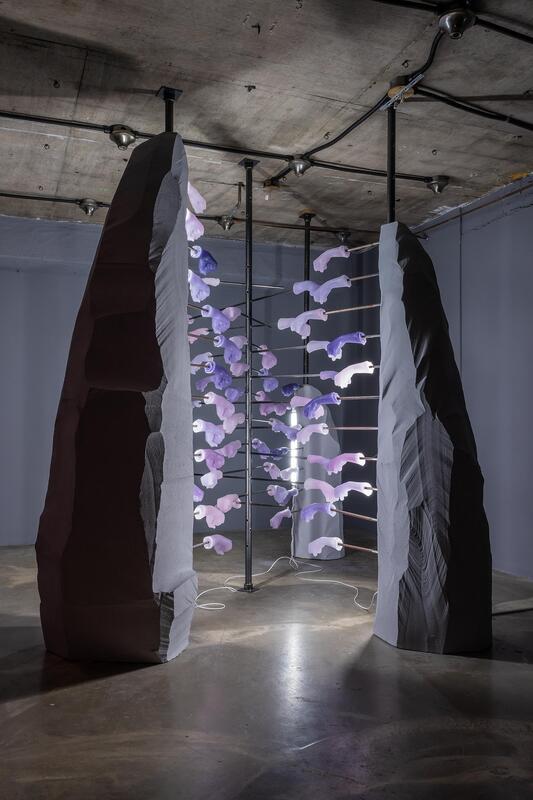
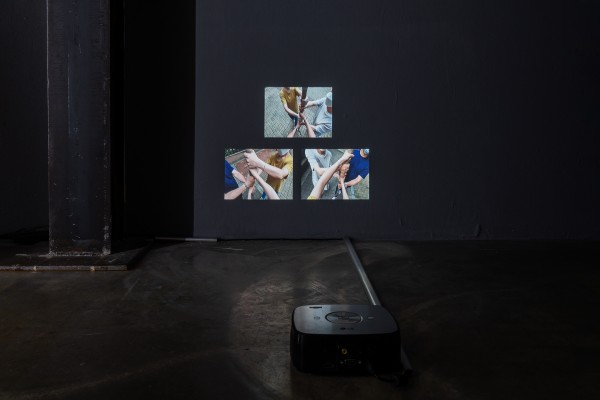
I
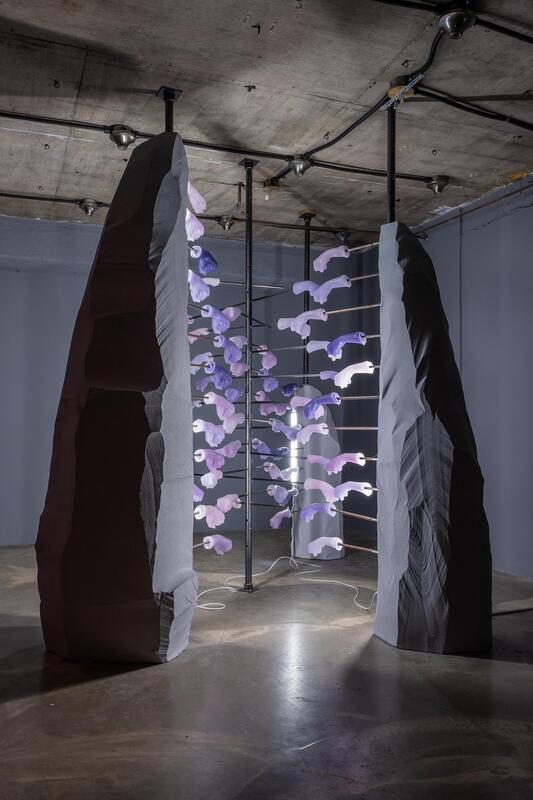
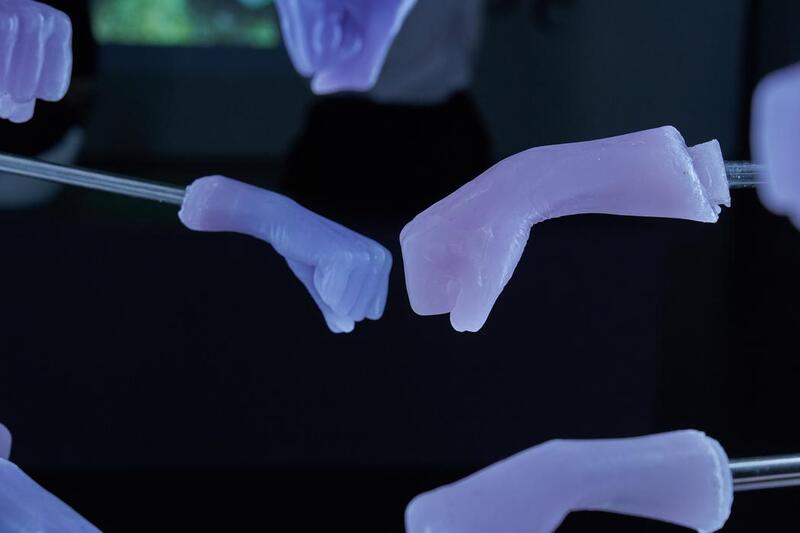
believe Nayoung Kang understands better than anyone what it means for an event
with a date to gradually lose that date. When I reread this sentence while
writing this text, I could not help but see Kang’s image overlapping with
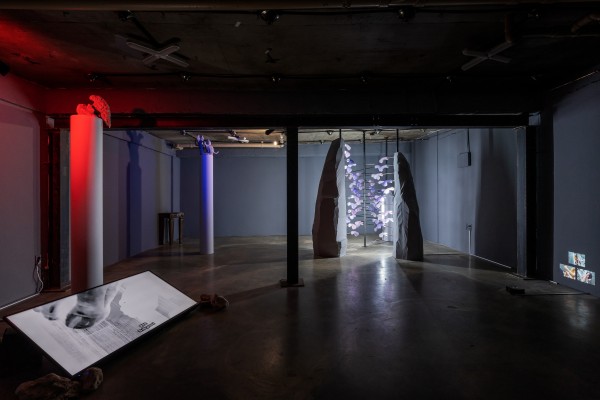
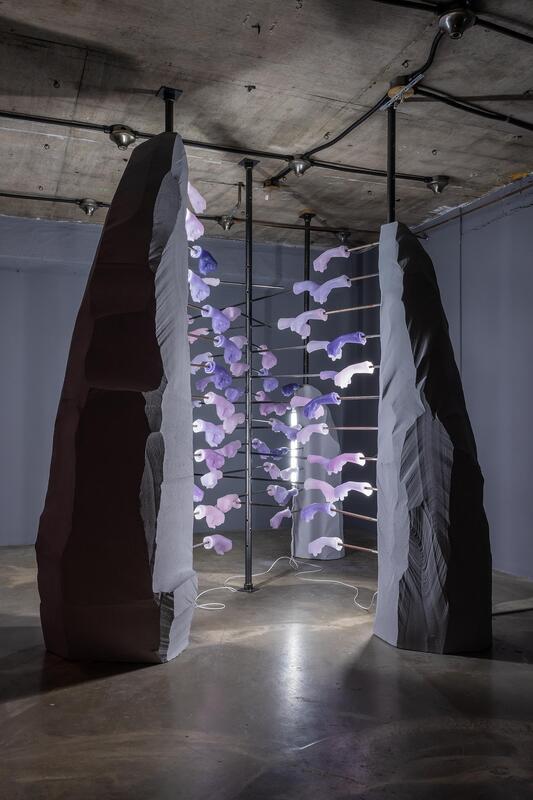
it—today, too, exchanging a fist bump somewhere. Now, let’s move on to Science
and Technology Studies (STS) and disability studies. STS views science,
technology, society, and culture not as separate domains, but as a totality of
interconnected, complex contexts.
In
everyday conversation, we often use phrases like “That’s very scientific.” When
differing opinions clash, ideas deemed “scientific” are often accorded higher
value. This is likely because science is commonly regarded as objective,
neutral, and context-free—akin to an absolute truth. But STS scholars break
down these assumptions, exposing the power relations involved in the production
of technological knowledge. At one time, I had the opportunity to read widely
among feminist STS scholars. Immersing myself in feminist STS literature was a
transformative experience—I can say my life, perspectives, and thinking changed
entirely. Feminist STS researchers such as Donna Haraway, Sandra Harding, and
Carolyn Merchant—and, as mentioned earlier, Karen Barad—along with Katherine
Hayles, who reconstructed cybernetics theory while warning against the erasure
of embodiment, all stand in this lineage of feminist STS.
In the beginning,
their inquiries often started with questions like, “Why are there so many fewer
women scientists than men?”—critiquing women’s social achievement within
science. Over time, however, their work came to meticulously examine how gender
hierarchies have influenced the formation of technological knowledge. Reading
feminist STS naturally broadens one’s thinking to include issues of race,
gender, and disability. From the perspective of disability studies, STS can
question the medical history that has constructed knowledge about disability in
ableist terms—in other words, viewing disability as a target for correction and
cure. It can also imagine a disability-centered science and technology.
For
example, in Technofeminism, Judy Wajcman points out
that what we call “the social” has been shaped and constrained as much by the
technological as by the social itself (Wajcman, 2009:66). This idea resonates
with the work of STS scholars who argue that material objects and technological
artifacts are socially constructed. I believe these two perspectives are
mutually entangled: society is formed through material objects and
technological artifacts, and those objects and artifacts are themselves socially
constituted. We must avoid discussing the world solely on a discursive level or
understanding it purely in terms of material agency. We need to consider the
full range of complex agencies—human and nonhuman—that have shaped and been
shaped by each other in the processes of formation and composition. So how can
we simultaneously address the linguistic-discursive epistemologies that have
shaped the concept of disability and the agency of nonhuman entities, including
prostheses? Bruno Latour’s Actor–Network Theory might offer some clues here.
In Becoming
a Cyborg, co-authors Choyeop Kim and Wonyoung Kim introduce the
concept of “crip technoscience.” Kim explains that the Korean equivalent of
“crip” would be “bulgu” (literally “cripple”), a term historically used to
disparage people with disabilities. The term is reclaimed here as an act of
repossessing the power of naming (Kim, 2021:185). Crip technoscience resists
the structure in which disabled people must passively accept the knowledge
outputs produced by nondisabled experts (Kim, 186). Instead, it focuses on how
disabled people, within the specificity of their own embodied experiences, can
reconstruct everyday technologies and reconfigure the world (Kim, 188). Thus,
their declarations are not merely discursive but grounded in concrete
practices. They aim to reconceptualize the narratives of prosthetic
technologies arising from the body of a specific person—not through an ableist,
depoliticized lens, but as tools of disability politics.
Then, what role can
visuality play in this? Vision is a sense endowed with immense power—perhaps
more than any other sensory modality—and is overladen with humanity’s cultural
heritage. If we were to make a leap, we could say that the hegemony of imagery
is condensed into a nondisabled, male-centered literacy. How, then, can we
reclaim that visual hegemony in a way that is anything but naïve? Immersed in
this chain of thought, I can’t help but become industrious—there is so much
work to do. I find myself literally shifting in my seat, spurring myself onward.
This sense of urgency, too, stems from Nayoung Kang’s work and from the
conversation we shared that day. So I ask for your understanding if my words
here have spilled out like water from a broken dam. I did spend days worrying
about whether my words might overwhelm you, but I hope you’ll be able to pick
out a few meaningful threads from this tangled skein. I will end my proposal
here, while looking forward to someday receiving your response—whether in the
exhibition space or in a casual setting, and whether in the form of image,
material, or words. And I hope that, in responding and replying in our own
ways, we will form our own unique rule…
፠Texts cited in this piece are as follows:
Gregory Bateson, trans. Park Dae-sik, Steps to an Ecology of Mind, Chaek
Sesang, 2006.
Choyeop Kim & Wonyoung Kim, Becoming a Cyborg, Saegaejeol, 2021.
Michel Foucault, trans. Jung Il-jun, Theories of Power, Saemulgyeol, 1994.
Bruno Latour, We Have Never Been Modern (Korean
trans. Human·Thing·Alliance), Ieum, 2010.
Eduardo Kohn, How Forests Think, Sawolui Chaek, 2018.
Asa Ito, trans. Kim Kyung-won, The Remembering Body, Hyunamsa, 2020.
Hye-sook Jeon, Art in the Posthuman Era, Acanet, 2015.
Judy Wajcman, trans. Park Jin-hee & Lee Hyun-sook, Technofeminism,
Kungri, 2009.
Judith Butler, trans. Kim Yoon-sang, Bodies That Matter, Ingan Sarang,
2003.
Katherine Hayles, trans. Heo Jin, How We Became Posthuman, Open Books,
2013.
Francisco Varela, Evan Thompson & Eleanor Rosch, trans. Seok
Bong-rae, The Embodied Mind, Gimmyoung, 2013.
Karen Barad, “Agential Realism,” Meeting the Universe Halfway, Duke
University Press, 2007.
1
I acknowledge my debt to Naso-yeong’s unpublished paper, Foregrounding
the Process of Discursive Practice’s Materialization from a Neurocognitive
Dimension – From the Perspective of Enactive Embodiment, for
clarifying the context and differences between traditional computationalist
cognitive science and second-generation cognitive science.