I
first encountered the artist through the words of Andrew Cummings, whose
contribution for the book Imagining the Apocalypse: Art and the
End Times (2022) describes how Dew’s work ‘invite[s] us to take
pleasure in porosity’ – a sentiment made evident when one considers the various
artistic practices he has embraced over the years. Originally trained in
metalsmithing and jewellery in Korea, Kim then moved to London and completed an
MA in sculpture at the Royal College of Art in 2016.
During the course, seeing
his frustration with metalwork, his tutor Denise de Cordova suggested that he
also explore performance. This motivated Kim to participate in ‘Death and
Romance’, an intensive summer workshop led by Franko B, whose radical approach
to performance art encouraged Kim to draw inspiration from the masochistic body
as a medium of expression.
I
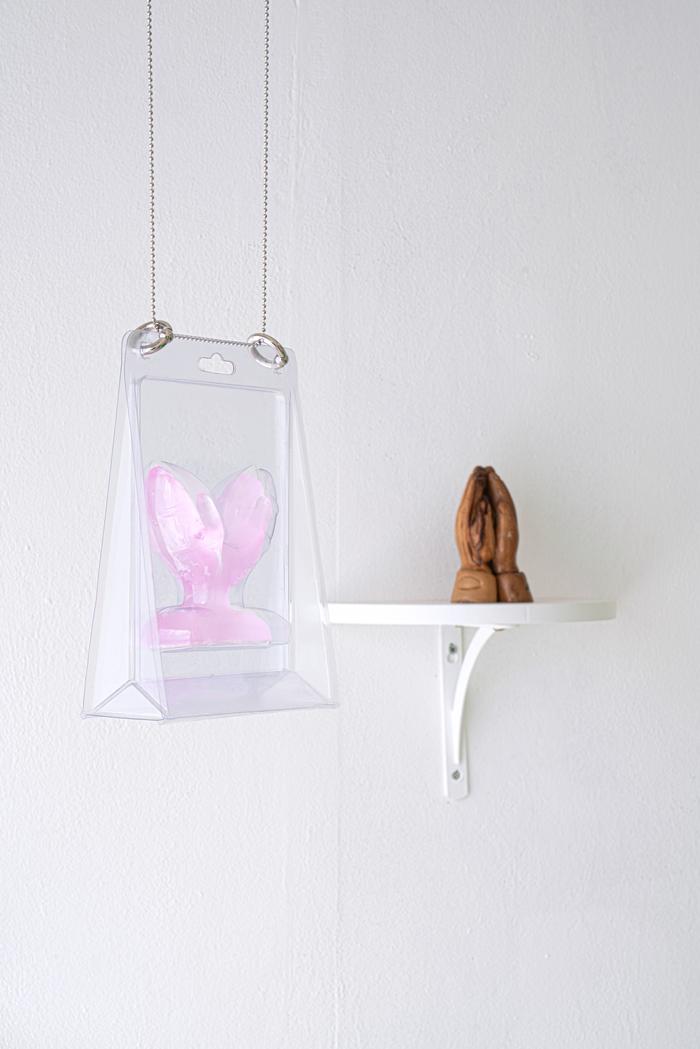
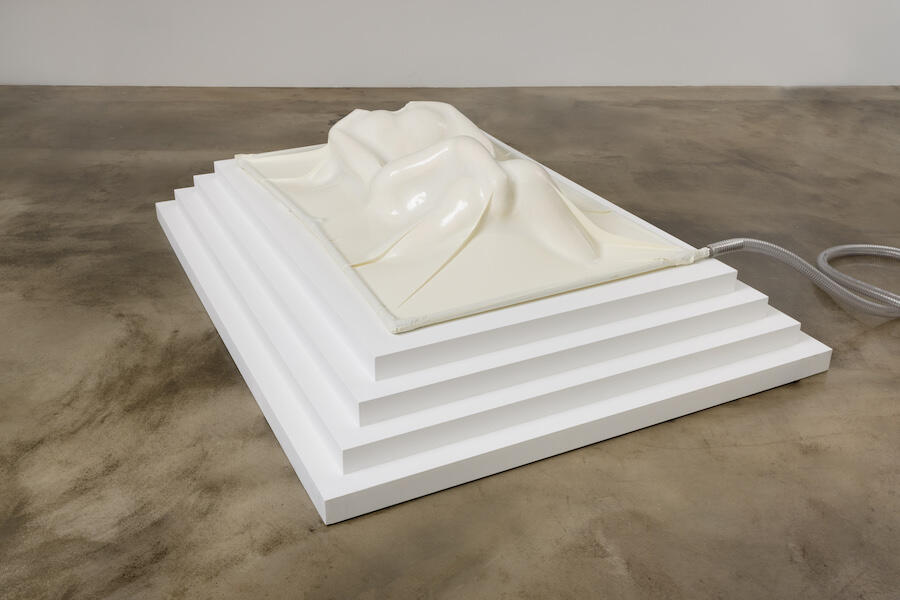
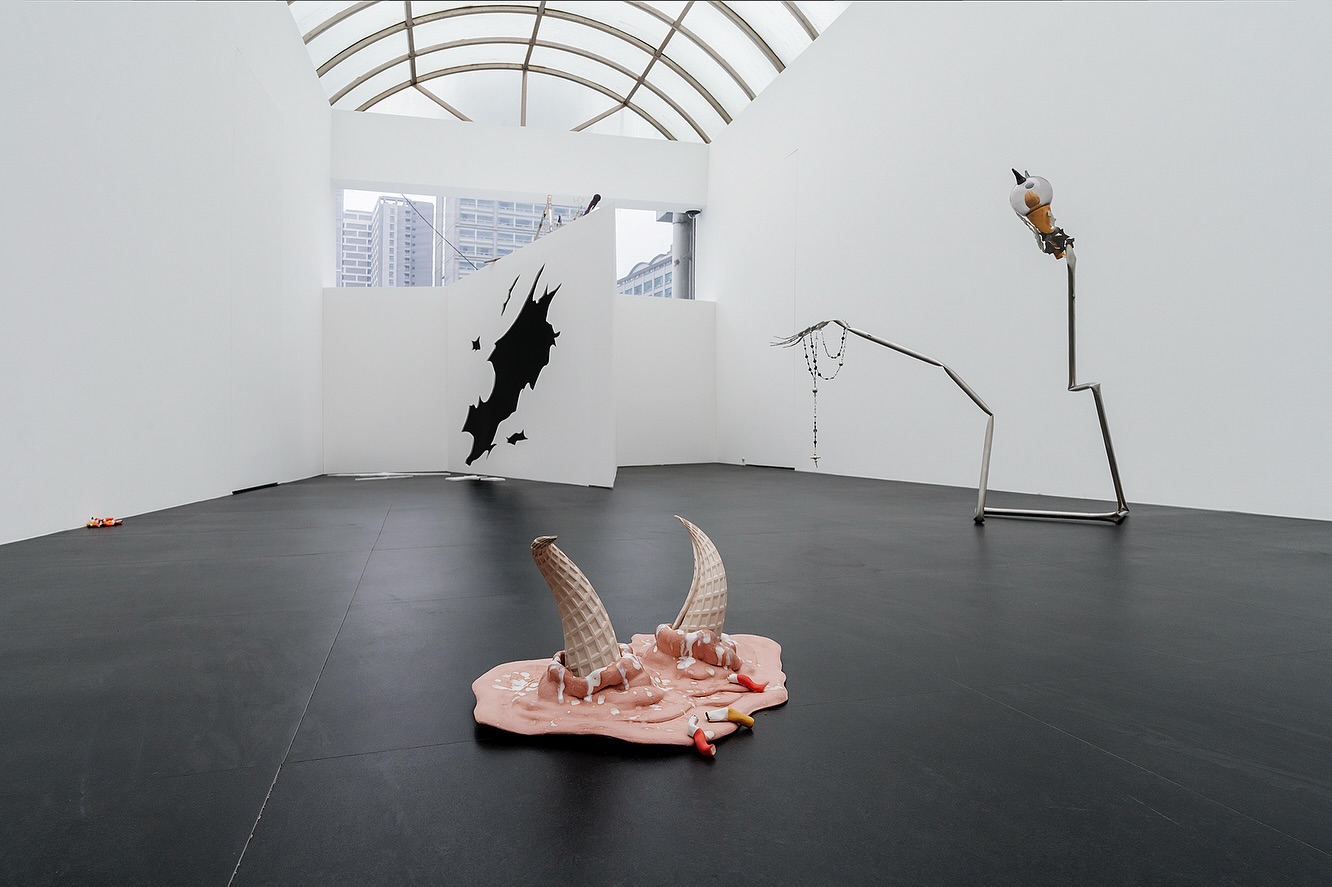
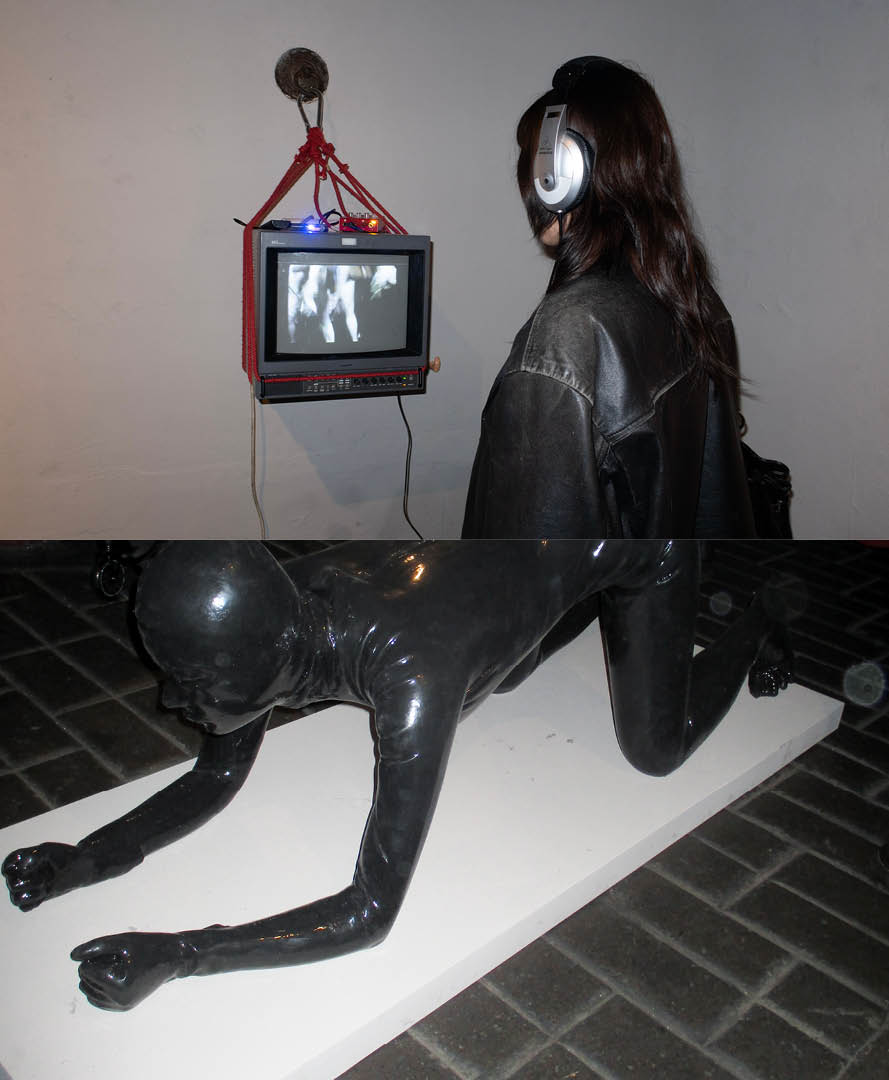
ask him about his approach to performance in the upcoming show: ‘I want to
express the human body without using the body in the flesh but, instead,
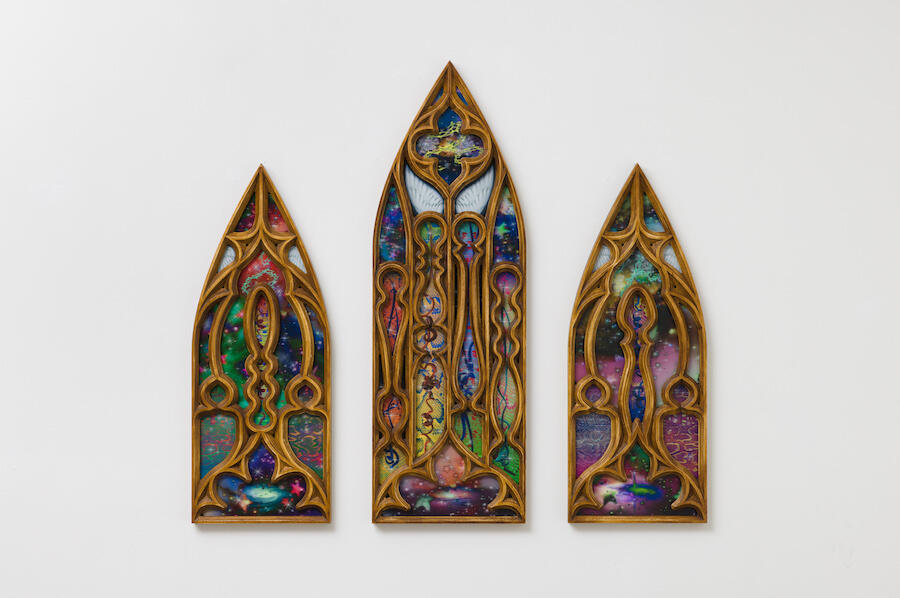
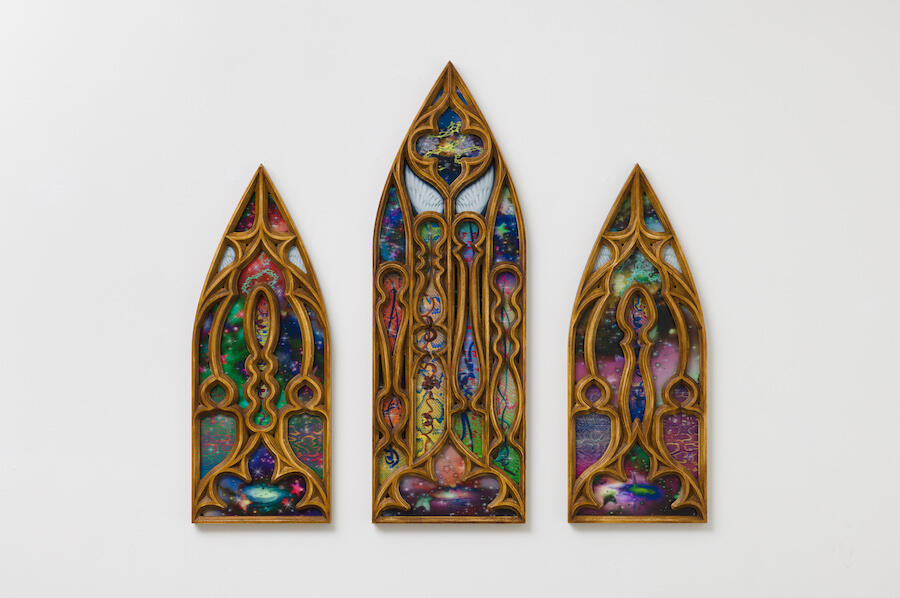
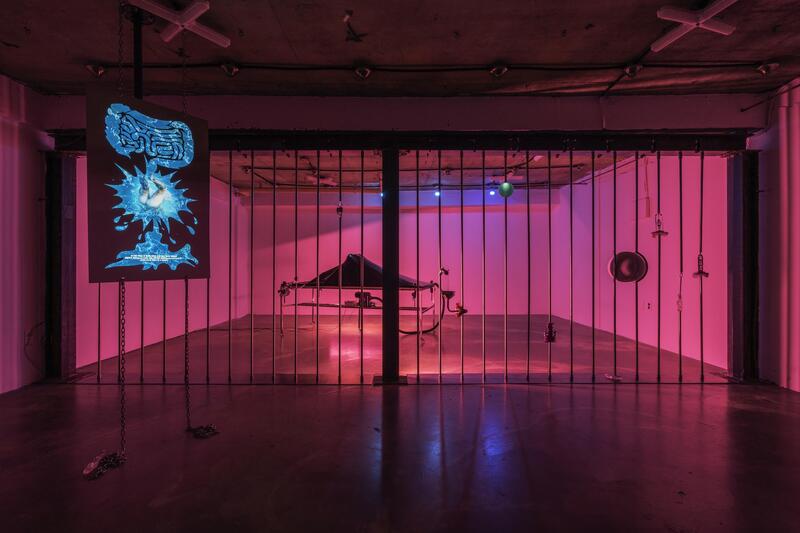
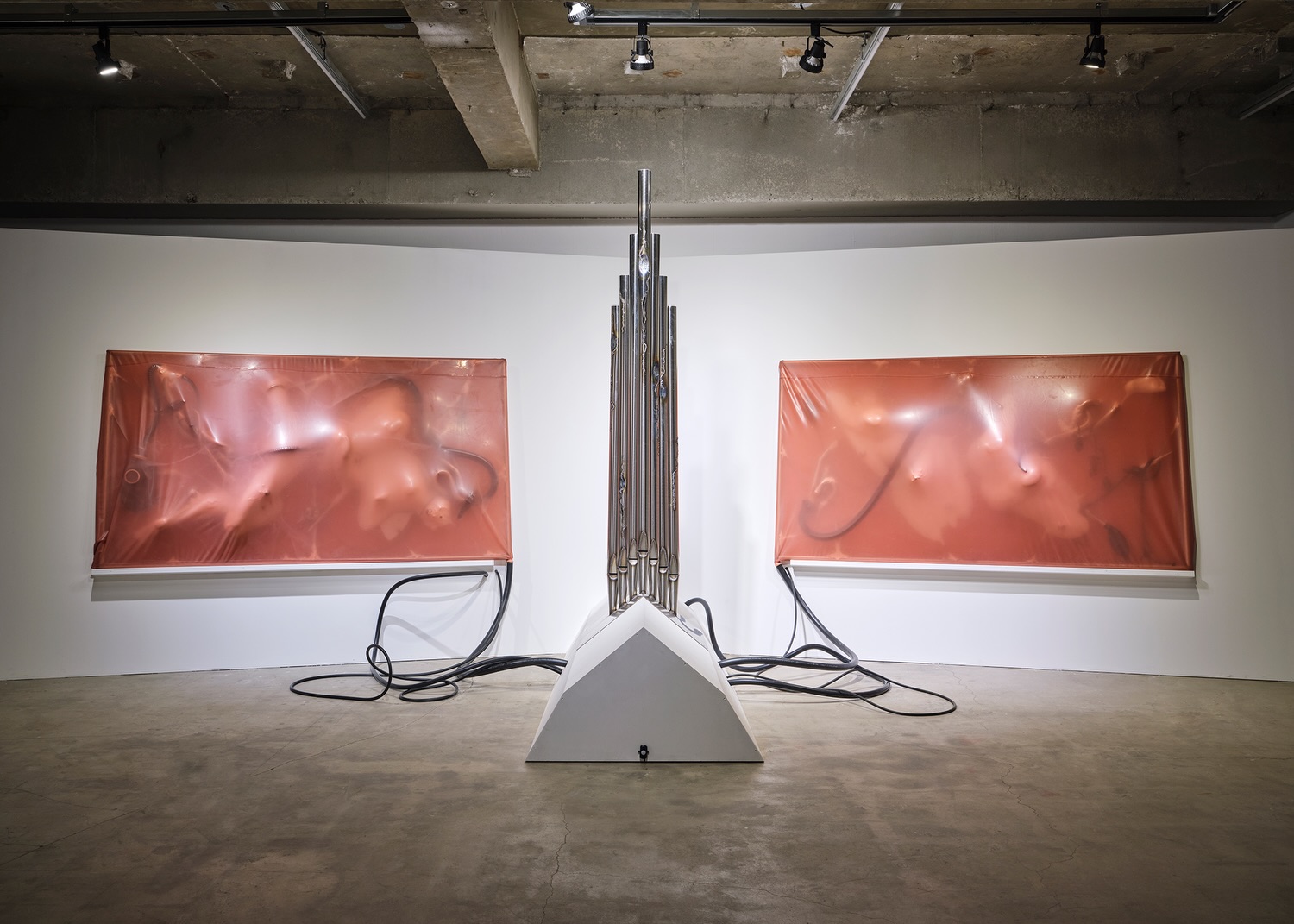
through materiality and objects. In this way, the creation of objects becomes
more performative and, in a sense, the entirety of the work represents the body
in one form or another – whether as steel bars or stone-like structures,
especially like those used in religious buildings.’
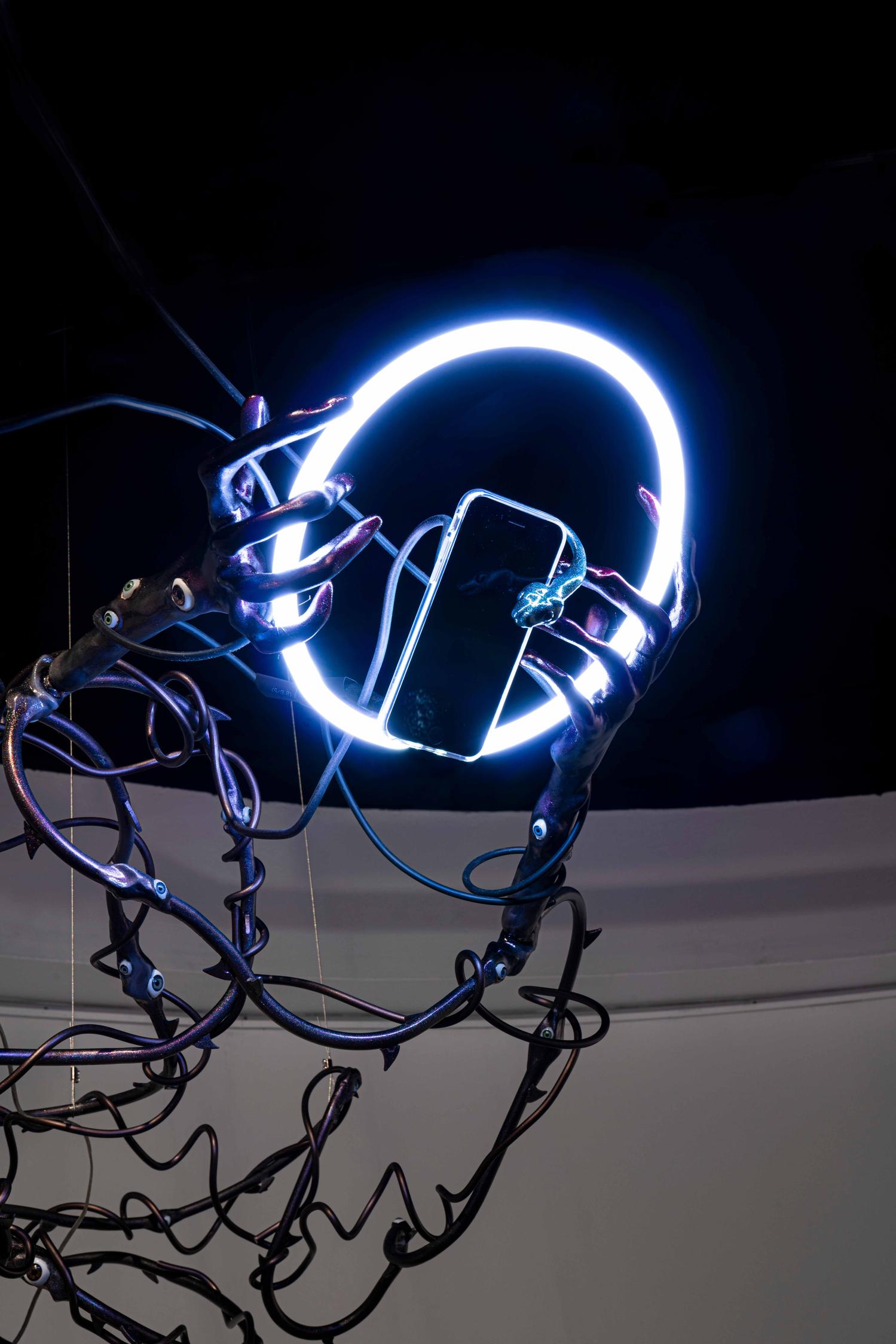
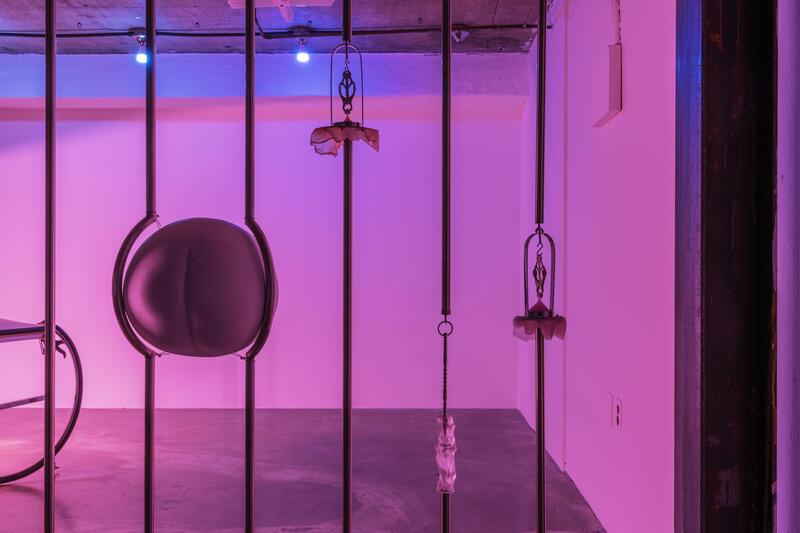
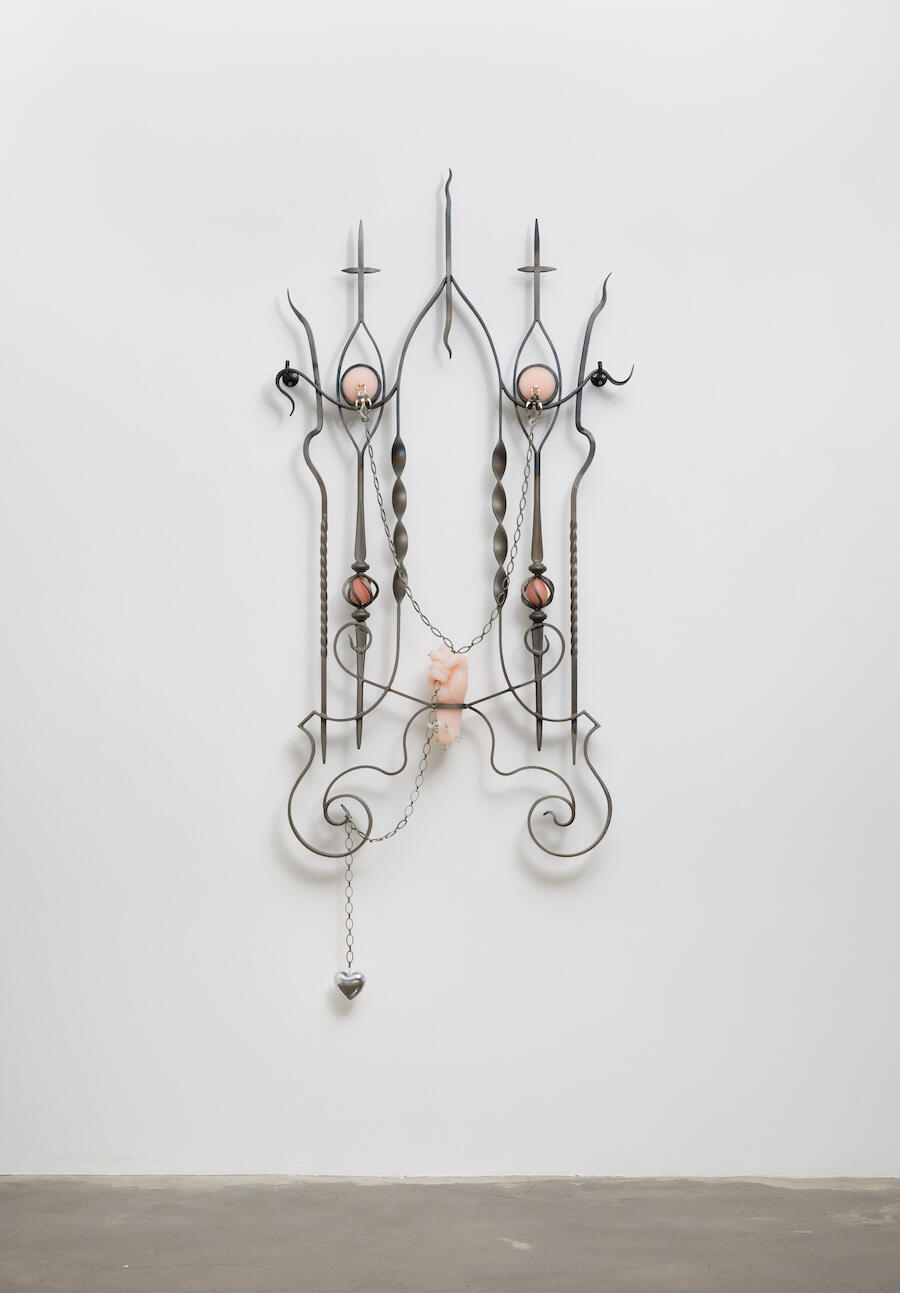
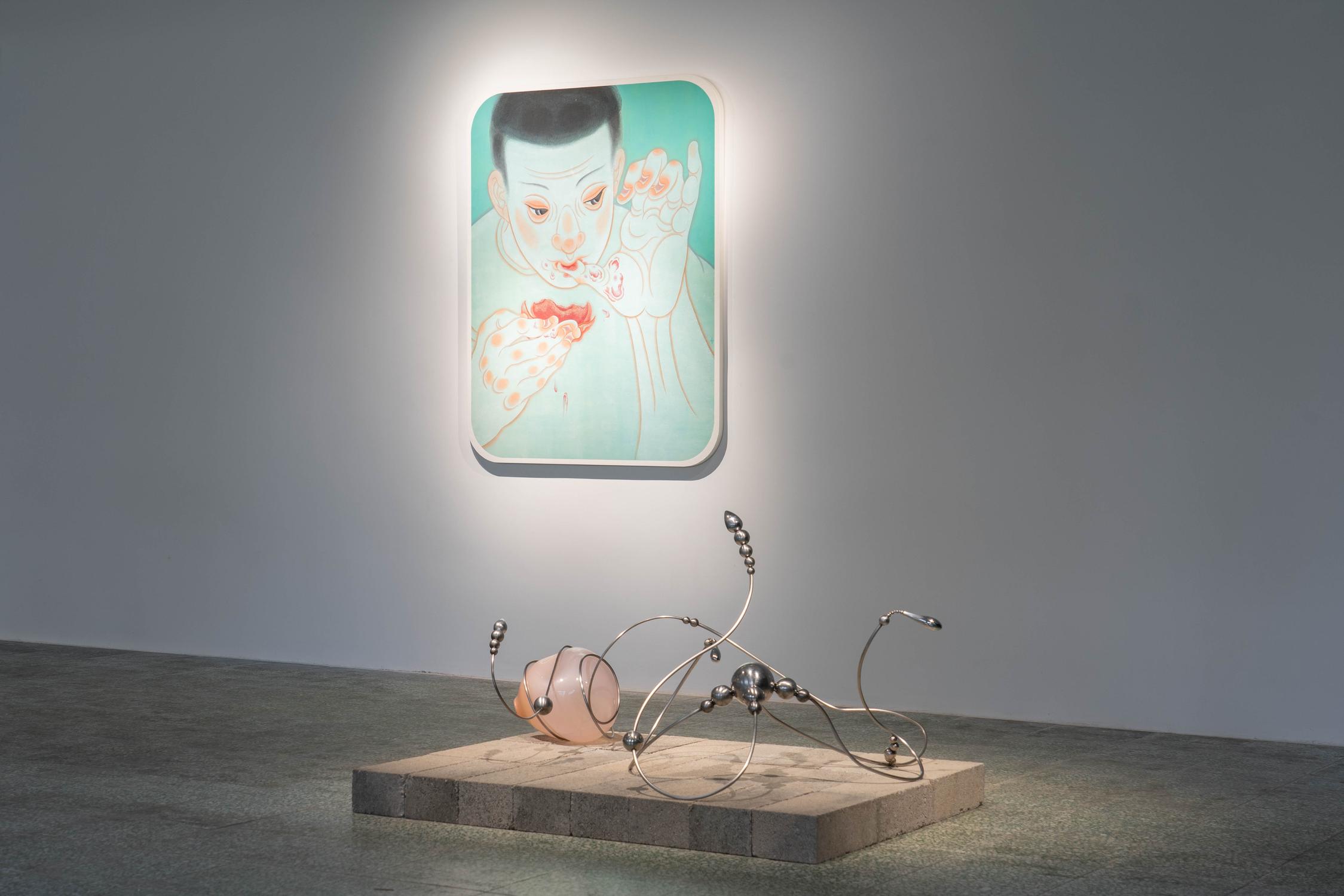
On a workbench across from
us lies Got the Whole World in the Hands (2023).
Resembling a wrought-iron window grille, the work has a central curved aperture
through which emerges a pair of silicone hands clasped tightly around green
rosary beads. Kim is letting the objects – their forms and surfaces – speak to
notions of power and subversion.
Upon
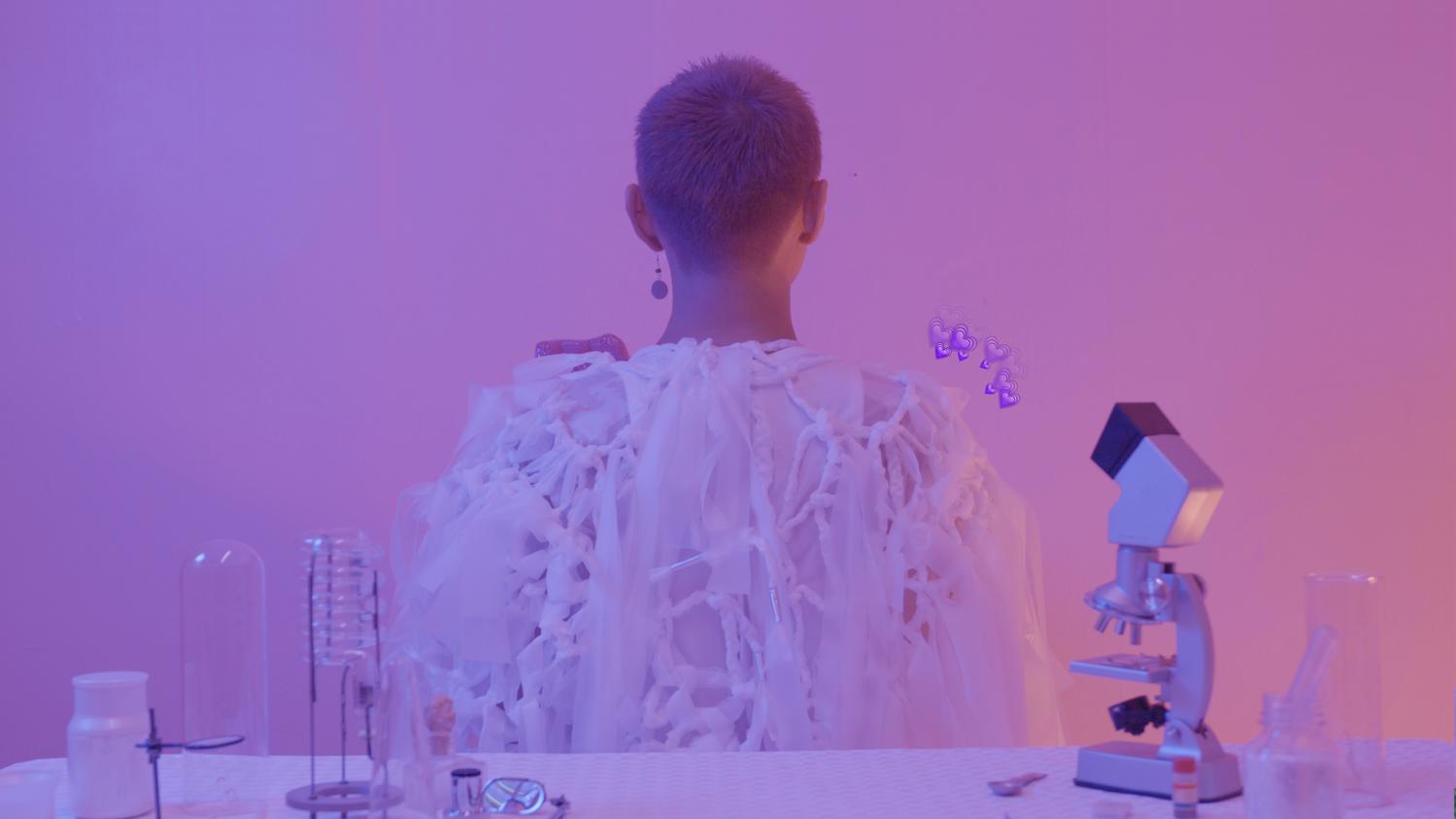
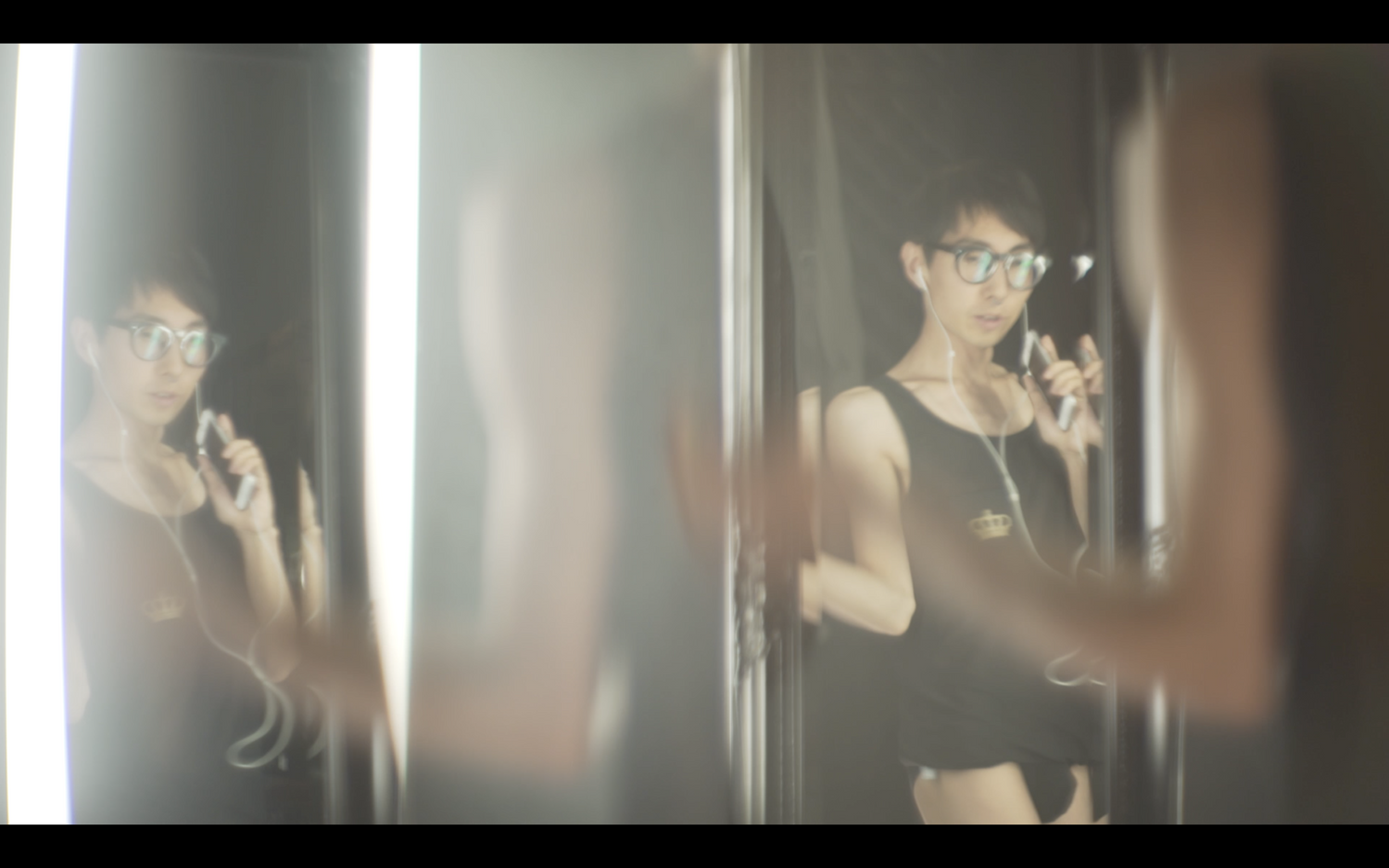
returning to Korea in 2018, Kim took on two artistic personas: one based on his
English name, Dew Kim, and the other as performance artist HornyHoneyDew (or,
on occasion, the phonetic and internet search-resistant Huh Need-you). As Kim,
he engages with more familiar forms of Korean culture – K-Pop and shamanism.
As
HornyHoneyDew, he makes more risk-taking work that draws parallels – fear,
control, ecstasy – between religious worship and queer and BDSM cultures. This
separation was less an artistic choice than a necessity, since Kim was
concerned about defying social norms in conservative Korea and the
ramifications this might carry for his father, a Christian minister.
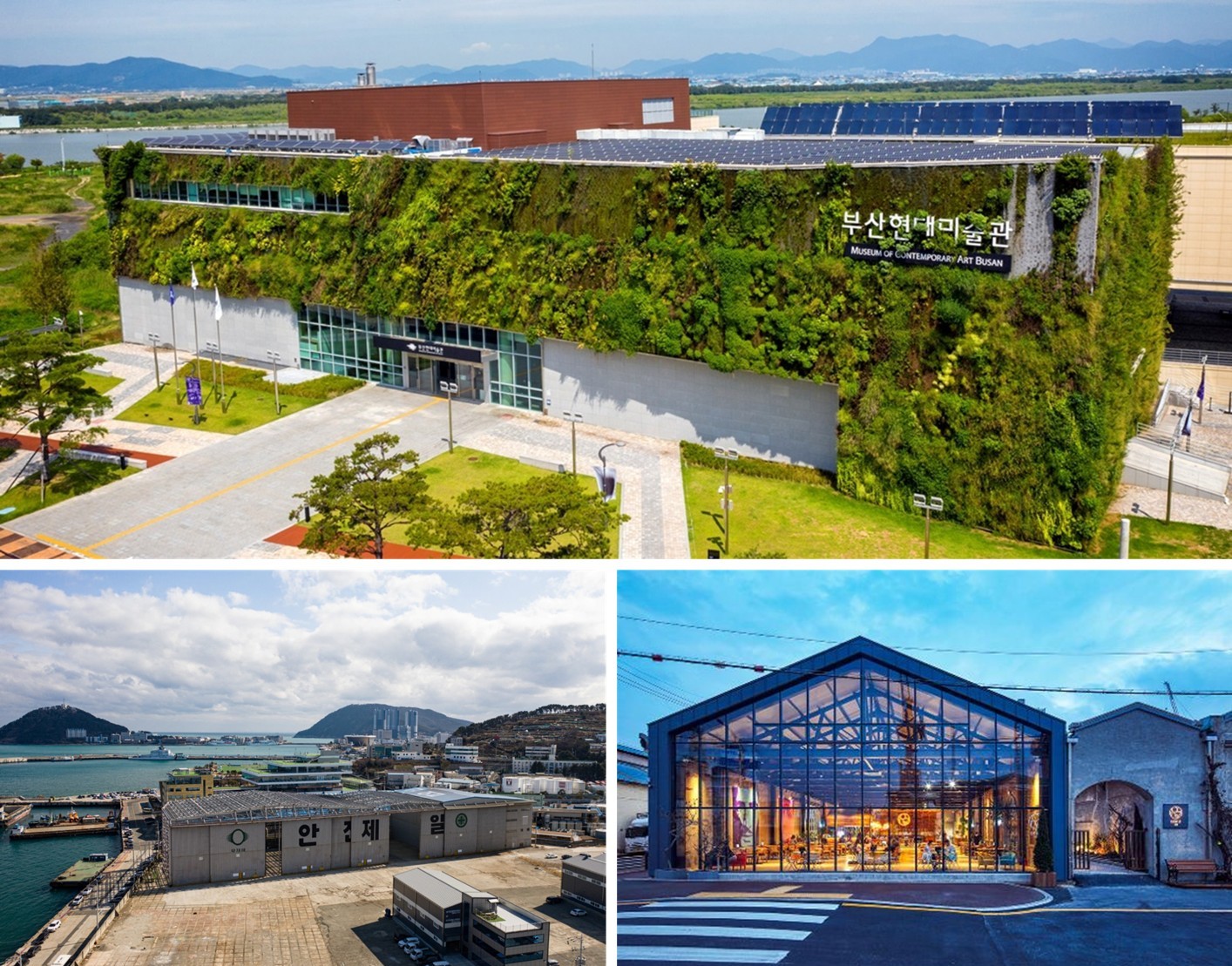
In
2020, Kim was outed to his father’s congregation after taking part in the group
show 《Looking for Another Family》 at the National Museum of Modern and Contemporary Art in Seoul. His
father eventually had to abandon his profession. Despite this catastrophic
fallout, Kim’s conviction to continue his work only grew stronger.
‘The essence
of religion is to expand, to be flexible,’ he explained. ‘To achieve that, the
religious body must break free from some of its fixtures. That concept is very
queer and this interchangeable aspect between religion and queerness may
provide the answer as to how both could grow respectively within the mainstream
in Korea.’