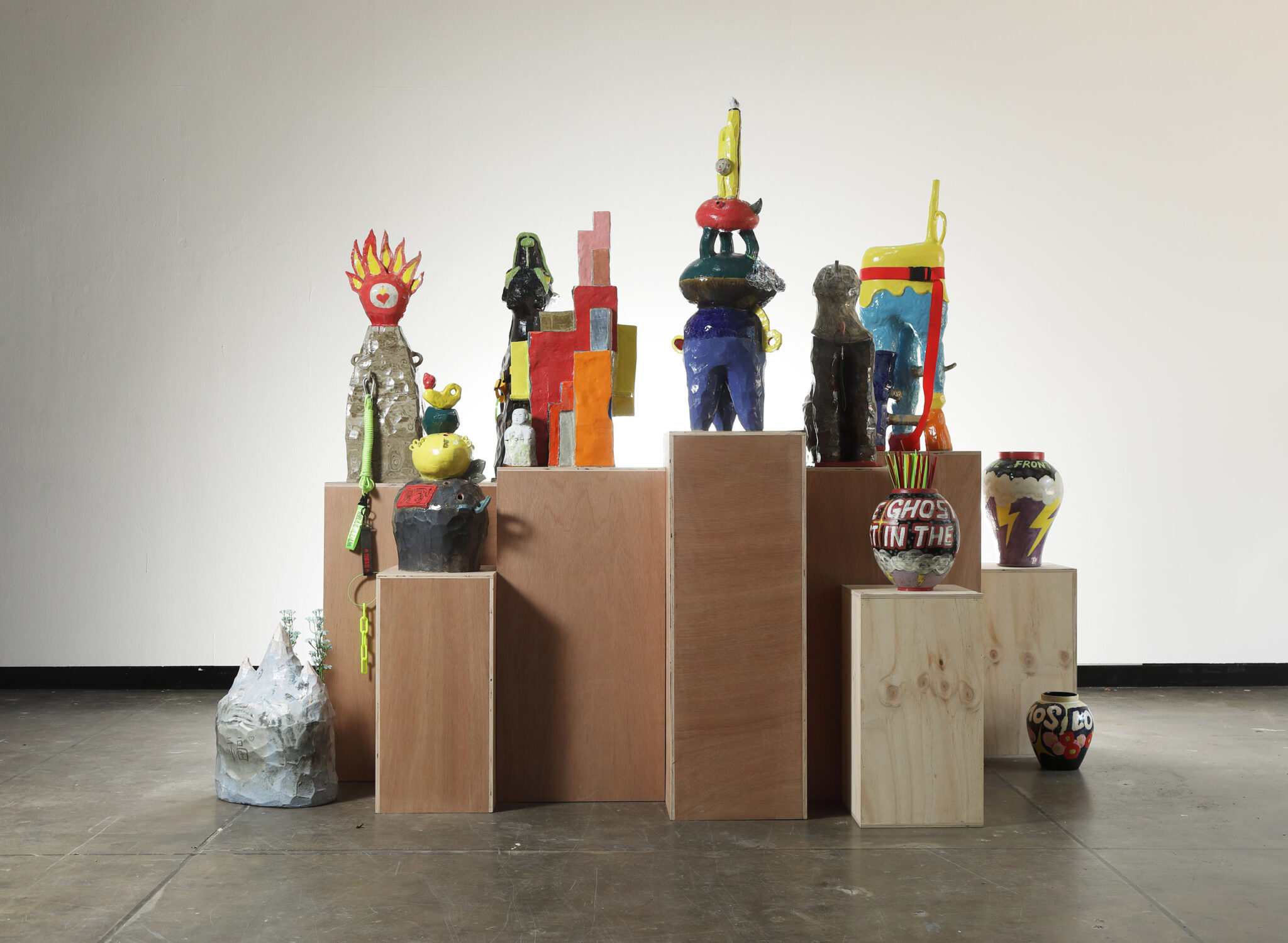
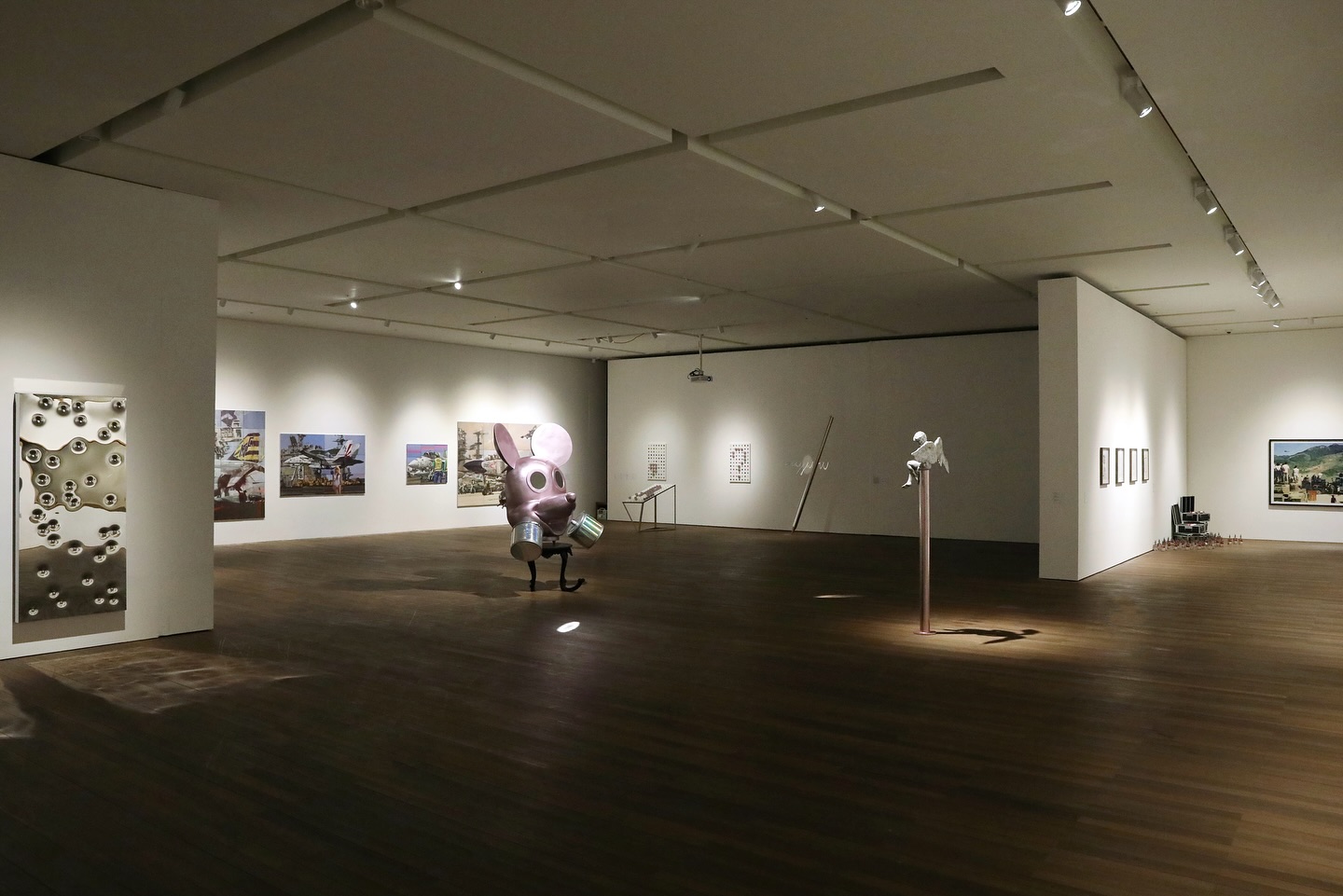
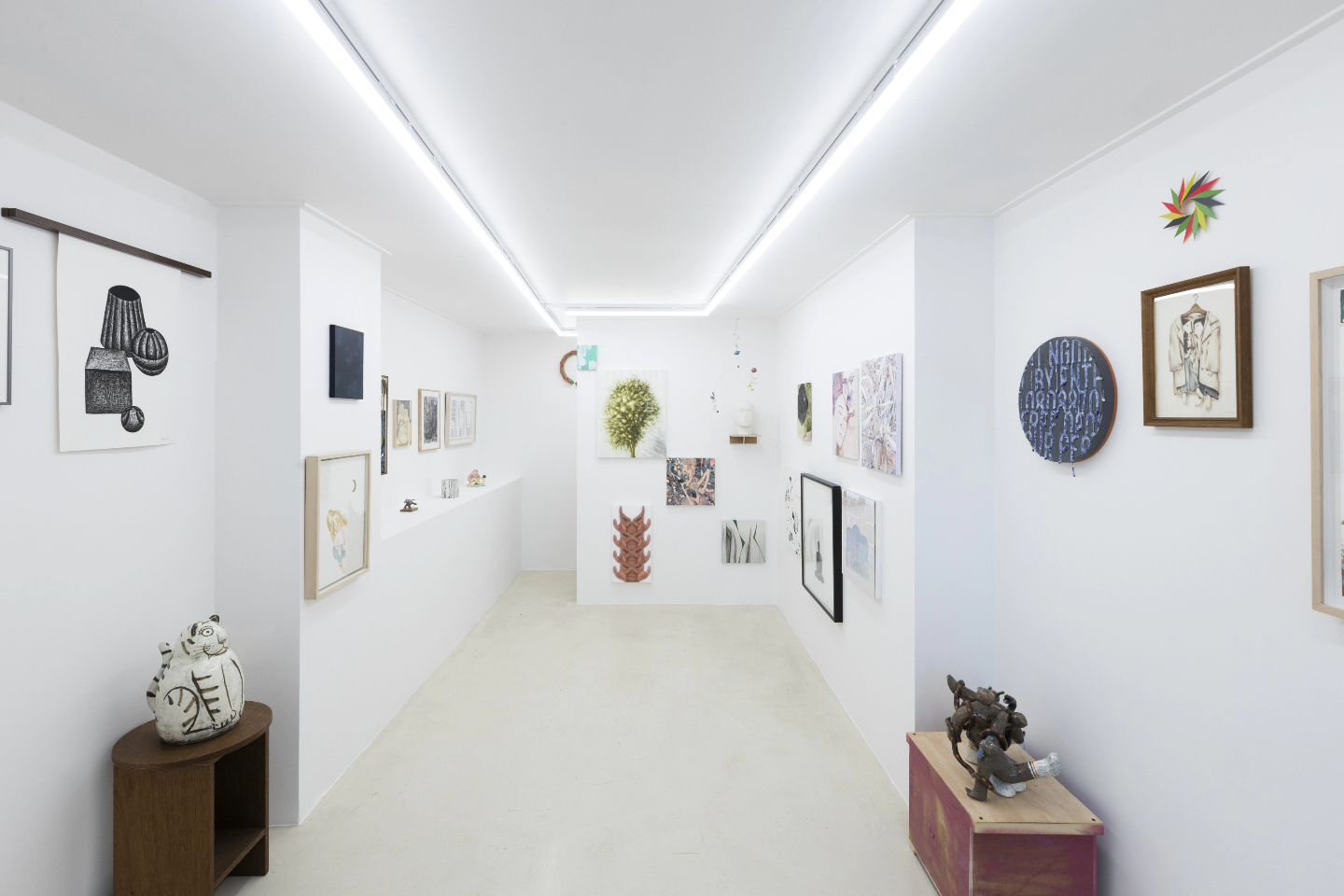
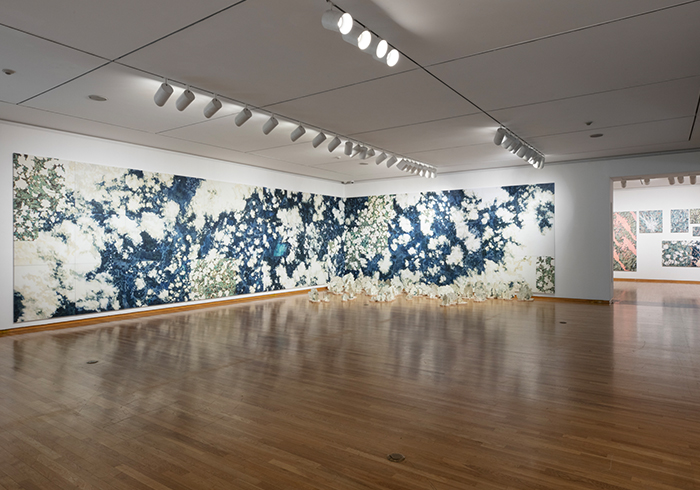
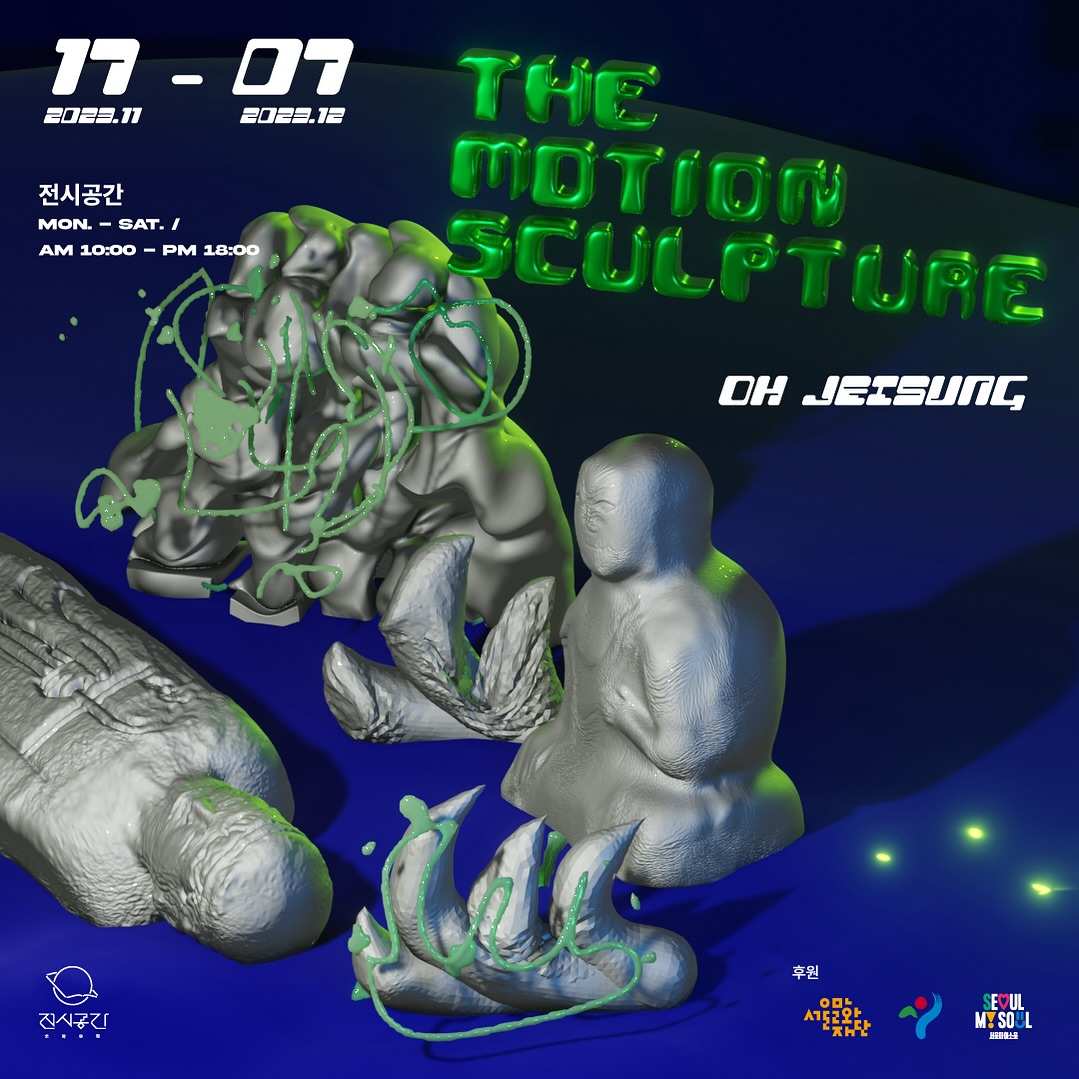
The central work of this exhibition originates from a story told
by the artist’s father, who once visited Unjusa Temple in Hwasun, Jeollanam-do
with his students. After completing their fieldwork, they reportedly spent the
evening enjoying a bonfire together. The artist imagined this unlikely scene
while visiting Unjusa himself, and it became the seed of a work that
intertwines his father’s memory with his own. The resulting pieces combine the
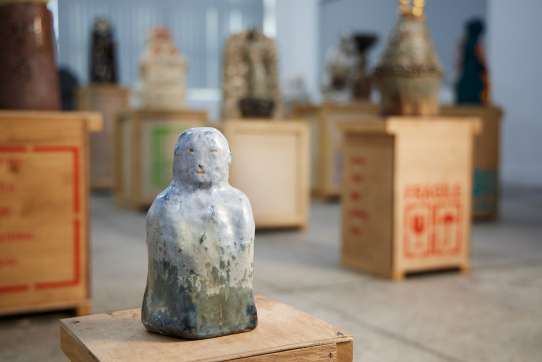
father’s experience with the artist’s discovery of anonymous sculptures and
anthropomorphized animals, layering multiple dimensions of time and narrative.
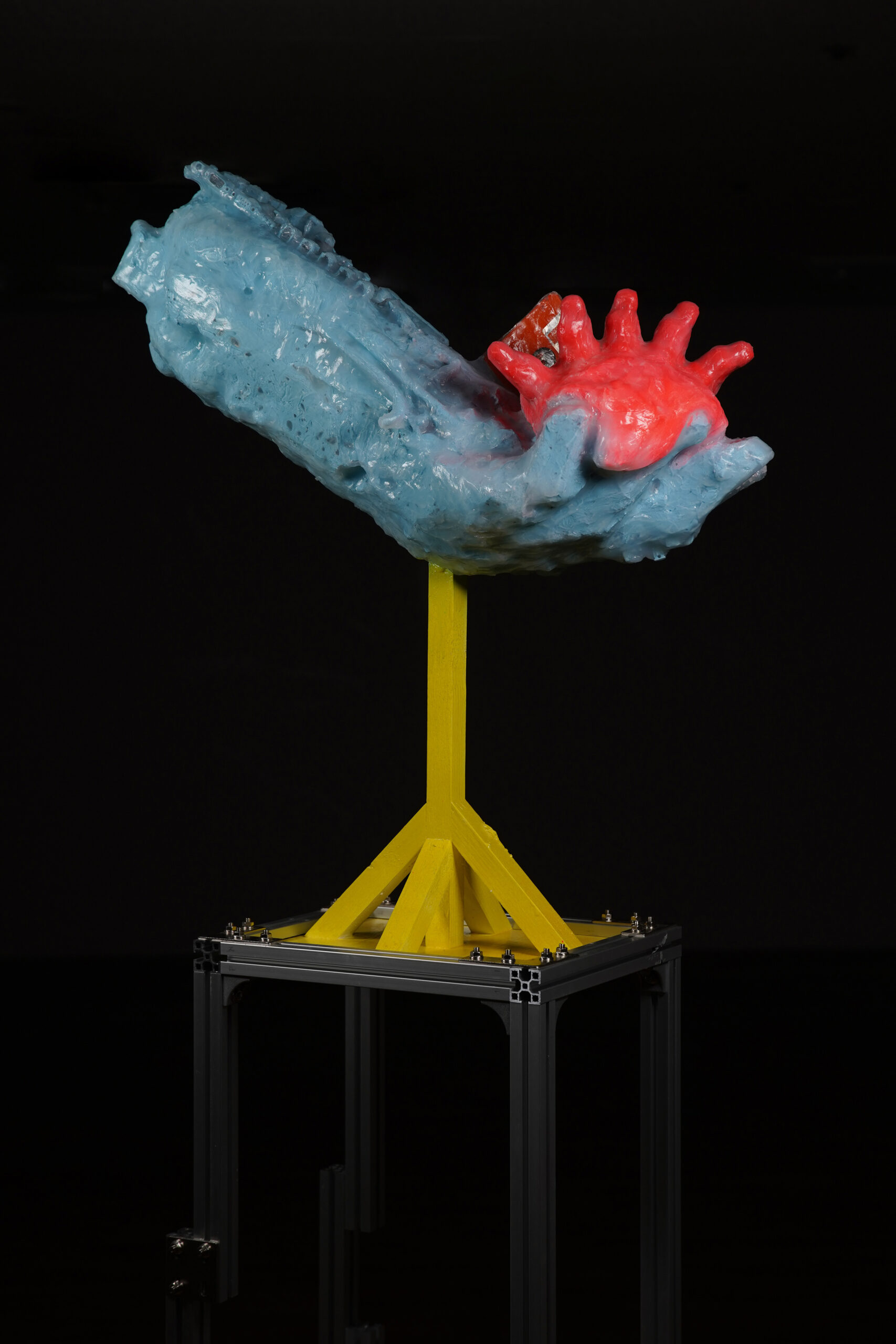
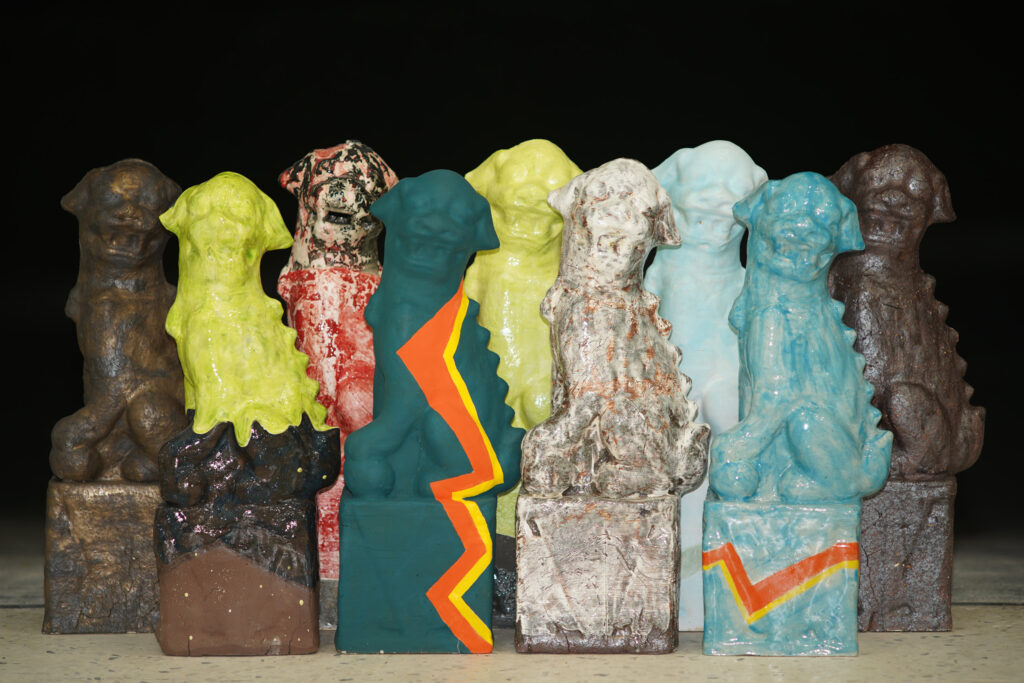
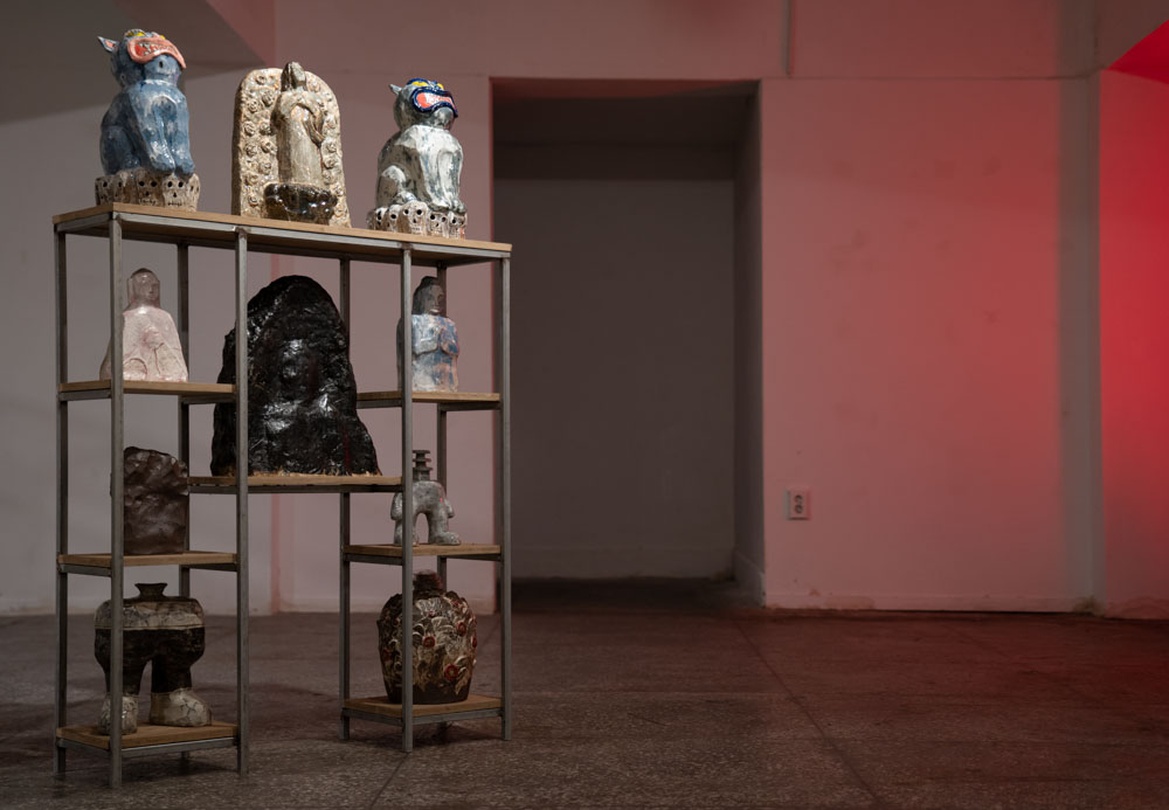
Another key work, INDEX_Dabogak-gyeongdo(2020),
focuses on the points of reception and reinterpretation between cultures. The
Western concept of the Cabinet of Curiosities was introduced to Qing China,
evolved into the Dabogak-gyeongdo, and was later absorbed into Korea as the
Chaekgado. Oh Jeisung reconstructs these transmutations in his own visual
language by 3D-scanning neglected fringe sculptures and placing the replicated
objects onto shelves made of industrial profiles. Through this gesture, he
experiments with the convergence of tradition and contemporary technology.
This multi-layered exhibition was jointly organized with The
Square, a complex cultural venue in Nonhyeon, Gangnam-gu, and runs concurrently
with the solo exhibition 《Joyful Sculpture》, which opened four days
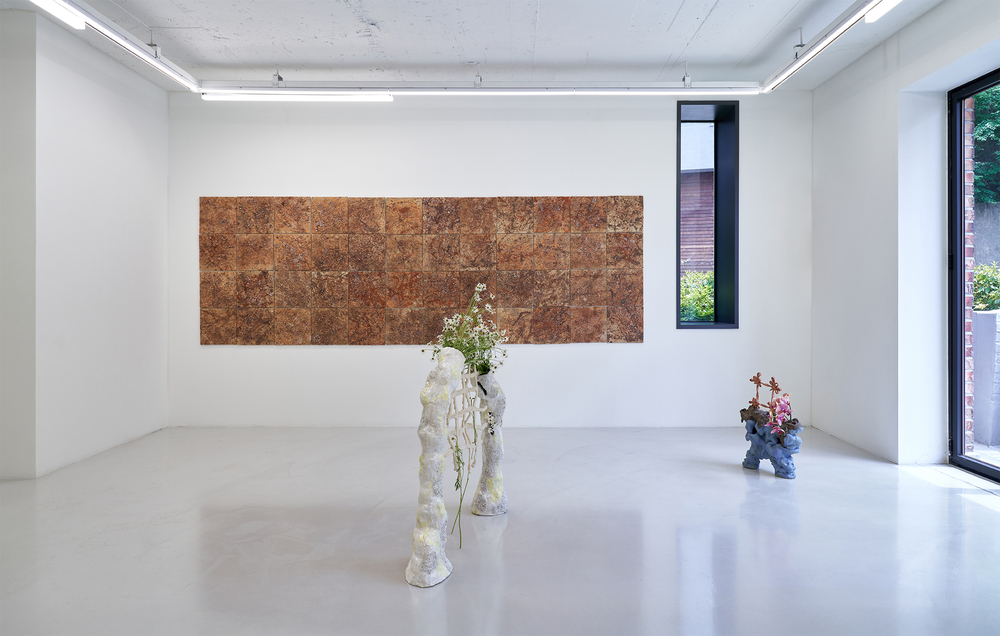
later. 《Joyful Sculpture》
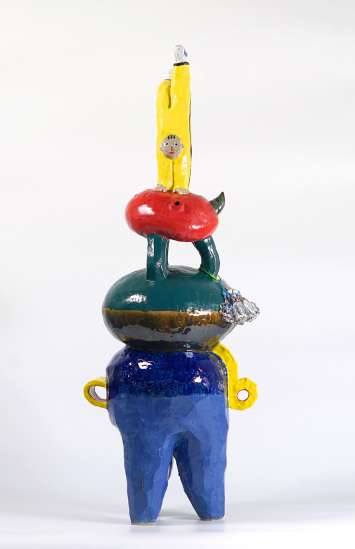
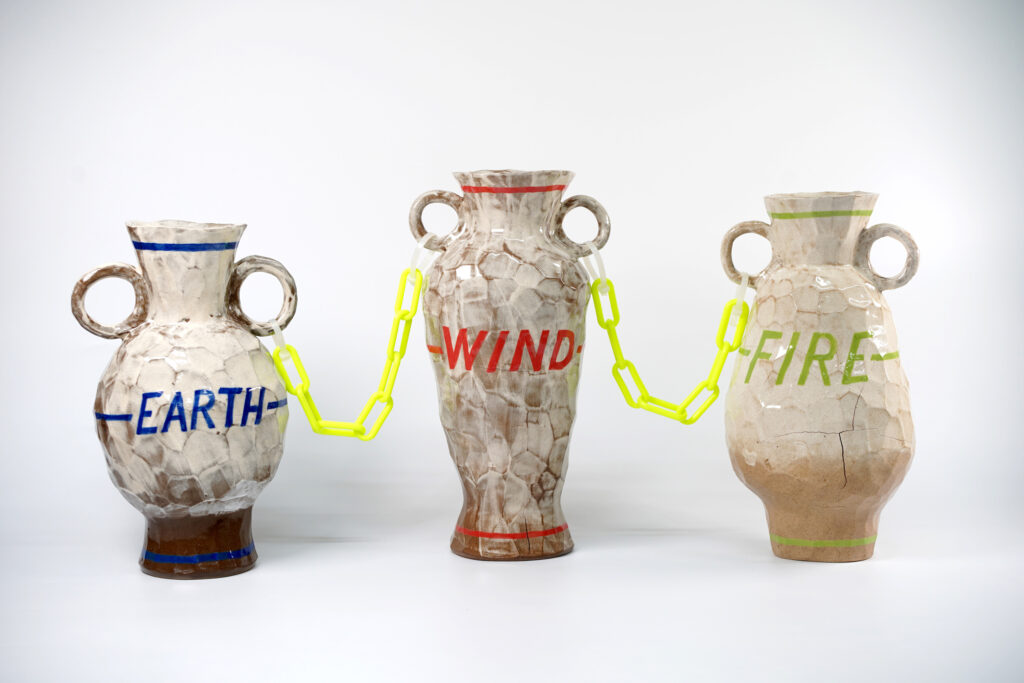
presents the ‘Vessels of Wish’ (2022) series, which reinterprets jars that
were flawed or unsatisfactory in form.
On this series, Oh Jeisung explains: “I collected jars that were
nearly discarded due to defects during the bisque firing process or forms that
didn’t appeal to the original creator. The cracks and broken parts were
repaired after refiring, and even those marks became part of the work. The
original jar makers remain collaborators, and these jars, once on the verge of
disposal, are reborn with new life.” This approach discards traditional
standards of value and repositions the jars as a medium co-owned by both the
potter and the artist, reclaiming the material through reasonable collaboration
and assigning new artistic value.
The moments of play that arise in Oh Jeisung’s sculptural work can
be divided into three stages: first, the journey of searching for sculpture
(fieldwork); second, the act of making sculpture (production); and third, the
experience of confronting and sensing sculpture (viewing). Through his field
research into non-designated cultural heritage, he discovers anonymous
vernacular sculptures and traces their narrative while considering how they may
be interpreted in the contemporary moment. This entire process is imbued with a
sense of joy. Furthermore, by reinterpreting the playful situations encountered
along the way through contemporary visual language, he searches for
intersecting points in layered temporalities.
In 《Playful Sculpture》, the first and second
moments of play—fieldwork and production—have been fulfilled. The third is left
solely to the viewer. Through the act of viewing, each person is invited to
experience the moment of play that Oh Jeisung has carefully constructed.
1) John Berger, Ways of Seeing, trans. by Visual and Media
Editorial Department (Seoul: Dongmoonson, 2022), p. 303.
2) Refers to cultural properties that are not designated under the
Cultural Heritage Protection Act or local ordinances, but are considered
valuable for preservation. ("Heritage Knowledge e-eum," Cultural
Heritage Administration National Cultural Heritage Portal, accessed August 10, 2023, https://www.heritage.go.kr/heri/html/HtmlPage.do?pg=/cul/cultureEasySub01_01.jsp&pageNo=1_4_1_0#.)
3) Refer to selected pages from Oh Jeisung’s portfolio
(2013–2022).