Articles
[Review] 《The Weaponocene Epoch》(Seoul National University Museum of Art, Feb 6–May 4, 2025)
February 06, 2025
Lee Nayeon | Independent curator
 《무기세》 전시 전경 (서울대학교미술관,
2025) © 서울대학교
《무기세》 전시 전경 (서울대학교미술관,
2025) © 서울대학교
From instruments of control to objects of thought
Paul Virilio argued that modern technology cannot be separated from military
purposes. Through his concept of “pure war,” he suggested that the boundary
between war and peace has disappeared in contemporary society. In other words,
even times of peace function as preparations for the next war, meaning that a
state of war continues without end. According to Virilio, technological
development is directly linked to the arms race, and technology itself becomes
an invisible war waged against humans—a weapon in its own right. Modes of
transportation, communication, and visual technology all evolved from military
needs, ultimately reorganizing social structure and order along military logic.
He criticized this techno-military complex for dominating modern society,
taking precedence over politics and ethics. In his view, contemporary
technology no longer operates as a simple tool but functions as a weaponized
force that shapes and maintains sociopolitical and economic structures.
The exhibition 《The Weaponocene Epoch》(2025) at the Seoul
National University Museum of Art seems to skillfully translate Virilio’s
insights into the language of art. The term “Weaponocene” extends beyond
“Anthropocene” and “Capitalocene” to denote an era dominated by weapons.
Curated by Sim Sangyong, the exhibition explores the impact of weapons on
modern life through art while seeking possibilities for rupturing the logic of
violence. The works illustrate how weapons have moved beyond the
battlefield—now influencing corporate competition, media consumption, and
technological development.
The exhibition unfolds in three sections. The first, “Militarized
Everyday Life,” explores how weapons have infiltrated daily routines. Heobori’s
installation features tanks and guns made from neckties and business suit
fabrics, symbolizing the fusion of capitalism and military order. This suggests
that economic competition in today’s society may be no different from military
structure—perhaps wearing a suit to work isn’t so different from donning armor
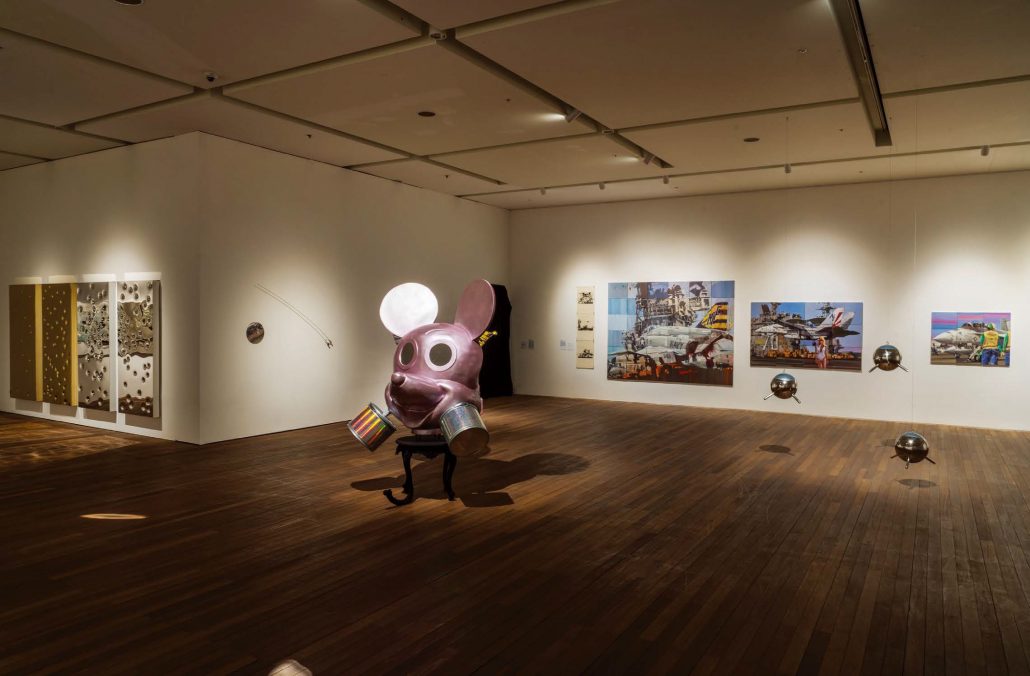
for the battlefield. Kang Hong Goo’s photographs capture military traces hidden
in mundane cityscapes. Fighter jets crossing the sky and warships anchored in
the sea remind us that military power is deeply embedded in everyday life. An
Sung Seok’s sound installation repeatedly plays a military wake-up alarm. Based
on his experience witnessing comrades’ deaths during his service as an army
photographer, the work memorializes the innocent soldiers lost.
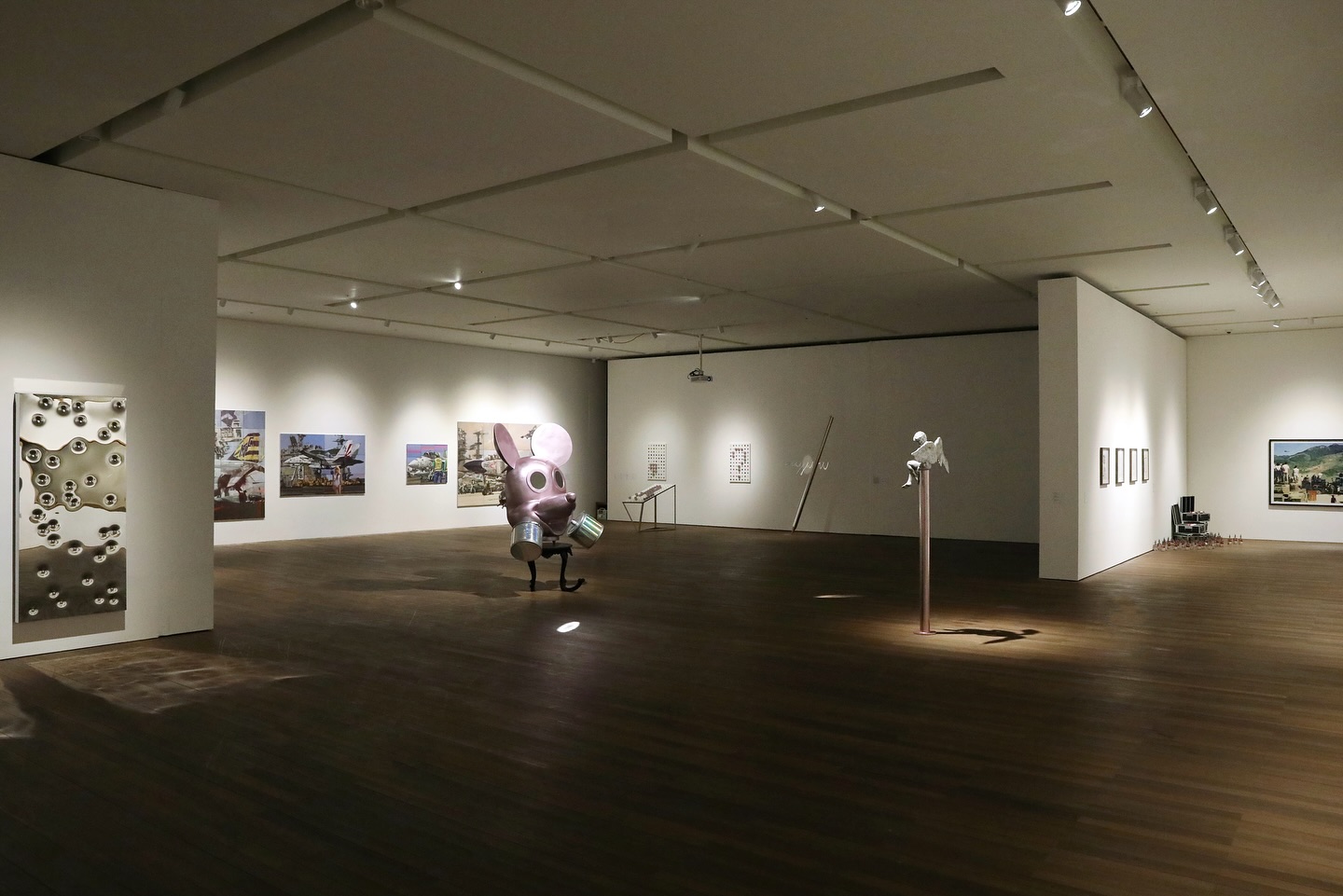
The second section, “Weapon as Spectacle,” investigates how
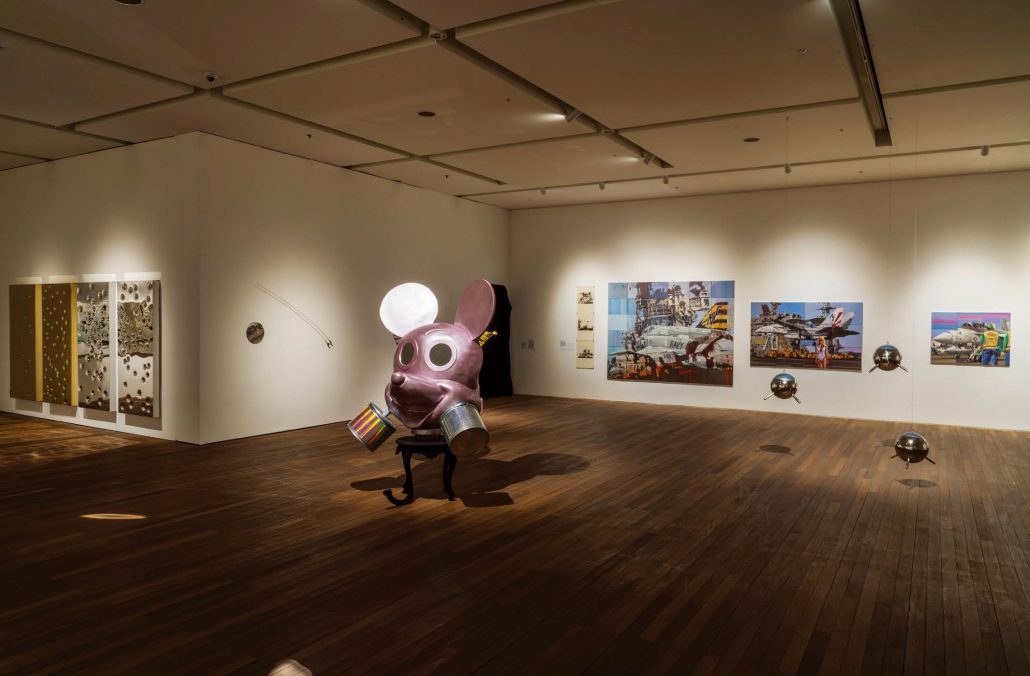
weapons are visually consumed in media and art. Choi Jaehun’s performance
documentation shows a gun being fired at reflective stainless-steel plates,
leaving visible bullet marks that symbolize the self-destructive nature of
violence. Viewers see their reflections overlaid with the scars of bullets,
experiencing the paradox that violence ultimately returns to oneself. Noh
Younghoon’s all-white works satirize the consumption of violent imagery as entertainment,
featuring Disney-style gas masks and landmines shaped like balloons. These
recreate WWII-era children’s gas masks and critique how war’s terror is
transformed into titillating content in films, games, and news, thereby
distorting the essence of violence. Lee Yongbaek’s photographic works portray
soldiers in camouflage within peaceful flower gardens, hinting that even
seemingly safe spaces are covertly governed by military logic. The works
visualize how violence has become part of everyday life.
 《무기세》 전시 전경 (서울대학교미술관,
2025) © 서울대학교
《무기세》 전시 전경 (서울대학교미술관,
2025) © 서울대학교
The third section, “Weapons, Familiar Futures,” warns of a future
shaped by the expanding influence of weapons into environmental and
technological realms. Ha Tae-beom’s photographs recreate scenes from the Syrian
Civil War as white models—devoid of blood or cries, revealing only desolate ruins.
By presenting war scenes poetically, he critiques how images of war are
aestheticized and consumed in the media. Rather than showing actual war photos,
he recreates them in a filtered form, provoking meta-reflection on the image
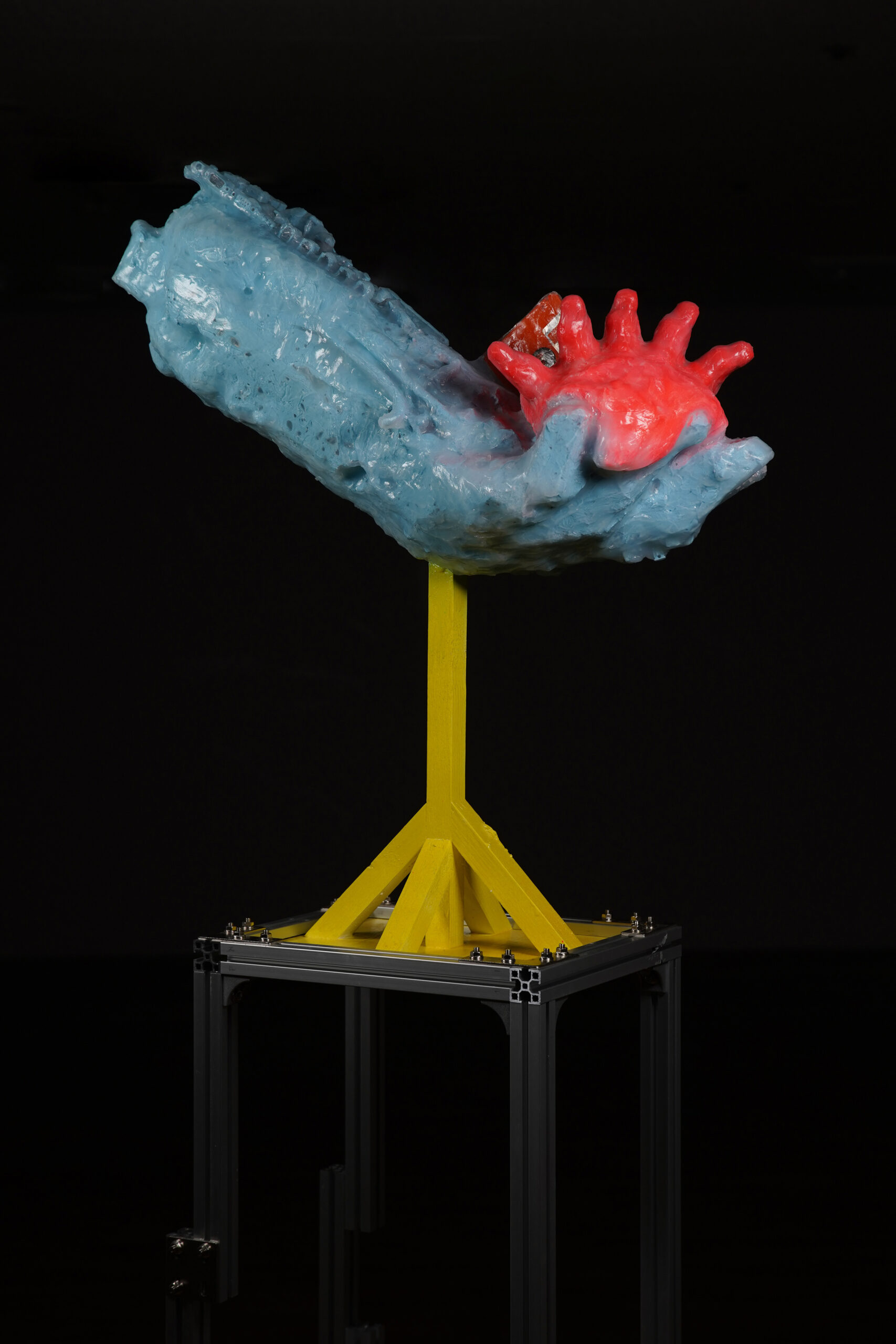
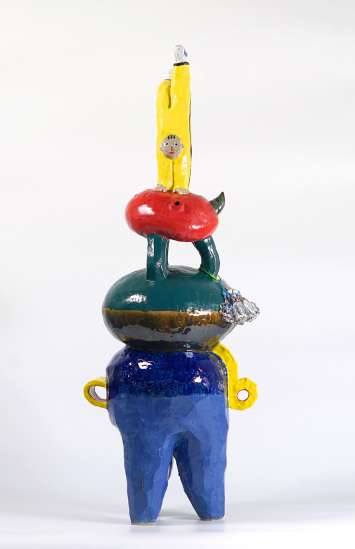
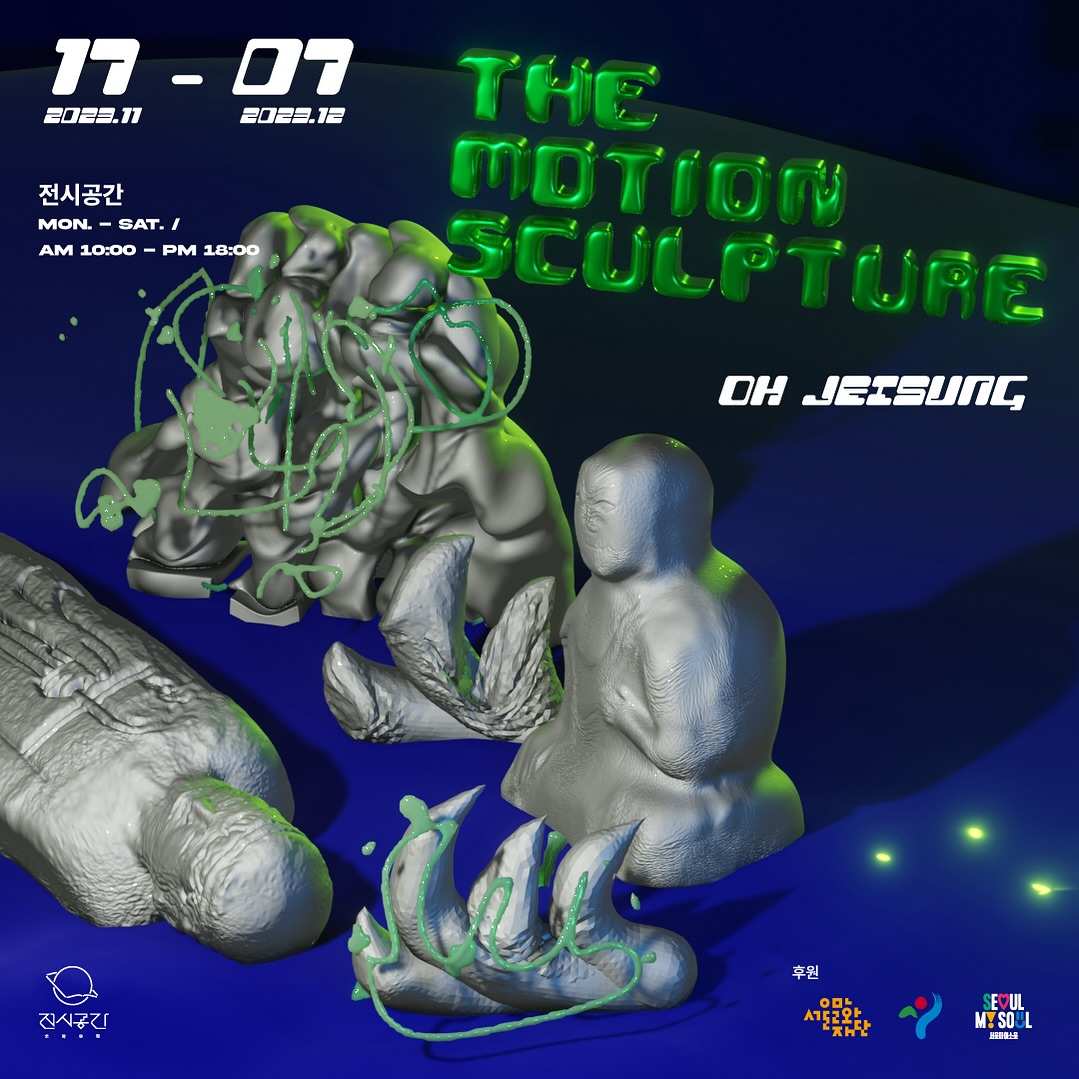
itself. Oh Jeisung’s sculpture portrays memories passed down from father to
grandfather to great-grandfather, lined up like soldiers marching off to war—an
image that resonates eerily. Bang Jung-a’s paintings combine imagery of nuclear
power plants with zombies, warning of a future where technological and violent
control merge to threaten humanity. She reveals nuclear facilities absent from
maps due to military secrecy, alongside zombie forms.
《The Weaponocene Epoch》
exposes how weapons function not merely as tools of war but as systems that
shape and enforce social order. Weapons are no longer limited to guns and
swords on the battlefield—they permeate capitalist competition, technological
progress, and media consumption. Heobori’s fabric tank reveals the connection
between military and economic systems, while Noh Younghoon’s gas masks
illustrate how images of violence are commodified. Oh Jeisung’s ruins make
visible the environmental destruction wrought by weaponry. The logic of weapons
merges with capitalist competition, technological development, and systems of
power, internalizing violent order into everyday life.
Yet, the exhibition also proposes the potential for art to
overturn this logic. Just as Heobori’s tank is made from fabric, tools of
violence can be dismantled symbolically. Choi Jaehun’s mirrored performance
reveals the cyclical nature of violence, showing how art can visualize and
subvert violent structures. Curator Sim Sangyong notes that the nations leading
in weapon production and export also dominate contemporary art discourse,
emphasizing that art must not only critique weapons but rupture weaponized ways
of thinking. Ultimately, the exhibition proposes the transformative power of
art as a force beyond weaponized systems—inviting viewers to reimagine and seek
out humanity and peace.