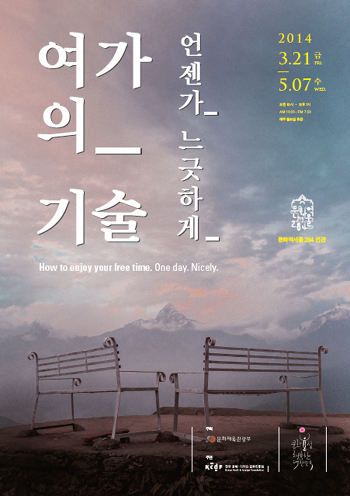
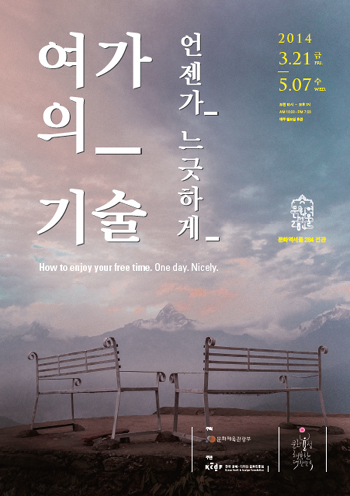
Leisure
as a Technology for Healing the Everyday Life of Contemporary People
This
program centers on the theme of “leisure,” presenting concrete examples and
formats such as travel, walking, rest, and books and reading. It offers a range
of suggestions and practical approaches for making meaningful use of leisure
time. By framing the relationship between work and leisure in contemporary
society through cultural and artistic practices, the exhibition positions
“modern leisure” as a significant theme within everyday culture.
Focusing on
time spent with ease, as well as place, encounters, events, and memories, the
program is composed of exhibitions and archival displays by media artists,
sculptors, public artists, designers, sound artists, travelers, travel
essayists, and documentary photographers, alongside participatory workshops and
lectures.
Each
work is installed in consideration of the spatial characteristics and visitor
flow of Culture Station Seoul 284, and arranged to correspond with the theme in
a more relaxed, slower, and calmer manner, avoiding excessive stimulation. The
exhibition creates an environment that allows visitors to experience a
contemplative mode of wandering—one that encourages quiet immersion and a
gentle state of mind. Through this, audiences are invited to engage with the
works in a comfortable and unhurried atmosphere, fostering a space for
empathetic and restful viewing.
Rediscovering
the Value and Meaning of Leisure for the Exhausted Contemporary
Individual
On the
first floor, an installation by artist Kim Seungyoung fills the central hall
with over 600 speakers, inviting visitors to listen closely to the sounds of
the mind. Alongside this, an unconventional project by Gardening Friends,
transforms the third-class waiting room into an everyday yet aesthetic garden;
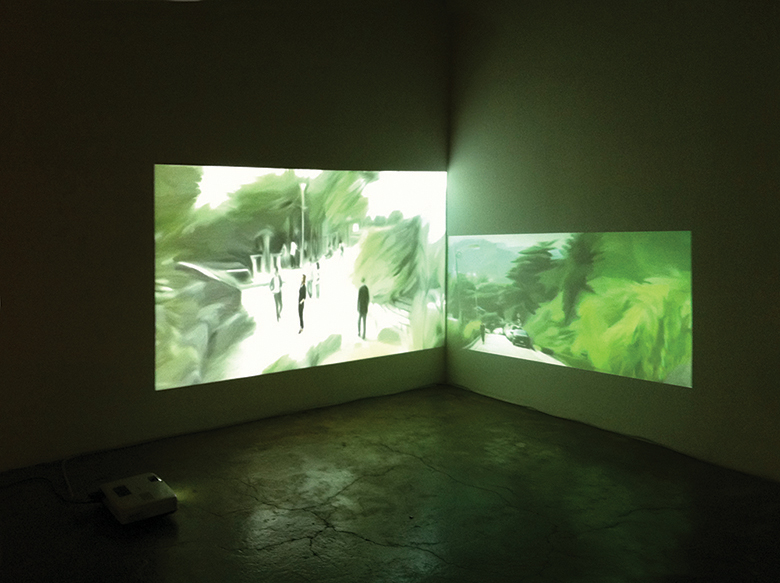
a 62-meter-long panoramic video of vast natural landscapes by Kayip (Lee
Woojun), praised by the renowned composer Brian Eno, unfolds along the western
corridor; and a documentary cinema created by twelve photographers and video
artists occupies the first- and second-class waiting rooms.
Together, these
works offer engaging encounters with the quiet and unhurried aspects of leisure
embedded in everyday life and nature. The second floor, themed around books and
reading, provides a space to reflect on alternative meanings of reading through
imagined texts, playful elements, and a video environment where visitors can
comfortably enjoy books.