About the exhibition Non-Algorithm Challenge
Non-Algorithm Challenge, organized by the Sehwa Museum of Art from
2023 to 2024, presents unique and diverse narratives about non-humans and
humans. The museum defines the exhibition as “a trilogy project that considers
various aspects of ‘humanity’ in light of the existence and relationship
between humans and non-humans in the artificial intelligence era.” Connected by
the three themes of “Senses-Body-Memory,” the exhibition consists of Part 1, 《Tuning the Ears》, which
focuses on the senses; Part 2, 《Skin, the Deepest Part》, which focuses on the body; and Part 3, 《4℃》, which deals with memory. The Sehwa Museum of Art invited nine
emerging artists, three for each part, to present non-deterministic
interpretations of the phenomenon of artificial intelligence (AI), a heated
topic of our time. The keywords of the exhibition are “non-algorithm” and
“challenge,” as the title suggests. According to the Sehwa Museum of Art’s
curatorial introduction, “non-algorithm” refers to a “non-deterministic
algorithm.” If we interpret the exhibition’s purpose based on this statement,
“Non-Algorithm Challenge” may refer to “the non-deterministic challenge of art”
or “the periodic challenge of non-determinism.” It hypothesizes that the
non-algorithm as non-determinism can be human and also proposes to explore and
reflect on asking ourselves our sharing of territory with the latest AI
machines.
Algorithms, Non-deterministic Algorithms, and Non-algorithms
In this exhibition, non-algorithms seem to symbolize
non-deterministic algorithms, that is, non-determinism. However, there is a
conceptual difference between non-algorithms and non-deterministic algorithms.
In the field of computer science, an algorithm is a finite set of processes,
instructions, and rules for solving a specific problem. Computer scientists
distinguish several categories of algorithms, including deterministic and
indeterministic algorithms.
Simply put, a deterministic algorithm is an algorithm that is
generally similar to a mathematical function and produces the same result
through the same procedure for the same input. For example, the linear function
“y = x+1” is a deterministic algorithm, which means that a determined procedure
yields a determined (predictable) result called determinism. By contrast, a
non-deterministic algorithm uses a different procedure for the same input each
time to produce different results. This procedure is non-deterministic in that
the same input (choices) leads to non-deterministic results through a
non-deterministic process. Non- deterministic algorithms are used to provide
alternatives, or “rough solutions,” to problems for which it is difficult to
provide perfect solutions. It is difficult to find examples that can easily
explain non-deterministic algorithms. The most straightforward example is the
“probabilistic algorithm” used in encryption and security, in which the outcome
is unpredictable. In this sense, non-deterministic algorithms are used in AI,
machine learning, and optimization problems. Roughly put, large language models
(LLMs) such as ChatGPT, which has recently become a significant phenomenon in
AI, also have the properties of non-deterministic algorithms.
Meanwhile, the literal meaning of “non-algorithm,” the keyword of
the exhibition, is “not- algorithm.” Unlike the exhibition’s curatorial
introduction to non-algorithms, there is a conceptual difference between
non-algorithms (as not-algorithms) and non- deterministic algorithms. The
difference is that a non-algorithm is a problem-solving method that uses
something other than an algorithm. By contrast, a non-deterministic algorithm
uses an algorithm that is non-deterministic. Non-algorithms can be summarized
as problem-solving that relies on factors outside the algorithm, such as
external circumstances, human intuition and inspiration, or chance and
probability, to arrive at a solution. These characteristics of non-algorithms
are similar to the artistic practices used in modern and contemporary art
throughout the 20th century. The characteristics of contemporary art, such as
unconsciousness, alea and indeterminacy, noise, and audience participation,
were non-algorithms for which the new art aimed, thus breaking away from the
existing art algorithms. In this respect, this exhibition is an extension of
the context of modern and contemporary art history and also pursues a different
kind of contemporaneity by indeterminately recognizing the recent phenomenon of
humanized and naturalized machines.
Sense-Body-Memory: Stories of the Dionysian Man
The selection and organization of the exhibition theme of
“Senses-Body-Memory” is reminiscent of “living organisms,” especially “the
process of humans recognizing the world and the Other.” This theme resembles a
series of cognitive mental processes in which humans perceive (know), remember,
and recognize (interpret and judge) data (stimuli) obtained from the sensory
organs through the work of the brain. The commonality of the themes of each
part of the Non-Algorithm Challenge exhibition seems to boil down to the
mind-body dualism of the separate concepts, “body” and “mind.” However, the
exhibition instead focuses on the human soul through “flesh” and “body.” This
focus is probably because, in some respect, humans would not be able to sense,
think, or remember without the body. The exhibition further pursues the human
irrationality and indeterminacy represented by “flesh” and “body.” It is not
algorithmic, so it cannot be revealed as explicit knowledge synthesized by
reason but floats in the realm of implicit learning. This implicit knowledge is
the personalized knowledge synthesized through the repetition of sensation and
physical practice, the knowledge of “la chair.” It is non-deterministic.
The exhibition is, therefore, Dionysian. Human irrationality and
indeterminacy correspond to the non-algorithmic disorder symbolized by
Dionysus, the ancient Greek god of drinking and dancing, as well as human
passions and instincts. The Dionysian represents “something” that machines do
not “yet” have and contrasts with the Apollonian objectivism of machines.
Perhaps the Dionysian refers to human emotions, the unconscious, and the soul.
The keyword of the exhibition, “non-algorithm,” is the story of “not-algorithms”
(things that are not algorithmic) and their challenges, a narrative of art’s
challenge to the rationality of machines represented by AI and the associated
phenomena under the banner of “non- algorithm.” In this sense, the exhibition
is human, all too human.
Part 2. 《Skin, the Deepest Part》 : Skinscape
Skin is the front line between us and the world. It is a boundary,
a medium, and an interface through which exchange occurs between the self and
others. We understand the world through our skin, and the world enters us
through our skin. In his book La Phénoménologie de la Perception
(1945), Maurice Merleau-Ponty wrote “Inside and outside are inseparable. The
world is wholly inside me, and I am wholly outside myself.” Ultimately, people
and the world vibrate and resonate with each other through the skin, and humans
exist in the world (in-der-Welt-sein) by creating the skinscape. In it,
subjectivity and objectivity are unified, and body and mind become
indistinguishable. The human body is thus the deepest and most fundamental of
all. This way, when we engage with the world through the body and compose a
skinscape, we perceive and reflect on our living existence. Instead of Homo
sapiens, the rational, wise, thinking human being, Skin, the Deepest Part
focuses on Homo corpus, the “living” body.
Marshall McLuhan defined the relationship between media and
sensation when he declared “The medium is the massage” in 1967. In general,
massage stimulates the skin and muscles with regular, repetitive movements to
relax the body and mind by relieving pain and improving a person’s condition.
In other words, tactile contact and regular repetitive movements (vibrations)
are at the core of massage. Therefore, the statement “The medium is the
massage” emphasizes the tactile nature of media and that the medium is the
flesh (la chair) and the sense of touch itself. But why didn’t McLuhan use the
metaphor “The medium is the perfume” or “The medium is the song”? The answer is
that the sense of touch is a fundamental human sense and represents the human
senses while integrating other senses.
All of our sensory organs are tactile
because they are made of the flesh and therefore we feel pain. The Korean
phrase “having a keen sense” also refers to foresight and insight, not just the
sensory acuity of a single organ. Tactile sensation involves, not a single
sense, but, rather the integration of the individual senses, elevating them to
the realm of the sixth sense, which is the key to constructing a skinscape of
the world. Ultimately, a medium is a massage because it should act like human
skin. McLuhan’s massage concept connects naturally with Merleau-Ponty’s notion
of the body and perception. Our biological corporeality is perhaps the last
bastion of humanity that machines have yet to possess fully. Is this because
humanizing AI does not yet have this human skin and tactile sense?
As media, AI machines interact with humans through their
interfaces, which are their bodies. Can a machine that has not fully built a
natural body create its skinscape and interact with humans through it, thereby
reflectively recognizing its existence? The exhibition 《Skin, the Deepest Part》
poses a non-deterministic question about the bodily phenomenon that humans and
machines occupy in an era of overlap between mechanized humans and humanized
machines. In this exhibition, three artists develop non-deterministic
skinscapes centered on the body.
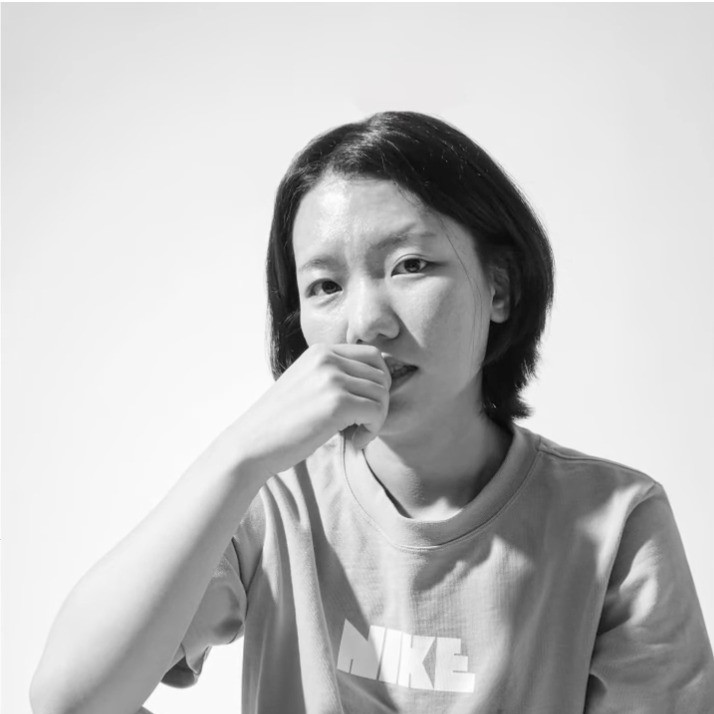
Chanmin Jeong
Having studied photography and media art, Chanmin Jeong has been
creating critical media works on human life in the 21st century that focus on
combining the body’s motion and action with technology. Movement has many
meanings beyond just moving from one place to another. What is important is the
path we take to get from one point to another. Recent technoscience optimizes
this path for time and cost. Humans used to seek the shortest distance, but now
we seek the shortest time and simultaneity. In the present era, with the entire
planet digitally networked, physical distance is becoming less important to
humans. Machines have replaced the need for human travel, and we have entered
an era in which we do not need to use our muscles. The human body has already
been alienated in the platform business, which combines online commerce and
logistics transportation.
In response, Jeong seriously critiques the
“phenomenon of bodily alienation” triggered by the advanced
capital-technological, and industrial society of the 21st century. Machines are
deeply involved in this alienation. The root of the English word “machine”
comes from the Greek word “magh,” which means “power.” According to Vilém
Flusser, machines are deeply associated with power in Western contexts: they
are devices that trick nature. The Greeks called them “mechos,” which initially
meant levers (to trick gravity) or traps (to trick humans and animals). It is
worth noting that the act of building machines is one meaning of techne in
Greek, which is the root of the word “art” today. The highly evolved techne,
technology, has the power to create machines, and today’s machines not only
deceive nature with technology but also completely deceive the human body. In
this way, Jeong focuses on how 21st-century technology and machines deceive the
human body and reflects on the capitalized and widespread technological
phenomena with her modest technologies.
Daily Motion Sickness and Developed
Movement 2024 ver. are Jeong’s unique skinscapes that unfold in this
context. Here, the artist focuses on the phenomenon of her own body while
taking on a metropolitan bus, a “transportation machine. ”The short documentary
video Daily Motion Sickness contrasts the bus, a machine that deceives time and
distance, with the satellite launch vehicle Nuri. It is interesting to compare
the physical phenomena to which Nuri subjects its passengers by tricking
gravity with Jeong’s situation on the metropolitan bus. In this work, she
metaphorically expresses the idea that the car sickness that comes as a
counterpoint to the deceptive efficiency of the machine is the physical
alienation that we experience during our daily commute. The movement
facilitated by machines is a form of human activity that utilizes “wisdom”
(instrumental reason) but it is not truly a “wisely traveling life.” Instead,
it is a life in which machines “intoxicate” humans. Developed Movement 2024 ver.
is also a work that physicalizes the data obtained from the tilting of Jeong’s
head, collected during her journey from the starting point to the destination
while riding in a metropolitan bus, into three-dimensional forms.
In the
automated transportation machine, Jeong is constantly shaken by the
noise-induced vibrations, which are the reaction to the action of efficient
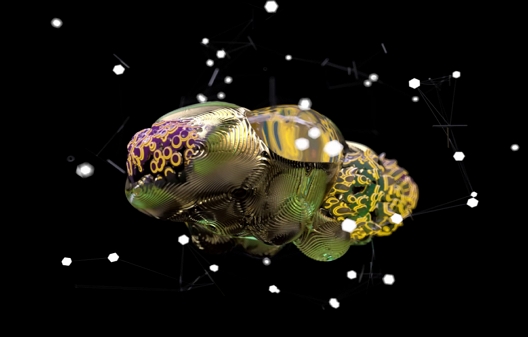
movement toward the destination. The three-dimensional shaking form,
extrapolated from the head tilt data in Developed Movement 2024 ver.,
resembles a twisted, nervous reaction, symbolizing the outcry of Jeong’s body
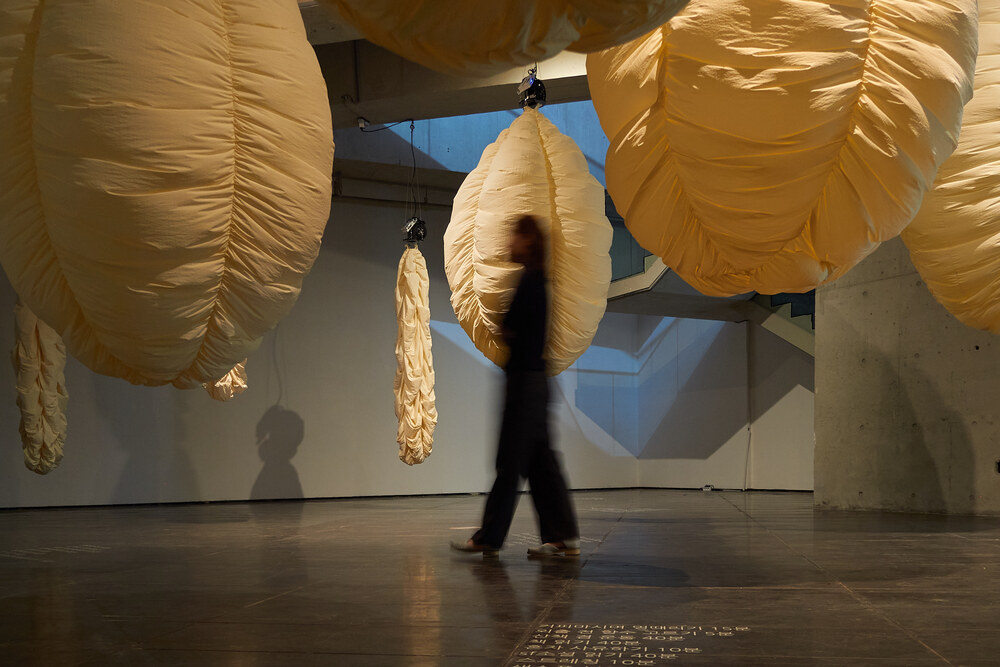
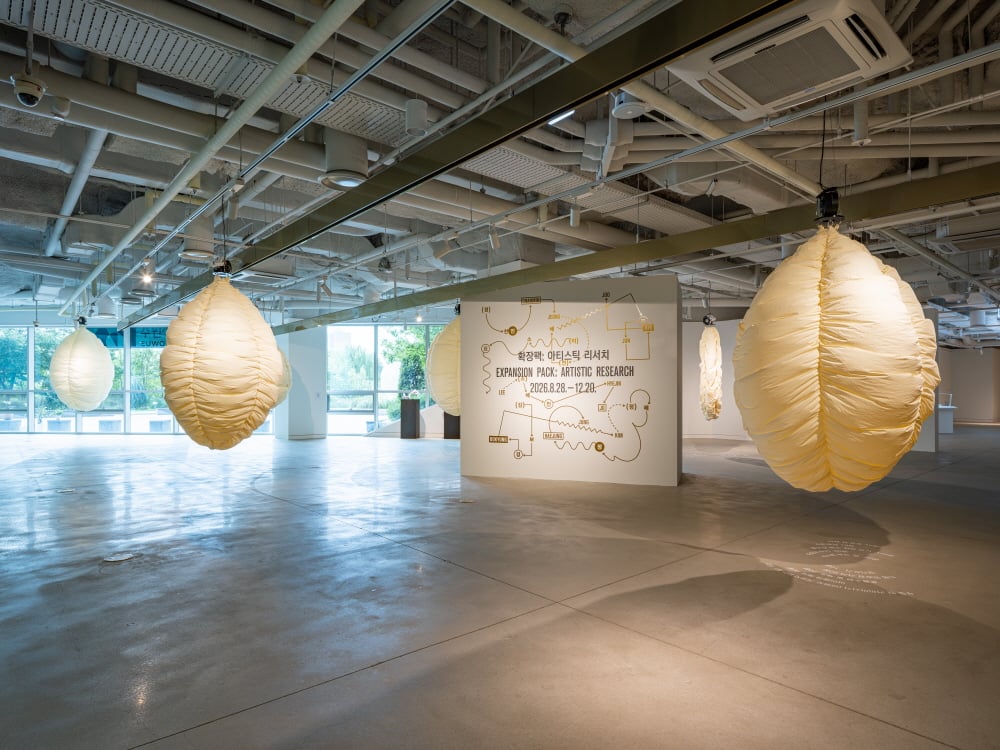
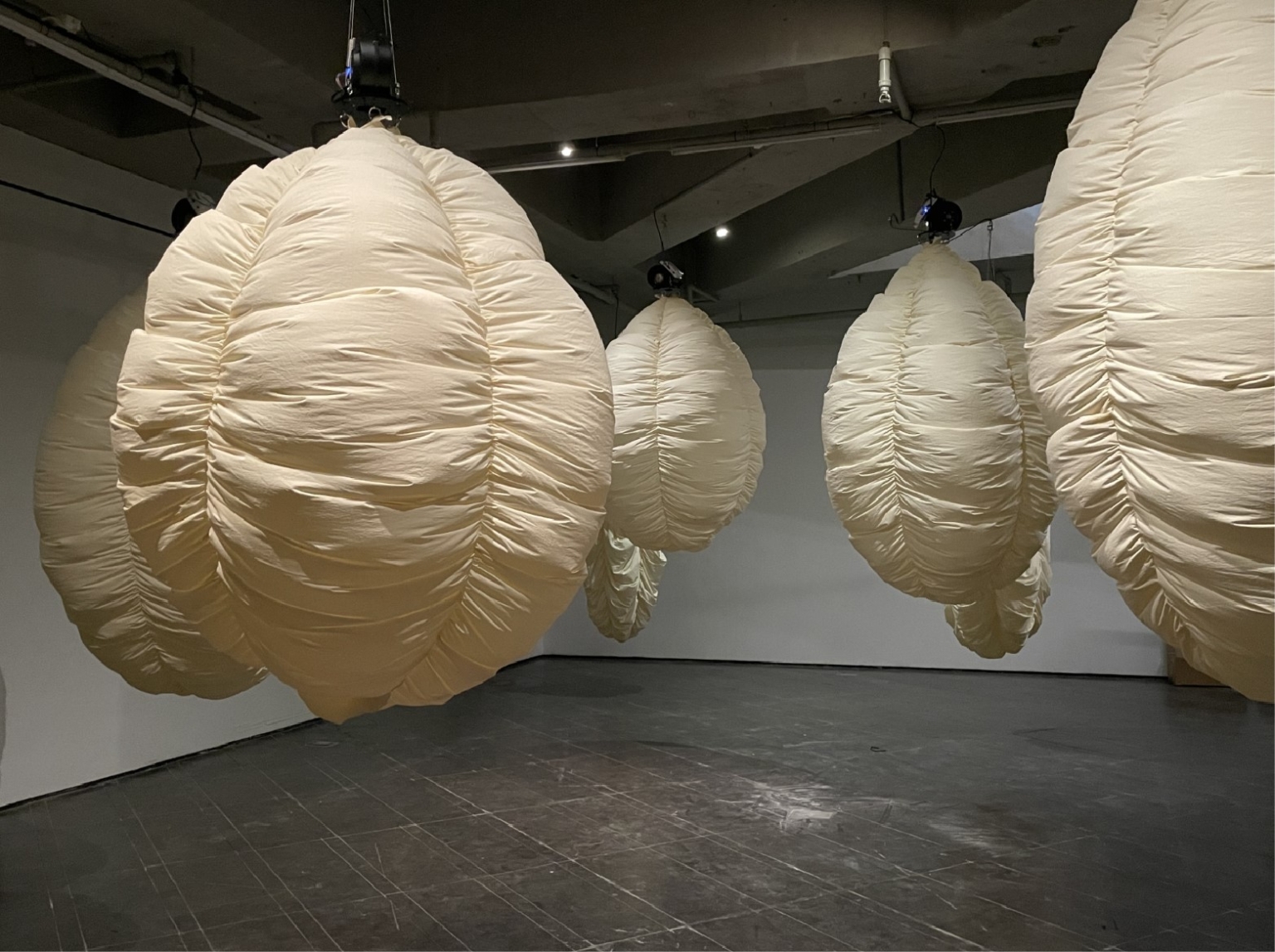
and the “developed” struggle expressed by her. Another artwork, Movement
Mass, visualizes the changes in the amount of movement, which is
reflected by the volume of five air sculptures in relation to the time,
location, and average speed information associated with Jeong’s movements over
five days. As the amount of movement increases, the volume of the sculptures
increases, and, as it decreases, the volume shrinks. In 21st-century Korea,
where one can live well enough (?) with minimal movement, the pattern of volume
change presented by the human movement reminds us of the original human body
that used to live by moving. The air pockets (lungs) that shrink as a result of
minimal movement symbolize the skinscape of 21st-century humans, as Jeong
experienced through her muscles.
These works are significant in that they deepen Jeong’s unique way
of thinking by narrowing the theme of the movement and behavior of the human
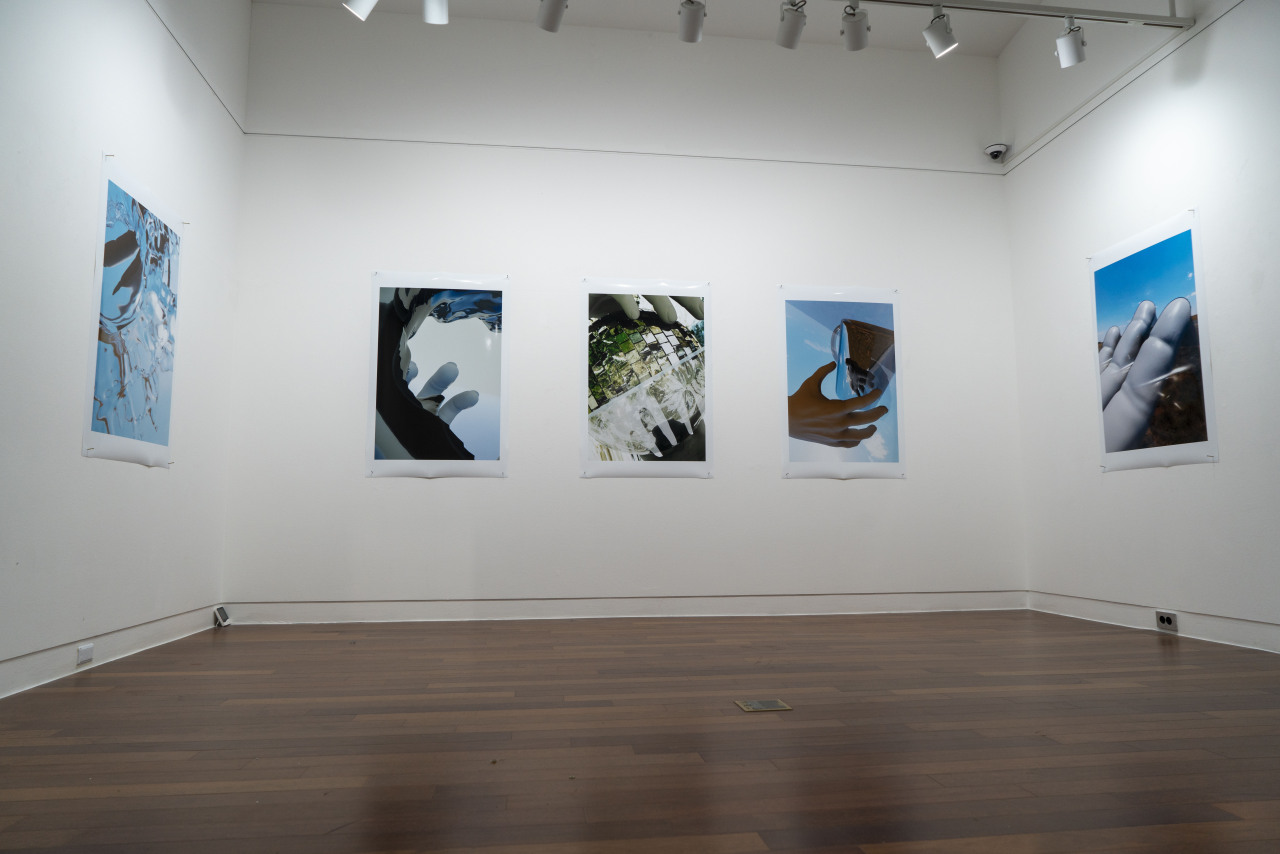
body to “travel.” To visualize her thoughts in various ways, the artist has
presented works using multiple media and materials in this exhibition,
including mechanical installations, live-action video footage,
three-dimensional prints, and computer graphic images. This is an artistic
challenge for Jeong. However, unlike the consistent social critique heavily expressed
by the artworks, I feel that the distinct “style of Chanmin Jeong” is not clearly evident in their formal
aspects, possibly because of the artist’s compulsion and pressure to use
various media and technologies. I wonder whether Jeong was caught up in the
deceptive efficiency of the technology that she pointed out. In the long
journey of artistic creation, “efficient travel” to reach the destination is
essential, but, sometimes, an “inefficient slow reflection” of creation is also
necessary.