The
term “origin” evokes vast, expansive horizons that seem almost unreachable.
Derived from the Latin originem, meaning “emergence, beginning, start, or
source,” and rooted in oriori, it can be interpreted as “to rise, to emerge, to
stand, to become visible, to be born, to gain life.” Rather than viewing origin
as a historical moment or primordial source, it is to be perceived as a verb,
embraced as a movement of rising and emerging.
In
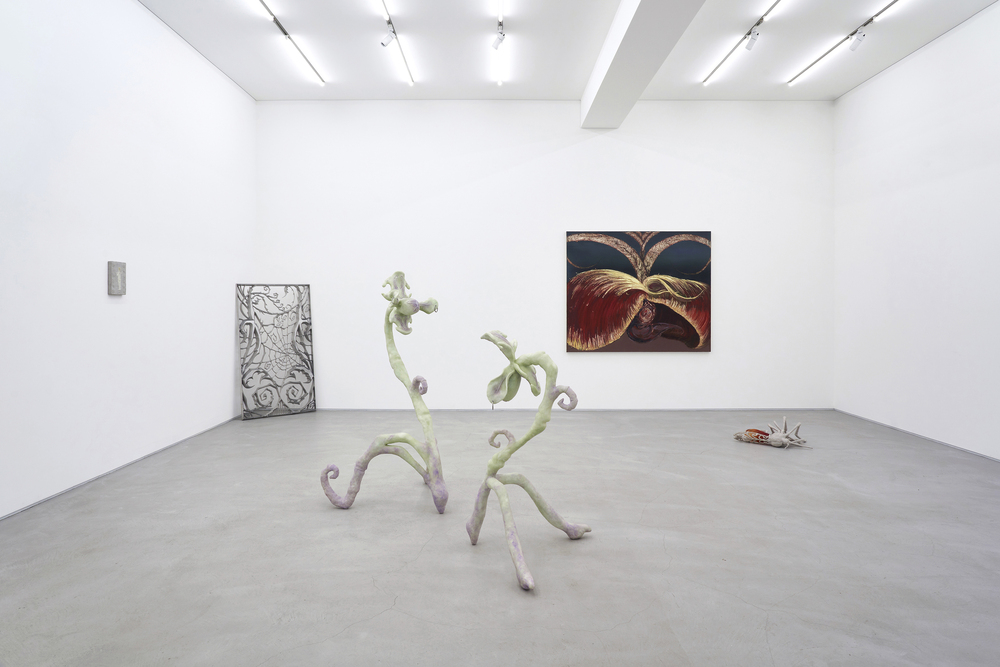
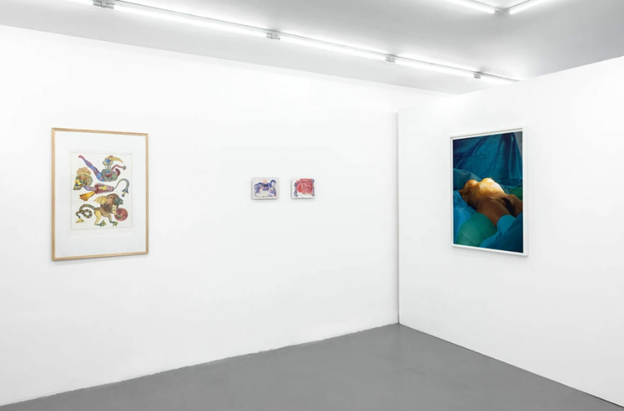
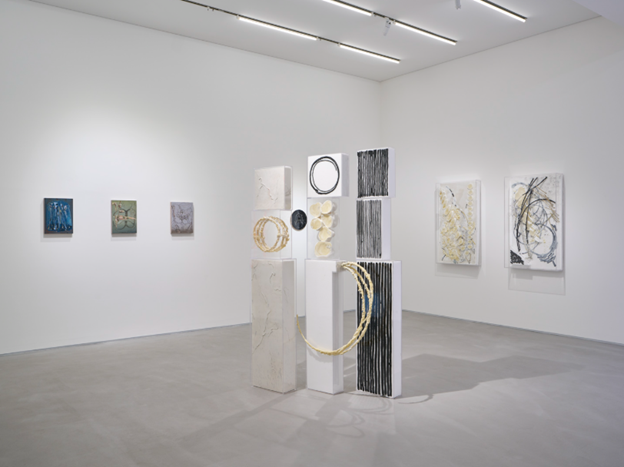
the two-person exhibition 《Land of Origins》, Chunkook Lee and Hanna Jo connect images of the earth, cells
within the body, insects, plants, and other organic entities through their
respective methodologies. The exhibition captures the world of living beings
rising, emerging, and thriving, as well as the multilayered movements of
entities beyond the perceptive limits of human vision.
Nature
is so thoroughly intertwined with itself and with us that we cannot separate it
to discern clear and distinct origins of the forces it exerts 1). Every
organism is a network of diverse relationships, gathering and moving in
interconnected webs. In this sense, technology, culture, and nature generate
and shape hybrid ecosystems. 《Land of Origins》 guides us into a world of organic material alliances and
speculative realms. Simultaneously, the works of both artists traverse media
environments and existing orders, seeking to renew contemporary visual and
perceptual systems. While their work begins with microscopic units and
entities, the internal mechanisms driving their use of media lead them down
divergent paths.
Chunkook
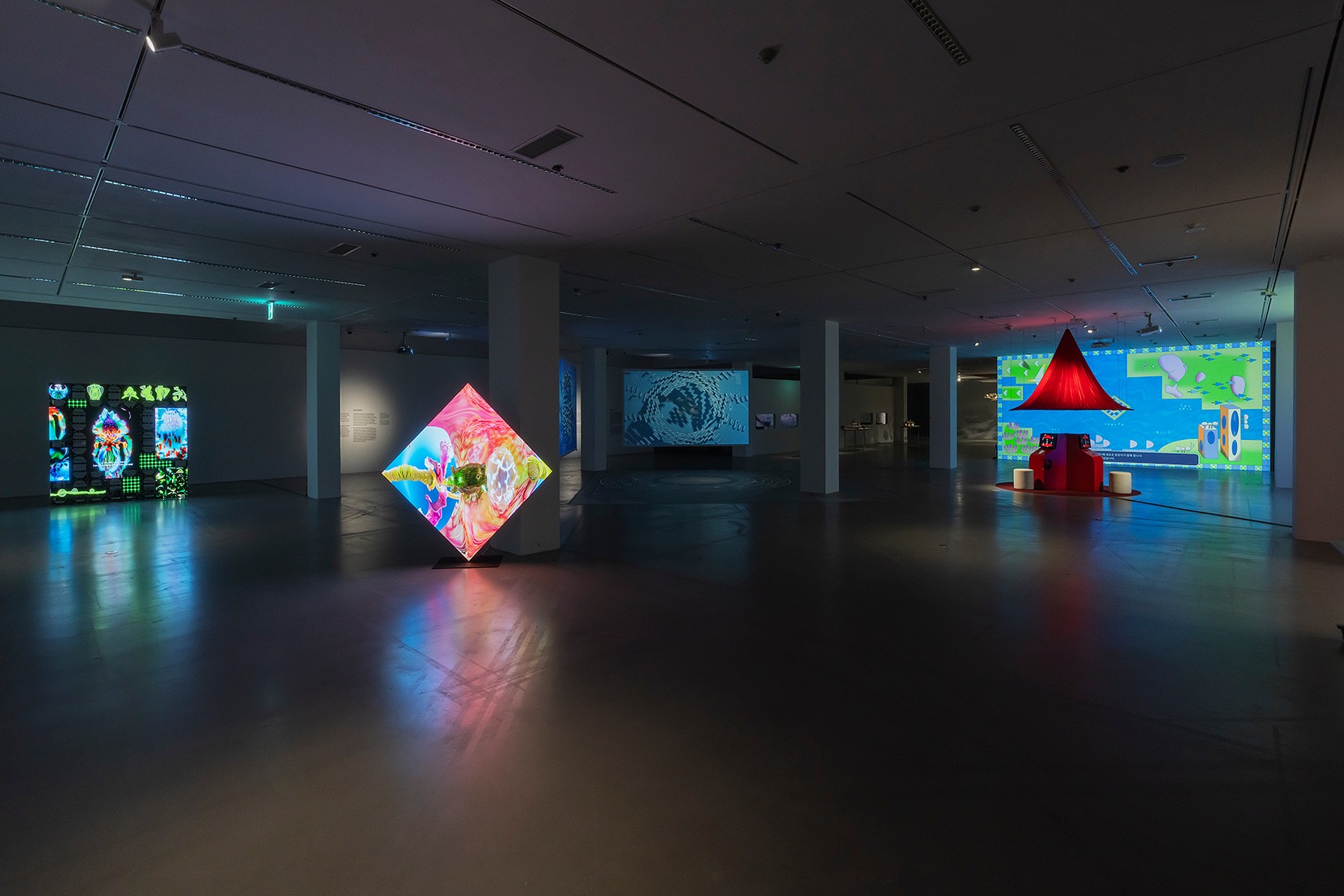
Lee’s iconographic depictions of organisms such as plants, vines, spiderwebs,
and mosquitoes, as well as his 3D-printed volumetric sculptures, prompt
reconsideration of the current environment of sculptural media. The artist
posits that sculpture occupies the status of an image within digital-based
culture and visual systems. Artworks circulating within this economy of image
networks undergo a chain of transformations across various formats. For
instance, Under the Green and Mosquito
exist as immaterial 3D data before being printed into three-dimensional forms,
departing from the traditional sculptural process of building frameworks and
adding flesh to instead enter a chain of image format conversions. The
experiences of users/players in virtual realities like social media and digital
games, along with issues of scale, provide the backdrop for renewing the
materiality of sculpture within this virtual network.
Meanwhile,
plants, vines, spiderwebs, and tentacled mosquitoes are entities that bridge
the gap between organic beings and technological artifacts. These forms, with
their tentacle-like extensions, connect distant realms such as the virtual and
the real, or the technological and the biological. Just as the internet
imagined its technological future through the metaphor of the spider’s web,
these forms possess the ability to link distant worlds. The icons of beings
spanning different worlds return to volume, weight, and size, becoming
sculptures within the image environment. These objects, having crossed the
threshold of the image network, serve as offerings that bridge consciousness
and materiality.
Hanna
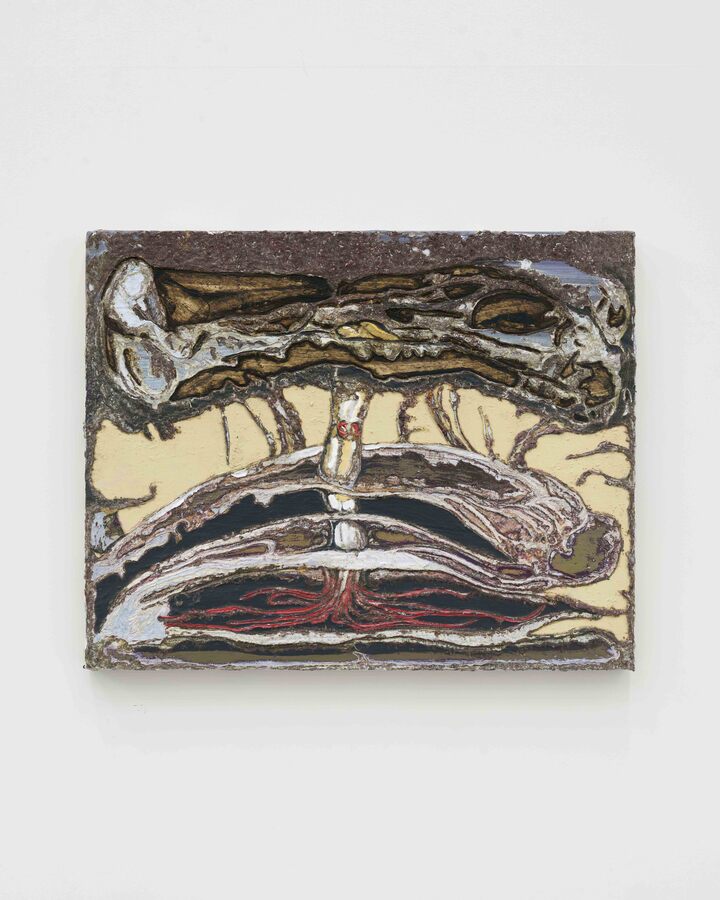
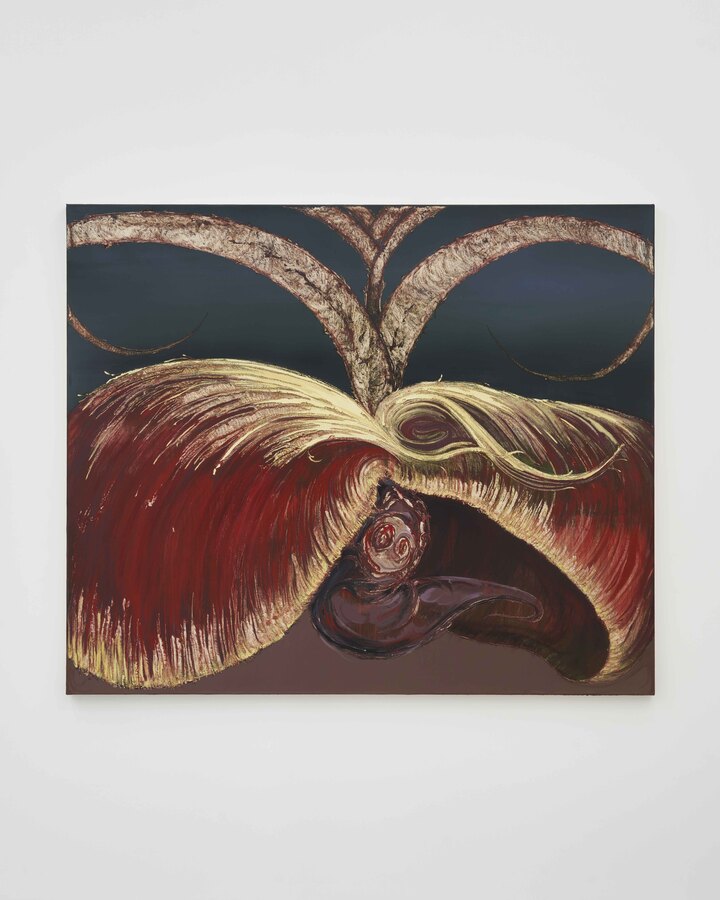
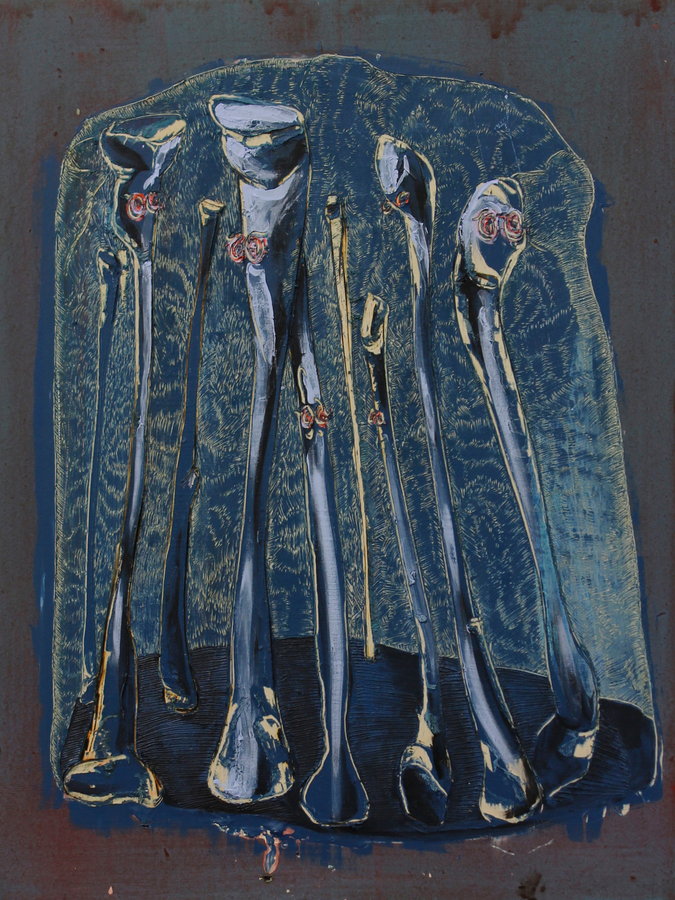
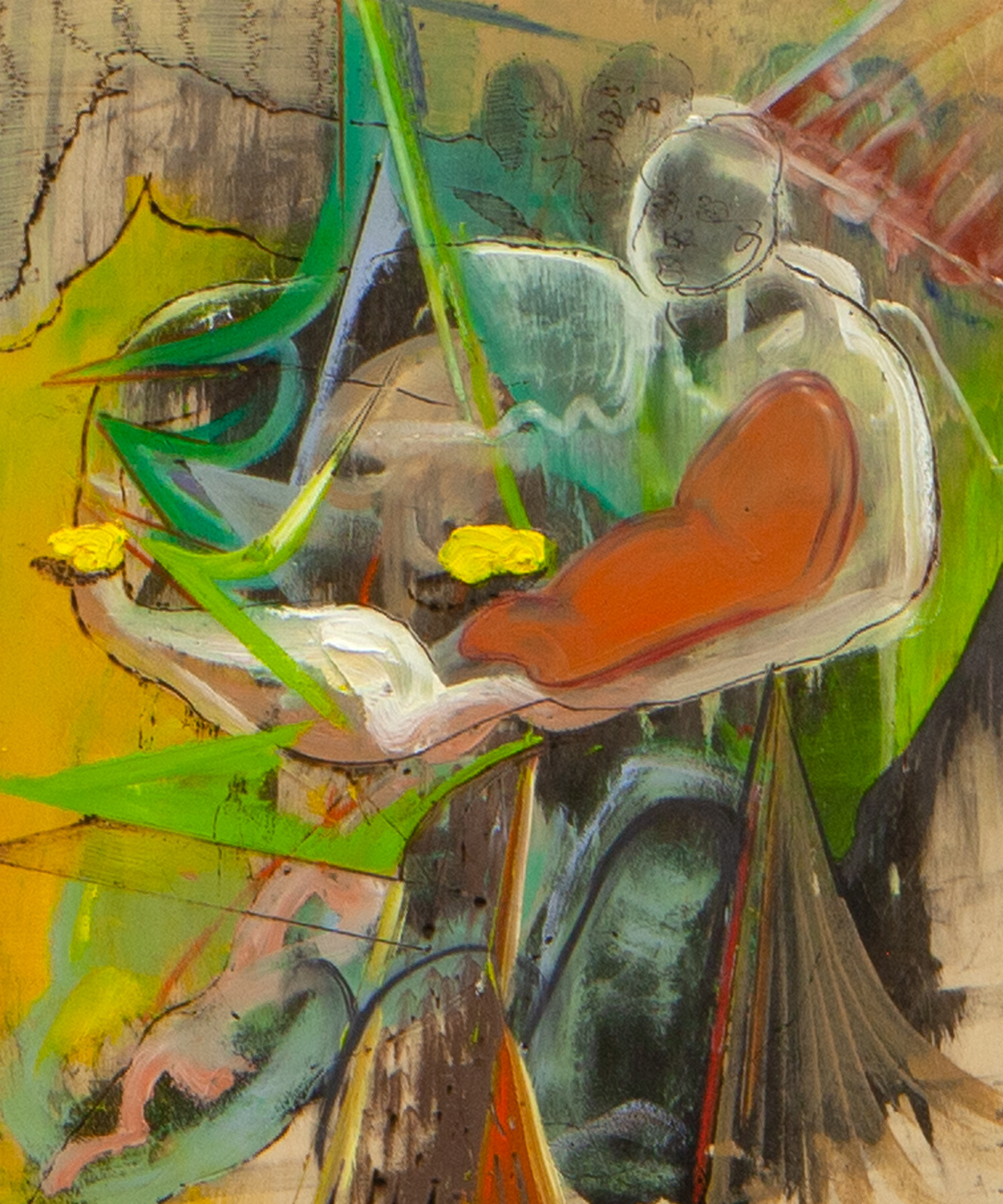
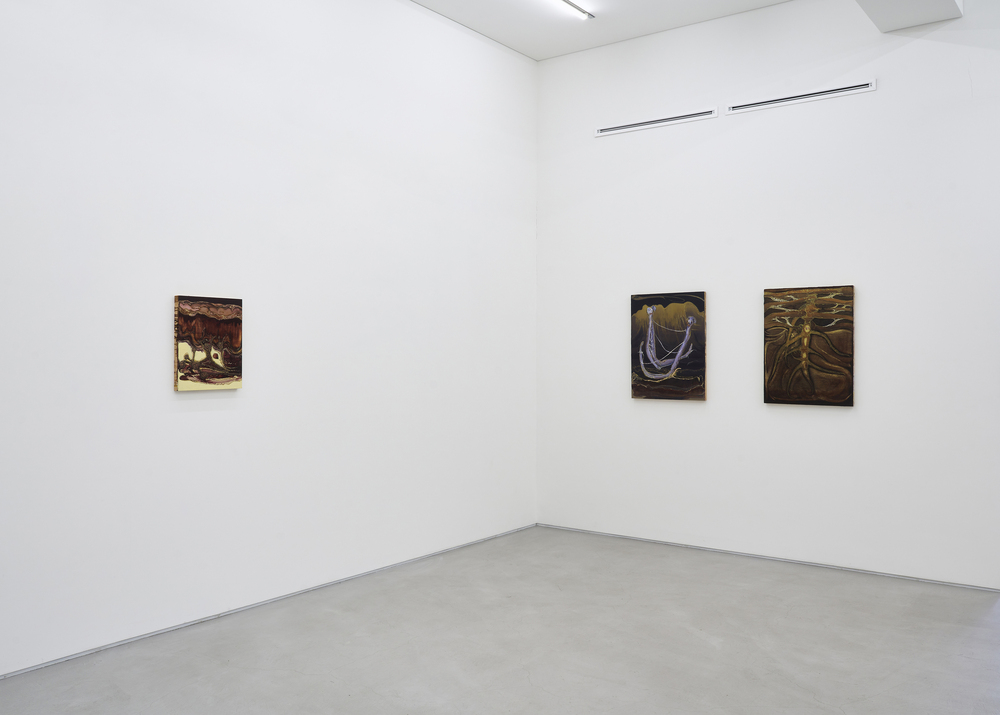
Jo depicts spaces from an artificial, organ-like perspective, as if viewing the
body, earth, and natural objects through a microscope. Her paintings show roots
taking hold in the earth while cellular divisions occur within the body,
combining layers of earth or muscle with the intricate networks of rootlets,
muscle fibers, microorganisms, fungi, and bacteria. Traces of paint that have
organically flowed resemble images of anatomical structures, merging with
magnified depictions of earth, roots, and fungal tendrils. Jo’s paintings
amplify the world of beings beyond human vision through artificial devices,
transforming into spaces where life emerges and thrives. Through anatomical
images generated by machines like microscopes and X-rays, the artist questions
the essence of humanity, revealing a flat, material world unbound by societal
orders and benchmarks. In her paintings, the metabolism of the body and the
symbiotic genesis of organisms are captured, activating only the vitality of
materials in democratic relationships. Personified expressions, such as
particles with eyes, embue personality to non-human materials, emphasizing
their energy and life force. What we ultimately arrive at is the covert truth
that everything is composed of material.
《Land of Origins》 magnifies a world that is
close yet invisible through the lens of a microscope. This perspective awakens
a world previously beyond our perception. The distinctions between the natural
and the artificial, the internal and the external, the human and the tentacled
are no longer sustainable; what matters is the alliance they form. The origin
of the Earth can no longer be understood as a singular narrative. Instead, its
genesis unfolds as a complex process, enriched and diversified by dynamic networks
that imbue our planet with force and vitality.
1)
Latour, The Pasteurization of France, 205-6; Latour, The Pasteurization of
France, 205-6; Ian Bogost, Alien Phenomenology, or What It’s Like to Be a
Thing, translated by Kim Hyojin, Galmuri, 205.