Rahm
Parc has worked in performance art since 〈1st Drawing Exercise 〉(2014). Her
compositions vary according to space and environment, but the main idea of
Parc’s work has been to create instructions for “drawing practice” and guide
participants to form images and sense time and space differently in the
process. Parc began to integrate these performance methods into the realm of
painting media in the exhibition 《Roll and leaP:
2008–2019》 (2019), and this idea continued in her 2020
solo exhibition, 《Times》. Rahm
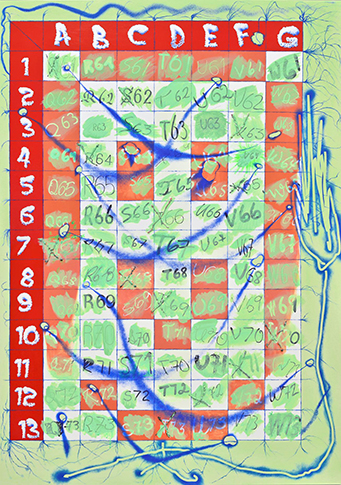
Parc draws using spreadsheet software, and the resulting design becomes the
basis of her painting.
Due to the nature of the software, which facilitates
automated analysis and computation of data from a table format, the resulting
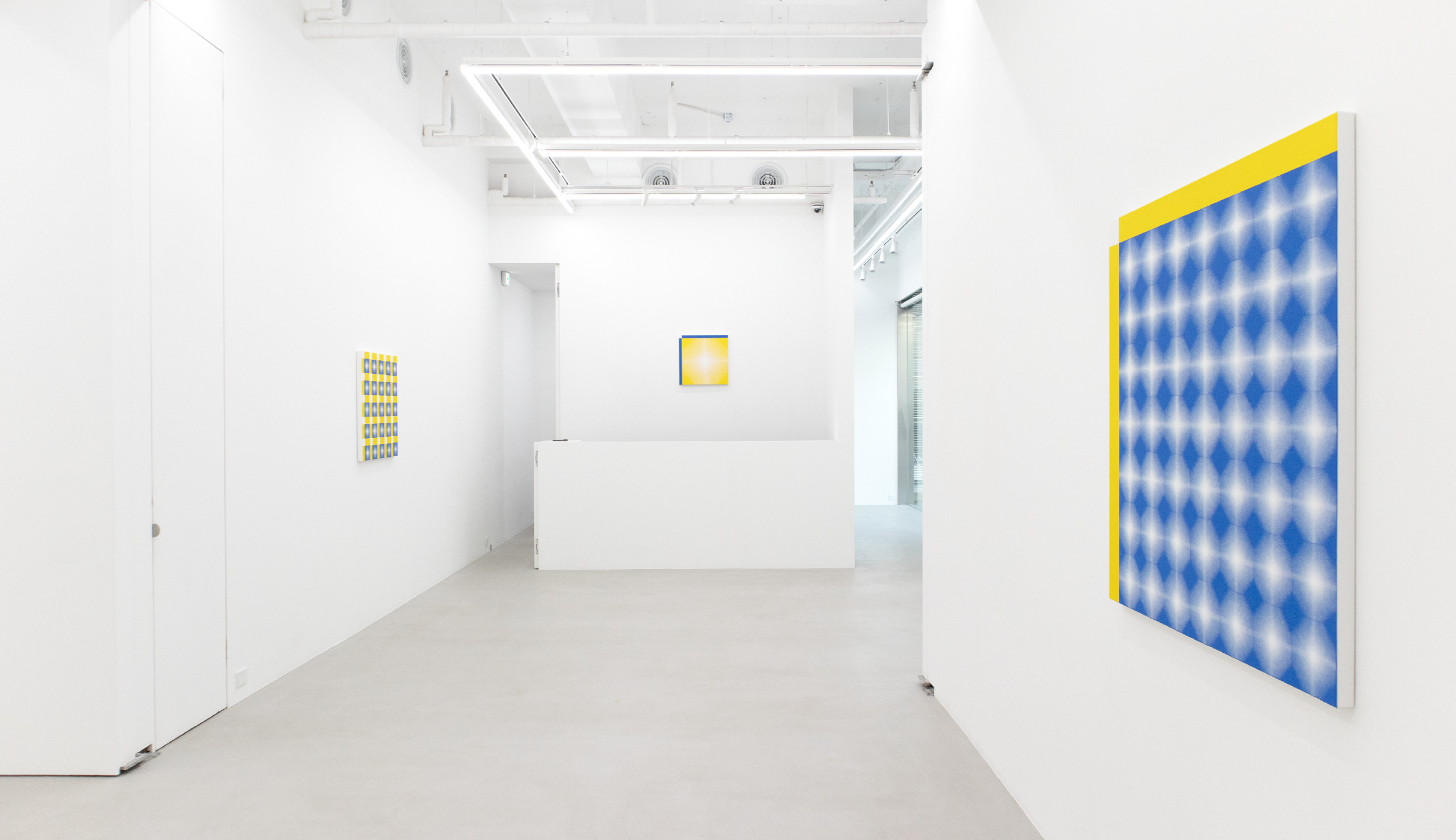
images are rather strict and geometric. Because Parc’s paintings reveal the
grid structure particular to the software, the viewer can guess the working
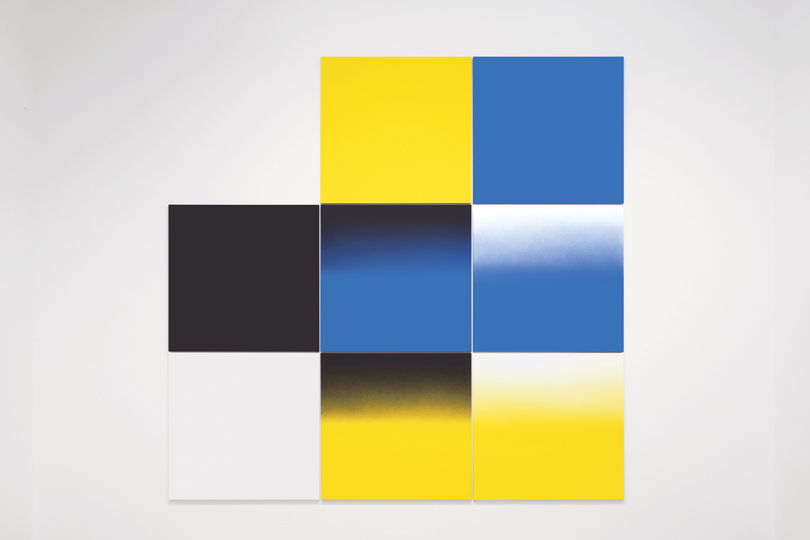
logic behind the automated computation. On top of the grid structure, a
particular image recalls perpetual motion powered by the exchange of
computational results (〈Perpetual Motion〉), and another reconstructs the semiotic order from the sensory
dimension (〈Times〉).
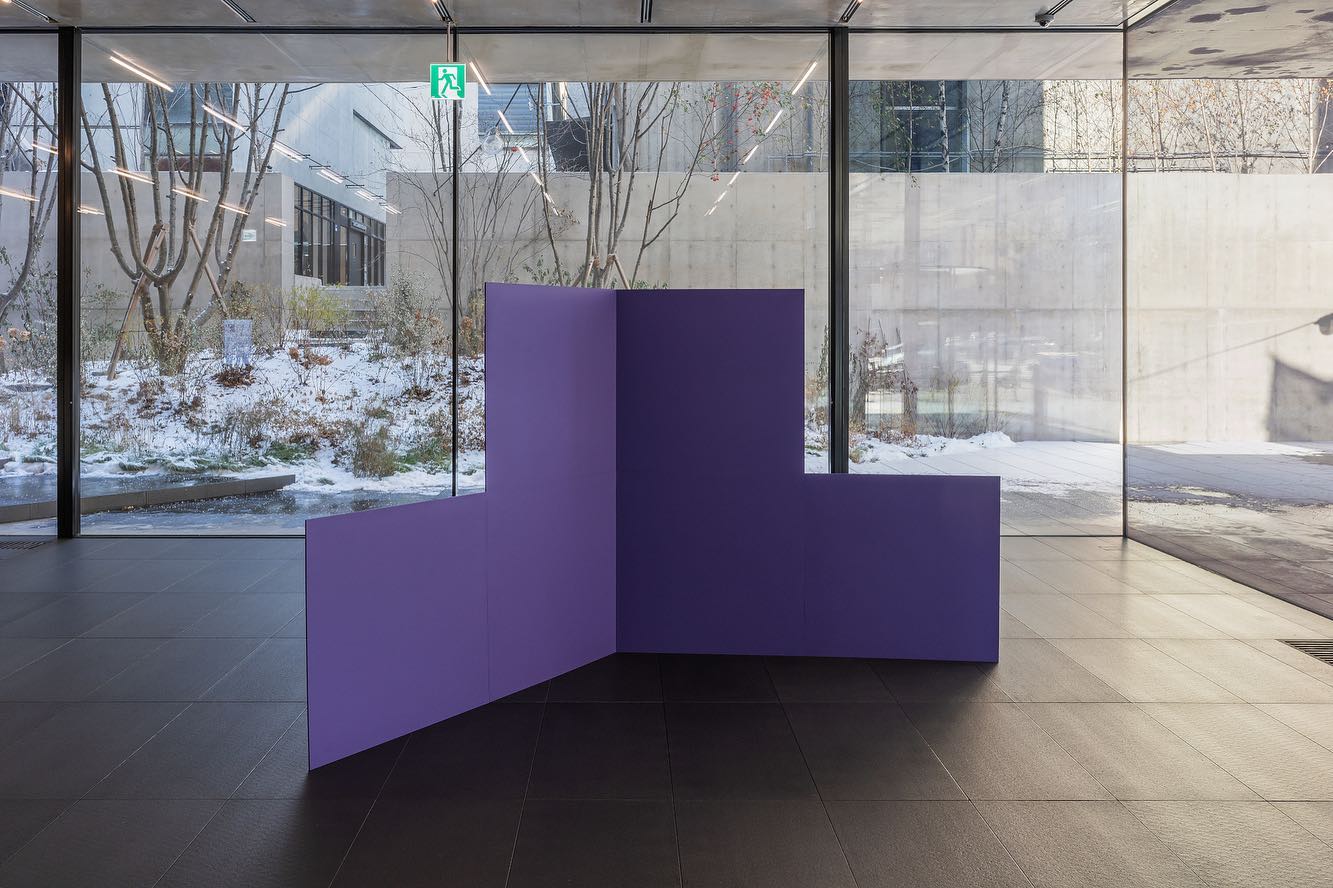
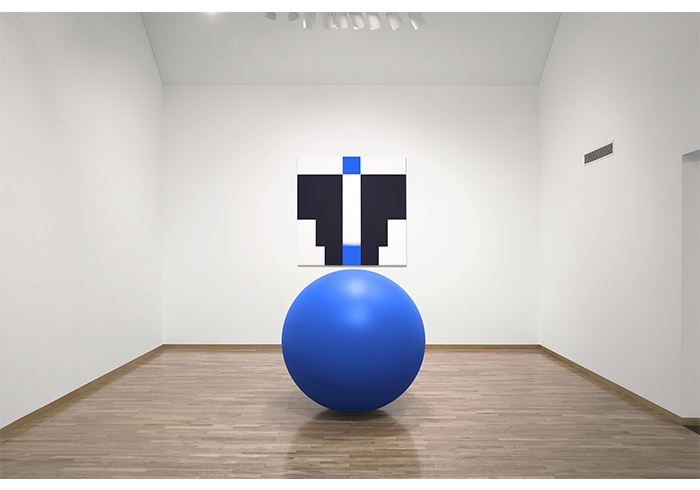
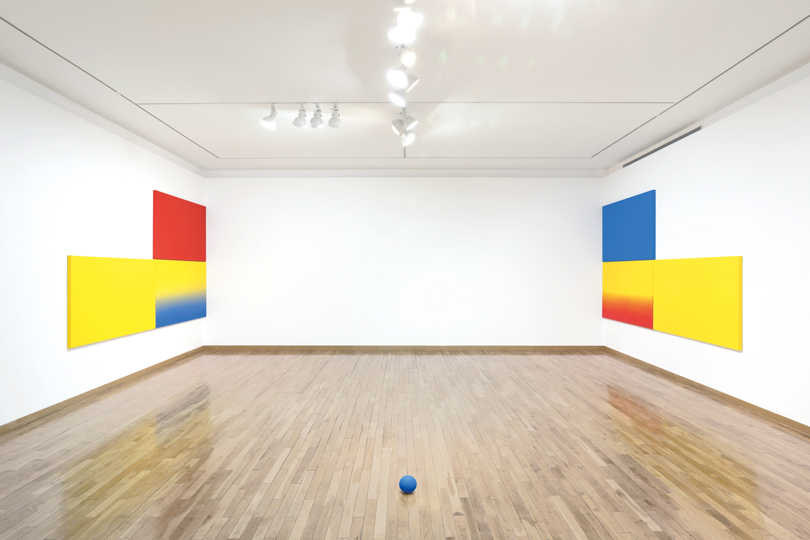
Two art
objects of contrasting sizes, both titled 〈Eye-Finger〉, were exhibited in the two halves of the exhibit space, showing the
scale of a changing space and serving to create an imaginary sensory
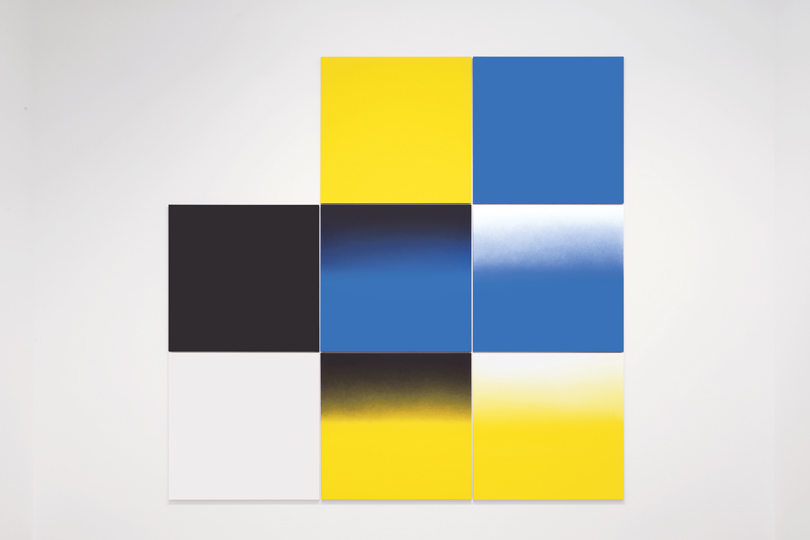
environment. On display in Times were two paintings that were produced
following the grid structure of the spreadsheet program, but which showed
somewhat arbitrary compositions. The two representationally titled examples
seemed to be representational experiments implemented according to a logic
presumed in the exhibition (〈Dam〉 and 〈Stairway〉). In
《Times》, painting serves many
roles and functions. It is an index, a language as a system of arbitrary rules,
and a score that suggests performance. Extending further, it serves as a kind
of perspective. In that painting is a visual guideline that leads the viewer to
surmise infinity from finiteness, and that it is a process that systemizes,
demonstrates, and proves the world, or the time-space, it can work as a kind of
perspective.
Rahm
Parc offered me several clues and internal rules that explain her work, and the
EHT-produced black hole image was one of them. Assuming the eye as an input
device, classical perspective constructs the world as a grid, gathers lines to
create vanishing points, and completes an illusion. However, in the perspective
of 《Times》, vanishing points
either do not exist or appear almost nonexistent because they are in perpetual
motion. On the automated grid of the spreadsheet program, the perspective of 《Times》 converts vanishing points into
movement, then becomes flat and permanent at once. Perhaps this perspective
assumes the changed status of the eye, while being conscious of the eye’s
persistent intuition, which is not easily expunged. What is proven must still
be demonstrated. However, those who experience the performances in 《Times》 will see the world anew, following
the permanent vanishing points. The perpetual motion of seeing will be created
in the repetition of seeing and seeing again, and in this way, rules can be
overturned: what is demonstrated may soon be proven.
1)Erwin
Panofsky, 『Perspective as Symbolic
Form』, trans. Sim Cheol-min (Seoul: B Books, 2014), 65.
2)Friedrich Kittler, 『Optical Media』, trans. Yoon Won-hwa (Seoul: Hyunsilbook, 2011), 81.
3)Panofsky, 『Perspective as a Symbolic Form』, 13.