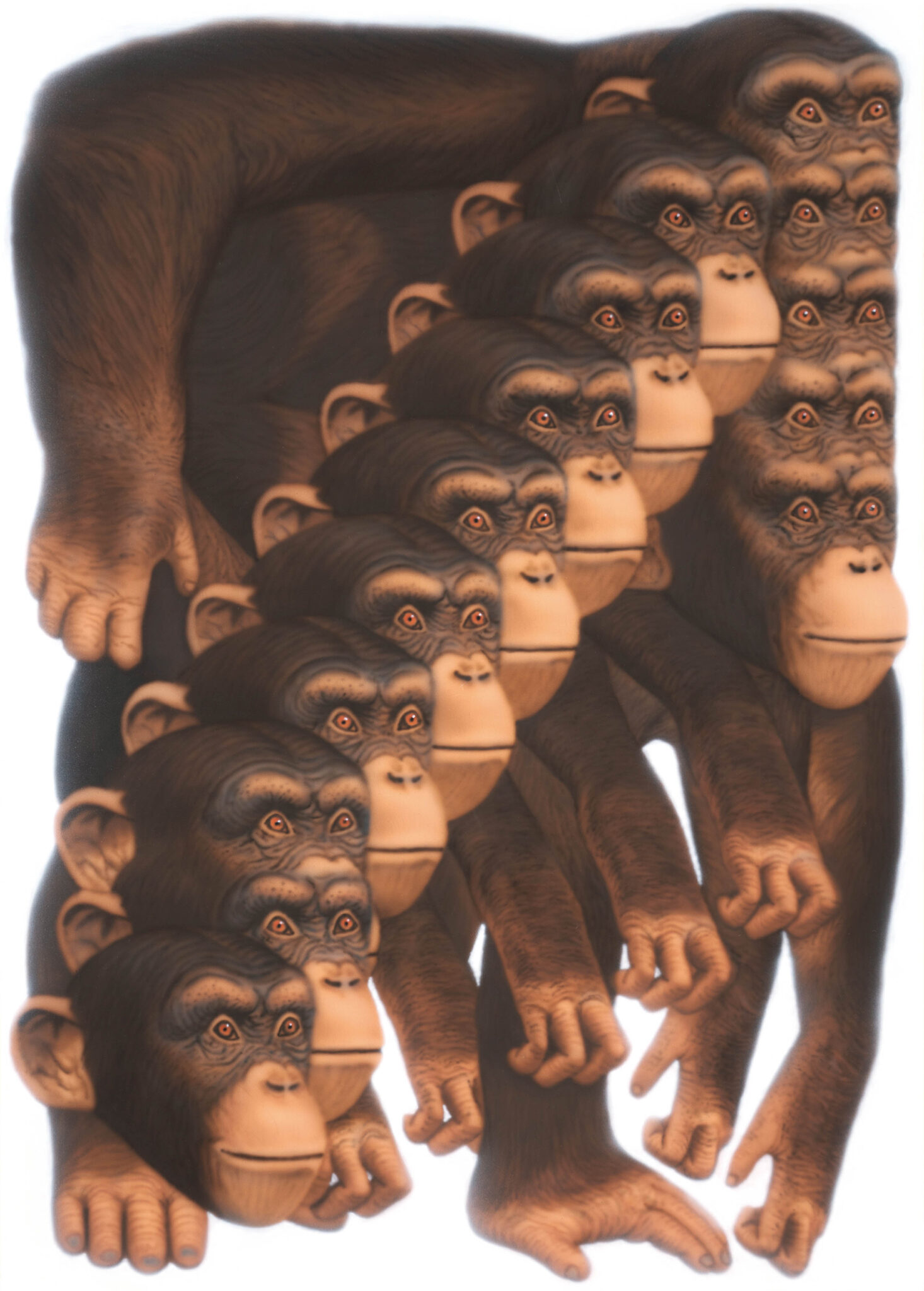
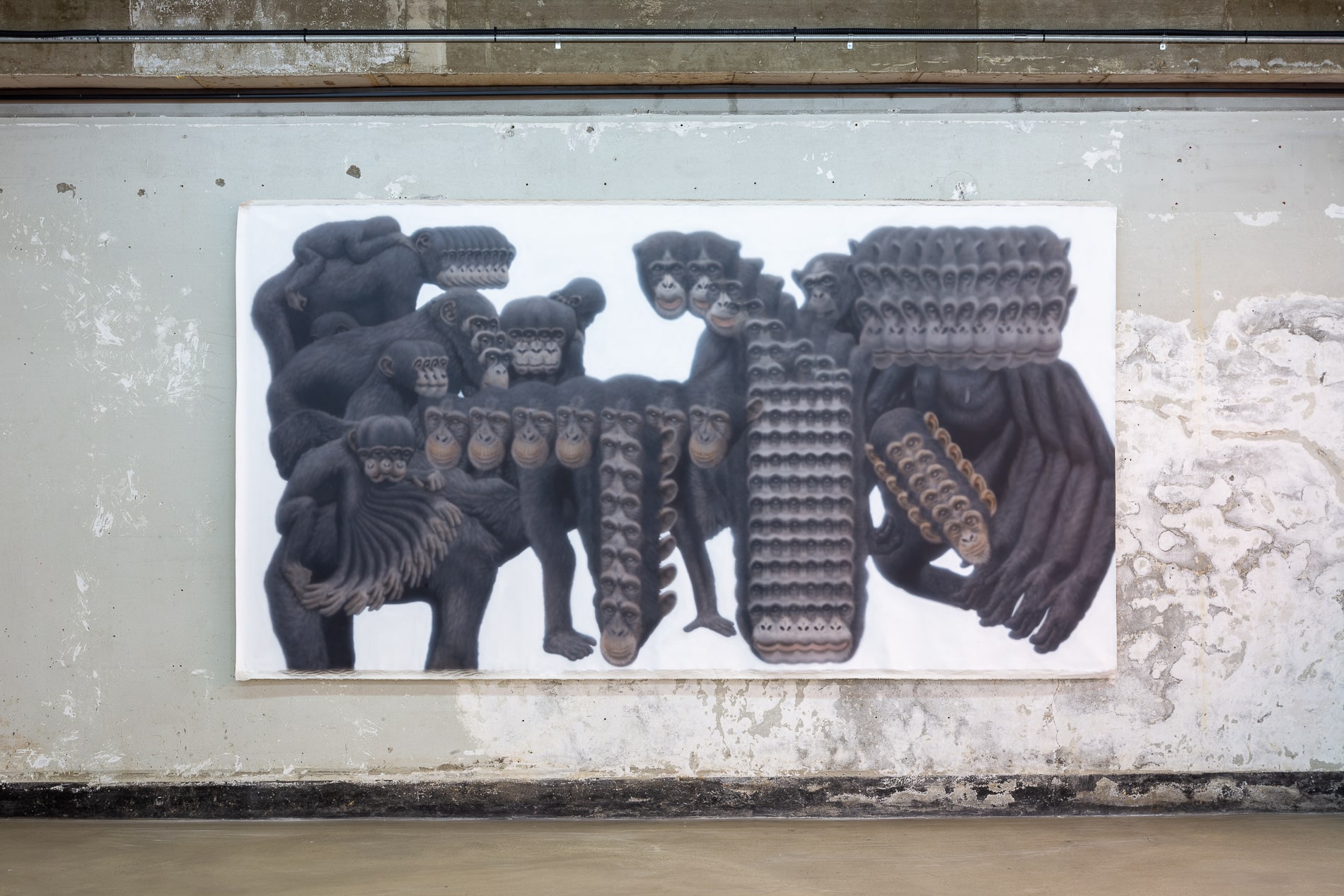
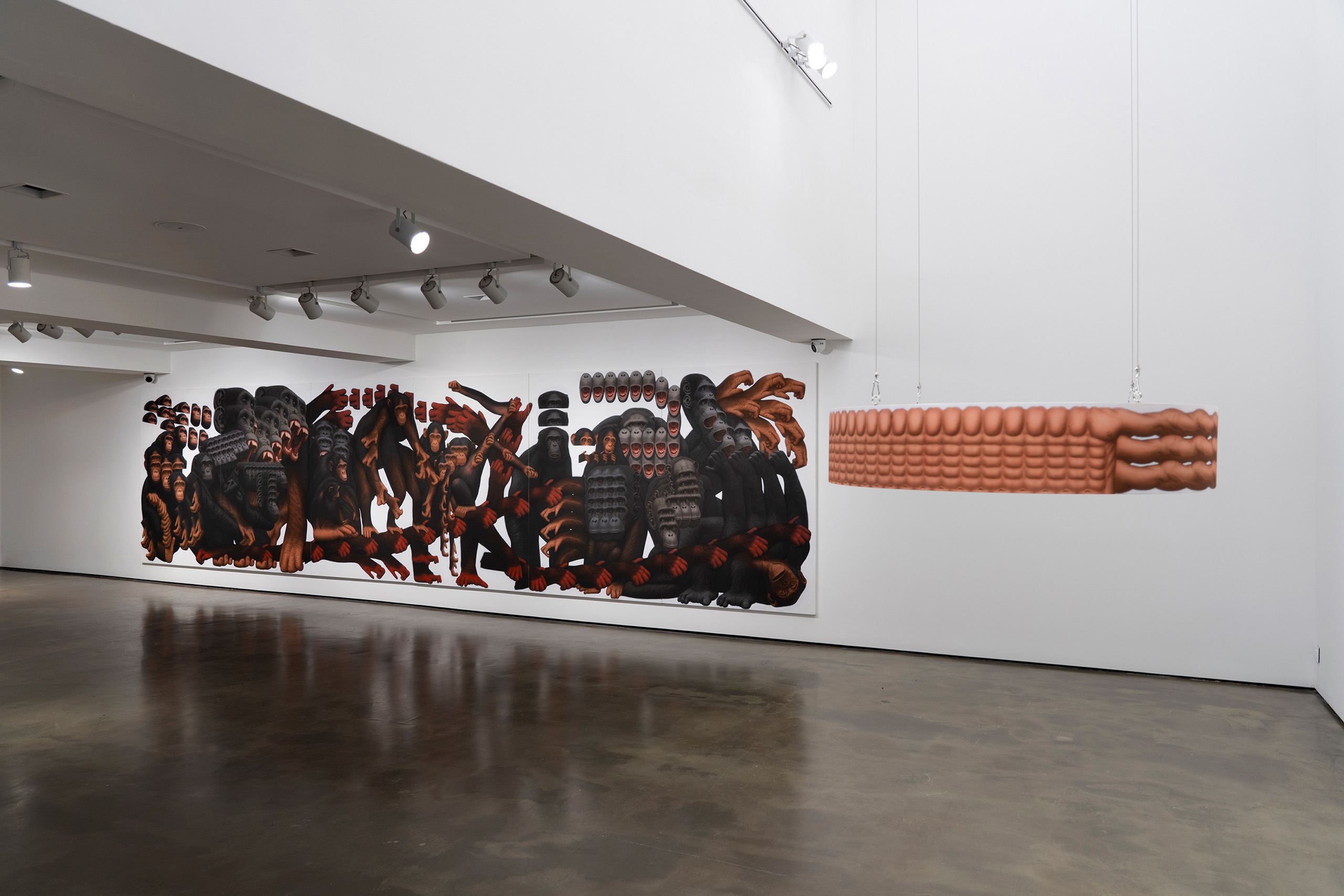
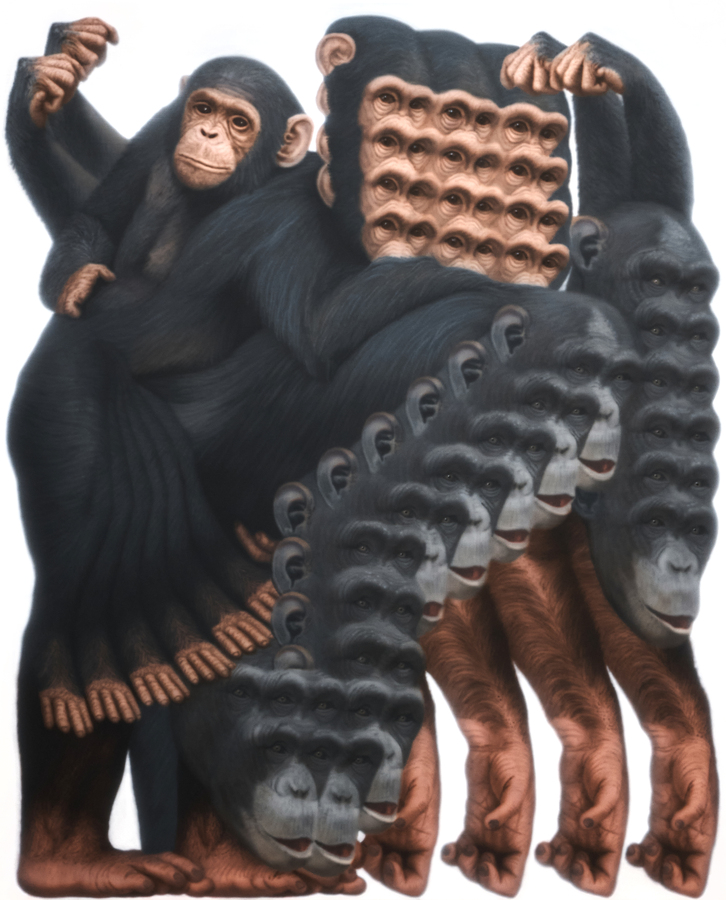
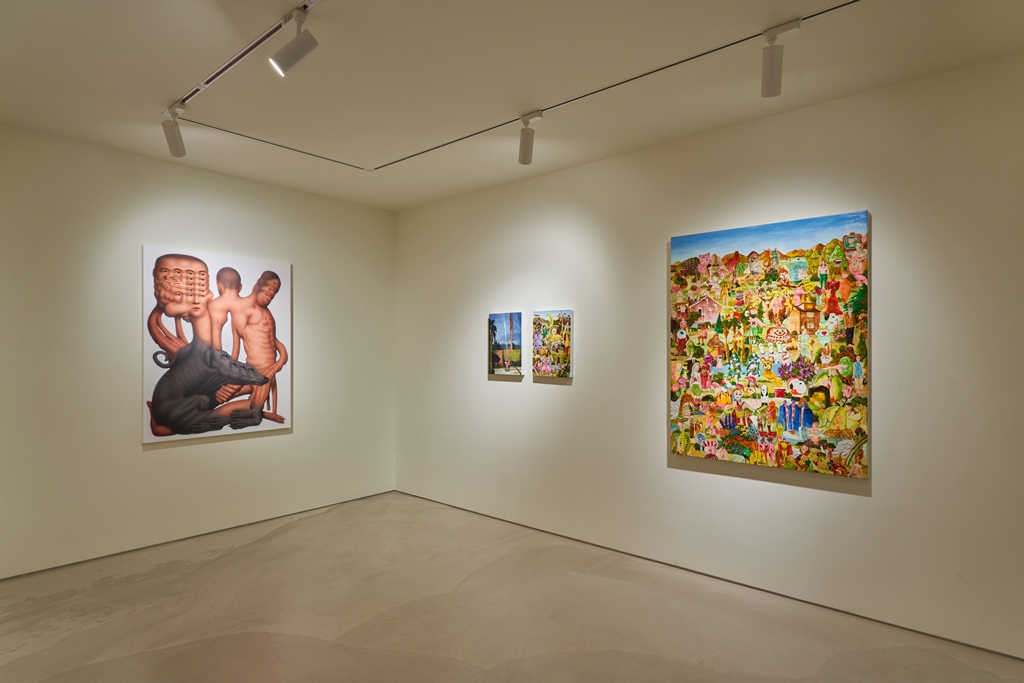
scene#1_the things: Dragon Head, Eagle, Peacock, Chimpanzee
Repetition
and arrangement of forms, combined with vivid colors, captivate our gaze.
Repetition and arrangement are among the artist’s consistent methods of
expression. In this work, they serve both as traces of the artist’s thought
circuit and as a proposal for discovering new ways of seeing. His subjects are
displayed side by side, overlapped at times, and in other moments arranged
randomly.
The
repetition, arrangement, and irregular layering of forms function as a
methodology for resolving questions the artist has posed to himself and as
devices that generate ambiguity and confusion within the work.
Can
beauty be sustained through repetition? If a part of an interesting form is
repeated, can it appear as an entirely different entity? Can the repetition of
existing forms reveal why they move as they do? Are these repeated objects a
group of individuals or traces of movement left by the passage of time?
The
starting point of this work was the artist’s intuitive curiosity. The repeated
forms that appear in the work—dragon head, eagle, peacock, chimpanzee,
flowers—were not chosen for any particular reason. Rather, by lining up
intuitively selected shapes or repeating specific forms, Yi attempts to
discover entirely new sensations and the potential for aesthetic experiences.
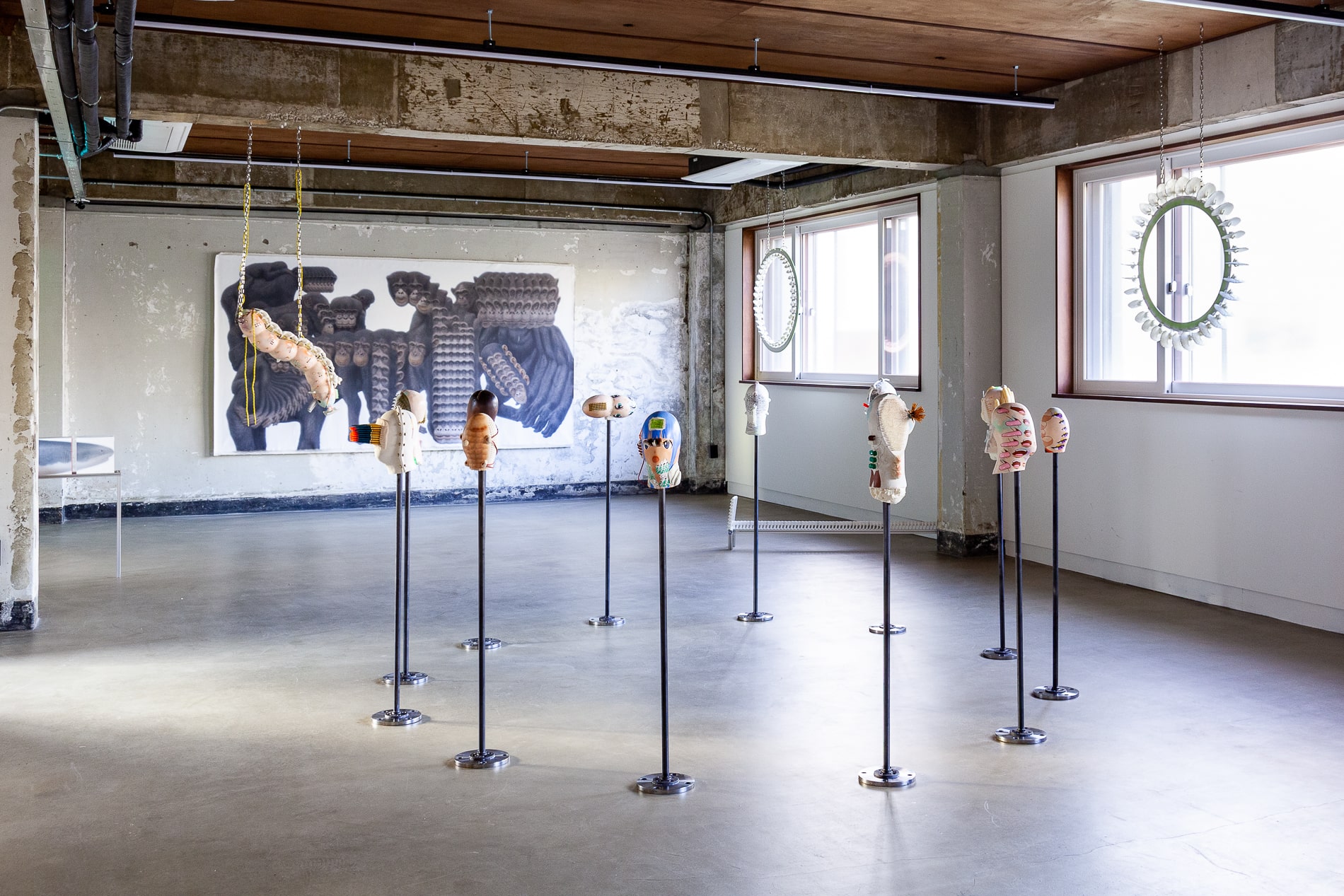
scene#2_the heads: Busts
At
the center of the exhibition hall stands a group of busts. From a distance,
these similarly sized and shaped busts may resemble an ordinary group or crowd.
However, as one approaches, the collective façade gives way to encounters with
individual entities. Here, viewers come face-to-face with busts of all
kinds—none of them alike—and may even find themselves bewildered by their
appearances.
We
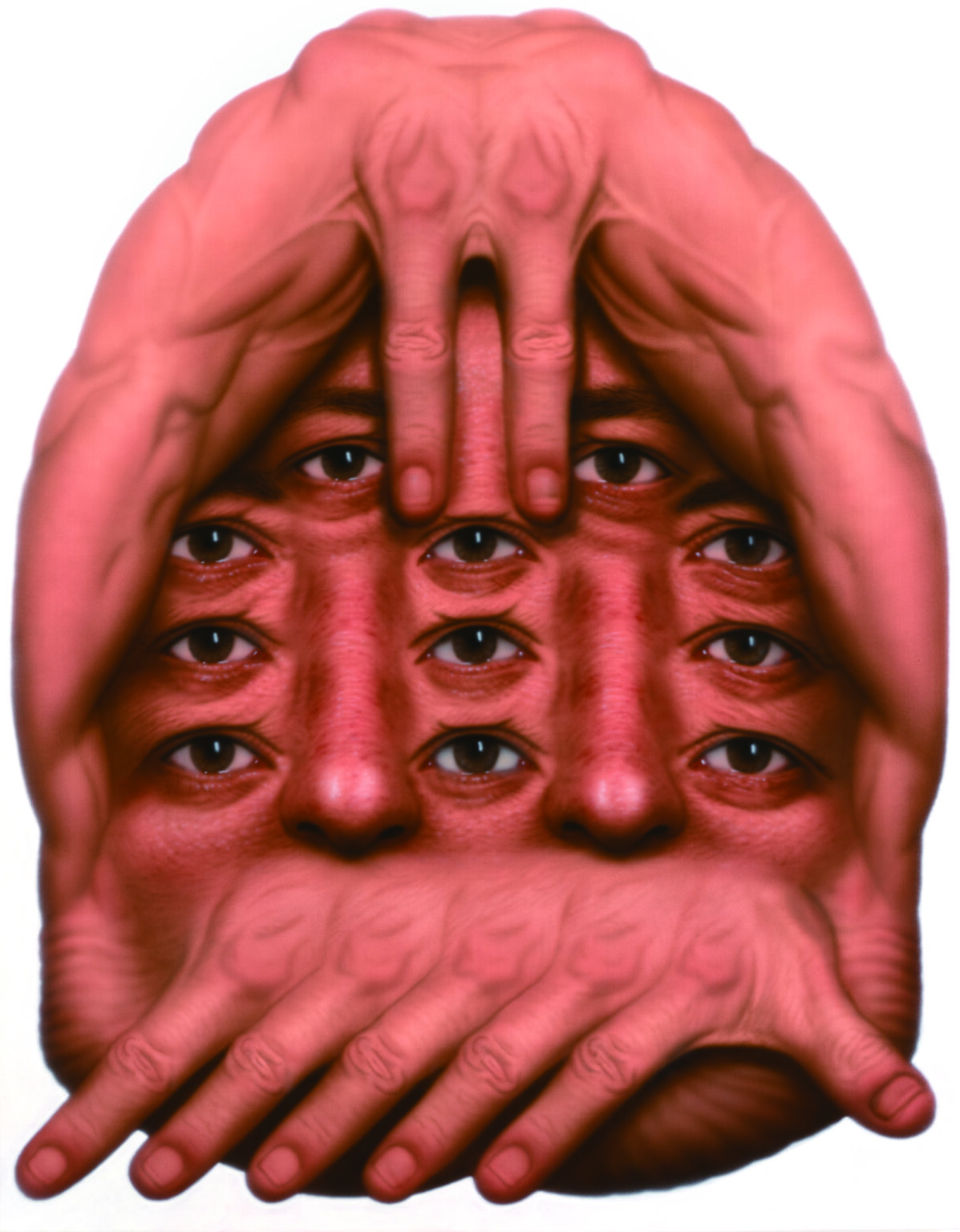
tend to hold a certain expectation of what a “normal” bust should look like:
two eyes, a nose, and a mouth. But among the busts gathered here, not a single
one conforms to such expectations. Heads filled with only beautiful eyes, faces
composed of abdominal muscles, heads with fish tails stuck in them—these
bizarre and incomprehensible heads come together as if attending an important
gathering.
The
artist sculpted each individual bust based on people around him or infused them
with his imagination. By stripping away the external "skin" of social
expressions, he brings each figure's inner world, individuality, identity, and
thoughts to the surface. These are filled with chaotic minds, obsessive
thoughts, horrific nightmares, and secretive or sensual desires—each figure
radiates its own sense of liberation and unique identity.
What
emerges is a collective group portrait, coexisting in one space yet filled with
divergent inner worlds—a community of daydreamers, each immersed in entirely
different thoughts.
scene#3_the fishes: Sharks and Yellowtail
Here
stands a yellowtail reflecting on its own form of existence. Trapped within the
flat faces of a cube, rather than enveloped in the supple outer skin it was
meant to wear, the yellowtail’s discordant presence makes viewers feel
uncomfortable. This work is based on several questions posed by the artist: Can
a three-dimensional object appear as flat, and likewise, can a flat image seem
three-dimensional? And what happens when movement is added to this equation?
The
segmented yellowtail reveals every surface of the cube. The top and bottom, the
sides and the cross-sections—all of its dimensions are faithfully represented.
The vivid depiction of the cross-sections reminds us of fresh sashimi, while
the dynamic face of the yellowtail, when seen from the front, conveys such
intensity that its bulging eyes seem ready to pop out.
Though
the yellowtail exists as fragments in flat form, once these fragments are
assembled, viewers cannot help but imagine the complete, three-dimensional
fish.
The
artist presents the ambiguity that arises from the mixture of flatness,
dimensionality, and movement as it is. In doing so, he guides us to the point
where familiarity and intimacy—deeply rooted in our consciousness—begin to
collapse. He hopes this discomfort does not merely lead to distress but instead
opens up a new perspective on rules, forms, and preconceptions.
In
preparing for this exhibition, Young Uk Yi bids farewell to the social and
psychological controls that govern him. Learned social desires have shaped the
life goals and conditions for happiness of many people into similar patterns.
The normalized understanding of beauty may even obstruct our ability to
appreciate something authentically.
In
this exhibition, the artist confronts the absurdity that surrounds him and
attempts to carve out a new perspective. Through works that offer ambiguity and
contradiction, he reveals his desire to stop the “remote control.”
Yi
hopes that viewers will encounter irreplaceable experiences—of sensation, of
aesthetic discovery, of art itself. His works do not guide viewers through any
pre-learned method of appreciation. Instead, they exist to welcome the feelings
and impressions of those who stand before them, in their own ways and on their
own terms.