Color
is by far the most conspicuous element of a painting, or any work of art liable
to be ‘hanged on a wall’.
However Changkon Lim’s paintings have none of that. By ‘none’ I do not mean the nonexistence of
color, but the singleness of color used by the artist. Did Lim choose his works
to be unicolor because he finds color important, or is it for the opposite
reason? Facing this blatant question the artist made a roundabout statement
that it is subject to further thought, yet I could not help but linger on it.
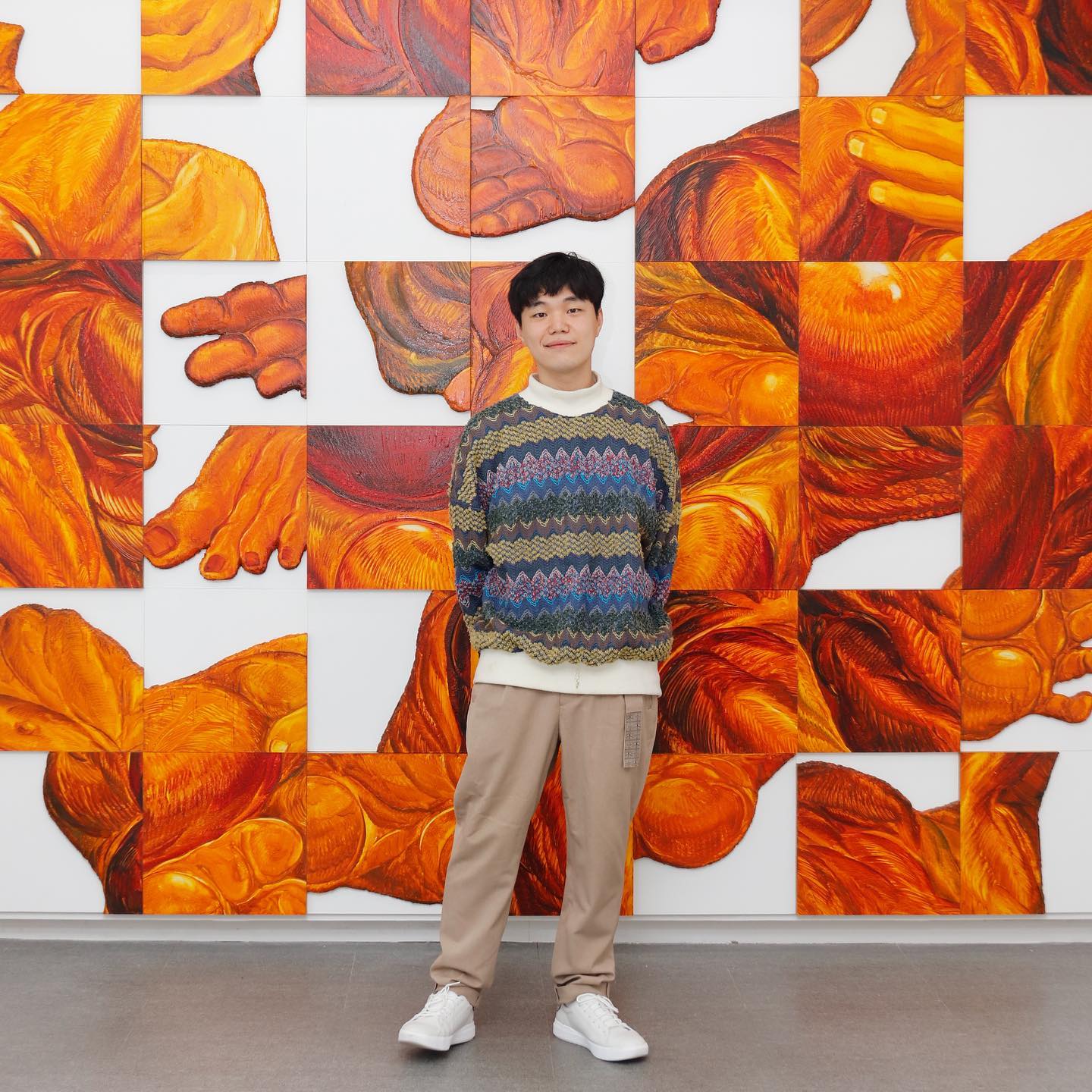
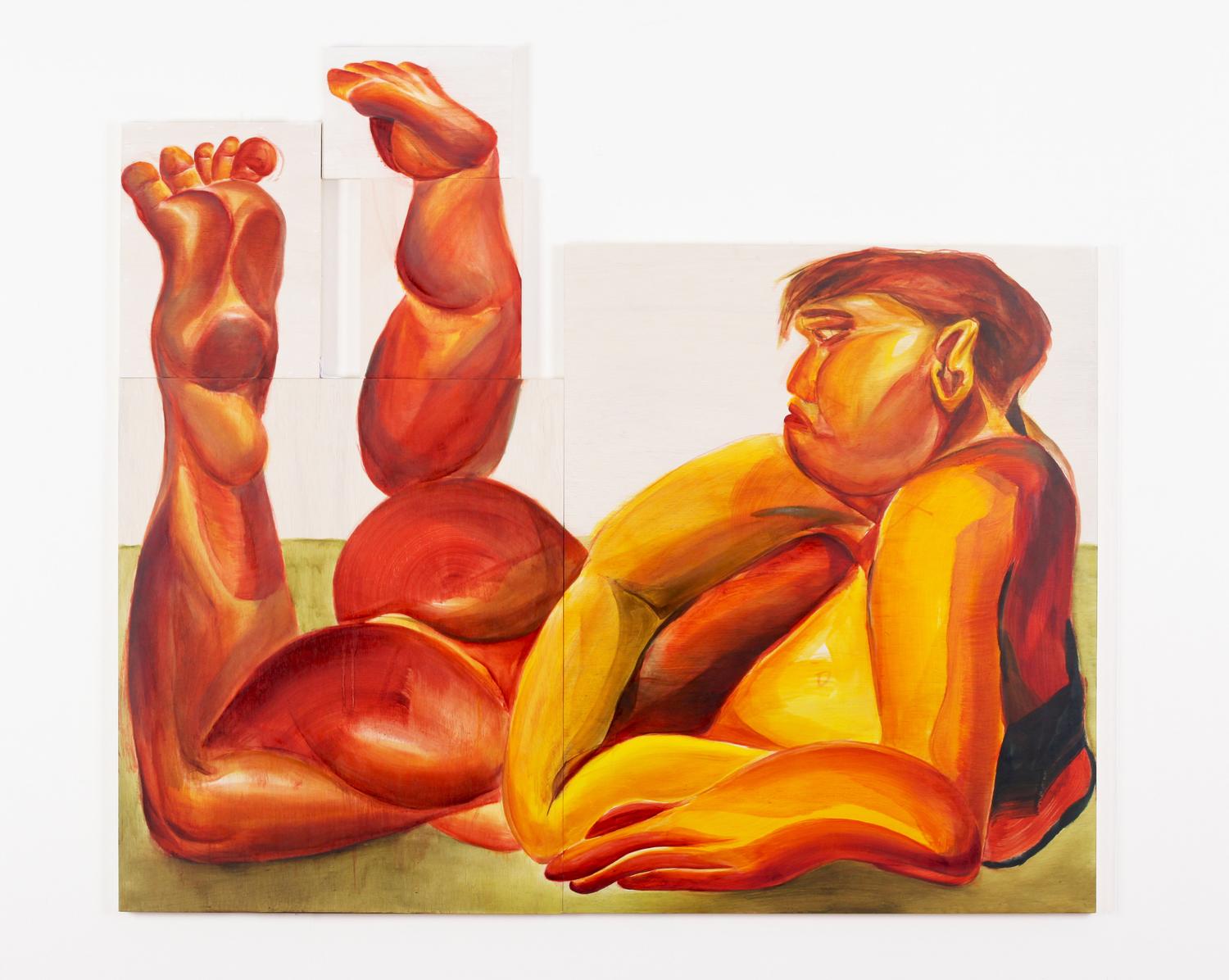
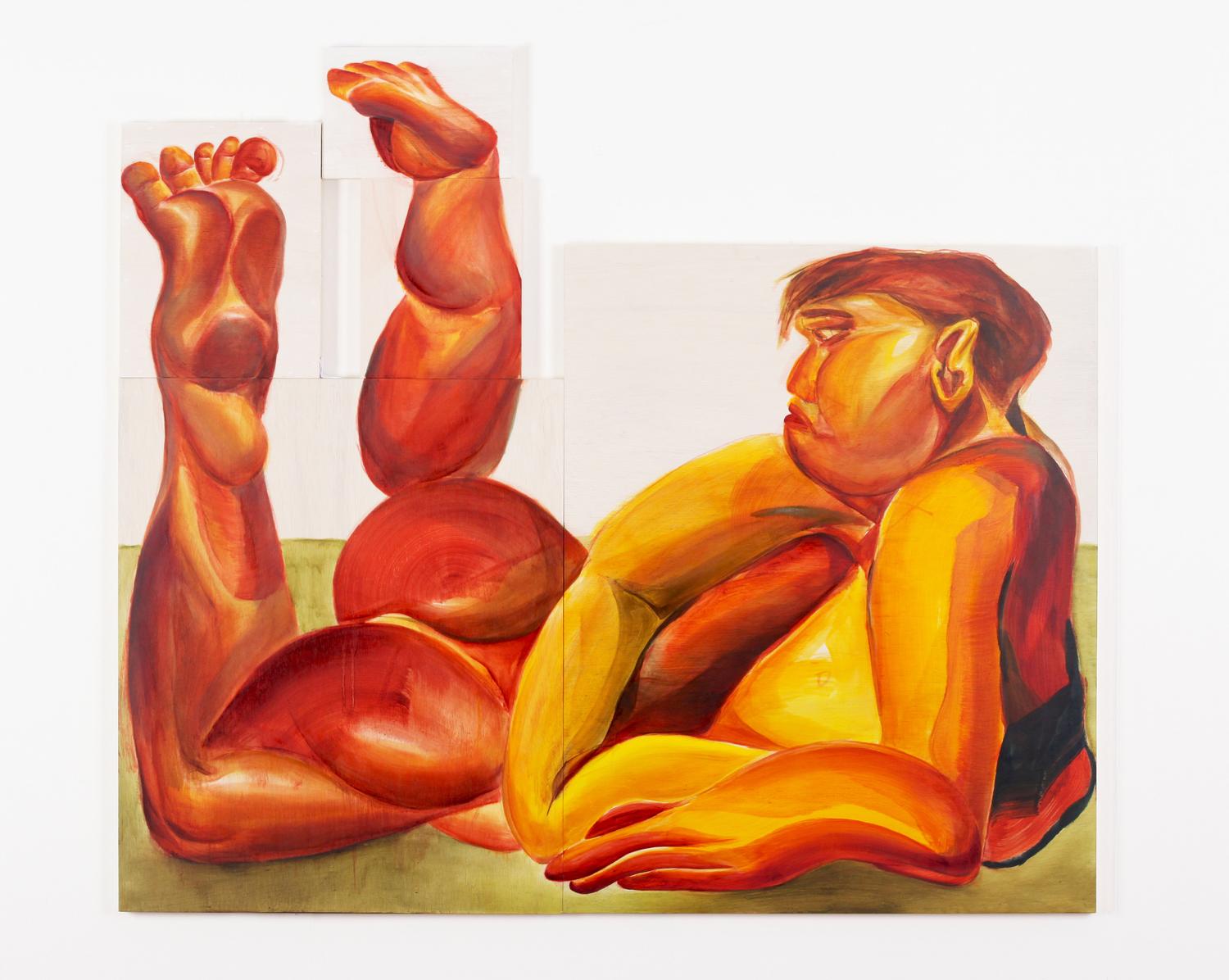
Changkon Lim’s golden paintings reminded me of the
former court painter Francisco Goya’s latter years
works, the Black Paintings (Pinturas Negras) [1].
How did it come about that, for the artist is such a young
painter? Goya worked on his Black Paintings supposedly
throughout the same gloomy years he lost his hearing; yet they prevailed over
the royal family’s portraits
during his era as a court painter, when it came to capturing the essence of
human nature with an almost expressionistic stroke and subtlety. Presumably,
Goya’s latter years paintings’
characteristics overlapped with Changkon Lim’s strokes
and his quest for human existence. This review thus aims to thoroughly look
after Changkon Lim’s works and satisfy one’s curiosity upon them, especially by focusing on forms,
compositions, and methodology adopted in the artist’s
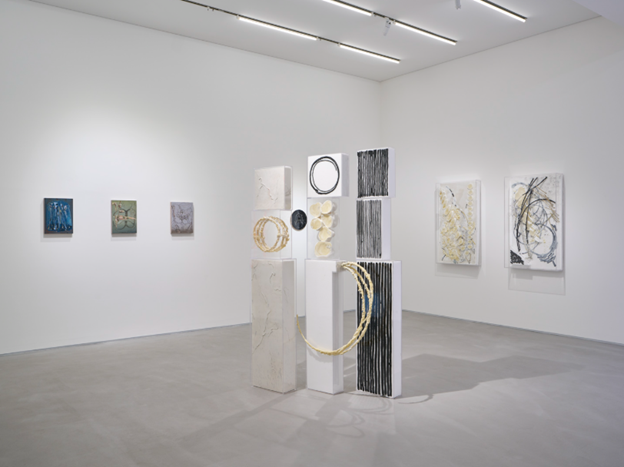
solo show ‘48! Morphing Gesture’.
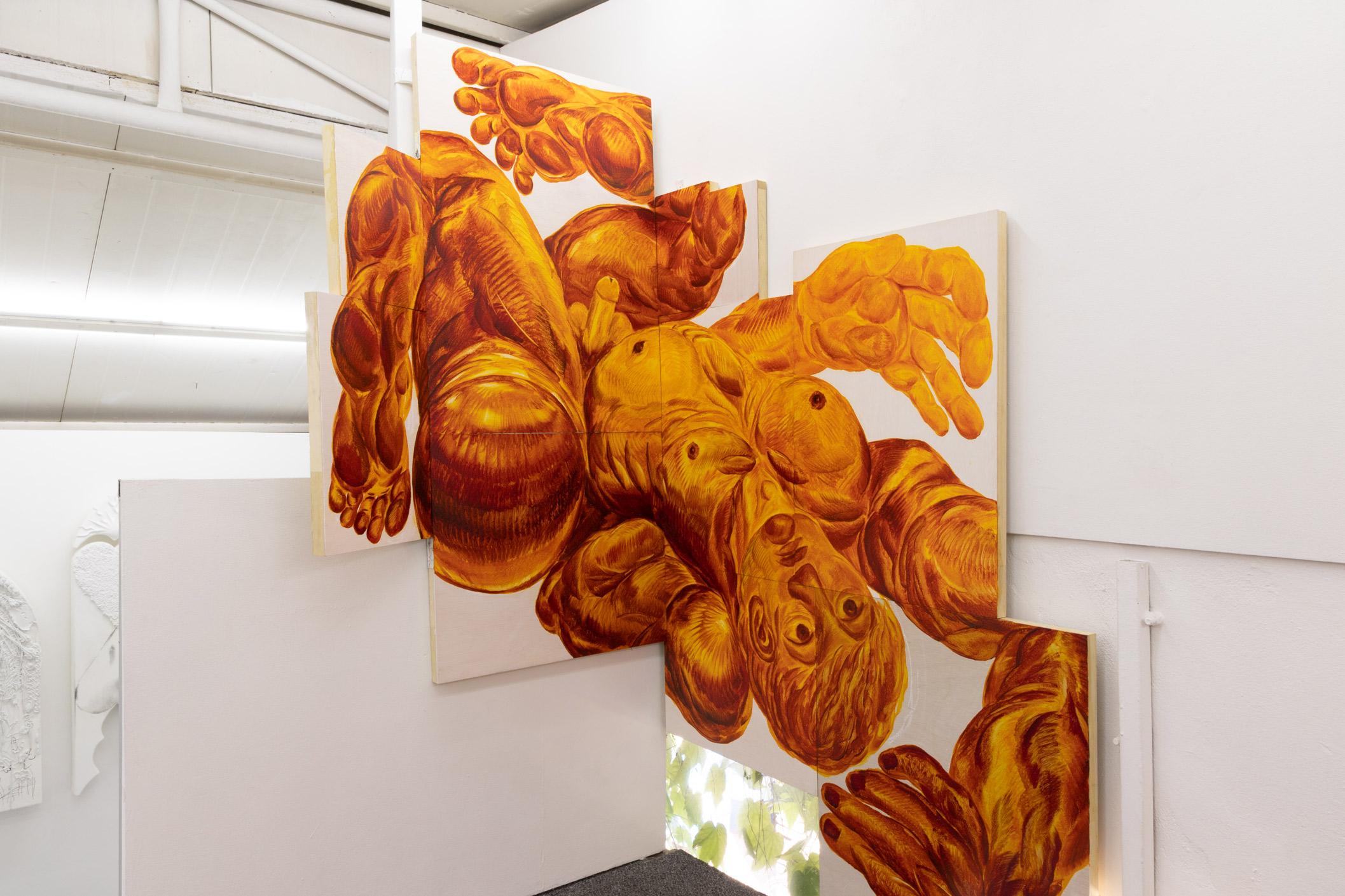
A ‘body’ at last; a body
can be found by associating the curves of muscles, prominent and secretive at
the same time, yet we end up recognizing its twisted hands and feet. Changkon
Lim works on the body and the identity, and in his works the artist’s body forms several counts: a body that paints and slices (a
movement on the panel), and another body that assembles (a movement in space),
and these bodies interlock to reveal the form of a Body (as an artwork).
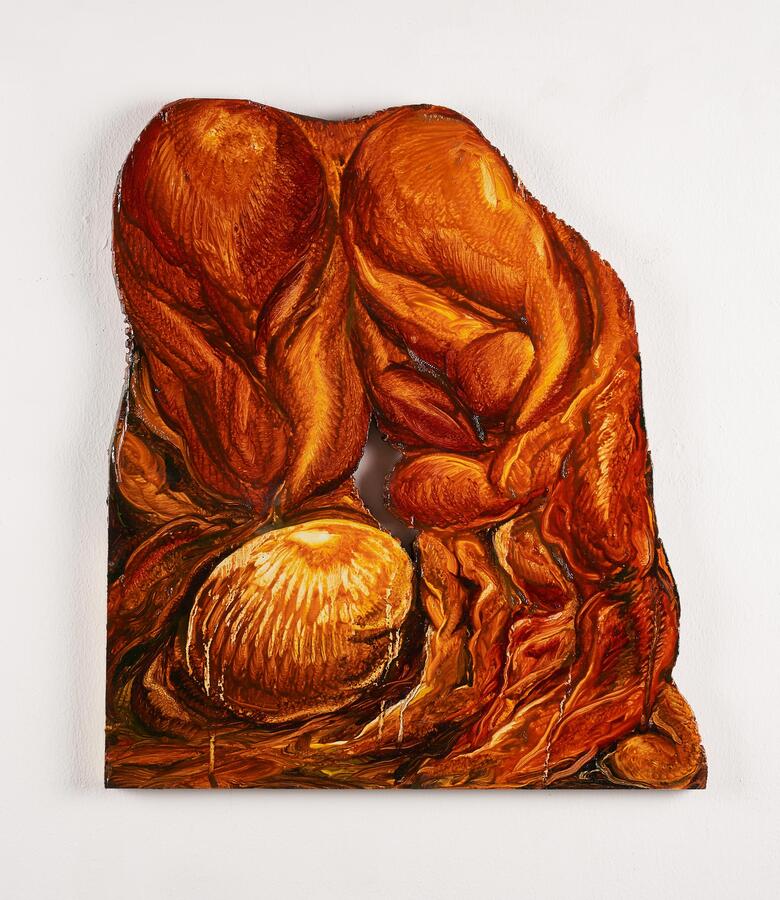
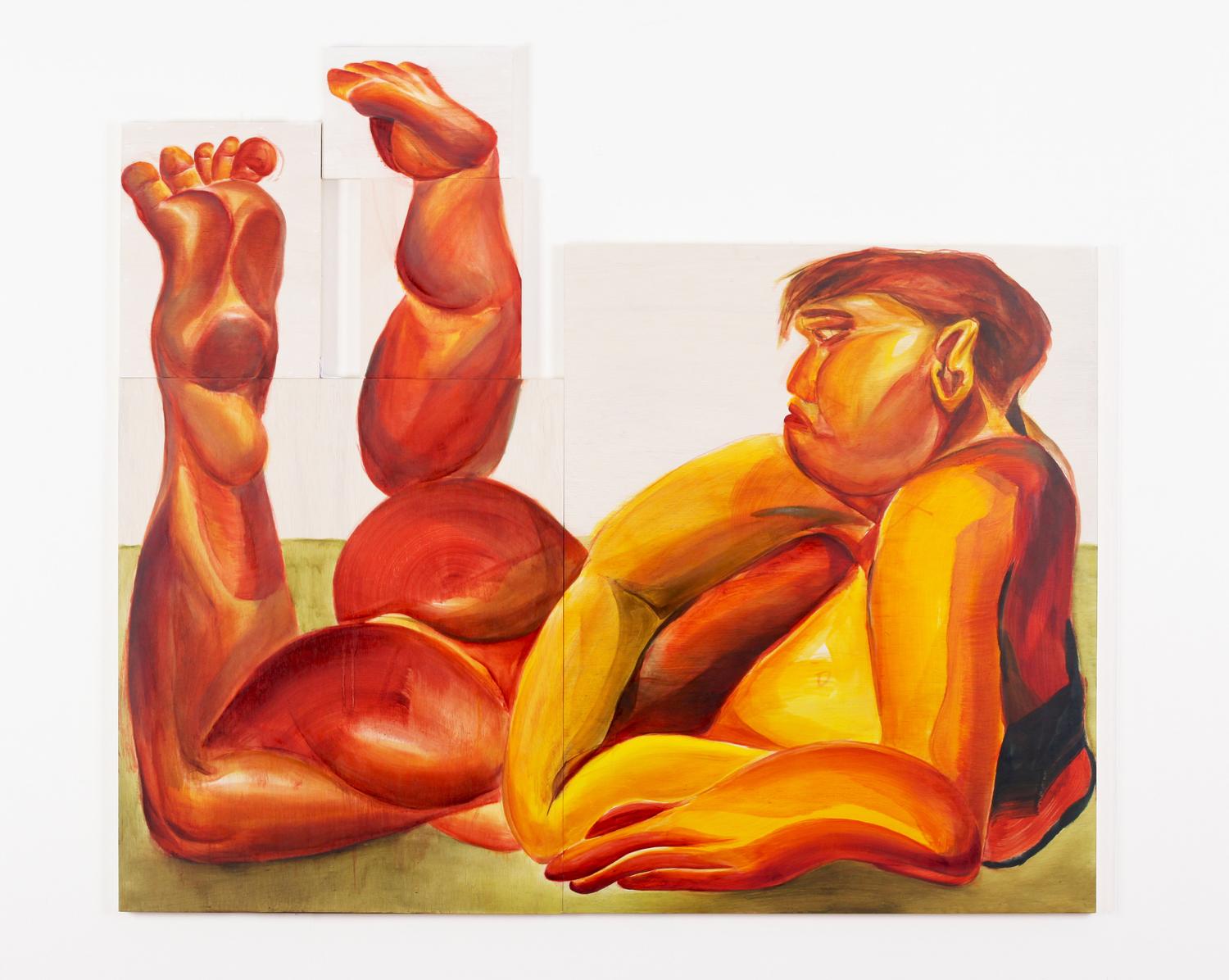
Lim currently uses wooden panels as the main support and body of his
works. The panel is an honest material; it instantly reveals all reactions
caused by the artist’s action. Hiding them during the
painting-slicing-breaking process is of course impossible. When applying
physical force becomes an analogue to the irreversible state, it also indicates
putting oneself to the solving of a problem at hand. The artist expressed this
process as ‘a talk with the material’: indeed his movements and the panel’s
responses - sometimes split accordingly, sometimes caved in unexpectedly - are
similar to the process of ‘experiencing’ the material as a talk falling short or picking up. The body
reveals itself in full completion, through the artist’s
own body handling the panel and afterwards by overlapping with his subtle brush
strokes.
Changkon Lim mentioned once in A Vacant Man (2018~2019)
series that he “felt his body plunging into the white
wall featuring the hanged panel”. However in his recent
work Morphing Gesture (2022), he instead “felt his body being thrown out of the panel” [2]. The statement underlines the most noticeable difference in his
new work, as the artist attempts to change several mechanisms of his work for
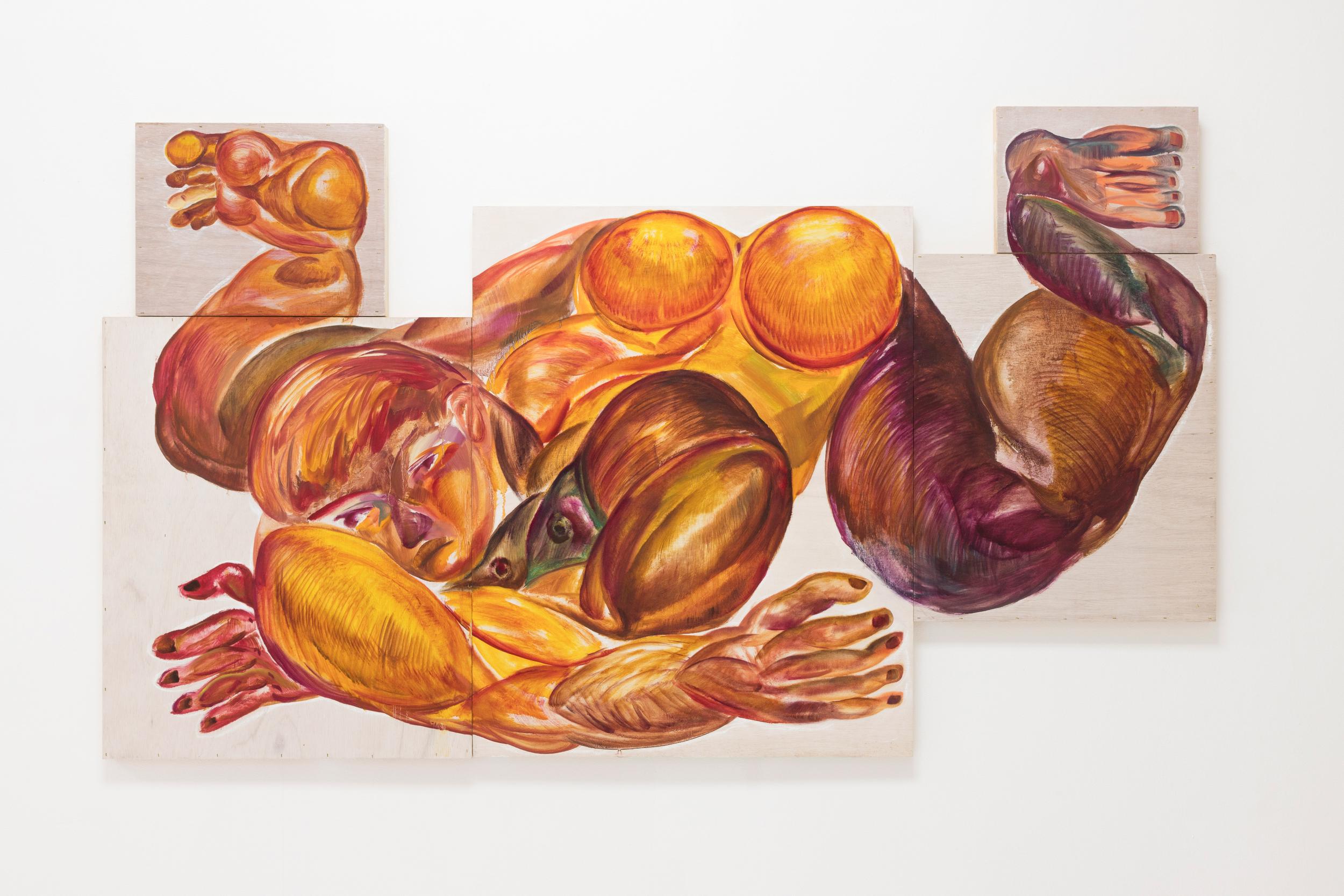
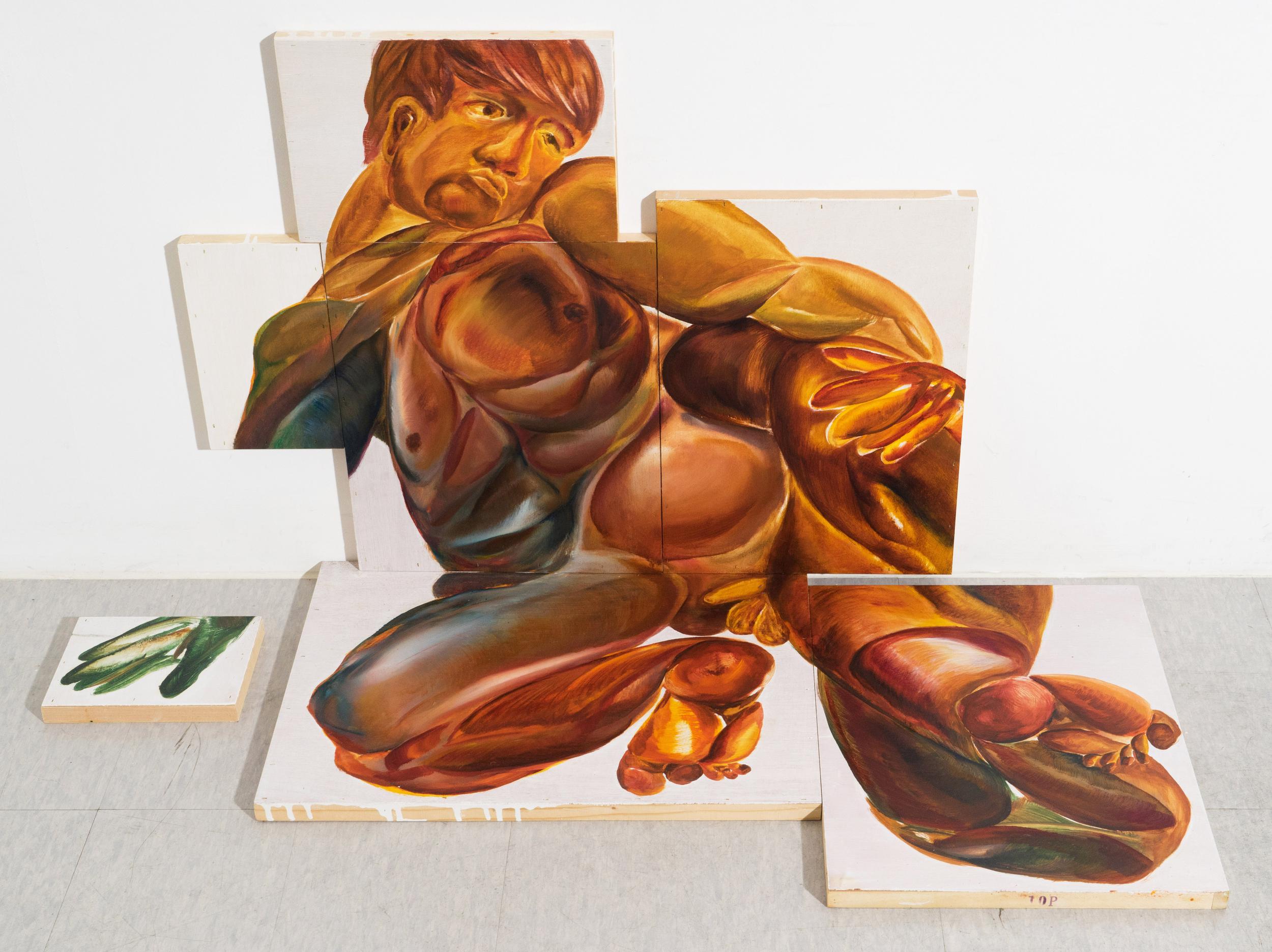
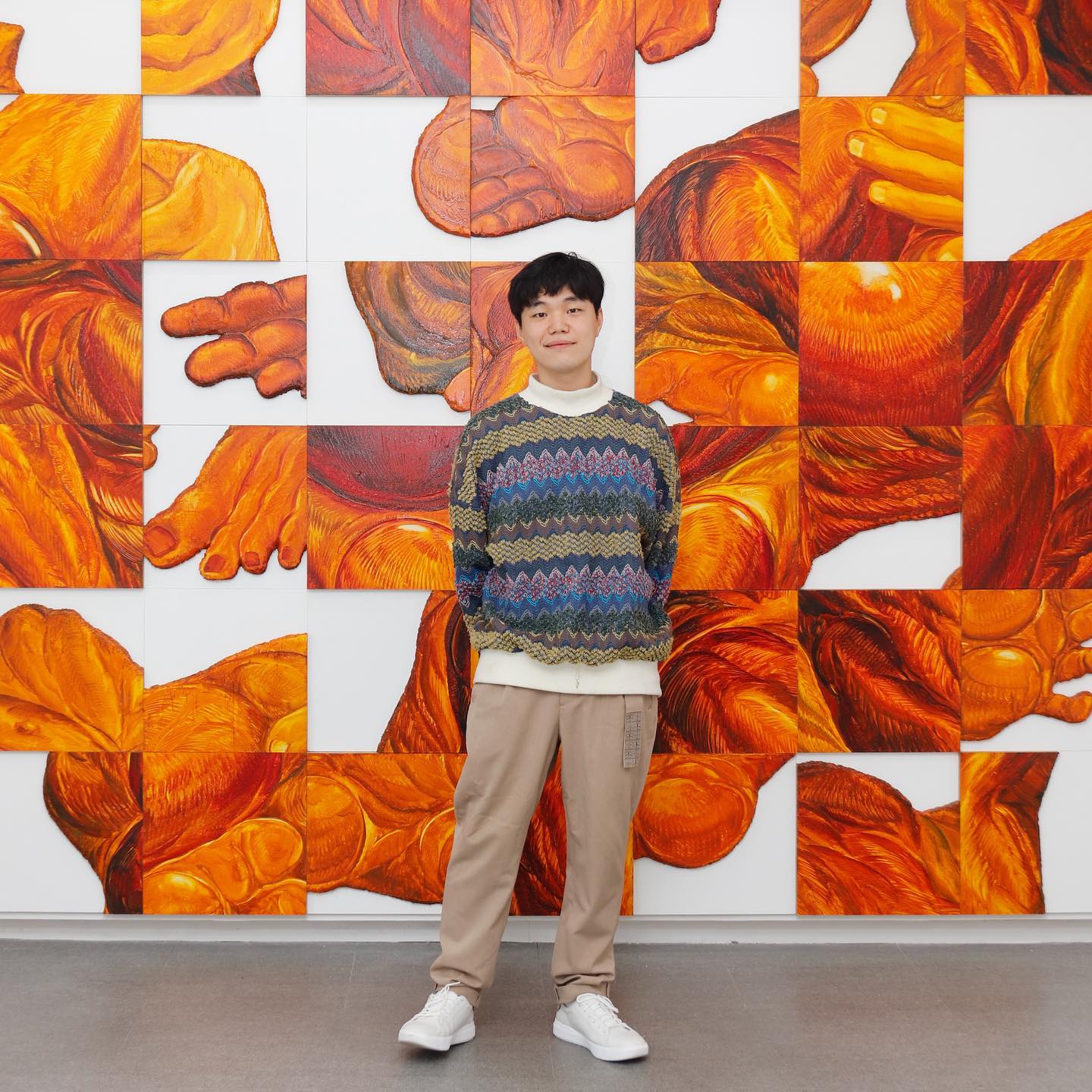
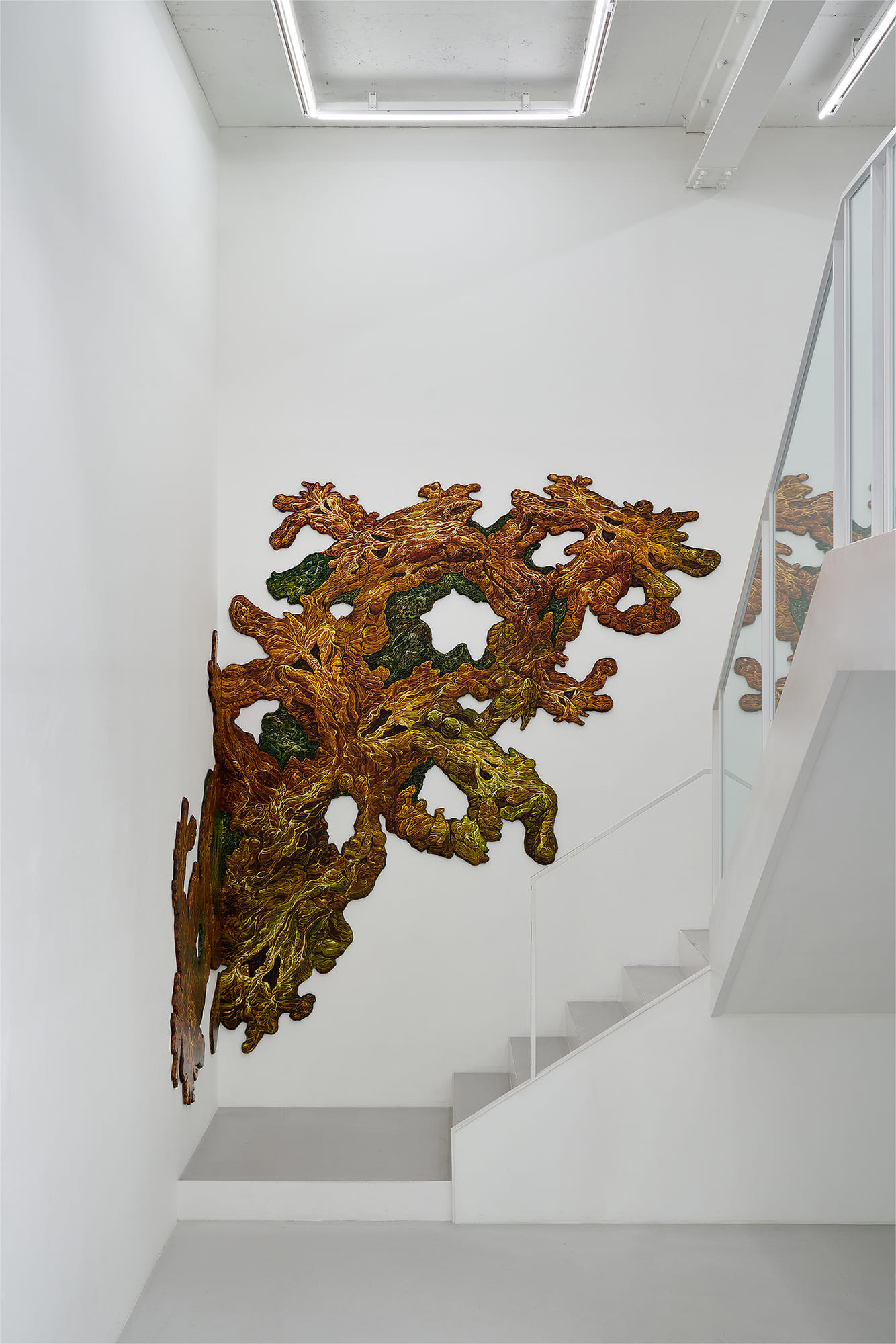
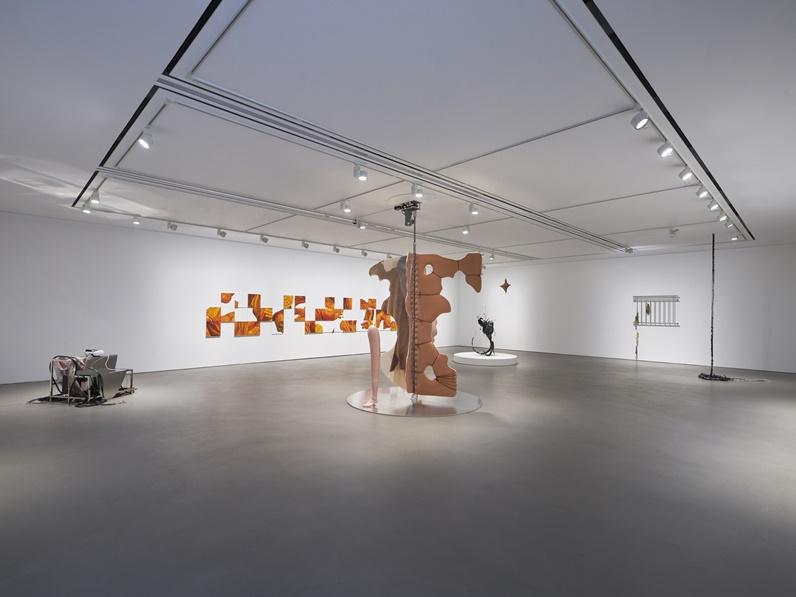
this exhibition. Firstly, the main work of the exhibition, Morphing
Gesture, implies the pliability of form: during the three weeks of
the show, Lim will constantly change the arrangement of Morphing Gesture[3]. In the same context as the “experience” of handling the material, the
artist still finds great importance in the relation between his work and
himself. “As if fighting with his own body”, Lim struggles to find the ideal form, which he reveals and mixes:
that is the reason why he focuses on the body at the very moment[4]. Each single sculptural piece has taken up more space than his
previous works have, surpassing the human scale to cover the whole wall up. In
this way, his (polysemous) body(ies) aims the possibility of extensibility. The
feeling of aforementioned “body being
thrown out to the space” is most likely caused by the
shifting sense, with the extension of the artwork’s
component to a real (equipped with a wall, ground, and ceiling) ‘space’ and the ‘movement’ filling it, instead of remaining in the two-dimensional ‘surface’ like before.
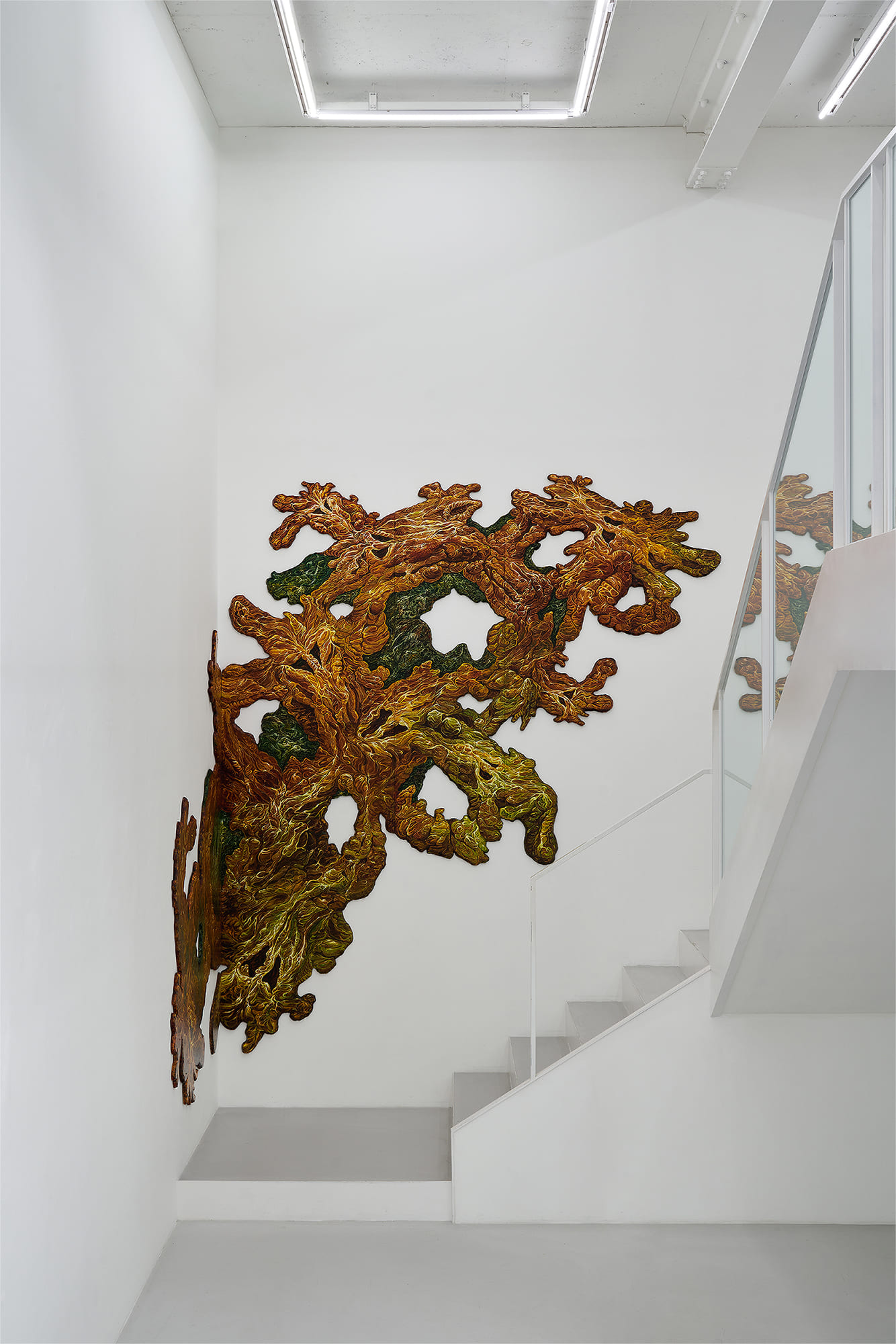
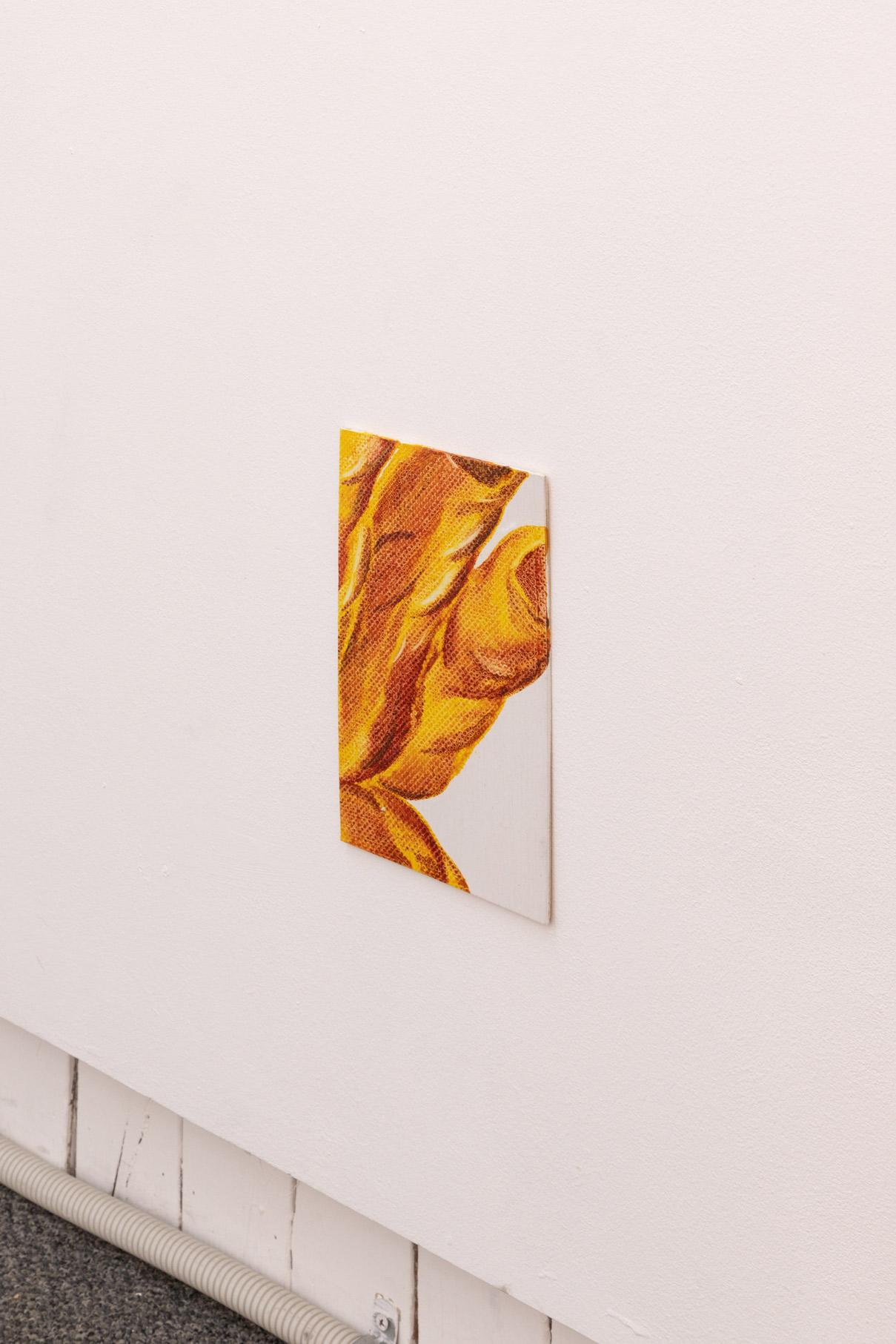
Meanwhile, the Crystals series are formed
from leftover pieces of wood panels, after cutting the forms; they too are
ought to be singular artworks depending on the composition. Crystals,
glow, Crystals, landscape and other (temporarily)
so-called Crystals to be presented in the exhibition hold the
potential of becoming a new being, just as snowflakes become a snowball and
snowballs (temporarily) materialize as a snowman by clumping together. This would
be Changkon Lim’s way of imagining what a put-together
sculpture could perform and making it exist, thus “placing
it before one’s very own eyes and experiencing it”[5].
Whereas Morphing Gesture and Crystals series
are about the form of the body, in other words related to shapes, other works (a
pool of water (2022) and a path of air (2022))
are closer to a painting, using only brushstrokes and refraining from “revealing the form through cuts and chiseling”. This way they show us ‘the inside’ of the body hidden until now. While feeling like spin-offs they
make us imagine about existence once more, since we cannot exactly state their
shapes. Perhaps they could be regarded as (imaginary) landscapes, circulating
inside a place called the body, revealing themselves all of a sudden before
disappearing.
Morphing Gesture is ought to be mixed and
re-assembled together on a daily basis, revealing itself to be part of Crystals previously.
One day it creates a path of air and forms a pool of water. In
the end Changkon Lim’s works are his persona, a way of
verifying the alikeness and difference between you and I, out of the same
pocket[6]. The subject (the artist’s movement) and the object (the images in his works) move and
correspond altogether, only to surpass the limits of the medium. Lim explores
the existence, body and movement through relation. Put in a more radical
thought, perhaps what he had wanted to talk about, would it not be love?
Therefore Changkon Lim explores the most radical issue by using the most
traditional method (which could be expressed as the carving of images, an act
in between painting and sculpture). Then let us call his works, ‘Golden Paintings, Bodily Shouting out Love’.
[1] The body of works featuring 14 paintings Francisco Goya had
painted, presumably between 1819 and 1823.
[2]Features in the e-mail exchanged between the artist and the
curator.
[3]The viewers would then experience each time a newly-assembled
version of the work, and the previous combinations are to be archived online.
[4] Since his first solo show, the ‘Bulging Scenery’ in 2019, Changkon Lim has
been constantly shifting between canvases and panels, between the act of
painting and sculpting, in order to depict the body and identity.
[5] During our meeting Changkon Lim has once talked about the
difficulty of imagining. Rather than coming from infeasibleness, this
difficulty resides in the lack of testimony. For an artist as empirical and
existential as Lim, the visibility becomes a crucial motivation whereas
imagination remains in the invisible area, and is related to recalling
something that is then hidden to our eyes (and inexperienced by extension).
Nevertheless Changkon Lim constantly talks about the act of imagining in his artist’s statement (“(…)
imagining the combining and ever-changing times of the future. Imagining what
is unseen to my very own eyes. Imagining the inside of my own body. Imagining a
space that can both be a body and a landscape.”),
probably because in this solo show ’48! Morphing
Gesture’ he tries himself to craft the process of
imagination morphing into experience.
[6] The pocket is a metaphor encompassing material, work,
identity, and so much more.