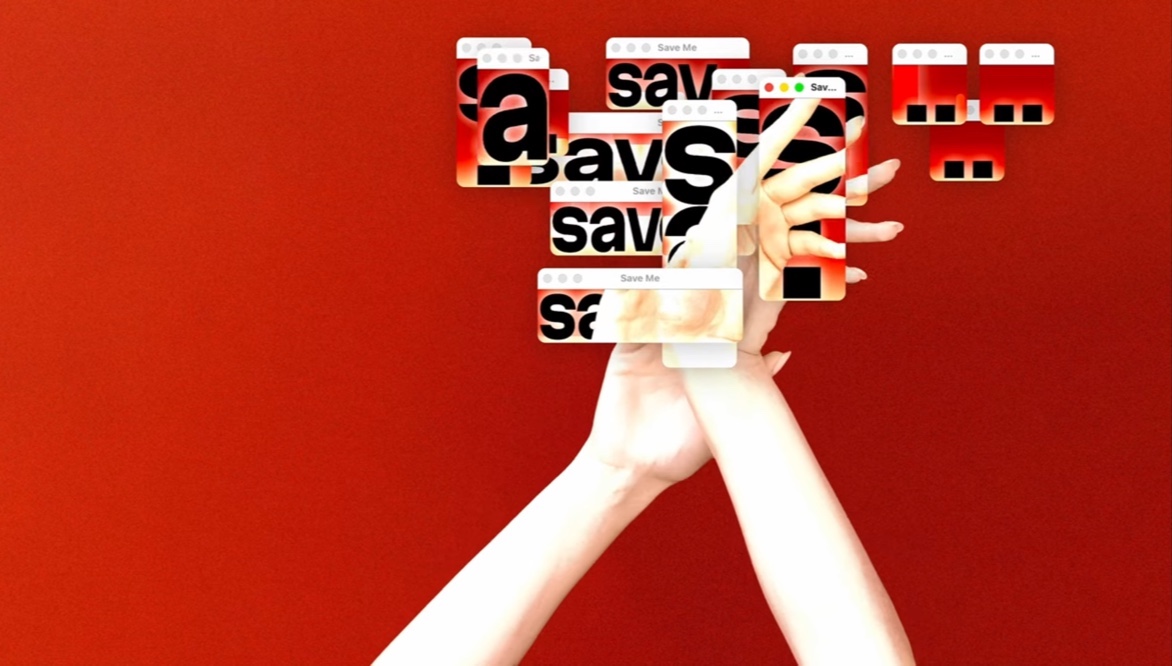
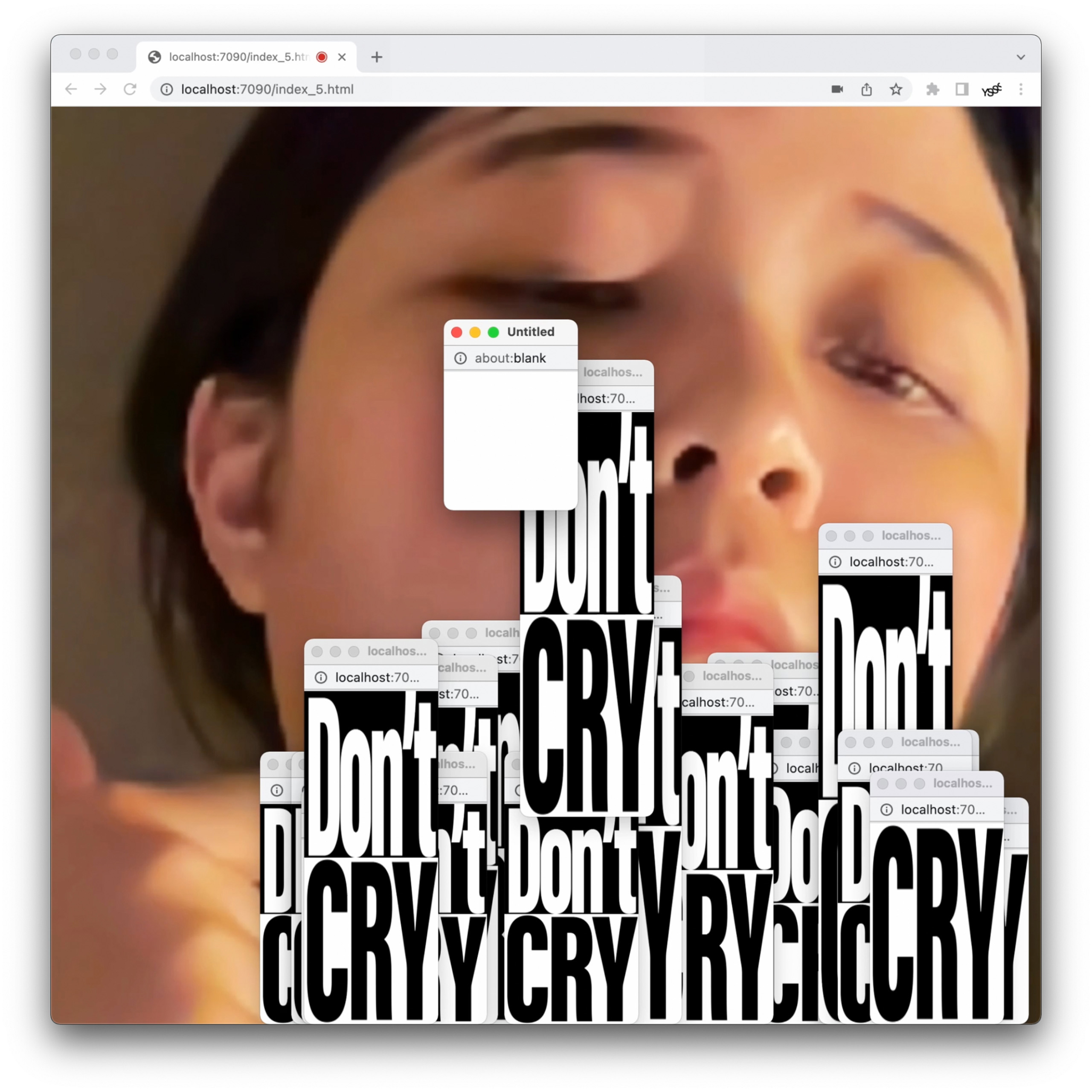
Yehwan Song, Cry Don’t Cry, 2022, Web performance, Dimensions variable ©Yehwan Song

We are living in the era of the web.

The applications you instinctively check on your smartphone upon waking are web-based; the programs you face at work are also web-based. From casual chatting to information searches, there is virtually no online activity that operates outside of the web. Even Tim Berners-Lee, who founded the World Wide Web, once mentioned that he did not anticipate the web to wield such an influence when he first created it. What started as a small spider’s web has now grown into a massive structure. But in fact, what we actually perceive is not the web itself, but the images produced by the web's giant network.

Let’s take a closer look at your immediate environment as you read this. You likely encountered this critique as text displayed on a screen; you visited a site to read the article and clicked a link with the title. Throughout this entire process, what you perceived can be listed as images: characters formed by consonants and vowels, a website composed of such characters, and the black-and-white arrangement of text in this critique. The web indeed serves as the medium connecting all these steps, but what we sense ultimately returns to images. Even Berners-Lee’s choice to add two slashes after “http:” purely for aesthetic reasons reflects how important visual perception is. In this sense, the previously mentioned “era of the web” can be regarded as synonymous with the “era of images.” When the web is reduced to images, it becomes an attractive visual experience, which is particularly emphasized in the works of Yehwan Song.

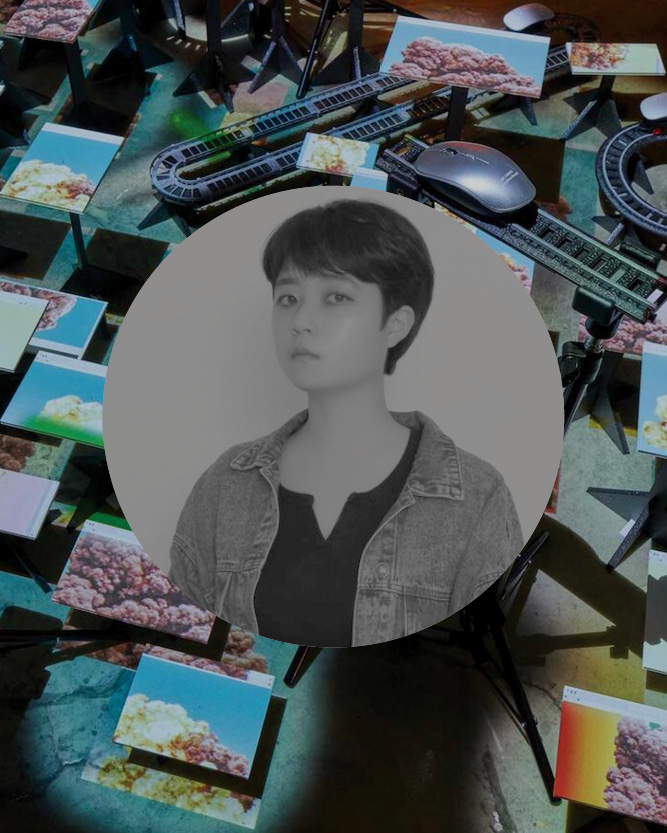
Yehwan Song is a web artist who first became interested in web design by observing how website designs change depending on the user’s environment—whether they are using a smartphone, laptop, or tablet. The reason she is referred to as a web artist rather than a web designer lies in the embedded messages within her designs and the insights drawn from her affection for and observations of the web. Even before creating artworks in the form of web-based pieces, she experimented with original web productions through digital posters and web design, attempting to establish direct interaction between users and the web through gesture-responsive web interfaces.

When one swipes from the eyes to the cheeks with a finger, either "Cry" or "Don't Cry" appears. The more the gesture is repeated, the more web windows stack at the bottom of the screen. This entire performance unfolds within a web environment that Song has engineered herself, as seen in her web performance Cry Don’t Cry. In addition to this piece, Song has produced other interactive web performances such as Speak Don’t Speak, where the size of one’s mouth determines the display of “Speak” or “Don’t Speak,” and Soft Pocking, where shooting water from a water gun traces white shapes along the water's path on the screen. Departing from the conventional input-output mechanisms of mouse and keyboard, Song’s web responds directly to physical movements such as water gun shots, stick movements, or even unmediated bodily gestures, thereby granting users newfound freedom in their interaction with the web interface.

Within Song’s works, the web deviates from its conventional form. It is no longer a means for information retrieval or online connectivity, but rather serves as a space for private engagement between the web and the user, producing visual imagery through their interaction. Her independently designed web pieces function as media that deliver a message, invoking Marshall McLuhan’s (1911–1980) famous phrase “the medium is the message.” This proposition draws attention to how media itself alters the world rather than merely serving as a vehicle for information transmission. Applied to Song’s web interfaces, her reactive web dismantles the standardized, regulated framework of conventional web design, promoting an alternative, active Internet environment that diffuses through diverse forms. Through this, Song critiques users’ habitual submission to the pre-established frameworks of the web, unconsciously aligning themselves with limitations without recognizing the discomfort or constraints imposed by such design.


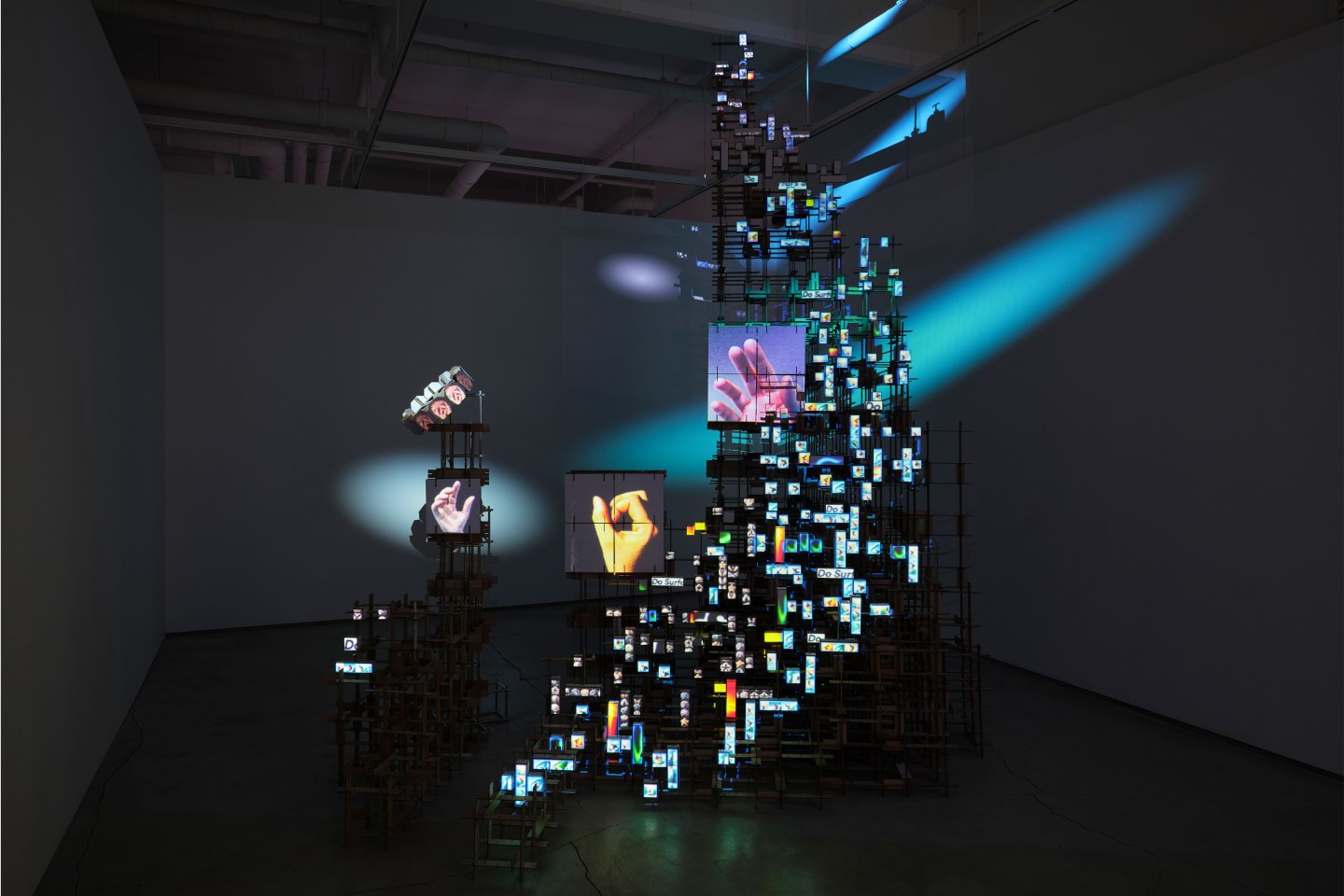
Yehwan Song, woldeu waideu, 2022, Mixed media, Dimensions variable ©ARKO Art Center 

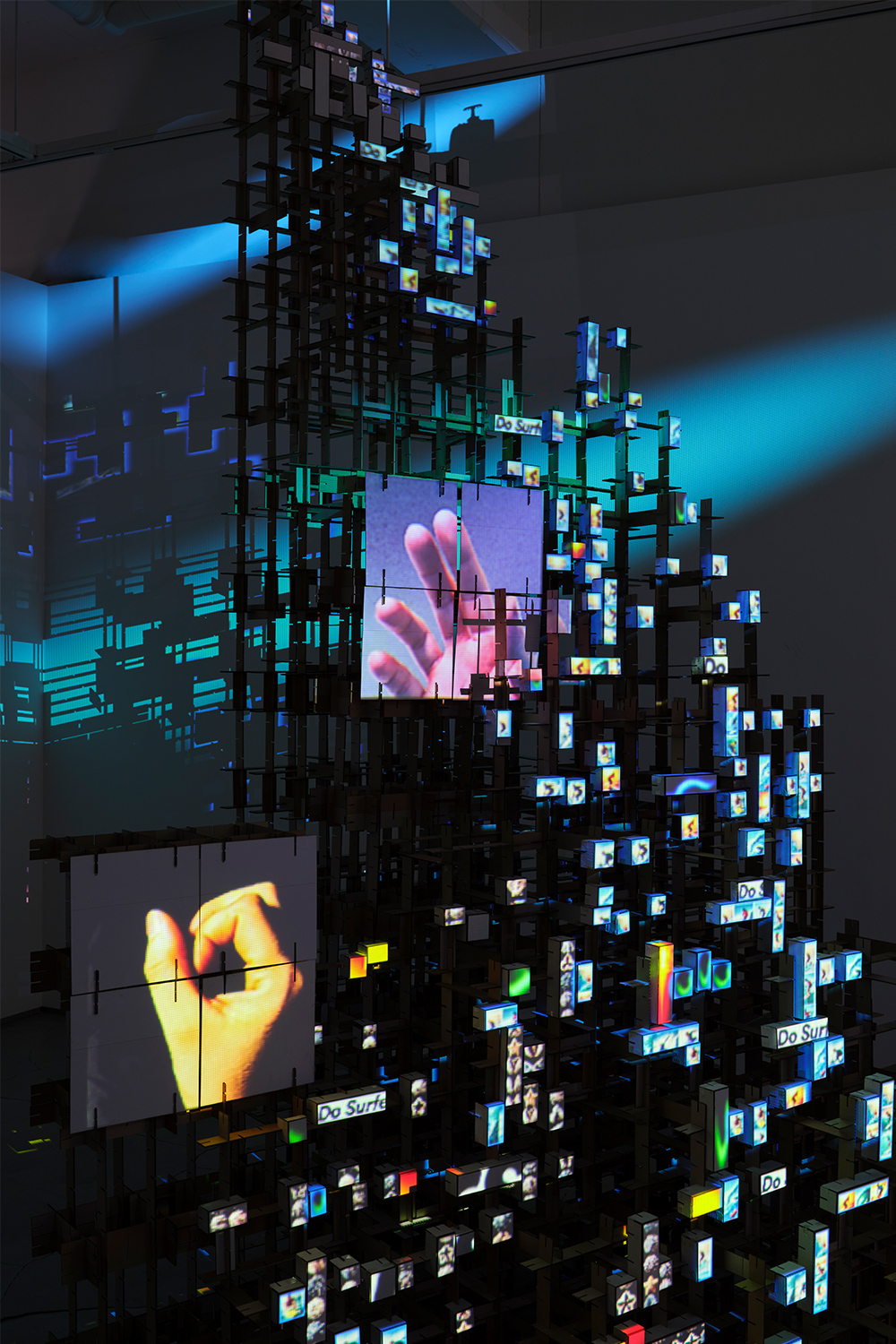
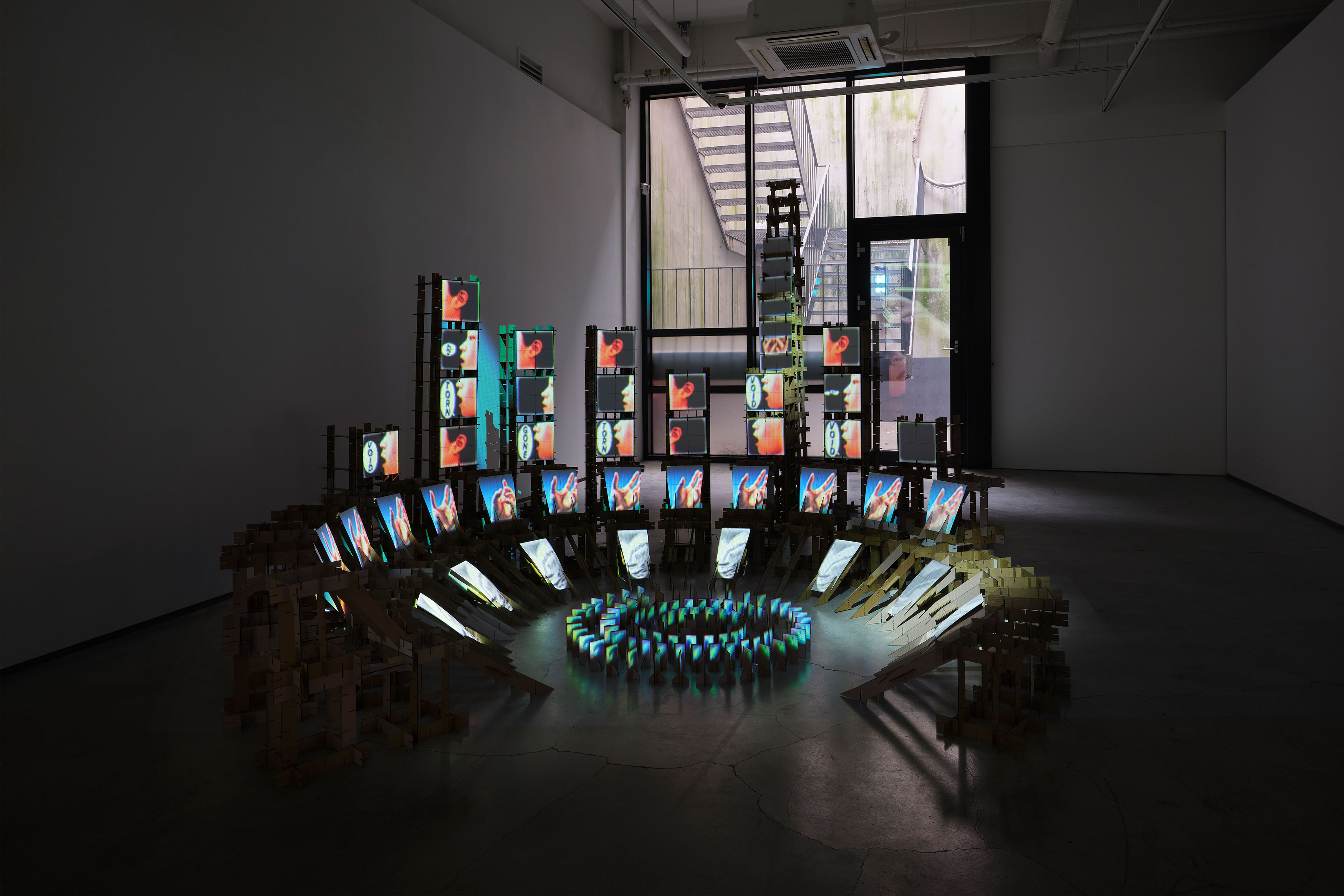
Let’s explore her work woldeu waideu as a starting point. This piece critiques the standardized design of web platforms that ignore individual environments and cultural differences. The projected images on foam boards are videos that have undergone changes in compression formats after being uploaded and downloaded on various online platforms we commonly use. From this, Song visually conveys that the images we view are not identical. The varying sizes of the projected images, some overlapping or magnified, imply that we all perceive the web differently depending on our environments. At the center of these fluctuating images is the mouse cursor, endlessly circling like a train—it symbolizes the user surfing the web. Ultimately, the piece expresses how the seemingly equal web traps us within the confines of enormous power, blinding us from reality. As McLuhan suggested back in the 1960s, people living within media may unconsciously be consumed by it—a concern that remains relevant even today regarding technological power.

While the internet initially served as a tool that allowed individuals to access diverse information and weakened the information monopolies of states and governments, information has once again become subject to censorship and control by states, governments, and large corporations. Take Google, for instance: when searching for information, users encounter neatly organized results across multiple pages. However, a hierarchy inevitably forms, with some information receiving greater exposure than others, leading to informational disparities. Although users may feel they are receiving all available information, in reality, they are only exposed to a carefully curated subset. This exemplifies what media theorist Boris Groys (b. 1947) terms “information gaps.” Groys focuses on the discrepancies between ideals and reality under digital power, arguing that Google’s rigorously structured, universally applied access protocols regulate conversations with the entire world. Likewise, Tim Berners-Lee warned in 2014, on the 25th anniversary of the web’s creation, that the open and neutral nature of the internet was being threatened by powerful forces such as governments and corporations, calling for the establishment of an Internet Bill of Rights. These examples demonstrate that behind the utopian image of the internet lies the harsh reality of “digital power.”

Groys advocates for a utopian ideal that calls for overcoming the limits of information gaps—a struggle for the free flow of information, transcending social spaces and granting words freedom of movement. This utopian ideal defines our contemporary and everyday struggle for universal access to freely circulating information. This concept aligns with the message delivered in Yehwan Song’s work, which seeks to render the limitations of the web visible and personal. While Groys focuses on information itself, Song closely examines the discrepancies found within web usage environments. Song has stated that while working with web design and UX/UI design, she came to recognize the formal and structural limitations inherent in design. These limitations highlight how using the web—whether arranging words in English, interpreting icons, or performing certain tasks—requires a particular level of understanding about how the web functions. This usage gap stems from web design’s imposition of standards and conventions that few users actively question.
Here, power operates in that it is not the individual users who determine how to use the web, but rather the governments or corporations that provide it, leaving individuals with only two choices: either accept the framework and participate, or reject it and risk exclusion. Consequently, this divide in web accessibility leads to a chain reaction of information gaps, exposing individuals to heightened experiences of information-based power.

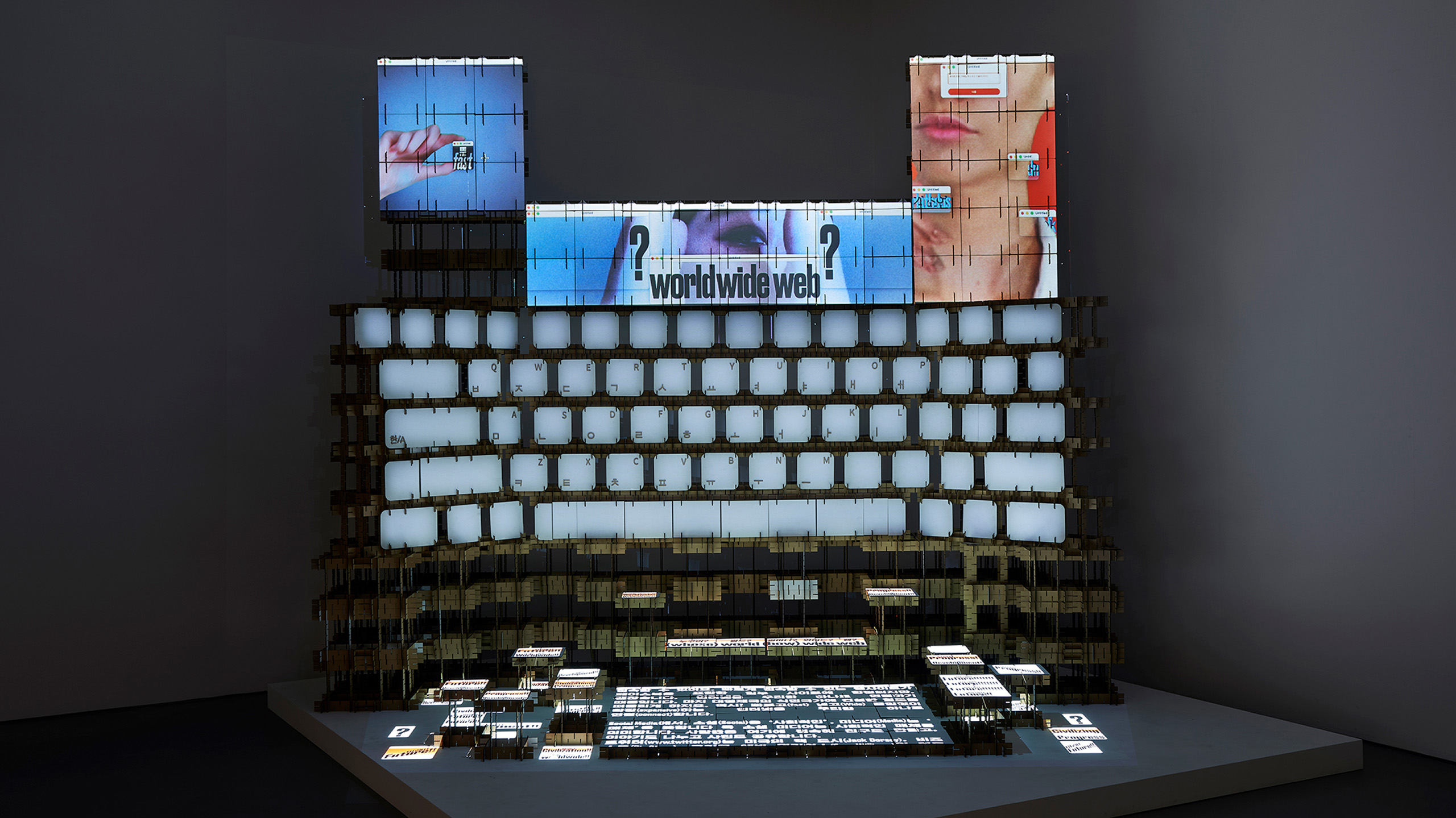
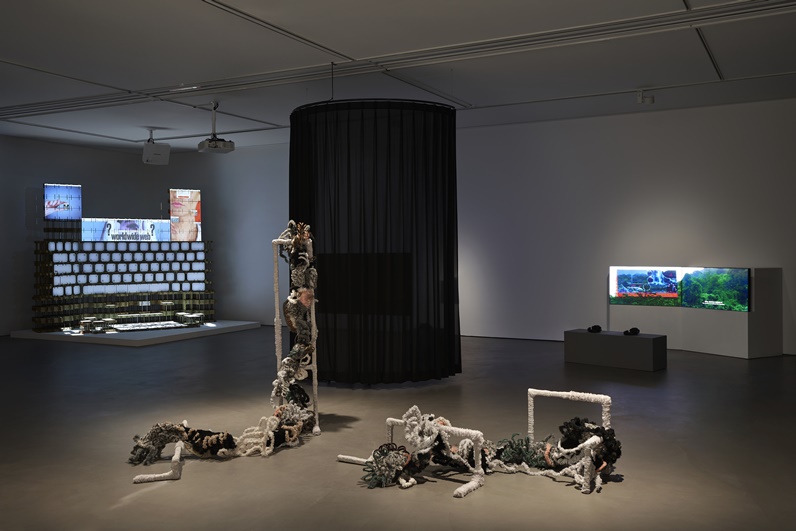
Yehwan Song, (Whose) World (How) Wide Web, 2024 ©Yehwan Song

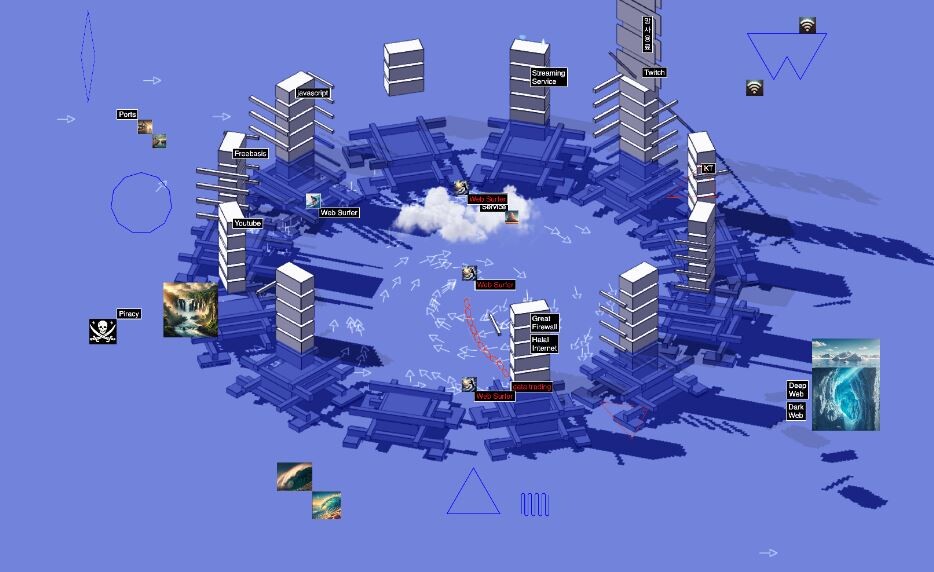
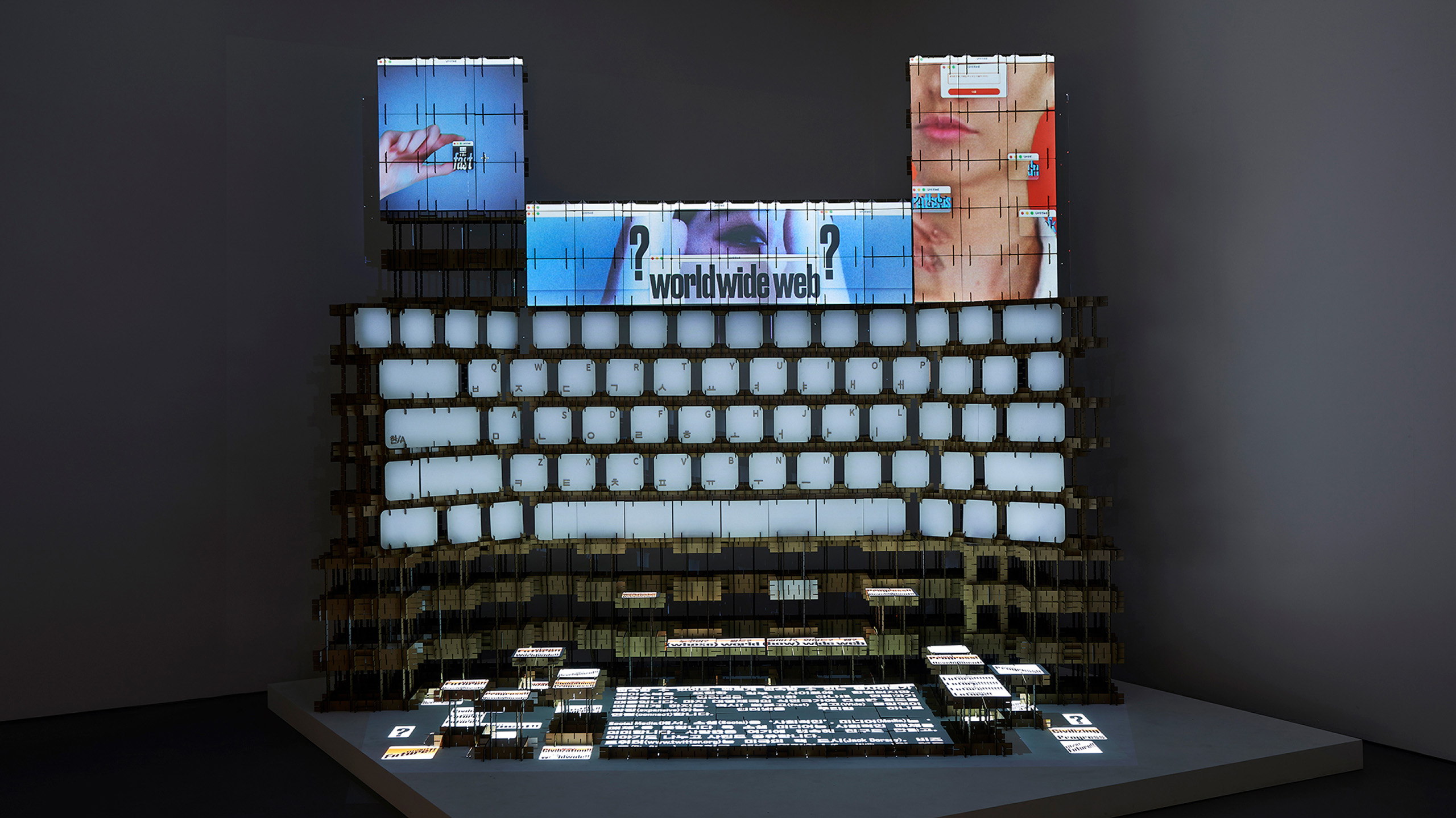
(Whose) World (How) Wide Web is a piece that critiques Korea’s digital environment, which has been modeled after American and European laws. Once again, Tim Berners-Lee’s World Wide Web comes into question. Every domain we use begins with “www.” To write this domain, we must switch to the English keyboard. Even though Korean is our native language, we still use English when registering email addresses or creating Instagram account names, yet we rarely recognize this contradiction. Song confronts this complacency—or ignorance—by staging the work as a theater. The theater structure, modeled after a Hanmun keyboard, suggests that we are immersed in the fiction created by massive capital and authority, blind to reality. A prompter screen scrolls from bottom to top, gently pointing out the problems of social media and internet environments. The phrase “The internet connects us” repeats, and although the wording sounds positive, it contains a hidden irony—suggesting that the internet connects us through enforced frameworks, not through genuine freedom. As seen in Song’s work, digital power stems from our inability to recognize what we are missing, blinded by years of standardized web usage.

In this way, Yehwan Song highlights the web’s limitations by focusing on the public’s uncritical acceptance of standardized web environments. In her work, the web itself is power, and her creative practice functions as an individual act of resistance against that power. Through this independent message, she continually brings attention to the overlooked discomfort and unease experienced by users inhabiting the internet. But why do people overlook these issues? Song suggests that the reason lies in technological utopianism. The optimistic belief that technological advancement will bring about a better future seems reasonable when considering how technology has shaped the world up to the Fourth Industrial Revolution. Yet, we cannot ignore the dystopian view that such progress may simultaneously intensify social imbalances and surveillance. Importantly, solving the dystopian challenges can bring us closer to utopian ideals. Thus, Song’s satire and critique of the web can be seen as a dystopia-shaped utopia—aiming for a better web environment.

To conclude, let us borrow Song’s own question: “Is the internet we are building today truly the internet we want?” It has long been argued that the world we encounter through the internet is no longer virtual but closely intertwined with daily life. We use various search engines and OTT platforms in our routines. We endlessly scroll through countless short videos, numbing our minds with overstimulation. As we encounter dozens or even hundreds of information snippets each day, the act of consuming information often takes precedence over understanding it, creating a reversal in priorities. In this era, where digital vision holds unprecedented importance, we have moved from an age where “knowledge is power” to one where “seeing is power.” But is the information we consume truly offered to us freely? The more we overlook this question, the more likely we are to become prey trapped in the web of technology’s dystopia.


* This manuscript was published as a special contribution supported by the Korea Arts Management Service.

References