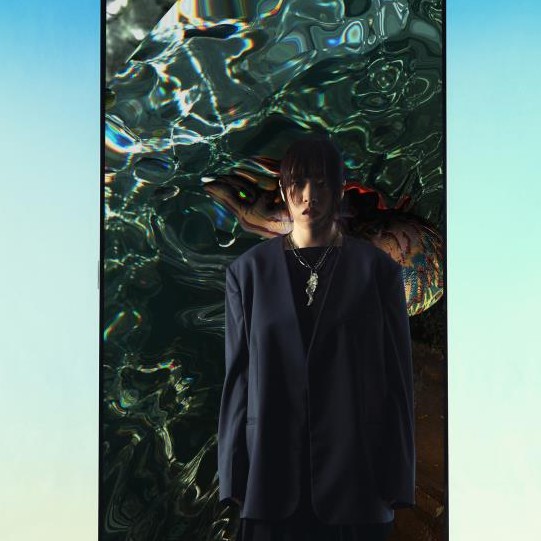
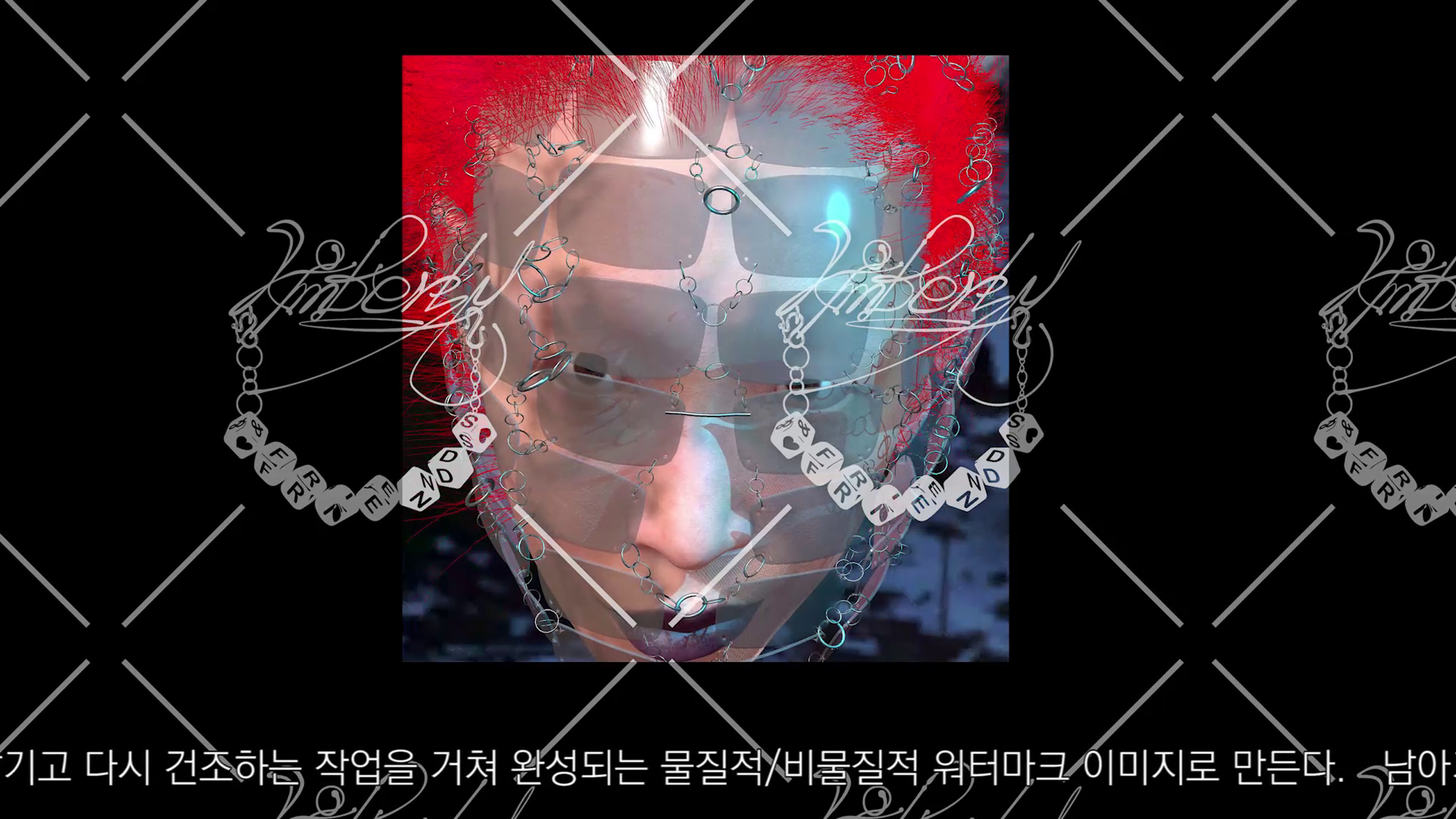
To begin this entire story, one
must first introduce “Kimberly Lee.” Kimberly is not a character created merely
to construct a narrative, nor is she a purely fabricated being. Several years
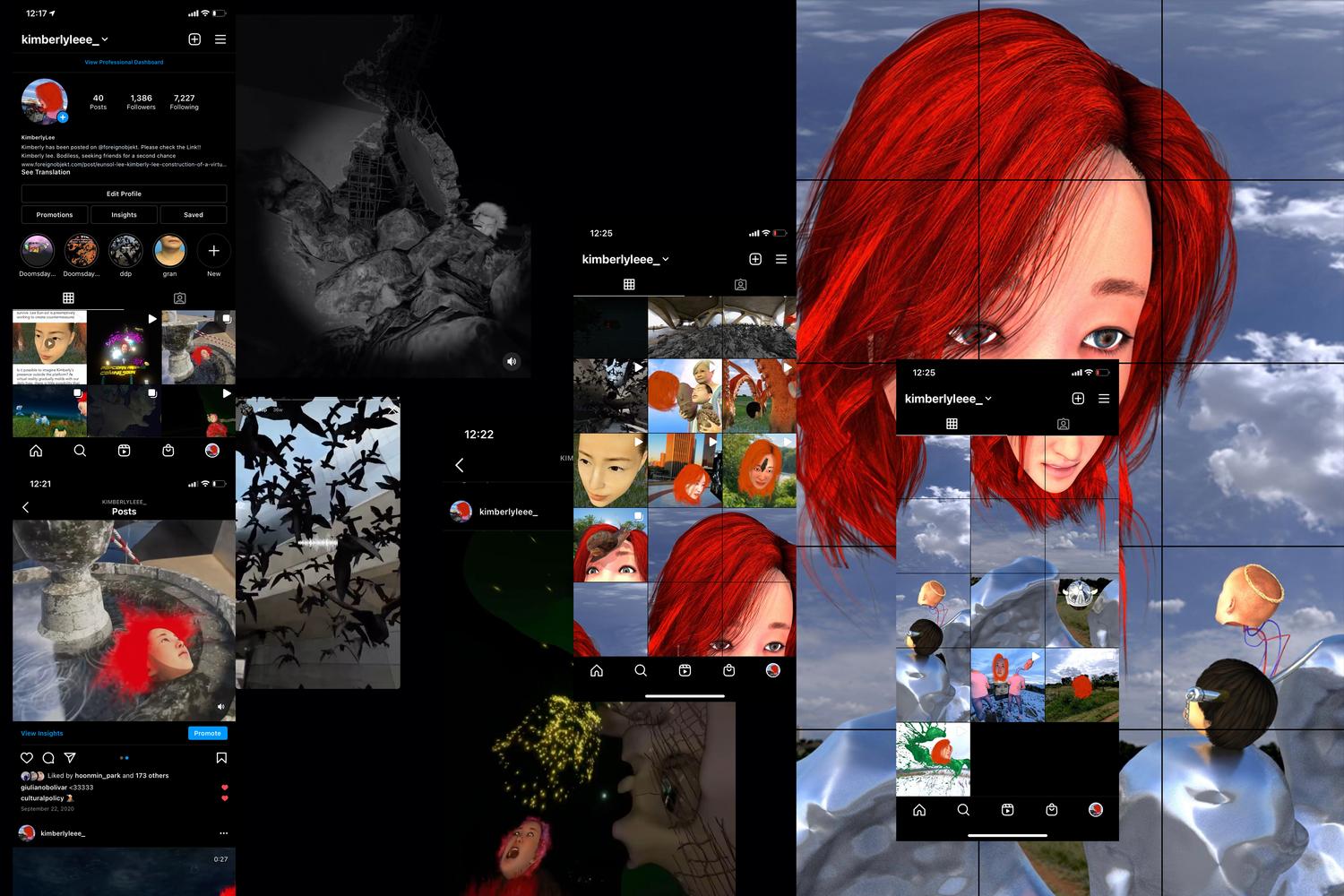
ago, Eunsol Lee’s personal social media account was hacked. The hacker changed
the account name to “Kimberly,” and Lee, unaware of this change, went months
without noticing. During that time, “Kimberly” continued to persist and extend
her digital life. Upon discovering this, Lee decided to let Kimberly remain as
she was. The hacked Instagram account (@kimberlyleee_) thus became a
foundational site for his work, and Kimberly, accessed by Lee, took root in an
activated online ecosystem. While it is true that social media accounts have
become commodities that can be bought and sold, their relationship is not one
of ownership or possession. Instead, Lee regards Kimberly as a parallel-world
entity—an extension of reality, yet one that maintains a certain distance from
it, and respects the autonomy of the system in which she lives.
The artist once introduced
himself by saying, “I continue to produce a series of projects in order to
sustain Kimberly’s existence, and I consider this sense of responsibility
toward a virtual being as the driving force behind my work.”¹ What does it mean
for an artwork to focus on sustaining Kimberly’s existence? What is expected of
Kimberly, that Lee is so diligently constructing the conditions for her
(co-)nurturing? To put it plainly, Kimberly is expected to serve as a conduit
for realizing a utopian vision of a parallel world. Without question, this
“parallel world” refers to a web-based realm.
The physicists who created the
World Wide Web in 1989 envisioned it as a space for global collaboration, where
both tangible and intangible ideas and knowledge could be shared as a commons.
Given these original expectations, the rapid spread of web-based utopianism was
not entirely unexpected. However, over time, through the progression from Web
2.0 to Web 3.0, these expectations and reality began to diverge. Web 2.0
accelerated the popularization of the web among the general public and ensured
democratic access. Soon, however, dominant corporate platforms and browsers
began controlling the distribution of information and embedding advertising and
consumerist mechanisms throughout the web.
In response to these issues, the
next generation of the web has shifted focus. Characterized by AI technology
and big data-driven personalized information, Web 3.0 seeks to construct
decentralized networks that allow communication between users without passing
through centralized platforms. Blockchain and cryptocurrency are markers of
this new web era. “Blockchain” refers to a peer-to-peer (P2P) networking system
that operates without centralized servers. In maintaining and sustaining this
network, certain economic logics inevitably arise, and the burdens and rewards
involved take the form of “cryptocurrency.”
Although the original goals and
outlook of the web have long been compromised by the unrelenting excesses of
capitalism, the dream of the web continues to be renewed. It is the dream of
puncturing holes in centralized distribution networks and forming new,
public-oriented networks elsewhere. Those who test the potential of blockchain
and cryptocurrency still envision utopias. Within this optimistic projection of
the Web 3.0 era, Kimberly (1) maintains complete freedom, (2) infinitely
proliferates herself and her potential, and (3) secures a community grounded in
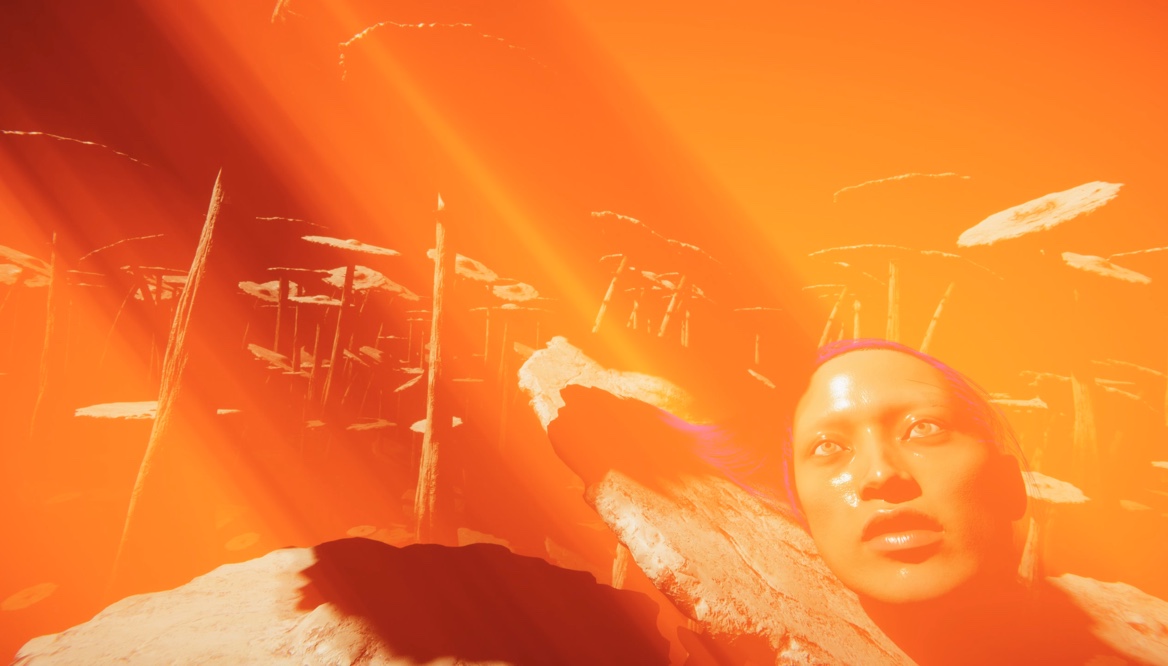
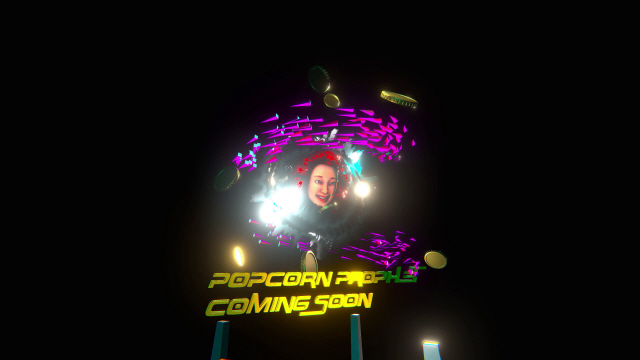
solidarity. Midnight Sun Daze is a short film that captures
Kimberly’s journey toward realizing these aims.
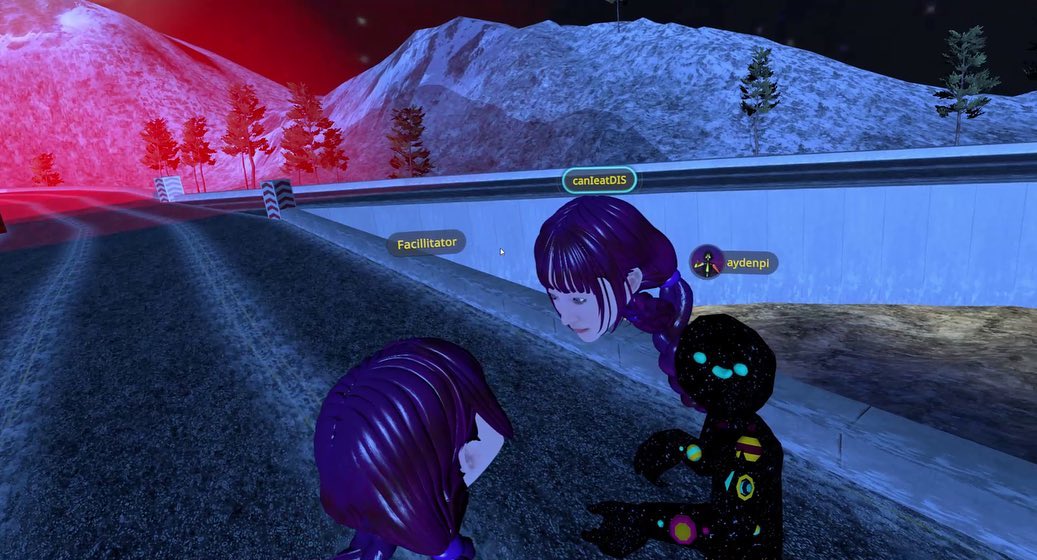
Kimberly’s singularity lies,
first and foremost, in her being a cephalopod—a creature that moves with its
head and limbs fused into one. Her visual form as a floating head is striking
enough to provoke a surreal imagination, one that evokes posthuman discourse.
One of the characters who converses with Kimberly in Midnight Sun Daze
is Dr. Sergio Canavero (b. 1964), an Italian neurosurgeon known for his plans
to transplant a living person’s head onto the body of a brain-dead patient. The
human body—post-humanism imagines—can be extended from, by, and toward
machines, eventually realizing ideals of “normalcy” and “wholeness.” In that
light, Kimberly, as a cephalopodic head that is both alive and capable of
rational thought, may seem like a perfect fit for Canavero’s vision.
However, Kimberly does not move
according to Canavero’s expectations. She chooses broader freedoms. Kimberly
casts off the body and all other symbolic markers that define the
individual—such as gender and class distinctions—and roams the world unhosted, surviving
independently.
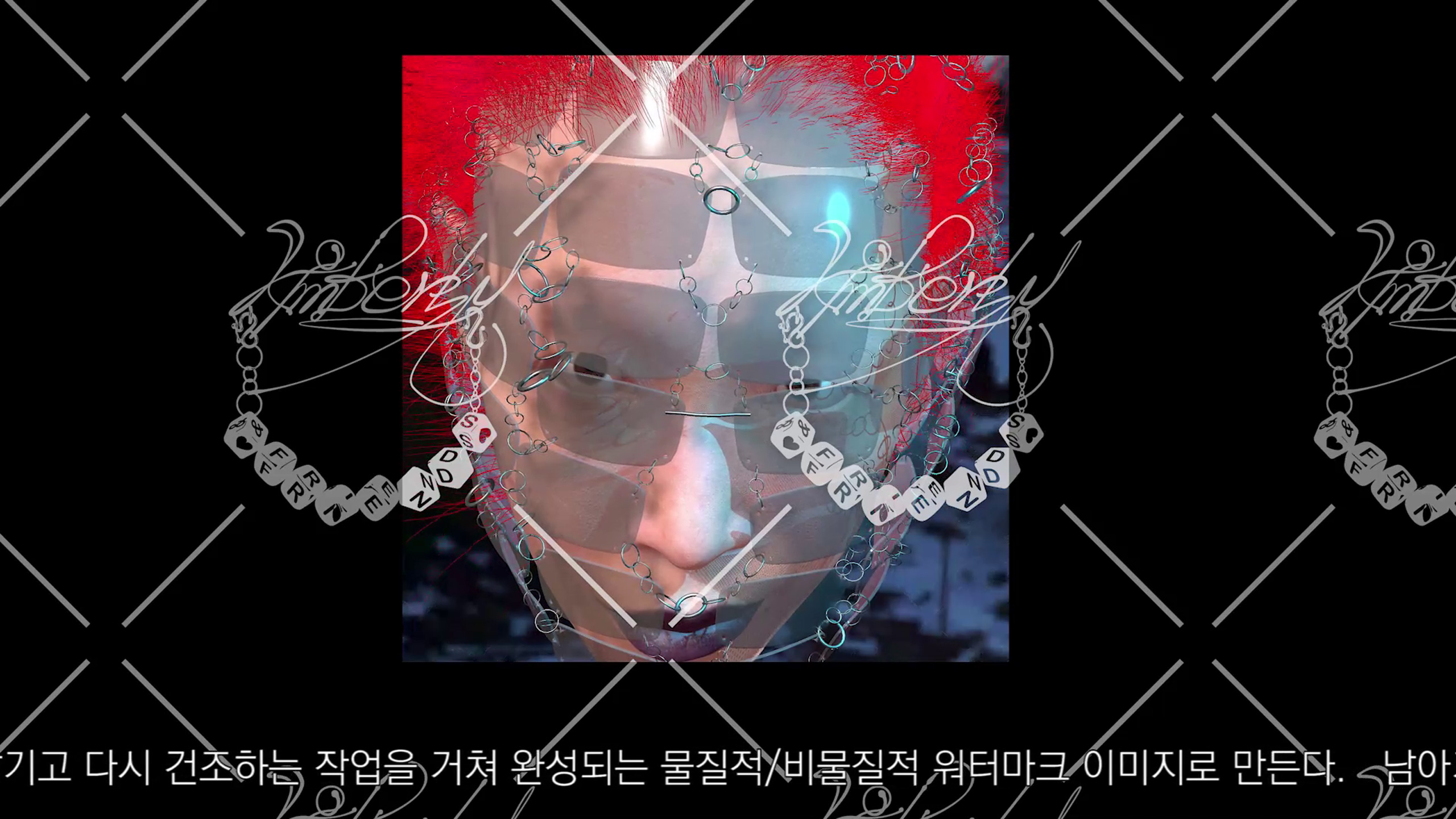
Kimberly never allows herself to
be absorbed into the map that Canavero envisions. Instead, she reproduces—or
self-replicates—her own kind of “cephalopod.” (Thus, the Kimberly seen in the
video, with long red hair flowing, is simultaneously one and three.) She goes
further, attempting mutations and evolution, and seeks to redefine the fate of
the cephalopod. This is also the key point emphasized in the artist’s new work:
Kimberly now begins to draw foreign elements into herself and dreams of a
transformative leap through metamorphosis. Like an alchemist fusing ordinary
substances to obtain a perfect element, she seeks to summon unknown souls to
form a new version of herself. Midnight Sun Daze narratively
structures Kimberly’s journey as one that involves the use of mystical and
alchemical magic.
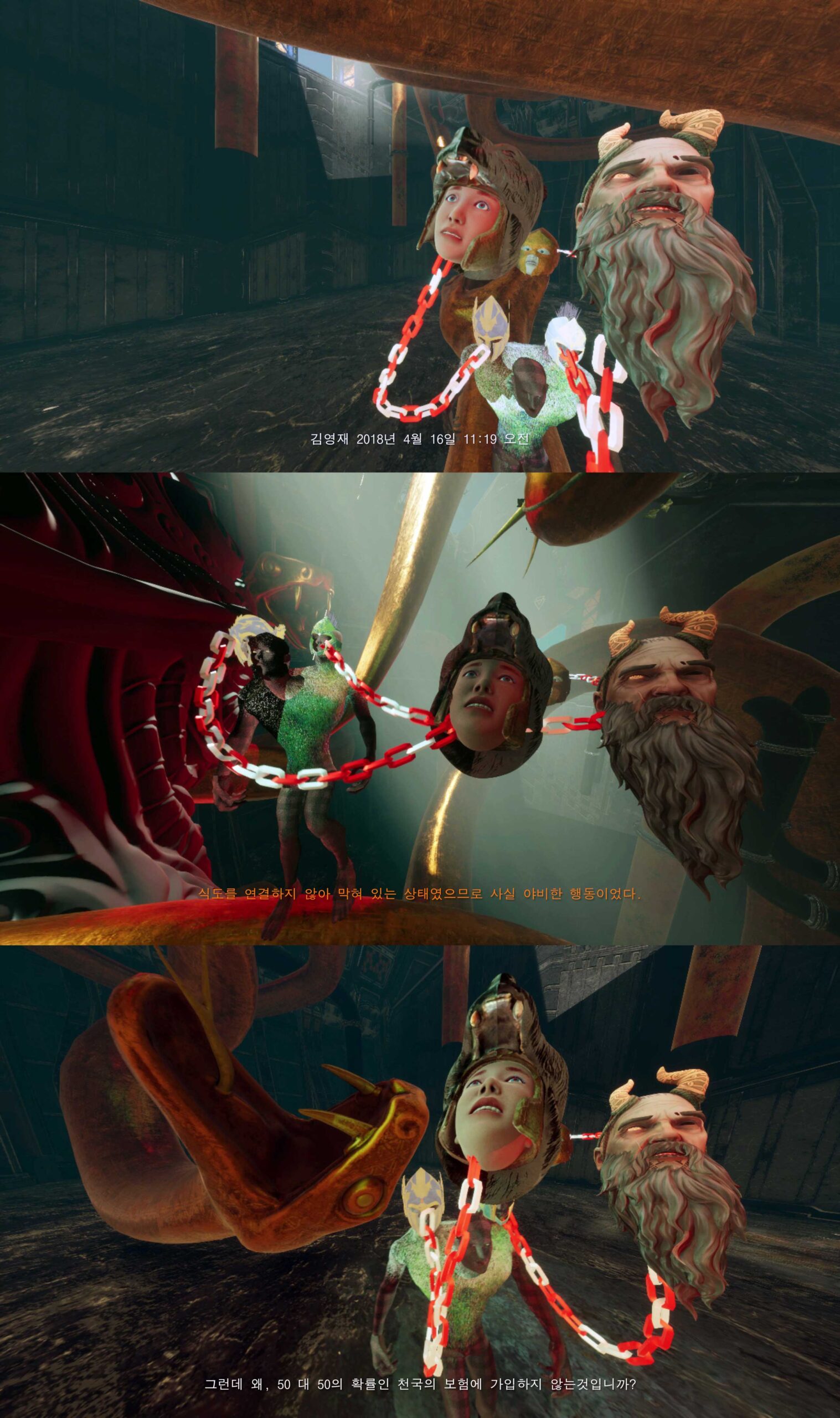
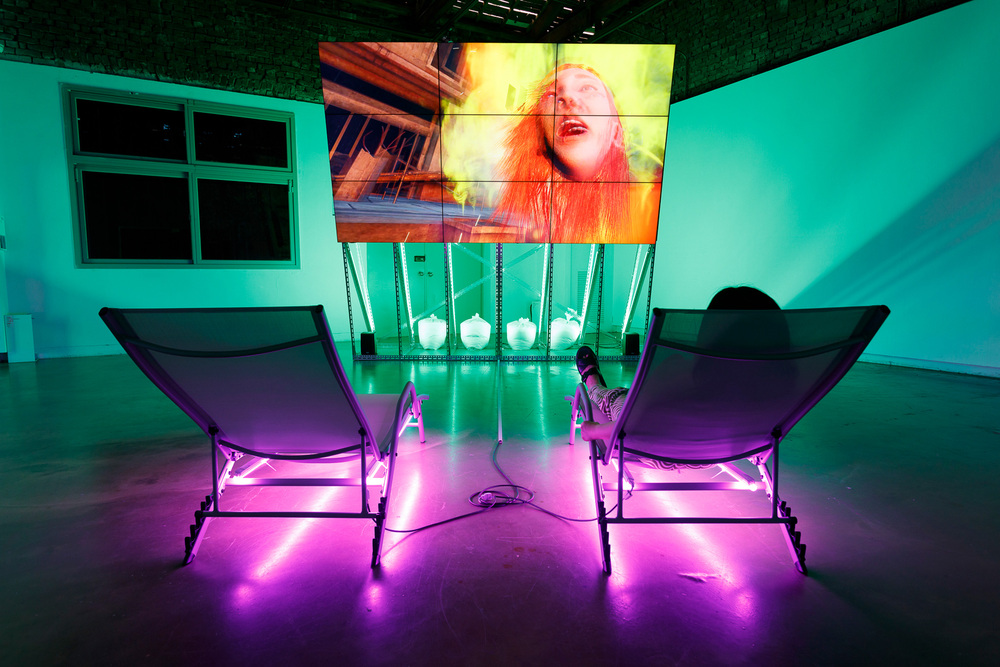
The two-channel screen
installation in the exhibition space expresses this journey spatially. In the
beginning of the video, both screens display a single, unified space. But at a
certain point, the imagery splits between the upper and lower screens. The
upper screen follows Kimberly’s journey, while the lower screen displays
various byproducts that appear to emerge from the upper narrative. Kimberly
attempts to summon the souls of others encountered during her journey to fuel
her own transformation—but these attempts mostly fail. Each failure leaves
behind a residue: ghostly or demonic entities, untranscended souls that linger
on the lower screen, multiply into strange forms, or grotesquely congeal with
one another.
Finally, near the end of the
work, when Kimberly successfully casts her magic, the accumulated remnants from
the lower screen begin to resonate with her call and ascend to the upper
screen. The images that had been stuck below disappear in an instant, and the
upper screen transitions into a scene where those very entities rise together,
floating with Kimberly.