Dominating
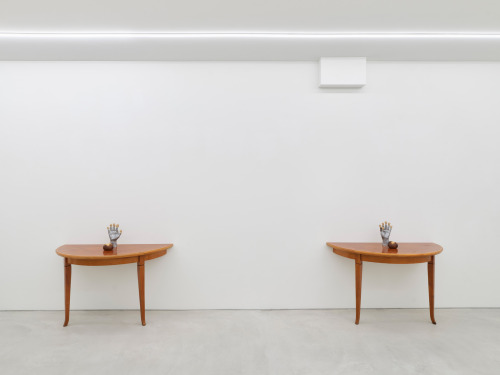
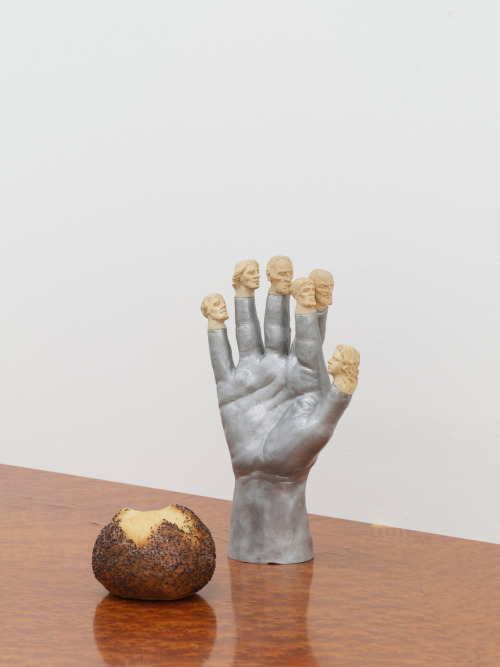
the exhibition space, the paired sculptures Seem More (2024)
and Seem Less (2024), which resemble hand-shaped
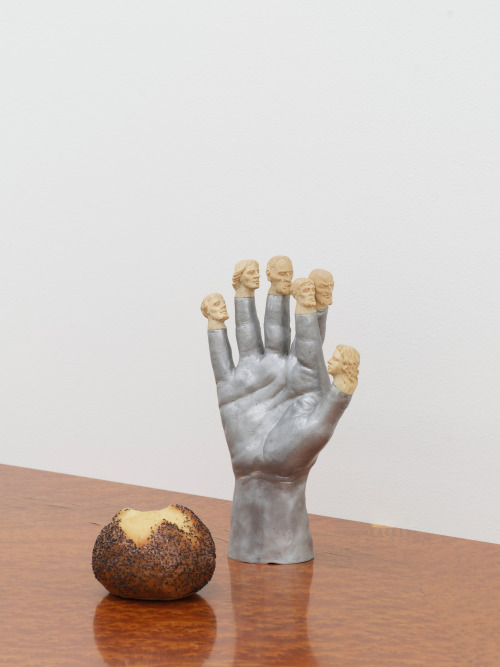
Christian relics, present two life-sized aluminum-cast hands, each standing
upright on a half moon-shaped dining table against the largest wall. Each hand
oddly has six fingers, and all fingertips are replaced with male heads made in
wood. The twelve heads correspond to the Twelve Apostles in the high
renaissance painting The Last Supper (ca.
1495–1498) by Leonardo da Vinci. All the heads are carved by a wooden religious
sculpture workshop run by a Bavarian family that has been in the business for
15 generations.
The
dramatic tension, wonder, and shame among the Apostles, vividly rendered in
their facial expressions, are originally generated by the middle figure of both
groups; however, Jesus is not placed between the tables. The viewer can assume
the obvious cause of this sensational scandal by referring the scene to the
worldly renowned painting and the biblical context, but the central absence
leaves the situation rather hectic and confusing without the mediative
quintessence of the narrative. The hands of the sculptures show their palms
toward the viewer, as if grasping for something, and an artificial bread roll,
laid in front of each of them, somehow reduces the dignity and solemnity of the
holy moment into rather a trivial dispute driven by simple, profane desire.
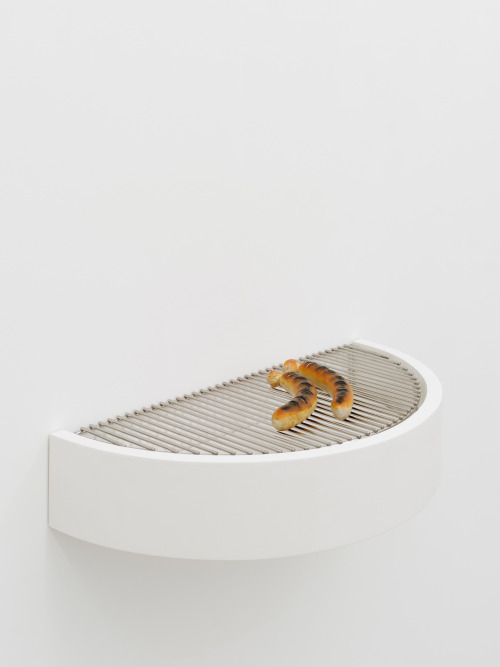
Next
to the scene of the drama, two wooden sausages are placed on a stainless steel
grill, framed in a wooden wall shelf around. In this sculpture, Never
Enough (2024), each end of the roasted sausages metamorphosed to
a head of Saint Nicholas: one with his elderly look and the other from his
younger age. A legend tells that the saint resurrected pickled children
murdered by a butcher in a village that suffered from a great famine; hence, he
is regarded as the savior of hunger. The roasted sausage, Bratwurst in
German, is broadly consumed in Germany, eastern Switzerland, and Austria, and
the eating style and culture have developed into a pseudo-religion, such as the
mustard ban for the St. Gallen Bratwurst. The heads of the saint, referred to
in historical paintings, are carved by the aforementioned Bavarian wood-carving
master family.
Lastly,
the sculpture Bountiful (2024) consists of an
antique wooden shelf, adorned with two putti and hung on the wall relatively
high under the staircase, with a bird nest placed on top of the shelf that can
be partly seen from underneath. The viewer is encouraged to climb onto a step
stool next to the sculpture, revealing what the nest incubates: another
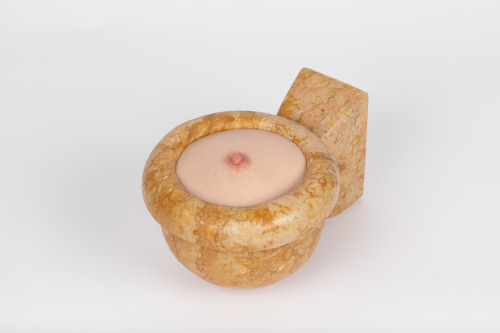
hyper-realistic silicone cast of the artist’s other nipple, as if it is a
never-ending but malfunctioning source of nurture. The artist has used his
nipple in a series of sculptures as a counter-offering to sexualized body parts
of female martyrs, unlike male ones. The sculpture teases one’s desire to look
and discover something hidden, returning either joy or disappointment.