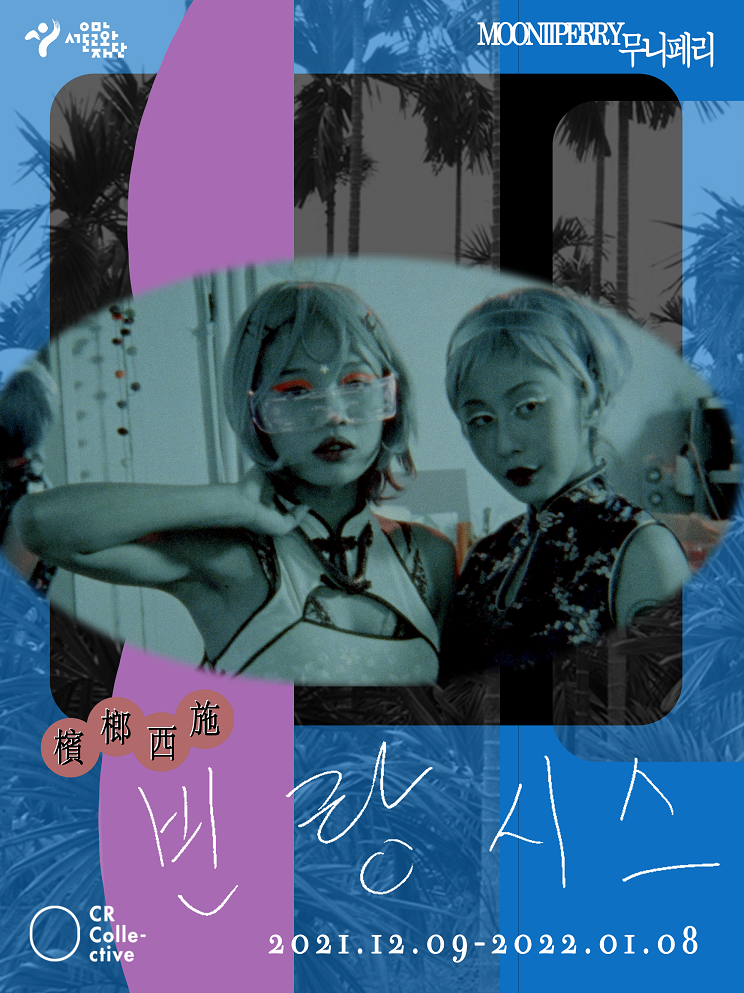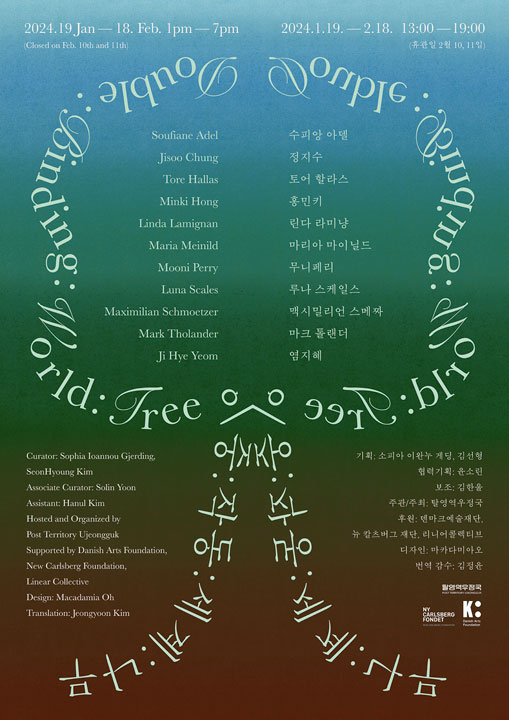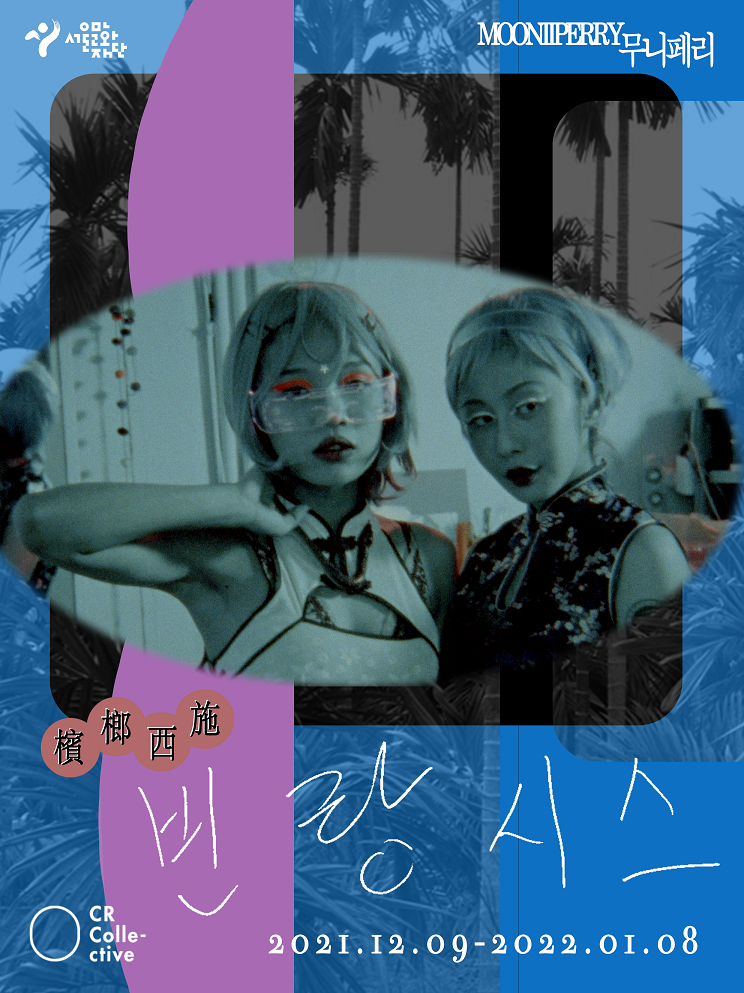


《Binlang Xishi》 exhibition poster © CR Collective

Mooni Perry examines an allegory of “dirtiness” created by various social contexts in her second individual exhibition, Binlang Xishi. Binlang Xishi (Betel Nut Beauty) is the title of the exhibition as well as the title of her work, a term used to refer to young women in Taiwan who sell a tropical seed named binlang (betel nut or areca nut). The seed contains a stimulant like caffeine and a weak hallucinogen, and is actively consumed as a snack in Taiwan and several Southeast Asian countries.

In Taiwan, thanks to its qualities as a stimulant, the betel nuts were primarily sold on the road by young women, mainly to drivers who had to drive long distances. Binlang Xishi was a job for women who could not find better work, since the seeds were a lightweight and cheap commodity, and most of the consumers were male manual workers. As competition for roadside sales intensified, the sales women chose to expose their bodies in a more seductive way to attract customers, as there was no other strategy for them even after they set up small booths by the roadsides. Inside these booths with glass windows and colorful neon signs, many Binlang Xishi attempted to attract customers by wearing titillating outfits such as bikinis. These women existed in a gray zone between ordinary vendors and sex workers by revealing their body parts to sell a normal commodity, and then they were deported from the zone in 2002 as this way of selling binlang was prohibited in Taiwan.

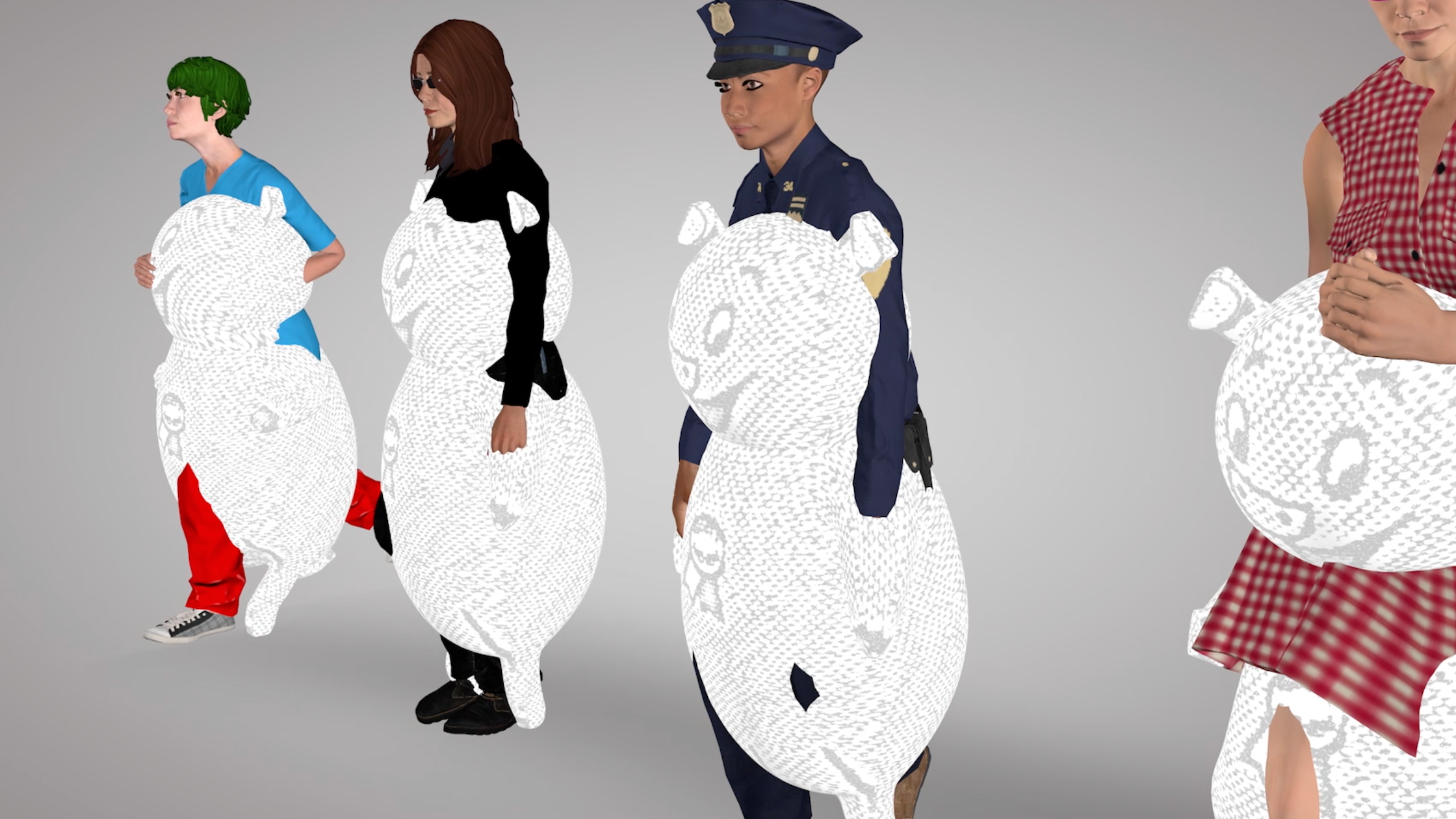
In Taiwan and other patriarchal societies, these women were referred to as “fallen beings”. They were easily regarded as contaminated or dirty people, because they had fallen twice from universal human standards–biologically and socioeconomically. But here we might ask what is “dirtiness” anyway? And who or what decides if someone is dirty or not? In asking such questions Mooni Perry asks us to overthrow the dichotomy of good and evil about the concept of “dirtiness”.

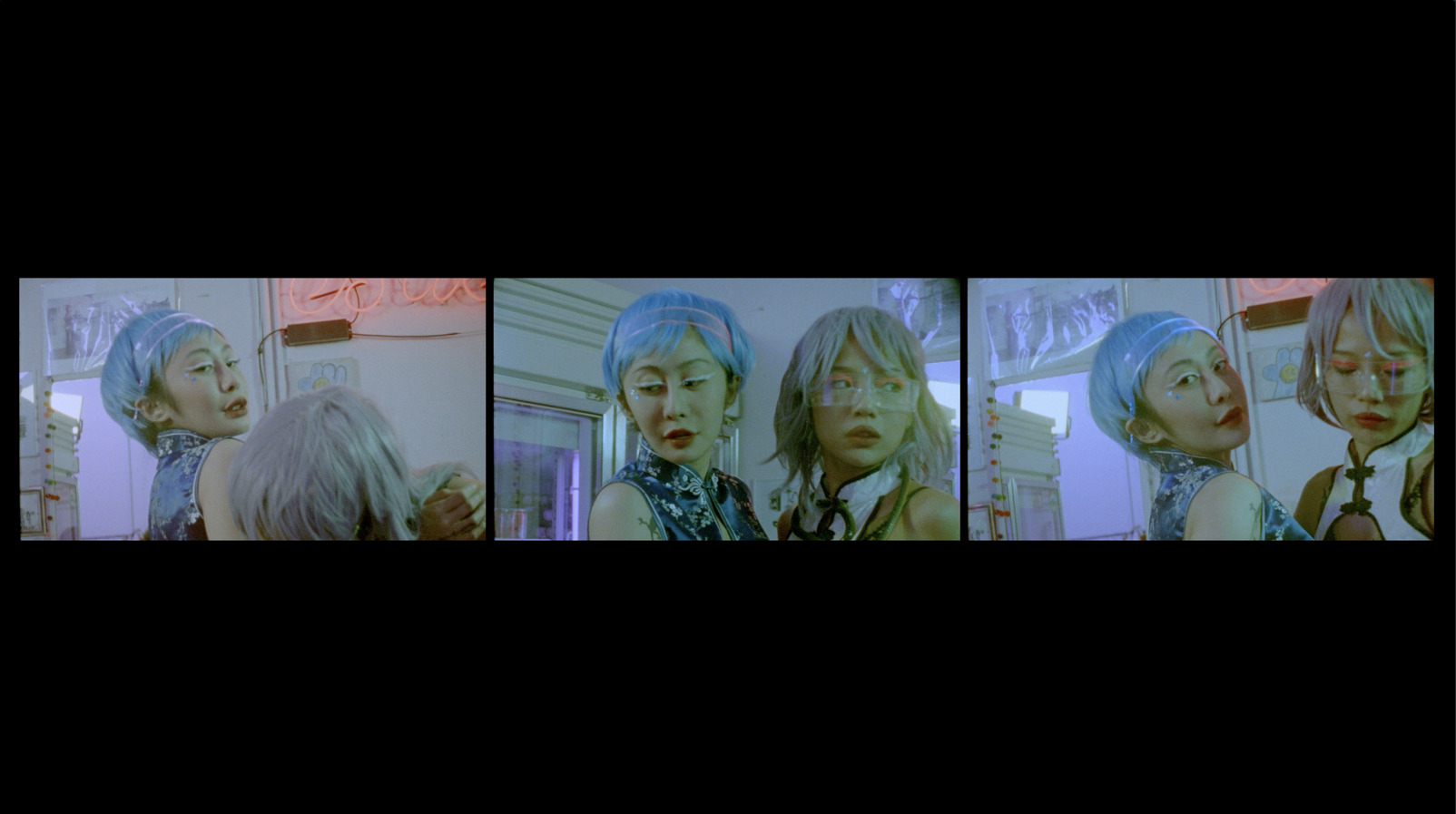
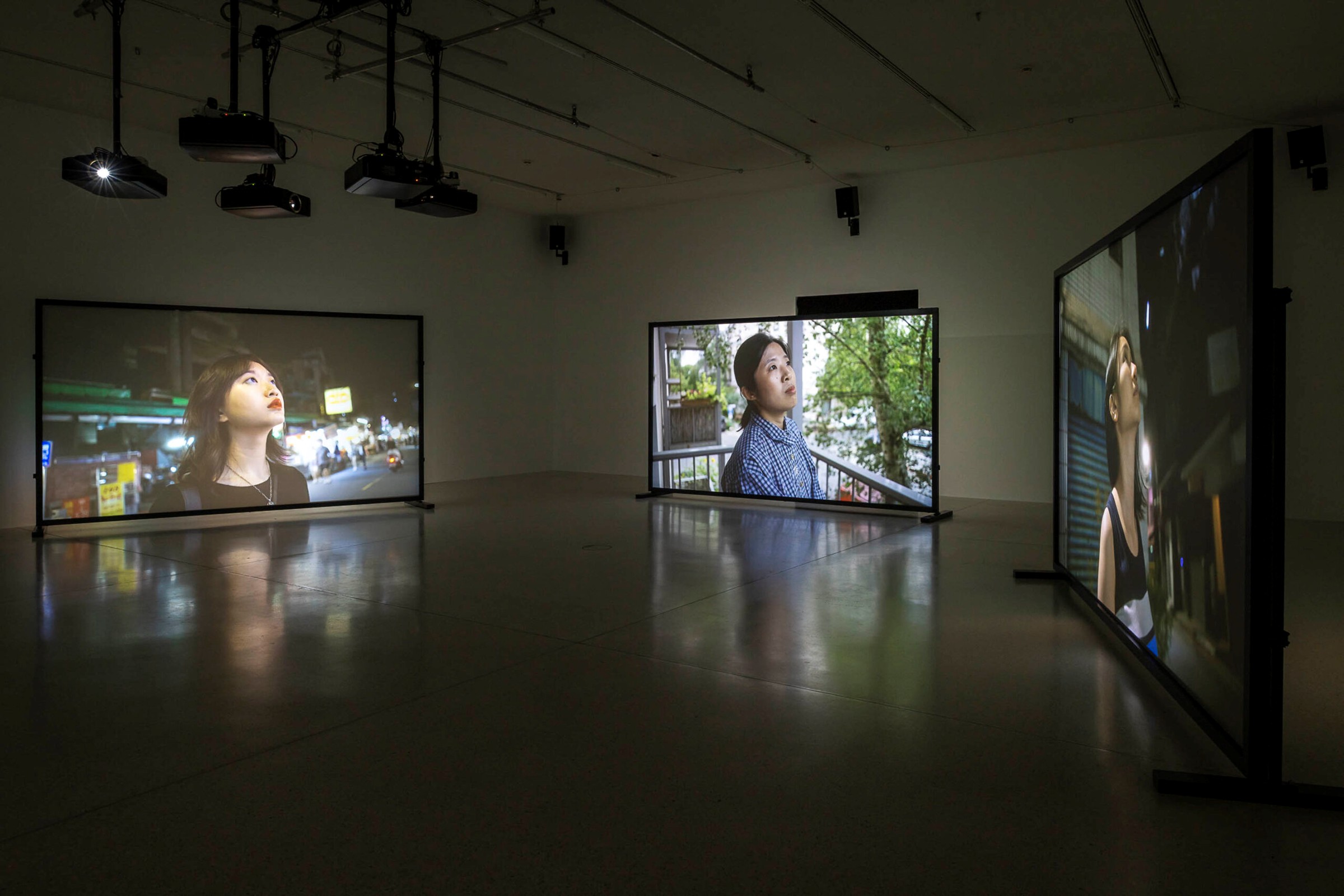
Mooni Perry, Binlang Xishi, 2021, 3-channael video, VHS/8,16mm/4k, stereo sound ©Mooni Perry

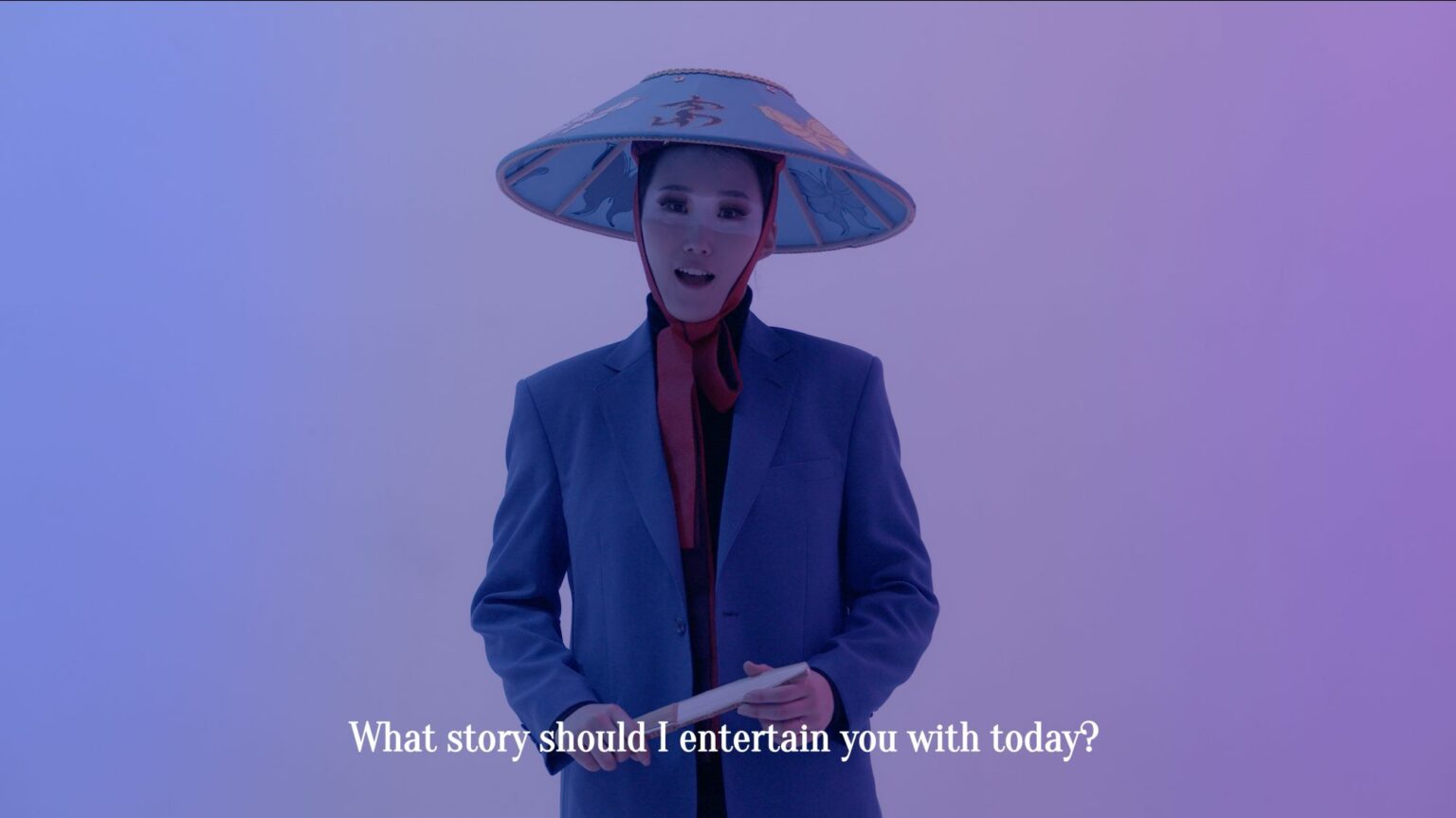
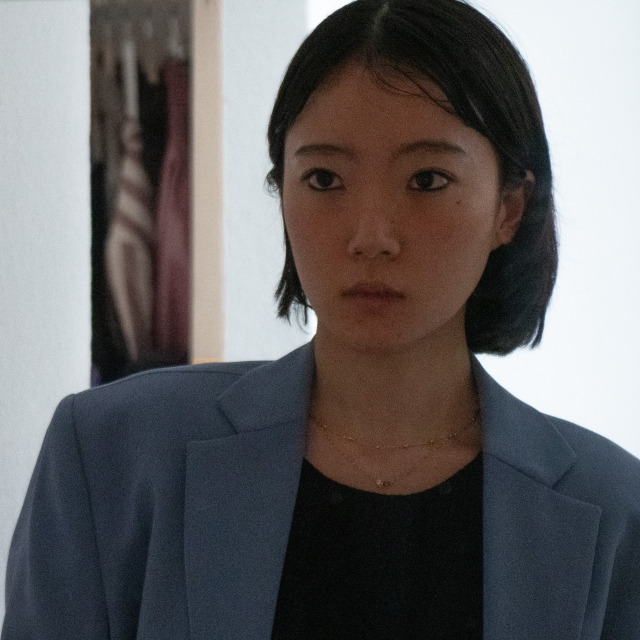
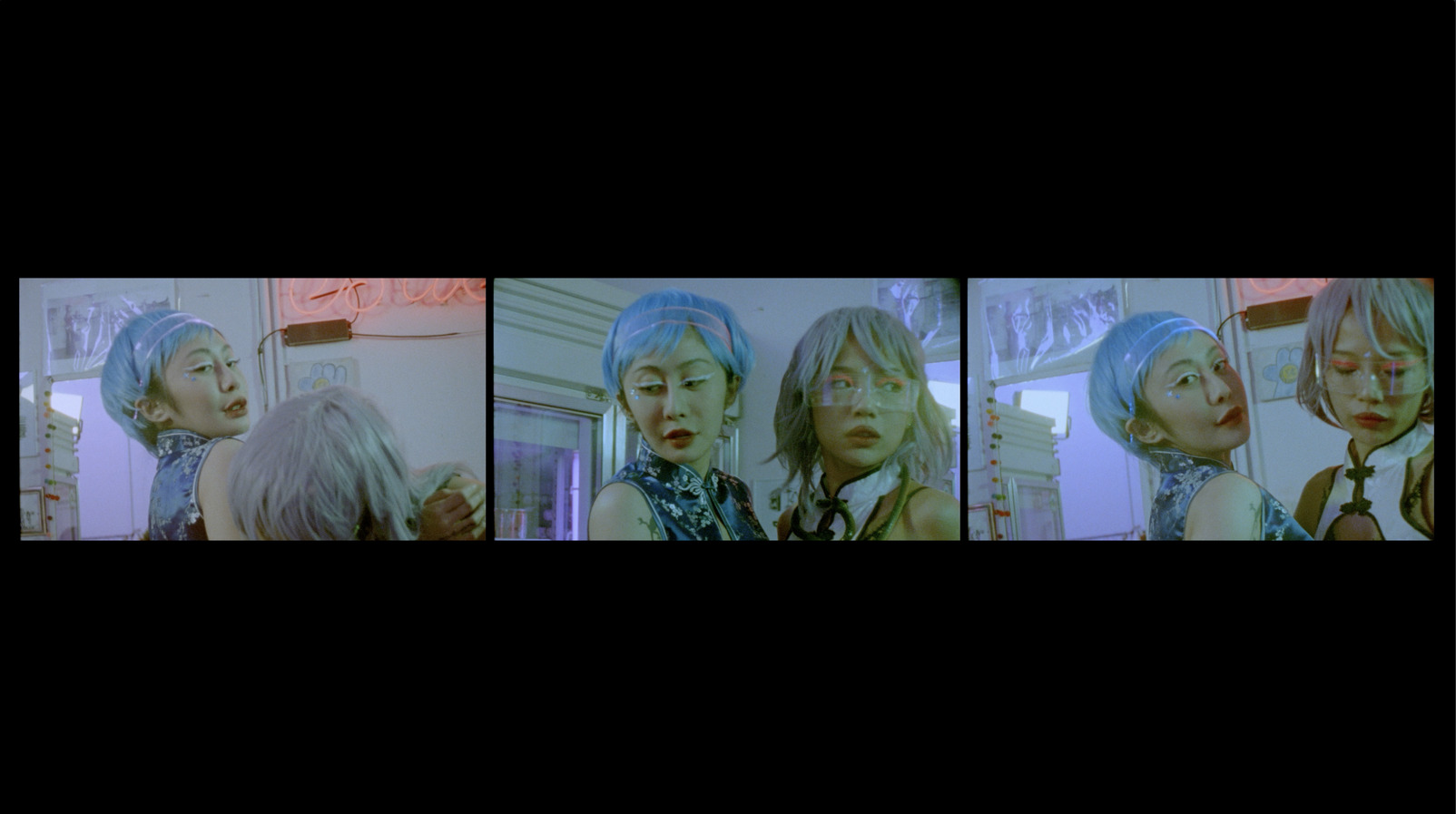
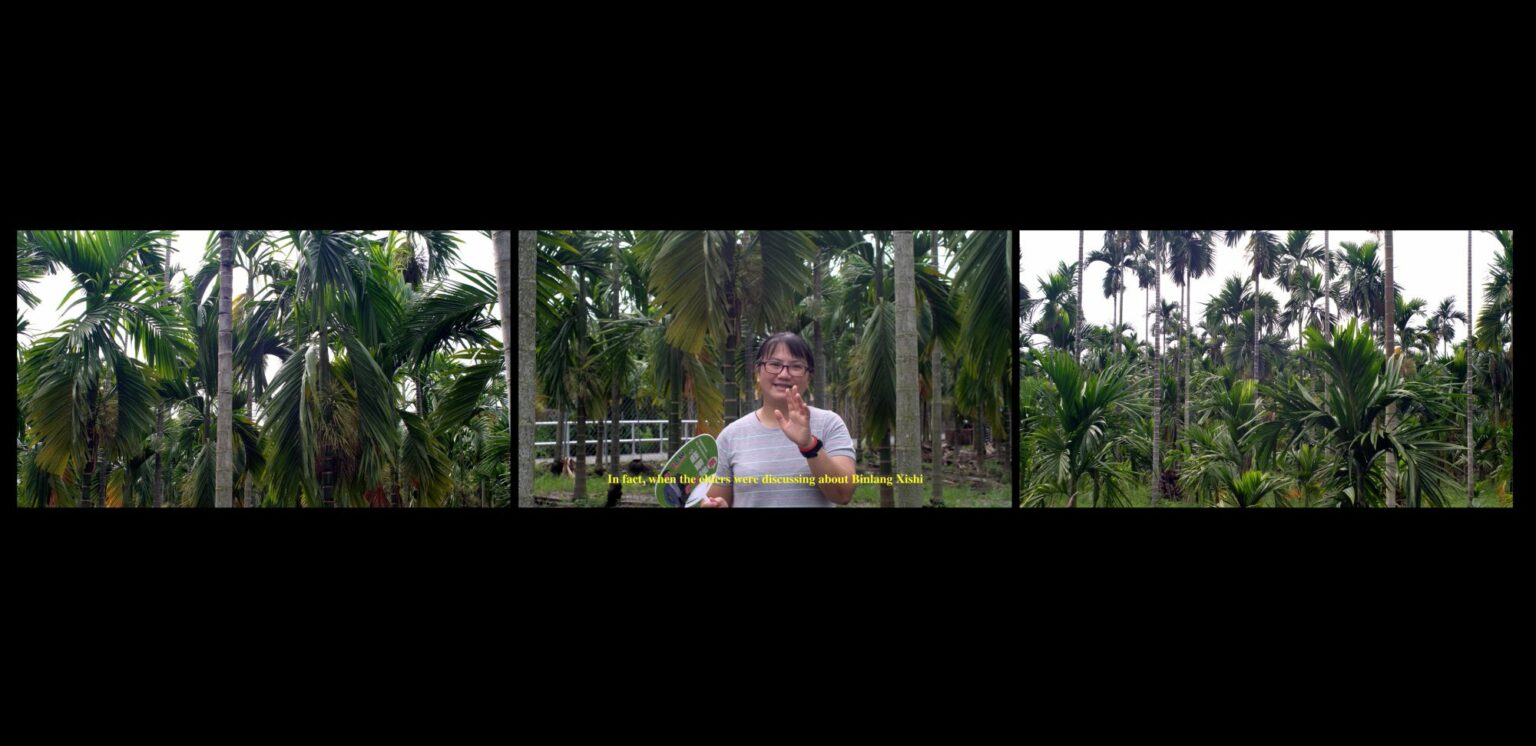
Binlang Xishi is composed of three chapters. It is a story of the people related to the concept of “dirtiness”. The first chapter starts with a pansori song (a traditional form of Korean music) about “fallen being”. The life of the “fallen being” in the lyrics cannot be specified in terms of time and space. The reason could be because the lives of such people are pretty much the same no matter when or where they live. The stories relating to Binlang Xishi start from the second chapter. A video clip introduces two types of workers related to the binlang industry: One is a farmer who grows binlang in Hanan, Taiwan, and the others are service workers, the so-called Binlang Xishi, who sell the seeds. These two types of workers have very different attitudes towards the industry. The farmer talks about the history of “dirtiness” surrounding the fruit and the social stigma attached to the industry by political and social regulations. Although the farmer is reciting other people’s words, it seems the farmer who grows the seeds himself has the same idea about the Binlang Xishi – namely that they are a social “disturbance”. Meanwhile, two Binlang Xishi, “Uki” and “Luu Qoo” running a binlang shop named “Baby”, rather question the stigma surrounding them.

“Are Binlang Xishi disturbing the society?”
“Even if we are, what do you want me to do about it?”

The audience cannot tell whether it is possible to judge them or not, or even whether the concepts of right and wrong to judge them are appropriate standards. As such, to overturn the concept of “dirtiness”, Mooni Perry focuses on exploring a gray zone that cannot be fully explained by, or included in, the normal dichotomy used to judge Binlang Xishi (and furthermore, sex workers in general). Here the artist simply shows many stories of the two types of workers, instead of hastily supporting or denying a perspective based on the standard of right and wrong. In this regard, the artist believes that we can jump to a whole new space that cannot be defined by anything, only if we do not take the side of a certain value or space.

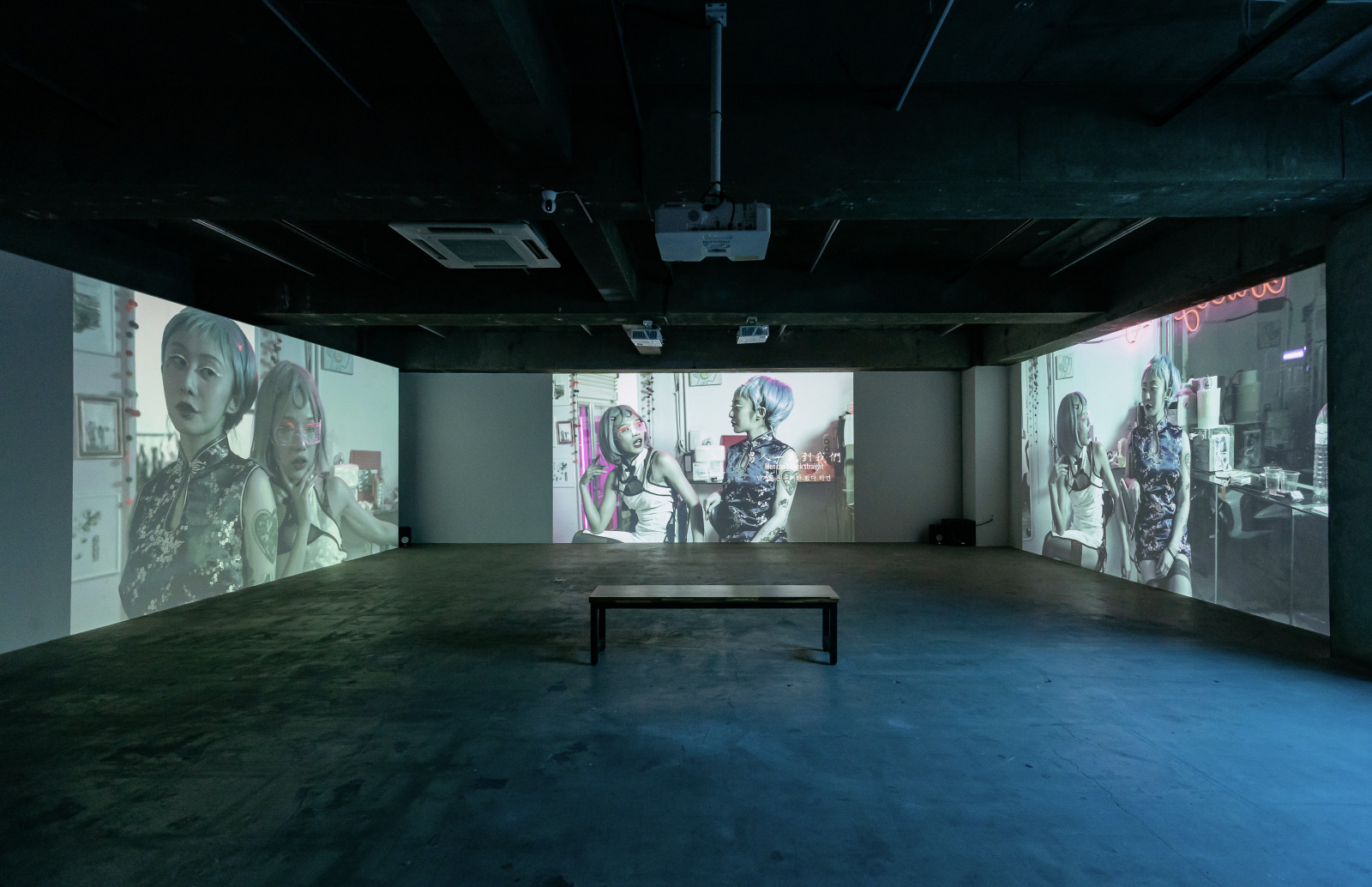
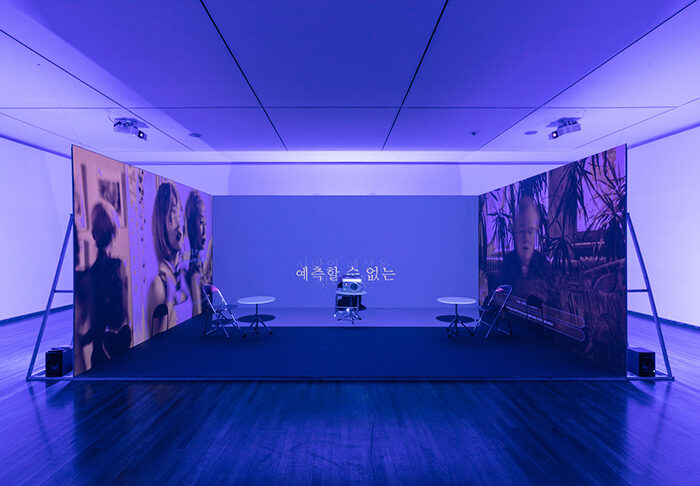
Installation view of 《Binlang Xishi》 (CR Collective, 2019) ©CR Collective

This new space is a hole created by the overlapping stories that rise through the cracks of society. Or it could be a hole in the middle of meanings that contradict one another. To use a term common to science fiction, this hole could be considered a “portal” connecting different dimensions or worlds. Then, what could be there on the other side of the “portal”? When we watch the moment “Uki” and “Luu Qoo” pass through the “portal” with a smile like they know something we do not know yet, or when we look closely at the blue hole that fills the entire window of the exhibition hall, we might imagine where they have gone and where we could reach through the portal. Perhaps in the space beyond the “portal”, where time and space would be fragmented, the concept of falling would no longer start from top to bottom, from success to failure, or from cleanness to dirtiness. Since the action of falling without direction or purpose would not have any negative meaning, the “fallen beings” in this new world would not have to rise again or get rid of the stigma of dirtiness attached to them.

In spring 2021, an old red-light district was closed. Most people welcomed the news, saying good riddance, and beautified the case as a right decision. But that part of the story is not the end for the sex workers who were directly related to the area. Where did they go after they were kicked out of the place? Doubtless the general public wonders very little about it, as most people just wanted such undesirable people dispersed, so they their presence would not pollute their clean lives. But lets imagine where the former occupants of the red-light district have gone. Perhaps they were caught up by the gravity of the “portal” and sucked into another space-time. If so, it would be nice to imagine that they have abandoned their former narratives completely and created a completely new story there. In this respect, the blue hole drawn by Mooni Perry makes us remember or imagine such hidden beings.

References