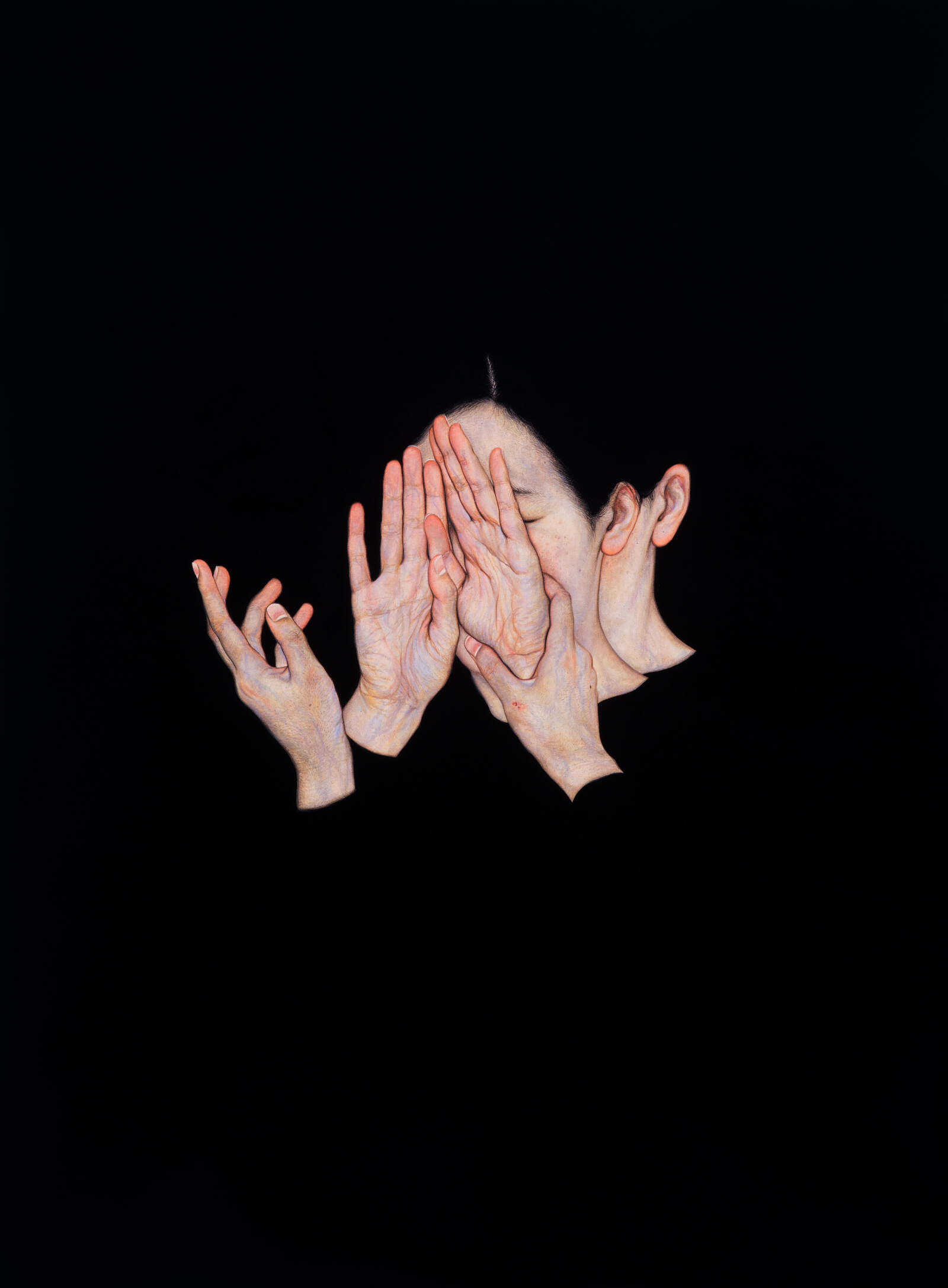
Korean
native Lee Jinju paints existential narratives of making do and coming-to-terms
in arduously solitary indoor and outdoor conditions. Lee’s stories have
allegorical implications as the situations and environment she depicts with so
much precision and clarity seem to have as to do with the mental as well as the
territorial landscape in which the subject (or is it victim?) finds herself.
The
set-like scenarios Lee depicts are hideous and bleak, as if the isolated,
evacuated worlds we see have undergone a persistent state of depredation. Lee
Jinju’s paintings are poignant in that we really feel for her character or
characters. The artist resists easy clichés and sensationalized visual punch
lines.
Her complex vision takes on undertones of distress and undertones
without signaling that what is at hand are the results of wartime conditions or
after effects of a polluted, post-apocalyptic world. Instead the world Lee
creates and the narratives she constructs hover over the real as if in a state
of suspension. The artist’s distilled worlds are parallel yet separate
universes from our own.
Lee’s
storytelling capacity is strong and enthralling as her technical painting,
coloristic and rendering skills are astonishing. Her unusually refined skill
set is at the service of description. Yet the well-realized balancing act here
is the judicious selection of which details to select and how to depict them so
that an emotional truth, an essence beyond virtuosity, permeates the vision.
Lee’s compositional mastery and her painterly touch grounds the magic-realist
and pop-surrealist sensations she evokes, steering the work clear from
hyperbole and disallowing the work from settling into the too-fanciful or the
too-gritty. Her skills in creating pellucid, delicately and naturalistically
detailed compositions that hauntingly and exhaustingly detail the earth, its
terrain and detritus as well as the human figure, invokes a contemporary
version of the clarity of Flemish Northern Renaissance painters whose works
radiate with auratic devotion that permeates the precise mark-making while
removing any traces of preciosity.
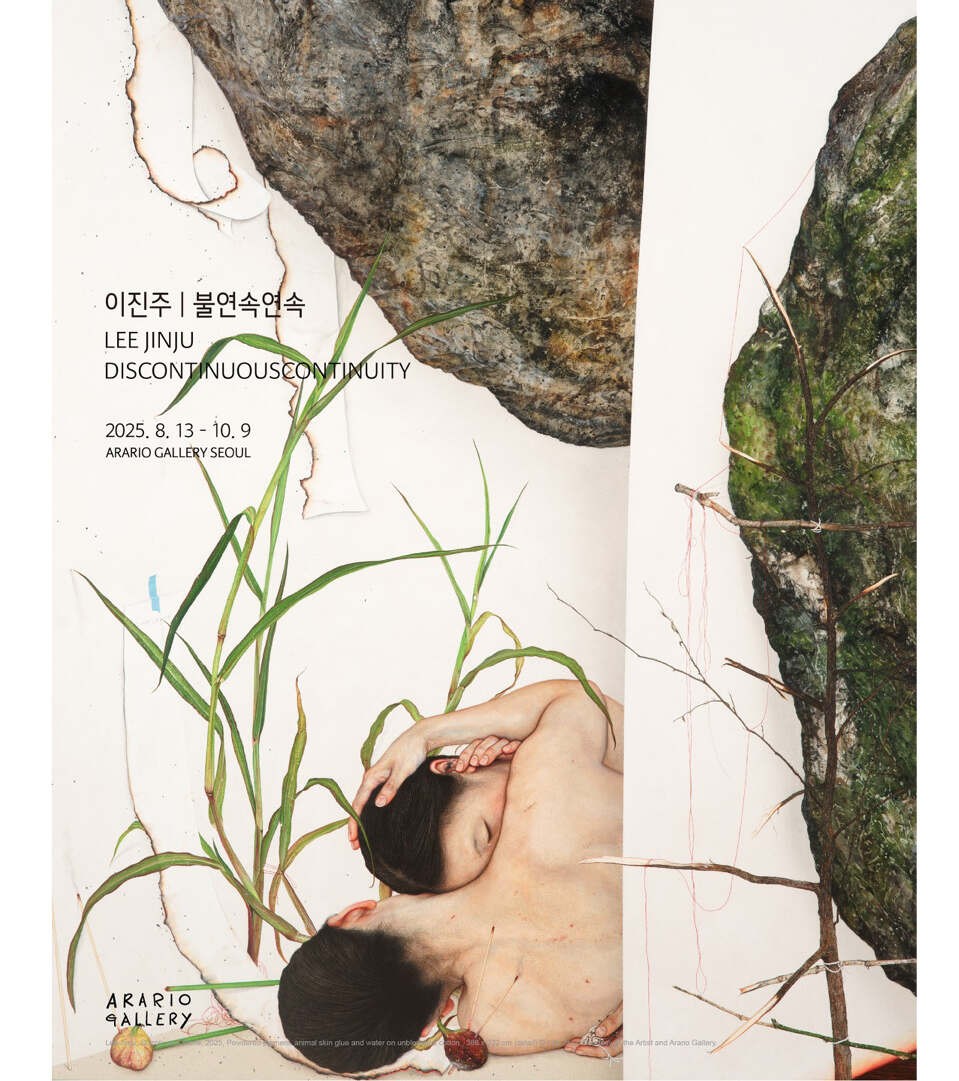
The artist uses boonchae, a Korean
traditional watercolor, and tiny brushes to create the feel of miniature worlds
but on a much larger scale. What is more the artist fastidiously depict scenes
that have an unnerving harrowing quality that are tinged with Beckettian
despair. Yet again Lee doesn’t push this aspect too much; she suffuses her
scenes, somehow, with enough poetic grace that lifts the work from becoming
either too twee or too gratuitously grotesque.
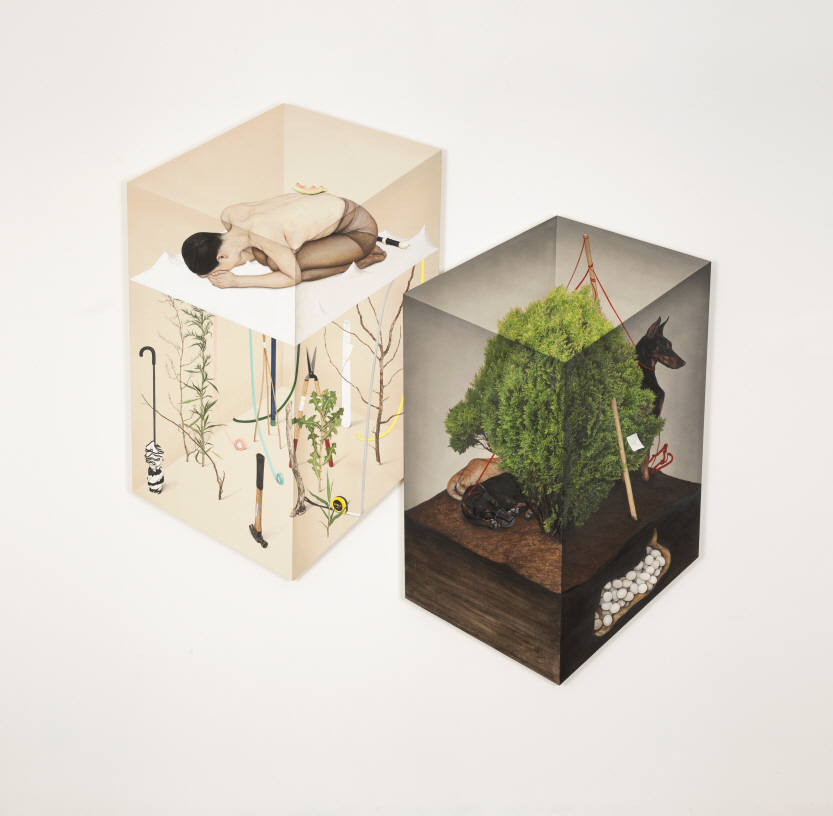
There is a hermetic, closed-in
aspect to Lee’s vision that intensifies the overall feeling of intrigue and
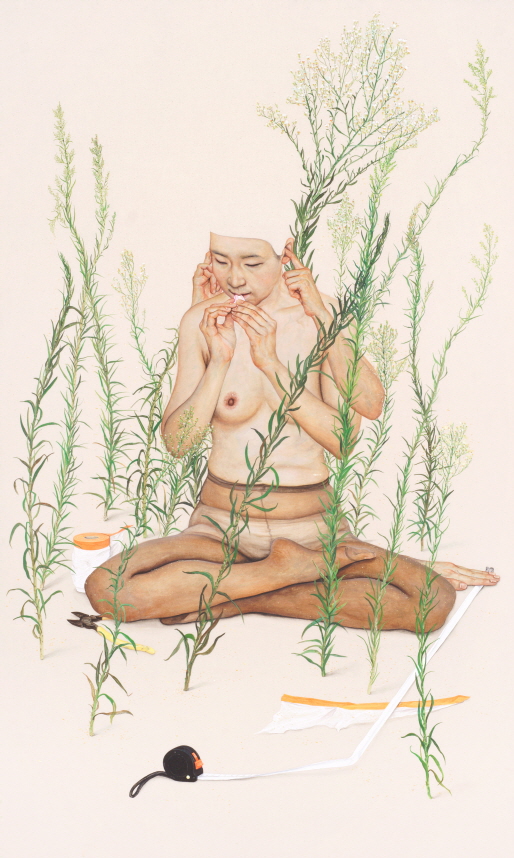
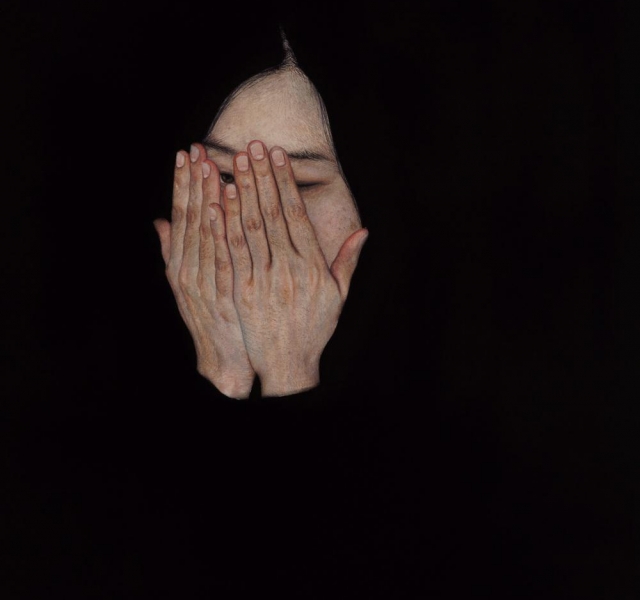
aloneness that keeps its psychological hold on the viewer. Her main character
is a shorthaired, bare chested adult female with an equivocal expression with
delicately broad facial features and a non-athletic physique. This female
character’s uniform is control-top panty hose over bikini underwear; she wears
this ungainly combination in all situations, in all climatic conditions
including rain and snow.
Sometimes the artist includes what appears to be the
same character several times in the same painting in different areas and in
different positions. This hallucinatory or dream-like set-up is reminiscent of
the pictorial device used by the Chinese-born artist Suen Wong of painting
multiplying versions of herself in her pop-inflected paintings. Lee's scenes
are minutely observed, her rendering fresh and tremulously convulsive. The
artist’s obsessive attention to realistic detail, her Surrealistic
juxtapositions and the Expressionist distortions recall in spirit the work of
Gregory Gillespie at his acidulous best.
For
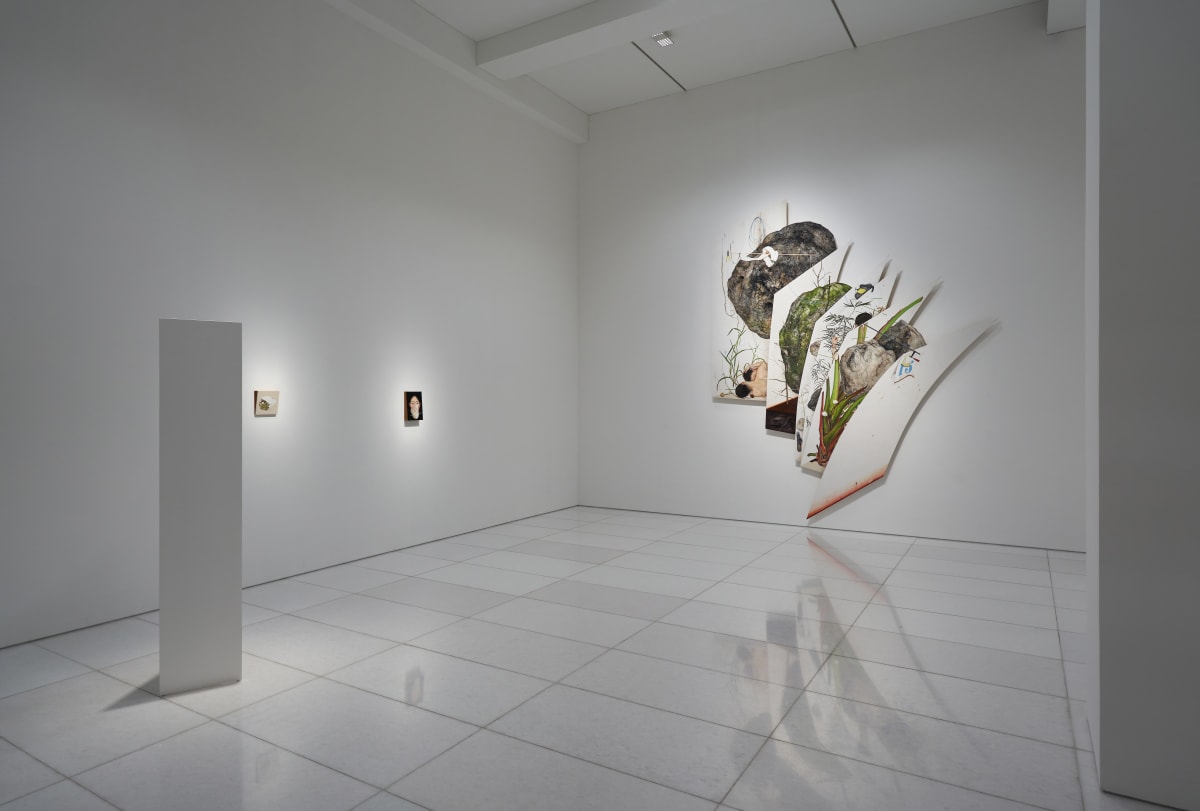
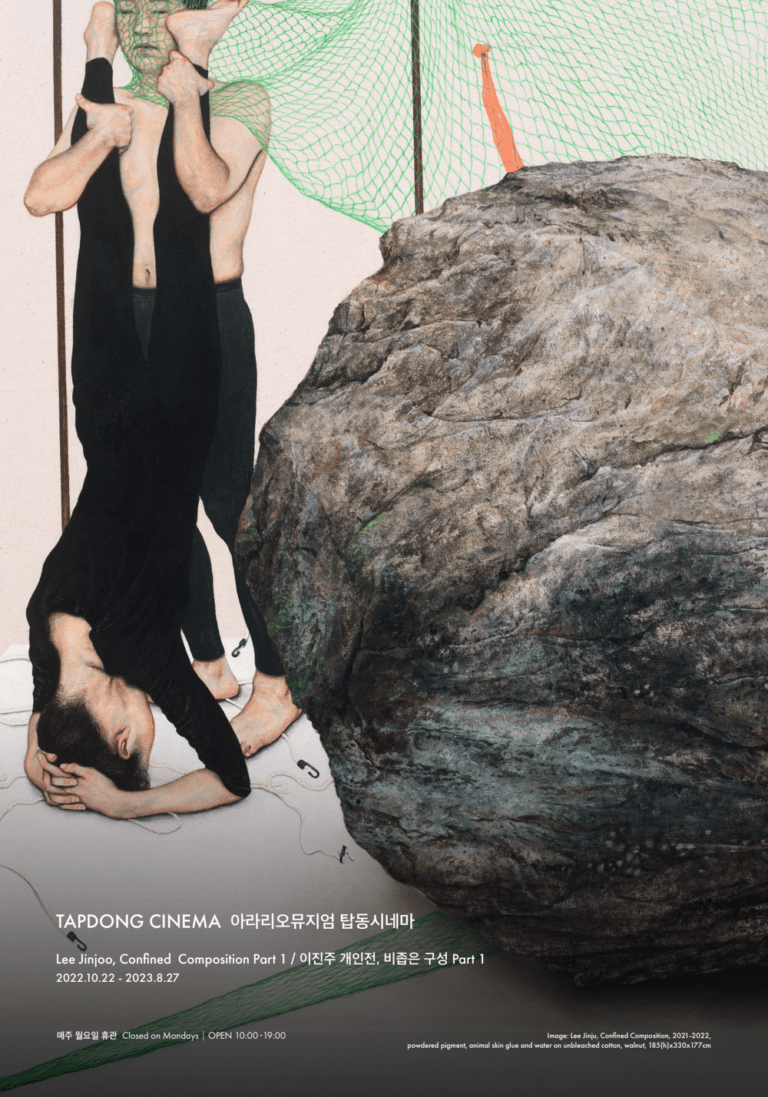
example Lee Jinju’s enigmatic painting Restraint -
Boundaries (2012) depicts a seated, self-inflicted,
bare-breasted, hospital-masked female with a pump attached to her right breast
seated over a table and performing what could mildly be called experiments or
ceremonial gestures. An open book of reproductions of Magritte paintings is
held open on the table with one hand (holding a freshly-cut fish head) while
the subject’s other hand holds aloft a small seedpod for inspection.
The
setting is a laboratory-studio in which all substances or objects or forms
pertaining to art, science, nature and religion are charged with auratic
presence. Fetish energy permeates every gesture, every object or form in this
circumscribed world where signifiers of colliding worlds of appearances,
essences and beliefs, of significances and insignificances, of the planned and
the aleatory, are bound as one.
The whole area in the room is charged with
meaning, while the exact meaning of the painting itself remains more-or-less
guessable. The closest female American artist that Lee Jinju’s work reminds me
of in terms of pictorial eccentricity and twisted storytelling acumen is Amy
Cutler. Yet the differences outweigh the similarities.
The absurdities and
contradictions of family relations, social mores and environmental concerns
that Cutler traffics in have a fairly innocent fairy tale- like aura that
mystifies and charms while Lee’s scenes are more pathologically oriented, more
terrorized, more driven and disfigured by David Lynch-ian sensibilities than by
Brothers Grimm recalibrated to suit post-feminist and post-colonial
ruminations, however dark.
Lee’s image -- making, Like Cutler’s works fine on a
small scale. Yet Lee works as effectively on intimately sized work as well as
on much larger public scale. Lee also has a singular way of using (and
magnificently exploiting) perspectival space that Cutler, to my knowledge, does
not.
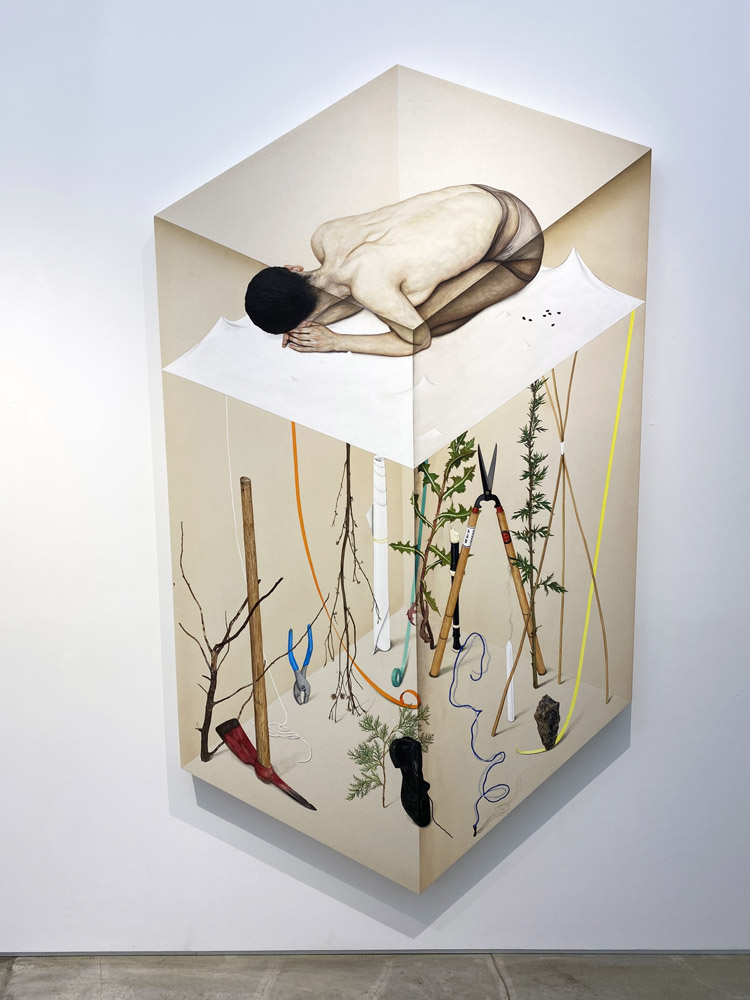
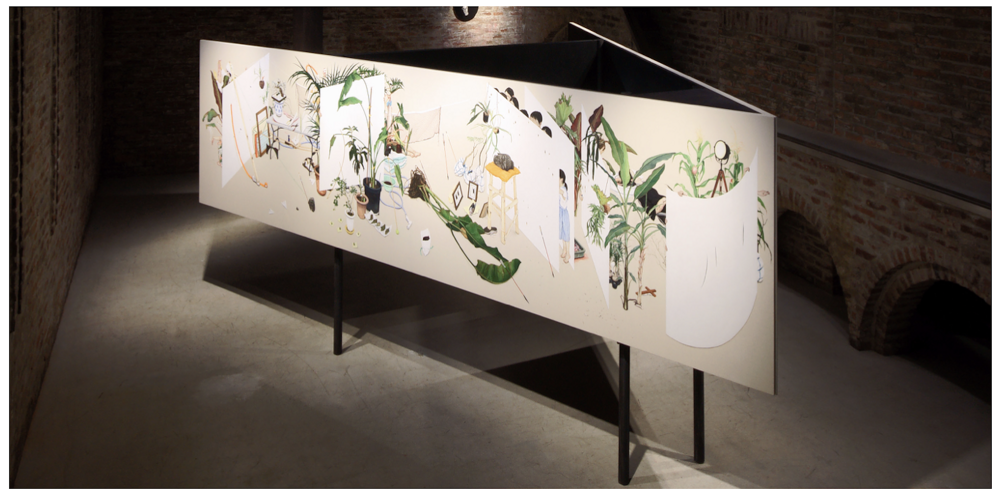
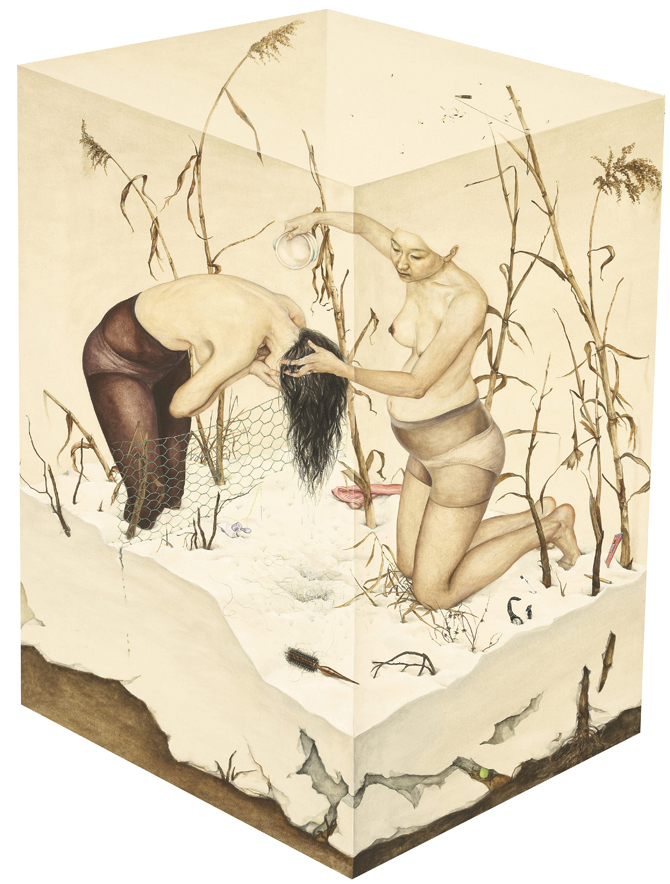
A
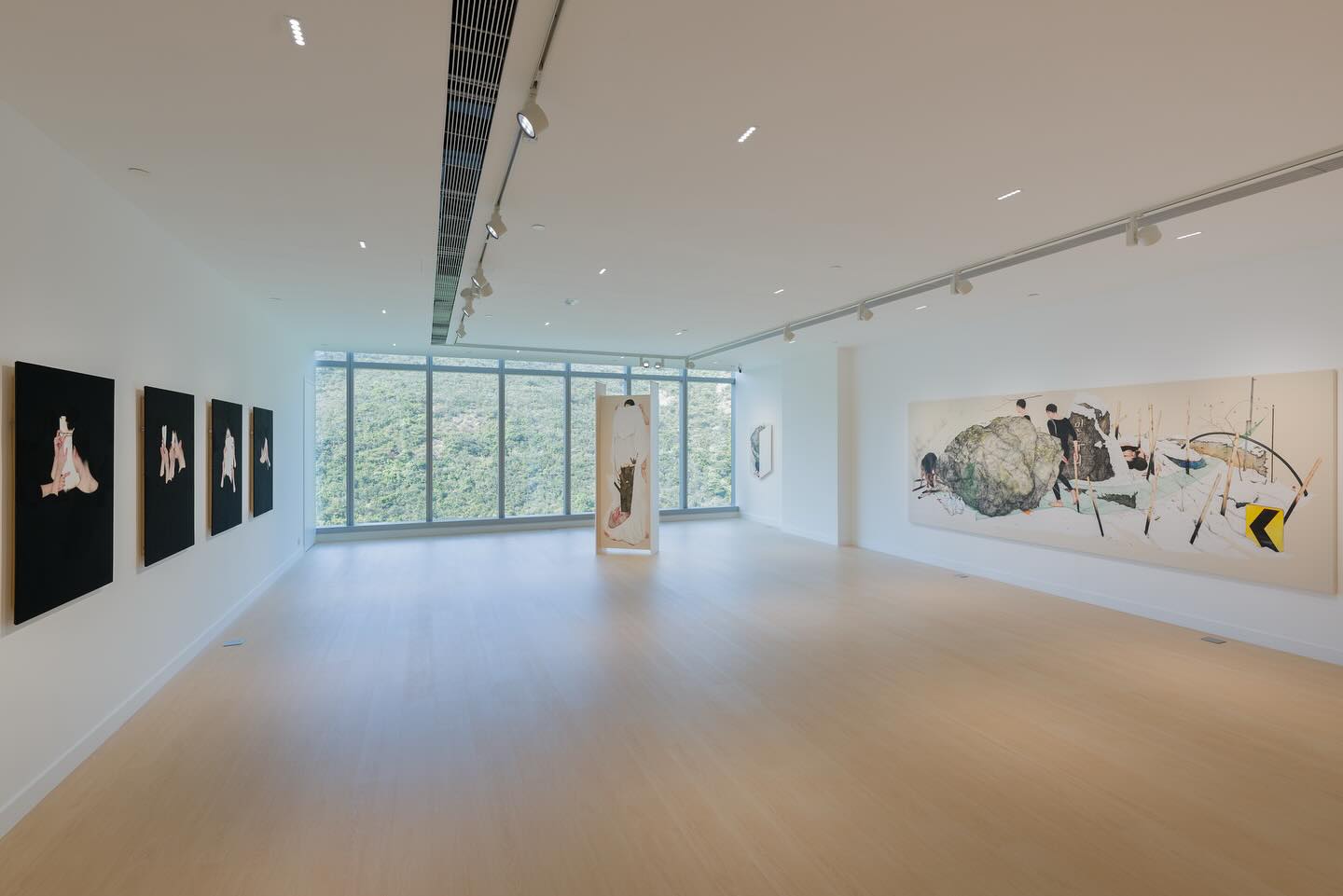
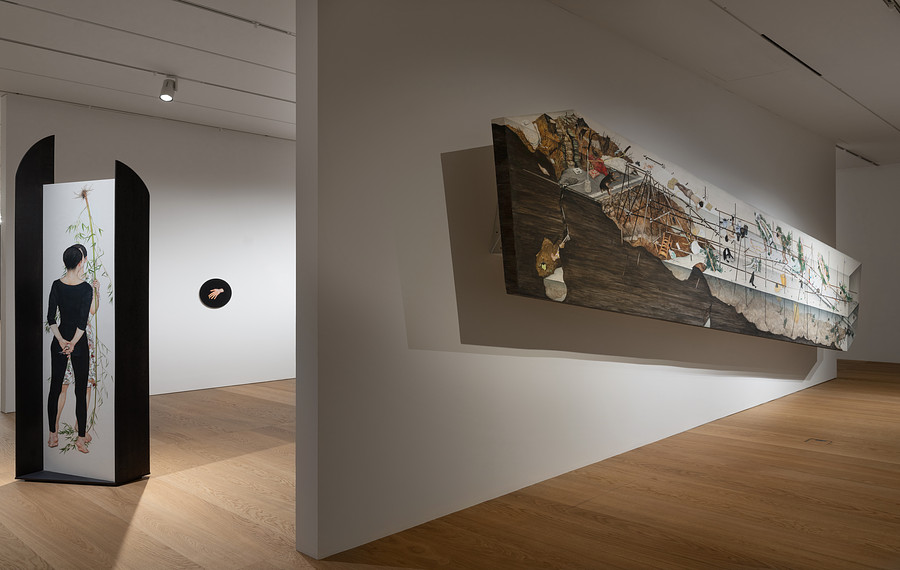
Way to Remember (2010), for example, is a 48" x 96"
box-shaped canvas, indicative of Lee’s tendency to compositionally depict
three-dimensionalized territorial “extracts” or “slices” of banal everyday
activities in which the settings for her storytelling seem to be encased in
geometricized dioramas which artificializes the natural.
Lee depicts her worlds
using a variety of perspectives including isometric and axonometric projection,
as well as cross-sectioning, elevation views, and site-planning views as if she
is dissecting the space and place in which character or characters act out
their inner and outer lives. In A Way to Remember Lee’s
character is trying to survive in a secluded encampment and crime-scene of some
that contains evidentiary signs of emotional if not physical torment and
servitude.
The character is lying down in the snow clutching an infant to her
chest, two alert and howling dogs protecting her. In a nest in the tree above
is another child sleeping, while various birds roost or fly overhead in an
airspace populated by two hovering beach balls with an illegible sign dangling
from them. Similarly, Lee is invested in depicting the world as a body with
layers of skin and her role as an artist is one of analysis, detection, dissection
and description. Her rendering of the earth includes what is on it, what floats
above it and what lingers below it.
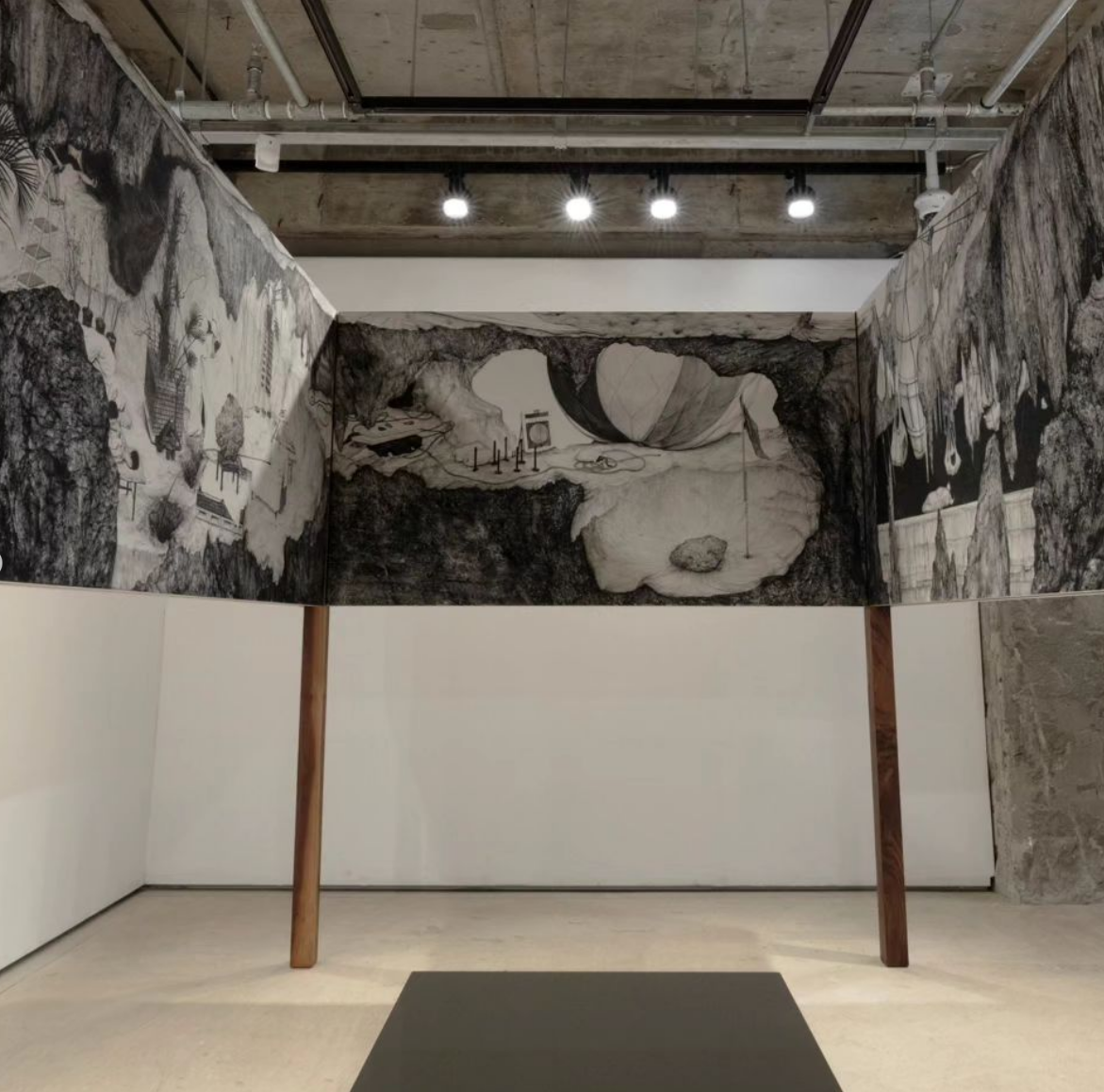
Her below-ground imagery has the feel of
subcutaneous spaces reminiscent of arteries and veins of a body as well as
subterranean places such as tunnels, nests or burrows. These subterranean areas
are depicted with enormous specular verve in which there is much information
revealed in the earth’s hidden recesses. Lee pictorializes such burrow-space
effectively. The familiar becomes defamiliarized. Such underground space and
its conditions might be considered allegorically as latent space or territory
of the earth’s unconscious.
So too Lee's underworld reflects the unconscious
stirrings of the earth’s remaining human inhabitants. The above-world
depictions of Lee’s suggest, perhaps, a plane of reality unveiled to us as if
residing behind a curtain of manifest literalness, a field of understanding or
causality pertaining to consciousness. Typically, the artist combines
voyeuristic sensations with revelatory, even rapturous ones.
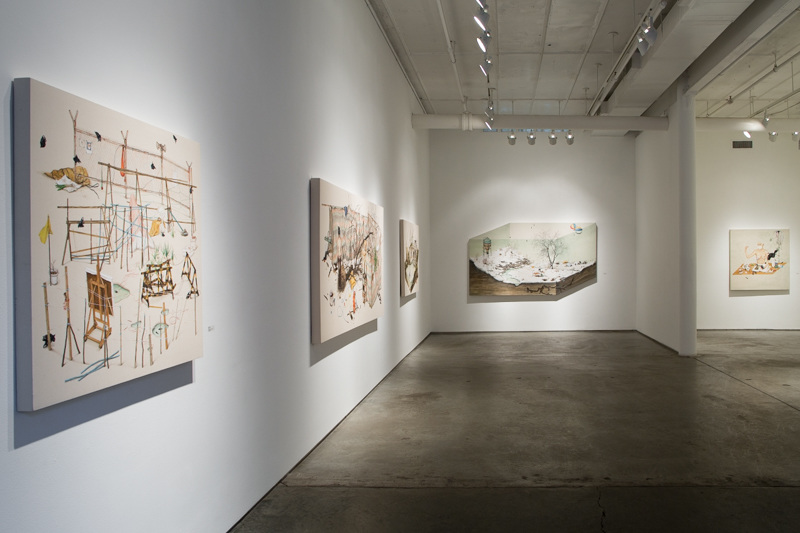
Lee
Jinju’s exhibition at Doosan Gallery is her first in this country. Her vision
blends the mundane and the supra-mundane at the service of unsettling
storytelling. This is a winning combination. It provides the lucky visitor with
a captivating viewing experience that is not to be missed.