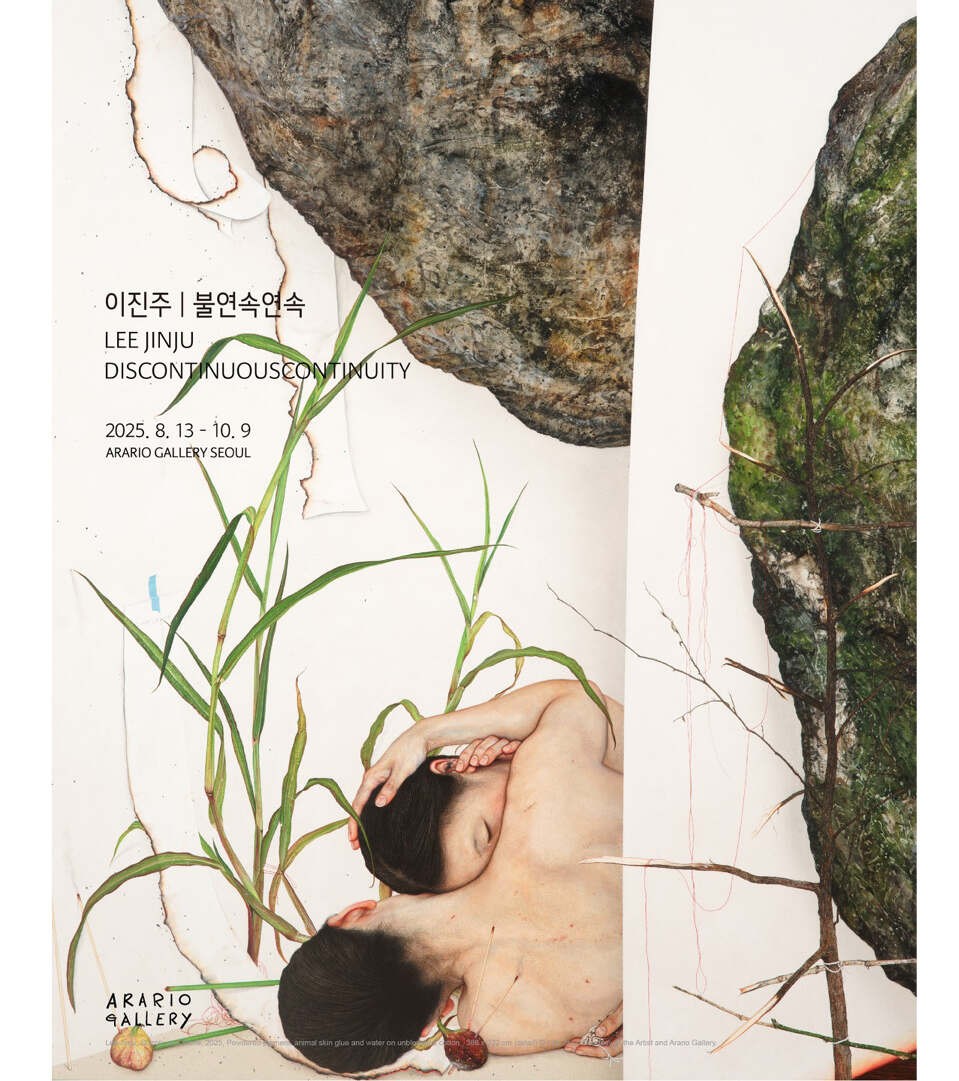
Lee
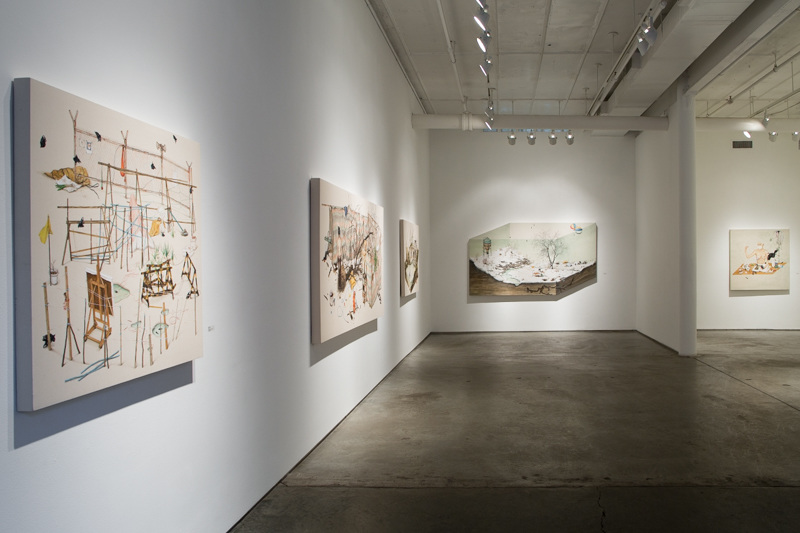
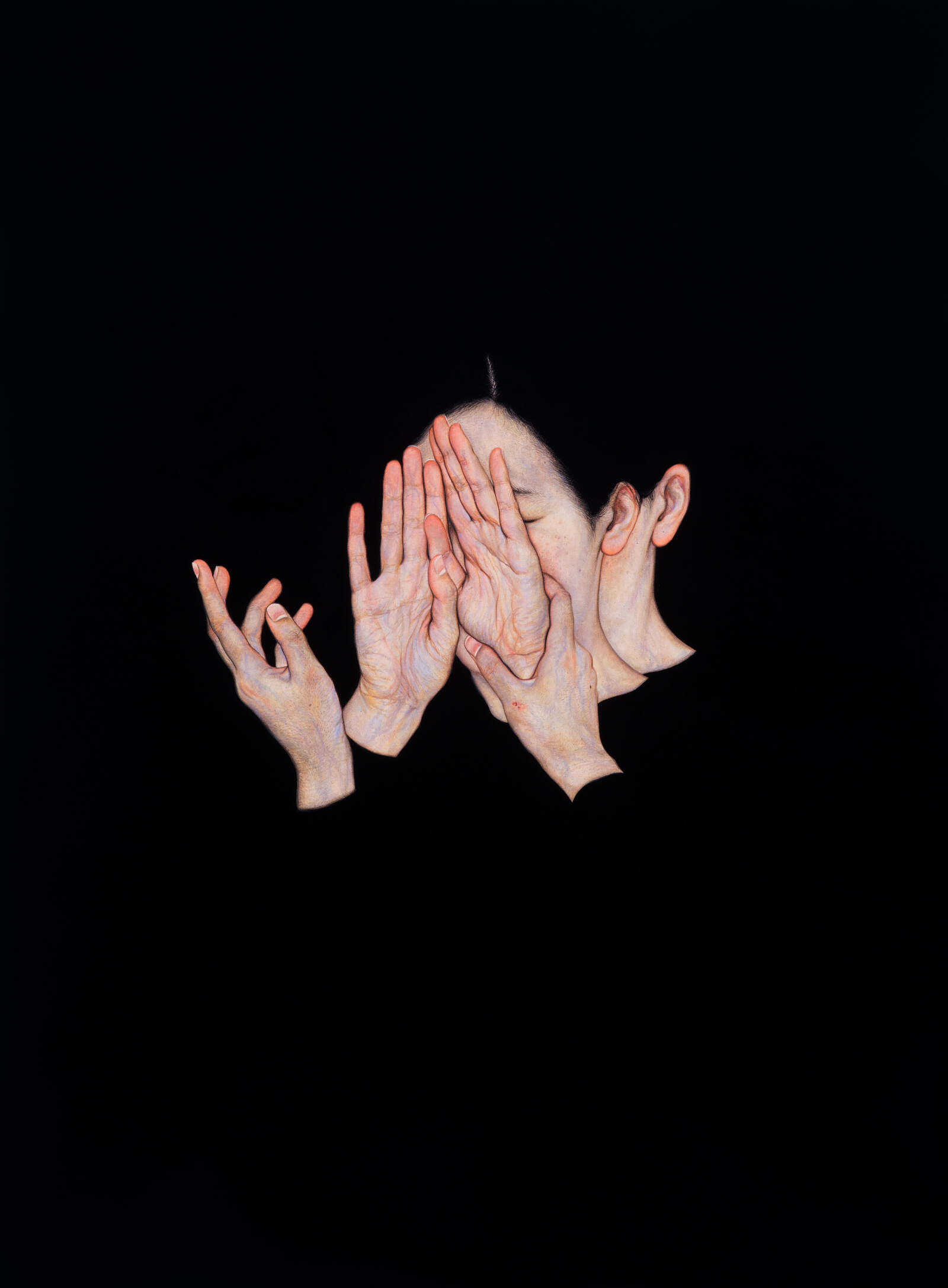
Jinju’s solo exhibition, 《Evanescing, In-evanescing》, currently on view at
16 Bungee evokes the writings of Marcel Proust, who explored fragmented
memories and the incompleteness of memory. Composed like a puzzle of
words—memory, everyday life, secrecy, intimacy, the monotony of daily
existence, and the movement and fluidity of life—the depicted forms at times
collide and intersect across temporalities of past, present, and future.
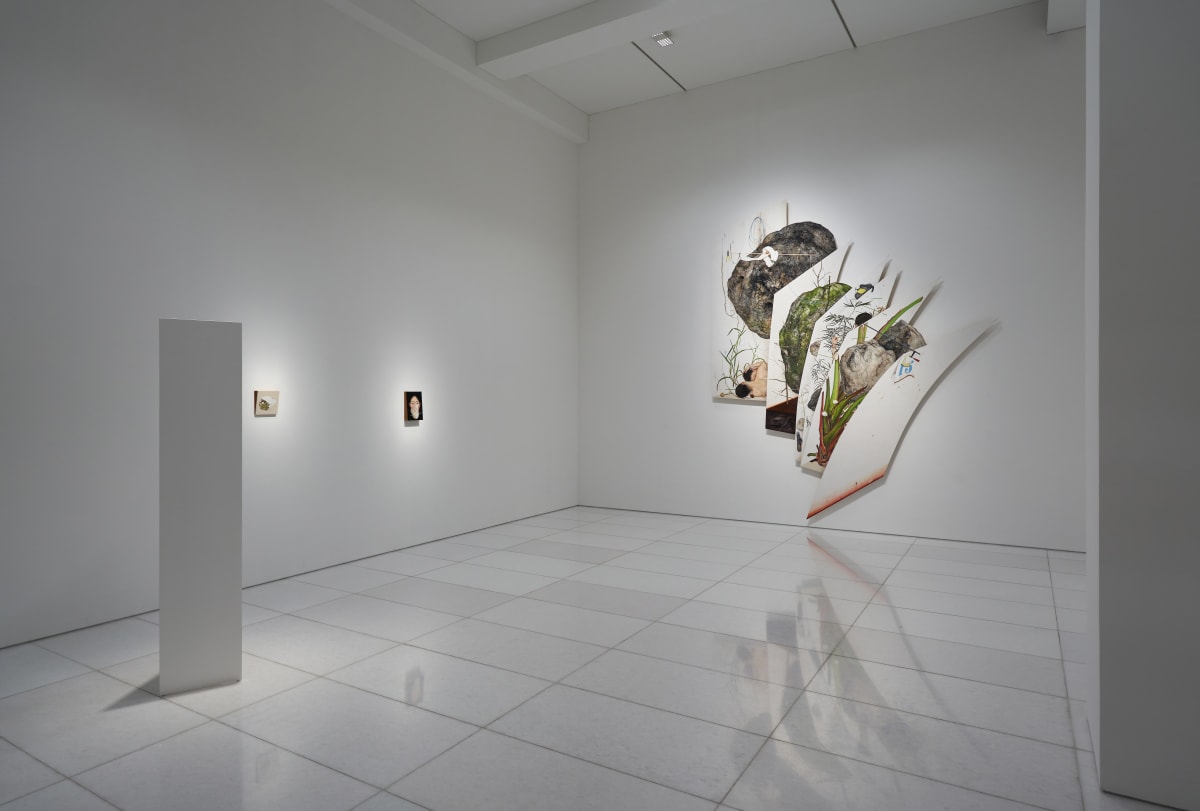
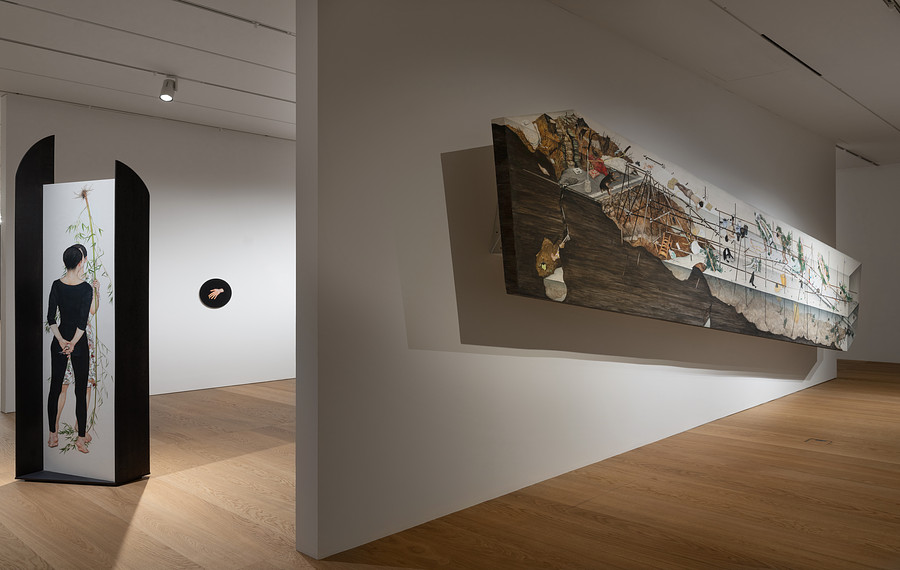
Technically, while rendered with realism, the floating terrains and landscapes
are arranged within their own order, situated in a surrealist flow of the
unconscious.
However,
elements continuously emerge that prevent Lee Jinju from being defined simply
as an artist who visualizes memory from the position of a “passive narrator.”
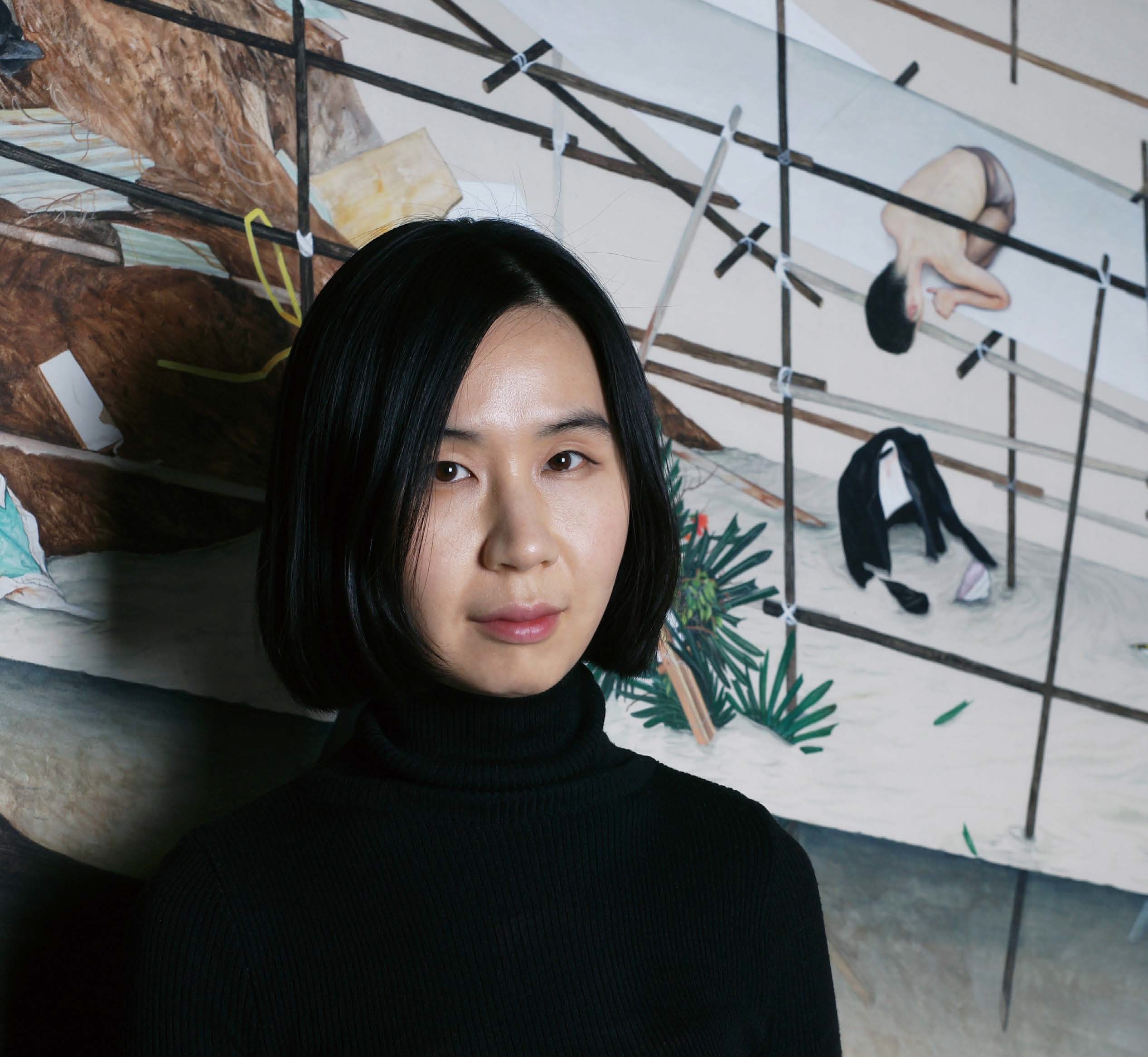
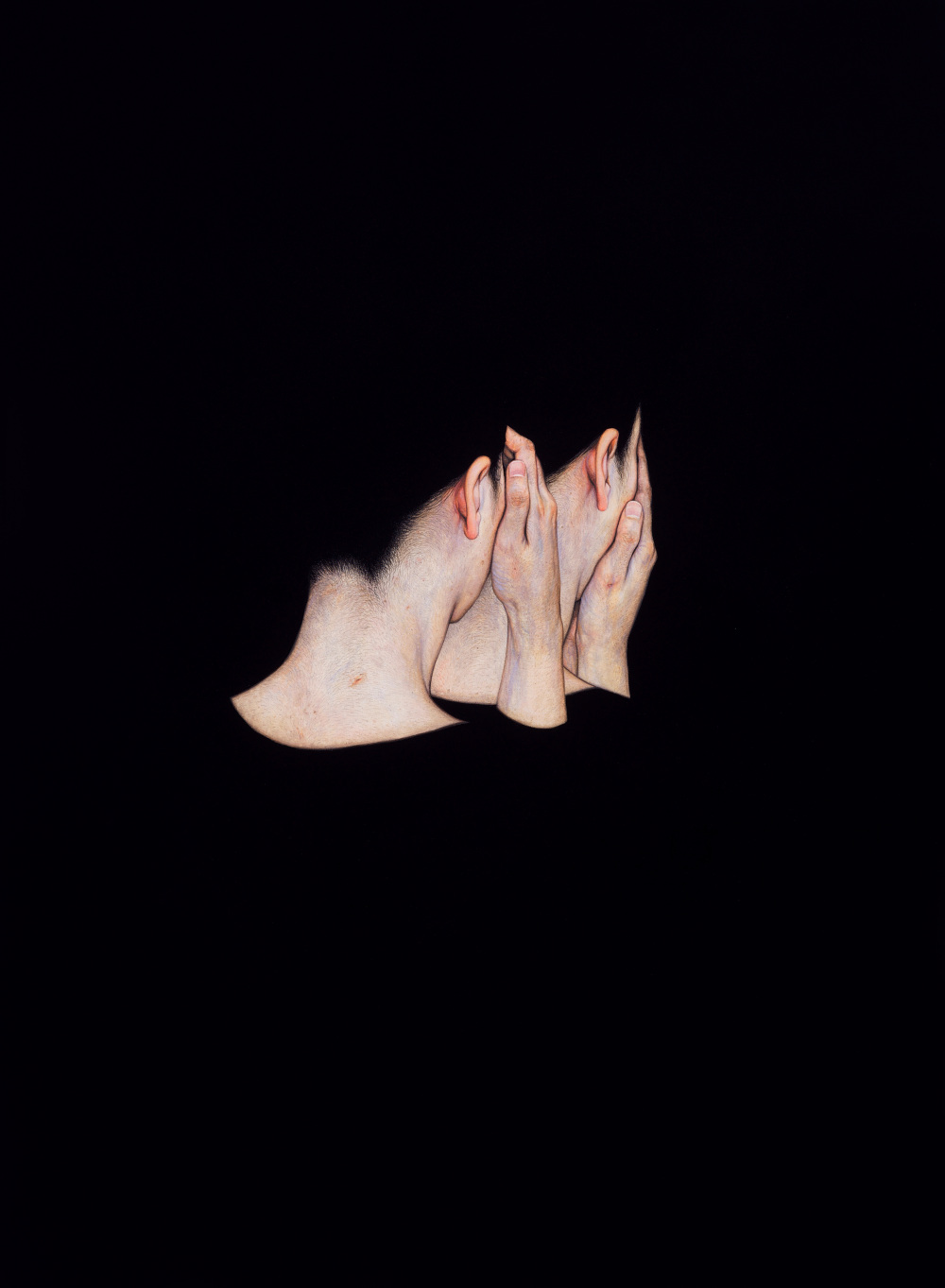
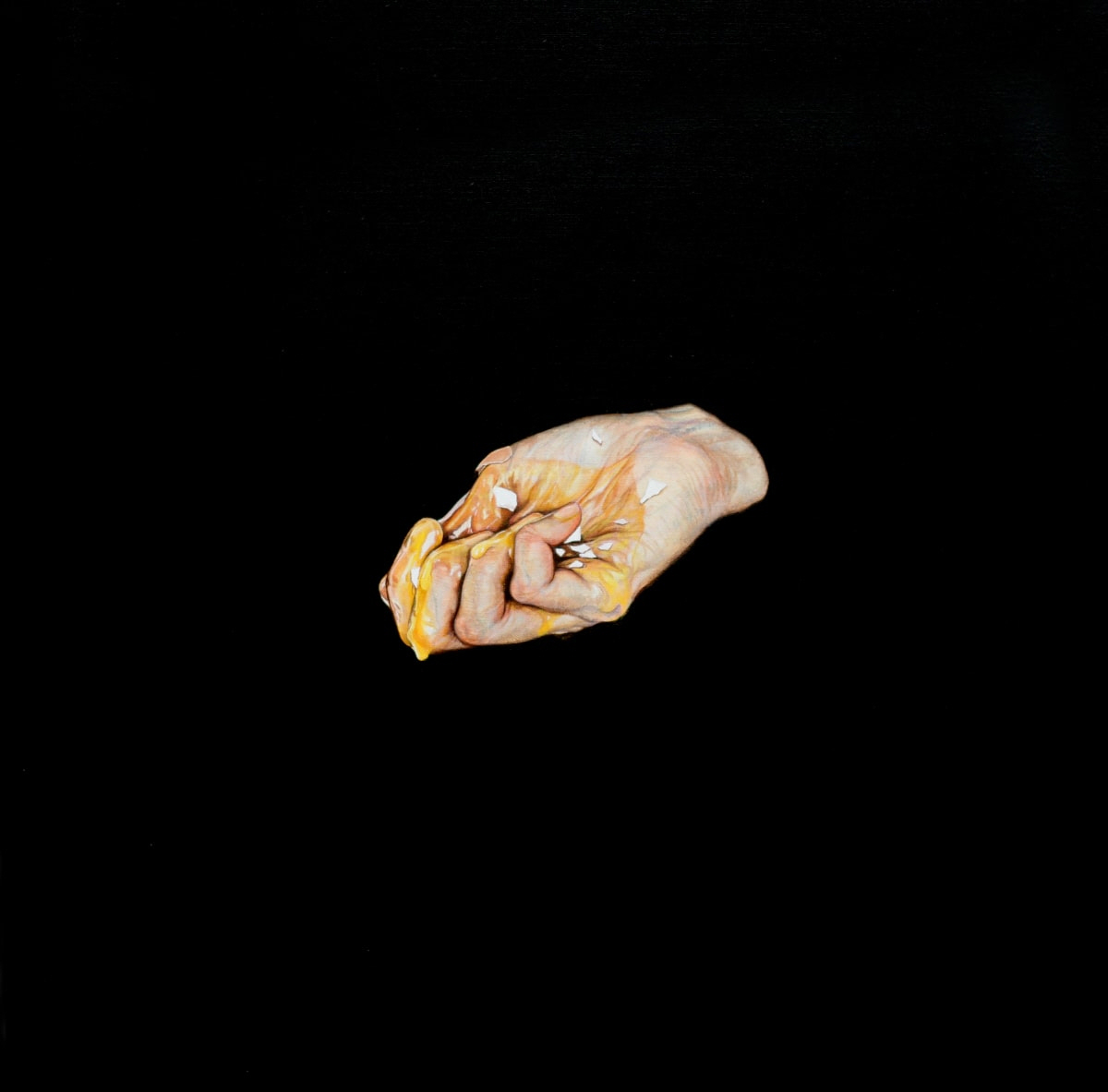
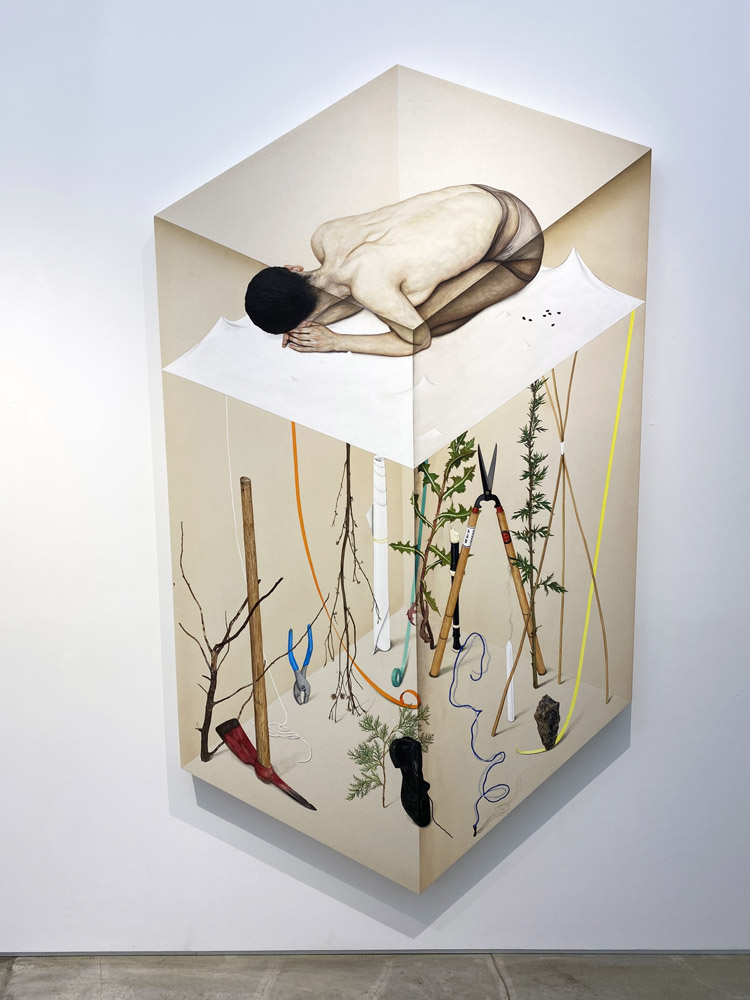
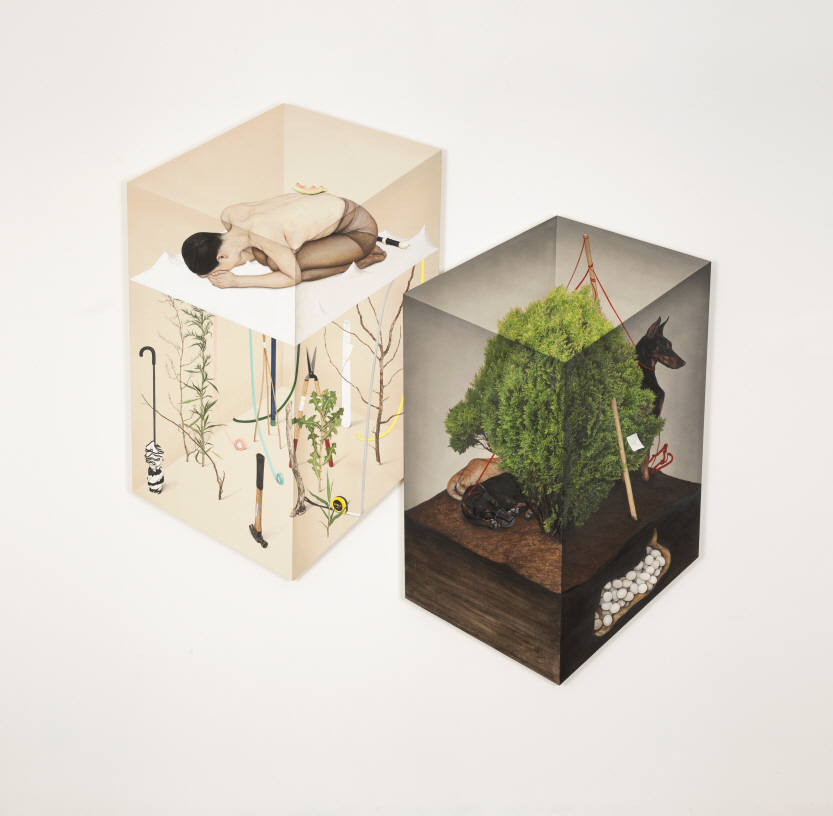
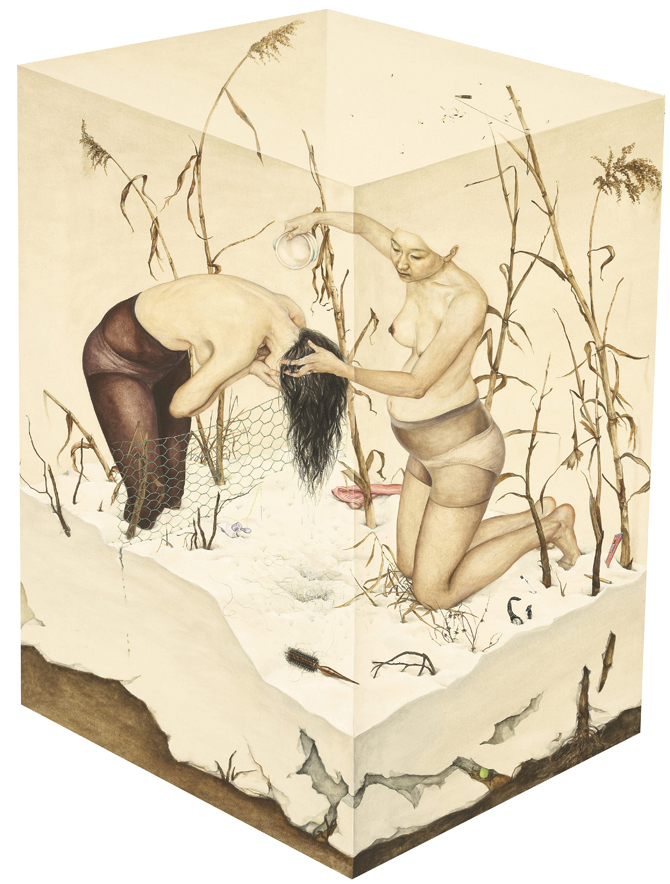
In her psychological landscapes, executed through the color techniques of
Korean painting, she consistently depicts everyday signs such as women wearing
stockings, desolate trees, scattered tools or implements, and babies in
diapers. These recurring signs function as elements that both excavate and
analyze memory, as well as facilitate its healing and overcoming, forming a
face-to-face relationship that interacts with the artist. These “excised
memories” are rearranged within the paintings.
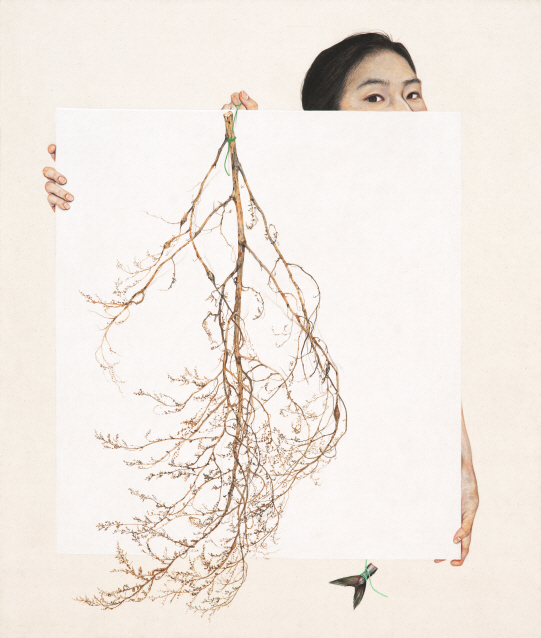
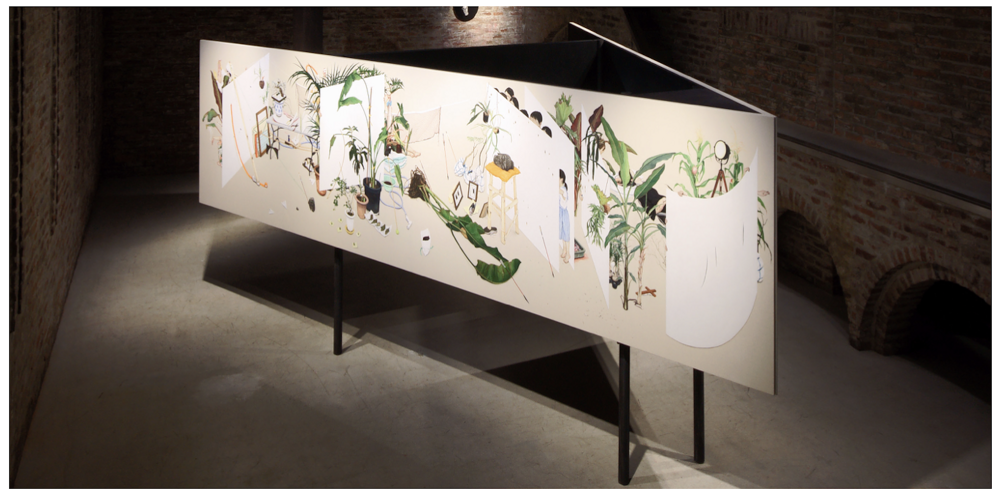
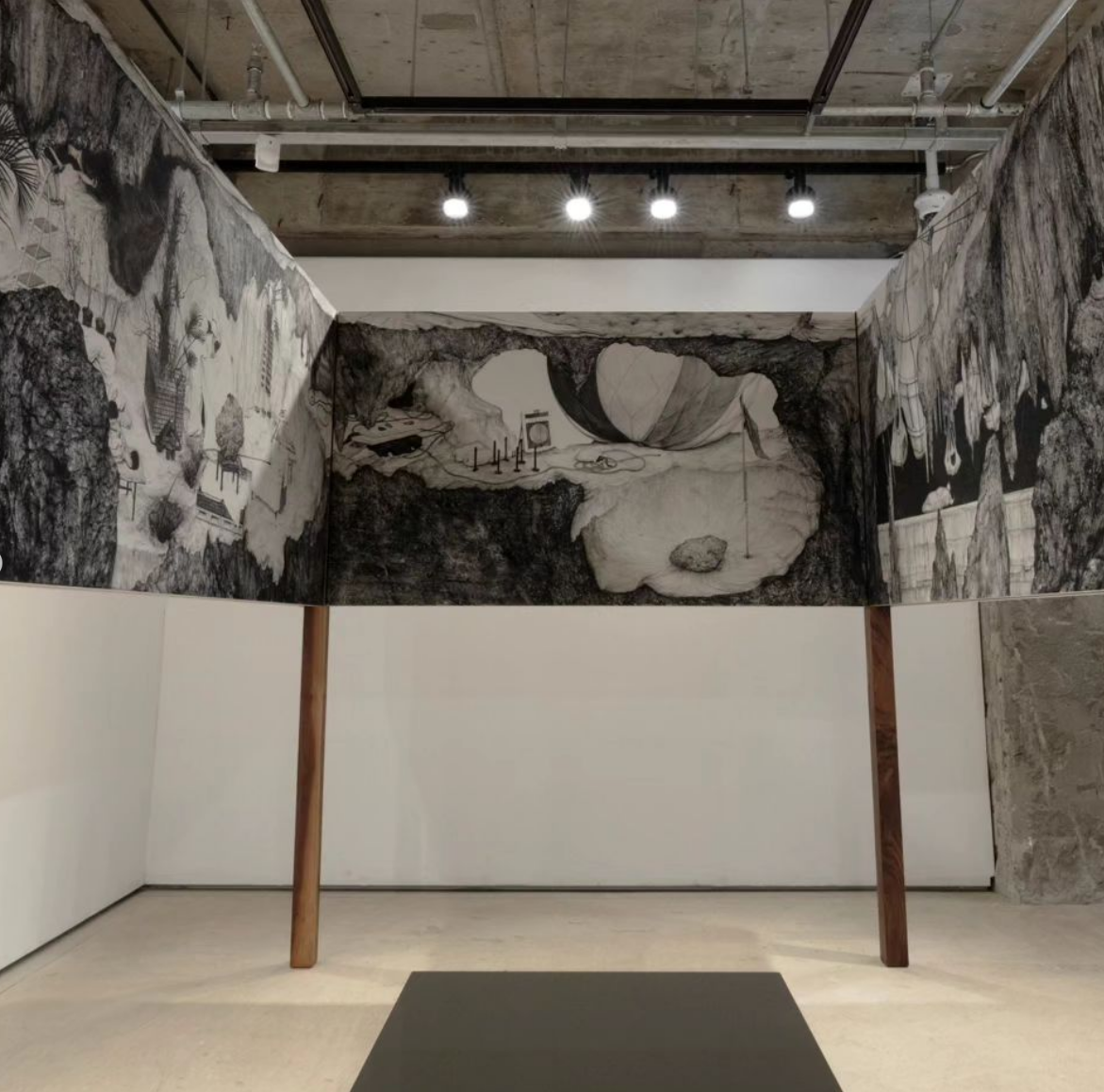
The
pictorial frame employed by Lee Jinju functions beyond its physical role as a
frame, operating instead as a tool of “psychological” boundary. This boundary
creates distance from the memories she reflects upon while also establishing a
space that draws the viewer into immersion. Furthermore, in nearly all of her
works, architectural spaces or supports appear that either obstruct or assist
psychological immersion. These elements carry a theatrical quality, positioning
the artist as a “narrator” who binds, retrieves, and re-chews past memories
within a specific space.
Such
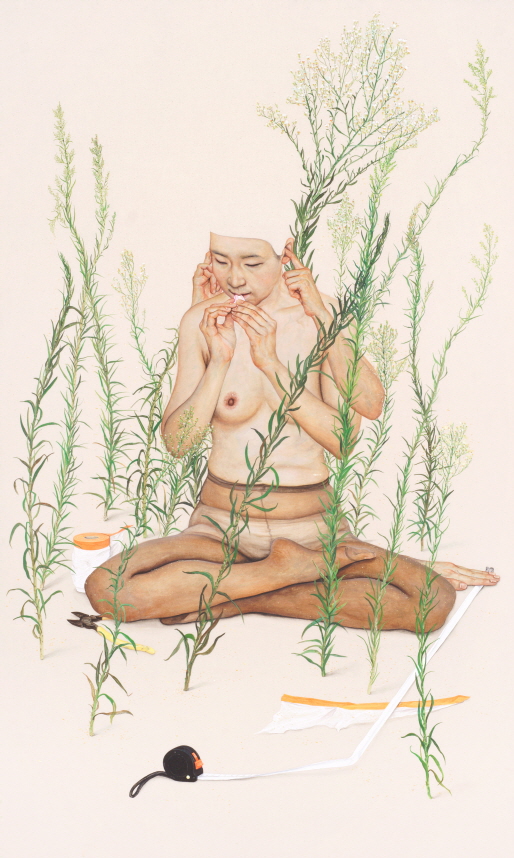
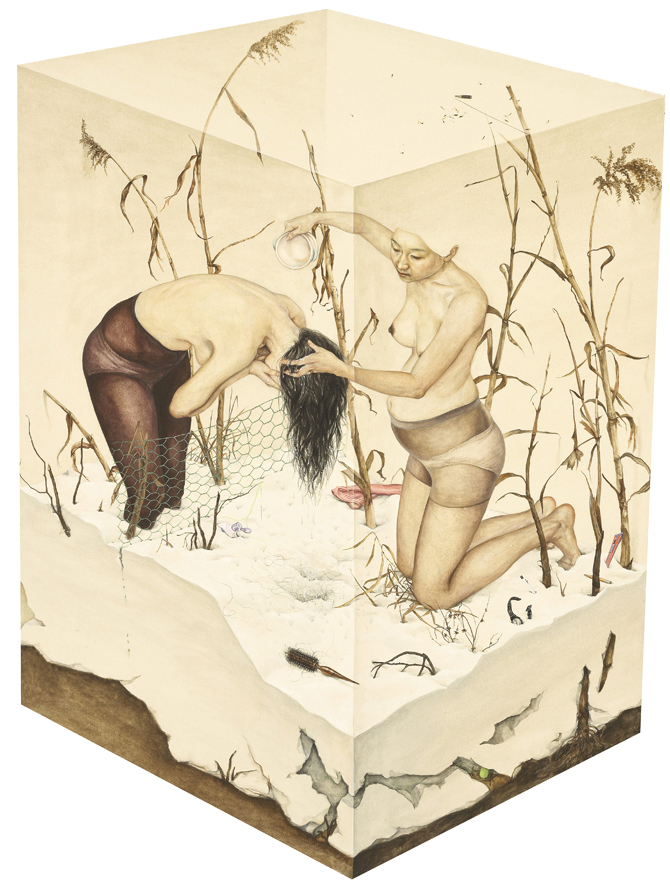
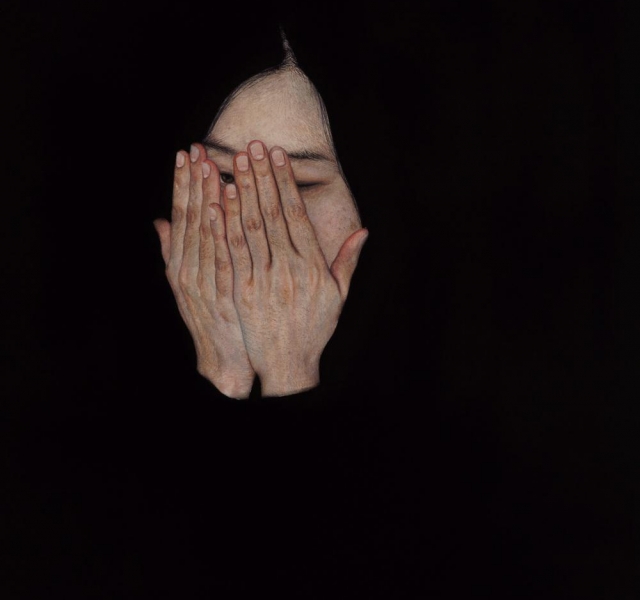
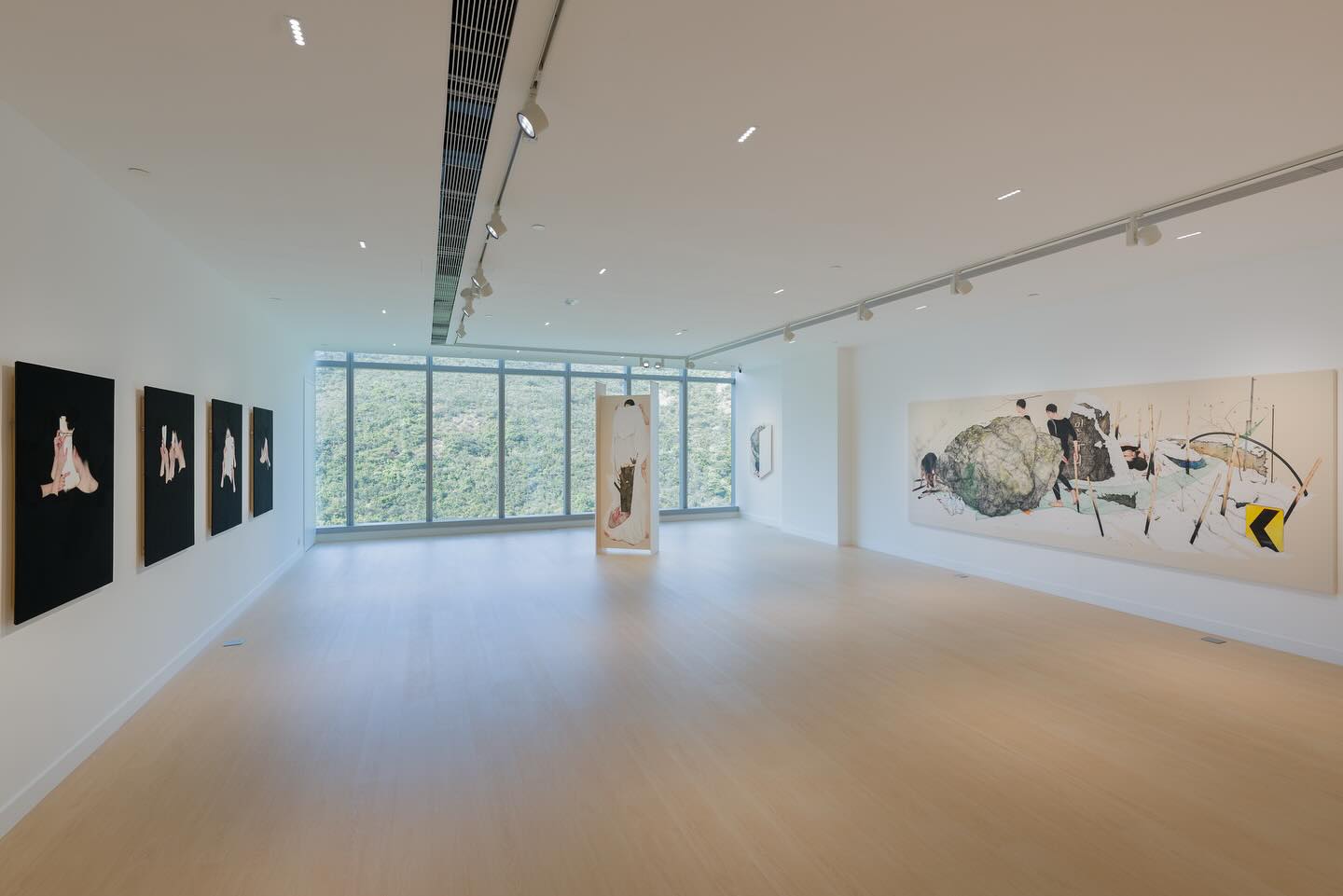
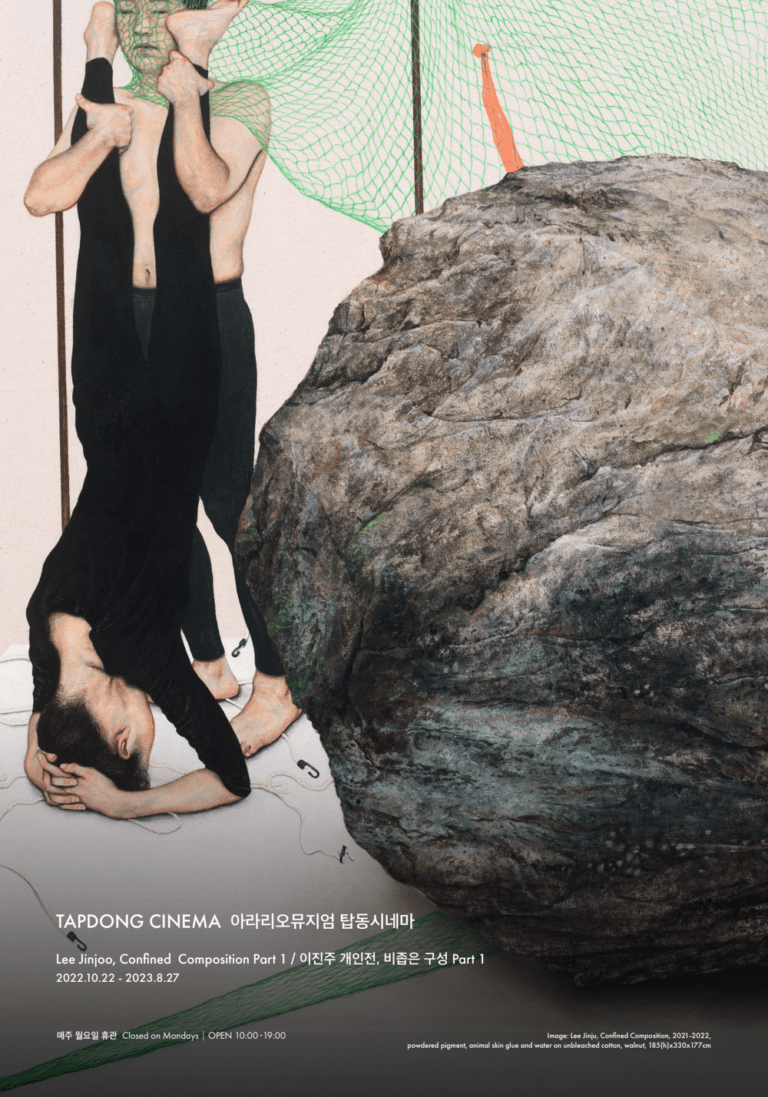
psychological landscapes encompass wounded and sorrowful memories. The woman
wearing stockings who appears in nearly all of the works is, in reality, close
to a stripped, almost naked body. Women without hair, figures supporting their
sagging breasts and bellies, appear as schematic, expressionless types wearing
black stockings. She is Lee Jinju, yet she is also us. In Made of
Air, she grips a hose in a pool; in Season of
Boundary, she is absorbed in daily life within a desolate setting reminiscent
of the winter landscapes of the German Romanticist Caspar David Friedrich.
In
Black Tears and No. 921, a knife lies
beside fruit and kimchi. While the knife is a tool for preparing food, it
simultaneously suggests its potential as a violent weapon, hinting at a
chilling atmosphere. This associative operation of imagery continues in
Yesterday’s Lie and Burial and Silence.
In particular, in the latter work, the bathing Barbie doll, alongside a piece
of cake and a fork, departs from everyday meaning to stage a gesture imbued
with latent violence.
According
to Sigmund Freud, trauma experienced in childhood remains latent in memory and
continues to reappear in adulthood through a process of “repetition
compulsion,” functioning as a deferred action. Thus, in the psycholandscapes
constructed by Lee Jinju, the artist is not merely a victim of trauma and its
aftereffects, but rather resembles a psychoanalyst who observes and directs
these processes to analyze her own experiences. By gradually excising the
“wounds” that numb all senses associated with trauma, and by enveloping them
through the act of painting, the artist becomes a traveler who probes the
meaning of fragmented memory, akin to Proust’s journey in In Search of
Lost Time.