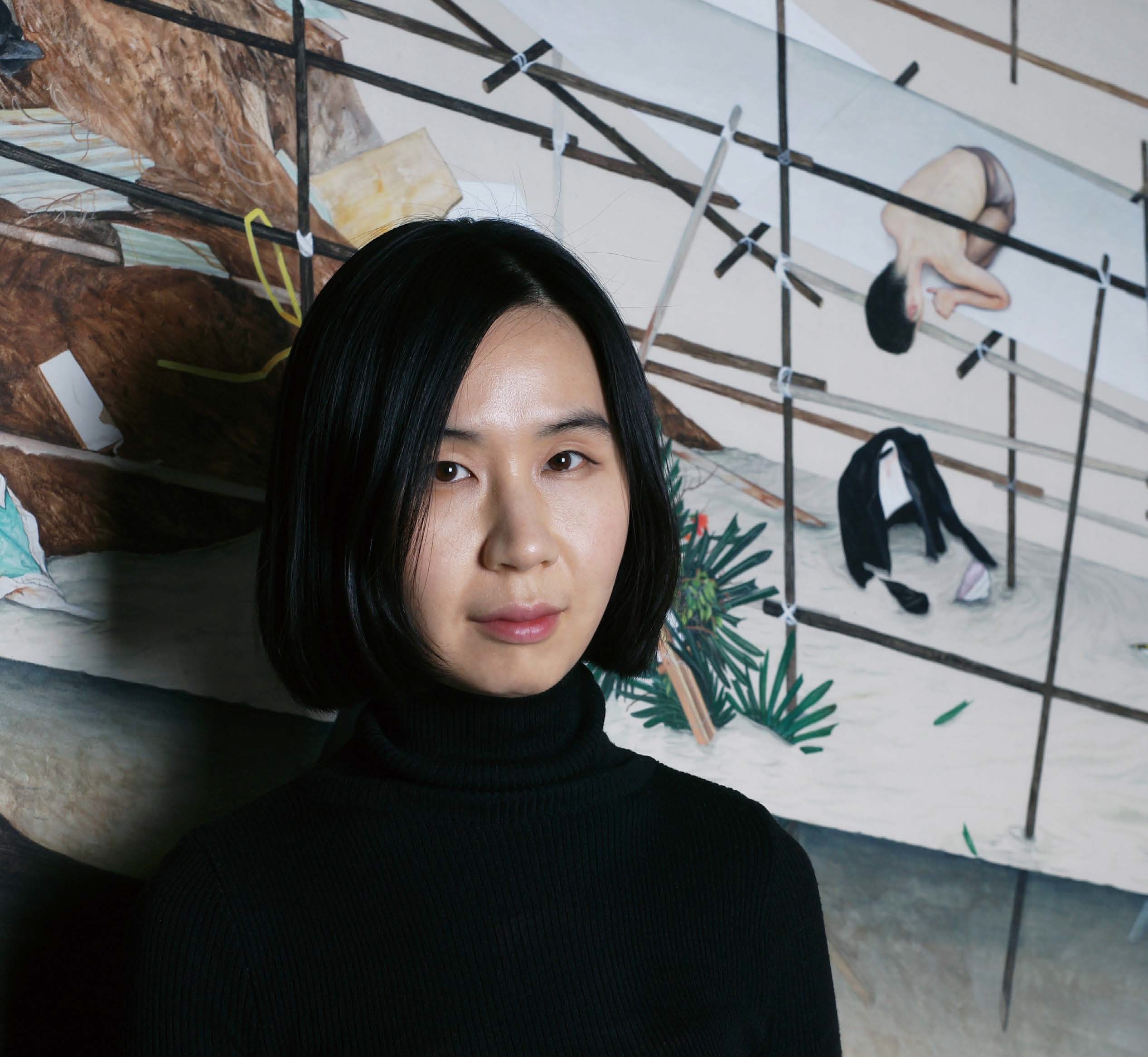
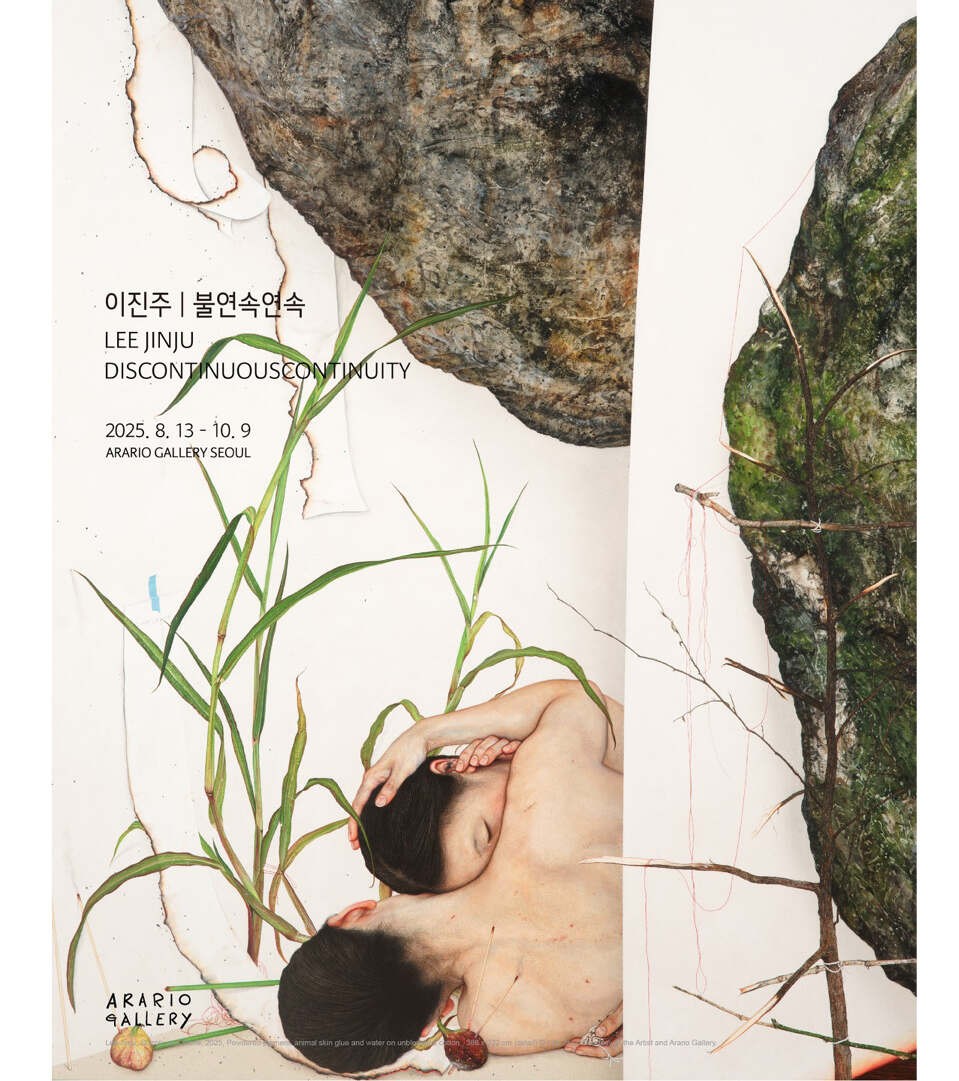
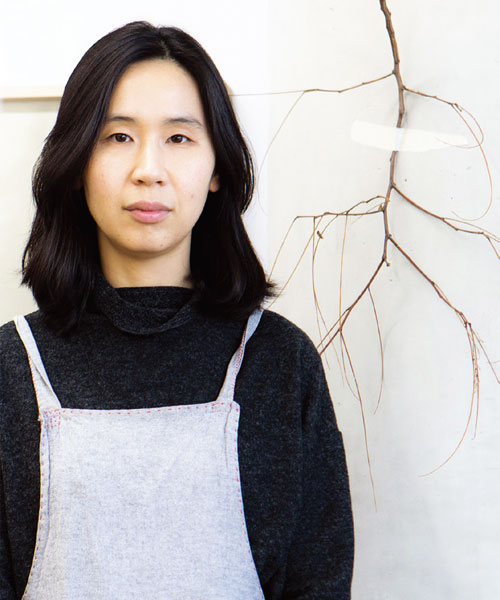
The first time I saw Jinju Lee's work was at the Arario Gallery exhibition An Obscure Reply in 2017. Later, I worked with the artist together at the Gangwon International Biennale 2008 titled The Dictionary of Evil, I got a closer look into artist's world of work and was able to examine her life and work. A compulsion to use sharp and delicate words arises when writing Jinju Lee’s critique. It is much like the sharp and beautiful scissors that often appear in the artist's work. In the artist's work, there is a unique sense of balance, as well as cracks and gaps that skillfully squeeze in between the boundary between the interior and exterior of art. Could such boundaries be expressed sufficiently through the written word?

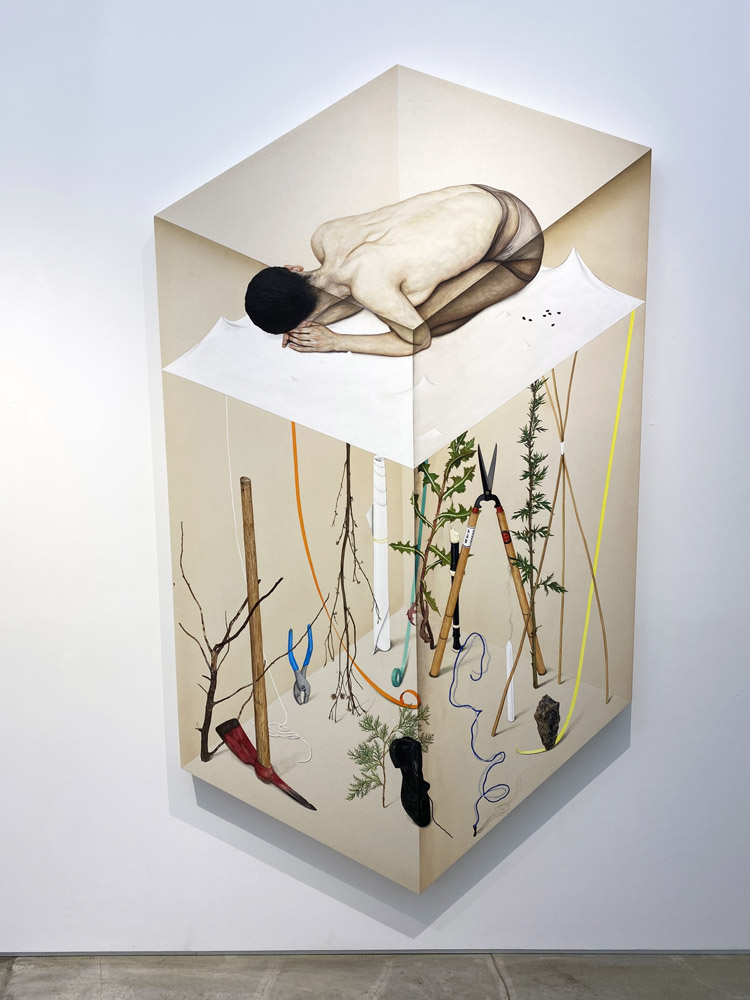
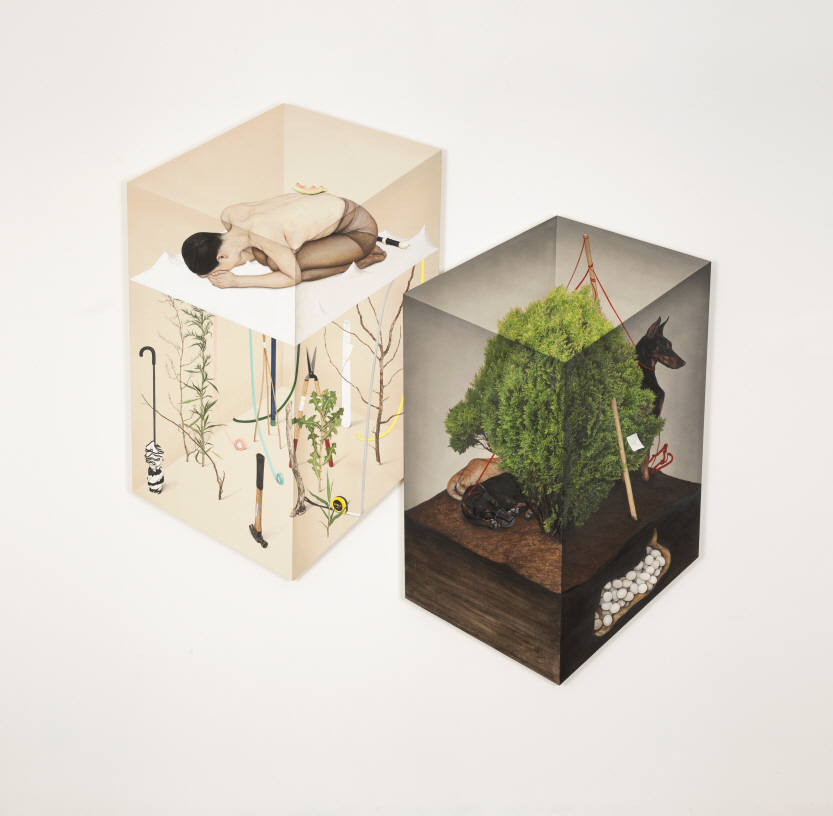
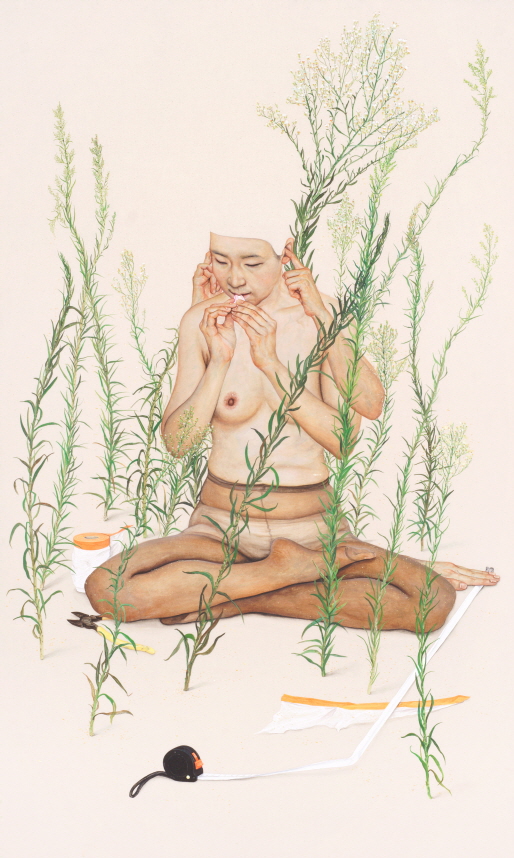
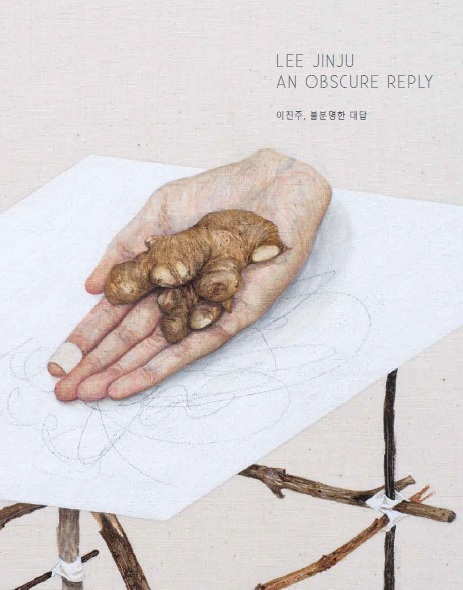
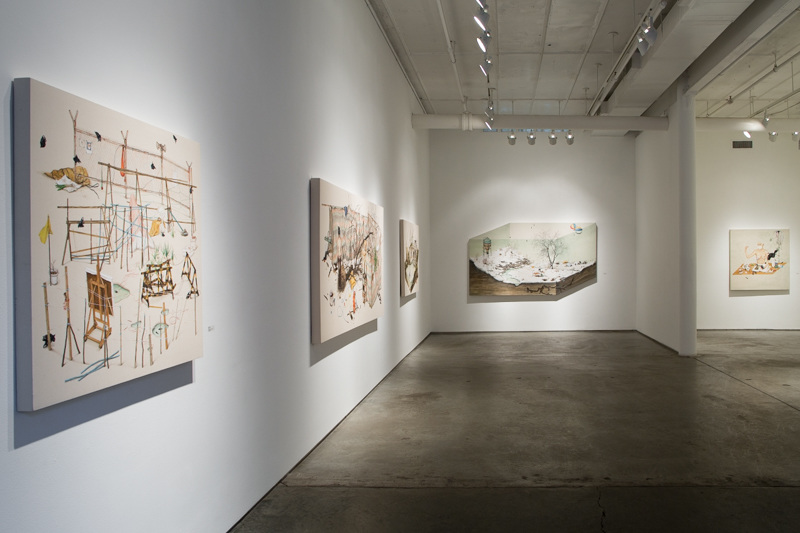
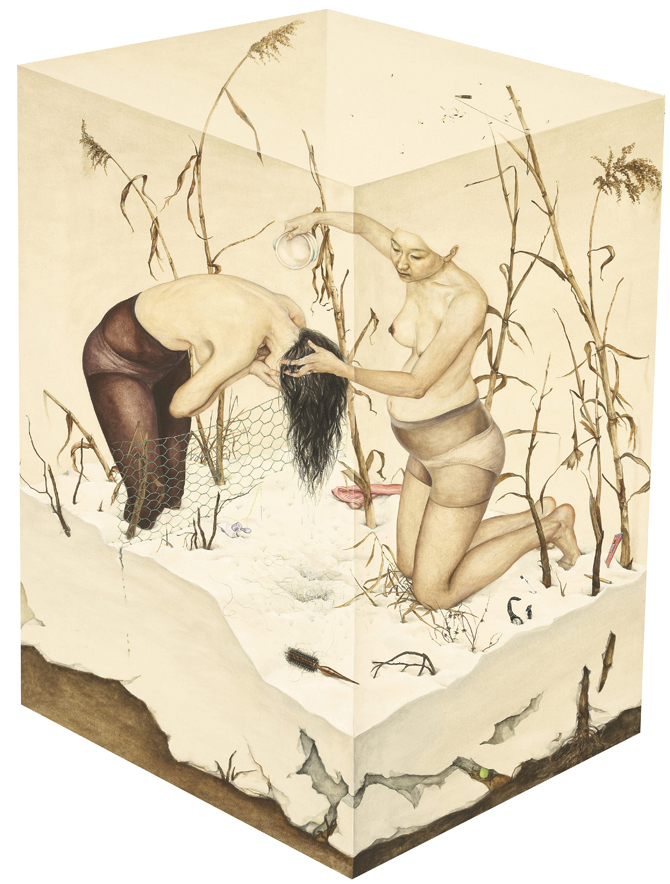
In the preface of the essay for the exhibition of An Obscure Reply in 2017, critic Soyeon Ahn mentions one of the phrases in Maurice Blanchot's Awaiting Oblivions. In the dialogue between the man and woman in the book, it is said that there was never such thing as 'common and clear memory', and that events and memories are incorporated into the realm of individual oblivion, while truth and secrets disappear and become increasingly distant from the common. However, rather than advocating the nihilism/cynicism that truth does not exist from the beginning, it sounds more like truth has multiple faces, but goes into the drawer of memories of oblivion and the common unity becomes worn out. The second interpretation differs slightly in respecting the free will of the subject that does the remembering. What Jinju Lee paints are “subjective true-view landscape paintings,” which are visual reorganizations of series of events and situations witnessed by the artist herself. The landscapes presented on linen move away from the probability of realism, and instead show the reproduction of the elaborate and delicate details of the objects. The logical connection between people and objects, life and inanimate objects, is unclear. A raw chicken on top of a sewing machine, tools and Barbie dolls on a workbench, flowerpots and arrows, neatly arranged leaves and stuffed insects. Critic Yeon Shim Chung used the expression ‘psycholandscape’ in her critique of the exhibition Evanescing, In-evanescing (2011, Gallery Hyundai 16 bungee).


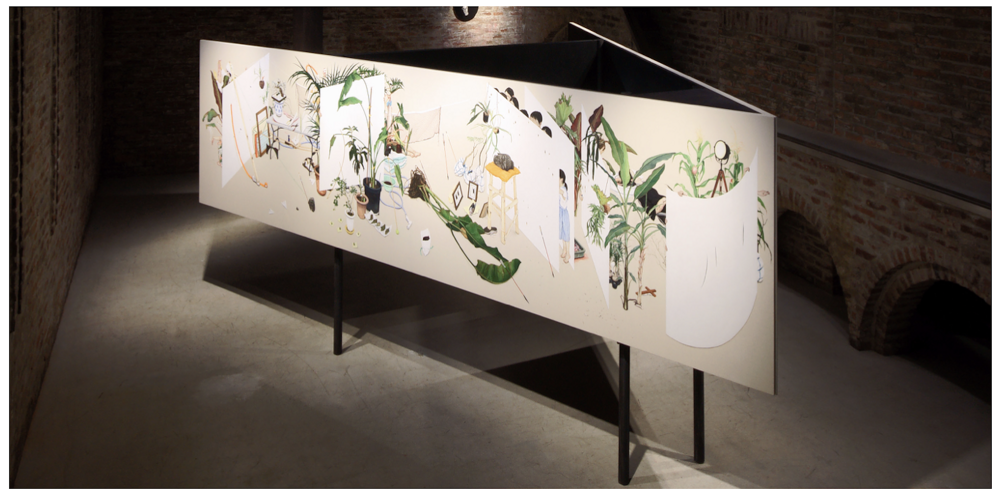
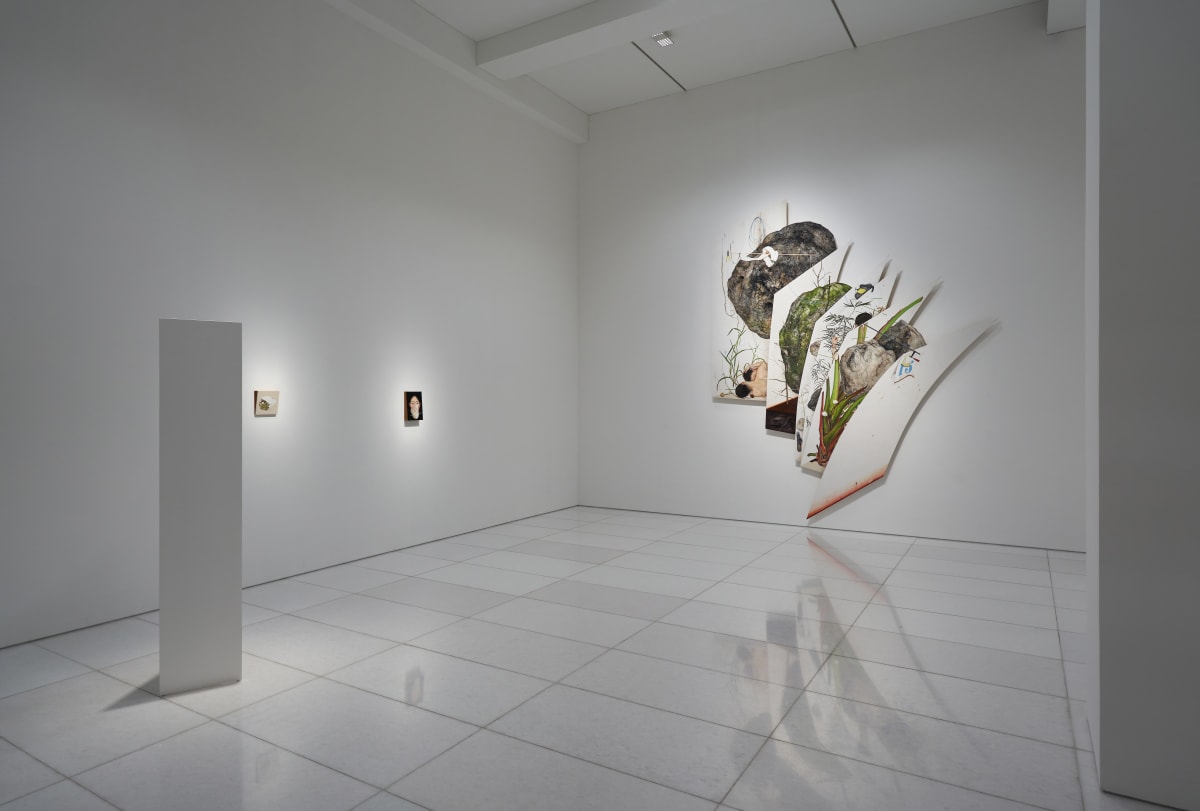
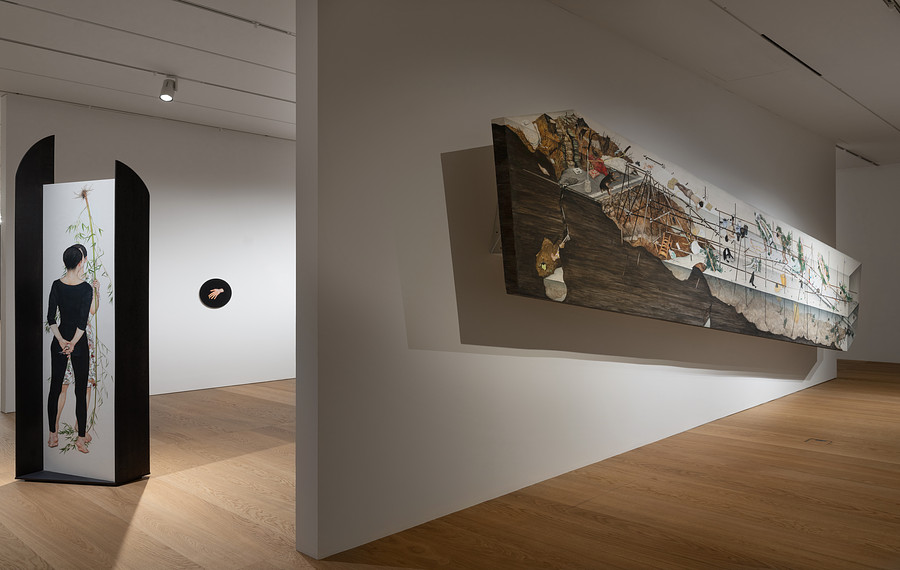
The Unperceived, 2020, Korean color and acrylic on linen, 122 x 488cm, 122 x 488 cm, 122 x 244 cm, 122 x 220 cm

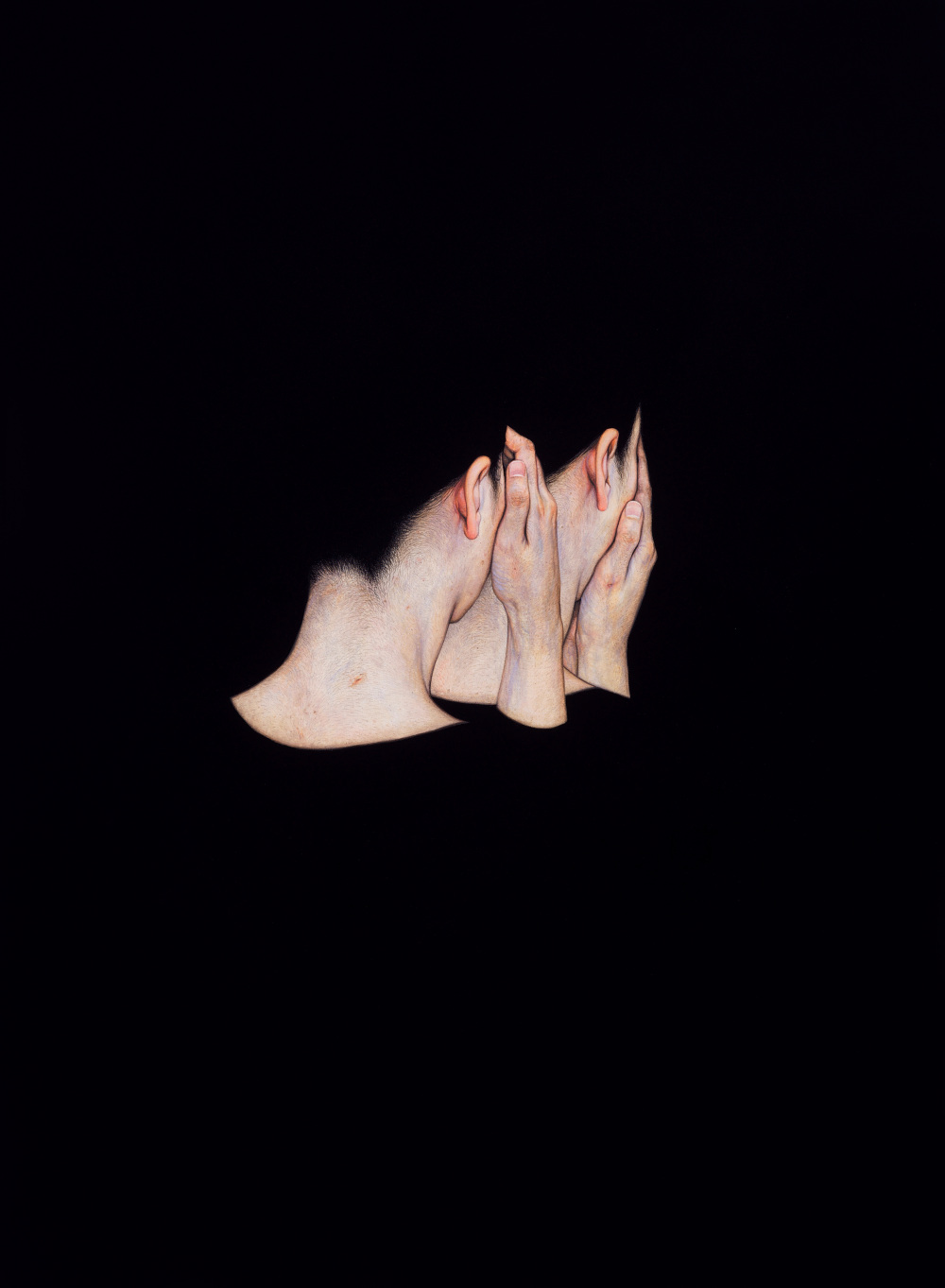
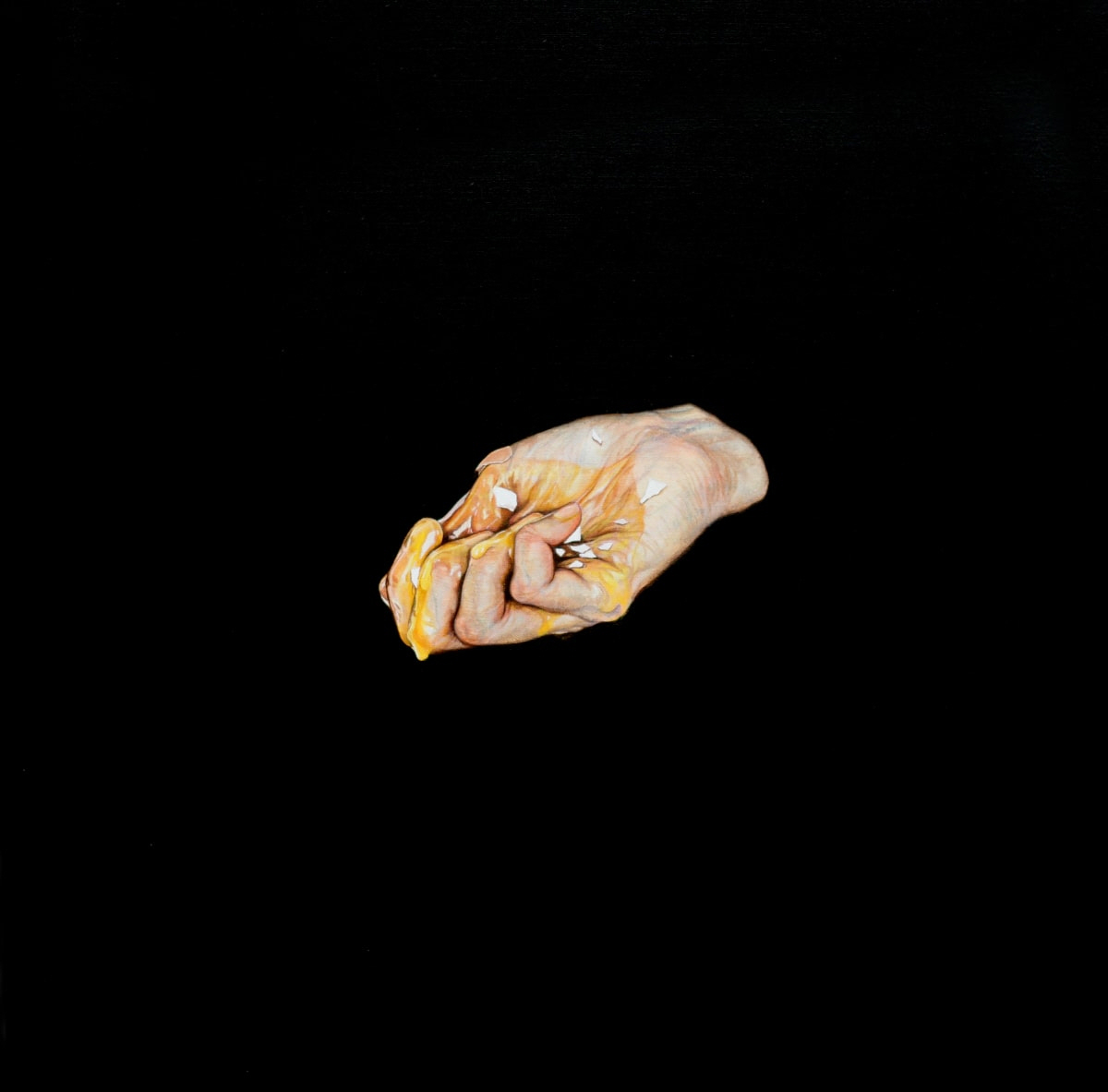
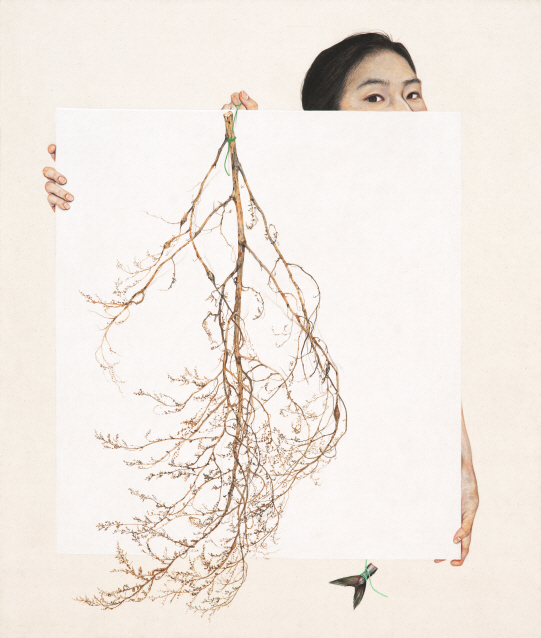
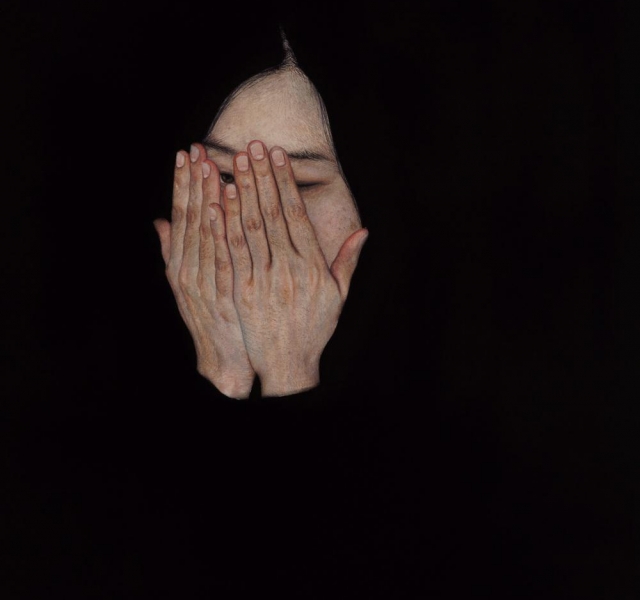
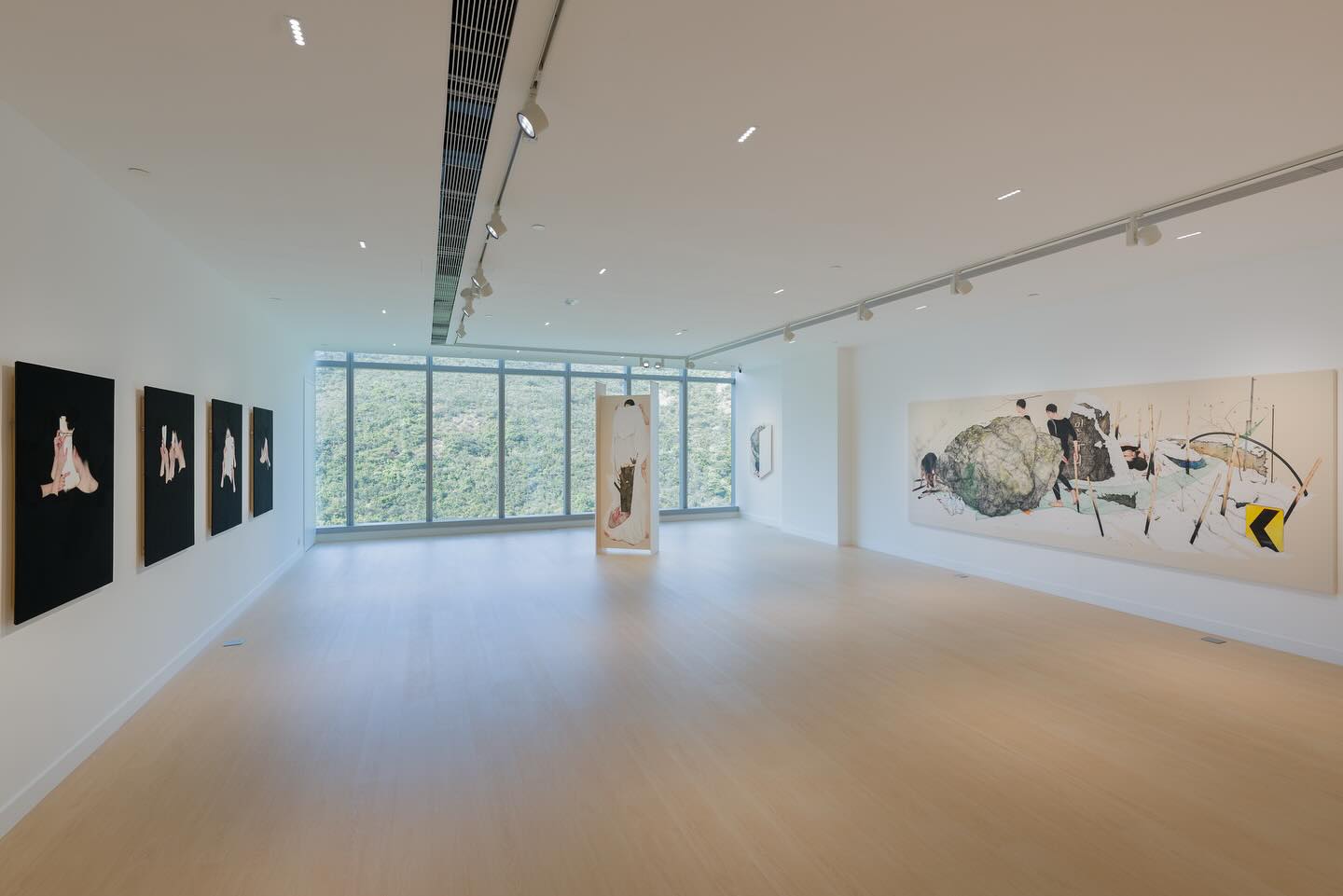
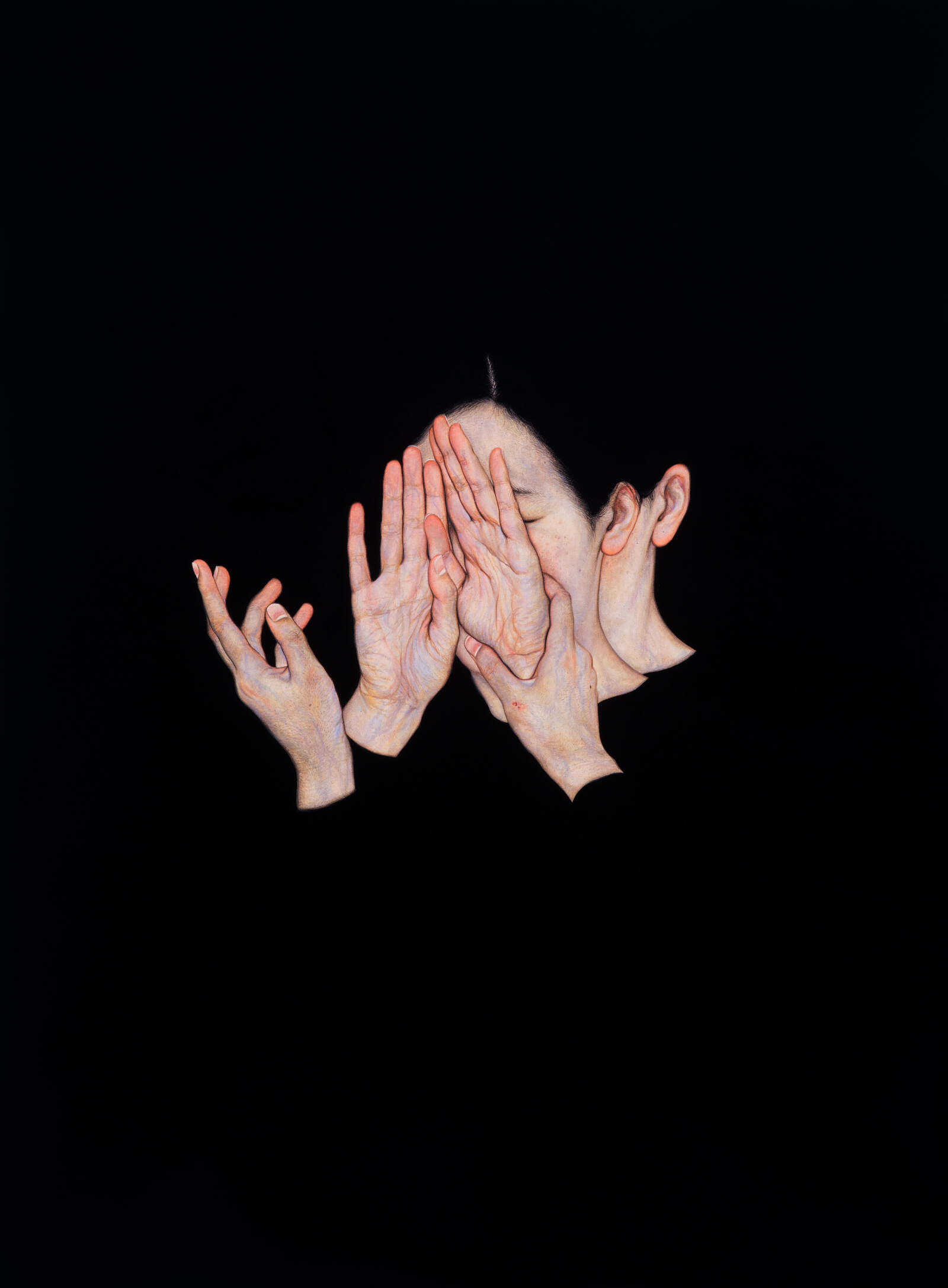
The title of this exhibition and the representative work of the same name. 〈The Unperceived〉 shows the view that is hidden from the range of visibility, but which always exists in reality. ‘Unperceived’ is a word with a dangerous nuance. This is because the belief that it does not exist because it cannot be seen is established. And such a belief often betrays our convictions. Like the artist's previous work 〈An Obscure Reply〉, 〈The Unperceived〉 is a response that reproduces everyday contradictions and mysteries in the artist's visual language. The objects of representation in the work, such as the female figure in stockings, the plants, cut branches, dead birds, hands, scissors, etc. are an array of circumstances and fragments surrounding the artist, as well as a silent landscape which presents a summation of the artist's unconsciousness. Hands appear unusually often in her paintings. The hand of a doctor which receives newborn life, a hand that lends help, hands that hold on to each other, a hand that covers the face... The hand is the most important part of the body as well as a tool of expression for an artist. The importance of the hand in the psycholandscape reveals the artist's strong artistic self. The hand also serves as the central axis in the picture. One palm covers the face of the person who wants to avoid being seen, and the connection between the woman and the girl is achieved through the holding of hands. Hands also hold the scissors on the workbench, and balance and support each other with a single strand of thread. (〈In the Center of)) Hands that have difficulty, hands that are responsible, hands that work, hands that interfere, hands that make mistakes... Finding the rich expression expressed in the artist's hand painting is also a pleasure that can be felt when appreciating the piece of work. However, when interpreting Jinju Lee's paintings, I feel that the focus should be placed on the ‘story’ rather than individual symbols. Her paintings do not follow the rule of inserting the last piece of the puzzle to complete it. The story advances into an unknown future step by step.

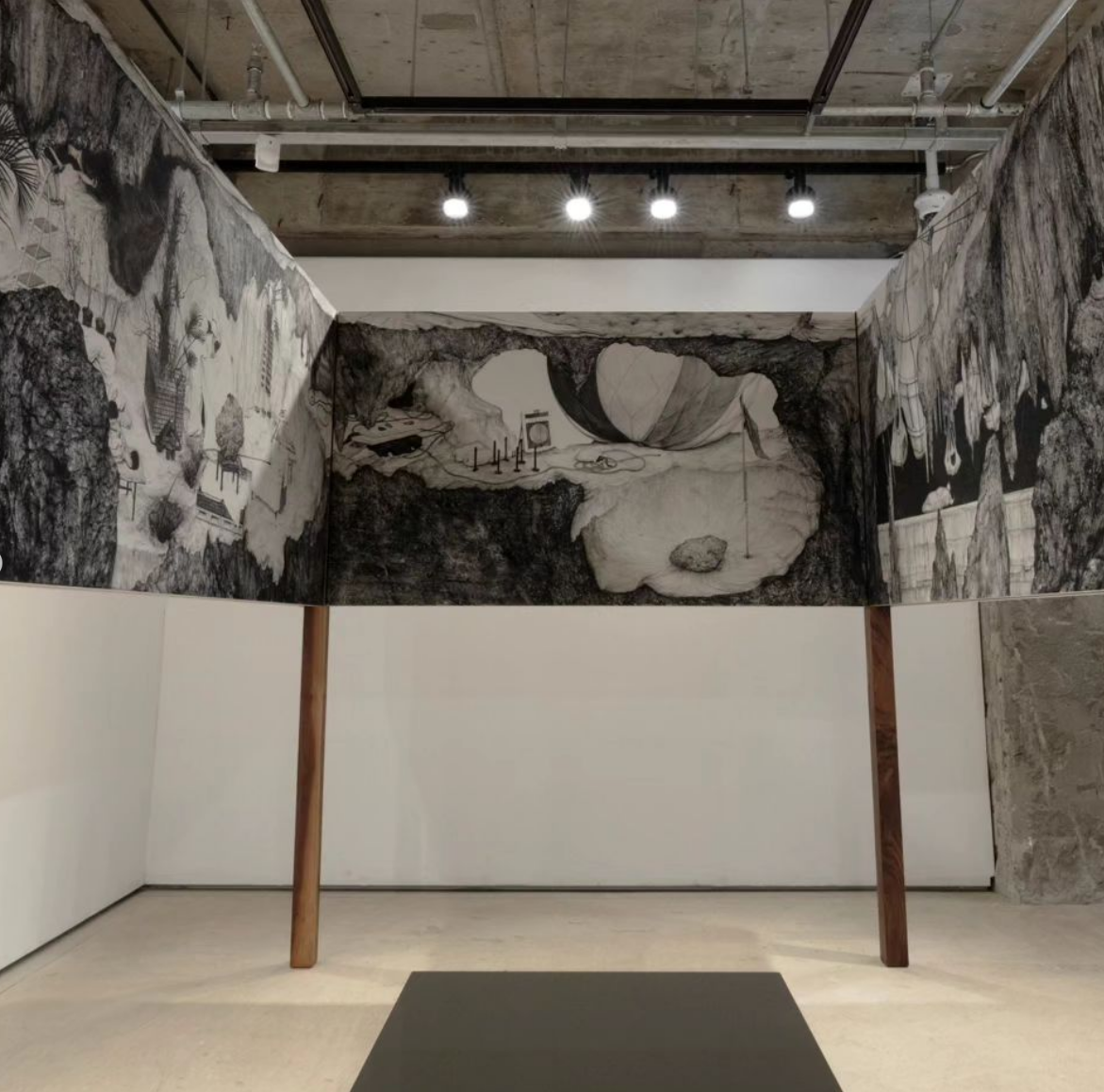
〈The Unperceived〉 is a large piece of work with an A-shaped structure. Like spreading out rolled up paper, the story unfolds as if the artist had more to say but lacked the canvas space to tell the whole story so couldn't tell it until now. The narrative of unclear dialogue expands itself. This is the most striking difference compared to her previous exhibitions. The artist's narrative looks like a series of glimpses, but in reality, it reflects the artist's view of life, death, and the society in which we live in. As an artist, she has a strong sense of responsibility to constantly ‘ask questions’ about the situation that we are in. The artist's paintings are in close contact with the social issues that contemporary people living in the Korean society are subjected to. The Sewol ferry disaster and mourning as being a mother herself, the artist's search for an ambiguous connection point between life and death due to the death of a family member, the social community consciousness and the direction of religion due to the influence of the COVID-19 pandemic are all engraved in the work. The artist's self - the landscape surrounding the artist - the contradiction of the world that constantly penetrates the landscape. The artist's narrative system can be divided into these three categories, and each supports each other with a slight and precarious sense of balance.

The Unperceived, 2020, Korean color and acrylic on linen, 122 x 488cm, 122 x 488 cm, 122 x 244 cm, 122 x 220 cm

The A-shaped structure forms an inversion of day and night/light and darkness centering around the shortest side. Side (a) embodies the artist's daily life and vitality. The children's hands that support the canvas, the hands performing everyday labor, and the plants are not very different from the artist's actual life. On the other hand, the crucifix that has fallen feebly on the floor and the Buddha statue head lying sideways also represent the artist's questioning of the role of religion in society. Side (b) is the author's response to the sense of social community that has come to the surface amidst the COVID-19 pandemic. The red water that fills the picture is like a swamp. The figures are touching the surface of the swamp, or walking a risky tightrope, or dipping themselves. It is difficult to make out what the liquid on the floor is. It is murky like muddy water and tinted with what appears to be blood. It seems to hint at the current social situation in which everyone is confined by an invisible external pressure, and the reality seems to reflect the nature of society in which all are connected. Jinju Lee has expressed various forms of water in her works over the years. The cloudy water on Side (b) is the part of the painting which most effectively represents the theme, ‘the unperceived’. The appearance of drying latex collected from the sap of a rubber tree, the tension of white cotton wool and red water, and a sense of balance maintained by thin strings are what make up Side (b). Another unique feature of 〈The Unperceived〉 is the unique formativeness of the installation structure and the artist's intention contained within it. In the A-shaped structure, the (a)/(b) sides converge to a sharp vertex with their sides facing away from each other. Looking at the work from the vertex, two disparate landscapes can be seen to intersect, giving an omniscient observer perspective. Ironically, however, at this point, we have no choice but to see the artist's (a)/(b) view in a distorted way. And Side (c) which connects Sides (a) and (b) but hidden from view, remains silent in the completely hidden area of the unperceived. The slender wooden bridge that supports the three-dimensional structure of the enormous painting is also an omniscient observation point and the moment of reversal of the unperceived.
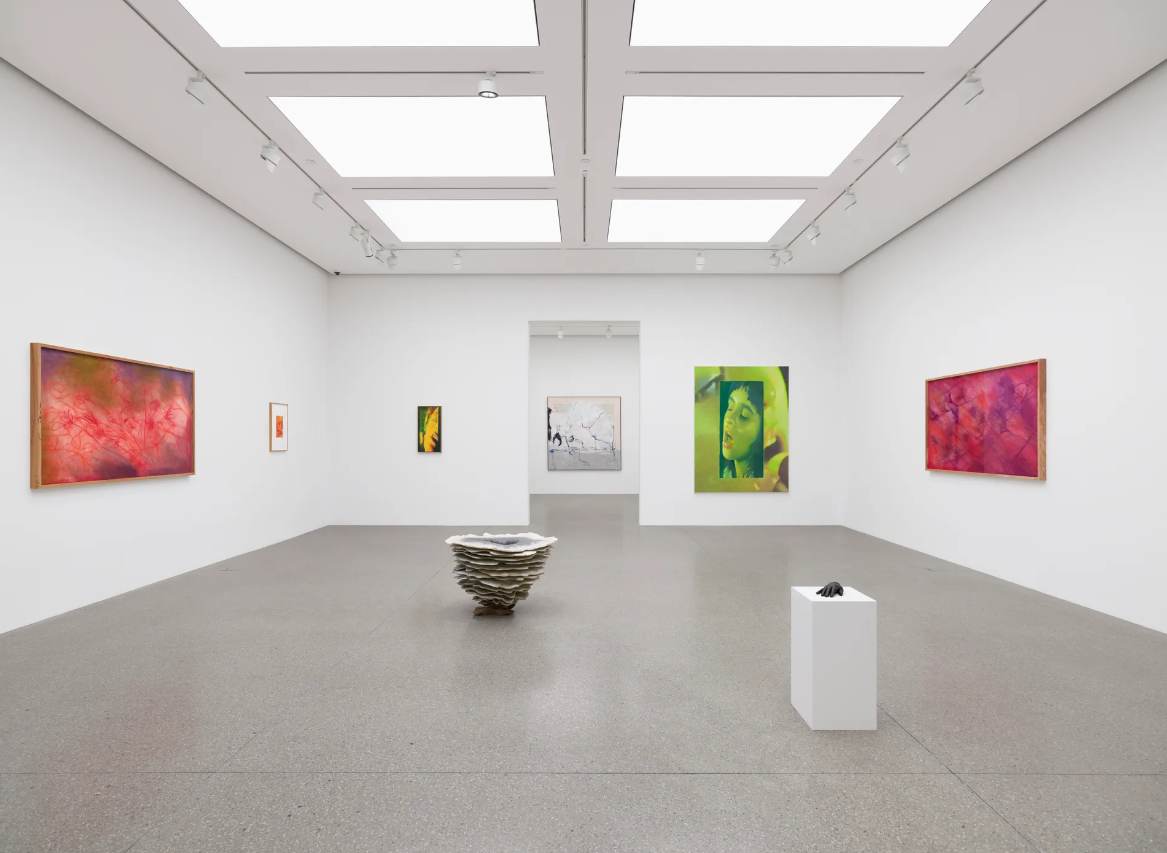

The Unperceived, 2020, Korean color and acrylic on linen, 122 x 488cm, 122 x 488 cm, 122 x 244 cm, 122 x 220 cm

Jinju Lee's aesthetics express strength by revealing the infinitely weak side. The delicacy that captures various hand expressions, the sophistication that captures the details of the surrounding landscape, the sense of color with clear control of strength and weakness like lighting techniques, the balance of the risky and dangerous pendulum that seems as though it would break at the slightest touch, and the attitude of the artist who pursues unclear completion rather than unfinished clarity, are all Jinju Lee's own style, and a creation derived from her social self and unique warmth. The weakness standing against the questions posed by the inexplicable world gradually expands the narrative and unfolds the artist's world of work endlessly. As Scheherazade’ tale One Thousand and One Nights, the world is so honestly unclear and thrillingly precarious. As one artist said, “The strongest thing a person can do is reveal vulnerability.”