Looking Back Retrospectively
Since
everything that can be grasped started becoming an image[1], all images have
aspired to become something that can be tangibly grasped. Let us delve into
this idea more concretely. All things that physically occupy space—like our
bodies—have increasingly become flat images: paintings, analog photographs, and
digital images. Conversely, flat images, in an even shorter time than it took
to become flat and smooth, have returned to being something tangible—like the
illusion of painting, 3D images, and VR images. If these two opposing flows
have progressed in parallel upon the advancement of visual media, what could be
the branching point?
The
reason I find myself reflecting on these thoughts while observing Taewon Ahn's
work is that I perceive his recent works as situated at a point of tension
between opposing forces, continuously moving in opposite directions around a
specific point of action. At either end of this tension lie the contrasting
concepts of flatness versus three-dimensionality, painting versus sculpture,
and image versus object.
When
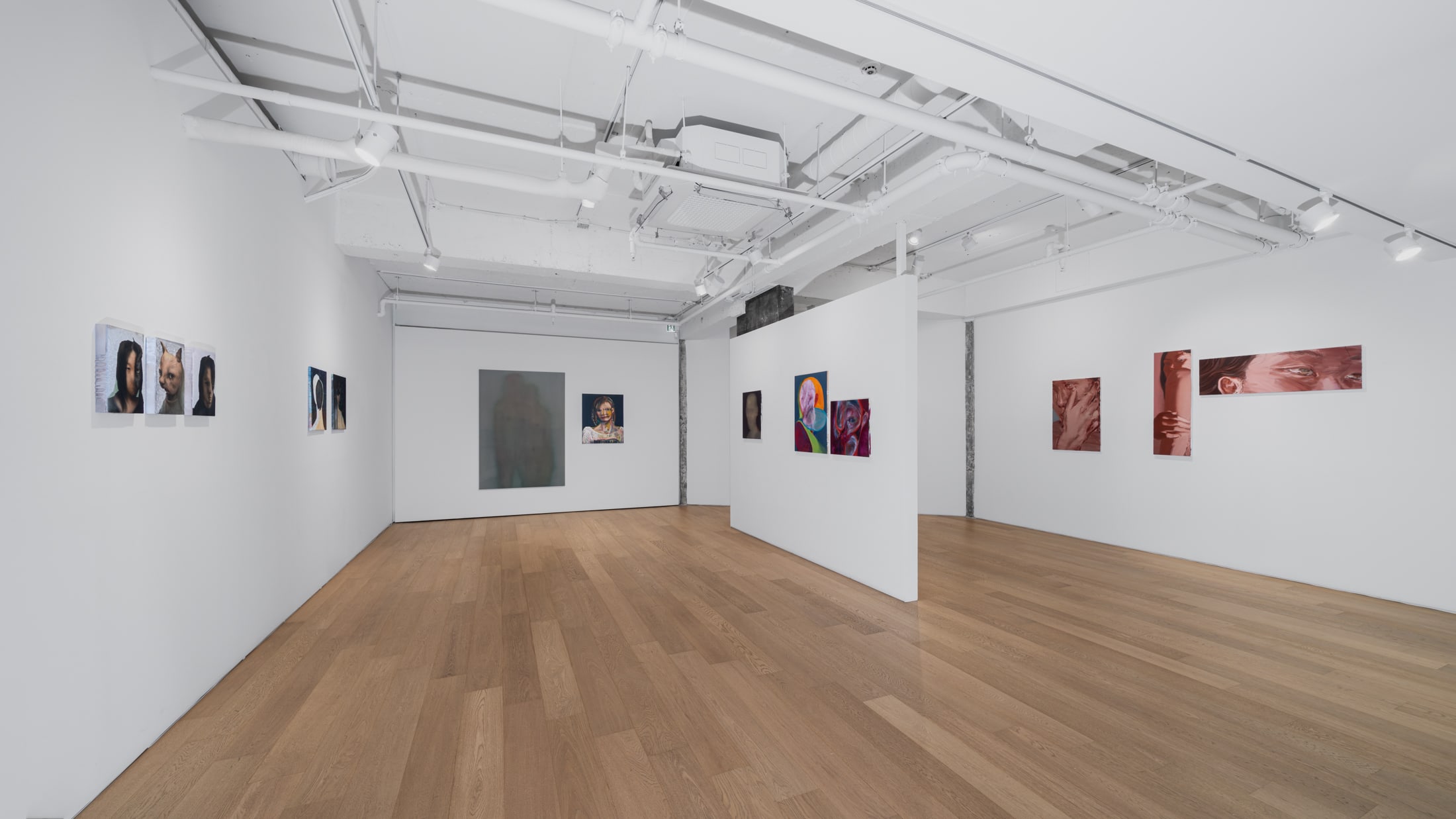
Ahn’s practice, which initially focused on producing distinct flat-painted
images by layering thin paint on square canvases, began to approach the realm
of sculpture and objecthood, I initially thought his attempts were merely
moving from flatness to three-dimensionality. However, the subsequent works
repeatedly crossed and recrossed that boundary, progressing in directions that
defy simple categorization. For instance, he created sculptural forms that
closely resemble sculptures while persistently retaining painterly elements. At
other times, he abruptly shifted his practice from accumulating digital
image-based painting materials to depicting real-world objects, defying
predictable artistic trajectories.
For
some time, I found it challenging to pinpoint a consistent direction in Ahn’s
work. Eventually, I realized that Ahn views his practice not as a fixed
"state" but as a fluid "situation" in progress. Rather than
being consciously tied to a specific medium, his practice involves adding or
removing elements that correspond to the context of the given moment, operating
within a flexible boundary. At the core of this process lies the
"internet."
The
internet functions as both the environment within which Ahn grew up and a kind
of filter that mediates the perception and output of all media. Encompassing
both virtual experiences and real connections, the internet serves as the
driving force behind Ahn’s continuous practice, which exists amid the tension
between the aforementioned opposing elements. Thus, to retrospectively examine
how Taewon Ahn’s work has evolved to reach its current "situation"
is, in essence, to elucidate the relationship his practice has forged with the
world through the internet.
Drawing What Is Seen
Taewon
Ahn’s early works adopted a purely painterly format by collecting meme images
circulating on the internet and transferring them onto the flat surface of a
canvas. Memes, by definition, are trends or subjects of trends that are
replicated and spread through internet communities and social media by an
indefinite number of people, often through unknown channels and methods. The
lifespan of a meme, which replicates and mutates at an astonishing speed as if
self-propagating, is typically quite short.
What
makes memes significant is not their content or end result, but the way they
are created and proliferate—how often and widely they are replicated and
exposed to the public. However, what first drew Ahn’s attention was not the
underlying dynamics of memes but the visual image that appears on the surface.
He found a sense of enjoyment in the process of painting these rapidly
vanishing digital images onto the canvas.
At
first glance, this may seem like a superficial practice—simply translating a
flat digital image existing in the virtual realm into another flat surface in
the real world. However, the situation changes when we consider that, for
Taewon Ahn, digital images appear more real and tangible than any other
physical object. The intensity and frequency of sensory stimulation provided by
digital images surpass any real-world experience, a sentiment that anyone
familiar with smartphones and the internet can relate to.
In
this context, one might ask: between meme images and flat paintings, which one
can be considered the "flattest" image? Or, between digital images
and the physical "canvas" of painting, which is closer to an
"object"? The act of incessantly encountering images without actively
seeking them—constantly being presented with and subjected to visual
content—reflects our current reality, where digital images become an
inescapable presence.
What
Is Seen Without Intention, The Compulsion of Digital Images. Images that appear
without intentional viewing—continuously presented and flooding in—are a
defining characteristic of our current digital reality. The deliberate use of
the passive verb form “to be seen” combined with the additional passive suffix "-어지다" in Korean underscores the relentless exposure to digital
images that we must constantly face. This linguistic repetition mirrors the
reality of our time, where digital images become an unavoidable presence,
perpetually intruding upon our senses.
One
of the reasons Taewon Ahn perceived meme images as more object-like lies in his
experimental use of transformed canvases. At a certain point, Ahn began to
alter the very shape of the canvas that held the memes. Rather than confining
the memes to a conventional rectangular canvas—akin to a transparent window—he
began transferring them onto shaped canvases that could more directly reveal
the traces of objects.
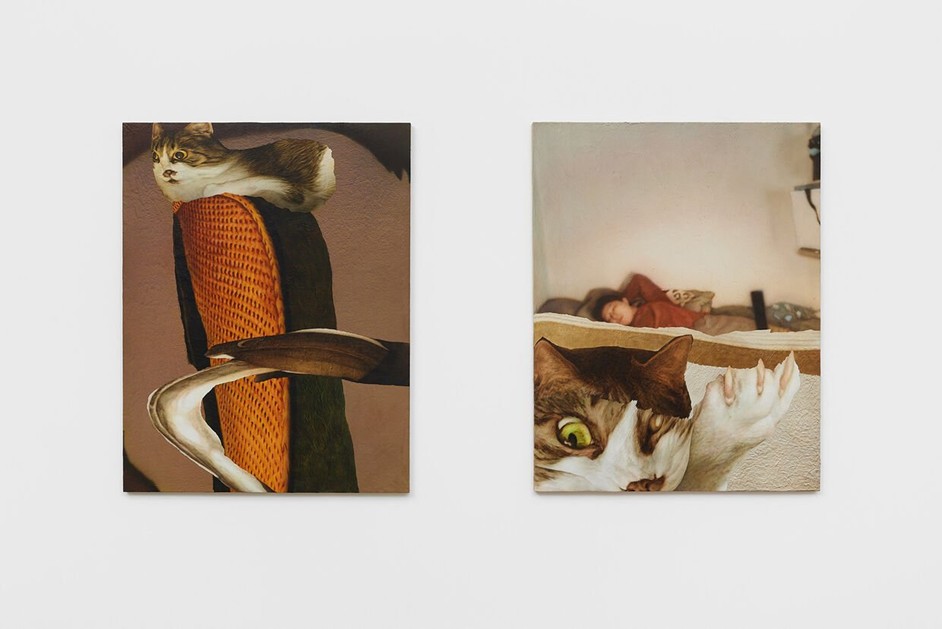
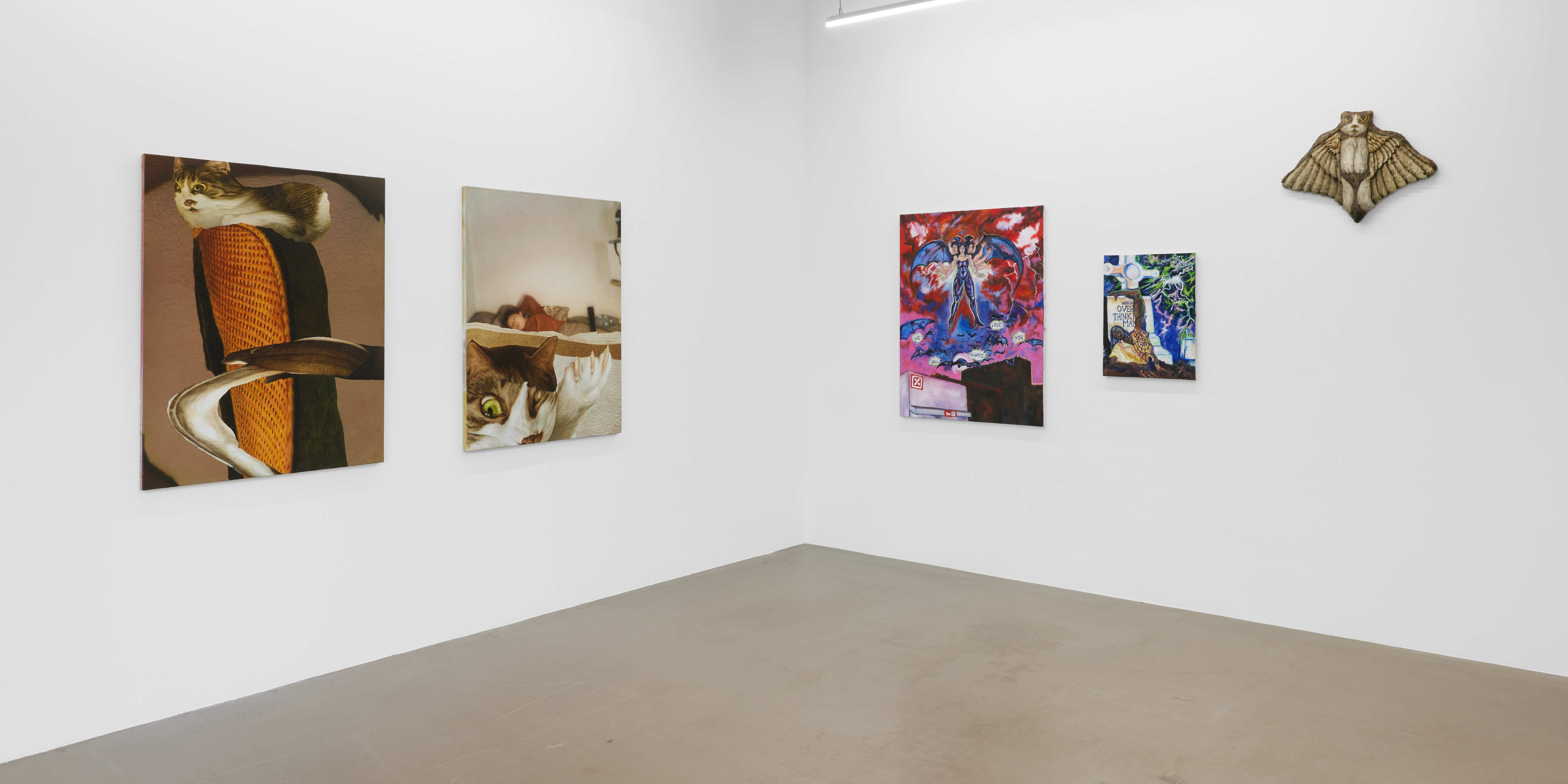
For
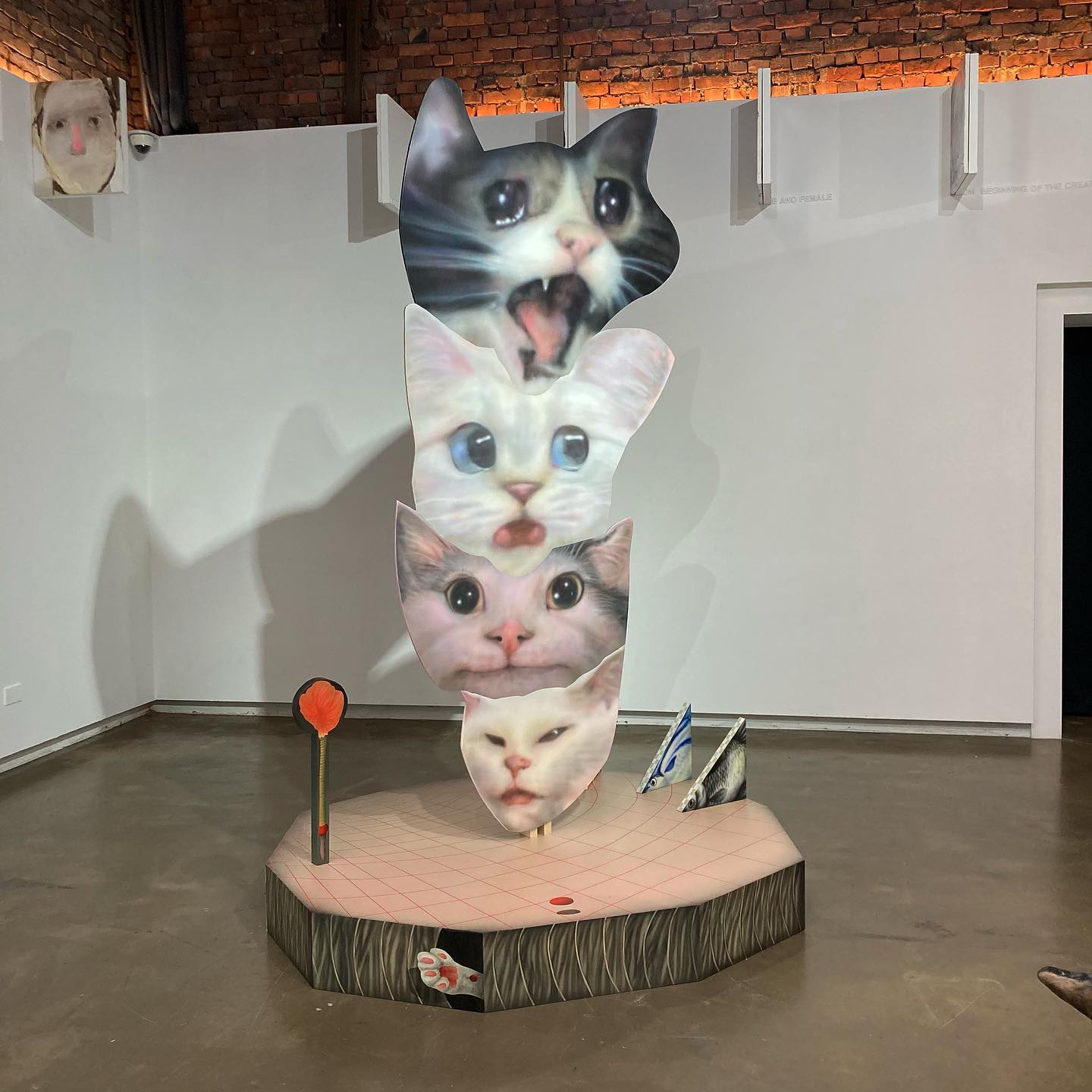
instance, in works from 2021, Ahn employed canvases that emphasized the
distorted shapes of cat memes, using irregular forms that visually mimic the
meme itself. In another instance, he shaped the canvas to resemble the outline
of a corn cone snack, cutting it out as if directly extracting the meme from
its digital context. This transformation heightened the uncanny realism
inherent in digital images, accentuating their sense of displacement when
translated into physical form.
Up
to this point, I assumed that Taewon Ahn would continue to expand on his
existing data of meme images and further develop his techniques. However,
unexpectedly, one day, he stopped painting memes altogether and began to paint
a real cat.
Drawing What One Wants to See
After
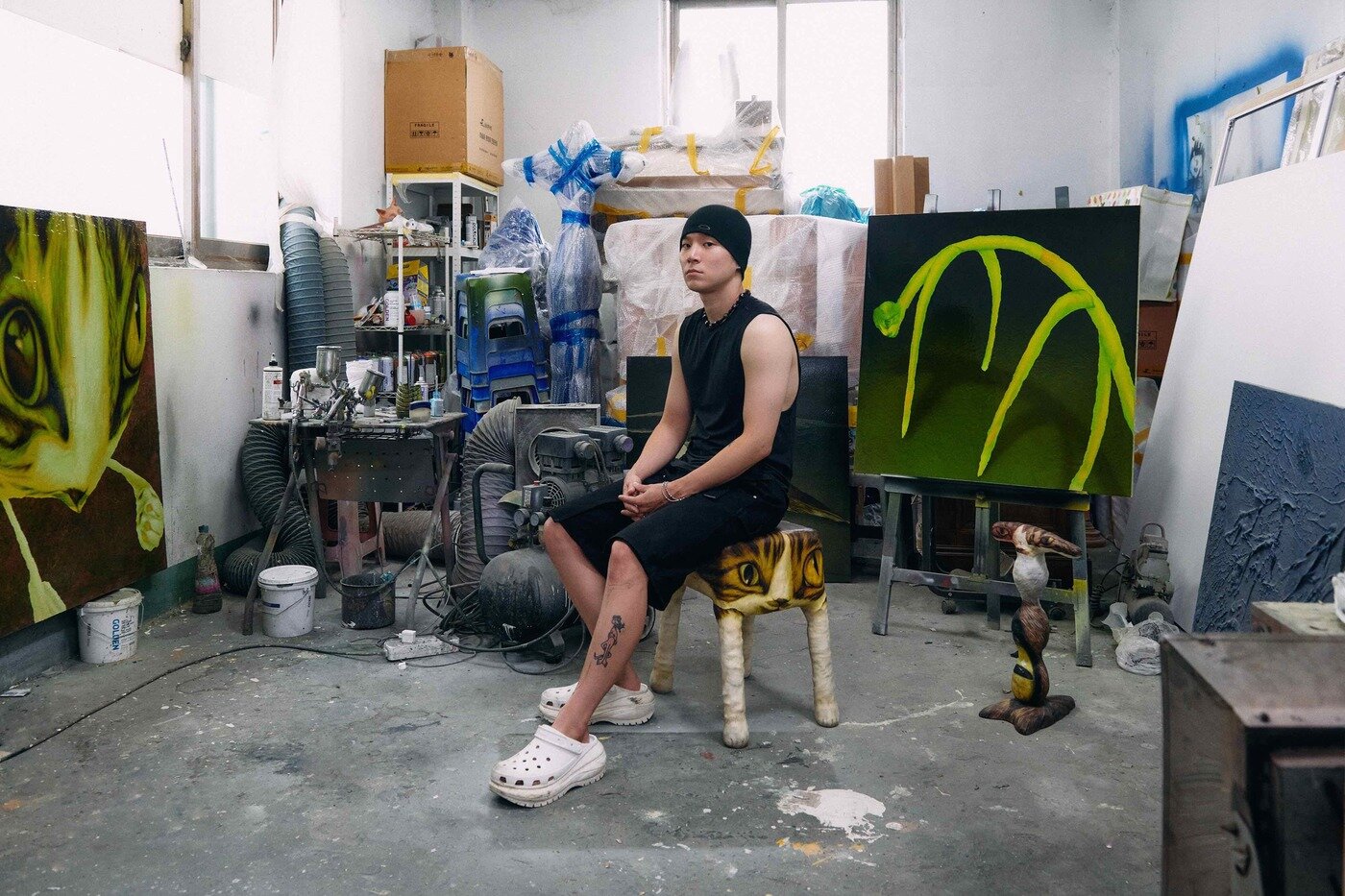
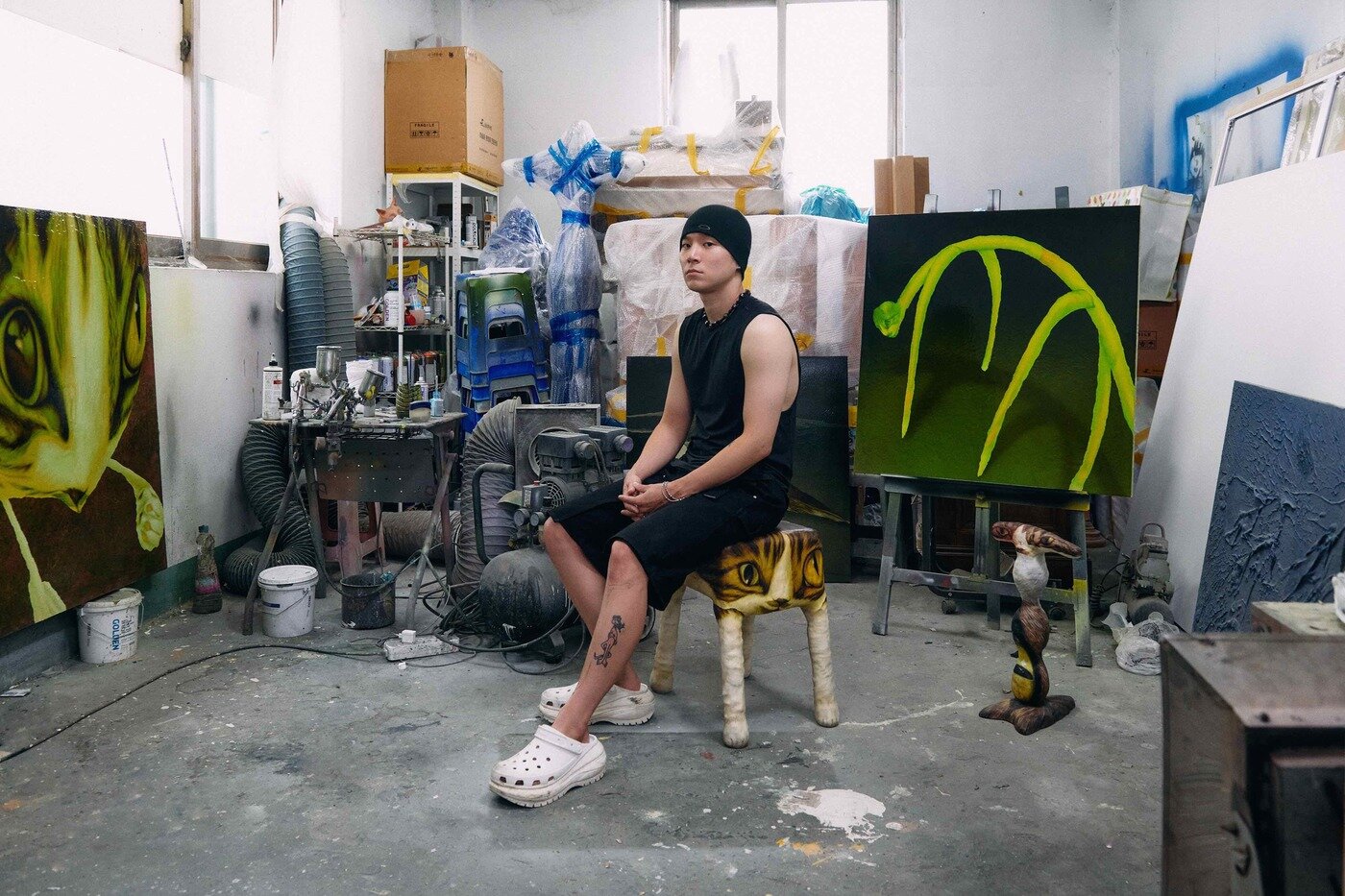
bringing home a stray kitten named Hiro, Taewon Ahn noticed a significant
change in his routine: he spent less time compulsively looking at his
smartphone. Hiro became the focal point of his reality, and it was only natural
that the real cat, rather than internet memes, began appearing in his artwork.
The emergence of Hiro in his practice signaled a profound shift in Ahn’s
approach and subject matter, as the presence of a living, tangible being
disrupted the digital image-saturated reality he had previously inhabited.
The
reason Ahn’s early work fixated more on the surface of meme images rather than
their inherent logic may be because that logic was already deeply embedded in
his consciousness. When he transitioned from drawing what he was constantly
shown to drawing what he wanted to see, he naturally maintained the digital
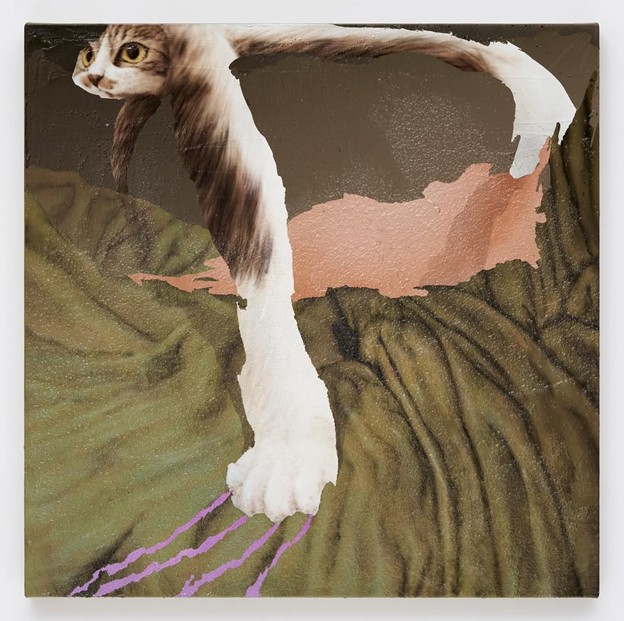
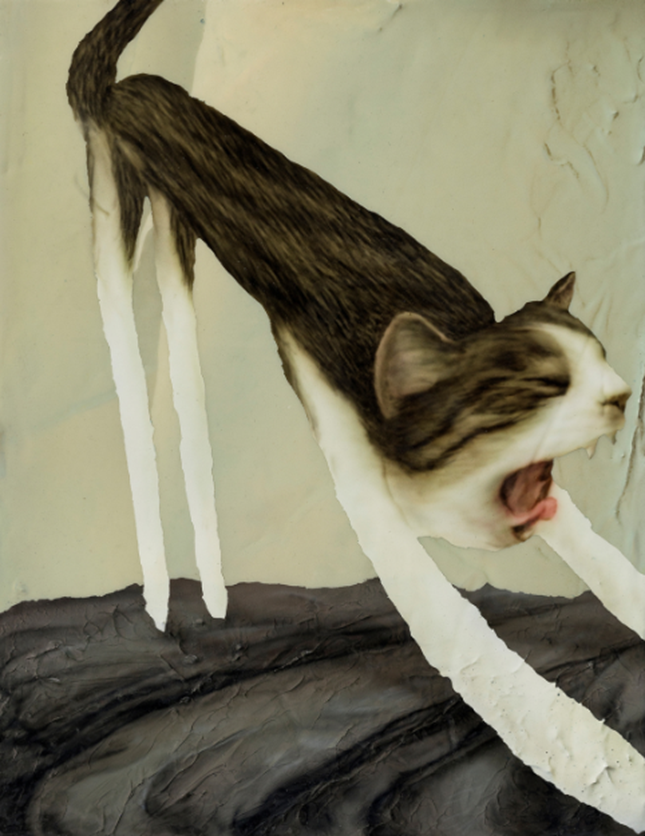
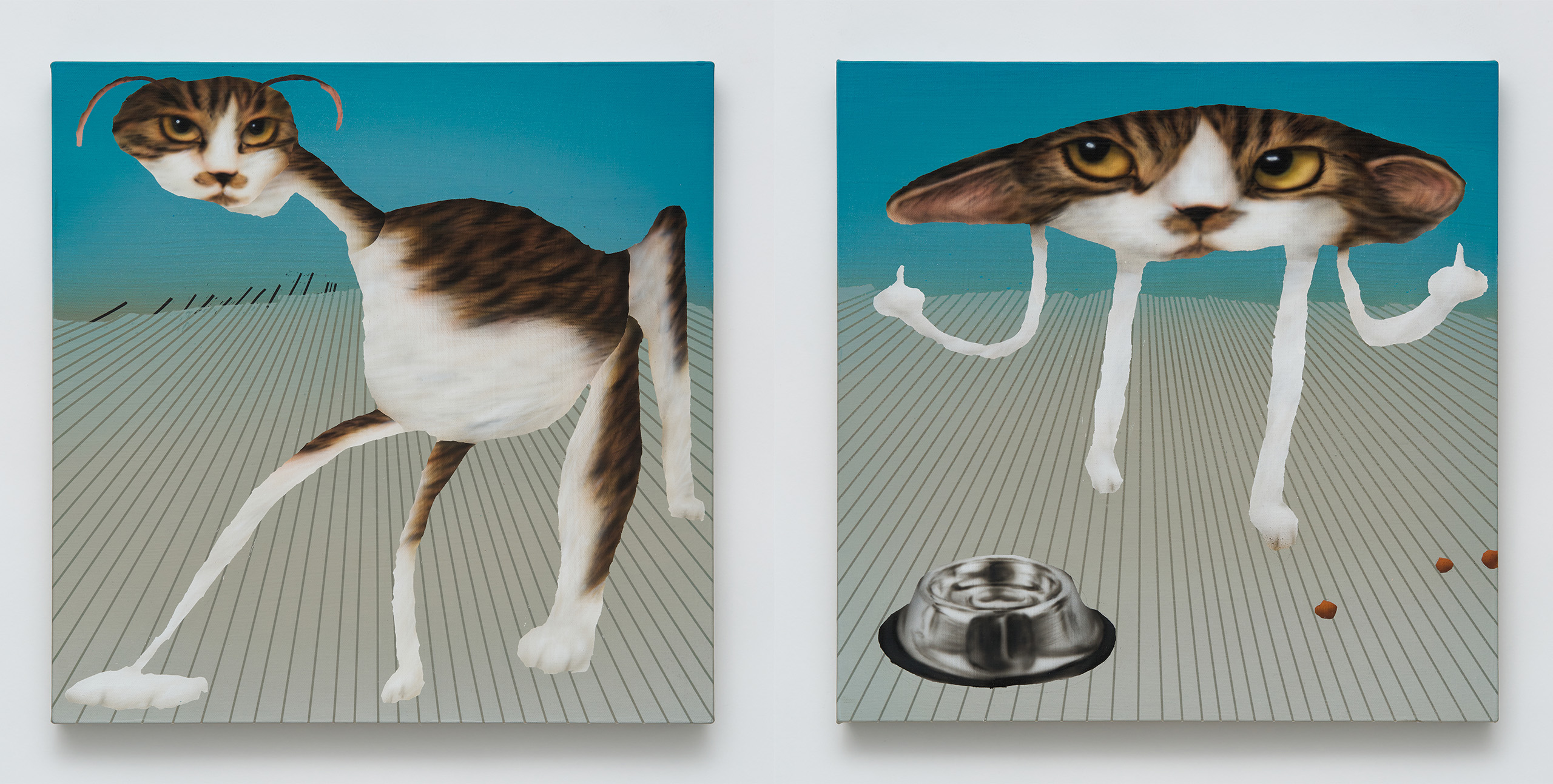
image’s inherent qualities of reproduction and proliferation. Ahn began
photographing Hiro and treating these images as memes—distorting and
manipulating them before reproducing them on various surfaces (2021–).
Here,
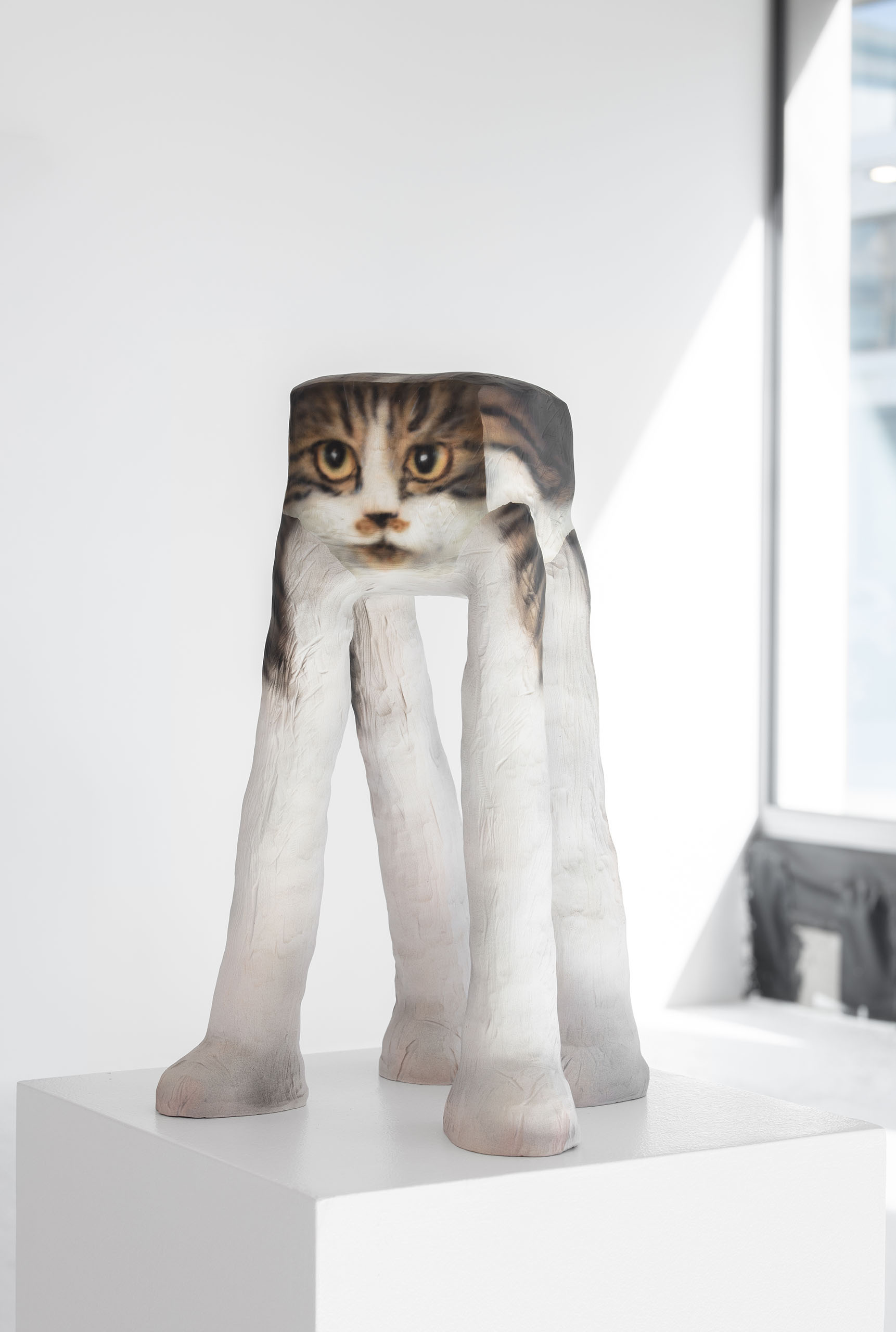
the term “various surfaces” refers to the unconventional three-dimensional
objects Ahn started creating alongside his flat works. Despite their
three-dimensionality, these objects still functioned as “surfaces” because he
continued to apply the airbrush technique he used on canvas to these sculptural
forms. The only differences lay in whether the surface was flat or curved, or
what object served as the base for his paintings.
Through
this period, Ahn honed his skills in realistic depiction using an airbrush, a
tool initially suited for conveying the sleekness of digital images but equally
adept at realistically portraying the physical presence of Hiro. Despite the
distorted forms of his sculptures, Hiro’s representation became increasingly
lifelike. This raises an intriguing question: although Ahn’s works have moved
from flat canvases to sculptural forms, is it still valid to view them as
fundamentally planar if he remains fixated on their surfaces and the
superimposed images?
Why,
then, is Taewon Ahn so fixated on the surface of objects? His persistent
engagement with the surface—whether flat or textured—suggests that he views the
surface itself as a critical interface between digital and physical realms.
Ahn’s sculptures, though three-dimensional, seem to retain a flatness inherent
in his airbrushed imagery, blurring the boundaries between painting and
sculpture, surface and volume, image and object.
Flat-Painting-Image and Three-Dimensional-Sculpture-Object: 《PPURI》(2024)
The
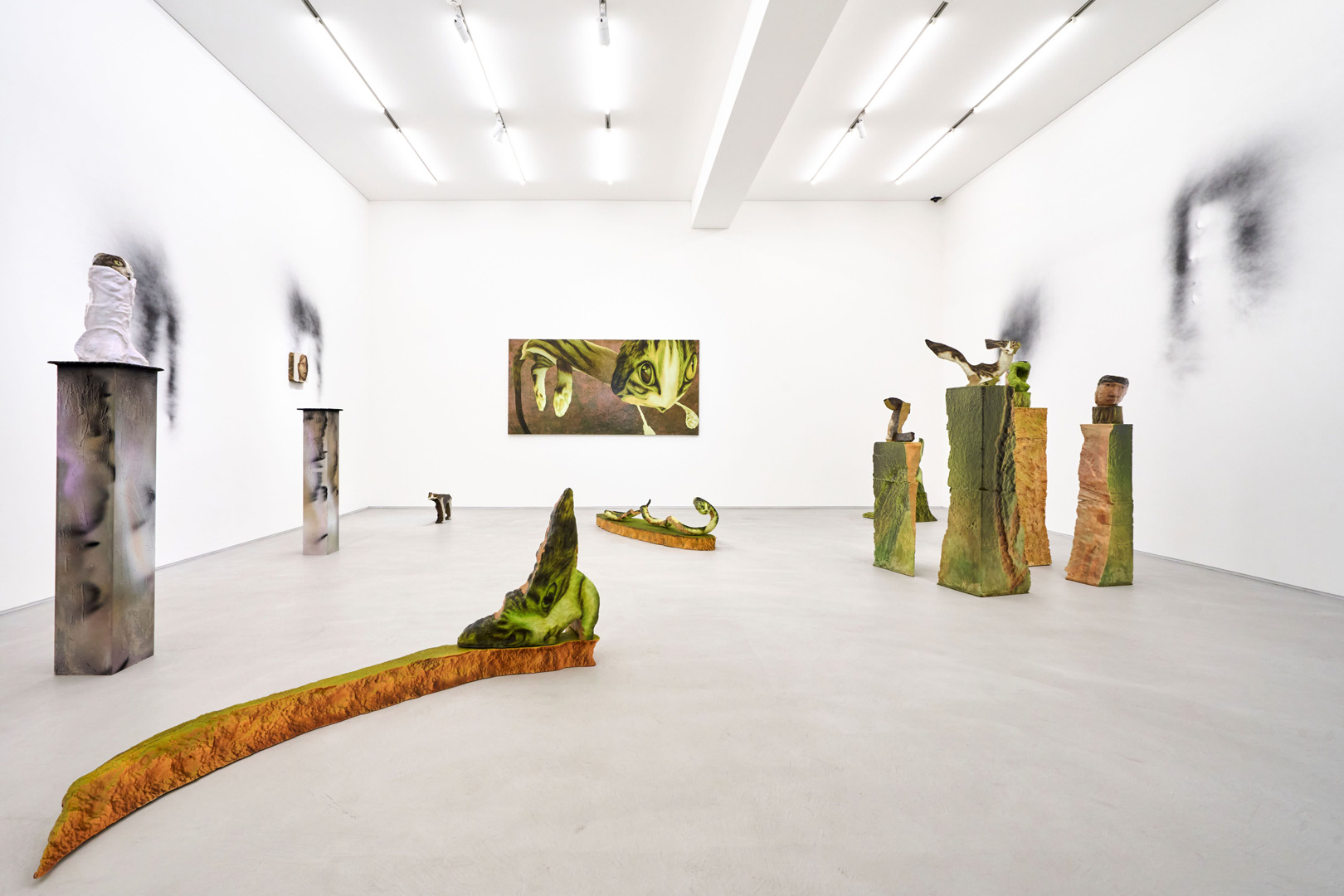
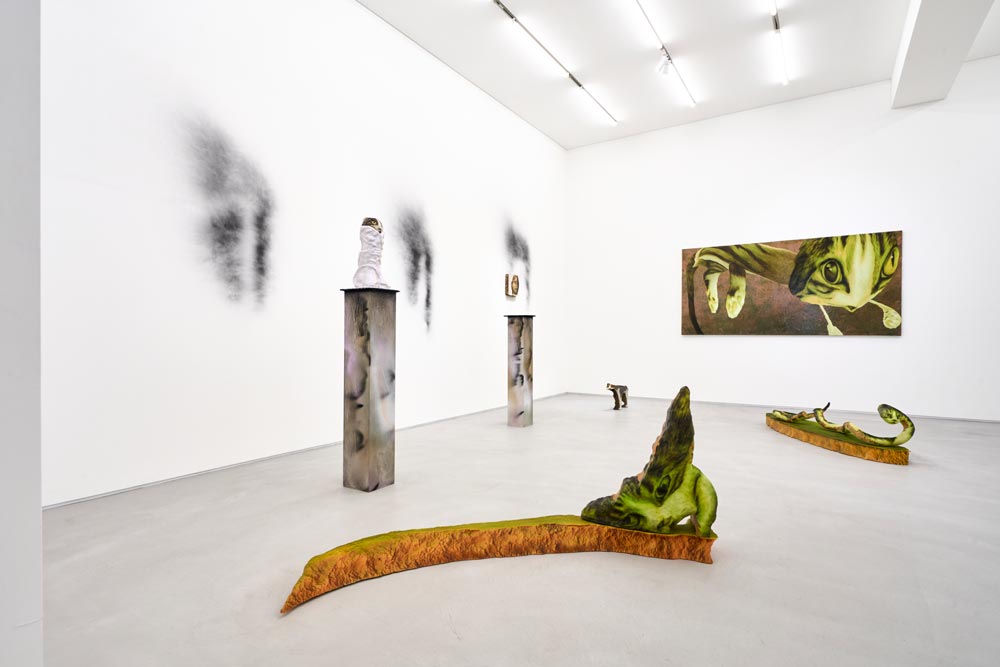
solo exhibition 《PPURI》(2024) highlights how the internet, deeply rooted in Taewon Ahn’s
identity, manifests in his recent works. The title "PPURI" (meaning
"root" in Korean) hints at the exploration of the fundamental aspects
of his creative practice. As viewers enter the exhibition space, the first work
that catches their attention is a large-scale canvas (200 ho) positioned on the
farthest wall opposite the entrance. The painting features a distorted image of
Hiro, the cat, rendered on a uniquely textured surface that Ahn has been
experimenting with recently. This piece sets the thematic tone for the
exhibition, where distorted and exaggerated forms challenge the viewer's
perception.
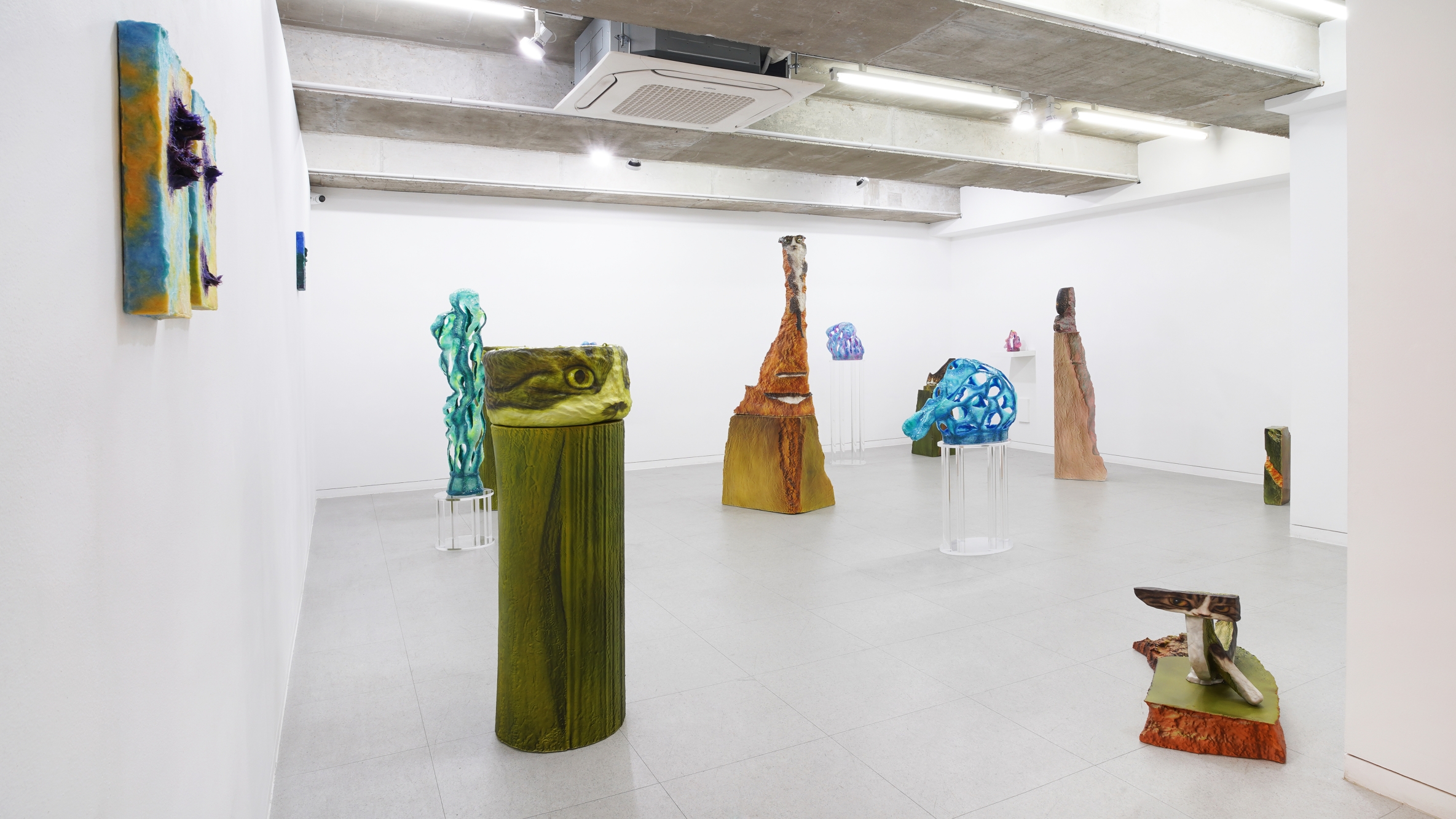
Surrounding
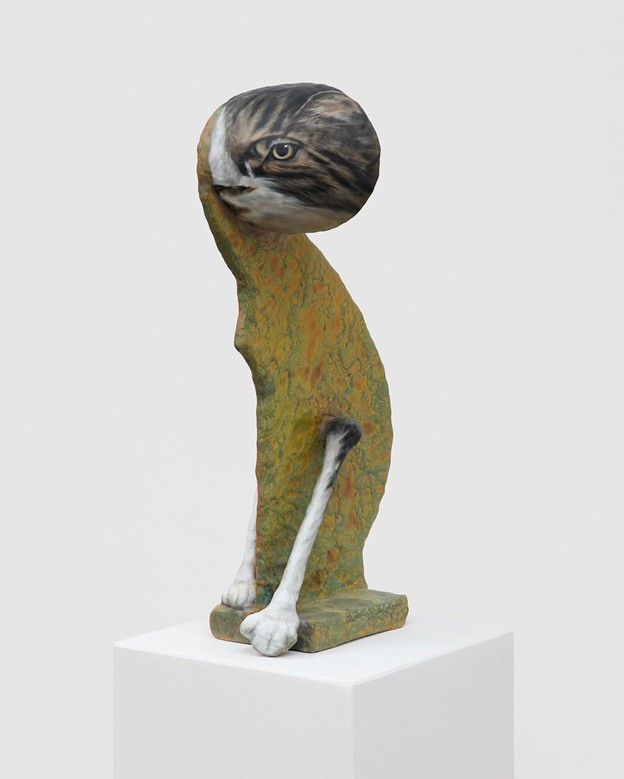
this central work are twelve sculptural pieces scattered throughout the
exhibition hall. These objects continue Ahn’s exploration of translating Hiro’s
real physical presence into painted "images" on sculptural
"surfaces." However, these sculptural works are not merely paintings
transferred onto objects; they possess a volumetric form that seeks to become
sculptural entities in their own right. Ahn’s latest endeavor to create
pedestals for these sculptures exemplifies this approach.
Unlike
conventional pedestals that simply support objects, Ahn’s custom-made bases
seem to act as extensions of the artworks themselves. They function as
structural supports for forms that remain inherently incomplete—image-objects
that have not fully matured into independent sculptures. The pedestals thus
serve as a metaphor for the transitional state of Ahn’s works, where they waver
between being two-dimensional images and fully realized three-dimensional
sculptures.
Through
the juxtaposition of distorted paintings and sculptural objects, 《PPURI》 emphasizes Ahn’s ongoing exploration
of the duality between flatness and volume. The works evoke the hybrid nature
of Ahn’s artistic identity, shaped by digital visual culture but deeply
connected to physical, tangible realities. By crafting pedestals that
physically sustain these hybrid forms, Ahn underscores the idea that his
creations are not static objects but dynamic, evolving entities. The exhibition
ultimately portrays Ahn’s artistic process as one of continuous transformation,
where surfaces serve as a point of convergence between painting and sculpture,
image and object.
On
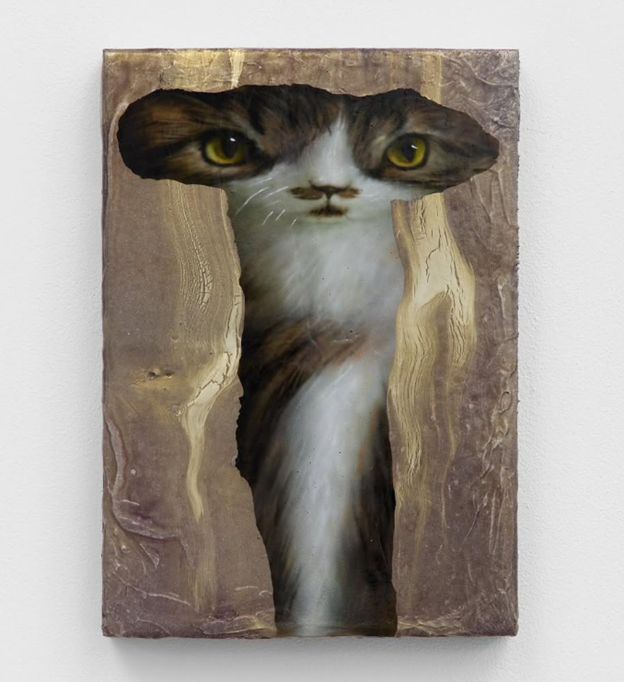
the other hand, the sculptures presented in this exhibition feature sculptural
gestures where their surfaces are finely and intricately carved. These newly
layered interventions on the previously completed sculptures reveal a
substantial amount of manual labor. By stripping away the surface of the
finished objects, Taewon Ahn aimed to expose the inside of the image rather
than merely creating a visual effect. This act can be seen as an effort to
increase the contact surface of the image—physically engraving tactile gaps on
a seemingly untouchable surface.
The
traces left by the sprayed sculptures on the white walls of P21 reaffirm that,
although Ahn’s works are image-based, they are undeniably oriented toward
objecthood. These flat-painting-images, which now embody
three-dimensional-sculpture-objects, reflect Ahn’s hybrid identity shaped
through the internet. As an artist who has internalized the grammar of digital
images, Ahn continues to strive to create a form of "object" despite
the inherently flat nature of his images.
If
we view Ahn’s works not as fixed “states” but as works situated in specific
“situations,” the distinction between painting and sculpture, or flatness and
three-dimensionality, becomes irrelevant. His practice has, from the very
beginning, taken the form of images rooted in objects. The question then
arises: What kind of form will the image’s body take next? It remains uncertain
what kind of material form these infinitely variable images within his practice
will assume in the future. However, as he continues to approach everything once
again from a perspective of "materiality," it will be intriguing to
see what crossroads his work encounters.
[1]
In this text, the term “image” refers to something that imitates, reproduces,
or records a representation of reality, while distinguishing it from language
and objects.
[2] The word "meme" originally derives from the word
"gene," signifying a self-replicating characteristic. In his book The
Selfish Gene (1976), Richard Dawkins used "meme" to
describe ideas, beliefs, or cultural structures that, like genes, possess
replicative qualities and are passed on from one individual or group to
another.