Looking back at Hyen’s earliest
work, we can see how she has focused on spatial rules and order, using
transformed and derived ideas to create cracks in the overlooked relationships
of attachment between her objects’ existence and their settings. Her attention
is directed at the state of an object “occupying” its surroundings as it
radiates a sense of existence, transporting relationships of attachment into
bizarre bodies—an approach that dates back to her work History of
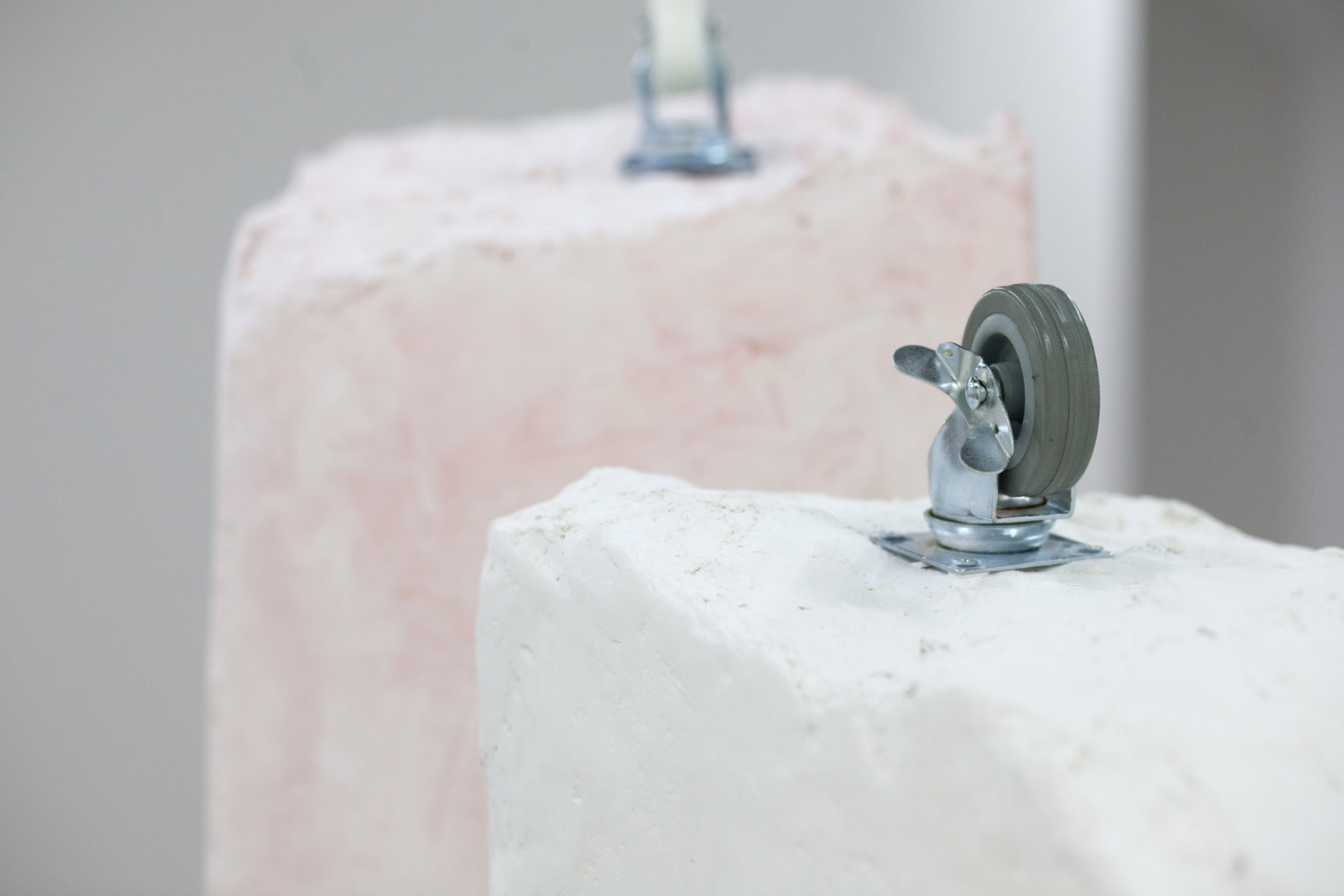
Bowlegs (2014). While imagining urban spaces with pre-written rules,
Hyen cast in cement four vertical shapes to represent the process of a legs
becoming bowed, aiming to encourage viewers to imagine the relationships
between objects and the body. Each a shape cast from the widening, silhouetted
space between the bowed legs, the sculptures are speakers unto themselves. But
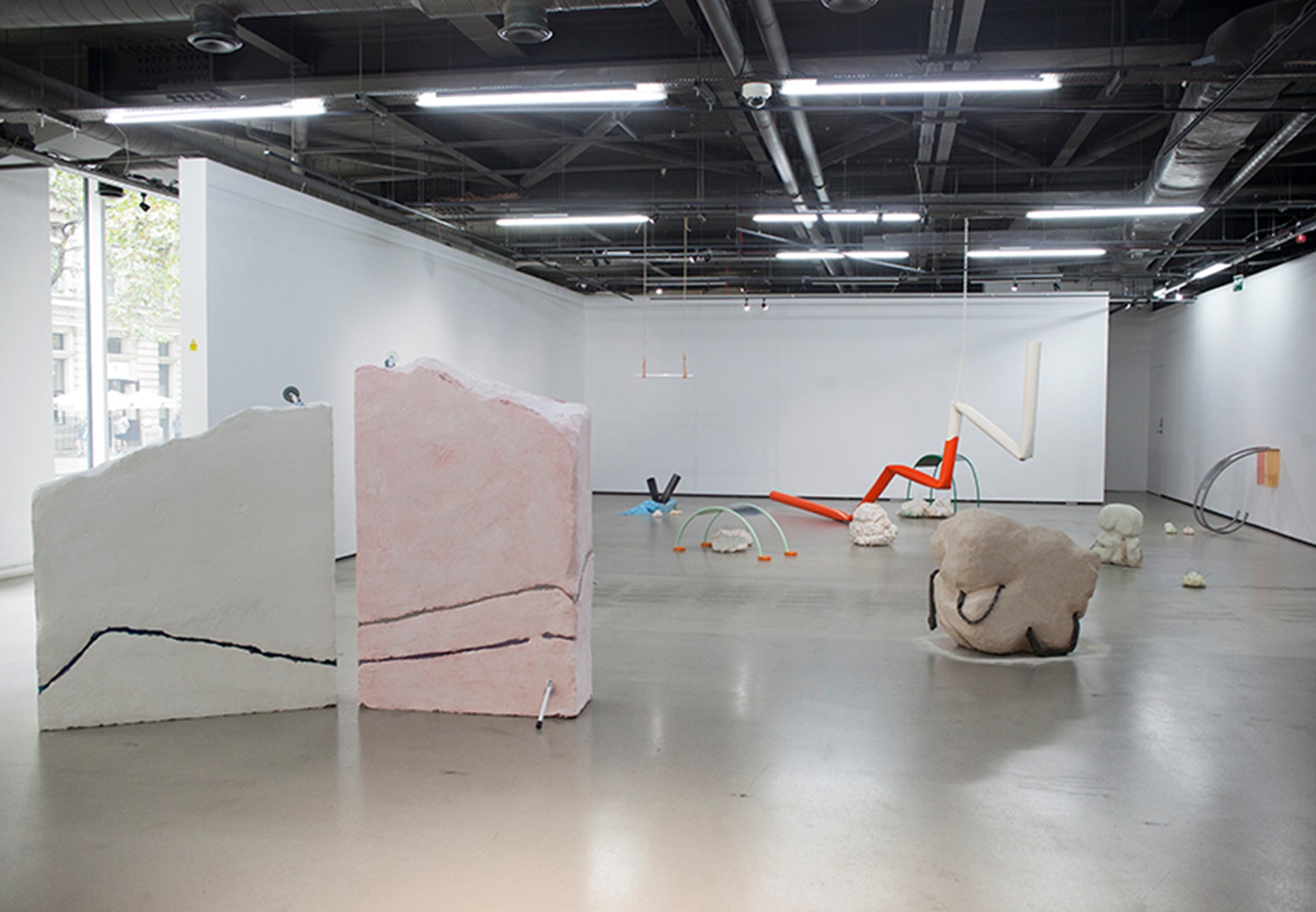
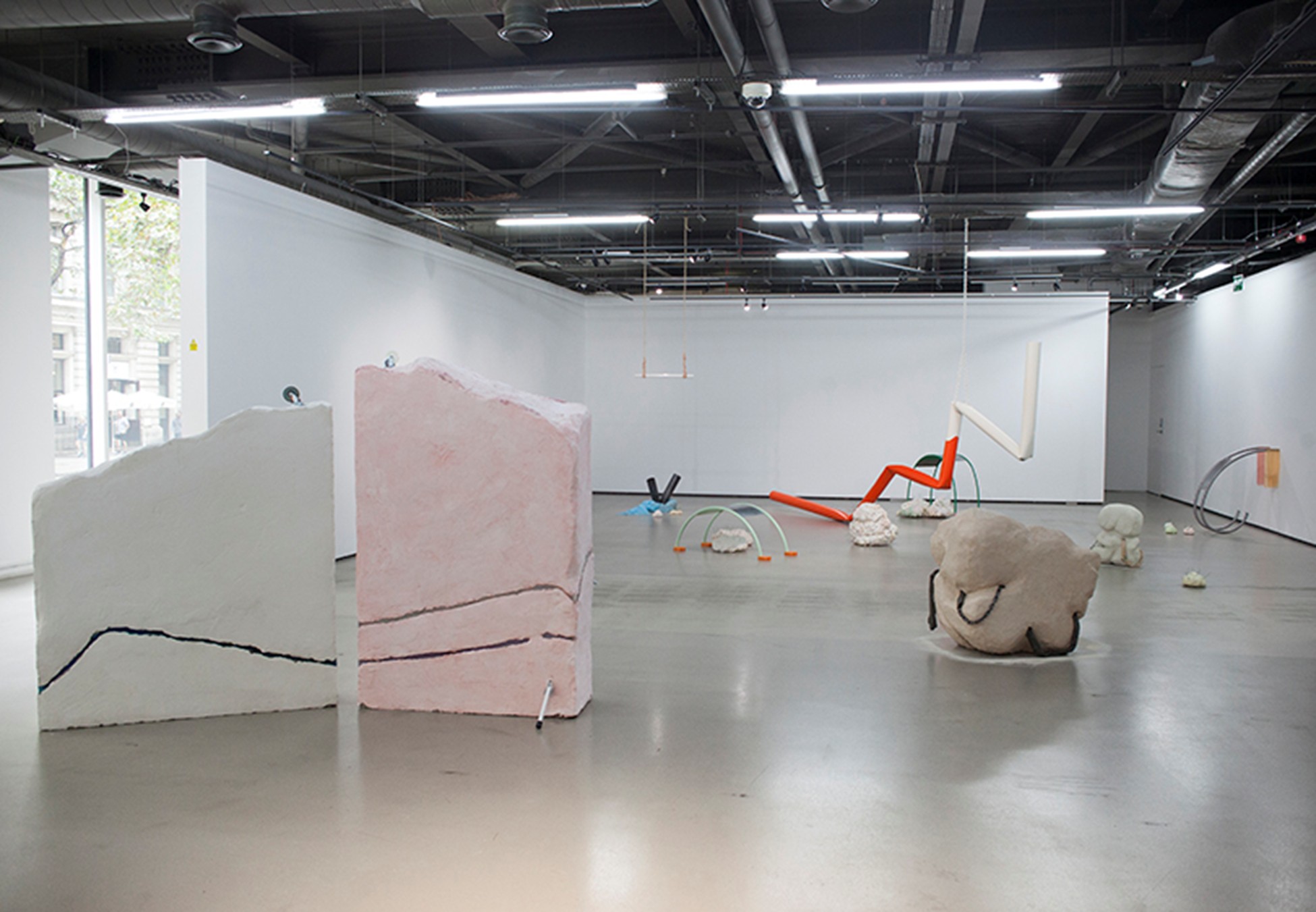
in her various subsequent installations—beginning with the exhibition Walking
on tiptoes (2018, Korean Cultural Centre UK, London)—Hyen has
presented a theatrical form of sculptural narratives to contemplate each
situation surrounding her work. An example of this can be found in I
see you from here (2018), where a form that presents the physical act
of walking on tiptoe speaks to the relationship between the body and a space,
leading viewers to imagine that the floor upon which they tread may not be so
firm. The situations posited in Hyen’s sculptures originate in scenarios where
the presence of an object can be determined while the work is made to stand
independently as its own speaker, focusing on the peripheral byproducts (such
as in These will be the days, 2018) and evidence rather than concretely
visualizing the unseen presence. The temporal sense of peripherality that
accompanies Hyen’s works presents itself somewhat stubbornly in sculptural form
as the invisible situations surrounding the objects are realized through the
artist’s trademark cheerful, tragicomic scenarios. Strategic, boundary-blurring
devices bear the artist’s attempts to separate her bodies from other bodies
outside of the space, or from the means in which movements are represented. The
legitimacy of presence is ensured through new motions and situations that are
subtly layered upon the object.
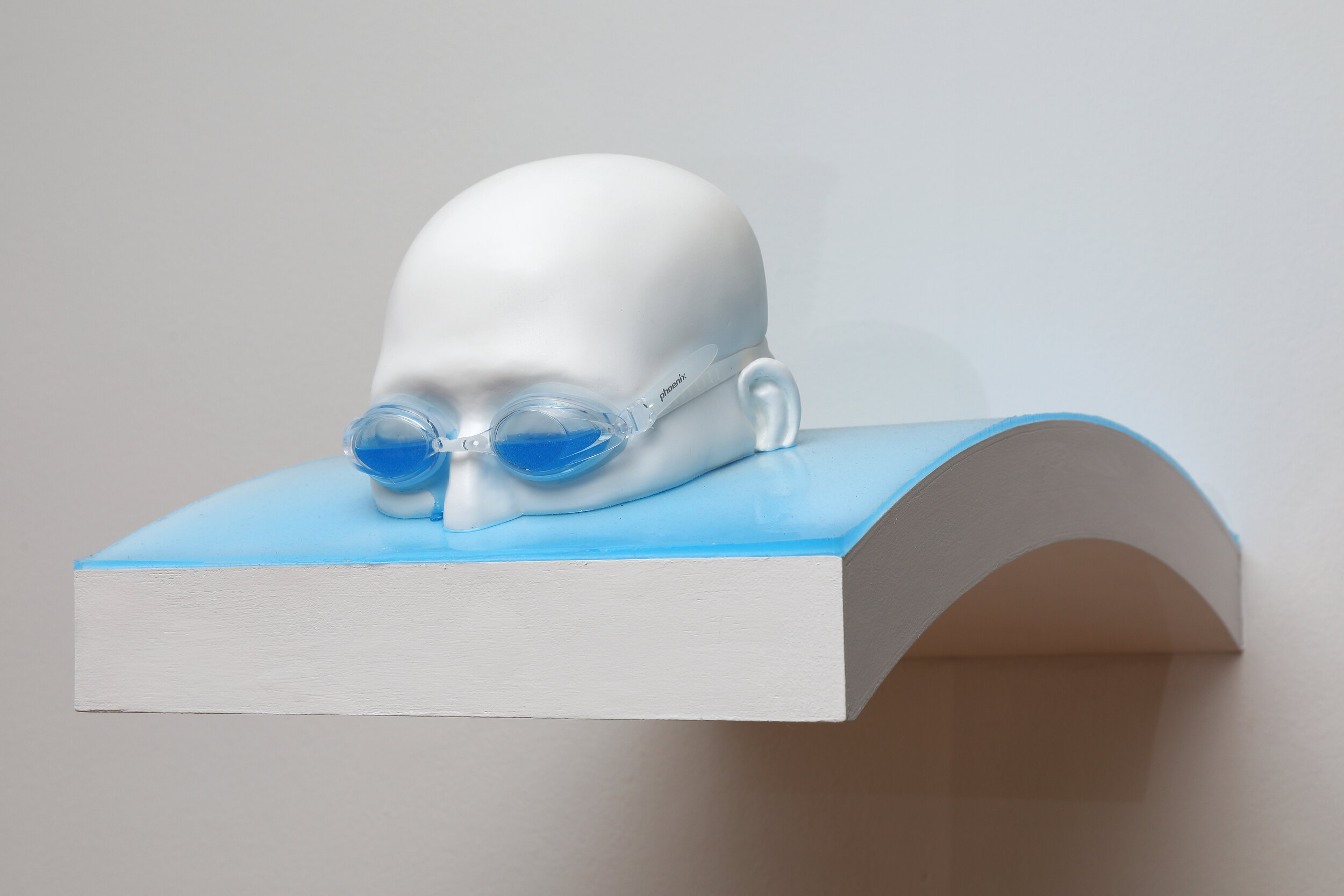
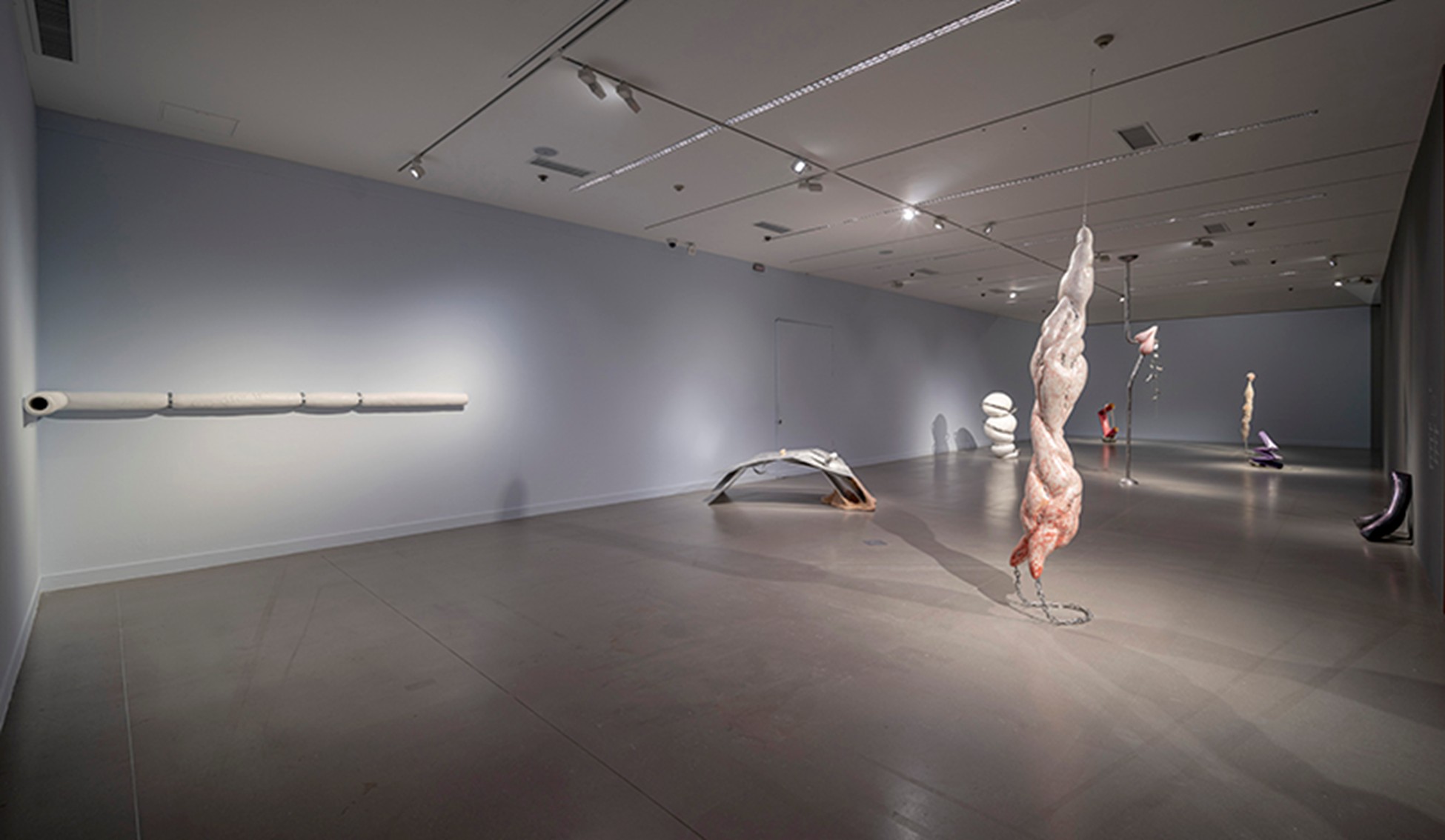
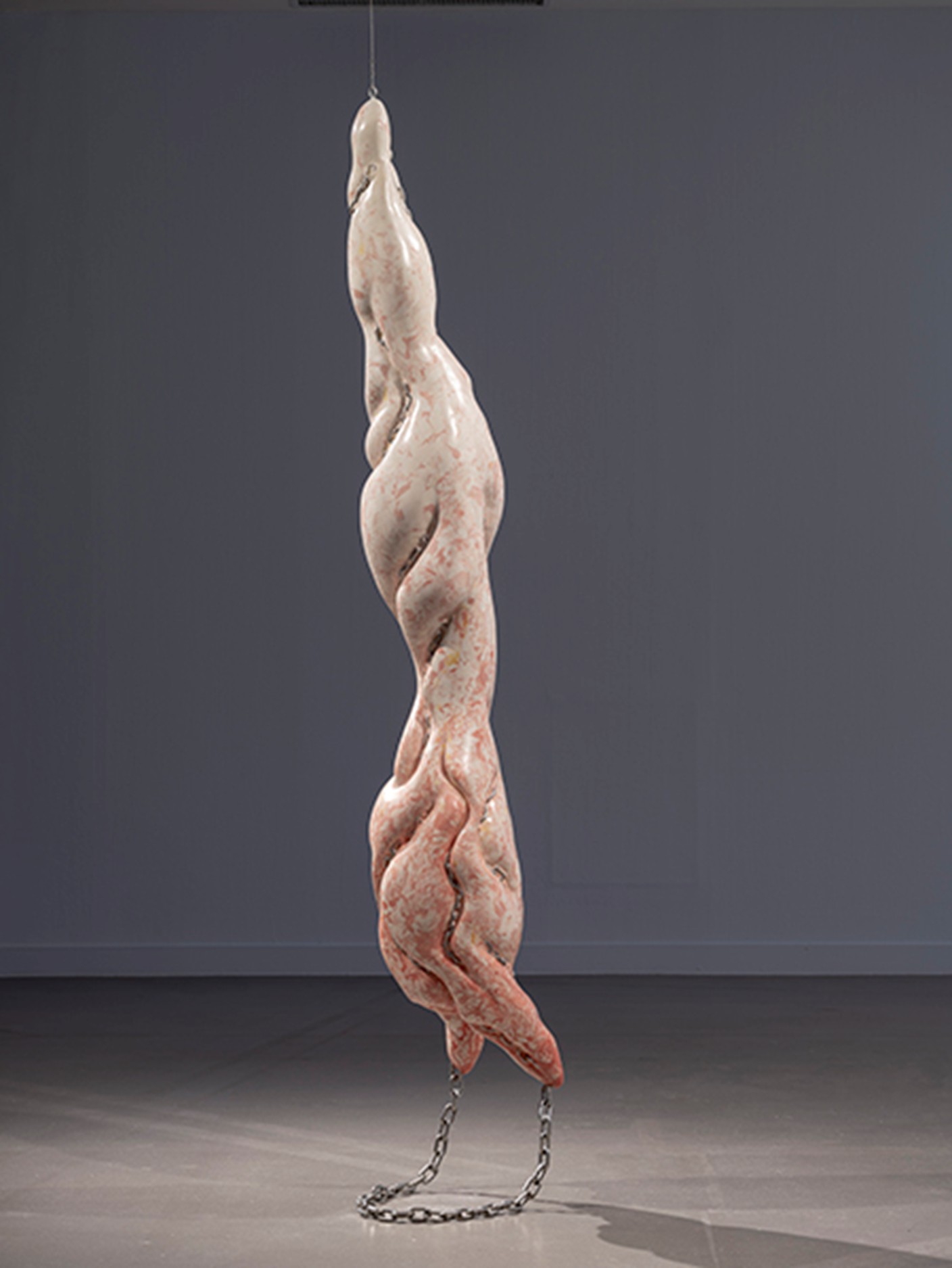
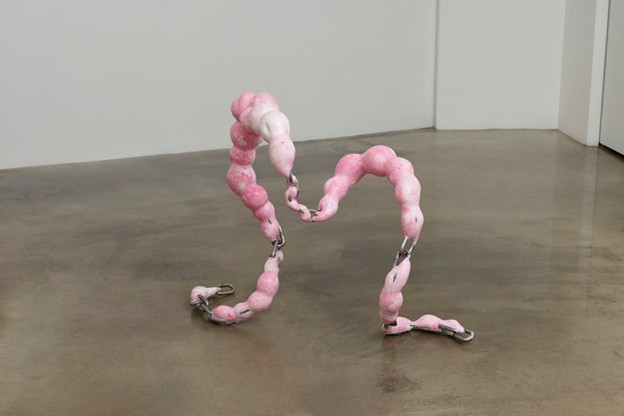
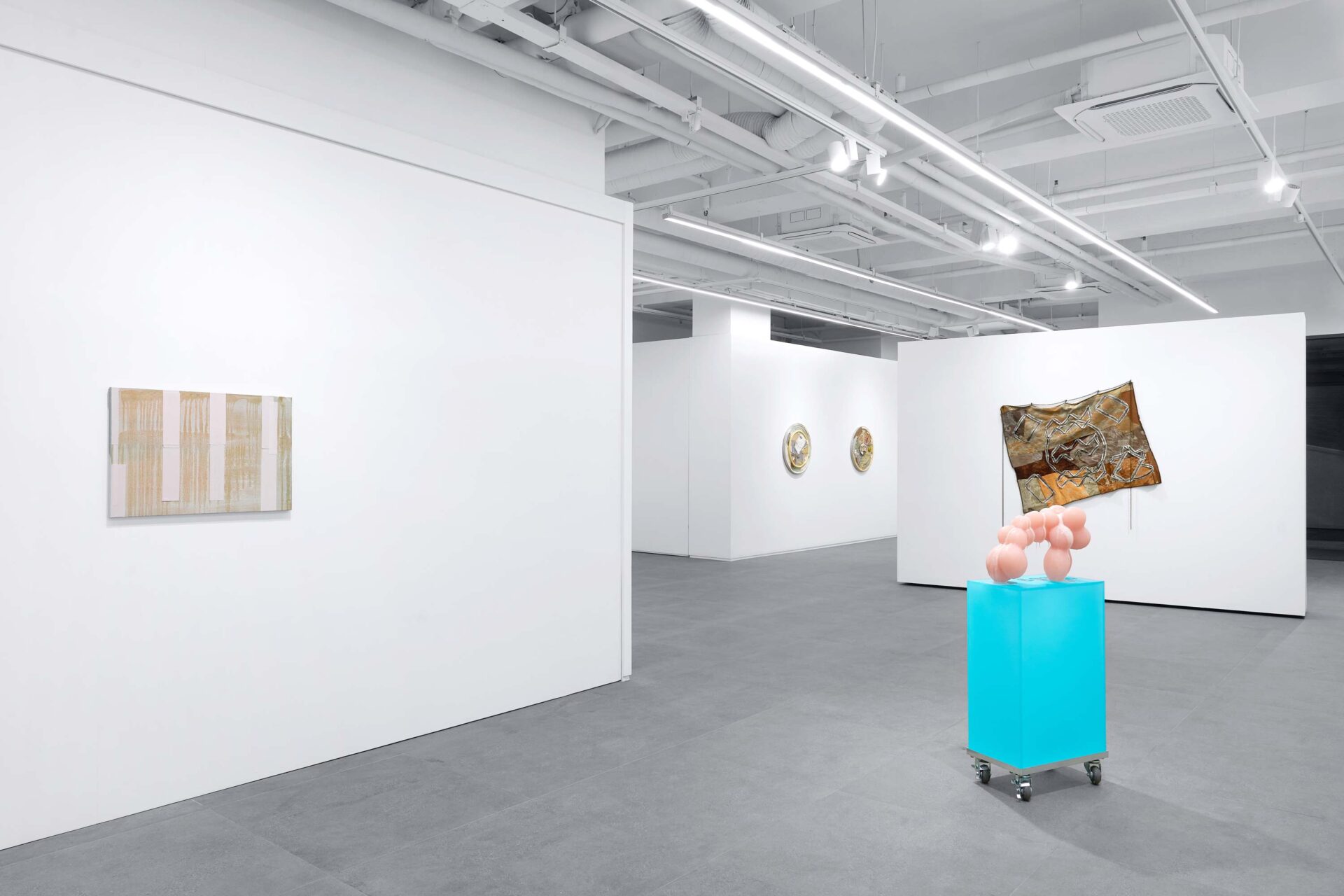
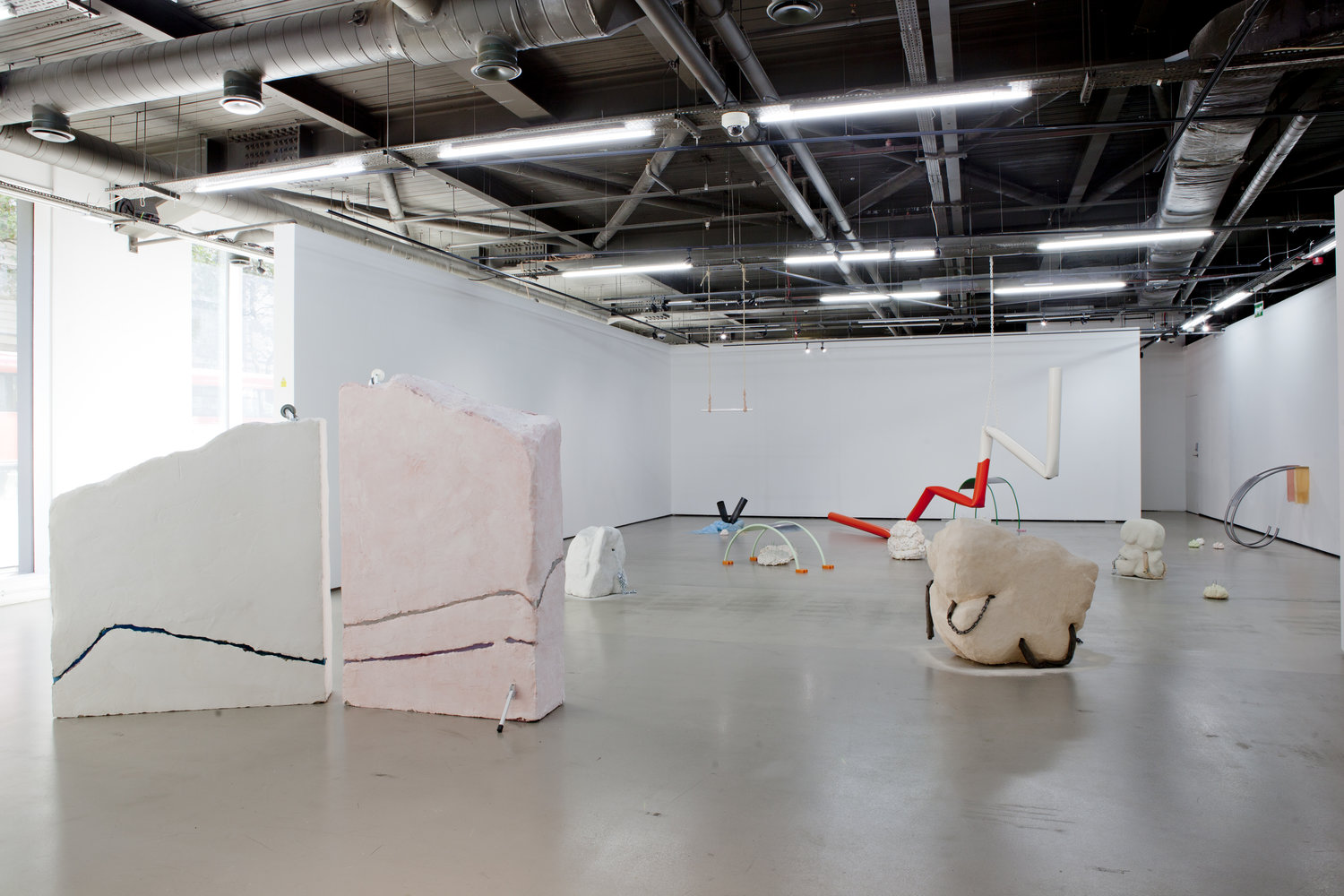
Resembling parts removed from a
body, Hyen’s sculptures evoke flesh with their coloration, a mixture of
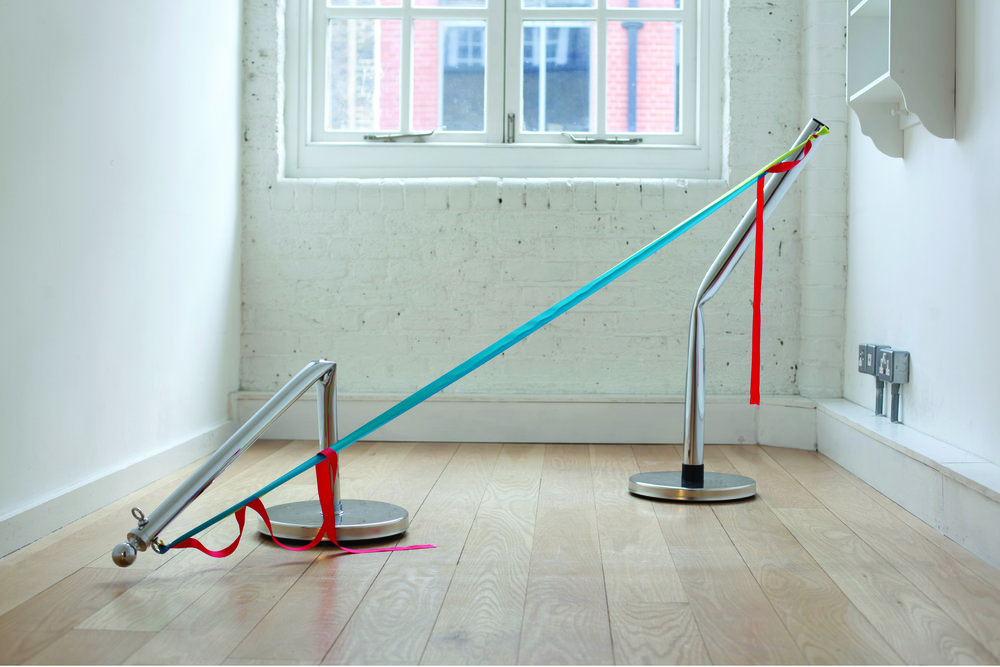
skin-colored pigments and Jesmonite, silicone, and plaster. The artist’s color
blending and painting play an important conceptual role beyond the physical
expression of body parts as the colors decorate the surface in a painterly way,
applied over stainless steel pipes that have been forcibly transformed. While
the artist used a sleek painting approach from Mama never told me how
my dreams will be shattered (2017) to On my knees
(2019), her sculptural identity has recently become blurred with the pronounced
chiaroscuro elements in With All My Heart (2021). Also while
the works in her “dislocated body” series through 2019 (On my way 1, 2,
2019) are bizarre sculptures of bodies as subjective presences, Hyen has
increasingly neutralized visual subjectivity through the adoption of disparate
physical devices, as if “silencing” her objects. Individually, her sculptures
occupy space, but since Hyen incorporates binding and silencing into the works
themselves, they become things that cannot exist freely. On the whole, linear
items such as locks, chains, and latex are used as frames to surround and
control the sculpted masses, and the subtle relationship of tension that
results fetishistically depicts a non-productive dialectic between subject and
object, material and form. Hyen’s “abusive” attitude toward sculpture—in which
she consciously tries to control and confine her objects through cold and
sharpened mechanisms—is meant to capture the precarious moments of a mass’s
expansion and compression as its physical qualities are transformed. Creating a
momentary form actually entails a long and difficult weaving process, one
accompanied by the exhilaration of the “sadistic” execution of the artist’s
sculptural practice. The gestures that Hyen adheres to in her repetitive
production process converge upon a consistent attitude that involves feelings
like fear, trepidation, escape, avoidance, and loathing. Her hands follow the
outline of her chosen shape, alternating between the direction she desires and
the direction she does not as she works the object with her fingertips. As she
establishes her role, she grasps the sense of physical weight and reflects on
the mass’s structure.