Hyen
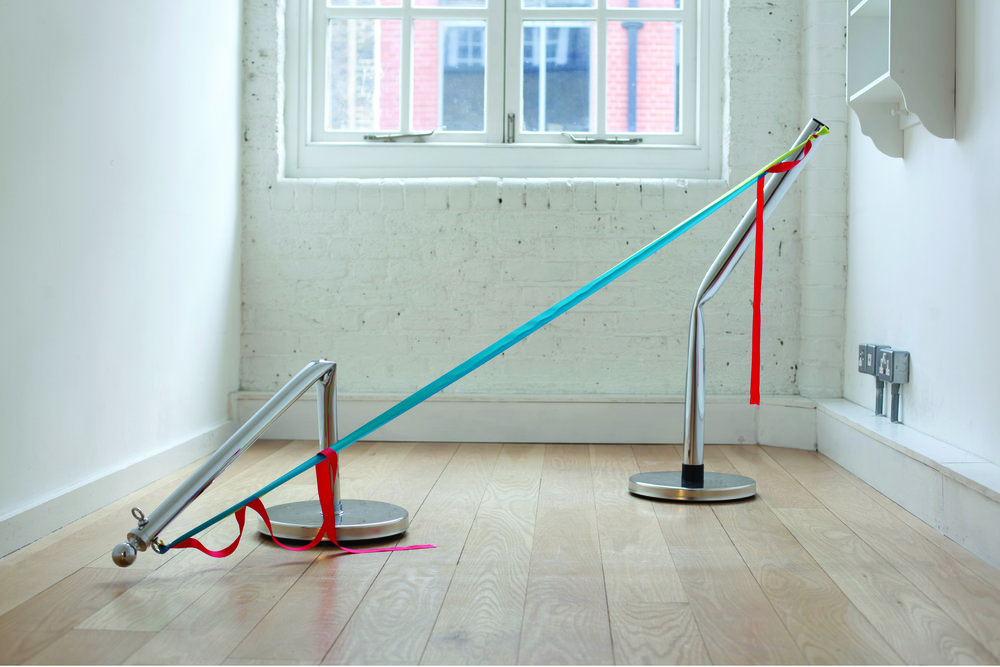
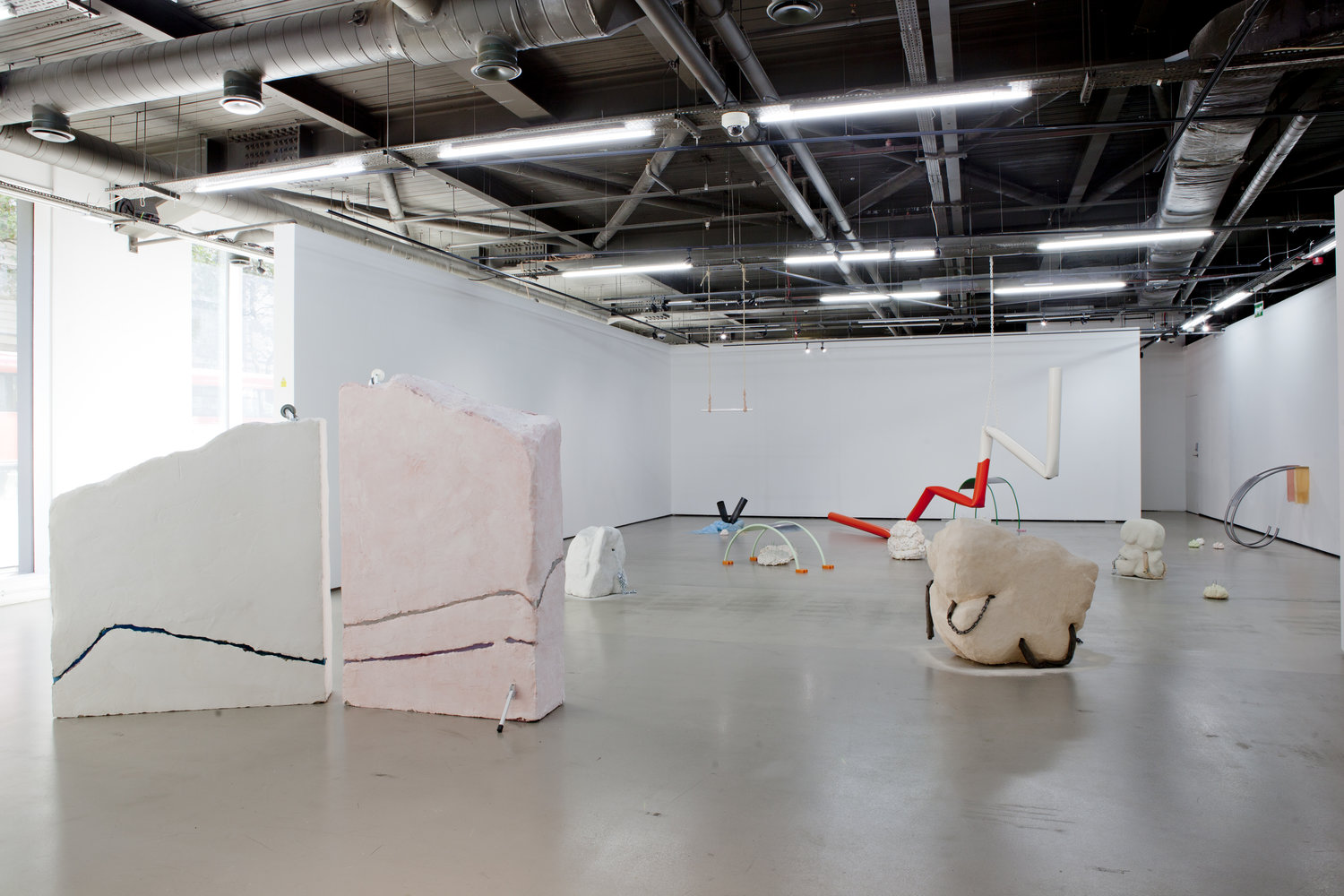
approaches sculpture through a deconstructive lens, combining non-functional
everyday objects with construction materials in experimental ways. Items like
door stoppers, locks, wheels, and carpets—stripped of their original
utility—are recombined with stainless steel pipes, cement, styrofoam, silicone,
and resin to generate unfamiliar sculptural languages from familiar materials.
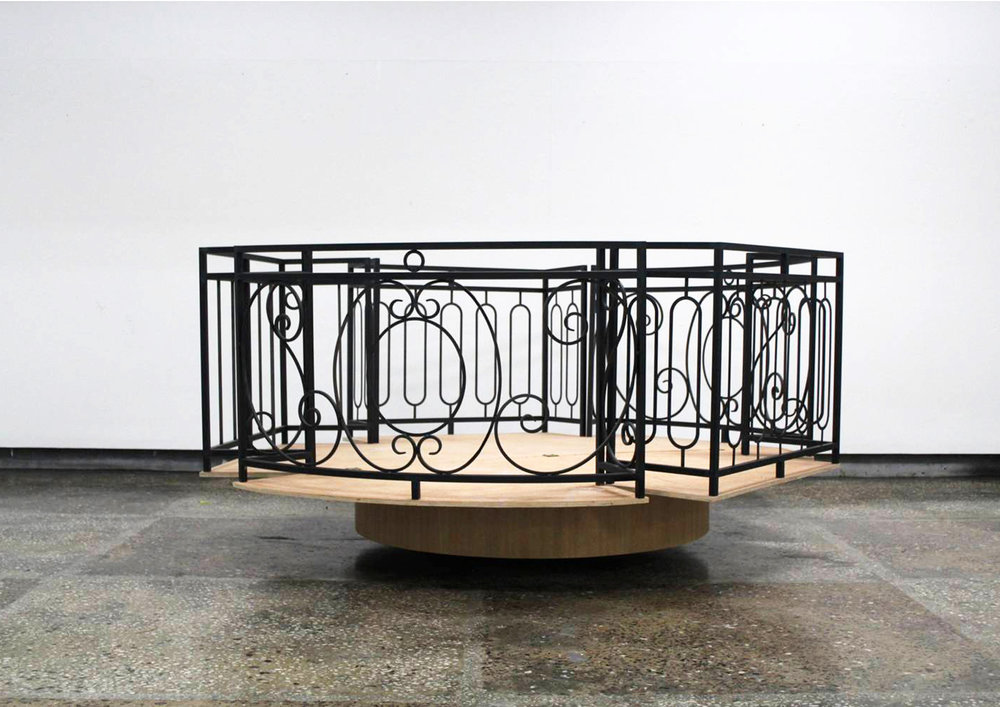
Early
works such as Retirement(2018) and On My Knees(2019)
illustrate the physical tension and collision between dissimilar materials,
highlighting the relationship between suppressed bodies and urban
infrastructure. These pieces expand the concept of sculpture beyond form into
scenographic arrangements.
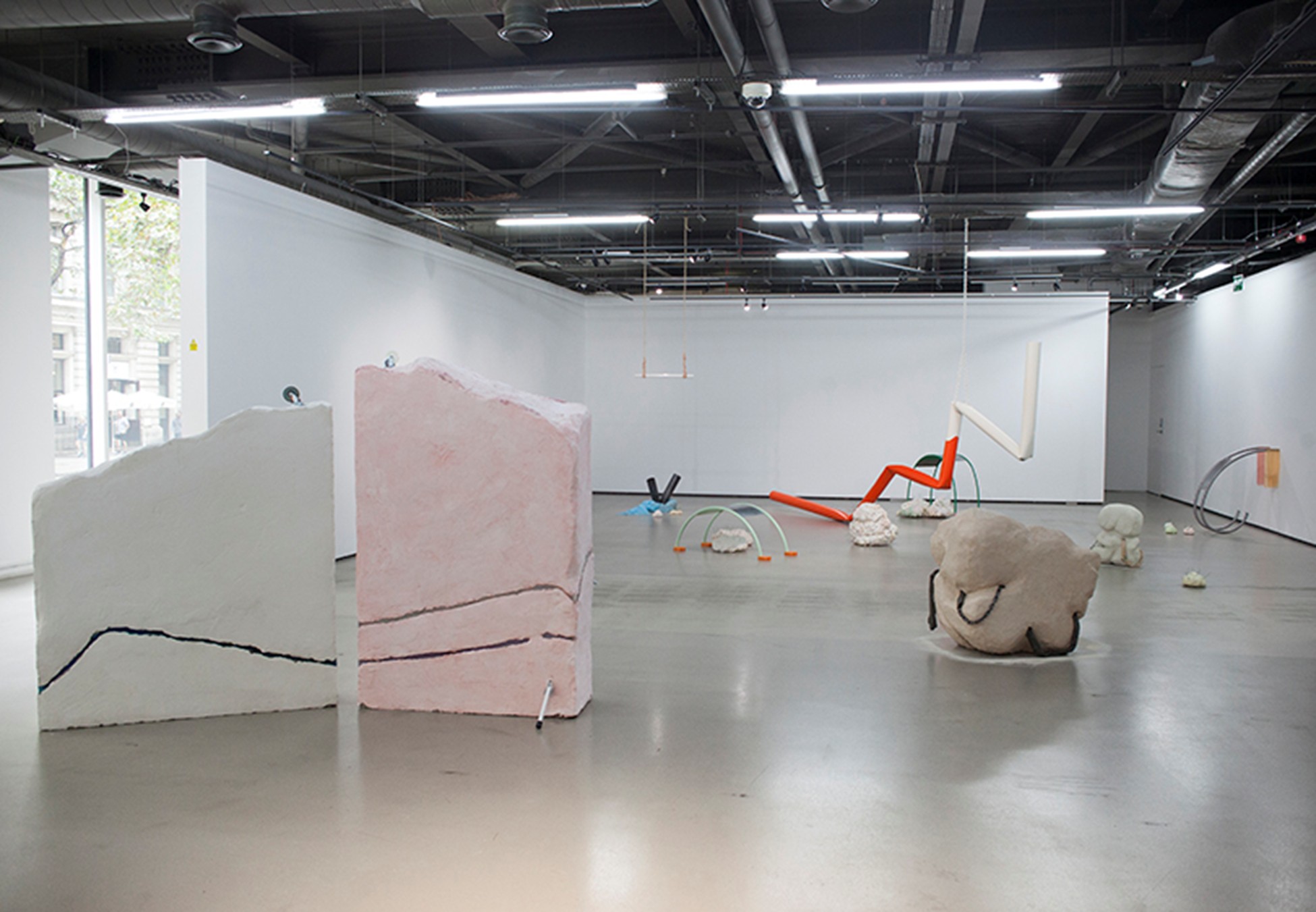
This
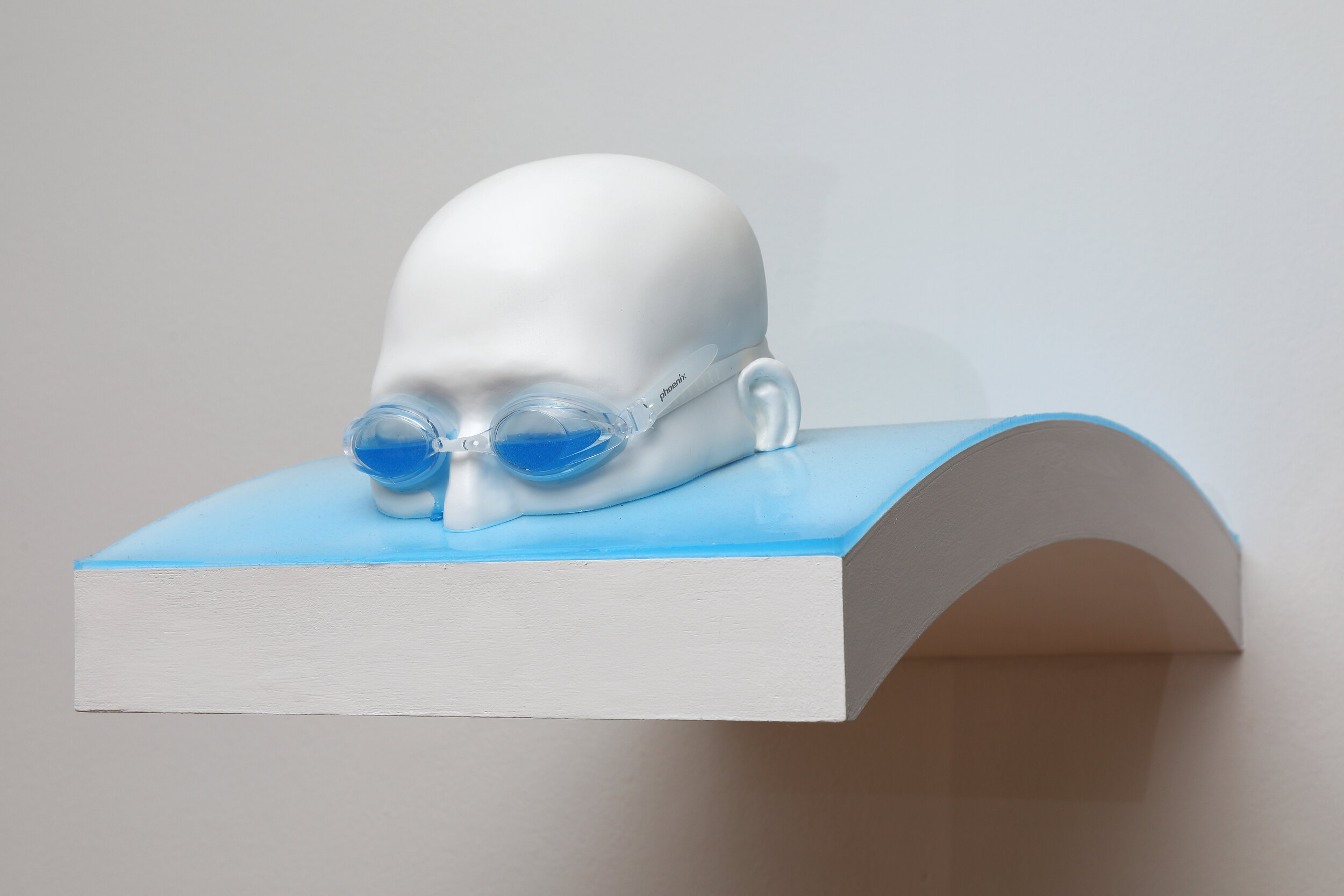
sculptural language evolves into narrative structure in exhibitions such as 《You Again》(os, 2019) and 《I swim to cry》(SONGEUN ARTCUBE, 2020). Hyen
creates objects where materiality and symbolism are layered, using elements
like silicone, clay, wire mesh, goggles, locks, and door stoppers.
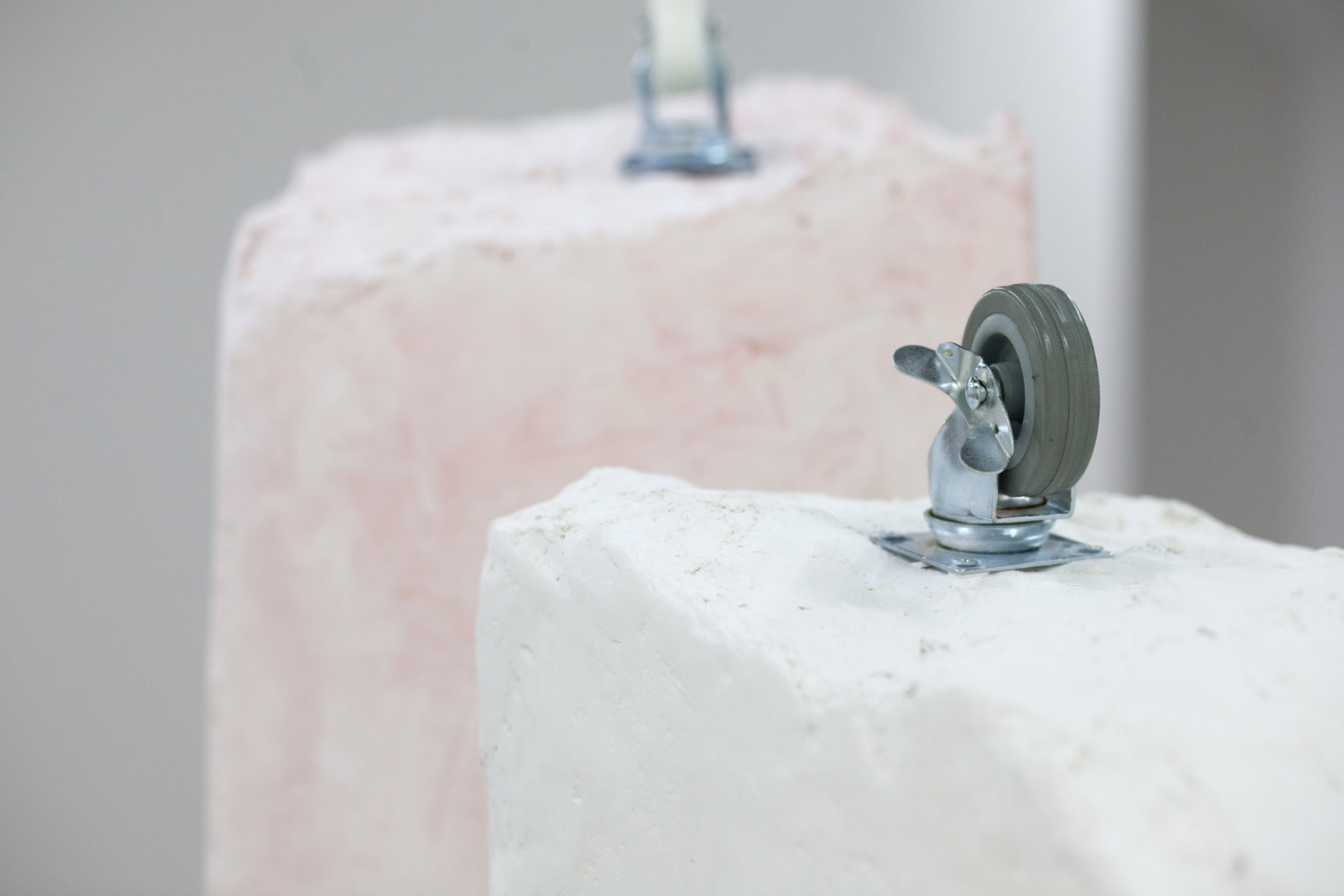
In Cooling
my heels 4, 5 and On my way 1, 2, functionless
objects—bicycle locks without bicycles, or sculptures weighed down by door
stoppers—visualize isolation and stasis. The work I swim to cry(2020)
evokes emotional leakage and containment through material transparency and
density.
In the
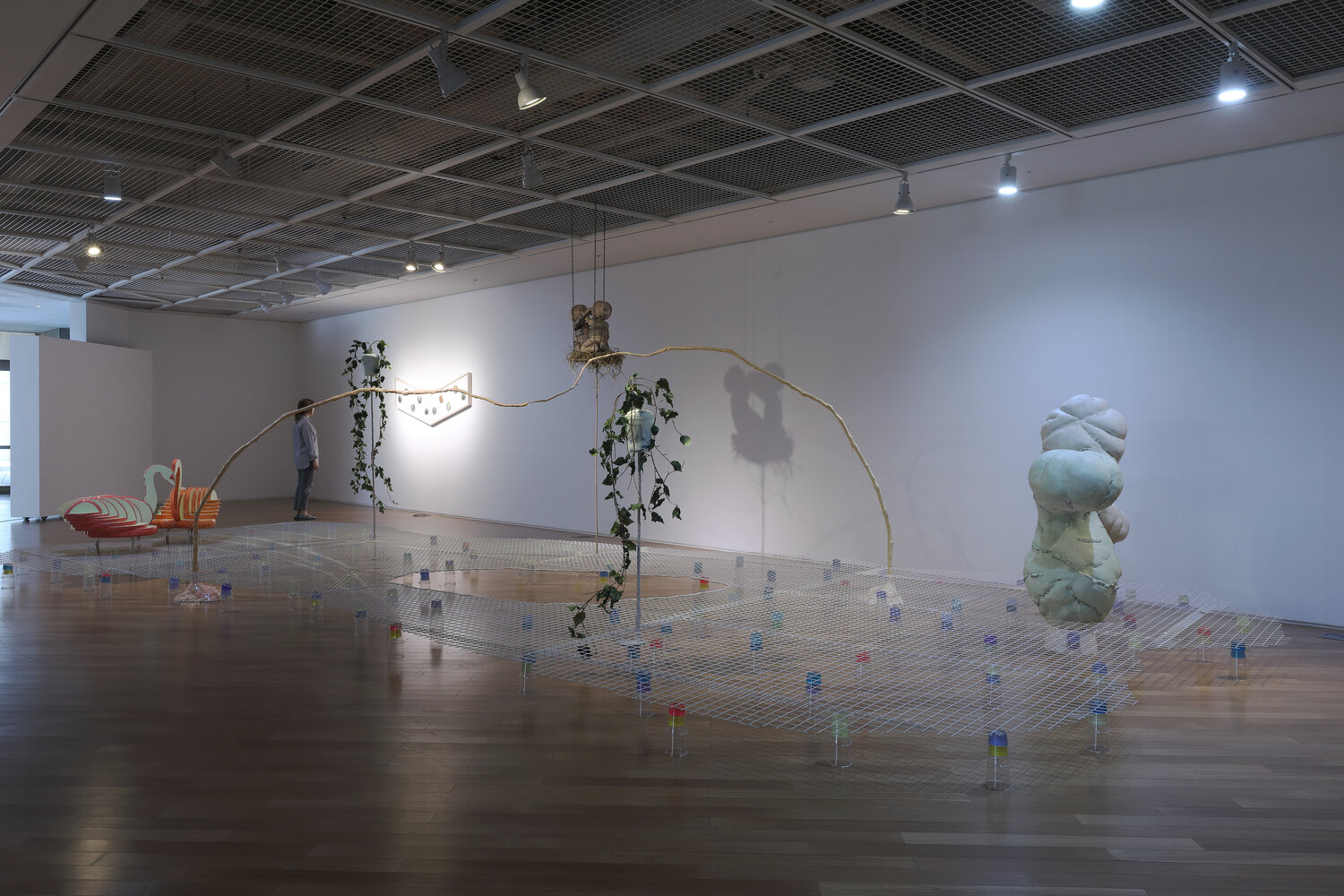
group show 《Young Korean Artists 2021》(MMCA, Gwacheon), the collision between structure and body is
reversed. In Gently holding you(2021), aluminum structures
are not oppressive forces but are organically integrated into the body of the
sculpture, suggesting a voluntary assimilation or coexistence with systemic
structures.
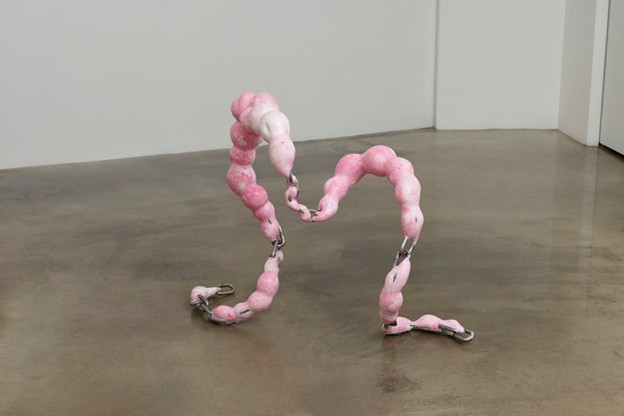
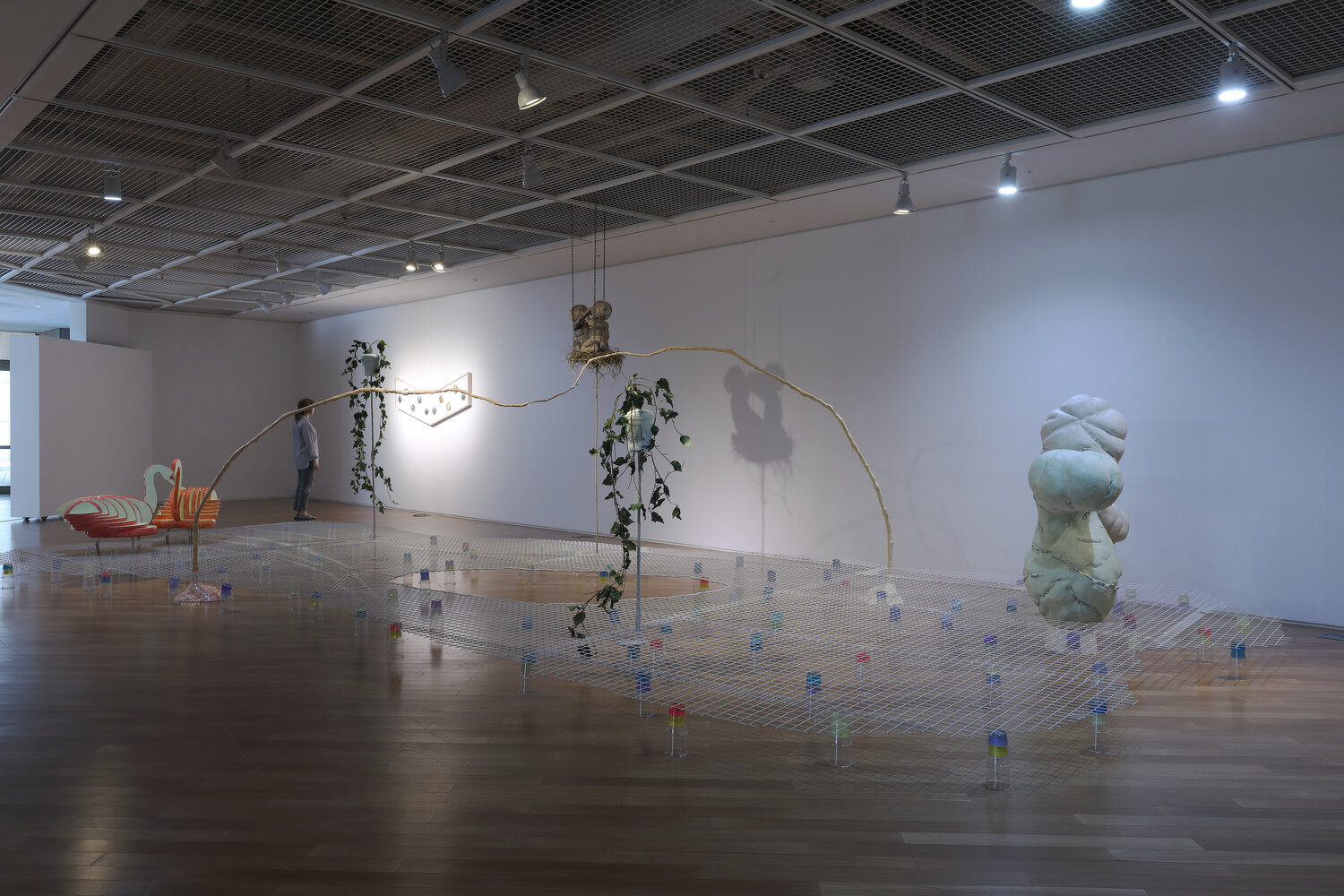
Her recent
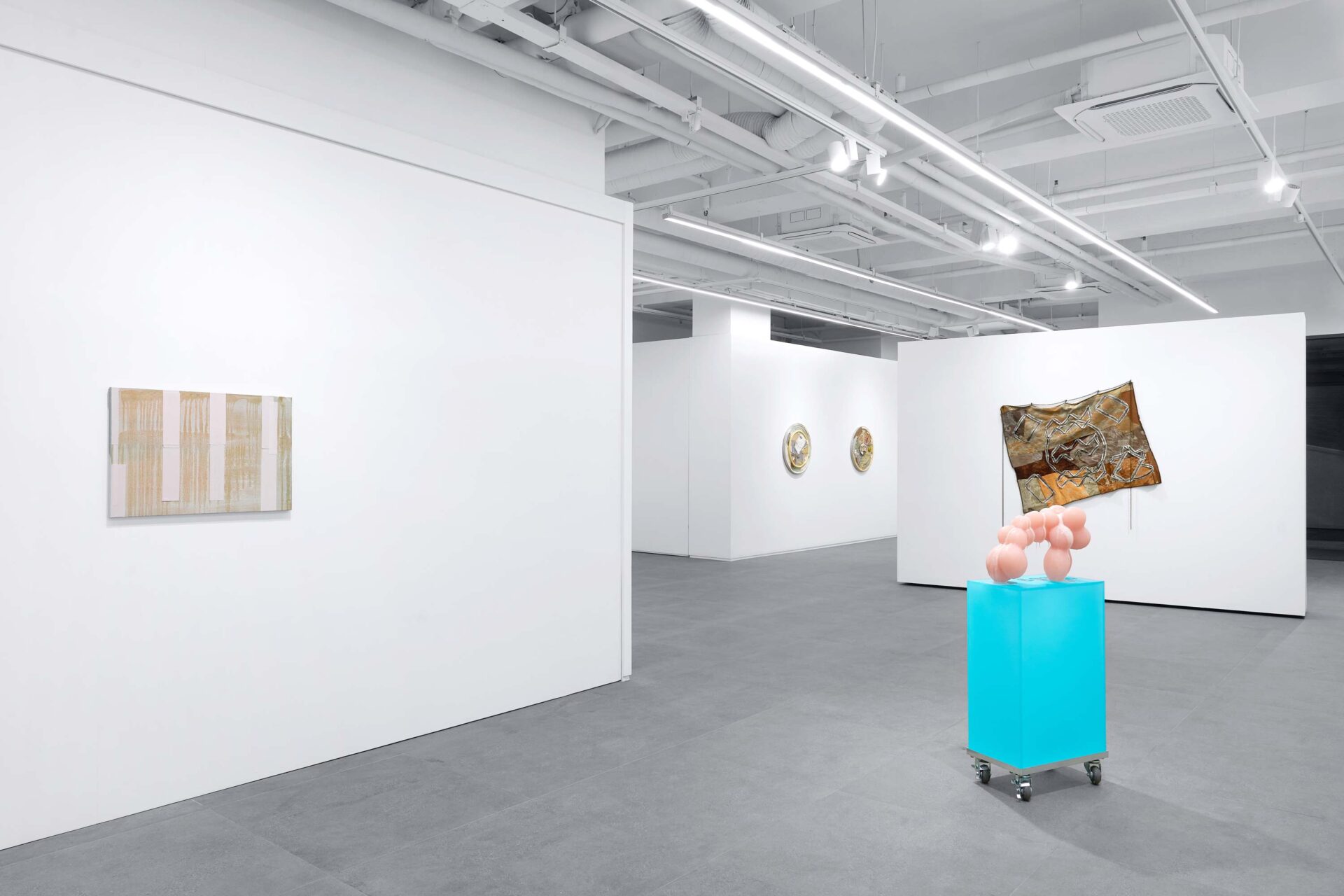
works, such as Dancing Spiral 2, 3(2023) and Feeling
you and Feeling me(2023), emphasize material tension, tactility, and generative
potential. Combinations of silicone, resin, and steel pipes are twisted
together in ways that recall living organisms. These ambiguous forms challenge
fixed definitions of species and gender, prompting renewed reflection on human
identity and life itself. In this way, Hyen's recent sculptures function not as
static objects but as constantly evolving, generative presences.