Pilgrim,
Collector /Text by Kim Taehwi
In 2020,
artist Hyun Nahm embarked on a trip to Japan, undertaking a
"pilgrimage" to locations featured in the anime adaptation of the
light novel My Teen Romantic Comedy SNAFU (commonly
abbreviated as OreGairu), a series he has long admired.
Traditionally, "pilgrimage" refers to journeys to sacred religious
sites; however, in contemporary contexts, it also denotes visits to real-world
locations depicted in various media. Drawing from his experiences, Nahm created
a body of work that culminated in this exhibition. Rather than serving as a
derivative or fan-made tribute to OreGairu, the exhibition
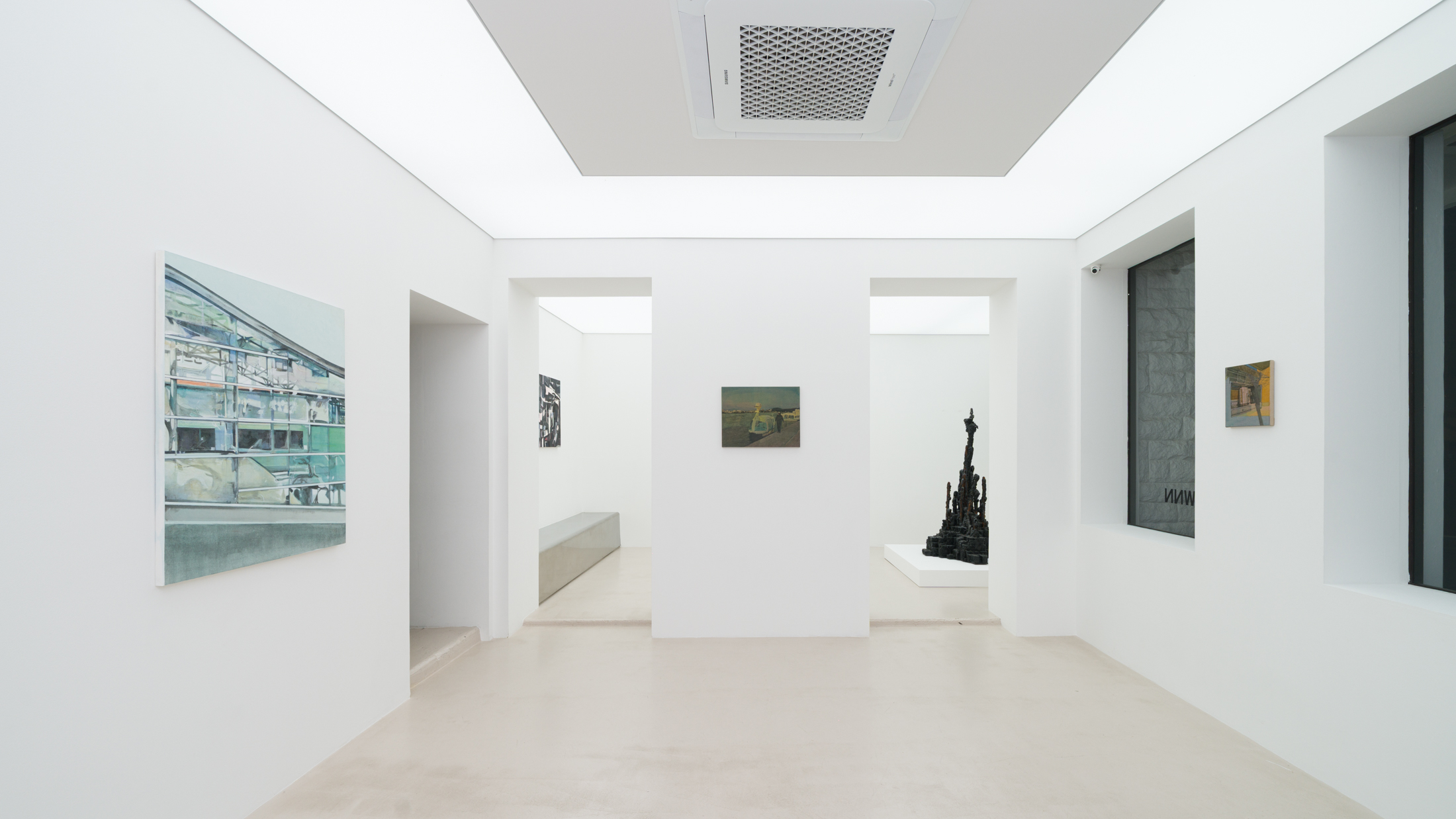
positions the anime as a catalyst for Nahm's creative exploration. Comprising
landscape images interweaving anime screenshots and photographs, sculptures
mirroring the pilgrimage route, and a dissonant sound piece, the exhibition
emphasizes the influence of the anime medium over direct content reproduction.
Thus, familiarity with OreGairu or its setting in Chiba
Prefecture is not a prerequisite for engaging with the exhibition.
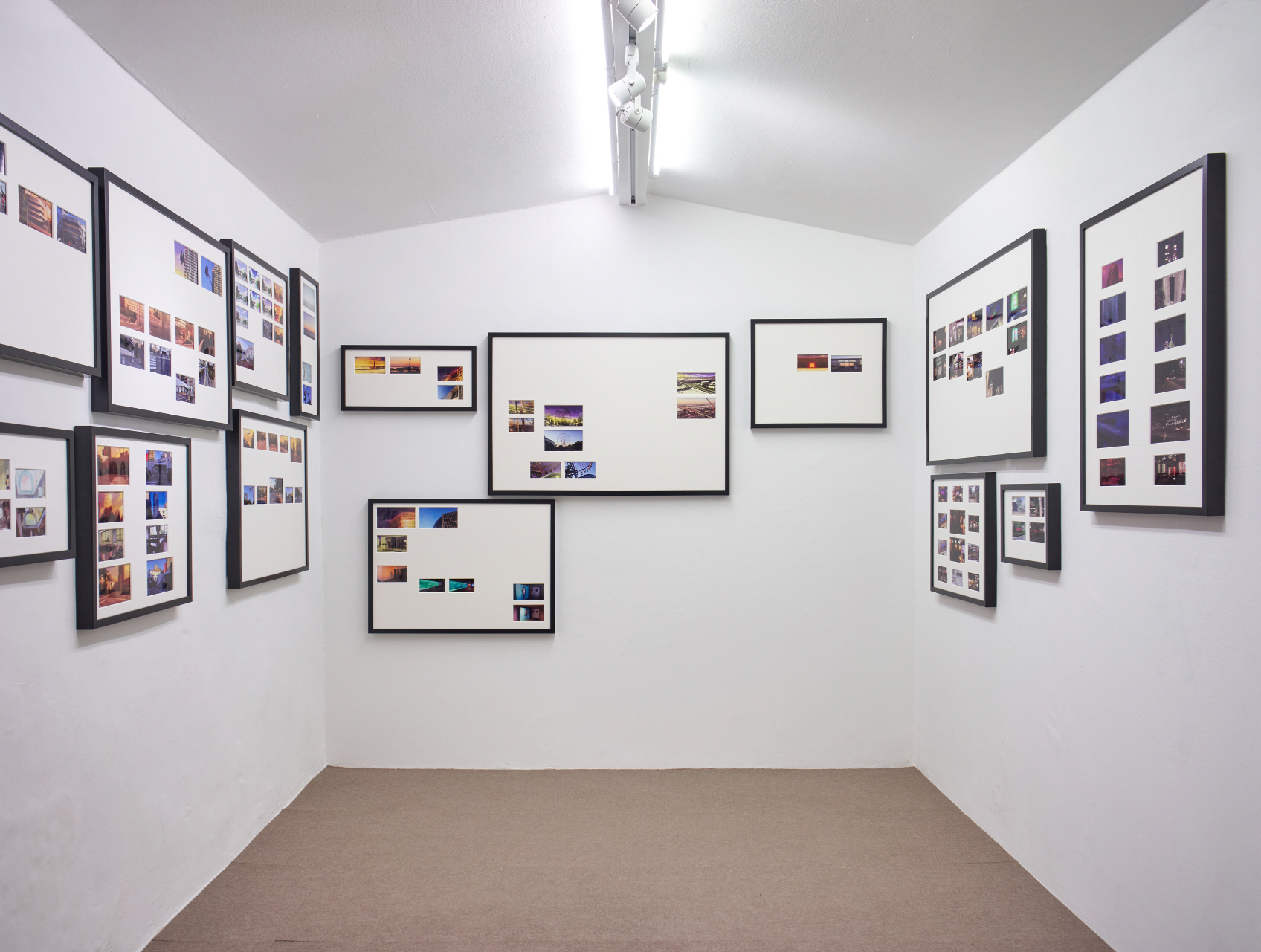
Central to
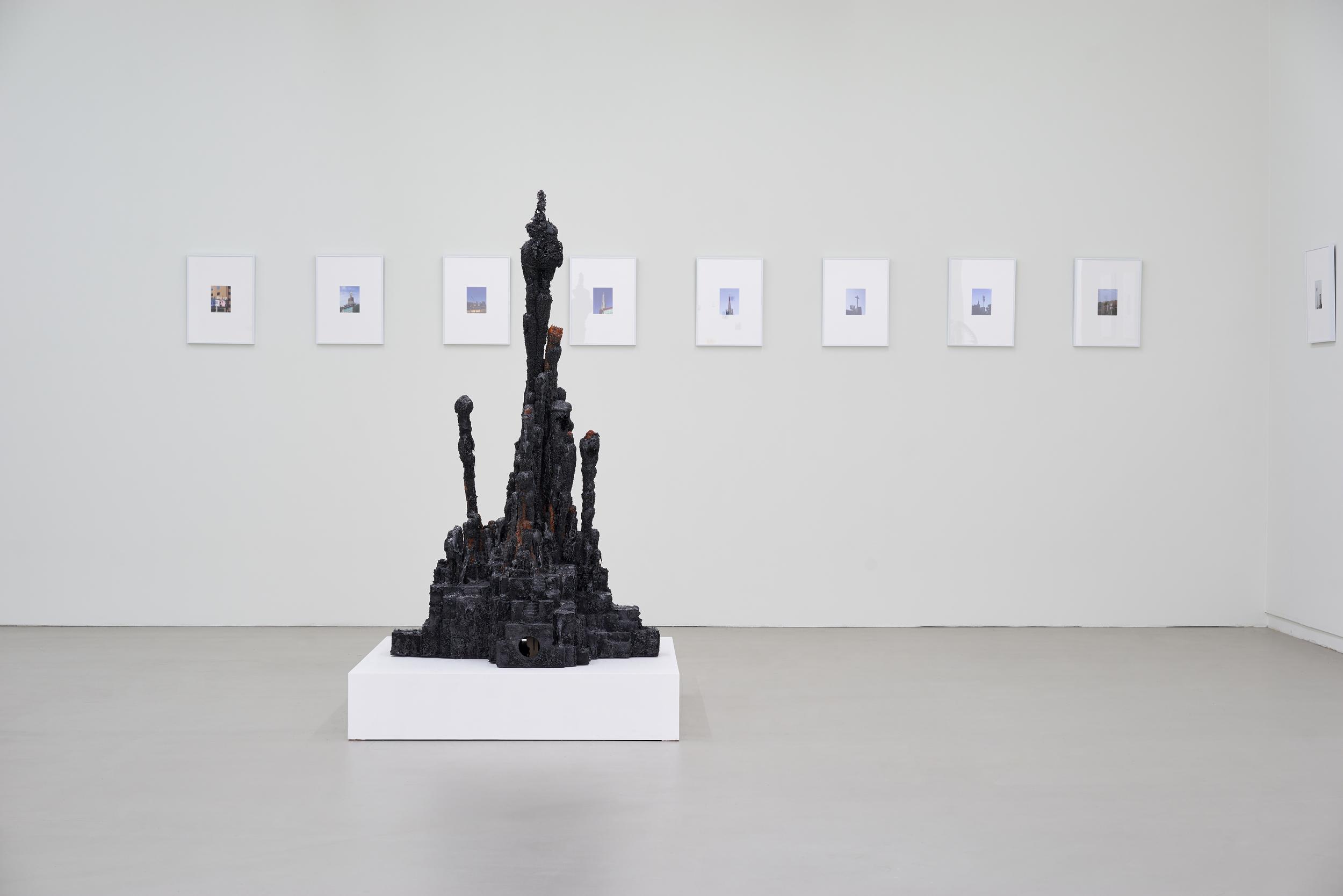
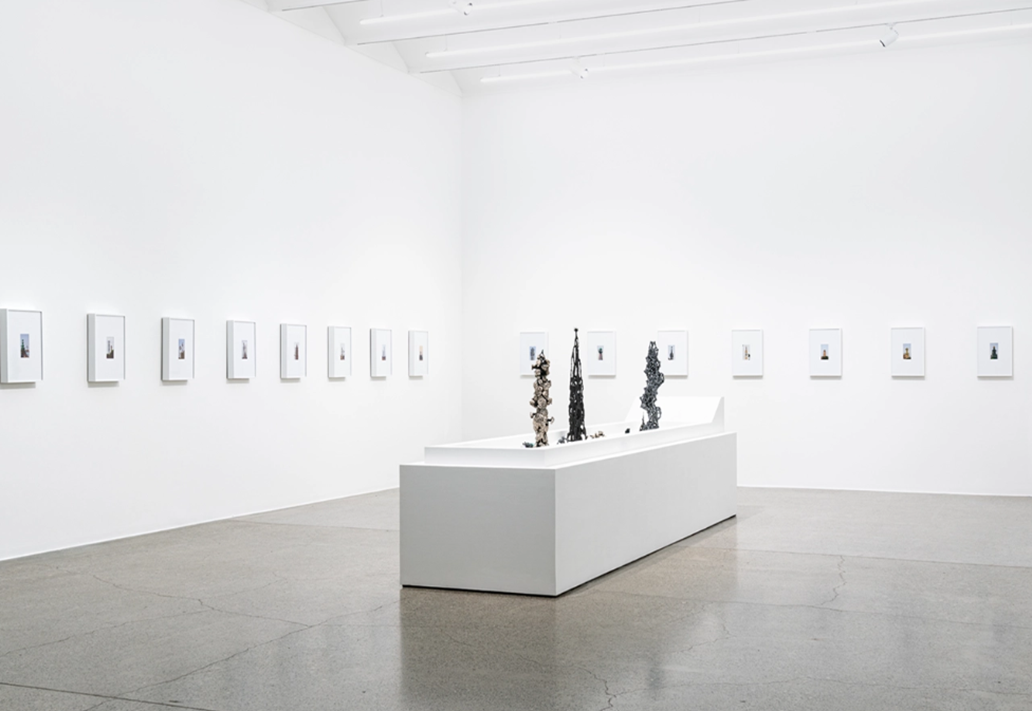
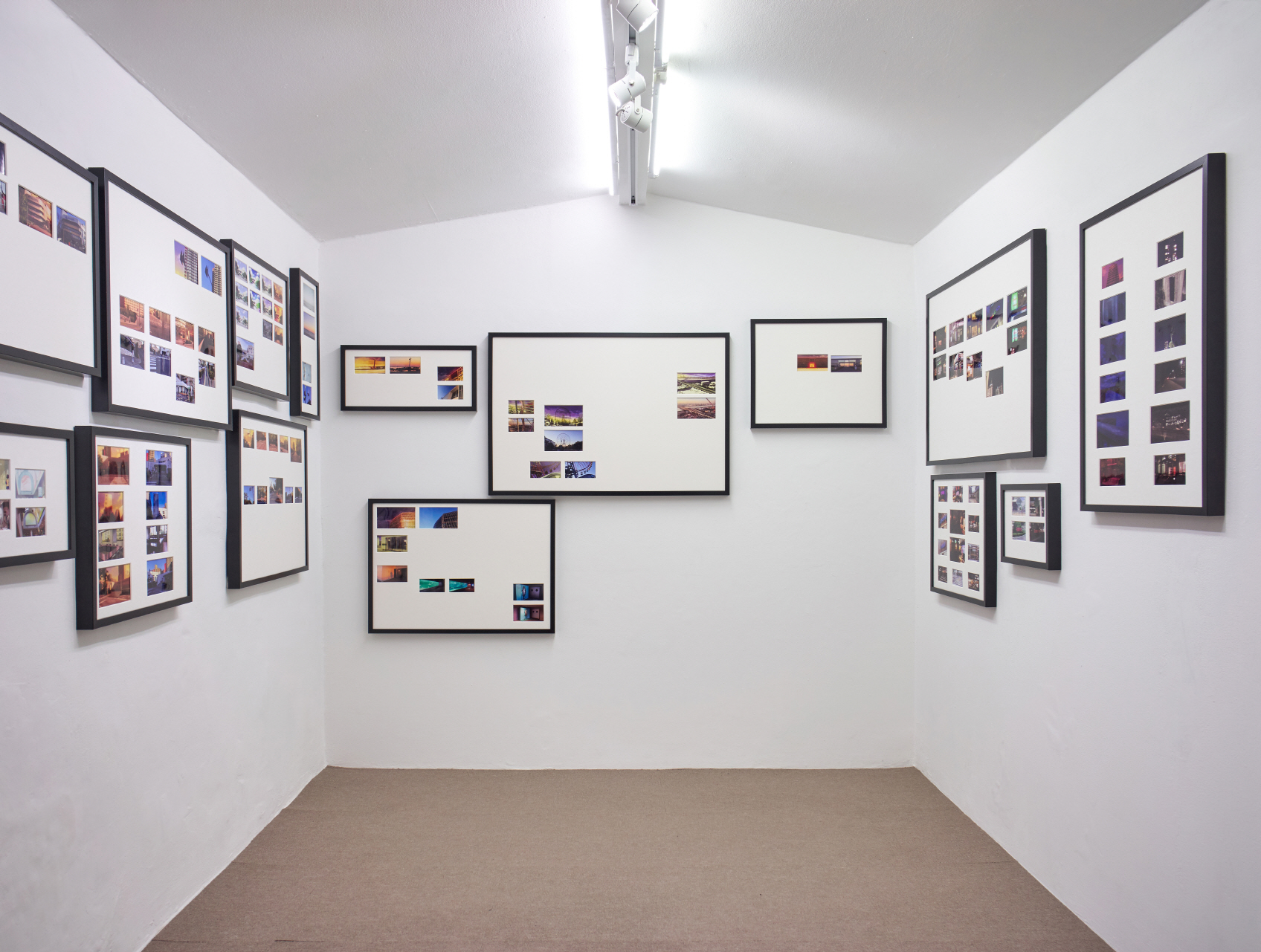
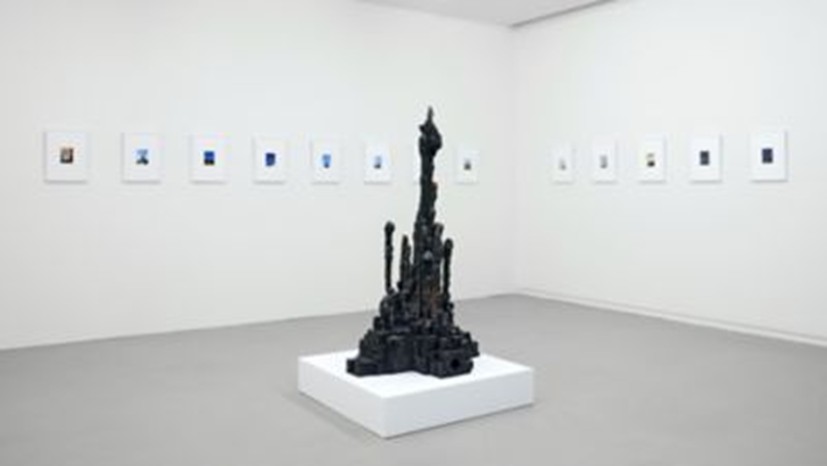
the exhibition is the theme of pilgrimage. The innermost section of the gallery
features walls adorned with images framed in various sizes, reminiscent of
typical pilgrimage reports shared on online communities. These images juxtapose
anime screenshots with photographs taken by pilgrims at corresponding
real-world sites. Unlike conventional pilgrimage narratives that focus on the
original content, Nahm's interest lies in the phenomenon of pilgrimage itself.
Everyday urban spaces in Chiba—such as train stations, parks, cultural centers,
schools, convenience stores, restaurants, office buildings, and department
stores—are mundane to residents but are perceived as sacred sites by OreGairu
enthusiasts. Among the displayed images are religious sites like Shinto
shrines, which, for international pilgrims like Nahm, may hold more
significance as tangible connections to the anime than as places of spiritual
devotion. In preparing for the exhibition, Nahm expressed intrigue in how even
the most ordinary and trivial locations can be commodified through pilgrimage.
Through this exhibition, he seeks to explore the abstract forces that organize
such phenomena. To articulate these concepts, I turn to the perspectives of
Walter Benjamin.
Applying
Benjamin's theories to anime and the phenomenon of pilgrimage may initially
seem incongruous. However, Benjamin's aesthetic framework, grounded in media
analysis, does not restrict itself to traditional art forms. His focus lies in
how media and the technologies enabling them can alter sensory perception.
Benjamin also critiques the application of theological concepts to neologisms,
linking them to capitalism and politics, and viewing them as constructs to be
transcended. He warns against the mythic, illusory, magical, and mystical
elements of theology that can entrap individuals in outdated ideologies and be
exploited for industrial and political ends. In this context, I endeavor to
interpret Nahm's work. Additionally, I question the approach of engaging with
popular culture through Benjamin's theories, which are often associated with
leftist historical materialism. Benjamin adopts a unique stance on culture,
suggesting that historical materialists may struggle to comprehend cultural
history and proposing that culture inherently possesses fetishistic
characteristics.
Returning
to Nahm's work, the photographs within the frames closely replicate the
compositions of specific anime scenes. By visiting and documenting both the
exteriors and interiors of buildings featured in OreGairu,
Nahm captures the landscapes of Chiba Prefecture. These photographs, taken
during his pilgrimage, also reveal everyday urban elements such as passersby
and vacant buildings. Notably, Nahm has removed all characters, except for
background extras, from the screenshots. This deliberate omission shifts the
viewer's focus from the anime's narrative to the interplay between the
photographs, screenshots, and their arrangement. Through this process, the
photographs not only reconstruct scenes from the anime but also reflect the
daily life of Chiba and hint at the production techniques of anime backgrounds.
Anime backgrounds, especially those based on real locations like in OreGairu,
are often recreated through on-site photography. Conversely, Nahm's pilgrimage
begins with screenshots and leads to real-world photography, effectively
reversing the typical production process. This approach reveals a duality in
Nahm's work: while it embraces the fetishistic aspects of media consumption, it
simultaneously exposes and critiques them. This duality aligns with Benjamin's
portrayal of the collector.
“The
collector's passion borders on the chaos of memories. The objects he owns are
not just things but the scene, the time, the mood, the season, and the
atmosphere of the time when he acquired them.” — Walter Benjamin
Nahm's
2020 solo exhibition Miniascape Theory also showcases his
collector's sensibility. Inspired by the concept of "miniascape,"
where landscapes are condensed into stones, Nahm did not merely conform to
aestheticized landscapes but used them as a basis to expand the concept of
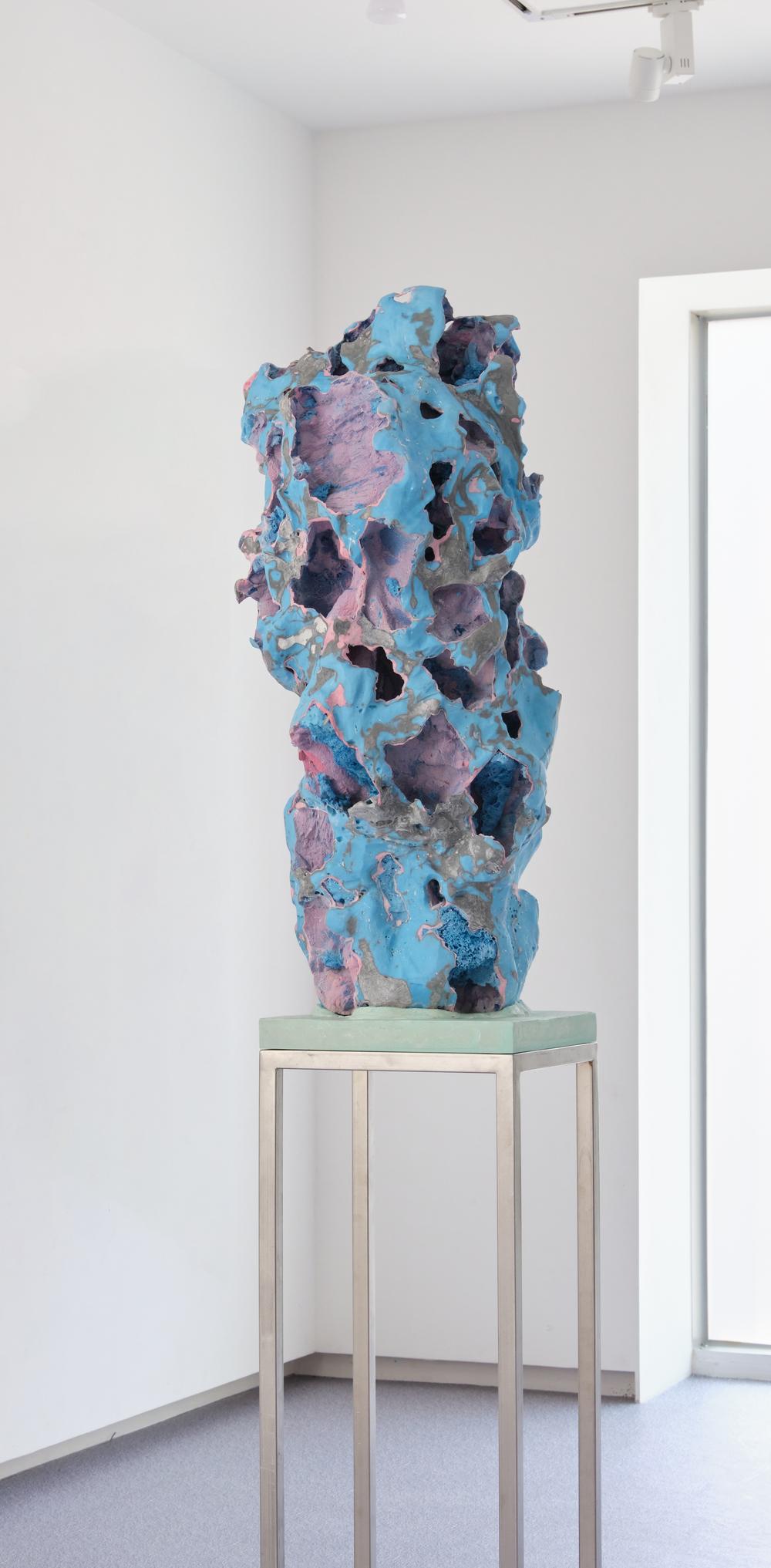
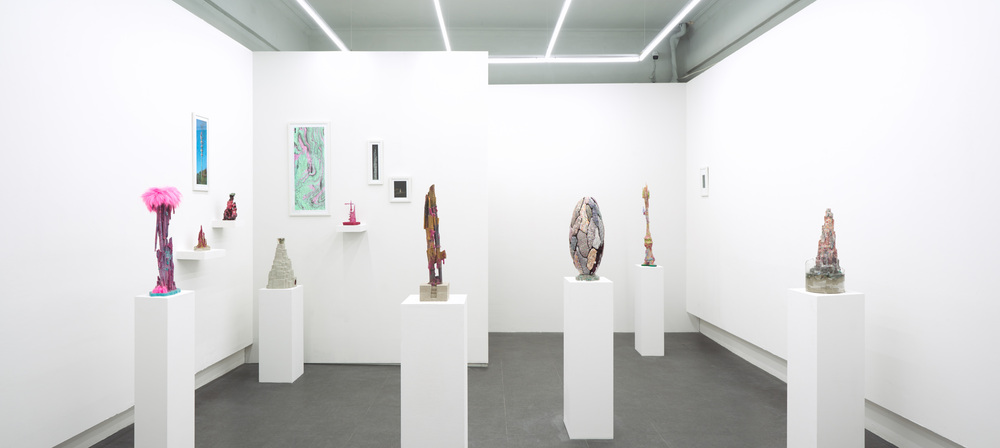
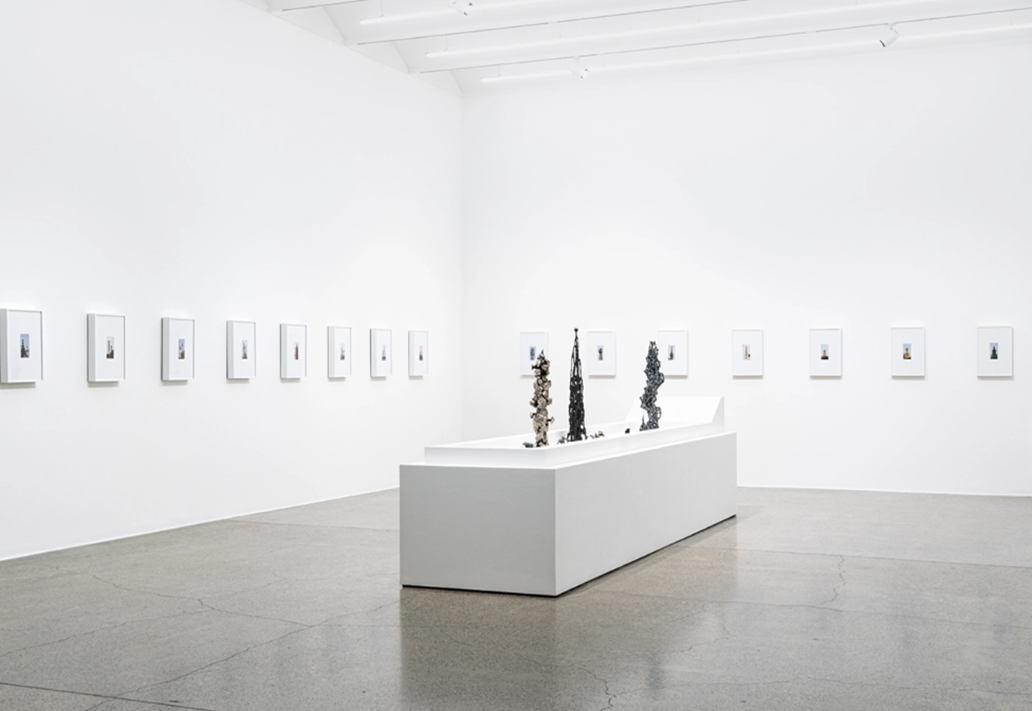
sculptural objects. In the current exhibition, the Miniascape
pieces continue this exploration of the relationship between sculpture and
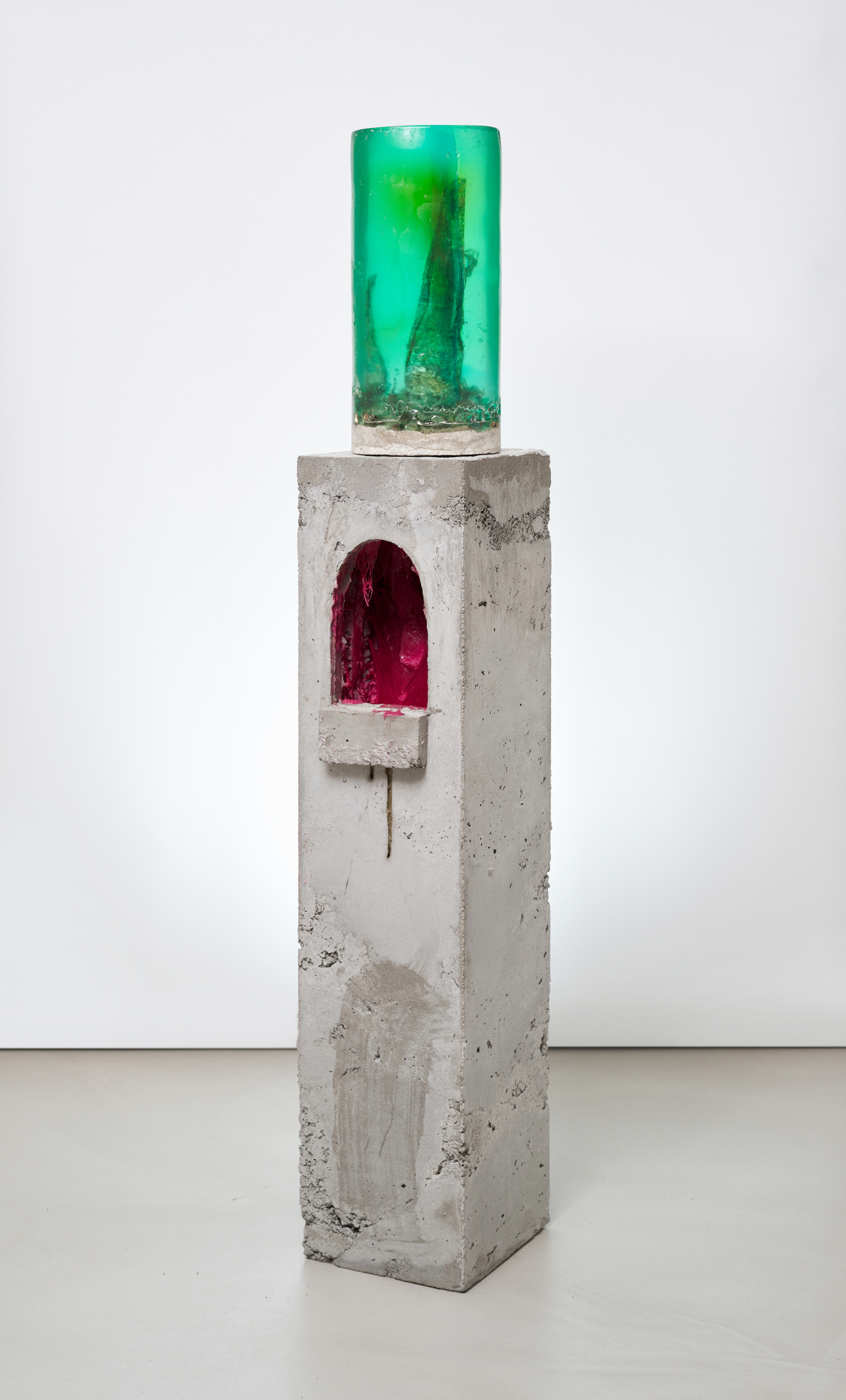
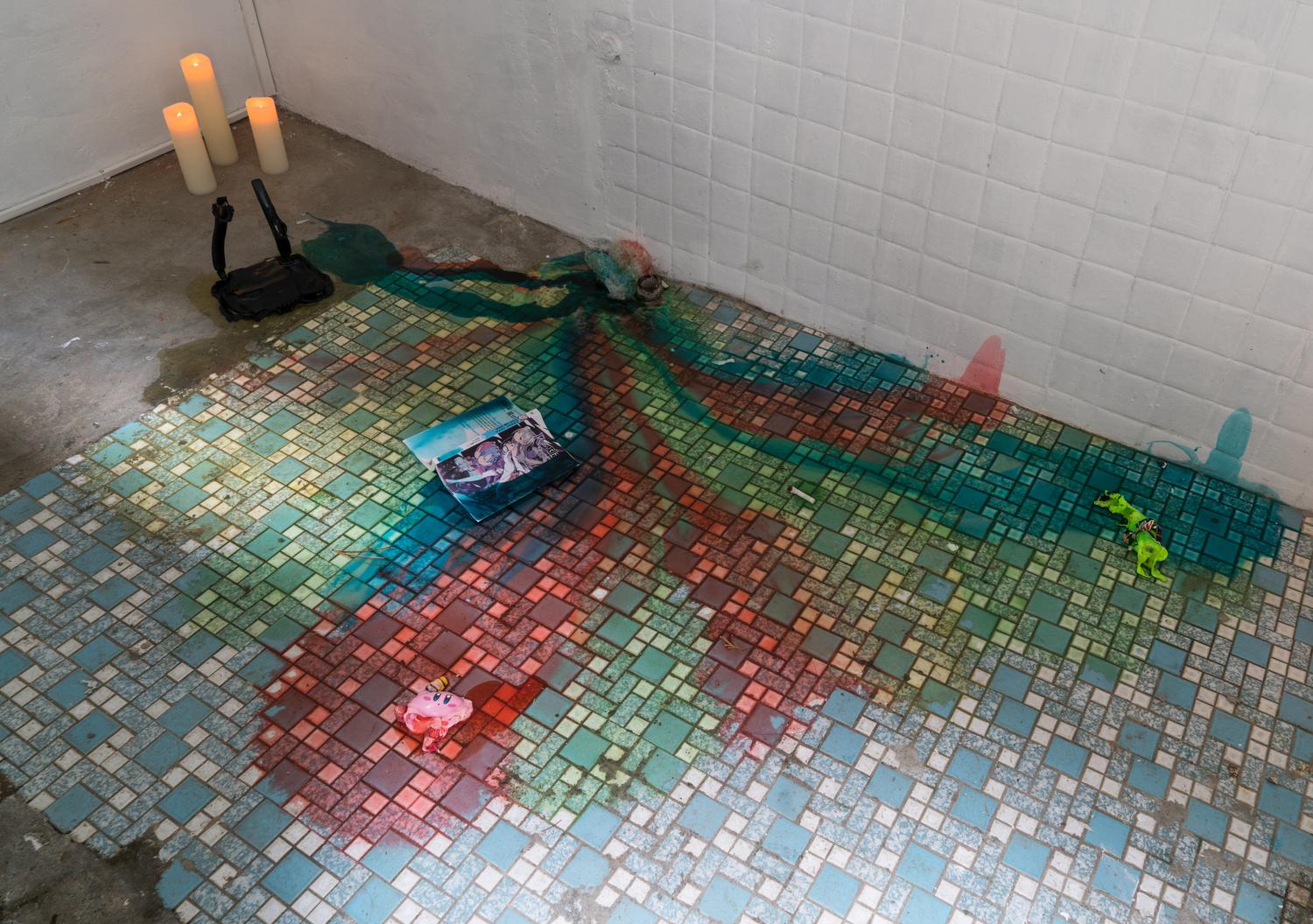
miniascape. Unlike previous works, these sculptures are presented in pairs. The
first sculpture, placed on the right side of the pedestal, is cast based on the
shape of the pilgrimage route, with its height and form reflecting Nahm's
subjective impressions and the significance of each location. The second
sculpture is a reinterpretation of the first, modeled in clay and painted. This
pairing reverses the conventional sequence of original and replica in anime
background production, highlighting the symbolic structures of landscapes and
questioning their authenticity.
Lastly,
the exhibition features the sound piece dialogue, a reimagining of the opening
theme monologue from the first season of OreGairu. While the
original track is light and upbeat, Nahm's version is heavy and slow. By
layering two segments of the original track and extending each to different
lengths, he creates a repetitive dissonance that eventually aligns after
numerous cycles. Had both layers been extended equally, they would have
remained perpetually out of sync or perfectly aligned. This sound piece, like
the aforementioned visual works, explores the dynamics of convergence and
divergence. Nahm perceives this interplay as a dialogue, prompting viewers to
contemplate the nature of these "misaligned" relationships and what
insights they might offer.
1.
Hye-ryeon Shim, The Evolution of
Aura, Ihaksa (2017), p. 52.
2.
“People have long wasted too much insight on
the question of whether photography is art. But they failed to raise the more
fundamental question—whether the invention of photography had changed the
entire nature of art. Film theorists, too, rushed to ask similar premature
questions.” — Walter Benjamin, trans. Seong-man Choi, “The Work of Art in the
Age of Mechanical Reproduction (3rd Edition),” Selected Works of
Walter Benjamin Vol. 2, Gil Publishing (2007), p. 119.
3.
Mi-ae Yoon, “Walter Benjamin’s Media Theory
Seen Between Politics and Theology,” Kafka Studies 19, The Korean Kafka Society
(2008), p. 74.
4.
Walter Benjamin, trans. Seong-man Choi,
“Eduard Fuchs: Collector and Historian,” Selected Works of Walter
Benjamin Vol. 5, Gil Publishing (2008), p. 276.
5.
Walter Benjamin, trans. Seong-man Choi,
“Paris, the Capital of the Nineteenth Century (1935),” Selected Works
of Walter Benjamin Vol. 5, Gil Publishing (2008), pp. 201–202.