Helplessness
I’ve gotten used to hearing words like
“anxiety,” “listlessness,” and “depression” coming out of people’s mouths. All
around, we see an ineluctable “eternal present” – the product of overheated
neoliberal competition and a debt society – and the resulting existential
crisis. The characters appearing in the films Helpless (Byun
Young-joo, 2012) and Breathless (Yang Ik-joon, 2009), and
the stories Moms (Kim I-seol, Things No One
Says, Moonji, 2010), Welcome (Kim I-seol,
Welcome, Jaeum & Moeum, 2011), Thirty
(Kim Ae-ran, Vapor Trail, Moonji, 2012), and I Like
Sweet Things (Jeong Mi-gyeong, Changbi Quarterly,
Spring 2012), are vagabonds experiencing existential crises under a neoliberal
system.
They are helpless. They can do nothing for themselves, nor can they
expect help from others. They are in a position where they can only adapt to
the present. They are stories that sound like someone else’s life, and it is
not easy for us to recognize that we are no exceptions. Everywhere, people
speak of “hope” – after several stages of packaging. They struggle to achieve
hope in a world of “hard work.” Yet they are still anxious, listless, and
depressed. Rather than succumbing to the false hope that they might escape,
shouldn’t we usher the present to its extremes and confront it at that point of
desperation?
(Night)Isolation
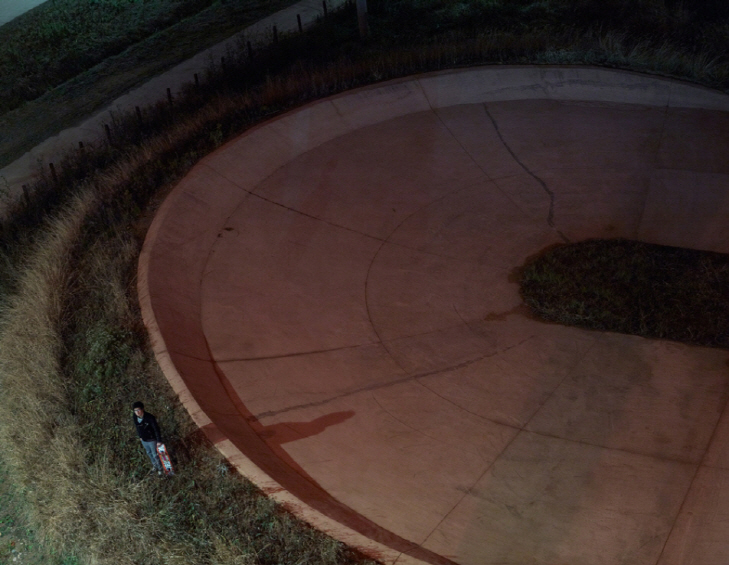
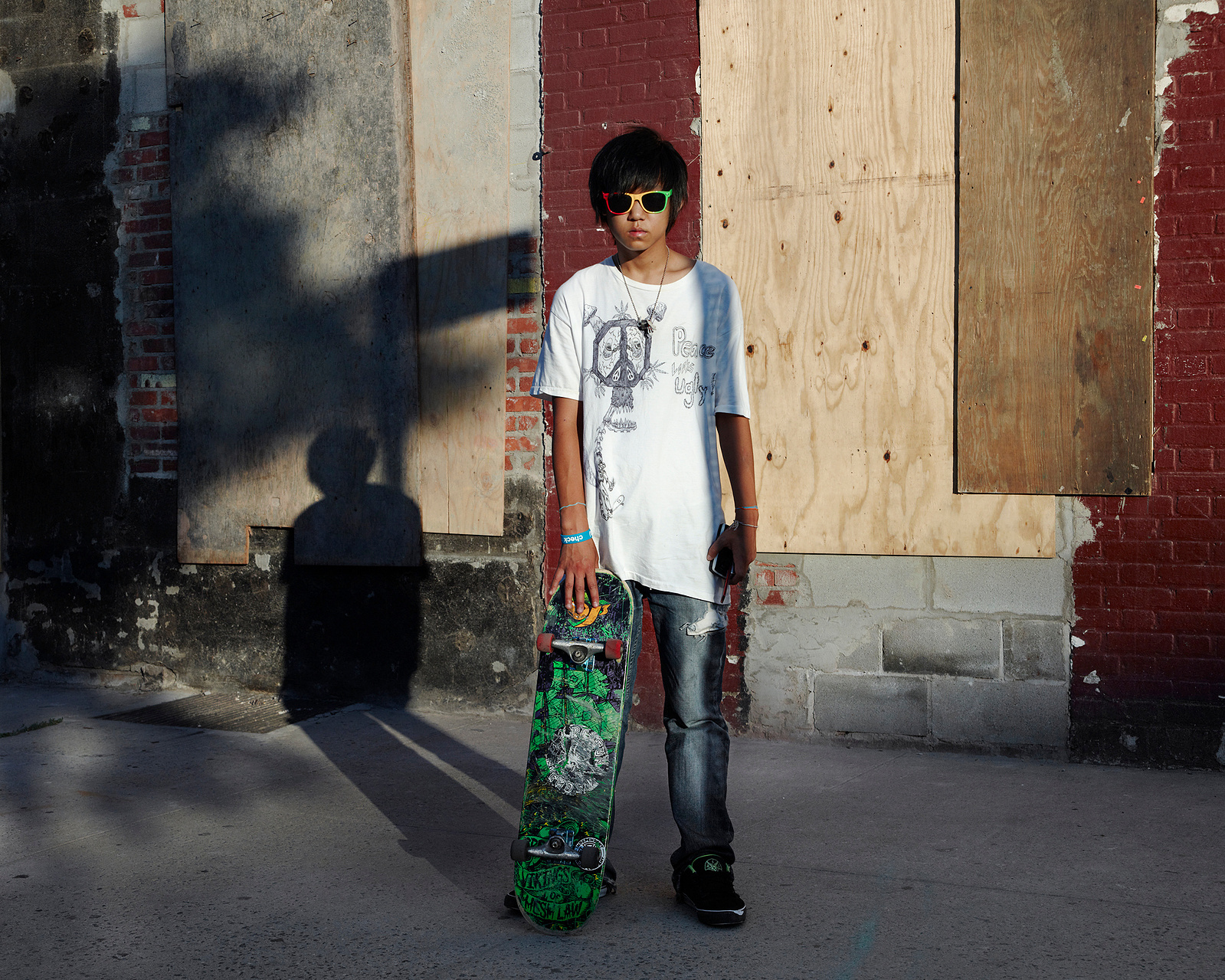
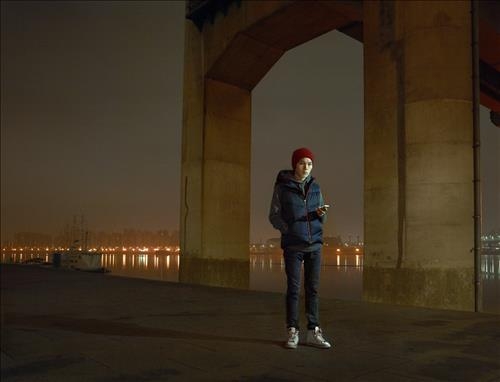
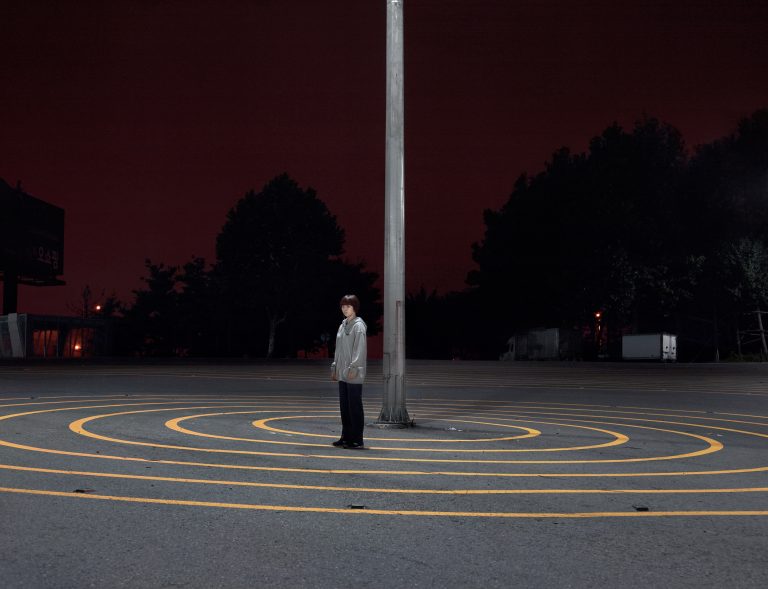
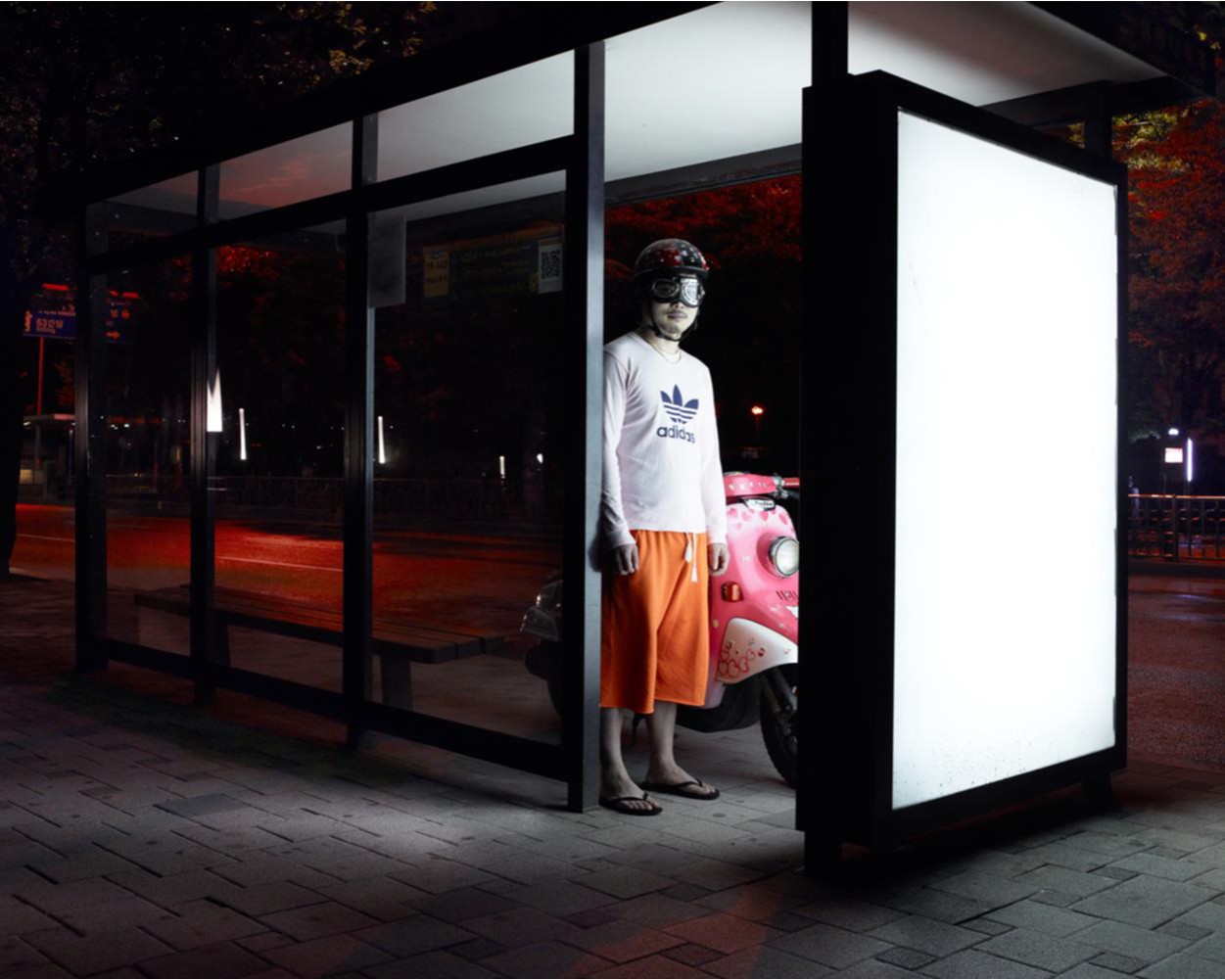
I observed Kim Taedong’s 'Day Break'
series in 2014, while I was preparing for 《Walker of Night 01》 (NowHERE Seoul, planned by Starry.Starry.Night). Signs of
self-expression in his photographs were obviously minimized; figures that
seemed like they ought to fit, yet did not fit, faced forward in natural but
very awkward poses, and with expressionless faces to boot.
There was no way of
knowing why they had come here, where they had come from, or where they were
going, yet Kim had created an attractive nighttime city space where everything
seemed to have stopped. I was curious about the way the artist conceived of
“night.” As the planner of 《Walker of Night 01》, I had thought of night as an invisible swarming produced by the
erasure of boundaries.
But – if I may be blunt – Kim Taedong’s night was simply
night. The self-evident nature of night was presupposed and two-dimensional. I
was still relying on erasure of boundaries, rather than dissolution of
boundaries. In the end, I couldn’t follow the exhibition (although I remained
curious what night was to Kim).
A few months later, I met the artist, and
we talked about the work. I looked once again at the 'Day Break' series. What I
found in the process was Kim Taedong as an artist who loiters, strays, wanders.
This overlapped with the figures in the photographs. What had led them to
wander? Why did their expressionlessness seem so natural? Why were they
isolated? Perhaps Kim Taedong is not talking about night after all, but about
isolation.
Kim’s work becomes deeply meaningful when the story’s emphasis is
placed on isolation instead of night. The figures’ wandering stems in some part
from the weariness of life. They wander to endure, to escape, or because they
are lost in thought. In the end, though, they are isolated. Whether it is the
bleakness of the night, the dilapidated state of the spaces, or the
foregrounding of buildings, the figures in 'Day Break' are all isolated.
They
have no one around them. The only person nearby is the photographer before
them, Kim Taedong, meeting them by way of the slender strand of coincidence.
For all the bold poses they adopt, they are nonetheless isolated. They cannot
do anything for themselves, nor can they count on help from anyone else.
Isolation is not “unquotidian and
unrealistic” (Kang Su-jeong’s “His Strategy, Day Break” in the Kim Taedong
collection DAY BREAK BREAK DAY). It is not “an attempt to
see familiar spaces as strange” (Shin Su-jin’s “An Exploration of the Fluidity
of Center and Periphery,” also in DAY BREAK BREAK DAY) or “a
familiar yet strange landscape” (from Gi Hye-gyeong’s recommendation in
Navercast’s Hello! Artist). It is the painful reality we
have wished to conceal, a familiar landscape that continues to repeat itself.
We simply did not want to see it.
Communion in Isolation
The 'Break Days' series forms a pair with
'Day Break', which foregrounded isolation. The two series share a similarity in
their sunrises and sunsets. Night transforms into day. In truth, the difference
is not great. Isolation, which is crucial to the formation of meaning, remains
present within his photographs. The difference lies in the presence or absence
of human figures. To be sure, figures are present in the 'Break Days' series.
But Kim also speaks of isolation purely through spaces. In a body of work that
has used figures met by “chance” to highlight isolation, the use of spaces
alone to discuss isolation is exceptional. The difference between the series is
that the photographer emerges to the fore from his concealment behind the
figures.
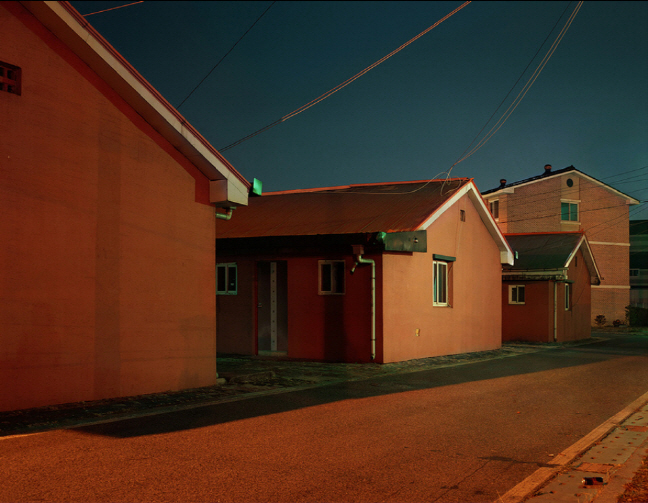
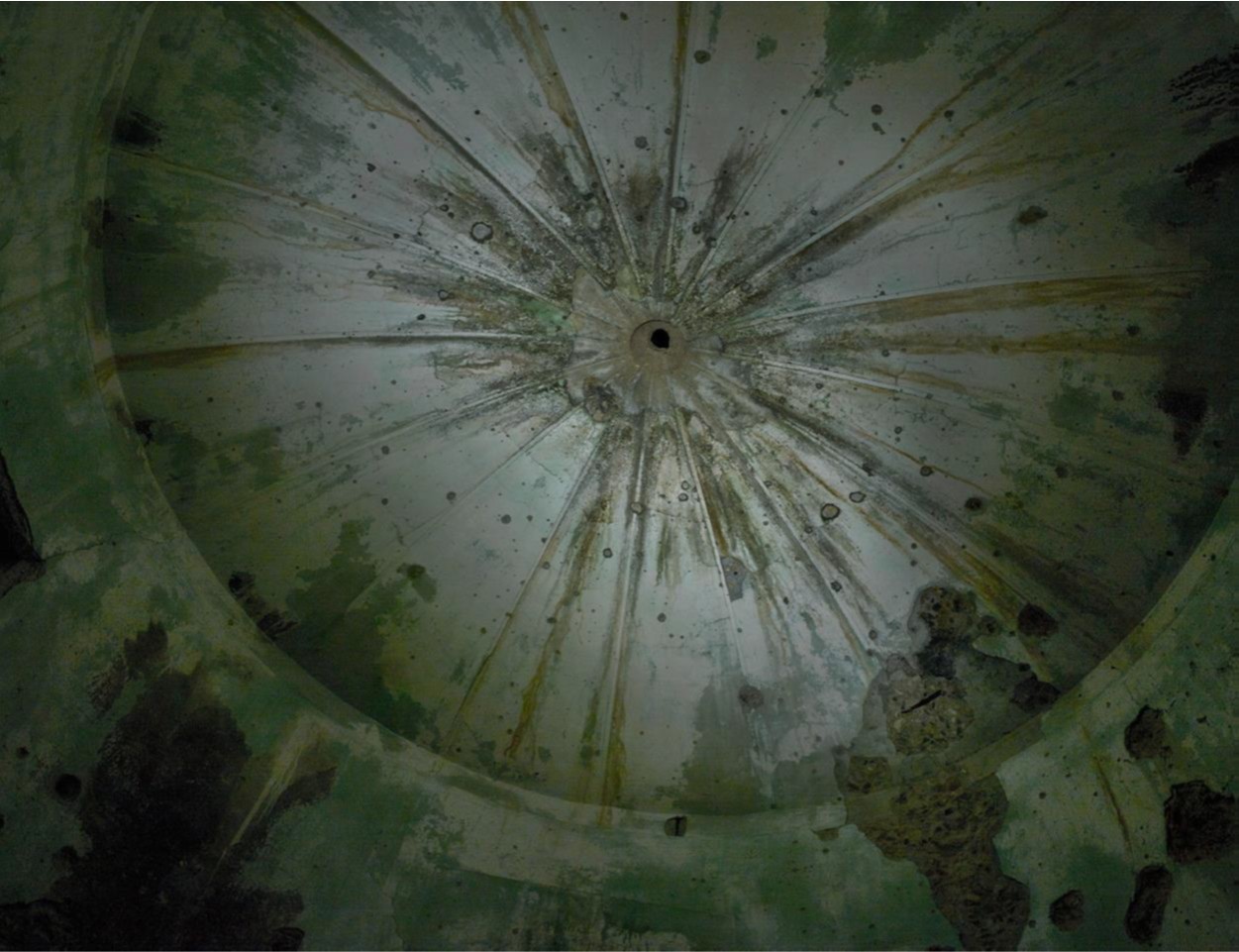
In this series’s photographs of daytime
spaces in Kim’s old neighborhood of Yeonsinnae in Seoul, the artist abandons
the observer perspective and looks at himself. Yeonsinnae, where he spent all
of that time, is a familiar place. Familiarity means that he is not isolated.
All around are things with which relationships could be formed. Yet the spaces
in his photographs are isolated.
He passes spaces he must have seen countless
times in the daytime and nighttime, but his feeling is one of helplessness. Here
and there are landscapes of loneliness, of “nothing to be done.” The solitary
feeling within the landscapes’ grip is the artist’s, but it is not the artist’s
alone. He presents a story not with the isolation of some specified figure, but
with the isolation of “people,” including us.
The urban isolation that Kim
Taedong has discovered is not a choice made purely to satisfy himself,
something that cannot be shared with others. It is something assigned. The
typical model of the human being that the era demands is one forced into
untrammeled competition, through isolation rather than solidarity. To survive
the competition, one takes isolation upon oneself – and at some point it
returns to us as pure isolation.
This is not the result of misguided values, of
not living a diligent life, or of making some kind of mistake. It is because of
powers that cleverly, invisibly compel us to “stay put,” and our acquiescence
to them. Kim steps away from complacent false hopes and confronts a here and
now where isolation has become an obligation.
So will we forget isolation? Or will we
never forget isolation? It’s a difficult question. If we do not forget
isolation, we will only become more isolated – yet not forgetting isolation is
nothing more than fantasy. The important thing here may be communion in
isolation. It is a matter of viewing isolation as something we must share,
rather than reducing it to a simple issue of agency.
I have before me right now
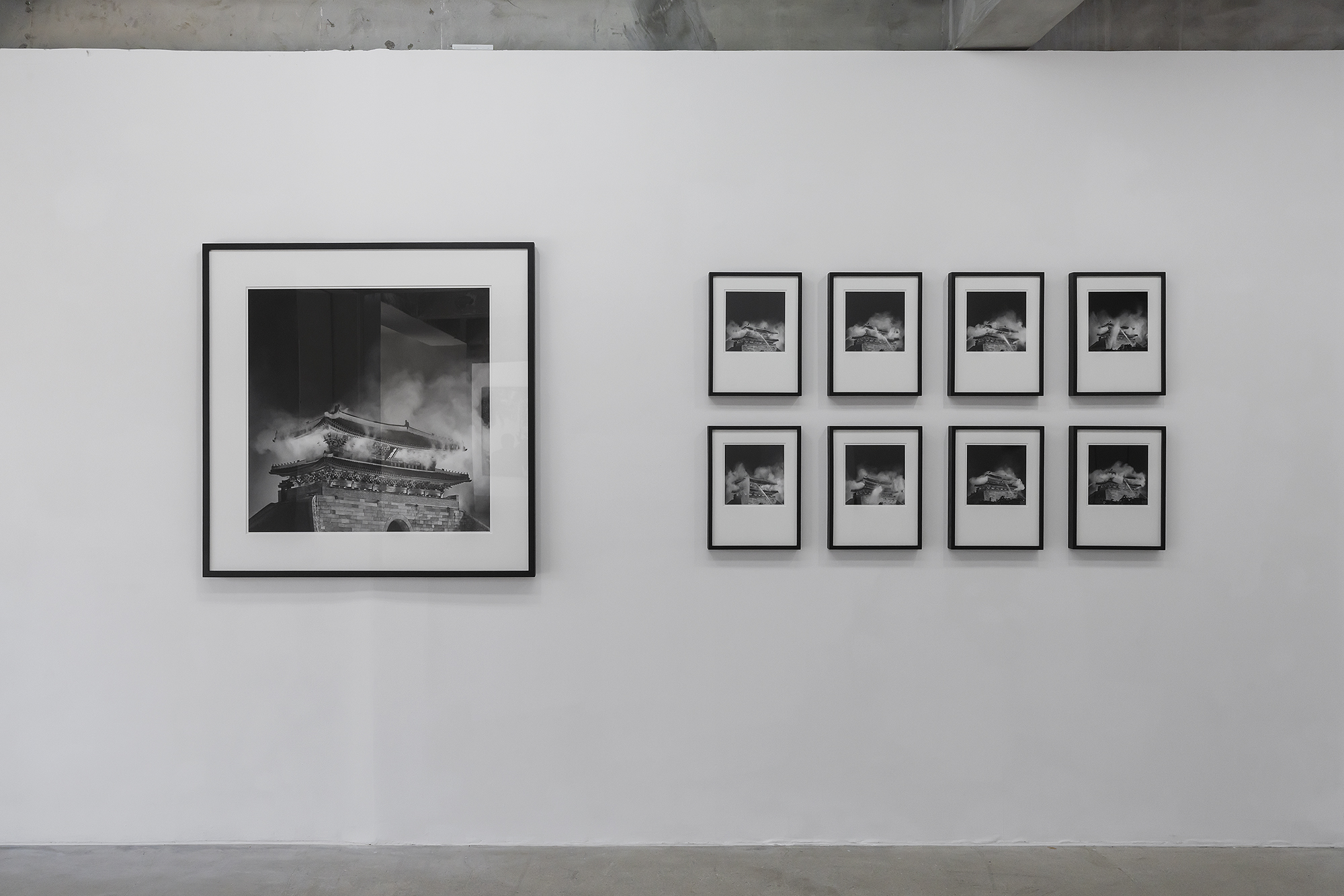
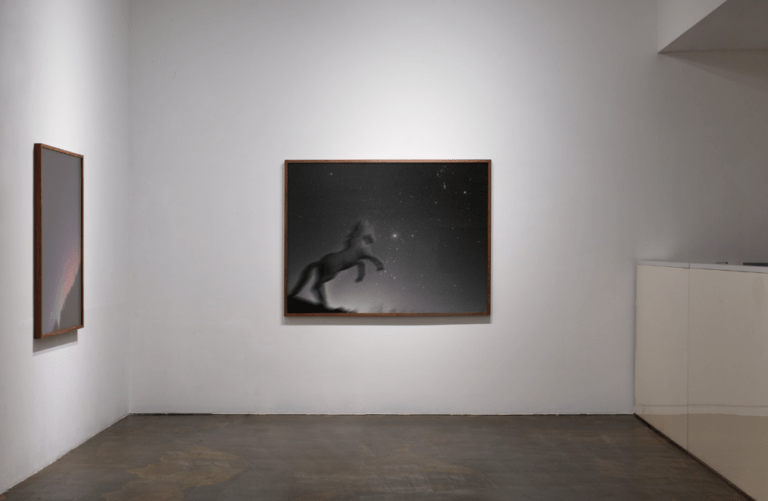
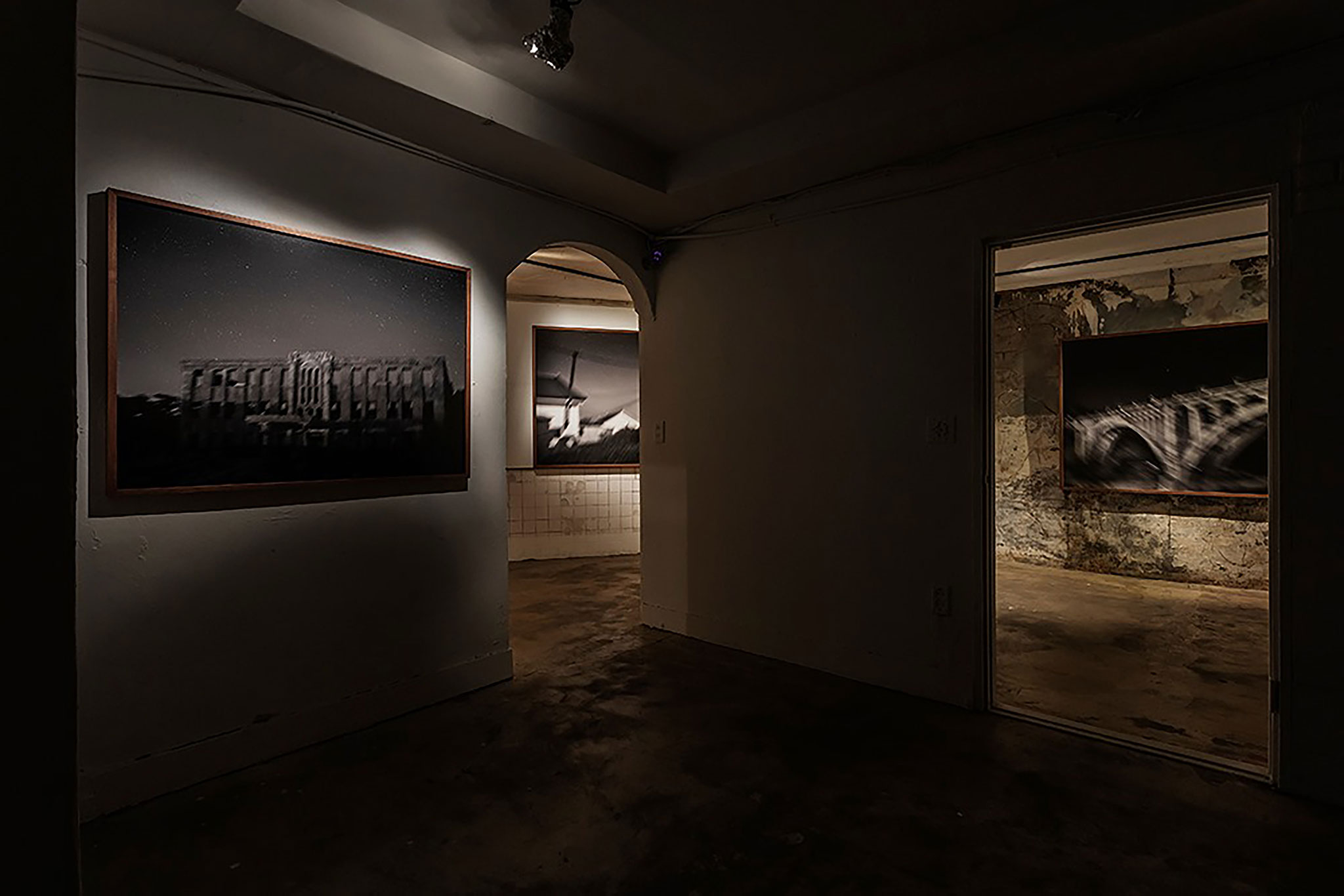
an image from the 'Break Days' series. It shows a sign indicating the Gupabal
and Yeonsinnae subway stations, a large apartment block, and before it another
big, brown brick building. There is a chimney of indeterminate nature and a
container box. An odd assortment of elements are leaning against each other,
forming a landscape.
I call up scene after scene from this landscape and listen
to their stories. And I tell my own story. This is not a heterogeneous,
unfamiliar landscape; it is isolation from one another. Yet he speaks of
isolation itself, reaching his hand out to each one. It asks us to grasp even
as feeble and slender a strand as Kim Taedong meeting someone by chance on the
street at night.
Anxiety and fear invite isolation. What we
need to overcome that anxiety is the formation of crowds. Instead of dressing
up forced isolation as hope, as romanticism, as something strange or disparate,
we need communion through isolation, and the formation of groups as a
result—just as the figures in the 'Break Days' series create landscapes:
bizarre, uncertain, but their own.