“That’s him! There
he goes. Get him!”
With
the sound of car breaks, an urgent voice, penetrating the iciness of
temperatures 15 degrees below zero, sliced away the warm and pleasant air
inside of the car. Looking out of the window, a black shadow appeared out of
the darkness, in between the pale street lamps, and was seen making his own way
with precise steps. One could see his breath in the cold air. Like in a chase scene,
Kim Taedong quickly got the better of the shadow and took him over in the
direction he was walking, and violently turned his steering wheel around,
finally stopping his car. Kim Taedong’s body plunged forward with the movement
of the car stopping.
It was
one o’clock in the morning, and the artist rushed to the spot with a camera
where one woman was standing, whose body had stiffened with tension. The woman
cast a suspicious and watchful gaze, wary of the people who suddenly appeared
there. In spite of the artist imploring for a photo shoot, she flatly refused,
and walked away hurriedly. Without knowing who she was, why she was walking
near Toseong in the middle of the night, or where she was going, we just talked
briefly about the photo, and partied later.
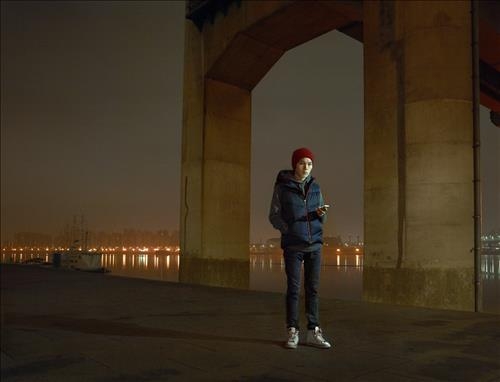
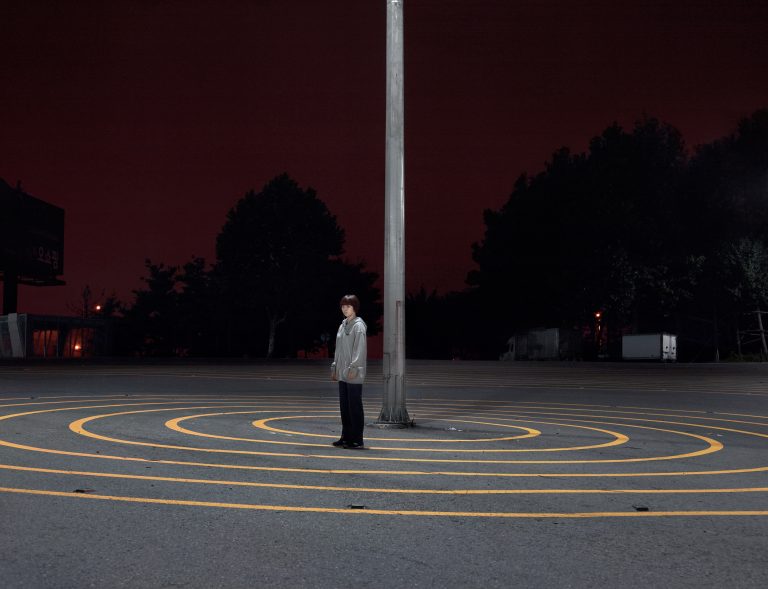
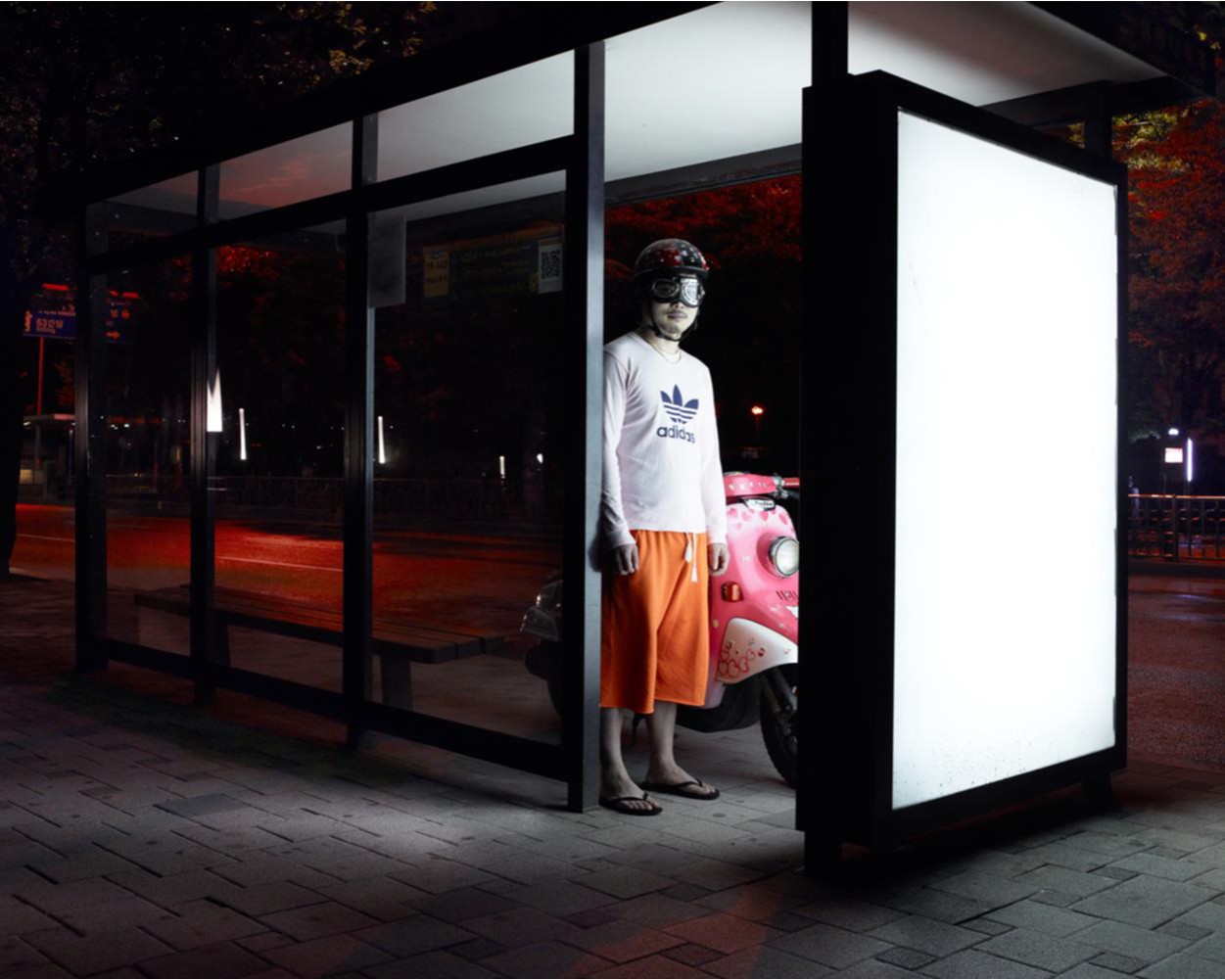
But in
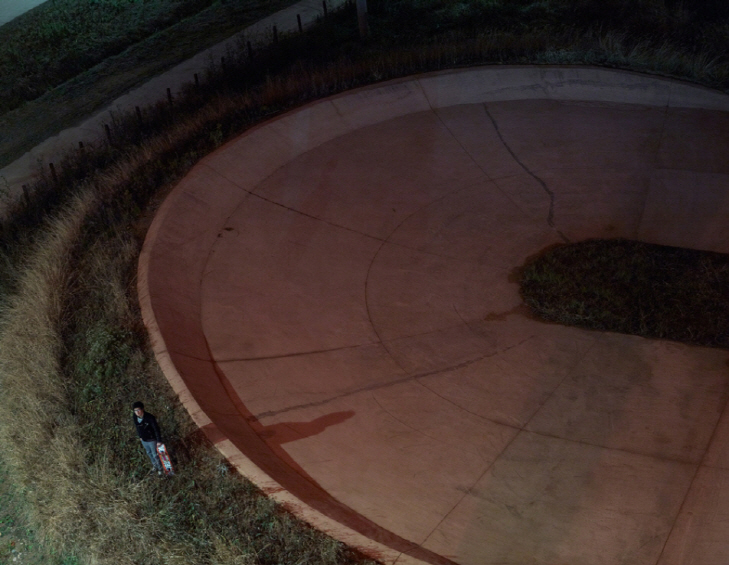
the same spot, one high school student finally agreed to a photo shoot. In the
middle of icy coldness, like a knife’s edge, the student showed patience to
accommodate to all of the artist’s demands, posing in various ways, and was
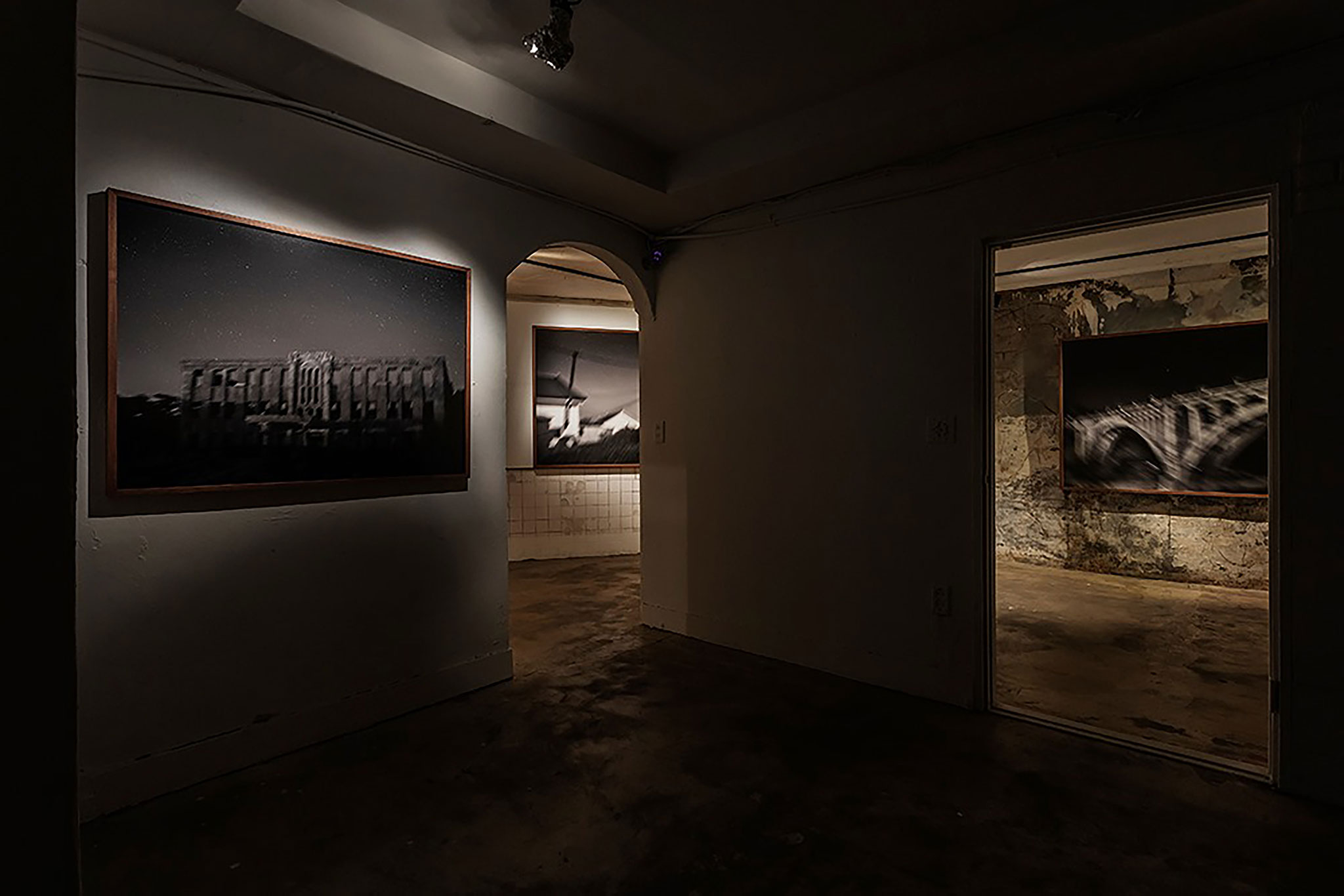
finally made into a character inside the artwork through poor artificial
lighting, digital camera and computer data. The artist and the boy were placed
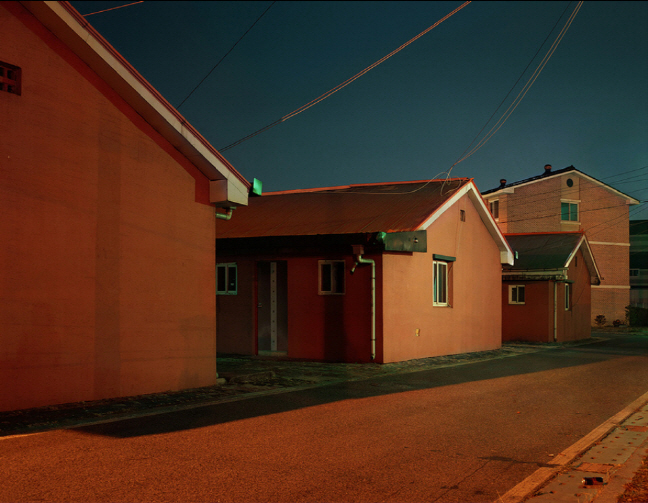
in a weird situation of the midnight city: a huge artificial structure,
immersed in long, anxious shadows and utterly empty solitude.
They
had not known each other even five minutes ago, but they showed passionate and
intimate artistic camaraderie, as they all of a sudden shared the same goals
with one moment of the clicking of the camera shutter.
I
thought momentarily Daybreak is perhaps a kind of break from his own everyday
life. After a short while, the artist who fulfilled his goals released the
person that was caught, and the boy has now become the unknown figure that
would exist only as an image: the boy goes back on his own way. It is like this
that momentary portraits were made on encountering a stranger in a corner of a
city as the Daybreak series. The artist speaks to the stranger at a time and
space in which the stranger is feeling wary, and leaves them as images but in
fact, the artist does not speak to them about anything.
In
fact he does not really talk to them at all. This is similar to Talking to the
Stranger, a novel. The writer, Eun Heekyung, wrote, “If people do not confide
in each other, there tends to be something that will not be revealed until the
end,” and it is difficult to form even the least rel iable relationship. The
whole work is enclosed by an ambience that is both familiar and alien.
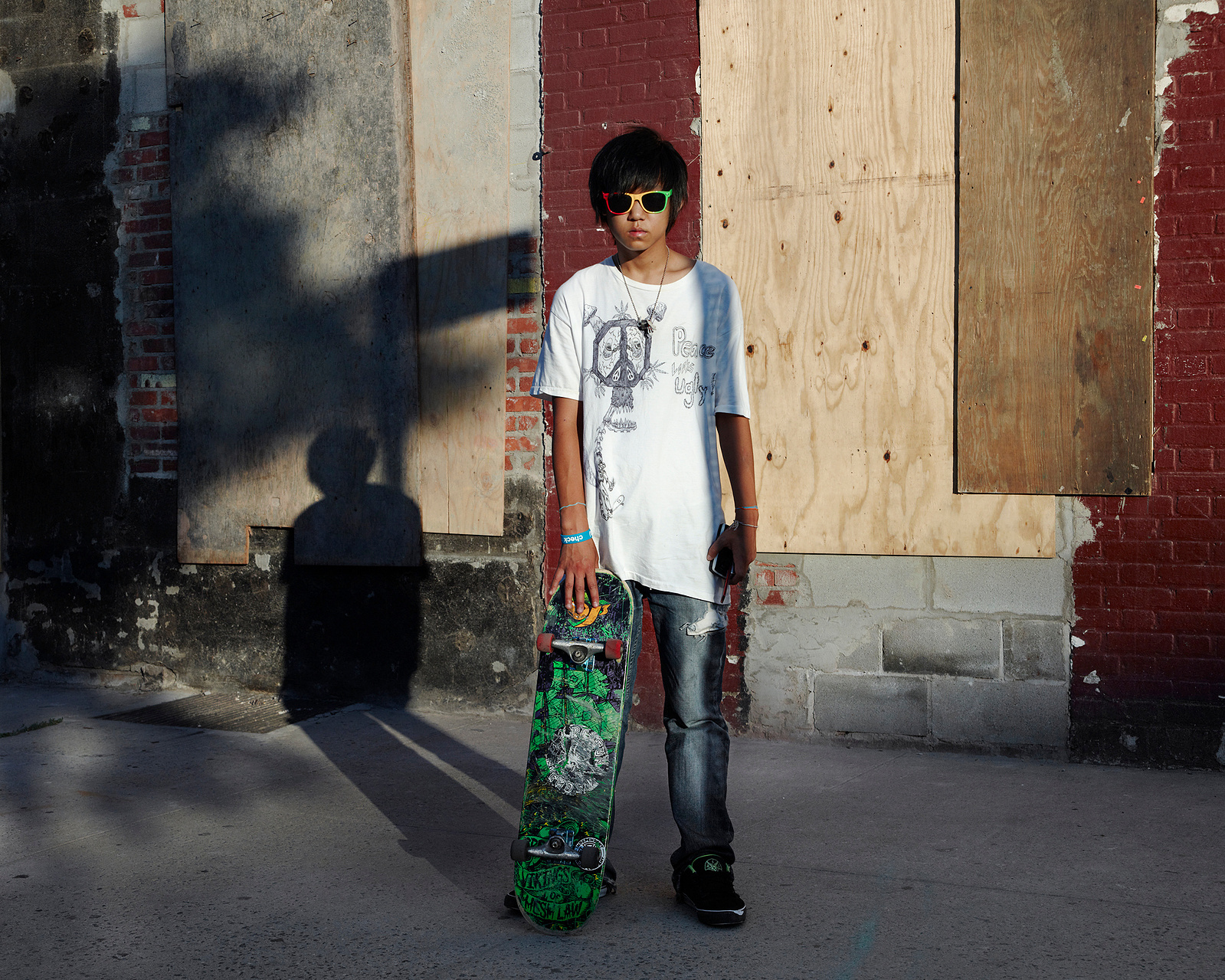
The
artist’s attitude is differentiated from previously when he did portrait
photography works. He had to conduct many interviewers and in depth research to
capture and record the inner side of the person. Portrait photography
essentially places figures within fixed frames as objects, and then through the
diverse images of people like students, married women, soldiers and lesbians,
the artist depicts individuals.
He
then produces the images by chiseling their social identity as symbolic means.
If we can agree with this definition, we can observe contemporary trends
through the expression revealed on their unfamiliar faces, their clothes, dress
styles, and even a person’s image leaning against the wall, even though the
captured images of his works are devoid of in depth information of the
individuals.
What
is more, even though they exist just as photographed images with the context of
their lives castrated in an empty urban space a huge and empty museum like
space where busy cacophony and bright lights are all perished we can find out
more objective information from their images, and at the same time, ironically
we try to fill up the empty context with improbable imagination.
Although
they face each other passionately, they do not confide in each other, and so
the identity of one another will never be revealed: the attitude captured in
this atmosphere signifies the orientation of our contemporary relationships.
That is why Kim Taedong’s break resonates with diverse meanings and
interpretations to artists, the people inside the works, and us watching it.