2. Imagination and Belief
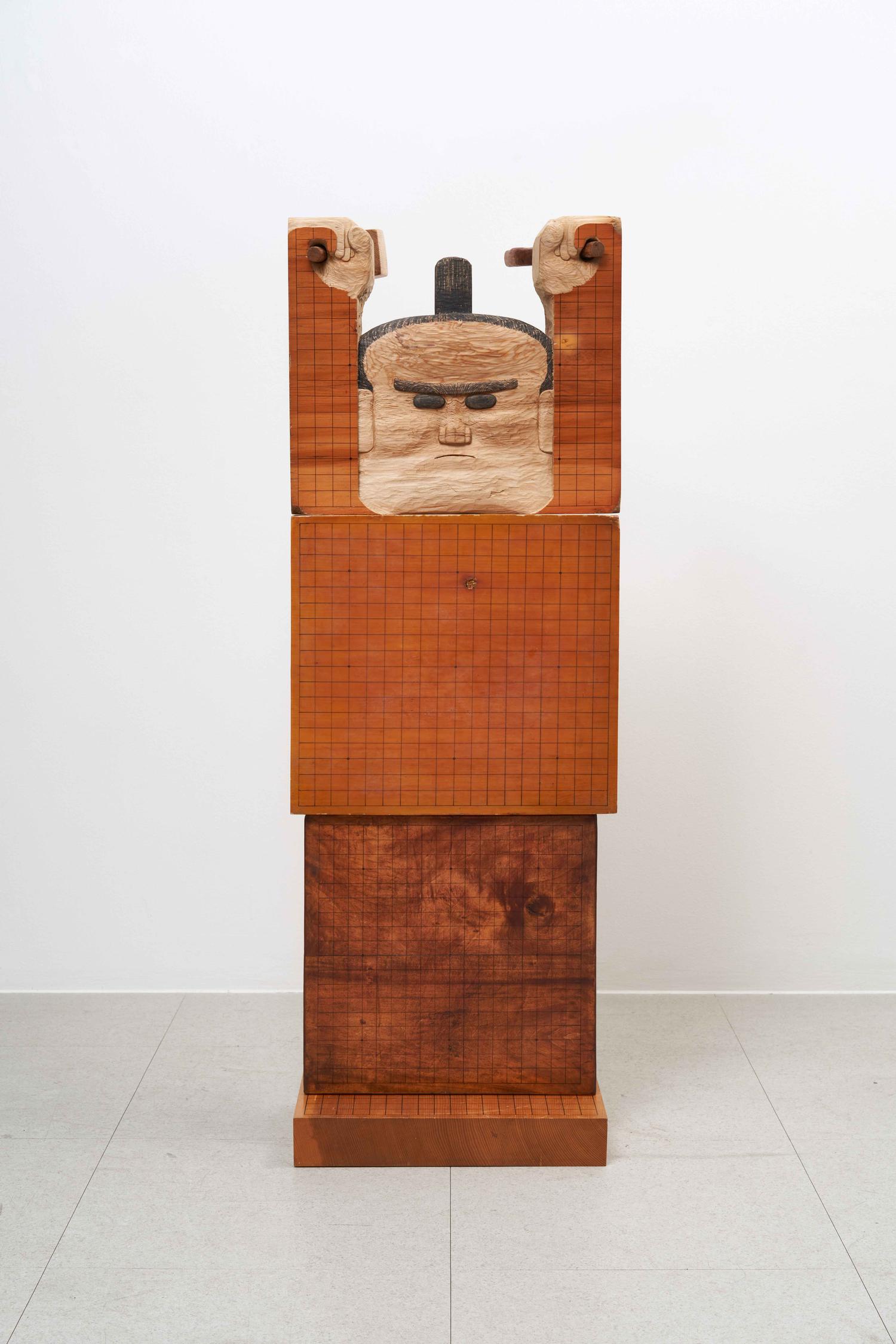
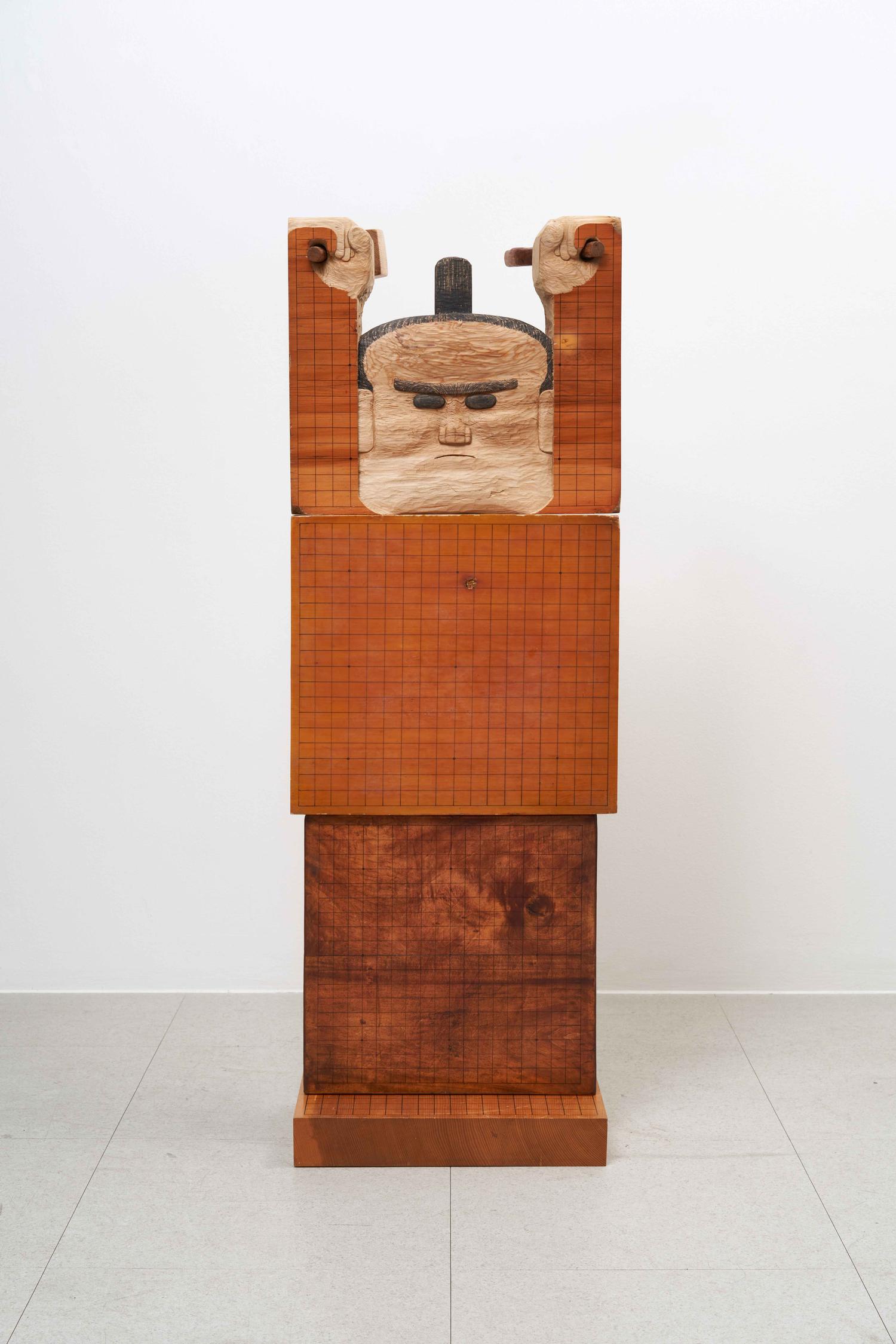
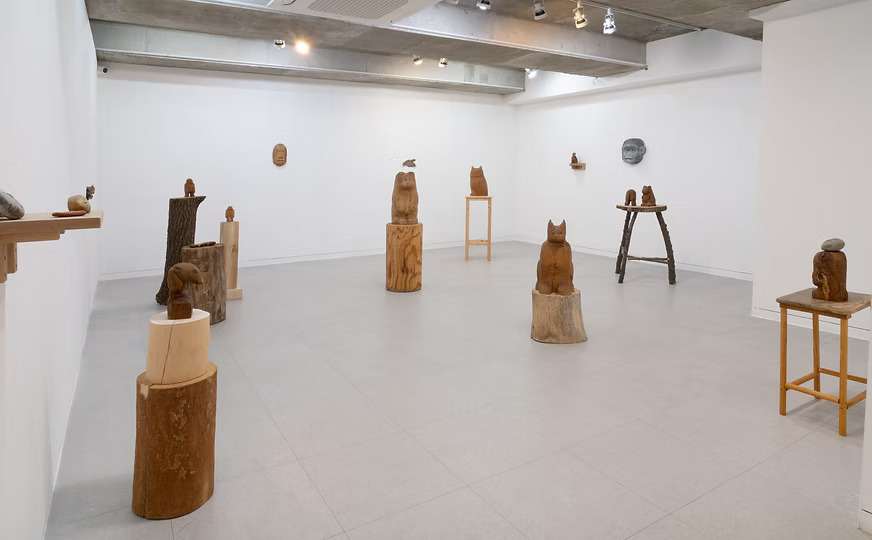
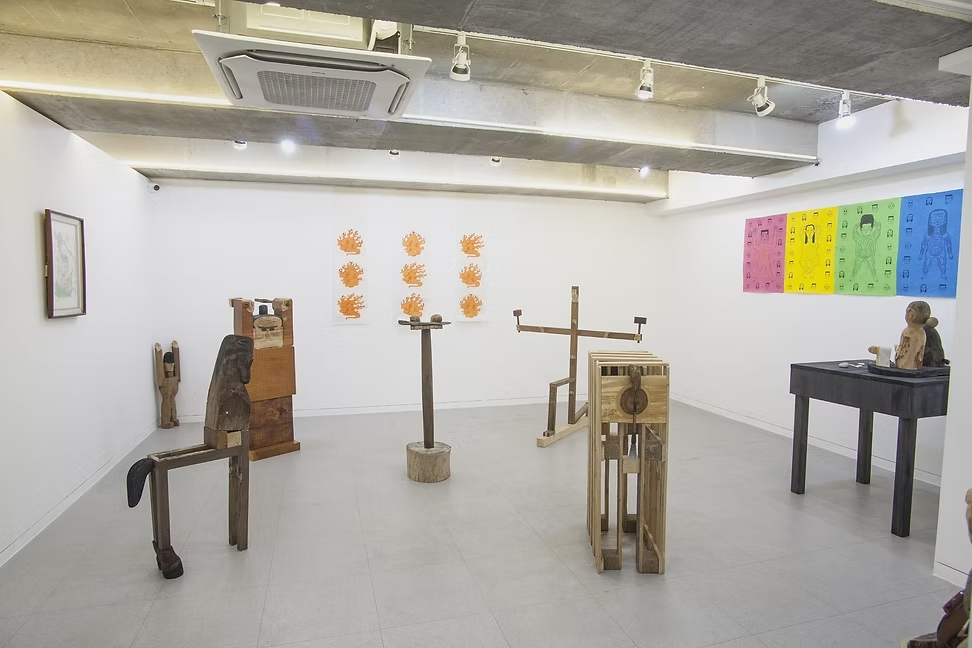
Let us step into the world of 《Firemakers》. Seo Jaewoong has “stood up” his
sculptures—handmade using hammers and tools—in the space. The sculptures seem
as though they have long inhabited the exhibition hall, coexisting by facing
one another or keeping their distance. Each takes on a form that is half-human,
half-nature. Seo’s gods (神) are variations shaped into
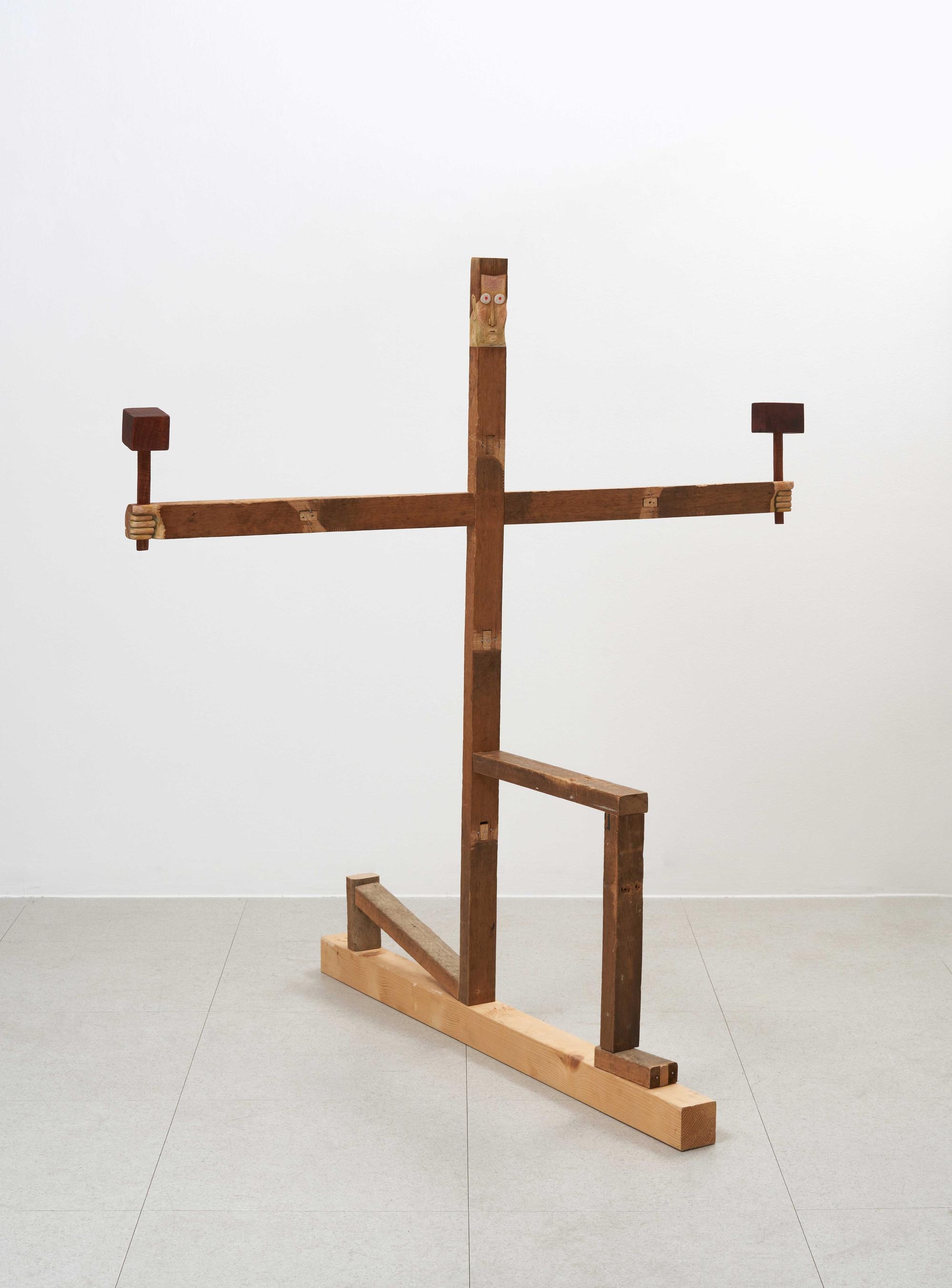
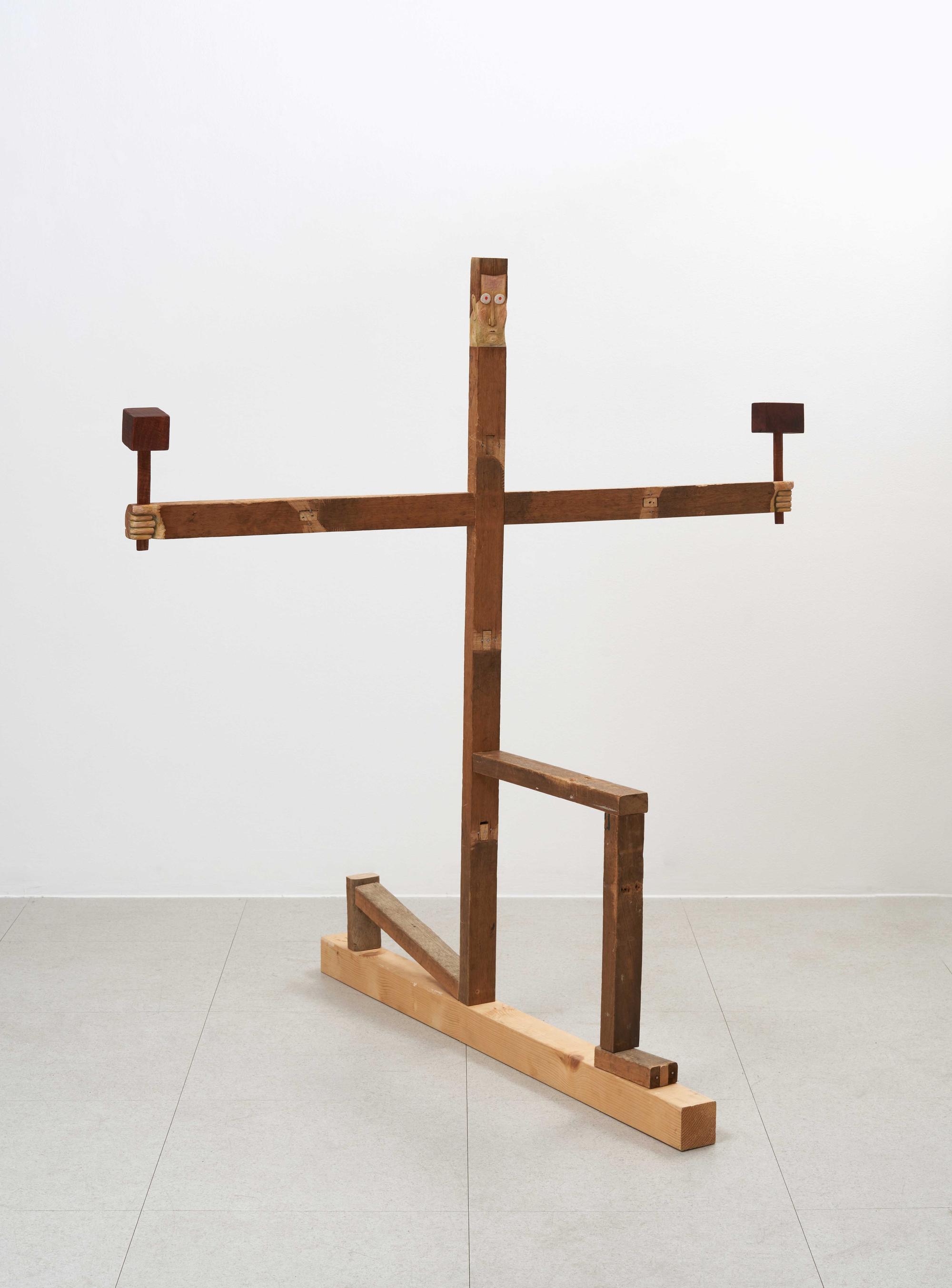
forms comprehensible to humans. God of Thunder, which
summons lightning, is a structure with red pupils balanced delicately on thin
wooden supports. The artist has given names to these six entities: Hand
Holding Fossil, Blacksmith, God of
Thunder, Ox, Horse, and Fire.
There is also a drawing of a crimson fireball titled Fire.
These six beings, created and called forth by Seo Jaewoong, are the artist’s
way of responding to and attempting to overcome the contemporary climate
crisis—his own method of “circulating the world through art.”
Having majored in painting, Seo has recently turned his interest
to traditional East Asian painting. The motifs in his imagery and the wooden
materials he collects are all rooted in relations with the past. Blacksmith,
on display in the gallery, is inspired by the blacksmith god depicted in
Goguryeo tomb murals. God of Thunder refers to lightning,
thunder gods, and pre-industrial forms of electricity.² Walking among the
exhibited works, one might be reminded of fire and coal, materials and processing,
making and circulation, or even one’s fortune for the coming year.
The artist moves beyond merely “observing” and objectifying the
contemporary climate crisis. He delves into its history and walks into its
depths. Seo Jaewoong identifies “coal”—excavated and burned during the
Industrial Revolution—as the primary cause of increased greenhouse gas
concentrations that led to today’s climate crisis. He identifies four culprits
in his own terms: manufacturing, electricity, livestock, and transportation.
These causes, referenced in various studies he read, are interpreted and internalized
through his own sensibility and energy. Rather than representing these elements
in the present, the artist applies their forms to the past—particularly to the
time before the Industrial Revolution—and carries these thoughts and
aspirations into the act of making.
The sculptures visible in the exhibition are made by connecting
and attaching materials such as wood, sometimes gourd, sometimes graphite,
sometimes brush handles. These components are brought together to create forms
that seem to have sprung from a specific world. In other words, Seo Jaewoong
constructs narratives and simulates the past. His sculptures are realized by
introducing agents into the historical context of the climate crisis.
“Fire symbolizes civilization. The Industrial Revolution began
with the burning of coal,” says the artist. He imagines a moment when the
blacksmith (manufacturing), the god of thunder (electricity), the ox (breeding
and cultivation), and the horse (transportation) meet the Hand Holding
Fossil, and fire emerges. This imagination is also belief. The artist
appears to move slowly, with no specific goal in mind. But in fact, he
regularly runs through the Inwangsan area, picking up discarded wood, spending
long hours gazing at his works in progress. He also offers readings of people’s
yin-yang and five-element configurations, though he never delivers fixed
conclusions. Decisions circulate and influence one another.
For quite some time, Seo Jaewoong has quietly supported the
drawings of children and young adults—both in age and in spirit. He may seem to
move slowly, but in truth, his pace is fast—or more accurately, his process and
outcome are “horizontally” and “interactively” linked. Nothing is wasted. That
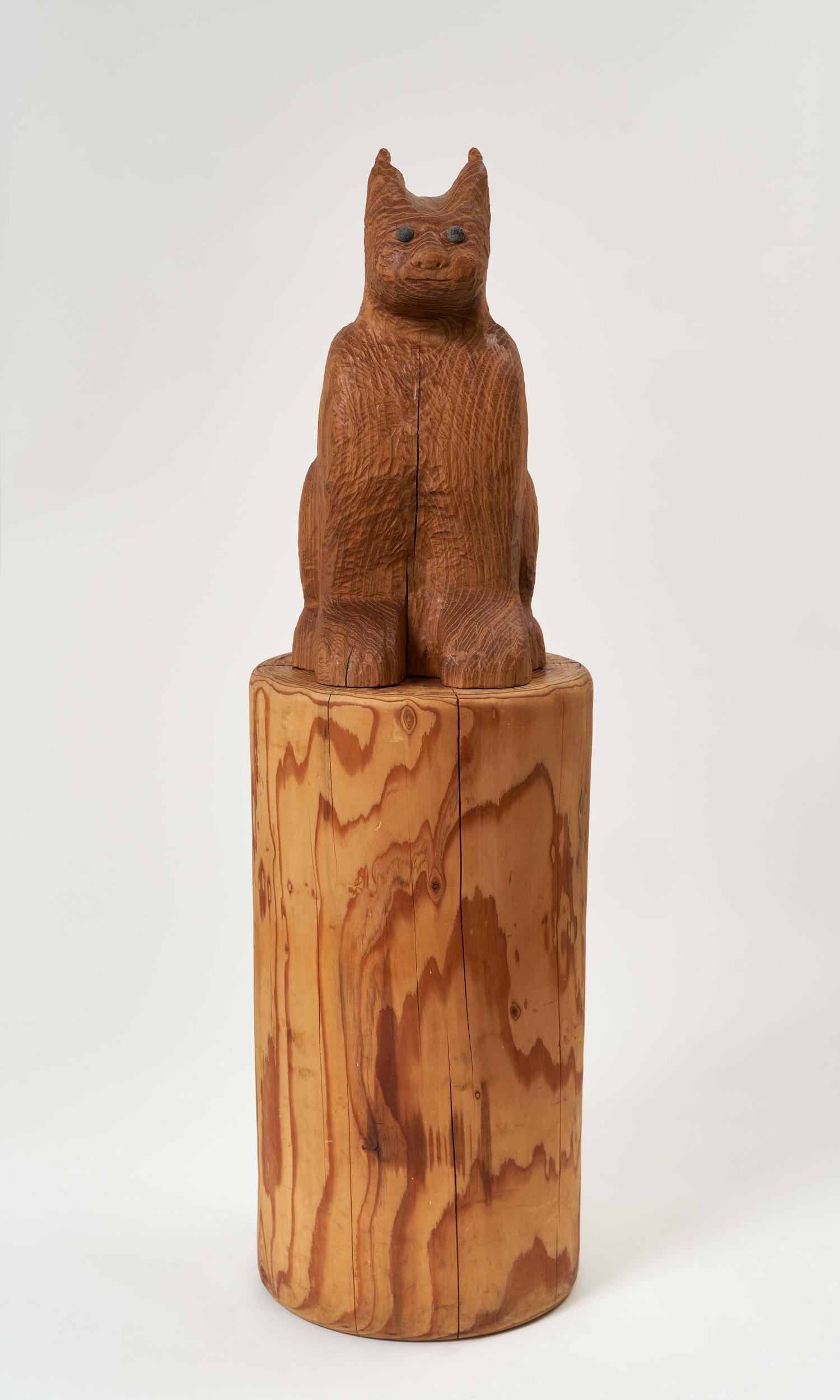
which is abandoned returns to life. For instance, a cat appears larger than a
human. A tree overtakes a person. Fire makes water cold.
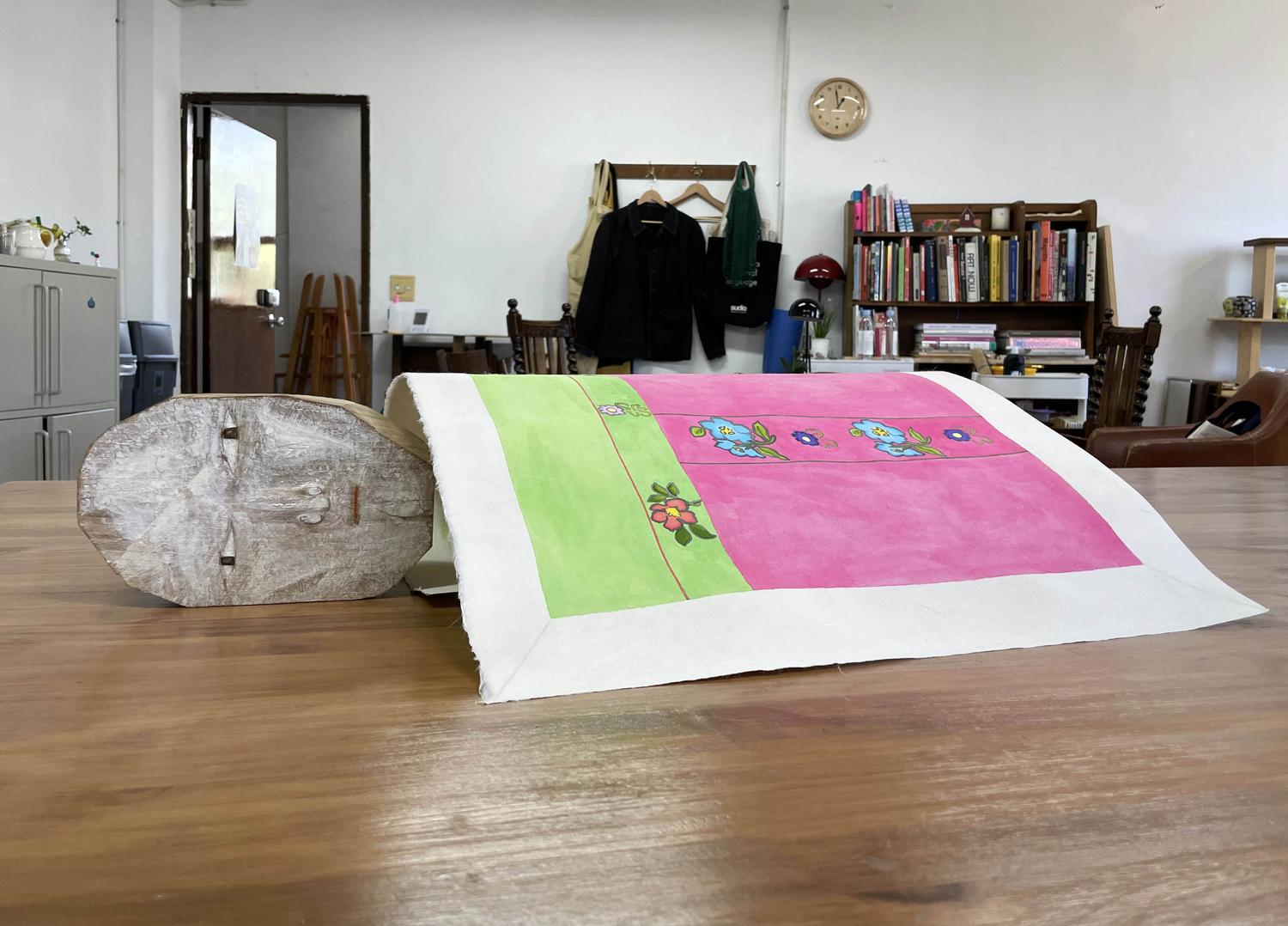
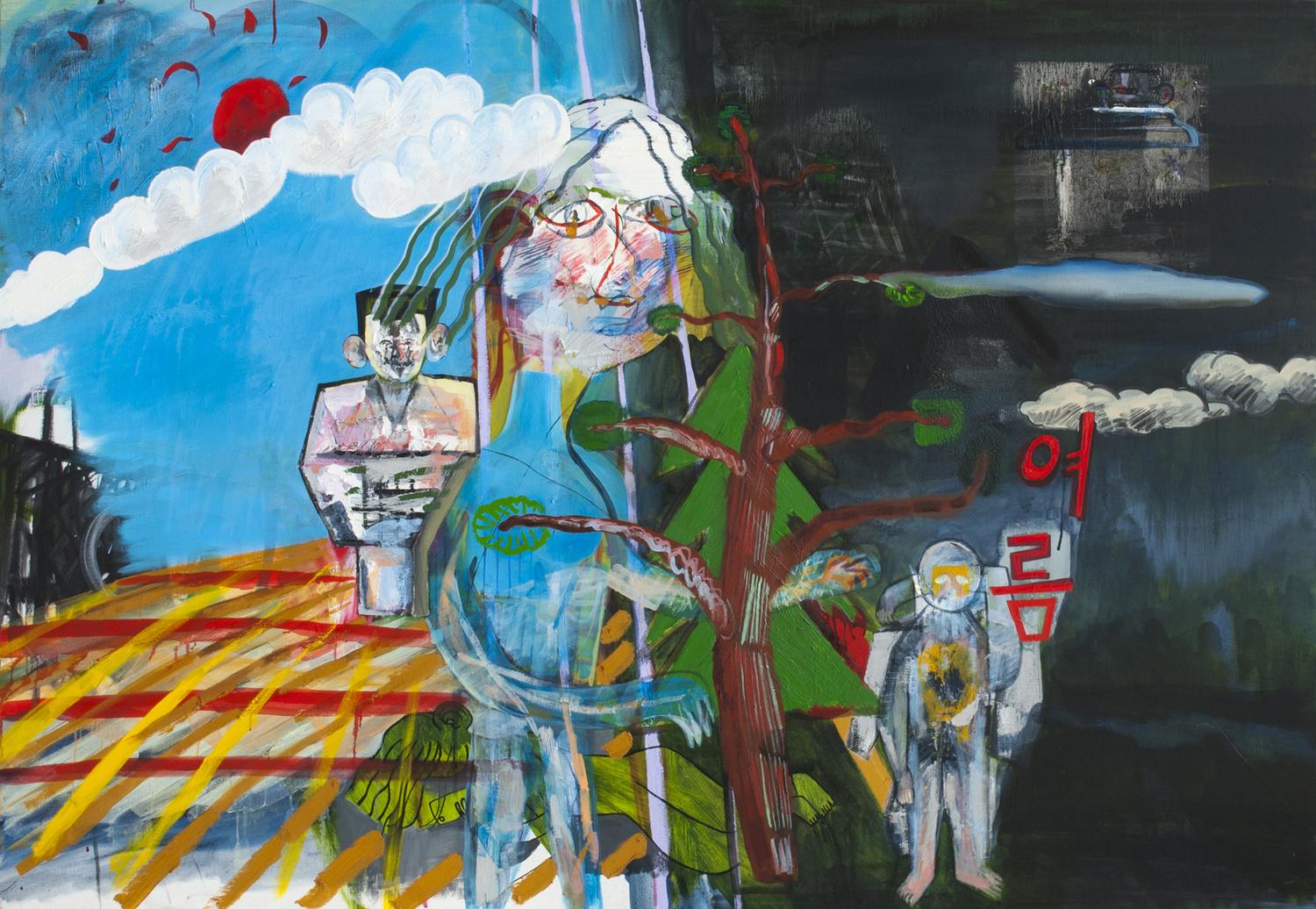
Seo Jaewoong’s colored paintings and small sculptures in the
exhibition are all “thought images” and “thought sculptures.” Let us take just
one example. The artist created four paintings themed around “Water (水),” one of the five elements. Interpreting “water” as a symbol of
“rest” and “sleep,” he left behind four works that embody rest, fantasy, haze,
and slumber. One of them, a blue piece titled Sleep,
contains the artist’s worldview, connecting the cyclic nature of the universe
with the philosophy of yin-yang and the five elements.
“I was studying animism and thinking of the mountain spirit of
Inwangsan when I created this work. The animistic worldview—that all things
have a soul—differs from the worldview that emerged after the Industrial
Revolution. The post-industrial worldview divides beings into those with souls
(humans) and instrumental beings (non-humans). In animism, humans and
non-humans are equally connected as soul-bearing entities. I believe this
worldview offers wisdom that can help heal the problems created by post-industrial
ways of thinking.”
Seo Jaewoong wrote this in conversation about the exhibition. His
thoughts are exemplified in Mountain Spirit Grandmother and the Wild
Boar, the first wooden sculpture he ever made. His belief that
“non-human beings possess souls” and that they are “horizontally connected” now
visibly manifests through his own practice.
¹ This title is borrowed from one of the books the artist read
while developing this body of work: On Time and Water by
Andri Snær Magnason. The artist introduced the book as follows: “The author,
who was born and raised in Iceland, recounts his childhood experiences with
glaciers, as well as those of his parents and grandparents. Through these
generational stories and the rapidly changing state of glaciers, he speaks
about climate change from a three-generational perspective.”
² Quotation marks used without additional notation in the text are
based on Seo Jaewoong’s written words during an email interview conducted
between November 15 and 22, 2022.