1. What Will Be Drawn and How
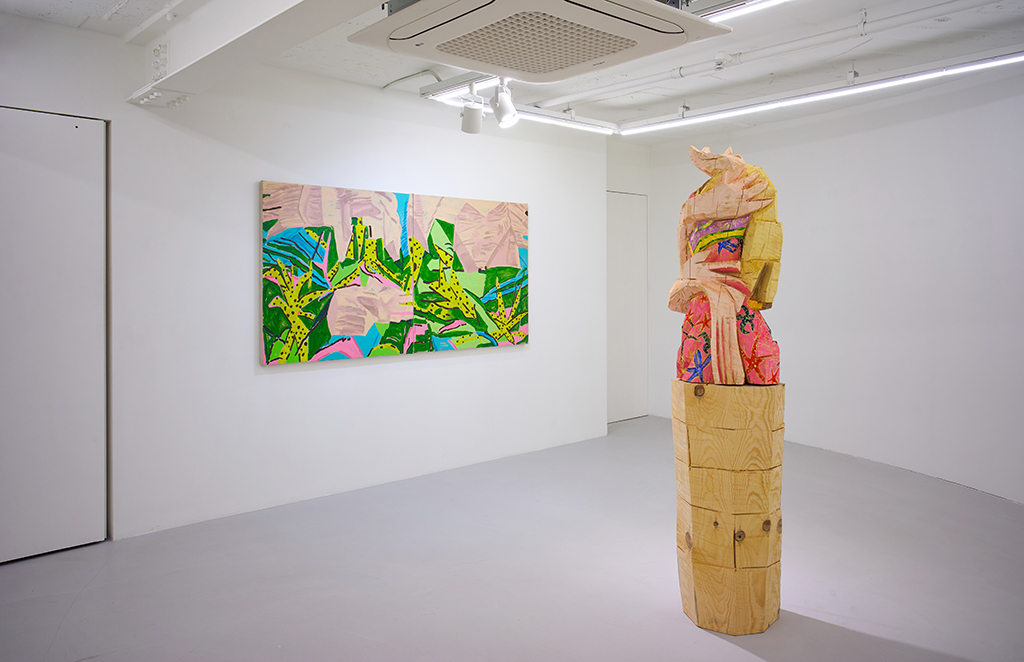
The wooden sculptural works of
his that I remember have rough surfaces that are neither sufficiently polished
nor fully colored. The sculptural forms, which look as if they have been
summoned from a tree trunk standing in the ground with a sincere gaze, support
a three-dimensional sense that rotates in the verticality of a cylinder. The
characteristics of this spiral structure have been generated through classical
norms of (human body) sculpture, establishing the ideal aesthetic conditions
for a form to automatically stand upright on the floor.
It seems that following such a
three-dimensional sculptural ideal, Rhee Donghoon reflected on the idea of
painting in his deep mind. He seems to have explored objects that can be
considered contemporary painting alongside experimenting with the close causality
between an object and a form. This is somewhat predictable through an
experimental approach between creative conditions and forms that was displayed
in the early stages of his painting before he began sculpting in earnest.
He initially worked on the
question ‘What will be drawn and how’. Over two years from 2015 to 2016, he
deduced a proper form by using literature as his painting theme and adhered to
his role as a faithful performer. For instance, in his work 〈Makar Devushkin’s Boarding House〉 (2015),
based on Bednye Lyudi (Poor Folk,1846) by Fyodor Mikhailovich Dostoevsky
(1821-1881), Rhee Donghoon portrayed the character’s boarding house on a flat
painting surface by overlapping acrylic colors and a printed image. It seems
that this was to establish the logic of his painting method by swiftly
identifying the visuality of today as encapsulated by digital images with the
reality of periodic contradictions as depicted in Dostoevsky’s novel.
Returning to recent work in which
he is already fascinated by wooden sculpture, with 〈Makar Devushkin’s Boarding House〉 unfolding
before us, the surface gives the impression that the boarding house is
well-organized on the rectangular screen, albeit being fragmentarily arranged
in parallel. Given the structure of the screen at this time, it seems that the
painting was completed by overlapping the layers of coloring with acrylic after
printing on canvas began from the form of the pillars positioned in bilateral
symmetry. The ornamentally carved pillars clearly produce symmetry on the
screen as well as the frontality, as if (re)verifying the obvious fact that
Rhee Donghoon’s painting was attempted on a two-dimensional plane. This can
also be said to be his aim to indirectly emphasize the painting frame, which
became blurry in (his/today’s) painting.
Rhee Donghoon stopped formal
experiments with literature painting for about two years after this, during
which time he clearly realized the contemporary task of taking it upon himself
to renew the formal logic of painting, thus revealing more directly his
interest in the canvas frame.
2. The Supporter for New Painting
〈Let’s See Who’ll Win〉
(2017) has the meaningfulness that can be the threshold between his early
painting and recent wooden sculpture. He stated, “I bestowed diversity upon the
canvas by making it myself to emphasize information of the materials, and I
drew a cat on it.” Partially implied in his early painting, the physical
visibility of the painting frame was by now fully fledged; furthermore,
depending on the form of the canvas, he continued to seek a method to draw an
object effectively. For instance, 〈Let’s See Who’ll Win〉 shows unusual variation in being glued with pieces of canvas cloth
around the frame of the canvas. He arranged the parts of the painting as if
misaligned puzzle pieces to be ‘logically’ perceived rather than be experienced
‘visually’. A cat is drawn on the canvas pieces glued along the frame of the
three-dimensional square structure with the center-left open. Nevertheless, he
showed his impulse to renew the pictorial screen following the surface of the
support by crossing between the plane and the three-dimensional structure
(relying on the logic of the bare canvas structure). He also aimed to raise the
possibility of the pictorial screen interlocking with changes in the support.
Actually, following 〈Let’s See Who’ll Win〉, Rhee Donghoon already
experimented with work that directly indicates his recent wooden sculpture. He
drew a cat on the support, fully revealing the physical structure of the canvas
frame. He then illuminated the status of the subject matter ‘cat’ in order to
experiment with the close connection between the canvas form and the painting
style by abandoning the painting theme or the subject matter content
established on the screen. At this time, Rhee Donghoon carved a cat shape in
wood and covered it with canvas, upon which a cat pattern had been drawn. He
merely spoke of “the pleasure of drawing objects of his affection” with
emphasis; in fact, his statement almost suggests that his painting subject
matter (at least the cat) doesn’t determine any style or content. That is, the
mediation of the (canvas) support and (painting) materials merely justifies the
drawing. It seems that he tried to find a new painting support and pictorial
surface that could interconnect with them.
Rhee Donghoon carved a wooden cat
sculpture, used it as the canvas support, and covered it with painted plain cat
patterns (like skin) interconnecting with the support form. Likewise, the
synchronization of his wooden sculpture and canvas painting was done quite
closely but randomly. It was mutually mediated as an action molding a cat as a
familiar shape without any meaning. Given this context, rather than seeking a
separate approach to the medium, it can be surmised that he has simultaneously
undertaken sculpture and painting as a process of hypothesizing and verifying
to intensify the (dubious) relation of the two in the pictorial context.
It can be said that he
unexpectedly began working on wooden sculpture in earnest. He endeavored to
verify his hypothesis on the formal relationship between the physical structure
of the canvas frame and painting on canvas, and he learned woodcraft with the
intention of making picture frames by himself. He learned woodcraft from a
master, envisaging frames that embody aesthetic qualities in themselves, in
addition to being gorgeous ornamental frames that could function as painting
frames. Although he trained in wood-carving skills, he didn’t even try to make
wooden frames initially. Interestingly, he carved flower forms by looking at
the real flowers that would also be used for still life. This is how his wood
carving began.
3. Still-Life Sculpture for
Painting
By the time he was devoted to
learning woodcraft, he planned to copy a masterpiece on flowers from world art
history. As a result, it seems that he began his flower carving with the goal
of ‘copying’ a masterpiece and ‘copy-carving’ a frame. With great timing, the
third result relating to the painting style that he sought was also deduced.
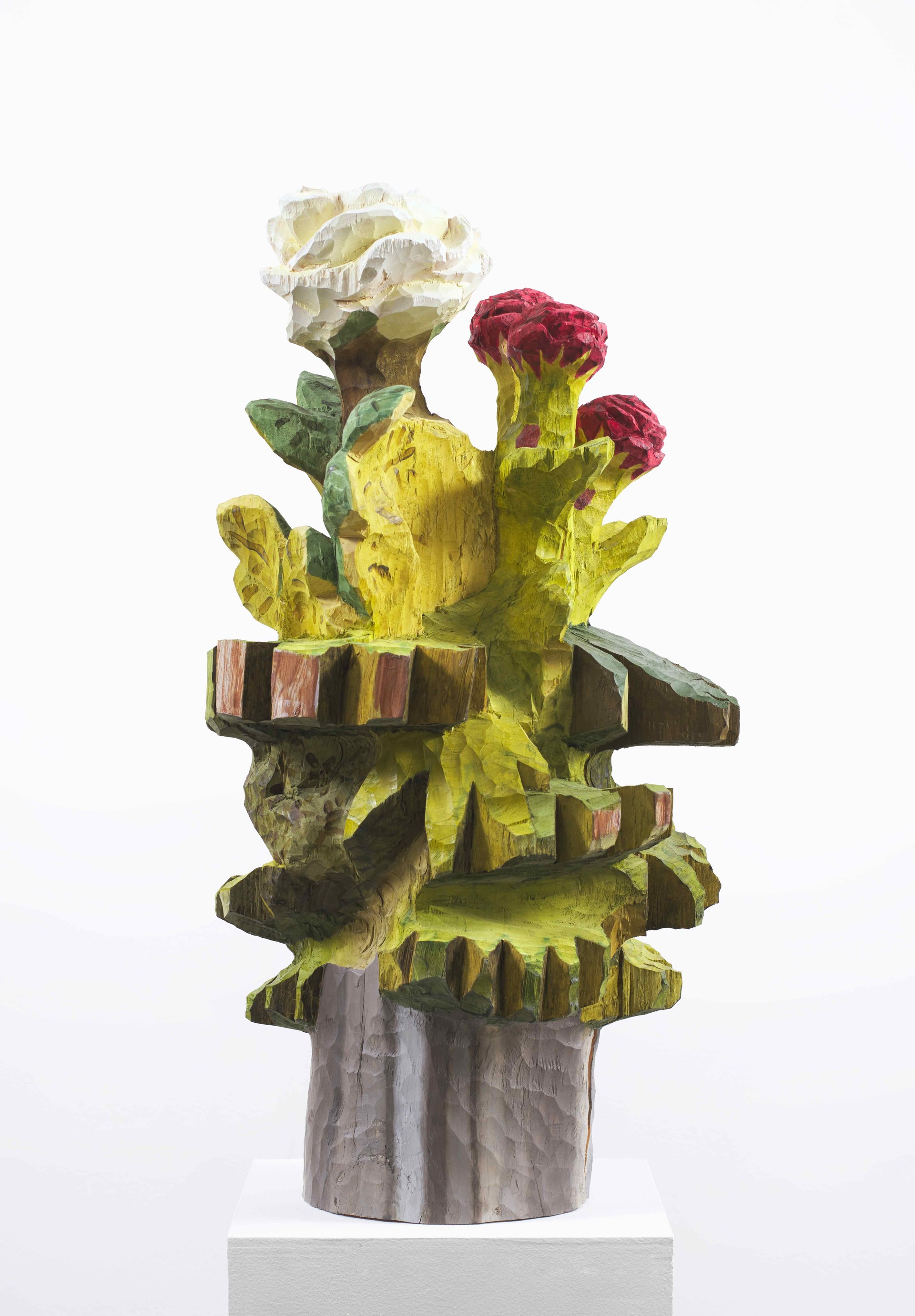
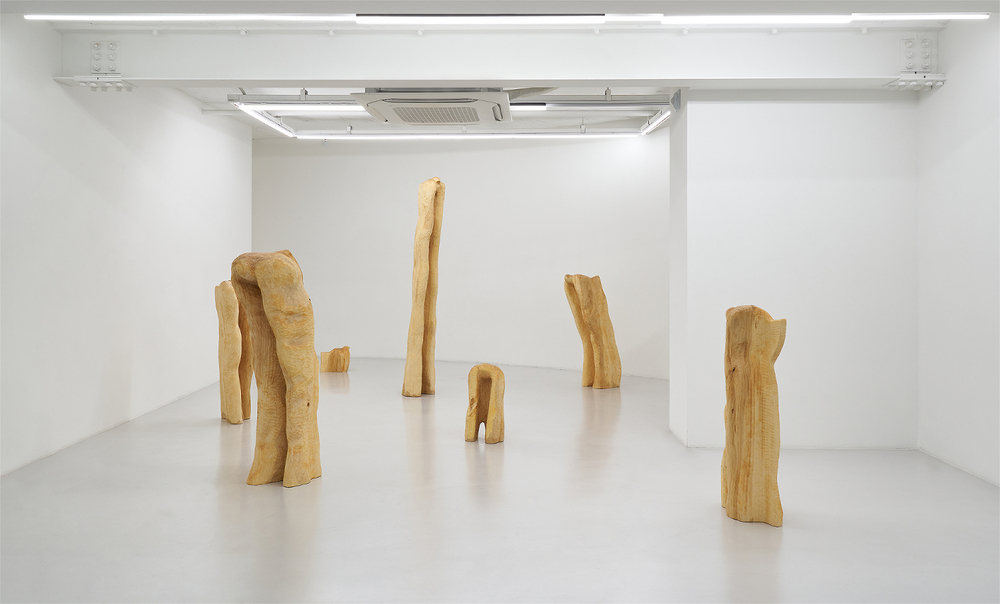
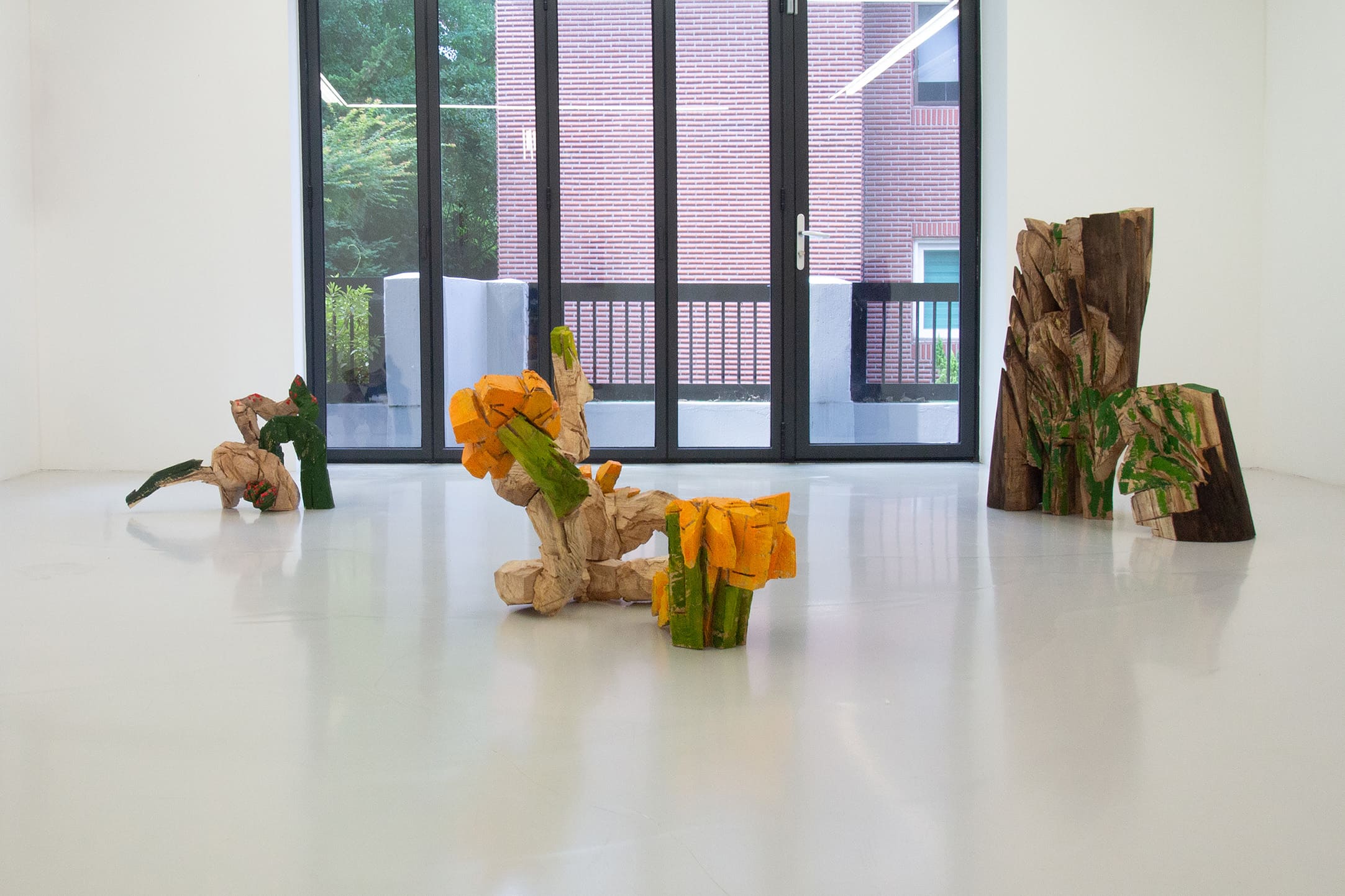
Rhee Donghoon’s sculpture has a
few characteristics to emphasize: using wood as a material; making a large
chunk form using an electric saw and a chisel instead of expressing detailed
contours and textures; coloring the surface of the sculpture suitable for the
real object; and mainly dealing with the forms of plants, animals, and human
bodies. His early work, which was made by carving wood into an appropriate size
so that a vase and flower pot could be placed atop as a prop, was produced as a
still-life sculpture that was ‘possible to paint’ or ‘to be painted on’ from
the beginning. This work spun off into two performances, one to clarify that it
was possible to add pictorial practices like coloring or painting to still life
as the physical support for a painting like a canvas frame; the other that
still-life sculpture as an object of copying challenges pictorial possibilities
in which a three-dimensional object is interpreted like a plane on a typical
canvas screen.
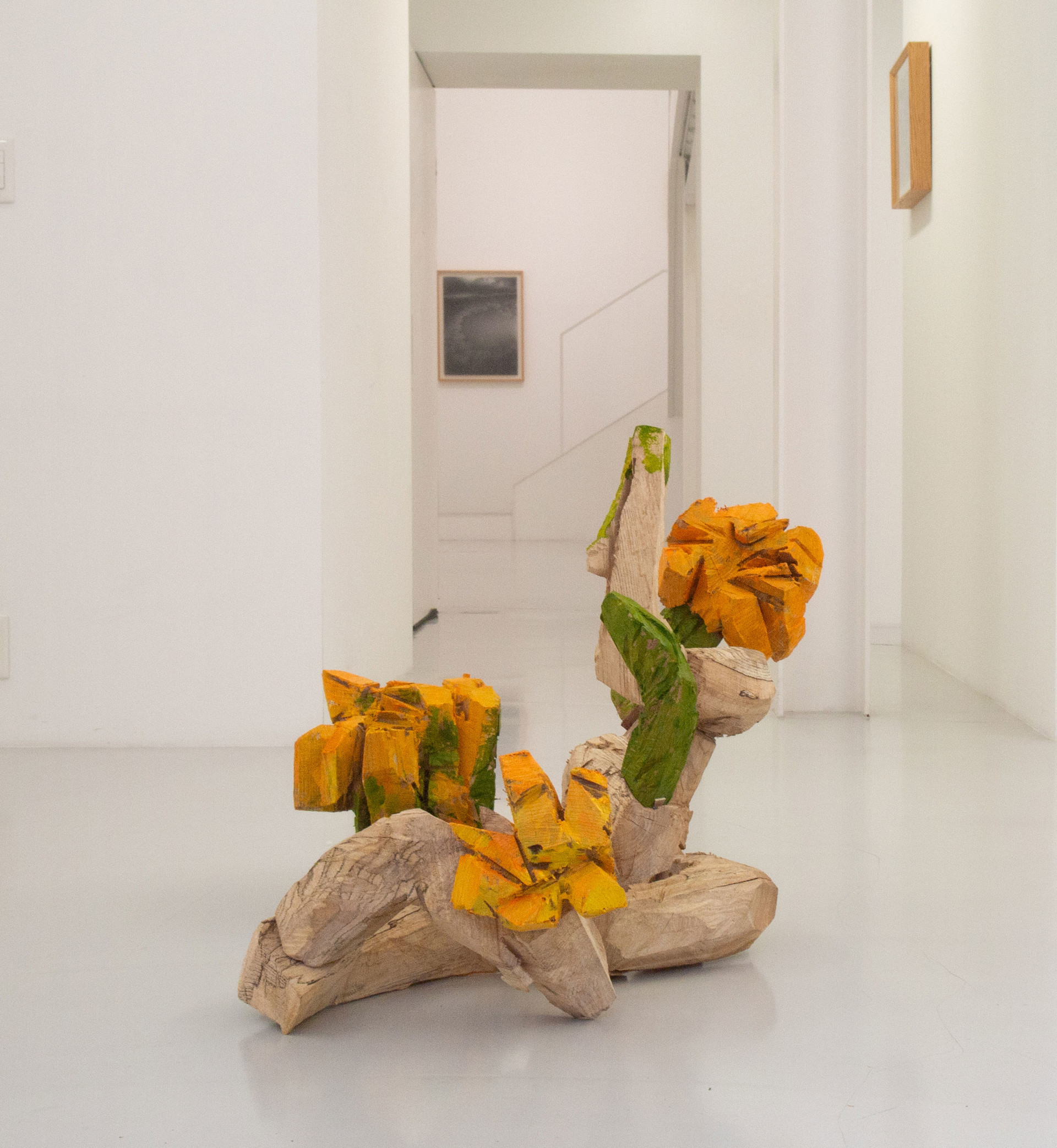
In 〈Flower Pot〉 (2018) and 〈Vase〉 (2018), early works colored with
acrylic after being carved from a log, he continuously exposed the original
form of the wood for emphasis (as if revealing the canvas structure in detail
as he did before). In particular, in 〈Flower Pot〉, the cylindrical pot, the flower rising vertically up and the
awkwardly repeated rhythm of the cylinder’s spiral structure have a distinctive
mass through harmonization with the leaves of the pot and the shadows, which
make the sculpture autonomically stand upright alongside being
three-dimensional. That is an arbitrary contour, but looking at the work
closely, you can catch another intriguing spot. On the surface, which the
artist peeled with a saw and a chisel, horizontal and vertical patterns are
continuously repeated. It gives the impression that the faces ‘contain’ a
certain form rather than the shape of a flower elaborately carved and endlessly
intersected. So to speak, they are like two-dimensional supports for the form.
By using the wooden sculpture to support the painting, Rhee Donghoon finally
painted flowers connecting to the support structure.
He frequently produced still-life
sculptures with flower pots and vases as the subject matter from 2019. He also
added new subject matter such as animals and plants, as seen in the works 〈Flamingo and Grass〉 (2019), 〈A Cat, a Titmouse, and Grass〉 (2019), and
others. By reconfiguring various different subject matter like a collage, he
also produced sculpture faithful to the material of cylindrical wood, such as 〈A Long Cat 1〉 (2019) and 〈A Long Cat 2〉 (2019).
For instance, in the case of 〈Vase with Magnolia〉 (2019), he carved a
black vase incongruently up and down in the middle (like baldly revealing the
spiral structure as if to avoid making it look too flat), and greatly
emphasized the pictorial effect of the flower and leaves in the intersection of
rectangular faces as he painted the cat form like a puzzle in 〈Let’s See Who’ll Win〉 on the brim of the
canvas through revealing the canvas structure. In particular, (in the form of
the sculpture) the leaves in the vase are simply carved, almost achieving a
cuboid shape, and painted with yellowish-green and brown on each face through a
shading effect, enabling the concreteness of the object to be revealed on the
pictorial surface rather than the sculptural form.
The height of 〈Flamingo and Grass〉 is 164cm, and the upper
part and lower part of the sculpture are divided as if two separate wood
materials have been connected. The body of the flamingo is placed on the upper
part of the sculpture, and the legs and grass covering the surroundings are placed
in the lower part. Similarly this time, it is obvious that the cylindrical wood
was carved around the wood in three-dimensions, which is also emphasized
through the coloring effect, which is maximized with the rectangular faces
alongside the shading and perspective through the pictorial hallucination on
the surface.
Thus, instead of making the
picture frames, Rhee Donghoon decided to ‘copy-carve’ the painting subject
matter with a technique that he had learned to make picture frames, and he used
the wooden sculpture he carved as a painting support like a canvas plane and
painted with colors suitable for the objects. This was done through the subtle
intersection of sculpture and painting, copy-carving and copy-painting, and the
supports and content.
4. Still-Life Sculpture and
Sculpture Still-Life
In his first solo exhibition, 《Indoors
with Flowers》 (2019), Rhee Donghoon moved the still-life sculpture that he
carved onto the canvas. This action that moves roughly (three-dimensional)
forms to (two-dimensional) colors addresses the question that he was clearly
aware of from the beginning: “What will be drawn and how?” As he changed and
produced a canvas structure that was visually revealed and painted with cat
shapes on the shredded canvas screen from an early stage, (with a bit of
exaggeration) it seemed that he secured some space for painting by assessing
and trimming the wood according to its form. It must have been an effective
solution that satisfactorily answers the question ‘What will be drawn and how?’
I guess that he found another unexpected painting support in three-dimensional
sculptural form by going through several processes like this.
Meanwhile, ‘sculptural painting’
presents another answer to the same question. He experimented with how colored
still-life sculpture can be transferred to a flat canvas as a painting object
corresponding to ‘what’. For instance, after 〈Vase〉 (2019), still-life sculpture colored
with acrylic paints on wood was completed, going through pictorial
transformation with acrylic paints on canvas as if forming another antithesis.
In 〈Vase 1〉 (2019) and 〈Vase 2〉 (2019), he drew part of the
still-life sculpture 〈Vase〉
almost resembling the sculpture by looking at the same position. This time,
completed as “still-life sculpture”, the independent 〈Vase〉 was summoned as an object for painting with a size of 53cm in width
and 45.5cm in length to become the “sculpture still life” to be drawn. The
pictures painted by observing the still life are 〈Vase
1〉 and 〈Vase 2〉. And the screen of 〈Vase 3〉, another painting version, is greatly expanded to a size of 145.5cm
in length and 112cm in width, and layers of yellow paint on the surface of the
painting are covered like fog.
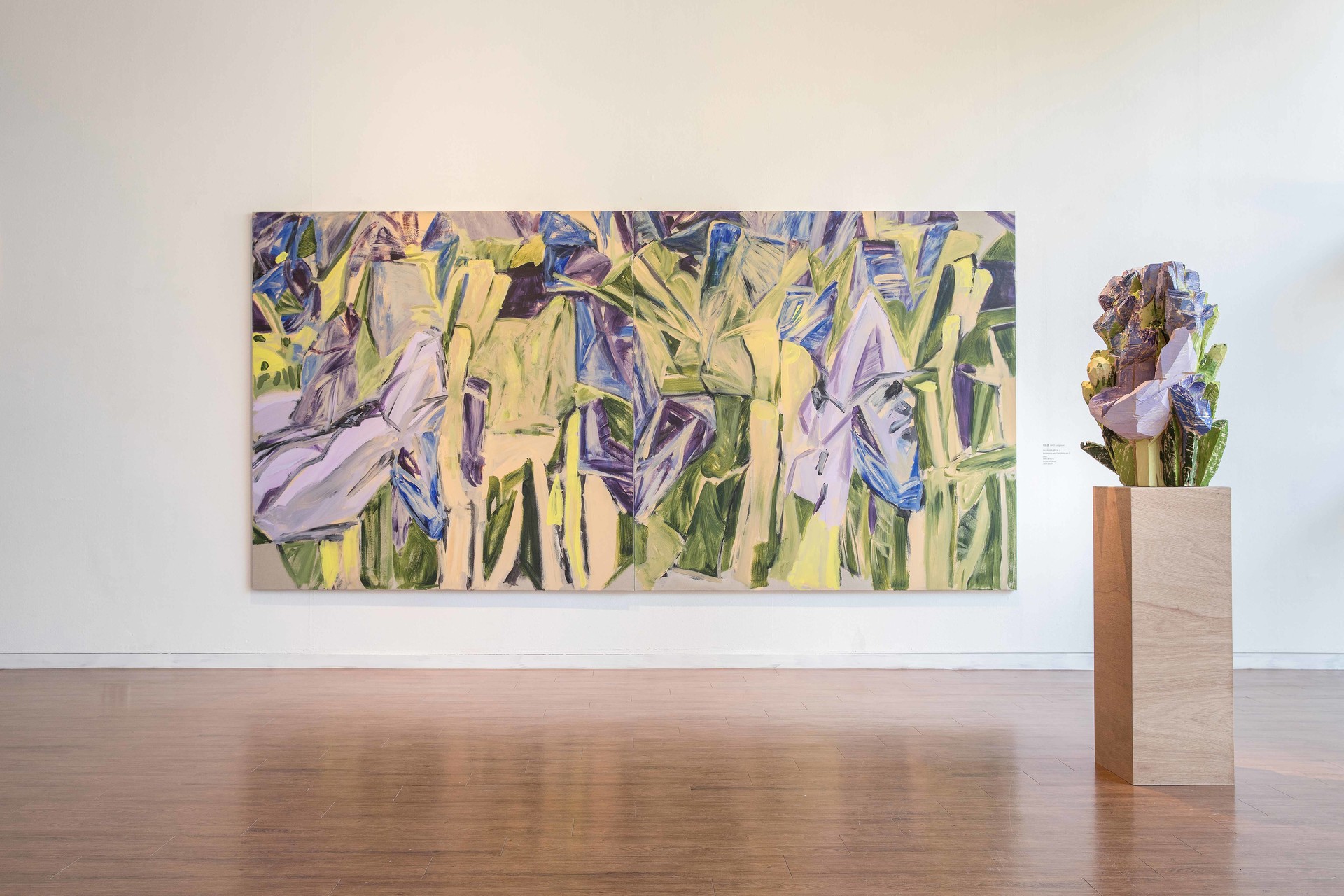
Introducing such works in the
exhibition 《Indoors with Flowers》, wooden
still-life sculptural works were placed on the prop while paintings imitating
the sculptures were displayed side by side to target each other like reference
points. He didn’t reproduce all of the still-life sculptures through painting,
but it is clear that the close and potential relation between sculpture and
painting was established. In particular, an intriguing gap between the two is
simultaneously revealed. That is, the still-life sculpture is the same as
explained above, but the painting drawn on canvas with that as an object shows
quite a different approach from the sculpture.
〈Vase 3〉 is reminiscent
of the context of his early work in which he covered the surface of the carved
cat shape with a cat pattern drawn on the canvas. Between the acrylic coloring
on the three-dimensional surface of the wooden sculpture and the picture
painted on the side of the sculpture with acrylic paints on the canvas, subtle
differences among the circumstances connecting each are visually contrasted.
Rhee Donghoon carved delicate surfaces on which the colors change depending on
the outside contour as well as light and shade, as if sketching in preparation
for painting by keeping in mind the surface color. Rather than giving a
realistic three-dimensional effect, his still-life sculpture is reminiscent of
a molding process series in which the face of a form is perceived that depends
on the chroma as well as the shade of the form. On the other hand, in the
process of transferring the sculptural work to a two-dimensional flat canvas,
Rhee Donghoon painted it to look flat and even, as if being pressed by eliminating
the sense of space, the cubic effect, and the feeling of distance thus evenly
spreading the perspective. That is, as he arranged each side with the chroma in
a row when he painted the surface of the wooden sculpture, he transferred it to
a flat canvas by emphasizing pictorial hallucination through the chroma.
His experimentation continued
after producing the still-life sculpture that was carved following still life
and colored on its surface, and the still-life painting that was transferred
onto canvas from sculpture. This continued after 〈Vase〉 (2020), 〈Magic
Lily〉 (2020), and 〈Cactus〉 (2020) by undergoing pictorial experimentation through the
combination of three works under the title 〈Untitled〉 (2020) on one flat canvas. The work continued to highlight the
“abstract” color plane that was greatly emphasized in still-life sculpture,
grafting pictorial hallucination on the sculptural support.
5. Sculptural Continuity
and Pictorial Continuity
In his second solo exhibition, 《Sculpture
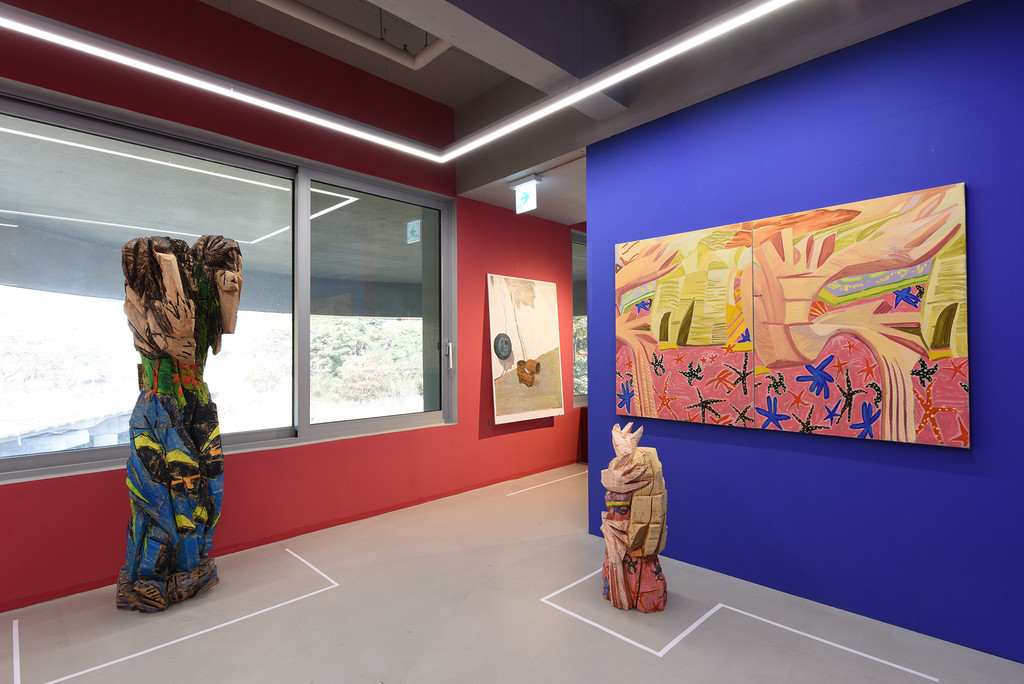
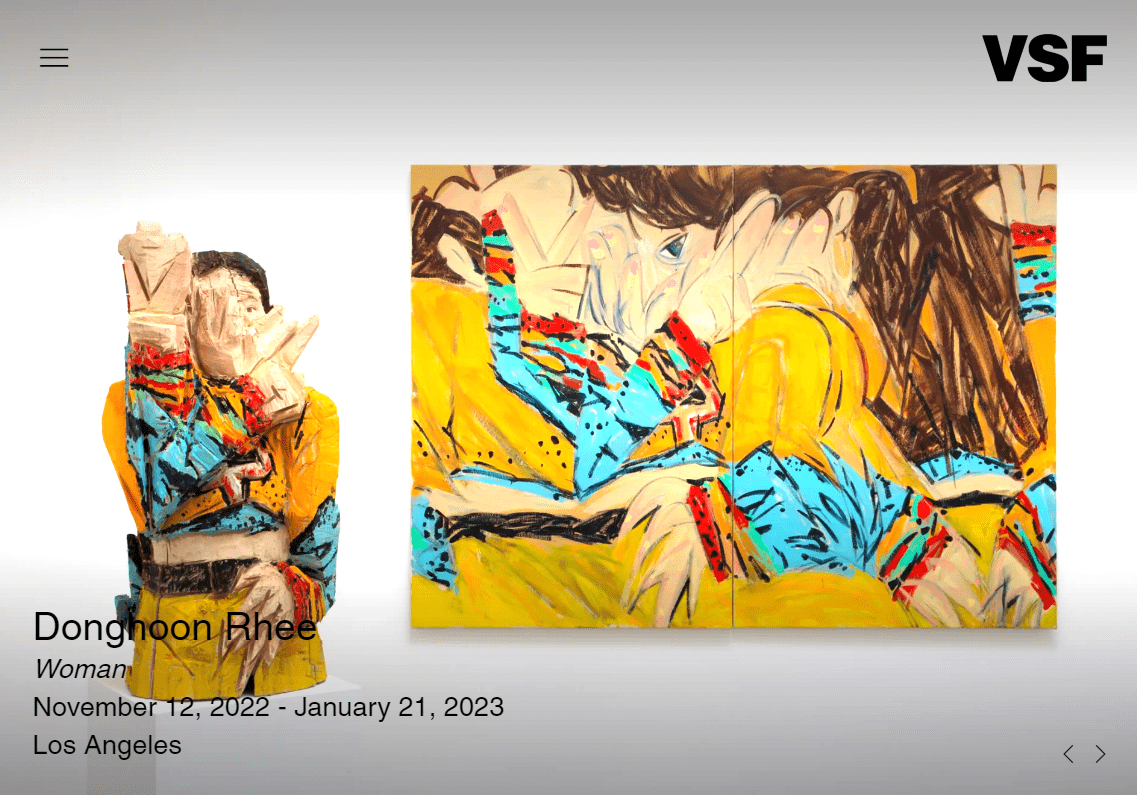
also Dances》 (2021), Rhee Donghoon wholeheartedly introduced human figures
that he had begun in 2020. With his human figure sculpture focusing on costumes
and the choreography of K-POP idol groups, he understands the object as a new
body combining with specific costumes as well as a new norm of
three-dimensional human figures established through specific choreographic
movements.
The work 〈Not Shy〉 (2021), a sculpture of a dancing
human body as it is revealed visually, has a structure in which the lower body
replaces a prop abstractly trimmed from a log, atop which an upper body
expressing a dancing movement is placed. Rhee Donghoon displays an interesting
attempt to express a body as it is without any movement, and the hands and arms
move rapidly depending on how the choreographic movements are piled atop one
another. This continuity doesn’t reflect the time-based description of the
conventional, spiral structure. He reflects no-time-based continuity that
resembles digital editing rather than construction using continuous movements
logically and transparently through overlapping body movements.
Such sculptural renewal was done
through pictorial trials, which indicates that Rhee Donghoon’s sculpture and
painting are closely connected. In this case, as well, the process of
transferring still-life sculpture slightly changed into sculptural still life
to a flat canvas, and the (renewed) continuity of the sculpture is converted to
pictorial continuity through maximizing the pictorial effect in 〈Not Shy 1〉 and 〈Not
Shy 2). In the process of transferring the still-life sculpture created by
carving a cylindrical log to painting, Rhee Donghoon engaged an important
device. He placed the sculptural still life on a rotating roller and drew a
picture by looking at the rotating object rather than the stationary one. By
renewing the sculptural logic on the continuity of movement while carving a
human figure in continuous dancing movements, he gained the definitive
appropriateness of transferring it into painting. It can be said that it was
not (old) time-based. This is descriptive continuity, but non-time-based continuity
that implicates visual sensibilities through digital editing and technology
within the media conditions of today’s sculpture and painting. The two
paintings leave room for continuous adjustment and imagination within and
without the painting grid, the juxtaposition of the fixed image, and the
endlessly swaying virtual image through (self-designed) sculptural reference.
In 2022 New Rising Artist 《Explorer》, he again
showcases still-life sculpture with flower pots or vases as the subject matter
and pictures painted from sculptures. Having experimented with the referential
continuity of painting and sculpture through human figure sculptures, Rhee
Donghoon returns to the plants that he has dealt with from the beginning. He
stood himself before the question ‘What will be drawn and how?’ by
concentrating on the process of carving and transferring the carved objects to
canvas painting.
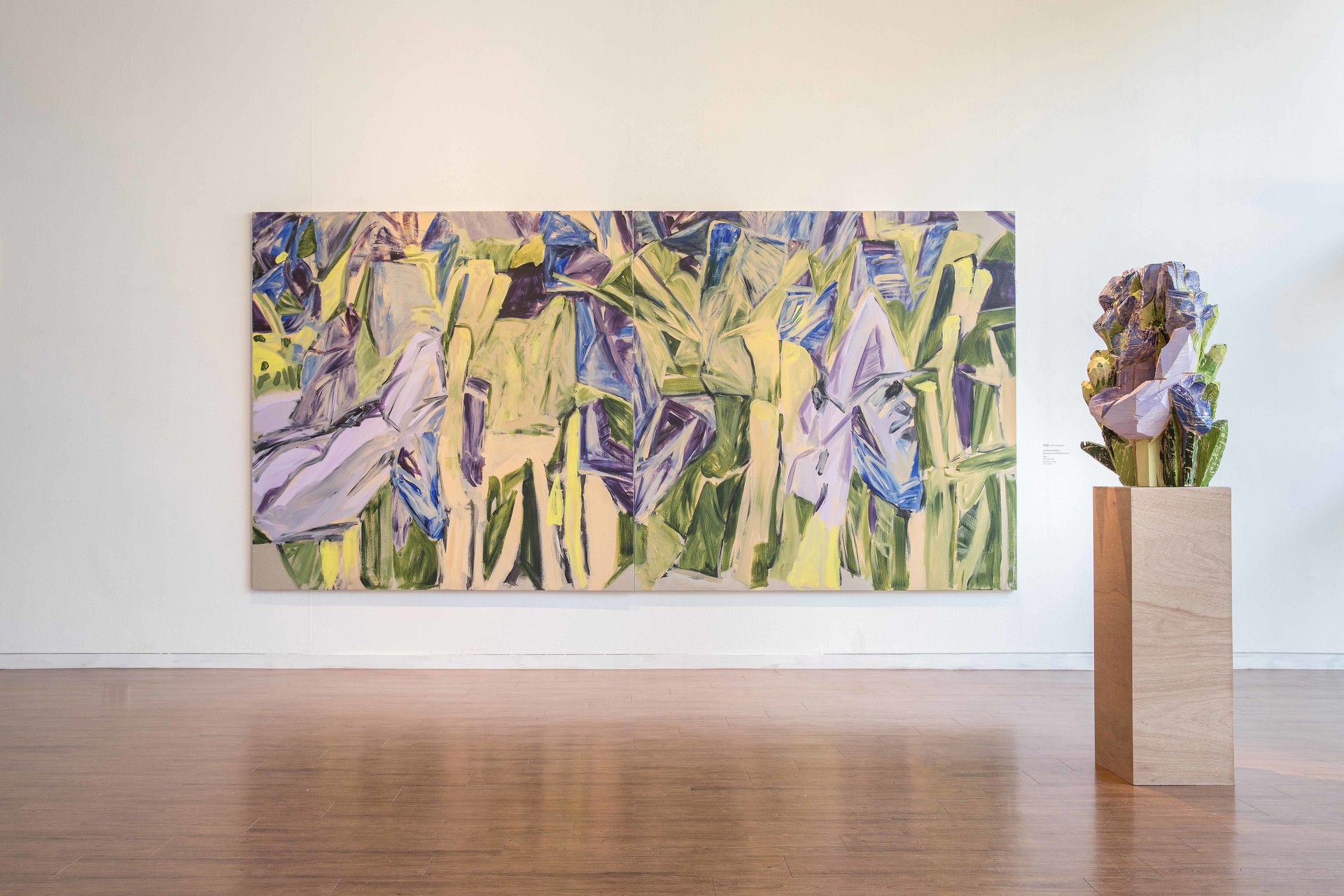
〈Anemone and Delphinium〉
(2022) is a still-life sculpture produced by carving ginkgo wood and coloring
it with acrylic paint. The first impression is that of the remains of a
sculpture placed on the prop, the outline and the mass, with the rest having
been severed like a head sculpture that has been cut horizontally at the neck.
The sculptural works even convince us that they could be continuously changed
through exchange with other props or other forms. That is the formative feature
seen in most of the still-life sculptures displayed for this exhibition, such
as 〈Delphinium and Oxford Scabiosa〉 and 〈Calla and Clematis〉, which have been placed without props on the floor.
Each still-life sculptural work
presents formative characteristics that he has shown from the early stages, but
by and large, the features compromising or connecting the voluminous sense of
sculpture to the pictorial surface can be estimated in 〈Cactus〉 (2022). So to speak, Rhee Donghoon
secured the faces for coloring by ironically “flattening” the sense of
sculptural volume, and the faces are again circulated in the sculptural volume
sense. This is repeated in the 〈Delphinium and Oxford
Scabiosa〉 (2022) and 〈Alstroemeria,
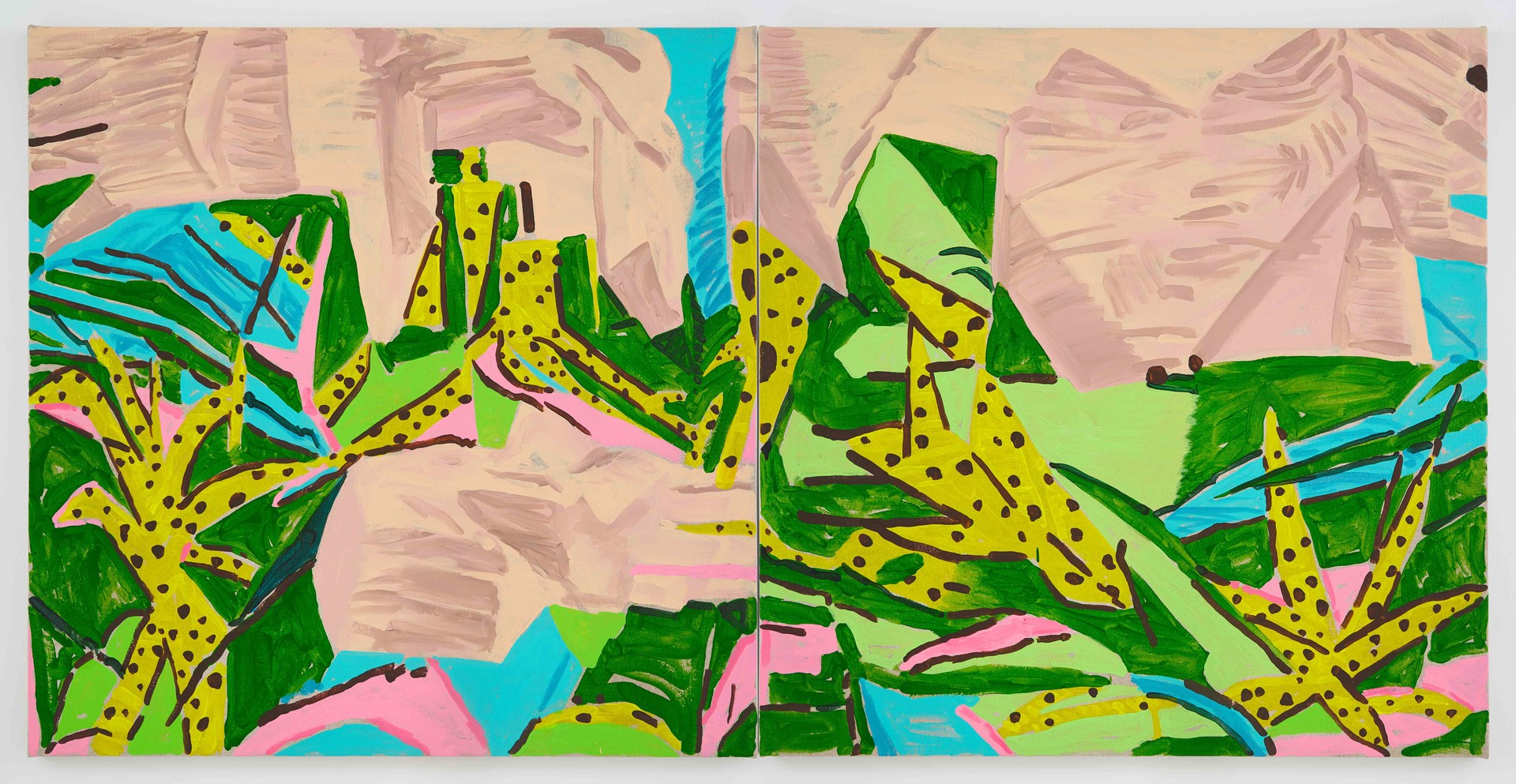
Carnation and Oxy 1〉 (2022) paintings. Placing the
completed still-life sculpture on a roller and repeatedly painting it
horizontally while rotating, Rhee Donghoon began enumerating pictorial faces
with colored ones that were mobilized for a sense of sculptural volume. The sculptural
support disappeared and the surface of the sculpture spread on the flat canvas
doesn’t hesitate to be converted into a pictorial colored face.
Rhee Donghoon’s painting and
sculpture, in which sculptural references and pictorial references intercross,
make viewers focus on “painting” when reaching the final stage. Also in the
wooden still-life sculpture, the sculptural support is explained as a structure
for experimenting with pictorial possibilities, to be reestablished as objects
for painting again. And this is meaningful in tuning to instrumental
possibilities rather than reaching for completion in the style of his work.