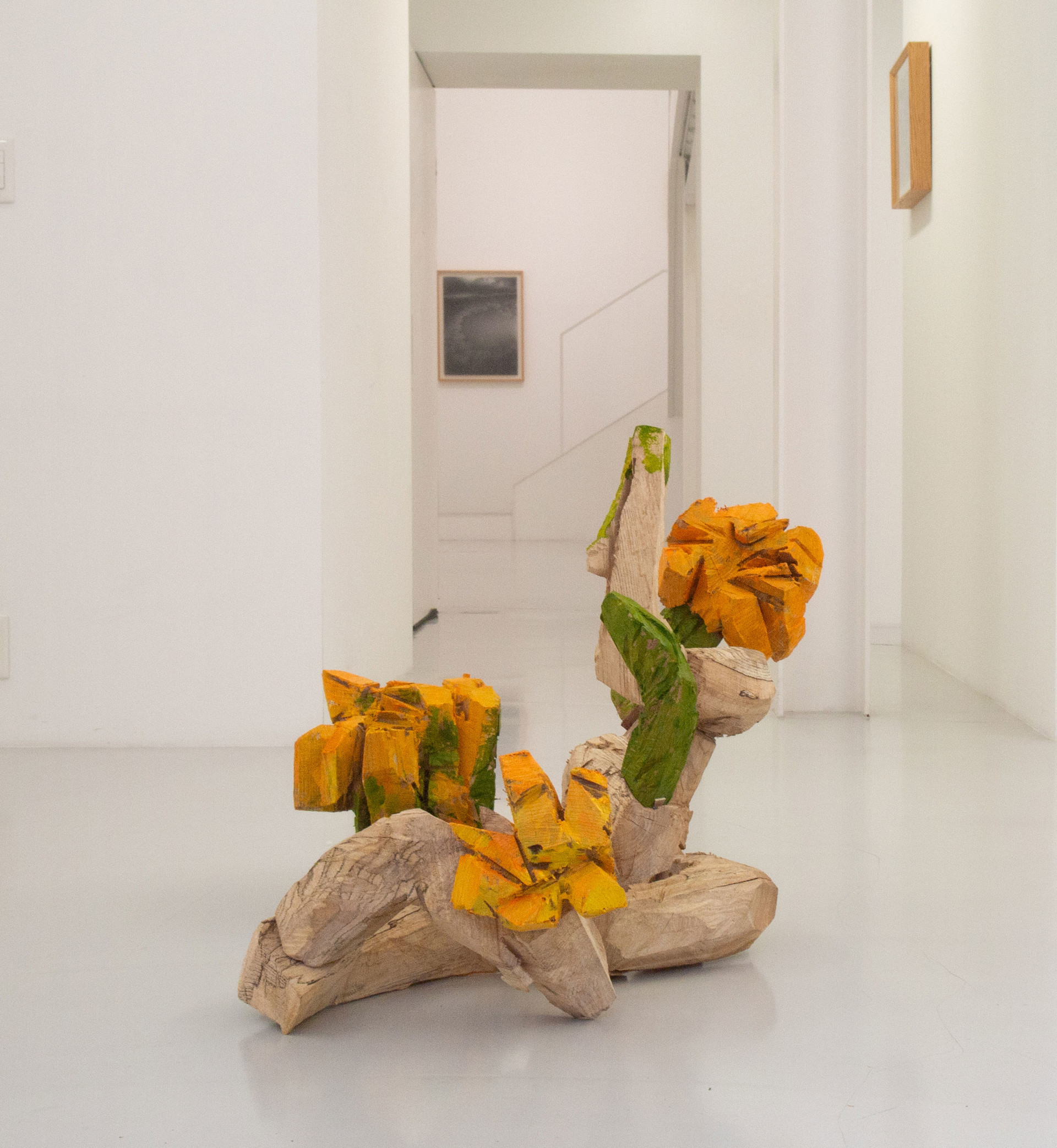
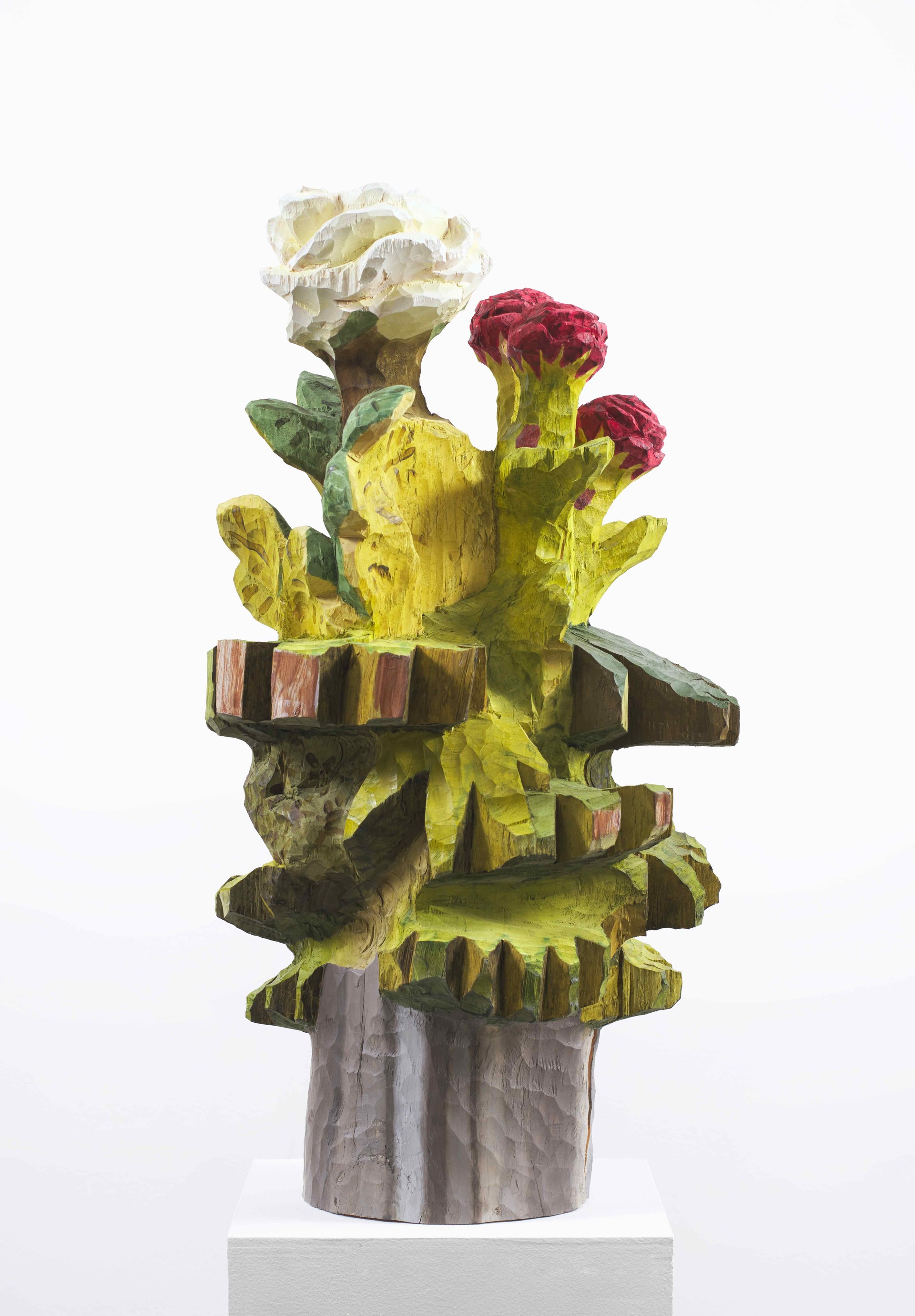
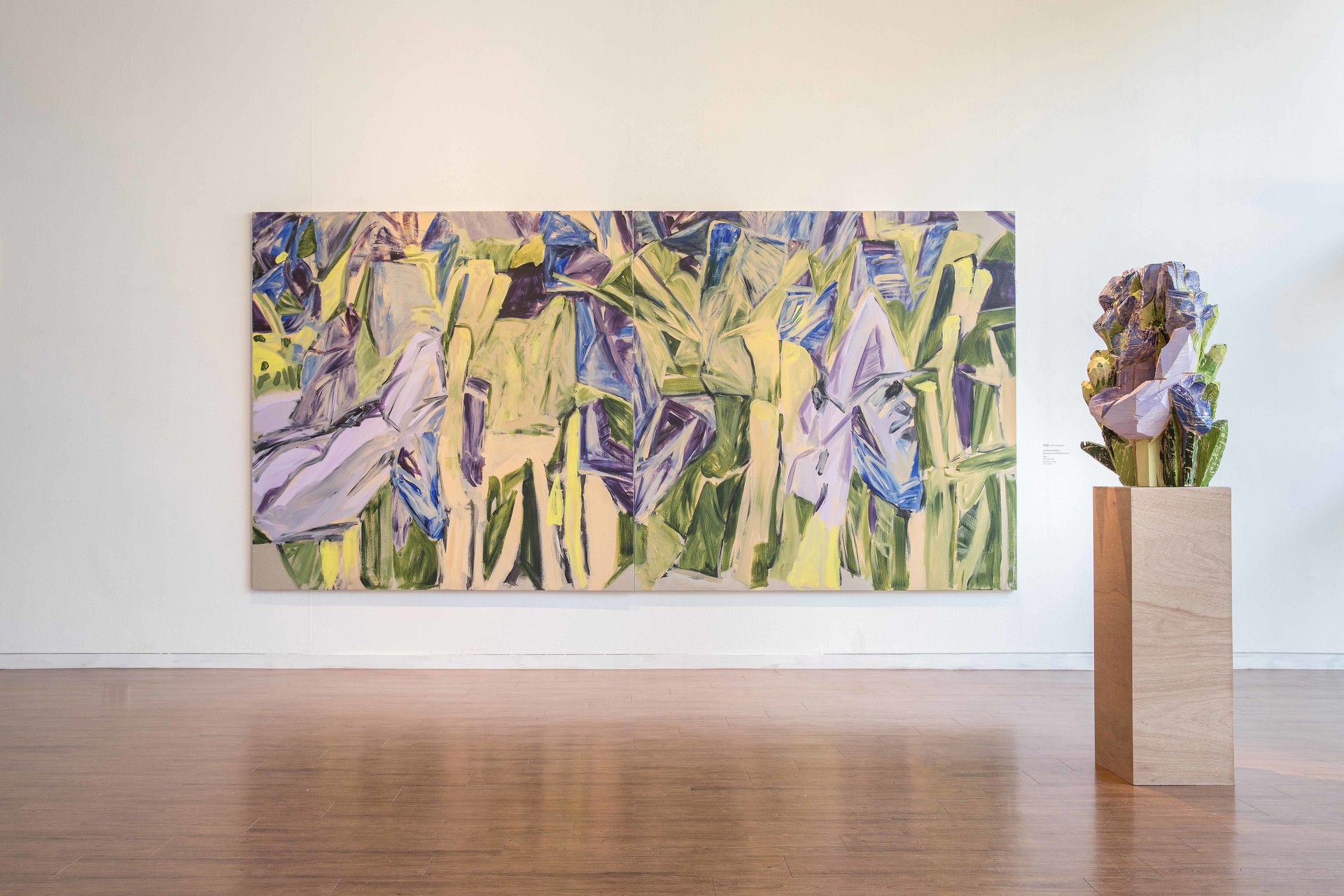
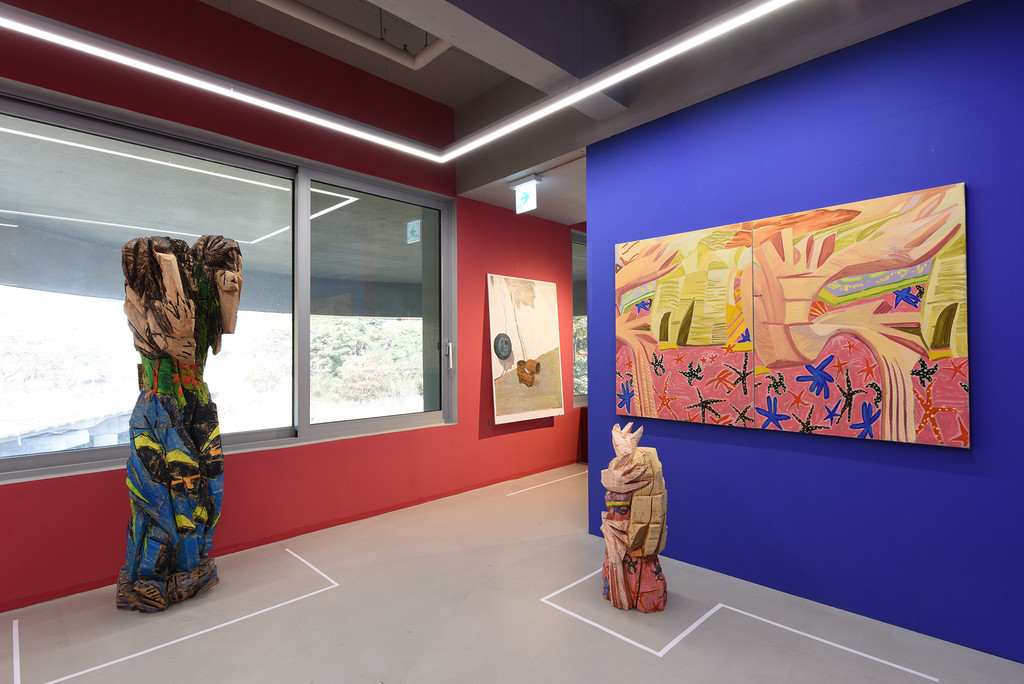
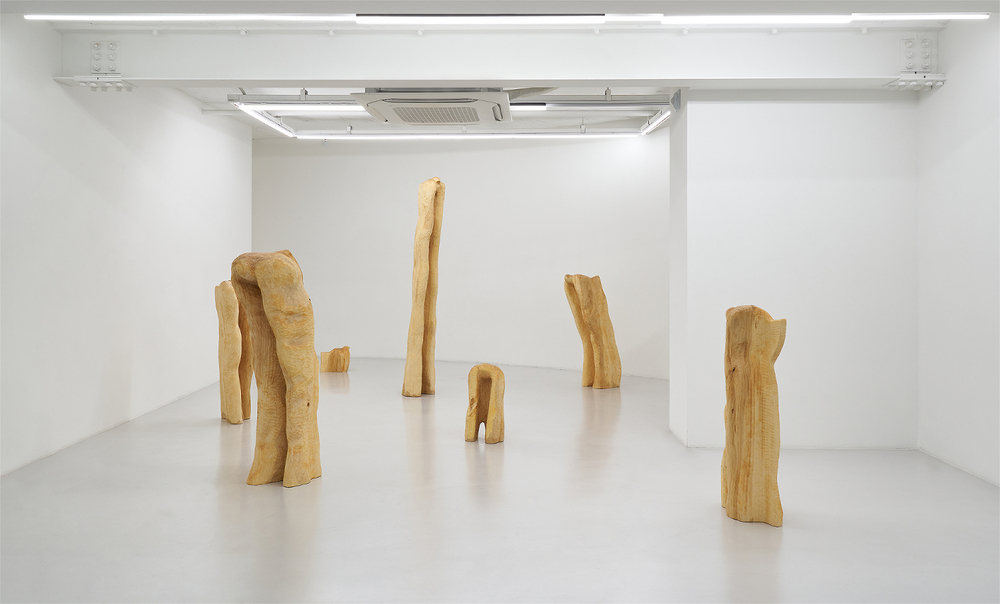
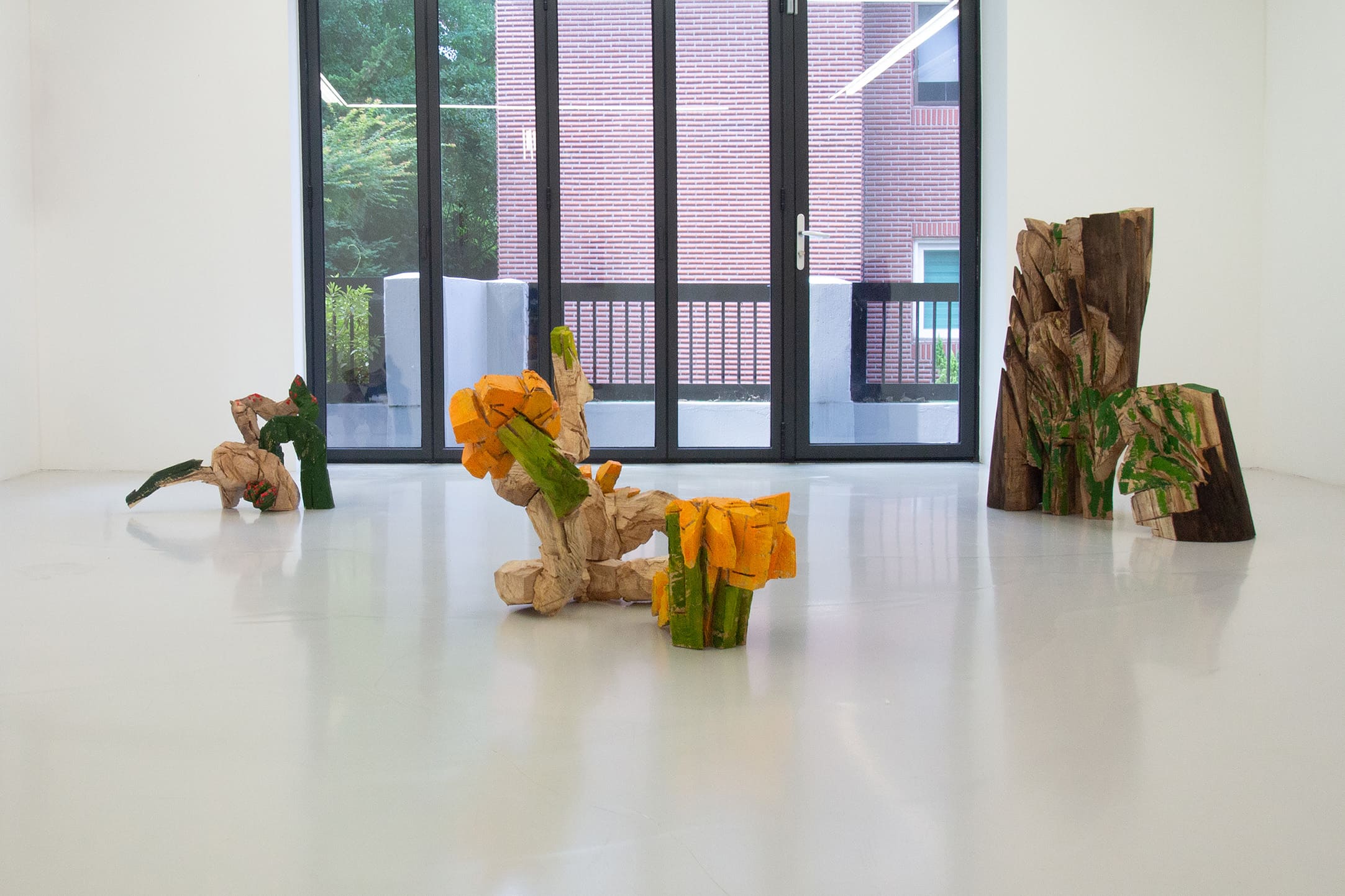
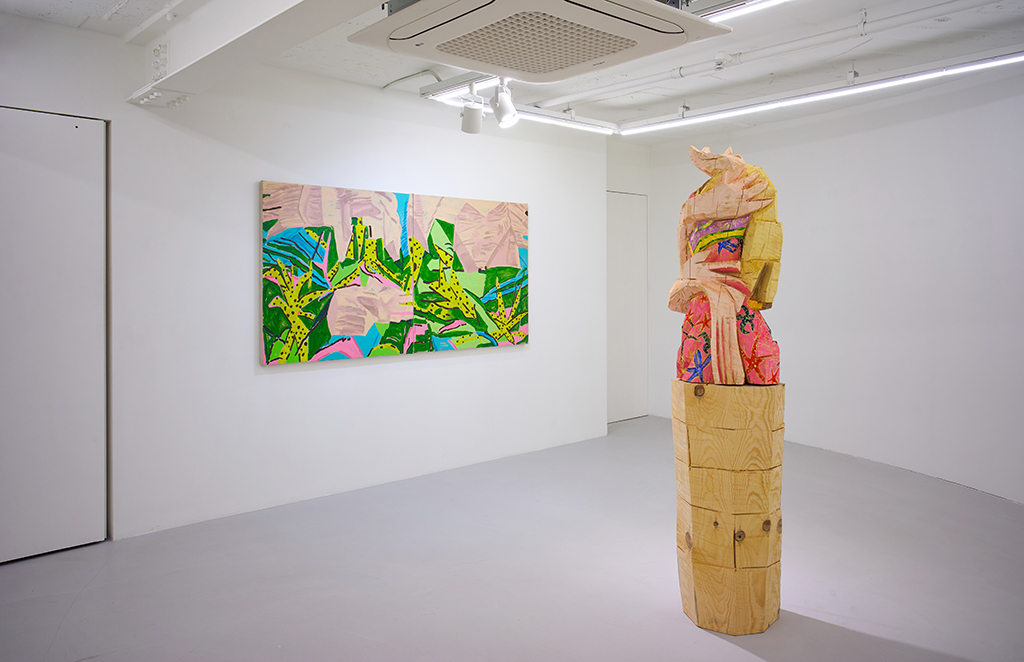
Last year, the armful or so of Korean pine I’d amassed felt like
dots, scattered here and there through my workshop. Take away one section, and
another would appear. The paintbrush, gliding over rough, bumpy terrain, led to
color. The materiality of the wood was apparent as it was, and also glimpsed
between the sparse coats. To observe the object, we use the eye; for the act
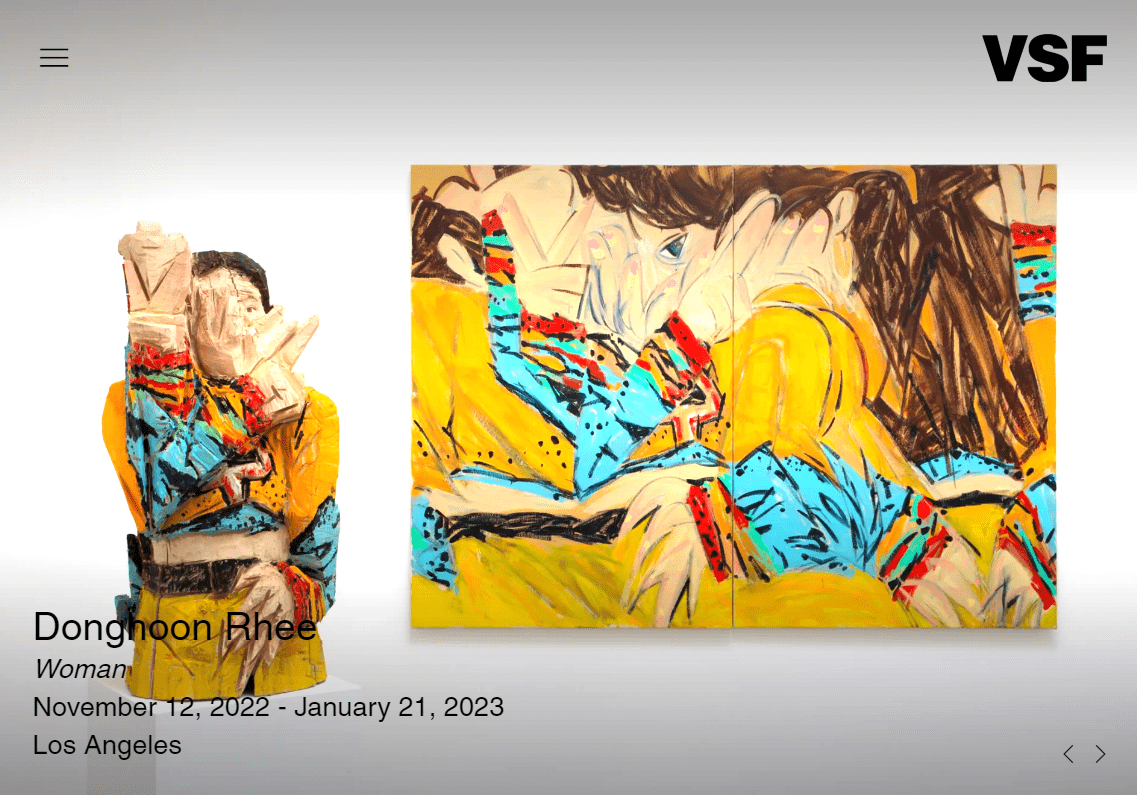
itself, we enter the form of the body, diving into the mass. It is thrown.
Having worked with relatively heavy materials, I feel like I have developed the
know-how to sustain this practice. The situation having grown slightly stiff,
it was necessary to try something different. Both materially and
methodologically, I think lightness was what I wanted.
Preparing for the exhibition, I chose specific performances by
H1-Key, SHINee, New Jeans, and NCT DREAM. I collected recordings made by all
different kinds of cameras, from official broadcasts to fan cams to dance
practice footage. This soil — constituted of so many different versions edited
in different ways — is rich; and accessing it is both easy and fast. I observed
the images, sequenced over a saved timeframe. The ever-changing lighting of the
stage contrasted with the performer’s hair, makeup, and costuming, creating
moments of exquisite kineticism. One by one, I picked out the things that
intrigued me: the colors, the expressiveness of a fingertip, the details of an
outfit.
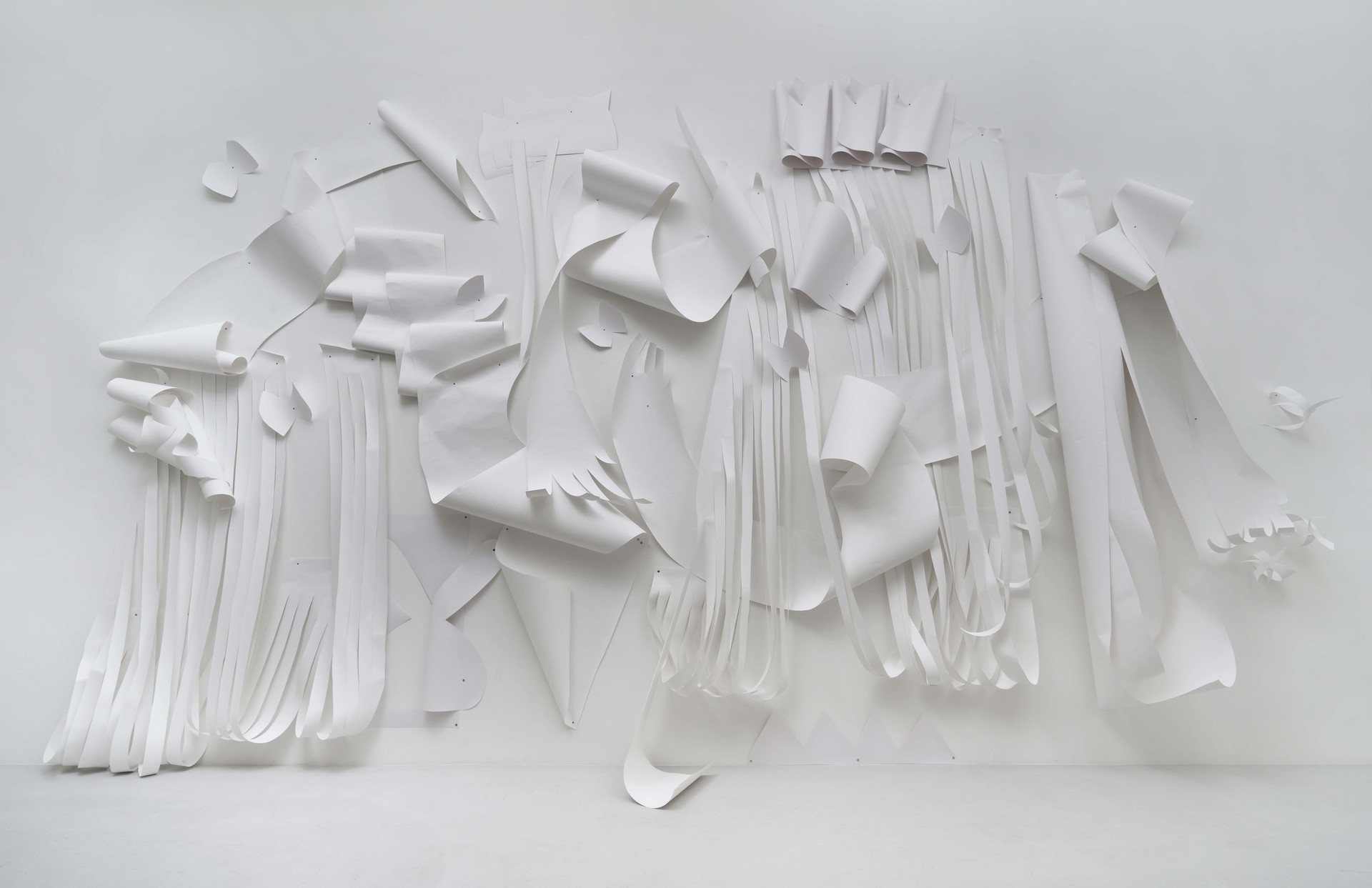
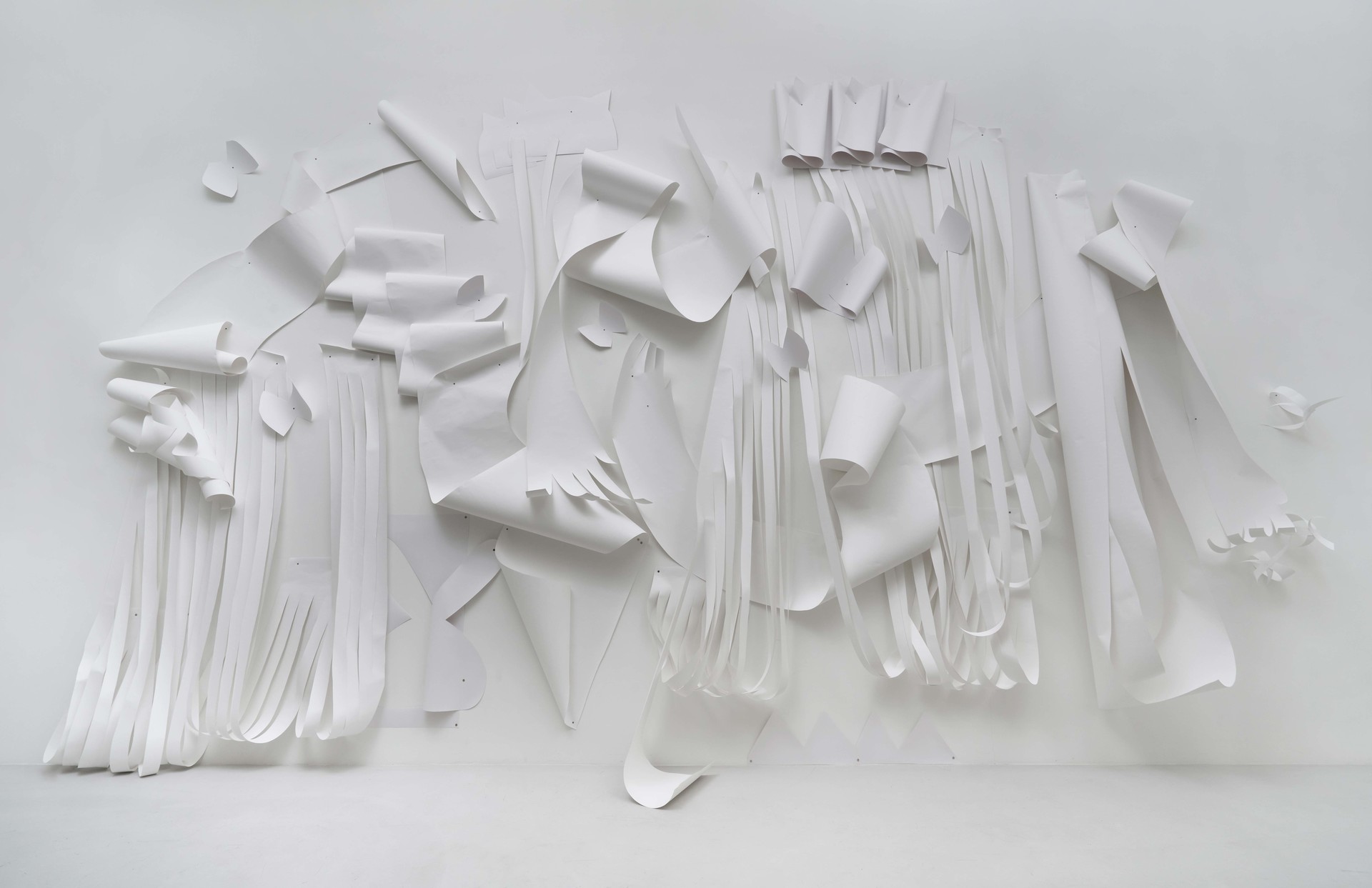
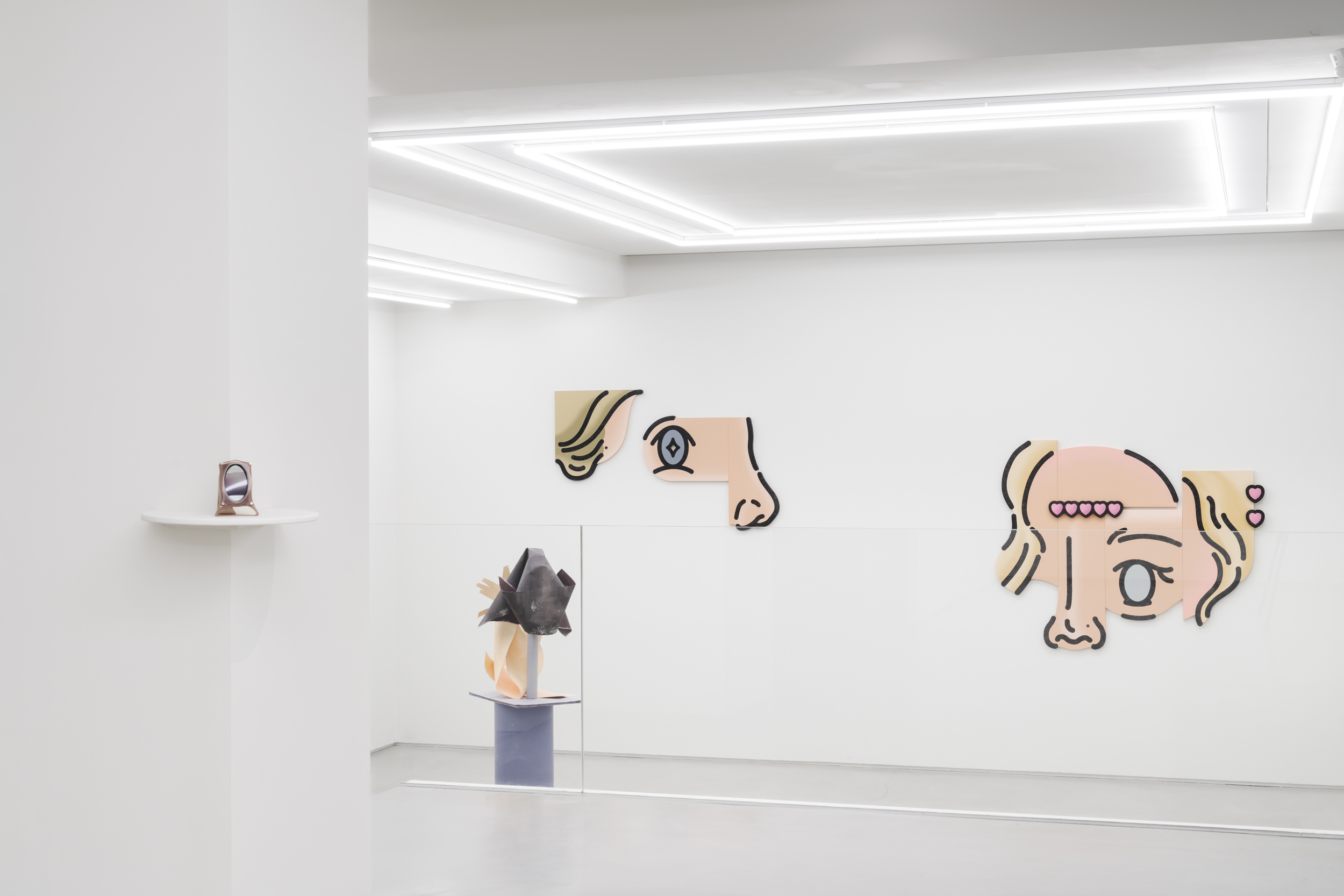
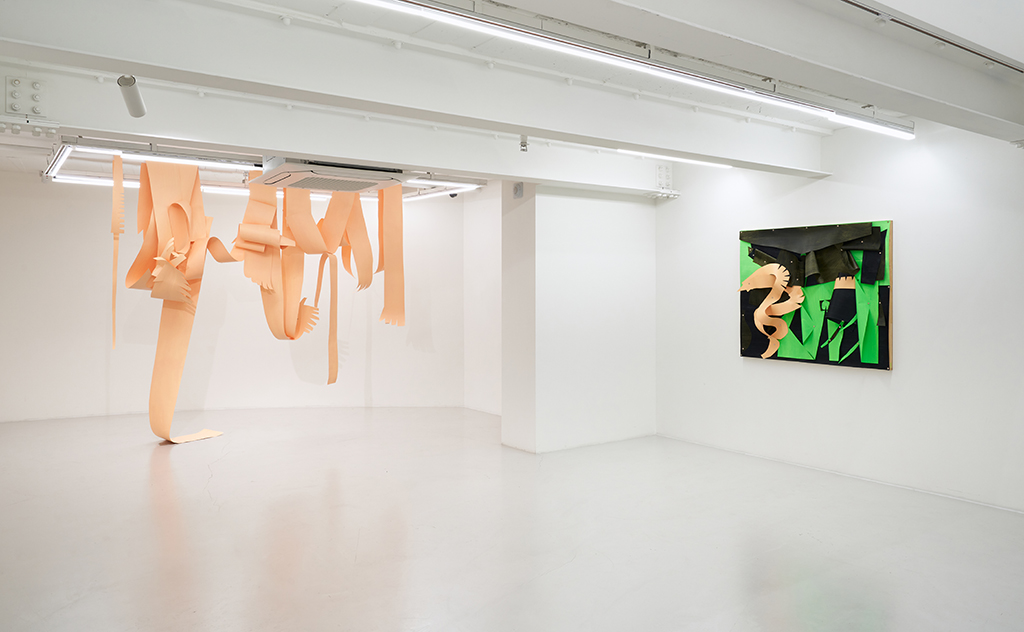
Paper, to me, was a new material. It occurred to me that paper
might be a more interesting medium for dealing with the dynamics and movements
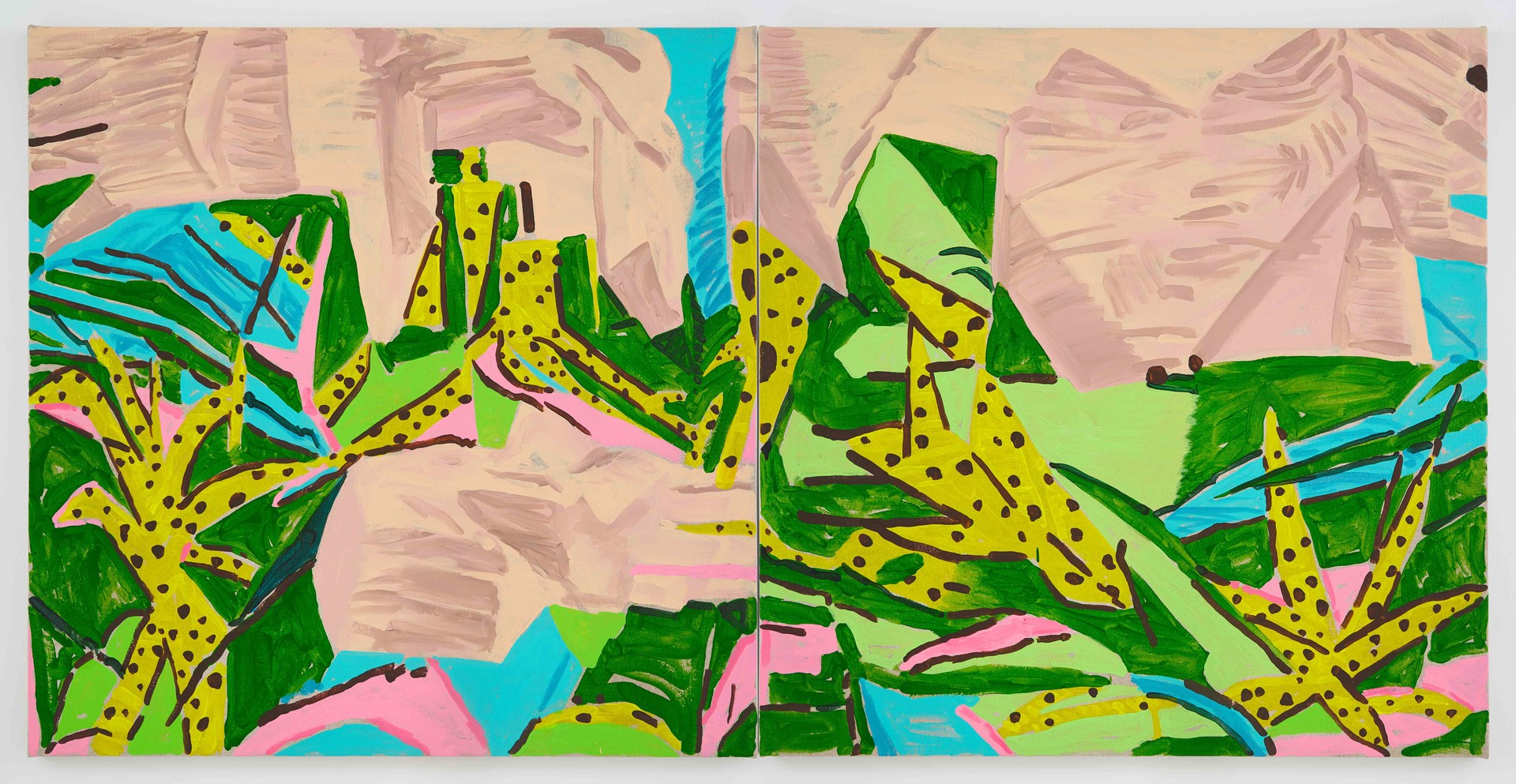
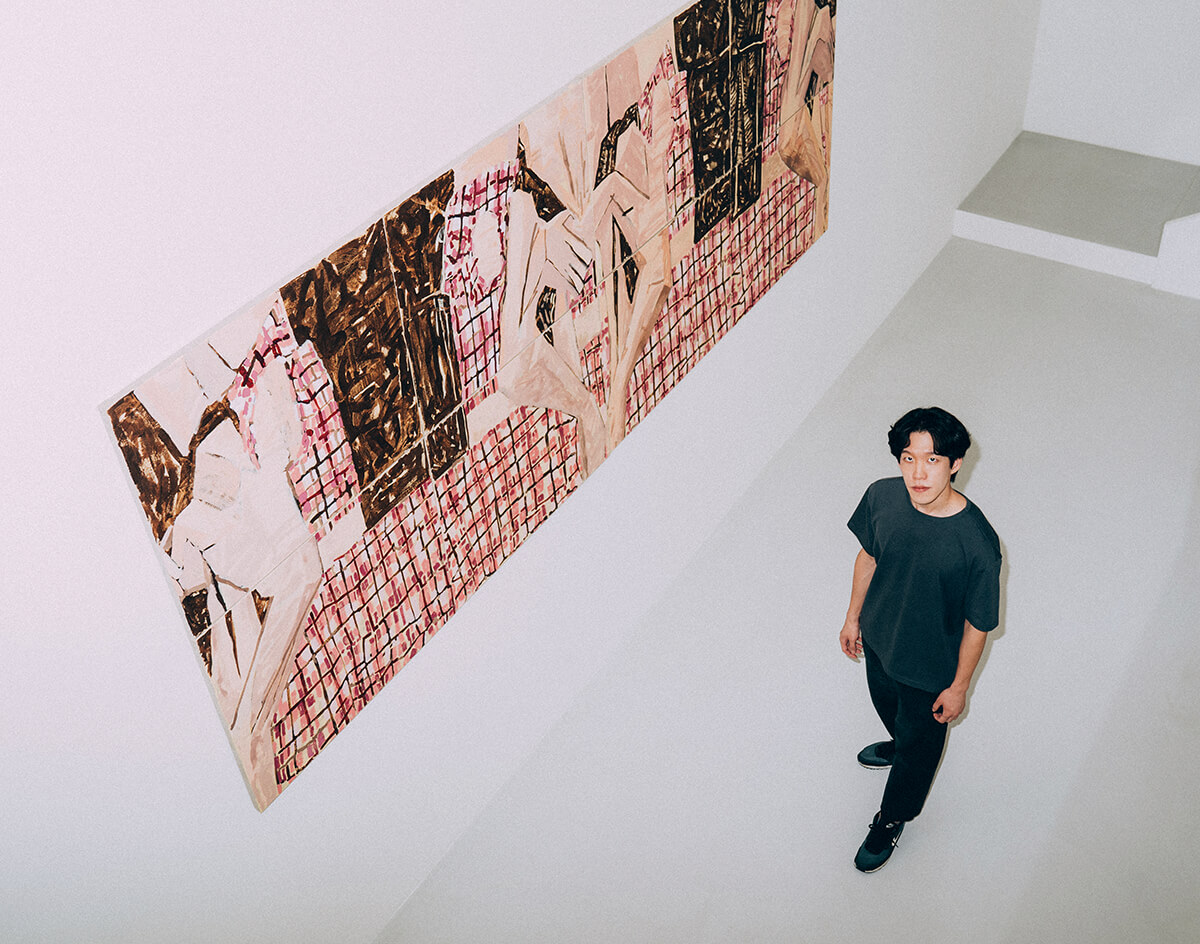
of K-pop idols. Using acrylics, I played with the hues and contrasts of the
performances I was referencing, using an underpainting brush to create colored
paper with visible strokes that reflected a sense of speed. From a dot-like
mass to a line that cuts across a flat surface — a transformation. There were
volumes and contours only possible via knife and scissor. The change in
material led not to another partial removal, in the manner of the tool and the
body, but rather a transformation into process: namely, the process of pasting
pre-prepared sections together. Along the way, the bending, wrinkling, and
folding tendencies inherent to the paper naturally found themselves fixed —
with pins, tacks, glue, and wire — following the dynamics of the choreography.
As much as any other object, the work of artists like Caro,
Matisse, and Calder demanded sustained observation. Their unique ways of
manipulating tributaries and lines were actually creating new spaces. Just as
there had been in the volume of a hairstyle, or the drape of a garment, or the
movement of a hand or foot, everything from the structure of a sculpture to the
composition and construction of a panel was full of possibility in terms of
reference.
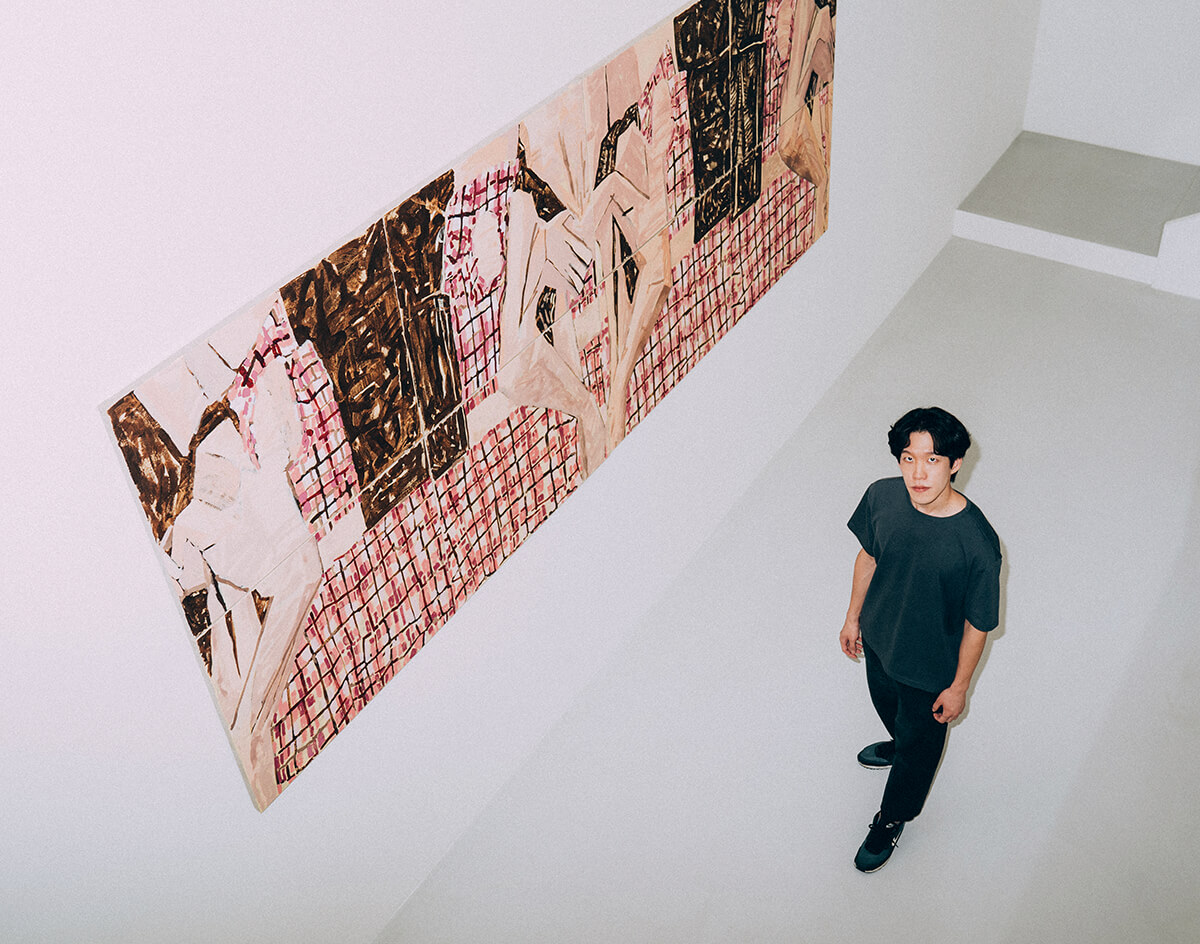
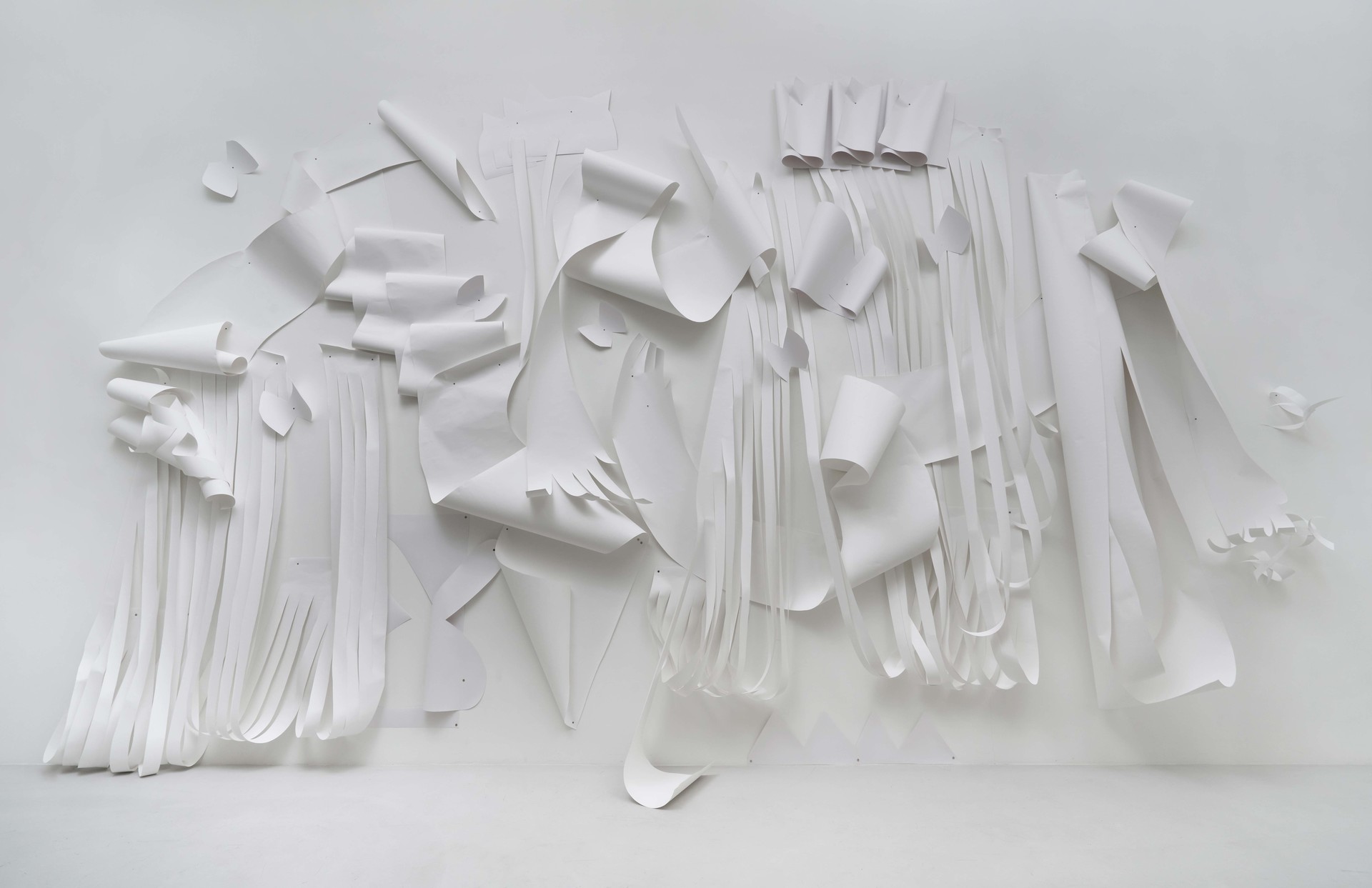
Compilation 1 and Compilation 2,
which have been enlarged and inserted as a stand-alone feature removed from the
context of the individual works, form one axis of the exhibition. These works
were created on site rather than in the studio, as I wanted to utilize the
large walls and low ceiling heights of the exhibition space. Parts ended up
enlarged and the choreographed hands and feet have been separated. As is the
case with sculpture and relief, a system of order that reveals itself within the
process of creation can guide certain decisions. The figure of the subject on
stage became a sculpture, and the sculpture, in turn, became a relief of that
trajectory. The reliefs were then fixed to the wall, expanded, their pins
temporarily dismantled, and parts of the wall were repainted and placed in
three-dimensional space.