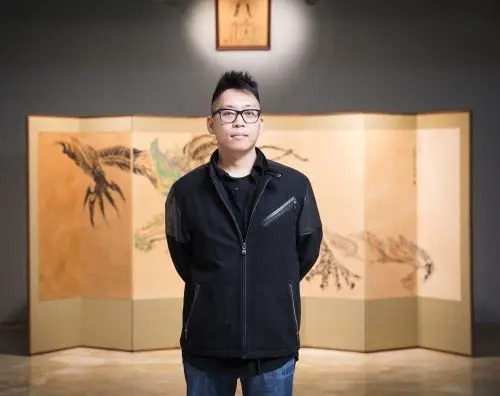


While preparing for his solo exhibition 《Snow at Dusk》 (2025), held at the House of Yi Sangbeom, Son Donghyun first devoted himself to carefully attuning to the space. He remained within that place, where layers of time had quietly accumulated and settled. He took it in with his eyes and felt it with his mind. It was a site where his respect for the master and his art deepened alongside a growing sense of empathy.

The scale, form, arrangement, and installation of Son Donghyun’s works in the exhibition all began from this encounter. As his senses became more refined, his mind grew clearer. How much time had passed, how many times he had visited—when a sense of calm came to outweigh anticipation, the artist finally began to move his hands.
 
After beginning the work in earnest, Son Donghyun found himself repeatedly facing the images of Cheongjeon Yi Sangbeom’s paintings. Eventually, it became as natural as looking at the sky or the ground—an unconscious routine, repeated like breathing. Even before this, he had often encountered Yi Sangbeom’s landscapes.

The landscapes seen in exhibition spaces, though existing on a flat surface, seemed to permeate the space the artist inhabited. At times, it felt as though he could step into the painted scene. He had looked through monographs and searched for images online. This time, however, he obtained two exhibition catalogues and returned to them again and again. He could open and view numerous works whenever he wished.

Though they were images, they existed as something tangible in his hands, which made the experience all the more meaningful. At times, his hand would linger over the plates, imagining Yi Sangbeom at work. Low mountains, streams, trees, grasses, humble houses, and the people dwelling within them were all rendered precisely in their places. The scenery is tranquil and composed, imbued with a deep sense of lyricism.


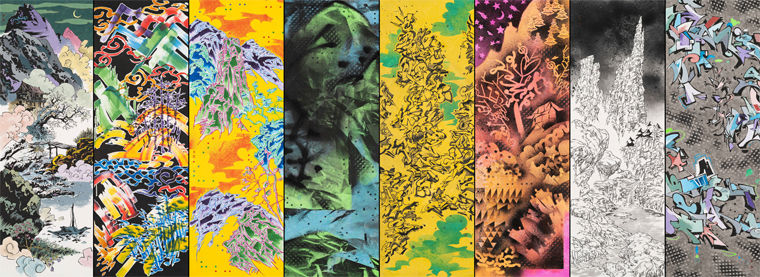
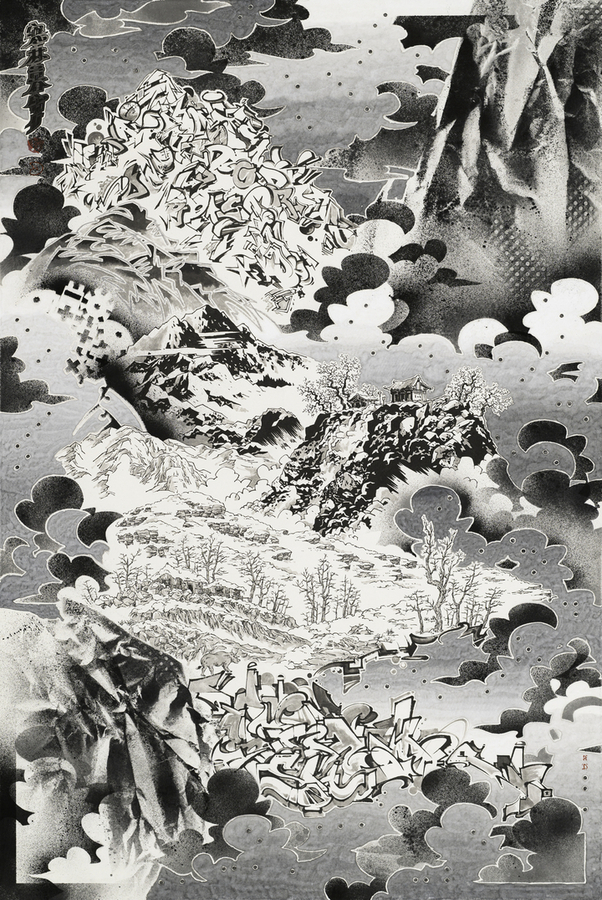
Son Donghyun, Four Seasons Landscape, 2024-2025, Ink, acrylic ink, crayon, and cinnabar ink on paper, 182 x 360 cm x (8) © Son Donghyun

As time for imagining unfolded, Son Donghyun took up his brush and began to paint. He cut and collaged landscape images ranging from Yi Sangbeom’s works to those found in comic books. Striving to grasp both atmosphere and formal logic, he experimented with subjects and materials. In order to avoid rigidity, he did not lose a playful attitude.

The pictorial surface became filled with sky, mountains, water, trees, and air. In this way, various elements gathered into a single place. The two artists became connected, and a new layer of time was added. At times, within Son Donghyun’s inner world, time seemed to flow backward. It felt as though he moved between multiple moments. In turn, the artist’s own sense of time grew denser. Perhaps for this reason, scenes such as Moonlit Night 1 (2025)—where two moons shine in the sky, and snow-covered and thawing landscapes coexist—feel entirely natural.
 
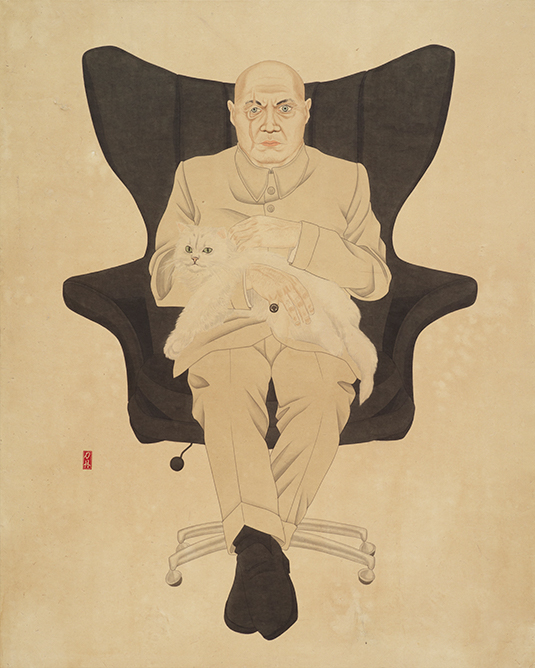
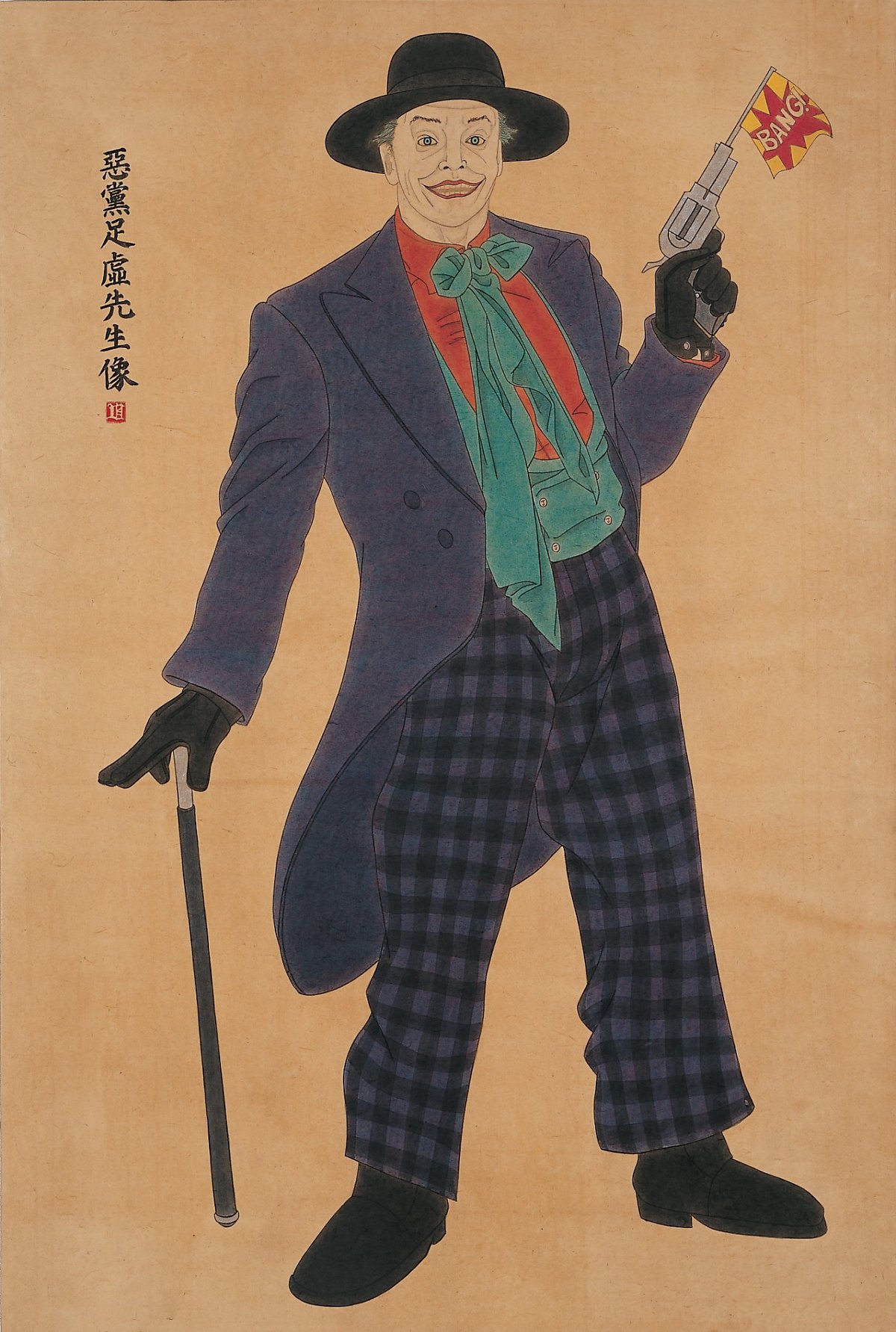
The origins of Son Donghyun’s landscape painting can be traced back to the ‘Island’ series (2010–2011), which depicted cities as seen in blockbuster films, and the ‘Battlescape’ series (2013), which extended the background landscapes of battle scenes from Akira Toriyama’s manga Dragon Ball Z. Later, in Early Spring (2020–2021), while referencing Guo Xi’s Early Spring (1072), he not only transformed materials and techniques but also varied the compositional structure.

This line of experimentation continued in works such as Hanyang (2022), which reconfigured the landscapes of Jeong Seon. While there are source works, none are directly reproduced; nor does he adhere strictly to traditional texturing methods (junbeop) or the three-distance perspective structure (samwonbeop). At a certain point, the artist began to focus more on what kinds of expressions could be achieved within the pictorial field itself.
 
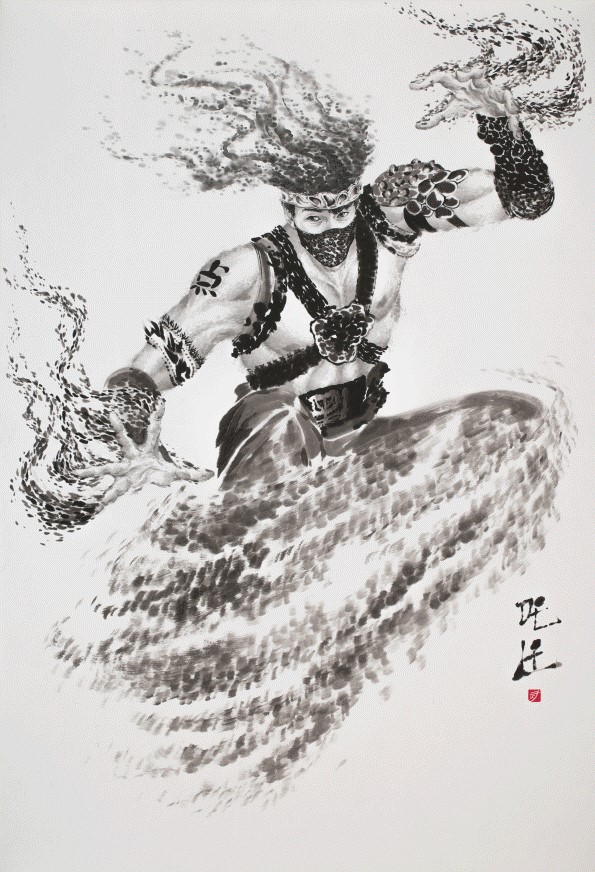
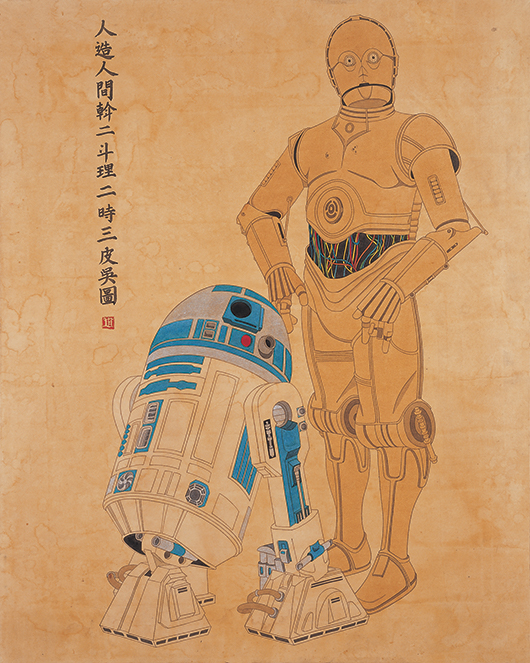
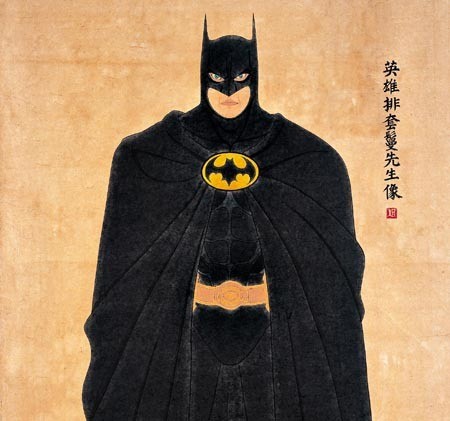
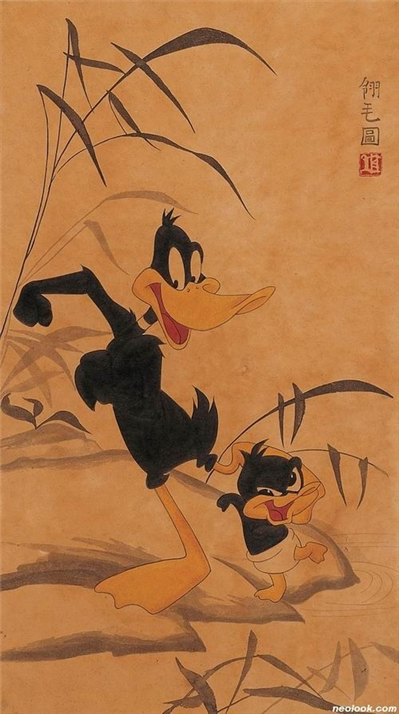
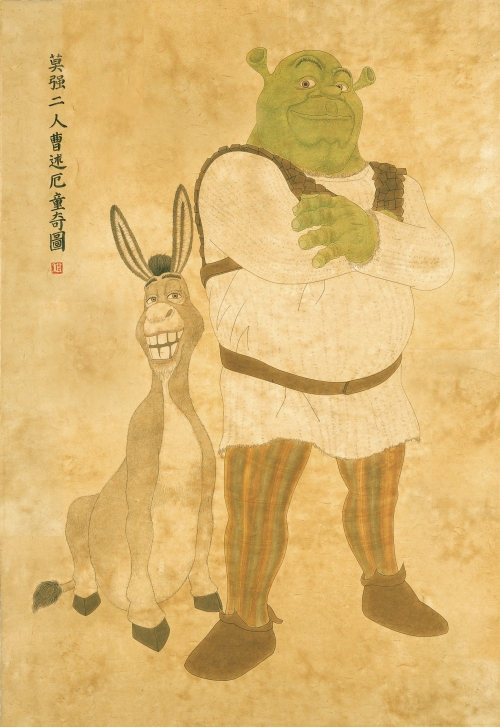
In fact, from the beginning of his practice, Son Donghyun has carefully considered and experimented with every aspect of traditional East Asian painting—its aesthetics, materials and techniques, themes, and subjects—in order to create works that encompass both the historical lineage of East Asian painting and its contemporary relevance.

His attempts to engage with works that occupy significant positions in East Asian art history while also resonating personally—particularly landscape painting—are evident in pieces such as Early Spring, Hanyang, and, in the exhibition 《Snow Settled at Sunset》, Four Seasons Landscape (2024–2025) and Cold Forest, Evening Snow (2024–2025). In particular, in Four Seasons Landscape and Cold Forest, Evening Snow, rather than simply mixing images within a single work, the artist “stacked them layer by layer, as if building geological strata”—a process that is both deliberate and irregular.

As a result, compositions that begin with gentle forms and horizontal arrangements can culminate in steep mountainous terrains. Moreover, the works embody a sense of pleasure and inspiration derived from drifting across countless images, to the extent that it becomes impossible to identify any single source. Perhaps an entire catalogue itself became a kind of landscape through which the artist wandered. The artist also noted that he “enjoyed hiding iconic motifs representative of Yi Sangbeom—such as ferry boats or thatched houses—throughout the landscape, as if offering subtle hints.”


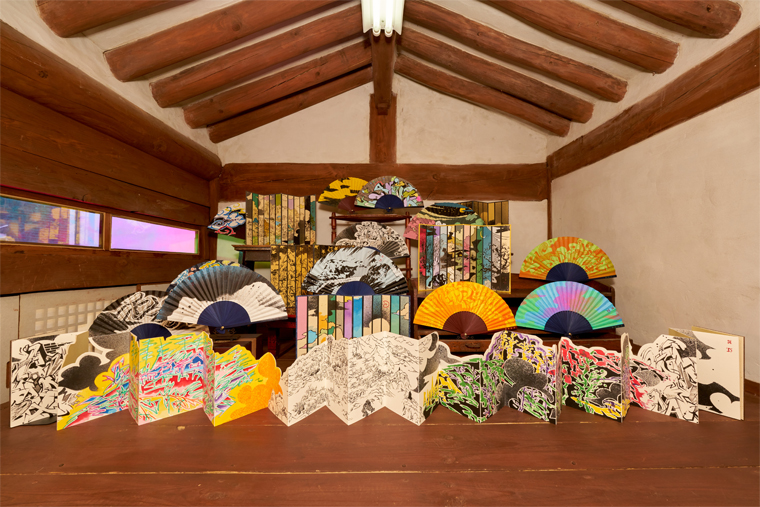
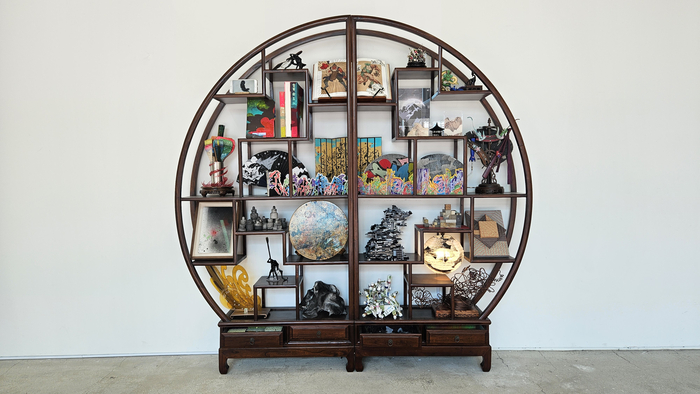
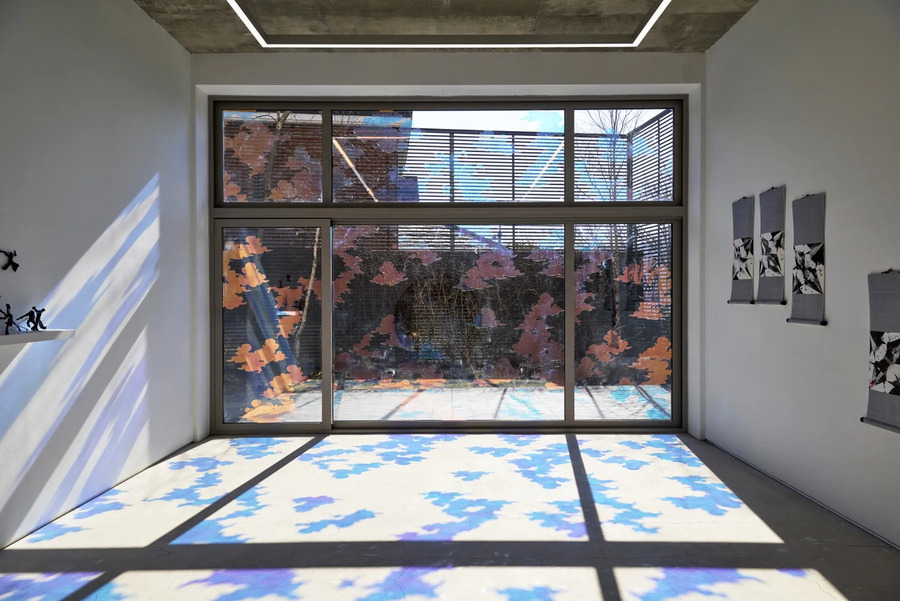
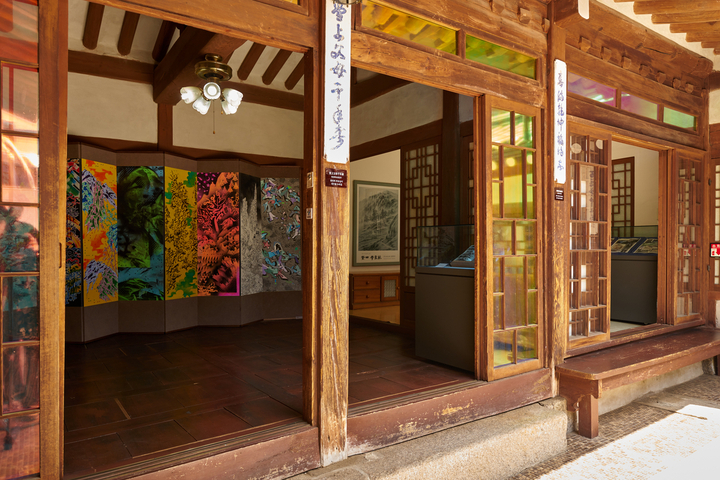
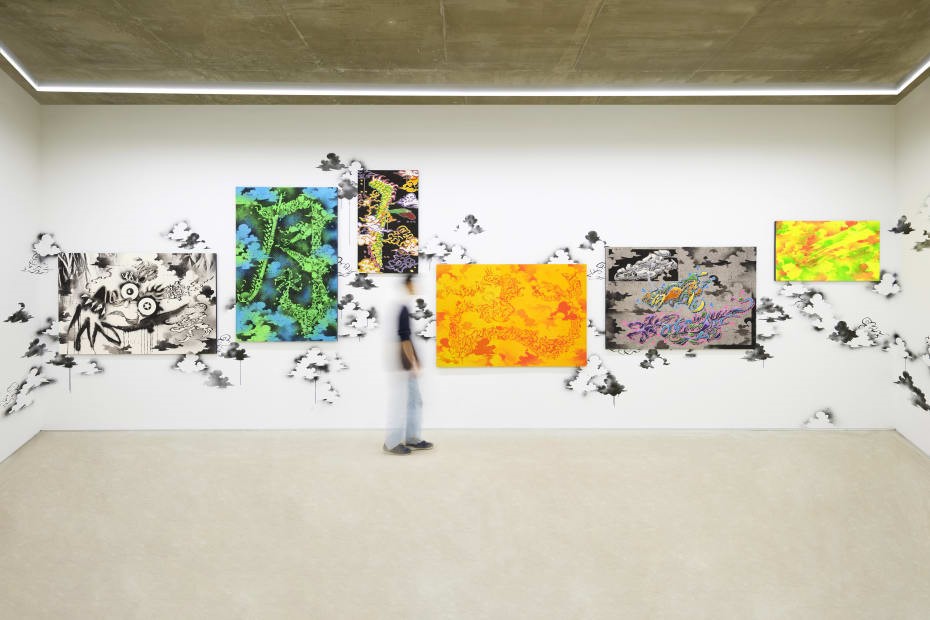
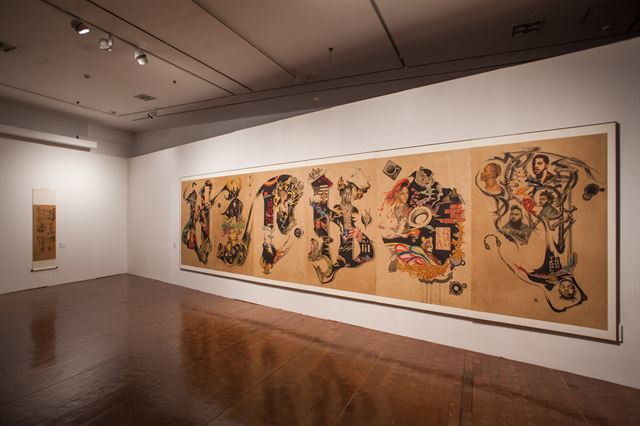
Installation view of 《Snow at Dusk》 © Son Donghyun

Contemporary society is surrounded by images, and people understand most of the world through them. The development of print and digital media has reconfigured the relationship between materially existing originals and their images. Images now function as originals in their own right, no less than the actual works. In such a context, Son Donghyun comes to encounter and experience landscape painting as past viewers once encountered mountains and trees.

For him, Yi Sangbeom’s landscapes operate as nature once did for earlier painters—as both subject and source of inspiration. The fact that the artist does not simply replicate these landscapes but actively incorporates his own interpretation, editing, and modes of expression attests to this. In other words, the historical masterpieces and their images that Son Donghyun selects are at once depictions of landscapes and objects of representation existing in reality.

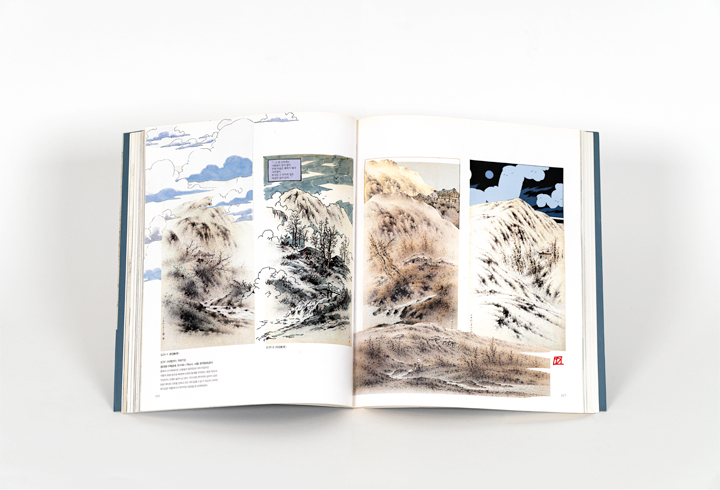
The depicted nature, being an illusion, allows for freer movement than nature itself—one can zoom in and out at will. Thus, Son Donghyun’s works based on Yi Sangbeom’s landscapes function both as homage to Lee and as a continuation of his sustained formal experimentation. They are also a response to the age of images. In this context, Water (2025), completed in the form of a bound book resembling an art catalogue, reveals the origin of the landscapes he paints while also suggesting that he has created a forest of his own.
 
At the same time, this development confirms that Son Donghyun’s practice has expanded into a sustained reflection on pictorial representation. There is no doubt that he is rigorously and consistently experimenting with the properties of painting, along with the sensibilities and modes of expression associated with it.

As is well known, representation is not mere copying or transfer, but a form of new creation. The artist observes, selects, and interprets the objects before him—the landscapes within the work. He completes the painting by enlarging or reducing, fragmenting or combining elements. Following his own orientation and aesthetic sensibility, not only individual forms but also the composition in which they are arranged are newly constructed. At times, the use of color and technique involves spontaneous decisions.

In either case, this is a moment in which subjectivity is maximized. From the instant the artist encounters the subject to the final brushstroke, it is impossible to confront and reproduce it objectively, as it is. Even when aiming for faithful depiction, little changes. Even if one attempts to render every blade of grass and every branch with objective precision, “atmosphere, color, and even the contours of motifs” undergo “subtle transformations.” Countless variables—such as the artist’s taste, individuality, and temperament—are at play.

Specific personal conditions that influence the artist, as well as the social and historical context in which they work, also intervene. The interrelationship between the tools and media the artist selects, along with individual differences in their use, cannot be overlooked. Nor should we ignore the interplay between the image perceived by the eye and that formed in the mind, or the relationship between what is known and what is seen.

All of these factors explain why different results emerge even when viewing the same scene. Ultimately, what remains clear is that the artist found his subject in the world—nature—and, “guided by an artist’s wisdom,” organized the various elements of the landscape and “incorporated them into a remarkably complex work of art.”


Son Donghyun, Four Seasons, 2025, Oil-based marker and paper collage on bound paper, 30.3 x 25 x 2.4 cm © Son Donghyun

At the same time, however, the artist carefully and precisely—perhaps even somewhat coolly—maintains a distance between himself and the work, while increasing the weight of formal experimentation in painting. This is because there remain many materials and methods of expression yet to be explored, and others that he believes have not yet been attempted.

For example, in parts of Four Seasons Landscape, the way formal elements such as line, bleeding, form, and color first capture the viewer’s attention reflects the artist’s focus on painting itself. At the very least, recent works such as Four Seasons Landscape and Cold Forest, Evening Snow are simultaneously representational, expressive, and abstract. This attitude is also evident in his use of materials and techniques.

Son Donghyun’s early works were colored paintings centered on traditional materials and methods, while over time the diverse applications of ink became more prominent. In his recent works, he has incorporated ink, crayon, and other media. He draws, paints, makes rubbings, stamps, and now even employs collage. In Drawing 4 (2025), the ‘Moonlit Night’ series (2025), and Water, he collaged together plates from Yi Sangbeom’s catalogues with images of nature from comic books. In Drawing 3 (2025), he used cut-out pages from seal impression books (inbo).
 
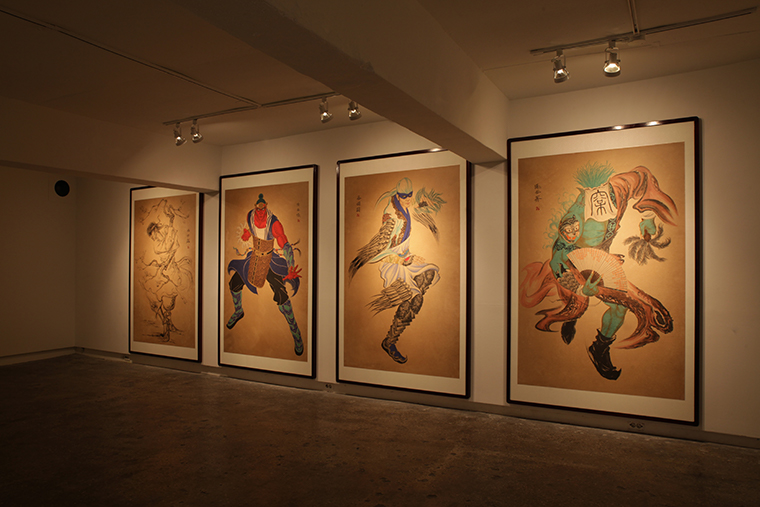
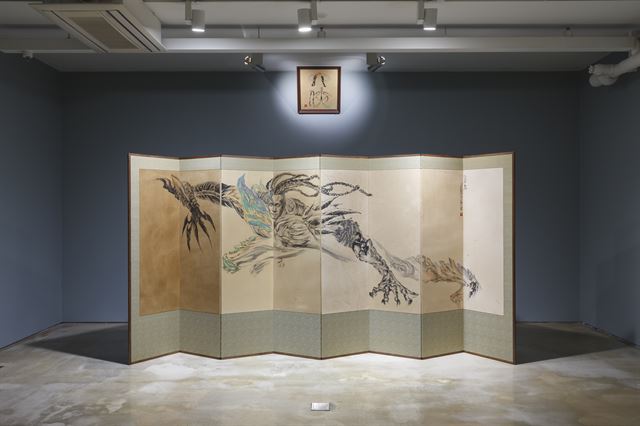
At this point, the artist turns his attention to the space in which the work is placed. From the outset, all works presented in 《Snow Settled at Sunset》 were site-specific, both in form and in meaning. In earlier works such as Master Spirit (2015), where four fans were installed on the wall as if blown in by the fan held by the figure within the painting,

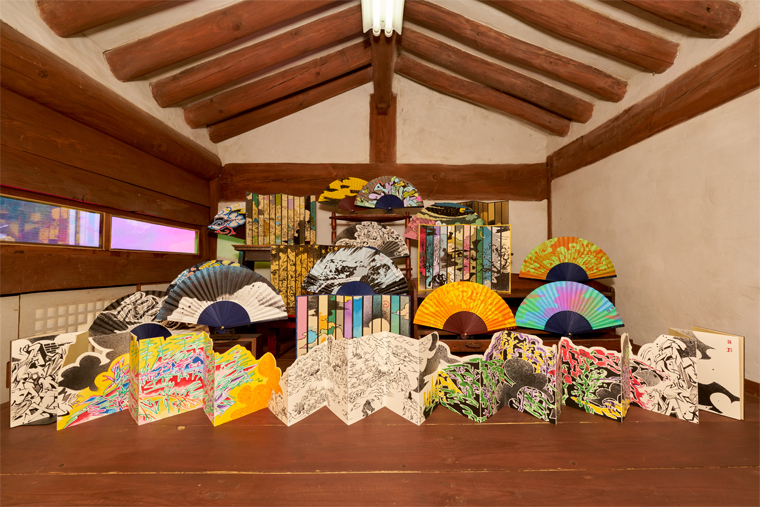
Son Donghyun had already been exploring how pictorial illusion might extend into real space. Over a decade later, the artist installed fan paintings and albums in the attic, creating a stage-like panorama. The ‘Mountain’ series (2025) and the ‘Cloud’ series (2024–2025) function simultaneously as fan paintings (seonmyeonhwa) and as objects—fans—while also existing as albums filled with landscapes that stand upright in space like folding screens. They are both painting and installation.

The small tables and objects of the House of Yi Sangbeom, which served as pedestals for the works, were well suited to forming natural mountainous terrains. “Each fan became a mountain, a hill, or a cloud.” One is prompted to imagine again where dragons might dwell. Clouds turn and drift with the wind. The mountains within them are not solitary and upright, and that is precisely their appeal. It is a spatiotemporal field that is small yet expansive, flat yet deep.
 
The works in 《Snow at Dusk》 may be experienced by some as paintings, or as installations responding to a specific site. For others, they may be encountered as landscapes. One might recall Yi Sangbeom’s landscapes and seek connections. Or simply experience them with the eye alone. After gazing at the floral walls and the sky of the house, turning one’s eyes briefly toward the works reveals them anew.

One senses a place where a distant past and a more vivid present are interwoven. Either way is valid. A thought arises—to place a period, momentarily, at the end of Son Donghyun’s work. Not a period that signifies an end, but one that allows for a full immersion in the present works, and for a brief moment of quiet repose.

References