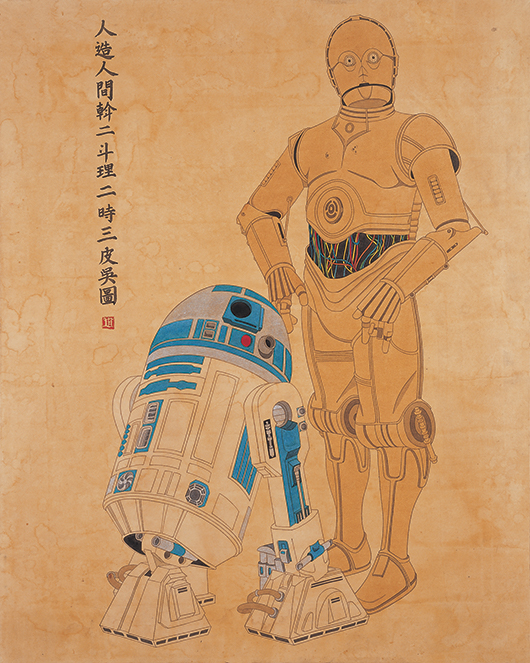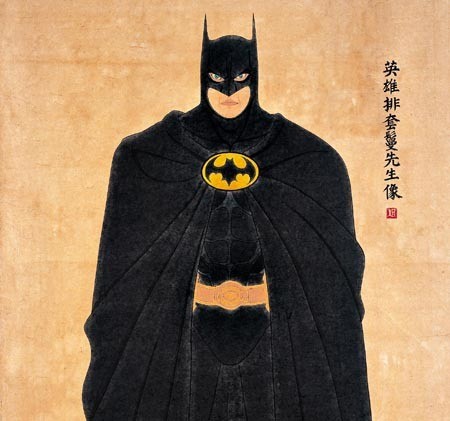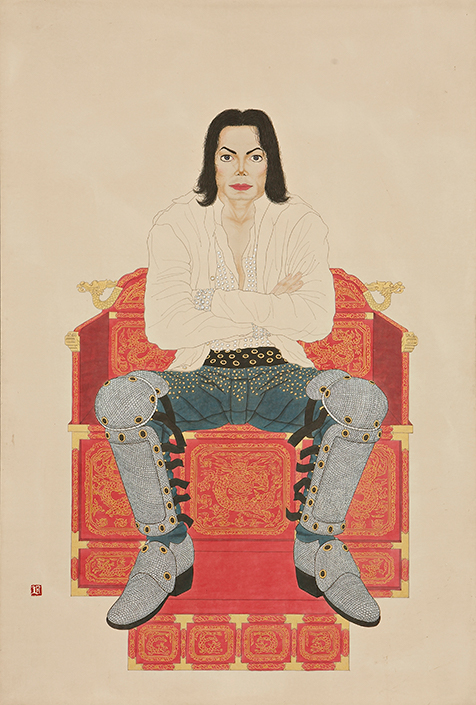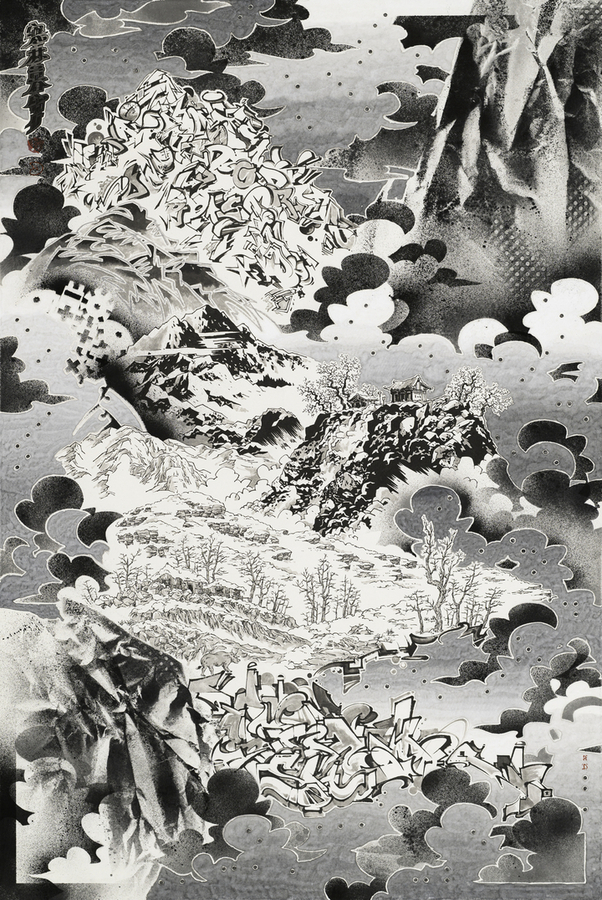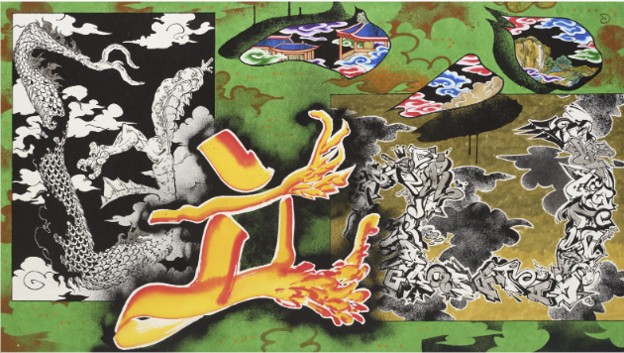

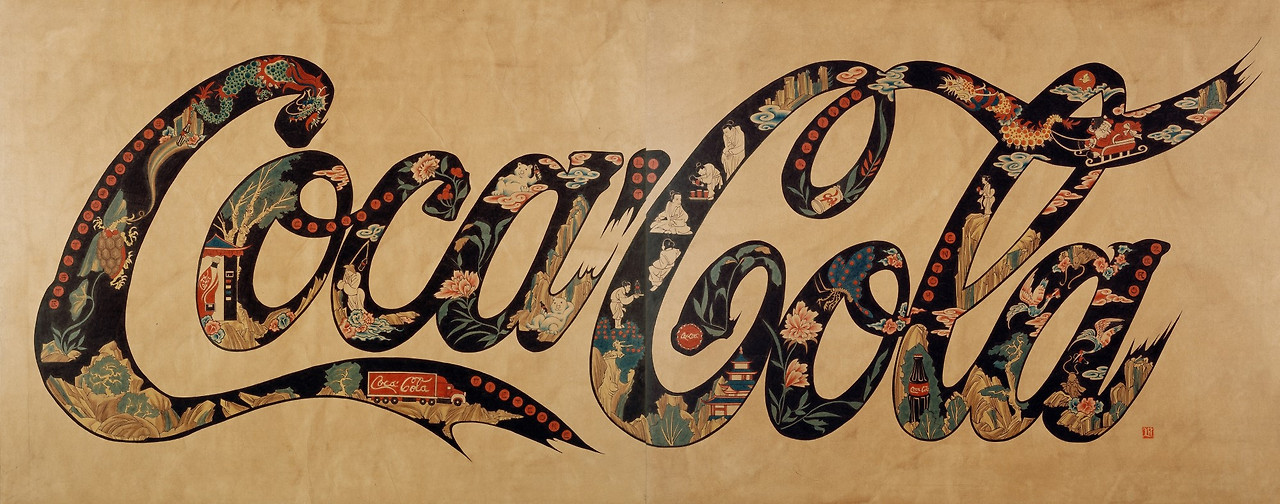
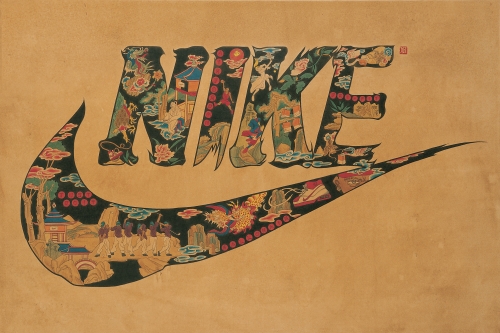
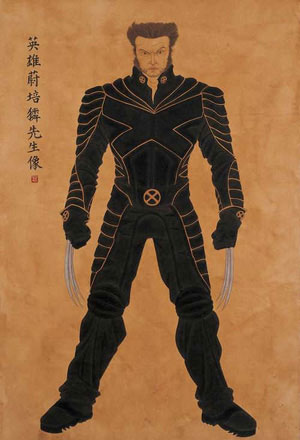
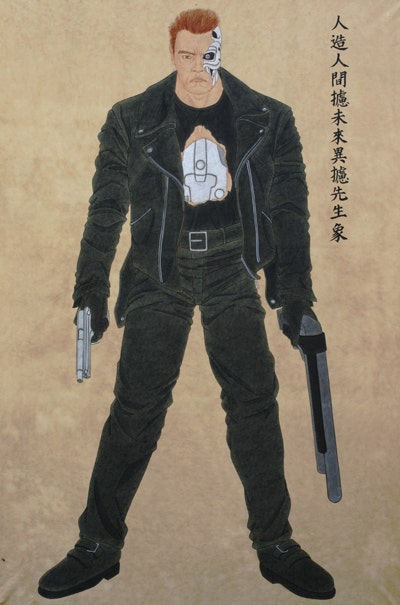
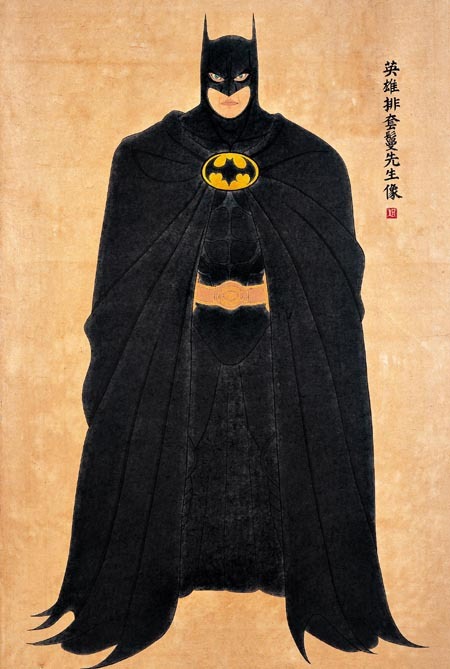
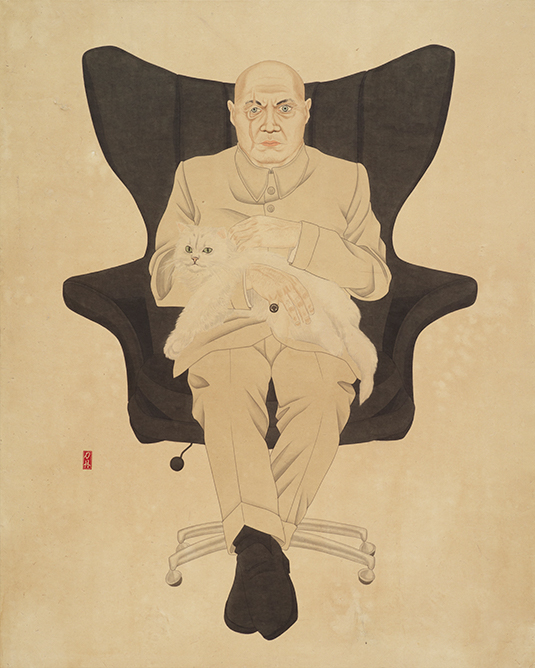
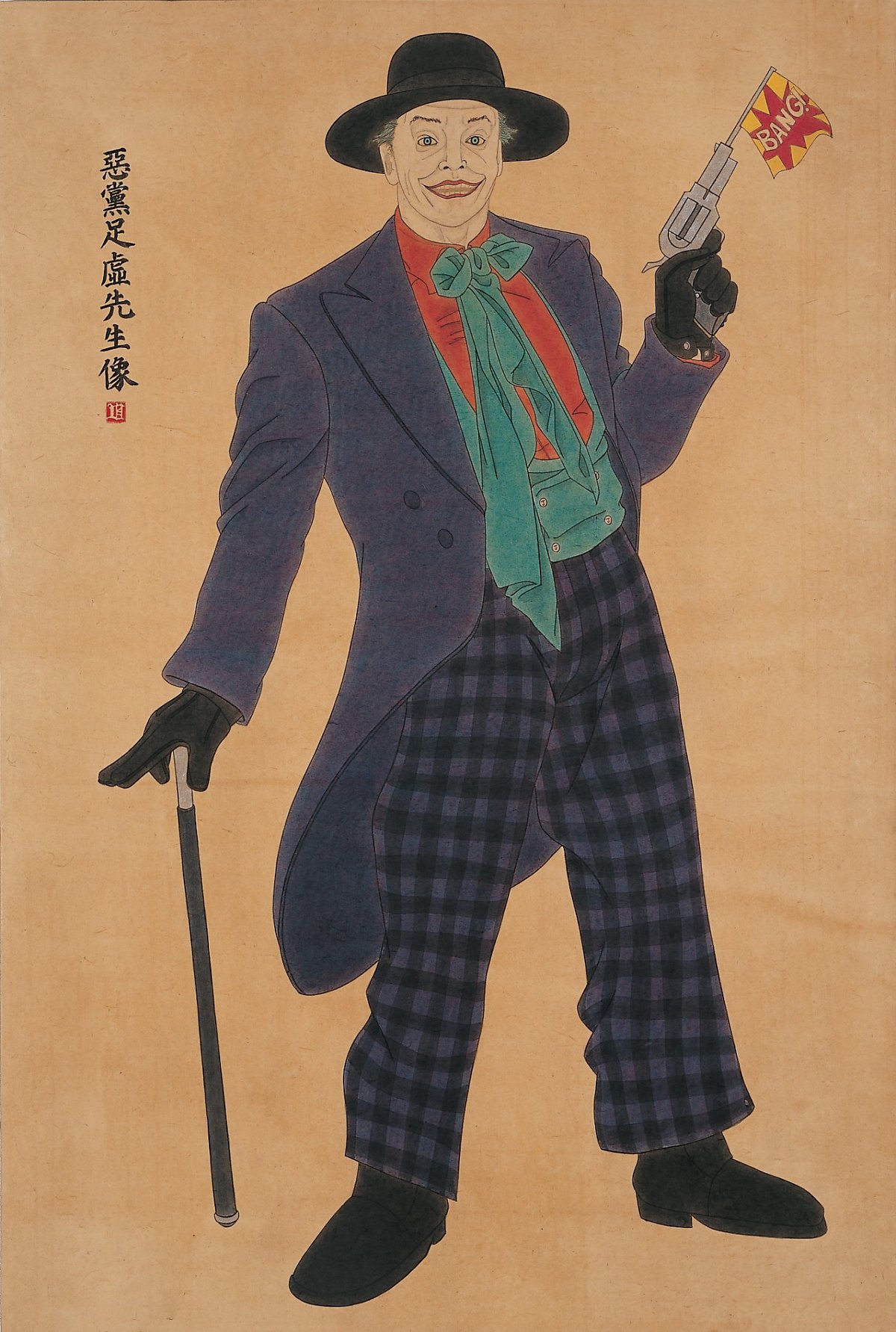
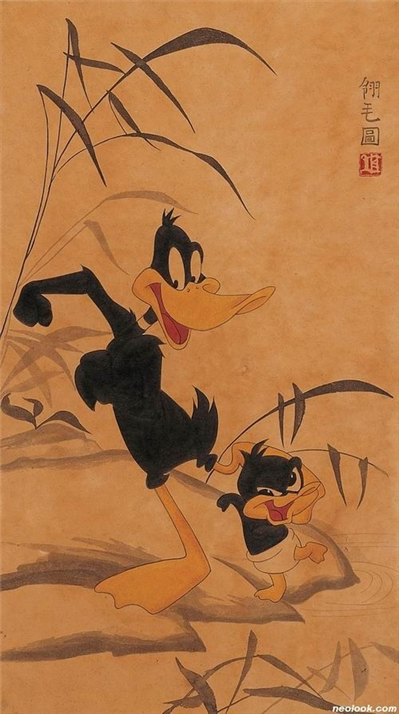
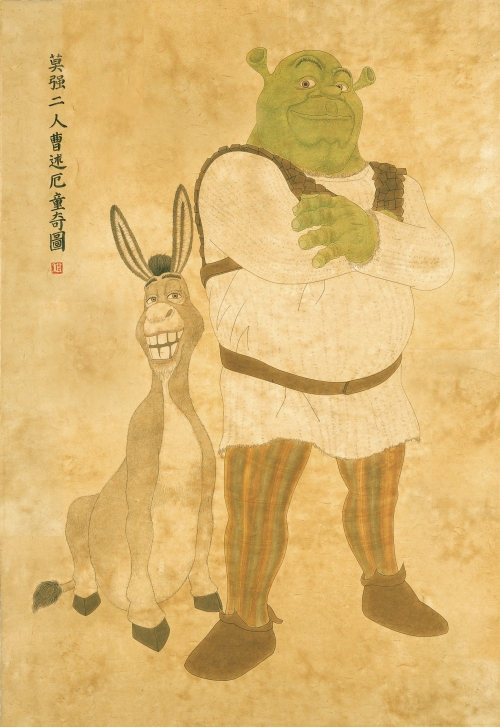
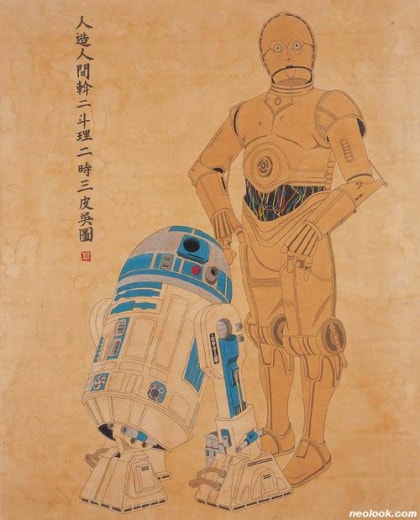
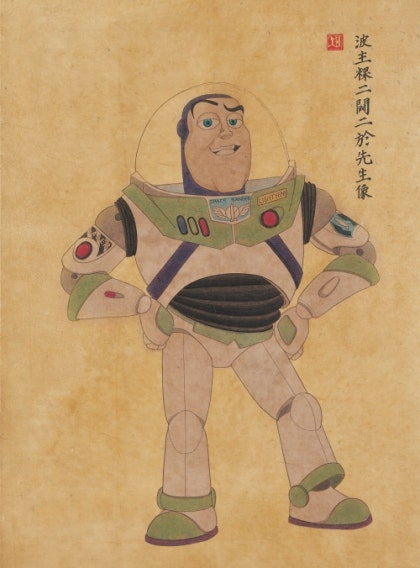
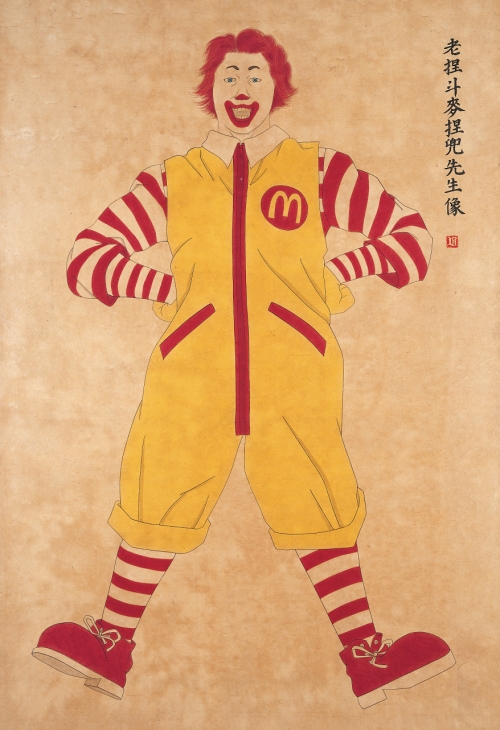
Imagination plays a crucial role in Son Donghyun’s work. Though deeply personal and subjective, the visualization of imagination—developed with rigorous internal logic—gives concrete form to a pictorial world that once existed only as an abstract concept. The temporality of East Asian painting, once characterized by a linear flow, is dismantled and reconfigured through the artist’s creative act, emerging before us in the present moment.
 
At first glance, Son Donghyun’s paintings seem to point toward the singular direction of tradition, yet in reality they traverse multiple layers of time. This is only natural, as an artist working in the present cannot confine their artistic inquiry solely to the past. The temporal space inhabited by the figures reconstructed through the artist’s perspective may belong to the past—when scholar-officials painted in pursuit of moral virtue—or to a future in which superhuman heroes are active.

The artist has clearly succeeded in expanding the temporal scope within his work. By combining diverse references drawn from the broader field of culture and the arts with his own imagination, he has constructed a distinct, personal discourse on images and painting.


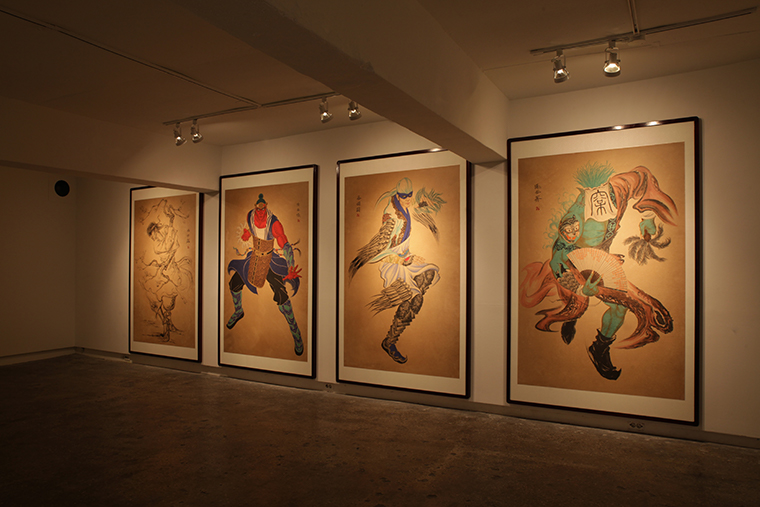
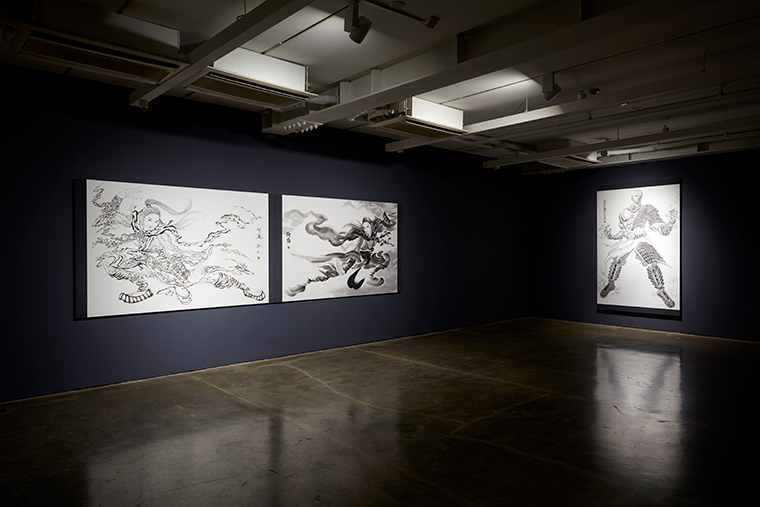
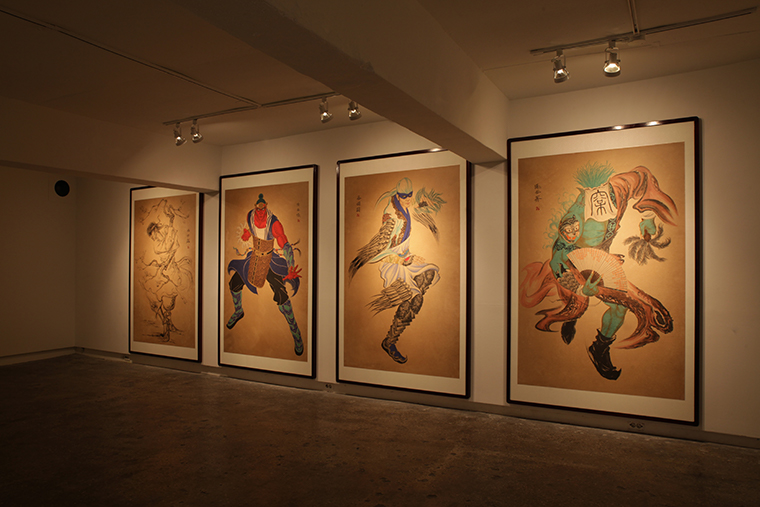
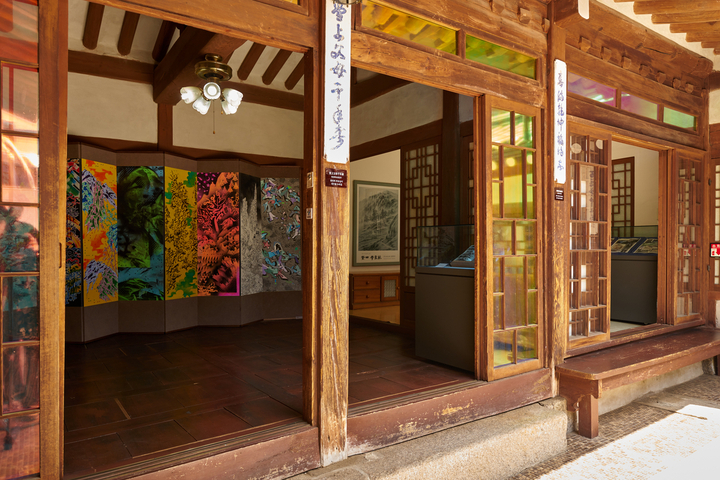
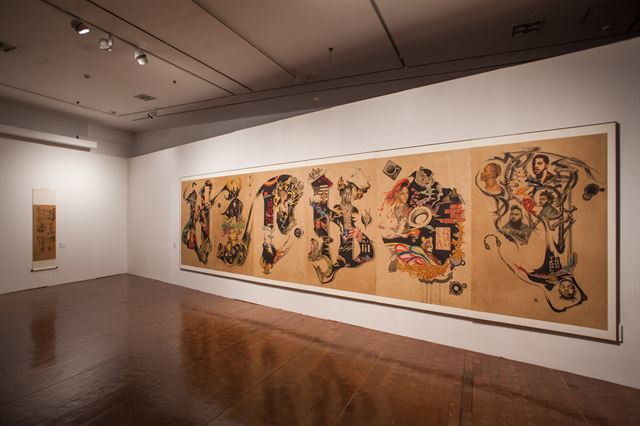
Installation view of 《Pine Tree》 © Willing N Dealing

Son Donghyun began, in earnest, to create figures that symbolize the theories, media, and techniques of East Asian painting starting with the series ‘Pine Tree’ (2014). Having long considered working with ink, the artist chose the pine tree—both a material source of ink and a subject frequently depicted in traditional painting—as his motif.

The pine tree in literati painting, symbolizing the integrity and steadfastness of the virtuous gentleman, appears in Mister High Fidelity (2014) as a figure dressed in white, rendered using the chomuk (scorched-ink) technique. The pine tree from Irworobongdo (Sun, Moon, and Five Peaks Screen) is reborn as the red and powerful Pine the Great (2014), embodying royal authority.

In Shaman the Evergreen (2014), the pine tree emerges as a figure with blue arms, tattooed with a tiger and magpie, holding a fan inscribed with the lyrics of the theme song from the film Ghostbusters (1984), thus inheriting the protective, apotropaic function found in folk painting. Meanwhile, Mister High Fidelity (2014), symbolizing the pine tree as a sign of longevity, is depicted with crane wings, turtle-shaped armor, and protective gear adorned with the sun and clouds.
 
Through the ‘Pine Tree’ series, the artist confirmed the potential of a practice that endows abstract thoughts and beliefs with personhood. From 2015 to 2017, in a series of works, he personified theories and characteristics related to calligraphy and painting, the Six Principles of Painting, texturing methods (junbeop), ink, and color. Within these works, he condensed the entire process through which he traces the history of East Asian painting, acquires and interprets its theories, and ultimately internalizes them as his own.

The figures that externalize intrinsic qualities continue his earlier explorations—experimenting with jeonshinsajo through portraiture, and investigating traditional landscape and literati painting that embody the spirit of the painter within the work. At the same time, they represent a new expansion in which ideas and formal languages passed down through generations are embodied in a contemporary context.


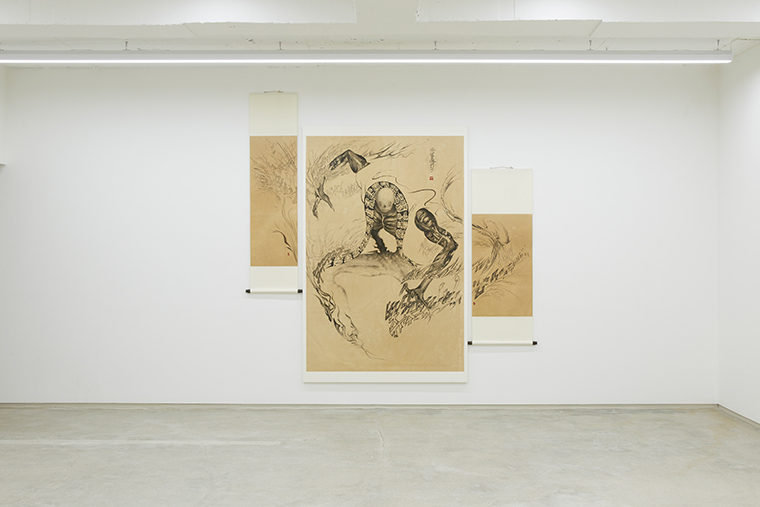
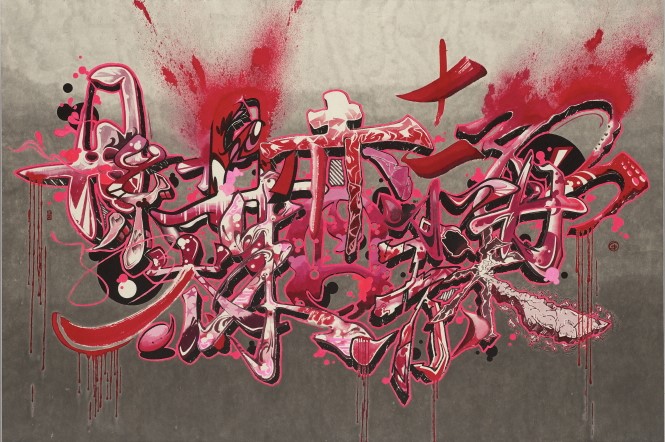
Son Donghyun, The Graphy, 2015, Ink on paper, 194 x 130 cm(center), 107.3 x 39 cm(left), 84.5 x 50 cm(right) © Son Donghyun

Son Donghyun’s paintings, which fill personified figures with concrete images related to their themes, move fluidly between intuition and metaphor, universality and subjectivity, singularity and multiplicity. This is because images that follow established symbolic systems coexist and intertwine with deeply personal images shaped by the artist’s own interpretations and experiences.

For example, since ink has traditionally served as a material for both writing and painting, the artist created The Graphy (2015) by drawing with characters. Up to this point, the development is something that anyone can readily grasp. However, the artist adds his own contemporary interpretation. By incorporating the kinds of onomatopoeic and action-expressive text used in comics, he introduces a form of “textual painting” that exists somewhere between writing and image, between representation and abstraction.

In Master Ink (2015), in order to represent ink itself, the artist depicts not only ink and an inkstone at the center of the figure, but also the dragon motif carved into the inkstone he personally used. Parts of the body dissolve and transform into mountain forms or characters, blurring their boundaries. This reflects his desire for figure painting, landscape painting, and textual art—traditions that have long coexisted within East Asian painting—to come together as one.


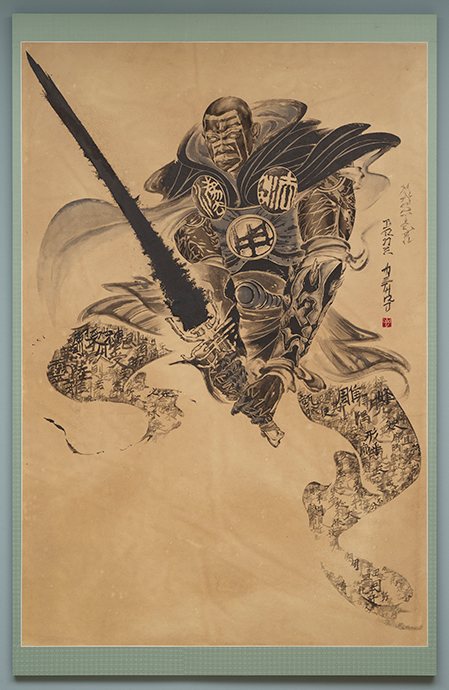
Son Donghyun, Master Bone Method, 2015, Ink on paper, 194 x 130 cm © Son Donghyun

The proportion of subjective interpretation increases as the work develops. Unlike the ‘Pine Tree’ series, which was filled with images commonly associated with pine trees, the ‘Six Chivalrous Fighters’ (六俠) series (2015) notably connects Xie He’s Six Principles (六法) with the techniques (chosik) of martial arts. The artist aligns the ideal figure who has fully embodied the Six Principles—an essential foundation of East Asian painting and a powerful criterion for evaluating artworks even today—with the hyeopgaek (chivalrous warrior) who has mastered martial techniques.

Embedded within this approach are questions and reflections on the artist’s own journey of internalizing painting theory both intellectually and physically, as well as on contemporary attitudes toward understanding and receiving traditional painting and its theoretical frameworks. While reading accounts of how master painters endured rigorous training to attain the highest levels of character and skill, the artist came to believe that such narratives were not merely records of fact, but rather conveyed the ideals that traditional painting aspired to. He found similar qualities in the protagonists of martial arts fiction. For the artist, whether such ideals were factual or attainable was not the central concern; what mattered instead was the attitude of striving toward them and the will to transcend one’s limits.
 
The hyeopgaek—the protagonists of martial arts novels and films—are figures in whom the spirit of chivalry (hyeopui), martial techniques, and forms of combat are fully internalized, becoming inseparable from their being; they are entities in which mind and martial practice are unified. In this sense, the embodiment of both theory (philosophy) and technique has long been a requirement for East Asian painters as well. It is a process of grasping through thought, sensing through the mind, and experiencing through the body. Expressions in martial arts narratives that draw parallels between martial arts and calligraphy, as well as the frequent depiction of warriors skilled not only in calligraphy but also in musical performance and dance, also served as sources of inspiration for the artist.


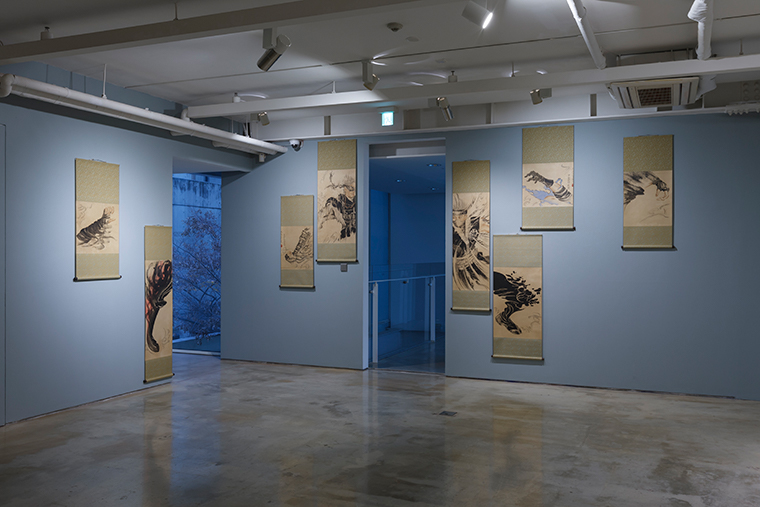
Son Donghyun, Master Dvision Planning, 2015, Ink on paper, (From left) 45.5 x 53 cm, 99 x 39.5 cm, 53 x 45.5 cm, 86 x 50 cm, 106 x 41 cm, 75 x 51.5 cm, 45.5 x 53 cm, 53 x 45.5 cm © Son Donghyun

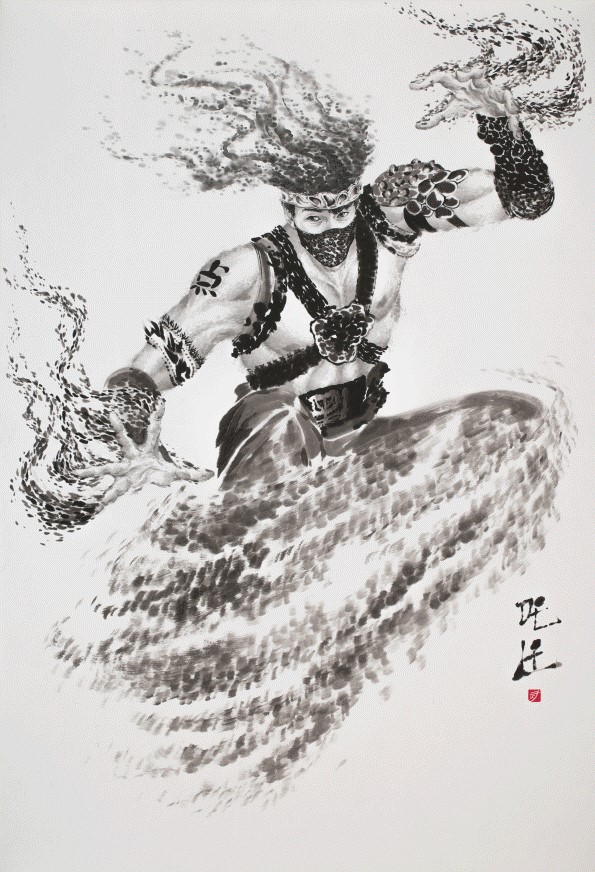
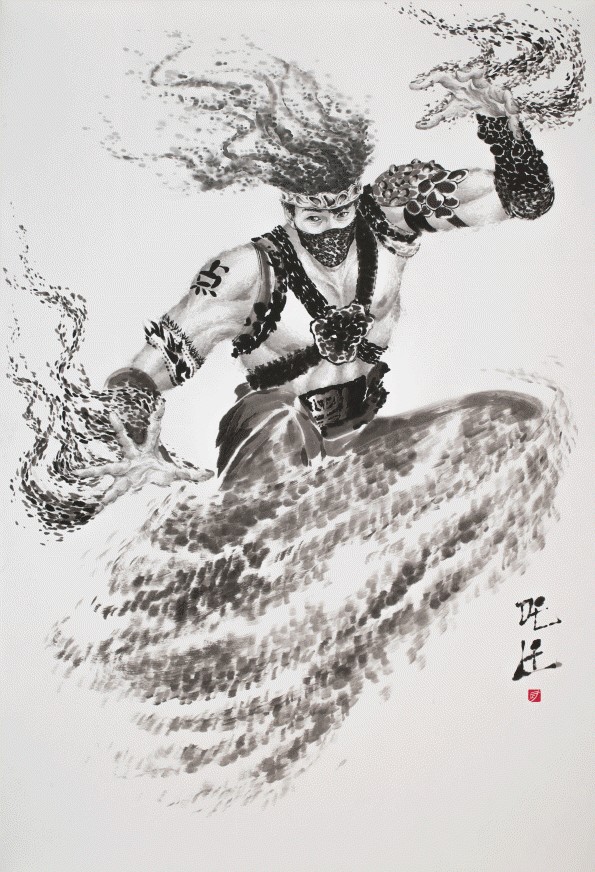
 In Six Chivalrous Fighters, the figures of the chivalrous warriors created by the artist are focused on maximizing the principles of the Six Laws. In Master Spirit (2015), which represents Giwun Saengdong (氣韻生動), the artist conceived a ghost-like figure endowed with telekinetic power in order to convey the invisible yet essential vitality of the subject, employing techniques derived from Zhongkui paintings as well as visual effects used in comics to depict characters emitting qi.

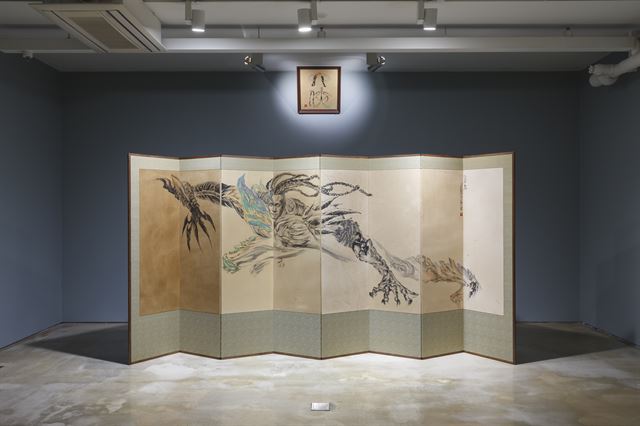
Master Bone Method (2015), symbolizing Golbeop Yongpil (骨法用筆)—the principle of brushwork essential to both writing and painting—depicts a figure skillfully wielding a sword from which ink bursts forth. For Master Correspondence (2015), visualizing Eungmul Sanghyeong (應物象形), a figure capable of transforming freely in accordance with the depicted subject or pictorial ground is rendered across an eight-panel folding screen, utilizing various types of paper and silk with differing thicknesses and textures, such as hwaseonji, sunji, jangji, and silk.

Suryu Buchae (隨類賦彩) is interpreted in Master Suitability (2015) as a figure that transmits the energy of color to others, while Gyeongyeong Wichi (經營位置), in Master Dvision Planning (2015), is embodied as a figure capable of organizing space under any given condition. The artist imagined that Master Dvision Planning would possess the ability to transcend space and time and teleport, drawing on visual conventions from comics used to depict such movement. Meanwhile, recognizing that Jeoni Mosa (傳移模寫)—the principle of learning from and transmitting the masterpieces of the past—could not be embodied in a single figure, The Transmission (2015) was completed as a munjado combining the attributes of the other five figures.
 
These personified embodiments of the Six Principles materialize concepts that once remained confined to a distant and abstract realm, bringing them into a living, tangible presence. They may appear as heroes who have fulfilled their given missions, or as superheroes entrusted with the task of continuing the lineage of East Asian painting. Indeed, as painting theory—unbound by time and space—continues to be regarded as a core value of East Asian painting even today, it may have appeared to the artist as a powerful, transcendent force. Alternatively, these figures may represent something akin to the heroes necessary for the contemporary evolution of East Asian painting.


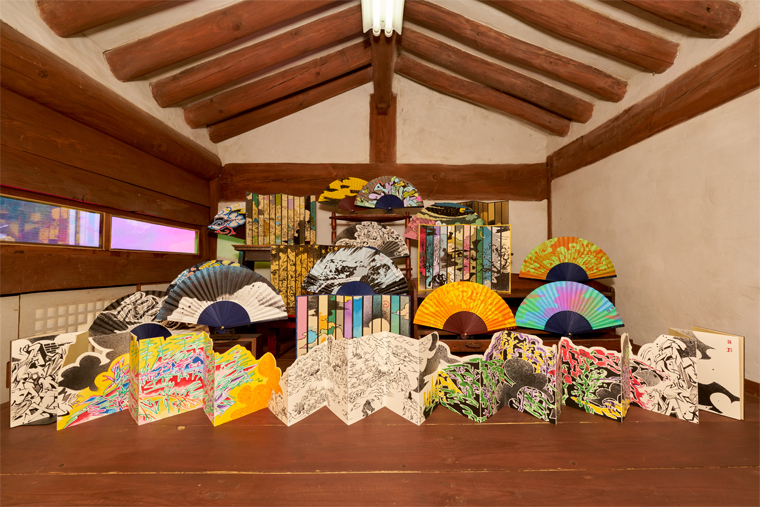
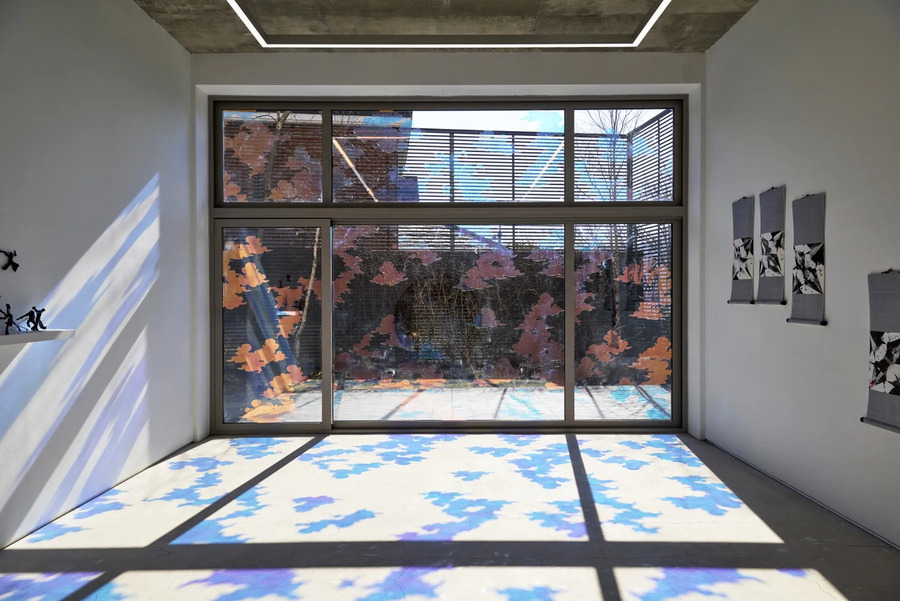
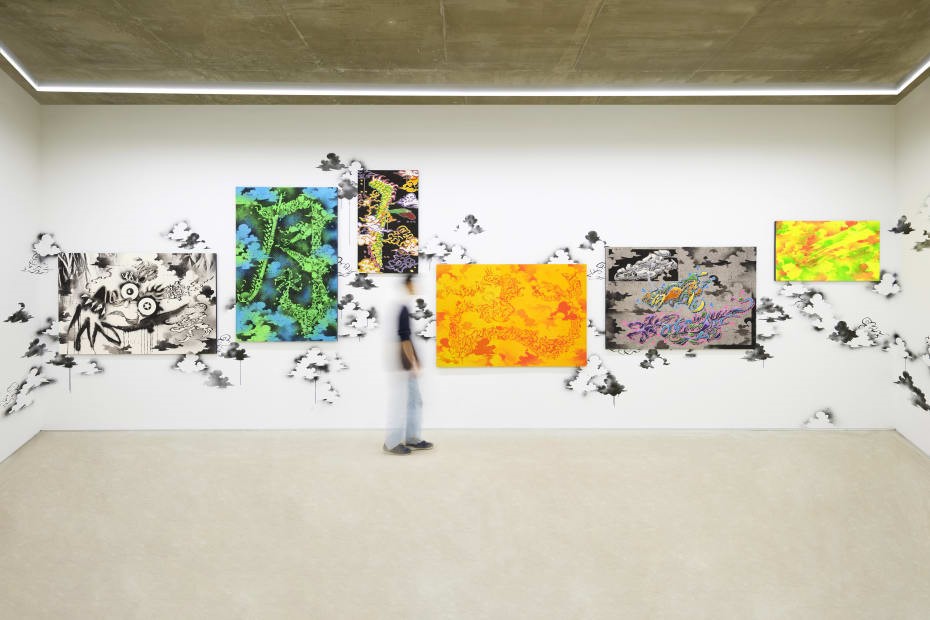
Installation view of 《Jasmine Dragon Phoenix Pearl》 © SONGEUN

In this sense, Son Donghyun’s painting, which visualizes invisible principles and concepts through figures that appear to transcend the human realm, calls to mind mythology. The virtual heroes of the superhero genre resemble the gods and heroes of Greek mythology. Like ancient idols, they strive to attain immortality and transcendence. Though myths may now be regarded as unrealistic tales of the past, they are in fact personified condensations of the human spiritual world and the external world surrounding it.

Long before the use of written language, mythology conveyed the collective memory of human societies and the archetypes of life. Within it lies how people of a given era perceived and understood the world. It also embodies humanity’s metaphysical insights. Myth may be an attempt to explain the natural world, or a form of allegorical teaching—yet all of these are, in essence, myth. And perhaps what moves us in art is precisely its ability, like myth, to convey human memory and life.
 
Like myth, the figures with extraordinary abilities (ineungnyeokja) in Son Donghyun’s work—figures that synthesize the long-standing traditions of East Asian painting with contemporary conditions—enable a contemplative view of the world in which we, including the artist, live. Though situated within the realm of art, these works extend beyond it. They do not merely connect past and present; they also bridge art and reality. Artistic creation involves observing and perceiving the world one inhabits and translating it into visual form. In doing so, the artist’s spatiotemporal horizon expands.
 
While seemingly situated within the framework of traditional East Asian painting, the images and narratives Son Donghyun constructs engage the broader field of visual culture. Of particular importance within his work is popular culture, which exerts immense influence in contemporary society and simultaneously reflects our time in its entirety.

The convergence of elements that might seem irreconcilably distant—traditional painting and popular culture—generates unfamiliar meanings accompanied by a sense of excitement. To produce even a single work, or a series imbued with such immediacy, the scale and scope of materials that Son Donghyun gathers and studies are extraordinary.

A prolonged period of preparation is essential to his practice. Only after undergoing processes of analysis and contemplation, grounded in the theoretical knowledge and formal techniques he has accumulated, does the artist begin his artistic expression. This is to move beyond mere quotation and reference, and to place the invention of something new at the culmination of his work.


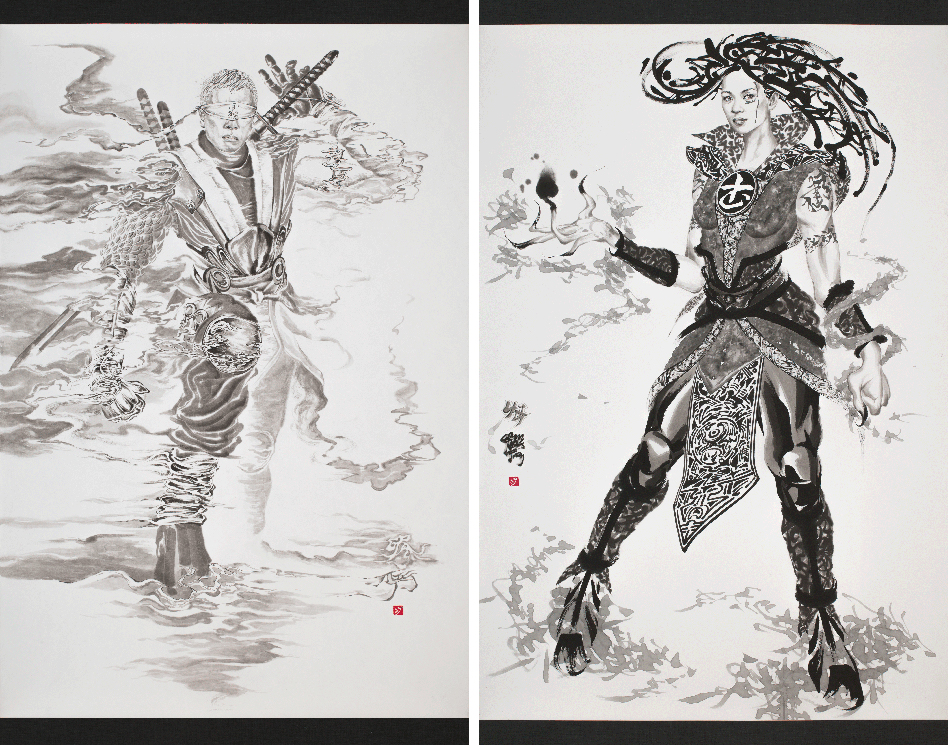
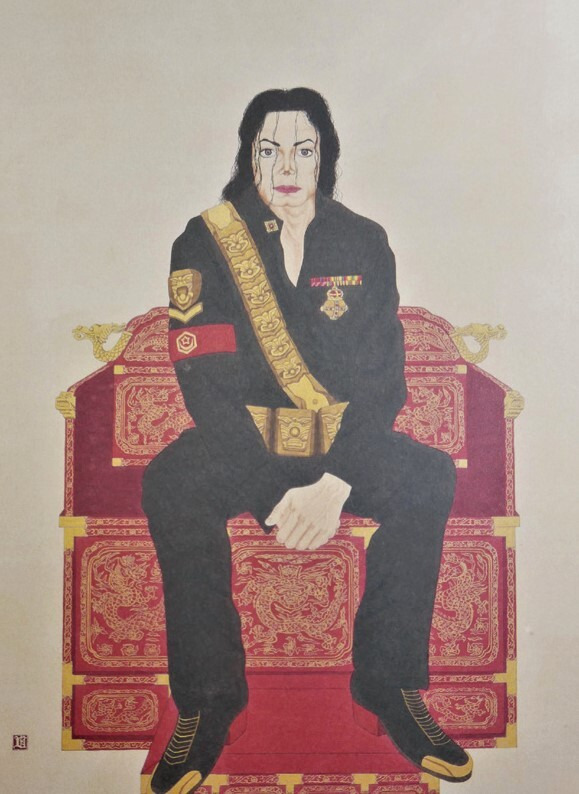
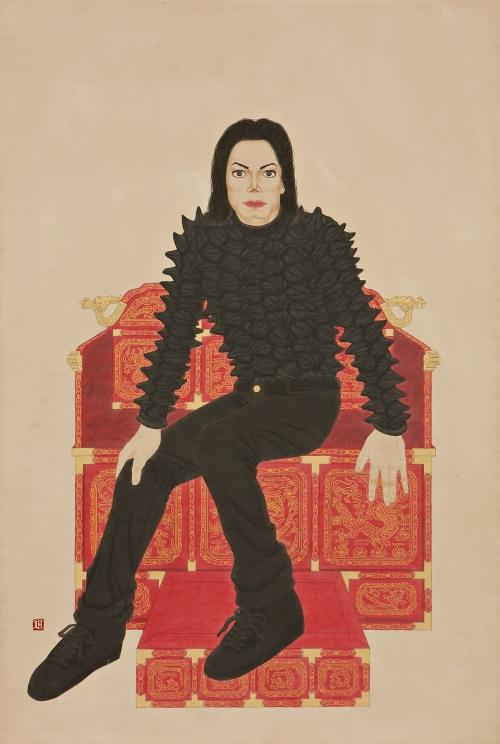
Left: Son Donghyun, Gray Mist, 2016-2017, Ink on paper, 194 x 130 cm © Son Donghyun
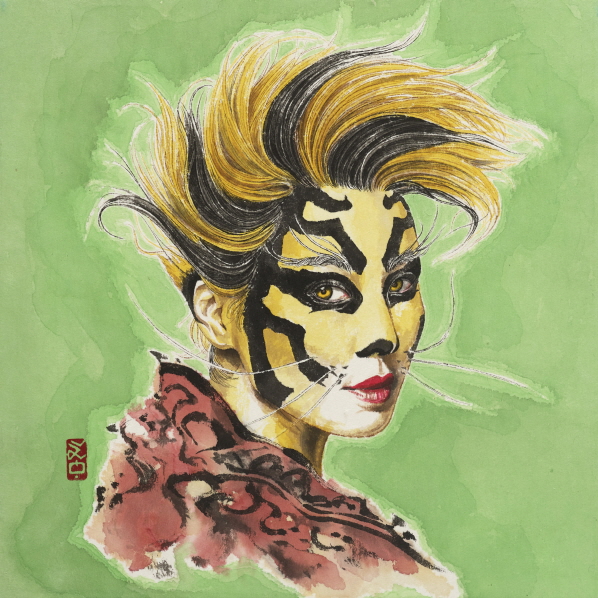
Right: Son Donghyun, Lady Composition, 2016-2017, Ink on paper, 194 x 130 cm © Son Donghyun

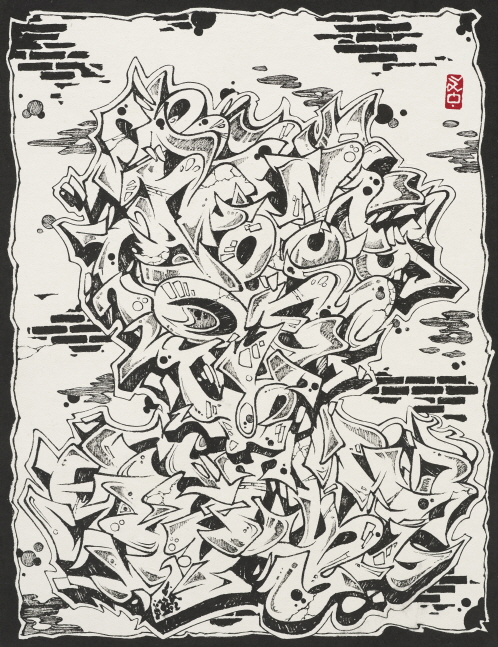
The same trajectory is maintained in the works presented in the 2017 exhibition 《Son Donghyun: Jasmine Dragon Phoenix Pearl》. As seen in The Origin (2017), Lady Composition (2016–2017), One Stroke (2017), and Ideo G (2017), the artist continues his exploration between image and text; however, this time it is no longer confined to specific subjects or painting theories.

The artist appears to have entered a phase of greater ease, engaging in a more liberated mode of play. As his approach becomes freer, the dynamism of the figures intensifies. Since these are not portraits intended to capture the inner world of a specific individual, it is more accurate to say that the increased vitality emanating from the figures reflects how deeply Son Donghyun has internalized painting theory, techniques, and materials.
 
At this stage, the artist’s imagination becomes increasingly intricate, reaching a level akin to constructing an entire martial arts narrative. Gray Mist (2016–2017), a figure composed through techniques used to depict clouds and mist, may appear stealthily at any time, like an assassin. High Fiber (2017), built through texturing methods used to render mountains with fiber-like strokes, possesses abilities reminiscent of Spider-Man.

The posture and actions of the figures, as well as the objects they hold and the garments they wear, all function as signs that articulate the meanings embodied by these personified beings. The exploration of materials and techniques also becomes more vivid. In Inky Ink (2016–2017), the artist amplifies the material properties of ink through the force of gravity, while in The Other Side (2017), he experiments with the translucency of hanji by employing baechai (reverse-side coloring).

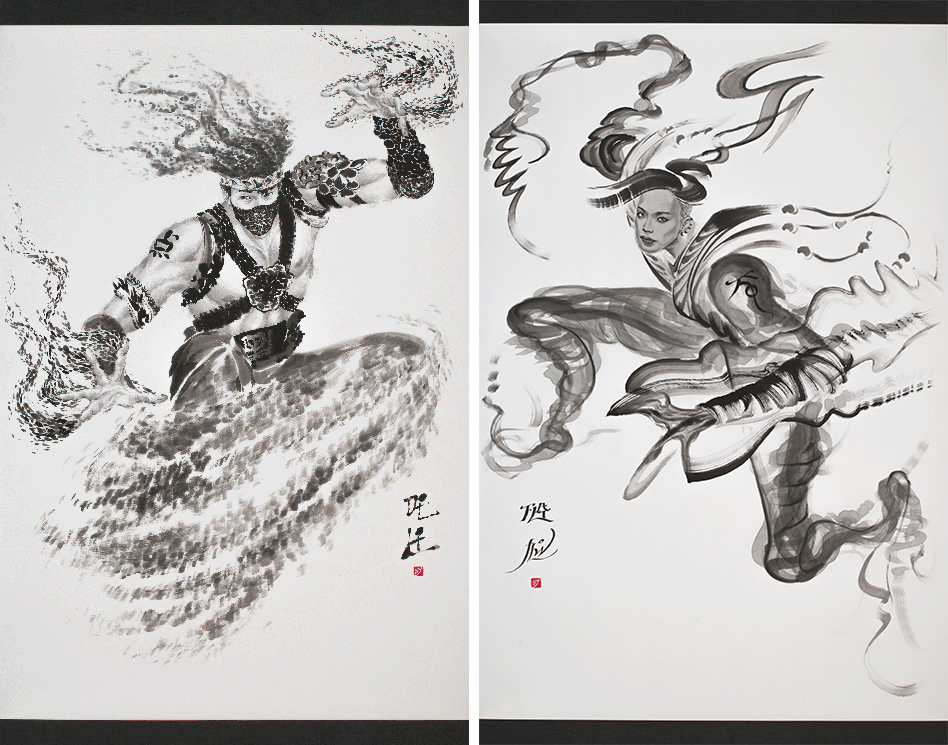
In Linear Line (2016–2017), constructed solely through line based on the eighteen classical methods of figure drawing; Broken Splash (2017), where lines are minimized; and Flat Flow (2016–2017), executed exclusively with a flat brush, the artist focuses on the relationship between brush and pigment (ink). Heelballer (2016–2017), completed entirely through rubbing without the use of a brush, and Full Stop (2017), created through stamped cinnabar, quite literally demonstrate the diversity of expression and challenge conventional notions of East Asian painting.

Viewed from another perspective, Dot dot (2016–2017), Linear Line, and Broken Splash can each be understood as experiments in pictorial form based on the most fundamental elements of visual composition—point, line, and plane. His work need not be confined within the framework of East Asian painting alone. Son Donghyun’s work is painting, and it is art.


Left: Son Donghyun, Dot dot, 2016-2017, Ink on paper, 194 x 130 cm © Son Donghyun
Right: Son Donghyun, Flat Flow, 2016-2017, Ink on paper, 194 x 130 cm © Son Donghyun

Since movement is not an inherent element of painting, Son Donghyun’s works cannot present actual physical motion. Yet the figures in his paintings convey movement. Each work captures a moment of action, inspired by the protagonists of martial arts fiction, superheroes, and characters with extraordinary abilities. All of them are depicted in the midst of intense motion.

In some respects, the virtual beings and star portraits from the artist’s earlier works appeared to have achieved a state of perfection and stability, attaining a sense of permanence. This time, however, it is different. The artist captures movement without disrupting it. One is compelled to imagine the moments before and after the instant he has depicted. Stillness within motion is more powerful. It is a moment that imbues East Asian painting—often perceived as tranquil—with dynamism and vitality.
 
Ultimately, through Son Donghyun, the classical is reawakened and reinterpreted. The paradox of layering something unfamiliar onto a long-standing tradition—thereby making that tradition even more visible—allows the past and the present to meet. His painting succeeds in revitalizing the world of East Asian painting, once preserved in the stillness of eternal time, within a contemporary context.

The myth of East Asian painting, once existing within a vague, dreamlike abstraction, now turns toward a form of contemporary universality. Something that seems unreal yet exists, a state that appears unattainable yet feels within reach—an ideal one might wish to attain at least once. Son Donghyun’s work draws such a distant yet beautiful world into a living reality.

References