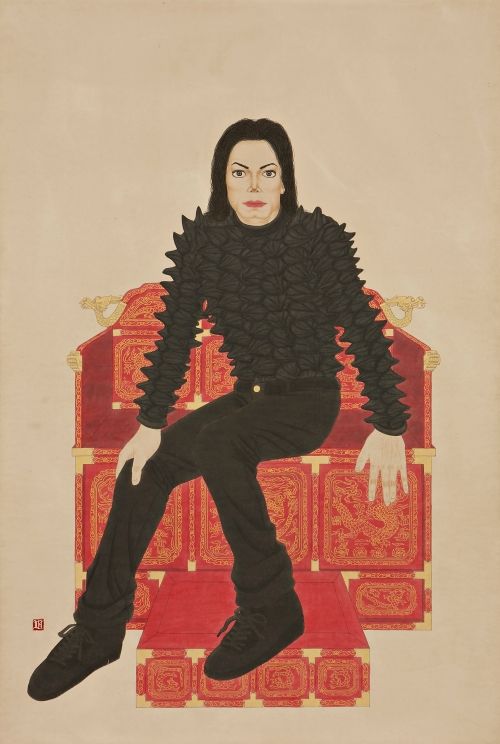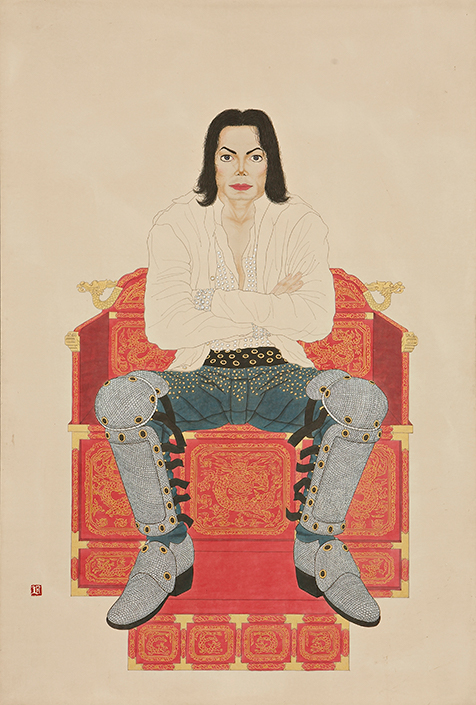

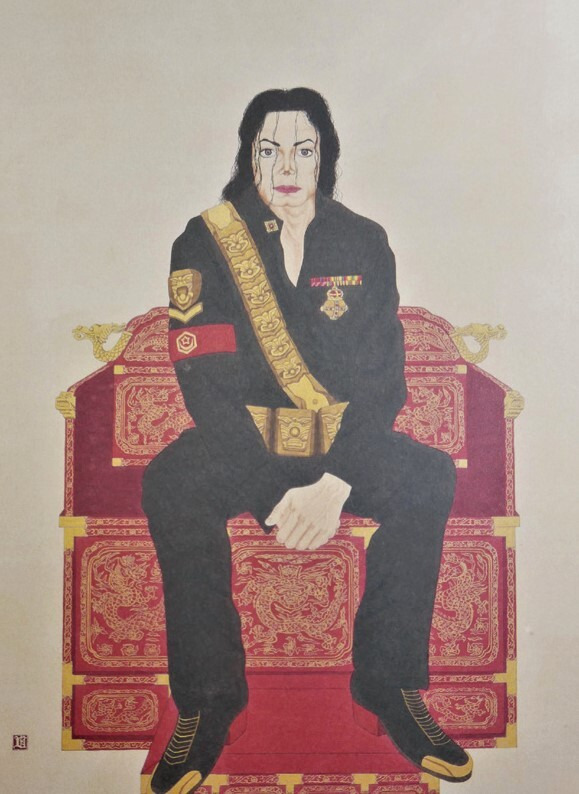
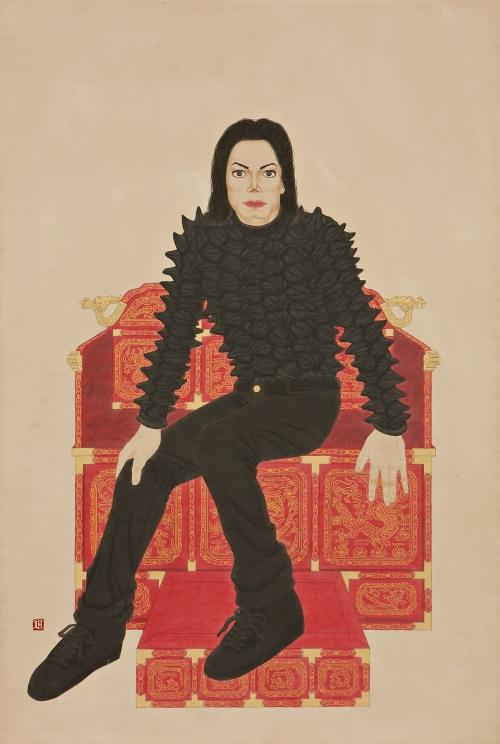
Nobody can deny the fact that this is a portrait of Michael Jackson. Often known as the King of Pop, making a massive impact on the pop world, Jackson was an icon of the times, and his appearance and costumes became a symbol in pop music history. He is not now of this world, but his image is everywhere.

This painting, however, differs from such common images. It captures our eye because of an unfamiliarity derived from the portrayal of a pop star with a traditional Oriental painting technique. In the work the singer sits on a red royal seat found in portraits of Joseon kings. Confirmed by the seal of the painter in a corner of the painting, this is an Oriental painting in ink arousing curiosity.


Portrait of the King (You Rock My World), 2008, Ink and Color on paper, 194 x 130 cm

Popular culture characters encapsulated in the traditional Oriental painting mode

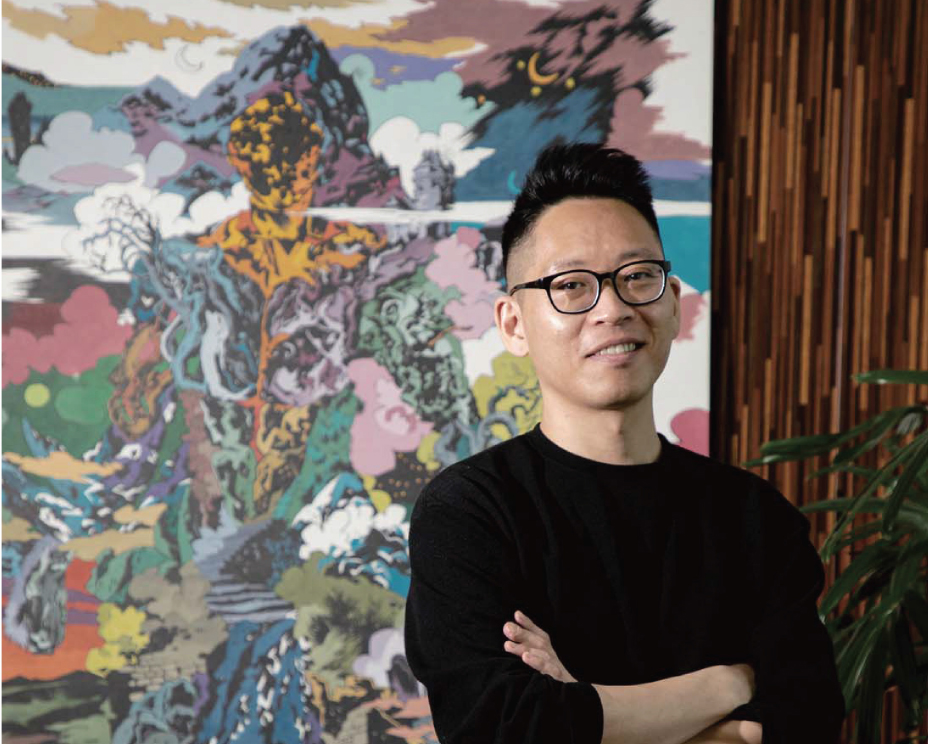
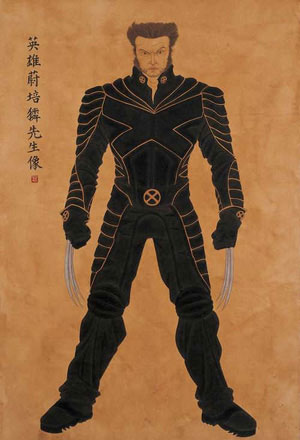
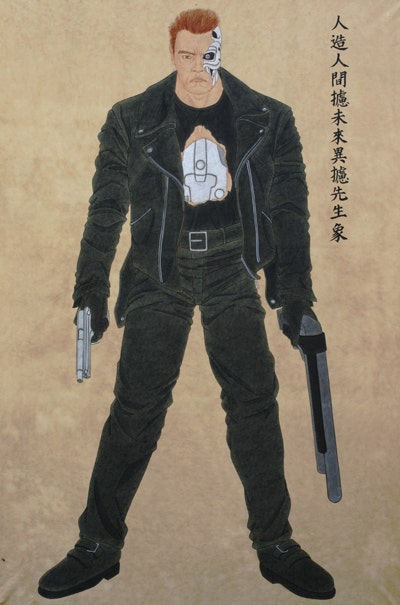
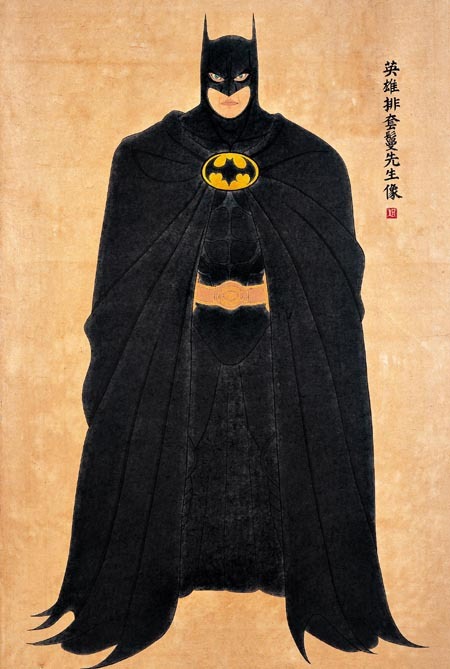
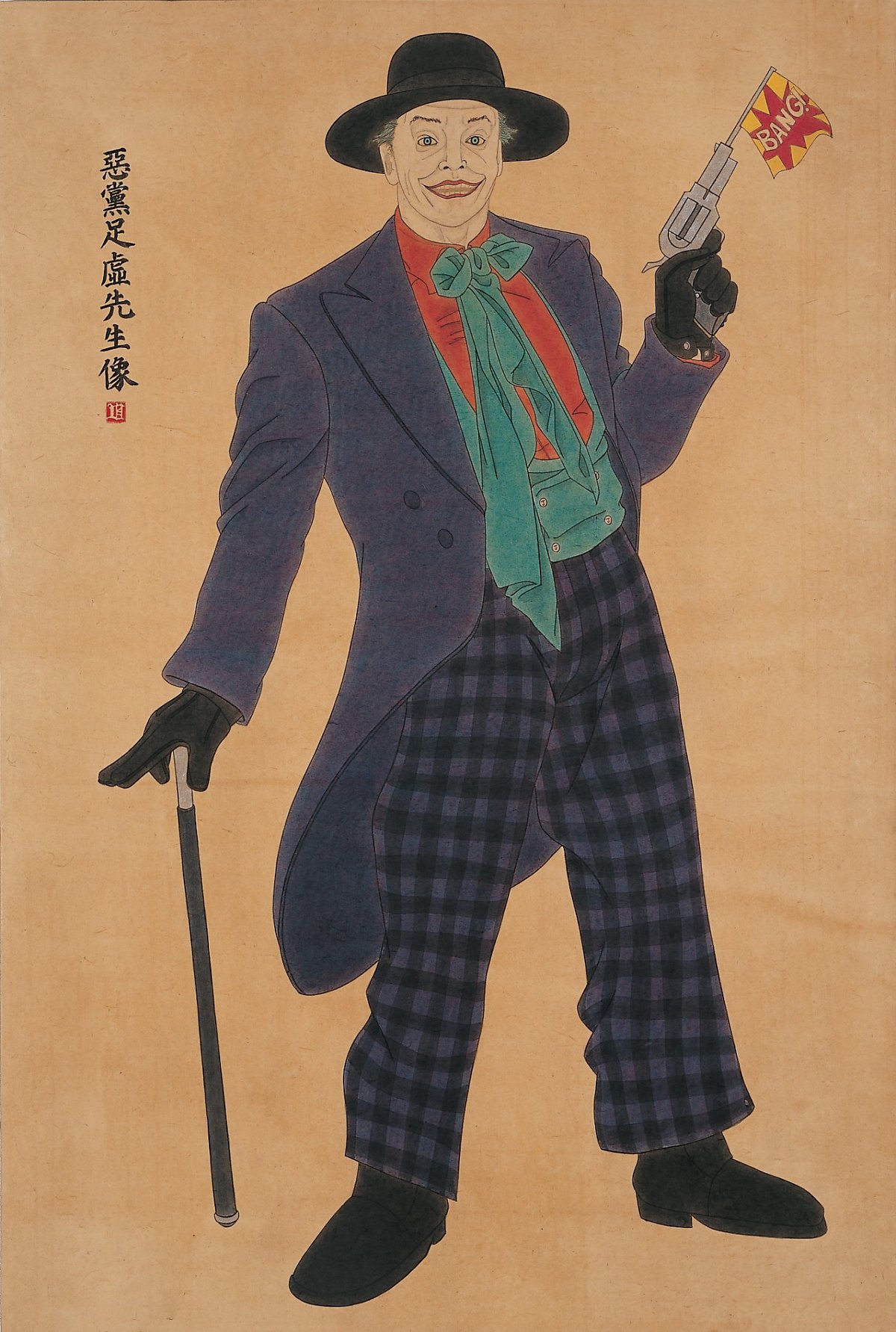
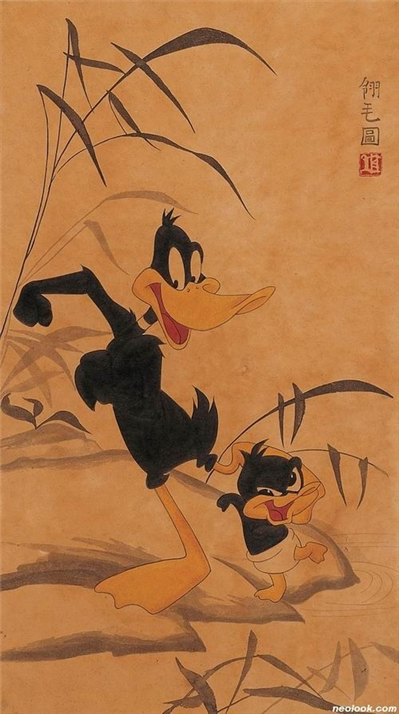
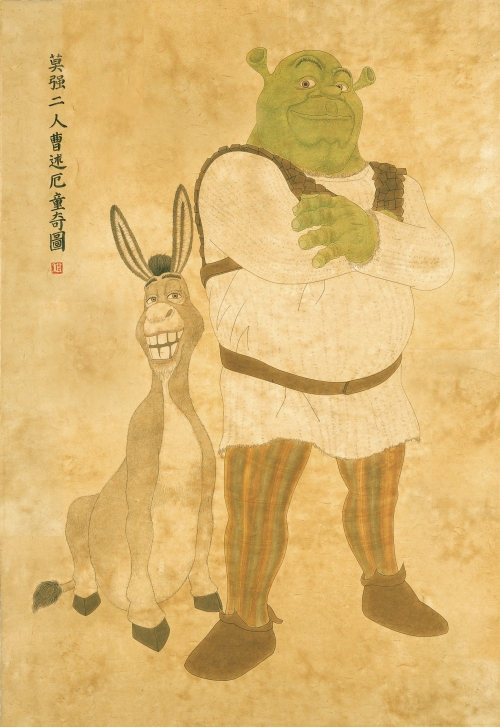
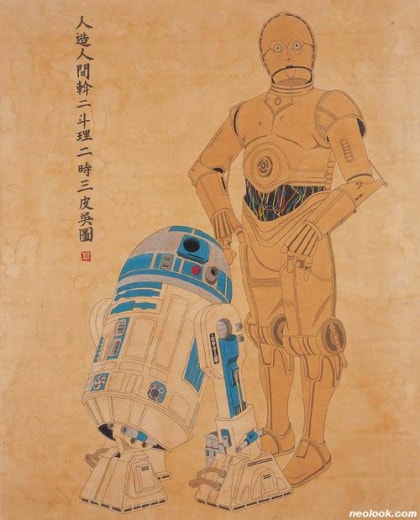
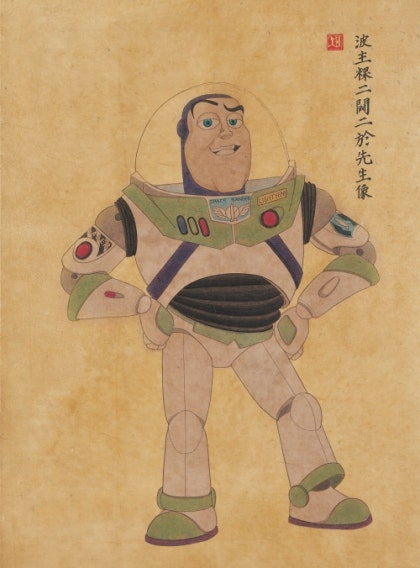
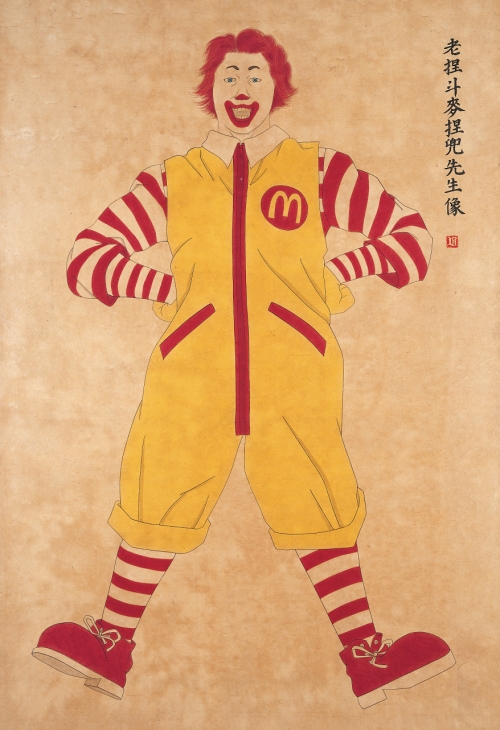
As soon as Donghyun Son made his debut in 2005, he gained attention as an up-and-coming artist extending the domain of Oriental painting. His paintings using traditional Oriental painting techniques address preposterous subject matter rarely found in other Oriental painting. They include James Bond, protagonist of the 007 film series; a robot character from the Star Wars series; Batman and Joker, from the film Batman; and characters in Shrek, all painted like Oriental portraiture.

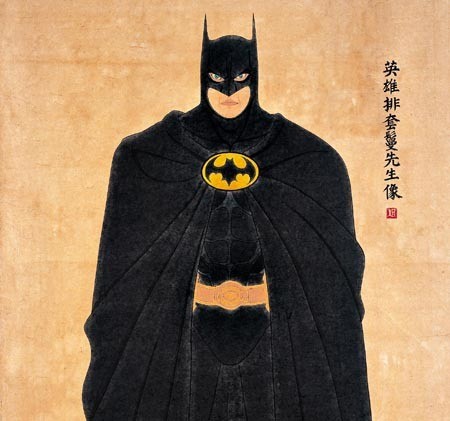
His work is unique, not only in appropriating traditional ways, but also in the titles of each work. With the methodology of traditional portraiture using abbreviations of characters in painting, he adopts an old way of writing English pronunciation in Chinese characters. For instance, France as ‘Bullanseo’(西). He entitles his works with Chinese characters, considering the similarity of the pronunciation of each character and its meaning in Chinese. The portrait of James Bond is entitled with 英雄在任水本斗先生象; the portrait of Batman with 英雄俳套鬘先生象; and the portraits of Shrek and Donkey with 幕强二人曺述厄童奇圖. His work’s unique cheerful wit is underlined by these titles, encapsulating modern subject matter in traditional manners.


Portrait of the Hero, Mr. Batman, 2005, Ink and Color on Paper, 190 x 130 cm

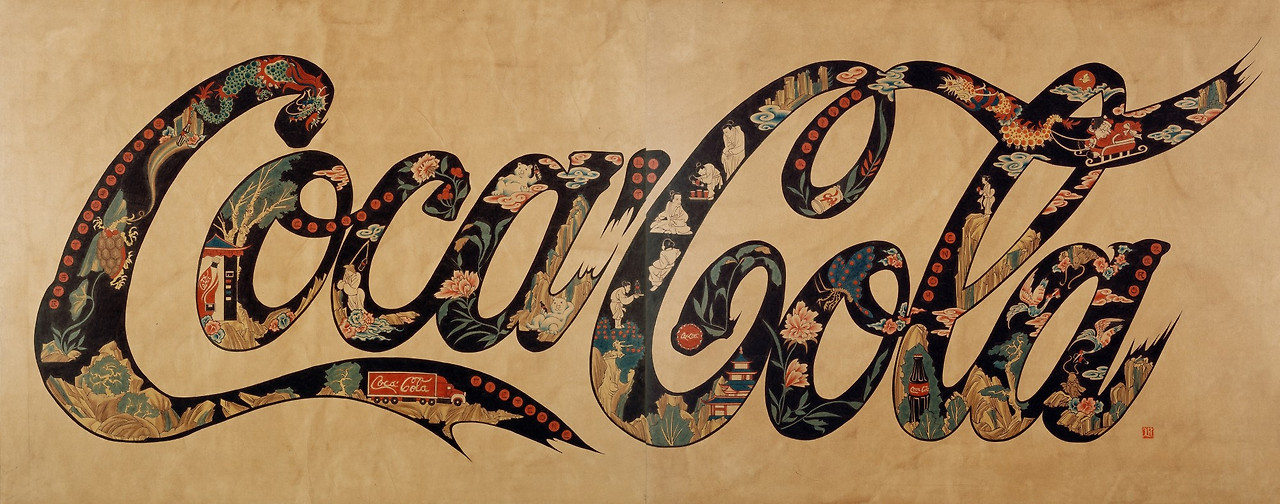
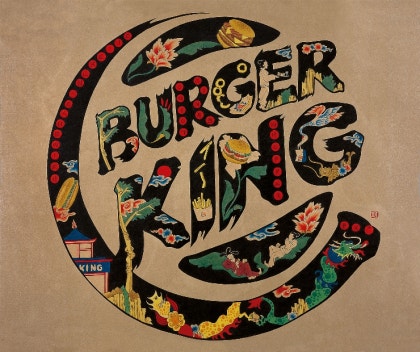
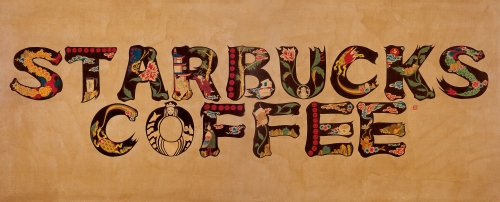
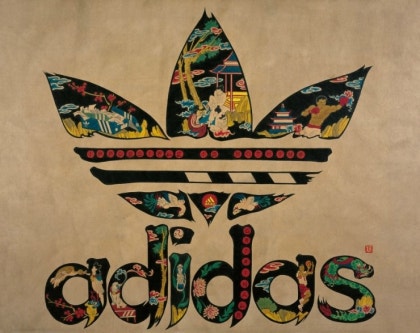
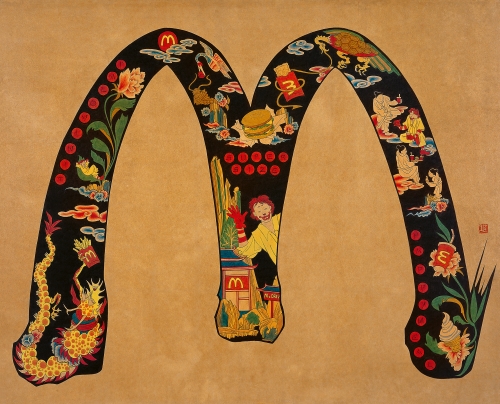
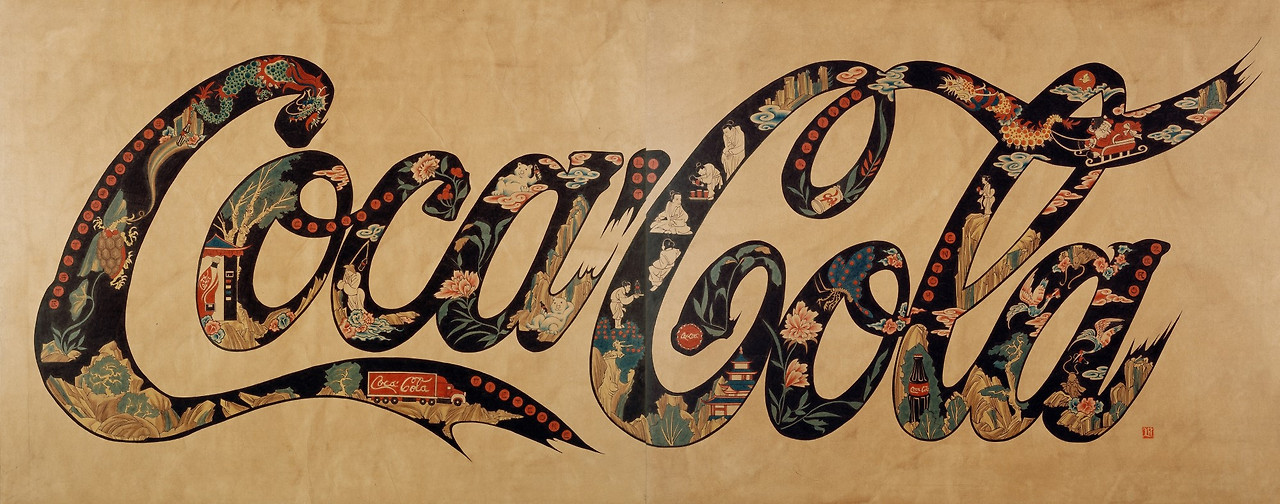
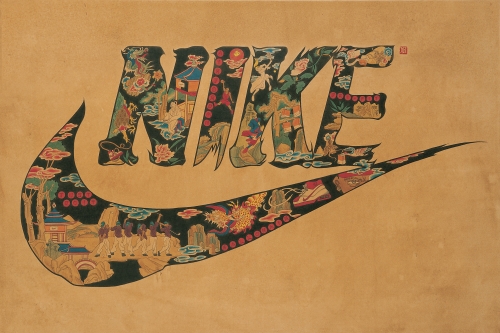
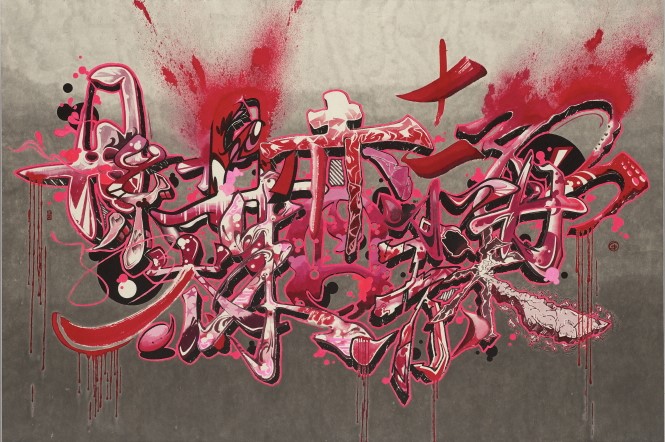
Donghyun Son pays attention not only to film characters but also to diverse motifs of capitalist consumer culture. Considering trademarks and logos can work as ‘icons’ symbolizing capitalism, he depicts celebrated logos such as McDonalds, Burger King, Starbucks, and Coca Cola in the mode of traditional munjado or character painting. ‘Munjado’ is a pictorial representation of characters in consideration of character meaning, so Son encapsulates diverse images symbolic of each logo and brand within characters. In Munjado-Coca cola for example, he depicts various symbols such as TV commercial motifs and vending machines within characters of Coca Cola by using ink and color.

Munjado-Coca Cola, 2006, Ink and Color on paper, 130 x 320 cm (2pieces, Each 130 x 160 cm)

A stark contrast between subject matter and form – satire, humor, and criticism

Son’s work was well-received not only by the art world but also by the general public. His subject matter is so familiar the public can sympathize and respond to his work with ease. He was thus credited as a young artist presenting a new tendency in the Korean Oriental painting community that has recently lost some of its influence. They noted the young artist’s wit and humor criticizing and satirizing the present age through a stark contrast between ‘subject matter’ and ‘form’, illustrating aspects of Western culture imbued in our lives with the idioms of traditional Oriental painting. However, his work leaves something to be desired because the subject matter is familiar but lighthearted, so his work is merely considered a simple attempt for satire or a witty idea.

“If Kim Hong-do, a Joseon painter, currently lived and worked, what would he depict?” he asked once at an interview. An artist who lives in the present time may ask numerous questions while majoring in Oriental painting and studying traditional ways. Just like painters 100 years ago painted landscapes and daily realities with their distinctive aesthetic sense, Son Dong-hyun likewise uses the common experiences of his modern life as the primary motifs of his painting.

Reviewing the era through popular cultural icons

Many regard the 〈Portrait of the King〉 portraying Michael Jackson showing Son’s serious consideration and attitude toward the times. Son presented this series at a one man show held at Gallery 2 in 2008. The king he portrayed was not a Joseon king or a medieval king in Europe but ‘the king of pop’ who dominated his childhood. The artist portrayed Michael Jackson from his childhood in 1971, when he released his first album, through 2003 when he released his last single album in the style of Joseon king portraiture. He extensively searched materials to illustrate Jackson’s characteristics of outer appearance, his gestures, and inner state. Fifteen pieces completed through this process were displayed by period at the gallery.


Portrait of the King (Scream), 2008, Ink and Color on paper, 194 x 130 cm

The artist considered Elizabeth Taylor’s praise for Jackson as ‘The King of Pop, Rock, and Soul’ in 1989 as a turning point in his life. Jackson was depicted as a king on a royal seat in the portraits painted after 1989, and shown seated on a chair laid with a tiger skin in the portraits painted before 1989. This royal seat was borrowed from Joseon portraits.

As the image of Michael Jackson has become an icon, this portrait series can be called a ‘portrait of our times’ and is not simply a portrait of an individual. Jackson’s personal features captured by the artist’s consistent research provide many hints beyond his individual history. His portraits displayed in line, including his face gradually turning from a typical black boy to an awkward white face and his costumes becoming more authoritative like a uniform to meet the public’s desire as the king of pop, reflect the diverse desires in popular culture Jackson represented.

New Oriental painting representing the times

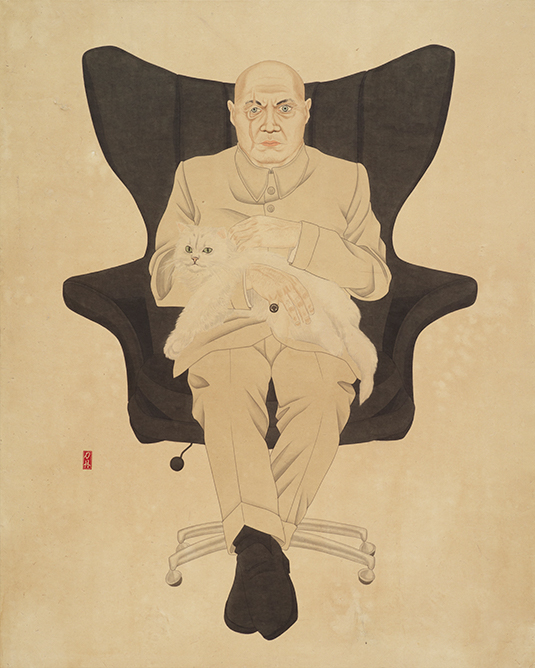
Twenty figure paintings featuring the villains of the 007 series of films, displayed at his solo show 《Villains in 2011 convey the same meaning. Son intended to showcase the fears of each age through the portraits of villains appearing in 20 films of 007 series produced between 1962 and 2002. He thought the film series naturally reflected what the public were enthusiastic and feared most at different times.


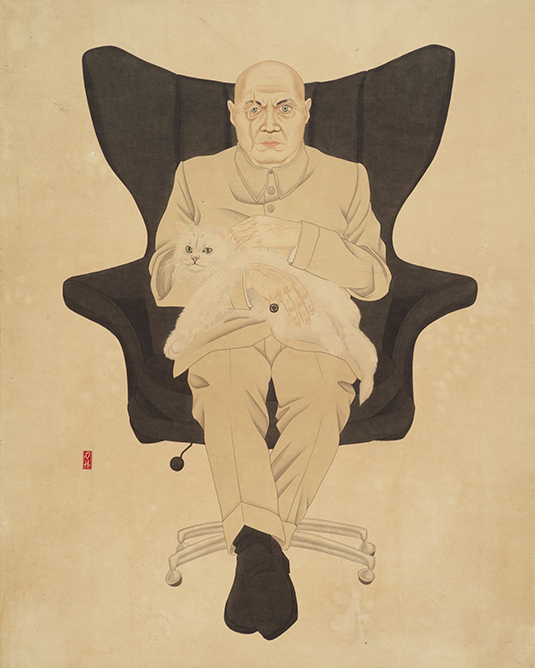
007 Ernst Stavro Blofeld, 2011, Ink and Color on Paper, 162 x 130 cm

The artist captured diverse features while analyzing the 〈007〉 series: villain characters and Mao jacket-like costumes appeared during the early Cold-War era, while after then the characters were diversified including lunatic billionaires and media conglomerates, and villain characters implying Western stereotypes on race and culture, such as a black drug lord and North Korean soldiers were often portrayed. Although these villains were ‘imaginary figures’ in films, Son thoroughly studied and closely analyzed their inner and outer characteristics, critical essays on the films and characters, and the features of actors in order to reflect an Oriental painting technique, ‘jeonsin-sajo’, the painter’s capturing of not only the external form of a subject but also his spirit.

Son’s paintings do not represent celebrated characters and figures in a traditional manner but reveal a more profound narrative carried by these familiar characters, the trend of the times, the preferences of the public, and consumer culture and desire. It is said ink tone takes on depth because of its diverse colors. Likewise, Son’s paintings are not simply portraits of familiar popular icons. They represent the narratives and anxieties of the times.